Introduction
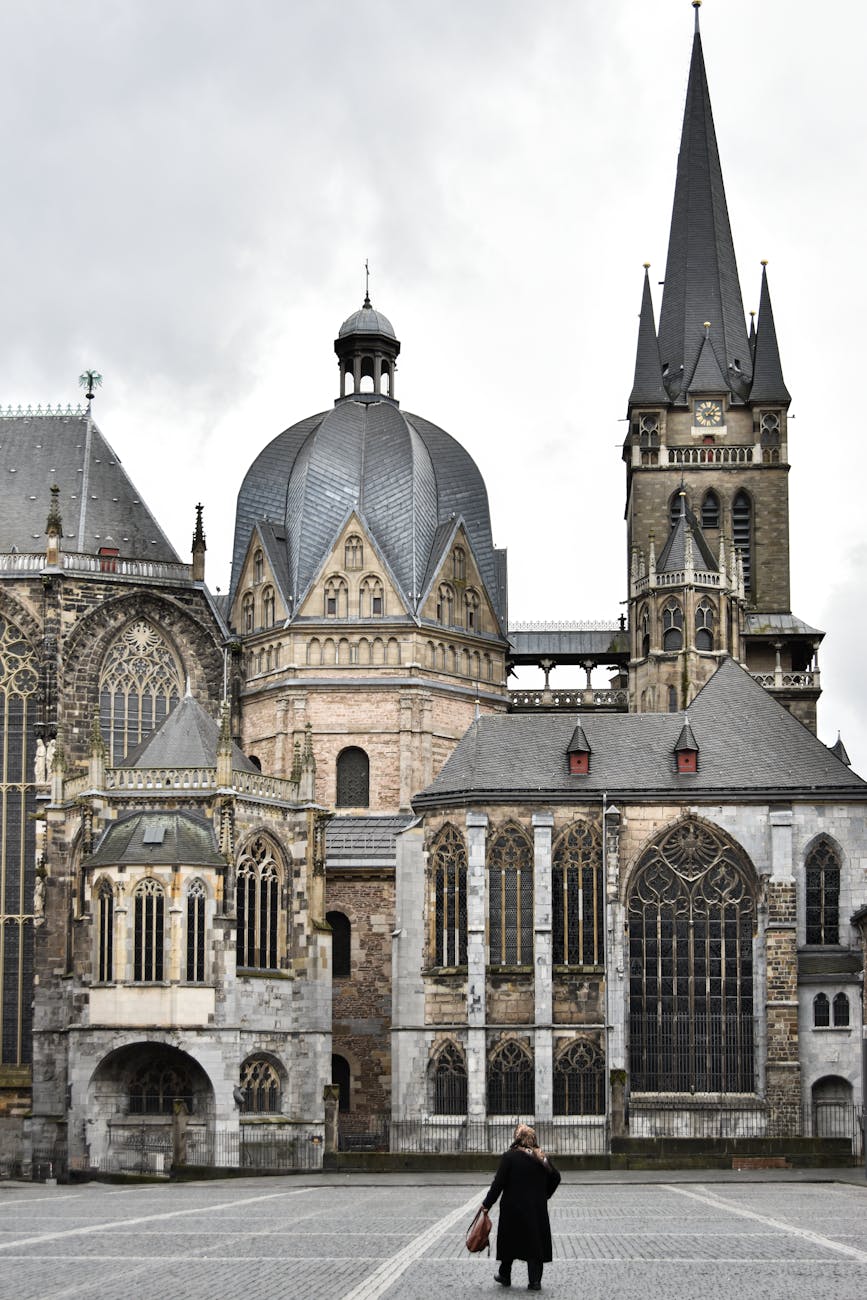
Aachen Cathedral, an iconic symbol of Carolingian architecture, holds a unique place in European history. Commissioned by Charlemagne in the 9th century, it began as a humble Palatine Chapel, serving as both a royal palace and a place of worship. Over the centuries, the cathedral has witnessed significant historical events, including the coronation of numerous Holy Roman Emperors. Its architectural evolution reflects the changing styles and religious sentiments of each era, culminating in a blend of Byzantine, Romanesque, and Gothic elements. In 1978, the cathedral\’s historical and cultural significance was recognized when it was designated a UNESCO World Heritage Site. This article explores the rich history of Aachen Cathedral, detailing its origins, architectural evolution, and importance in the wider context of European heritage, while highlighting its present-day status as a vital cultural landmark.
The Origins of Aachen Cathedral: Charlemagne\’s Vision
The foundations of Aachen Cathedral were laid in 787 when Charlemagne, King of the Franks and later Emperor of the Romans, initiated the construction of the Palatine Chapel. This monumental undertaking was not merely an architectural endeavor; it was a statement of Charlemagne’s vision for a united Christendom under his rule. The selection of Aachen, located in modern-day Germany, was strategic. It was situated near the borders of various territories that Charlemagne sought to unify, making it an ideal central location for his court and religious activities.
Charlemagne’s choice of the Palatine Chapel drew inspiration from a variety of cultural and architectural influences. The design of the chapel reflects a strong Byzantine influence, particularly in its octagonal shape, reminiscent of the San Vitale in Ravenna. This was symbolic of Charlemagne’s desire to link himself with the glorious traditions of the Roman Empire and the Christian church. The chapel was completed in 797, becoming not just a place of worship but a vital seat of power for Charlemagne and a site for royal ceremonies.
The cathedral served as a backdrop for numerous pivotal events in medieval Europe. The most significant among these was the anointing of Charlemagne as Emperor of the Romans on Christmas Day in the year 800. This act, conferred by Pope Leo III, marked the re-establishment of the Western Roman Empire, with Charlemagne at its helm. The cathedral’s role in this event bestowed upon it a sense of divine legitimacy and power, further embedding its significance in the political and religious landscape of the time.
Following Charlemagne’s death in 814, the cathedral continued to serve as a location for the coronation of his successors. From this point onward, it became the site where more than thirty German kings were crowned emperors, solidifying its status as a vital religious and political center in the Holy Roman Empire. The Palatine Chapel was not only a testament to Charlemagne’s architectural ambition but also to his broader vision of a unified Christian empire.
In the subsequent centuries, the cathedral underwent various modifications and expansions, but the original architectural elements set forth by Charlemagne remain at the core of its identity. The embrace of both artistic and structural innovations, combined with the historical context, illustrates the significance of Aachen Cathedral as a monument to Charlemagne\’s legacy in the formation of medieval Europe. The survival of the structure through the ages speaks to its resilience and continues to inspire awe and reverence, attracting scholars, historians, and tourists alike who seek to understand its rich past.
Architectural Evolution: From Palatine Chapel to Gothic Elements
The architectural transformation of Aachen Cathedral reflects the evolution of styles and techniques over the centuries, showcasing an array of influences that contributed to its grandeur. Initially constructed as the Palatine Chapel under Charlemagne’s vision, the cathedral underwent numerous alterations and expansions that represent a timeline of architectural advancements.
The original Palatine Chapel embodies an innovative merger of Roman and Byzantine styles, with its distinctive octagonal plan leading to a square apse. This design was novel in Northern Europe and demonstrated Charlemagne\’s desire to convey the imperial grace of earlier Roman architecture while instituting a Christian sanctuary. The chapel was lavishly adorned with marble columns and intricate mosaics, featuring artistic elements that served both decorative and symbolic purposes.
As the cathedral continued to expand in the 9th and 10th centuries, additional structures were integrated, demonstrating a shifting architectural landscape. The transept and choir were added, and modifications were made to the main nave, leading to an early Romanesque aesthetic. During this period, the introduction of ribbed vaulting provided structural stability while allowing for greater flexibility in design, paving the way for the innovative Gothic styles that would emerge later.
With the growing significance of the cathedral as a royal site, more ambitious additions were made during the Ottonian period (beginning in 919). The incorporation of the western towers added height and grandeur to the building, altering its profile against the skyline of Aachen. These adaptations reflected the pride and aspirations of the rulers of the time, as the cathedral became increasingly recognized as an imperial symbol.

The transition to the Gothic style in the 13th century brought about further significant changes. The addition of pointed arches, flying buttresses, and large stained-glass windows enriched the cathedral\’s interior with celestial light—an element that conveyed a connection to the divine. The transition was not merely aesthetic but also reflected advancements in engineering that allowed for taller and more complex structures, creating an environment that enhanced the spiritual experience of worshippers.
Notable modifications included the construction of a new choir and a monumental façade, which incorporated ornate sculptures and intricate details. The utilization of colorful stained glass throughout the cathedral illuminated the interior, creating a vibrant atmosphere that engaged both devotees and visitors. This period of innovation culminated in the integration of various artistic styles while maintaining the fundamental structure established by Charlemagne.
Throughout these successive styles, the cathedral remained a constant site of reverence, shaping the spiritual landscape of the region. Each architectural phase added layers of meaning, offering a palpable sense of history to the site. The resilience of the cathedral\’s core structure bolstered by its capacity for adaptation allowed it to survive numerous historical challenges, including wars, political upheavals, and natural disasters.
Thus, the architectural evolution of Aachen Cathedral is a testament to the interplay of religious devotion, political power, and artistic expression throughout the centuries. Each footstep within its walls echoes the legacy of those who contributed to its construction, preservation, and enrichment.
The Role of Aachen Cathedral in the Holy Roman Empire
Aachen Cathedral’s historical significance extends far beyond its architectural beauty; it played a central role in the political and religious tapestry of the Holy Roman Empire. Charlemagne’s establishment of the cathedral in the 9th century was not merely an act of faith but a strategic decision to forge a link between the imperial authority and the Catholic Church, cementing the legitimacy of the crown through divine right.
The cathedral became the preferred venue for the coronation of German kings, solidifying its status as a center of power. Beginning with Charlemagne’s own coronation on Christmas Day in 800, the cathedral served as the stage for the grand ceremony of crowning over thirty Holy Roman Emperors, thereby instilling a sense of continuity and tradition within the empire. Each coronation underscored the significant bond between the emperor and the church, reinforcing the idea that monarchs ruled by divine appointment.
The significance of Aachen Cathedral extended beyond ceremonial functions to become a symbol of imperial authority. Its status as a site of royal coronation meant that it was an essential part of the political cycle within the Holy Roman Empire—the location where legitimacy was conferred and allegiance solidified. The symbolic act of crowning served as a reminder of the emperor’s responsibilities to both God and the people, with the cathedral standing as evidence of this sacred covenant.
Furthermore, Aachen Cathedral became a significant pilgrimage site, attracting thousands of pilgrims who sought spiritual solace and healing. As a pilgrimage destination, it drew not only local congregants but also those from across Europe. It was said that relics housed within the cathedral, including the revered Palatine Chapel, possessed miraculous powers, amplifying its importance in Christian devotion. The influx of pilgrims contributed to the local economy, intertwining spiritual pursuits with social and cultural exchanges—an essential aspect of medieval life.
The cathedral also played a pivotal role in the religious reforms initiated by subsequent emperors, particularly during the Investiture Controversy in the 11th century. During this period, conflicts arose between secular rulers and the papacy over the appointment of bishops and the extent of ecclesiastical authority. As a neutral ground, Aachen Cathedral became a backdrop for negotiations and ecclesiastical assemblies, fostering dialogue between the church and state.
In 1165, Frederick I Barbarossa chose Aachen as the site for the coronation of his own son, Henry VI, symbolizing the continued importance of the cathedral in the dynastic politics of the Holy Roman Empire. This act once again reinforced the cathedral’s position as a bastion of imperial power, a legacy that persists in the perception of Aachen as a seat of authority.
Through the centuries, Aachen Cathedral symbolized the unity of the empire under Christendom, intertwining political power with religious fervor. Emperors aspired to align themselves with divine mission referenced by Charlemagne, further cementing the celestial significance of the cathedral. Its role as the site of coronation, pilgrimage, and reform evolved while resonating deeply within the historical narrative of the Holy Roman Empire.
The legacy of Aachen Cathedral as a royal site remains etched in the annals of European history, reflecting a complex interplay of faith, governance, and culture. As the epicenter of imperial coronations, it solidified the bonds between religion and politics, illustrating how architecture can serve as a powerful narrative vehicle for understanding historical dynamics.
Preservation Efforts and Restoration Initiatives
Over the centuries, Aachen Cathedral has witnessed a plethora of preservation efforts and restoration initiatives aimed at safeguarding its architectural integrity and historical significance. As a testament to its cultural and spiritual importance, the focus on preserving the cathedral underscores its role as a living monument—a space where history, faith, and community converge.
The ongoing maintenance of Aachen Cathedral is crucial in addressing the effects of time, weather, and human activity. The harsh environmental conditions, particularly during the medieval period, took a toll on the structure, necessitating various interventions to protect it against deterioration. Many of the original mosaics and stone elements suffered damage over time, prompting restoration activities to revive their former glory while honoring the original craftsmanship.
One of the most notable preservation efforts occurred in the late 19th century, during a period marked by a revival of interest in historic architecture across Europe. Under the direction of the architect Richard Bohn, extensive restorations were undertaken, focusing on the cathedral’s interior features. Bohn’s work included meticulous repairs to the mosaics, decorative elements, and the restoration of the imposing façade. His aim was not only to restore the cathedral but to enhance its presentation as a key historical site.
In the 20th century, further advancements in preservation techniques led to a more nuanced understanding of how to manage the structural challenges faced by the cathedral. The collaboration between architects, conservationists, and historians enabled a better grasp of the materials used, as well as the techniques employed in its original construction. This interdisciplinary approach fostered a more comprehensive method for restoring and maintaining the cathedral, ensuring that any intervention respected the historical context.

An essential aspect of preservation is the management of the relics housed within the cathedral. These sacred objects, which attract pilgrims and tourists alike, require careful handling and display to protect them from damage. The establishment of protocols for the conservation of relics became a priority, working in tandem with broader initiatives aimed at preserving the architectural elements of the cathedral.
More recently, the designation of Aachen Cathedral as a UNESCO World Heritage Site in 1978 provided a vital framework for its protection. This acknowledgment brought global attention to the cathedral, ensuring that sufficient resources were allocated toward its preservation. The UNESCO listing not only recognized its historical significance but also heightened public awareness and support for ongoing restoration projects.
In addition, local and national authorities have joined forces with international preservation organizations to foster a collaborative landscape dedicated to safeguarding this monumental site. The synthesis of expertise and resources facilitates the development of strategic plans for preserving the cathedral’s fabric while promoting its role as a cultural hub for education and theological exploration.
Moreover, the cathedral continues to serve as a living place of worship and community engagement, which emphasizes the importance of ongoing preservation. Regular maintenance and public outreach initiatives are essential components, ensuring that future generations can appreciate the cathedral and its significance.
Efforts to engage the public and educate visitors about the cathedral\’s history play an integral role in instilling a sense of stewardship within the community. This has led to increased involvement from local residents through volunteer opportunities, guided tours, and educational programs designed to foster a deeper understanding of the cathedral\’s heritage.
As we look toward the future of Aachen Cathedral, it remains imperative that the commitment to preservation and restoration continues unwaveringly. The challenges of urbanization, climate change, and financial constraints necessitate early intervention and innovative approaches to ensure its endurance.
Ultimately, the preservation of Aachen Cathedral stands as a symbol of collective responsibility—a testament to the importance of safeguarding cultural heritage for the enrichment of society and a celebration of the human spirit. Each initiative contributes to a shared narrative that transcends generations, solidifying the cathedral\’s relevance in an ever-evolving world.
Aachen Cathedral as a UNESCO World Heritage Site
The designation of Aachen Cathedral as a UNESCO World Heritage Site in 1978 marked a significant milestone in its preservation and recognition as a cultural treasure. This accolade not only highlighted its historical and architectural importance but also reinforced its status as a symbol of European unity and shared heritage. The UNESCO designation is grounded in the cathedral\’s unique narrative, which encompasses its role throughout the Carolingian Empire and its enduring significance to the Christian faith.
As a component of the \”Palatine Chapel,\” Aachen Cathedral represents a distinctive example of Carolingian architecture—a style that reflects the ambitions of Charlemagne to forge a modern Christian empire. The cathedral\’s intricate design illustrates a harmonious blend of Roman, Byzantine, and Gothic influences, showcasing the artistic mastery of its builders and centuries of cultural evolution. The recognition of these architectural values was instrumental in ensuring the continued protection and conservation of its elements.
In dealing with the UNESCO World Heritage designation, various strategies were employed to enhance the site’s promotion while ensuring a balance between tourism and preservation. The harnessing of international support, advocacy, and funding has allowed for continued restoration efforts that respect the cathedral\’s integrity while facilitating public access. By integrating educational programs and guided tours, visitors gain an appreciation for the site\’s rich history and importance.
Moreover, the UNESCO designation serves as a reminder of the interconnectedness of cultural heritage and humanity’s shared narrative. It fosters a sense of collective responsibility, encouraging local communities, governments, and international organizations to collaborate in preserving and showcasing Aachen Cathedral. This commitment resonates beyond its architectural beauty; it reflects the profound human stories interwoven within its walls.
The historical significance of Aachen Cathedral as a former royal seat also contributes to its importance as a UNESCO World Heritage Site. The site embodies the legacy of the Holy Roman Empire, a historical entity characterized by its complex political dynamics and cultural interplay. The continuous association of Aachen Cathedral with major political events—most notably the coronation of emperors—underscores its role as a linchpin of European history.
With the UNESCO designation, efforts are made to ensure sustainable tourism practices that honor the site’s sanctity while accommodating the influx of visitors. The cathedral attracts over a million tourists annually, eager to experience its spiritual and artistic resonances. Balancing accessibility with preservation requires a strategic approach, focusing on visitor engagement, education, and conservation measures that protect its artifacts.
Recent initiatives focus on fostering participatory models that involve local stakeholders in managing the site’s resources. This community-driven approach nurtures a shared sense of ownership while promoting a deeper understanding of the cultural significance of the cathedral. By emphasizing local engagement, the cathedral can forge connections between its historical legacy and contemporary society.
International collaborations under the UNESCO umbrella also emphasize the global network of cultural heritage sites. By participating in dialogues with other World Heritage Sites, Aachen Cathedral can share best practices, preservation techniques, and educational initiatives. This cross-pollination of ideas enriches the experiences of both visitors and members of the local community.
As the cathedral continues to navigate the challenges posed by modernity, climate change, and evolving visitor demographics, the commitment to its preservation remains paramount. The UNESCO designation engenders an ongoing dialogue between past and present, inviting new generations to explore the architectural splendor and historical significance of Aachen Cathedral.
In conclusion, Aachen Cathedral’s status as a UNESCO World Heritage Site stands as a testament to its enduring legacy. It embodies the fusion of history, architecture, and spirituality while promoting a narrative of shared cultural heritage that resonates across borders. The efforts to safeguard the cathedral ensure that it remains a beacon of exploration, reflection, and inspiration—a vibrant symbol of Europe’s rich historical tapestry.
Conclusion
The history of Aachen Cathedral is a rich narrative interwoven with the threads of political power, artistic expression, and spiritual significance. Its evolution from the Palatine Chapel of Charlemagne to its current status as a UNESCO World Heritage Site illustrates the cathedral’s remarkable resilience and adaptability. Throughout the centuries, it has served as a symbol of imperial authority, a revered place of worship, and a sanctuary for pilgrims seeking solace. The efforts to preserve and restore this monumental site underscore the importance of safeguarding cultural heritage for future generations.
As we reflect on the legacy of Aachen Cathedral, we recognize its role in shaping not only the religious landscape of Europe but also its architectural identity. The collaborative initiatives aimed at enhancing public understanding and engagement with the cathedral resonate strongly in contemporary society, emphasizing the continued relevance of its rich history.
Looking forward, the challenge remains to balance the cathedral\’s cultural value with the pressures of modernity and tourism. The commitment to preservation, education, and community involvement will ensure that Aachen Cathedral continues to inspire awe and reverence, allowing its stories to live on and enriching the shared heritage of humanity. It stands as a timeless monument—a testament to the enduring power of artistry, faith, and unity throughout the ages.
Exploring the Majestic Aachen Cathedral: A Journey Through History| Video

Leave a Reply