Category: History of Science & Technology
-
The Pioneering Journey of Mariner 2: NASA’s Historic Mission to Venus

The Mariner 2 mission, launched by NASA on 27 August 1962, was a pioneering venture in space exploration, marking the first successful flyby of another planet, Venus. This mission significantly enhanced our understanding of Venus’s harsh atmosphere and conditions, confirming surface temperatures around 482 degrees Celsius and atmospheric pressure 90 times that of Earth’s. Mariner 2’s accomplishments laid the foundation for subsequent interplanetary missions and advanced technologies in space exploration. The public reception was one of fascination and pride, inspiring future generations in science and engineering. Overall, Mariner 2 remains a landmark achievement in the history of space exploration.
-
The First Commercial Voyage of Robert Fulton’s Steamboat: A Revolutionary Journey

Robert Fulton is celebrated as a key figure in American transportation history, known for developing the steamboat. His successful commercial voyage with the Clermont in 1807 revolutionised river transportation by making travel faster and economically viable. Fulton’s innovations improved steamboat technology, enhancing their efficiency, stability, and fuel consumption. The establishment of regular routes fostered economic growth, transforming local trade and commerce. Additionally, Fulton’s work prompted societal changes, encouraging mobility and demographic shifts. His legacy paved the way for future advancements like railroads, shaping the American industrial landscape and demonstrating the profound impact of technological innovation on society.
-
The First Transcontinental Telephone Demonstration: A Historic Milestone in Communication

The First Transcontinental Telephone Demonstration, held on 25 January 1915, was a landmark event in communication history, allowing calls between the U.S. East and West Coasts for the first time with remarkable clarity. This demonstration showcased the culmination of technological advances, driven by figures such as Alexander Graham Bell and Theodore Vail. Public enthusiasm was overwhelming, as it revolutionised business communications and personal connections. The success of the event led to the proliferation of long-distance telephone services and laid the foundation for modern telecommunications, influencing subsequent innovations like cellular networks and video conferencing. This achievement reshaped societal interactions profoundly.
-
The Historic Moon Landing: Apollo 11 and the First Steps on the Lunar Surface
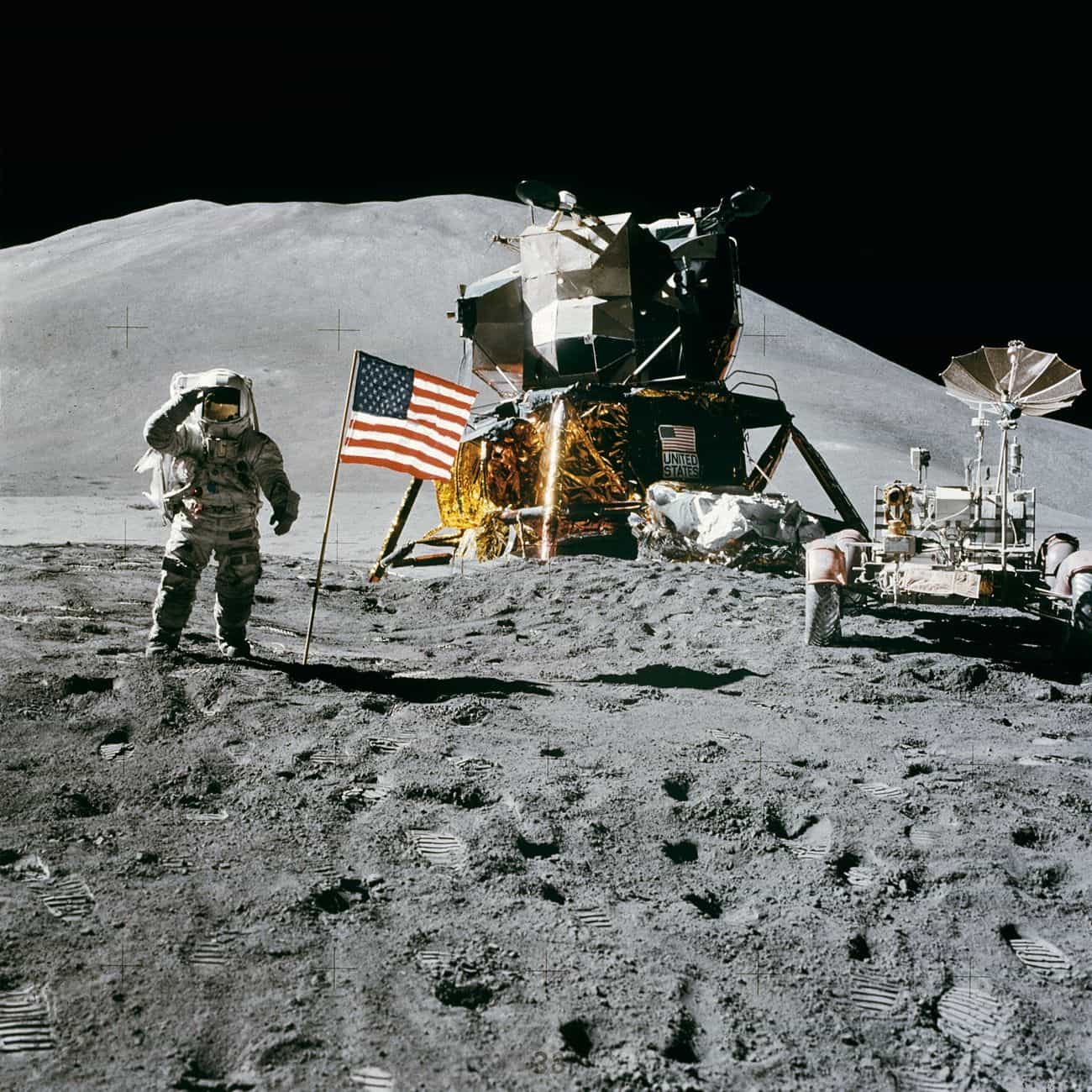
On July 20, 1969, the Apollo 11 mission marked a pivotal moment in history with Neil Armstrong and Buzz Aldrin becoming the first humans to walk on the moon. This achievement was the culmination of the Space Race between the United States and the Soviet Union, driven by political motives and technological advancements. The mission, a testament to human collaboration and innovation, not only demonstrated remarkable engineering but also inspired generations in science and exploration. Apollo 11 left a profound legacy, fostering public interest in space and environmental awareness, while reinforcing the notion that humanity can achieve the extraordinary through…
-
The History of the Chernobyl Disaster: A Comprehensive Overview

The Chernobyl Disaster of 26 April 1986 represents a pivotal moment in nuclear history, resulting from a combination of flawed reactor design, inadequate safety protocols, and bureaucratic negligence within the Soviet Union. The explosion at the RBMK reactor released significant radioactive material, particularly affecting the nearby town of Pripyat. Initial emergency responses failed due to poor communication and lack of preparedness, leading to severe radiation exposure among first responders. The long-term impacts include health issues, notably increased thyroid cancers, environmental contamination, and psychological trauma among evacuees. Chernobyl’s legacy has since prompted vital changes in nuclear safety regulations worldwide, emphasising the…
-
The Cuban Missile Crisis: A Historical Overview

The Cuban Missile Crisis was a pivotal 13-day confrontation during October 1962, significantly impacting U.S.-Soviet relations. Triggered by the discovery of Soviet missile sites in Cuba, located just 90 miles from U.S. shores, the crisis escalated tensions and brought both superpowers to the brink of nuclear war. Key decisions made by President Kennedy and his advisers showcased the importance of intelligence, measured responses, and diplomatic dialogue. Ultimately, backchannel communications led to a resolution, with the U.S. promising not to invade Cuba in exchange for the withdrawal of Soviet missiles. The crisis highlighted the necessity of crisis management and informed future…
-
The Evolution of China’s Space Program: A Journey Through Time

China’s Space Program has evolved significantly since its inception in the early 1950s, transitioning from initial rocketry and satellite development to a prominent role in global space exploration. The establishment of the China Academy of Launch Vehicle Technology and subsequent achievements, such as launching satellites and the Shenzhou human spaceflight missions, showcased China’s technological progress and strategic ambitions. Notable milestones include the Mars rover Tianwen-1 and the Tiangong space station, enabling international collaborations. China’s future aspirations involve deeper space exploration and sustainable practices, reaffirming its commitment to scientific advancement and global cooperation in the realm of aerospace.
-
The Artemis II Mission: A New Dawn in Lunar Exploration

The Artemis II mission marks a significant milestone in the pursuit of lunar exploration, set to launch soon. This crewed mission will carry astronauts on a journey beyond low Earth orbit, preparing for future expeditions to Mars. With four astronauts on board, it aims to test the Space Launch System (SLS) and Orion spacecraft’s capabilities. By validating critical technologies and conducting scientific research, Artemis II seeks to enhance our understanding of the Moon while promoting international collaboration in space exploration. Ultimately, this mission is pivotal in establishing a sustainable human presence on the Moon and inspiring future generations in STEM…
-
The Rich History of Yale University

Yale University, founded in 1701, has evolved from a small college into a prestigious global institution. Initially called the Collegiate School, it was established to educate clergy and informed citizens, later renamed in honor of benefactor Elihu Yale. Throughout its history, Yale has contributed significantly to American society, producing influential leaders and alumni involved in key national events, including the American Revolution and the Civil Rights Movement. The university’s academic evolution has included expanding its programs to encompass diverse fields, establishing graduate schools, and fostering innovation. Today, Yale continues to prioritize research, diversity, and global engagement while maintaining its commitment…
-
The History of Stanford University: A Legacy of Innovation and Excellence

Stanford University, founded in 1885 by Leland and Jane Stanford as a memorial to their son, has developed into a leading global institution in education and research. Initially emphasizing liberal arts and sciences, Stanford evolved into a major research university, making significant contributions to technology, medicine, and environmental studies. This transformation was fueled by visionary leadership and partnerships during pivotal moments, including World War II. The university’s commitment to inclusivity and social change is reflected in its evolving policies addressing diversity and activism. Today, Stanford educates future leaders through interdisciplinary approaches, cultivating innovation and social responsibility in a dynamic global…
-
The Historic Journey of the Apollo Program: A Leap into Space

The Apollo Program, initiated during the Cold War, exemplified human ambition and technological innovation, aiming to land astronauts on the Moon. It emerged from the U.S.-Soviet space race after the Sputnik launch, gaining momentum from President Kennedy’s 1961 commitment to lunar exploration. Notable missions included Apollo 11, when humans first walked on the Moon, and subsequent missions that expanded scientific knowledge. The program spurred technological advancements, transforming engineering and computer science, and fostered international collaboration in space exploration. Its legacy continues to inspire STEM fields and future missions, highlighting humanity’s aspiration to explore beyond Earth.
-
The History of NASA: Pioneering Space Exploration

NASA, established in 1958, has led space exploration and scientific achievements. Sparked by the Cold War, its formation aimed to address U.S. concerns after the Soviet Union launched Sputnik. Key milestones include the Apollo program, which achieved the first Moon landing in 1969, and the Space Shuttle era, providing reusable spacecraft for diverse missions. Collaborating internationally, NASA developed the ISS to advance science and diplomacy. Looking ahead, its Artemis program focuses on returning humans to the Moon and preparing for human Mars missions. Overall, NASA embodies the spirit of exploration, technology, and global cooperation as it pushes the frontiers of…
-
The Great Moon Race: A Journey to the Stars

The Moon race, driven by Cold War tensions, was a significant historical event showcasing the rivalry between the United States and the Soviet Union. Initiated by the launch of Sputnik in 1957, the race led to advancements in technology and space exploration, culminating in the U.S. Apollo 11 mission achieving the first lunar landing in 1969. This era not only inspired massive investments in STEM education but also fostered international cooperation in later space initiatives. The legacy of the Moon race continues to influence contemporary exploration efforts, reminding humanity of its ambitious spirit and the importance of pushing the boundaries…
-
The Life and Contributions of Alfred Nobel
Alfred Nobel, born in 1833 in Sweden, was an influential inventor and philanthropist, best known for inventing dynamite. His innovations revolutionized the construction and mining sectors but also sparked ethical debates due to their use in warfare. Disturbed by the destructive potential of his work, Nobel established the Nobel Prizes in his will, awarded first in 1901 to honor contributions to science, literature, and peace. Nobel’s life reflects a commitment to balancing innovation with moral responsibility. His legacy continues to inspire by promoting excellence and humanitarian ideals, urging future generations to prioritize knowledge, creativity, and societal betterment.
-
The History of Harvard University: A Journey Through Time
Harvard University, established in 1636, is the oldest higher education institution in the U.S., initially focused on training clergy. Over the centuries, it evolved significantly, expanding its curriculum beyond theology to include sciences and humanities driven by societal changes. Key milestones included the founding of the Lawrence Scientific School and the establishment of law programs, enhancing its multidimensional approach to education. The university engaged with pressing issues, such as the Civil War and global conflicts, while adapting to societal needs. In the 21st century, Harvard emphasizes interdisciplinary studies, diversity, and technology, preparing leaders to tackle contemporary challenges and contribute to…
-
Charles Darwin’s amazing Journey on the HMS Beagle (1831-1836) and the Theory of Evolution

Charles Darwin’s voyage on the HMS Beagle (1831-1836) was pivotal in shaping his theory of evolution by natural selection. During this expedition, he studied diverse ecosystems and collected specimens, challenging the notion that species were immutable. Key observations in South America and the Galápagos Islands, particularly regarding species’ adaptations to their environments, inspired his ideas on natural selection. Upon returning to England, Darwin meticulously analyzed his findings and developed his theory, culminating in the publication of “On the Origin of Species” in 1859. This work revolutionized biology and transformed societal views on life’s origins, leaving a profound legacy in science…
-
Unraveling the extraordinary history of Solar System

The history of solar system is one of the most fascinating chapters in human intellectual history. It spans thousands of years, from the first ancient stargazers who observed the night sky, to the modern scientists who sent probes and telescopes into space. Understanding our solar system—its planets, moons, and other celestial objects—has transformed how we perceive our place in the universe. This article traces the history of the discovery of the solar system, highlighting key figures, ideas, and technological breakthroughs that have shaped our knowledge of the space we inhabit.
-
Impact of Joseph Banks’ amazing Tahiti Voyage on Science (2025 update)

In the annals of scientific exploration, few figures stand as prominently as Joseph Banks, the British naturalist and botanist who accompanied Captain James Cook on his first great voyage of discovery aboard HMS Endeavour. Among the many destinations on this expedition, none was more iconic than the island of Tahiti. Banks’ arrival in Tahiti in 1769 marked not only a pivotal moment in his own life but also a significant chapter in the broader history of exploration, botany, and European encounters with the Pacific. His time on the island opened the door to a wealth of new botanical discoveries and…
-
The History of the Nuclear Bomb: how Manhattan Project changed the world

The invention of the nuclear bomb marked a transformative moment in history, reshaping World War II and global geopolitics. Its development stemmed from early nuclear physics discoveries, culminating in the Manhattan Project during World War II, which aimed to prevent Nazi Germany from building a bomb. The successful Trinity Test in 1945 demonstrated its destructive power, leading to the bombings of Hiroshima and Nagasaki, resulting in immense loss of life. This ushered in the Cold War and a nuclear arms race. The legacy of the nuclear bomb represents both scientific achievement and ethical dilemmas, highlighting the dual nature of human…