Introduction
Joseph Banks was an eminent botanist and natural historian, famed for his contributions to the field of science during the 18th century. His voyage to Tahiti in the late 1760s aboard HMS Endeavour, alongside Captain James Cook, provided him an extraordinary opportunity to study the rich biodiversity and intricate cultures of the South Pacific. This expedition was not merely a nautical adventure; it was a journey that led to significant botanical discoveries, keen observations of indigenous lifestyles, and substantial contributions to the fields of oceanography and navigation. As we delve deeper into Banks’ experiences in Tahiti, we will explore how his findings influenced scientific thought and how they reverberated through history, shaping our understanding of natural history and cross-cultural interactions.
Historical Background of Joseph Banks and His Journey to Tahiti
Joseph Banks was born on February 29, 1743, in London, England, into a wealthy family that encouraged his burgeoning interest in natural history. He began studying botany at an early age and worked closely with prominent botanists, including the renowned Peter Collinson. By the time he reached adulthood, Banks had established himself as a leading figure in scientific circles, largely due to his extensive plant collection and his keen interest in discovering new species.
In 1768, Banks was invited to join Captain James Cook on his first voyage to the Pacific Ocean, primarily to observe the transit of Venus across the sun. This journey offered Banks and his fellow scientists the chance to explore uncharted territories and vast oceans. As the Endeavour set sail from England, Banks was armed with a variety of scientific instruments, prepared to document and collect specimens from the natural world.
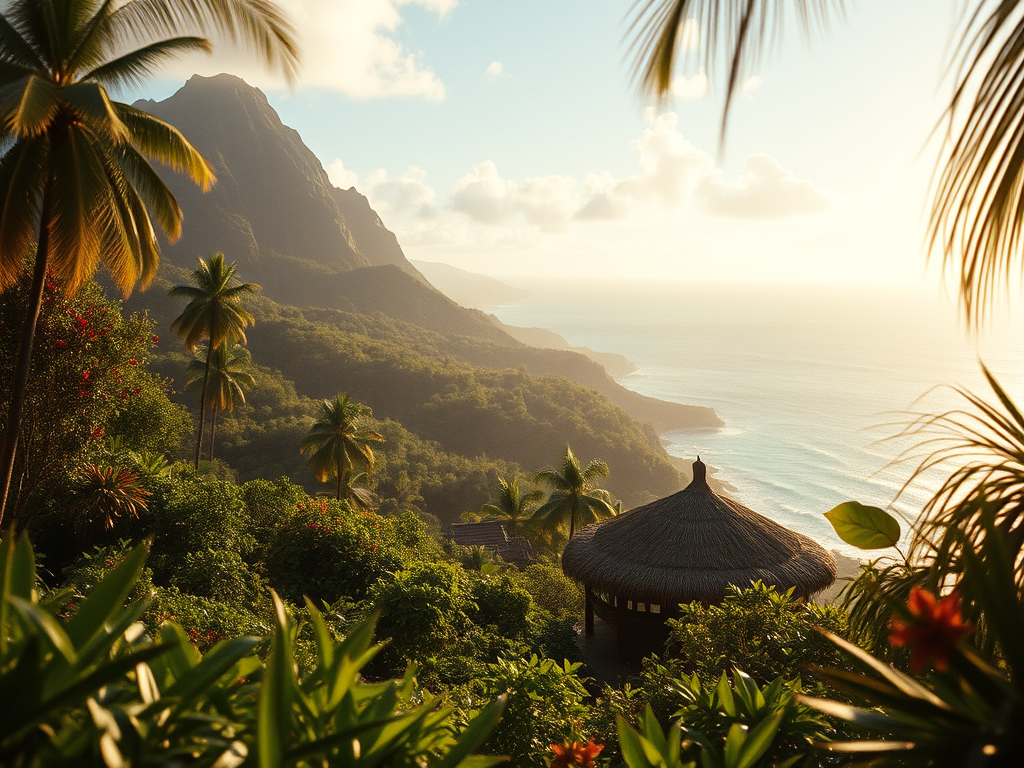
Arriving in Tahiti in April 1769, Banks was greeted by the striking beauty of the island’s landscapes, rich biodiversity, and the welcoming nature of its inhabitants. The landscape was adorned with lush vegetation, towering mountains, and pristine beaches, all of which had an indelible impact on Banks. His first impressions were of wonder and excitement as he witnessed flora and fauna that had never been studied nor documented by Western science.
While in Tahiti, Banks quickly became engrossed in the local ecosystem, meticulously documenting over 1,300 plant species, many of which were previously unknown to European science. His efforts to cultivate and illustrate these new species helped revolutionize the field of botany and fueled the scientific curiosity of his contemporaries. Armed with a naturalist’s zeal, the botanist explored the island’s forests, swamps, and coastal areas, gathering specimens and diligently recording his findings in detailed notebooks.
As he interacted with the indigenous people of Tahiti, Banks developed an understanding of their agricultural practices, spirituality, and social structures. The bond he forged with local inhabitants not only enriched his experience but also highlighted the necessity of cross-cultural exchanges in understanding the environment. Through thoughtful engagement, he learned about native plants’ uses in traditional medicine and ceremonial practices, providing invaluable insights into the island’s cultural fabric.
Banks’ time in Tahiti was pivotal not only for his scientific endeavors but also for his personal growth. The experiences stirred a deep respect for the local culture and ecology, setting a precedent for future interactions between Western explorers and indigenous peoples. His observations would later contribute to the development of hybrid scientific disciplines, merging anthropology, ethnography, and botany.
In many ways, Banks’ expedition to Tahiti was a microcosm that reflected the broader themes of the Age of Enlightenment: exploration, scientific inquiry, and cultural exchange. This multifaceted journey not only spurred Banks’ scientific achievements but also underscored the importance of questioning previously held ideas about the natural world and the cultures that inhabit it.
The Botanical Discoveries: Flora of Tahiti
Joseph Banks’ expedition to Tahiti marked a significant turning point in botany and the understanding of Pacific flora. Upon arrival, he was immediate struck by the sheer diversity of plant life, which included tropical trees, shrubs, and flowers displaying vibrant colors and forms unique to this region. Remarkably, many of these plants were previously undocumented in European scientific literature, offering Banks and his team an unparalleled opportunity to explore and catalog this rich biodiversity.
As a seasoned botanist, Banks meticulously recorded his observations, collecting specimens of numerous plant species. His collections included various medicinal plants, ornamental species, and staple crops that played crucial roles in the livelihood of the Tahitian people. Among his most notable discoveries were the breadfruit tree (Artocarpus altilis), which became famous for its potential to alleviate food shortages in tropical regions, and the noni plant (Morinda citrifolia), revered for its medicinal properties.
Banks also made systematic attempts to analyze the botanical characteristics of these species, employing a classification system that, while not standardized, reflected his scientific rigor. He studied the morphological features of plants, detailing aspects such as leaf shape, flower structure, and reproductive systems. This approach laid important groundwork for future botanical categorization and taxonomic studies.
One of Banks’ compelling methods for documenting plant life was through careful illustrations. He worked with artists, who sketched detailed images of the plants he encountered, capturing the exquisite details of their shapes, colors, and growth patterns. These illustrations became valuable assets for future generations of botanists, paving the way for visual references that greatly enhanced botanical education and communication.
Aside from documenting flora, Banks also engaged in experiments to cultivate various tropical plants back in England. He recognized the economic potential of these plants, leading to significant discussions on the benefits of colonial agriculture and commerce. For instance, his advocacy for introducing the breadfruit tree to the Caribbean sparked seeds of interest among planters who were eager to diversify their crops and reduce dependency on traditional food sources.
Through his examination of Tahiti’s plant life, Banks also gained insights into traditional Polynesian agriculture practices. He noted indigenous methods of cultivation, such as the development of taro patches and the use of irrigation systems to enhance crop yield. His respect for local knowledge and practices became evident as he acknowledged their sustainable methods that had produced thriving food systems for generations.
Furthermore, Banks’ botanical discoveries in Tahiti had far-reaching implications. They fueled a spirit of scientific inquiry across Europe, inspiring other naturalists and explorers to embark on their voyages to similar regions in hopes of unveiling the secrets hidden within unexplored lands. His meticulous documentation not only elevated the status of botany but also encouraged a broader appreciation for the interconnectedness of humanity and the natural environment.
In conclusion, Joseph Banks’ voyage to Tahiti was instrumental in expanding the scope of botanical science. His extensive collections, keen observations, and high-quality illustrations provided a foundation for future research and exploration, forever altering the trajectory of the study of plant life and its relationship to cultural practices. The discoveries made on this expedition went beyond pure scientific inquiry; they represented an awakening of curiosity about the world and our place within it—an ethos that continues to resonate in contemporary scientific endeavors.
Interactions with Indigenous People: Cultural Insights
Joseph Banks’ encounters with the indigenous people of Tahiti were profound and transformative, shaping his understanding of their culture, social structure, and ecological knowledge. Upon arrival, Banks was welcomed warmly by the Tahitians, who demonstrated hospitality and curiosity about the newcomers. This initial contact laid the foundation for the exchange of ideas and knowledge that would ensue.
One of the most striking aspects of Banks’ interactions was his respectful approach to learning about the local customs and social organization. He recognized the depth of knowledge possessed by the Tahitians regarding their environment. Delving into their agricultural practices, Banks observed how they cultivated crops such as taro, sweet potatoes, and breadfruit while carefully managing natural resources. The sustainable practices of the Tahitian people stood in stark contrast to European agricultural approaches, which often led to land degradation and depletion of resources. Through this lens, Banks gained a new appreciation for indigenous ecological knowledge, which had developed over centuries of close interaction with the environment.
Moreover, Banks noted the spiritual significance many plants held for the Tahitians, which added layers of meaning to their daily practices. He learned that certain species were associated with rituals, healing ceremonies, and social gatherings. For instance, the noni plant was often used in traditional medicine, illustrating the intertwining of health beliefs and botanical knowledge in Tahitian culture. Banks documented these connections, recognizing the value of understanding how local communities utilized native flora in ways that Western science often overlooked.
Furthermore, Banks encountered various cultural practices that intrigued him immensely. He observed traditional crafts such as weaving, tattooing, and carving, each steeped in cultural significance. His detailed accounts of Tahitian artistry and aesthetics shed light on the ingenuity and creativity of the local people. Banks’ respect for their craftsmanship was evident, as he took meticulous notes and sketches of the artisans at work, documenting not only the techniques they employed but also the narratives that informed their artistry.
Language emerged as another pivotal aspect of his cultural immersion. While Banks was not fluent in the Tahitian language, he made efforts to learn basic phrases, which allowed him to engage more meaningfully in conversations with local leaders and knowledgeable individuals. These exchanges facilitated the sharing of ideas and customs, allowing Banks to gain deeper insights into their worldview. He understood that language was not merely a tool for communication but a gateway to cultural understanding, enriching his interactions with the Tahitians.
Importantly, Banks was not solely focused on accumulating knowledge for scientific purposes; he also took great care to document his observations with sensitivity to the local culture. He approached the Tahitian way of life with an open mind, seeking to understand rather than impose his own beliefs. This attitude allowed him to forge connections and foster goodwill among the Tahitian community, ultimately enhancing the quality of his research and experiences.
The relationships that Banks developed with Tahitian leaders and people further influenced his work. He formed alliances with local chiefs, which allowed him to access remote regions that were rich in biodiversity. These collaborations were mutually beneficial; the Tahitians received assistance in trading for goods they wanted from the Endeavour crew, while Banks gained precious insights into the flora and fauna of the islands.
As a result of these meaningful interactions, Banks became a proponent of indigenous rights and the significance of cultural preservation. His experiences in Tahiti awakened him to the importance of understanding and respecting different cultures, particularly in the context of colonial rule, where local knowledge was often ignored or exploited. Banks’ careful documentation of Tahitian society provides a significant account of life in the Pacific at that time, serving as a historical perspective that contrasts the broader colonial narratives of exploitation and cultural erasure.
In summary, Joseph Banks’ interactions with the indigenous people of Tahiti were characterized by mutual respect and a genuine eagerness to learn. His immersion into Tahitian culture enriched his scientific pursuits and transformed his understanding of human-environment relationships. The insights gained from these encounters not only shaped Banks’ work but also led him to advocate for the value of indigenous knowledge as an essential component of scientific inquiry. This recognition remains vital in contemporary studies that seek to bridge Western science with indigenous wisdom.
Contributions to Oceanography and Navigation
Joseph Banks’ voyage to Tahiti positioned him as an influential figure in the fields of oceanography and navigation, thanks to the insights gained during his time at sea and in uncharted waters. While his primary focus was botany, his experiences contributed significantly to the understanding of ocean currents, tides, and navigation techniques, thus expanding the scientific community’s knowledge of the Pacific region.
Upon embarking on the Endeavour, Banks was greeted with a series of challenges associated with long voyages, including unpredictable weather, navigational hazards, and the complexities of maritime exploration. The experience of sailing through the vast expanse of the Pacific Ocean emphasized the importance of accurate navigation and understanding environmental factors that could affect voyage outcomes.
The first significant contribution Banks made to navigation was through his participation in the mapping and charting of the Pacific Islands. Collaborating closely with Captain Cook and the cartographers on board, he participated in the documentation of coastlines, as well as the identification of important landmarks and resource-rich areas. This meticulous mapping provided vital information for future explorers and traders seeking to venture into the Pacific. By undertaking these efforts, Banks contributed to a more knowledge-driven approach to navigation and maritime exploration.
In addition to mapping, Banks became acutely aware of the significance of ocean currents and their influence on navigating between islands. He observed how the winds and wave patterns affected the movement of their ship, which informed him about the complexities of ocean travel. Banks’ foundational observations of currents contributed to a better understanding of maritime geography, providing useful data for future navigators and explorers.
Moreover, Banks was keenly aware of the importance of astronomy in navigation. The Endeavour crew relied on celestial navigation to chart their course across the ocean. Onboard, Banks actively engaged in discussions regarding the use of mathematical calculations and observations of celestial bodies, such as the sun and stars, to determine their position at sea. His awareness of this navigational methodology underscored the interconnectedness between maritime exploration and scientific inquiry.
Banks’ contributions to navigation were not limited to practices aboard the Endeavour; they extended to his life post-voyage. Upon his return to England, he worked with the Royal Society and other scientific institutions to share his findings and promote the dissemination of navigational techniques. His insights into the practical challenges sailors faced laid the groundwork for developing more efficient methods of long-range navigation, thereby enhancing safety for future expeditions.
His engagement with both astronomy and navigation also aligned with a broader scientific movement during the Age of Enlightenment, where inquiries led to systematic advances in knowledge. Banks’ push for accurate and extensive mapping not only fed the appetite for exploration but also paved the way for systematic oceanography—an emerging discipline seeking to understand the sea’s physical properties and how it interacted with global climate and ecosystems.
Banks’ legacy in oceanography was further bolstered by his passion for exploring the relationship between the ocean and the land. He documented the impact of weather patterns on the islands’ biodiversity, noting the influence of oceanic currents on climatic conditions. This early recognition of environmental interconnectivity laid the groundwork for future ecological studies emphasizing adaptive strategies to handle maritime changes.
In summary, while Joseph Banks is primarily remembered for his contributions to botany, his experiences during the Tahitian voyage led him to play a significant role in advancing the fields of oceanography and navigation. His meticulous documentation and active participation in maritime practices emphasized the symbiotic relationship between science and navigation, ultimately influencing how future explorers approached ocean travel. Banks’ efforts not only represented a quest for knowledge but also underscored the importance of understanding the natural world and humanity’s place within it.
The Lasting Impact of Banks’ Voyage on Science and Society
Joseph Banks’ voyage to Tahiti had profound and lasting impacts on both scientific inquiry and society, shaping future exploration, botanical studies, and cross-cultural engagements. His experiences during the expedition contributed significantly to the broader narrative of knowledge-seeking in the Pacific region, influencing generations of scientists, botanists, and explorers who followed in his footsteps.
One of the foremost impacts of Banks’ voyage was the elevation of botanical science as a critical discipline. His extensive documentation of Tahitian flora not only expanded the existing knowledge of plant species but also garnered attention to the importance of field studies and systematic observations in botany. The detailed descriptions and illustrations of the species he encountered served as crucial references for future botanists, igniting interest in plant exploration across the Pacific and beyond. As a result, subsequent expeditions sought to build on Banks’ work, thus accelerating the pace of botanical taxonomy and classification.
Furthermore, Banks’ discoveries influenced global agricultural practices. The introduction of tropical crops, such as breadfruit, to new regions was a direct effect of his advocacy. His efforts demonstrated the potential for establishing sustainable food sources in different climates, particularly in the Caribbean and other tropical regions. This shift had lasting effects on colonial agriculture, enhancing food security and influencing trade networks. The legacy of these introductions continues today, as many of the crops that Banks championed have become staples in various diets worldwide.
In addition to botanical and agricultural advancements, Banks’ voyage left a marked impact on scientific institutions and their approaches to research. After returning to England, Banks became the president of the Royal Society, where he was pivotal in instituting a culture of inquiry that prioritized empirical evidence and interdisciplinary cooperation. Under his leadership, the Society emerged as a hub for scientific dialogue and a platform for disseminating knowledge gained from exploration. Banks’ commitment to collaboration established a model for scientific communities that continued and expanded into collaborative networks across Europe and beyond.
The cultural implications of Banks’ interactions with indigenous peoples during his voyage also resulted in far-reaching consequences. His respect for Native knowledge and practices inspired a re-examination of the relationships between colonizers and indigenous groups. Banks’ recognition of the value inherent in indigenous ecological understanding contributed to shifting perspectives, advocating for the importance of cultural diversity in scientific explorations. This message remains salient today as indigenous knowledge is increasingly recognized as a vital component in addressing contemporary environmental challenges.
Furthermore, Banks’ accounts of Tahitian society and culture fostered heightened interest in the South Pacific. His writings inspired not only scientific pursuits but also literary and artistic movements; his colorful descriptions painted an idyllic image of Tahiti that captivated the imaginations of artists, writers, and the public. The portrayal of the Polynesian way of life sparked a fascination with the concept of the “noble savage”—an idealized image of indigenous people that would factor significantly into European artistic and literary expressions throughout the 18th and 19th centuries.
Lastly, the impact of Banks’ voyage reached beyond his lifetime, influencing contemporary dialogues surrounding exploration, colonialism, and social ethics. The narrative built around exploration has increasingly incorporated considerations of moral responsibility, recognizing the complexities and ramifications of cross-cultural engagements. Banks’ experience calls for a nuanced understanding of exploration—one that values collaboration, respect, and acknowledgment of differing worldviews.
In conclusion, Joseph Banks’ voyage to Tahiti established a foundation that profoundly influenced both the scientific community and society at large. His dedication to documenting flora, merging botanical studies with cultural interactions, and promoting interdisciplinary dialogue resulted in advancements that resonate through time. The legacy of Banks’ expedition serves as a reminder that the pursuit of knowledge requires both an appreciation for the natural world and a commitment to understanding the diverse cultures that inhabit it. The journey of exploration, steeped in inquiry and respect, is as vital today as it was in Banks’ era.
Conclusion
Joseph Banks’ voyage to Tahiti was an extraordinary chapter in the history of scientific exploration, yielding significant insights into botany, oceanography, and cultural interactions. His meticulous documentation of over 1,300 plant species not only advanced botanical sciences but also fostered a respect for indigenous ecological knowledge that continues to inspire current ecological studies. Banks’ ability to engage thoughtfully with the Tahitian people and their culture shaped his understanding of the interconnectedness between humans and the environment.
The legacy of Banks extends far beyond his immediate discoveries, influencing subsequent generations of scientists and explorers. His contributions to navigation and oceanography emphasized the essential interplay between different scientific fields, paving the way for systematic studies in marine environments. Banks’ experience also sparked a reconsideration of relationships between colonizers and indigenous communities, highlighting the importance of cultural respect and understanding.
As we reflect on the impact of Joseph Banks’ journey, we can appreciate how the spirit of inquiry and stewardship remains relevant in our contemporary scientific endeavors. The quest for knowledge should always be accompanied by a commitment to fostering respectful exchanges with diverse cultures and valuing the rich tapestry of life on our planet. Banks’ expedition serves as a reminder of the transformative power of exploration; it is a story of wonder, discovery, and an enduring quest to understand our world.
Leave a Reply