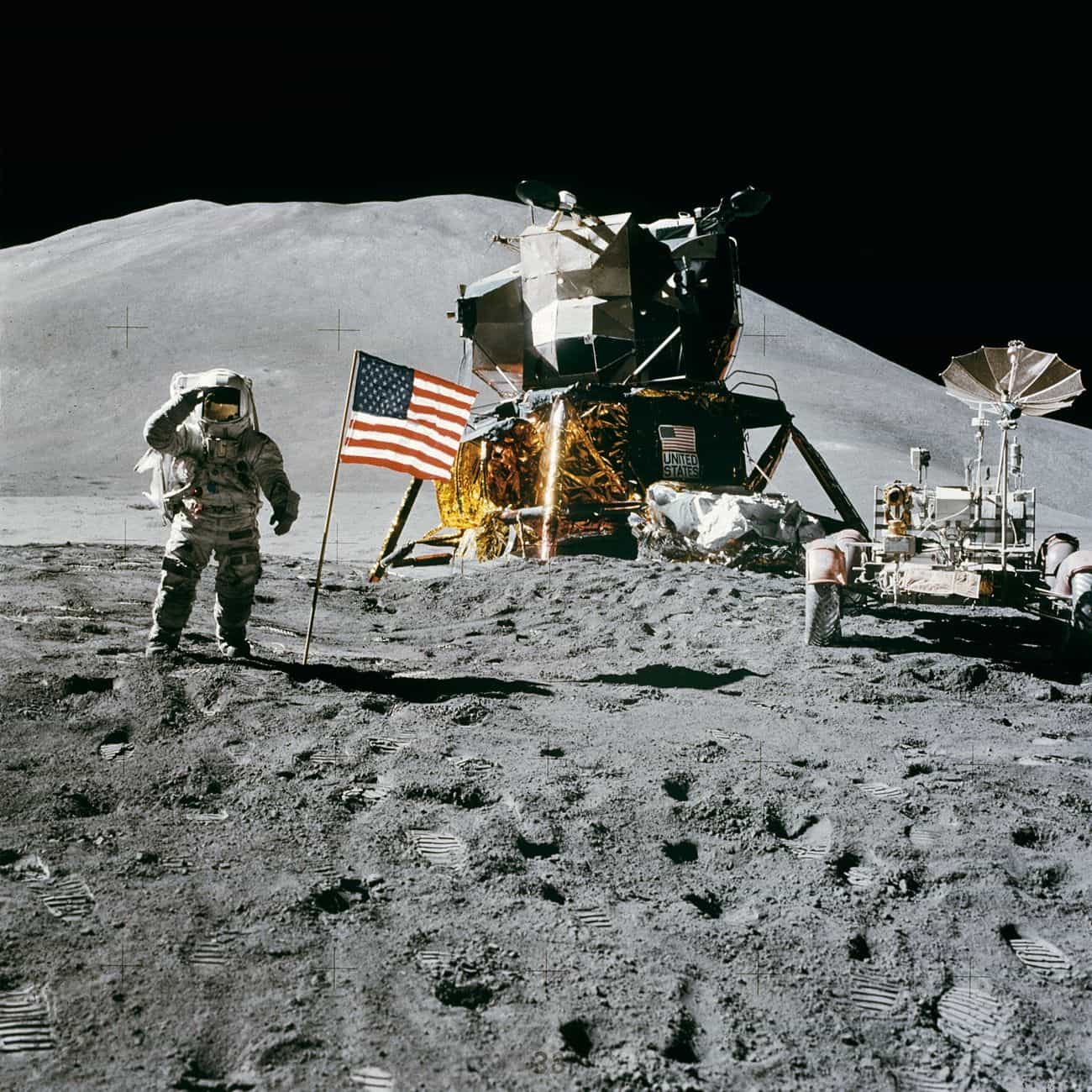
On July 20, 1969, humanity achieved one of its most monumental feats: landing on the moon. The Apollo 11 mission symbolized incredible technological advancement and human determination during a time of intense competition known as the Space Race. Astronauts Neil Armstrong and Buzz Aldrin became the first humans to set foot on lunar soil, capturing the imagination of millions around the globe.
As they descended from the Lunar Module, nicknamed The Eagle, their first steps marked not just a personal achievement but a collective triumph for all of mankind. This article will delve into the intricate history behind Apollo 11, covering the events leading up to the mission, the journey through space, the monumental landing, and the lasting legacy of this extraordinary milestone in human history.
Prelude to Apollo 11: The Space Race and Lunar Goals
The groundwork for the Apollo 11 mission began long before the spacecraft was ever constructed. The Space Race, sparked by Cold War tensions, saw the United States and the Soviet Union vying for supremacy in space exploration. It was a contest fueled by political motives, technological advancements, and national pride. In 1957, the Soviet Union shocked the world by launching Sputnik, the first artificial satellite. This event not only ignited the Space Race but underscored the urgency for the United States to accelerate its space developments.
In response to Sputnik, the U.S. government established NASA (National Aeronautics and Space Administration) in July 1958. NASA’s primary goal was to develop space technology and facilitate human space exploration. The political impetus for a manned moon landing intensified following President John F. Kennedy’s famous speech before Congress on May 25, 1961, where he committed the nation to achieving a moon landing before the decade’s end. This was more than just a scientific endeavor; it was a mission to demonstrate American ingenuity and resolve.
With funding and public support on the rise, NASA launched the Mercury and Gemini programs, which were essential in testing various spaceflight technologies and human capabilities in space. The Mercury program, which began in 1958, laid the foundational work for human spaceflight, with topics ranging from life support systems to astronaut training. Notably, John Glenn became the first American to orbit the Earth in 1962, showcasing that the U.S. had finally entered the space race in earnest.
The Gemini program followed, during which astronauts conducted spacewalks, practiced docking in space, and tested long-duration flights—paving the way for lunar missions. These early accomplishments, while impressive, could not compare to the ultimate objective: sending humans to the moon.
In 1966, NASA embarked on the Apollo program, intending to land humans on the lunar surface. The Apollo missions were meticulously planned, with significant test flights leading up to Apollo 11. Apollo 8 made history by being the first manned spacecraft to orbit the moon, providing crucial reconnaissance and proving that astronaut missions beyond Earth were feasible. Apollo 10, which executed a full dress rehearsal, further fine-tuned the landing procedures necessary for the impending lunar landing.
The culmination of the Apollo program was the Apollo 11 mission, an ambitious project that required unprecedented levels of collaboration, innovation, and dedication from thousands of engineers, scientists, and astronauts. Their efforts resulted in a spacecraft that could successfully transport humans to the moon and back. The program encompassed complex engineering challenges, pioneering computer technology, and the development of the Lunar Module, which was designed for landing on the moon’s surface.
As Apollo 11 approached its launch date, anticipation grew, marking a pivotal chapter in human history and space exploration. It was not just about exploring new frontiers but about leaving a legacy that would inspire generations to come.

The Launch: Countdown to History
The countdown to the Apollo 11 launch began at the Kennedy Space Center in Florida, where enthusiasm was palpable. The Saturn V rocket, towering at 363 feet, was the most powerful rocket ever built, capable of carrying astronauts beyond Earth’s orbit. As the launch date approached, there was a flurry of activity: technicians conducted final checks, media covered the event extensively, and public excitement reached a fever pitch.
On July 16, 1969, the world watched as Neil Armstrong, Michael Collins, and Buzz Aldrin stepped into the Apollo 11 spacecraft. The launch window had been meticulously calculated, with timing crucial for a mission intended to land on a moving celestial body. As Apollo 11’s engines roared to life, a heart-stopping liftoff commenced. The sheer power of the Saturn V propelled the crew towards the stars, breaking free from Earth’s gravitational pull.
The journey to the moon lasted approximately eight days. During this remarkable voyage, the crew experienced a blissful silence in the darkness of space, punctuated only by the occasional communication with Mission Control. It was a moment where they left the familiar behind and ventured into the unknown, marking mankind’s first steps toward extraterrestrial exploration.
Throughout the journey, the astronauts conducted important tasks, including system checks and scientific observations. They also took time to admire the breathtaking views of Earth receding into the distance, providing a profound realization of the fragility of our planet. The iconic “Earthrise” photograph taken during this journey later became emblematic of the environmental movement, reminding humanity of its shared responsibility for Earth.
On July 19, Apollo 11 entered lunar orbit, impressively executing a carefully choreographed series of maneuvers to position itself for the landing. The world held its breath as they prepared to make history. The moment of lunar descent was both exhilarating and tense, capturing the attention of millions. The Lunar Module, named The Eagle, separated from the Command Module, piloted by Collins, leaving Armstrong and Aldrin ready to descend to the surface.
As the time approached for The Eagle to land, the entire mission hinged on precision and timing. The astronauts operated the spacecraft with utmost focus, navigating the complicated terrain of the moon and maintaining communication with mission control. This maintained the thread of humanity intertwining with technological advancements, emotions, and aspirations as they all journeyed to the cosmos together.
Through a series of perfectly executed maneuvers and historical moments, Apollo 11 succeeded in setting the stage for what would become an indelible mark in human history. The countdown to the launch didn’t just signify embarking on a mission—it became the catalyst for a transformation in how humans understood their place in the universe.

Landing on the Moon: The Eagle Has Landed
The landing of Apollo 11 on the moon was a moment steeped in tension and excitement, a culmination of years of rigorous planning and testing. On July 20, 1969, Neil Armstrong and Buzz Aldrin piloted The Eagle towards the Sea of Tranquility, an area chosen for its flatness and reduced risks for landing.
The countdown to initiate the descent brought palpable anxiety in the control room. As The Eagle approached the lunar surface, Armstrong and Aldrin faced unexpected challenges, particularly in the form of boulders and craters which were not visible during earlier reconnaissance flights. Armstrong’s ability to manually pilot the Lunar Module became crucial, employing his extensive training and quick thinking. This ensured the craft would land safely despite fluctuating altitudes and feedback from the on-board systems.
Just minutes before landing, the guidance computer sent alarming signals indicating that they were about to land in a less-than-ideal spot. Armstrong took over manual control to navigate The Eagle away from potentially hazardous terrain, showcasing an extraordinary level of piloting skill and composure under pressure. With 20 seconds of fuel remaining, he completed a dramatic final descent, landing the module on the moon’s surface at 2:56 UTC.
At that moment, the world erupted in celebration; millions watched on television as Neil Armstrong declared, “Houston, Tranquility Base here. The Eagle has landed.” The feeling of achieving the seemingly impossible resonated deeply, symbolizing a historic victory for science, exploration, and humanity itself.
The success of The Eagle’s landing was a testament to the collaborative efforts of countless individuals who contributed to the mission, incorporating the latest technologies and scientific advancements of the time. This profound accomplishment went beyond just technical prowess; it was a triumph of the human spirit, inspiring a sense of unity and hope.
As Armstrong and Aldrin prepared to exit The Eagle, they suited up in their pressure helmets and checked their systems. The door to the lunar module opened, revealing the breathtaking view of the moon—an expanse of grey dust and stark craters under a brilliant black sky. Stepping out onto the moon’s surface would not just fulfill the dream of landing on the moon but redefine the limits of human potential and exploration.
Once outside, the astronauts meticulously collected samples and set up scientific experiments, marking the occasion with historical significance. This moment wasn’t just about personal achievement; it symbolized the relentless pursuit of knowledge and exploration. Armstrong’s first steps left footprints on lunar soil that would last for centuries, emblematic of an era that dared to reach for the stars.
In summarizing the monumental feat of landing Apollo 11 on the moon, it became clear that this achievement was a reflection of collective human trust and resilience. The successful landing marked a new era in humanity’s journey into space—a precursor to future missions that would continue to explore and push the boundaries of our understanding of the universe.
The First Steps: Neil Armstrong and Buzz Aldrin’s Historic Walk
After successfully landing on the lunar surface, the moment everyone had been waiting for had arrived: Neil Armstrong prepared to take the first step on an uncharted world. It was a landmark event that stood to change not only the trajectory of space exploration but also how humanity perceived its place in the universe. Millions listened in awe as Armstrong transmitted a message that would echo through history: “That’s one small step for man, one giant leap for mankind.”
With cautious steps, Armstrong descended the ladder of The Eagle, carefully placing his foot on the powdery soil. The moon’s surface glistened under the unforgiving sunlight, creating an otherworldly scene. Aldrin followed suit, and together they took their first steps, exploring the lunar landscape. The scene was filled with emotions of awe and wonder, where every movement manifested the culmination of human perseverance.
The astronauts conducted experiments, set up scientific equipment, and eagerly collected lunar rocks and soil for analysis back on Earth. Their activities were meticulously choreographed to maximize the limited time they had on the moon’s surface. The low gravity allowed for dynamic movements, which stood in contrast to the familiar weight of Earth—each bounce and leap an exploration of newfound freedom.
The site they landed on provided unique opportunities to study the moon’s landscape and geology, and the samples they collected would prove invaluable to scientists for years to come. They spent approximately two and a half hours outside The Eagle, yet every moment was dense with activity and unprecedented discovery.
During their excursion, the astronauts experienced a profound sense of isolation and wonderment, contrasting the chaos and noise of Earth. For the first time, they witnessed the planet from a distance, triggering an overwhelming realization of Earth’s fragility in the vastness of space. This moment was pivotal—this wasn’t merely a scientific mission; it became a poignant representation of human unity, prompting a sense of duty to protect the only home humanity had ever known.
In addition to their walk, Armstrong and Aldrin had the historic duty to leave something behind: a flag, proudly proclaiming their achievement and human presence on the moon. The American flag, surrounded by scientific instruments like the seismometer and retroreflector, not only signified national achievement but also set a precedent for future lunar exploration.
Their lunar walk became a celebration of curiosity, exploration, and our intrinsic desire to seek answers about our existence. Despite the challenges faced during their mission, Armstrong and Aldrin exemplified the determination of humanity to reach beyond what was once thought impossible. In a few short hours, they became not just astronauts but also ambassadors of human potential.
As they returned to The Eagle, the journey to return to Earth rapidly approached. The lunar walk left a legacy that would influence generations. Their accomplishments inspired countless individuals to pursue careers in science, technology, engineering, and mathematics (STEM), paving the way for future explorations beyond our planet.
These first steps were etched into history, reminding humanity of its innate desire to explore the unknown and dream of possibilities far beyond the stars.

Legacy of Apollo 11: Impact on Space Exploration and Culture
The Apollo 11 mission not only marked a specific moment in time; it left an indelible mark on history, influencing countless aspects of society, culture, and the future of space exploration. In the years that followed, humanity witnessed a profound shift in perspective about our relationship with the universe and our capacity to explore it.
Apollo 11 reinvigorated interest in space exploration and scientific inquiry. The technological advancements developed during the Apollo program had broader applications, propelling advancements in satellite technology, telecommunications, and computer science. Innovations initially designed for the mission later contributed to various sectors, including medicine, engineering, and aviation.
Moreover, the mission sparked a cultural phenomenon, inspiring art, literature, and film. The phrase “one giant leap for mankind” transcended its original context, becoming a rallying cry for progressive ideals and the pursuit of knowledge. The Apollo 11 mission galvanized public interest in space and solidified the importance of investing in science and education.
In addition to transforming technology and culture, the mission catalyzed political discourse around space policy and international cooperation. The realization that nations could collaboratively embark on space missions led to significant advancements in international relations, culminating in joint ventures such as the International Space Station (ISS). The legacy of Apollo 11 was not just a reflection of political ambition but also highlighted the prevailing belief that humanity could achieve great things when united in common purpose.
Furthermore, Apollo 11 reshaped how people viewed Earth from afar. The iconic photos taken from the moon influenced the environmental movement, emphasizing the need for stewardship of our planet. Scientific organizations, activists, and educators used these images to advocate for environmental awareness, realizing that Earth was a shared home that needed protection.
As humans advanced further into the cosmos, including subsequent Apollo missions and beyond, the foundational principles of Apollo 11 remained present. Its spirit of exploration, collaboration, and a quest for knowledge persisted, enabling future missions to Mars and beyond.
The mission inspired generations, reminding humanity that the cosmos holds endless possibilities waiting to be discovered. The pioneering endeavors of Armstrong, Aldrin, and Collins pushed the boundaries of understanding, fortifying our innate human curiosity and ambition to uncover the vast universe around us.
Even today, as global attention shifts towards new space endeavors, including private sector involvement, the legacy of Apollo 11 will forever resonate as a symbol of aspiration. It signifies our potential to overcome challenges, break barriers, and explore the mysteries of the universe. The first steps taken on the Moon were not just a personal achievement; they were a monumental leap in human achievement—an affirmation of our ability to dream, discover, and define our destiny among the stars.
Conclusion
The Apollo 11 mission was not merely an extraordinary technical feat but a profound milestone in human history. The journey to the moon brought together science, perseverance, and the spirit of exploration, culminating in the first steps taken by Neil Armstrong and Buzz Aldrin on the lunar surface. This mission ignited imaginations worldwide, heralding a new era of technological advancements and cultural transformation.
As we reflect on Apollo 11, we honor not only the astronauts who ventured into unknown territory but also the thousands of men and women who contributed to this historic achievement. Their collective dedication and ingenuity paved the way for future explorations, inspiring generations to pursue careers in science and technology.
The legacy of Apollo 11 transcends its time, serving as a reminder that through unity and collaboration, humanity can achieve seemingly impossible dreams. As we look ahead to future space exploration endeavors, the spirit of Apollo 11 continues to inspire us to reach for the stars and dream of new horizons with every new mission.
Sources Consulted
- NASA. “Apollo 11 Mission Overview.” NASA Apollo 11
- National Geographic. “The Apollo 11 Moon Landing.” National Geographic
- History.com. “Apollo 11.” History
- Smithsonian National Air and Space Museum. “Apollo 11.” Smithsonian
- BBC Future. “What the Apollo 11 mission taught us.” BBC Future
Leave a Reply