Category: Tourism & Travel

Explore the world with our comprehensive travel guides, tips, and destination reviews. From hidden gems to popular hotspots, we provide expert advice on everything from planning your trip to travel hacks, accommodations, and local experiences. Start your next adventure with insightful content that helps you travel smarter and create unforgettable memories.

  • Edinburgh Castle History: Scotland’s Fortress of Kings and Legends

    Edinburgh Castle History: Scotland’s Fortress of Kings and Legends

    Introduction

    Edinburgh Castle stands proudly atop Castle Rock, a sentinel overlooking Scotland’s capital city with a history that spans over a millennium. This iconic fortress has played a significant role in the nation’s story, serving as a royal residence, military stronghold, and symbol of Scottish heritage. The castle’s formidable walls and storied past are steeped in legends of kings, battles, and resilience against invasions, making it a central feature in Scotland’s cultural narrative. Beyond its historical value, Edinburgh Castle is a bustling tourist destination, offering visitors insights into Scotland’s royal lineage and architectural evolution. From a fortress of antiquity to its current status as a UNESCO World Heritage Site, the castle invites exploration and admiration, chronicling the enduring spirit of the Scottish people. This exploration of Edinburgh Castle history will illuminate its multifaceted significance in shaping Scotland’s identity.

    The Origins of Edinburgh Castle

    Edinburgh Castle’s origins can be traced back to the early medieval period, with evidence suggesting that a fort was established on Castle Rock as far back as the 9th century. Archaeological findings reveal that the site may have been used intermittently as a royal residence and military stronghold for centuries. The castle’s strategic position provided a natural defense, positioned atop a volcanic rock, making it nearly impregnable.

    The earliest documentary reference to Edinburgh Castle dates from the 12th century when it was described in the context of Scottish kingship and governance. It is believed that King David I, the first king of Scotland, played a pivotal role in the development of the castle, transforming it into a significant royal residence. By the 12th century, Edinburgh was emerging as the political center of Scotland, making the castle an essential stronghold for defending royal authority.

    Throughout the medieval period, Edinburgh Castle saw numerous modifications and expansions. The prominent St. Margaret’s Chapel, the oldest surviving structure in the castle, was built around the end of the 11th century and serves as a testament to the site’s religious significance during this time. Named after King Malcolm III’s wife, Queen Margaret, this chapel reflects the blend of royal and ecclesiastical authority that characterized Scotland’s early history.

    As tensions with England escalated, Edinburgh Castle’s importance increased as a military fortress. The castle witnessed a series of sieges and battles, contributing to its reputation as Scotland’s primary royal fortress. During the Wars of Scottish Independence in the late 13th and early 14th centuries, the castle changed hands several times. Notably, in 1296, it was captured by the English King Edward I, who recognized its strategic value and fortified the castle further. The Scots, led by figures such as William Wallace and Robert the Bruce, sought to reclaim the castle, marking it as a significant site in the struggle for Scotland’s freedom.

    The aftermath of the Wars of Independence left Edinburgh Castle in a state of disrepair, but it was soon revived as Scotland’s symbol of resilience. The 15th and 16th centuries saw extensive renovations under kings such as James IV and James V, who aimed to enhance its stature and functionality. This era heralded architectural splendor, with the Great Hall and various royal apartments being built or remodeled to accommodate the needs of the monarchy.

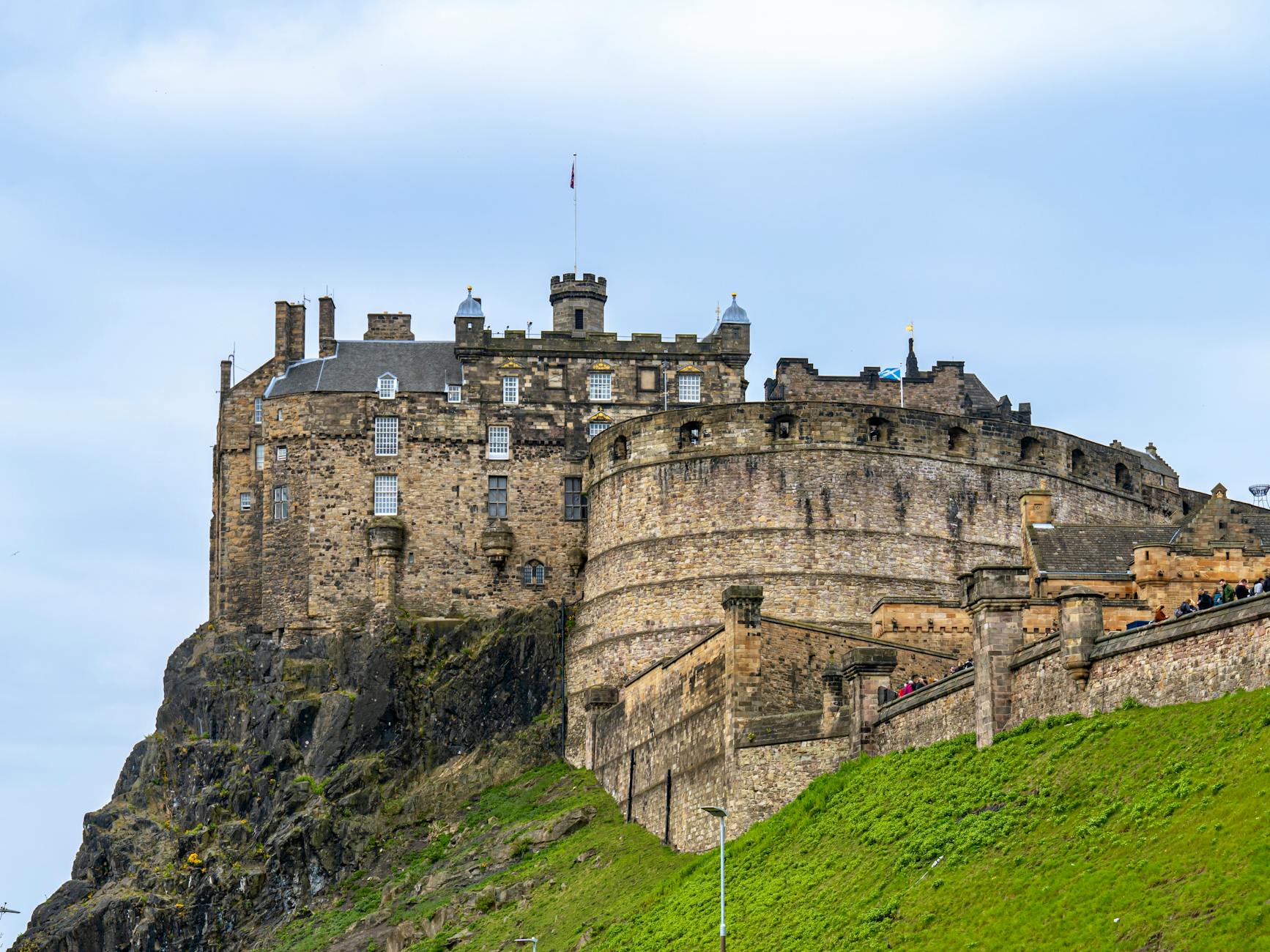
    edinburgh castle on the mountain
    The Edinburgh Castle

    With the advent of the 17th century, Edinburgh Castle began to transition from a royal residence to a military stronghold. The castle’s strategic location continued to make it a focal point during England and Scotland’s tumultuous relationship. The English Civil War and subsequent conflicts saw the castle repel attacks and withstand sieges, reinforcing its reputation as an enduring fortress of defense.

    Moreover, the castle was central during the Jacobite uprisings in the 18th century, where it served both as a stronghold for loyalist forces and as a symbol of the struggle against British authority. This era further solidified Edinburgh Castle’s place in Scottish lore, intertwining its history with the stories of various key figures who fought for Scotland’s sovereignty.

    In summary, the origins of Edinburgh Castle are deeply rooted in Scotland’s history, reflecting its evolution from a humble fort to a formidable stronghold of power. Its legacy as a royal residence and military fortress embodies not only the tales of kings and battles but also the enduring spirit of the Scottish people. As one of the oldest fortified places in Europe, Edinburgh Castle remains a key component in understanding Scotland’s national identity and historical journey.

    Key Historical Events at the Castle

    Edinburgh Castle has been the backdrop to numerous pivotal historical events that have shaped Scotland’s history. From royal ceremonies to decisive battles, the castle has played a crucial role in the unfolding narrative of the nation.

    One of the most notable events occurred during the Wars of Scottish Independence. The castle’s strategic significance attracted significant attention from both Scottish and English forces. In 1296, the castle fell into the hands of Edward I of England following a fierce siege. This event marked the beginning of a prolonged and turbulent relationship between Scotland and England, as the castle became a symbol of conflict and resistance. The Scots, under the leadership of figures such as William Wallace, deemed Edinburgh Castle a crucial target for recapture. The skirmishes during this period brought the castle to the forefront of Scotland’s fight for independence, with various sieges taking place over the years.

    The castle also played an essential role during the reign of Mary, Queen of Scots. In 1566, she gave birth to her son, James VI, in the castle, making it a site of royal importance. This event had profound implications, as James VI would later unite the crowns of Scotland and England, establishing the Stuart dynasty. The castle was a center for political maneuvering and intrigue during this era, marking it as a focal point in the saga of Scotland’s monarchy.

    The Civil War in the 17th century thrust Edinburgh Castle back into the spotlight. In 1650, the fortifications came under siege by Oliver Cromwell’s forces. The castle, however, demonstrated its enduring nature, withstanding the siege and remaining loyal to the Scottish cause. This event highlighted the castle’s role as not just a military stronghold but also a symbol of Scottish nationalism and resilience during tumultuous times.

    edinburgh castle on a cloudy autumn day
    The Edinburgh Castle

    Entering the realm of the Jacobite uprisings, Edinburgh Castle again played a significant part. In 1715 and 1745, the castle became the site of conflict between Jacobite forces seeking to restore the Stuart dynasty to the throne and government troops loyal to the Hanovers. The castle was a vital garrison for loyalist forces, underscoring its strategic importance in maintaining control over Scotland during this period of unrest. The fallout from these uprisings further solidified the castle’s status as a national symbol, representing both the aspirations and struggles of the Scottish people.

    Following the Jacobite uprisings, Edinburgh Castle transitioned into a military installation. In the late 18th and early 19th centuries, the castle was modernized to accommodate the evolving needs of the British military. It served as a barracks, adaptation that reflected changing warfare dynamics. This shift marked the castle’s transition into an enduring military stronghold, as it evolved from being a royal residence.

    In the 20th century, Edinburgh Castle underwent restoration efforts, emphasizing its historical importance and ensuring its preservation. It became a central site for national remembrance, commemorating those who served in the military and in various conflicts. Today, the castle hosts daily military ceremonies, including the iconic One O’Clock Gun, which fires daily as a symbol of Edinburgh’s history and military tradition.

    In summary, the key historical events at Edinburgh Castle represent a labyrinth of political, military, and royal significance. The castle has witnessed the rise and fall of empires, the birth of monarchs, and the struggles of a nation for independence. Each event contributes to the grand tapestry of Scotland’s history, ensuring that Edinburgh Castle remains an enduring symbol of national identity and heritage.

    Architectural Features and Significance

    Edinburgh Castle boasts an array of architectural features that reflect its long and varied history. As one of Scotland’s most iconic structures, the castle embodies the evolution of military architecture from the medieval period to contemporary times, showcasing a blend of functional design and historical significance.

    The most striking element of the castle is its location atop Castle Rock, which not only provides dramatic views of the city but also enhances the fortress’s defensive capabilities. The sheer cliffs that surround the castle create a natural barrier, making it an ideal site for a stronghold. This strategic placement has been instrumental in its survival through numerous sieges and military conflicts.

    Upon entering the castle, one is greeted by the imposing gatehouse, constructed in the early 16th century. The gatehouse is fortified with a drawbridge and portcullis, highlighting the castle’s military function. Architectural features such as arrow slits and thick stone walls are reminders of the castle’s defensive purpose. The entrance sets the tone for the historical journey within its walls.

    Key structures within the castle include the Crown Jewels and the Stone of Destiny, both housed in the Crown Room. The Stone of Destiny, a symbol of Scottish kingship, is believed to have been used in the coronation of Scottish monarchs for centuries. The Crown Jewels are a visual representation of Scotland’s royal history, crafted from precious materials that enhance their significance. This room serves not only as a display of royal regalia but also as a reminder of Scotland’s sovereign heritage.

    St. Margaret’s Chapel, the oldest surviving building within Edinburgh Castle, offers insight into medieval architectural styles. Built in the Romanesque style, the chapel features a simple yet elegant design, with a semi-circular apse and narrow windows that let in ethereal light. The chapel is dedicated to Queen Margaret, reinforcing the connection between the castle and the early history of Scottish royalty.

    Another notable building is the Great Hall, built during the reign of James IV in 1511. The Great Hall is a stunning example of Tudor architecture, characterized by its high timber ceiling and large windows. It served as the venue for royal banquets and important ceremonies, making it a central space in the castle’s social life. The grandeur of the hall reflects the castle’s transformation from a military fortress into a royal residence.

    The National War Museum, located within the castle grounds, showcases an extensive collection of military artifacts that span Scotland’s turbulent history. The museum’s architecture harmoniously integrates with the existing structures, offering visitors a comprehensive understanding of Scotland’s military past. The displays within the museum highlight the significance of the castle not only as a royal stronghold but also as a military center.

    people walking beside brown concrete building
    The Edinburgh Castle

    As one explores the castle grounds, the panoramic views of Edinburgh and the surrounding landscape underscore the strategic advantages of its location. The battlements offer a vantage point of both the city and the historical landscape of Scotland, emphasizing the interplay between geography and military architecture.

    Through centuries of conflict, Edinburgh Castle has undergone numerous renovations and restorations to adapt to the changing needs of warfare and royal representation. The architectural features of the castle, from its fortifications to its grand halls, reflect the evolution of both military strategies and royal aspirations. Each structure within the castle tells a story of resilience, power, and Scottish identity.

    In conclusion, the architectural significance of Edinburgh Castle is multifaceted, encompassing its defensive, royal, and cultural roles throughout history. As a fortress, it represents the enduring spirit of Scotland and stands as a monument to the nation’s past. The blend of military and regal architecture ensures that Edinburgh Castle remains not only a vital part of Scotland’s historical narrative but also an architectural marvel that draws visitors from around the world.

    Royal Connections and Notable Figures

    Edinburgh Castle is not only a formidable fortress but also a significant repository of Scotland’s royal history, intricately connected to legendary figures who shaped the nation. These royal connections and notable figures lent the castle an importance beyond its military might, marking it as a seat of power and a cherished symbol of Scottish identity.

    One of the most significant figures associated with Edinburgh Castle is King David I, who ruled from 1124 to 1153. He is credited with transforming Edinburgh into a major political center, and it was during his reign that the castle began to take shape as a royal residence. David I was a pivotal figure in the development of Scottish Christianity, establishing monasteries and promoting religious reforms. His influence extended beyond military affairs, fostering a sense of national identity that would define Scotland’s cultural landscape.

    Following King David I, the castle was home to various Scottish monarchs, each leaving their mark on its history. One such monarch was Mary, Queen of Scots, who reigned in the tumultuous 16th century. Her connection to the castle is particularly poignant, given that it was there she gave birth to her son, James VI, in 1566. This event would ultimately change the course of Scottish history when James VI ascended to the English throne, uniting the crowns of Scotland and England.

    Mary’s tenure in the castle was marked by immense political instability, and she often sought refuge within its walls during times of crisis. Her association with Edinburgh Castle symbolizes the interplay of royal power, personal tragedy, and national identity, as she navigated her complex role as a female monarch in a patriarchal society.

    The castle is also linked to the legendary warrior Robert the Bruce, who led Scotland’s struggle for independence during the early 14th century. Although Bruce himself did not reside in the castle, his legacy is deeply entwined with the fortress’s symbolic importance in the fight for Scottish sovereignty. The castle renamed after him exemplifies national pride and determination, as it became a focal point for those determined to restore Scotland’s independence from British rule.

    Another notable figure is James IV, whose reign marked a period of cultural renaissance in Scotland during the late 15th and early 16th centuries. He initiated significant architectural developments within the castle, such as the construction of the Great Hall, which became a hub for royal festivities and gatherings. James IV’s contributions to the castle highlight the intertwining of governance and culture, emphasizing the castle’s role as both a military stronghold and a center of Scottish court life.

    edinburgh castles gate
    The Edinburgh Castle

    The castle remained pivotal during the Jacobite uprisings, particularly during the 18th century. Figures such as Bonnie Prince Charlie sought to reclaim the Scottish throne for the Stuart dynasty, and the castle’s defenses became essential in the tumultuous battle for power. The events surrounding the Jacobite uprisings further reinforce the castle’s symbolism as a bastion of Scottish identity, as it echoed the sentiments of a nation striving for autonomy.

    In the 20th century, the castle continued to serve as a ceremonial site, commemorating Scotland’s war heroes and fostering a contemporary connection to its historical legacy. The annual Ceremony of the Keys, a time-honored tradition, reinforces the castle’s role not only as a military fortress but also as a ceremonial heart of the nation.

    In conclusion, Edinburgh Castle’s royal connections and notable figures weave an intricate narrative of Scotland’s history. Each monarch’s legacy is etched into the walls of the castle, encapsulating the struggles, aspirations, and indomitable spirit of the Scottish people. As a site of historical significance, Edinburgh Castle stands as a monument to both the triumphs and tragedies of Scotland’s royal lineage, ensuring its place in the heart of the nation’s identity.

    The Castle Today: Preservation and Tourism

    Today, Edinburgh Castle stands as one of Scotland’s most popular tourist destinations, attracting millions of visitors each year who come to experience its rich history and stunning architecture. The castle has been transformed from a military stronghold to a key heritage site that plays a vital role in preserving Scotland’s history and culture.

    Efforts to preserve Edinburgh Castle have been ongoing for decades, ensuring that the structure remains intact for future generations. The castle is managed by Historic Environment Scotland (HES), which is committed to conserving and promoting Scotland’s historic sites. Their work includes maintenance and restoration projects that address the wear and tear of the centuries, ensuring that the castle’s intricate architectural details and historical artifacts are preserved.

    The interior of the castle offers visitors a captivating glimpse into Scotland’s royal history. The Crown Jewels and the Stone of Destiny, both central elements of Scottish identity, are major draws for tourists. The Crown Jewels, displayed in the Crown Room, symbolize Scotland’s royal heritage, while the Stone of Destiny serves as a reminder of the nation’s historical struggle for sovereignty. These artifacts, carefully preserved and displayed, evoke a sense of pride and connection to Scotland’s past.

    Visitors to the castle are also invited to explore various exhibitions that delve into Scotland’s rich history. The National War Museum, located within the castle, houses an extensive collection of military artifacts and memorabilia. Interactive displays and informative guides provide context to the exhibits, making the museum an engaging experience for all ages. This focus on education reinforces the castle’s commitment to sharing its history with the public, fostering a deeper understanding of Scotland’s military and cultural heritage.

    The castle hosts numerous events throughout the year that connect visitors to Scotland’s living traditions. From military reenactments to concerts, these events contribute to the vibrant atmosphere of the castle. The iconic One O’Clock Gun, fired every day at 1 PM, has become a cherished tradition for both locals and tourists alike. It provides a unique opportunity to experience Scotland’s heritage in a lively and engaging manner.

    The stunning architecture and panoramic views from Edinburgh Castle also attract visitors seeking breathtaking scenery. Standing atop Castle Rock, the castle offers unparalleled views of the city of Edinburgh and beyond, making it a popular spot for photography and reflection. The juxtaposition of the fortress against the backdrop of the cityscape highlights the enduring spirit of Scotland, transcending the centuries that have passed.

    Efforts to enhance accessibility and visitor experience have also been a priority. Improvements to visitor facilities, including information centers and guided tours, ensure that guests can navigate the castle and learn about its history comfortably. Multilingual resources and guided tours cater to a diverse audience, welcoming international visitors and fostering a sense of connection to Scotland’s heritage.

    As a UNESCO World Heritage Site, Edinburgh Castle plays a crucial role in promoting Scotland’s cultural tourism. The castle’s iconic status contributes significantly to the local economy, drawing tourists from around the globe and supporting businesses in the area. This influx of visitors highlights the castle’s importance not only as a historical site but also as a vital part of Edinburgh’s cultural landscape.

    Edinburgh Castle today stands as a testament to Scotland’s historical journey, embracing its role as a preserved monument and major tourist attraction. The ongoing efforts for preservation, coupled with engaging visitor experiences, ensure that the castle remains a vibrant part of Scotland’s heritage. As it continues to captivate visitors with its rich history and stunning architecture, Edinburgh Castle serves as a powerful reminder of the nation’s enduring spirit and cultural identity.

    Сonclusion

    Edinburgh Castle is more than just a fortress; it is a symbol of Scotland’s historical and cultural identity. The castle’s origins, key events, architectural features, royal connections, and its current status as a preserved site reflect the multifaceted narrative that has unfolded over centuries. As visitors explore its storied walls and experience its historical significance, they become part of a living history that continues to resonate with the past. From its strategic beginnings to its modern-day prominence, Edinburgh Castle stands as a testament to the resilience, pride, and spirit of the Scottish people, ensuring that its legacy endures for generations to come.

    Beyond its role as a military stronghold, the castle embodies the struggles and triumphs of a nation. It reminds us of Scotland’s quest for sovereignty, its cultural richness, and its unyielding spirit. Today, Edinburgh Castle remains not only a national treasure but also an international landmark, inspiring awe and admiration from millions who step inside its gates each year.

    The History of Edinburgh Castle Video

    Edinburgh Castle ||History of Edinburgh Castle #Edinburgh #Edinburghcastle

  • Moai Statues History: Unlocking the Mysteries of Easter Island

    Moai Statues History: Unlocking the Mysteries of Easter Island

    Introduction

    Easter Island, or Rapa Nui, is home to one of the world’s most intriguing archaeological sites, the Moai statues. These monumental stone figures are not only iconic representations of the island’s culture but also embody its rich history and the mysteries that surround it. The Moai, created by the Rapa Nui people between 1400 and 1650 AD, reflect an advanced societal structure and deep spiritual beliefs. Despite the passage of centuries, their purpose and construction techniques continue to baffle researchers and historians alike. This article delves into the origins, cultural significance, and the decline of Moai culture, while also exploring modern preservation efforts that aim to protect these extraordinary sculptures from the effects of time and environmental challenges. By unlocking the mysteries of the Moai statues history, we gain insight into the extraordinary civilization that once thrived on this remote Pacific island.

    The Origins of the Moai Statues

    The story of the Moai statues begins with the arrival of the first Polynesian settlers on Easter Island, approximately 800 AD. These early inhabitants brought with them a rich cultural heritage, which included their beliefs, traditions, and the art of stone carving. As they settled on the island, they began to develop a unique identity that was closely tied to their environment and spiritual beliefs.

    Archaeological studies suggest that the Moai statues were created as a means of honoring ancestors and conveying power and prestige. The Rapa Nui people believed that the spirits of their ancestors inhabited these statues, which were not merely representations but were thought to provide protection and blessings to contemporary generations. This spiritual connection significantly influenced the design and construction of the Moai, as they were created in various sizes and styles, each representing different lineage and social status.

    Geologically, Easter Island is primarily formed from volcanic rock, which played a crucial role in the crafting of the Moai. The primary material used for the statues, volcanic tuff, was sourced from Rano Raraku, the main quarry on the island. This volcanic stone, comprised of compressed volcanic ash, was relatively easy to carve, allowing artisans to create intricate features and details, such as elongated heads, pronounced foreheads, and distinct facial expressions.

    The significance of the Moai’s location is not only essential for understanding their origins but also for appreciating the societal organization of the Rapa Nui people. The construction of these statues often occurred in different clans, with each clan responsible for creating and erecting their own Moai. This practice likely fostered competition and rivalry among clans, fueling both the desire to construct larger and more elaborate statues and developing hierarchical structures within the society.

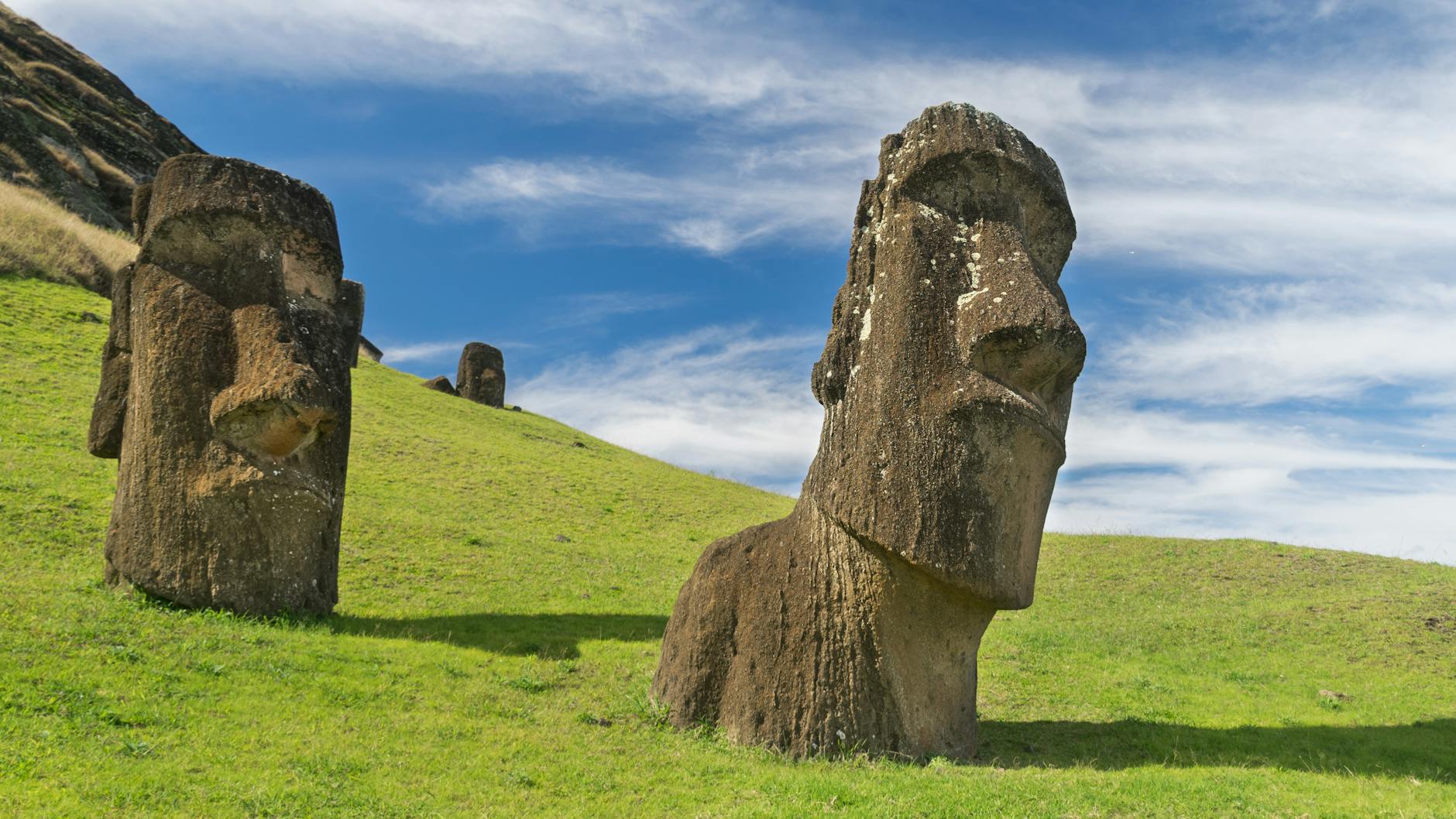
    iconic moai statues on easter island
    The Moai Statues

    Initially, the Moai were placed on stone platforms known as Ahu, which served as both ceremonial sites and burial places for the elite. The placement of each statue was strategically planned, as it allowed the Moai to face inland, symbolizing the connection to the community and the resources they needed for survival. Over time, as the population grew and resources became scarce, the focus on statue construction shifted, leading to the decline of traditional practices.

    In summary, the origins of the Moai statues intertwine with the migration and social structure of the Rapa Nui people. Their genesis reflects both an artistic expression and a manifestation of the islanders’ spiritual beliefs, as well as their complex societal organization. Understanding these roots provides a vital context for unraveling the mysteries surrounding these monumental figures, paving the way for further examination of their cultural significance.

    The Construction Techniques and Tools Used

    The Moai statues are monumental in both size and cultural significance, and their construction involved sophisticated techniques that highlight the ingenuity and skill of the Rapa Nui people. The process of carving, transporting, and erecting these enormous stone figures reveals much about the societal organization, available resources, and technological capabilities of the island’s inhabitants.

    The construction of the Moai began with the selection of suitable volcanic tuff from the Rano Raraku quarry. This quarry served as the primary source for the vast majority of statues, offering a wealth of material for the island’s artisans. Once the stone was selected, craftspeople would outline the basic shape of the Moai using primitive tools made from harder stones, such as basalt. These tools allowed them to chiseling details into the softer tuff effectively. Moreover, they used a basic understanding of leverage, angles and force to create intricate carvings that showcased their artistry and skills.

    One of the more fascinating aspects of Moai construction is the size and weight of these statues. Numerous Moai stand well over ten feet tall, with weight estimates ranging from several tons to over 80 tons. To move these colossal figures, the Rapa Nui utilized a combination of manpower and innovative techniques. Research suggests that the statues were transported either upright or laid on wooden sleds. Teams of workers would roll the Moai across the island on logs, while others pulled and pushed the statues into their desired positions. This process required a highly organized workforce and a keen understanding of cooperative labor, showcasing their ability to coordinate efforts in a challenging environment.

    Another essential stage of Moai construction was the installation of the statues onto Ahu platforms, often elevated structures composed of stones and earth, designed to house and support the statues. The placement of these structures was not arbitrary; they were often built at significant locations, enhancing the spiritual and cultural weight of the Moai. Researchers believe that these Ahu acted as ceremonial sites, reinforcing the Moai’s connection to the ancestors of the Rapa Nui people.

    majestic moai statues of easter island chile
    The Moai statues

    Despite the ingenuity displayed in the Moai’s construction and transportation, the process was not without challenges. As the island’s population grew, the competition for resources escalated. Deforestation, leading to a decrease in timber and other natural resources, significantly impacted the ability of the Rapa Nui people to continue their traditional methods of statue construction and transportation. This eventual imbalance led to the decline of the Moai culture, as the construction techniques that once thrived became unsustainable.

    In conclusion, the construction of the Moai statues is a remarkable testament to the skills and creativity of the Rapa Nui people. Their use of geological resources, innovative transportation methods, and community cooperation demonstrates a deep understanding of their environment and society. By exploring these techniques, we can better appreciate the dedication and artistry that went into creating these monumental figures.

    Cultural Significance and Religious Aspects

    The Moai statues hold unparalleled cultural and religious significance for the Rapa Nui people and provide important insights into their spiritual beliefs, social structures, and historical development. With each statue representing a revered ancestor, the Moai serve not only as artistic achievements but also as symbols of the islanders’ connection to their spiritual heritage and the forces that governed their lives.

    Central to the cultural significance of the Moai is the island’s ancestral worship. Each statue embodies the spirit of a deceased leader or elder, believed to exert a protective influence over the community. This belief system forged a deep spiritual connection between the Rapa Nui people and the physical representations of their ancestors. As such, the Moai are more than stone figures; they epitomize the continuity of tradition and the importance of ancestry within the Rapa Nui belief system.

    The construction of Moai also reflects societal values and hierarchies among the Rapa Nui people. Statues were typically commissioned by clans, with their size and intricacy denoting the status of particular ancestors, thereby solidifying the power dynamics within the society. The larger and more detailed the Moai, the greater the status of the individual it represented, showcasing the clan’s ability to mobilize resources and labor towards honoring their lineage. By observing the varying styles, sizes, and placements of the Moai, researchers can glean valuable insights into the social structure, cultural practices, and religious priorities of the Rapa Nui people.

    Moreover, the Moai’s placement on Ahu platforms further magnifies their spiritual importance. These platforms served not only as physical support for the statues but also as ceremonial sites where rituals and offerings were made to the ancestors. This emphasizes the essential sacredness of the Moai, marking them as focal points for spiritual communication and communal activities. The rituals conducted at the Ahu reinforce the idea that the Rapa Nui viewed the Moai as active participants in the life of the community, embodying their ancestors’ wisdom and guidance.

    The construction and care of the Moai also illustrate the significance of sustainability and environmental stewardship within Rapa Nui culture. As the island’s ecology began to suffer due to resource depletion and overexploitation, the Rapa Nui challenged their beliefs about the relationship between humanity and nature. The challenges faced during the decline of the Moai culture served as reminders for the importance of maintaining balance with the environment, highlighting the evolving relationship between spirituality, community dynamics, and ecological awareness.

    half buried moai statue in easter island
    The Moai Statues

    Decades of archaeological research have underscored the cultural and religious importance of the Moai, not only to the Rapa Nui people but to the wider global community. Their enduring legacy continues to inspire interest and curiosity, prompting discussions about environmental sustainability, cultural identity, and the interplay of history and spirituality. Museums, scholars, and cultural organizations place emphasis on preserving the Moai and educating visitors about their significance, fostering a greater understanding of the philosophies and values that shape the Rapa Nui worldview.

    In summary, the Moai statues are much more than mere monuments; they encapsulate the spiritual essence of a people deeply connected to their ancestry, beliefs, and environment. Through the lens of their cultural and religious significance, we gain a more enriched understanding of the Rapa Nui people and the enduring influence of their ancient wisdom.

    The Decline of the Moai Culture

    The decline of Moai culture on Easter Island is a compelling narrative marked by environmental challenges, sociopolitical shifts, and the struggle for survival among the Rapa Nui people. As formidable as the Moai statues are, the eventual downfall of the civilization that created them highlights the fragility of cultural achievement when faced with ecological and societal pressures.

    The rise of the Moai culture parallels the growth of the Rapa Nui population during the initial centuries of settlement. However, as the population expanded significantly, competition for resources intensified. The construction of Moai required considerable resources, including timber for tools, sledges, and rope, as well as stone, which placed immense strain on the island’s ecosystems. Deforestation began to take its toll, leading to the depletion of vital plant resources and diminishing the availability of food sources.

    As environmental conditions worsened, the Rapa Nui faced a critical turning point. The decline in trees profoundly affected agricultural practices, as soil erosion and diminished crop yields became increasingly apparent. Starvation became a real threat, leading to increasing social competition and unrest. This environmental stress likely fueled internal conflicts among clans, as they scrambled to assert dominance and secure access to dwindling resources.

    Moreover, the cultural emphasis on constructing ever-larger Moai fueled competition to an unsustainable extent. As clans vied to outdo one another with monumental statues, the costs of labor and resources escalated. This escalating rivalry eventually culminated in social unrest and division within the community. The traditional social structures and systems that supported the creation of the Moai began to fracture in the face of scarcity and conflict.

    The completion of the last Moai around the late 19th century marked a significant shift in the cultural narrative of Easter Island. This event coincided with the arrival of European explorers and subsequent colonial influences, leading to further disruption of the island’s traditional practices. The introduction of new diseases, the enslavement of the islanders, and the influx of foreign settlers accelerated the decline of the Rapa Nui culture, further diminishing their capacity to maintain the ancestral worship that the Moai symbolized.

    In response to these pressures, the Rapa Nui began to redefine their belief systems and cultural identity. As the traditional spiritual and ceremonial practices associated with the Moai waned, there was a shift towards other forms of expression and resilience in the face of hardship. This adaptation illustrates the resourcefulness of the Rapa Nui people and their ability to navigate challenging circumstances, even as their cultural legacy transformed.

    Ultimately, the decline of Moai culture serves as a poignant reminder of the vulnerability of civilizations in the face of environmental degradation, resource scarcity, and social upheaval. By studying the factors that contributed to this decline, we can learn valuable lessons regarding sustainability and the importance of maintaining a harmonious relationship with our environment. The story of the Moai is not simply one of cultural achievement; it is also a cautionary tale that speaks to the broader challenges faced by societies throughout history and the ongoing quest for balance and resilience.

    Modern Day Preservation and Research Efforts

    In the modern era, the preservation and research surrounding Easter Island’s Moai statues have garnered significant attention from scholars, archaeologists, and conservationists. As these ancient figures face threats from environmental degradation, tourism, and climate change, collaborative efforts aim to safeguard the integrity of this UNESCO World Heritage site while promoting sustainable practices that respect the cultural heritage of the Rapa Nui people.

    One of the primary challenges in preserving the Moai statues is their vulnerability to natural erosion, especially from harsh climatic conditions, including rising sea levels and increasingly severe weather patterns. In response, various initiatives have been implemented to monitor and mitigate these environmental threats. Conservationists and local authorities are working together to develop frameworks that combine scientific research with traditional ecological knowledge, ensuring that efforts respect both the land and the cultural practices of the Rapa Nui people.

    Sustainable tourism also plays a crucial role in the preservation of the Moai. As one of the most sought-after tourist destinations, Easter Island brings substantial economic benefits to the local community. However, increased foot traffic and infrastructure development pose risks to the statues and their surrounding environments. Education and regulation have become essential components in mitigating these impacts, as local authorities seek to balance tourist interest with the need to protect the island’s cultural and natural resources. Guided tours, strict visitor guidelines, and protective measures around the Moai sites aim to ensure that tourism contributes positively to the preservation rather than detracts from it.

    In addition to conservation efforts, ongoing research continues to reveal insights about the Moai and the Rapa Nui culture. Archaeologists employ advanced technologies, such as 3D scanning and aerial mapping, to document the statues and their surroundings accurately. These methods not only facilitate comprehensive analysis of the sites but also promote virtual preservation, allowing individuals worldwide to experience the richness of Easter Island’s cultural heritage without physically impacting the environment.

    The involvement of the local community is paramount in these preservation efforts. The Rapa Nui people are increasingly engaged in decision-making processes related to conservation, ensuring that their voices and cultural perspectives shape the future of their heritage. Collaborative projects that foster education, participatory research, and cultural revitalization support the community’s ongoing connection to the Moai and encourage the transmission of traditional knowledge to future generations.

    Furthermore, global awareness of the importance of preserving cultural heritage remains a focal point in discussions related to the Moai. International organizations, academic institutions, and cultural preservation initiatives continuously work to secure funding and support for the ongoing management and study of Easter Island’s remarkable statues. This global collaboration underscores the broader significance of the Moai not only as a cultural treasure for the Rapa Nui but also as a study of resilience, resourcefulness, and human connection to the past.

    In conclusion, the modern-day preservation and research efforts surrounding the Moai statues represent a concerted response to the challenges faced by the Rapa Nui culture. By embracing sustainability, community engagement, and innovative tools, stakeholders strive to safeguard this unique heritage for future generations. Understanding and respecting the intricate relationship between the Moai and the Rapa Nui people reinforces the importance of cultural resilience, environmental stewardship, and the ongoing relevance of these remarkable statues in an ever-changing world.

    Conclusion

    The Moai statues of Easter Island stand as a profound testament to the resilience, artistry, and cultural heritage of the Rapa Nui people. Through exploring their origins, construction techniques, cultural significance, decline, and modern preservation efforts, we gain a holistic understanding of the multifaceted legacy that these monumental figures embody.

    Reflecting upon the origins of the Moai reveals not only a rich spiritual connection to ancestral worship but also a vivid expression of social structures that once thrived on the island. The techniques used in crafting these statues uncover the extraordinary skills of the Rapa Nui artisans, while the cultural significance connected to Moai’s presence emphasizes the depth of their beliefs and societal values.

    Yet, the decline of the Moai culture serves as a poignant reminder of the fragility of civilization when confronted with environmental challenges, resource scarcity, and social strife. It underscores the lessons learned from history about maintaining a sustainable balance between human ambition and the natural world.

    As we turn our attention to the modern day, the concerted efforts toward preserving the Moai and the deeper involvement of the Rapa Nui community highlight a path of resilience and hope. The continuing research and education initiatives reaffirm the importance of cultural heritage and environmental stewardship.

    Ultimately, as we seek to unlock the mysteries surrounding the Moai statues, we create a space for deeper understanding, appreciation, and respect for the enduring legacy of the Rapa Nui people. Their story encourages us to reflect on our own societal values and ambitions, urging us to engage with our environment with mindfulness and responsibility. The Moai statues will remain iconic symbols of history, culture, and the human spirit, inspiring generations to come.

    Ancient Aliens: Uncovering the TRUTH of Easter Island Video

    Ancient Aliens: Uncovering the TRUTH of Easter Island

  • Big Ben History: How London’s Icon Became a Global Landmark

    Big Ben History: How London’s Icon Became a Global Landmark

    Introduction

    Big Ben, one of London’s most iconic symbols, is steeped in history and represents the heart of Britain. Erected as part of the Palace of Westminster, it has become synonymous with the city and a significant landmark for visitors from around the world. Officially named the Great Bell of the clock at the north end of the Palace of Westminster, the term “Big Ben” is commonly used to refer both to the bell and the clock tower, which was renamed in 2012 to Elizabeth Tower in honor of Queen Elizabeth II’s Diamond Jubilee. With its intricate design, engineering marvels, and cultural significance, Big Ben stands not only as a testament to Victorian-era craftsmanship but also as a symbol of resilience and continuity throughout British history. This article explores the origins, architecture, cultural importance, conservation efforts, and global influence of Big Ben history, tracing its journey from a historical monument to a beloved symbol of London.

    The Origins of Big Ben

    The construction of Big Ben dates back to the early mid-19th century, a period marked by a surge of urban development in London. Following the devastating fire that destroyed the Palace of Westminster in 1834, there was an urgent need to rebuild the iconic structure that housed the British Parliament. The British government held a competition to design a new palace, which was won by Augustus Pugin, a leading architect known for his Gothic Revival style. The original plan included a clock tower, and Pugin’s design featured a tall, ornate structure that would rise majestically above Westminster.

    In 1846, the clock’s design was completed, led by clockmaker Edward John Dent. The objective was to create one of the largest and most accurate clocks in the world. The clock mechanism required innovative engineering, which led to the use of a unique double three-legged gravity escapement, allowing the clock to maintain better time under varying weather conditions. The Great Bell, a massive 13.5-ton piece of bronze, was also cast by local bell founder George Mears and named Big Ben, supposedly after Sir Benjamin Hall, the Commissioner of Works at the time.

    iconic big ben and red buses in london
    Big Ben

    The bell’s arrival was marked by a series of challenges. The original Big Ben cracked during testing, leading to its replacement with a new bell in 1858, which rang its first chime on July 11 of that year. Big Ben quickly became a focal point for Londoners, symbolizing not just timekeeping but also national pride and identity.

    The origins of Big Ben are not just about the architectural and engineering aspects; they also reflect the cultural climate of the time. The decisions made during its construction were a reflection of Victorian values, which emphasized progress, innovation, and the artistry of craftsmanship. As the tower soared above the Thames, it invited admiration from both locals and visitors and began its journey as a symbol of British resilience and unity.

    The Architectural Marvel

    The Elizabeth Tower, as it is now officially called, is an impressive feat of architecture, blending elements of Gothic and Victorian design. Standing at 316 feet (96 meters) tall, it features a striking facade adorned with intricate carvings and detailed masonry, drawing admirers from around the globe. The tower’s base is square, measuring 40 feet (12 meters) on each side, and is encased in a rich blend of brick and stone, enabling it to withstand the test of time.

    Pugin’s design showcases a delicate balance between grandeur and symmetry. The clock faces, set at each cardinal point, are made of opalescent glass encased in a metal framework decorated with delicate motifs. Each dial is over 22 feet (7 meters) in diameter, revealing not only the time but also the artistry that went into their creation. These clock faces serve not just a functional purpose; they also accentuate the verticality of the tower, drawing the eye upward toward the elegant spire that crowns it.

    One of the most significant architectural features is the tower’s unique clock mechanism. The clock employs a gravity escapement, created with innovation that was cutting-edge for its time. This enables the clock to be accurate, compensating for changes in temperature and humidity. Coupled with the beautiful chimes of Big Ben, this faithful timekeeper has stood as a symbol of punctuality for over a century.

    The tower has seen its share of adaptations since its completion. Throughout the years, modifications were made for maintenance and modernization, ensuring that Big Ben remains functional and relevant in a world teeming with technological advancements. The preservation of the structure signifies the importance of maintaining historical architecture amid rapid urban development.

    Architecturally, the significance of Big Ben goes beyond its individualistic features; it represents the broader movement of Gothic Revival architecture in 19th-century Britain. The blend of intricate detail and solemn intent reflects the era’s quest for aesthetic beauty and cultural identity. As one looks upon Big Ben, they do not merely see a clock tower; they experience a movement that defined a generation and solidified London’s place on the global stage of historical and architectural significance.

    The importance and impact of Big Ben in British Culture

    Big Ben occupies a unique position in British culture, serving as a powerful symbol of timekeeping, democracy, and national identity. Its presence has transcended its functional purpose; it is deeply entwined with the collective memory of the British people. As soon as it began to toll on July 11, 1859, Big Ben quickly emerged as a national icon, marking important moments in history—weddings, the end of World Wars, and other pivotal events.

    One of the key cultural significances of Big Ben lies in its association with the British Parliament, located directly next to the tower. The bongs of Big Ben signal the beginning of parliamentary sessions, and its chimes echo through the halls of Westminster, reminding lawmakers of their responsibilities to the people. The clock tower serves as both a literal and symbolic timer for democracy, measuring the time the government has to serve its citizens.

    Moreover, Big Ben resonates far beyond the political realm. It has become an integral part of London’s identity. Tourists flock to the city eager to witness its grandeur and snap photographs. The clock’s image has become a beloved feature found in media, marketing, and merchandise, encapsulating London’s essence in a easily recognizable form. Whether depicted in children’s toys or international travel brochures, Big Ben represents not only London but also England as a whole.

    big ben tower against dramatic sky in london
    Big Ben

    The clock tower’s cultural appeal extends into various forms of art and literature. It has been depicted in countless films, television shows, and novels as the quintessential London landmark. In several works, Big Ben acts as a symbol of time, continuity, or sometimes the passage of time—events about to transpire and the inevitable change that time brings.

    Big Ben also holds a special place in rituals and traditions, such as New Year’s Eve celebrations, when the clock strikes midnight, marking the arrival of the new year. The anticipation leading up to that moment binds people together in collective hope and festivity, energizing the spirit of celebration across the nation and beyond.

    In 2020, as the world grappled with the challenges posed by a global pandemic, Big Ben remained a source of solace for many. Its chimes marked the continuity of time, hope, and resilience for people staying indoors. This further confirmed its status as a cultural landmark anchoring British identity during uncertain times.

    Overall, Big Ben serves as an important cultural artifact that encapsulates the myriad aspects of British life. It is not merely a historical structure; it is a living symbol of the aspirations, trials, and triumphs of those who call Britain home.

    Restoration and Preservation Efforts

    The passage of time invariably takes its toll on structures, and Big Ben is no exception. As such, restoration and preservation efforts have been key components of its enduring legacy. By the 21st century, pollution, wear and tear, and weathering had begun to affect both the clock tower’s structure and its intricate features. Recognizing the need for restoration, significant funding was allocated to restore and preserve this national treasure for future generations.

    In 2017, a major renovation project commenced, aimed at both modernizing the tower and restoring its original architectural brilliance. The multi-year endeavor involved a comprehensive assessment of the building’s stonework, clock mechanism, and general structure. It quickly became evident that some restoration techniques would need to balance the preservation of historical features while integrating modern technology and safety standards.

    During the restoration, extensive cleaning of the clock tower was undertaken. Over a century of grime and pollution was carefully removed, revealing the detailed stonework and vibrant colors hidden beneath layers of soot. This meticulous process not only enhanced the tower’s aesthetic appeal but also highlighted the craftsmanship that went into its original construction.

    Simultaneously, the interior mechanism of the clock underwent a significant overhaul. Technicians worked meticulously to ensure the clock would remain functional for years to come while adhering to the original design specifications. This involved disassembling the clockworks, replacing worn components, and recalibrating the mechanism to maintain its maximal accuracy. Personal care was taken to respect the historic integrity of the clock while equipping it with modern capabilities.

    the big ben clock
    Big Ben

    Additionally, the renovation project included structural improvements to ensure safety and stability. Old scaffolding was erected around the tower, and engineers conducted inspections to shore up weaknesses in the original design. This proactive approach aims to protect Big Ben from potential seismic or environmental threats and safeguard its standing for generations.

    However, the renovation has not been without controversy. The work saw Big Ben fall silent for an extended period, leading to concern and sadness among citizens who often find comfort in its chimes. Public sentiment toward the project ebbed and flowed, fluctuating between excitement for the updates and nostalgia for the iconic sound that had echoed over London.

    As restoration efforts concluded in 2021, Big Ben once again rang out across London, signifying the successful completion of the two-year renovation project. The refreshed clock tower not only serves as a testament to engineering ingenuity and architectural beauty but also highlights the importance of preserving historical landmarks as part of cultural heritage.

    Through such efforts, Big Ben continues to stand as a bridge between the past and present. Its restoration not only safeguards its structural and aesthetic integrity but also reinforces the unwavering significance of this historical icon in the heart of London.

    Big Ben’s Global Influence and impact

    From its inception, Big Ben has transcended its status as a clock tower and evolved into a cultural icon known worldwide. Its global significance is marked by its representation of London and British heritage, but it is also emblematic of shared values such as democracy, resilience, and continuity. As one of the most photographed landmarks in the world, Big Ben stands as a beacon, drawing millions of visitors to London and serving as a focal point in their exploration of British culture.

    Big Ben not only represents the city but has also found its place in global media. Frequent depictions in films and television shows have established its iconic status, making it a benchmark for London in the international landscape. In iconic movies such as “James Bond” and “Sherlock Holmes”, Big Ben serves as a symbol of the thrilling narratives that British storytelling often presents. Images of the clock tower accompany countless travel articles, documentaries, and guides, further solidifying its role as the face of London across various media.

    Moreover, Big Ben’s influence reaches diplomatic and political spheres. As a symbol of resilience, it has been utilized in various campaigns, affirming British strength in times of crisis. During World War II, the survival of Big Ben became a metaphor for Britain’s unyielding spirit amid adversity. News reports frequently showcased footage of Big Ben as the backdrop to historic announcements or significant events, firmly establishing it as a symbol of political stability.

    london uk skyline
    Big Ben

    Culturally, Big Ben has inspired artistically inclined individuals to reimagine its presence through visual and literary art, with artists interpreting its essence across various styles and mediums. This influence fosters a connection not just with British audiences, but also with global art lovers who share admiration for its architectural beauty and historical importance.

    In recent years, Big Ben has been a focal point for international tourism, contributing significantly to the UK’s economy. The surge in visitors illustrates the tower’s power to attract, as tourists flock to photograph its intricate design, bask in its historical aura, and partake in cultural rituals revolving around it. The sheer number of visitors each year is a testament to Big Ben’s irresistible allure—its identity as a global landmark unites people regardless of background, geography, or language.

    In conclusion, Big Ben’s global influence is multi-faceted; it is a powerful symbol of London, British heritage, and universal motifs of resilience and democracy. Its continuous portrayal in culture, diplomacy, and tourism ensures that Big Ben remains not just a national treasure, but a cherished symbol of hope and endurance known far and wide.

    Conclusion

    Big Ben exemplifies more than mere architectural elegance; it signifies the heart of London and the essence of British identity. Through its rich history, it has become a flourishing symbol of resilience, cultural continuity, and democratic integrity. From its origins amid the inspiring Victorian values to its standing as a global landmark, Big Ben has weathered the tests of time, uniting people in admiration and reverence.

    Through extensive restoration efforts, the clock tower has been preserved for future generations, allowing its presence to endure as a cherished emblem of London. The ongoing commitment to maintaining its historical significance reaffirms its importance in collective memory. Big Ben stands not just as a clock tower; it represents the ambitions, trials, and achievements of the British people.

    As London evolves and the world changes around it, Big Ben remains a constant beacon of hope, time, and tradition. It is intertwined with the cultural fabric of the nation and resonates with people globally, reminding us of our shared values and aspirations. As we look toward the future, Big Ben will continue to echo through the ages, preserving the legacy of those who have come before while inspiring generations to come.

    The Fascinating History Of Big Ben

    The Fascinating History Of Big Ben | The Nation’s Most Famous Clock

  • Machu Picchu History: Unveiling the Secrets of the Lost Incan City

    Machu Picchu History: Unveiling the Secrets of the Lost Incan City

    Introduction

    Machu Picchu, the iconic Incan city nestled high in the Andes Mountains of Peru, continues to captivate the imagination of explorers, historians, and travelers alike. Often referred to as the “Lost City of the Incas,” it was brought to international attention nearly a century ago when American historian Hiram Bingham rediscovered its archaeological wonders in 1911. The site, with its breathtaking views and expertly crafted stone structures, offers a glimpse into the advanced engineering and rich culture of the Incan civilization. Much remains a mystery about the reasons behind its construction, its original purpose, and the life of its inhabitants. This article delves into the Machu Picchu history , unveiling secrets that have been buried under centuries of foliage and earth, shedding light on a remarkable chapter of human history.

    The Discovery of Machu Picchu: Who Found It and When

    The rediscovery of Machu Picchu is attributed primarily to the intrepid explorer and historian Hiram Bingham, whose remarkable journey in 1911 led to the unveiling of the site to the modern world. However, it is essential to note that the existence of Machu Picchu was already known to local farmers and travelers before Bingham’s voyage. Nestled at an elevation of 2,430 meters (7,970 feet) above sea level, the site had evaded the notice of larger cultures and government entities due to its remote location, deep within the mountains of Peru.

    Years before Bingham’s expedition, there were whispers of a significant Incan site among the indigenous people living in the Urubamba Valley. Despite these accounts, it wasn’t until 1911, when Bingham, affiliated with Yale University and leading a scientific expedition, set out to explore the possibilities of Incan ruins in the region, that Machu Picchu captured global attention. With the assistance of local Quechua farmers and guides, Bingham navigated through dense foliage and treacherous terrain, eventually stumbling upon the ruins of what would become one of the most important archaeological discoveries of the 20th century.

    Initially, the ruins were obscured by thick vegetation, making it challenging to discern the scale and majesty of the site. As Bingham and his team cleared the area, they revealed terraced fields, temples, and intricate stone structures that hinted at the sophisticated logistical capabilities of the Incan civilization. Bingham’s discovery was not merely a personal triumph; it sparked an international fascination with the history of the Incas and brought attention to the need for archaeological preservation in Peru.

    concrete building
    The Machu Picchu

    Bingham returned to Machu Picchu several times in the following years, bringing with him additional archaeologists and funding to excavate the site. In partnership with the Peruvian government, they began to uncover valuable artifacts, including pottery, tools, and remnants of mummies, which provided context to the culture and day-to-day life of the Incan inhabitants. However, it’s crucial to acknowledge the controversy surrounding Bingham’s excavations. Many artifacts, including cultural treasures, were taken back to Yale University and have since become points of contention, highlighting issues of cultural heritage and rights.

    Despite the controversies, there is no denying that Bingham’s discovery opened the door to significant archaeological interest in the region. As information about Machu Picchu began to circulate globally, travelers and historians flocked to see the lost city for themselves. The site was designated as a UNESCO World Heritage Site in 1983, recognizing its cultural and historical significance.

    Today, the discovery narrative of Machu Picchu extends beyond Bingham, as it is crucial to view the site as not just a relic of the past but as a vibrant part of Peruvian identity and heritage. Local advocacy groups and the Peruvian government are increasingly working to reclaim the narrative, emphasizing the importance of recognizing indigenous wisdom and the deep connections that the indigenous communities have with Machu Picchu.

    In conclusion, Hiram Bingham’s role in the rediscovery of Machu Picchu has undeniably shaped its historical narrative. Yet, as we explore the complexities and layers of this incredible site, it is imperative to understand the broader cultural context that defines its history, contributing to a richer appreciation of the Incan civilization and its lasting legacy.

    The Incan Civilization: Understanding the Context of Machu Picchu

    To fully grasp the significance of Machu Picchu, it is essential to understand the historical context of the Incan civilization that built it. The Incas established one of the most remarkable empires in history, dominating the western part of South America from the early 15th century until the Spanish conquest in the 16th century. Their empire, known as Tawantinsuyu, was characterized by an intricate political structure, advanced agricultural practices, and impressive architectural achievements.

    At its height, the Incan empire extended across modern-day Peru, Ecuador, Bolivia, and parts of Chile, Argentina, and Colombia. The Incas were master engineers and administrators. They developed an extensive road system, known as the Qhapaq Ñan, which facilitated trade, transport, and communication across their vast territory. This network of roads connected various ecological zones, allowing for the exchange of goods such as potatoes, corn, and textiles. The road system helped unify the empire and supported the movement of armies and resources during both peace and conflict.

    Agriculture played a crucial role in the Incan economy. The introduction of terraced farming—and innovations like crop rotation—allowed the Incas to maximize arable land on the mountainous terrain. They cultivated over 200 different crops, including staple foods such as quinoa and maize. Surplus production enabled the storage of food, which was vital for sustaining large populations and armies.

    The Incas were also known for their impressive stonework, with meticulous craftsmanship seen in structures throughout their empire. The iconic dry-stone construction methods employed by the Incas contributed to the durability and longevity of their buildings, including temples, forts, and agricultural terraces. This architectural prowess is evident at Machu Picchu, where keen understanding of the local geology and environment allowed for the construction of complex infrastructure without using mortar.

    ruins of ancient citadel of machu picchu
    The Machu Picchu

    Machu Picchu itself is seen as a testament to the Incas’ identity and beliefs. The site is thought to have served as a royal estate, perhaps a ceremonial center, or a spiritual retreat for Inca leaders. The strategic positioning of Machu Picchu in relation to nearby peaks, such as Huayna Picchu and Machu Picchu Mountain, suggests that the Inca people held particular reverence for the natural landscape, integrating their religious beliefs with their architectural designs.

    Religion held a central place in Incan society, with the worship of deities associated with the sun, moon, and earth. Inti, the Sun God, was particularly significant, and many Incan sites were constructed to align with astronomical events. Machu Picchu features structures that could have been used for astronomical observations, highlighting the sophisticated understanding the Incas had of the celestial movements.

    In addition to their religious beliefs, the Incas were adept in the arts, creating intricate textiles, pottery, and metalwork. The amalgamation of functionality and artistry is visible in the ceremonial artifacts found at Machu Picchu, which exemplify the Incan societal values and traditions.

    Understanding the Incan civilization provides essential insights into the origins of Machu Picchu. This lost city is not merely a collection of stone structures; it is a reflection of a civilization that achieved remarkable heights in urban planning, cultural integration, and environmental adaptation. As scholars continue to study and interpret the vast legacy of the Incan Empire, Machu Picchu remains a focal point of exploration, shedding light on a complex society that thrived in harmony with its surroundings.

    Architectural Marvels: An Overview of the Site’s Structures

    Machu Picchu is not only significant because of its history but also due to its stunning architectural feats that showcase the ingenuity and skill of the Incan civilization. The site spans approximately 13 square kilometers (5 square miles) and is divided into distinct sectors, including agricultural, urban, and religious areas. Each of these sectors exhibits advanced engineering that speaks to the Incas’ architectural prowess.

    As visitors approach the site, the first impression is often one of amazement at the meticulous dry-stone construction that has stood the test of time. The Incas utilized a technique known as ashlar, where stones were cut to fit together precisely without the use of mortar. This allowed for flexibility and contributed to the resilience of their structures, especially in an area prone to seismic activity.

    Among the site’s key highlights is the Intihuatana stone. This ritual stone, commonly referred to as the “Hitching Post of the Sun,” serves as a significant astronomical marker that ties into the Incas’ relationship with the cosmos. Scholars believe it may have been used for ceremonial purposes, including agricultural calendars and sun-related rituals, indicating its importance in Incan spirituality.

    The Temple of the Sun stands out as another architectural marvel. Featuring a semi-circular design that captures sunlight during the winter solstice, it served as a ceremonial site dedicated to Inti, the Sun God. This temple is characterized by its carefully constructed windows and stonework that align with the sun’s rays, highlighting the Inca’s keen understanding of solar cycles and their significance in agriculture and religious practices.

    The urban sector of Machu Picchu is a network of terraces, residential buildings, and plazas, demonstrating the Incas’ ability to maximize available land. The terraced fields not only prevented erosion but also created microclimates in which various crops could thrive. This agricultural ingenuity was critical for sustenance and showcases the Incas’ advanced farming techniques.

    Additionally, the residential areas consist of buildings with distinct features that reflect social stratification. The layout of these structures, which includes double-walled constructions and larger communal spaces, suggests that the inhabitants might have had diverse roles and responsibilities within the society. The presence of a sophisticated drainage system further emphasizes the advanced engineering skills of the Incas, allowing rainwater to be channeled away from living quarters, thus ensuring the longevity of their buildings.

    The intricate pathways and steps throughout the site exemplify the careful planning that went into Machu Picchu’s construction. These pathways vary in width, indicating specific routes for different purposes, whether for transport or ceremonial processes. Each stone was laid with care, contributing to the overall aesthetics and functionality of the site.

    Machu Picchu also contains multiple religio-political structures, such as the Temple of the Condor, which rises above a large formation of rock resembling a condor’s outstretched wings. This representation reinforces the connection between Andean culture and wildlife, further integrating their beliefs into architectural design.

    breathtaking view of machu picchu at sunrise
    The Machu Picchu

    These architectural marvels collectively tell the story of a civilization that harmonized engineering, spirituality, and environmental adaptation. The ability of the Incas to create such a sophisticated urban environment at such an altitude remains an enduring legacy of their ingenuity.

    Through meticulous research and conservation efforts, scholars and visitors continue to learn more about the structures of Machu Picchu. Each stone, each pathway, and each feature observed in this remarkable citadel allows for greater insights into the lives of the Incan people, their beliefs, and their remarkable achievements that resonate through time.

    Theories About the Purpose of Machu Picchu

    Much speculation remains regarding the precise purpose of Machu Picchu, a question that has intrigued historians and archaeologists since its rediscovery. While the site is often portrayed as a royal estate or leisure retreat for Inca emperor Pachacuti, alternatives theories also shed light on the complexities of this remarkable location.

    One predominant theory posits that Machu Picchu served as a religious and ceremonial site. This notion is supported by the presence of temples, particularly the Temple of the Sun and the Intihuatana stone, both of which indicate significant ritualistic activities. The alignment of structures with celestial events, such as solstices, underscores the importance of astronomy and spirituality within Incan culture. Scholars argue that the construction of Machu Picchu was strategically timed to coincide with astronomical phenomena and agricultural calendars, reinforcing the community’s religious beliefs and practices.

    Another theory suggests that Machu Picchu functioned as a waystation or a stopping point along the vast network of Incan roads. Its location, situated between the highlands and the jungle, indicates that it could have played a critical role in facilitating trade and serving travelers. This theory posits that the site may have housed officials, traders, or rural populations moving through the region, reflecting the Incas’ skill in creating hubs for interaction and commerce.

    The concept of Machu Picchu as a defensive position cannot be overlooked. Its elevated position provides strategic advantages, making it difficult for any potential invaders to access. The Incas may have used the site as a secure refuge during times of conflict. The extensive agricultural terraces surrounding the main urban area would have supported the inhabitants while reinforcing the notion that Machu Picchu could sustain itself during prolonged sieges.

    Equally important is the theory that Machu Picchu served as a royal estate or ceremonial retreat for the Inca elite, particularly Pachacuti, the emperor responsible for initiating the site’s construction. The luxurious and sophisticated design of its structures suggests a space meant for leisure, governance, or religious activities. The presence of large, finely crafted spaces coupled with the abundance of food supplies nearby supports the idea that the elite might have utilized this remote location for respite from governance or ceremonial functions.

    Additionally, some archaeological evidence suggests that Machu Picchu could have been a sacred pilgrimage site for the Inca people. The inscriptions, artifacts, and structures indicate that individuals may have journeyed to the site for spiritual rejuvenation, healing, or to pay homage to deities, aligning with regional spiritual practices of reverence toward nature and the cosmos.

    While multiple theories propose different perspectives on Machu Picchu’s purpose, it is essential to recognize that the site likely served multiple functions simultaneously. As with many aspects of Incan civilization, its multifaceted identity reflects the complex relationship between religion, politics, and society.

    Modern archaeologists continue to examine Machu Picchu, utilizing advanced technologies and methodologies to uncover more clues about its use and significance. This ongoing research may eventually lead to a more comprehensive understanding of the lost Incan city and the people who called it home. Thus, Machu Picchu remains not just a relic of the past but a continually evolving narrative that invites exploration and reflection.

    Conservation Efforts: Protecting the Heritage of Machu Picchu

    As one of the most visited tourist destinations globally, Machu Picchu faces significant challenges regarding preservation and conservation. The pressures resulting from increased foot traffic, climate change, and environmental degradation pose threats to the site’s fragile ecosystems and ancient structures. Consequently, dedicated conservation efforts are essential to protect this UNESCO World Heritage Site for future generations.

    In recent years, both the Peruvian government and international organizations have recognized the pressing need for sustainable tourism practices. Measures have been introduced to regulate visitor numbers, ensuring that the site can accommodate the increasing influx of tourists while minimizing wear on its structures and landscapes. Restricting daily visitor quantities has proven crucial; these limitations help manage human impact and provide pathways for ongoing conservation initiatives.

    Education also plays a vital role in conservation efforts. Visitors to Machu Picchu are encouraged to engage with interpretive programs that emphasize the importance of historical and cultural preservation. Knowledge-sharing about local ecosystems, the significance of heritage preservation, and responsible tourism practices can empower tourists to appreciate the site more fully, fostering a sense of stewardship among visitors.

    cloud over stone building ruins in mountains
    The Machu Picchu

    Importantly, local communities surrounding Machu Picchu are engaged in conservation activities. These communities share a deep-rooted cultural connection to the site and are instrumental in protecting its heritage. By supporting local initiatives, fostering inclusive tourism practices, and training local guides, the conservation efforts align the benefits of sustainable tourism with community development. This holistic approach not only enhances cultural understanding but also ensures that the community directly benefits from the preservation of their heritage.

    International partnerships have bolstered conservation initiatives at Machu Picchu. Collaborations with organizations and experts focused on archaeology, heritage management, and environmental protection are essential in preserving the site’s integrity. Projects have addressed issues such as erosion, restoration of structures, and the implementation of drainage systems to safeguard against rainfall and subsequent landslides.

    Technological advancements, including 3D laser scanning and drone mapping, are employed to monitor changes in the site’s condition. These tools allow archaeologists and conservationists to analyze structural integrity and make informed decisions regarding preservation practices. They provide essential data to evaluate both short-term and long-term impacts, ensuring that conservation efforts remain adaptive and effective.

    A crucial component of ongoing efforts has involved changes in infrastructure and visitor management. The Inca Trail, which traditionally served as the primary route for hiking to Machu Picchu, has undergone significant improvements to accommodate tourists while preserving its historical character. Initiatives include renovation of hiking pathways and the establishment of guided tours that follow designated routes, ensuring that sensitive areas receive adequate protection.

    In addition to site-specific conservation strategies, discussions about broader environmental impacts—including the preservation of biodiversity within the Machu Picchu region—are gaining traction. By fostering a culture of respect for nature, conservationists are encouraging practices that emphasize ecological sustainability alongside historical preservation.

    In summary, the conservation of Machu Picchu is an ongoing endeavor that requires cooperation among various stakeholders, including governments, local communities, and international organizations. By promoting sustainable tourism, fostering local engagement, and utilizing advanced technology, we can secure Machu Picchu’s legacy as a monumental testament to the Incan civilization that birthed it. The heritage of Machu Picchu is not just a reflection of the past; it is a living legacy that, when cared for responsibly, continues to inspire awe and wonder for generations to come.

    Conclucion

    As we reflect on the captivating history of Machu Picchu, it is essential to embrace not only its architectural wonders but also the rich cultural narratives that underscore its legacy. From its rediscovery in the early 20th century to its significance within the Incan civilization, each facet of Machu Picchu reveals insights into a remarkable society that thrived against daunting odds. The architectural marvels echo the skills and artistry of the Incas, while the theories surrounding its purpose lend depth to our understanding of its multifaceted identity.

    Moreover, as tourism continues to burgeon and interest in the site grows, preserving Machu Picchu’s heritage for future generations becomes paramount. Conservation efforts must remain robust and multifaceted, involving local communities, educators, and international experts in safeguarding its unique cultural and natural resources. As we move forward, it is vital to honor the history and teachings that Machu Picchu imparts, fostering a deep appreciation for one of humanity’s most iconic historical spaces. By understanding its past and investing in its future, we can ensure that Machu Picchu remains a beacon of cultural significance and inspiration for all who visit.

    Ancient Superstructures: the Secrets of Machu Picchu | Documentary Video

    Ancient Superstructures: the Secrets of Machu Picchu | Full Documentary
  • One World Trade Center History: From Tragedy to Triumph in the New York Skyline

    One World Trade Center History: From Tragedy to Triumph in the New York Skyline

    Introduction

    The One World Trade Center (OWTC) stands tall in New York City, not just as a skyscraper, but as a symbol of resilience, hope, and the indomitable spirit of the American people. Built on the site that was once home to the Twin Towers, the OWTC represents a journey from tragedy to triumph. The devastating events of September 11, 2001, reshaped the city, the nation, and the world, leaving an indelible mark on history. In the years following the attack, a vision emerged to rebuild and restore the iconic skyline that had been lost. This article will explore the One World Trade Center history, examining how it rose from the ashes of destruction and emerged as a beacon of strength, innovation, and remembrance in the heart of New York.

    The Tragedy of 9/11 and its Impact on New York

    The events of September 11, 2001, brought an unprecedented tragedy to New York City and the world. On that fateful day, nearly 3,000 lives were lost as terrorists attacked the Twin Towers of the World Trade Center, forever altering the landscape of the city and the psyche of its residents. In the aftermath, New Yorkers grappled with profound grief, shock, and anger, as the site transformed from a bustling business hub to a scene of devastation. This moment marked a turning point in history, accentuating vulnerabilities and instigating a profound sense of loss.

    In the days following the attacks, the heroism displayed by first responders and ordinary citizens became a source of pride and inspiration. Communities came together, showing solidarity in the face of adversity. Memorials were erected, and vigils were held, allowing people to mourn collectively and honor those who had perished. Yet, the emotional toll was immense; New Yorkers faced fears about safety, a sense of loss of normalcy, and concerns for the future.

    The impact went beyond the immediate vicinity of Ground Zero. The economic ramifications rippled through the city. The destruction of the Twin Towers led to the loss of thousands of jobs, and the insurance claims that followed became a lengthy, arduous process. Many businesses were forced to close, contributing to an already challenging economic climate in the post-9/11 world. Hotels were empty, and foot traffic plummeted in a city known for its vibrant atmosphere and bustling streets.

    The tragedy caused a reevaluation of security measures not just in New York, but across the nation and around the world. Transportation security, emergency preparedness, and intelligence sharing were drastically reformed in response to the attack. The sentiment of vulnerability persisted as the nation sought to heal while grappling with the reality that such an event could happen again.

    For many, this tragedy was deeply personal. Families lost loved ones, and survivors faced a long path toward recovery. The psychological impact was profound; many experienced symptoms related to PTSD, depression, and anxiety. The need for counseling and support became apparent as those directly and indirectly affected sought ways to cope with their grief.

    Yet, in the face of such overwhelming sorrow, the resilience of New Yorkers shone through. The desire to rebuild became a powerful force, symbolizing the refusal to let terror define their city. As plans for reconstruction were initiated, there was an undeniable sense of hope mixed with necessity. New York was not just a target; it was a thriving metropolis, and its spirit could not be extinguished.

    This tumultuous period laid the foundation for One World Trade Center’s inception. The development of the site became a crucial project, representing the rebirth of not only the skyline but also the city’s collective spirit. As the memorials were built and the planning for reconstruction began, the vision for a new One World Trade Center emerged, one that would honor the past and represent a brighter future.

    The Vision and Planning for One World Trade Center

    In the wake of the 9/11 tragedy, the vision for rebuilding the World Trade Center site became a pivotal discussion within New York City and beyond. The loss of the Twin Towers left an immense void—not just physically, but emotionally and culturally. The question that loomed was: how could this site, a significant part of New York’s identity, be transformed into a space that honored those lost while looking toward a hopeful future?

    The rebuilding process was set in motion with the formation of the Lower Manhattan Development Corporation (LMDC), established to oversee the redevelopment of the area. It was essential that the rebuilding process be approached with sensitivity, inclusivity, and consideration of the lessons learned from the tragedy. This was not just about creating a new skyscraper; it was about establishing a memorial and a vibrant community space that would foster healing.

    In 2003, a competition was announced to select a design for what would become One World Trade Center. Architects and designers from around the world were invited to submit proposals, and the process attracted some of the best minds in architecture. The over 5,000 submissions reflected a diversity of ideas and concepts, each trying to strike a balance between memorializing the past and offering a beacon of hope for the future.

    The winning design, conceived by architect David Childs of Skidmore, Owings & Merrill, was a magnificent structure that aimed to reach new heights—both literally and metaphorically. The design featured a height of 1,776 feet, symbolizing the year of American independence, connecting the structure to a larger narrative of resilience and freedom. The plan included a series of setbacks that would allow for a tapering structure, culminating in a glass spire that would create a dramatic silhouette against the New York skyline.

    one world trade center
    The One World Trade Center

    Community involvement was a crucial aspect of the planning process. Public meetings were held, providing a platform for residents to voice their thoughts and feelings about the redevelopment. Families of 9/11 victims, first responders, and citizens engaged in meaningful dialogues regarding what they hoped to see reflected in the new design. This feedback influenced key planning decisions and ensured that the new building would represent the collective identity of the New Yorkers it was meant to honor.

    The memorialization aspect of One World Trade Center was also a paramount concern. The site would not only be home to a new skyscraper; it would also feature a memorial to remember the lives lost on that tragic day. The design incorporated a large plaza that would serve as a tranquil space for reflection, surrounded by twin reflecting pools marking the footprints of the original Twin Towers. This thoughtful integration of memorial space into the new development was crucial for many as it provided a way to honor the legacy of those who had perished.

    As city planners and architects worked through the complexities of the project, there were numerous challenges to navigate. Bureaucratic red tape, funding issues, and differing opinions on design elements frequently complicated the process. However, there was a unified understanding that this project was more than just urban development; it represented a confluence of history, memory, and the rekindling of a city’s spirit.

    The vision for One World Trade Center emerged as a multi-faceted project—one that intended to symbolize rebirth and resilience while providing commercial, civic, and cultural spaces. As the planning neared completion, excitement grew within the community. The collective hope was that this new tower would reclaim the skyline and signify a renewed New York—a city that faced tragedy with courage and emerged stronger.

    Architectural Innovations and Design Features

    One World Trade Center’s design features a range of architectural innovations that push the boundaries of modern skyscraper construction. The tower’s intricate craftsmanship and technological advancements not only reflect its status as a symbol of resilience but also a beacon of innovation within the architectural world. The building stands at 1,776 feet, symbolizing the year of American independence, and includes a unique combination of aesthetics and functionality that speaks volumes about its place in the New York skyline.

    One of the most notable aspects of the design is its unique shape—an angular form that features eight triangular facets. This innovative geometric configuration allows for a tapered silhouette that narrows at the top. This design isn’t just about visual appeal; it also plays a critical role in structural integrity. The innovative design aids in reducing wind loads, allowing the building to withstand harsh New York City weather, including high winds and storms.

    Within the architectural community, One World Trade Center is recognized for its use of cutting-edge materials and construction techniques. The exterior is clad in a high-performance glass that creates a stunning visual effect while optimizing natural light penetration. This glass façade not only enhances the aesthetic quality of the building but also contributes to energy efficiency, reflecting the current trend towards sustainable design practices in architecture. Energy-efficient systems were integrated throughout the building, including advanced water and waste management systems, marking One World Trade Center as a leader in green building initiatives.

    Another significant innovation is the building’s security features, which were essential in the design process in light of the 9/11 attacks. The tower is equipped with a reinforced core, designed to withstand impact and facilitate quick evacuation in emergencies. Special attention was given to the inclusion of enhanced fire safety features, including advanced sprinkler systems and state-of-the-art alarms. The lobby, which serves as the main entry point, was designed to include a significant security presence while creating an inviting atmosphere for occupants and visitors alike.

    low angle photography of world trade center building
    The One World Trade Center

    One World Trade Center is also a hub of technological innovation. The building incorporates extensive high-speed communication systems, supporting the needs of modern businesses. Smart technology integrated into the building’s infrastructure allows for efficiency through centralized control of various building systems, optimizing everything from lighting to climate control. This adaptability and focus on technological advancement ensure that One World Trade Center remains relevant in an ever-evolving landscape of urban development.

    Furthermore, the design includes various communal spaces and amenities that promote a sense of community within the tower. These features include observation decks with breathtaking views of the city and beyond, dedicated spaces for art and culture, and gathering areas that foster collaboration between businesses and individuals. This focus on creating spaces suitable for interaction and community building is a direct reflection of the values inherent in the rebuilding effort—creating a space not only for business but for connection and healing.

    In addition to its physical and technical features, One World Trade Center embodies the spirit of hope and resilience associated with the rebuilding of Lower Manhattan. Every aspect of the design, from its height to its materials, was carefully chosen to reflect a commitment to a brighter future for New York City. One World Trade Center is more than just a building; it is a statement of recovery after tragedy, showcasing the ability of architecture to inspire, evoke emotion, and bring people together.

    The Construction Journey

    The construction of One World Trade Center is a remarkable story of perseverance, collaboration, and the relentless pursuit of a vision. From the initial groundbreaking in 2006 to its completion in 2013, this monumental endeavor became a symbol of hope for many who sought to rebuild after the devastation of the 9/11 attacks. The journey was marked by challenges, determination, and a shared commitment to honor the past while looking towards the future.

    Construction began with significant site preparation, requiring extensive excavation and environmental remediation. The original site had undergone substantial devastation, necessitating careful planning to ensure safety and stability. Workers excavated more than 1.5 million cubic yards of earth—enough to fill over 300,000 dumpsters—laying the groundwork for a new foundation that would support the towering structure. The decision to build upon the very ground that had witnessed tragedy was intentional; it was an act of reclamation, turning a site of grief into one of regeneration.

    The foundation itself is a marvel of engineering, stretching over 60 feet deep and consisting of a reinforced concrete core and steel reinforcements. This robust foundation was vital in supporting the weight of the tower while withstanding the forces of nature and potential future impacts. Some of the world’s most advanced construction techniques were employed during this phase, ensuring that the new building would not only be aesthetically pleasing but also safe and secure.

    modern buildings
    The One World Trade Center

    One of the challenges faced during the construction was the need to adhere to stringent safety protocols. In contrast to the erratic nature of the site in the past, today’s construction environment emphasizes worker safety and public security. The project utilized advanced technology, including a comprehensive safety and tracking system to monitor working conditions and potential hazards on-site.

    Moreover, the construction workforce itself was diverse and inclusive, drawing from various communities across New York City. This aspect of the project fostered a sense of unity and purpose among workers, many of whom saw their efforts as a way to contribute to a significant chapter in the city’s history. The emphasis on local hiring and community involvement resonated with a broader narrative of resilience, mirroring the sentiments of those who had lost loved ones on that tragic day.

    Throughout the years of construction, the project saw several milestones that garnered public attention and international interest. As the building began to rise, it became a beacon of hope, drawing admiration from citizens and visitors alike. Large crowds would gather nearby, witnessing history in the making, as One World Trade Center grew steadily taller, ultimately reclaiming its place in the skyline.

    In addition to the physical construction, the project relied heavily on collaboration among architects, engineers, and various stakeholders. The participation of first responders and families of 9/11 victims played an essential role in shaping the trajectory of the building process. By engaging in discussions and receiving feedback, the developers ensured that the project was not simply another skyscraper but a tribute to those lost—a space for reflection, healing, and inspiration.

    Finally, the completion of One World Trade Center in 2013 was celebrated not just as an architectural achievement, but as a symbol of resilience and an unyielding spirit. The tower’s opening marked a new chapter for New York City, rekindling a sense of pride and purpose among residents. It stood as a testament to the strength and tenacity of a city that had endured immense tragedy yet emerged with hope and fortitude. The construction journey of One World Trade Center represented more than bricks and mortar—it became a collaboration of collective healing and a shared commitment to moving forward.

    One World Trade Center Today: A Symbol of Resilience

    Today, One World Trade Center stands proudly at the heart of New York City, not only as the tallest building in the Western Hemisphere but as a powerful symbol of resilience, renewal, and hope. The skyscraper has become an integral part of the city’s identity, representing the strength of New Yorkers in the wake of adversity. It is a space that fosters a sense of pride and community, firmly establishing its place within the urban landscape.

    Since its opening, One World Trade Center has become a bustling center for business, attracting various companies, from multinational corporations to startups. The design encompasses over three million square feet of office space, featuring state-of-the-art facilities that cater to modern business needs. It has become a desirable location for organizations looking to solidify their presence in New York City, further signaling the rebound of the local economy post-9/11.

    The building not only serves as a business hub, but it also functions as a cultural and public space. The observatory located on the 100th, 101st, and 102nd floors attracts millions of visitors every year, offering breathtaking views of the city and beyond. Standing over a thousand feet above the ground, the observation deck provides a unique perspective on the bustling metropolis below, allowing visitors to connect with the spirit of New York and witness its vibrant energy. This space is designed for reflection and inspiration, allowing individuals to appreciate the city’s beauty while honoring its history.

    Additionally, One World Trade Center plays a critical role in the ongoing narrative of remembering the events of September 11. The building’s proximity to the 9/11 Memorial & Museum ensures that visitors can engage with the history of the site in a profound, meaningful way. The memorial, with its twin reflecting pools inscribed with the names of those who lost their lives, serves as a solemn reminder of the tragedy while the museum tells the story of resilience, courage, and the human spirit. One World Trade Center embodies this duality—acting as a vibrant workplace while being part of a narrative that honors and remembers both the losses and the hope that emerged from the darkness.

    The building’s design also incorporates eco-friendly elements, championing the city’s commitment to sustainable development. One World Trade Center has received awards for its green building initiatives, including energy-efficient systems, a stormwater management program, and sustainable materials in its construction. These features reflect a modern understanding of architecture as not only functional but also responsible and forward-thinking.

    As One World Trade Center stands today, it does so with pride—a graceful titanic figure in a skyline that has come to signify resilience and hope. It communicates a message that despite adversity, the spirit of New York endures, and the city continues to thrive. The skyscraper is a transformation of tragedy into an opportunity for renewal, reminding citizens and visitors alike of their resilience in the face of sorrow.

    One World Trade Center is not merely an architectural statement; it is a testament to the human spirit, a community space that provides comfort and opportunity, and a reminder that even in the darkest of times, hope can rise anew. The narrative of One World Trade Center is primarily one of transformation—a building echoing the names of those lost while forging ahead toward a brighter future.

    Conclusion

    The history of One World Trade Center is not just about the architectural and engineering feats that brought it to life; it encapsulates the resilience, courage, and hope of New York City and the world in the aftermath of tragedy. Rising from the ashes of the Twin Towers, the building has become a beacon in the skyline—a reminder of the indomitable human spirit that refuses to be extinguished.

    From the collective grief faced by a community grappling with loss, to the ambitious planning and design that sought to honor those memories, every aspect of One World Trade Center tells a part of this enduring story. The structure stands as a celebration of renewal, a commitment to a brighter future, and an acknowledgment of our shared history.

    As the tower continues to welcome businesses, tourists, and locals alike, it embodies a unique blend of resilience and opportunity. It is a space for reflection, commerce, and connection—a dynamic hub that reflects the heart and soul of New York City. Ultimately, One World Trade Center serves as a powerful symbol that despite the challenges posed by life and tragedy, the human capacity for healing, strength, and endurance prevails. It reminds us all to look up, to find hope, and to strive forward together.

    How the World Trade Center Was Rebuilt Video

    How the World Trade Center Was Rebuilt
  • Millennium Park History: How Cloud Gate Became Chicago’s Reflective Icon

    Millennium Park History: How Cloud Gate Became Chicago’s Reflective Icon

    Introduction

    Millennium Park, an urban jewel nestled in the heart of Chicago, is not just a public space; it’s a testament to architectural innovation and the spirit of community. Among its many attractions, Cloud Gate – affectionately known as “The Bean” – stands out as the park’s centerpiece and a global icon. Designed by British artist Anish Kapoor, this mesmerizing sculpture reflects the city skyline and invites visitors to immerse themselves in its polished surface. The Millennium Park history and Cloud Gate involves a rich interplay of artistic vision, municipal planning, and public engagement. This article delves into the multifaceted narrative of how Cloud Gate became synonymous with Chicago, exploring its origins, artistic significance, and the ongoing challenges of preserving the integrity of this beloved work of art.

    The Vision Behind Millennium Park

    Millennium Park was conceived as part of a larger urban renewal project in the late 1990s, aiming to transform a series of underutilized sites along the waterfront into a vibrant cultural hub. As Chicago sought to reinvent itself for the new millennium, local leaders envisioned a space that would not only celebrate the city’s rich cultural heritage but also serve as a gathering point for residents and tourists alike. The $475 million project received funding from a variety of sources, including private donations, public funds, and sponsorships, which helped offset costs and lay the foundation for a world-class park.

    At the heart of this transformation was a commitment to innovation in design and artistry. The city held an international design competition, inviting architects and artists from around the globe to submit their proposals. The aim was to create a unique space that would reflect the city’s identity while providing artistic installations, performance venues, and green spaces. The selection of the design team led by Frank Gehry marked a pivotal moment in the park’s development, as it signaled the city’s embrace of avant-garde architectural styles.

    Millennium Park’s vision extended beyond mere aesthetics; it was rooted in the desire to enhance the quality of life for Chicago’s residents. Planners emphasized accessibility, ensuring that the space would be open and welcoming to everyone. This dedication to inclusivity is crucial, as it established the park as a cultural landmark that invites diverse participation. Instead of being a space reserved for the elite, Millennium Park aimed to foster a sense of community, allowing individuals from all walks of life to engage with art, nature, and each other.

    The artistic vision came to fruition with the introduction of various installations, including the Crown Fountain and the Jay Pritzker Pavilion. Cloud Gate, however, emerged as the crown jewel of the park, capturing the imagination of all who experienced it. Positioned at the center of the park, the sculpture’s distinctive shape and reflective surface provide a unique interaction with the surrounding urban landscape. Visitors are encouraged not only to admire its beauty from afar but also to engage with it up close, allowing for a truly personal experience.

    high angle photo of buildings
    The Millennium Park

    In response to the initial idea of transforming Chicago for the millennium, Cloud Gate embodies the park’s purpose to serve as a symbol of renewal and community spirit. Its design invites visitors to reflect on their own identities while engaging with the city around them. As a result, Cloud Gate has become more than just a sculpture; it is a dynamic part of the urban landscape, continually evolving with the changing seasons and the multitude of visitors who come to enjoy its beauty.

    Ultimately, the vision behind Millennium Park is a blend of art, architecture, and social engagement. The commitment to artistic excellence and community inclusivity has established the park as a new standard for public spaces, encouraging cities worldwide to consider the role art plays in enhancing urban environments. Cloud Gate, as the embodiment of this vision, remains a transformative presence, reminding all who visit Chicago of the power of art to foster connection and reflection.

    Design and Construction of Cloud Gate

    The inception of Cloud Gate can be traced back to its creator, Anish Kapoor, a celebrated sculptor known for his innovative and often monumental works. Kapoor’s journey with Cloud Gate began when he was invited to create a sculpture for Millennium Park. His vision was to design a piece that would spark wonder and curiosity while engaging with the urban environment. Inspired by both the city’s architecture and the element of reflection, Kapoor conceptualized a stainless steel structure that would echo the cityscape while allowing visitors to see themselves within the art.

    From the outset, the construction of Cloud Gate was fraught with challenges. The sheer size of the piece, which measures 33 feet high, 66 feet long, and 42 feet wide, required meticulous planning and engineering. The structure’s seamless, mirror-like surface, created by welding together multiple steel plates, posed additional complications. The initial construction phase revealed significant difficulties in achieving the desired aesthetic; the finish needed to be flawless to reflect both the environment and the people interacting with it.

    Once the design was finalized, construction began in 2004, with a team of skilled artisans and engineers working tirelessly to bring Kapoor’s vision to life. The work was not only about physical construction; it involved significant technological innovation. The artists and engineers employed advanced CNC (computer numerical control) machining to create the precise contours of the sculpture. This digital fabrication allowed for the seamless connection of steel plates, resulting in the smooth surface that defines Cloud Gate.

    As the project progressed, Kapoor faced ongoing challenges, including budget constraints and the complexities of working in an urban environment. The sculpture’s installation required unique logistical solutions and coordination with city planners to ensure that the project would not disrupt the surrounding park area. Despite these obstacles, the dedication to achieving artistic perfection remained paramount, underscoring Kapoor’s commitment to creating a compelling public artwork.

    cloud gate in chicago
    The Cloud Gate

    In May 2006, after two years of construction, Cloud Gate was finally unveiled to the public. Its dramatic entrance into the cultural landscape of Chicago was met with astonishment and acclaim. The sculpture’s dynamic surface captured the energy of the city, inviting visitors to interact with it intimately and personally. As Chicagoans and tourists alike flocked to see Cloud Gate, it quickly became apparent that the installation had succeeded in its overarching goal: to reflect the spirit of Chicago.

    Cloud Gate’s design and construction not only represent a triumph of artistic vision but also exemplify the collaborative nature of public art projects. The partnership between Kapoor and the city of Chicago symbolizes a shared commitment to creating a cultural landmark that is accessible and meaningful to all. By successfully navigating the complexities of design, engineering, and community engagement, Cloud Gate emerged as a monumental achievement, solidifying its place as a central feature of Millennium Park and a lasting icon for the city of Chicago.

    Cultural Impact and Reception

    The unveiling of Cloud Gate marked a significant cultural milestone for both Millennium Park and the city of Chicago. From its inception, the sculpture has captured the imaginations of millions, becoming a symbol of artistic innovation and community engagement. The initial public reaction was overwhelmingly positive, with citizens embracing the sculpture not just for its aesthetic value but for its contemplative qualities. Visitors flocked to snap photos, interact with the reflective surface, and appreciate how it magnified the city’s skyline, creating an optical illusion that adds a layer of depth to the urban landscape.

    Beyond its visual impact, Cloud Gate serves as a canvas for social interactions. Each reflection tells a story, capturing moments of people’s lives – from joyful gatherings to quiet introspection. The sculpture’s shape encourages playful engagement, as visitors often pose and create human formations that blend with the reflections. This spontaneous interaction with art fosters a sense of community and connection, making Cloud Gate a significant cultural touchstone for both locals and tourists.

    As Cloud Gate became more renowned, it also attracted international attention. The sculpture has been featured in various media, including films, television shows, and social media platforms, further solidifying its presence on the world stage. It has become a must-see destination for those visiting Chicago, contributing to the city’s reputation as a vibrant hub for art and culture. Tourists from around the globe share their experiences with Cloud Gate on platforms like Instagram, further expanding its reach and influence.

    Importantly, Cloud Gate exemplifies the role of public art in creating dialogue about identity and community. The reflective surface has inspired discussions around self-perception and how individuals see themselves within the urban context. As people gaze at their reflections juxtaposed against the city’s architectural elements, they engage in a form of collective introspection that resonates beyond the visual realm. The piece becomes a mirror, inviting visitors to consider their place within the broader narrative of Chicago and its diverse communities.

    Furthermore, Cloud Gate has highlighted the importance of investing in public art as a means of enhancing public spaces. The successful reception of the sculpture has encouraged other cities to recognize the value that such installations bring to urban life. It serves as a reminder that art can serve as a catalyst for change; it can transform neglected spaces into thriving cultural centers that promote inclusivity, creativity, and connection.

    cloud gate in millennium park chicago skyline
    The Cloud Gate

    In response to its increasing prominence, the City of Chicago has embraced Cloud Gate as one of its most cherished landmarks. Efforts are continuously made to preserve and maintain the sculpture, ensuring that it remains a safe and accessible space for public engagement. This commitment reflects a broader acknowledgment of art’s significance in the urban landscape and a recognition of the responsibility to safeguard public treasures that enrich the lives of residents and visitors.

    In conclusion, Cloud Gate has transcended its role as a mere installation to become a potent symbol of cultural identity and civic pride. Its ability to foster communal connection, inspire dialogue, and engage with diverse audiences has solidified its status as a cherished icon of Chicago. As the city continues to evolve, Cloud Gate remains a constant reminder of the power of art to uplift, unite, and reflect the magnificence of urban life.

    Restoration and Maintenance Challenges

    While Cloud Gate has dazzled visitors since its unveiling, maintaining such a significant public artwork comes with considerable challenges. The reflective surface, although striking and immersive, presents unique conservation difficulties. As the sculpture endures the elements – from rain and snow to the strong sunlight of Chicago summers – keeping it looking pristine requires a dedicated effort and investment.

    One of the primary concerns surrounding the maintenance of Cloud Gate involves minimizing surface damage. Given its location in a highly trafficked public park, the sculpture is susceptible to scratches and dents from accidental collisions, as well as regular wear and tear. To address these issues, the city employs professional conservators who specialize in maintaining stainless steel art. This specialized team is trained to treat any damage promptly, ensuring that Cloud Gate retains its iconic shine and allure.

    The removal of graffiti and other marks is another essential aspect of Cloud Gate’s upkeep. Though it is a beloved feature in Chicago, instances of vandalism, such as graffiti, can tarnish its surface. The maintenance team regularly monitors the sculpture to address such damages swiftly. Specialized cleaning agents that are safe for stainless steel are used to preserve the integrity of the piece while restoring its reflective qualities.

    Another challenge is the inherent vulnerability of Cloud Gate’s design. The sculpture’s seamless joints, while essential for its aesthetic appeal, can create areas where dirt and grime accumulate. Maintaining the reflective quality, therefore, involves not just surface cleaning but also periodic thorough scrubbing to ensure it remains fog-free and capable of capturing the surroundings beautifully. These cleaning efforts often require scaffolding and specialized equipment, adding an additional layer of complexity to maintaining the piece.

    Seasonal changes also impact Cloud Gate’s maintenance routines. Depending on the time of year, the conservators must adapt their cleaning strategies to account for varying levels of pollution, organic debris, and other environmental factors. For instance, during winter, ice and snow removal guard against the freezing temperatures that may lead to water infiltration, although the material itself is resilient against cold weather conditions.

    Moreover, as Cloud Gate remains a high-profile attraction, ensuring visitor safety is paramount. The sculpture’s open nature means that crowds often gather around it, making it vital to manage foot traffic and limit the risks associated with high volumes of visitors. This includes implementing strategies to control crowd flow, especially during peak seasons or special events. Security personnel are stationed at Millennium Park to ensure the safety of guests and the preservation of the sculpture.

    Ultimately, the challenges of maintaining Cloud Gate reflect the broader responsibilities cities face in protecting public art. The dedication of both conservation specialists and city planners to maintain Cloud Gate has resulted in a sustainable model for urban art preservation, enabling the sculpture to remain a beloved symbol of Chicago for generations to come. Ongoing education about the importance of art conservation among the general public fosters a sense of collective ownership and respect for Cloud Gate, underscoring its significance within the city’s cultural fabric.

    Cloud Gate as a Symbol of Chicago Today

    As Cloud Gate continues to shine brightly in Millennium Park, it has transcended its role as a mere artistic installation to become a powerful symbol of Chicago itself. Over the years, the sculpture has woven itself into the city’s identity, representing resilience, innovation, and a sense of community. Its presence serves as a reminder of the city’s ability to embrace creativity and artistry in a modern urban context.

    In contemporary culture, Cloud Gate has become synonymous with Chicago, often used as a backdrop for various media productions, promotional campaigns, and significant civic events. Its dynamic allure attracts filmmakers, photographers, and artists, making the sculpture a prominent feature in works that highlight the spirit of the city. From commercials to music videos, Cloud Gate serves as an iconic visual representation of Chicago’s artistic scene, capturing the attention of audiences on both local and global scales.

    Additionally, Cloud Gate embodies a shared communal experience among residents and visitors. Its playful, interactive nature invites people to engage with one another, fostering connections that transcend differences. The sculpture’s reflective surface encourages moments of personal exploration and collective memory, creating an environment where relationships are forged and stories are shared.

    The symbolism of Cloud Gate extends beyond aesthetics; it encapsulates the resilience of Chicago as a city. Rising from a once-neglected area along the waterfront, Millennium Park represents a broader narrative of renewal and revitalization. As a centerpiece fully integrated into the park, Cloud Gate symbolizes hope and the collective aspirations of a city determined to create inclusive spaces that honor its diverse inhabitants.

    Furthermore, Cloud Gate has inspired numerous educational initiatives and arts programming. Engaging with local schools, artists, and community organizations, the sculpture serves as a source of inspiration and a catalyst for creativity. Workshops, tours, and events focus on artistic expression and the significance of public art, helping to create a deeper understanding of the sculpture’s importance in shaping Chicago’s cultural landscape.

    As the city continues to change, Cloud Gate remains a steadfast emblem of both Chicago’s past and its aspirational future. The spherical form encapsulates CHICAGO’s history, reflecting the diversity, energy, and vitality of the great city. Through various seasons, celebratory events, and interactions with people from around the world, Cloud Gate is a living testament to the spirit of urban life, representing the ongoing dialogue between the past and future that characterizes Chicago.

    In closing, Cloud Gate stands proud at the heart of Millennium Park, radiating an energy that reflects the collective spirit of the city. It serves as an emblem of pride for Chicagoans and a beacon that draws visitors from across the globe. As a cultural icon, Cloud Gate occupies a unique space in the artistic canon, redefining public expectations of urban art and community spaces. Its legacy of creativity, inclusivity, and resilience will undoubtedly endure, continuing to inspire future generations for years to come.

    Conclusion

    Cloud Gate’s history is an incredible journey defined by vision, artistry, and community engagement. From the initial conception of Millennium Park to the realization of Anish Kapoor’s stunning sculpture, the narrative reflects a city’s commitment to innovation, inclusivity, and cultural pride. As a symbol of Chicago today, Cloud Gate captures the essence of urban life, inviting interaction and reflection among its visitors.

    Over the years, the sculpture has become an essential part of the city’s fabric, creating connections and shared experiences for all who visit. Its ability to transform perceptions, foster relationships, and inspire community engagement speaks volumes about the impact of public art on urban life.

    The challenges of preserving and maintaining Cloud Gate highlight the responsibility cities have in protecting their cultural treasures. The ongoing dedication to ensuring its beauty shines through demonstrates a commitment to art that speaks to both local residents and global audiences.

    In essence, Cloud Gate transcends its role as an artistic installation; it embodies the spirit of Chicago—a place where creativity and community intersect. As the city continues to grow and evolve, Cloud Gate will remain a beloved symbol worth celebrating, standing as a testament to what can be achieved when art is embraced as an integral part of urban life. For generations, it will continue to reflect not only the skyline of Chicago but also the hopes, dreams, and stories of those who visit it.

    The history of Millennium Park Video


    The history of Millennium Park in 3 minutes
  • Bellagio Fountains History: The Magic Behind Las Vegas’s Iconic Water Show

    Bellagio Fountains History: The Magic Behind Las Vegas’s Iconic Water Show

    Introduction

    The Bellagio Fountains are more than just a spectacular display of water and light; they are an integral part of the Las Vegas experience. These iconic fountains, located at the Bellagio Hotel and Casino, provide a mesmerizing performance that captivates spectators from around the world. Since their inception, they have become a symbol of luxury and elegance, embodying the essence of Las Vegas. The water shows choreographed to music are a marvel of engineering and artistry, drawing millions of visitors each year. In this article, we delve into the Bellagio Fountains history, examining the concept and design behind them, the technological innovations that make them possible, and their significant impact on tourism and culture. Join us as we delve into the magic behind this iconic attraction and discover why it remains a must-see for anyone visiting Las Vegas.

    The Concept and Design of the Bellagio Fountains

    The inception of the Bellagio Fountains can be traced back to the early 1990s when the idea for the Bellagio Hotel and Casino was born. Conceived by Steve Wynn, the founder of Mirage Resorts, the Bellagio was designed to be a luxurious oasis that would set a new standard for hospitality in Las Vegas. One of the pivotal elements of this vision was the incorporation of an extraordinary water feature that would not only serve as an artistic centerpiece but also as a draw for visitors.

    The design of the fountains was a collaborative effort between Wynn and a team of architects, engineers, and artists. The concept was inspired by the famous fountains of Lake Como in Italy, where Wynn had a profound experience gazing at the fountains during his travels. He wanted to recreate this enchanting effect, providing a unique spectacle that would mesmerize guests and enhance their overall experience at the resort.

    The layout of the fountains spans over 1,100 feet across the Bellagio’s 8.5-acre lake, showcasing a dramatic array of water jets, lights, and music. The fountains are capable of shooting water up to 460 feet into the air, competing with the height of a 24-story building. To achieve this breathtaking effect, the design utilized an intricate system of pumps and nozzles, each calibrated to produce specific water patterns synchronized with the accompanying music.

    In the original plans for the Bellagio, the fountains were envisioned as a significant attraction but were initially limited by technological constraints. However, advancements in technology enabled the creation of a more dynamic and responsive water show. The choice of music also plays an essential role in the design, with each performance selected to evoke emotional responses from the audience. Classic pieces from composers such as Tchaikovsky and contemporary hits are woven into a unique performance, demonstrating that the show is not merely about water but a harmonious integration of various art forms.

    bellagio fountain show
    The Bellagio Fountains

    The technical aspect of the fountains involves a complex programming system that allows for real-time synchronization of water jets with music and lighting effects. The programming is done through sophisticated software that enables precise control over each individual nozzle, adjusting the height and timing of the water jets to match the rhythm and tempo of the soundtrack. This attention to detail ensures that every performance appeals to the senses, creating a mesmerizing experience for the audience.

    Over the years, the design of the Bellagio Fountains has evolved, with upgrades enhancing both performance and sustainability. Efforts have been made to minimize energy consumption and incorporate eco-friendly practices into the management of the water systems. Additionally, the integration of color-changing LED lights has enhanced the visual allure of the shows, transforming the lakeside into a vibrant spectacle at night.

    In conclusion, the concept and design of the Bellagio Fountains represent a harmonious blend of art, technology, and nature. Created as a centerpiece for the Bellagio Hotel, they have transcended their original purpose, becoming a cultural landmark synonymous with the magic of Las Vegas. Their remarkable elegance and the creativity behind their design continue to capture the hearts of millions, ensuring their place in Las Vegas history for generations to come.

    Technical Innovations and Engineering Marvels

    The Bellagio Fountains are as much a tribute to engineering prowess as they are to aesthetic beauty. Beneath the surface of the water lies a complex network of technology that ensures the fountains continue to awe visitors with their precision and artistry. The innovation behind these fountains is crucial in distinguishing them from other water displays around the world and involves an extraordinary blend of engineering, software programming, and hydraulics.

    At the heart of the fountain’s operation is an impressive array of nearly 1,200 individual water jets, each programmed to respond to musical cues and choreographed movements. These jets vary in size and function, allowing for both subtle cascades and powerful sprays that can launch water high into the air. This ability to create a diverse range of movement patterns is essential for the fluid choreography that characterizes each performance.

    The engineering team responsible for the fountain’s design set out to push the boundaries of what was possible with water displays. They implemented a sophisticated pump system capable of generating approximately 1,200 gallons of water per minute. This immense volume allows for the stunning height of the water jets and the versatile spray patterns that have become a hallmark of the Bellagio Fountains. Moreover, the pumps are specially designed to ensure consistent performance, even during the most elaborate shows.

    Another innovative feature of the Bellagio Fountains is the use of advanced hydraulics that controls the pressure and timing of each water jet. These hydraulics are essential for achieving synchronized movements in response to the various musical tracks played during performances. With real-time feedback systems in place, the fountains can adjust to the cues of the music dynamically, creating an immersive experience that seems almost magical.

    The programming software behind the fountains deserves special mention. The intricate choreography of water is not arbitrary; each performance is meticulously programmed, allowing the show to feel spontaneous while relying on the precision of technology. This software incorporates a vast library of musical scores, enabling the fountains to perform alongside some of the most iconic songs from various genres and eras. The synergy between the music and water movements evokes a range of emotions, enhancing the overall atmosphere and impact of the show.

    white concrete building near water fountain
    The Bellagio Fountains

    Furthermore, continuous improvements have been made regarding the energy efficiency of the fountains. Modern pumps and energy-efficient lighting have replaced older systems, meaning the fountains can offer exceptional performances with a reduced environmental footprint. This commitment to sustainability reflects a broader trend in architectural design, emphasizing the need for responsible resource management.

    In addition to the technological components, careful attention was given to the acoustics surrounding the fountains. The sound system used for the musical component of the show matches the grandeur of the visual display. Designed to be heard from various vantage points, the sound system enhances the immersive experience, enveloping the audience in a harmonious blend of water and music.

    The Bellagio Fountains represent a synergy of art and science, drawing on the finest elements of engineering to create a spectacular visual and auditory experience. The ongoing commitment to innovation ensures that the fountains remain at the forefront of water display technology. As audiences flock to witness the shows, it’s clear that the engineering marvels behind the Bellagio Fountains are a fundamental part of their enduring charm, making them a true testament to human creativity and ingenuity.

    The Musical Symphony: Soundtrack of the Fountains

    Music functions as the soul of the Bellagio Fountains, guiding the visual spectacle through melody and harmony. The careful selection of musical tracks is crucial in crafting an emotional narrative that resonates with the audience. Each show is intricately choreographed to a variety of songs, ranging from classical masterpieces to modern hits, transforming the simple act of water movement into a symphony of sound and sight.

    One of the defining characteristics of the Bellagio Fountains is their ability to express a wide range of emotions through music. The choice of songs is diverse, reflective of different cultures and eras. This eclectic mix allows viewers to connect with the performance on multiple levels. From the grandeur of Tchaikovsky’s “1812 Overture” to the soothing melodies of operatic arias, each performance is meticulously curated to evoke specific feelings, whether they be joy, nostalgia, or reflection.

    One of the challenges faced by the creators of the fountains was the need to synchronize the movements of the water to the dynamics of the music. This was not merely an issue of lining up the water shoots with the beats but involved creating a cohesive experience where every splash and spray was a visual representation of the music. The orchestration of hydraulic systems, lighting effects, and sound design worked in harmony to achieve this delicate balance.

    The arrangements of the soundtrack are specifically designed to break down segments that correspond to key moments in the water display. For instance, softer passages in the music might translate into gentle, swaying movements of the jets, while powerful crescendos prompt dramatic bursts of spouting water that reach great heights. This synchronization amplifies the impact of both the visual and auditory experience, making it a multi-sensory show that is difficult to forget.

    Vintage songs often complement the fountains’ grandeur, allowing viewers to connect with historical and cultural narratives. For example, musical numbers from classic films like “The Godfather” enrich the experience for a diverse audience, evoking memories and emotions tied to those pieces. This ability to appeal to various ages and backgrounds is essential in establishing the fountains as a cross-generational attraction.

    The programming of the music is a continuous process. The creative team frequently updates the repertoire, introducing new songs and remixes to keep the performance fresh for repeat visitors. This commitment to innovation not only keeps the show exciting but also reflects current musical trends. By doing so, the Bellagio Fountains ensure they remain relevant in an ever-changing entertainment landscape.

    illuminated bellagio hotel at night in las vegas
    Tthe Bellagio Hotel

    Throughout the years, the fountains have gained recognition for their association with significant cultural events, such as holiday celebrations that often feature specially selected soundtracks. Moreover, unique shows have been created for premieres, anniversaries, and themed experiences, allowing the fountains to adapt to various occasions and enhance the festive atmosphere of Las Vegas.

    The fusion of music and technology at the fountains also opens the door to future possibilities. As technology evolves, the integration of interactive elements may offer audiences even more ways to engage with the displays. Imagine being able to select a song that triggers a custom water show in real-time; such innovations may redefine the future of performance art in interactive public spaces.

    In conclusion, the musical symphony of the Bellagio Fountains plays a crucial role in elevating the performance beyond mere visuals. The right combination of songs, choreography, and technology creates a harmonious experience for audiences that showcases the beauty and creativity of both water and sound. This unique marriage of elements not only contributes to the allure of the fountains but also cements their status as one of the most iconic attractions in Las Vegas.

    The Role of the Fountains in Las Vegas Tourism

    The Bellagio Fountains are not just an entertaining spectacle; they play a pivotal role in Las Vegas tourism as a major attraction that draws millions of visitors each year. Since their grand unveiling in 1998, these fountains have redefined the city’s nightlife and entertainment scene, offering an experience that is both enchanting and uniquely accessible. Their impact on tourism can be viewed through several lenses, particularly their contribution to the Las Vegas identity, their ability to attract diverse audiences, and their influence on economic growth.

    From the outset, the Bellagio Fountains became a key component of the Las Vegas landscape, symbolizing the city’s commitment to luxury and innovation. They were designed to complement the aesthetics of the Bellagio Hotel and Casino while standing as an independent attraction capable of drawing guests from across the Strip. This landmark draws a mix of tourists and locals, encouraging foot traffic and providing opportunities for nearby businesses, restaurants, and shops. Visitors often plan their excursions around the fountains’ schedule, leading them to explore the surrounding area, further bolstering the local economy.

    The fountains’ appeal lies in their unique ability to be enjoyed by individuals and families alike; they require no tickets or reservations, making them an inclusive destination for all. Visitors can marvel at the stunning water displays at their leisure while embracing the stunning scenery that surrounds them. This aspect of accessibility helps solidify the fountains’ status as one of Las Vegas’s most popular free attractions. Tourists are often encouraged to capture the moment through photos and videos, which they share on social media, further promoting the fountains and the Bellagio itself, creating a ripple effect of marketing that resonates far beyond the Las Vegas area.

    The fountains also play a significant role in creating memorable experiences. Many couples choose to visit the fountains as part of their romantic getaways, often taking advantage of the magical ambience of the water dance. Engagement proposals, wedding ceremonies, and anniversaries are popular occasions celebrated lakeside. This has made the Bellagio Fountains a hallmark of celebration in the city, contributing to Las Vegas’s reputation as the “Wedding Capital of the World.” Such experiences have led to an emotional attachment to the fountains in the hearts of many visitors, which in turn serves to strengthen tourism in the region.

    Moreover, the overall aesthetic and experience offered by the fountains have encouraged Las Vegas to position itself as a leader in innovative entertainment. The natural synergy between the fountains, the Bellagio Hotel, and other nearby attractions helps enhance the appeal of the entire Strip. As the fountains continue to triumph, they have set a precedent for other hotels and resorts to consider the potential of unique water displays in their designs, heightening the competition among Las Vegas’s resort offerings. In turn, this has led to a proliferation of creative attractions throughout the city, establishing a culture of innovation and enchantment.

    The economic impact of the fountains extends beyond direct tourism dollars; they also influence various sectors of the local economy. The presence of the fountains attracts high-profile events, corporate gatherings, and conventions, as the beauty of the displays enhances the overall appeal of the city. Las Vegas is often host to conventions, and the fountains serve as an integral leisure component for business travelers, further diversifying the tourist demographic.

    Additionally, the fountains have created an opportunity for various marketing initiatives. Seasonal events, themed shows, and cultural celebrations can capitalize on the fountains’ charm to attract visitors during specific times of the year. Special musical programs and holiday displays can draw audiences who may not routinely visit Las Vegas, extending the city’s reach and appeal.

    In conclusion, the Bellagio Fountains have established themselves as a cornerstone of Las Vegas tourism, offering a captivating attraction that draws millions each year. Their influence extends beyond mere entertainment, directly impacting the local economy and reinforcing the city’s brand as a destination for innovation and luxury. In many ways, the fountains encapsulate the essence of Las Vegas—glamorous, artistic, and always alluring.

    Cultural Impact and Legacy of the Bellagio Fountains

    The Bellagio Fountains have become an iconic symbol of Las Vegas, but their cultural impact stretches far beyond the confines of the Strip. These breathtaking water displays reflect a blend of artistry and engineering that have garnered international recognition. Through their performances, the fountains have become a cultural phenomenon, influencing various aspects of art, entertainment, and public perception of Las Vegas itself.

    One of the most significant aspects of the fountains’ cultural impact is their role as a representation of the magic and allure of Las Vegas. In many ways, they evoke the spirit of the city—a place where fantasy and reality converge, where the impossible becomes possible. The fountains encapsulate this ethos, mesmerizing audiences with their grandeur and elegance. Visitors consistently reference the fountains as a key highlight of their trips, leading to their emergence as a beloved landmark that embodies the city’s unique character.

    Moreover, the fountains have been featured in numerous films, television shows, and commercials, further solidifying their position in popular culture. Their awe-inspiring displays often serve as the backdrop for memorable moments, making appearances in romantic scenes or climactic sequences. These portrayals contribute to a wider cultural narrative, encouraging audiences around the world to consider Las Vegas as a destination worth visiting. The fountains have become synonymous with the city, allowing for a shared cultural experience that resonates with both tourists and those in the entertainment industry.

    The artistic expression showcased by the Bellagio Fountains also encourages interest in the broader field of public art. By seamlessly integrating an impressive natural element with precision engineering, the fountains demonstrate the capacity for artistic creativity within a public space. Artists and architects worldwide have drawn inspiration from the Bellagio’s concept in their projects, seeking to create their own unique expressions of artistry in urban landscapes. The fountains have sparked conversations about the importance of public art and how such installations can elevate the quality of life in cities by promoting community engagement and connection.

    The legacy of the Bellagio Fountains lies not only in their beauty and innovation but also in their influence on future developments in water features and themed environments. As the fountains continue to evolve, they serve as a benchmark for other attractions seeking to combine technology and artistry in a way that engages the public. Their success has led to increased investment in similar projects, promoting public spaces where people can gather and connect with art, nature, and one another.

    Additionally, as a free attraction, the fountains exemplify accessibility in entertainment, demonstrating that extraordinary experiences need not be confined to exclusive circumstances. Their commitment to creating a space for all visitors to enjoy without financial barriers reflects a broader trend advocating for inclusive public experiences in urban settings.

    Finally, the cultural legacy of the Bellagio Fountains extends to their potential as a force for social change. By hosting themed shows that celebrate diversity and inclusion, the fountains can raise awareness about various causes and inspire audiences to engage with their communities. The ability to stage special events aimed at promoting social responsibility further reinforces the fountains’ role as a cultural icon—one that can effect change and foster a sense of unity among people from diverse backgrounds.

    Conclusion

    The cultural impact and legacy of the Bellagio Fountains transcend mere entertainment, marking them as an essential element of Las Vegas’s identity. Their artistic expression, cultural resonance, and promotion of accessibility create a broader narrative that celebrates creativity within public spaces. The fountains stand as a testament to the evolving relationship between art, technology, and community engagement, ensuring their place in the hearts of visitors and their role in the ongoing story of Las Vegas for years to come.

    With their extraordinary choreography, captivating soundtracks, and significant impact, the Bellagio Fountains have established themselves as one of the most beloved attractions in Las Vegas. These fountains have evolved from a mere entertainment feature to an integral part of the Las Vegas experience, enchanting millions of visitors who flock to the city each year. Their unique blend of artistry and technology showcases the innovative spirit of Las Vegas while creating moments that resonate with audiences on a personal level.

    Moreover, the fountains have become a symbol of the city, attracting anyone who yearns for a glimpse of their dazzling performances. The elegant displays continue to celebrate the beauty of human creativity and engineering, inspiring future generations of artists, engineers, and dreamers. As the Bellagio Fountains weave their magic night after night, they not only elevate the overall atmosphere of the Las Vegas Strip but also serve as a reminder of the possibilities that lie in the intersection of art and technology. The lasting legacy of the fountains will remain a testament to the enchantment of Las Vegas and the culture of creativity that defines the city.

    The History of The Bellagio Las Vegas – Beautiful Italian Themed Casino with Dancing Fountains Viseo

    The History of The Bellagio Las Vegas – Beautiful Italian Themed Casino with Dancing Fountains

  • Transamerica Pyramid History: The Rise of San Francisco’s Iconic Skyline

    Transamerica Pyramid History: The Rise of San Francisco’s Iconic Skyline

    Introduction

    The Transamerica Pyramid stands as a defining symbol of San Francisco’s skyline, drawing both awe and intrigue from locals and tourists alike. Completed in 1972, this striking building is notable not only for its unique shape but also for its rich history and architectural significance. Designed by architect William Pereira, the pyramid was conceived during a time of rapid growth and transformation in San Francisco, reflecting the city’s ambition and spirit. Rising 853 feet above the bustling streets below, it serves as a beacon of financial power and innovation. The building’s design was groundbreaking, prioritizing sustainability and resilience, traits that were not commonly considered during the era of its construction. As we delve into the Transamerica Pyramid history, we will explore the vision behind its creation, the challenges faced during its construction, and its lasting cultural impact that continues to influence the city today.

    The Vision Behind the Transamerica Pyramid

    The conception of the Transamerica Pyramid can be traced to the mid-20th century when the booming economy of San Francisco warranted a landmark to symbolize its burgeoning status. The Transamerica Corporation, founded in 1904, sought a new headquarters that would not only represent the company but also embody the forward-thinking spirit of the city. In 1960, the company acquired a prime piece of land in the Financial District, signifying a pivotal moment in the urban landscape of San Francisco.

    William Pereira was chosen as the architect for this ambitious project. Known for his modern designs and innovative use of technology, Pereira was the perfect choice to push the boundaries of architectural possibilities. His vision was to create a structure that transcended traditional skyscraper designs. The recognizable pyramid shape was not just an aesthetic choice; it was also a response to the city’s stringent height restrictions and zoning laws. By tapering upwards, the design not only complied with regulations but also offered unhindered views of the Bay and the surrounding hills.

    Additionally, the decision to construct a structure that stood out from its contemporaries was rooted in the desire to create a new identity for San Francisco in the early 1970s. The city was transforming from a traditional shipping port into a hub for finance, technology, and innovation. The pyramid was designed to reflect this shift, symbolizing the dynamism of a city on the rise. The design included not only offices but also a public plaza that invited interaction, emphasizing the importance of community in an increasingly urban environment.

    aerial view of city buildings
    The Transamerica Pyramid

    Pereira’s artistic vision was further complemented by an emphasis on sustainability and earthquake resilience. Given San Francisco’s vulnerability to seismic activity, the building was engineered with a flexible foundation, allowing it to withstand tremors far more effectively than its predecessors. This blend of artistic vision and practical engineering laid the groundwork for a revolutionary approach to modern skyscraper construction.

    The official groundbreaking ceremony took place in 1971, marking the beginning of a new architectural chapter in the city’s history. The decision to construct a pyramid-shaped building in the heart of a bustling metropolis was met with skepticism; many viewed it as a departure from conventional design. However, Pereira’s foresight in designing an iconic structure that would stand the test of time proved to be prescient. The positive reception of the building upon its completion would not only validate Pereira’s vision but also ignite a wave of modern architectural projects across San Francisco, establishing the city as a leader in innovative urban design.

    Ultimately, the Transamerica Pyramid represented more than just a new corporate headquarters. It was a bold statement about the future of San Francisco, its economy, and its identity as a city that cherishes both innovation and community. The vision of the Transamerica Pyramid was not merely to be a structure of glass and steel, but to serve as a landmark that captured the essence of a progressive city eager to embrace the future while honoring its past.

    Architectural Innovations and Design Elements

    The architectural innovations and design elements that define the Transamerica Pyramid are critical to understanding its importance in the skyline of San Francisco. As the tallest building in the city for nearly four decades, the Pyramid’s unique shape and structural considerations reflect both a bold design choice and a creative response to the environmental challenges posed by its location.

    One of the defining characteristics of the Transamerica Pyramid is its distinctive shape. The form is evocative of ancient Egyptian architecture yet is radically modern in its execution. The tapering design not only provides a striking silhouette against the sky but also serves practical purposes. By tapering from a broad base to a narrow apex, the building minimizes wind resistance—a critical factor, given San Francisco’s often gusty weather conditions. This tapering contributes to a sense of lightness while maximizing usable space within the building itself. The design allowed for more square footage on lower floors while making the upper levels accessible and dynamic.

    In terms of materials, the Pyramid is primarily constructed from cast-in-place reinforced concrete, affording it both strength and durability. The exterior is clad in a unique glass and aluminum skin that reflects the changing light of the San Francisco sky, creating a dynamic visual effect that shifts throughout the day. This attention to aesthetics is further enhanced by the use of reflective glass that not only creates a magical interaction with the environment but also plays a role in energy efficiency—a principle that was ahead of its time in the early 1970s.

    An essential aspect of the building’s design is its innovative approach to sustainability. The Pyramid was one of the first high-rise buildings to incorporate sustainable design principles. The building is equipped with energy-efficient systems that reduce its carbon footprint. Features such as high-performance insulation and a combined heating and cooling system work together to create a comfortable environment for tenants while minimizing energy usage. This foresight in sustainable design set a precedent for future buildings in the city and around the globe, positioning San Francisco as a leader in environmentally conscious architecture.

    city skyline under blue sky
    The Transamerica Pyramid

    Another remarkable feature of the Transamerica Pyramid is its seismic resilience. San Francisco’s geographical location puts it at significant risk for earthquakes, and traditional skyscraper design often struggled to address this concern adequately. Pereira employed an innovative bracing system known as the “flexible moment frame,” which allows the structure to sway without breaking during seismic events. This engineering marvel is hidden within the structure but is essential in ensuring the building’s longevity and safety in a region notorious for its seismic activity.

    The building’s surrounding plaza also reflects Pereira’s commitment to integrating nature into urban spaces. The public area was designed to include landscaped gardens and tranquil seating areas where employees and the public could gather. This emphasis on incorporating greenery within built environments enhances the aesthetic experience of the Pyramid and promotes a community-oriented atmosphere, a concept that many modern architects are now striving to replicate.

    Taking into account not only the design’s aesthetic appeal but also the underlying engineering feats, the Transamerica Pyramid stands as a testament to innovative architectural thinking. The vision behind its construction beyond mere functional use was to create a cultural icon, a place that inspires and ignites creativity while providing safety and comfort. The architectural innovations embodied in the Transamerica Pyramid continue to influence architects and engineers, setting a standard for high-rise buildings across the globe.

    Construction Challenges and Milestones

    The construction of the Transamerica Pyramid was fraught with challenges and milestones that shaped its eventual success. Undertaking such a monumental project required not only vision and creativity but also resilience in the face of various setbacks. From the complex planning and approval process to the technical difficulties encountered during construction, each obstacle contributed to the story of this iconic structure.

    One of the first significant challenges faced during construction was acquiring the necessary permits and approvals. The site, located in San Francisco’s Financial District, was subject to stringent zoning laws and height restrictions. The unconventional design of the Pyramid raised eyebrows among city planners, leading to extended negotiations to secure the approval needed to move forward. The process required extensive community outreach to address any concerns from residents about the impact of the building on the surrounding neighborhood. Ultimately, through open dialogue and adjustments to the original plans, the project gained the support necessary to proceed.

    Once construction began in 1971, the next phase was tackling the engineering challenges that accompanied such an ambitious design. The unique pyramid shape introduced complexities in structural support and stability that were not common in traditional skyscraper designs. Engineers worked tirelessly to develop an innovative shear wall system that would ensure the building could withstand seismic movements. Each decision made during this phase was critical, as the safety of the structure depended on precise calculations and testing.

    Additionally, the material choices presented challenges during the construction process. The decision to utilize cast-in-place concrete necessitated careful coordination among subcontractors to ensure that pouring and curing occurred smoothly at various heights. This intricate logistics management was vital, particularly since workers had to navigate the complexities of a structure that decreased in footprint as it ascended.

    Midway through the project, an unexpected labor strike halted work on the site for a prolonged period, threatening to jeopardize the ambitious timeline. This setback forced the construction team to reevaluate their strategies, redoubling efforts to optimize efficiency upon resuming operations. Project managers introduced new scheduling protocols and employed additional equipment to ensure that the timeline remained as intact as possible.

    low angle photography of high rise building
    The Transamerica Pyramid

    Despite the hurdles faced, progress milestones were consistently met. The completion of the foundation and podium structure in 1973 marked a significant turning point in the construction timeline. The podium served as the base for the main structure, housing essential services and public spaces. This portion of the project showcased Pereira’s vision of creating a multi-functional building that prioritized not only corporate office space but also community interaction.

    By the time the Pyramid reached its final height in 1976, it was clear that the challenges endured during construction had ultimately contributed to a resilient building. The approach taken to address engineering needs and neighborhood concerns reflected a commitment to quality that became synonymous with the Pyramid itself. The opening ceremony was a moment of pride for San Francisco, marking the completion of a monumental endeavor that captured the spirit of an evolving era.

    Today, the Transamerica Pyramid stands tall as an architectural tribute to the perseverance and innovation of those who believed in its vision. It serves as a reminder of how obstacles can shape the character of a structure and its place in a city’s identity. The successful completion of the Pyramid is not just a testament to one architect’s dream; it represents the collective spirit of a city poised for growth and transformation, turning vision into reality.

    Cultural Impact and Public Perception

    The Transamerica Pyramid is not only a significant architectural landmark; it has also made a lasting cultural impact on San Francisco and beyond. Since its completion in 1972, the building has become a symbol of the city’s resilience, innovation, and vibrant spirit. Its unique design and prominence in the silhouette of the San Francisco skyline have rendered it an icon, often used in media, art, and promotional materials to represent the city itself.

    Public perception of the Transamerica Pyramid has evolved over the decades, transitioning from skepticism during its construction to widespread admiration today. Initially, when the design was unveiled, critics questioned whether a pyramid-shaped building had any place in a modern metropolis. Some worried that it would look out of place among the surrounding buildings that adhered to more traditional architectural forms. Ironically, this very uniqueness played a role in capturing public interest and, gradually, affection.

    The Pyramid’s aesthetic has made it a favorite subject for artists and photographers alike. Its prominent position against the backdrop of the Bay Bridge and Alcatraz creates stunning visual compositions that capture both the beauty of the building and the grandeur of San Francisco’s natural environment. Local artists often incorporate the Pyramid into their works, celebrating its iconic status while also placing it within the local narrative of resilience and creativity.

    Moreover, the building has inspired a wealth of stories, from local folklore to cinematic appearances. Films frequently feature the Pyramid as a representation of San Francisco, cementing its status as a cultural touchstone. Its image can be spotted in countless media, from countless television shows to feature films, enhancing its role as a beloved symbol of the city.

    The Pyramid is also a significant economic driver in the region. It houses numerous businesses and employs thousands of people, contributing to San Francisco’s thriving economy. As a central location for many tech companies and financial institutions, the building has positioned itself at the intersection of innovation and commerce. This status not only boosts local employment but also draws visitors who want to experience the history and significance associated with the structure.

    In recent years, the Transamerica Pyramid has embraced initiatives that promote engagement with the broader community. Programs aimed at educating the public about architecture and urban planning have emerged, helping demystify the design process and the challenges faced during construction. These outreach efforts aim to foster a sense of pride and ownership among San Francisco residents regarding their iconic landmark.

    Local events, such as the annual lighting displays and community gatherings held in the adjacent plaza, further reinforce the Pyramid’s role in the social and cultural fabric of the city. These activities emphasize the importance of community, providing a space where people can connect, celebrate, and share experiences. The Pyramid thus serves as a communal gathering point where citizens can come together and embrace an identity that reflects both innovation and tradition.

    Despite its cultural significance, the Transamerica Pyramid is not without its share of controversies. As with many urban structures, discussions around gentrification and the evolving landscape of San Francisco are often linked to the presence of such high-profile buildings. The Pyramid’s role in the changing economic climate has prompted dialogues about urban development and housing access, urging important conversations on balancing modern growth with preserving community values.

    As a symbol of San Francisco’s dynamic identity, the Transamerica Pyramid continues to resonate with residents and visitors alike. It inspires admiration and pride, representing the overarching narrative of a city that embraces change, creativity, and resilience. Its cultural significance serves not only as an architectural wonder but also as a reminder of the values that shaped San Francisco into the vibrant metropolis it is today.

    The Transamerica Pyramid Today and Future Prospects

    The Transamerica Pyramid has transcended its initial role as merely a corporate headquarters to become an enduring symbol of San Francisco. Over the years, it has adapted to the changing landscape of the city and the evolving needs of its tenants while maintaining its iconic architectural integrity. As we look at the Pyramid today, it serves as both a tribute to the past and a vision for the future.

    Located in the heart of the Financial District, the Pyramid continues to house the Transamerica Corporation, among other tenants. It stands out not just for its height but also for its emphasis on creating a workplace that promotes collaboration and creativity. The interior spaces have been modernized over the years, incorporating advanced technology and design principles to foster productivity and innovation. Contemporary office layouts with open designs reflect a shift towards more flexible work environments, aligning with current trends in corporate culture.

    The build’s resilience and sustainability features have positioned it as a model for future architectural projects. The Pyramid is frequently cited in discussions on green building practices due to its innovative systems that enhance energy efficiency. It has become an educational resource for architects and city planners seeking to understand the balance between aesthetics and environmental considerations. Emphasizing lessons learned from the Pyramid’s design can have lasting benefits for future architecture in San Francisco and worldwide.

    As urban growth continues to rise, the Pyramid remains a critical touchstone for discussions on urban development and land use. It symbolizes the tension between preserving historical landmarks and the necessity for new developments amid a rapidly changing economic landscape. The city’s commitment to maintaining such an iconic structure while accommodating growth reflects an understanding of the importance of architectural heritage.

    One of the Pyramid’s key attributes lies in its status as a tourist destination. It serves as a must-see site for visitors keen to understand San Francisco’s story through its architecture. The public plaza surrounding the building, featuring lush landscaping and seating areas, offers a welcoming space for exploration and relaxation. As various events take place throughout the year, the Pyramid becomes a hub for local culture and interaction, further solidifying its role in the community.

    Looking to the future, the Transamerica Pyramid is expected to play a vital role in the ongoing transformation of the Financial District. As the city continues to grow and evolve, there will undoubtedly be discussions regarding the building’s relevance in catering to new needs. The ongoing push towards incorporating technology into urban planning will pose both challenges and opportunities for this iconic structure. Innovations such as smart building systems may be integrated into the Pyramid, enhancing its operational efficiency while further aligning it with contemporary trends.

    Moreover, as San Francisco grapples with pressing issues like affordable housing, the Pyramid is in proximity to ongoing urban development initiatives aimed at increasing access for residents. This juxtaposition will continue to fuel conversations around gentrification and accessibility, highlighting the need for a balanced approach to urban growth and preservation.

    In a city characterized by its unique architectural gems, the Transamerica Pyramid remains a shining example of creativity, resilience, and progress. Its ability to navigate both historical context and modern needs speaks to its lasting significance. Future generations will undoubtedly appreciate the lessons encapsulated in its design as an architectural landmark and a site of cultural interaction in the ongoing story of San Francisco.

    Conclusion

    The Transamerica Pyramid stands as an enduring symbol of San Francisco’s evolution and resilience. Born out of a visionary design and an ambitious commitment to innovation, it has transformed from a daring concept into an iconic structure that captures the essence of the city. From its architectural innovations to the challenges faced during its construction, each dimension of the Pyramid tells a story of determination and creativity.

    What began as a corporate headquarters has blossomed into a landmark that resonates with the public, fostering a sense of pride among residents and sparking curiosity among visitors. Its presence in the skyline serves as a constant reminder of the city’s ability to adapt and thrive in the face of change. The Transamerica Pyramid’s significance transcends its physical structure, encompassing a broader narrative about the importance of architectural heritage in urban identity.

    As we look to the future, the Pyramid’s role will continue to evolve, responding to the needs of those who interact with it. It stands not only as a testament to the architectural achievements of its time but also as a beacon for continued discussions about sustainable design, community engagement, and urban development. Its story is far from finished; rather, it continues to unfold against the backdrop of one of the most dynamic cities in the world. The Transamerica Pyramid is a remarkable legacy that inspires those who aspire to contribute to the story of urban innovation and resilience, a true emblem of San Francisco’s iconic skyline.

    The Battle to Build the Transamerica Pyramid Video

    The Battle to Build the Transamerica Pyramid

  • Lincoln Memorial History: A Monument to Unity and Freedom

    Lincoln Memorial History: A Monument to Unity and Freedom

    Introduction

    The Lincoln Memorial stands as one of America’s most iconic landmarks, embodying the fundamental values of unity, freedom, and equality. Located on the western end of the National Mall in Washington, D.C., this majestic monument honors President Abraham Lincoln, who played a crucial role in shaping the nation during one of its most tumultuous periods. Designed by architect Henry Bacon and dedicated in 1922, the monument is not only a tribute to Lincoln’s contributions to the United States but also serves as a symbol of hope and reconciliation for a divided nation. The imposing statue of Lincoln seated in contemplation has inspired countless individuals and movements, making it a focal point for essential civil rights demonstrations throughout history. This article will explore the Lincoln Memorial history, from its inception and design to its enduring significance in contemporary society.

    The Vision Behind the Lincoln Memorial

    The conception of the Lincoln Memorial can be traced back to the profound impact that President Abraham Lincoln’s leadership had during the Civil War and the enduring principles he stood for. After Lincoln’s assassination in 1865, there was an overwhelming desire among Americans to commemorate his legacy in a monumental way. The idea was not only to honor Lincoln as a great leader but also to encapsulate the values of unity and freedom that he championed. The vision for a memorial crystallized in the early 1900s when the Lincoln Memorial Association was formed, comprised of prominent individuals who advocated for the construction of a fitting tribute.

    The movement gained momentum in the 1900s, partly fueled by the nationwide recognition of Lincoln as a pivotal figure in American history. Many Americans saw him not just as a president, but as a symbol of emancipation and national unity. The memorial was envisioned as a space that would invite reflection on Lincoln’s contributions to the country and encourage a collective commitment to the ideals he upheld. Tapping into the pervasive sentiment of admiration, the association sought to create a monument that would resonate with future generations, prompting them to engage with Lincoln’s legacy actively.

    a statue of a man
    The Lincoln Memorial

    Fundraising efforts began, and in 1909, Congress authorized the construction of the memorial. The project faced various hurdles, including debates over its design and location. In 1911, the commission appointed architect Henry Bacon, who proposed a design inspired by the Parthenon, symbolizing democracy and grandeur. The design process was meticulous, as the association wanted to ensure that every aspect of the memorial would honor Lincoln’s character and contributions to the nation. The incorporation of symbolism was essential; the 36 columns represent the states in the Union at the time of Lincoln’s death, serving as a reminder of his unwavering commitment to preserving the nation.

    Bacon’s design was formally approved, and construction began in 1914, but it wasn’t without challenges. World War I delayed progress, causing frustration among supporters of the project. However, momentum eventually resumed, and in 1922, the Lincoln Memorial was dedicated with much fanfare. The ceremony attracted thousands of spectators and was attended by notable figures, including President Warren G. Harding, who delivered a keynote address.

    The vision behind the Lincoln Memorial transcended its physical structure. It aimed to be a potent symbol of a nation’s journey toward unity despite its scars from civil conflict. It invited ongoing reflection and dialogue about the principles of democracy, equality, and freedom. Even today, the memorial serves as a backdrop for discussions about civil rights and social justice, reinforcing its role as a catalyst for change and a monument to the enduring legacy of President Lincoln.

    Architectural Design and Symbolism

    The architectural design of the Lincoln Memorial is as profound as the ideals it embodies. Designed by Henry Bacon, the structure draws heavily from classical Greek architecture, a choice that reflects the democratic values that Lincoln fought for during his presidency. Specifically, the memorial is modeled after the Parthenon in Athens, which was dedicated to the goddess Athena and symbolizes the glory of ancient democracy. This design choice not only suggests that Lincoln’s ideals are timeless and transcendent but also places him in a pantheon of great leaders who are revered throughout history.

    The memorial is constructed from white Colorado Yule marble, contributing to its grandeur and inviting reflection as light plays across its surfaces. Standing 19 feet tall and 19 feet wide, the statue of Abraham Lincoln seated inside the temple is the focal point of the memorial. Crafted by sculptor Daniel Chester French, this statue captures Lincoln in a contemplative posture, signifying his deep thoughts and concerns for the nation he once led. The larger-than-life scale of the statue serves not only as a testament to Lincoln’s towering legacy but also symbolizes the magnitude of his impact on the United States.

    Surrounding the statue are 36 columns, each representing a state in the Union at the time of Lincoln’s death in 1865. This detail serves as a powerful reminder of Lincoln’s commitment to preserving the nation during the Civil War. The inscription of Lincoln’s speeches on the interior walls—most notably the Gettysburg Address and his Second Inaugural Address—further emphasizes the principles of equality, liberty, and unity that he fought for. These engravings allow visitors to reflect on Lincoln’s words and their relevance across generations.

    In addition to its architectural grandeur, the memorial functions as a democratic space where people from all walks of life can gather, reflect, and engage in discourse. The design encourages visitors to ascend a series of steps, symbolizing a journey toward understanding and unity. This invites contemplation about Lincoln’s legacy and the ongoing fight for civil rights, making the memorial a living tribute to the ideals he upheld.

    The Lincoln Memorial serves not only as an architectural marvel but also as a canvas of symbols representing American values—unity, freedom, and the pursuit of justice. Its design reflects a deep respect for democracy, reminding citizens that the struggle for equality is an ongoing journey. As such, it stands resolutely not just as a tribute to a great president, but as a beacon of hope for future generations striving to create a more just and equitable society.

    Historical Significance and Events

    The Lincoln Memorial holds deep historical significance, serving as a monument not only to the legacy of Abraham Lincoln but also as an epicenter for pivotal events in American history. Since its dedication in 1922, the memorial has been the site of numerous gatherings that highlight America’s ongoing struggle for civil rights and social change. These moments resonate profoundly within the broader context of American history and reflect the evolution of the nation’s collective conscience.

    One of the monument’s most notable historical events occurred during the Civil Rights Movement. On August 28, 1963, Dr. Martin Luther King Jr. delivered his iconic “I Have a Dream” speech during the March on Washington for Jobs and Freedom, a pivotal moment that brought together over 250,000 demonstrators advocating for racial equality and justice. Standing on the steps of the Lincoln Memorial, King invoked the legacy of Lincoln and the promises of freedom that the Emancipation Proclamation represented. His speech, which addressed the ongoing struggles faced by African Americans, echoed the themes of unity and equality that the memorial symbolizes.

    King’s presence at the memorial is just one instance of how the site has been used to foster dialogue about racial injustice in the United States. In subsequent decades, the Lincoln Memorial continued to serve as a backdrop for demonstrations advocating for civil rights, women’s rights, and LGBTQ+ rights. The memorial has established itself as a place where diverse voices can converge to demand justice, equality, and change, reinforcing Lincoln’s commitment to the principles of democracy.

    statue of abraham lincoln inside lincoln memorial
    The Lincoln Memorial

    Beyond civil rights, the Lincoln Memorial is also linked with other historical movements and events that exemplify the spirit of protest and advocacy for change. During the Vietnam War, anti-war activists congregated at the memorial to voice their dissent, embracing Lincoln’s legacy as a call to strive for justice and equality even amidst conflict. The memorial has served as an effective platform where individuals and groups have lifted their voices, aiming to inspire others to join their causes.

    Moreover, the Lincoln Memorial has become a symbol not just for Americans but for people around the world who seek freedom, democracy, and justice. Its global resonance underscores Lincoln’s universal appeal as a leader who championed the rights of all individuals. The memorial has inspired visitors from various cultural backgrounds, reminding them of the shared struggles for liberty and human dignity across nations.

    As the decades have passed, the Lincoln Memorial has evolved into more than just a tribute to Lincoln’s life; it has transformed into a living monument that encapsulates America’s ideals and aspirations. Each gathering at the memorial continues to resonate with the pursuit of equality and justice, serving as a powerful reminder that the fight for these principles requires ongoing commitment and collective action.

    Cultural Impact and Legacy

    The cultural impact of the Lincoln Memorial extends far beyond its impressive architecture and historical significance. It has become an enduring symbol of not only Abraham Lincoln’s legacy but also the fundamental values of democracy, unity, and equality that continue to resonate in contemporary society. The memorial nurtures a deep connection between the American populace and the historical trajectory of civil rights, social justice, and the pursuit of a more equitable society.

    One of the most profound aspects of the Lincoln Memorial’s cultural impact is its role in inspiring artists, writers, and visionary leaders throughout history. The site has served as a backdrop for several influential artistic expressions, including literature, speeches, and visual artworks that echo Lincoln’s principles. Poets, playwrights, and filmmakers have drawn upon the rich symbolism of the memorial to explore themes of social change, justice, and resilience in their works.

    The memorial also encourages a sense of collective memory among Americans, fostering a communicative space where past struggles are acknowledged and future aspirations can be shared. This collective memory nurtures a sense of responsibility among citizens to uphold the principles of democracy and fight against injustice. Initiatives, such as educational programs and events hosted at the memorial, aim to connect visitors with Lincoln’s legacy, allowing them to engage deeper with the values he championed.

    Moreover, the Lincoln Memorial has gained international recognition, often serving as a symbolic representation of American ideals on the global stage. The imagery of the memorial resonates universally, representing the fight for freedom, equality, and human rights. It has become a place where people from all over the world can find inspiration and a call to action in their own struggles for justice and equality.

    The memorial’s legacy is perpetuated through continued engagement with social movements that reflect Lincoln’s vision for a just society. For instance, the memorial has witnessed gatherings advocating for various social issues, including women’s rights, LGBTQ+ rights, and economic justice. Each of these movements draws on Lincoln’s enduring message of equality and unity, showcasing the relevant nature of his legacy in addressing contemporary issues.

    Lastly, the Lincoln Memorial’s legacy is encapsulated in the ongoing efforts to maintain and preserve the history it represents, ensuring that future generations continue to recognize the importance of Lincoln’s ideals. As the site undergoes renovations and restorative efforts, it serves as a reminder that the struggle for equality and justice requires constant vigilance and commitment from all citizens.

    In summation, the cultural impact of the Lincoln Memorial is profound, establishing it as not merely an architectural achievement but as a vital symbol of America’s ongoing quest for unity and freedom. It encourages reflection on the nation’s past, invigorates contemporary movements for change, and inspires future generations to uphold the principles of justice and equality that form the bedrock of democracy.

    Ongoing Relevance in Modern Society

    The Lincoln Memorial remains historically and culturally relevant in modern society, serving as a critical site for reflection, advocacy, and community engagement. In an era marked by social upheaval, political polarization, and ongoing struggles for civil rights, the memorial stands as a powerful reminder of the values of unity and freedom that President Abraham Lincoln championed. Its relevance transcends time, continuing to inspire new generations to engage with issues of justice, equality, and democracy.

    In recent decades, the United States has grappled with significant social movements aimed at combating systemic racism, gender inequality, and economic injustice. The Lincoln Memorial has consistently served as a focal point for demonstrations advocating for these causes, embodying the spirit of activism that Lincoln himself upheld. Most notably, as movements like Black Lives Matter and various women’s rights initiatives gain momentum, activists have gathered at the memorial to articulate their demands for justice and equity.

    This continued use of the Lincoln Memorial as a site for protest underscores the enduring connection between Lincoln’s legacy and modern advocacy efforts. Activists often reference Lincoln’s values, using the memorial as a platform to call for action and to inspire dialogue about contemporary issues. This living engagement with Lincoln’s ideals reaffirms that the fight for justice is ongoing and that the memorial serves as an important historical anchor for these struggles.

    abraham lincoln statue
    The Lincoln Memorial

    In addition to social movements, the Lincoln Memorial also plays a significant role in educational initiatives that promote civic engagement and awareness. Various programs and events hosted at the site encourage individuals to explore the complexities of American democracy and the challenges faced by marginalized communities. Many educational institutions utilize the memorial as a resource for teaching about civil rights, social justice, and the importance of active citizenship, reinforcing the connection between historical struggles and current societal challenges.

    Moreover, the memorial is not only a space for solemn reflection but also a gathering place for celebration and collective remembrance. Annual events, such as the commemoration of Lincoln’s birthday and other culturally significant observances, draw visitors from diverse backgrounds, reinforcing the memorial’s role as a unifying symbol. These gatherings highlight the shared commitment to the ideals of democracy and equality, allowing individuals to collectively honor the progress made while acknowledging the work that lies ahead.

    Furthermore, the Lincoln Memorial serves as a source of inspiration for global movements advocating for human rights and justice. By drawing parallels between Lincoln’s legacy and contemporary struggles for democracy around the world, the memorial embodies a universal message that resonates across borders. It stands as a testament to the idea that the quest for freedom and equality is a shared human endeavor, and it continues to inspire activists worldwide.

    In conclusion, the ongoing relevance of the Lincoln Memorial in modern society is profound and multifaceted. As a site of protest, education, celebration, and inspiration, it fosters a dialogue about the importance of justice and equality. By honoring Lincoln’s legacy, the memorial continues to remind citizens that the pursuit of liberty and unity is a collective responsibility requiring dedication and vigilance from each generation.

    Conclusion

    The Lincoln Memorial, with its towering presence and profound symbolism, remains a crucial landmark in American history, encapsulating the ideals of unity and freedom that President Abraham Lincoln so valiantly championed. From its inception, the memorial has served as a site for reflection, advocacy, and cultural expression, inviting citizens to engage with the values of democracy and equality. Throughout the years, it has been a pivotal location for significant historical events that have shaped the nation’s trajectory, especially during the Civil Rights Movement.

    Its architectural magnificence and thoughtful design evoke a sense of reverence, while the engravings of Lincoln’s speeches resonate with timeless relevance. The Lincoln Memorial stands not only as a tribute to a revered leader but as a living monument that continually inspires individuals to strive for social justice and equity. In an ever-evolving society, the memorial has demonstrated remarkable resilience, adapting to address current challenges while maintaining its foundational commitment to promoting the principles of freedom and unity.

    As communities gather at the Lincoln Memorial, they honor the history it represents, while also acknowledging the ongoing efforts required to achieve a more just and equitable society. The fight for civil rights, equality, and social justice continues, and the memorial remains an enduring beacon of hope and inspiration. Looking ahead, the Lincoln Memorial will undoubtedly continue to evoke thought and action, reminding future generations of the responsibilities they bear in upholding the values that define the American spirit.

    The Lincoln Memorial’s History | Flashback |Video

    The Lincoln Memorial’s History | Flashback | NBC News
  • The White House History: Power, Politics, and Presidential Legacy

    The White House History: Power, Politics, and Presidential Legacy

    Introduction

    The White House, an emblematic structure that sits at the heart of American politics, has a rich history that intertwines power, politics, and presidential legacy. Built in the late 18th century, this iconic mansion has witnessed centuries of political upheaval, key decisions, and cultural transformations that have shaped the nation. As the official residence of the President of the United States, it has hosted world leaders, dignitaries, and influential figures, playing a pivotal role in international diplomacy and domestic policy-making. This article explores the architectural evolution and significance of the White House history, examining its impact on presidential power and the legacies left by various presidents. By delving into the stories behind its walls, we gain valuable insights into how the White House has come to embody the spirit of American democracy and the complexities of its governance.

    The Architectural Evolution of the White House

    The architectural history of the White House reflects the changing ideals, values, and power dynamics of the United States. Originally designed by James Hoban and built between 1792 and 1800, the White House was constructed using Aquia Creek sandstone and was initially painted a light gray. Hoban’s neoclassical design, influenced by the architectural styles of Europe, was meant to convey both the strength and dignity of the new republic.

    Over the years, the White House has undergone numerous renovations and expansions, each reflecting the evolving tastes and needs of its inhabitants. One significant moment in its architectural evolution was the burning of the White House during the War of 1812, particularly in 1814, when British forces set fire to the building. Following this unfortunate event, the White House was rebuilt, and its exterior was painted white, giving it the name by which it is known today.

    The 1902 renovation under President Theodore Roosevelt marked a major turning point in the White House’s architectural identity. Roosevelt aimed to modernize the interior while preserving the historical integrity of the building. The West Wing was added during this renovation, creating an essential space for the President’s staff and aiding in the administrative functions that have become a hallmark of the modern presidency.

    As the country grew, so did the operations required of the executive branch. Presidents Franklin D. Roosevelt and Harry S. Truman initiated further renovations to accommodate the expanding role of the presidency in the mid-20th century. Truman’s renovations included an extensive overhaul of the interior layout, ensuring that the Executive Mansion could function effectively for its occupants.

    The White House’s architecture also speaks to the social dynamics of the country. The significance of the Rose Garden, created during the Kennedy Administration, reflects shifting priorities towards public engagement and the role of the First Lady. Each renovation and adaptation has added layers to the White House’s functionality and symbolism, making it not just a residence but a living historical document.

    the white house on a sunny day in washington dc
    The White House

    In modern times, the White House continues to be a subject of interest not only for its historical value but also for its architectural significance. The interplay of design and functionality is evident in the way contemporary offices have been integrated into this historical structure while preserving its aesthetic appeal. Innovative technologies and sustainable practices are increasingly incorporated into the renovations, showcasing the White House’s adaptability in an ever-changing world.

    The architectural evolution of the White House illustrates not only the physical changes made to the building but also the shifting landscape of American politics and society. Each president who has inhabited the residence has left an imprint, affecting how the building is experienced and understood by the public. The White House remains a powerful symbol of American democracy, a testament to the country’s enduring legacy, and an embodiment of the complexities that define presidential power.

    Key Historical Events Shaping Presidential Power

    The White House has been a witness to pivotal historical events that have shaped the course of the United States and influenced presidential power. One of the earliest instances was the establishment of the Executive Office, which began taking form during George Washington’s presidency. As the first president, Washington set precedents that would define the powers of the presidency, including the formation of the Cabinet, effectively expanding the role of the executive branch in governance.

    The Civil War marked another significant turning point in presidential power. President Abraham Lincoln wielded authority during this tumultuous period to preserve the Union, demonstrating the expansive nature of presidential powers during times of national crisis. Lincoln’s decision to suspend habeas corpus and issue the Emancipation Proclamation exemplified the executive’s ability to act decisively in the face of urgent challenges, setting a controversial precedent for future presidents.

    Another major historical event that showcased presidential authority was the Watergate scandal during the Nixon Administration in the 1970s. The scandal not only implicated President Nixon in a cover-up but also led to an unprecedented challenge to presidential power. The ensuing investigation revealed the importance of checks and balances in American government, culminating in Nixon’s resignation. This event reinforced the notion that no president is above the law, thereby shaping the public’s perception of presidential accountability.

    The post-9/11 era introduced new dimensions to presidential power and civil liberties. In the wake of the terrorist attacks on September 11, 2001, President George W. Bush enacted sweeping security measures, including the USA PATRIOT Act. This legislation significantly increased federal surveillance capabilities and redefined the balance between national security and individual freedoms. The long-lasting implications of these measures continue to spark debates about the extent of surveillance and the power vested in the executive branch.

    white concrete building with flags on top
    The White House

    In more recent history, the administration of Barack Obama confronted challenges related to executive action and immigration policy. The Deferred Action for Childhood Arrivals (DACA) program, established in 2012, aimed to provide temporary relief to undocumented immigrants brought to the United States as children. This initiative again highlighted the president’s capacity to enact significant policy changes through executive action, shaping the conversation around immigration reform and presidential power.

    These historical events paint a vivid picture of the dynamic interplay between presidential authority and the evolving context in which it is exercised. The White House, as a backdrop to these events, has served as a stage for pivotal moments that have defined the trajectory of the presidency. The complexities involved in wielding power are evident through these episodes, reinforcing the necessity for learning from history as presidents navigate their roles and responsibilities.

    The Role of the White House in American Politics

    The White House plays a central and multifaceted role in American politics, serving as both the residence of the President of the United States and the epicenter of executive branch decision-making. Its functions extend beyond mere governance; the building is a symbol of political authority and national identity, influencing the relationship between the government and the public.

    At its core, the White House is where major policy decisions are made, affecting millions of citizens. The Office of the President is responsible for crafting and executing domestic and foreign policies, a process that comes with significant political implications. The strategic decisions made within the White House can dictate legislative priorities, set the tone for national discourse, and even sway public opinion. Executive orders issued from the Oval Office often lead to substantial shifts in policy that reverberate across the nation.

    Furthermore, the White House serves as a critical communication hub. The press briefings held in the James S. Brady Press Briefing Room exemplify the importance of media in shaping political narratives. Through this platform, the administration can directly address the public, clarify its positions, and respond to emerging issues. In the digital age, with the rise of social media, the White House has adapted to new forms of communication, allowing direct interaction with citizens and broader engagement on policy matters.

    The physical space of the White House also represents political power through its iconic rooms, such as the Oval Office, where presidents conduct meetings with advisors, diplomats, and stakeholders. The setting of these discussions often influences the perception of decisions made. For instance, the imagery associated with a presidential address from the Oval Office can amplify the impact of the message being delivered, making the location intrinsically linked to the exercise of political power.

    Moreover, the White House is pivotal in shaping relationships with Congress. Presidential initiatives often depend on gaining support from legislators, and the White House engages in constant negotiations to foster cooperation on various bills and funding. The role of the Chief of Staff and legislative liaisons is crucial in this respect, ensuring that the President’s agenda is effectively communicated and promoted within Congress.

    the white house
    The White House

    The relationship between the White House and the judiciary also plays an essential role in American politics. The President’s power to appoint federal judges, including Supreme Court justices, significantly affects the judiciary’s ideological balance. The appointments made from the White House can lead to landmark rulings on critical issues like civil rights, healthcare, and environmental regulations, illustrating the lasting impact of presidential influence beyond the executive branch.

    Additionally, the White House engages with various stakeholders, including interest groups and the business community, which shapes its political strategies. The ability to forge alliances or negotiate with these entities can be pivotal in advancing the President’s agenda. Lobbying efforts from various sectors demonstrate the interconnected nature of the White House and external interests in shaping policy outcomes.

    In summary, the White House serves as the nucleus of American political power, embodying the complexities of governance and the dynamics of political relationships. As the residence of the President, it holds immense symbolic significance, illustrating the balance of power, communication, and influence in the American political landscape.

    Notable Presidents and Their Legacies

    The legacy of the White House is inextricably linked to the presidents who have occupied it, each leaving a mark on the office and the nation. These legacies reflect their unique visions, accomplishments, and challenges, directly shaping the historical identity of both the White House and the United States.

    George Washington, the nation’s first president, set the foundational principles that defined the presidency. By voluntarily relinquishing power after two terms, he established the precedent of presidential limits, promoting the idea of a democratic republic. Washington’s leadership during the formative years of the United States solidified the role of the presidency as one that should serve the interests of the people rather than concentrate power in a singular figure.

    Abraham Lincoln’s legacy is equally profound, particularly marked by his efforts to preserve the Union during the Civil War. His issuance of the Emancipation Proclamation marked a pivotal moment in American history, reorienting the war’s purpose toward abolishing slavery. Lincoln’s commitment to equality and his moral leadership left an indelible mark on American society and politics, forging a path toward civil rights that continues to resonate today.

    In the 20th century, Franklin D. Roosevelt (FDR) reshaped American politics through his New Deal policies during the Great Depression. His administration’s response to economic turmoil redefined the federal government’s role in the economy and established numerous social safety nets. FDR’s innovative approaches to governance demonstrated the power of the presidency to navigate crises, fostering a legacy that emphasized proactive government intervention.

    Another influential leader is John F. Kennedy, whose presidency was characterized by a sense of optimism and a commitment to public service. His advocacy for civil rights and his famous call to action, “Ask not what your country can do for you — ask what you can do for your country,” inspired a generation. The establishment of the Peace Corps and the advancement of the Space Race further exemplified Kennedy’s forward-thinking vision and his belief in American exceptionalism.

    iconic white house exterior on a sunny day
    The White House

    In more recent history, Barack Obama’s presidency signified a transformative moment in American identity, exemplifying progress in race relations and underscoring the importance of healthcare reform with the Affordable Care Act. Obama’s emphasis on diplomacy and multilateralism also reshaped America’s role in global politics. His presidency’s focus on inclusivity and social justice has left a lasting impact on discussions around race and equality in the United States, inspiring movements that advocate for change.

    These presidents represent a tapestry of leadership styles and legacies that contribute to the ongoing narrative of American history. Each has navigated unique challenges, making decisions that reverberate throughout the country. The successes and failures of these leaders not only reflect their character and values but also illuminate the evolving nature of the presidency itself.

    The role of the White House in shaping and preserving these legacies underscores its significance in American politics. The building stands not just as a residence but as a symbol of continuity, resilience, and the enduring struggle for equity and progress.

    The White House as a Symbol of Democracy

    The White House is far more than just the official residence of the President; it stands as an enduring symbol of democracy in the United States and globally. Its architecture, history, and the activities that occur within its walls all contribute to its powerful representation of the nation’s ideals and values.

    As a physical structure, the White House embodies the principles of democracy with its neoclassical style. The building’s grand facade, with its iconic columns and white exterior, has become recognizable worldwide, symbolizing the stability and authority of the U.S. government. It serves as a backdrop for significant state events, such as presidential inaugurations, where the transition of power is celebrated publicly, affirming the democratic process.

    The White House also represents the complex relationship between the government and the governed. Throughout American history, it has hosted movements advocating for civil rights, women’s suffrage, and social justice, making it a focal point for those seeking to influence policy and promote change. The imagery of grassroots movements gathering near the White House emphasizes the importance of citizen engagement in shaping democratic ideals.

    The building’s role as a meeting place for leaders from around the world further reinforces its symbolic importance. State dinners and international summits held at the White House foster dialogue among nations, promoting cooperation, understanding, and diplomacy. The relationships developed in these spaces illustrate the White House as a conduit for international collaboration, reflecting the democratic principle of engaging with diverse perspectives.

    Moreover, the decisions made within the White House resonate with the democratic notion of accountability. The presidency is subject to public scrutiny and the constant interplay of checks and balances. The historical precedent set during events like the Watergate scandal illustrates the importance of transparency and the rule of law in maintaining trust between the government and its citizens. This accountability ensures that power is not misused and that the voices of the people are heard.

    In contemporary politics, the White House continues to serve as a platform for democratic dialogue. Through press conferences and social media engagement, the administration communicates directly with the public, addressing issues and responding to concerns. This accessibility reinforces the belief that democracy thrives when leaders are responsive to the voices of their constituents, fostering a culture of participation and cooperation.

    The symbolic significance of the White House extends beyond national borders. It represents the ideals of democracy and freedom that many countries aspire to, becoming a beacon for those seeking inspiration in their own struggles for democratic governance. This global perspective underscores the interconnectedness of democratic values and the role of the White House as a champion of these principles.

    In essence, the White House functions as a powerful symbol of democracy, encapsulating the spirit of the nation and its commitment to governance for the people and by the people. Its historical and contemporary significance remains a testament to the enduring ideals of democracy, accountability, and citizen engagement in shaping the future of the United States.

    The enduring legacy of the White House, as explored through its architectural evolution, pivotal historical events, the roles it plays in American politics, the notable presidencies it has hosted, and its symbolism in democracy, serves as a lens through which we can understand the complexities of American governance. Each president has contributed to a dynamic narrative, bringing unique challenges and opportunities that have shaped the course of history. From Washington to Obama and beyond, these stories remind us of the challenges and triumphs that are part of the democratic process.

    The White House stands as a testament to the resilience of American democracy, reflecting both the power and responsibility vested in its leaders. As we continue to navigate the contemporary political landscape, understanding this rich legacy will be crucial in fostering a society that upholds the principles of democracy and equity for all. The dialogue between the past and present shapes the future, encouraging reflection on the lessons learned and the importance of civic engagement in the pursuit of a more perfect union.

    Conclusion

    The White House stands not only as the residence of the President of the United States but also as a living symbol of American democracy, resilience, and leadership. Its walls have witnessed defining moments in U.S. history—wars declared, peace negotiated, civil rights advanced, and national tragedies mourned. From George Washington’s vision for a presidential mansion to its construction under John Adams and its reconstruction after the War of 1812, the White House has continually evolved, reflecting the growth and transformation of the nation itself.

    Beyond politics, the White House has become a cultural icon, featured in films, literature, and global news, representing both the challenges and triumphs of American leadership. Every room holds stories of past presidents, first families, foreign dignitaries, and historical milestones. As the seat of executive power, it continues to shape the present and future of the United States. Studying its history is not just a look into one building—it is a deeper understanding of a nation’s identity, ideals, and enduring legacy.

    The White House: Inside Story (2016) | Documentary Video

    The White House: Inside Story (2016) | Full Documentary
  • Chichén Itzá History: Unveiling the Mysteries of the Maya Empire

    Chichén Itzá History: Unveiling the Mysteries of the Maya Empire

    Introduction

    Chichén Itzá, a UNESCO World Heritage site, stands as one of the most iconic remnants of the ancient Maya civilization. Located in the Yucatán Peninsula of Mexico, this archaeological site embodies the profound cultural, architectural, and scientific accomplishments of the Maya people. Known for its impressive structures, such as the El Castillo pyramid, Chichén Itzá serves as a reminder of the ingenuity and complexity of pre-Columbian societies. This article aims to unveil the mysteries surrounding Chichén Itzá, tracing its origins, exploring its architectural marvels, and examining the cultural significance of the site within the context of the Maya Empire. Additionally, it will delve into the factors leading to the decline of this great city and discuss modern efforts to preserve its rich history for future generations.

    The Origins of Chichén Itzá: A Historical Overview

    Chichén Itzá’s origins can be traced back to the early Maya civilization, with its establishment often estimated around the 7th century AD. The name “Chichén Itzá” translates to “At the mouth of the well of the Itzá,” referencing the natural cenotes, or sinkholes, that were vital sources of freshwater for the inhabitants. The strategic location of Chichén Itzá at the crossroads of important trade routes allowed it to flourish both economically and culturally.

    The early history of Chichén Itzá is characterized by the influence of the earlier Classic Maya civilization, which thrived between AD 250 and 900. During this time, many cities across the Maya lowlands such as Tikal and Palenque experienced significant political and cultural developments. However, by the 10th century, this vibrant Classic Maya civilization began to decline, prompting various groups and peoples to migrate. Among these were the Itzá people, who are believed to have settled in Chichén Itzá.

    One of the key periods in Chichén Itzá’s history is the Terminal Classic period (approximately AD 800-1000), when the city emerged as a vital center of commerce and influence. It became a melting pot of various cultures, adopting elements from both the northern and southern Maya regions. This cultural amalgamation contributed to innovations in architecture, agriculture, and trade.

    In its peak during the Late Postclassic period (around AD 1200-1500), Chichén Itzá became one of the most powerful city-states in the Maya civilization. It was replete with stunning architecture, including the iconic Pyramid of Kukulcán, a testament to the extraordinary achievements of the Maya in engineering and astronomy. The pyramid’s design reflects profound mathematical precision and alignment with celestial events, showcasing the Maya’s advanced understanding of astronomy.

    Significantly, Chichén Itzá played a central role in the religious practices of the Maya, evidenced by the presence of numerous temples dedicated to various deities. The city’s religious events were often elaborate, drawing people from surrounding regions. This openness to various cultural influences subsequently led to a blend of religious practices, notable in its depictions of both Mayan and Toltec elements in temple imagery and sculptures.

    majestic chichen itza pyramid against blue sky
    The Chichén Itzá

    However, the abundance of rituals and dévotions also suggests a society deeply connected to its spiritual beliefs, where the interrelation of daily life with divine favor was critical for sustenance and prosperity. The importance of rituals is exemplified in the Great Ball Court, the largest of its kind in Mesoamerica, where games held significant religious connotations and were believed to influence the agricultural cycles.

    By the early 16th century, when Spanish explorers arrived, Chichén Itzá was in its decline, struggling with internal strife, overpopulation, and resource depletion. This marked the beginning of a gradual abandonment of the city, leading to significant changes in its social structure and way of life. The subsequent Spanish conquest not only disrupted the region but also led to a centuries-long period of neglect of this once-thriving center.

    In conclusion, the origins of Chichén Itzá are not merely a tale of rise and fall but a complex narrative interwoven with stories of migration, cultural exchange, and resilience. As we move forward, we will further unveil the architectural marvels of this magnificent site, exploring how its structures reflect the brilliance of the ancient Maya.

    Architectural Marvels: The Pyramids and Structures of Chichén Itzá

    The architecture of Chichén Itzá is a captivating blend of various styles, reflecting the city’s role as a cultural crossroads in Mesoamerica. One of the most iconic structures is the Pyramid of Kukulcán, also known as El Castillo. This step pyramid was constructed in the 12th century and is an architectural masterpiece, dedicated to the feathered serpent deity Kukulcán. The pyramid stands 24 meters tall and features a unique design that exemplifies the advanced mathematical and astronomical knowledge of the Maya.

    El Castillo is also known for its remarkable alignment with astronomical events, particularly the equinoxes. During the spring and autumn equinoxes, the setting sun casts shadows on the pyramid’s steps, creating an illusion of a serpent slithering down the pyramid’s side, symbolizing the descent of Kukulcán. This alignment demonstrates the Maya’s profound understanding of celestial movements and their ability to incorporate this knowledge into their architectural designs, blending science with spirituality.

    In addition to the Pyramid of Kukulcán, Chichén Itzá boasts several other significant structures, each contributing to the site’s architectural grandeur. The Temple of the Warriors is another remarkable feature, characterized by its pillars adorned with intricate carvings. This temple served as a site for important rituals and gatherings, showcasing the city’s military prowess and dedication to its deities. The adjacent Group of a Thousand Columns further illustrates the importance of commerce and trade in Chichén Itzá, as it likely functioned as a marketplace or gathering area for traders and pilgrims.

    The Great Ball Court, the largest of its kind in Mesoamerica, stands as a testament to the cultural significance of the Mesoamerican ballgame. Measuring approximately 168 meters in length, the court features high walls with stone rings integrated into the design, where players sought to pass a rubber ball through. The ballgame held profound religious connotations, often linked to themes of life, death, and rebirth, marking its importance in Maya society.

    The architectural elements of Chichén Itzá were not only functional but also served as visual narratives of the society’s religious and political life. The carvings and sculptures found throughout the site depict gods, mythological figures, and historical moments, providing insights into the beliefs and values of the Maya civilization. Each structure resonates with stories that echo through time, offering glimpses into the lives of those who once inhabited this thriving city.

    ancient pyramid under a clear blue sky
    The Chichén Itzá

    Moreover, the use of locally sourced limestone in the construction of these structures showcases the ingenuity of the Maya in adapting to their environment. The limestone was quarried and then expertly carved and shaped to create the grand edifices that stand to this day. This meticulous craftsmanship highlights the skills of Maya artisans and their ability to create lasting monuments that resonate with their spiritual and cultural identity.

    As we explore the architectural marvels of Chichén Itzá, it becomes evident that the site is not merely a collection of ancient buildings but a testament to the ingenuity, creativity, and cultural richness of the Maya civilization. The intricate designs, astronomical alignments, and cultural significance encapsulated within these structures continue to inspire awe and admiration, inviting us to delve deeper into the mysteries of the Maya Empire.

    Cultural Significance: Religion, Rituals and Society

    Cultural significance in Chichén Itzá is profoundly tied to its religious practices, community rituals, and social structures. The people of Chichén Itzá worshipped a pantheon of gods, drawing from their rich mythology and deeply embedded belief systems. The centrality of religion in their daily lives is evident in the numerous temples and ceremonial centers adorning the site, each dedicated to specific deities and associated with various agricultural and astronomical cycles.

    The Kukulkan Pyramid stands as the most prominent structure, symbolizing not only architectural achievement but also the spiritual embodiment of the feathered serpent deity Kukulcán. As a major god associated with rain, fertility, and the agricultural calendar, Kukulcán was pivotal in sustaining the livelihoods of the Maya populace. Rituals performed here were not merely ceremonial; they were essential acts of communion with the divine, believed to ensure bountiful harvests and the favor of the gods.

    In addition to Kukulcán, other deities played significant roles, including Chaac, the rain god, and Ix Chel, the goddess of fertility and medicine. The veneration of these gods necessitated a complex system of rituals, which were integral to the cultural fabric of Chichén Itzá. The large ceremonial plazas served as essential sites for festivals, where the community gathered to participate in vibrant customs, dances, and offerings to appease their gods.

    Ritual sacrifice was another aspect of religious life, often involving the sacrifice of both animals and, at times, humans. These acts highlighted the Maya belief in the cyclical nature of life and death, emphasizing the need to provide sustenance for their gods in return for protection and divine favor. The Great Ball Court held particular significance, as gameplay was often intertwined with religious themes. Victorious teams were celebrated, and the ritualistic nature of the game included both their spiritual beliefs and their community dynamics.

    Socially, Chichén Itzá was organized in a hierarchical structure, with elites and priests wielding considerable influence over the populace. This elite class was responsible for conducting religious ceremonies, maintaining the order of society, and overseeing trade and political matters. Their status granted them access to resources, education, and positions of power, creating a distinct divide between them and the common inhabitants.

    The common people, primarily engaged in agriculture and trade, held a critical role in supporting the city’s economy. The cultivation of maize, beans, and squash formed the backbone of their agricultural practices, while extensive trade routes connected Chichén Itzá with neighboring regions. This interplay of religion, politics, and economy fostered a complex society that thrived for centuries, showcasing their adaptability to changing environments and challenges.

    ancient stone carving at chichen itza
    The Chichén Itzá

    As an important trade hub, Chichén Itzá facilitated interactions between various Mesoamerican cultures, enriching its own practices through diverse influences. This cultural exchange gave rise to unique artistic expressions evident in pottery, textiles, and stone carvings. These artifacts not only served functional purposes but also conveyed intricate narratives reflecting the societal values and beliefs of the Maya.

    The cultural significance of Chichén Itzá extended beyond its immediate surroundings, influencing neighboring city-states and leaving a lasting legacy within the broader Mesoamerican cultural landscape. Even today, many Indigenous groups in the Yucatán Peninsula continue to trace their heritage back to the ancient Maya civilization, perpetuating traditions and practices that echo the cultural significance of Chichén Itzá.

    As we continue to explore the complexities of Chichén Itzá, we uncover a society deeply infused with spirituality, rich in cultural practices, and characterized by intricate social structures that collectively contributed to its prominence within the Maya Empire.

    The Decline of Chichén Itzá: Factors Leading to Its Fall

    The decline of Chichén Itzá is a multifaceted story marked by a combination of internal and external factors that gradually undermined the city’s stability and prosperity. As one of the most significant urban centers of the Maya civilization, Chichén Itzá had reached its peak by the 12th century. However, by the time of the Spanish arrival in the 16th century, the once-thriving city faced considerable challenges that contributed to its eventual abandonment.

    One of the primary factors influencing the decline of Chichén Itzá was environmental degradation. The intensive agricultural practices that supported the large population began to take a toll on the surrounding landscapes. Deforestation, soil depletion, and changes in rainfall patterns compromised the natural resources that sustained the community. The reliance on maize as a staple food source, coupled with over-farming, led to increasingly inefficient agricultural outputs, creating food shortages and heightened competition for resources.

    In addition to environmental stress, social and political discord within the city likely played a critical role in its decline. The hierarchical structure that characterized Chichén Itzá’s society meant that power struggles and class divisions could foster dissent among the populace. As resources dwindled, tensions may have escalated among different factions, leading to civil unrest and decreased social cohesion. The elite class, tasked with maintaining order and providing for the needs of the people, may have struggled to uphold their authority in the face of widespread dissatisfaction.

    Moreover, external pressures from neighboring city-states and rival groups contributed to the instability of Chichén Itzá. The rise of new powers in the region, such as the Purépecha and the Aztecs, could have posed significant threats to the established order of Chichén Itzá, leading to conflicts and trade disruptions. These external pressures exacerbated the challenges already present within the city, creating a cycle of decline that proved difficult to reverse.

    The arrival of the Spanish conquistadors in the early 16th century signified another turning point in the fate of Chichén Itzá. The Spanish conquest marked the introduction of foreign diseases that devastated Indigenous populations, weakening community structures and further destabilizing social order. The imposition of colonial rule disrupted trade and dismantled traditional power dynamics, effectively signaling the end of Chichén Itzá’s prominence within the Maya civilization.

    Additionally, cultural shifts brought about by European colonization altered the spiritual landscape of the region. Many traditional religious practices were suppressed or replaced with Christian beliefs, resulting in the erosion of cultural identity among the Maya. The significance of places like Chichén Itzá began to fade in the eyes of the new rulers, who sought to impose their own narratives and erase indigenous history.

    By the end of the 16th century, Chichén Itzá was largely abandoned, left to be reclaimed by nature. Over the following centuries, the city was enveloped by jungle growth, and its grandeur faded from collective memory. The lack of maintenance and disregard for the historical site further contributed to its dilapidation, leaving only remnants of its former glory.

    Despite its decline, the legacy of Chichén Itzá endured through the centuries. The site remained an important symbol of Maya heritage, becoming a focal point for archaeological interest and cultural pride in the modern era. Today, ongoing research and preservation efforts are dedicated to understanding the factors that influenced the city’s rise and fall, illuminating the complexities of Maya civilization for future generations.

    In summary, the decline of Chichén Itzá was a complex interplay of environmental, social, political, and external forces that collectively propelled the city from its peak to obscurity. As we continue to unravel the lessons learned from this remarkable site, we gain insights into the triumphs and tribulations faced by one of the great civilizations of human history.

    Rediscovery and Preservation: Modern Efforts to Understand and Protect Chichén Itzá

    The rediscovery of Chichén Itzá in the 19th century initiated a new chapter in the history of this ancient Maya city. The site, largely reclaimed by thick vegetation and forgotten by many, became of significant interest to explorers and archaeologists eager to uncover the past. Researchers such as John Lloyd Stephens and Frederick Catherwood played pivotal roles in bringing international attention to the ruins. Their detailed studies and illustrations ignited curiosity and admiration for the artistic and architectural achievements of the Maya civilization, sparking a wider interest in Mesoamerican history.

    Modern archaeological efforts have significantly advanced our understanding of Chichén Itzá, revealing insights into its cultural practices, societal structure, and daily life. Archaeologists employ a variety of techniques, including ground-penetrating radar, aerial photography, and excavation, to explore the intricacies of the site. These efforts have unearthed numerous artifacts, such as pottery, tools, and ceremonial objects, which provide critical information about the rituals and lifestyle of the Maya people.

    Preservation is another crucial aspect of the modern approach to Chichén Itzá. As one of Mexico’s most visited archaeological sites, the challenges of tourism have underscored the need for sustainable practices. The influx of tourists creates opportunities for economic growth and cultural exchange, but it also poses risks to the integrity of the structures. Conservation initiatives prioritize the protection of the site, focusing on stabilizing and restoring the structures to mitigate damage caused by natural elements and human activity.

    Efforts led by the Mexican government, in collaboration with UNESCO, aim to safeguard Chichén Itzá for future generations while promoting interpretations that support its cultural significance. Educational programs aimed at visitors help foster a deeper appreciation for the site, emphasizing the importance of respect and understanding of the Indigenous heritage that Chichén Itzá represents.

    mayan ruins of chichen itza under blue sky
    The Chichén Itzá

    Community involvement is integral to the preservation of Chichén Itzá. Indigenous descendants of the Maya, who hold ancestral ties to the site, actively participate in conservation efforts, ensuring that their history and perspectives are included in the narrative surrounding Chichén Itzá. This collaboration fosters a sense of pride and ownership among local communities while empowering them to share their cultural heritage with visitors.

    The UNESCO World Heritage designation, granted in 1988, serves as both recognition of the site’s global significance and a commitment to its preservation. This status not only draws attention to Chichén Itzá as a cultural landmark but also facilitates access to resources and expertise necessary for its protection. Research initiatives stemming from this collaboration continue to shed light on the technological advancements of the Maya civilization, enhancing our collective knowledge of this extraordinary society.

    In light of the ongoing challenges of climate change, current preservation strategies also encompass environmental considerations. Addressing issues such as erosion, plant growth, and water management is paramount to ensuring the longevity of the site. Instituting measures for ecological restoration while maintaining the integrity of ancient structures presents unique challenges for archaeologists and conservationists alike.

    Chichén Itzá stands not only as a testament to the brilliance of the Maya civilization but also as an ongoing reminder of the importance of cultural preservation and education. The efforts to protect and understand this ancient site echo far beyond its physical structures; they encompass the revival of Indigenous narratives, reconciliation with the past, and a commitment to honoring the legacy of the Maya civilization for future generations.

    As we forge ahead, the lessons learned from Chichén Itzá will inform our understanding of history, archaeology, and cultural heritage, shaping the ways we engage with the rich tapestry of human civilization.

    Conclusion

    The journey through Chichén Itzá’s history reveals a tapestry of cultural richness, architectural brilliance, and societal dynamics that shaped the Maya civilization. From its early origins and peak of prosperity to its decline and modern rediscovery, the narrative of Chichén Itzá serves as a profound illustration of human achievement and resilience. The architectural marvels, such as the Pyramid of Kukulcán and the Great Ball Court, stand as testaments to the Maya’s ingenuity and connection to the cosmos.

    The cultural significance of Chichén Itzá extends beyond its physical structures, reflecting a society intricately woven into spirituality, rituals, and trade. The belief systems, social hierarchies, and community dynamics that flourished within the city reveal a rich tapestry of human experience, underscoring the complexities of ancient societies.

    The factors contributing to the decline of Chichén Itzá remain the subject of scholarly debate, with theories ranging from internal political struggles to environmental pressures and shifting trade routes. Yet, its legacy endures. Today, Chichén Itzá is not only a UNESCO World Heritage Site but also a symbol of the enduring mystery and brilliance of the Maya. As visitors walk its grounds, they are reminded that even centuries later, the echoes of this ancient civilization continue to inspire awe and curiosity around the world.

    Chichen Itza: Secrets of the Lost Mayan City Video

    Chichen Itza: Secrets of the Lost Mayan City – Full 4K Documentary
  • Brandenburg Gate History: The Icon That Survived Empires and Walls

    Brandenburg Gate History: The Icon That Survived Empires and Walls

    Introduction

    The Brandenburg Gate, an iconic symbol of Berlin, boasts a rich and multifaceted history that reflects the city’s tumultuous past and its aspirations for unity and peace. Constructed between 1788 and 1791, the gate was designed by architect Karl Friedrich Schinkel as a neoclassical monument, embodying the values of enlightenment and progress. Originally commissioned by Frederick William II of Prussia, the Gate was envisioned as a grand entrance to the city, epitomizing the strength and resilience of Berlin.

    As the gate stood witness to the rise and fall of empires, it transitioned from a symbol of division during the Cold War to a beacon of hope and reconciliation after the Berlin Wall’s fall in 1989. Today, it remains a vibrant landmark that attracts millions of visitors, serving as a reminder of the past while promoting a message of peace and unity for the future. This article delves into the key historical milestones of the Brandenburg Gate, tracing its journey through time and exploring its lasting significance in contemporary society.

    Origins of the Brandenburg Gate: Architectural and Historical Context

    The Brandenburg Gate’s history began in the late 18th century, a period characterized by great change and cultural flourishing in Europe, known as the Age of Enlightenment. It was commissioned by King Frederick William II of Prussia as a symbol of peace following the end of the Seven Years’ War. The choice to construct a monumental gate was influenced not only by the architectural trends of the period but also by the political and social climate of the time.

    Designed by Johann Gottfried Schadow, the Gate was inspired by the Propylaea, the gateway to the Acropolis in Athens, which signified a bridge between the classical ideals of democracy and the burgeoning values of enlightenment thought. The neoclassical design was significant; it emphasized rationalism, symmetry, and grandiosity, reflecting the aspirations of Prussia during this era. The gate stood not just as a physical structure but as a testament to the state’s power and its enlightened ideals.

    Once completed, the Brandenburg Gate quickly established itself as a prominent landmark within Berlin, symbolizing the city’s status as a center of culture and politics. Its construction utilized sandstone from local quarries, giving the structure a warmth and durability that has allowed it to endure the test of time. Adorned with the Quadriga, a chariot drawn by four horses driven by the goddess of victory, the Gate became a celebrated icon of Berlin and a focal point for various national celebrations and events.

    As a young city, Berlin’s development was deeply intertwined with the gate’s presence. It became a key ceremonial space where citizens gathered to witness important events, including military parades and royal processions. It represented not only the entrance to the city but a journey into the heart of German identity and culture.

    sculpture on brandenburg gate in black and white
    The Brandenburg Gate

    The Brandenburg Gate also played a role during the Napoleonic wars, where it morphed into a symbol of Prussian strength after the defeat of Napoleon in 1806. The Gate was transformed, with the Quadriga repurposed as a representation of victory over tyranny. This transition marked the beginning of the Gate’s evolution from an architectural structure to an emblem of national pride.

    However, as Germany moved into the 19th and early 20th centuries, the political landscape began to shift dramatically. The unification of Germany in 1871 brought further significance to the Brandenburg Gate, as it was used to celebrate Germany’s newfound unity under the Prussian king, Wilhelm I. The Gate was thus entrenched in historical narrative, illustrating the Power of the Prussian state and its ambitions for leadership in Europe.

    With each passing decade, the Gate not only reflected the prevailing architectural styles of the time but also adapted to the ever-changing sociopolitical environment. The growing population of Berlin and its emergence as a leading European metropolis turned the Brandenburg Gate into a space of vibrant public life. It captured the essence of Berlin’s identity, a melding of tradition and modernity.

    Moreover, the intricate decorations and historical inscriptions present on the Gate further contribute to its cultural significance. Each symbol and relief tells a story, encapsulating significant moments in German history and reflecting the values that have shaped the nation.

    The origins of the Brandenburg Gate reveal that it is much more than an architectural feat; it is a living chronicle of history that encapsulates the evolution of Berlin itself. As we advance through the unfolding layers of its story, we see how the gate endured trials and tribulations that would come to redefine both the city and the nation. The next section will explore how this structure evolved into a symbol of peace and unity through the ages.

    Symbol of Peace and Unity: The Gate through the Ages

    The Brandenburg Gate transcended its original purpose as a mere entrance to the city and evolved into a multifaceted symbol of peace, unity, and resilience. As various historical events unfolded over the decades, the significance of the Gate transformed, reflecting the hopes and struggles of the people.

    In the 19th century, as Berlin became the capital of the newly unified German Empire, the Brandenburg Gate stood prominently as an emblem of national pride. It served as a backdrop for significant events, including royal ceremonies and military parades. Each celebration at the Gate was not just a display of power but also a celebration of the unity and strength that the unification of Germany represented. It became a gathering point where citizens could collectively express their patriotism and national identity.

    However, the Gate would soon face its greatest challenges. The tumultuous socio-political changes during the early 20th century brought significant upheavals. Following World War I and the establishment of the Weimar Republic, the landscapes of Europe shifted dramatically, and the ideals that the Brandenburg Gate had once stood for began to fracture. This period saw the rise of extreme nationalism and a retrenchment of old ideals.

    The rise of the Nazi regime in the 1930s further complicated the Gate’s legacy, as it became a stage for propagandistic ceremonies and events that distorted the ideals of peace and unity. The Quadriga was reinterpreted as a symbol of Nazi power; however, the very fabric of society was still deeply woven with the hopes for a united Europe and reconciliation.

    reflection of brandenburg gate in puddle
    The Brandenburg Gate

    World War II left Berlin in ruins, and the resonance of the Brandenburg Gate as a symbol of hope was challenged. After the war, under the division of East and West Berlin, the Gate found itself in an isolated position, straddling the border between two worlds. Amidst the backdrop of the Cold War, the Gate became an emblem of division rather than unity, representing the ideological and physical split within Germany.

    Yet, even through this period, the symbolism of the Gate as a peace monument lingered in the hearts of many Berliners. The citizens on both sides of the wall would often gather to peer at the symbol of their divided city, yearning for a day when they could once again come together. The Gate became a poignant reminder of the aspirations that still connected people beyond the barriers erected by political ideology.

    The fall of the Berlin Wall on November 9, 1989, marked a watershed moment for the Brandenburg Gate, as it was thrust back into the spotlight. Thousands of people rushed to the Gate, celebrating its reopening and the promise of reunification. It symbolized not only the end of division but a renewed hope for peace and unity across Germany and, indeed, all of Europe. The images of jubilant crowds celebrating at the Brandenburg Gate were broadcast worldwide, signifying a collective yearning for freedom and reconciliation.

    In the aftermath of reunification, the Brandenburg Gate assumed its place once more as a celebrated symbol of unity. It was renovated, and on its 200th anniversary in 1991, it hosted a series of celebrations marking the enduring spirit of resilience and hope. The Gate became a focal point for numerous cultural events, festivals, and peace demonstrations, reinforcing its identity as an emblem of overcoming adversity.

    As time progressed, the significance of the Brandenburg Gate further solidified in the 21st century, as it became a canvas for various artistic and cultural expressions advocating for global peace. Its open arches invite people from all walks of life to come together, creating an environment where shared experiences and collective memories thrive.

    In contemporary society, the Brandenburg Gate represents a reminder of the collective history of struggle and hope, encouraging ongoing dialogues about peace and cooperation. It has emerged as a global symbol of reconciliation, echoing the essential values of togetherness, compassion, and understanding among diverse nations.

    The evolution of the Brandenburg Gate from a representation of royal grandeur to an iconic symbol of peace and unity illustrates the resilience of Berliners and their ability to overcome the adversities of their storied history. As we delve deeper into the Gate’s journey through the Cold War, we can witness how it served as a powerful metaphor for dividedness yet ultimately communicated the shared yearning for unity.

    The Role of the Brandenburg Gate During the Cold War

    The Cold War cast a long shadow over Europe, particularly Berlin, which became the focal point of ideological conflict between the Eastern Bloc and Western democracies. The Brandenburg Gate, located just a stone’s throw from the Berlin Wall, became an emblem of that division, unable to fulfill its role as a unifying symbol during this turbulent period. Instead, it found itself at the epicenter of ideological confrontation, representing not only physical divide but also emotional and cultural dislocation.

    Following World War II, Berlin was divided into East and West, with the Brandenburg Gate standing on the borderline between the two. For residents of East Berlin, the Gate was a stark reminder of a world that was restricted and controlled. Meanwhile, for West Berliners, it became a poignant symbol of the freedoms they enjoyed and the oppressive regime that confined their fellow citizens. Each side of the Gate presented a drastically different experience of everyday life, and it came to symbolize the contrasting realities of East and West.

    The Berlin Wall, erected in 1961, encircled West Berlin, effectively isolating its inhabitants from their eastern counterparts. The Brandenburg Gate stood silent as this wall rose, encasing it and making it a spectator to the horrors of division. In stark contrast to its original purpose as a gateway and symbol of peace, the Gate became an icon of separation and ideological conflict. It was a mere spectator to its surroundings, reduced to an observer of the fear and uncertainty that permeated the air.

    During this time, the history of the Brandenburg Gate transcended physical structure; it resonated emotionally through the hearts of Berliners. Many East Germans would gaze longingly at the Gate, which stood just across the wall, while the citizens of West Berlin would often congregate at the Gate to express their unity in the face of separation. The Gate became a point of connection, embodying both longing and hope, as individuals dreamt of reunification with their family members trapped on the other side.

    The Cold War tensions escalated throughout the decades, resulting in numerous demonstrations and protests on both sides of the wall. The Brandenburg Gate, despite being located in a highly militarized area, found itself as the backdrop for rallies advocating freedom and human rights. Activists traditionally met at the Gate, turning it into a symbol not only of division but also of a relentless and collective yearning for peace. Those protesting in the East often pointed to the Gate as a target for their frustrations, while those in the West used it to galvanize solidarity against oppression.

    white concrete building during nighttime
    The Brandenburg Gate

    As the 1980s unfolded, the symbolism of the Brandenburg Gate evolved yet again. With the rise of reform movements in Eastern Europe and the increasing dissatisfaction among East Germans regarding their living conditions, the Gate became a symbol of their suppressed aspirations for freedom. Activists used the Gate to call for change, leveraging its historical significance to rally support for their cause. The presence of the Gate in the political landscape transcended mere architecture, evolving into a backdrop that stood witness to the winds of change sweeping through the region.

    The culmination of these movements came to a head in 1989, when mounting pressure from activists and reformers led to a series of protests that eventually resulted in the fall of the Berlin Wall. On that fateful day of November 9, the Brandenburg Gate became a focal point of celebration, signifying the end of a long period of division.

    As the wall came down, the Gate became a powerful symbol of hope, freedom, and unity. Visibly unencumbered for the first time in decades, it was embraced by the ecstatic crowds that flooded its surroundings. Citizens from both East and West gathered to celebrate the restoration of their connection, embracing the opportunity to reunite as Germans.

    The fall of the Berlin Wall not only marked a significant moment in history but also reinstated the Brandenburg Gate as a symbol of peace and unity. It transformed from an emblem of division to one that heralded a new era of reconciliation between East and West. The Gate symbolizes the triumph of human spirit over oppression, echoing the collective desire for unity amid the backdrop of geopolitical conflict.

    Throughout the Cold War, the Brandenburg Gate’s story was intricately linked to the shared human experience of longing for freedom and connection. It served not only as a physical marker but also as an emotional compass, guiding a generation’s dreams for unity and peace. The events that transpired here shaped not just the cities of Berlin but also the broader landscape of European history, emphasizing the importance of resilience in the face of adversity.

    As we continue exploring the cultural impact and significance of the Brandenburg Gate today, we recognize how it stands as a testament to the capacity of individuals and communities to fight for their ideals in the pursuit of hope, reconciliation, and ultimately, lasting peace.

    Modern Significance and Cultural Impact

    Today, the Brandenburg Gate has firmly established itself as a global icon, serving as a bridge between Berlin’s complex past and its vibrant present. The Gate is not just a monument of architectural grandeur; it embodies a depth of cultural significance that resonates with people from all walks of life. In a world striving for connection and understanding, the Brandenburg Gate stands as a testament to the power of reconciliation and collective memory.

    As Berlin evolved in the 21st century into a cultural capital, the Brandenburg Gate served as a foundational element that attracts millions of tourists each year. Renowned for its scenic beauty and historical importance, it has become a must-see destination for anyone visiting the city. The Gate is often at the center of cultural celebrations, festivals, and events, emphasizing its role as a unifying symbol within a global context.

    The annual New Year’s Eve celebrations at the Brandenburg Gate witness one of the largest gatherings in Europe, drawing people from around the world. The atmosphere is charged with excitement, hope, and dreams for the year to come, showcasing the Gate’s ability to bring people together in a spirit of community and celebration. These events highlight how the Gate has transcended its original purpose, evolving into a central point for shared experiences, creating lasting memories for those who gather there.

    Moreover, the Brandenburg Gate has become an essential site for discussions surrounding social justice, peace, and human rights. Many movements have used the Gate as a backdrop for rallies that resonate with messages advocating equality, justice, and unity across the globe. The Gate transforms into a platform for advocacy, enabling voices to be heard, while promoting values that align with the principles of compassion and understanding.

    Additionally, the symbolism of the Brandenburg Gate as a beacon of hope resonates deeply in educational contexts. Schools and universities integrate the narrative of the Gate into history and civic education, teaching students about the importance of freedom, democracy, and the consequences of division. The Gate serves as an educational tool, sparking conversations about the lessons learned from Germany’s past and how they apply to contemporary issues.

    Art and culture have found a distinguished home within the vicinity of the Brandenburg Gate. Artists continuously draw inspiration from its monumental presence, using various mediums to tell stories that reflect the depth of human experiences surrounding peace and reconciliation. These creative expressions often find their way into exhibitions, performances, and installations that further enhance the cultural significance of the Gate, allowing visitors to engage with its significance in a multifaceted manner.

    The Gate has also attained a prominent position within modern popular culture. It has been featured in countless films, documentaries, and literature, further solidifying its status as a cultural landmark. These portrayals help convey the narratives of history and the resilience of citizens who fought for their freedom and unity, reaching audiences that transcend borders.

    In addition to its historical and cultural significance, the Brandenburg Gate now plays a vital role in contemporary diplomatic relations. Following the reunification of Germany, the Gate has often served as a site for diplomatic events and state visits, symbolizing a commitment to peace and collaboration among nations. Dignitaries and leaders from different nations gather at the Gate, using it as a backdrop to convey messages of friendship and unity.

    The use of the Brandenburg Gate as a symbol in international contexts amplifies its resonance on a global scale, reminding us how deeply interconnected our fates are as citizens of the world. It promotes international dialogue and understanding, particularly as people from diverse backgrounds come together under its arches.

    Furthermore, the conservation efforts surrounding the Brandenburg Gate also reflect the importance of preserving historical landmarks as a means of honoring the past. Investments in restoration and maintenance ensure that future generations can continue to engage with its narrative, allowing the stories woven into its structure to endure.

    In summary, the contemporary significance of the Brandenburg Gate stretches beyond its physical form. It serves as a living reminder of the power of unity, cultural exchange, and shared hopes. Its storyline continues to evolve, capturing the essence of human connections that transcend divisions, demonstrating the potential for reconciliation in an ever-changing world. The next segment will investigate the future of the Brandenburg Gate, focusing on the ongoing efforts to preserve its legacy for generations to come.

    The Future of the Brandenburg Gate: Preservation and Continuity

    As we look to the future of the Brandenburg Gate, it becomes evident that preserving its historical and cultural significance will be paramount for the generations to come. The Gate continues to evoke a sense of identity and continuity, embodying the essence of a unified Berlin while serving as a reminder of both the struggles and triumphs of its past. In a rapidly changing world, the ongoing preservation efforts, in tandem with innovative approaches to engage with the public, will play a critical role in ensuring the Gate remains a relevant symbol of peace and unity.

    One of the key aspects of future preservation involves maintaining the structural integrity of the Brandenburg Gate itself. With time, environmental factors, urban development, and the sheer volume of visitors can take a toll on the materials of this iconic monument. Experts in heritage conservation are continuously working on measures to assess and address any damage while utilizing advanced technology to monitor the Gate’s condition. This proactive approach ensures that the architectural beauty of the structure does not diminish and can be appreciated for years to come.

    Additionally, the stories intertwined with the Gate’s history must be preserved through various educational initiatives and programs. Collaborating with local schools and educational institutions can enhance awareness about the significance of the Brandenburg Gate, fostering a sense of pride and ownership among younger generations. Programs that combine historical learning with creative expression—such as arts, music, and storytelling—serve as effective vehicles for transmitting the valuable lessons embedded in the Gate’s history. This outreach not only helps in recognizing the importance of the Gate but also instills critical thinking about the relevance of its values in contemporary society.

    Conclusion

    The Brandenburg Gate stands today not only as a magnificent architectural landmark but as a profound symbol of Germany’s turbulent and transformative history. From its construction in the late 18th century as a symbol of peace to its appropriation by regimes and its presence at the frontlines of ideological division during the Cold War, the gate has witnessed the rise and fall of empires, revolutions, and reunifications. Once overshadowed by the Berlin Wall, it has since become a powerful emblem of unity, freedom, and resilience. Tourists and locals alike gather beneath its neoclassical columns to reflect on the past and embrace the future. The Gate’s survival through wars, political upheaval, and social transformation makes it more than a historical monument—it is a living testimony to the endurance of the human spirit. As Germany continues to evolve, the Brandenburg Gate remains a timeless reminder that even in the darkest of times, hope and unity can prevail.

    The Brandenburg Gate – Two Hundred Years of German History Video

    Brandenburg Gate – Two Hundred Years of German History (Documentary, 2004)
  • Milan Cathedral History: A Masterpiece 600 Years in the Making

    Milan Cathedral History: A Masterpiece 600 Years in the Making

    Introduction

    The Milan Cathedral, or Duomo di Milano, is not merely an architectural marvel; it embodies the spirit and history of Milan. With its construction beginning in 1386 and carrying on for over 600 years, this magnificent structure stands as a testament to the artistic and cultural ambitions of its time. As one of the largest cathedrals in the world, it showcases a blend of Gothic and Renaissance architectural styles, characterized by intricate facades, soaring spires, and breathtaking stained glass windows. The cathedral is more than just a religious site; it is a symbol of Milan’s resilience through the ages, having witnessed significant historical events and undergone extensive renovations and restorations. This article delves into the origins, architectural innovations, historical importance, ongoing maintenance, and contemporary relevance of the Milan Cathedral, illuminating its journey from conception to its status as a masterpiece today.

    The Origins and Planning of Milan Cathedral

    The origins of the Milan Cathedral can be traced back to 1386 when Francesco Sforza, the Duke of Milan, commissioned its construction. The site for the cathedral was chosen strategically, located in the heart of Milan, where the previous basilica, Santa Maria Maggiore, had stood. This decision was not merely practical; it signified the aspirations of the Sforza dynasty to enhance the city’s prestige and influence through a monumental religious structure.

    The initial design of the cathedral was heavily influenced by Gothic architecture, which was popular across Europe at the time. The architect Giovanni di Balduccio, along with others, played a crucial role in the early stages of construction. They carefully planned the layout, incorporating elements of Northern European Gothic. The design featured a Latin cross floor plan, which was typical for cathedrals, aimed at enhancing the spiritual experience for worshippers as they moved through the sacred space. The size of the cathedral was ambitious; it was intended to accommodate thousands of parishioners and visitors, reinforcing the cathedral’s role as a central place of worship in Milan.

    Over the years, the cathedral was to witness multiple architectural influences, which manifested in changes to the original plans. Each architect brought their unique touch to the project. Some significant figures included numerous master builders who contributed to different phases of the construction, such as Simone da Orsenigo and later, Francesco Croce. One noteworthy aspect of the early construction phases was the use of local pink marble from the quarries of Candoglia, which added to the cathedral’s unique aesthetic and connection to the surrounding landscape.

    stunning black and white view of milan cathedral
    The Milan Cathedral

    Despite its monumental scale, the original vision faced challenges. The vast time required for its realization was partly due to political turmoil, shifting power dynamics in Milan, and financial constraints. The Sforza family faced opposition from rival factions, and wars would often disrupt the funding and labor necessary for the cathedral’s progressive stages. It became clear that the project would grow beyond a single generation, evolving into a symbol of enduring faith and ambition for the city.

    The completion timeline expanded, leading to a series of modifications that resulted in integrating Renaissance elements that gradually appeared in the design. Though initial work was focused on the Gothic style, as the cathedral grew, new architectural trends began to influence later phases of development. These shifts also reflected broader societal changes in Milan.

    As construction continued into the 15th century and beyond, successive leaders of Milan, including the powerful Sforzas and their successors, were keen on ensuring the cathedral would showcase not only religious devotion but also their power and artistic patronage. The choice to include a broader array of styles helped preserve the artistry and cultural relevance entrenched in the city’s identity, thus ensuring that Milan Cathedral stood the test of time, both physically and culturally.

    Architectural Features and Innovations

    The architecture of Milan Cathedral is a notable blend of Gothic and Renaissance styles, making it distinct among its European counterparts. One of the defining features of the cathedral is its elaborate façade, adorned with thousands of statues, spires, and intricate carvings, embodying the high artistic aspirations of the late Middle Ages. The façade is divided into three portals, each decorated with biblical scenes that invite the observer into the sacred space. The central portal, dedicated to the Virgin Mary, is flanked by scenes of the Last Judgment, presenting a theological narrative as one approaches the entrance.

    The most iconic feature of the Milan Cathedral is its soaring spires. Originally, the design incorporated around 135 spires, each representing a different saint or figure from Christian theology. The most famous of these is the Madonnina, a gilded statue of the Virgin Mary that crowns the cathedral’s tallest spire, standing at approximately 108.5 meters. This statue not only serves as the cathedral’s crowning glory but has also become a symbol of the city itself, with locals often referring to it affectionately. The spires, with their intricate pinnacles and finials, contribute to the cathedral’s verticality, drawing the eye upward and reflecting the desire to connect the earthly realm with the divine.

    Another significant architectural innovation present in the Milan Cathedral is the use of flying buttresses, which provide both structural support and aesthetic beauty. These elements are characteristic of Gothic architecture, allowing the builders to construct high walls with large stained-glass windows, while maintaining stability. The large windows flood the interior with natural light, creating a sacred atmosphere that enhances the spiritual experience of all who enter. The stained glass of the Milan Cathedral is particularly remarkable, featuring scenes from both the Old and New Testaments, artists such as Giovanni Battista Tiepolo and others contributed to this exquisite artistry, weaving narratives of faith and history into the colorful glass.

    grayscale photography of cathedral
    The Milan Cathedral

    Inside the cathedral, you will find an expansive nave, flanked by aisles and transepts that create a sense of grandeur and spaciousness. The intricate ribbed vaulting is an engineering feat of its time, showcasing the incredible craftsmanship involved in its construction. The massive pillars that rise to support the vaulted ceilings are not only functional; they are adorned with elaborate decorations and reliefs that tell stories of saints, martyrs, and historical events relevant to Milanese culture.

    The floor of the cathedral consists of intricate marble inlays, featuring geometric patterns that represent various religious symbols. This ornamental flooring has undergone restorations over the years to preserve its beauty, reflecting the dedication to maintaining the cathedral’s aesthetic integrity. The combination of its architectural elements – the soaring spires, the colorful stained glass, and the meticulously designed interior – creates an atmosphere rich in inspiration and reverence, making it not just a house of worship but an artistic masterpiece that exemplifies the city’s architectural heritage.

    Moreover, the Milan Cathedral has embraced innovations over the centuries, adapting to the challenges posed by changing architectural trends and societal needs. For example, in the 19th century, significant restorations led by architect Carlo Maciachini reinvigorated the cathedral, ensuring its longevity. Innovations in preservation techniques, particularly concerning its stonework, have helped protect the structure from the decay caused by pollution and weathering, emphasizing the balance between maintaining the historical character and ensuring its continued use.

    The structural innovations and architectural details of Milan Cathedral not only embody aesthetic brilliance but also tell the stories of the social, religious, and cultural currents that flowed through Milan during its construction and subsequent developments. The cathedral remains a testament to an evolving craftsmanship and a dynamic history, showcasing how architectural artistry can continually adapt while preserving the essence of its origins.

    Historical Significance of the Cathedral

    The historical significance of the Milan Cathedral extends far beyond its architectural brilliance; it serves as a beacon of the city’s cultural, political, and spiritual identity. Since its consecration in 1418, Milan Cathedral has witnessed numerous historical events and transformations that have shaped the city and its society. From a religious standpoint, the cathedral has played a central role in the Catholic faith, hosting significant liturgical events, including coronations and papal visits, marking its importance in the broader context of Catholicism in Italy.

    The cathedral’s location in Milan, an important political and economic center, has also made it a site of great historical significance. Throughout the centuries, it has served as a backdrop for several key events in Milan’s history. During the Renaissance, Milan blossomed as a cultural hub, attracting artists and intellectuals. The cathedral became a symbol of this cultural renaissance, with commissioning works of art and architectural enhancements further reinforcing its status as a site of artistic significance. Figures such as Leonardo da Vinci and Michelangelo became closely associated with the city, and the cathedral was emblematic of the ideals that they represented.

    During the tumultuous years of the Italian unification in the 19th century, the cathedral also played a political role, symbolizing Milan’s aspirations towards unity and autonomy. The sight of thousands gathering before it during protests and celebrations reflects the emotional connection the people of Milan fostered with their cathedral. The Duomo was even used as a location for political symbolism, denoting the power shifts occurring across Italy.

    Furthermore, the cathedral also faced significant threats during various conflicts and wars. Notably, during World War II, the structure sustained damage from bombings but survived largely intact, serving as a symbol of resilience amidst the chaos. The post-war period prompted renewed efforts to restore and rehabilitate the cathedral, solidifying its position as a cultural landmark that embodies the city’s determination to rebuild and thrive.

    facade of medieval cathedral in gothic style
    The Milan Cathedral

    The Milan Cathedral also represents a fusion of local pride and religious devotion. For citizens of Milan, it holds a special place in their daily lives, serving as a gathering place for community events and celebrations, especially during religious festivities such as Christmas and Easter. The presence of the cathedral in the cityscape has inspired generations of Milanese to engage with their heritage and history, forging a connection that transcends individual lifetimes.

    Moreover, the cathedral’s significance extends beyond the Italian context; it has become a pilgrimage site for Christians from around the world. Visitors flock to experience its spiritual ambiance, taking part in its religious services, while tourists marvel at its breathtaking beauty, enhancing their understanding of Milan’s rich history. The ongoing efforts to preserve and promote the cathedral reflect its enduring relevance in the contemporary world, ensuring that future generations can appreciate this remarkable landmark’s vast history.

    The Milan Cathedral stands not only as a monument to artistic achievement but as a chronicle of the city’s journey through time. Its multifaceted historical significance intertwines with the cultural narratives of Milan, showcasing how a structure can embody the collective memory of a people, serving as both a spiritual sanctuary and a historical witness to societal progress, triumphs, and trials over the centuries.

    The Restoration and Maintenance Over the Years

    The restoration and maintenance of the Milan Cathedral have been ongoing processes integral to preserving its architectural integrity and cultural significance. Since its inception, the cathedral has faced numerous challenges, including environmental degradation, structural issues, and changes in public tastes and needs. These factors necessitated continuous restoration efforts to ensure the longevity of this remarkable edifice.

    One of the earliest restoration projects occurred in the 18th century, primarily focused on reinforcing the aging structure. With time, the delicate Saracen marble began to deteriorate due to weather exposure and pollution. The use of Candoglia marble, although beautifully crafted, required ongoing care to maintain its appearance and structural stability. To address these issues, architects and restorers from various backgrounds were commissioned to analyze the damage and propose remediation strategies. Among them was the esteemed architect Giuseppe Pear, who undertook significant restoration work, emphasizing the necessity of integrating modern techniques with traditional craftsmanship.

    In the 19th century, a pivotal restoration effort led by Carlo Maciachini transformed the cathedral’s façade, introducing neo-Gothic elements that reflected the artistic preferences of that era. Maciachini’s work included the installation of numerous decorative elements, including statues and reliefs, which enhanced the overall visual impact of the cathedral. This period also saw improvements in the structural reinforcement of the building, aimed at addressing the recurring issues linked to the weight of its spires and vaulting.

    As the 20th century approached, further restorations became imperative due to environmental changes and increasing pollution in Milan. The growth of urbanization had begun to take its toll on the cathedral, leading to concerns over its preservation. In the wake of industrialization, a series of restoration campaigns were launched with the intention of protecting the cathedral from atmospheric degradation. These initiatives involved the cleaning of stone surfaces, reinforcing the structural integrity of walls, and the application of protective coatings to shield the marble from acid rain and other pollutants.

    One of the most significant efforts took place in the late 20th century when experts initiated comprehensive cleaning and restoration projects that used advanced technology to analyze the cathedral’s condition. This involved the deployment of laser scanning and imaging techniques to assess structural integrity and identify areas requiring immediate intervention. Experts also drew on historical records and artistic knowledge, ensuring that restoration techniques respectful of the original craftsmanship were employed. This meticulous approach enabled restorers to carefully remove centuries of grime while implementing modern preservation methods.

    In response to changes in the city’s environment and population, the cathedral’s maintenance has also included the development of visitor-friendly facilities. This involved creating pathways and exploring options for enhancing the visitor experience while considering the cathedral’s sacred nature. The integration of guided tours and educational resources underscores the importance of fostering a deeper understanding of the cathedral’s history, architecture, and significance among visitors.

    The restoration and maintenance of the Milan Cathedral are ongoing endeavors, driven by a shared responsibility among stakeholders – including the Archdiocese of Milan, local authorities, and preservation organizations. These entities work collaboratively to secure funding and resources aimed at ensuring the cathedral remains not only a symbol of faith but also a beacon of artistic achievement and cultural heritage.

    Through the years, the restoration projects have emphasized the dual objectives of preserving the cathedral’s artistic integrity while making it accessible and welcoming to future generations. This approach aligns with a broader awareness of the importance of historical preservation in contemporary society, where the cathedral remains a site of profound spiritual significance and national pride. Each effort contributes to the ongoing narrative of the Milan Cathedral, reaffirming its role as an enduring masterpiece that continues to inspire awe across the globe.

    The Cathedral Today: Its Role and Future

    In contemporary society, the Milan Cathedral stands not only as a remarkable architectural masterpiece but also as a focal point of cultural, social, and religious life in Milan. Serving a dual role as a religious site and a tourist attraction, it continues to embody the spirit and history of the city while adapting to the evolving needs of its population. The cathedral currently attracts millions of visitors each year, making it one of the most significant landmarks in Italy and a symbol of Milan’s rich cultural heritage.

    Religiously, the Milan Cathedral remains the seat of the Archdiocese of Milan, playing an active role in the spiritual life of the community. It hosts numerous daily masses, special liturgical events, and major religious celebrations, such as Christmas and Easter. The cathedral has become a vital space for spiritual reflection, allowing individuals to connect with their faith amid the beauty and tranquility of its sacred interiors. The presence of the cathedral provides a sense of continuity and belonging for the faithful, as it has done for centuries.

    Culturally, Milan Cathedral serves as a platform for artistic expression and education. The space is frequently utilized for concerts, exhibitions, and creative events that celebrate music, art, and culture. This integration of artistic endeavors within the sacred space enhances the cathedral’s mission to foster a deeper appreciation for not only its religious significance but also its artistic and cultural context. Collaborations with local artists and musicians amplify the cathedral’s role as a cultural hub, inspiring creativity and dialogue within the community.

    Moreover, the ongoing maintenance and restoration efforts ensure the cathedral’s architectural integrity as it faces the challenges of modernity. With increased urbanization and environmental changes, the cathedral’s preservation remains paramount. Technological advancements continue to play a critical role in safeguarding the cathedral’s future, as restoration experts explore innovative methods to protect the site from pollution and natural degradation. These methods might include the development of advanced stone cleaning techniques and enhanced air quality management plans to preserve the interior and exterior surfaces alike.

    Looking ahead, the cathedral has a multifaceted approach to engage with the global community while remaining true to its heritage. Steps have been taken to enhance the visitor experience without compromising the essence of the sacred space. Interactive digital technology is being integrated into guided tours. These incorporate historical narratives, artistic insights, and educational materials for a more enriching visitor experience. This commitment to accessibility allows individuals from diverse backgrounds to engage with the cathedral’s history, artistry, and spiritual significance.

    Future plans for the Milan Cathedral also emphasize a commitment to sustainability and community engagement. The cathedral seeks to foster connections between generations, supporting cultural programs that promote understanding of historical and artistic contexts among younger audiences. By investing in community outreach and education, the cathedral endeavors to cultivate a sense of stewardship and responsibility towards preserving its legacy.

    Ultimately, the Milan Cathedral continues to adapt to contemporary challenges while honoring its profound history. As a living, breathing symbol of Milan, it remains at the heart of the city’s identity and legacy, inspiring both residents and visitors alike. The ongoing commitment to its preservation, cultural relevance, and spiritual mission will ensure the cathedral stands tall for future generations, serving as a timeless testament to art, faith, and community.

    Conclusion

    The Milan Cathedral, with over 600 years of history, encapsulates the evolution of artistic expression, spiritual devotion, and cultural resilience in Milan. From its origins rooted in ambition and faith, to its architectural innovations and significant historical milestones, the cathedral serves as a poignant reminder of the city’s journey. Each spire and statue carries both the weight of history and the aspirations of those who labored to construct this masterpiece.

    As the cathedral embraces modernization while preserving its sacred tradition, it remains an essential part of the cultural and religious fabric of Milan. The continuing dedication to restoration and maintenance activities ensures that this grand structure will endure for generations to come. The Milan Cathedral not only stands as a symbol of faith but also a thriving cultural hub, inspiring future generations to reflect on their heritage and uphold the values embedded within its walls.

    In the modern age, the cathedral invites the world to engage with its storied past, celebrating the beauty of artistic achievement and the unyielding spirit of a city that cherishes its legacy. As we look to the future, the Milan Cathedral will undoubtedly persist as a striking emblem of admiration, attracting pilgrims and tourists alike to experience its enduring beauty and significance, enriching the lives of all who stand before this incredible monument of history.

    Duomo of Milan – The Church That Took 600 Years to Finish Video

    Duomo of Milan – The Church That Took 600 Years to Finish
  • Pisa Tower History: How a Mistake Became a Global Icon

    Pisa Tower History: How a Mistake Became a Global Icon

    Introduction

    In the heart of Pisa, Italy, the Leaning Tower of Pisa stands as one of the world’s most recognizable landmarks. Built as the freestanding bell tower of the cathedral, its history is woven with tales of ambition, miscalculation, and resilience. The construction began in 1173 and was initially celebrated for its architectural design until the gradual yet notable tilt began to manifest due to unstable foundation soil. What was once perceived as a blunder transformed into a symbol of artistic achievement and engineering ingenuity. The tower not only reflects the medieval spirit of Pisa but also serves as a testament to the enduring power of cultural heritage. This article dives deep into the fascinating Pisa Tower history, exploring its construction, the challenges it faced, its restoration, and why it remains a cherished icon of global architecture.

    The Construction Beginnings and Initial Flaws

    The foundation of the Leaning Tower of Pisa began in the year 1173, rooted in the heart of a prosperous city known for its trade and culture. This ambitious project was commissioned by the local authorities, who sought to construct a grand bell tower for the adjacent cathedral. The design, attributed to Bonanno Pisano, exemplified the Romanesque style that characterized the period, featuring arcades and columns that would later define its aesthetic appeal.

    As construction commenced, the builders quickly encountered foundational problems. The chosen site had soft soil composed of clay, sand, and shells, which posed significant challenges for a structure intended to tower over its surroundings. The first three floors of the tower were completed without apparent issues; however, by the time construction reached the fourth level in 1178, a distinct tilt was apparent. This deviation was not merely a cosmetic flaw; it raised serious concerns among builders and the community alike.

    With the tilt becoming increasingly pronounced, construction halted for nearly a century, likely due to a combination of financial constraints and political turmoil in the region. During this pause, the soil settled, albeit unevenly, exacerbating the lean. Messages of architectural failure accompanied the tower as it stood incomplete, serving as both a warning and a curious attraction for locals and visitors. Some even speculated that the inclination could be intentional, a clever design feature that would set this tower apart from others.

    the leaning tower of pisa
    The Leaning Tower of Pisa

    When work resumed in 1272, the builders faced the daunting task of rectifying the imbalance. To counteract the lean, they employed a creative solution. The upper floors were constructed with one side taller than the other, creating an optical illusion of symmetry even amidst the tower’s inherent fault. This decision exemplified the innovative spirit of medieval engineers, who worked tirelessly in their quest to create a monument that the city of Pisa could cherish despite its unique challenges.

    The eventual completion of the Leaning Tower in 1372 marked not just the end of a century-long construction saga, but also solidified a legacy of adaptability. The frustrations and creative solutions employed during the building process contributed significantly to the tower’s identity as an iconic structure world-renowned for its imperfection.

    To this day, the Leaning Tower of Pisa serves as a reminder of the dual-edged sword of human ambition—a monument that arose from error yet evolved into an exquisite example of resilience and ingenuity. Its history sheds light on the interplay between human creativity and the unpredictable forces of nature, ultimately intertwining with the very fabric of Pisa’s culture.

    The Lean: Causes and Consequences

    The Leaning Tower of Pisa’s tilt is a phenomenon that has intrigued architects, engineers, and historians for centuries. At its core, the lean was not just an architectural error; it was the direct result of the geological conditions present at the construction site. The layers of soft soil below the tower did not provide adequate support, leading to the initial slant that became more pronounced over time.

    The consequences of this structural mishap were vast and multifaceted. For the builders in the medieval period, the lean presented a significant challenge that ultimately required innovative problem-solving. As previously mentioned, when construction resumed after a lengthy hiatus, designers opted to construct the upper levels at a sloped angle, showcasing their ingenuity. This strategic choice not only salvaged the project but also contributed to a distinctive architectural style that would become synonymous with the Leaning Tower.

    Furthermore, the lean affected the perception of the tower throughout history. Initially, it was viewed as a literal and metaphorical blemish on the city’s religious architecture. As waves of culture swept through Europe, however, the tower transformed into a symbol of resilience. Artists, poets, and thinkers began to embrace its unique characteristics, weaving the Leaning Tower into the fabric of their works and elevating its status to that of a cultural icon.

    The lean also brought attention to broader architectural challenges of the time. Engineers and architects in Pisa had to contend with the fine line between ambition and feasibility, balancing aesthetic aspirations with the realities imposed by natural conditions. In the centuries since, the tower has served as a case study in civil engineering, influencing countless projects worldwide. It has prompted scholars to analyze soil stability, architectural design principles, and the importance of rigorous planning.

    gray concrete tower under blue sky
    The Tower of Pisa

    To mitigate the tower’s lean, engineers in the late 20th century undertook a comprehensive restoration process. Their aim was not only to stabilize the tower but to preserve its historical integrity. With innovative techniques and modern engineering tools, they managed to reduce the lean by approximately 17 inches, ensuring the tower remains safe for the millions of visitors each year. This restoration exemplifies how the Leaning Tower serves as an ongoing lesson in restoration, adaptability, and the necessity of respecting historical context while ensuring safety.

    In essence, the Leaning Tower of Pisa is far more than a flawed architectural project—it is a narrative of human endeavor. The structural miscalculation resulted in broader societal dialogues about perseverance, creative problem-solving, and the balance between ambition and practicality. Over the centuries, this battle against gravity has cemented the tower’s place in history not merely as a physical structure but as an enduring symbol of the human spirit’s ability to adapt and flourish amidst adversity.

    Restoration Efforts and Engineering Marvels

    As time marched on, the Leaning Tower of Pisa continued to capture the imagination of visitors and locals alike. However, its notorious lean posed significant structural challenges, prompting restoration efforts from the late 20th century onwards to ensure its survival. In this segment, we will delve into the engineering marvels and restoration techniques employed to stabilize the iconic structure.

    The challenges surrounding the Leaning Tower were multifaceted. By the 1990s, experts recognized that the tilt had reached perilous extremes, raising fears of imminent collapse. Continuous monitoring had revealed increasing movement, necessitating immediate action to secure the tower’s structural integrity. The urgency of the situation was exacerbated as the tower was a critical component of Pisa’s cultural heritage, drawing thousands of tourists each year.

    Restoration efforts began in earnest in 1990 with a multi-disciplinary approach that brought together architects, engineers, and geologists. The team aimed to design a solution that would retain the tower’s historical charm while mitigating the dangers of its lean. After much deliberation, it was decided that the best course of action would be to reduce the lean in a controlled manner, thereby ensuring the tower’s stability for generations to come.

    One of the most innovative solutions involved the use of specialized techniques to remove soil from beneath the foundation. Engineers utilized a drill and extraction system to carefully excavate soil from the tower’s base on the side opposite the lean. This process was painstaking, requiring precision to avoid destabilizing the structure further. Engineers monitored the stress and movement of the tower continuously throughout this process, making real-time adjustments as needed to maintain balance.

    cathedral italy landmark leaning tower of pisa
    The Tower of Pisa

    Through these efforts, a remarkable achievement was realized. Over the course of several years, the Leaning Tower was brought back to a safer angle, reducing its lean to 4 degrees from its previous measurement of over 5.5 degrees. This impressive feat showcased the prowess of modern engineering while also respecting the tower’s historical integrity—a delicate balancing act that underscored the importance of heritage conservation.

    Additionally, engineers implemented a sophisticated system to monitor the tower’s stability continually. This modernized approach allows for ongoing assessment using advanced technology that aids in predicting potential shifts in the future. It also emphasizes the growing recognition of the necessity of blending traditional preservation techniques with modern engineering advancements.

    The restoration of the Leaning Tower is a testament to the collaborative spirit of various disciplines unified by one goal: preserving a global cultural icon. The innovative strategies employed not only saved the tower from impending collapse but also showcased the ingenuity of human engineering and the commitment to safeguarding historical narratives.

    As visitors stand in awe beneath this amazing structure, they are not merely witnessing an architectural marvel; they are also engaging with the story of human tenacity and the ongoing effort to preserve our collective heritage. In this sense, the Leaning Tower of Pisa transforms into a living, breathing symbol of what can be achieved when creativity, science, and passion converge to address the challenges posed by time and nature.

    Cultural Impact and the Tower’s Global Recognition

    The Leaning Tower of Pisa has transcended its original function as a bell tower, evolving into a cherished symbol of culture, art, and architectural ingenuity. Its reputation stretches far beyond the borders of Italy, becoming a global icon that continues to inspire awe among millions of visitors each year. In this section, we will explore the ways in which the tower has penetrated various aspects of culture and why it is so deeply ingrained in the public consciousness.

    From literature and art to tourism, the Leaning Tower of Pisa occupies a unique place in the world’s cultural landscape. Throughout history, it has been a muse for poets, writers, and artists, all of whom have drawn inspiration from its distinctive silhouette. Musicians and film directors have also highlighted the tower in their works, often using it as a backdrop to convey themes of beauty, resilience, and the passage of time.

    One of the fascinating aspects of the Leaning Tower’s cultural impact is its ability to transform a perceived architectural failure into a representation of perseverance. Many modern narratives and motivational stories incorporate the tower’s legacy, emphasizing the message that imperfections can lead to beauty and greatness. This theme connects deeply with human experiences, making the tower relatable to people from all walks of life.

    Moreover, the Leaning Tower of Pisa serves as a wonderful example of integrating education with tourism. The tower and its surrounding area are often featured in educational curricula worldwide, where students learn about its construction, history, and significance in the realms of architecture and engineering. As a UNESCO World Heritage site, it stands as a testament to the rich history of Pisa, drawing tourists who yearn to connect with history and culture. The sheer number of visitors each year contributes significantly to the local economy, showcasing the importance of the tower as both a cultural and financial asset to the region.

    In the digital age, the Leaning Tower of Pisa has permeated the realm of social media, presenting new opportunities for engagement and sharing. Tourists from around the globe capture photographs, imitating the iconic pose of “holding up” the tower, thus creating a modern ritual that reinforces its status as a global landmark. The explosion of user-generated content featuring the tower allows for a dynamic and interactive narrative that continues to evolve.

    Notably, the Leaning Tower has also become synonymous with architectural lessons, inspiring a generation of architects and engineers to examine the balance between ambition and practical considerations. The discussions stemming from its history contribute to ongoing dialogues surrounding sustainable architecture and the importance of ensuring structures can withstand the test of time without sacrificing their aesthetic value.

    Ultimately, the Leaning Tower of Pisa encapsulates the ability of architecture to encapsulate human experiences, aspirations, and follies. It serves as a bridge between history and the modern world, drawing people into its narrative while inspiring visitors through its remarkable tenacity. Whether as an art piece, a conversation starter, or a lesson in resilience, the Leaning Tower will undoubtedly remain a poignant pillar in the cultural architecture of humanity.

    Lessons Learned: Architectural Integrity and Preservation

    The story of the Leaning Tower of Pisa is a rich tapestry of triumph and struggle—a physical manifestation of human ambition, creativity, and, ultimately, the lessons learned from our mistakes. As we delve into the lessons derived from its preservation, we can draw a host of important insights regarding architectural integrity, the role of meticulous planning, and the significance of persistence in the face of adversity.

    First and foremost, the tower compels us to consider the foundational lessons of site selection and soil stability. Its tilt, initially perceived as a failure, exposed the critical importance of thorough geological assessments prior to construction. The events surrounding the Leaning Tower serve as a cautionary tale for architects and engineers alike, reminding them that nature’s unpredictability demands careful consideration during the design and planning phases of any substantial structure.

    people at the leaning tower of pisa
    The Leaning Tower of Pisa

    Future architects can learn invaluable lessons regarding the implementation of advanced technology in the preservation of historic structures. The use of modern engineering techniques during the tower’s restoration demonstrates the relevance of marrying innovation with heritage preservation. It emphasizes the necessity of adopting cutting-edge methods to ensure structural stability while honoring the historical and architectural essence of a site. This cooperation of past and present practices creates a dialogic bridge that can inform future preservation efforts.

    Another lesson derived from this narrative involves the role of interdisciplinary collaboration. The successful restoration of the Leaning Tower was not the result of a singular effort but rather a synthesis of skills from various fields—engineers, architects, historians, and conservationists all played vital roles in safeguarding the site’s future. This multidisciplinary approach marks a pivotal shift in how cultural preservation is approached globally, pushing toward a more holistic understanding of how to protect our shared heritage. Such collaboration is essential for addressing the complexities associated with maintaining enduring structures that speak to cultural identities.

    Furthermore, the ongoing global recognition of the Leaning Tower serves as a reminder of the value of adaptability in addressing challenges. The team responsible for the tower’s restoration faced numerous hurdles, yet their commitment to finding solutions led to a successful outcome. In many ways, this journey is emblematic of the broader human experience—confronting adversity and demonstrating resilience through creativity and innovation.

    Lastly, it is vital to recognize the inherent value of historical structures as living narratives in our communities. The Leaning Tower of Pisa is more than a mere tourist attraction; it represents the interplay of human effort and imperfection. Our collective responsibility extends beyond preservation; it encompasses sharing the significance of these landmarks with future generations, ensuring they remain relevant in an ever-evolving world.

    As we reflect upon the rich history of the Leaning Tower of Pisa, it becomes abundantly clear that it not only stands as a stunning architectural marvel but also embodies profound lessons in resilience, innovation and cultural significance. By embracing these teachings, we can honor the triumphs and tribulations of the past while working to forge a sustainable future for our shared architectural heritage.

    Conclusion

    The Leaning Tower of Pisa remains an iconic symbol of human creativity and resilience. What began as a construction error evolved into a global emblem, capturing the hearts and imaginations of millions across the world. Its rich history, characterized by challenges and triumphs, allows us to draw lessons about ambition, adaptability, and the enduring spirit of human endeavor. Today, as we admire its unique silhouette and learn about the saga behind its construction, we cannot help but recognize the delicate balance between nature and architecture, highlighting the importance of thoughtful consideration for future projects. The Leaning Tower teaches us that even our mistakes can cultivate beauty and significance, transforming our cultural landscapes into dynamic narratives that continue to inspire and connect us all. As it stands tall, albeit at an angle, it symbolizes a history of perseverance, creativity, and the collective responsibility to preserve our heritage for future generations.

    The Leaning Tower of Pisa Video

    â—„ Leaning Tower of Pisa, Pisa [HD] â–º
  • Graceland History: Where Elvis Presley’s Legacy Lives On

    Graceland History: Where Elvis Presley’s Legacy Lives On

    Introduction

    Graceland, the beloved estate of Elvis Presley, stands not just as a home but as a monument to the life and career of the King of Rock ‘n’ Roll. Nestled in Memphis, Tennessee, Graceland has transformed into a pilgrimage site for Elvis fans from around the globe. Originally purchased by Elvis in 1957, this 13.8-acre estate holds a rich tapestry of history, reflecting the icon’s persona, creative genius, and impact on music. As the years rolled on, Graceland evolved from merely being a private residence to a public museum, celebrating the extraordinary life of Elvis Presley through personal artifacts, costumes, and the legendary music that still resonates with fans today. This article delves into the compelling of Graceland history, exploring its architectural features, its role as a museum, and its continued significance as the heart of Elvis Presley’s legacy.

    The Origins of Graceland: How it Became Elvis’s Home

    When Elvis Presley first laid eyes on Graceland, he was immediately captivated by its southern charm and sprawling grounds. The estate was originally built in 1939 by the an architect named Furman Crank. However, its enchanting allure caught the attention of the young rock star, who felt an immediate connection. In 1957, after achieving astounding commercial success, Elvis purchased Graceland for approximately $102,500, marking a significant milestone in his life.

    Elvis, fresh off of skyrocketing fame, sought a sanctuary away from the relentless hustle and bustle of Hollywood. Graceland offered him the ideal escape. The home itself features a stately mansion designed in a colonial revival style, boasting a white-columned façade that captures the essence of the American South. The vast estate, set on a lush property, provided him and his family with both privacy and a backdrop for some of his most memorable moments.

    Graceland quickly became a refuge for Elvis and his inner circle, allowing him to unwind and pursue hobbies away from the limelight. Many evenings were spent hosting friends, family, and celebrities, creating an environment where the King could be himself, away from the prying eyes of the public. Intimate gatherings, jam sessions, and impromptu performances were regular occurrences within those hallowed walls, solidifying Graceland as an integral part of his identity.

    As the years went by, Elvis invested time and energy into transforming Graceland into a home that was a true reflection of his personality. He decorated the mansion with an eclectic array of artifacts, from rich upholstery to unique art pieces, showcasing his taste and love for grandeur. His private sanctuary became an extension of his artistic world, reflecting his life journey, passions, and achievements.

    The significance of Graceland extends beyond its physical presence. It symbolizes the culmination of Elvis’s dreams and aspirations, standing as a testament to his hard work and dedication. For fans of the artist, Graceland represents the intimate space where history was made. Elvis’s influence on music cannot be overstated, and Graceland is an essential part of that narrative. It offers a glimpse into the life of a man who, despite his monumental fame, sought the warmth of home and family.

    Today, as visitors walk through the iconic rooms filled with personal memorabilia, they experience the spirit of Elvis firsthand. The living room, dining room, and the famous Jungle Room all echo stories of the King himself. Those who enter Graceland find not just a glimpse into the life of a musical icon, but a connection to the man behind the legend. The legacy of Elvis Presley, rooted deeply in his home, continues to enchant and inspire new generations, reiterating the idea that Graceland is much more than just a house; it is the heart and soul of Elvis’s legacy.

    The Architectural Significance of Graceland

    Graceland is an architectural gem that reflects the distinctive style of the 1930s, highlighting its significance in American design history. From its initial conception by skilled architect Furman Crank to its continued evolution under Elvis’s personal touch, the estate is noteworthy for both its aesthetic appeal and cultural relevance. The property spans over 13.8 acres and combines natural beauty with impressive structures, making it an essential stop not only for fans of Elvis but also for those interested in architecture and history.

    The grandeur of Graceland is first evident in its main house, characterized by a classic Colonial Revival style. This choice of architectural design showcases regal columns, expansive porches, and symmetrical lines that contribute to its timeless elegance. The mansion’s symmetrical facade and intricate details speak to a period of craftsmanship that is becoming increasingly rare. Visitors are often captivated by the iconic white exterior contrasted against lush greenery, creating an inviting and majestic impression.

    Inside, the elaborate decor of the mansion is as compelling as the outside. Each room has been meticulously designed to encompass Elvis’s eclectic tastes. The living room, for instance, features a stunning combination of rich fabrics, vibrant colors, and intricate designs that create an atmosphere steeped in luxury. The oversized velvet couches, large mirrors, and artistically arranged decor accentuate the room’s inviting feel and reflect a sense of both comfort and opulence.

    Additionally, one of the most iconic spaces within Graceland is the Jungle Room, characterized by its unique Polynesian-inspired decor. Elvis designed this room to resemble an exotic oasis, complete with a waterfall, indoor plants, and colorful furnishings that create an atmosphere of relaxation and creativity. The Jungle Room, originally meant for relaxation and escape from the pressures of fame, has turned into a symbol of Elvis’s carefree spirit and artistic vision.

    Apart from its aesthetic appeal, Graceland possesses historical importance due to its status as a cultural landmark. The estate showcases architectural details that tell the story of a time in American history when traditional styles began to blend with modern influences. The unique alterations and personal touches Elvis added to the property not only reflect his individual style but also symbolize the evolution of American design sensibilities during the mid-20th century.

    Visitors are also intrigued by the grounds surrounding Graceland. The landscape is designed to be both beautiful and functional, providing serene spots where Elvis could unwind. The expansive gardens, trees, and privacy hedges offer a picturesque environment that enhances the overall experience of the estate. The integration of nature with architectural beauty epitomizes the ideal balance between human creativity and the natural world.

    In summary, Graceland’s architectural significance lies not only in its striking design but also in its historical essence as a reflection of Elvis Presley’s life and style. The combination of the mansion’s colonial aspects, the unique Jungle Room, and the beautifully landscaped grounds invites admiration and respect from visitors. Nationally recognized as a treasured site, Graceland continues to be pivotal in showcasing American architectural history, while celebrating the remarkable legacy of the King of Rock ‘n’ Roll.

    Graceland as a Museum: Showcasing Elvis’s Life and Career

    Following Elvis Presley’s untimely death in 1977, Graceland transformed from a private residence into a public museum, dedicated to preserving and honoring the extraordinary life and career of the King of Rock ‘n’ Roll. This pivotal transition allowed millions of fans to connect with Elvis on a personal level, while appreciating the artistic achievements and personal items that shaped his legacy. As one of the most visited house museums in the United States, Graceland holds an unparalleled collection that encapsulates various facets of Elvis’s life, from his rise to fame to his enduring musical contributions.

    Upon entering the museum, guests are met with an array of captivating exhibits that bring Elvis’s story to life. Personal artifacts, including stage costumes, awards, and handwritten notes, provide insight into his journey from modest beginnings to global superstardom. Each item is curated thoughtfully, offering a glimpse into the man behind the iconic image, showcasing not only his success but also his vulnerability and humanity.

    One of the foremost attractions within Graceland’s museum is Elvis’s collection of stunning costumes. The King was known for his flamboyant outfits, many of which have become cultural symbols in their own right. From the iconic white jumpsuits adorned with jewels to the classic leather ensembles worn during his legendary performances, these costumes embody Elvis’s larger-than-life persona. The attention to detail in these outfits highlights his love for fashion and showmanship, serving as a testament to his passion for entertaining.

    Moreover, the museum displays a range of memorabilia that charts Elvis’s evolution as an artist. This includes early recordings, photographs from his time in the military, and promotional materials from his films. Each exhibit tells a story, illustrating how Elvis navigated the complexities of fame and remained true to his roots throughout his career. The inclusion of pivotal moments, such as the historic ’68 Comeback Special, reinforces the idea that Elvis was not just a product of his time but a transformative force in music history.

    Another poignant aspect of the museum is the incorporation of personal items that reflect Elvis’s life outside of his public persona. Guests can explore his living quarters, which showcase a blend of personal taste and comfort. The personal touches – from family photographs to awards – reveal the intimate nature of his relationships and the importance of family in his life. This humanizing aspect of the museum resonates deeply with visitors, who leave with a fuller understanding of Elvis as a person.

    The memorialization of Elvis’s legacy extends well beyond the walls of Graceland. The museum actively engages in educational programs designed to instill a sense of appreciation for Elvis’s contributions to music and culture. Workshops, exhibitions, and special events are held regularly, providing fans with opportunities to delve deeper into the impact of his work.

    Additionally, Graceland honors the global reach of Elvis’s influence by curating exhibits that showcase his music’s impact on various genres and cultures. Tribute events, performances, and special exhibits underscore the ongoing relevance of Elvis’s artistry in contemporary music. This dedication to education and engagement not only keeps his memory alive but further solidifies his status as a cultural icon.

    As visitors explore Graceland, they become witnesses to a passion that transcends time. The exhibits allow fans to learn not only about Elvis’s illustrious career but also about his spirit and determination to leave a lasting impact on the world. The museum serves as a reminder of the extraordinary talent of a man whose music continues to inspire, entertain, and unite people worldwide.

    In conclusion, Graceland as a museum does more than present Elvis Presley’s life; it serves as a living testament to his enduring legacy. The thoughtful curation of personal artifacts, costumes, and memorabilia creates a profound connection, allowing fans to grasp the essence of the King of Rock ‘n’ Roll. Through education, preservation, and celebration, Graceland remains a cherished gateway into the world of Elvis Presley, reflecting the remarkable journey of an artist who forever changed the landscape of music.

    The Role of Graceland in Elvis’s Posthumous Legacy

    The legacy of Elvis Presley is intrinsically linked to Graceland, transforming the estate into an indelible symbol of the King of Rock ‘n’ Roll’s enduring impact. Even after his passing, Graceland continues to represent his spirit, artistry, and lasting influence on music and culture. This symbiotic relationship between the estate and Elvis’s legacy fosters a sense of continuity that resonates powerfully with fans and visitors from around the world.

    Since Elvis was laid to rest on the Graceland grounds, the estate has become a sacred site for those who revere his music and life. Fans flock to the property to honor the man who defined a musical genre, seeking a deeper connection to his legacy. The annual Elvis Week, held in August to commemorate his passing, attracts thousands, demonstrates the profound impact of his life on fans generations later. During these events, the air is filled with music, memories, and celebrations of Elvis’s artistic achievements, reinforcing his lasting legacy.

    Graceland functions as much more than a shrine; it serves as a cultural hub that celebrates Elvis’s contributions to the world of music. The estate actively participates in preserving his history while fostering creativity through collaborations with emerging artists and musicians. Exhibitions highlighting his influence on modern music and art bring new perspectives and ensure that the essence of his spirit continues to thrive in contemporary culture.

    Significantly, Graceland has worked to expand its cultural relevance by hosting innovative events, such as concerts, film screenings, and special exhibitions. These initiatives not only honor Elvis’s legacy but also adapt to the evolving landscape of musical expression. The estate offers a platform for new voices while preserving the history of rock and roll, serving as a bridge between generations and a place where Elvis’s timeless artistry is continually rediscovered.

    Elvis’s impact on different aspects of culture—from fashion to social change—is evident within Graceland’s exhibits and programming. The estate showcases memorabilia that highlights his contributions to various social movements, demonstrating how his music transcended mere entertainment. Elvis’s unique blend of genres and willingness to challenge societal norms had a transformative influence, making it essential for Graceland to reflect these aspects in its narrative.

    Moreover, the integration of technology within Graceland has enabled a more immersive experience for visitors. Virtual reality experiences and interactive exhibits provide an innovative means for fans to engage with Elvis’s history. This evolution in presenting artifacts and stories ensures that younger generations can appreciate his legacy in new, exciting ways, further solidifying his place in popular culture.

    As time goes on, Graceland’s role in preserving and promoting Elvis’s legacy intensifies. In recognizing the importance of diversity and inclusion, the estate promotes exhibitions featuring artists inspired by Elvis’s work across different backgrounds and genres, attesting to the universal appeal of his music. By expanding its narrative, Graceland fosters a sense of belonging among fans, encouraging them to see Elvis not just as a musician but as a cultural pioneer.

    Ultimately, the relevance of Graceland in Elvis’s posthumous legacy lies in its ability to honor the past while embracing the future. Every visitor to the estate helps to perpetuate Elvis’s memory, ensuring that his contributions remain significant in contemporary society. Through its dedication to preserving history, celebrating creativity, and engaging with new generations, Graceland stands as a proud monument, allowing Elvis’s spirit to soar long after his passing. The heart of the King of Rock ‘n’ Roll beats on in every corner of this cherished space, affirming that his legacy will never fade.

    Graceland Today: An Iconic Destination for Fans Worldwide

    As one of the most visited private homes in America, Graceland has firmly established itself as a cultural icon, drawing fans and tourists from every corner of the globe. The estate’s significance stretches beyond its architectural beauty and historical artifacts; it symbolizes the timeless allure of Elvis Presley and the musical revolution he inspired. The contemporary relevance of Graceland speaks volumes about the enduring legacy of the King of Rock ‘n’ Roll, which continues to captivate and unite generations of fans.

    Today, the estate welcomes more than 650,000 visitors each year, making it a prominent tourist destination in Memphis, Tennessee. Upon arrival, guests are greeted by the site’s iconic gates adorned with a massive pair of initials, “EP,” inviting them to embark on a journey through the life and legacy of Elvis. The estate offers a comprehensive experience that includes guided tours, multimedia exhibits, and dedicated space for special events, ensuring that every visitor can immerse themselves in Elvis’s world.

    Within the confines of Graceland, several features enhance the visitor experience. The main mansion serves as the centerpiece, with guided tours that allow guests to explore rooms filled with Elvis’s personal treasures, including awards, gifts, and costumes. Each room resonates with stories of his life, offering insights into his character from various perspectives. Visitors often speak fondly of how the ambiance recreates the feeling of stepping into the life of one of history’s most fascinating entertainers.

    Additionally, the museum continually updates and diversifies its exhibitions to reflect Elvis’s impact on contemporary culture. Special exhibitions spotlight different facets of his career, illustrating the evolution of his music and artistry. Themes vary widely, ranging from celebrating his films to examining his collaborations with various artists throughout his lifetime. By keeping the exhibits fresh and engaging, Graceland ensures that repeat visitors always discover something new while fostering a renewed appreciation for Elvis’s enduring legacy.

    The estate has also become a vibrant hub for events celebrating Elvis’s life. Concerts, festivals, and competitions draw fans eager to share their love for Elvis through artistic expression. The annual Elvis Week is a highlight, featuring live performances, discussions, and celebrations that bring fans together in a shared experience. It’s a chance for the community of Elvis enthusiasts to unite, reminisce, and celebrate the King’s lasting impact.

    Moreover, Graceland nurtures a thriving online presence that reaches fans worldwide, offering virtual tours and exclusive content for those unable to visit in person. This approach broadens the audience base, allowing fans from all corners of the globe to engage with Elvis’s story. Through social media and live-streamed events, new generations have the opportunity to experience Graceland as a real-time reflection of Elvis’s transformative influence on music and culture.

    In addition to its role as a museum, Graceland has also become a beacon of cultural exchange and collaboration. The estate frequently partners with local organizations, artists, and musicians, creating programs that highlight the broader impact of Elvis’s work. These initiatives facilitate discussions about music history, celebrate artistic creativity, and advocate for preserving the heritage of rock and roll.

    Ultimately, Graceland stands as more than just a relic of Elvis’s past; it is a living, breathing tribute to his artistic spirit. Engaging, educational, and ever-evolving, the estate remains a central part of Elvis’s legacy, ensuring that his influence continues to inspire new artists and fans alike. Visitors leave Graceland with hearts full of gratitude for the King of Rock ‘n’ Roll and a renewed passion for the music that changed the world. The estate continues to serve as a cultural landmark where the echoes of Elvis’s unforgettable performances still resonate within its storied walls.

    Conclusion

    Graceland’s story is inseparable from that of Elvis Presley, representing a multifaceted narrative of life, artistry, and legacy. From its origins as a private residence to its transformation into an iconic museum, Graceland encapsulates the spirit of the King of Rock ‘n’ Roll. Each room, artifact, and exhibition within the estate narrates a chapter of Elvis’s extraordinary journey, reminding us of his immeasurable contributions to the world of music and culture.

    As visitors walk through the halls of Graceland, they encounter not just a museum but a living testament to the enduring impact of Elvis’s music. The estate serves as a sanctuary for fans seeking to connect with their idol, and as a vibrant cultural hub that celebrates creativity and artistic expression. Graceland actively preserves history while fostering new interpretations and collaborations, ensuring that the legacy of Elvis Presley remains relevant.

    In remembering Elvis, Graceland honors the man who revolutionized music and inspired countless artists across generations. Through its dedicated commitment to storytelling, education, and engagement, Graceland ensures that the heartbeat of rock and roll will forever echo within its walls. As a cherished destination for fans worldwide, it stands as a symbol of the power of music to connect people and transcend time, inviting all who enter to celebrate the life of a true legend.

    Elvis Presley’s Graceland Documentary Video

    Elvis Presley’s Graceland Full Documentary
  • Mount Rushmore History: Carving America’s Legacy in Stone

    Mount Rushmore History: Carving America’s Legacy in Stone

    Introduction

    Mount Rushmore, an iconic symbol of American heritage, stands as a testament to the nation’s history carved in granite. Nestled in the Black Hills region of South Dakota, this colossal sculpture depicts the faces of four esteemed presidents: George Washington, Thomas Jefferson, Theodore Roosevelt, and Abraham Lincoln. Designed by sculptor Gutzon Borglum, the monument not only celebrates these leaders but also embodies the spirit of the American people and their aspirations. Completed in 1941, Mount Rushmore has become a pilgrimage site for millions, drawing visitors from around the globe to marvel at its grandeur and the artistry behind its creation. This article will delve into the Mount Rushmore history, exploring its vision, the intricate carving process, the significance of the presidents depicted, the cultural impact of the monument, and the controversies that surround it today.

    The Vision Behind Mount Rushmore

    The inception of Mount Rushmore can be traced back to the early 1920s when Gutzon Borglum, a renowned sculptor, sought to create a monumental tribute to American history. Commissioned by the state of South Dakota, Borglum envisioned a sculpture that would not only honor famous leaders but also catch the attention of tourists, elevating the state’s profile in the process. The monument’s location in the Black Hills was significant; this area held deep cultural and spiritual meaning for the Lakota Sioux, a factor that would later spark considerable controversy.

    Borglum’s selection of the four presidents was strategic. Each one was chosen for his contributions to the birth, growth, preservation, and expansion of the United States. George Washington, the nation’s first president, represented the founding principles and ideals of democracy. Thomas Jefferson, the third president, symbolized the expansion of the nation through the Louisiana Purchase and his commitment to liberty and human rights. Abraham Lincoln, the sixteenth president, stood for the preservation of the Union during the Civil War and the broader theme of equality. Theodore Roosevelt, the twenty-sixth president, embodied the spirit of American progressivism and the nation’s burgeoning status as a global power.

    mount rushmore in keystone
    The Mount Rushmore

    Borglum faced numerous challenges in realizing his vision, including funding issues, harsh weather conditions, and technical difficulties associated with working with granite. His determination, however, led to innovative techniques in stone carving and sculpture that would influence artists and sculptors in the years to come. Borglum’s vision extended beyond just a sculpture; it was meant to inspire and instill a sense of pride in Americans. His ambition reflected a growing belief in the American identity and the desire to create tangible representations of its ideals.

    Despite its grandeur, the vision behind Mount Rushmore is complex and multifaceted. It raises questions about nationalism, identity, and the implications of honoring certain historical figures while overlooking others. The monument serves as both a source of pride and contention, reflecting a broader narrative of American history that continues to evolve. As visitors gaze up at the stone faces, they are encouraged to reflect not only on the individual presidents but also on the collective American experience, exploring the triumphs and failures that come with it.

    The Creation Process: Challenges and Triumphs

    The creation of Mount Rushmore was an ambitious endeavor that required significant labor, ingenuity, and perseverance. Initiated in 1927, the project involved a vast team of workers, including skilled sculptors, laborers, and craftsmen, all of whom faced numerous obstacles during the carving process. The first challenge was the selection of the granite face on which the sculptures would be carved; it was necessary to find a sturdy and high-quality material that would withstand the test of time while allowing for detailed sculpting.

    Activation of the project required substantial funding, leading Borglum to appeal to both the state and the federal government for support. After several negotiations, the federal government ultimately provided the necessary financial backing, reflecting a national interest in the project. With funding secured, the real labor began, involving a combination of explosives and hand tools, a method that was both innovative and dangerous.

    Safety became a critical concern as workers carved the faces of the presidents from a precarious position on the mountain face. Eventually, a team of around 400 employees was assembled, often working in shifts to complete the monument. This diverse group included a significant number of local miners, and some craftsmen who were employed to develop the intricate details of the sculptures. The collaboration of these individuals, despite their differences in background and expertise, played a crucial role in overcoming the challenges of the project.

    The harsh elements of the South Dakota weather, with extreme temperatures, snow, and storms, presented further difficulties. Workers often found themselves battling not only the physical demands of the job but also the unpredictable climate. Scheduling and productivity were constantly affected, yet the determination of the team to see the project through fueled their efforts.

    In addition to natural challenges, technical hurdles were pervasive. Borglum had to continuously adapt to the geological makeup of the granite, which required a keen eye for detail and vision. The use of dynamite allowed for the removal of large sections of stone, which was later refined using drills, hammers, and chisels. This meticulous approach brought texture and expression to the faces, breathing life into the stone.

    Through perseverance, the monument was finally unveiled to the public in October 1941. The completion was celebrated not just as an artistic achievement but also as a symbol of national pride during a tumultuous time in world history as the clouds of World War II loomed over the globe. Mount Rushmore was more than just a sculpture; it was a collective endeavor that showcased the values of hard work, collaboration, and dedication to a shared vision. To this day, it stands as a tribute to the many who contributed to its creation, a powerful reminder of what can be achieved through persistence and unity.

    Symbolism and Significance of the Presidents

    The four presidents immortalized in Mount Rushmore—George Washington, Thomas Jefferson, Abraham Lincoln, and Theodore Roosevelt—are deliberate choices that highlight key aspects of American history and values. Each figure represents a chapter in the nation’s narrative, symbolizing the ideals upon which the United States was founded and evolved.

    George Washington, as the first president, is often called the “Father of His Country.” His leadership during the American Revolution and his role in establishing the presidency laid the groundwork for a new nation based on democratic principles and justice. Washington’s vision was to create a government that would balance power while respecting individual freedoms. His inclusion on Mount Rushmore underscores the American struggle for independence and governance, representing hope for the future.

    Thomas Jefferson, an influential architect of democracy, was the principal author of the Declaration of Independence. His commitment to individual rights and equality resonates through history, advocating the notion that all men are created equal. Jefferson’s contribution to the Louisiana Purchase not only doubled the size of the United States but also symbolized the country’s relentless pursuit of expansion and opportunity. By showcasing Jefferson, Mount Rushmore also reflects the complex interplay of values like liberty and territorial ambition that constituted the American ethos.

    Abraham Lincoln, who served during the Civil War, is lauded for his leadership in preserving the Union and his dedication to ending slavery. His efforts to promote unity and equality shaped America’s moral landscape. Lincoln embodies the struggle against division and injustice, making him a pivotal figure representing resilience. His face on Mount Rushmore serves as a reminder of the ongoing journey toward equality and civil rights that continues to this day.

    sculpture of abraham lincoln on mount rushmore national memorial
    The Mount Rushmore

    The inclusion of Theodore Roosevelt, the most recent president depicted, signifies America’s emergence as a global power. Roosevelt’s progressive policies championed social reforms, conservation efforts, and economic regulations that influenced the modern state. His role in negotiating the end of the Russo-Japanese War earned him a Nobel Peace Prize, marking the United States as a player in international diplomacy. Mount Rushmore therefore symbolizes not just a past triumph but also reflects the aspirations of the nation in its progressive vision.

    The monument serves as a canvas, carrying deep symbolic significance beyond the mere likeness of these leaders. Visitors often contemplate the ideals represented by each president as they reflect on the historical context in which they lived. Questions about governance, equality, and the American dream arise, prompting discussions about the complexities of leadership and the evolution of the nation’s values.

    Furthermore, Mount Rushmore invites viewers to examine the contradictions inherent in American history, sparking discourse about who is honored and why they are chosen. This conversation is vital in understanding the diverse narratives that shape the country. While the stone faces evoke respect and admiration, they also challenge us to critically analyze our past and acknowledge the voices that have been marginalized in the telling of American history.

    Thus, the symbolism and significance of Mount Rushmore extends far beyond its artistic achievement. It prompts an ongoing dialogue around democracy, identity, and the multifaceted nature of American legacy, urging every visitor to engage with these complex themes as they stand in the shadow of the monumental faces carved into stone.

    Cultural Impact and Tourism

    Since its completion, Mount Rushmore has grown to become a monumental attraction, drawing millions of visitors each year. This immense popularity underscores its cultural impact, shaping not only the local economy of South Dakota but also the broader American cultural landscape. The monument is not simply a sculpture; it represents an ideological pilgrimage and a focal point for national pride, drawing tourists from around the world who wish to engage with its iconic status.

    Tourism surrounding Mount Rushmore has had a significant economic influence, providing job opportunities for local communities and boosting the state’s economy. The visitors’ center, gift shops, and guided tours provide a wide range of experiences for tourists who come to appreciate both the artistic and historical aspects of the site. Local historians, tour guides, and artisans have benefited from the influx of tourists, creating a micro-economy that thrives on the legacy of the monument.

    Culturally, Mount Rushmore has become a symbol of American democracy, patriotism, and history. The annual Fourth of July celebrations, fireworks displays, and various festivals at the site reflect its role as a gathering place for national celebration. Such events promote a sense of community, bringing together people from diverse backgrounds to collectively honor their shared heritage. Mount Rushmore has become a backdrop for important cultural moments, often serving as a stage where issues of identity, patriotism, and citizen engagement are publicly discussed and celebrated.

    the presidents of the united states are carved into the side of a mountain
    The Mount Rushmore

    Educational programs at Mount Rushmore National Memorial are also significant in enhancing its cultural value. School groups and organizations frequently visit to learn about the history of the monument and the presidents it represents. These programs engage youth, instilling a sense of pride and understanding of their country’s past, and emphasizing critical themes of leadership, governance, and civic responsibility. The educational component makes it more than a tourist attraction; it becomes a place of meaningful learning and engagement with history.

    However, alongside the celebration of Mount Rushmore as a symbol of American heritage, its cultural impact also generates discussions about representation and historical narratives. The monument stands on land that is sacred to the Lakota Sioux, which has prompted ongoing conversations surrounding indigenous rights and historical injustices. Many Native American advocates argue for a re-examination of the monument and its implications, highlighting the importance of acknowledging the complexities of history and the need for inclusive representation.

    The cultural dialogue surrounding Mount Rushmore continues to evolve, ultimately enhancing its significance in American society. It serves not just as a monument to four presidents but also as a medium through which broader discussions about history, identity, and cultural representation take place. As a pivotal patriotic site, Mount Rushmore remains a powerful reminder of the diverse narratives that compose the American experience—prompting individuals to engage with their history while striving to create a more inclusive future.

    Controversies and Modern Perspectives

    Mount Rushmore is not only a monumental tribute to American presidents but also a site addressed in debates about history, representation, and cultural sensitivity. As a significant piece of art, its existence has sparked discussions that challenge the traditional narratives associated with American history. The juxtaposition of reverence for the leaders depicted and the historical injustices faced by Indigenous peoples brings forth questions about national identity and collective memory.

    One of the most pressing controversies surrounding Mount Rushmore is the fact that it is carved into the Black Hills, a region of immense spiritual and cultural significance for the Lakota Sioux. The history of the Black Hills is marked by conflict, largely stemming from the Treaty of Fort Laramie in 1868, which guaranteed the land to the Lakota. In the years following the discovery of gold in the area, the U.S. government violated this treaty, leading to the appropriation of the land. Many Lakota people see the monument as a symbol of the ongoing marginalization of their culture, raising concerns over the persistence of colonial narratives that overshadow Indigenous perspectives.

    The monument has therefore become a focal point of reconciliation efforts, as the Lakota Sioux and other Indigenous communities advocate for recognition and redress regarding their history. Modern discussions surrounding Mount Rushmore often reflect a broader understanding of historical narratives that seek to include multiple perspectives, especially those of oppressed communities. To many, it serves as a reminder of the importance of addressing historical grievances and engaging in dialogues that acknowledge and honor Indigenous rights and sovereignty.

    Social media has also played a role in shifting perspectives surrounding the monument. Young activists and scholars use online platforms to voice their opinions and share alternative narratives, advocating for a reinterpretation of Mount Rushmore and highlighting Indigenous histories. Movements for social justice and equality have created a space for these important conversations, fostering cultural shifts that encourage a more nuanced understanding of America’s past.

    In response to the ongoing controversies, some have suggested that Mount Rushmore should be a site of reflection and dialogue rather than solely a monument of reverence. Proposals have included adding sculptures that represent Indigenous leaders or figures who have played crucial roles in the fight for social justice. By expanding the narrative surrounding the monument, advocates argue that it could serve as a platform for healing and reconciliation—a space where the complexities of history are addressed and honored rather than ignored.

    Ultimately, the modern perspectives surrounding Mount Rushmore challenge us to examine how we remember our history. While the faces of Washington, Jefferson, Lincoln, and Roosevelt represent ideals of American democracy, the conversation must also encompass recognition of the multifaceted experiences of all individuals who have shaped the nation’s narrative. Mount Rushmore’s legacy is not stagnant; it continues to evolve as society confronts its past and embraces the potential for a more inclusive future.

    Conclusion

    Mount Rushmore stands as a monumental representation of American history, celebrated and scrutinized alike. This iconic sculpture invites reflection on the profound legacies of the presidents it depicts and prompts critical discussions on the complexities surrounding national identity, representation, and historical narratives. As visitors from diverse backgrounds encounter the granite faces, they are not only greeted with artistry; they are also encouraged to engage in conversations about the myriad voices that shape the American experience.

    The creation of Mount Rushmore, a testament to visionary ambition, was a collaborative endeavor that has left an indelible mark on the United States. Its cultural significance extends beyond tourism, promoting national pride while simultaneously highlighting historical injustices faced by marginalized communities, especially Native Americans. The ongoing dialogues prompted by the monument challenge us to reconsider our understanding of history and to appreciate the narratives that enrich it.

    As the story of Mount Rushmore unfolds, it invites each of us to reflect on our own identities, histories, and responsibilities toward one another. In its beauty and complexity, it serves as both a tribute and a reminder; a point where we can both celebrate the ideals of democracy while acknowledging the work that remains to ensure an inclusive and just future for all. Mount Rushmore encapsulates the essence of America’s legacy carved in stone, and through continued exploration, it will remain a vital part of our national dialogue.

    History of the Mount Rushmore, American historical places Video

    history of the Mount Rushmore, American historical places
  • Gateway Arch History: America’s Monument to Westward Expansion

    Gateway Arch History: America’s Monument to Westward Expansion

    Introduction

    The Gateway Arch, towering at 630 feet, stands as an iconic symbol of America’s westward expansion. Located in St. Louis, Missouri, the Arch is not only a stunning piece of architecture but also a powerful tribute to the nation’s history. Designed by architect Eero Saarinen, the Gateway Arch was completed in 1965 and has become a defining feature of the city’s skyline. It represents both the aspirations and struggles of those who journeyed westward during the 19th century, marking the gateway to new opportunities and adventures. As visitors approach the Arch, they are reminded of the stories of pioneers and the transformative period of American history that it commemorates. This article delves into the Gateway Arch history , exploring its conception, construction, cultural significance, visitor experience, and ongoing preservation efforts, thus illuminating its role as a national symbol.

    The Conception of the Gateway Arch

    The idea behind the Gateway Arch was born out of a need to commemorate the westward expansion of the United States. By the mid-20th century, St. Louis was recognized as a historical point for pioneers moving westward, earning it the title “Gateway to the West.” The vision for the Arch emerged in 1947 when civic leaders of St. Louis sponsored a design competition to create a memorial to the westward movement, with the intention of revitalizing the riverfront area.

    The competition was open to architects nationwide, aiming to attract innovative and symbolic designs. It was in this competitive environment that Finnish-American architect Eero Saarinen submitted his proposal. His design was inspired by the catenary curve, a shape created by a hanging chain that appears graceful and strong. The simplicity of the Arch’s form resonated with the competition judges, and Saarinen’s concept was selected in 1948, setting the stage for a monumental undertaking.

    Saarinen’s design also represented more than just a symbol; it encompassed modernist architectural ideals, focusing on clean lines and forms that emphasized both lightness and strength. He envisioned the Arch as not only a symbolic gateway but as an embodiment of the journey and the opportunity inherent in westward expansion. The design’s elegance and representation of the American spirit captivated the hearts of many, ensuring it would become an enduring landmark.

    However, the conception of the Gateway Arch was not without its challenges. Funding for the project became a significant hurdle. In 1954, the federal government allocated funds to construct a memorial, but the budget fell short of the estimated costs. This deficiency prompted local fundraising efforts, which ultimately garnered enough support to move forward. The efforts highlighted the community’s commitment to memorializing their historical significance and the shared dreams of past generations.

    Moreover, discussions surrounding the design led to public debates about what the Arch would symbolize. While some viewed it strictly as a commemoration of the westward expansion, others felt that it should also acknowledge the more complex and sometimes tumultuous outcomes of this movement, including the impact on Indigenous populations. Such discussions were reflective of the broader societal changes taking place in the 1960s, where historical narratives began to be examined more critically.

    As the conceptual phase concluded, the mission to bring Saarinen’s vision to life was undertaken with great urgency. Once funding was secured, the design was evidenced with precision to align seamlessly with the historical narrative of St. Louis and the westward journey it represented. The Gateway Arch was officially commissioned, and plans evolved to include a museum detailing its significance.

    The Arch’s conception thus encapsulated a pivotal moment where a community, through public support and visionary design, sought to honor the journey of American pioneers. Its design and purpose united in a way that elevated the spirits of those who dreamed of accessing the untamed land beyond the Mississippi River, cementing its place in American history as more than just a monument— a celebration of hope and opportunity.

    The Construction Process and Challenges Faced

    The construction of the Gateway Arch began in 1963 and was a feat of engineering that showcased the ambition and determination of the nation. The project faced numerous challenges, from the complexities of its design to the environmental factors that impacted construction. However, the result was a remarkable structure that would become one of the most recognizable symbols of the United States.

    The initial step in construction involved groundbreaking and site preparation. The chosen site was a difficult one, as it was located on the banks of the Mississippi River and had to accommodate both the ambitious design and the potential flooding of the river. To address these challenges, a comprehensive plan was put into place that included extensive excavation and groundwork to create a solid foundation.

    Once the groundwork was established, workers began moving onto the actual assembly of the Arch’s two triangular legs. The construction utilized a technique known as “staging,” which allowed the teams to build each leg simultaneously, moving upward as the structure took shape. This method was crucial to ensuring structural integrity while allowing for efficient progress on the project.

    During the construction process, a number of engineering challenges emerged. The Arch’s unique design, with its tapering form and catenary curve, required precise calculations and innovative construction techniques. To ensure safety and stability, the team incorporated a sophisticated system of temporary supports and bracing systems, which were critical during the early stages of assembly.

    low angle photography of gateway arch in st louis
    The Gateway Arch

    Weather also played a role in the challenges faced during construction. The project team dealt with unpredictable weather conditions, including heavy rains and high winds, which posed risks to safety and potential delays to the timeline. Designers had to be adaptive and prepared for these environmental factors, adjusting construction schedules as necessary.

    One of the most memorable aspects of the construction process was the use of specialized machinery to facilitate the assembly of the Arch. A crane was erected specifically for the project, capable of lifting large sections of the Arch into place. The cranes had to be sturdy enough to handle the weight and precision required, and operators were trained to ensure every piece fit together seamlessly.

    As the structure began to rise, the public watched with fascination, and many were involved in the process. Local citizens became invested in the project, with some even showing up to assist in minor ways. This community engagement symbolized the shared excitement and pride in what the Arch represented for St. Louis and the nation.

    Despite the numerous obstacles, the Gateway Arch reached its completion in October 1965. The final touches included the addition of the observation deck at the top, which offered stunning views of the city and the Mississippi River beyond. The structure was officially dedicated on May 25, 1968, and it opened to visitors shortly thereafter, showcasing the determination and creativity that went into its construction.

    The challenges faced during the construction of the Gateway Arch are a testament to the vision and collaborative efforts of countless individuals. It was not only an engineering achievement but also a symbol of resilience and unity. The Arch stands tall today, reminding us of the ambition and dedication that brought it to life and its significance as a national monument celebrating America’s pioneering spirit.

    The Design Elements and Architectural Significance

    The Gateway Arch is renowned not only for its height and prominence but also for its innovative design and architectural significance. The work of Eero Saarinen, the Arch represents a synthesis of modernist principles with a unique characterization that resonates with the themes of exploration, hope, and progress inherent in American history. An exploration of the design elements reveals how they contribute to the cultural narrative surrounding the Arch and its unparalleled status as a landmark.

    Central to the design of the Arch is its unique shape, inspired by the catenary curve. This mathematical form represents the ideal balance between strength and beauty. The catenary is the natural curve formed by a hanging chain or cable that conveys a sense of fluidity and lightness, and Saarinen’s choice to apply this principle gave the Arch a distinctive and elegant profile. It is not simply a massive structure but rather an embodiment of graceful lines that invite appreciation and contemplation.

    Saarinen’s design also addresses the functionality of the Arch as both a monument and an observation platform. The broad base provides a stable foundation while allowing for an expansive interior that accommodates escalators, a viewing deck, and museum exhibits. The integration of these elements reflects the need for both form and function, creating an engaging space for visitors. This dual purpose aligns with Saarinen’s modernist ideals, where architecture should serve both aesthetic and functional needs.

    The choice of materials also adds to the significance of the Arch. Made of stainless steel, the surface is not only visually striking but also durable and resistant to the elements. The polished surface reflects the changing lights of day, enhancing its interaction with the environment and offering a dynamic tableau. Additionally, the choice of steel pays homage to the era of industrial progress in the United States, signifying a nation built on innovation and strength.

    The interior of the Arch contains a historical museum that deepens the visitor experience. The exhibits highlight the story of westward expansion, the challenges faced by pioneers, and the historical context of the Arch itself. This integration of educational elements reinforces the Arch’s role as a monument to American history, providing a platform for understanding the complexities of the past.

    The engineering behind the Arch further emphasizes its architectural significance. The structure stands without scaffolding to support its unique shape, reflecting a pioneering spirit in construction techniques. The intricate system of triangular sections allows the Arch to distribute weight evenly and withstand the forces of nature, such as wind and seismic activity. The careful engineering design underscores the balance achieved between architectural aesthetics and structural integrity.

    Saarinen’s visionary approach to the Gateway Arch has been widely recognized within the architecture community as a landmark achievement of the 20th century. It has inspired generations of architects to embrace bold forms while adhering to the principles of functionality and craftsmanship. Notably, the Arch has influenced various architectural projects around the world, proving that it serves as a model of modernist design.

    The significance of the Gateway Arch also transcends mere architectural achievement. It serves as a representation of ideals such as exploration and dynamic growth while encapsulating the collective spirit of the American people. The Arch stands tall as a testament to progress and aspiration, capturing the excitement of discovery and the enduring legacy of westward expansion.

    In summary, the design elements of the Gateway Arch are a masterful blend of form, function, and cultural narrative. Saarinen’s innovative approach has left an indelible mark on both the architectural landscape and the national consciousness, making the Arch a compelling symbol of American history and a celebrated work of art.

    The Cultural Impact of the Gateway Arch

    The cultural impact of the Gateway Arch extends far beyond its impressive physical structure, resonating deeply with historical narratives, artistic expression, and community identity. As a monument to westward expansion, the Arch serves as a reminder of a pivotal chapter in American history while prompting reflection on themes of exploration, identity, and the complexities of cultural narratives. Its influence on both local and national levels is significant, affecting tourism, education, and cultural engagement.

    From the moment of its completion in 1965, the Gateway Arch inspired awe among visitors, drawing millions to St. Louis. Its prominence on the skyline has helped to ensure the city’s status as a cultural and historical destination. Travelers from around the world come to witness not only the impressive structure itself but also to engage with the narratives surrounding it. The visitor center and the museum beneath the Arch educate audiences on the history of westward expansion, emphasizing the stories of pioneers who dared to venture into the unknown.

    The cultural dialogue surrounding the Arch goes further in its acknowledgment of the complexities of westward expansion. While it celebrates the spirit of discovery and adventure, it also recognizes the displacement and struggles faced by Indigenous populations as a consequence of this movement. The challenges of reconciling these narratives reflect America’s ongoing journey toward a more nuanced understanding of its past. The Arch serves as a platform for these discussions, allowing visitors to engage with the broader historical context of the era.

    Artistic influences stemming from the Gateway Arch are equally profound. Its unique silhouette has inspired numerous works of art, architecture, and design. Artists have drawn upon the Arch as a symbol of hope and ambition, leading to creative expressions that range from photography to literature. Pop culture references in film, television, and music often evoke the Arch as an emblem of American identity, further embedding it into the national consciousness.

    Moreover, the Arch has served as a backdrop for various public events, celebrations, and protests, illustrating its role as a gathering place for civic engagement. Throughout its history, the Arch has provided a venue for those advocating for social change, connecting the monument to the ongoing struggles for justice and equality. By attending events at the Arch, participants are reminded of both the promises articulated in American ideals and the work still required to achieve them.

    The Gateway Arch is also a focal point for ongoing preservation and maintenance efforts, which reflect community engagement and commitment to the landmark. Local organizations and national entities collaborate to ensure the Arch remains a preserved and celebrated icon. These efforts encompass environmental management, renewals of public spaces, and educational outreach programs. Such initiatives generate opportunities for community involvement and keep the legacy of the Arch alive for future generations.

    In addition to its historical significance, the architecture of the Gateway Arch has influenced the cultural dynamics of the area surrounding it. The revitalization of the Gateway Arch National Park has spurred economic growth within St. Louis, attracting new businesses, restaurants, and entertainment options. This urban development fosters a vibrant cultural environment while creating a sense of place that celebrates the city’s historical roots.

    luk gateway in st louis
    The Gateway Arch National Park

    Lastly, the broad cultural impact of the Gateway Arch extends globally, as it has become a symbol of American ingenuity and the spirit of adventure. Its recognition on an international stage has perpetuated a sense of pride among Americans while serving as a point of interest for visitors from various cultural backgrounds. Whether it stands as a visual representation of freedom, exploration, or resilience, the Arch speaks to the vast narrative that is America’s journey.

    In summary, the cultural impact of the Gateway Arch is extensive, reflecting not only its architectural significance but also its role as a powerful symbol within American society. It encapsulates a multitude of narratives that connect individuals to their history, inspires artistic expression, and fosters community engagement. As a national monument, the Gateway Arch continues to shape cultural perspectives and energize the discussions of identity and exploration that define the American experience.

    Visitor Experience and Ongoing Preservation Efforts

    The Gateway Arch provides visitors with a multifaceted experience that not only delights the senses but also imparts a wealth of historical and cultural knowledge. From the moment individuals approach the monument, they are enveloped in a sense of wonder, setting the stage for an engaging exploration of both the structure itself and the history it encapsulates. The visitor experience is meticulously designed to ensure that guests leave with a deeper understanding of the Arch and its role in American history.

    The journey to the top of the Arch begins in the museum and visitor center, located at its base. Here, guests can explore interactive exhibits that convey the story of westward expansion, the vision behind the Arch, and the significance of this monumental endeavor. The multimedia displays, historical artifacts, and educational programming provide a rich context for understanding the complexities of American history. This foundational knowledge enhances the overall experience, allowing visitors to appreciate the Arch not just as a standalone structure but as one deeply embedded in the nation’s cultural landscape.

    One of the most remarkable aspects of visiting the Gateway Arch is the tram ride to the observation deck. Housed in the Arch’s legs are small, pod-like trams that transport visitors to the top in just a few short minutes. This experience itself is exhilarating, as visitors ascend at a steep angle, offering glimpses of the surrounding city below. Once at the summit, the panoramic views of St. Louis, the Mississippi River, and the surrounding region are awe-inspiring. This breathtaking vantage point connects guests with the very essence of exploration, reminiscent of the pioneers who first gazed upon the horizon.

    As visitors descend, they often spend time in the expansive grounds surrounding the Arch, including the reflection pond and park areas. These spaces are designed for leisure and contemplation, allowing guests to engage with the monument and its symbolism in a peaceful environment. Additionally, a variety of activities such as guided tours, educational programs, and cultural events further enrich the visitor experience.

    The ongoing preservation efforts for the Gateway Arch are equally important, as they ensure this national landmark remains intact for future generations. Regular maintenance and restoration initiatives are vital to address the wear and tear that a structure of this caliber endures. The Gateway Arch National Park employs a dedicated team of preservation experts and park rangers who monitor the structure, conduct routine assessments, and undertake repairs as necessary.

    In recent years, significant improvements have been made to the visitor facilities, enhancing accessibility and overall visitor flow. Upgrades include modern restrooms, visitor amenities, and expanded educational resources that prepare guests for their visit. These efforts reflect an understanding of the importance of the visitor experience in pairing modern conveniences with historical significance.

    Environmental stewardship is another key component of ongoing preservation efforts. The park surrounding the Arch has undergone revitalization to ensure the ecological integrity of the area. This includes planting native flora, managing stormwater runoff, and improving pathways to promote sustainable tourism and ensure that the natural beauty of the grounds complements the Arch’s magnificence.

    Community engagement plays a vital role in the preservation efforts of the Gateway Arch. Local organizations and volunteers often participate in initiatives aimed at maintaining the site, hosting events that celebrate its history, and ensuring it remains a vibrant part of St. Louis’s cultural fabric. Such collaborations foster connections between the community and the monument, reinforcing the collective sense of ownership and pride in this national treasure.

    Through these ongoing preservation efforts, the Gateway Arch not only endures as an architectural marvel but continues to be a potent symbol of American identity and aspiration. The visitor experience combined with the dedication to preservation ensures that the legacy of the Arch will be accessible and appreciated by generations to come.

    Conclusion

    The Gateway Arch stands as a remarkable testament to America’s journey of exploration, embodying not only the aspirations of pioneers but also the complex narratives that shape the nation’s history. From its conception to its construction, design elements, cultural impact, and visitor engagement, the Arch represents more than just an architectural achievement; it is a symbol of hope, resilience, and the enduring human spirit.

    As visitors explore the Arch and engage with its surroundings, they are afforded the opportunity to reflect on the stories of those who came before them, acknowledging the challenges faced and the triumphs achieved in the pursuit of opportunity. The integration of educational resources within the visitor experience fosters a deeper understanding of the broader historical context, allowing individuals to engage not only with the past but also with their contemporary role in shaping history.

    Moreover, the ongoing preservation efforts illuminate the commitment to maintaining this national treasure for future generations. By balancing historical integrity with modern accessibility, the Arch continues to serve as a vital landmark that inspires and enlightens those who visit. As it stands proudly on the St. Louis skyline, the Gateway Arch remains a beacon of America’s pioneering spirit, a reminder of the unyielding pursuit of dreams and the collective narratives that define a nation. Through its architectural brilliance and cultural significance, the Gateway Arch endures as a true monument to westward expansion and the stories woven into the fabric of American identity.

    Monumental Reflections: The History of the Gateway Arch Video

    Monumental Reflections: The History of the Gateway Arch | Nine PBS Special (circa 2005)

  • Navajo Bridge History: Arching Over Time in the Heart of Glen Canyon

    Navajo Bridge History: Arching Over Time in the Heart of Glen Canyon

    Introduction

    Nestled within the breathtaking landscape of Glen Canyon, the Navajo Bridge stands as a testament to both engineering ingenuity and the intertwined history of the American West. Completed in 1929, this vital connection over the Colorado River not only serves a practical purpose but also offers a glimpse into the region’s past. Initially built to facilitate transportation and commerce, the bridge has witnessed significant historical events while enduring natural forces over the years. The bridge is a place where Southwestern tribal heritage and modern infrastructure coexist, making it an important landmark for both residents and visitors alike. As a vital artery for the Navajo Nation and surrounding areas, the bridge continues to attract tourists eager to explore its historical richness, stunning vistas, and the vibrant culture that underscores its significance.

    The Historical Significance of Navajo Bridge

    The Navajo Bridge, an architectural gem in the heart of Glen Canyon, embodies significant historical milestones that span nearly a century. When we examine its completion in 1929, we find that it served not just as a bridge for vehicles; it was a lifeline for the Navajo Nation and surrounding communities, facilitating trade, travel, and cultural exchange. Prior to its construction, the nearby communities relied on ferries and treacherous routes to cross the Colorado River, particularly during the varied seasons when weather conditions complicated travel.

    The need for a reliable crossing became paramount in the early 20th century. The local population, primarily that of the Navajo Nation, faced countless obstacles while navigating the rugged terrain. The building of the Navajo Bridge was a direct response to these challenges, aimed at connecting diverse communities more efficiently. The bridge was designed by the acclaimed architect and engineer, James H. McGowan, known for his expertise in designing cantilevered and arch structures. It was the first steel arch bridge constructed in Arizona, reflecting cutting-edge engineering techniques of the time.

    The Navajo Bridge has been a vital component in the economic development of the Navajo Nation. It not only allowed for easier transportation of goods but also helped weave the fabric of social and commercial interactions among local indigenous tribes and settlers. The bridge became a vital conduit for trade—particularly the movement of livestock, crafts, and other indigenous goods—to marketplaces in cities beyond the canyon.

    Moreover, the bridge holds a place in the collective memory of the local communities, recalling the hardships and perseverance of those who depended on it for survival. Its establishment marked a shift toward modernization, allowing the Navajo Nation to better integrate into the broader economy while still sustaining their cultural identity. Community events often center around the bridge, highlighting its role as more than just a physical structure.

    In 1995, recognizing its historical significance, the Navajo Bridge was dedicated to the preservation efforts of the area and was designated as a National Historic Landmark. This designation reflects the bridge’s importance in the narrative of American history, showcasing its unique combination of engineering prowess and cultural importance. It has since become an icon, drawing tourists from all over the world who wish to experience its majestic beauty and learn about its multifaceted history.

    Visitors to the bridge can also delve deeper into its significance through educational programs that shed light on both the engineering aspects and the cultural narratives of the Navajo people. These initiatives emphasize the importance of preserving historical sites and honoring the stories embedded within them.

    As we traverse this dynamic landscape marked by the Navajo Bridge, it reminds us of the interconnectedness of human experience and engineering—how man-made structures can facilitate connections, foster economic growth, and serve as cultural landmarks. It stands as a bridge in every sense, linking not only physical spaces but also historical narratives that continue to evolve with the passage of time.

    Architectural Features and Engineering Marvels

    The architectural brilliance of the Navajo Bridge is evident through its striking design and innovative engineering techniques that have stood the test of time. Its impressive steel arch structure was a groundbreaking achievement for the era, representing both aesthetic beauty and structural integrity. Designed by engineer James H. McGowan, the bridge spans 834 feet across the Colorado River, making it one of the longest steel arch bridges in North America when it was constructed.

    The design of the Navajo Bridge is not only functional but also visually captivating. The graceful arcs of the steel frame rise elegantly above the river, incorporating elements that blend harmoniously with the surrounding natural landscape. The bridge’s semi-circular arches are not merely for show; they are engineered to distribute weight efficiently, allowing for heavy loads to cross safely while minimizing the amount of material needed. This innovative approach to engineering stood in contrast to earlier, more rigid bridge designs.

    The materials used in the construction of the Navajo Bridge were also significant. The main structural elements were crafted from structural steel, selected for its exceptional strength and durability. This choice of material not only ensured the stability of the bridge but also contributed to a lower maintenance requirement over the years. The bridge has weathered many storms, both literal and metaphorical, remaining intact due to these thoughtful engineering choices.

    Further enhancing its architectural appeal, the Navajo Bridge features decorative elements that reflect both the cultural heritage and the natural beauty of the region. This includes subtle Native American motifs incorporated into the design, paying homage to the local indigenous communities. The integrity of the design and the attention to detail exemplify the sensitivity of the bridge’s creation to its environment and the people who inhabit it.

    In addition to its primary function of connecting two banks of the Colorado River, the bridge also incorporates pedestrian walkways, allowing visitors to experience the stunning views and photograph the stunning scenery. This dual purpose reflects modern engineering trends, emphasizing not just transportation but also recreation, tourism, and community engagement.

    The construction methods employed to build the Navajo Bridge were revolutionary for the time. The use of cantilevered construction techniques allowed builders to reach across the vastness of the canyon without the need for scaffolding in the riverbed, which would have posed numerous engineering and safety challenges. This was a noteworthy advancement that influenced future bridge-building projects.

    Over the decades, the Navajo Bridge has remained resilient, with minimal modifications necessary to sustain its structure. Its survival amidst natural disasters, including floods and earthquakes, testifies to its robust engineering. Regular inspections and maintenance, carried out by the Federal Highway Administration and the Navajo Nation, have ensured that the bridge remains in good condition.

    In summary, the architectural features and engineering marvels of the Navajo Bridge are not merely about its striking aesthetic. They embody a rich history of innovation, resilience, and cultural respect. It serves as an artifact of human ingenuity while continuing to facilitate connections and enrich the lives of those who encounter it.

    Cultural Impact on the Navajo Community

    The cultural impact of the Navajo Bridge extends far beyond its structural purpose, deeply influencing the lives and traditions of the Navajo community and surrounding regions. As a central crossing point over the Colorado River, the bridge symbolizes the convergence of indigenous heritage and contemporary life, playing a pivotal role in the daily existence, traditions, and practices of the Navajo people.

    For many Navajos, the bridge signifies much more than a mere connection between two geographical locations; it embodies a historical narrative that echoes their values, struggles, and survival. As the bridge ushered in a new era, it facilitated access to vital resources, markets, and services for indigenous communities, ultimately promoting self-sustainability. The ability to transport goods and engage with broader commercial networks fundamentally changed the economic landscape for these communities.

    Equally important, the Navajo Bridge serves as a focal point for cultural exchange, drawing tourists and scholars interested in the rich history and traditions of the Navajo. With its strategic location, the bridge has become a meeting point, where diverse perspectives converge. Cultural events and art fairs often occur near the bridge, showcasing traditional crafts, storytelling, and performances that allow the Navajo community to share their heritage with visitors. These gatherings help preserve and promote the culture while providing economic opportunities for local artisans and performers.

    The bridge also holds spiritual significance for the Navajo people. In many ways, it is viewed as a sacred structure that connects the past with the present, interweaving their ancestral lineage with contemporary existence. The river itself is considered sacred, providing life and nourishment to the land and its people. The act of crossing the bridge can be a spiritual journey in itself, symbolizing the transition from one state of being to another—whether that be crossing from hardship to opportunity or from tradition to modernity.

    Additionally, public education initiatives centered around the bridge have emphasized the importance of cultural preservation. Through storytelling and historical narratives, the community strives to pass down knowledge and traditions through generations. Schools and educational programs often incorporate field trips to the bridge, allowing younger generations to connect with their heritage and understand the role the bridge has played in shaping the Navajo experience.

    Moreover, as tourism continues to flourish in the area, there has emerged an opportunity for the Navajo community to maintain control over their cultural representation. Local tribes have the ability to showcase their stories and traditions authentically, protecting against misrepresentation and cultural appropriation. With the increase of visitors interested in learning about the Navajo way of life, the bridge has become a portal for cultural exchange that promotes understanding, respect, and appreciation.

    In essence, the cultural impact of the Navajo Bridge is a multifaceted story that weaves together threads of history, tradition, and modernity. It stands as a vibrant symbol of resilience and adaptability, ensuring the continuation of the Navajo legacy while allowing for dialogue with the outside world.

    Challenges and Preservation Efforts Over the Years

    Throughout its history, the Navajo Bridge has faced various challenges that have tested its structural integrity and significance to the surrounding community. The delicate balance between preservation and modernization has been a persistent issue since its completion in 1929. As a national historic landmark, it is essential to address these challenges while respecting the cultural and historical narratives embedded in its existence.

    One of the primary challenges faced by the Navajo Bridge over the decades has been the ongoing natural forces that threaten its stability. Located in a region characterized by extreme weather, the bridge contends with harsh desert conditions, including intense heat, heavy winds, and occasional flooding from the Colorado River. These elements can wear down materials and compromise the structure, necessitating regular inspections and maintenance. The preservation of such a significant structure requires ongoing attention to these environmental factors and a commitment to adaptive conservation techniques.

    Another significant challenge comes from the juxtaposition of increasing tourist activity and the preservation of the bridge’s historical integrity. As tourism to the Glen Canyon region has surged over the years, the bridge has drawn visitors eager to explore its historical significance and breathtaking views. While this inflow of tourism contributes economically, it raises concerns regarding wear and tear on the structure itself. The need for careful management of visitor traffic has become paramount to ensure both the safety of guests and the structural soundness of the bridge.

    To address these issues, preservation efforts have focused on balancing public access with protective measures. Local authorities, including the National Park Service and the Navajo Nation, have initiated various programs aimed at educating visitors about the bridge’s history and cultural significance while also limiting physical strain on the structure. These initiatives include guided tours, informational signage, and limited access to certain areas to minimize environmental impact.

    Moreover, technological advancements in monitoring and maintenance have equipped preservation teams with better tools to assess the bridge’s condition, allowing for timely interventions when necessary. State-of-the-art techniques, such as structural health monitoring systems, utilize sensors to detect any signs of wear or distress, ensuring any potential issues are identified and addressed swiftly.

    Additionally, there is an emphasis on restoring and maintaining the bridge with materials that align closely with the original construction to preserve its historical accuracy. Efforts to utilize traditionally-used materials and techniques reinforce the authenticity of the bridge and contribute to the overarching narrative of its story. When restoration work is needed, it is carefully executed to minimize alterations from the original design.

    Public awareness campaigns and community engagement also play a vital role in the bridge’s preservation. Local stakeholders have undertaken initiatives to foster a deeper understanding of the bridge’s significance to the Navajo community and the environment. Engaging the public in preservation efforts can cultivate appreciation and respect, ensuring that future generations continue to honor and uphold the bridge’s legacy.

    Ultimately, while challenges abound, the commitment to preserving the Navajo Bridge reflects a broader understanding of the importance of historical landmarks in articulating cultural heritage and encouraging sustainable engagement. Its history is not only about steel and concrete; it embodies stories of resilience, evolution, and community, reminding us that preserving the past is a collective responsibility.

    The Bridge Today: A Gateway for Tourism and Recreation

    The Navajo Bridge today stands as an essential gateway for tourism and recreation, inviting visitors from around the world while simultaneously serving the needs of the local community. Over the years, its transformation into a popular tourist destination has reinforced its importance within the Glen Canyon region, showcasing its beauty while drawing attention to the cultural narratives intertwined with its existence.

    As a bridge that connects two significant areas—the North Rim of the Grand Canyon and the bustling community of Page, Arizona—the Navajo Bridge plays a vital role in regional tourism. Whether travelers are embarking on hiking adventures in the diverse landscapes surrounding the area or seeking to engage with the rich history of the Navajo Nation, the bridge serves as a starting point for exploration. It’s not just a passage over the Colorado River; it is an invitation to experience the breathtaking landscapes and rich cultures that encompass the region.

    The challenges faced by increased tourism have prompted local organizations to enhance visitor facilities while ensuring a sustainable approach to managing the influx of guests. Scenic viewpoints, interpretive signs, and visitor centers educate tourists about the bridge’s history and the ecological significance of the Glen Canyon area. These enhancements have not only enriched visitors’ experiences but also created job opportunities for residents engaged in tourism-related sectors.

    The recreational opportunities around the Navajo Bridge are vast. Adventurous souls can partake in activities such as white-water rafting in the Colorado River, hiking through nearby canyons, and exploring the eclectic flora and fauna of the region. These activities invite guests to connect with nature while building a deeper understanding of the delicate ecosystems prevalent in the area. Additionally, guided tours led by Native American elders and local historians provide enriching experiences that allow tourists to engage meaningfully with Navajo traditions and cultural heritage.

    Efforts to increase awareness about sustainable tourism practices are also gaining momentum in the region. Local organizations and stakeholders are dedicated to emphasizing the importance of environmental stewardship and responsible travel among visitors. Programs designed to educate tourists about minimizing their ecological footprint and respecting local cultures are instrumental in fostering a sense of shared responsibility toward the preservation of the bridge and its surroundings.

    Moreover, the growth of the tourism sector has brought with it a renewed emphasis on the cultural significance of the Navajo Bridge. While visitors experience the beauty of the structure and the vistas around it, there is an intentional effort to present authentic narratives of the Navajo people, ensuring their stories remain central to the tourist experience. Various art installations and cultural demonstrations help bridge the gap between visitors and the Navajo community, promoting mutual respect and understanding.

    The bridge functions not only as a historical monument but also as a thriving hub of tourism and recreation in the Glen Canyon region. Its multifaceted role demonstrates the potential of cultural landmarks to engage, educate, and foster connections between diverse peoples and places. Today, the Navajo Bridge stands as a testament to the resilience of both human achievement and indigenous culture, allowing a dialogue between the past and present, while simultaneously preparing to welcome the future.

    Conclusion

    The Navajo Bridge embodies a rich tapestry of history, engineering, culture, and community. As it has arched over the Colorado River for nearly a century, it has come to symbolize both progress and resilience for the Navajo Nation and surrounding regions. Through its architectural brilliance, it remains a vital link, facilitating connections among diverse communities while reflecting the narratives of those who have traversed its path.

    The bridge has weathered challenges posed by natural forces and evolving societal needs. Its preservation stands as a testament to the importance of maintaining historical structures and the stories they tell. In its role as a tourism gateway and recreational hub, the Navajo Bridge continues to enlighten visitors about the unique culture of the Navajo people while fostering respect and understanding.

    As we gaze upon the majestic structure against the stunning vistas of Glen Canyon, we are reminded of the interconnectedness of heritage and innovation, the stories that lie within our landscapes, and the importance of honoring the past as we forge ahead into the future. The Navajo Bridge serves as a profound reminder of the legacies we share and the continuous journey toward building bridges—both literally and metaphorically—between cultures, peoples, and ideas.

    California Condor Spotting at Iconic Navajo Bridge Video

    California Condor Spotting at Iconic Navajo Bridge
  • Alcatraz History: From Fortress to America’s Most Infamous Prison

    Alcatraz History: From Fortress to America’s Most Infamous Prison

    Introduction

    Alcatraz Island, famously known as “The Rock,” is steeped in a rich and complex history that has fascinated people for decades. Located in San Francisco Bay, Alcatraz was initially established as a military fortification during the Civil War, serving as a strategic point to protect the west coast. However, it evolved over the years into one of the most notorious federal prisons in the United States. This transformation from a military outpost to a maximum-security prison has become an integral part of American lore. The stories of its infamous inmates, daring escape attempts, and ghostly tales continue to captivate both historians and tourists. As we explore the various phases of Alcatraz History, we unveil the layers of its past—from its origins and military significance to its establishment as a symbol of crime and punishment in America.

    The Origins of Alcatraz: Its Strategic Importance

    Alcatraz Island’s story begins long before it became synonymous with crime and imprisonment. The island was first noted by European explorers in the 18th century. Its strategic location in the San Francisco Bay made it a site of interest for military leaders. The U.S. military recognized the potential threat posed by foreign powers, especially during the 19th century when tensions were high. This led to the construction of a fortress on the island in the 1850s. The fortification was built to help protect California’s gold rush and the rapidly growing west coast settlements from naval attacks.

    The fort itself was constructed using granite blocks quarried from the island itself, showcasing the resourcefulness and ingenuity of its builders. Alcatraz, named from the Spanish term “alcatraces,” meaning “pelicans,” was initially equipped with cannons and transformed into a military bastion. Over several years, it became a fully functioning coastal defense fort, complete with barracks, a lighthouse, and all the facilities necessary to support a garrison.

    As the years went by, the military’s focus shifted, and Alcatraz was repurposed to serve as a military prison. During the mid to late 19th century, it housed prisoners who had committed offenses against military law, notably during the American Civil War. Alcatraz’s isolated location made it particularly effective for holding troublesome soldiers and other offenders, minimizing the risk of escape.

    The strategic importance of Alcatraz was further amplified during the Spanish-American War when it was again utilized to detain military prisoners. The U.S. government had learned from experience that in times of conflict, the need for secure detention facilities was paramount. Alcatraz was viewed as an impenetrable fortress due to its rocky landscape and the cold, treacherous waters of San Francisco Bay that surrounded it. With these advantages, it was determined that the island could serve as an ideal location to house prisoners.

    aerial view of an island
    The Alcatraz

    The infrastructure of the island was consistently improved upon, reinforcing its standing as a military stronghold. By the late 19th century, Alcatraz had officially become a military prison, with its first known prisoners arriving in 1861. The transition to a prison role allowed the military to effectively manage their incarcerated individuals away from the mainland, utilizing the isolation of the island to suppress any thoughts of escape.

    In addition to its use as a military facility, Alcatraz continued to serve various other military functions over the years, including hosting an array of soldiers, sailors, and various criminal elements straying from the discipline expected of military personnel. The robust presence of military authority on Alcatraz solidified its place in U.S. history as a formidable site.

    While it began as a simple fort for coastal defense, Alcatraz would eventually make its mark as a critical piece in the expanding story of imprisonment and incarceration in America. The transformations it underwent provided a foundation for its future in the 20th century, where the prison’s reputation would evolve into that of the most notorious facility, infamous for its tough conditions and high-profile inmates. This transition set the stage for the infamous era that would define Alcatraz in the public imagination and cement its legacy in American criminal history.

    Transformation into a Military Prison

    The transition of Alcatraz from a military fortress to a formal military prison took place in the late 19th century amid significant changes in military structure and discipline. As tensions increased both domestically and internationally, the U.S. military recognized the need for secure detention facilities. Alcatraz’s isolation made it an ideal location to house military offenders, who needed to be separated from the mainstream military population to prevent any potential uprisings or escape attempts.

    In 1907, the prison officially became a military prison designated to house individuals convicted of various crimes against military law. Interestingly, these crimes didn’t just involve typical offenses such as desertion or theft. They also included more serious violations like mutiny and insubordination, which could lead to severe disciplinary actions. Alcatraz also became a place to confine high-risk prisoners accused of serious offenses, making it pivotal for maintaining order within the forces.

    During this time, the prison acquired a reputation for being extremely harsh and unforgiving. Life in Alcatraz during its early military phase was characterized by stringent rules, strict discipline, and a no-nonsense approach to conduct. Prisoners faced tough living conditions, limited privileges, and rigorous labor duties, further underscoring the military’s commitment to discipline and order.

    The military prison system was austere, with an emphasis on making inmates heed the laws of military conduct and traditions. Among the different materials used to create the prison facilities were those suited to withstand damage and escape efforts; this included concrete walls and reinforced bars. The design of the prison was such that escape would be nearly impossible due to the proximity to the cold, rough waters that permeated the island’s edges.

    exhibition in alcatraz prison
    The Alcatraz

    Most notably, the prison’s location also acted as a deterrent to escapes. Prisoners would face the daunting task of swimming across the treacherous bay water, which was often rife with strong currents and frigid temperatures. As such, Alcatraz became synonymous with punishment, and the very environment embodied the military’s will to maintain order.

    Despite the prison receiving a steady influx of military prisoners, it eventually fell into a state of decline as the U.S. military moved towards different penal institutions, adapting to the enforcement of newly developed laws and prisoner management methods. Alcatraz found itself reassigned once again as the needs of a changing military landscape shaped its future.

    In 1933, after more than two decades of serving as a military prison, Alcatraz was officially closed down as a military facility. However, the infrastructure and history established during this era laid the groundwork for an even more infamous chapter to come. The island caught the attention of the federal government, which recognized the opportunity to repurpose the facility into a maximum-security federal prison—the still infamous Alcatraz Federal Penitentiary.

    This transition marked a pivotal turning point in the history of Alcatraz, setting the stage for the notorious federal prison period that would follow. Understanding Alcatraz’s timeline and its myriad transformations is crucial for grasping the complex legacy of this historically rich location.

    The Notorious Federal Penitentiary Era

    The real turning point in the history of Alcatraz occurred when it was repurposed in 1934 as a federal penitentiary, attracting attention not only for its notorious reputation but also for its spectacular security measures designed to ensure that no inmate could escape. During this era, Alcatraz became home to some of the most infamous criminals in American history, leading to its reputation as a “maximum-security” for high-risk inmates.

    The motivation to turn Alcatraz into a federal penitentiary stemmed from the increasing challenges that law enforcement faced during the 1920s and 1930s. As organized crime flourished alongside the Prohibition era, the need arose for a facility that could hold notorious criminals who posed a significant threat to society. The Army and Navy prisons were unable to manage the new wave of criminals who had turned to elaborate crimes such as bank robberies and extortion.

    As a federal institution, Alcatraz quickly garnered attention for its stringent regulations and inescapability. The prison was designed to act as a deterrent for would-be criminals and was outfitted with cutting-edge security measures that included guard towers, searchlights, and boundary fences. Most notably, the surrounding waters proved to be a formidable barrier against escape. Sharks and cold currents made attempts to swim away nearly impossible, reinforcing the legend that Alcatraz was indeed inescapable.

    Alcatraz housed many legendary criminals during this era, including Al Capone, George “Machine Gun” Kelly, and Robert Stroud, known as the “Birdman of Alcatraz.” Each of these individuals contributed to creating the prison’s larger-than-life persona. Stories about their lives in Alcatraz fueled the media frenzy and fascinated the public, propelling the prison into popular culture. The infamous inmates became symbols of rebellion and the failure of the American justice system, creating narratives about their lives that would be told for generations.

    cells in alcatraz prison
    The Alcatraz

    Life in the federal penitentiary was harsh, with inmates subjected to highly regimented schedules and limited freedom. While some received minimal privileges, such as participating in recreational activities like reading or exercise, that came with strict regulations and supervision. The highly structured regime aimed to prevent gang affiliations and ensure orderly conduct among the prisoners. Failing to comply could lead to severe punishments, including isolation in the “hole,” a minus two levels cut off from the general population.

    Despite the prison’s reputation, Alcatraz attracted a very specific breed of criminal. Many inmates were seasoned criminals who believed they could outsmart the authorities and escape. This mindset led to several elaborate attempt escapes that would become infamous in their own right, fostering even more interest in the prison. One of the most famous escape attempts took place in 1962 when Clarence Anglin, John Anglin, and Frank Morris devised an intricate plan to break out of the facility.

    Using makeshift tools, mainly created from available resources, they created a raft from raincoats and fashionably carved life preservers. Their escape led to an extensive manhunt across the Bay, though the three men were never found or conclusively declared dead. This mysterious escape continues to fuel speculation and mythos about the prison’s history.

    Despite many attempts, only a handful were successful in escaping Alcatraz during its operational years as a federal penitentiary; however, the few attempts made, coupled with the visibility and media coverage surrounding these escapes, helped solidify the prison’s legend.

    The federal penitentiary era lasted until 1963 when Alcatraz closed its doors, joined by growing concerns about the high operational costs and the need for modernization. The prison had become increasingly difficult to manage by federal standards, leading to its eventual decommissioning.

    Through its transformation and notoriety as a federal prison, Alcatraz ingrained itself in American culture and history. The legacy of the inmates, their stories, and the prison’s structure navigate the significance of Alcatraz as both a symbol of justice and a reminder of lawlessness.

    High-Profile Inmates and Famous Escapes

    Alcatraz is perhaps best known for the high-profile inmates that were housed within its walls, many of whom would go on to achieve infamy far beyond the crime for which they were imprisoned. The tales of notorious criminals serve not only to illustrate the challenges faced by authorities but also to demonstrate the complexity of the human experience within the prison system. Besides its notorious residents, Alcatraz also hosts some of the most famous escape attempts in the history of American penal institutions, ensuring that its name will echo through the annals of crime lore.

    Among the most noteworthy inmates was Al Capone, a legendary gangster who became synonymous with organized crime during the Prohibition era. Capone arrived at Alcatraz in 1934 after being convicted of tax evasion. Before his incarceration, he enjoyed a lavish lifestyle filled with wealth and power, but Alcatraz drastically changed that. The strict daily routines and regulations left Capone struggling to adjust as he found himself amidst a collection of hardened criminals. His experience in Alcatraz took a toll on Capone’s health; he suffered from syphilis complications, which pushed him to request special privileges leading to a level of notoriety that overshadowed many of the other inmates.

    cell in alcatraz prison
    The Alcatraz

    Another infamous resident was George “Machine Gun” Kelly, a notorious bank robber who had garnered a reputation for being ruthless. He was implicated in many robberies and kidnappings, leading to his arrest and eventual sentence at Alcatraz. His tenure at Alcatraz solidified his legacy as a criminal, marking him as a significant figure in American crime history. Kelly’s penchant for the dramatic created a public persona that fascinated people, reinforcing the image of Alcatraz as a hub for the ultimate lawbreakers.

    Robert Stroud, also known as the “Birdman of Alcatraz,” was another notable inmate whose story took on mythic proportions. His initial mold into the criminal world was sealed with a parole violation, resulting in life imprisonment. Stroud became known for keeping and breeding birds within the prison, garnering a certain level of celebrity while serving time at Alcatraz. The juxtaposition of his violent nature and the care he took with his birds fascinated the public and became a legend that persists to this day.

    While high-profile inmates such as Capone, Kelly, and Stroud contributed to Alcatraz’s infamous reputation, the institution’s history remained punctuated by moments of thrill, particularly through escape attempts. One of the most famous was the escape of Frank Morris and the Anglin brothers in June 1962. Their elaborate plan involved creating dummies from discarded materials and hiding them in their cells to mislead the guards as they executed their escape. After months of meticulous planning, the trio managed to break free through a hole they had drilled and navigate their way to the water, setting sail on improvised rafts.

    The escape was met with a massive manhunt, and while it was never definitively proven whether or not they survived the treacherous waters of the Bay, the mystery surrounding their fate enhanced the legend of Alcatraz. Several theories emerged over the years postulating that the men successfully reached the mainland, while others posited that the sea claimed their lives.

    The allure of Alcatraz as a maximum-security prison, filled with complicated characters and dramatic attempts of defiance against authority, captivates audiences even today. The inmates who roamed the prison grounds became embodiments of rebellion, while their infamous attempts to escape added to the pervasive narrative of crime intertwined with folklore. Their lives turned the prison into a stage of both despair and hope and ensured Alcatraz’s place as a centerpiece for American history.

    As tales of Alcatraz’s fierce inmates continue to unfold, they serve as reminders of a complex relationship between crime and the systems of justice developed to control individuals who defy societal norms. Alcatraz resonates within the collective psyche as both a place of punishment and a canvas for the stories of those who lived and died within its walls, leaving an enduring impact on the cultural landscape.

    Alcatraz Today: A National Historic Landmark

    With its rich history and notorious status, it comes as no surprise that Alcatraz has transitioned into a national historic landmark since closing its doors as a federal prison. Today, it stands as a testament to the complexities of law and punishment in American society, attracting millions of visitors from all around the world who come to explore the remnants of its storied past. The island serves as a symbol of justice, a monument to the history of crime, and an essential part of America’s narrative.

    Since the establishment of the National Historic Landmark designation in the 1970s, extensive restoration and preservation efforts have been undertaken to maintain the structure and environment surrounding the former penitentiary. This has been crucial in safeguarding not only the physical remains of the prison but also the memories and lessons tied to its history. The National Park Service has developed educational programs and exhibitions that allow visitors to engage with the past actively, fostering a deeper understanding of Alcatraz’s role in shaping American penology.

    The compelling stories tied to Alcatraz compel visitors to dive into the lives of its infamous inmates and understand the effects of a penal system that has endured widespread scrutiny. Guided tours are available, and an audio tour featuring the voices of former inmates and guards allows guests to gain a personal perspective on the harsh realities of prison life. The haunting echoes of life behind bars are punctuated with the memories of those who have walked the prison’s corridors and faced the stringent realities of incarceration.

    Aside from honoring its darker past, Alcatraz also allows for the exploration of larger themes related to social justice and human rights. The prison’s history serves as an essential lens through which to examine the evolution of the American criminal justice system, issues surrounding rehabilitation, and the methodologies employed in managing criminal behavior. Events such as public discussions, art exhibitions, and film screenings are held on the island to promote awareness of these topics, connecting the past to contemporary society.

    Alcatraz has also become a cultural icon, featuring prominently in countless films and television shows. The myths and legends surrounding its notorious inmates and daring escapes have led to the creation of a popular narrative that has permeated into mainstream consciousness. Each year, thousands of people are drawn to the island, which has become synonymous with adventure, intrigue, and the complex interplay of human behavior in the face of authority.

    At the same time, the scenic beauty of the island cannot be overlooked. Visitors are treated to stunning views of the San Francisco skyline, the Golden Gate Bridge, and the picturesque waters of the Bay. The juxtaposition of Alcatraz’s grim history with the natural beauty surrounding it serves as a powerful reminder of dichotomies that exist throughout human experience.

    Through its evolution from a military fort to a notorious federal prison and now a celebrated historic landmark, Alcatraz represents much more than the stories of its infamous inhabitants. It provides a space for reflection on the justice system and serves as a crucial point of inquiry into who we are as a society. The ongoing effort to preserve its history ensures that, while Alcatraz may have undergone significant changes, its legacy will forever remain intact.

    Conclusion

    The history of Alcatraz is not simply a chronicle of a prison but rather a mirror reflecting the evolving landscape of crime, punishment, and societal values in America. From its origins as a military outpost to its transformation into a federal penitentiary and ultimately as a landmark for preservation and education, Alcatraz captures the complex shades of justice.

    The tales of infamous inmates, drawn to the island by the belief they could outwit the system, highlight human attempts against an unforgiving backdrop. The prison serves as a landscape for stories filled with courage, desperation, and tragedy. Alcatraz becomes a testament to the ongoing dialogue around crime and rehabilitation, illustrating not just the failings of individuals but the systemic issues that exist within a justice system.

    Today, Alcatraz stands as a powerful symbol of resilience and a reminder of how history shapes our understanding of freedom and punishment. Its conversion into a national historic landmark allows for continued conversations surrounding the themes of justice, morality, and ethics. The ghostly stories of its past prompt us to examine the legacy we leave behind in both the physical and moral sense. As millions flock to its shores, they become part of a continuing legacy—one that invites reflection and critical discourse about the nature of humanity itself.

    Drain Alcatraz: The World’s Most Notorious Prison Video

    Drain Alcatraz: The World’s Most Notorious Prison (Full Episode) | Drain the Oceans SPECIAL
  • Art Institute of Chicago History: A Legacy of Masterpieces and Innovation

    Art Institute of Chicago History: A Legacy of Masterpieces and Innovation

    Introduction

    The Art Institute of Chicago, established in 1879, stands as one of the most prestigious art institutions in the world. From its inception, the Institute has been at the forefront of showcasing masterpieces that span various styles and periods, serving as a vital cultural hub in Chicago. Its impressive collection includes works from renowned artists such as Grant Wood, Georges Seurat, and Georgia O’Keeffe, among others. The Institute’s commitment to innovation is evident not only in its vast array of art but also in its educational programs designed to engage the community and foster appreciation for the arts. This article delves into the rich history of the Art Institute of Chicago, exploring its founding, architectural development, expansive collections, and significant impact on both local and national art scenes.

    Founding and Early Years of the Institute

    The Art Institute of Chicago was founded in 1879 by a group of artists and architects who sought to create a place where the public could explore and appreciate fine art. Initial efforts took the form of the Chicago Academy of Fine Arts, which aimed to serve the burgeoning artistic community within the city. Its first president, the prominent architect William Le Baron Jenney, envisaged a space that not only exhibited artwork but also provided education in the arts. In 1882, the institution formally adopted the title of the Art Institute of Chicago, cementing its mission to be a cultural cornerstone.

    The late 19th century was a transformative period for Chicago, marked by rapid economic growth and urban development, particularly after the Great Chicago Fire of 1871 reshaped the city. The Art Institute emerged as a response to this surge in cultural aspiration. It became a pivotal institution for Chicago’s ambitious art scene, drawing artists, students, and art lovers from far and wide. In its early years, the Institute offered classes in painting, sculpture, and architecture, aligning with the contemporary art movements of the time, such as Impressionism and Post-Impressionism, which were gaining popularity in Europe and beginning to resonate with American artists.

    The significance of the Art Institute increased dramatically after the 1893 World’s Columbian Exposition. The event showcased the achievements of Chicago and America and introduced many to avant-garde ideas in the visual arts. The Institute played a crucial role in influencing public taste, expanding its holdings and establishing itself as a competitor to other major institutions on the East Coast, such as the Metropolitan Museum of Art.

    art institute of chicago in chicago illinois usa
    Art Institute of Chicago

    Throughout its history, the Art Institute has been characterized by a commitment to accessibility and education. Early on, the institution created outreach programs, allowing schools and community groups to engage with the art on display. This dedication to fostering a love of art has remained a core value. The addition of exhibitions, lectures, and workshops further entrenched the Art Institute’s role as an educational leader. To this day, the impact of its early dedication to accessibility can be seen in the numerous programs geared towards students and families, helping to inspire wonder and creativity across generations.

    Architectural Evolution of the Building

    The architectural design of the Art Institute of Chicago is as iconic as the art within its walls. The original Beaux-Arts style building, constructed in 1893, became an emblem of the city’s cultural aspirations. Notably, it features a grand entrance marked by a monumental staircase and a portico supported by impressive columns. This striking façade serves not only as a ceremonial entryway but as a powerful statement of the city’s cultural importance, symbolizing the Institute’s dedication to enriching the public sphere through the arts.

    As the Institute’s collection grew, so did the need for additional space. A major expansion occurred in 1933, designed by the renowned architect Hugh M. Hardy. This new wing, called the Modern Wing, exemplifies a stark contrast to its traditional counterpart while harmonizing with the original structure. The addition features a sleek, minimalist design that emphasizes natural light and openness, showcasing the Institute’s contemporary collections and allowing for a seamless flow of visitors throughout the building.

    Through various renovations and expansions, the Art Institute has continuously adapted to meet the changing needs of the public and the evolving art world. Each architectural addition tells a story of the Institute’s growth and ambition, with thoughtful designs that invite exploration and engagement. Guided by the belief that architecture influences the experience of art, these initiatives reflect a broader philosophy within cultural institutions today: art is not just to be observed but interacted with and lived alongside.

    Additionally, in the modern architectural era, artists and architects have collaborated to create installations and spaces that challenge conventional perceptions of viewing art. Temporary outdoor installations and innovative exhibition spaces have transformed how the public engages with the gallery, often blending the line between art and architecture. This dynamic interplay serves to spark creativity and provoke thought among visitors, reinforcing the Institute’s status as a pioneering institution where traditional and contemporary art practices coexist.

    Collections and Notable Artworks

    The Art Institute of Chicago boasts an encyclopedic collection that encompasses over 300,000 works of art. Among its most prized possessions are iconic pieces such as Grant Wood’s “American Gothic,” Georges Seurat’s “A Sunday on La Grande Jatte,” and Edward Hopper’s “Nighthawks.” Each of these masterpieces represents not only the skills and creativity of their respective artists but also the journey of American art as it has evolved over time.

    The Institute’s commitment to diversity is evident in its collections, which span thousands of years and include artifacts from cultures all around the globe. The gallery presents works from ancient civilizations, European masters, American realism, and contemporary pieces, offering visitors a comprehensive overview of the development of artistic expression worldwide. The focus on fostering cross-cultural dialogue is crucial, allowing visitors to appreciate the myriad influences and connections across different artistic traditions.

    In addition to its vast collections, the Art Institute is revered for its dedication to high standards in curation and exhibition design. Throughout its history, the Institute has hosted numerous exhibitions that contextualize art within broader narratives, often highlighting collaborations with contemporary artists and curators. Special exhibitions help to illuminate lesser-known artists or movements, ensuring that the stories told through the art on display are inclusive and representative of diverse perspectives.

    The museum’s ongoing commitment to collecting contemporary art is evident in its latest acquisitions, which reflect current societal themes and push boundaries in both medium and message. This proactive approach supports local and international artists, fostering a profound appreciation for emerging talent. By integrating contemporary works alongside historical pieces, the Art Institute allows visitors to engage in a conversation that transcends time and encourages personal interpretation.

    By offering educational resources, lectures, and interactive experiences, the Art Institute challenges visitors to think critically about art’s role in society and to consider their connections to the world around them. The artworks in the collection become catalysts for discussion, shedding light on pertinent social issues and historical events, prompting audiences to draw parallels between past and present.

    Educational Programs and Community Engagement

    The Art Institute of Chicago places a significant emphasis on education and community engagement, recognizing that these elements are foundational to its mission. The Institute offers a wide range of educational programs designed to elucidate its collection and inspire ongoing learning. Collaborating with schools, teachers, and various communities, the Institute nurtures a love for the arts through immersive experiences and hands-on workshops.

    One notable initiative is the Museum’s curriculum-based programs, specifically tailored for students from diverse backgrounds. These programs align with national education standards and engage students in critical thinking about art while empowering them to express themselves creatively. The Institute also provides resources for educators to incorporate art into their classrooms, fostering a holistic approach to learning.

    Additionally, family programs are integral to the Art Institute’s vision. The art labs and family-friendly exhibitions create spaces for families to explore art together, fostering dialogue and engagement across generations. Through storytelling, guided tours, and hands-on activities, families experience art in dynamic ways, ensuring that the appreciation of culture and creativity becomes shared family values.

    The inclusivity of the programs affirms the Institute’s commitment to dismantling barriers to access. Programs specifically designed for individuals with disabilities ensure that everyone can experience the transformative power of art. By providing sensory-friendly exhibits and tailored resources, the museum bridges the gap between the art world and individuals facing challenges, forming a more inclusive cultural landscape.

    Moreover, the Art Institute frequently organizes community events, such as lectures, workshops, and cultural festivals, that bring together diverse groups to celebrate creativity. Collaborations with local organizations and artists enrich programming, making the museum a vital part of Chicago’s cultural fabric. The friendly atmosphere encourages open dialogue, social interaction, and a sense of belonging, reinforcing the idea that art truly is for everyone.

    In addition to fostering community connections, the Art Institute remains committed to the professional development of artists and educators. The institution hosts symposiums and workshops that explore contemporary issues in art education and practice. These initiatives provide a platform for dialogue, ultimately fostering a stronger community of advocacy for the arts.

    The work of the Art Institute thus transcends the traditional role of a museum. It actively seeks to engage with the community, cultivating a vibrant artistic environment that resonates far beyond its walls. In emphasizing education and outreach, the Institute confirms its dedication to not just showcasing art, but also nurturing the next generation of artists, educators, and art lovers.

    Influence on American Art and Culture

    As one of the foremost art institutions in the United States, the Art Institute of Chicago has long played a pivotal role in shaping American art and culture. Its extensive collection reflects the evolution of artistic styles and movements that have defined the landscape of American art, from the Hudson River School’s romantic landscapes to the modernist expressions of the 20th century.

    The Institute’s influence can be seen in its support for American artists—a commitment that has persisted since its inception. The museum has provided a platform for groundbreaking exhibitions and new dialogues surrounding American art and identity. Notably, the “American Painting from the 1930s to 1960s” exhibition showcased the important contributions of artists like Jackson Pollock and Mark Rothko, positioning them alongside their European contemporaries. Through these efforts, the Art Institute has contributed to elevating American art on the global stage, fostering an appreciation for its unique characteristics and themes.

    The institute’s initiatives extend to collaborations with local artists and organizations, ensuring that the voices of diverse communities in America are heard. This outreach provides an opportunity for broader discussions about art, culture, and history, intertwining narratives from various backgrounds and experiences. By incorporating a multitude of perspectives, the museum facilitates critical conversations that challenge dominant historical narratives and empower underrepresented voices.

    In addition to these efforts, the Art Institute’s exhibitions have become essential for art historians and scholars studying American culture. They serve as comprehensive reflections of the social, political, and cultural movements of their times. By cataloging and preserving works that resonate deeply with American history, the Institute creates a living archive that informs contemporary discourse on identity, race, and the power of art as a tool for social change.

    Furthermore, the Art Institute’s educational programs continue to foster a burgeoning generation of artists, curators, and educators who contribute to reshaping the discourse surrounding art in America. By emphasizing inclusivity and interdisciplinary approaches, they cultivate an understanding of art that considers history, social contexts, and personal narratives. In doing so, the institution not only influences the artists of tomorrow but also plays a crucial role in shaping the broader cultural landscape of the nation.

    The legacy of the Art Institute of Chicago is not solely confined within the walls of its galleries. It reaches far beyond, impacting the artistic practices, educational opportunities, and cultural dialogues that define America. Its ongoing commitment to excellence ensures that it will continue to be a beacon for innovative thought, inspiring generations of artists and audiences alike.

    Conclusion

    The Art Institute of Chicago stands as a testament to the enduring power of art and culture, showcasing a rich legacy of masterpieces and innovative practices. From its founding in 1879 to its continued influence on American and global art, the Institute has consistently championed the importance of accessibility, education, and community engagement. Its vast and diverse collections celebrate history while fostering new dialogues for the future, ensuring that it remains a vital part of Chicago’s and America’s cultural identity. The legacy of this institution is evident in the lives it touches, the creativity it inspires, and the conversations it ignites, affirming that art is not merely a static entity but a dynamic force that shapes our understanding of the world around us. The continuous evolution of the Art Institute reflects a broader commitment to embracing change while honoring the artistic narratives that have paved the way. As it looks to the future, the Art Institute of Chicago undoubtedly will remain a significant player in the vibrant landscape of the arts.

    Art Institute of Chicago – Modern Art Impressionism

    Art Institute of Chicago – Modern Art Impressionism