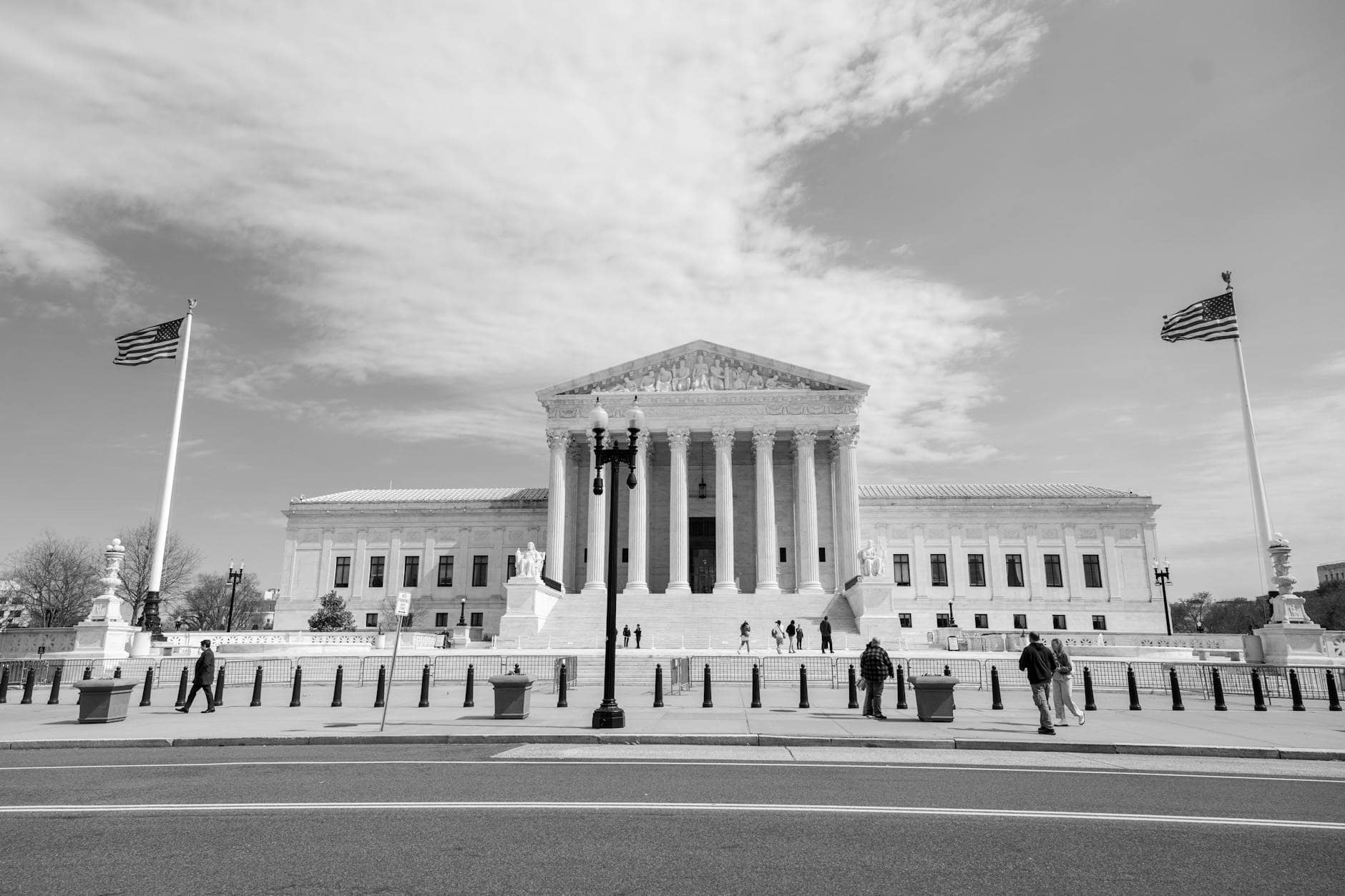
The United States Supreme Court, established in 1789, is a pivotal institution in American democracy and law. Its role as the highest court in the land grants it the authority to interpret the Constitution and adjudicate important legal disputes, significantly shaping the course of American history. This article explores the intricate history of the Supreme Court, from its founding principles to its influence on civil rights, pivotal cases, and evolving legal doctrines. Additionally, it examines the contemporary court’s role and its enduring impact on society. Through an in-depth analysis of key developments and decisions, we aim to understand how the Supreme Court has become a cornerstone of American governance and the protection of individual liberties.
The Founding and Early Years of the Supreme Court
The United States Supreme Court was established in 1789 as part of the Judiciary Act, which defined its structure and function in the newly formed government. The initial intent behind the Supreme Court’s creation was to serve as a neutral arbiter, ensuring that the laws of the nation were upheld and interpreted consistently across the various states. The founders, including figures like Alexander Hamilton and James Madison, envisioned a court that would safeguard the Constitution and the principles of democracy.
In its formative years, the Supreme Court faced numerous challenges. The first Chief Justice, John Jay, struggled to establish the authority of the court as a powerful judicial entity. One of the significant cases during this period was West v. Barns, which laid the groundwork for judicial review, although the court’s influence was limited in its early years. Judicial review, the authority of the court to invalidate legislative and executive actions deemed unconstitutional, would not be firmly established until the landmark case of Marbury v. Madison in 1803.
Marbury v. Madison was a pivotal moment for the Supreme Court, affirming its role as a check on the other branches of government. Chief Justice John Marshall’s ruling articulated that it is the duty of the judicial branch to say what the law is—an assertion that solidified the court’s role within the federal government and set a precedent for future judicial review. This case marked the beginning of the Supreme Court’s evolution into a powerful force in American politics and law.
After Marbury v. Madison, the Supreme Court continued to expand its influence through a series of important cases that addressed fundamental issues concerning federal versus state power. The court’s decisions often reflected the socio-political dynamics of the time, as it grappled with contentious issues such as slavery, civil rights, and the authority of the federal government. For instance, the case of McCulloch v. Maryland in 1819 reinforced the supremacy of the federal government over state laws, proving essential in the consolidation of federal authority.
Throughout the 19th century, the Supreme Court became increasingly involved in cases that dealt with the rights of individuals and the implications of federalism. The decisions rendered during this era not only shaped legal doctrines but also defined the court’s identity as a protector of individual rights and liberties against potential government overreach. For example, the court’s ruling in Dred Scott v. Sandford in 1857, which denied citizenship to African American slaves, exposed the deeply embedded issues of race and equality within the judicial system and highlighted the contentious relationship between law and morality.
The decisions made during these early years established the framework through which the court would operate, influencing its role in American society and governance. The foundation laid by the inaugural Supreme Court set the stage for its future as one of the most influential institutions in American democracy, tasked with interpreting laws and adjudicating disputes that resonate through history.

The Supreme Court’s Role in American Civil Rights
The Supreme Court has played a critical role in shaping civil rights in America, acting as both a catalyst for change and a reflection of societal attitudes. The landmark decision in Brown v. Board of Education (1954) represents a turning point in the court’s involvement in civil rights. This case declared racial segregation in public schools unconstitutional, effectively overturning the precedent set in Plessy v. Ferguson (1896), which upheld the “separate but equal” doctrine. The ruling in Brown was a significant victory for the civil rights movement, providing momentum for subsequent efforts to combat racial discrimination.
The repercussions of Brown v. Board of Education were profound. It inspired a generation of activists who rallied for equal rights across various sectors of society, including housing, employment, and voting. The Supreme Court’s decision reaffirmed the importance of equal protection under the law, setting a legal precedent that would be crucial for future civil rights cases.
Following Brown, the court addressed various aspects of civil rights, including voting rights and gender equality. The Voting Rights Act of 1965 was influenced by judicial interpretations that emphasized the importance of access to the ballot for all citizens. The Supreme Court’s rulings helped dismantle legal barriers that prevented marginalized groups from exercising their voting rights.
In the 1970s, the court continued its focus on civil rights through decisions that tackled issues of gender discrimination, such as Reed v. Reed (1971), which asserted that laws discriminating on the basis of gender violated the Equal Protection Clause. The court’s evolving understanding of discrimination pushed against traditional notions and helped reshape societal norms regarding women’s rights.
The Supreme Court’s role in civil rights remains contentious, as justices often faced pressure from various political factions. While some decisions have advanced civil rights, others, like Shelby County v. Holder (2013), which invalidated key provisions of the Voting Rights Act, demonstrated the inherent challenges within the judicial system when dealing with ongoing discrimination issues.
The court’s involvement in civil rights has revealed the complexities of law and justice, underscoring the importance of a judiciary that reflects evolving societal values. The influence of the Supreme Court on civil rights underscores how integral the judiciary is in protecting individual liberties and advancing social justice in American society.

Landmark Supreme Court Cases
Throughout its history, the Supreme Court has rendered several landmark decisions that have dramatically shaped the legal landscape of the United States. These cases not only addressed pressing social issues but also set legal precedents that guide future interpretations of the law.
In addition to Marbury v. Madison and Brown v. Board of Education, other notable cases include Roe v. Wade (1973), which recognized a woman’s right to choose to have an abortion, grounding its decision in the right to privacy. The court’s ruling in Roe sparked intense debates that continue to resonate today, as it highlighted the delicate balance between individual liberties and state interests. The case has become a focal point in discussions about reproductive rights, reflecting broader societal conflicts over morality, religion, and personal choice.
Another significant case is Miranda v. Arizona (1966), which established the Miranda rights—requiring law enforcement to inform suspects of their rights to remain silent and to have an attorney present during interrogations. This decision fundamentally transformed police procedures and emphasized the importance of protecting individual rights within the justice system, reinforcing the notion that justice must not only be done but also be seen to be done.
The court has also navigated issues related to free speech, as seen in Tinker v. Des Moines Independent Community School District (1969), where the court affirmed that students do not “shed their constitutional rights to freedom of speech or expression at the schoolhouse gate.” This case established a precedent that protects the rights of students in public schools, encouraging civic engagement and discourse among young people.
Another monumental case, Obergefell v. Hodges (2015), legalized same-sex marriage in the United States, affirming that the right to marry is a fundamental liberty guaranteed by the Constitution. The ruling was a historic victory for the LGBTQ+ community, marking a significant shift in societal views on marriage and equality.
These landmark cases illustrate the dynamic interplay between evolving societal values and legal interpretations. The Supreme Court’s decisions echo through time, reinforcing the idea that law and justice are inherently progressive, reflecting the changing moral landscape of the nation. As the court continues to address contemporary issues, its role as a protector of rights and liberties remains crucial in maintaining the foundational principles of American democracy.

The Evolution of Supreme Court Jurisprudence
The evolution of Supreme Court jurisprudence over the years has been marked by shifts in legal philosophy, public sentiment, and the social landscape of the nation. As society progressed, the court adapted its interpretation of the Constitution to reflect contemporary values, often sparking significant debates regarding the balance of power among government branches and the rights of individuals.
The early jurisprudence of the Supreme Court was largely influenced by Federalist principles, emphasizing a robust federal government with the power to enforce laws uniformly across states. This perspective shifted in the late 19th and early 20th centuries as the court began to embrace a more laissez-faire approach to policymaking, reflecting the economic realities of the time. This change was evident in cases like Lochner v. New York (1905), where the court struck down labor laws that limited working hours, prioritizing economic freedom over regulatory intervention.
The Great Depression marked a turning point in Supreme Court jurisprudence, as the court faced increasing pressure to validate New Deal legislation aimed at economic recovery. The shift witnessed during this period led to a more expansive interpretation of federal powers, as seen in Wickard v. Filburn (1942), which upheld federal regulation of agricultural production. This evolution towards broader federal authority illustrated the court’s responsiveness to the pressing needs of society, solidifying the role of the federal government in economic matters.
Moving into the mid-20th century, the Supreme Court experienced a jurisprudential revolution influenced by the civil rights movement. This era introduced a more dynamic understanding of individual rights, as the court began to favor expansive interpretations of the Constitution’s guarantees. The Warren Court (1953-1969) played a significant role in this transformation, prioritizing civil liberties and civil rights cases, and solidifying its legacy as an advocate for social justice.
As societal attitudes shifted, the Supreme Court continued to navigate complex issues, including abortion rights, affirmative action, and LGBTQ+ rights. Each case represented a new phase in constitutional interpretation, reflecting the sociopolitical climate of the time. For instance, the varying interpretations of equal protection under the law demonstrated the courts’ shifting philosophies, influenced by the societal understanding of discrimination and equality.
The late 20th and early 21st centuries have seen another evolution in jurisprudence, characterized by the rise of originalism and textualism. Justices like Antonin Scalia championed a return to the original intent of the Constitution, emphasizing the significance of adhering to the text as it was understood at the time of its ratification. This movement has shaped contemporary legal discourse, igniting debates over how the Constitution should be interpreted in the context of modern society.
As we move forward, the Supreme Court’s approach to jurisprudence will undoubtedly continue to evolve, reflecting the ongoing dialogue between law, society, and justice. The balance between individual rights and governmental authority remains a complex task for justices, ensuring that the court remains a vital component of American democracy.

The Contemporary Supreme Court and Its Impact on Society
The contemporary Supreme Court has been marked by notable ideological divisions, with justices appointed from various political backgrounds influencing the direction of legal interpretations and decisions. Since the early 2000s, the court has faced high-profile cases that highlight the contentious political landscape surrounding judicial appointments, making its composition and decisions even more significant.
In recent years, the court has been faced with critical cases related to healthcare, environmental regulation, and immigration, often reflecting the political polarization in the United States. The decision in National Federation of Independent Business v. Sebelius (2012) upheld key provisions of the Affordable Care Act, showcasing the court’s pivotal role in shaping public policy amidst a deeply divided nation.
Moreover, issues such as gun rights and religious freedom have prompted the court to clarify its constitutional interpretations. Cases like District of Columbia v. Heller (2008), which affirmed the individual right to bear arms, and Burwell v. Hobby Lobby Stores (2014), which recognized religious exemptions for corporations regarding contraceptive coverage, illustrate the court’s engagement in debates that resonate beyond the legal framework into the lives of everyday Americans.
The impact of the Supreme Court extends into the cultural sphere as well. Decisions regarding same-sex marriage, such as in Obergefell v. Hodges (2015), have profound implications on societal norms and civil rights. The court’s ruling in favor of marriage equality reflects shifting societal attitudes towards LGBTQ+ rights, illustrating the dynamic relationship between law and culture in contemporary America.
As we observe the court’s decisions over time, it becomes clear that the Supreme Court does not operate in a vacuum; its rulings are often influenced by, and subsequently influence, public opinion. The interaction between the judiciary and society underscores the essential role of the Supreme Court in interpreting the Constitution in ways that resonate with contemporary values and expectations.
Moving forward, the Supreme Court must navigate complex legal, social, and political landscapes, determining its role as both a protector of rights and a responsive institution to changing societal needs. As the nation continues to grapple with significant issues, the Supreme Court will undoubtedly remain a focal point of discourse, reflecting the evolving ideals of justice and equality within the fabric of American society.
Conclusion
The history of the United States Supreme Court is a testament to the evolving nature of law and justice in a democratic society. From its foundational years and the establishment of judicial review to its pivotal role in advancing civil rights and addressing contemporary issues, the Supreme Court remains integral to the American legal landscape. Through landmark decisions that have defined individual liberties and rights, the court continues to influence society, reflecting the ongoing struggle for justice and equality.
As we look to the future, the Supreme Court will undoubtedly confront new challenges and social dynamics, requiring it to adapt its interpretations of the Constitution. The court’s ability to serve as a guardian of rights and a forum for justice remains vital in maintaining the principles of democracy and protecting the liberties of individuals in an ever-changing world.
Sources Consulted
- Supreme Court of the United States. (n.d.). Retrieved from https://www.supremecourt.gov/
- Oyez. (n.d.). Retrieved from https://www.oyez.org/
- National Constitution Center. (n.d.). Retrieved from https://constitutioncenter.org/
- The American Bar Association. (n.d.). Retrieved from https://www.americanbar.org/
- Cornell Law School Legal Information Institute. (n.d.). Retrieved from https://www.law.cornell.edu/
Leave a Reply