Introduction
Westminster Abbey and the Palace of Westminster have stood for over a thousand years at the heart of British governance and spirituality, embodying centuries of history, tradition, and architectural brilliance. Originally a humble Benedictine monastery established in the 960s, Westminster Abbey evolved into a place of royal ceremonies, burials, and national significance. The adjacent Palace of Westminster, with its iconic Houses of Parliament, has similarly served as the political epicenter of the nation, housing generations of lawmakers who have shaped modern Britain. Together, these structures are not just impressive monuments; they are repositories of collective memory, reflecting the shifting tides of power, religion, and culture. This article explores the deep-seated history, architectural evolution, and the continuing relevance of Westminster Abbey and the Palace of Westminster in the context of British power and identity.
The Origins of Westminster Abbey
The origins of Westminster Abbey trace back to the 7th century when a small church was established on the site, and it has undergone remarkable transformations over the centuries. Originally built as a Benedictine monastery, the Abbey’s location was chosen for its proximity to the River Thames, providing both aesthetic beauty and practical access to transportation. However, the site gained prominence under King Edward the Confessor, who was instrumental in its expansion. Commissioned in 1042, the construction of the Abbey began in 1045, and it was consecrated in 1065, just a week before the king’s death.
Edward envisioned the Abbey not only as a church but also as a royal mausoleum. His desire for a grand ecclesiastical structure paved the way for the subsequent Gothic masterpieces. The Abbey was intended to symbolize the sanctity of the monarchy, and it became the coronation site for subsequent monarchs, starting with William the Conqueror in 1066. The intertwining of church and state began here, marking Westminster Abbey as a pivotal institution in the consolidation of royal power.
Throughout medieval England, Westminster Abbey’s significance grew. It served as a crucial venue for royal marriages, notable funerals, and political gatherings. With each royal event, the space transformed into a realm where political authority and divine right coalesced. By the 12th century, the Abbey had developed a reputation as a pilgrimage destination due to the relics of saints, and thus, it became a spiritual beacon amid political strife.
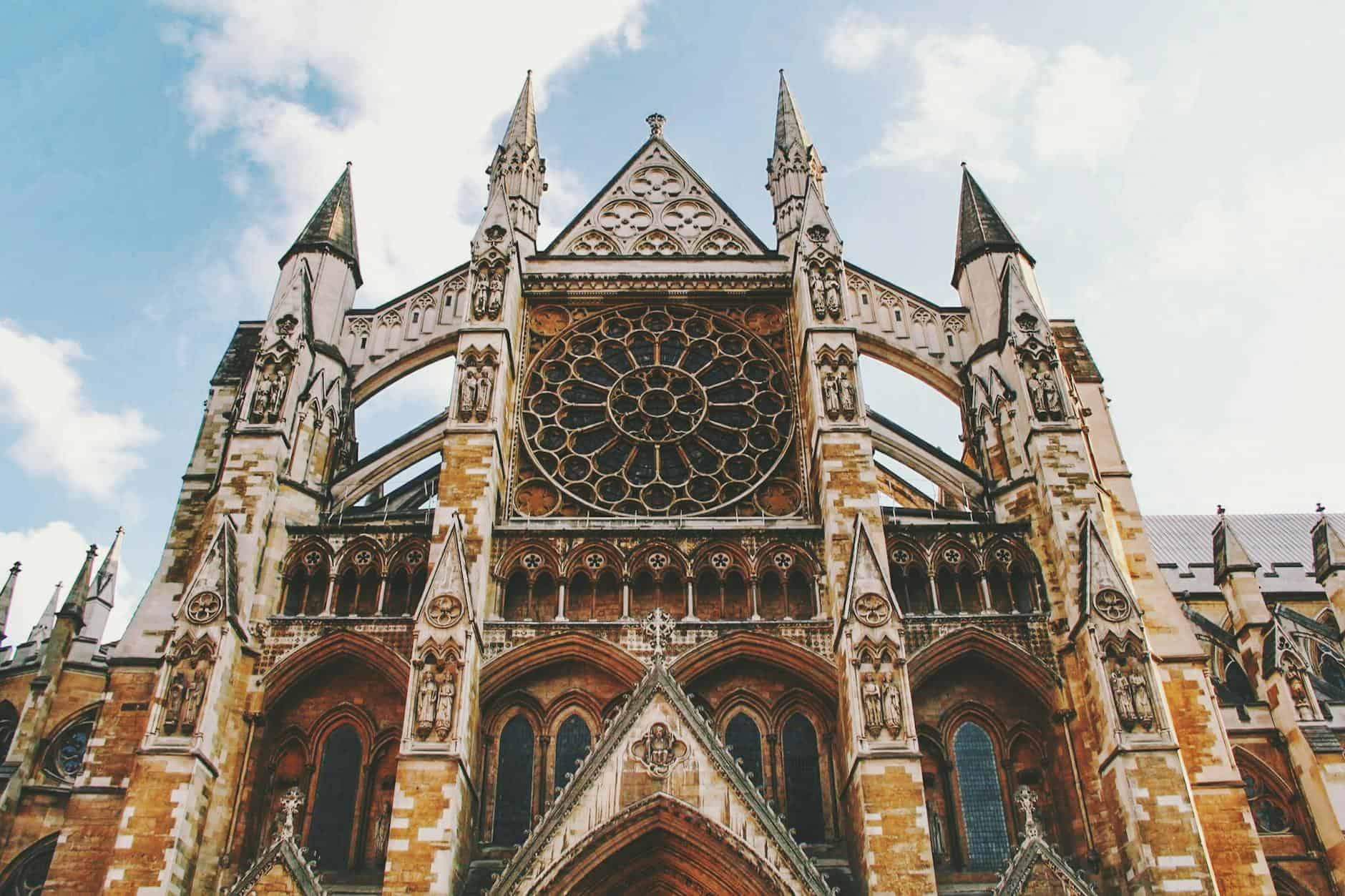
The architecture of the Abbey reflects the evolution of styles from Romanesque to Gothic, capturing the essence of periods in English history. The transition to Gothic design in the 13th century, initiated under King Henry III, marked a significant architectural evolution. This transformation resulted in the magnificent nave and the intricate carvings and stained glass that we admire today. As the official church for the coronations of English monarchs, the roles played by Westminster Abbey in religious and royal ceremonies continued to elevate its status as a cultural symbol.

By the mid-19th century, the Abbey’s role further expanded with the establishment of various memorials and significant tombs for notable figures from various fields—ranging from politics and science to arts and literature. The Poets’ Corner became a hallowed ground for authors, offering a microcosm of British cultural history. Writers like Charles Dickens and Geoffrey Chaucer are memorialized within its walls, underscoring the Abbey’s role not just as a sacred site, but also as a cathedral of national heritage.
Through the centuries, Westminster Abbey has not simply served as a witness to history; it has actively shaped it. The interplay between the monarchy and the Abbey has left a formidable legacy, making the site a cornerstone of British identity. The events and individuals associated with this hallowed institution reveal a significant narrative that intertwines with the socio-political landscape of England, illustrating how a structure can simultaneously reflect and influence the course of a nation.
The Architectural Evolution of the Abbey and Palace
The architectural evolution of Westminster Abbey and the Palace of Westminster is a fascinating tale that mirrors the changing socio-political climate of England. Starting with Westminster Abbey, its construction initiated in the mid-11th century showcases the Romanesque style prevalent at that time. However, as architectural tastes evolved, particularly during the Gothic period, significant renovations and expansions embraced more elaborate designs, characterized by pointed arches, flying buttresses, and intricate stained-glass windows.
King Henry III commissioned a redesign in the 13th century, emphasizing the Gothic style that we see today. This transformation introduced elements such as the stunning vaulted ceilings and ornate embellishments that depict scenes from biblical stories. The Abbey became a visual representation of the divine authority bestowed upon the monarchy, capturing the grandeur intended by Henry III. Each feature of the Abbey tells a story, from the tombs of revered monarchs to the intricate details that adorn nave and chapels.
Adjacent to the Abbey, the Palace of Westminster has undergone a tumultuous journey marked by fire and political upheaval. Originally established as a royal residence in the 11th century, the Palace transitioned into a center for political activity as the seat of Parliament. The palace witnessed a series of architectural renovations, particularly throughout the 13th and 14th centuries, including the iconic Westminster Hall, which remains one of the oldest parts of the building.
The great fire of 1834 profoundly impacted the Palace’s architectural narrative, leading to a comprehensive reconstruction. The outcome, designed by architect Charles Barry and his assistant Augustus Pugin, embraced the Gothic Revival style, creating an imposing structure characterized by its stunning towers, such as the famous Elizabeth Tower, housing the famed Big Ben. These changes symbolized a return to traditional forms, paralleling the Victorian era’s interest in national identity and historical heritage.

Both the Abbey and Palace serve not merely as functional spaces but as grand statements of power. The rich tapestry of styles illustrates the way architecture adapts to reflect contemporary values. The Abbey’s diverse elements—in which one can observe Romanesque influence morphed into elaborate Gothic forms—exemplify a dialogue between sacred and political life.
Today, both sites are not only recognized for their architectural beauty but are also significant tourist attractions, drawing millions who wish to explore the grandeur encapsulated in stone. The meticulously preserved details and thoughtful restorations continue to echo the historical narrative, allowing each visitor to walk through a living testament to British history, culture, and architectural prowess.
The Role of Westminster in the British Monarchy
Westminster Abbey and the Palace of Westminster are inextricably linked to the British monarchy, serving as the backdrop for pivotal events that shape the nation’s history. The Abbey has been the principal venue for royal ceremonies since its consecration, with coronations, weddings, and funerals deeply embedded in its fabric. This connection signifies the intertwining of religious and royal authority, providing a tangible link between the divine and the regal.
The tradition of coronations dates back to William the Conqueror in 1066, affirming the Abbey’s status as a sacred site for royal ascension. Each coronation ceremony entails elaborate rituals steeped in tradition, reflecting not just the significance of the role of the monarch but also the cultural customs and values of Britain. The coronation chair, known as King Edward’s Chair, is a symbolic piece that has witnessed the crowning of nearly every monarch since the medieval period. Within the confines of the Abbey, each royal figure pledges to uphold the faith and serve the people, emphasizing the monarch’s role as a divinely ordained authority.
The weddings of numerous royals have also taken place at Westminster Abbey, from the grand nuptials of Queen Victoria to the modern ceremony of Prince William and Catherine Middleton. These events not only captivate public attention but foster a sense of unity among citizens, celebrating shared national identity. Moreover, royal funerals held at the Abbey represent profound moments of public mourning while honoring the legacy of the deceased monarchs. The altars and memorials within the Abbey bear witness to this deep-seated connection, creating a sacred space where history reverberates with each ceremonial event.
As the seat of Parliament, Westminster Palace embodies the political dimensions of the monarchy. From the Magna Carta to the establishment of constitutional monarchy, the building has been the venue for pivotal discussions and legislation that reflect the ever-evolving relationship between the monarchy and government. The monarch’s opening of Parliament each year is a traditional event that serves as a reminder of royal authority while also illustrating constitutional boundaries. It encapsulates the balance of power, where the monarch’s presence is a sign of unity and continuity.

The modern monarchy strives to adapt to contemporary values while maintaining ties to its historical roots. In recent years, the role of the monarchy has been scrutinized, and Westminster’s significance as a historical site remains crucial to understanding the evolution of royal authority and public perception. Encapsulated within these walls are tales of triumph and conflict, reverberating through time and contributing to the legacy of the British monarchy.
In the context of today’s global society, the monarchy at Westminster stands as a symbol of stability and tradition amid change. While reform and modernization are essential, the historical significance embedded within the Abbey and Palace ensures that the monarchy remains a vital thread in the tapestry of British identity. The interplay between the sacred and secular encapsulated in Westminster provides a unique lens through which to understand the evolving nature of monarchy and power in Britain.
Key Historical Events Associated with Westminster
Westminster Abbey and the Palace of Westminster are intrinsic to the narrative of British history, having hosted numerous key events that resonate to this day. From solemn funerals to groundbreaking agreements, the history unfolded within these walls tells a story of a nation in evolution.
One significant historical event is the signing of the Magna Carta in 1215, which, although not performed at Westminster itself, was developed under the watchful eye of the monarchy, illustrating the complex relationship between power and governance. The repercussions of this document laid the foundation for modern democracy and transformed the perception of the monarchy’s role in governance. The notion that a monarch is not above the law began here, paving the way for the rights and liberties enjoyed by citizens today.
Moreover, the Abbey stood as the venue for the funeral and commemoration of notable figures, marking key moments in England’s social and political landscape. The state funeral of Sir Winston Churchill held there in 1965 epitomized the nation’s respect for its leaders and served as a focal point for collective mourning. Such functions bind citizens to their leaders, reinforcing the relationship between the monarchy and the people.
The Palace of Westminster has also been the site of various debates and votes that have fundamentally altered British society. The Parliament Act of 1911 significantly shifted the balance of power between the Houses of Parliament, diminishing the House of Lords’s powers in law-making. This landmark event symbolizes the gradual emergence of democracy and popular governance, moving power from the elite toward the public. In this context, the discussions and decisions made within those venerable walls echo through generations.
Furthermore, the events leading up to and following the English Civil War in the 17th century serve as another touchstone of historical significance. Tensions between Parliament and the monarchy culminated in a conflict that questioned the very foundation of governance in England. The trial and execution of King Charles I in 1649 marked the fall of royal absolutism, resulting in a brief republican experiment led by Oliver Cromwell. The implications of this conflict were far-reaching, reshaping the political landscape and setting the stage for future constitutional developments.
The shift in the British constitution over the years is emblematic of Westminster’s adaptation to political needs and public sentiment. The Parliament buildings bear witness to protests and discussions that reflect societal changes, including movements advocating for women’s suffrage and civil rights. These progressive narratives have led to meaningful reforms that resonate today, contributing to the ongoing evolution of British democracy.
Today, Westminster continues to be a focal point for national discussion and legislation, weaving its historical legacy into modern governance. As events unfold within its walls, each encounter shapes the future while paying homage to its past. The Abbey and the Palace are more than just structures; they serve as the lifeblood of British history, encapsulating lessons learned and victories achieved along the journey toward establishing a more democratic society. Ultimately, the threads of history that run through Westminster remain a beacon for future generations, reminding us of the ever-evolving story of a nation.
The Abbey’s Cultural and National Significance Today
The cultural and national significance of Westminster Abbey today transcends its historical roots, reflecting contemporary British identity and the country’s ongoing evolution. As a UNESCO World Heritage site, the Abbey is recognized not only for its architectural magnificence but also for its representation of British heritage, spirituality, and cultural continuity. It plays a pivotal role in the national consciousness, symbolizing unity and history amidst a rapidly changing world.
Westminster Abbey attracts millions of visitors each year, serving as a living museum that educates people about the breadth of British history and culture. Tourists flock to admire its grandeur, pay homage to influential historical figures, and experience a connection to the past. The Abbey’s dual role as a site of worship and a tourist destination allows it to maintain relevance while fostering a deep appreciation for England’s cultural heritage. The presence of significant tombs and memorials—ranging from notable poets in Poets’ Corner to statesmen such as Sir Isaac Newton—showcases the impact of individuals who have contributed to the fabric of British society.
Moreover, the Abbey remains central to national celebrations and commemorations, perpetuating a sense of belonging among its visitors. Major events like royal weddings and state funerals capture the public’s imagination and serve as focal points for national pride. These ceremonies create a shared identity, bringing together people from diverse backgrounds in collective remembrance of their history and heritage. The sound of hymns echoing through the Abbey during services resonates with tradition, encapsulating the spiritual essence that continues to thrive within its walls.
In addition to its role in historical commemorations, the Abbey engages with contemporary issues, seeking to remain pertinent in discussions surrounding social justice, peace, and reconciliation. With a commitment to fostering dialogue, it often opens its doors to conversations about critical societal topics, creating a space where faith, ethics, and public policy intersect. As societies grapple with complexities, Westminster Abbey stands as a beacon of moral guidance, providing a framework for understanding challenging issues in light of historical context.
The Abbey also collaborates with various educational programs aimed at fostering cultural understanding and cohesion. Hosting talks, exhibitions, and outreach initiatives, it reaches communities beyond its immediate vicinity. Through these efforts, Westminster Abbey strives to bridge the gap between history and modernity, reminding people that while we honor our past, there is still work to be done in shaping an inclusive future.
Culturally, Westminster Abbey embodies the literary and artistic spirit of Britain. The involvement of prominent artists and composers over the years further underlines the Abbey’s significance as a hub of artistic expression. Events like poetry readings and concerts hosted within its grand spaces invite artistic exploration, allowing the Abbey to transcend its traditional boundaries and become a place for cultural engagement.
In conclusion, Westminster Abbey plays a multifaceted role within British society, serving as a touchstone of history while embracing contemporary relevance. Its integration into national life—through worship, celebration, and education—ensures that it remains a living entity, reflective of the values and aspirations of the nation. The Abbey is not merely a monument; it is a custodian of stories and a symbol of continuity, inviting both respectful remembrance and meaningful dialogue as Britain navigates its future.
Conclusion
In summary, Westminster Abbey and the Palace of Westminster are emblematic structures that capture the rich tapestry of British history and culture. Through their architecture, royal ceremonies, and pivotal historical events, they have become repositories of national identity, reflecting the evolution of governance, spirituality, and public sentiment. The Abbey’s origins and its architectural transitions reveal how deeply intertwined church and state have been, while the role of the Palace as the seat of power underscores the dynamic nature of British democracy.
Over the centuries, Westminster has stood witness to moments of joy and sorrow, triumph and turmoil, each event contributing to the collective memory of the nation. As these landmarks continue to evolve, they adapt to contemporary societal changes while preserving their historical significance. Today, Westminster Abbey and the Palace of Westminster are not only tourist attractions but also functioning institutions that engage with the public, fostering cultural dialogue and understanding.
Ultimately, the legacy of Westminster is one that endures, serving as a reminder of the past while inspiring future generations to reflect on the complex relationship between power, culture, and identity. These sites are vital to understanding the continuity of British heritage, and they will continue to resonate in the hearts and minds of those who walk through their storied halls.
Westminster Abbey: Uncovering Henry III’s Sacristy | Video

Leave a Reply