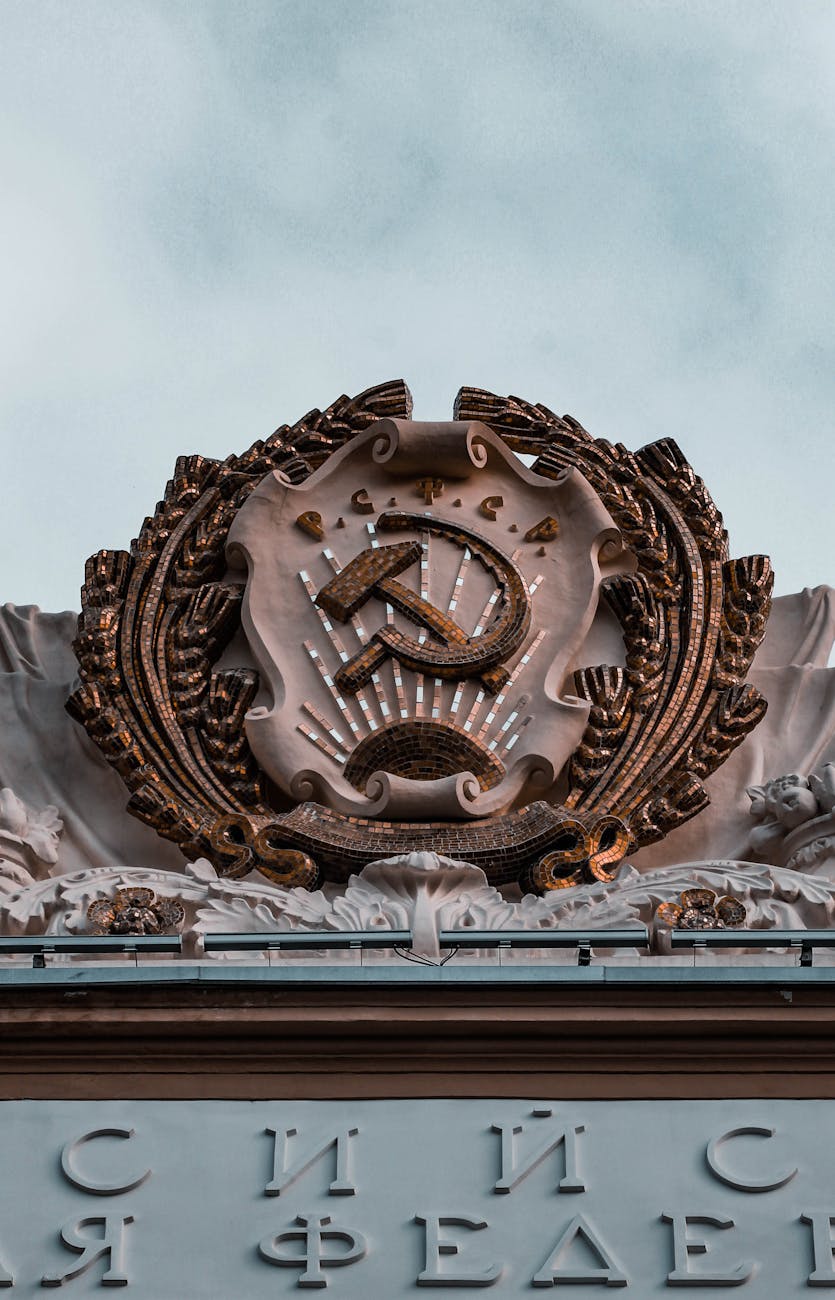
The collapse of the Soviet Union in 1991 marked a pivotal turning point in global history, bringing an end to the Cold War and reshaping international relations. For history students, professors, and enthusiasts, understanding the multifaceted causes of this event is crucial. The Soviet Union, a state founded on Marxist-Leninist principles, faced critical internal challenges that culminated in its dissolution.
This article explores the complex interplay of various factors—political, economic, and social—that contributed to this dramatic historical moment. By examining the broader implications of the Soviet collapse, we can appreciate its lasting impact on contemporary geopolitics and society. This exploration seeks not just to recount historical events but to analyze the lessons learned from the disintegration of one of the 20th century’s superpowers.
Historical Context and Political Climate Preceding the Collapse
The seeds of the Soviet Union’s collapse were sown long before the dramatic events of the late 1980s. To understand these seeds, we must first look at the formation of the USSR itself, which was born in the aftermath of the Russian Revolution in 1917. Initially envisioned as a federation of soviet republics with the promise of socialism, the Union was characterized by a forced centralization of power under a single party: the Communist Party of the Soviet Union (CPSU). This led to a lack of political pluralism and a suppression of dissenting voices—a foundation that would later prove unstable.
By the mid-20th century, the Cold War had become a defining aspect of the Soviet identity. The ideological struggle against the West fueled both military expansion and technological rivalry, resulting in significant resource allocation towards defense. However, while the regime maintained a strong arm against external threats, internal political dissent grew quietly. Events such as the Prague Spring in 1968 revealed the cracks in the Soviet control over its satellite states, hinting at the fragility of the empire.
The succession of leaders—from Joseph Stalin’s oppressive policies to the more reformist Mikhail Gorbachev—demonstrated the tension between maintaining tight control and seeking reform. Gorbachev’s rise to power in 1985 marked a crucial pivot in this narrative. His policies of glasnost (openness) and perestroika (restructuring) aimed to revitalize the economy and encourage political dialogue. However, rather than strengthening the state, these reforms unintentionally fueled demands for greater autonomy across the various republics.
As the political climate shifted, the role of dissidents became increasingly important. Figures such as Andrei Sakharov and Aleksandr Solzhenitsyn began to challenge the regime openly, raising awareness about human rights abuses and advocating for fundamental freedoms. These movements galvanized public sentiment, paving the way for the rise of nationalist sentiments within the constituent nations of the USSR.
By the late 1980s, discontent had transformed into a widespread movement for independence and reform. The introduction of a more open media and the ability to criticize government policies led to a new awakening among the populace. The Baltic states, along with others such as Ukraine and Georgia, began to openly contest their roles within the Union, emboldened by a rhetoric calling for freedom and autonomy.
In summary, the historical context leading up to the collapse of the Soviet Union was marked by a combination of unyielding central authority, emerging nationalist movements, and a climate ripe for reform. This backdrop set the stage for the eventual disintegration of a superpower, illustrating how internal contradictions can undermine the very strength a regime claims to possess.
Economic Factors and the Role of Perestroika
The economic landscape of the Soviet Union during the 1980s played a pivotal role in its eventual collapse. Central to this discussion is Gorbachev‘s implementation of perestroika, an initiative designed to inject life into a stagnating economy and reduce the inefficiencies caused by the planned economy system. At its core, perestroika sought to decentralize economic decision-making and encourage elements of market-based practices, directly challenging decades of strict communist orthodoxy.
Prior to perestroika, the Soviet economy suffered from significant structural issues. The emphasis on heavy industry and military production had led to neglect in consumer goods, resulting in chronic shortages and a decline in living standards. Soviet citizens found themselves often queuing for basic necessities, a situation that bred dissatisfaction with the regime. The economic malaise was further exacerbated by a lack of technological innovation due to isolation from Western advancements, a product of Cold War tensions.
When Gorbachev initiated perestroika in the mid-1980s, the approach fell short of its ambitious goals. The reforms were implemented without a clear vision for transitioning from a full command economy to a hybrid model. Moreover, the rapid introduction of market mechanisms led to confusion and chaos in the economy, causing inflation and further disruption. The loose monetary policy intended to stimulate growth inadvertently resulted in hyperinflation, eroding savings and fostering widespread panic among the populace.
Additionally, the attempt at reform highlighted the fragility of the system itself as various interest groups within the government and industries resisted change. The entrenched bureaucratic class was unwilling to relinquish control, leading to conflicts over the direction of the reforms. This internal strife exacerbated the economic situation, forcing Gorbachev’s administration to improvise changes amidst mounting public discontent.
Despite these complexities, the policy of perestroika did succeed in opening the floodgates for greater economic discussion. However, its unintended consequence was the rise of a shadow economy and burgeoning black markets as individuals sought alternative means of survival amidst official shortages. This shift further challenged the legitimacy of the state, as citizens engaged in self-directed economic practices, essentially bypassing state control.
The growing unrest not only stemmed from economic grievances but also from the dawning realization that the promise of prosperity through communism was an illusion. In the face of stagnation, the spirit of entrepreneurship awoke, yet the state was ill-equipped to manage this societal change. The softening of censorship allowed for greater discussion about economic liberalization, but it also fueled the demand for political pluralism alongside economic reform.
In conclusion, while intended to rejuvenate the economy, Gorbachev’s perestroika inadvertently contributed to the collapse of the Soviet Union. The reforms highlighted systemic weaknesses within the Soviet economic model and unleashed forces that veered beyond state control. Thus, economic factors, intertwined with the political climate, played a crucial role in hastening the downfall of a superpower that had long since entered a state of decline.
Nationalism and Independence Movements in Soviet Republics
By the late 1980s, the forces of nationalism and independence movements within the Soviet republics became pivotal in the narrative of the USSR’s collapse. A defining feature of the Soviet system was its diverse ethnic composition, with over 100 distinct nationalities residing within its borders. For decades, the central Soviet government, dominated by ethnic Russians, suppressed national identities in favor of a unified Soviet identity, often leading to simmering resentments among smaller ethnic groups.
The introduction of glasnost, Gorbachev’s policy of openness, acted as a catalyst for these nationalist sentiments to surface in public discourse. In the years leading up to the collapse, various republics began to assert their rights to self-determination. The Baltics were at the forefront of this movement, with Lithuania declaring independence in 1990, followed closely by Latvia and Estonia. These republics capitalized on the newly available channels of communication to mobilize their populations around the idea of national sovereignty.
The independence movements in the Baltic states inspired similar aspirations among other republics. Ukraine, Georgia, Armenia, and others began to organize protests, demonstrating the power of collective identity in the face of a weakening central authority. In Ukraine, the culmination of these efforts led to the declaration of independence in August 1991, fueled by significant public support, encapsulated in mass rallies.
The social and economic disparities also illuminated the costs of Soviet governance among republics. Local populations began to blame the central Soviet government for resource misallocations and economic hardship. The desire for greater control over local resources intensified the calls for autonomy, fostering a sense of nationalism that transcended mere political claims and became deeply tied to cultural identities.
These movements often had significant cultural undertones, signifying a reclamation of identity suppressed during the Soviet period. Activists began to emphasize the importance of language, traditions, and historical narratives unique to their respective nations. The rekindling of national pride became both a unifying force and a source of tension, as diverse groups within the republics clamored for different visions of an independent future.
Amidst this fervor, the union itself found it increasingly difficult to maintain cohesion. The August Coup of 1991, an attempted coup by hardline communists aiming to restore order, served to further weaken the Soviet grip across the republics. The coup, which eventually failed, acted as a definitive tipping point, igniting the desperation for independence and pushing the republics towards faster declarations of sovereignty.
The rise of nationalism ultimately prompted a re-evaluation of the Soviet identity and the legitimacy of the central government. As various republics dissolved ties with Moscow, it became evident that the Soviet Union was losing its grip on power. The momentum of independence sequences led to the formal dissolution of the USSR in December 1991, as republic after republic affirmed their sovereignty.
In summary, the role of nationalism and independence movements within the Soviet republics proved critical to the eventual downfall of the Soviet Union. Gorbachev’s policies, while intended to foster reform, inadvertently unleashed a wave of identity politics that challenged the very foundation of the regime’s power. The hallmark of these developments illustrates how national aspirations, coupled with the desire for autonomy, can drastically alter the course of historical events.
The Influence of Global Cold War Dynamics
The years leading to the collapse of the Soviet Union were significantly shaped by the broader dynamics of the Cold War and its global ramifications. As the world polarized into competing ideologies—capitalism versus communism—the Soviet Union found itself confronting mounting challenges on both military and diplomatic fronts. Understanding this context is crucial to grasping how external pressures exacerbated internal fissures within the Soviet state.
Throughout the Cold War, the arms race between the US and the USSR consumed vast resources, detracting from domestic investments that could have bolstered the Soviet economy. The invasion of Afghanistan in 1979 further strained the military and financial capabilities of the USSR, leading to a quagmire that drained resources and morale. The ramifications of this war not only taxed military resources but also emboldened dissent both locally and across the bloc, with other nations witnessing the USSR’s struggles.
The economic crises of the 1980s were exacerbated by the changing global order. The rise of neoliberal economic policies in the West under leaders such as Ronald Reagan and Margaret Thatcher presented an alternative that showcased the inefficiencies of communist governance. As Western economies grew and prospered, the comparative failures of the Soviet economic model became glaringly evident. The persistent technological gap, especially in consumer goods, showcased that efficiency could not be achieved through mere central planning.
Moreover, the increase in diplomatic engagements—such as the Reykjavik Summit in 1986—illustrated the intention of superpowers to negotiate arms reduction, placing additional pressure on Soviet leadership. Gorbachev’s ideas of “new thinking” sought to ease hostilities, but these gestures were often perceived as signs of weakness by hardliners within the Communist Party, further destabilizing Gorbachev’s position.
As Eastern Europe began to challenge its political arrangement, the Soviet Union’s inability to maintain control over its satellite states served as an indicator of impending collapse. The Fall of the Berlin Wall in 1989 symbolized a powerful shift, signaling that the Eastern Bloc no longer felt beholden to the USSR. Countries like Poland and Hungary began to carve out paths away from Soviet influences, as socialist regimes crumbled in the face of popular uprisings and reform movements.
These geopolitical dynamics illustrated that the Soviet Union was not only facing internal discontent but was also losing its grip over its sphere of influence. This unprecedented erosion of power prompted various factions within the Soviet leadership to push for greater reforms or, conversely, to cling to repression—neither of which effectively addressed the core issues.
In essence, the complex interplay of global Cold War dynamics significantly influenced the trajectory of the Soviet Union’s demise. The external pressures combined with internal weaknesses created an environment that ultimately rendered the Soviet system unsustainable. The culmination of these forces showcased how the interplay of international relations could influence and dismantle a once-mighty global superpower.
Post-Collapse: Impact on Global Politics and Society
The disintegration of the Soviet Union in 1991 had profound and lasting implications for global politics and society. The end of the Cold War signaled a significant shift in international relations, as the binary ideological divide between capitalism and communism gave way to a more complex geopolitical landscape. For historians and political analysts, the aftermath of the Soviet collapse provides a rich tapestry for understanding the evolving dynamics of power in the post-Cold War era.
One of the immediate impacts of the collapse was the emergence of new independent states from the former Soviet republics. The disintegration led to a reconfiguration of territorial boundaries and national identities, with many nations grappling with the challenges of building stable governments and economies from the remnants of Soviet control. Republics such as Ukraine, Georgia, and the Baltics not only sought independence but had to navigate the transitional phase towards democracy, often facing internal strife and ethnic conflicts that arose from long-suppressed tensions.
In the broader scope of international relations, the vacuum left by a defunct Soviet Union compelled the United States to redefine its role on the world stage. The concept of unipolarity emerged, as the US positioned itself as the foremost global power. This shift was accompanied by debates over the future of NATO and the need for Western intervention in conflicts that arose in the post-Soviet space, highlighting the complex interplay between newfound freedoms and the realities of international politics.
Furthermore, the collapse catalyzed a wave of globalization that intensified over the subsequent decades. As former Soviet states sought to integrate into the global economy, the proliferation of market-oriented reforms became evident. However, this transition was fraught with difficulties, as countries struggled with corruption, economic hardship, and the challenges of adjusting to a capitalist system. This environment gave rise to varied trajectories for different republics, resulting in some gaining more stability and prosperity, while others remained mired in economic struggles and political upheaval.
The collapse also served as a cautionary tale for authoritarian regimes around the world. The Soviet experience demonstrated the risks of ignoring public dissent and failing to adapt to changing societal aspirations. In countries like Venezuela and Belarus, leaders have faced similar pressures as they attempt to maintain control amidst rising demands for reform and democratic governance.
The dissolution of the Soviet Union remains a poignant lesson in the complexities of statecraft, identity, and the delicate balance of power. As we reflect on the aftermath, it becomes clear that the impact of the Soviet collapse is still felt today through renewed nationalisms, geopolitical rivalries, and ongoing discussions on the values of democracy and governance.
In conclusion, the collapse of the Soviet Union serves as a crucial turning point in world history that has shaped the trajectory of global politics and society. By examining the systemic failures and the rise of nationalist movements, we gain insight into the complexities of historical developments. The lessons of this collapse continue to resonate, reminding us of the importance of political adaptability, social cohesion, and the enduring quest for identity and autonomy in an increasingly interconnected world.
Sources Consulted
- Gorbachev, Mikhail. Perestroika: New Thinking for Our Country and the World. Harper & Row, 1987.
- Kotkin, Stephen. Armadillo’s Dilemma: The Soviet Union and Its Collapse. New York: W. W. Norton & Company.
- Suny, Ronald Grigor. The Soviet Experiment: Russia, the USSR, and the Successor States. Oxford University Press, 1998.
- Zurcher, Christopher. The Soviet Union: A Very Short Introduction. Oxford University Press, 2017.
- Ascherson, Neal. “The Fall of the Soviet Union: What Happened?” The Guardian, December 1991. Read Here.
- Fukuyama, Francis. The End of History and the Last Man. Free Press, 1992.
- Emmott, Bill. “The Collapse of the Soviet Union,” The Economist, 1991. Read Here.

Leave a Reply