Tag: Innovation

  • SpaceX History: From 2002 Startup to Mars Ambitions and Reusable Rockets
    SpaceX History: From 2002 Startup to Mars Ambitions and Reusable Rockets

    Introduction

    SpaceX, founded in 2002 by Elon Musk, has revolutionized the aerospace industry with its ambitious goal of reducing space transportation costs and enabling the colonization of Mars. The company’s engineering marvels, including the Falcon 1, Falcon 9, and the Dragon spacecraft, have transformed the way people perceive space exploration. This article delves into the rich history of SpaceX, detailing its inception, significant milestones, and the technological advancements that have positioned the company at the forefront of the space race. With a focus on the innovative spirit and relentless pursuit of excellence, we explore how SpaceX has not only achieved remarkable feats but also inspired a new generation of dreamers aiming for the stars.

    The Founding of SpaceX: Vision and Mission

    SpaceX, or Space Exploration Technologies Corp., was founded by Elon Musk with a bold vision—to make space travel cheaper and sustainable. Recognizing the need for a new approach to space exploration, Musk sought to develop technologies that would reduce the cost of space missions, thereby making them more accessible. The inception of SpaceX was not just about creating rockets; it was rooted in an overarching mission to colonize Mars, a dream that has been a significant driver for the company since its early days.

    Elon Musk’s journey into space entrepreneurship began after his philanthropic efforts in the field of sustainable energy. He became increasingly aware of the challenges facing humanity, particularly the threat of catastrophic events, which further fueled his desire to explore new frontiers beyond Earth. Utilizing his wealth from the sale of PayPal, Musk initially attempted to purchase rockets from Russia. However, when he found that the cost was prohibitively high, he decided to embark on building his own rockets.

    In March 2002, he founded SpaceX in El Segundo, California. Armed with a small team of engineers and a clear vision, Musk aimed to design and manufacture fully reusable rockets. The company faced numerous challenges, including skepticism from seasoned aerospace engineers and significant technical hurdles. Many doubted Musk’s ambitious claims, with traditional aerospace players dismissing his efforts as unrealistic.

    However, Musk’s determination led to the development of the Falcon 1, the first privately developed liquid-fueled rocket to reach orbit. The path to the successful launch of Falcon 1 in 2008 was fraught with failures; four consecutive failed launches tested the company’s resilience and Musk’s commitment. Despite the setbacks, Musk’s unwavering belief in his mission, paired with his willingness to invest personal funds, kept the dream alive.

    The success of Falcon 1 marked a critical turning point, demonstrating that private companies could indeed achieve spaceflight milestones. Following this success, SpaceX did not rest on its laurels but continued to innovate, focusing on the development of the Falcon 9 and Dragon spacecraft. Musk’s vision expanded to include reducing the cost of launch services, eventually leading to partnerships with NASA.

    In the early years, the company’s mission was not just to launch satellites but to prove that space access could be significantly affordable and reliable—a concept that had the potential to democratize space exploration. This vision laid the groundwork for SpaceX’s later achievements, including resupply missions to the International Space Station (ISS) and pioneering the commercial crew program.

    Critically, Musk instilled a culture of innovation and rapid iteration at SpaceX. Each setback was viewed as an opportunity to learn and improve, leading to groundbreaking technologies such as the reusable rocket system. The initial vision and unwavering commitment to that mission propelled SpaceX from a fledgling startup to a major player in the space industry, igniting interest, investment, and public support for commercial space exploration.

    Key Milestones and Achievements in SpaceX’s Early Years

    Elon Musk‘s creation of SpaceX was just the beginning of a long journey filled with both triumphs and challenges. One of the cornerstone achievements was the successful launch of the Falcon 1 rocket on March 24, 2006. Although this first attempt ended in failure, it set the stage for relentless innovation and subsequent successes. The critical milestone came on July 4, 2009, when Falcon 1 became the first privately developed liquid-fueled rocket to reach orbit, marking a historical moment in space exploration.

    Pushing the boundaries of technology further, SpaceX developed the Falcon 9 rocket, designed for larger payloads and higher frequency launches. The maiden flight took place in June 2010, and the rocket’s advanced design featured a strong emphasis on safety, reliability, and cost-effectiveness. The Falcon 9 quickly gained traction in the commercial satellite launch market, capturing numerous contracts, including those from NASA.

    In December 2010, SpaceX achieved another landmark when it successfully launched its Dragon spacecraft, which later became the first commercial spacecraft to reach the ISS in October 2012. This monumental achievement transformed SpaceX’s reputation and demonstrated the viability of commercial partnerships in space exploration. The contract NASA awarded to SpaceX for cargo resupply missions to the ISS through its Commercial Resupply Services program showcased the government’s confidence in the company’s capabilities.

    Early into its operations, SpaceX became a pioneer for the new era of commercial space flight. The company’s commitment to reusability was not the only innovative aspect but also its ability to adapt to challenges and its willingness to learn from failures. The aggressive timeline and Musk’s ambitious goals motivated the entire team to push boundaries, moving from concept to successful launch within shorter timeframes than traditional aerospace companies.

    SpaceX’s early years set the foundation for a legacy of success, where perseverance in the face of adversity defined the company’s trajectory. The fundamental goal to reduce space transportation costs illuminated the pathway for future advancements, laying the groundwork for even more ambitious projects, including Mars colonization and interplanetary exploration.

    The Falcon Rockets: Innovations and Developments

    Having established a solid foundation with its initial achievements, SpaceX focused heavily on the development of its flagship rockets: the Falcon 9 and Falcon Heavy. Central to the company’s success was the commitment to innovation, specifically the pursuit of reusable rocket technology, which would drastically reduce the cost per launch—a revolutionary concept in the aerospace industry.

    The Falcon 9 was a game-changer, boasting a two-stage rocket design that integrated advanced technologies such as a computer-controlled guidance system and the ability to return to Earth for reusability. The engineering team employed a modular design approach that allowed for various configurations, accommodating a range of payload types. This flexibility made the Falcon 9 an attractive option for diverse customers, from satellite operators to government entities.

    In December 2015, SpaceX made history by successfully landing the first stage of the Falcon 9 on solid ground following a launch, which marked a significant leap toward achieving reusability. This accomplishment not only reduced the cost of future launches but also instilled confidence in potential customers about the reliability of the Falcon 9. The success of landing the rocket made it evident that SpaceX was poised to revolutionize the aerospace landscape.

    Following this milestone, SpaceX continued to build on its success with systematic advancements. The company introduced the Falcon Heavy in February 2018, a super heavy-lift launch vehicle capable of carrying a payload of over 64 metric tons to low Earth orbit. This rocket was built using three Falcon 9 first stage cores, making it the most powerful operational rocket in the world at the time. The Falcon Heavy’s maiden flight showcased the rocket’s extraordinary capabilities and solidified SpaceX’s position as a leader in heavy payload launches.

    The reusability aspect proved to not only be a financial game changer but also environmentally conscious, aligning with Musk’s vision for sustainable space exploration. Each successful recovery and reuse of rocket components provided invaluable data, further refining SpaceX’s technology, and enhancing overall mission reliability. The iterative process allowed engineers to understand the stresses rockets experienced during launch and recovery, leading to substantial improvements in design and performance.

    Widespread media attention followed each successful launch, cementing SpaceX’s reputation in the public eye while simultaneously inspiring a new generation of engineers and scientists. Children across the globe began to dream of a future where space travel was commonplace, directly influenced by the achievements showcased by SpaceX.

    Critically, the advancements made through the Falcon rocket lineage not only aimed at economic success but also laid the groundwork for interplanetary missions, advanced human spaceflight, and the vision of the Mars colonization project. SpaceX’s innovations set a benchmark for other aerospace companies whilst changing humanity’s approach to space exploration, proving that with the right vision and dedication, the stars are within reach.

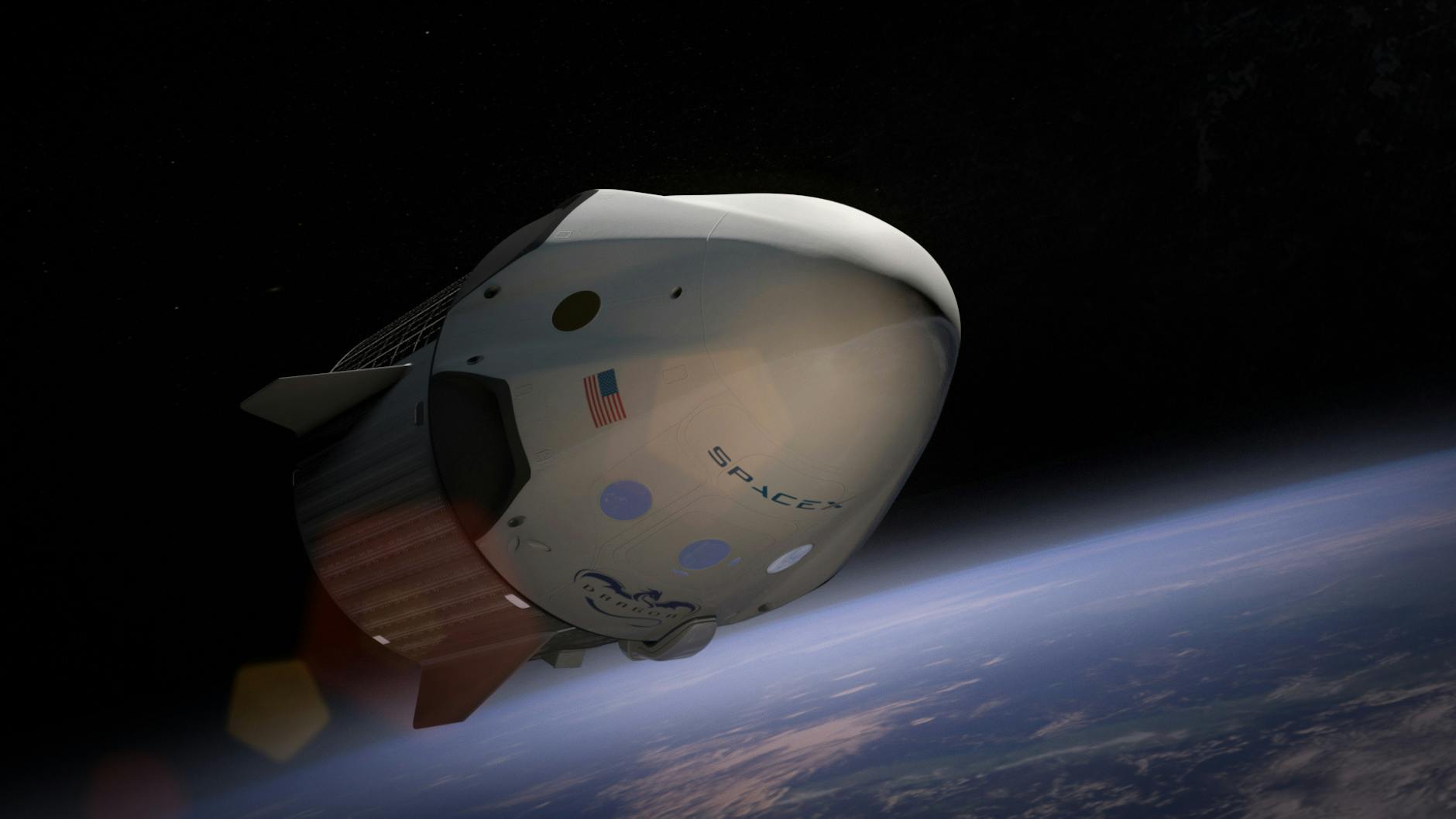
    SpaceX Falcon 9
    SpaceX’s engineering marvels, including the Falcon 1, Falcon 9, and the Dragon spacecraft, have transformed the way people perceive space exploration.
    Photo by SpaceX on Pexels.com

    Crewed Missions: Advancements and Successes

    As SpaceX’s operations evolved, the company expanded its ambitions beyond cargo resupply missions to the ISS, heralding a new chapter in its history: human spaceflight. In partnership with NASA’s Commercial Crew Program, SpaceX aimed to develop the Crew Dragon spacecraft, designed specifically to carry astronauts to and from the ISS—a critical undertaking in the realm of space exploration.

    The Crew Dragon was built on the foundation of the uncrewed Dragon spacecraft, incorporating enhancements to meet strict safety and reliability standards required for human spaceflight. The spacecraft was equipped with advanced autonomously controlled systems, ensuring a high degree of safety for crew members during flight. This commitment to crew safety and operational efficiency was paramount, especially as SpaceX prepared for its first crewed launch.

    On May 30, 2020, SpaceX achieved a monumental milestone with the launch of the Demo-2 mission. This marked the first crewed flight of a commercially developed spacecraft, transporting NASA astronauts Robert Behnken and Douglas Hurley to the ISS. The journey was witnessed by millions across the globe, reviving public interest in spaceflight and reinforcing the capabilities of private space enterprise. The successful docking of Crew Dragon with the ISS demonstrated that commercial partners could effectively contribute to the ongoing operations of the orbiting laboratory.

    Following the success of Demo-2, SpaceX continued to strengthen its crewed missions by implementing regular operational flights. The company has since completed multiple Crew Dragon missions under NASA’s Commercial Crew Program, successfully transporting astronauts to the ISS while simultaneously enhancing its technology and operational paradigms.

    The Crew Dragon spacecraft featured a revolutionary launching format using the Falcon 9 rocket, where the streamlined design of the launch system reduced overall flight time while maximizing payload capacity. Crew Dragon’s capacity to carry up to seven astronauts demonstrated the potential for significant crew rotation and long-term missions, heightening the possibilities for extended research aboard the ISS.

    Moreover, each crewed mission offered valuable experiences that contributed to the continuous improvement of space travel technologies. Feedback from the astronaut crews pertaining to the spacecraft’s design, operations, and user experience guided subsequent enhancements, ultimately leading to a more refined system that prioritized astronaut safety and operational efficiency.

    SpaceX’s success in the realm of crewed missions set a new standard in the industry, showcasing the potential for commercial space travel while rekindling widespread public enthusiasm about human exploration beyond Earth. The achievements of Crew Dragon paved the way for future ventures, providing essential insights needed to embark on larger-scale missions, including those targeting lunar and Martian exploration.

    Future Aspirations: Mars and Beyond

    Elon Musk’s iconic ambition for SpaceX has always been to make humanity a multi-planetary species. The ultimate vision is to establish a self-sustaining city on Mars, requiring an unprecedented amount of planning and innovation in space travel and logistics. The roadmap to achieving this lofty goal includes the development of the Starship system, an advanced spacecraft designed to transport crew and cargo across vast interplanetary distances.

    Starship is envisioned as a fully reusable spacecraft capable of carrying up to 100 metric tons of payload, functioning as both a launch vehicle for deep space missions and a planetary lander. The design highlights the shift toward an integrated transportation system, with the spacecraft intended to undergo rapid reusability, drastically reducing the cost of access to space.

    SpaceX has conducted numerous flight tests of Starship prototypes, showcasing innovations in materials, propulsion systems, and landing capabilities. Each test flight, whether successful or not, has provided valuable data contributing to the ongoing improvements and design refinements of the spacecraft. The iterative testing process has become a hallmark of SpaceX’s approach, where lessons learned from each attempt rapidly influence future designs.

    Mars colonization raises profound challenges, such as life support systems, sustainable habitats, and the logistics of transporting diverse cargo and human crews over significant distances. SpaceX’s initiative recognizes that colonizing Mars requires not only technology but also a carefully orchestrated infrastructure capable of sustaining long-term human life.

    Furthermore, beyond Mars, Musk envisions SpaceX facilitating missions to other celestial bodies, including the Moon. The company has engaged with NASA’s Artemis program, working to develop and integrate Starship as a lunar lander for upcoming crewed missions to the Moon. This collaboration underscores SpaceX’s role as a catalyst for advancing humanity’s exploration beyond low Earth orbit.

    The aspirations of Mars and beyond represent the convergence of technological innovation, bravery, and human curiosity. SpaceX has redefined what is possible within the aerospace industry, igniting a spark of hope and wonder among people worldwide. The initiative to explore new worlds feeds into humanity’s collective imagination and scatter dreams of exploration across generations.

    As SpaceX continues to push the boundaries of technology and inspire the imagination, the possibility of a new frontier awaits—not just in reaching Mars but extending the horizons of human exploration through interplanetary travel.

    Conclusion

    The evolution of SpaceX from its humble beginnings to a cornerstone of modern aerospace innovation exemplifies the transformative power of vision and determination. With its bold ambition to make space travel affordable and promote human colonization beyond Earth, SpaceX has changed the landscape of space exploration. Each achievement—from the successful launches of Falcon 1 and Falcon 9 to the revolutionary Crew Dragon missions—has laid the groundwork for future endeavors.

    With aspirations set on Mars and beyond, SpaceX continues to inspire individuals worldwide, instilling hope in the idea of a multi-planetary future. The continuous advancements in rocket technology, the dedication to safety in crewed missions, and the relentless pursuit of a sustainable interplanetary presence illustrate how innovation can redefine humanity’s relationship with the cosmos. As SpaceX prepares for the next chapter in its journey, its vision of space exploration remains a beacon of possibility, urging society to reach for the stars.

    Sources

    • SpaceX Official Website
    • NASA Commercial Crew Program Resources
    • News Articles from Space.com and The Verge
    • “Elon Musk: Tesla, SpaceX, and the Quest for a Fantastic Future” by Ashlee Vance
    • Various online academic publications on aerospace engineering and space policy

  • The History of Lockheed Martin: A full guide

    The History of Lockheed Martin: A full guide

    Introduction

    Lockheed Martin has been a cornerstone of the aerospace and defense industry since its inception. Formed by the merger of two pioneering companies, Lockheed Aircraft Corporation and Martin Marietta, it has played a significant role in shaping military and civilian aviation alike. With a rich history that spans decades, Lockheed Martin has continually adapted to the evolving landscape of technology, politics, and global security. The company has developed groundbreaking technologies, from stealth aircraft to advanced missile systems, becoming synonymous with innovation and excellence. This article aims to delve deep into the history of Lockheed Martin, examining key milestones, technological advancements, and the company’s role in global defense and space exploration.

    Founding and Early Development of Lockheed Martin

    Lockheed Martin’s origins trace back to 1912 with the establishment of the Lockheed Aircraft Company by Allan Lockheed in a small Los Angeles garage. The company’s first breakthrough came during World War I, with the development of the “Sirius” aircraft, which significantly improved the company’s visibility in the marketplace. By the 1920s, Lockheed was producing the Vega, which became popular among private aviators and commercial airlines, solidifying the company’s reputation in the aviation industry.

    Simultaneously, in 1916, the Martin Company was founded by Glenn L. Martin, focusing on military aircraft. Martin’s early contributions included the development of the first American-built bomber, the MB-2, which showcased the company’s commitment to innovation in defense technology. Throughout the 1930s and 1940s, both companies made strides in aviation design and technology. The Lockheed Model 10 Electra became widely known, particularly after Amelia Earhart’s historic flight in it, boosting the brand’s prestige.

    As World War II escalated, both companies pivoted their efforts toward supplying the U.S. military. Lockheed produced the iconic P-38 Lightning, a revolutionary fighter aircraft, while Martin contributed to the war effort with bombers like the B-10 and B-26 Marauder. This period marked a pivotal moment in the history of both companies, establishing them as formidable players in the aerospace sector.

    The post-war era saw both companies increase in size and scope, with global expansion and diversification into different sectors of aviation. In 1995, Lockheed and Martin Marietta merged, combining their resources and expertise to form Lockheed Martin. This merger resulted in a powerhouse focused on cutting-edge technologies in aerospace, defense, and security solutions. The history of Lockheed Martin is not merely a tale of individual accomplishments; it’s a narrative of resilience, innovation, and strategic alignment that continues to evolve today.

    Major Innovations and Technological Advancements

    Lockheed Martin has pioneered numerous innovations that have set the standard for the aerospace and defense sectors. From the outset, both Lockheed and Martin focused on developing cutting-edge technologies that would enhance military capabilities and civilian aircraft performance. The integration of advanced engineering, computer-aided design, and manufacturing technologies has driven the company’s success.

    One of the landmark achievements in Lockheed Martin’s history is the development of the F-22 Raptor, which introduced stealth technology, advanced avionics, and unparalleled agility in combat scenarios. This fifth-generation fighter jet not only revolutionized air combat but also positioned Lockheed Martin as a leader in defense technology. The incorporation of stealth technology into military aircraft has been critical in ensuring operational superiority for the U.S. Air Force.

    Another significant innovation was the Joint Strike Fighter (JSF) program, which produced the F-35 Lightning II. This multi-role fighter incorporates state-of-the-art technology, including vertical takeoff capabilities for carrier operations, and advanced sensor fusion systems. The collaboration among international partners has also showcased Lockheed Martin’s ability to lead large-scale, complex defense projects, solidifying its reputation globally.

    In addition to military innovations, Lockheed Martin has made strides in space technology. The company developed the Hubble Space Telescope, which has provided unprecedented views of the universe since its launch in 1990. The success of Hubble led to Lockheed Martin’s continued involvement in space missions, including the Mars rovers and other exploratory missions that expanded human knowledge of space.

    Lockheed Martin has also invested heavily in unmanned systems and artificial intelligence, recognizing the future of warfare and exploration relies on these technologies. The development of drones and autonomous systems has enhanced surveillance and reconnaissance capabilities, providing critical data for military and civilian operations alike.

    These innovations demonstrate Lockheed Martin’s unwavering commitment to advancing technology, influencing not just military might but also scientific discovery and global communication. The company’s ability to adapt and innovate will be a driving force as it navigates the challenges of the future.

    Lockheed Martin
    Lockheed Martin’s origins trace back to 1912 with the establishment of the Lockheed Aircraft Company by Allan Lockheed in a small Los Angeles garage.
    Photo by Brad Kiracofe on Pexels.com

    Global Military Contracts and Impact on Defense Sector

    Lockheed Martin’s influence in the global military sector is profound, with the company maintaining numerous contracts with the U.S. government and allied nations. The company’s defense solutions have become integral to national security policies, influencing military readiness and operational capabilities. Military contracts allocate vast resources to defense initiatives, with Lockheed Martin securing some of the largest contracts in the industry.

    The F-35 Joint Strike Fighter program, for instance, is one of the world’s most expensive and pivotal military projects, with a global network of partners including NATO allies and other allied nations. This international collaboration not only ensures a wide market base for Lockheed Martin but also promotes interoperability among allied forces, enhancing collective defense strategies.

    Moreover, Lockheed Martin’s involvement in missile defense systems, such as the Aegis Ballistic Missile Defense system, demonstrates the company’s essential role in global defense. These systems protect allied nations from potential missile threats while promoting stability in volatile regions.

    The company also engages in extensive research and development, leveraging technological advances for military applications. Innovations like directed energy weapons, which include laser defense systems, are undergoing development to provide new defensive capabilities against emerging threats. As global security contexts shift, Lockheed Martin continues to address these challenges with cutting-edge solutions.

    The strategic partnerships established through military contracts contribute significantly to regional security, allowing nations to collaborate on defense initiatives and share resources. Lockheed Martin’s global footprint ensures that many countries are integral stakeholders in the collaborative defense framework, enhancing international relations while addressing shared security concerns.

    Lockheed Martin’s role in the defense sector extends beyond manufacturing; it involves active engagement with military personnel and defense officials to understand operational needs. The company’s commitment to addressing current and future defense challenges establishes it as a key player in shaping military policy and strategic planning globally.

    Transition to Commercial Aviation and Space Exploration

    While Lockheed Martin is renowned for its military innovations, the company’s transition into commercial aviation and space exploration showcases its versatility in meeting diverse market demands. The post-war era witnessed a significant shift where the company began exploring commercial airline markets, leveraging its technological advancements to develop efficient airliners that catered to the booming demand for air travel.

    Lockheed’s Constellation and L-1011 TriStar aircraft are exemplary models of the company’s focus on commercial aviation. The L-1011, while later facing stiff competition, demonstrated Lockheed’s capability of producing sophisticated commercial aircraft that incorporated the latest in aerodynamic design and engine technology. However, as the commercial airlines market evolved, Lockheed Martin recognized the necessity of focusing on more lucrative opportunities, ultimately narrowing its commercial aviation efforts.

    Moreover, Lockheed Martin’s involvement in space exploration is another significant aspect of its transition. The launch of the Atlas and Titan rockets established the company as a pioneer in the aerospace sector. Lockheed Martin’s commitment to innovation led to crucial partnerships with NASA, resulting in various prestigious missions, including the Mars rover missions, which have provided invaluable insights into the Red Planet.

    Moreover, Lockheed Martin has played a significant role in satellite development and launches, offering advanced communication, reconnaissance, and earth observation capabilities. The advancement of satellite technology has drastically altered global communication and surveillance, and Lockheed Martin remains at the forefront of these developments.

    The company’s venture into space tourism and exploration has further diversified its portfolio, recognizing the potential for commercial opportunities in the burgeoning space sector. Collaborations with private enterprises and governments forecast Lockheed Martin’s commitment to shaping the future landscape of space exploration, emphasizing the importance of public-private partnerships in this respect.

    Lockheed Martin’s ability to navigate the complexities of both military and commercial markets showcases its resilience and adaptability. The company continues to pursue opportunities in aerospace and defense while exploring innovative solutions for the future of aviation and space exploration.

    Challenges and Future Prospects

    As Lockheed Martin continues to navigate an intricate landscape of technological advancements and global partnerships, it faces several challenges that could impact its trajectory. The evolving geopolitical climate, characterized by rising competition among global powers, necessitates continuous adaptation and innovation. Cybersecurity threats, regulatory changes, and budget constraints also present significant hurdles for defense contractors.

    Moreover, the ongoing evolution of warfare with the integration of artificial intelligence and autonomous systems could disrupt traditional defense paradigms. Lockheed Martin is actively investing in research to enhance its capabilities in these areas, ensuring that it remains competitive in an increasingly complex defense environment.

    The global push for sustainability and environmentally friendly practices also poses challenges. Lockheed Martin is exploring advancements in sustainable technologies, including electric propulsion systems and renewable energy sources, to shrink its environmental footprint and meet growing regulatory demands.

    On the horizon, Lockheed Martin’s involvement in space exploration offers compelling prospects. With the colonization of Mars and the establishment of lunar bases on the agenda, the company is well-positioned to leverage its significant experience in aerospace for commercial endeavors in the space sector. As nations invest more in space exploration, the potential for commercial partnerships and ventures expands, ensuring Lockheed Martin remains a key player.

    Moreover, the U.S. Department of Defense’s budget dynamics will significantly shape Lockheed Martin’s future. As priorities shift in response to emerging threats, the company’s ability to align its strategic initiatives with national security objectives will be paramount.

    Through innovation, investment, and global collaboration, Lockheed Martin is poised to tackle upcoming challenges while seizing new opportunities. Its legacy of adaptability and excellence in technology and defense positions it favorably for the future, ensuring its continued relevance in an evolving landscape.

    Conclusion

    The history of Lockheed Martin is a testament to innovation, resilience, and strategic evolution. From its humble beginnings to its current status as a technology giant, the company has continually adapted to meet the needs of both military and civilian markets. Significant technological advancements and collaborations have paved the way for the continued success of Lockheed Martin, shaping the landscape of aerospace and defense throughout the years.

    As Lockheed Martin navigates the complexities of modern challenges, its commitment to advanced technologies, space exploration, and sustainability ensures that it will play a critical role in shaping the future of global defense and aviation. The company stands at the forefront of innovation, poised to meet the demands of a rapidly changing world while maintaining its legacy of excellence. It is evident that Lockheed Martin’s impact on history will resonate for years to come, impacting generations of technology, defense strategies, and space exploration initiatives.

    If you want to know more about other players read also our articles The history of Boeing: A great century in Aviation (2025 update) and The Airbus History and Revolution: Transforming the Skies

    Sources

    • Lockheed Martin Official Website
    • U.S. Department of Defense Reports
    • Historical Archives and Documentations on Lockheed Martin
    • Aerospace and Defense Industry Publications
    • Interviews with Industry Experts and Analysts
  • Ferrari History: Legacy of Speed and Innovation

    Ferrari History: Legacy of Speed and Innovation

    Introduction

    Ferrari, synonymous with speed, luxury, and performance, has become an iconic brand in the automotive world. Founded by Enzo Ferrari in 1939, the company began as a small racing team and has since evolved into a symbol of automotive excellence. This article explores the rich history of Ferrari, from its origins and racing success to its innovations in road cars and future direction in a rapidly changing automotive industry.

    Founding and Early Years of Ferrari

    The story of Ferrari begins in the early 20th century with Enzo Ferrari, born in Modena, Italy, in 1898. Enzo’s passion for cars and racing was ignited at a young age. After serving as a driver for Alfa Romeo during the 1920s, he established Scuderia Ferrari in 1929, initially as a racing division for Alfa Romeo. This marked the beginning of a journey that would redefine the world of motorsport and luxury automobiles.

    In the early years, Scuderia Ferrari primarily focused on supporting amateur drivers. The team quickly gained a reputation for its engineering excellence and competitive spirit, achieving numerous victories in local and national races. Enzo’s commitment to racing was unwavering, and he often referred to his drivers as “family,” creating a unique team culture that prioritized performance and camaraderie.

    The turning point for Ferrari came in 1939 when Enzo, dissatisfied with the constraints placed on him by Alfa Romeo, decided to break away and focus on building his own cars. This decision was not without challenges, as the outbreak of World War II halted production and forced Ferrari to shift its focus to manufacturing military vehicles. However, this period also allowed Ferrari to refine his engineering skills and develop a vision for what would become the Ferrari brand.

    After the war, in 1947, Ferrari produced its first car under the Ferrari name, the 125 S. This model marked the beginning of a new era for the company, showcasing Ferrari’s commitment to performance and innovation. The 125 S featured a 1.5-liter V12 engine, setting the foundation for the iconic engine configuration that would become synonymous with the brand. The car’s success in racing helped establish Ferrari as a formidable contender on the track, capturing the attention of motorsport enthusiasts worldwide.

    The post-war period also saw the introduction of the Ferrari logo, featuring a prancing horse on a yellow background—a symbol of speed and elegance that remains iconic to this day. This logo, inspired by a World War I fighter pilot, embodies the spirit of Ferrari: a combination of power, performance, and Italian craftsmanship.

    Ferrari’s early years were marked by challenges, including financial struggles and intense competition from other manufacturers. However, Enzo’s relentless drive and passion for racing propelled the company forward. By the early 1950s, Ferrari had established itself as a leading manufacturer of sports cars, garnering numerous accolades and victories in prestigious races such as the Mille Miglia and the 24 Hours of Le Mans.

    As Ferrari continued to grow, Enzo’s vision for the brand became increasingly focused on creating a lineage of high-performance vehicles that combined cutting-edge technology with Italian artistry. This commitment to excellence laid the groundwork for Ferrari’s future success and solidified its status as a global icon in the automotive industry.

    Ferrari’s Iconic Racing Heritage

    Ferrari’s legacy is inextricably linked to its illustrious racing history. The company has participated in various motorsport events, most notably Formula 1, where it has become synonymous with success and innovation. The pursuit of victory on the racetrack has driven Ferrari to develop some of the most iconic racing cars in history, establishing a reputation that endures to this day.

    In 1950, Ferrari made its debut in the inaugural Formula 1 season, quickly asserting itself as a dominant force in the sport. The company’s commitment to engineering excellence, combined with a deep understanding of racing dynamics, allowed Ferrari to secure its first World Championship title in 1961 with driver Phil Hill. This victory marked the beginning of a remarkable era for Ferrari in Formula 1, as the team consistently pushed the boundaries of performance and technology.

    Throughout the decades, Ferrari has produced legendary cars such as the 156 “Sharknose,” which claimed the 1961 Constructors’ Championship, and the 312 series, which dominated the sport in the 1970s. The iconic 246 F1, driven by legends like Niki Lauda and Clay Regazzoni, further solidified Ferrari’s status in racing history. Each model represented a combination of innovative engineering, aerodynamic design, and the relentless pursuit of speed.

    Ferrari’s commitment to racing extends beyond Formula 1. The company has excelled in endurance racing, notably at the 24 Hours of Le Mans. In the 1960s, Ferrari achieved remarkable success, with cars like the 330 P4 and the 512 S dominating the competition. The rivalry with Ford during the Le Mans races is legendary, culminating in the dramatic showdown depicted in the film “Ford v Ferrari.” This fierce competition further elevated Ferrari’s status and highlighted the brand’s dedication to victory.

    The influence of Ferrari in motorsport goes beyond mere statistics. The company has fostered a culture of innovation, often leading the way in developing new technologies and materials that enhance performance. From advancements in aerodynamics to the use of lightweight composites, Ferrari has consistently been at the forefront of automotive engineering.

    Ferrari’s racing heritage is not solely about winning; it’s also about the passion and dedication of the people behind the brand. Enzo Ferrari’s philosophy emphasized the importance of teamwork and the pursuit of excellence. The close-knit relationships among drivers, engineers, and mechanics have created a unique environment that thrives on collaboration and shared goals.

    As Ferrari continues to compete in Formula 1 and other racing disciplines, its legacy is preserved through the stories of legendary drivers and unforgettable races. The brand’s commitment to pushing the limits of performance remains unwavering, ensuring that the spirit of racing endures in every Ferrari produced. Today, Ferrari is not just a car manufacturer; it is a symbol of motorsport excellence, embodying the thrill of speed and the relentless pursuit of victory.

    The story of Ferrari begins in the early 20th century with Enzo Ferrari, born in Modena, Italy, in 1898.

    The Evolution of Ferrari Road Cars

    While Ferrari is renowned for its racing prowess, the evolution of its road cars has been equally significant in shaping the brand’s identity. From the early days of the 125 S to the cutting-edge models of today, Ferrari’s road cars have consistently exemplified luxury, performance, and innovation. This evolution reflects the brand’s commitment to blending technology with artistry, creating vehicles that captivate enthusiasts around the globe.

    The transition from racing cars to road cars began in earnest in the 1950s, as Ferrari sought to bring the excitement of the racetrack to the public. The 1953 Ferrari 500 Mondial, with its elegant design and powerful engine, showcased the brand’s commitment to performance on the road. The introduction of models like the 250 series in the 1960s solidified Ferrari’s reputation for producing high-performance sports cars. The 250 GTO, in particular, became an icon, revered not only for its racing success but also for its beauty and craftsmanship.

    As the decades progressed, Ferrari continued to innovate, introducing advanced technologies and design elements that set its road cars apart. The 1980s saw the launch of the Ferrari Testarossa, a car that became synonymous with luxury and performance. With its striking design and powerful flat-12 engine, the Testarossa epitomized the era’s automotive excess and captured the imagination of car enthusiasts worldwide.

    The 1990s marked a turning point for Ferrari, as the brand embraced modern engineering techniques. The introduction of the F355 and later the 360 Modena demonstrated Ferrari’s ability to merge traditional craftsmanship with cutting-edge technology. Features such as electronic throttle control and advanced aerodynamics became standard, elevating the performance and handling of Ferrari road cars to new heights.

    In the early 2000s, Ferrari introduced the Enzo, a limited-production supercar that showcased the brand’s engineering capabilities. Named after founder Enzo Ferrari, the Enzo featured a carbon-fiber chassis, a powerful V12 engine, and advanced aerodynamics. This model exemplified the pinnacle of Ferrari’s engineering prowess, attracting collectors and enthusiasts alike.

    The introduction of the California in 2008 marked another significant milestone in Ferrari’s history. As the brand’s first retractable hardtop convertible, the California appealed to a broader audience while maintaining Ferrari’s signature performance. This model represented a shift in strategy, as Ferrari aimed to attract new customers without compromising the essence of the brand.

    In recent years, Ferrari has embraced hybrid technology with models like the LaFerrari, blending traditional internal combustion engines with electric power for enhanced performance and efficiency. This commitment to innovation reflects Ferrari’s dedication to remaining at the forefront of automotive technology while addressing the evolving demands of the market.

    Today, Ferrari road cars continue to embody the brand’s legacy of performance, luxury, and exclusivity. Each model is meticulously crafted, combining advanced engineering with stunning design. The emphasis on personalization allows customers to create unique vehicles that reflect their individual tastes, further enhancing the allure of owning a Ferrari.

    As Ferrari looks to the future, the evolution of its road cars will undoubtedly continue. With advancements in technology, environmental considerations, and changing consumer preferences, Ferrari remains committed to delivering vehicles that encapsulate the spirit of speed and innovation that defines the brand.

    Ferrari’s Influence on Automotive Technology

    Ferrari’s impact on automotive technology extends beyond its own vehicles, influencing the entire industry through innovation and engineering excellence. The brand has consistently pushed the boundaries of what is possible in automotive design and performance, leading to advancements that benefit not only Ferrari but also other manufacturers.

    One of the most significant contributions Ferrari has made to automotive technology is its development of high-performance engines. The brand’s expertise in engine design, particularly its iconic V12 and V8 configurations, has set benchmarks for power, efficiency, and sound. Ferrari engines are renowned for their responsiveness and distinctive roar, characteristics that enthusiasts have come to cherish.

    The use of lightweight materials has also been a hallmark of Ferrari’s engineering philosophy. From early models constructed with aluminum to the adoption of carbon fiber in recent years, Ferrari has prioritized weight reduction to enhance performance. This focus on lightweight construction has influenced other manufacturers, encouraging a broader shift toward the use of advanced materials in sports cars and supercars.

    Ferrari’s commitment to aerodynamics has resulted in groundbreaking advancements in vehicle design. The brand’s engineers continuously optimize airflow to improve performance and efficiency. Features such as active aerodynamics and innovative wing designs have been integrated into Ferrari models, allowing for better downforce and handling at high speeds. These advancements not only benefit Ferrari’s racing efforts but also trickle down to road cars, enhancing their performance capabilities.

    In the realm of hybrid technology, Ferrari has taken a pioneering approach to blending traditional combustion engines with electric power. The LaFerrari represents a significant leap in this direction, showcasing the potential of hybrid systems to deliver exhilarating performance while reducing emissions. This commitment to sustainable performance has positioned Ferrari as a leader in the ongoing transition to more environmentally friendly automotive technologies.

    Ferrari’s influence extends to vehicle dynamics and handling. The brand has developed advanced suspension systems, traction control, and electronic stability programs that enhance the driving experience. These technologies allow Ferrari drivers to enjoy exceptional handling and control, ensuring that the performance capabilities of each model are fully realized.

    Furthermore, Ferrari’s focus on integrating cutting-edge technology into its vehicles has set a standard for luxury features and infotainment systems. Modern Ferrari models incorporate advanced connectivity options, driver-assistance features, and sophisticated infotainment systems, enhancing the overall driving experience while maintaining the brand’s focus on performance.

    Ferrari’s commitment to racing has also driven technological advancements that benefit everyday drivers. The knowledge gained from the track informs the design and engineering of road cars, ensuring that Ferrari vehicles remain at the forefront of automotive performance. This symbiotic relationship between racing and road car development is a testament to Ferrari’s dedication to innovation.

    As the automotive landscape evolves, Ferrari remains committed to leading the way in technological advancements. The brand’s rich heritage of engineering excellence and its willingness to embrace new technologies position it as a key player in shaping the future of the automotive industry.

    The Future of Ferrari in a Changing Automotive Landscape

    As the automotive industry undergoes a profound transformation driven by technological advancements, environmental concerns, and changing consumer preferences, Ferrari finds itself at a pivotal crossroads. The brand’s commitment to innovation and performance remains unwavering, but the path forward requires adaptation to a rapidly evolving landscape.

    One of the most significant challenges facing Ferrari is the increasing demand for environmentally friendly vehicles. As governments worldwide implement stricter emissions regulations and consumers become more conscious of their carbon footprint, automakers are compelled to rethink their strategies. Ferrari recognizes the importance of sustainability and is actively working to develop hybrid and electric vehicles that maintain the performance characteristics for which the brand is known.

    The introduction of the LaFerrari marked a significant step in Ferrari’s journey toward electrification. This hybrid supercar combined a powerful V12 engine with an electric motor, delivering exceptional performance while reducing emissions. As technology continues to advance, Ferrari is likely to explore further hybrid models and fully electric vehicles, ensuring that the brand remains relevant in a market that increasingly prioritizes sustainability.

    In addition to electrification, Ferrari is also focusing on enhancing connectivity and driver experience. The integration of advanced infotainment systems and connectivity features is becoming essential for modern vehicles. Ferrari aims to provide drivers with seamless connectivity while maintaining the performance-oriented focus that defines the brand. This balance between technology and driving pleasure is crucial for attracting new customers, particularly younger generations who value digital experiences.

    Another aspect of Ferrari’s future involves the preservation of its rich heritage while embracing innovation. The brand’s history is a significant part of its identity, and maintaining that connection is essential as it navigates the future. Ferrari continues to celebrate its racing legacy and iconic models through various initiatives, including limited-edition releases and commemorative events. This approach allows the brand to honor its past while looking forward to new challenges and opportunities.

    Moreover, the changing landscape of automotive retail is reshaping how consumers engage with brands. The rise of online sales and digital marketing strategies presents both challenges and opportunities for Ferrari. The brand is likely to explore innovative ways to connect with customers, ensuring that the buying experience reflects the exclusivity and luxury associated with Ferrari ownership.

    In conclusion, Ferrari’s future is defined by its ability to adapt to a rapidly changing automotive landscape while remaining true to its core values of performance, innovation, and craftsmanship. The brand’s commitment to sustainability, technological advancement, and customer engagement will play a crucial role in shaping its trajectory. As Ferrari embraces the challenges ahead, it is poised to continue its legacy as a leader in the automotive world, captivating enthusiasts and drivers for generations to come.

    Conclusion

    Ferrari’s history is a testament to the brand’s unwavering commitment to performance, innovation, and excellence. From its humble beginnings under Enzo Ferrari to its status as a global icon, Ferrari has continually pushed the boundaries of automotive engineering. The company’s rich heritage in racing, the evolution of its road cars, and its influence on automotive technology solidify its place in history. As Ferrari navigates the future, its dedication to sustainability and innovation ensures that the brand will continue to inspire and captivate car enthusiasts around the world.

  • The History of Microsoft: Key Milestones and Innovations

    The History of Microsoft: Key Milestones and Innovations

    Introduction

    Microsoft, founded in 1975 by Bill Gates and Paul Allen, has played a pivotal role in shaping the modern computing landscape. What began as a small software company with the ambition of putting a computer on every desk has evolved into one of the largest and most influential technology companies in the world. Microsoft’s most iconic products, including the Windows operating system and Microsoft Office, revolutionized personal and business computing, making the company a dominant force in the tech industry. Over the years, Microsoft has diversified its portfolio, branching out into cloud computing with Microsoft Azure, gaming with Xbox, and more. Despite facing significant competition from companies like Apple, Google, and Amazon, Microsoft has successfully navigated changing market dynamics through strategic acquisitions, innovation, and leadership changes. This article explores the history of Microsoft, focusing on key business developments and how the company has evolved into a modern technology powerhouse.

    The Founding of Microsoft and the Rise of the Personal Computer

    Microsoft’s journey began in 1975 when Bill Gates and Paul Allen, two childhood friends from Seattle, saw an opportunity to provide software for a new kind of machine—the personal computer. At the time, personal computers were still in their infancy, and the idea of having a computer in every home or office seemed far-fetched. However, when IBM announced it would enter the personal computer market, Gates and Allen recognized a major opportunity.

    In 1975, Microsoft was born under the name Micro-Soft, a combination of “microcomputer” and “software.” The company’s first big break came when they were approached by MITS (Micro Instrumentation and Telemetry Systems) to create a software program for their Altair 8800, one of the first commercially successful personal computers. Gates and Allen wrote BASIC, a programming language, for the Altair 8800, marking their entry into the world of personal computing.

    Initially, Microsoft was a small company based in Albuquerque, New Mexico, but its relationship with MITS and the success of BASIC laid the foundation for its future growth. In 1979, Microsoft moved to Redmond, Washington, where it would grow into the tech giant we know today. Over the next several years, Microsoft continued to develop software for a variety of personal computers. However, it was the company’s decision to focus on providing operating systems that would lead to its meteoric rise.

    In 1980, IBM approached Microsoft to create an operating system (OS) for its new personal computer, the IBM PC. Microsoft didn’t have a pre-existing operating system at the time, but Gates and Allen were quick to seize the opportunity. They acquired a product called QDOS (Quick and Dirty Operating System), developed by a company called Seattle Computer Products, and adapted it for IBM’s needs. The resulting product, called MS-DOS, became the operating system for the IBM PC.

    MS-DOS was a major success, and it positioned Microsoft as a key player in the growing personal computing market. By licensing MS-DOS to other hardware manufacturers, Microsoft created an ecosystem that allowed its operating system to run on a wide range of personal computers, giving it a significant advantage over other companies that relied on proprietary systems.

    The success of MS-DOS paved the way for the company’s next major breakthrough: Windows. In the early 1980s, graphical user interfaces (GUIs) were gaining popularity, and Microsoft saw the potential of moving away from the command-line interface of MS-DOS. In 1985, Microsoft released Windows 1.0, a graphical shell for MS-DOS that allowed users to interact with their computers using windows, icons, and menus—making computing more user-friendly and accessible.

    Although Windows 1.0 wasn’t an immediate success, it marked the beginning of Microsoft’s domination of the personal computer market. Over the next decade, Microsoft refined the Windows operating system, releasing several versions that improved functionality and user experience. By the early 1990s, Windows had become the standard operating system for personal computers, and Microsoft was firmly established as a leader in the industry.

    The Growth and Challenges of Microsoft Windows and Office

    By the early 1990s, Microsoft had firmly established itself as the dominant player in the personal computing market, thanks to the success of Windows and MS-DOS. However, the company faced significant challenges as it tried to maintain its market position while expanding its product offerings.

    In 1990, Microsoft released Windows 3.0, which was a significant improvement over earlier versions of the operating system. Windows 3.0 introduced better performance, enhanced graphics, and multitasking capabilities, making it more appealing to both home and business users. The release of Windows 3.1 in 1992 further solidified Microsoft’s lead in the operating system market. By the mid-1990s, Microsoft had become the de facto standard for personal computing, and Windows was running on the vast majority of personal computers worldwide.

    Alongside Windows, Microsoft’s productivity software, Microsoft Office, also played a critical role in the company’s success. In 1989, Microsoft introduced the first version of Office, which combined popular productivity applications like Word, Excel, and PowerPoint into one integrated suite. Office became an essential tool for businesses and individuals alike, and its widespread adoption helped Microsoft maintain its position as the leader in software for personal and professional use.

    By the mid-1990s, Microsoft was facing increasing competition from companies like Apple, which had its own graphical user interface with Mac OS, and Novell, which offered network operating systems. However, Microsoft’s strategy of continually improving and updating Windows, combined with its success in bundling its software products like Office, allowed the company to stay ahead of the competition.

    One of the biggest challenges for Microsoft during this period was the growing criticism of its monopolistic practices. The company’s dominance in the operating system market, along with its bundling of Internet Explorer with Windows, led to a series of legal battles. In 1998, the U.S. Department of Justice filed an antitrust lawsuit against Microsoft, accusing the company of using its market power to stifle competition, particularly in the emerging market for web browsers. The case eventually resulted in a settlement, which imposed various restrictions on Microsoft’s business practices.

    Despite the legal challenges, Microsoft continued to thrive. The release of Windows 95 in 1995 was a major milestone, as it introduced new features like the Start menu, plug-and-play hardware support, and enhanced networking capabilities. Windows 95 was a commercial success and marked the beginning of the modern Windows operating system, setting the stage for future releases like Windows XP and Windows 7, which would go on to be some of the most widely used operating systems in history.

    History of Microsoft
    Microsoft, founded in 1975 by Bill Gates and Paul Allen, has played a pivotal role in shaping the modern computing landscape. What began as a small software company with the ambition of putting a computer on every desk has evolved into one of the largest and most influential technology companies in the world. | Photo by Christina Morillo on Pexels.com

    Diversification and Acquisitions: Expanding Beyond Software

    As Microsoft’s core business of software and operating systems continued to grow, the company began to explore new opportunities for diversification. Recognizing the potential of emerging markets, Microsoft made several strategic acquisitions and product expansions that allowed it to broaden its reach beyond software.

    One of the most significant areas of expansion for Microsoft was in the field of gaming. In 2001, the company entered the video game console market with the launch of the Xbox. At the time, Microsoft faced tough competition from established players like Sony and Nintendo. However, the Xbox quickly became a major player in the gaming industry, thanks to its powerful hardware, exclusive game titles, and online multiplayer capabilities. The success of Xbox marked a major shift for Microsoft, as the company was now a key player in the entertainment and gaming industry.

    In 2002, Microsoft acquired Hotmail, one of the earliest free web-based email services, marking its entry into the online services market. Hotmail was later rebranded as Outlook.com and became an integral part of Microsoft’s cloud-based productivity suite, which includes Office 365 and OneDrive. This acquisition helped Microsoft expand its reach in the consumer market, particularly in email and online communication.

    In 2008, Microsoft attempted a major acquisition with its bid to purchase Yahoo! for $44.6 billion. While the deal ultimately fell through, the attempted acquisition signaled Microsoft’s ambition to become a major player in the online advertising market, an area dominated by Google at the time. In 2014, Microsoft’s acquisition of Nokia’s mobile phone business further expanded its presence in the mobile market, although the move was not as successful as anticipated, leading to a reevaluation of its mobile strategy.

    Another key area of diversification for Microsoft was its push into cloud computing. With the increasing importance of cloud-based services, Microsoft launched Microsoft Azure in 2010, which would become one of the company’s most significant offerings. Azure provides a comprehensive suite of cloud services, including computing power, storage, databases, and networking, and competes directly with Amazon’s AWS (Amazon Web Services). Over time, Azure has become a major contributor to Microsoft’s revenue, positioning the company as a leader in the rapidly growing cloud market.

    In 2014, Microsoft acquired LinkedIn for $26.2 billion, making it one of the largest acquisitions in the company’s history. LinkedIn, a professional networking platform, became a key part of Microsoft’s strategy to build a more integrated ecosystem of services, including business solutions, data analytics, and collaboration tools. The LinkedIn acquisition also helped Microsoft strengthen its position in the enterprise market.

    Microsoft’s diversification strategy allowed the company to maintain its growth in the face of changing market conditions. By acquiring companies and entering new markets, Microsoft was able to evolve from a software-focused business into a comprehensive technology conglomerate with a broad portfolio that spans gaming, cloud computing, professional networking, and more.

    The Cloud Revolution: Microsoft Azure and the Shift to Cloud Computing

    The shift toward cloud computing has been one of the most significant changes in the tech industry over the past decade, and Microsoft has been at the forefront of this revolution. Cloud computing allows businesses and individuals to access computing resources such as storage, processing power, and software over the internet rather than relying on local hardware and infrastructure. As cloud technology gained prominence, Microsoft pivoted its strategy to focus heavily on its cloud platform, Microsoft Azure, and its suite of cloud-based services.

    In 2010, Microsoft launched Azure, a cloud platform that allowed businesses to build, deploy, and manage applications and services through Microsoft’s global data centers. Azure quickly became one of the leading cloud platforms, competing directly with Amazon’s AWS (Amazon Web Services), which had dominated the market since its launch in 2006. Azure’s success was driven by Microsoft’s deep enterprise relationships, existing software products, and its ability to offer a comprehensive set of services, including computing, storage, databases, networking, and artificial intelligence.

    Microsoft’s cloud strategy was further bolstered by the launch of Office 365, a cloud-based version of its popular productivity suite, which allowed users to access Office applications, like Word, Excel, and PowerPoint, through a subscription-based model. Office 365 provided businesses and consumers with flexibility and ease of use, while also generating consistent revenue for Microsoft through its subscription fees.

    As the cloud market grew, Microsoft made several strategic acquisitions to enhance its cloud offering. In 2014, Microsoft acquired Nokia’s Devices and Services division, which included a portfolio of patents and technology that would help improve Azure’s infrastructure. In 2016, Microsoft purchased LinkedIn, which further strengthened its cloud offering with tools for business networking, customer relationship management, and collaboration.

    Azure’s success has been crucial to Microsoft’s continued growth. By 2020, Microsoft was firmly positioned as the second-largest cloud provider in the world, behind Amazon Web Services. The cloud has become one of Microsoft’s most significant sources of revenue, contributing billions of dollars to the company’s bottom line. Moreover, Azure has been a key driver of Microsoft’s digital transformation, helping the company move away from its legacy dependence on traditional software products like Windows and Office.

    The cloud revolution has also allowed Microsoft to stay competitive in a rapidly changing tech landscape. With the increasing demand for cloud services, businesses have been able to scale their operations more efficiently, reducing the need for expensive on-premises hardware. As the cloud market continues to expand, Microsoft’s Azure platform is well-positioned to play a leading role in shaping the future of enterprise computing.

    Microsoft’s Adaptation to Modern Challenges: Competition, Innovation, and Leadership

    In recent years, Microsoft has faced several modern challenges as it navigates the competitive and rapidly changing tech landscape. Despite its dominance in areas like operating systems and cloud computing, Microsoft must continuously innovate and adapt to new trends to remain competitive. The company has successfully overcome many challenges by refocusing its efforts, embracing new technologies, and making strategic leadership changes.

    One of the key challenges Microsoft faces is competition from other tech giants. Google, Amazon, Apple, and Facebook all operate in markets that overlap with Microsoft’s core business. For instance, Google’s dominance in online search and advertising has created tension with Microsoft’s Bing search engine and its advertising offerings. Similarly, Amazon’s AWS platform competes directly with Azure in the cloud computing space. In the consumer electronics space, Apple’s iPhone and MacBook products directly challenge Microsoft’s Surface devices and Windows operating system.

    In response to these competitive pressures, Microsoft has focused on diversifying its product offerings and expanding its presence in emerging markets. One key area of innovation for Microsoft has been in artificial intelligence (AI). The company has invested heavily in AI research and development, incorporating AI capabilities into its cloud platform, Office products, and gaming services. Microsoft’s acquisition of GitHub, a platform for software developers, and its strategic partnership with OpenAI are both aimed at bolstering the company’s AI capabilities.

    Another challenge for Microsoft is leadership changes. In 2014, Satya Nadella succeeded Steve Ballmer as CEO, bringing a new vision and strategic direction to the company. Nadella emphasized cloud computing, AI, and diversification as key areas for growth. Under his leadership, Microsoft has experienced a resurgence in market value and has made significant strides in transforming its culture. Nadella’s leadership has helped Microsoft become more agile, innovative, and focused on delivering value to customers across a variety of industries.

    Microsoft’s ability to adapt to modern challenges has also been evident in its commitment to sustainability and social responsibility. The company has set ambitious goals to reduce its carbon footprint and become carbon negative by 2030. Microsoft has also worked to ensure diversity and inclusion within its workforce, as well as to support initiatives that promote digital literacy and access to technology around the world.

    Through strategic leadership, ongoing innovation, and a focus on customer needs, Microsoft has successfully adapted to the challenges of the modern tech landscape. The company’s ability to pivot and embrace new technologies, like cloud computing, AI, and gaming, has allowed it to remain relevant and continue growing in an increasingly competitive environment.

    Conclusion

    Microsoft’s history is a testament to its ability to adapt, innovate, and lead in the ever-changing world of technology. From its humble beginnings as a software company focused on personal computers, Microsoft has grown into a global powerhouse that spans industries like cloud computing, gaming, productivity software, and artificial intelligence. Throughout its journey, Microsoft has faced significant challenges, from fierce competition to shifting market dynamics, but it has consistently evolved to stay ahead of the curve. Under the leadership of Satya Nadella, Microsoft has embraced the cloud revolution, diversified its product offerings, and positioned itself as a leader in the digital age. As the company continues to innovate and navigate the challenges of the modern tech landscape, Microsoft is well-equipped to maintain its position as one of the most influential companies in the world. Its future looks bright, driven by a commitment to excellence, innovation, and customer satisfaction.

  • How Amazon Became a Global Leader in Technology

    How Amazon Became a Global Leader in Technology

    Introduction

    Amazon started as a humble online bookstore in 1994, founded by Jeff Bezos in a garage in Seattle. Little did the world know that this fledgling enterprise would evolve into one of the most influential tech giants of the 21st century. Over the years, Amazon has transformed the way consumers shop, interact with technology, and access services. With innovations such as Amazon Web Services (AWS), Prime membership, and an ever-expanding range of products, Amazon has set benchmarks in e-commerce, cloud computing, and logistics. This article delves into the history of Amazon, tracing its growth and evolution through various phases and highlighting the strategies that have propelled its success.

    The Founding of Amazon: A Visionary’s Dream

    In 1994, Jeff Bezos, a graduate of Princeton University, identified the potential of the internet as a transformational tool for business. Leaving his comfortable job on Wall Street, he moved to Seattle, where he planned to establish an online bookstore. He chose the name “Amazon” not only for the world’s largest river but also to symbolize the vast selection he intended to offer, reflecting the company’s vision of providing customers with the largest possible selection of books.

    The initial step in Bezos’s journey involved extensive market research. He formulated a business plan, meticulously examining the emerging e-commerce landscape. Despite skepticism from investors and industry experts at the time, Bezos secured funding from family and friends and launched Amazon.com in July 1995. The site quickly gained traction, leading to its first sale of a book titled “Fluid Concepts and Creative Analogies” by Douglas Hofstadter.

    One of Amazon’s most significant advantages in its early days was its ability to leverage the internet to reach consumers, allowing it to offer a wider selection than traditional brick-and-mortar bookstores. Customers could browse and buy books from the comfort of their homes, an alluring proposition that resonated with the emerging digital consumer culture. Early innovations, such as personalized recommendations based on user interactions, helped establish a loyal customer base and differentiated Amazon from its competitors.

    In addition to its extensive selection, Amazon positioned itself as a customer-centric company, focusing on delivering a seamless shopping experience. Bezos famously declared that “we’re not competitor-focused, we’re customer-focused,” a mantra that continues to resonate within the company’s culture today. This commitment to customer service saw Amazon implementing various features, such as user reviews, quick search functions, and a straightforward purchasing process that enhanced convenience for shoppers.

    As Amazon’s popularity soared, the company continually reinvested its profits into expanding its inventory and improving its infrastructure. Bezos recognized that scaling the business involved not only increasing product listings but also investing in technology and logistics. In 1997, Amazon went public, raising $54 million in its initial public offering (IPO). This influx of capital provided the means to fuel its ambitious growth plans, enabling Amazon to expand beyond books into other product categories.

    By the turn of the millennium, Amazon had already begun diversifying its offerings, moving into electronics, toys, and household goods. This strategic pivot positioned Amazon as a one-stop-shop for an increasing number of consumer needs, laying the groundwork for its future success. In retrospect, the founding phase of Amazon was characterized by a powerful vision, relentless innovation, and a strategic focus on customer satisfaction that set the stage for the company’s meteoric rise.

    Expanding Beyond Books: Diversification and Growth

    Amazon’s initial success in the book market was just the beginning of its journey. Recognizing the potential of e-commerce beyond literary sales, Bezos initiated a series of strategic expansions that would transform the company into a comprehensive online marketplace. The vision was clear: Amazon would become “the earth’s most customer-centric company,” a catchphrase that encapsulated its commitment to meeting diverse consumer needs.

    The shift from books to a plethora of product categories began in the late 1990s, with Amazon first branching out into music and videos. By 1998, the company added products such as CDs and DVDs, responding to consumer demand. This transition not only increased Amazon’s revenue stream but also attracted a broader audience. The strategy of expanding its product line was grounded in research that indicated consumers appreciated the convenience of purchasing multiple types of goods from a single source.

    In 1999, Amazon launched its Marketplace platform. This innovative move allowed third-party sellers to sell their products on Amazon’s website, vastly increasing the product selection available to customers without Amazon itself having to stock the items. This model not only diversified the product range but also created additional revenue through fees and commissions. It effectively transformed Amazon from a retailer into a platform, positioning it competitively against established retail giants and small businesses alike.

    Further diversifying its portfolio, Amazon introduced its Electronics department in 2001, followed by a range of categories including home goods, clothing, and groceries. These expansions required significant investments in logistics and technology to manage the growing inventory and customer fulfillment. Amazon committed to developing advanced warehouse systems that streamlined operations, enabling rapid shipping and delivery—a crucial factor in maintaining customer loyalty.

    The introduction of services such as Amazon Prime in 2005 was a game-changer, melding membership benefits with the vast product offerings available on the platform. Prime provided subscribers with perks such as free two-day shipping, exclusive access to deals, and later, streaming services for movies and television shows. This initiative not only incentivized customers to shop more frequently but also encouraged them to explore a wider array of categories within Amazon.

    By the late 2000s and early 2010s, Amazon had firmly established itself as a shopping hub, dominating the online retail landscape. The company’s diversified offerings, innovative business models, and incessant focus on customer satisfaction solidified its standing as an industry leader. The expansion beyond books exemplified a calculated strategy that allowed Amazon to capitalize on consumer trends, leverage technology, and foster loyalty, all contributing to its emergence as one of the most recognizable brands in the world.

    Technological Innovations: Amazon Web Services and Beyond

    As Amazon continued expanding its retail operations, the company made a strategic decision to invest heavily in technology, an investment that would ultimately redefine not only its own business model but also the broader tech landscape. The launch of Amazon Web Services (AWS) in 2006 marked a significant turning point, positioning Amazon as a front-runner in the burgeoning cloud computing sector.

    AWS was conceived out of the realization that Amazon’s proprietary technology infrastructure could be repurposed to provide computing services to other businesses. The goal was to offer scalable and flexible solutions that would eliminate the need for companies to invest in physical hardware and data centers. AWS provided development tools, storage, and computing power on a pay-as-you-go basis, allowing companies to adjust their resources according to demand.

    The innovative nature of AWS resonated strongly with startups and established businesses, leading to rapid adoption of cloud services. Within a few years, AWS had become instrumental in the operational strategies of companies across various sectors, from small enterprises to Fortune 500 corporations. By 2014, AWS was generating considerable revenue, solidifying its position as the leading cloud services provider in the world.

    AWS’s success can be attributed to several key factors. Firstly, Amazon’s customer-centric approach translated effectively into the cloud services arena, with a focus on reliability, security, and ease of use. The company constantly expanded its offerings, introducing new services that catered to the evolving needs of its clients. Additionally, significant investments in infrastructure, such as data centers and networking, ensured that AWS could support diverse workloads and geographic requirements.

    Through AWS, Amazon not only diversified its revenue streams but also solidified its reputation as an innovative tech leader adept at harnessing new market opportunities. The profitability of AWS provided necessary funding to support Amazon’s retail operations and other ventures, creating a successful feedback loop that invigorated both segments of the business.

    Moreover, AWS extended Amazon’s influence beyond retail, establishing strong partnerships with organizations and governments, thus enhancing its visibility in various sectors, including healthcare and education. With an ever-growing array of services, AWS became a cornerstone of the company’s long-term strategy, ensuring its resilience against economic fluctuations and competitive pressures.

    Beyond AWS, Amazon embraced emerging technologies such as artificial intelligence (AI) and machine learning. The Alexa voice assistant, introduced in 2014, showcased Amazon’s commitment to innovation, capturing significant market interest and transforming the smart home ecosystem. With Alexa, Amazon ventured into a new realm by integrating its services into everyday life, further entrenching itself in the consumer landscape.

    The focus on technology is one of the reasons Amazon remains relevant in an increasingly competitive digital economy. The company’s commitment to innovation through AWS and other technological advancements has not only fueled its growth but has also driven transformation across various industries, marking a significant chapter in Amazon’s journey.

    History of Amazon
    Amazon started as a humble online bookstore in 1994, founded by Jeff Bezos in a garage in Seattle. Little did the world know that this fledgling enterprise would evolve into one of the most influential tech giants of the 21st century. | Photo by AS Photography on Pexels.com

    The Role of Prime: Building Customer Loyalty

    Amazon Prime, launched in 2005, has evolved into one of the most effective tools for customer retention and brand loyalty in the e-commerce sector. This subscription service began as a response to consumer demand for faster shipping options, but over time, it has grown to embody a comprehensive range of services that create added value for subscribers.

    Initially, Amazon Prime offered customers free two-day shipping on eligible purchases for an annual fee. This straightforward benefit appealed to frequent shoppers, encouraging them to see Amazon as their go-to retail platform. The allure of fast, free shipping transformed buying behavior, as customers began to prioritize Amazon over traditional retailers who couldn’t provide similar conveniences.

    Recognizing the potential to enhance the Prime offering, Amazon continuously expanded the range of services available to members. The introduction of streaming video, music, and gaming services positioned Prime as more than just a shipping program; it became an all-encompassing digital ecosystem. By integrating access to Amazon Prime Video and Amazon Music, the company sought to improve customer engagement and widen the appeal of the membership program.

    Furthermore, Amazon leveraged data-driven insights to tailor content and recommendations to Prime members, enriching the user experience. This data-centric approach enabled Amazon to foster customer loyalty by actively engaging users and encouraging them to explore various offerings within the Prime ecosystem. The result was an increase in user retention rates and overall customer satisfaction.

    The strategic inclusion of Prime Day, an exclusive annual sales event for Prime members, further contributed to the growth of the program. Launched in 2015, Prime Day has since become one of the most anticipated shopping events globally, generating enormous revenue for Amazon. By creating a sense of urgency and exclusivity, Amazon effectively incentivized customers to both subscribe to and remain with the Prime program.

    In addition to enhancing customer loyalty and satisfaction, Prime has had a notable impact on Amazon’s revenue. The steady growth of Prime memberships represents a consistent source of income, independent of individual sales. With millions of subscribers worldwide, Amazon capitalizes on this recurring revenue model, using it to reinvest in other business areas, such as logistics and product expansion.

    Moreover, Prime has allowed Amazon to make strategic pricing decisions. With subscriptions drawing customers back frequently, Amazon can utilize this engaged user base to experiment with pricing strategies across diverse product categories. This power extends not only over retail pricing but also influences the company’s overall business policies.

    By continually enhancing the value of Prime and integrating diverse services into the membership, Amazon has successfully turned it into a pivotal pillar of its business model. Through situational analysis, customer engagement, and a commitment to innovation, Prime has become synonymous with the Amazon brand, reinforcing consumer loyalty and supporting sustained growth.

    Global Expansion: Going Beyond Borders

    Amazon’s journey has not been limited to the American market; its ambitions have consistently transcended borders. The company’s global expansion strategy has played a vital role in its growth narrative, allowing it to tap into diverse markets, adapt to local preferences, and create a worldwide presence.

    The internationalization of Amazon began in 1998 with its foray into the UK and Germany. This strategic entry allowed Amazon to diversify its customer base and showcase its capabilities in new markets. The key to this expansion was blending Amazon’s established business model with localized offerings, aiming to cater to the unique preferences and needs of consumers in each country.

    Amazon adopted a comprehensive approach by investing in local logistics, marketing, and customer service. For example, in 2010, the company established a major distribution center in the UK, facilitating faster delivery times and improving the overall customer experience. Such investments showcased Amazon’s commitment to its international customers and laid the groundwork for further expansion into Europe and beyond.

    In subsequent years, Amazon launched localized websites in many countries, from Japan to Brazil, adapting the product selection to fit local preferences. The company also tailored marketing campaigns to resonate with regional consumers, leveraging cultural nuances to strengthen brand loyalty and engage new users.

    The emphasis on localized services continued with the introduction of features such as Amazon Business, aimed at catering to B2B customers, and Amazon Prime Video, offering exclusive content aligned with regional interests. By tailoring its platforms and services to local dynamics, Amazon successfully expanded its market share in diverse regions.

    A significant phase of Amazon’s global expansion was its entry into emerging markets, such as India. Launched in 2013, Amazon India has become one of the company’s fastest-growing segments. By investing in extensive logistics networks and localized marketing strategies, Amazon has effectively cultivated a passionate customer base in a market characterized by a burgeoning digital economy.

    Despite its successes, Amazon’s global expansion has not been without challenges. The company has confronted regulatory hurdles, intense local competition, and differing consumer behaviors. Governments in various countries have scrutinized Amazon’s practices, prompting the company to adapt its operations to comply with local laws and regulations. In some cases, Amazon has faced opposition from local businesses that perceive it as a threat to their livelihoods.

    Amazon’s ability to navigate these challenges while maintaining its commitment to local markets has been crucial to its international success. Through strategic mergers and acquisitions, such as the purchase of Souq.com in the Middle East and the established partnerships with other e-commerce platforms, Amazon has fortified its position within various international domains.

    The global expansion strategy has not only provided Amazon with additional revenue streams but has also solidified its status as a leader in the e-commerce landscape. The emphasis on localization, combined with a diverse range of services tailored to meet local demands, underpins Amazon’s ability to adapt and thrive on a global scale.

    Challenges and Controversies: Navigating the Corporate Landscape

    Despite its remarkable successes, Amazon has faced numerous challenges and controversies over the years, arising from its rapid growth and the consequences of its business practices. These challenges have prompted the company to navigate a complex corporate landscape, making adjustments to its operations and strategies in response to external pressures.

    One of the principal controversies surrounding Amazon involves its treatment of employees. Reports of strenuous working conditions, high employee turnover, and pressures surrounding productivity in fulfillment centers have drawn criticism from labor advocates and activists. Whistleblower accounts revealed that workers faced relentless demands to meet rigorous quotas, often at the expense of their well-being. These issues were further exacerbated during the COVID-19 pandemic, as increased online shopping led to concerns over workplace safety and labor practices.

    In response to mounting pressure, Amazon has taken strides to address employee concerns, including raising minimum wages and implementing initiatives to enhance working conditions. However, critics argue that these measures are often inadequate and fail to recognize the broader systemic issues tied to large-scale operations. Labor unions have sought to organize employees, emphasizing the need for collective bargaining power to address working conditions comprehensively.

    Additionally, Amazon’s dominance has raised antitrust concerns, with critics arguing that its market position stifles competition and disadvantages smaller businesses. Investigations launched by regulators in the U.S. and Europe have scrutinized Amazon’s practices, questioning whether the company uses its market power to harm competitors or favor its own products. These inquiries reflect growing concerns over the ramifications of unchecked corporate power in the digital marketplace.

    Moreover, Amazon’s impact on local economies and traditional retailers has sparked significant discourse. As more consumers turn to the convenience of online shopping, local businesses struggle to compete against Amazon’s vast product selection and discounted prices. This displacement has raised questions about the sustainability of local economies and the long-term implications of a heavily consolidated retail landscape.

    The company’s foray into various industries, including grocery and cloud computing, has led to scrutiny regarding its broader impact on those markets. Amazon’s acquisition of Whole Foods in 2017 signaled its commitment to dominating the grocery space, causing concern among local grocers about their future viability against Amazon’s considerable resources.

    Amazon’s response to criticism has included emphasizing its investments in local economies and highlighting job creation associated with its operations. However, the ongoing controversies surrounding labor practices, competition, and market monopolization reflect the delicate balance Amazon must uphold as it expands its influence on various fronts.

    The challenges and controversies faced by Amazon serve as a reflection of the complexities inherent in scaling a company of its magnitude. While Amazon continues to thrive in many ways, navigating these issues is critical for maintaining its reputation and fostering sustainable growth in an evolving business landscape.

    The Future of Amazon: Predictions and Trends

    As Amazon looks toward the future, it is poised to further consolidate its position as a tech and retail giant while navigating an evolving landscape of consumer preferences, industry standards, and technological advancements. The trajectory that Amazon follows in the coming years will significantly shape the e-commerce environment and influence broader economic trends.

    The future of Amazon is likely to be marked by a continued focus on global expansion. With significant room for growth in international markets, particularly in regions such as Southeast Asia and Africa, Amazon will seek to tailor its offerings to meet local demands. The expansion of its logistics network, including distribution centers and last-mile delivery services, will be integral in ensuring efficient operations to support these markets.

    Technological innovation will remain at the forefront of Amazon’s strategy. Following the success of AWS, Amazon will likely diversify its cloud services and explore new avenues, such as artificial intelligence (AI) and machine learning. The growing demand for data analytics, security, and flexibility in cloud computing will spur ongoing investment in this segment. Additionally, integrating AI into customer service and personalized shopping experiences will enhance user engagement and satisfaction.

    The trends in consumer behavior may also shift towards sustainability and ethical consumption. As public awareness regarding environmental issues rises, customers may be inclined to favor companies that prioritize sustainability. Amazon will need to adapt by finding ways to reduce its carbon footprint, improve packaging, and find responsible sourcing methods for products. Initiatives such as carbon-neutral shipping and the enhancement of its sustainability reports may play a crucial role in meeting consumer expectations.

    Another critical area of focus is the potential for increased regulatory scrutiny. With government bodies worldwide seeking to curtail monopolistic tendencies, Amazon may face tighter regulations. Adapting to comply with changing legal landscapes while retaining competitive edge will require agility and proactive engagement with regulatory authorities.

    The future of Prime will also shape Amazon’s evolution. Continuous enhancement of membership offerings to include exclusive content, personalized experiences, and access to special deals will keep subscribers engaged. The competitive landscape of streaming media may see Amazon intensify its investment in creating original content to attract potential viewers and retain existing members.

    Moreover, further blurring lines between various industries is likely, with companies like Amazon expanding their reach into healthcare, finance, and other sectors. By leveraging its vast customer base and technology, Amazon may experiment with alternative business models that cater to evolving consumer needs.

    As Amazon navigates this dynamic environment, its ability to adapt and lead in various sectors will define its success. The company’s focus on innovation, personalization, and customer satisfaction, combined with strategies addressing contemporary challenges, is poised to shape the trajectory of Amazon as it continues to evolve.

    Conclusion

    Throughout its journey from a small online bookstore to a global tech giant, Amazon has exemplified the transformative power of innovation and customer-centric practices. The company’s relentless pursuit of diversification, technological advancements, and strategic expansions has not only redefined retail but also reshaped entire industries. As Amazon continues to adapt to changing market demands and emerging trends, its focus on sustainability, regulatory compliance, and customer loyalty will be vital to its ongoing success. The future for Amazon holds the promise of new opportunities, particularly in international markets and innovative sectors such as cloud computing and artificial intelligence. By understanding and responding to consumer needs while navigating challenges, Amazon is well-positioned to maintain its status as an industry leader. The story of Amazon serves as a testament to the dynamic nature of business and the potential for digital platforms to innovate and disrupt traditional models, ultimately enhancing the way we live, work, and shop.

  • The history of Facebook: From Startup to Tech Giant – facts and key events

    The history of Facebook: From Startup to Tech Giant – facts and key events

    Introduction

    Facebook, now known as Meta, has evolved from a college project into one of the most influential global tech giants. Launched in 2004 by Mark Zuckerberg and his Harvard peers, Facebook started as a social networking site intended for university students but quickly expanded to the general public, revolutionizing the way people communicate and interact online. Its rapid growth, innovative features, and strategic acquisitions transformed it into a multibillion-dollar business. Facebook became the leading social media platform, with over 2.8 billion monthly active users by 2021, and its parent company, Meta, encompasses various other ventures, including Instagram, WhatsApp, and Oculus. In this article, we’ll explore the history of Facebook, focusing on its major business developments, including scaling its operations, monetization strategies, acquisitions, and its ongoing push into new technological frontiers like virtual reality. Additionally, we’ll discuss the challenges Facebook faces as it moves into the future.

    The Foundation and Early Growth of Facebook

    The history of Facebook begins in 2004 at Harvard University, where Mark Zuckerberg, along with his roommates Eduardo Saverin, Andrew McCollum, Dustin Moskovitz, and Chris Hughes, created a platform called Facemash. Initially designed as a way for students to rate each other’s attractiveness, Facemash was quickly shut down by Harvard due to privacy concerns, but it provided the spark for something bigger.

    In February 2004, Zuckerberg launched Thefacebook a social networking site exclusive to Harvard students. The platform allowed users to create personal profiles, connect with classmates, and share information in an online directory. It became an immediate hit, attracting the attention of students at other Ivy League schools. Within months, Zuckerberg expanded Thefacebook to other prestigious universities, and by the end of 2004, the platform had grown significantly.

    The website’s simple design and focus on connecting students helped it stand out from other early social networks, such as Friendster and MySpace. One of the key aspects of Facebook’s success in its early days was its exclusivity—only students from select universities could sign up. This sense of belonging and being part of an elite group of users created buzz and demand, which helped the platform expand rapidly.

    Zuckerberg and his co-founders decided to drop the “The” from the name, simply calling it Facebook, as they began to make it available to more universities. As Facebook grew, its potential became more apparent, and the team started thinking about how to turn the platform into a viable business. One crucial move in the company’s early growth was its decision to accept outside investments.

    In 2004, Zuckerberg and the team were introduced to Sean Parker, the co-founder of Napster, who became Facebook’s first president. Parker played an instrumental role in shaping the company’s strategy, securing investment, and helping it scale quickly. In 2005, Facebook received a significant investment of $12.7 million from Accel Partners, which allowed the company to expand its operations and improve the user experience. This investment marked the beginning of Facebook’s journey to becoming a tech giant.

    By 2005, Facebook had expanded beyond universities, allowing high school students to join. Within a year, the platform reached 6 million active users, and the team began to envision a world where Facebook would be a global social network. The company’s ability to grow quickly was aided by its clear focus on user experience, simple interface, and the viral nature of its platform, where users invited friends to join. Facebook’s growth also benefited from a word-of-mouth marketing strategy, which helped drive the platform’s popularity.

    However, challenges remained. Facebook faced issues related to competition, its business model, and the complexity of managing a rapidly growing platform. Despite these challenges, the company was able to build momentum and solidify its position as a key player in the emerging social media landscape. As 2006 approached, Facebook began to shift its focus toward attracting advertisers and monetizing its large user base, paving the way for the next phase of its evolution.

    Expansion and Global Reach: Scaling Facebook for the World

    As Facebook matured beyond its initial university-centric user base, Mark Zuckerberg and his team faced the significant challenge of scaling the platform to reach a global audience. By 2006, Facebook had begun to allow users from all over the world to join the platform, broadening its appeal and making it accessible to a much larger audience. The company’s decision to open Facebook to the public marked the beginning of its rapid international expansion.

    Facebook’s growth strategy relied heavily on both word-of-mouth and its viral nature. As more users joined and interacted with the platform, they invited their friends to join, creating an organic, exponential increase in membership. The company’s expansion into different countries and regions was deliberate and targeted, focusing on growing its presence in key markets where internet penetration was increasing rapidly.

    One of the key moves in Facebook’s expansion was its localization strategy. The platform’s development team worked to make Facebook available in multiple languages, which allowed it to appeal to non-English-speaking users. This was crucial for Facebook’s global reach, as it enabled people from all over the world to connect with one another in their native languages. Facebook also created country-specific pages and local offices to help engage users and create customized experiences for different regions.

    Facebook’s ability to scale was also supported by its growing infrastructure. As the platform’s user base expanded, it needed to support a large volume of content, photos, and videos. Facebook invested heavily in data centers and infrastructure to handle the increasing demand. It adopted cloud-based technologies, which allowed it to scale efficiently and serve millions of users worldwide.

    In addition to expanding its user base, Facebook also sought to strengthen its position in the mobile space. In the late 2000s, Facebook launched a mobile app, allowing users to access their profiles on the go. This was a pivotal decision, as mobile internet use began to surge, particularly in emerging markets where smartphones were becoming more accessible. By 2011, Facebook had over 1 billion mobile users, marking a significant milestone in its growth.

    The global reach of Facebook also gave rise to new opportunities for monetization. As more businesses and brands recognized the platform’s vast audience, they began to use Facebook as a marketing tool to connect with potential customers. Facebook’s early efforts to build advertising products, such as targeted ads, enabled the company to generate revenue from its growing user base. This revenue model would become a key pillar of Facebook’s financial success in the years that followed.

    Despite its impressive growth, Facebook also faced challenges as it scaled. Issues related to privacy, security, and the spread of misinformation became more pronounced as the platform’s reach grew. These challenges would continue to shape the company’s strategy and operations as it expanded further into new markets and technologies.

    The history of Facebook
    Facebook, now known as Meta, has evolved from a college project into one of the most influential global tech giants. Launched in 2004 by Mark Zuckerberg and his Harvard peers, Facebook started as a social networking site intended for university students but quickly expanded to the general public, revolutionizing the way people communicate and interact online. | Photo by Anderson Guerra on Pexels.com

    Facebook’s Monetization Strategies: From Ads to Acquisitions

    As Facebook continued to expand its user base, the company’s focus turned to developing a sustainable business model. With a large and growing audience, it was clear that Facebook could leverage its platform for advertising revenue. This would become the company’s primary source of income, helping it transition from a social networking platform into a highly profitable business.

    In 2007, Facebook introduced its first advertising product “Facebook Ads” which allowed businesses to create targeted advertisements based on users’ profiles and interests. This was a groundbreaking feature that capitalized on Facebook’s rich data set, allowing advertisers to reach highly specific audiences with relevant messaging. Advertisers could target users based on factors such as location, age, gender, interests, and even relationship status, making Facebook ads more effective and efficient than traditional forms of advertising.

    The introduction of Facebook Ads marked the beginning of a revenue-generating model that would define the company’s business for years to come. As the company refined its advertising technology, it saw rapid growth in revenue. By 2012, Facebook’s advertising revenue had grown to nearly $4 billion, and the company was on track to become one of the most profitable companies in the tech industry.

    In addition to its advertising business, Facebook also began to acquire other companies to diversify its portfolio and strengthen its position in the digital ecosystem. The most notable acquisition came in 2012 when Facebook purchased Instagram, a photo-sharing platform, for approximately $1 billion. Instagram had already attracted millions of users, and Facebook saw the acquisition as an opportunity to expand its social media offerings and capture a growing mobile-centric audience. Instagram’s success under Facebook’s ownership has been remarkable, and it remains one of the most popular social media platforms today.

    In 2014, Facebook made another major acquisition by purchasing WhatsApp, a messaging app with over 600 million users at the time, for $19 billion. This was one of the largest tech acquisitions in history, and it signaled Facebook’s growing interest in expanding its presence in the mobile messaging space. WhatsApp’s user base continued to grow after the acquisition, and it now boasts over 2 billion active users.

    Facebook also acquired Oculus VR in 2014, marking the company’s entry into the virtual reality market. The Oculus acquisition reflected Facebook’s long-term vision to build the next generation of digital experiences and diversify beyond its core social media business. The company’s investments in VR and AR (augmented reality) technologies would later become a key part of its rebranding to Meta in 2021.

    These acquisitions were strategically aimed at expanding Facebook’s ecosystem, integrating various platforms and technologies to enhance user engagement, and increasing its revenue streams. Over time, Facebook became a diversified business that operated in multiple digital sectors, ranging from social media to messaging, mobile apps, and virtual reality.

    Facebook’s Shift Toward Virtual Reality and New Technologies

    As Facebook continued to grow its advertising business and social media platforms, the company’s leadership began to recognize the need to diversify and look toward the future. Mark Zuckerberg was particularly interested in virtual reality (VR), believing that it represented the next frontier of digital interaction. This vision led Facebook to invest heavily in VR and augmented reality (AR) technologies, with the goal of creating new digital experiences for users.

    In 2014, Facebook acquired Oculus VR, a company specializing in virtual reality technology, for $2 billion. Oculus had already developed a successful prototype for VR headsets and had gained attention from developers and tech enthusiasts. Facebook’s purchase of Oculus was a bold move, signaling its intent to become a leader in the VR space. The acquisition also marked Facebook’s first major push into hardware development, a shift away from its focus on software and services.

    Oculus and its VR technology presented numerous opportunities for Facebook. The company envisioned a future where users could not only connect with each other through social media but could also interact in immersive virtual environments. Zuckerberg frequently spoke about the potential of VR to revolutionize communication, entertainment, and business, and he made it clear that Facebook’s long-term vision was to create a fully immersive digital metaverse—a network of interconnected virtual worlds where people could live, work, and play.

    In addition to VR, Facebook also began investing in augmented reality (AR). Through its Spark AR platform, Facebook allowed users and developers to create AR effects for Instagram and Facebook. AR, which overlays digital elements onto the real world through smartphones or AR glasses, became an increasingly important technology for the company as it explored new ways for users to engage with its platforms.

    Facebook’s focus on VR and AR represented a major shift in the company’s strategy, as it moved away from its roots as a social networking platform and began to position itself as a leader in the emerging metaverse. These technologies not only promised new forms of interaction but also presented significant business opportunities, such as the potential to create new revenue streams through virtual goods, experiences, and advertising within virtual spaces.

    While Facebook’s push into VR and AR was seen as a bold move, it also presented risks. Developing new technologies and platforms in a rapidly changing tech landscape required significant investment, and it was unclear whether these technologies would gain widespread adoption. Moreover, Facebook had to contend with increasing scrutiny over issues such as privacy, data security, and its role in shaping the digital future.

    Challenges and the Future: Privacy Issues, Competition, and Social Responsibility

    As Facebook continued to grow, it faced increasing challenges related to privacy, competition, and social responsibility. These issues became more pronounced as the company’s user base expanded, its advertising business grew, and its role in global society evolved.

    One of the most significant challenges Facebook has faced is related to user privacy. The company has been criticized for its handling of user data, particularly after the Cambridge Analytica scandal in 2018, where it was revealed that the data of millions of users had been improperly accessed and used for political targeting. This scandal raised serious questions about Facebook’s data privacy practices, and the company was forced to testify before Congress and make changes to its data handling policies.

    The competition Facebook faces is another key challenge. As other social media platforms like Instagram, Twitter, Snapchat, and TikTok continue to grow, Facebook has had to find new ways to keep its audience engaged. Instagram’s rapid rise, particularly among younger users, has led Facebook to focus more heavily on its photo-sharing platform. However, as younger generations increasingly turn to platforms like TikTok, Facebook risks losing its dominance in the social media space.

    Social responsibility has also been a major concern for Facebook. The company has faced criticism for its role in spreading misinformation, particularly during the 2016 U.S. presidential election and the COVID-19 pandemic. Facebook has been accused of allowing harmful content, such as fake news and conspiracy theories, to spread unchecked on its platform. In response, the company has taken steps to address misinformation, including fact-checking initiatives and limiting the reach of false content. However, critics argue that these efforts have been insufficient and that Facebook needs to do more to combat the spread of harmful information.

    Looking to the future, Facebook is facing an uncertain road ahead. The company is undergoing a massive rebranding under the name Meta, signaling its focus on the metaverse and new technologies like VR and AR. However, the success of these technologies remains uncertain, and the company faces significant competition from other tech giants such as Google, Apple, and Microsoft.

    Conclusion

    The history of Facebook, now Meta, is a testament to its remarkable journey from a college project to a global tech giant. Mark Zuckerberg and his team revolutionized social networking, scaling the platform to billions of users worldwide. Facebook’s success in monetizing its platform through targeted ads and strategic acquisitions has cemented its place as a leader in the tech industry. However, the company has faced significant challenges along the way, particularly related to privacy, competition, and social responsibility. As it pivots toward virtual reality and the metaverse, Meta’s future remains uncertain, but its past achievements highlight the company’s resilience and innovative spirit. Despite its ongoing struggles, Facebook’s ability to adapt and scale has positioned it as a central player in the evolving digital landscape, and its next chapter will likely shape the future of technology in profound ways.

  • Qualcomm history: A Leader in Mobile Chipset Innovation
    Qualcomm history: A Leader in Mobile Chipset Innovation

    Introduction: Revolutionizing Wireless Connectivity

    Qualcomm history started in 1985 by Irwin Jacobs and Andrew Viterbi, and since than the company has played a pivotal role in shaping the landscape of wireless communication. The company began with a vision to bring advanced telecommunications technology to the world and quickly became a driving force in the development of mobile connectivity, particularly through its innovations in semiconductor technology and wireless standards. Over the years, Qualcomm’s chips have powered billions of mobile devices, and its technologies have been at the heart of critical industry milestones like the transition from 2G to 3G and the more recent 4G and 5G rollouts.

    With an unrelenting focus on cutting-edge research and development, Qualcomm has remained a leader in the semiconductor space, providing the backbone for mobile and wireless networks worldwide. Today, the company is focused on next-generation technologies such as 5G, artificial intelligence, and the Internet of Things (IoT), continuing to push the boundaries of what’s possible in wireless communication.

    The Founding and Early Development of Qualcomm

    Qualcomm was founded in 1985 by Irwin Jacobs, Andrew Viterbi, Harvey White, and six other engineers from Linkabit, a telecommunications company. Their vision was to create a company that could bring innovative wireless communication technologies to market, and this vision quickly took shape as Qualcomm became a major player in the emerging mobile communications industry. The company’s name, derived from the combination of “quality” and “communications,” reflected the founders’ commitment to providing reliable communication solutions.

    From the very beginning, Qualcomm stood out with its focus on research and development (R&D). The company established a strong foundation in developing semiconductor technologies that could be used to support cellular communications. One of its earliest breakthroughs was the creation of the first digital wireless technology that would form the backbone of Qualcomm’s future success: Code Division Multiple Access (CDMA).

    In the late 1980s, cellular networks were primarily based on analog technologies such as Frequency Division Multiple Access (FDMA) and Time Division Multiple Access (TDMA). Qualcomm recognized the potential of CDMA, a digital modulation technology that could increase the efficiency of cellular networks by allowing multiple signals to share the same frequency channel without interference. The company began to heavily invest in the development of CDMA technology, which would later become a key element of the company’s portfolio.

    The breakthrough came in 1991, when Qualcomm’s CDMA technology was tested and demonstrated to have significant advantages over existing analog systems. Qualcomm’s CDMA technology provided higher capacity and better call quality, particularly in dense urban areas. This innovation eventually led to the deployment of the first commercial CDMA network in Hong Kong in 1995.

    Qualcomm’s success in pioneering CDMA technology led to its early dominance in the wireless communication market, particularly in the United States. By the mid-1990s, major mobile carriers in the U.S. such as Verizon Wireless and Sprint adopted CDMA as their primary network technology. This move allowed Qualcomm to secure a dominant position in the mobile chip market, as its chips became the industry standard for CDMA-based networks.

    In the early years, Qualcomm faced some challenges as it competed with other established telecommunications companies. However, its relentless focus on research and innovation allowed it to emerge as a leader in the mobile communications industry. By the late 1990s, Qualcomm had not only become a key player in the chip business but had also expanded its product offerings to include technologies such as wireless communication systems for broadband and satellite applications.

    Qualcomm’s history and role in the Evolution of Mobile Communication

    Qualcomm’s contributions to mobile communications go far beyond the development of CDMA technology. The company played a significant role in the global transition from analog to digital cellular networks, revolutionizing the mobile industry in the process.

    The shift from analog to digital communications in the 1990s marked one of the most significant technological transformations in the telecommunications sector. Digital networks offered better voice quality, improved security, and greater capacity for users, laying the foundation for the mobile communications boom that would follow. Qualcomm’s leadership in developing and promoting CDMA technology was central to this transition.

    In the early 1990s, Qualcomm demonstrated that CDMA technology could provide more efficient use of the available radio spectrum. Unlike other technologies such as TDMA, which divided the frequency spectrum into distinct time slots, CDMA allowed for multiple signals to occupy the same frequency space simultaneously. This increased capacity helped service providers offer better service quality while reducing the need for additional frequency bands.

    CDMA quickly became the preferred standard for wireless communication in the United States and several other countries, and Qualcomm emerged as the key supplier of CDMA-based chipsets. As the technology gained acceptance, Qualcomm expanded its reach internationally, working with mobile carriers across the globe to deploy CDMA networks. Qualcomm’s success in driving the adoption of CDMA contributed to its emergence as one of the leading companies in the wireless chipset market.

    In the late 1990s and early 2000s, Qualcomm continued to innovate with the development of 3G technology, which leveraged CDMA to offer higher data transfer speeds and more advanced multimedia services. 3G networks, with their ability to deliver faster internet access, video calling, and other multimedia services, helped fuel the growth of mobile data consumption and mobile internet browsing.

    The introduction of 3G networks marked the beginning of the smartphone era, as mobile carriers and device manufacturers began to embrace the idea of offering more than just voice calls. Qualcomm played an essential role in the development and deployment of 3G technologies, particularly with its introduction of the first 3G chipset. This chipset, powered by Qualcomm’s technologies, allowed smartphones to access faster mobile internet speeds and provided users with the ability to download data, stream videos, and use advanced applications on their devices.

    Qualcomm’s advancements in 3G and later 4G technologies enabled the proliferation of smartphones and mobile data services. The company’s technologies became integral to the success of mobile operating systems such as Android and iOS, both of which heavily relied on Qualcomm’s chipsets to support the increasing demand for faster data speeds and more sophisticated mobile applications.

    Qualcomm history 5G
    Qualcomm has been at the forefront of the 5G revolution, working with carriers, device manufacturers, and governments to ensure the rapid deployment of 5G networks around the world.
    Photo by Z z on Pexels.com

    Qualcomm’s Breakthrough in 3G, 4G, and 5G Technologies

    Qualcomm’s groundbreaking work in mobile technologies has had a profound impact on the evolution of wireless communication, particularly with the development of 3G, 4G, and 5G technologies.

    3G Technology: The introduction of 3G technology was a major turning point in the telecommunications industry. While previous generations of mobile technology were primarily focused on voice communication, 3G allowed for high-speed data transmission, enabling features like mobile web browsing, video calls, and multimedia streaming. Qualcomm’s expertise in CDMA technology played a significant role in the development and deployment of 3G networks worldwide.

    Qualcomm’s first 3G chipsets, launched in the early 2000s, were key to the success of 3G networks. The company’s chips enabled faster data speeds, allowing mobile users to access the internet on their phones, watch videos, and send emails more efficiently. Qualcomm’s ability to provide the necessary hardware for 3G networks positioned the company as a leader in the mobile technology space, as its chips powered the majority of 3G-capable devices.

    4G Technology: The next major leap in mobile communication came with the rollout of 4G networks, which provided even faster data speeds and improved mobile internet capabilities. Qualcomm’s contributions to 4G technology were equally significant, as the company was a key player in the development of Long-Term Evolution (LTE), the global standard for 4G networks.

    Qualcomm’s Snapdragon processors, introduced in 2007, became synonymous with high-performance mobile devices. These processors integrated not only the CPU but also a suite of wireless technologies, including 4G LTE. The Snapdragon chipset enabled mobile devices to access fast internet speeds, support HD video streaming, and run demanding applications smoothly. Qualcomm’s LTE chips were adopted by numerous carriers and smartphone manufacturers, solidifying its position as the leading supplier of mobile chipsets.

    5G Technology: Qualcomm’s most recent achievement is its leadership in the development of 5G technology, which promises to deliver ultra-fast internet speeds, low latency, and the ability to connect billions of devices in the Internet of Things (IoT). Qualcomm has been at the forefront of the 5G revolution, working with carriers, device manufacturers, and governments to ensure the rapid deployment of 5G networks around the world.

    The company’s 5G solutions, such as the Qualcomm X55 and X60 modem chips, have been crucial in enabling 5G smartphones, connected cars, and IoT devices. Qualcomm’s technology is helping to usher in a new era of connectivity, where data is transmitted faster than ever before, paving the way for innovations in fields like autonomous driving, smart cities, and augmented reality.

    Qualcomm’s Innovations and Challenges in the Internet of Things (IoT)

    As the world becomes more interconnected, Qualcomm has been actively investing in the Internet of Things (IoT), a network of interconnected devices that communicate with one another to share data and perform tasks. Qualcomm’s role in the IoT space is crucial, as the company’s chips power a wide range of IoT applications, from smart home devices to industrial sensors and healthcare solutions.

    Qualcomm’s commitment to IoT innovation is evident in its development of powerful, energy-efficient chips designed for IoT devices. The company’s Snapdragon Wear platform, for example, provides the computing power needed for wearable devices, including smartwatches, fitness trackers, and other health-monitoring gadgets. Qualcomm’s IoT solutions help connect these devices to the cloud, enabling real-time data analysis and improving the user experience.

    In addition to consumer-facing IoT products, Qualcomm has also made significant strides in industrial IoT (IIoT). The company’s chips are used in a variety of applications, including smart factories, predictive maintenance, and remote monitoring. Qualcomm’s 5G solutions are especially well-suited for IIoT applications, as the low-latency and high-speed nature of 5G networks enables real-time communication between devices and machines.

    However, Qualcomm faces challenges in the IoT market, particularly as it competes with other chipmakers and navigates the complex ecosystem of interconnected devices. While the IoT market presents significant opportunities for growth, Qualcomm must continue to innovate and address the unique needs of different industries to maintain its leadership position.

    Conclusion

    Qualcomm has cemented its place as a global leader in mobile and wireless technology, with its innovations shaping the future of communication. From its early days as a pioneer of CDMA technology to its current leadership in 5G and IoT, Qualcomm’s commitment to research and development has been a driving force behind its success. The company’s contributions to mobile communication have transformed the way people connect, communicate, and access information, making it a vital player in the ongoing evolution of wireless technology. As the world continues to embrace 5G and the Internet of Things, Qualcomm’s role in enabling these advancements will be more important than ever. Despite challenges from competitors, Qualcomm’s strong track record of innovation positions it well for continued growth and success in the ever-evolving tech landscape.

  • How Google Started and Became a Global Tech Powerhouse

    How Google Started and Became a Global Tech Powerhouse

    Introduction

    Google, founded in 1998 by Larry Page and Sergey Brin, began as a simple search engine designed to organize the world’s information and make it universally accessible and useful. Over the years, Google transformed from a small academic project into one of the most influential tech companies globally. Its pioneering approach to search algorithms revolutionized how people accessed information online, while its expansion into a vast array of products and services—from cloud computing to hardware—has solidified its dominance in the tech industry. Today, Google, which operates under the parent company Alphabet Inc., has become synonymous with the internet itself, thanks to its numerous services, including Gmail, Google Maps, and YouTube. This article will explore Google’s evolution, examining the major developments that propelled its growth, its strategies for monetization, its acquisition history, and the challenges it faces as it continues to lead in a rapidly changing technological landscape.

    The Founding of Google and the Search Engine Revolution

    Google’s story begins in the mid-1990s at Stanford University, where Larry Page and Sergey Brin, both PhD students, embarked on a project that would change the world. In 1996, they developed a search engine called Backrub, which aimed to rank web pages based on their links rather than merely counting how many times a search term appeared on a page. The concept was revolutionary, as it considered the authority of web pages based on how many other pages linked to them—a system called PageRank.

    Recognizing the potential of this search algorithm, Page and Brin decided to improve and expand the project, renaming it Google, a play on the word “googol,” which refers to the number 1 followed by 100 zeros. This name symbolized their mission to organize vast amounts of information and make it universally accessible.

    In September 1998, Google officially launched as a simple search engine. Unlike other search engines of the time, such as Yahoo! or AltaVista, which relied heavily on keyword matching, Google’s algorithm was far more effective in delivering relevant search results. The combination of a clean, user-friendly interface and powerful search capabilities made it an immediate success among users.

    At the time, the search engine market was fragmented, with multiple players offering varying degrees of effectiveness. Google’s emphasis on relevance, simplicity, and speed quickly attracted attention from the online community, and the number of users grew exponentially. What set Google apart from its competitors was its ability to provide accurate, useful results without bombarding users with excessive advertising or clutter.

    The early growth of Google was also facilitated by the company’s ability to innovate continuously. Page and Brin were determined to maintain a strong focus on technological improvements, enhancing the core search algorithm to keep it ahead of competitors. As the company grew, it expanded beyond search, initially introducing innovations like Google Images and Google News, both of which enhanced the user experience by providing new ways to search for and access information.

    The company’s rapid success also attracted attention from investors. In 1999, Google secured $25 million in funding from Sequoia Capital and Kleiner Perkins, two of Silicon Valley’s most prominent venture capital firms. This investment enabled Google to scale its operations and begin hiring more engineers and other staff to build the company’s infrastructure.

    One of the key moments in Google’s early history was its decision to keep the search engine simple, free from intrusive advertisements. This focus on user experience, along with the quality of search results, helped Google develop a loyal user base that appreciated its speed and efficiency. While Google faced competition from other search engines like Yahoo! and MSN, it quickly established itself as the leader in the search space. By 2000, Google had already indexed over 1 billion web pages, and it was clear that the company’s commitment to innovation and simplicity had paid off.

    In 2004, Google went public with an initial public offering (IPO) that raised $1.67 billion, further propelling the company into the global spotlight. Google’s IPO marked the beginning of its transition from a Silicon Valley startup to a publicly traded company, solidifying its position in the tech industry and marking the first step in its long-term growth strategy.

    Google’s Expansion into New Products and Services

    Once Google had established itself as the dominant search engine, the company began expanding into a wide range of new products and services, further solidifying its presence in the tech industry. Google’s ability to innovate and diversify its offerings has played a crucial role in its growth, turning it into one of the world’s most valuable and influential companies.

    One of Google’s earliest expansions came in the form of Google AdWords, which was launched in 2000. AdWords allowed businesses to place text-based ads next to search results, providing Google with a new revenue stream. This pay-per-click (PPC) advertising model was highly successful, as it capitalized on Google’s ability to target ads based on user intent and search queries. AdWords became the backbone of Google’s monetization strategy, generating billions of dollars in revenue each year.

    Following the success of AdWords, Google began acquiring companies and developing new products to diversify its portfolio. One of the company’s most notable acquisitions came in 2004, when it acquired Picasa, a photo-sharing software, which laid the foundation for Google Photos years later. Another major acquisition in 2005 was Android, a mobile operating system that would go on to become the most widely used mobile platform in the world. Android’s acquisition signaled Google’s long-term vision of being at the forefront of the mobile revolution.

    In addition to acquisitions, Google developed its own products to further expand its reach. In 2004, Google launched Gmail, a free email service that offered users 1GB of storage—a revolutionary amount at the time. Gmail’s clean interface, speed, and innovative features, such as its powerful search functionality and conversation view, quickly made it a popular choice for users. Today, Gmail is one of the most widely used email services globally.

    In 2007, Google introduced Google Maps, which quickly became the go-to mapping and navigation service for users. Google Maps revolutionized the way people navigated the world, providing detailed street maps, satellite imagery, and turn-by-turn navigation. This service became indispensable for mobile users and played a key role in Google’s expansion into the mobile space.

    Google’s diversification continued with the launch of Google Drive in 2012, which provided cloud storage and collaboration tools, further cementing Google’s role in the productivity software market. This service directly competed with Microsoft’s Office and Apple’s iCloud, offering users a seamless and integrated experience for document storage and collaboration.

    Another significant move came in 2014, when Google launched Google Glass, an experimental augmented reality device that aimed to bring computing to the real world through wearable technology. Although Google Glass was met with mixed reactions and ultimately did not become a consumer product, it demonstrated the company’s commitment to innovation and its desire to lead in emerging technologies.

    In addition to software and cloud services, Google also expanded into hardware with the launch of its Google Pixel smartphones, which aimed to compete with Apple’s iPhone. By entering the hardware market, Google was able to provide a fully integrated experience for its users, combining its software and services with high-quality devices.

    Through a combination of acquisitions and internal development, Google has built a vast ecosystem of products and services that span search, advertising, cloud computing, mobile, hardware, and beyond. This diversification has allowed Google to stay at the forefront of technological innovation, while also mitigating risks associated with relying solely on its search business.

    History of Google
    Google, founded in 1998 by Larry Page and Sergey Brin, began as a simple search engine designed to organize the world’s information and make it universally accessible and useful.
    Photo by Pixabay on Pexels.com

    The Acquisition Strategy: Key Acquisitions and Growth

    Google’s remarkable growth has been fueled in large part by its strategic acquisitions. By acquiring other companies, Google has been able to rapidly expand its capabilities, enter new markets, and enhance its existing products and services. These acquisitions have played a pivotal role in Google’s evolution, enabling it to stay ahead of competitors and solidify its position as a tech powerhouse.

    One of Google’s earliest and most significant acquisitions came in 2004 when the company bought Picasa, a photo-sharing software that would eventually be integrated into Google’s suite of products. This acquisition helped Google build its presence in the burgeoning photo-sharing space, laying the foundation for Google Photos years later.

    In 2005, Google acquired Android Inc., a mobile operating system company co-founded by Andy Rubin, Rich Miner, Nick Sears, and Chris White. The Android acquisition was a game-changer for Google, as it allowed the company to enter the rapidly growing smartphone market. Android would eventually become the dominant mobile operating system, powering billions of devices worldwide and providing Google with a major platform for its services.

    Another significant acquisition came in 2006, when Google purchased YouTube for $1.65 billion. At the time, YouTube was the leading video-sharing platform, and Google recognized the potential of video content to enhance its online advertising revenue. The acquisition of YouTube turned out to be incredibly successful, as YouTube has since grown into the world’s largest video platform, generating billions of dollars in advertising revenue and becoming an essential part of Google’s ecosystem.

    In 2011, Google acquired Motorola Mobility for $12.5 billion, a move aimed at boosting its hardware capabilities and enhancing its Android business. Although Google later sold Motorola to Lenovo in 2014, the acquisition gave Google valuable patents and allowed it to strengthen its position in the smartphone market.

    Google continued its acquisition spree in the following years, acquiring companies like Nest Labs (a smart home technology company) in 2014 and DeepMind (an artificial intelligence company) in 2014. These acquisitions positioned Google at the forefront of emerging technologies such as smart home devices and AI, areas that would become increasingly important for the company’s future growth.

    In 2014, Google also acquired Waze, a social navigation app, which enhanced its mapping and navigation services. The Waze acquisition demonstrated Google’s commitment to improving its offerings in the mapping space, as the app’s real-time traffic data and social features were integrated into Google Maps.

    In 2018, Google made another major acquisition when it purchased Fitbit, a leader in wearable fitness technology. This move signaled Google’s growing interest in health and fitness and marked its expansion into the wearable technology market, directly competing with Apple’s Apple Watch.

    Through these strategic acquisitions, Google has expanded its footprint across a range of industries, from mobile and hardware to artificial intelligence and health tech. The company’s acquisition strategy has allowed it to stay competitive and innovative, while also providing new revenue streams and opportunities for growth.

    Monetization Strategies: AdWords, YouTube, and Beyond

    Google’s monetization strategy has been built on leveraging its vast user base, innovative advertising products, and data-driven approach. From its early days as a search engine, Google has focused on creating a sustainable business model that would generate revenue from its growing user base. Today, advertising remains Google’s primary source of income, but the company has also diversified its revenue streams through acquisitions and new product offerings.

    One of the most significant drivers of Google’s revenue is Google AdWords, launched in 2000. AdWords revolutionized online advertising by introducing a pay-per-click (PPC) model that allowed advertisers to bid on keywords and display ads alongside search results. This targeted advertising model was highly effective because it matched ads to the intent behind users’ searches, making them more relevant and less intrusive. Google’s ability to track user behavior and interests has made its advertising platform one of the most powerful and profitable in the world.

    AdWords has evolved over the years, expanding beyond search results to include display ads on websites, YouTube videos, and mobile apps. Google’s Google Ads platform, which combines search, display, and video advertising, now powers millions of businesses worldwide, making Google one of the largest advertising companies in the world.

    In addition to AdWords, Google also monetizes its YouTube platform through video ads. Since acquiring YouTube in 2006, Google has successfully integrated advertising into the platform, offering video ads, banner ads, and sponsored content. YouTube’s massive user base and video content make it an attractive platform for advertisers, generating billions of dollars in revenue each year. The platform’s ad model, which allows advertisers to target specific demographics and interests, has made it one of the most lucrative sources of income for Google.

    Google has also made efforts to diversify its revenue streams beyond advertising. For example, Google Cloud offers cloud computing services to businesses, providing an alternative to Amazon Web Services (AWS) and Microsoft Azure. While Google Cloud remains a smaller player in the cloud space, its growth potential has attracted significant investments and positioned it as a key player in the future of enterprise software.

    Another growing revenue stream for Google is hardware, particularly through its Google Pixel smartphones and Google Home smart speakers. While hardware has not been as dominant as advertising, these products help Google maintain a more integrated experience for its users, while also generating additional income from device sales.

    Through its advertising model, hardware sales, cloud services, and acquisitions, Google has established multiple revenue streams that help sustain its position as a global tech leader. The company’s ability to adapt and innovate in monetizing its vast ecosystem ensures its continued dominance in the digital space.

    Challenges and the Future: Privacy, Competition, and Innovation

    Despite Google’s immense success, the company faces significant challenges in the rapidly evolving tech landscape. As the tech giant continues to dominate search, advertising, and other digital services, it must navigate growing concerns over privacy, increasing competition, and the constant need for innovation.

    One of the most pressing issues Google faces is related to privacy. As a company that collects vast amounts of user data to personalize search results and advertising, Google has come under scrutiny for its data handling practices. Concerns over data breaches, surveillance, and the lack of transparency have prompted calls for stricter regulation of tech companies. In response, Google has made efforts to enhance privacy controls, such as giving users more control over their data and introducing features like incognito mode and privacy checkups. However, critics argue that Google needs to do more to protect user data and address growing privacy concerns.

    Competition is another significant challenge for Google. While it remains the dominant search engine, new platforms like TikTok and other emerging technologies are reshaping the digital landscape. Social media platforms like Facebook and Instagram are competing for advertising dollars, while companies like Amazon and Apple are increasingly encroaching on Google’s turf. Apple’s decision to introduce privacy features that limit Google’s tracking ability, for example, has created friction between the two tech giants. Furthermore, competition from companies like Microsoft in the cloud and productivity software market means that Google must continually innovate to maintain its competitive edge.

    Innovation is key to Google’s future growth, but it also presents challenges. As the tech industry matures, it becomes harder to replicate the breakthrough innovations that initially propelled Google to success. The company must remain on the cutting edge of emerging technologies such as artificial intelligence (AI), quantum computing, and augmented reality (AR) to stay ahead of the curve. Google has made significant investments in AI and has launched various AI-driven products, but competition from other tech giants, such as Microsoft and Amazon, is intensifying in these areas.

    Looking ahead, Google must navigate a landscape that is increasingly defined by regulation, privacy concerns, and competition. However, the company’s continued focus on innovation, its vast portfolio of products and services, and its ability to adapt to new challenges position it well for continued success in the years to come.

    Conclusion

    Google’s journey from a humble search engine to a global tech leader is a testament to its innovation, adaptability, and ability to capitalize on new opportunities. Over the years, the company has successfully expanded its reach by diversifying its offerings, making strategic acquisitions, and creating new revenue streams. Despite facing growing challenges in areas like privacy, competition, and the need for constant innovation, Google remains a dominant force in the tech industry. As it continues to evolve, Google will need to balance its business ambitions with the increasing demands for privacy and regulatory oversight. However, with its vast resources and commitment to innovation, Google is well-positioned to maintain its leadership in the digital world for the foreseeable future.

  • The remarkable History of OpenAI

    The remarkable History of OpenAI

    Introduction

    OpenAI has established itself as one of the most influential artificial intelligence companies in the world, pioneering some of the most advanced AI models ever developed. Founded with the goal of ensuring that AI benefits all of humanity, OpenAI quickly became a leader in the field of deep learning, natural language processing, and generative AI. Its groundbreaking research has reshaped industries, driving new business models and expanding AI’s role in society.

    From the development of cutting-edge models like GPT and DALL·E to its transition from a non-profit to a for-profit structure, OpenAI’s journey has been marked by both innovation and controversy. Its success has also sparked debates about AI ethics, regulation, and competition with other tech giants. This article explores the history, achievements, challenges, and future of OpenAI, examining its profound impact on the AI landscape and beyond.

    The Founding of OpenAI: Vision and Early Goals

    OpenAI was founded in December 2015 by a group of prominent tech entrepreneurs, including Elon Musk, Sam Altman, Greg Brockman, Ilya Sutskever, and others. The organization started as a non-profit with a clear mission: to develop artificial intelligence that would benefit all of humanity while ensuring that AI technology remained safe and aligned with human values.

    The motivation behind OpenAI’s founding stemmed from concerns about the rapid advancement of AI and its potential risks. Many of its founders believed that without careful oversight, AI could become a threat to humanity, particularly if controlled by a small number of powerful entities. OpenAI aimed to provide an alternative by making AI research more open and accessible.

    During its early years, OpenAI focused heavily on fundamental AI research, producing influential papers on reinforcement learning, neural networks, and unsupervised learning. The company also made significant contributions to robotics and reinforcement learning, showcasing AI’s ability to perform complex tasks such as manipulating physical objects and playing games at superhuman levels.

    However, as OpenAI’s research advanced, it became clear that training state-of-the-art AI models required immense computational resources. This led to a growing need for funding, prompting the organization to reconsider its original non-profit structure—a shift that would later redefine its trajectory.

    Key Technological Developments and Breakthroughs

    One of OpenAI’s defining characteristics has been its ability to push the boundaries of AI research. Early breakthroughs included advances in deep reinforcement learning, which allowed AI agents to master games like Dota 2 and robotic manipulation tasks.

    However, OpenAI’s most significant innovations came with its work in natural language processing (NLP). The development of Generative Pre-trained Transformers (GPT) marked a turning point for the company and the AI industry as a whole. The first iteration, GPT-1, demonstrated the potential of large-scale language models, while GPT-2 introduced more powerful text generation capabilities.

    Another major breakthrough was OpenAI’s DALL·E, an AI system capable of generating images from text descriptions. This innovation highlighted AI’s growing ability to create artistic and realistic visual content, paving the way for AI-assisted design and creative industries.

    Through continuous investment in AI research, OpenAI has remained at the forefront of technological advancements, influencing fields ranging from automation to human-AI collaboration.

    The Rise of GPT and Its Impact on AI Adoption

    The release of GPT-3 in 2020 was a game-changer for AI adoption. With its 175 billion parameters, GPT-3 demonstrated unprecedented language generation capabilities, enabling applications such as chatbots, automated content creation, and AI-driven programming assistance.

    GPT-3’s capabilities quickly found commercial applications, leading to the integration of AI into numerous industries. Companies began using GPT-powered solutions for customer support, marketing, software development, and even medical research. The model’s ability to generate human-like text transformed how businesses approached automation and communication.

    Building on GPT-3’s success, OpenAI introduced ChatGPT, an interactive AI chatbot designed to engage users in natural conversations. This product gained massive popularity, bringing AI to mainstream users and setting new benchmarks for conversational AI.

    With subsequent iterations such as GPT-4, OpenAI continued refining its models, improving their accuracy, contextual understanding, and ethical safeguards. The rise of GPT cemented OpenAI’s position as a leader in AI-powered language models, significantly shaping the global AI ecosystem.

    History of OpenAI
    OpenAI has established itself as one of the most influential artificial intelligence companies in the world, pioneering some of the most advanced AI models ever developed.
    Photo by Sanket Mishra on Pexels.com

    OpenAI’s Business Model and Market Expansion

    Initially operating as a non-profit, OpenAI transitioned into a “capped-profit” company in 2019 to secure funding for its expensive AI research. This shift allowed OpenAI to attract significant investments, including a multi-billion-dollar partnership with Microsoft.

    OpenAI’s business model evolved to include AI-as-a-Service, offering API access to its models through platforms like OpenAI API and Azure OpenAI Service. These offerings enabled businesses to integrate AI into their workflows without needing extensive in-house AI expertise.

    The introduction of paid subscriptions for products like ChatGPT Plus provided OpenAI with a direct revenue stream, helping sustain its research and development efforts. Additionally, licensing agreements allowed companies to leverage OpenAI’s models for enterprise solutions.

    Through strategic partnerships and monetization strategies, OpenAI successfully expanded its market presence, making its technology widely accessible across industries.

    Ethical Challenges and Controversies in AI Development

    Despite its success, OpenAI has faced significant ethical challenges and controversies. One of the primary concerns is the potential misuse of AI-generated content, including misinformation, deepfakes, and biased outputs.

    Critics argue that OpenAI’s models, while powerful, can sometimes generate harmful or misleading information. Efforts to implement content moderation and ethical AI guidelines have been ongoing, but challenges persist as AI continues to evolve.

    Another major controversy arose with OpenAI’s transition from a non-profit to a for-profit entity, raising concerns about whether its mission to benefit humanity remained intact. Some questioned whether commercial interests might overshadow ethical considerations.

    To address these issues, OpenAI has invested in AI safety research, policy advocacy, and collaborations with regulatory bodies to ensure responsible AI development and deployment.

    Competition and OpenAI’s Role in the AI Industry

    OpenAI operates in a highly competitive AI landscape, facing rivals such as Google DeepMind, Anthropic, and Meta AI. Each of these organizations is developing advanced AI models, pushing the boundaries of machine learning and deep learning research.

    Google’s Bard and DeepMind’s AI projects, such as AlphaFold, demonstrate significant advancements in AI-driven problem-solving. Meanwhile, Meta is investing heavily in open-source AI models, challenging OpenAI’s approach to proprietary research.

    Despite competition, OpenAI remains a dominant player due to its technological leadership and strategic partnerships. Its close collaboration with Microsoft has given it an edge in AI integration across cloud computing and enterprise solutions.

    By continuously innovating and refining its models, OpenAI maintains a strong position in the global AI race, influencing how AI is developed and deployed across industries.

    Future Prospects and the Road Ahead for OpenAI

    Looking ahead, OpenAI’s focus will likely revolve around further improving AI capabilities, ensuring ethical AI deployment, and expanding its market reach. Future models are expected to enhance multimodal AI capabilities, allowing seamless integration of text, images, and video generation.

    OpenAI is also exploring AI-powered tools for scientific research, healthcare, and education, aiming to solve complex global challenges. At the same time, increasing regulatory scrutiny will require OpenAI to navigate evolving policies and ensure compliance with AI governance frameworks.

    As AI technology continues to evolve, OpenAI’s ability to balance innovation with responsibility will determine its long-term impact on society.

    Conclusion

    OpenAI’s journey from a research-driven non-profit to a global AI powerhouse reflects the rapid evolution of artificial intelligence. Through groundbreaking innovations like GPT and DALL·E, the company has redefined AI’s role in business, creativity, and everyday life. However, its success has also brought challenges, including ethical concerns, competition, and regulatory hurdles.

    As OpenAI moves forward, its ability to innovate responsibly will be critical in shaping the future of AI. Whether through advanced AI models, strategic partnerships, or ethical AI frameworks, OpenAI is poised to remain a key player in the ever-evolving AI landscape.

  • How Samsung Became a Global Leader in Electronics

    How Samsung Became a Global Leader in Electronics

    The History and Development of Samsung: an ultimate article

    Introduction

    Samsung Samsung, a name synonymous with innovation and cutting-edge technology, has a rich history marked by remarkable growth and transformation. Founded in 1938 by Lee Byung-chul as a small trading company in Su-dong, South Korea, Samsung began its journey exporting local produce. Its diversification in the 1960s led to entry into various industries, including textiles and insurance. However, it was the strategic shift towards electronics in the 1980s that would ultimately define its legacy, leading to global prominence. Over the decades, Samsung has maintained a forward-thinking approach, embracing change and leveraging emerging technologies to create groundbreaking products. This article will explore the detailed history of Samsung, focusing on its evolution, innovations, and the challenges it faces as it aims to maintain its leadership in the global marketplace.

    Founding and Early Years of Samsung (1938-1960)

    The story of Samsung begins in 1938 when Lee Byung-chul established the company in Su-dong, South Korea. Originally functioning as a trading company, Samsung initially focused on exporting local produce, including dried fish, fruits, and vegetables. The name “Samsung” translates to “three stars” in Korean, a symbolic representation of Lee’s ambition for growth and strength.

    During its early years, Samsung thrived amidst the backdrop of Korea’s complex political landscape under Japanese rule. The company distinguished itself by building strong relationships with local suppliers and maintaining a reputation for reliability. By the end of World War II, Samsung had grown to include other business ventures, such as textiles and noodles. The diversification was essential, providing a broader revenue base as the company adapted to shifting market conditions.

    The Korean War (1950-1953) marked a significant turning point for both Korea and Samsung. The conflict devastated the country’s infrastructure but also fostered a climate for rapid economic development in the following decades. Samsung seized this opportunity, expanding its operations into new sectors, including insurance and construction. Its move into these industries helped the company gain stability and visibility, reinforcing its position in the emerging South Korean economy.

    In 1960, Samsung founded its first subsidiary, Samsung Sangyo, to manage its burgeoning interests in various sectors. This strategic move was instrumental in streamlining operations and establishing dedicated business units, setting the stage for future expansion. During the 1960s, Samsung’s revenues soared, driven by the growth of the South Korean economy, and the company began employing more than 1,000 people.

    As part of its commitment to diversification, Samsung started venturing into the manufacturing sector. In 1969, it founded Samsung Electronics, marking its first foray into the electronics industry. At that point, electronics were still a fledgling industry in South Korea, and Samsung recognized the potential for growth. The new subsidiary primarily produced black-and-white televisions, laying the groundwork for the company’s persistence in technology manufacturing.

    The early years of Samsung were characterized by adaptability and ambition. Lee Byung-chul’s vision propelled the company from a modest trading operation to a multifaceted conglomerate. The lessons learned during these formative years—such as the importance of diversification, strategic planning, and investments—played a crucial role in Samsung’s future success. With a strong foundation established, Samsung was poised to explore new markets and technologies that would define its identities in the coming decades.

    Diversification and Expansion into New Markets (1960-1980)

    Following its establishment in the electronics sector, Samsung’s leadership recognized that further diversification was essential not only for its resilience but also for its growth. The period from 1960 to 1980 saw Samsung strategically broaden its business reach, exploring industries such as textiles, construction, and telecommunications, thus establishing a solid footing in various markets.

    In the early 1960s, Samsung’s foray into the textiles industry proved to be a lucrative decision. As South Korea began modernizing, there was an increasing demand for textile production. Samsung Textiles, founded during this time, focused on producing a wide range of fabric products. By integrating vertically, Samsung controlled the entire process—from raw material sourcing to manufacturing and marketing. This not only bolstered its production capabilities but also allowed for quality assurance as it sought to establish itself as a reputable brand.

    The late 1960s were pivotal as Samsung diversified further by entering the construction industry. Samsung Engineering & Construction Co., founded in 1970, emerged as one of the key players in the rapidly growing infrastructure market in South Korea. The company undertook significant projects, including the construction of highways, dams, and buildings, gaining the reputation of being a trustworthy contractor. This venture into construction not only provided financial returns but also positioned Samsung as a leader in developing South Korea’s economic blueprint.

    As competition in the domestic market intensified, Samsung expanded its efforts internationally. The 1970s saw the establishment of several joint ventures and partnerships in markets abroad, particularly in Southeast Asia. Samsung capitalized on the global demand for textiles and construction services and was able to expand its influence internationally, which subsequently laid the groundwork for future technological ventures.

    With its growing influence, Samsung began to prioritize technological innovation and establish dedicated research and development efforts. One of the notable projects during this time was the establishment of a semiconductor division in 1974. Although initial investments in this area faced challenges, Samsung recognized that semiconductors were poised to be the backbone of future electronic devices. The company’s foray into semiconductor manufacturing not only highlighted its commitment to technological advancement but also represented a strategic pivot as it endeavored to become a leader in the electronics industry.

    The diversification strategy employed by Samsung during the 1960s and 70s was not just a reactive measure; it was a proactive approach designed to anticipate market trends and captivate emerging consumer needs. This multifaceted expansion paved the way for Samsung’s eventual rise as a global technology giant, setting a precedent for future business decisions and a culture of innovation that would be integral to its long-term success.

    With a strong presence in textiles and construction, along with early ventures into semiconductors, the stage was set for Samsung to embark on its most transformative period of growth—entering the electronics market with innovation and creativity.

    Entry into Electronics and Key Innovations (1980-1990)

    In the 1980s, Samsung’s strategic pivot towards the electronics sector proved to be a watershed moment in its corporate history. Though the company had established a foothold in various industries, the decision to fully commit to electronics manufacturing would define Samsung’s trajectory and solidify its status in the global marketplace. This period was marked by significant investments in technology, innovation, and the introduction of groundbreaking products that reshaped the consumer electronics landscape.

    Samsung Electronics was founded in 1969, but it was in the 1980s that the company made a dedicated effort to establish itself as a formidable player in the electronics market. A major milestone occurred in 1981 when Samsung launched its first black-and-white television. This entry signified the beginning of serious competition with established brands such as Sony, Panasonic, and other electronics manufacturers. Samsung recognized that in order to compete effectively, it needed to focus on research and development, which entailed investing heavily in technology and human capital.

    As part of its commitment to R&D, Samsung established several advanced manufacturing facilities. This included significant investments in machinery and equipment to enhance production capabilities. By adopting new manufacturing techniques and quality control standards, Samsung was able to produce high-quality products at competitive prices. This dedication to quality ensured that Samsung televisions began gaining popularity, both domestically and internationally.

    The company’s pursuit of innovation continued with the introduction of color televisions in the mid-1980s, further solidifying its reputation as a top electronics manufacturer. By improving production techniques and ramping up output, Samsung gained market share rapidly, leading to greater brand recognition as consumer preferences shifted towards color displays. The competitive pricing strategy, coupled with innovative features, allowed Samsung to penetrate markets that had traditionally been dominated by superior technology.

    The late 1980s also marked a crucial development for Samsung—its entry into the semiconductor realm became a turning point that would have far-reaching implications. Recognizing the burgeoning demand for memory chips driven by technological advancements in computing and electronics, Samsung began producing DRAM (Dynamic Random-Access Memory) chips. The company’s emphasis on semiconductor technology soon positioned it as one of the largest and most innovative memory chip manufacturers in the world.

    As Samsung ventured further into semiconductor production, it established a dedicated research division to explore advancements in microelectronics. The strategic move toward semiconductor manufacturing not only diversified its product line but also ensured that Samsung could compete more effectively by producing essential components internally rather than relying solely on external suppliers. By the end of the 1980s, Samsung was recognized as a key player in the semiconductor industry, meeting the growing needs of its electronics division.

    Throughout the 1980s, a critical element of Samsung’s success was its aggressive marketing strategy. The company sought to build brand loyalty among consumers through effective advertising campaigns and promotional efforts that highlighted the quality and advanced technology of its products. Engaging with consumers through various media platforms and emphasizing the innovative features of its electronics helped cultivate a strong brand identity.

    By the dawn of the 1990s, Samsung had established itself as a significant player in the global electronics market, with a range of products that included televisions, home appliances, and semiconductors. The innovations that characterized this era not only positioned Samsung for future competition but also underscored its commitment to remaining at the forefront of technology. With the foundation firmly in place during the 1980s, Samsung was poised to embrace new challenges and opportunities that would shape its future trajectory.

    Global Expansion and Market Competition (1990-2000)

    The 1990s was an exhilarating decade for Samsung as the company accelerated its global expansion and intensified its focus on market competition. As technological advancements transformed the consumer electronics landscape, Samsung adopted a proactive approach, capitalizing on emerging trends and positioning itself as a leading force in the industry.

    To facilitate its global expansion, Samsung began operational restructuring and sought to establish a presence in international markets. The company created subsidiaries worldwide, including offices and manufacturing plants. Samsung’s commitment to localization involved adapting its products to meet the distinct needs of regional consumers, enabling it to capture market share effectively. The company focused on developing a global strategy that emphasized consumer engagement, brand awareness, and distribution networks.

    One of Samsung’s most significant milestones during this period was its launch of the first digital TV in 1998. This innovative product showcased Samsung’s ability to leverage emerging technologies and invest in research and development to stay ahead of the competition. The digital television was met with enthusiasm from consumers and solidified Samsung’s foothold in the competitive TV market, allowing it to rival other major players like Sony and Philips.

    In the realm of mobile phones, Samsung made substantial strides as well. While the company had initially entered the mobile market with simple devices, it was during the 1990s that it began producing feature-rich mobile phones. Key innovations included the introduction of the first flip phone and the integration of advanced features such as built-in cameras and text messaging capabilities. Samsung’s mobile devices gained popularity around the world, as consumers were eager for portability and convenience coupled with sophisticated technology.

    During this era, Samsung also grappled with fierce competition from both local and international players. The tech boom caused an influx of new entrants into the consumer electronics market, making competition more intense. However, Samsung remained resolute in enhancing its product offerings and brand positioning. By emphasizing quality and integrating user-friendly designs, Samsung distinguished itself from emerging competitors.

    Despite the growing competition and the pressures of the dot-com bubble, Samsung’s commitment to innovation and adaptation paid off. The company invested heavily in marketing and branding, promoting its products through multifaceted campaigns that highlighted their quality and cutting-edge features. Sponsorships of high-profile events, such as the Olympics, helped elevate Samsung’s brand image, transforming it into a household name synonymous with technology.

    As the 1990s progressed, the executives at Samsung aimed not only to advance its market position but also to embrace sustainability and corporate social responsibility. This involved developing eco-friendly products and adopting sustainable practices throughout the supply chain. Consumers began to prioritize sustainability, and Samsung’s efforts in this direction resonated well, further enhancing its reputation.

    Toward the end of the decade, Samsung had firmly established itself as one of the top electronics manufacturers globally, with a robust presence in the television and mobile phone markets. The blend of innovative technology, strategic expansion, and effective branding had a transformative effect on Samsung’s operations. As the company looked toward the next millennium, it was better positioned than ever to navigate the rapidly evolving technology landscape.

    The Digital Revolution and Technological Advancements (2000-2010)

    The dawn of the 21st century marked the beginning of a digital revolution that would profoundly impact the way consumers interacted with technology. For Samsung, this period of innovation represented both immense opportunity and fierce competition. Embracing the proliferation of digital technology became paramount, and Samsung’s focused investments in R&D solidified its reputation as a leader in the electronics space.

    As digital technology became increasingly prevalent, Samsung positioned itself at the forefront of this transformation. The company launched a series of initiatives aimed at expanding its product portfolio to include devices that were more connected and user-friendly. One of Samsung’s most significant innovations during this time was the introduction of the Galaxy smartphone series in 2010. By leveraging advancements in mobile technology and adopting Android software, Samsung was able to create versatile devices that captivated consumers around the world.

    The Galaxy series became synonymous with innovation, featuring high-resolution displays, advanced camera capabilities, and access to a wide range of applications. The combination of quality hardware and a user-centric design philosophy allowed Samsung to rapidly gain a competitive edge in the burgeoning smartphone market. The Galaxy S series, in particular, garnered acclaim for its innovative features and sleek design, directly challenging the supremacy of Apple’s iPhone.

    Furthermore, as the demand for larger and high-definition displays surged, Samsung revolutionized the television experience with its cutting-edge LED (Light Emitting Diode) technology. By introducing smart TVs with integrated internet connectivity and streaming capabilities, Samsung transformed the way consumers viewed entertainment. The integration of services like Netflix, YouTube, and various apps made Samsung TVs a central element of modern home entertainment systems.

    During the 2000s, Samsung’s ambitious approach extended to advancements in semiconductor technology as well. The demand for memory chips continued to rise due to the increasing use of digital devices, and Samsung emerged as a world leader in DRAM and NAND flash memory production. Its dedication to innovation propelled it to invest in state-of-the-art fabrication facilities and cutting-edge process technologies. By positioning itself as a key component supplier for various electronic devices, Samsung ensured a steady revenue stream.

    The era also highlighted the importance of design and user experience, and Samsung acknowledged this trend. The company’s design philosophy shifted towards creating aesthetically pleasing products with intuitive interfaces. Samsung invested heavily in design research, leading to collaborations with industrial designers and engineers to refine its product lines. This commitment paid off as it solidified Samsung’s reputation as not only a technology leader but also a design innovator.

    The digital revolution pushed Samsung to expand its reach into various domains, including home appliances. The introduction of smart appliances redefined consumer expectations for convenience and connectivity. Products like smart refrigerators and washing machines, which featured IoT connectivity, began to emerge, reflecting the growing trend of connecting household devices to the internet. Samsung positioned itself as a pioneer in this space, offering products that aligned with modern, tech-savvy lifestyles.

    As part of its global initiative, Samsung strengthened its branding efforts, aligning its marketing campaigns with emerging trends in digital advertising. The company utilized social media platforms and online marketing to reach younger, tech-savvy consumers. By creating engaging content and interactive advertising strategies, Samsung fostered a sense of community around its products and brand image.

    The digital revolution was an era of transformation for Samsung, characterized by continuous innovation and adaptation. The company’s proactive strategies allowed it to embrace the technological advancements that defined the new millennium. As Samsung looked to the future, it emerged as a dominant player in the technology landscape, better equipped than ever to grapple with the challenges and opportunities ahead.

    Current Market Position and Major Product Lines (2010-Present)

    Samsung’s current position in the global market is emblematic of its success story over the decades. As of today, the company stands as a multifaceted tech giant with a diverse portfolio that spans consumer electronics, semiconductors, telecommunications, home appliances, and various other sectors. Its commitment to innovation, consistent quality, and brand loyalty has solidified Samsung’s place among the world’s most influential companies.

    In the consumer electronics sector, Samsung is unequivocally recognized for its extensive range of cutting-edge products. The Galaxy smartphone series remains a hallmark of its success, consistently ranking among the top-selling mobile devices worldwide. Samsung’s focus on creating high-performance phones equipped with advanced technology—such as multi-lens cameras and AI-driven features—has helped it maintain a competitive edge over rivals.

    Beyond smartphones, Samsung has expanded its portfolio to embrace wearable technology. The introduction of the Galaxy Watch and Galaxy Buds reflects the company’s commitment to staying at the forefront of consumer trends. As more consumers seek integrated solutions for health tracking and entertainment, Samsung’s wearable devices have solidified the company’s status as a holistic technology provider.

    In the television market, Samsung continues to be a leader in display technology. The company has maintained dominance in the global television market by consistently innovating its product lines through OLED and QLED technology. These advancements enhance user experiences with vibrant colors, higher resolutions, and broader viewing angles. Furthermore, Samsung’s smart TV platform offers seamless integration with streaming services and applications, becoming essential in modern home entertainment systems.

    As an industry leader in semiconductors, Samsung plays a pivotal role in the global supply chain of electronic components. The company’s semiconductor division produces memory chips, system LSI (Large Scale Integration), and foundry services, making it an integral component of various devices, including smartphones, tablets, and PCs. As demand for chips escalates due to advancements in AI and machine learning technologies, Samsung has consistently upheld its competitive position in this vital sector.

    Samsung’s home appliance business has also experienced significant growth, particularly in the context of the rise of smart home technology. The company has introduced a range of smart appliances featuring internet connectivity and advanced features, including refrigerators capable of managing grocery lists and washing machines that can be controlled remotely. This aligns with the growing consumer preference for convenience and efficiency in household chore management.

    Moreover, Samsung is committed to sustainability and corporate responsibility. The company places a strong emphasis on environmentally friendly practices in manufacturing and product design, aligning with global sustainability efforts. Initiatives to reduce energy consumption, increase recyclability, and create eco-friendly products reflect Samsung’s dedication to limiting its environmental impact while still meeting consumer demands.

    Samsung also faces competition from various emerging tech companies and established brands in the market. The fierce competition has prompted the company to emphasize continuous innovation and investment in research and development. The rapidly evolving technology landscape requires adaptability, and Samsung’s approach to leveraging cutting-edge technologies ensures it remains relevant as consumer preferences change.

    As Samsung looks to the future, the company recognizes the importance of harnessing emerging technologies such as 5G, AI, and IoT to create seamless experiences for consumers. By focusing on interconnected solutions that integrate both hardware and software, Samsung aims to remain a trailblazer in the technology industry.

    Future Outlook and Challenges Ahead

    As we venture into the rapidly evolving technological landscape of the next decade, Samsung is poised to tackle numerous opportunities and challenges that lie ahead. The company’s strategic vision focuses on leveraging emerging technologies to maintain its competitive edge while striving for sustainability and social responsibility.

    Key to Samsung’s future outlook will be its response to the increasing demand for 5G technology and the Internet of Things (IoT). As the rollout of 5G networks accelerates, Samsung plans to enhance its product offerings across various sectors, from smartphones to smart home devices, ensuring seamless connectivity for users. The integration of IoT solutions will further empower consumers to manage their devices more efficiently, fostering a smarter, more connected environment.

    However, with the emergence of these technologies comes heightened competition, not just from established players but also from innovative startups disrupting traditional markets. Samsung will need to remain agile in its strategy, continuously investing in research and development to drive innovation and adapt to changing consumer preferences. This may involve strengthening partnerships with tech startups and fostering a culture of agility within its corporate structure.

    Additionally, sustainability will play a critical role in shaping Samsung’s corporate strategy. As consumers increasingly favor brands committed to environmentally friendly practices, Samsung has a unique opportunity to lead in this domain. By promoting eco-friendly products and sustainable manufacturing processes, the company can enhance its brand image while contributing positively to the environment.

    As Samsung looks towards the future, it must also navigate geopolitical uncertainties and economic fluctuations that pose potential risks to global supply chains. Diversifying its manufacturing locations and strengthening regional partnerships can help mitigate these risks and bolster its resilience in a dynamic market landscape.

    In summary, the strategic positioning of Samsung as a leader in innovation and technology will be paramount as it moves forward. By embracing new technologies, focusing on sustainability, and staying responsive to market dynamics, Samsung can continue to thrive as a global powerhouse in the tech industry.

    Conclusion

    The journey of Samsung from its modest beginnings as a local trading company to its current status as a global technology giant exemplifies the power of vision, innovation, and adaptability. Over the decades, Samsung has transformed itself in response to market demands, technological advancements, and shifting consumer preferences, becoming a household name synonymous with quality and cutting-edge technology.

    As the company navigates the complexities of the modern marketplace, it remains steadfast in its commitment to excellence and continuous improvement. By embracing emerging trends and prioritizing sustainability, Samsung is well-equipped to face the challenges of the future head-on. Its historical legacy of innovation has laid a solid foundation, enabling the company to remain at the forefront of technological advancement.

    Looking ahead, Samsung’s focus on interconnected solutions and the integration of smart technologies will define the next chapter of its story. As it continues to shape the technological landscape, Samsung not only holds the potential to lead the industry but also to inspire future generations of innovators. With a strong commitment to fostering positive change, Samsung’s influence in the global market will endure, ensuring its legacy as a transformative leader in the tech world for years to come.

  • The Fast Fashion Evolution: the history of how Zara changed the retail industry

    The Fast Fashion Evolution: the history of how Zara changed the retail industry

    Introduction

    Zara, a global fashion giant, has revolutionized the retail industry with its fast fashion model and efficient supply chain. The history of Zara started in 1975 in Spain by Amancio Ortega and Rosalía Mera, and the company began as a modest store in the city of A Coruña, offering affordable and stylish clothing. Over the years, Zara transformed into one of the world’s leading fashion retailers, with thousands of stores across the globe. Its success is largely attributed to its ability to quickly respond to market trends, providing consumers with the latest styles at competitive prices. Zara’s innovative approach to supply chain management, coupled with a keen understanding of consumer preferences, has allowed it to stay ahead of its competitors in an ever-changing fashion landscape. Today, Zara is not only a symbol of the fast fashion industry but also a major player in shaping the future of global retail.

    The origin of Zara’s business

    The story of Zara begins in the mid-1970s in the Spanish city of A Coruña, where Amancio Ortega, a skilled garment worker, and his then-wife Rosalía Mera opened the first Zara store in 1975. Initially, the store sold inexpensive, ready-to-wear clothing and home goods. Ortega had no formal education in business or fashion but had learned the ins and outs of the garment industry working for a textile company. His goal was to create stylish yet affordable clothing for the Spanish market. Zara’s first store was relatively small and focused on offering a range of products from nightwear to casual wear. However, Ortega quickly realized the potential for growth by focusing exclusively on the fashion industry.

    One of the early breakthroughs for Zara was the realization that fashion could be profitable if the company could react to trends faster than its competitors. Unlike traditional fashion brands, which followed a seasonal schedule for designing and manufacturing collections, Zara implemented a strategy that focused on speed and flexibility. This approach allowed the brand to produce clothing in weeks rather than months, responding almost immediately to the latest fashion trends.

    The success of the first Zara store in A Coruña allowed Ortega and Mera to expand quickly throughout Spain. By 1980, the company had already opened stores in major cities like Madrid and Barcelona. A key aspect of Zara’s early expansion was Ortega’s decision to avoid traditional advertising campaigns. Instead, the company focused on word-of-mouth marketing, strategic store placements, and the in-store experience. This approach helped Zara to save on advertising costs while still attracting a loyal customer base.

    During the early years, Ortega took a highly hands-on approach to every aspect of the business. From overseeing store layouts to selecting fabric, he ensured that Zara’s offerings were consistently of high quality, which set the brand apart from its competitors. Zara’s initial strategy was to design, manufacture, and distribute new collections to stores twice a week, a frequency that was unparalleled in the industry at the time. This model created a sense of urgency for customers, as new items were constantly introduced and sold out quickly.

    Zara’s ability to control its supply chain played a crucial role in its rapid success. Unlike many traditional fashion brands that outsourced production to countries with lower labor costs, Zara kept a significant portion of its manufacturing in Spain and nearby countries, enabling the company to have much greater control over production times and quality. This approach also allowed Zara to quickly respond to shifts in demand, ensuring that its stores always had fresh, in-demand items on display.

    By the late 1980s, Zara had established itself as a leader in affordable fashion in Spain. However, it was only the beginning of the brand’s trajectory. Ortega’s innovative business model, which emphasized quick turnaround times and a deep understanding of consumer preferences, would lay the foundation for Zara’s future success on a global scale. The brand’s unique approach to fashion where speed, affordability, and quality were paramount’s would soon help it grow beyond Spain and revolutionize the entire fashion retail industry.

    Zara expansion into world market

    As Zara’s success grew in Spain, Amancio Ortega realized that the potential for expansion was vast. In the early 1990s, the company set its sights on international markets, with the goal of establishing Zara as a global fashion brand. The first step in Zara’s international expansion took place in 1988, when the company opened its first store outside of Spain, in Oporto, Portugal. This initial expansion into Portugal proved successful, providing Zara with a solid base from which to venture further into other European markets.

    In 1990, Zara opened its flagship store in New York, marking its first foray into the American market. The decision to open in New York was a bold one, as the U.S. fashion scene was already home to established brands. However, Zara’s ability to offer the latest fashion at affordable prices, along with its reputation for quick turnover in styles, quickly resonated with American consumers. The New York store helped establish Zara’s presence in the global fashion world, and its success encouraged the company to expand even further into the United States.

    Throughout the 1990s and early 2000s, Zara continued to expand its footprint worldwide. By the end of the 1990s, the brand had stores in cities across Europe, the Americas, and Asia. Zara’s strategy for international expansion was to target major metropolitan areas and open stores in prime locations. The company’s focus on high-traffic urban centers ensured that Zara’s stores would attract large numbers of potential customers, further establishing the brand’s reputation as a leader in global fashion.

    The key to Zara’s successful international expansion was its ability to adapt to local markets while maintaining a consistent brand identity. Zara was able to introduce new collections in each country by sourcing local trends and incorporating them into its offerings. The company also took care to tailor store designs to local preferences while maintaining its core principles of affordability and style. This flexibility allowed Zara to resonate with diverse cultures and expand rapidly across different continents.

    By the early 2000s, Zara had grown to become one of the largest fashion retailers in the world, with a presence in over 30 countries. The company continued to open new stores across Europe, Asia, and the Americas. Zara’s retail success was driven by its ability to respond quickly to changing fashion trends, while also maintaining its commitment to quality and affordability. As Zara continued to grow, it expanded its product offerings beyond women’s clothing to include men’s and children’s apparel, further solidifying its position in the global fashion market.

    One of the driving forces behind Zara’s expansion was its integrated supply chain, which enabled the company to quickly manufacture and distribute new collections to stores worldwide. The ability to monitor sales in real-time and quickly adjust production based on demand allowed Zara to maintain a competitive edge in international markets. Unlike many other fashion brands, which relied on long lead times for manufacturing and delivery, Zara’s short production cycles ensured that its stores were always stocked with the latest trends, making it a preferred shopping destination for fashion-conscious consumers.

    As Zara continued to expand internationally, the brand’s commitment to innovation and speed allowed it to stay ahead of competitors in the fast fashion industry. Zara’s rapid growth during the 1990s and 2000s established it as a global retail powerhouse and set the stage for its ongoing success in the years to come.

    How Zara created innovation in Fashion Retail and changed fast fashion business model

    Zara’s success is largely attributed to its innovative approach to fashion retail, which has been a driving force behind its rise as a global brand. The company’s ability to transform the traditional fashion model by implementing a fast fashion strategy has set it apart from competitors and revolutionized the entire retail industry. The fast fashion model, which focuses on producing and distributing new styles at an accelerated pace, allows Zara to capture the latest trends and respond to consumer demands almost in real-time.

    One of the key elements of Zara’s fast fashion model is its efficient supply chain. Unlike many traditional fashion brands, which operate on a seasonal model and place large orders months in advance, Zara designs, manufactures, and distributes new collections within weeks. This quick turnaround time is made possible by Zara’s highly integrated supply chain, which allows the company to move from concept to product in record time. While competitors often rely on outsourcing production to overseas factories, Zara maintains a significant portion of its manufacturing in Spain and nearby countries. This geographic proximity allows Zara to quickly produce clothing based on current fashion trends, ensuring that new products are always available in stores.

    Another key component of Zara’s fast fashion success is its ability to gather and process consumer data. The company tracks sales patterns, customer preferences, and feedback from its stores on a daily basis. This data is then used to adjust inventory levels, make design adjustments, and create new collections. Zara is known for its “test and repeat” method, which involves introducing small quantities of new styles and monitoring how they perform in stores. If a particular item proves popular, Zara quickly produces more of it and ships it to its stores. This ability to react quickly to consumer demand ensures that Zara’s products remain fresh and desirable, while minimizing the risk of excess inventory.

    Zara’s commitment to speed and responsiveness has allowed the brand to stay ahead of trends and maintain its reputation as a fashion leader. The company is known for its ability to bring runway-inspired designs to the masses in a matter of weeks, making high fashion accessible to a wider audience. Zara’s “just in time’s production system allows the company to minimize the risk of overproduction and reduce waste, a problem that has plagued many other fast fashion brands. This ability to produce limited quantities of each style also creates a sense of urgency among consumers, encouraging them to purchase items before they sell out.

    In addition to its efficient supply chain, Zara’s in-store experience is also designed to support its fast fashion model. The brand’s stores are known for their sleek, minimalist design, with new merchandise arriving regularly. Store layouts are strategically planned to highlight new collections, and merchandise is often displayed in a way that encourages customers to explore and discover the latest trends. Zara’s frequent store updates and product rotations create a sense of excitement and anticipation, keeping customers coming back for more.

    Zara’s fast fashion model has allowed the company to stay at the forefront of the retail industry, with a competitive advantage that is difficult for other brands to replicate. By constantly innovating its supply chain, product offerings, and store experience, Zara has become the quintessential fast fashion retailer and set the standard for others to follow.

    Fast Fashion Evolution: How Zara Changed Retail
    Zara, a global fashion giant, has revolutionized the retail industry with its fast fashion model and efficient supply chain. Photo by Quang Vuong on Pexels.com

    Zara’s sustainability initiatives and the future

    As one of the largest fast fashion brands in the world, Zara has faced growing pressure in recent years to address the environmental and social impacts of its business model. The fashion industry is widely recognized as one of the most polluting industries, and Zara, as a major player in the fast fashion sector, has been at the center of the sustainability conversation. In response to increasing concerns about environmental degradation, waste, and labor conditions, Zara has implemented a range of sustainability initiatives aimed at reducing its ecological footprint and improving its practices.

    One of the key steps in Zara’s sustainability journey has been its commitment to using more sustainable materials in its collections. The company has pledged to make its entire clothing range from sustainable fabrics by 2025. Zara has already begun incorporating organic cotton, recycled polyester, and other eco-friendly materials into its garments, with the goal of reducing the environmental impact of its production processes. Additionally, the company has committed to eliminating hazardous chemicals from its supply chain and increasing the use of sustainable packaging.

    Zara has also taken steps to improve its manufacturing processes. The company has invested in energy-efficient technologies and aims to reduce its carbon emissions. Its headquarters in Arteijo, Spain, has been designed to minimize energy consumption, and Zara has taken measures to ensure that its stores are more energy-efficient as well. The company has also pledged to reduce water usage in its manufacturing processes, a significant concern in the textile industry, which is notorious for its heavy water consumption.

    Another aspect of Zara’s sustainability efforts has been its commitment to circular fashion. The company has launched initiatives aimed at promoting recycling and reusing garments. Zara has introduced in-store collection points for used clothing, where customers can drop off their old garments to be recycled or reused. This initiative is part of a broader effort to create a more sustainable fashion system that minimizes waste and encourages customers to think about the lifecycle of their clothing.

    Despite these efforts, Zara faces significant challenges when it comes to achieving true sustainability. The fast fashion model, which prioritizes speed and volume over longevity, remains inherently at odds with the principles of sustainability. Zara’s business model relies on producing large quantities of clothing at low prices, and the constant turnover of styles can contribute to overconsumption and waste. Critics argue that while Zara’s sustainability initiatives are a step in the right direction, the company’s overall impact on the environment may still be significant, given the nature of its business model.

    Zara’s challenge lies in balancing its commitment to sustainability with its need to maintain profitability and competitive advantage. While the company has made progress in incorporating sustainable practices into its operations, it must continue to innovate and find new ways to reduce its environmental impact without compromising on the speed and affordability that has made it successful.

    Zara’s position in the global fashion industry

    Today, Zara remains one of the most influential and successful brands in the global fashion industry. As part of the Inditex group, one of the world’s largest fashion retailers, Zara has become synonymous with fast fashion and continues to dominate the retail sector with its rapid response to market trends, efficient supply chain, and commitment to affordability. The company operates in over 90 countries, with more than 2,000 stores worldwide, making it one of the most recognized fashion brands across the globe.

    Despite the challenges posed by the ongoing evolution of the retail industry, including the rise of e-commerce and shifting consumer behavior, Zara has remained adaptable. The company has successfully integrated online and offline shopping experiences, allowing customers to browse collections, purchase items, and have them delivered to their doorstep. Zara’s strong online presence has helped it maintain its relevance in an increasingly digital world, particularly during the COVID-19 pandemic, which saw a surge in online shopping.

    Zara’s success in maintaining its position as a global fashion leader can also be attributed to its ability to innovate continuously. The company’s commitment to efficient supply chain management and quick turnarounds has given it a competitive advantage in the fast fashion industry. By leveraging data and technology, Zara is able to produce collections that reflect the latest trends, ensuring that it remains a go-to brand for fashion-forward consumers.

    However, Zara faces increasing competition in the fast fashion sector, as brands like H&M, Uniqlo, and newer players like Shein have gained significant market share. These competitors have adopted similar business models, offering affordable and trendy clothing, often with a stronger focus on sustainability and online shopping. Zara’s ability to retain its market position will depend on its continued ability to innovate and adapt to the changing retail landscape.

    Furthermore, the rise of sustainability as a key concern among consumers presents both a challenge and an opportunity for Zara. While the company has made significant strides in improving its sustainability practices, it must continue to invest in eco-friendly initiatives and communicate its efforts effectively to consumers who are increasingly seeking more responsible fashion options.

    Despite these challenges, Zara remains a major force in the fashion industry, and its future success will likely depend on its ability to balance profitability with sustainability and continue to innovate in an ever-changing retail environment.

    Conclusion

    Zara’s journey from a small Spanish store to a global fashion powerhouse is a testament to the brand’s ability to adapt, innovate, and stay ahead of market trends. Through its fast fashion model, efficient supply chain, and focus on affordability, Zara has successfully revolutionized the fashion retail industry and captured the attention of consumers worldwide. The company’s continued global expansion and commitment to sustainability demonstrate its adaptability in a rapidly changing retail landscape. However, as the industry becomes more competitive and sustainability concerns intensify, Zara faces ongoing challenges in balancing its business model with the growing demand for eco-friendly practices. Nevertheless, Zara’s legacy as a pioneer in fast fashion is secure, and its ability to innovate will likely ensure its place as a leader in the global fashion industry for years to come.

    Check also our article about Zara’s founder How Amancio Ortega Revolutionized Fast Fashion with Zara.

  • The History of Mercedes-Benz: a century of automotive innovation

    The History of Mercedes-Benz: a century of automotive innovation

    Introduction

    Mercedes-Benz stands as a beacon of excellence in the automotive industry, blending luxury, innovation, and engineering prowess. Founded in 1926, the brand’s roots trace back to the groundbreaking work of Karl Benz and Gottlieb Daimler, whose ingenuity forever changed the way humanity travels. From the invention of the world’s first automobile to pioneering safety features and iconic designs, Mercedes-Benz has consistently led the industry in shaping the future of mobility.

    Through its commitment to innovation, Mercedes-Benz has also played a pivotal role in motorsport, solidifying its reputation for performance and reliability. In recent years, the company has embraced green technology, pushing the boundaries of sustainable engineering while maintaining its dedication to quality and luxury. This article delves into the storied history of Mercedes-Benz, exploring its origins, groundbreaking contributions, and the profound impact it has had on the global automotive landscape.

    The Founding of Mercedes-Benz: A Legacy Born from Innovation

    The story of Mercedes-Benz begins with two visionary inventors: Karl Benz and Gottlieb Daimler. In the late 19th century, both men were working independently on groundbreaking technologies that would redefine transportation. Karl Benz, a mechanical engineer, developed the Benz Patent-Motorwagen in 1886, the world’s first gasoline-powered automobile. Around the same time, Gottlieb Daimler and his collaborator Wilhelm Maybach built their own combustion engine, which they successfully fitted onto a carriage.

    Though Benz and Daimler worked separately, their contributions laid the foundation for the modern automotive industry. The merging of their companies in 1926 under the Daimler-Benz banner brought together two innovative forces. The merger also marked the debut of the Mercedes-Benz name, combining Daimler’s “Mercedes” brand—a tribute to Mercédès Jellinek, the daughter of an influential Daimler distributor—with Benz’s legacy.

    The three-pointed star logo, symbolizing mobility on land, sea, and air, became a powerful emblem of the company’s ambition and vision. From its inception, Mercedes-Benz was committed to pushing technological boundaries, focusing on performance, luxury, and reliability. This commitment was evident in the 1926 Mercedes-Benz Model K, an advanced vehicle for its time, combining elegance with powerful engineering.

    Throughout the 20th century, Mercedes-Benz emerged as a leader in automotive innovation, introducing groundbreaking technologies such as supercharged engines and diesel-powered passenger cars. By consistently prioritizing research and development, the company built a reputation for quality and durability that continues to define the brand.

    The post-war years were particularly transformative. Mercedes-Benz reestablished itself as a global powerhouse, producing vehicles that combined cutting-edge technology with unparalleled craftsmanship. Iconic models such as the 300 SL “Gullwing,” with its revolutionary design and direct fuel injection system, exemplified the brand’s ingenuity and appeal.

    From its humble beginnings to its status as a global symbol of luxury and innovation, the founding of Mercedes-Benz is a testament to the power of vision, collaboration, and relentless pursuit of excellence. This enduring legacy would set the stage for the brand’s continued evolution and influence over the automotive world.

    The Invention of the Automobile: Karl Benz and the Benz Patent-Motorwagen

    The invention of the automobile is widely credited to Karl Benz, whose Benz Patent-Motorwagen revolutionized transportation in 1886. This groundbreaking creation was not only the first gasoline-powered vehicle but also a profound step forward in the industrialization of mobility.

    Karl Benz’s vision for a “horseless carriage” was fueled by his background in mechanical engineering and his fascination with the internal combustion engine. In collaboration with his wife, Bertha Benz, he developed a lightweight, three-wheeled vehicle powered by a single-cylinder, four-stroke engine. The Benz Patent-Motorwagen was patented on January 29, 1886, under Patent No. 37435, marking a historic moment in technological innovation.

    Bertha Benz played a critical role in proving the Motorwagen’s practicality. In 1888, without informing Karl, she undertook a long-distance journey from Mannheim to Pforzheim—a distance of about 66 miles—to demonstrate the reliability and usability of the vehicle. Along the way, she solved mechanical issues and even refueled at a pharmacy, effectively creating the world’s first road trip. Her journey garnered public attention and proved the Motorwagen’s potential, paving the way for its commercial success.

    The Benz Patent-Motorwagen was revolutionary not just for its engine but also for its design, which incorporated features like a high-speed gear and lightweight construction. It laid the foundation for modern automobile engineering, influencing countless innovations that followed. Benz’s invention marked the beginning of a new era, transforming personal and commercial transportation on a global scale.

    In the decades following the Motorwagen’s introduction, the automobile industry expanded rapidly, with Mercedes-Benz leading the charge. The company’s commitment to innovation ensured that Benz’s legacy lived on, with each new model incorporating advancements that pushed the boundaries of what a car could achieve. The Benz Patent-Motorwagen remains an enduring symbol of human ingenuity, its impact resonating across generations.

    Pioneering Safety Features: From Crumple Zones to ABS

    Safety has always been at the forefront of Mercedes-Benz’s design philosophy. The brand’s dedication to protecting passengers and other road users has led to the development of some of the most important safety innovations in automotive history.

    One of the most significant breakthroughs came in the 1950s when Mercedes-Benz engineer Béla Barényi introduced the concept of the crumple zone. This innovation involved designing a car’s front and rear sections to absorb impact energy during a collision, protecting the occupants in the central passenger cell. The crumple zone, first implemented in the 1959 Mercedes-Benz W111 “Fintail,” revolutionized vehicle safety and became a standard feature across the automotive industry.

    Another major milestone was the introduction of the anti-lock braking system (ABS) in 1978. Co-developed with Bosch, ABS prevents wheels from locking during emergency braking, allowing drivers to maintain steering control. This innovation dramatically reduced the likelihood of accidents, especially in slippery conditions. Mercedes-Benz was the first automaker to offer ABS as a standard feature, setting a new benchmark for safety.

    The company’s commitment to safety didn’t stop there. Over the years, Mercedes-Benz has pioneered features such as airbags, electronic stability control (ESP), and advanced driver-assistance systems (ADAS). These technologies not only enhanced vehicle safety but also influenced regulations and industry standards worldwide.

    In recent years, Mercedes-Benz has continued to push the envelope with cutting-edge innovations like Pre-Safe, which prepares the car and its occupants for an impending collision, and the Drive Pilot system, which offers semi-autonomous driving capabilities. These advancements reflect the brand’s vision of achieving zero accidents through intelligent design and technology.

    Mercedes-Benz’s contributions to automotive safety have saved countless lives and set a standard for the industry. The brand’s relentless pursuit of innovation ensures that safety remains a core pillar of its identity, influencing not only its own vehicles but also the broader landscape of transportation.

    Iconic Designs and Engineering Marvels: The Evolution of the Mercedes-Benz Lineup

    Mercedes-Benz is synonymous with luxury, innovation, and engineering excellence. Over the decades, the company has produced some of the most iconic and influential vehicles in automotive history, combining advanced technology with timeless design.

    One of the earliest examples of Mercedes-Benz’s design prowess is the 1936 Mercedes-Benz 260 D, the world’s first diesel-powered passenger car. This innovation not only improved fuel efficiency but also set a precedent for alternative engine technologies. During the 1950s, the 300 SL “Gullwing” stunned the world with its revolutionary design. Featuring upward-opening doors and a lightweight tubular space frame, the Gullwing was a marvel of both aesthetics and engineering. Its direct fuel injection system, borrowed from aircraft technology, offered unmatched performance for its time.

    The post-war period saw Mercedes-Benz refining its luxury vehicles to cater to the elite. Models like the W100 600 “Grosser Mercedes” became the epitome of opulence, favored by celebrities, world leaders, and dignitaries. The attention to detail, handcrafted interiors, and cutting-edge features made these vehicles status symbols.

    In the 1970s and 1980s, Mercedes-Benz introduced the S-Class (short for “Sonderklasse” or “Special Class”), which would become a flagship model for the brand. The S-Class redefined luxury sedans, incorporating innovative features like anti-lock brakes, airbags, and sophisticated climate control systems. Each generation of the S-Class served as a technological showcase, with innovations eventually trickling down to other vehicle segments.

    Mercedes-Benz stands as a beacon of excellence in the automotive industry, blending luxury, innovation, and engineering prowess. Founded in 1926, the brand’s roots trace back to the groundbreaking work of Karl Benz and Gottlieb Daimler, whose ingenuity forever changed the way humanity travels. Photo by Mike Bird on Pexels.com

    The company’s engineering ingenuity also extended to commercial vehicles. The Mercedes-Benz Unimog, first introduced in the late 1940s, became a versatile workhorse for military, agricultural, and industrial applications. Known for its durability and off-road capabilities, the Unimog remains an iconic utility vehicle to this day.

    Mercedes-Benz continued its tradition of innovation into the 21st century. The introduction of the AMG line brought high-performance engineering to the forefront, with models like the Mercedes-AMG GT combining track-ready performance with luxury. The design language of modern Mercedes-Benz vehicles, characterized by sleek lines, aerodynamic profiles, and advanced lighting systems, reflects the brand’s commitment to blending form with function.

    Beyond cars, Mercedes-Benz’s concept vehicles have offered glimpses into the future of mobility. From the F 015 Luxury in Motion, an autonomous concept car, to the Vision EQS, a fully electric luxury sedan, the brand continues to push the boundaries of automotive design and engineering.

    The evolution of the Mercedes-Benz lineup is a testament to the brand’s ability to adapt and innovate while maintaining its core values. Each model embodies the company’s relentless pursuit of perfection, ensuring that Mercedes-Benz remains a global leader in luxury and performance.

    Motorsport Excellence: The Role of Mercedes-Benz in Racing History

    Motorsport has been an integral part of Mercedes-Benz’s DNA since its inception. The company’s involvement in racing has not only solidified its reputation for performance and reliability but also served as a testing ground for groundbreaking technologies that would later be incorporated into production vehicles.

    Mercedes-Benz’s motorsport journey began in 1901 with the Mercedes 35 PS, designed by Wilhelm Maybach. This car dominated the Nice Speed Week, earning the company international recognition. The success of the 35 PS marked the beginning of Mercedes-Benz’s association with high-performance engineering and innovation.

    The 1930s were a golden era for Mercedes-Benz in motorsport, with the introduction of the Silver Arrows. These sleek, aerodynamic race cars, named for their unpainted aluminum bodies, became legends on the track. Drivers like Rudolf Caracciola and Hermann Lang achieved numerous victories, including Grand Prix championships, showcasing the technical superiority of Mercedes-Benz engineering.

    After a hiatus during World War II, Mercedes-Benz returned to racing in the 1950s with the W196 Formula 1 car. This vehicle, piloted by the legendary Juan Manuel Fangio, dominated the 1954 and 1955 seasons, securing multiple championships. The W196 featured advanced technologies, including fuel injection and streamlined bodywork, that gave it a competitive edge.

    The company’s commitment to motorsport extended beyond Formula 1. The 300 SLR, based on the W196, achieved iconic status after Stirling Moss and Denis Jenkinson won the 1955 Mille Miglia in record time. However, tragedy struck that same year at the Le Mans 24 Hours race, leading Mercedes-Benz to withdraw from motorsport for decades.

    In the 1990s, Mercedes-Benz made a triumphant return to racing, partnering with Sauber in the World Sports Car Championship and later with McLaren in Formula 1. The McLaren-Mercedes partnership resulted in iconic cars like the MP4/13, which helped Mika Häkkinen secure two world championships in 1998 and 1999.

    Today, the Mercedes-AMG Petronas Formula One Team is a dominant force in Formula 1, with Lewis Hamilton and Nico Rosberg securing multiple championships. The team’s success is underpinned by cutting-edge hybrid power units and advanced aerodynamics, showcasing Mercedes-Benz’s engineering prowess.

    Motorsport has also influenced the development of high-performance road cars. Models like the Mercedes-AMG One, which incorporates Formula 1 hybrid technology, exemplify the brand’s ability to bridge the gap between the racetrack and the road.

    Mercedes-Benz’s legacy in motorsport is a testament to its pursuit of excellence and innovation. The lessons learned on the track have shaped the company’s engineering philosophy, ensuring that every Mercedes-Benz vehicle embodies the spirit of competition and performance.

    Environmental Responsibility: Advancements in Green Technology and Sustainability

    As global attention shifted toward environmental sustainability in the 21st century, Mercedes-Benz embraced the challenge of reducing its ecological footprint while maintaining its reputation for luxury and innovation. This commitment to green technology has transformed the brand, making it a leader in the transition toward sustainable mobility.

    Mercedes-Benz’s journey into environmentally friendly solutions began with its focus on fuel efficiency. In the early 1990s, the company introduced cleaner diesel engines under its BlueTEC technology. These engines utilized advanced emission control systems to reduce nitrogen oxide emissions, meeting stricter environmental standards without compromising performance.

    The introduction of hybrid powertrains marked another significant step. Models like the Mercedes-Benz S 400 Hybrid, launched in 2009, combined luxury with improved fuel economy, paving the way for the integration of electrified systems across the lineup. The brand’s dedication to electrification culminated in the creation of the EQ (Electric Intelligence) sub-brand, which focuses entirely on electric vehicles (EVs).

    The first flagship EV from the EQ family, the Mercedes-Benz EQC, debuted in 2019, showcasing the company’s vision for an all-electric future. Equipped with a high-capacity lithium-ion battery and cutting-edge driver-assistance systems, the EQC combined sustainability with the brand’s hallmark luxury and performance. This was followed by models like the EQS, an all-electric luxury sedan featuring an aerodynamic design and innovative features such as the MBUX Hyperscreen infotainment system.

    Beyond vehicles, Mercedes-Benz has taken steps to ensure sustainability throughout its operations. The company has committed to making its production facilities carbon-neutral by 2039 under its Ambition 2039 initiative. To achieve this, Mercedes-Benz has invested in renewable energy, energy-efficient manufacturing processes, and the development of sustainable materials for its vehicles.

    In addition to electrification, Mercedes-Benz has explored hydrogen fuel cell technology. The GLC F-Cell, a hydrogen-electric hybrid SUV, demonstrates the company’s efforts to diversify its portfolio of sustainable solutions. Hydrogen fuel cells offer an alternative to traditional EVs, especially for markets with access to hydrogen refueling infrastructure.

    Mercedes-Benz’s dedication to environmental responsibility extends to recycling and resource efficiency. The company designs its vehicles with end-of-life recyclability in mind, ensuring that materials can be reused and waste minimized. Additionally, partnerships with suppliers emphasize the use of sustainably sourced materials and innovative recycling methods.

    As the automotive industry moves toward a zero-emission future, Mercedes-Benz remains at the forefront of innovation. By combining advanced technology, luxurious design, and environmental stewardship, the brand is not only adapting to the demands of a changing world but also leading the way in shaping the future of sustainable transportation.

    The Global Impact of Mercedes-Benz on the Automotive Industry

    Mercedes-Benz’s influence on the global automotive industry is unparalleled. From pioneering technologies to setting new standards for luxury and safety, the brand has consistently shaped the evolution of transportation on a global scale.

    One of the most significant ways Mercedes-Benz has impacted the industry is through innovation. Technologies such as the crumple zone, anti-lock braking system (ABS), and electronic stability program (ESP) have become standard features in modern vehicles, thanks to Mercedes-Benz’s commitment to safety and engineering excellence. These advancements have not only saved countless lives but also set benchmarks for other automakers to follow.

    Mercedes-Benz has also redefined luxury in the automotive world. The brand’s flagship S-Class, often referred to as the “best car in the world,” serves as a platform for debuting new technologies and design elements that later trickle down to other vehicle segments. Features like advanced infotainment systems, autonomous driving aids, and plush interiors have become synonymous with the Mercedes-Benz name, influencing competitors to elevate their offerings.

    The company’s contributions to motorsport have further cemented its legacy. Success in racing has enhanced the brand’s reputation for performance and innovation, inspiring a culture of excellence that permeates its road cars. The development of hybrid technologies in Formula 1, for example, has had a direct impact on the creation of efficient and powerful engines for production vehicles.

    Beyond technology and luxury, Mercedes-Benz has also played a crucial role in globalizing the automotive industry. The brand’s presence spans more than 130 countries, with manufacturing plants strategically located around the world. This global reach has allowed Mercedes-Benz to cater to diverse markets, offering tailored solutions that meet local needs while maintaining its signature quality.

    Furthermore, the brand has been a leader in addressing environmental challenges, pushing for sustainability and innovation in response to climate change. Mercedes-Benz’s investment in electric and hydrogen-powered vehicles has set a precedent for the industry, encouraging other manufacturers to adopt cleaner technologies.

    Mercedes-Benz’s influence extends beyond the automotive sector. The brand’s iconic status has made it a cultural symbol, representing success, prestige, and aspiration. From its appearance in films and music videos to its association with world leaders and celebrities, Mercedes-Benz has become a part of global culture, inspiring generations of consumers.

    In sum, Mercedes-Benz’s contributions to the automotive industry are multifaceted, spanning safety, innovation, sustainability, and cultural impact. Its commitment to excellence and forward-thinking approach ensures that the brand will continue to shape the future of transportation, influencing the industry for years to come.

    Conclusion

    Mercedes-Benz’s legacy is a testament to the transformative power of innovation and vision. From its inception as a pioneer of the automobile to its role as a global leader in luxury, safety, and sustainability, the brand has consistently pushed the boundaries of what is possible.

    Through groundbreaking technologies such as the crumple zone, ABS, and electrification, Mercedes-Benz has not only redefined the automotive landscape but also set industry benchmarks. Its commitment to excellence extends beyond vehicles, influencing global sustainability practices and cultural perceptions of luxury and performance.

    As the world moves toward a future of autonomous driving and zero-emission vehicles, Mercedes-Benz remains at the forefront, blending tradition with innovation. Its storied history and ongoing contributions ensure that it will continue to shape the industry, inspiring future generations to strive for excellence and sustainability in the pursuit of progress.

  • The history of Ford on automotive industry: impact and innovations

    The history of Ford on automotive industry: impact and innovations

    Introduction

    The Ford Motor Company stands as one of the most iconic names in the global automotive industry. Founded by Henry Ford in 1903, the company revolutionized personal transportation with the introduction of the Model T and redefined manufacturing through the assembly line. The history of Ford spans more than a century, marked by groundbreaking innovations in engineering, design, and production.

    From creating the first affordable automobile to crafting timeless models like the Mustang, Ford has continually shaped the automotive landscape. The company’s commitment to safety, environmental sustainability, and cutting-edge technology demonstrates its ability to adapt to evolving market demands and societal expectations.

    As the world shifts towards electric vehicles and autonomous driving, Ford continues to lead by investing in clean energy solutions and intelligent mobility systems. This article explores Ford’s storied history and its transformative contributions to the automotive world, celebrating its enduring impact on society and industry innovation.

    The Foundation of Ford: From Henry Ford to the Model T

    The story of the Ford Motor Company begins with the vision of Henry Ford, an American industrialist who sought to revolutionize transportation by making automobiles accessible to the average person. Born in 1863 on a farm in Michigan, Henry Ford’s early fascination with machinery and engineering laid the groundwork for his future success. By the turn of the 20th century, Ford had already built his first vehicle, the Quadricycle, in 1896, which marked the beginning of his journey into the automotive industry.

    In 1903, Henry Ford and a group of investors founded the Ford Motor Company in Detroit, Michigan. The company began with a modest capital investment of $28,000 and an ambitious goal: to produce reliable, affordable automobiles for everyday use. Ford’s first major success came in 1908 with the launch of the Model T, a revolutionary vehicle that transformed the way people thought about transportation. Unlike earlier automobiles, which were seen as luxury items for the wealthy, the Model T was designed to be practical, durable, and affordable, costing only $850 at launch.

    The Model T was more than just a car; it was a symbol of modern mobility. With its robust design and ease of operation, it quickly became a favorite among middle-class Americans. By 1913, Ford had sold over 200,000 units, making the Model T one of the best-selling cars of its time. Its affordability and reliability played a significant role in democratizing transportation, allowing people from all walks of life to travel farther and faster than ever before.

    Henry Ford‘s philosophy of making cars “for the great multitude” drove the company’s early success. His insistence on efficiency and standardization became central to Ford’s operations. The Model T itself reflected this ethos; it was produced with standardized parts and a simple design that made manufacturing more efficient and maintenance easier for consumers.

    The Model T also had a profound impact on society and infrastructure. As more Americans purchased cars, the demand for paved roads, gas stations, and service facilities surged, creating a ripple effect on the nation’s economy and urban planning. The automobile became an integral part of American culture, symbolizing freedom and progress.

    Despite initial resistance from competitors who doubted the viability of such an affordable vehicle, Ford’s gamble paid off, and the Model T solidified the company’s reputation as a pioneer in the automotive industry. By the time production ended in 1927, more than 15 million Model Ts had been sold, a record that remained unchallenged for decades.

    Henry Ford’s vision and the success of the Model T laid the foundation for the company’s future innovations. It not only established Ford as a dominant player in the automotive industry but also cemented its legacy as a company dedicated to transforming lives through affordable, reliable transportation.

    Mass Production and the Assembly Line Revolution

    Ford’s greatest contribution to the industrial world was its groundbreaking adoption of mass production techniques, particularly the moving assembly line. While Henry Ford did not invent the concept of the assembly line, he perfected it and applied it to automobile manufacturing on an unprecedented scale, forever changing the way goods were produced.

    The idea of the moving assembly line was inspired by processes used in other industries, such as meatpacking and watchmaking, where workers performed repetitive tasks on a single product. Ford saw the potential to adapt this concept for automotive production to drastically reduce costs and increase efficiency. In 1913, Ford introduced the first moving assembly line at the Highland Park plant in Michigan, specifically for the production of the Model T.

    The moving assembly line revolutionized manufacturing. Instead of having workers move around to assemble a car, the car moved along a conveyor belt to different stations where workers performed specific tasks. This innovation allowed Ford to cut production time for a single Model T from 12 hours to just 90 minutes. As a result, the company was able to produce more cars at a lower cost, reducing the price of the Model T to an astonishing $260 by the mid-1920s.

    The assembly line not only increased production efficiency but also improved the standardization of parts and vehicles. This standardization meant that every Model T was identical, simplifying repairs and maintenance for consumers. It also enabled Ford to scale production to meet the growing demand for automobiles, solidifying its dominance in the market.

    Ford’s innovations in mass production extended beyond the assembly line itself. The company introduced other efficiency measures, such as vertical integration, where Ford controlled every aspect of the supply chain, from raw materials to finished products. Ford established its own steel mills, rubber plantations, and glass factories to ensure a steady supply of materials for production.

    The assembly line also had profound social implications. To attract and retain skilled labor for this new system, Ford introduced the $5 workday in 1914, doubling the average wage of factory workers at the time. This not only reduced employee turnover but also allowed many workers to afford the very cars they were producing, further boosting demand for Ford vehicles.

    However, the assembly line was not without its challenges. The repetitive nature of the work led to complaints of monotony and fatigue among workers. To address these concerns, Ford implemented strategies to improve workplace conditions and reduce labor unrest, setting new standards for industrial relations.

    The success of Ford’s assembly line inspired other industries to adopt similar mass production techniques, ushering in the era of modern manufacturing. Today, the assembly line remains a cornerstone of industrial production, and its origins can be traced back to Henry Ford’s visionary application of this transformative innovation.

    Ford’s Contributions to Automotive Design and Safety

    Ford’s influence on automotive design and safety has been instrumental in shaping the modern car industry. From the early days of the Model T to the sleek designs and cutting-edge safety features of today, Ford has consistently pushed the boundaries of innovation in both aesthetics and practicality.

    Early Innovations in Design

    When the Model T was introduced in 1908, its design was utilitarian yet revolutionary. Henry Ford emphasized simplicity and durability, ensuring that the car could navigate the rough, unpaved roads of early 20th-century America. Its lightweight frame, high ground clearance, and sturdy materials made it a practical choice for consumers, particularly in rural areas. However, as car ownership became more widespread, consumer demands shifted, prompting Ford to explore more sophisticated designs.

    In the 1930s, Ford launched the Model 40, also known as the Ford V8. This model was celebrated not only for its powerful engine but also for its streamlined design, which marked a shift toward more stylish and aerodynamic vehicles. The introduction of the V8 engine—a technological marvel for its time—underscored Ford’s commitment to engineering excellence while meeting consumer expectations for performance and design.

    Pioneering Safety Features

    Ford has also played a pioneering role in enhancing vehicle safety. In the mid-20th century, safety became a major focus for automakers as cars became faster and traffic more congested. In 1956, Ford introduced its innovative “Lifeguard” safety package, a groundbreaking suite of features that included a padded dashboard, recessed steering wheel, and safety door locks. The Lifeguard package also promoted the use of seat belts, a relatively new concept at the time, demonstrating Ford’s forward-thinking approach to protecting passengers.

    As safety standards evolved, Ford continued to lead the way. The company was among the first to adopt crumple zones in its vehicles, designed to absorb impact energy during collisions. Additionally, Ford invested heavily in crash testing and safety research, establishing dedicated facilities to ensure its vehicles met and exceeded regulatory requirements.

    Iconic Designs of the 20th Century

    Ford’s emphasis on design reached new heights with the introduction of the Mustang in 1964. This iconic car became synonymous with the American dream, blending sleek aesthetics with affordability and performance. The Mustang’s long hood, short rear deck, and customizable options revolutionized automotive design, creating a new segment known as the “pony car.” Its timeless appeal has made it a cultural icon, with millions of units sold over several generations.

    In the 1990s, Ford introduced the Ford Explorer, one of the first SUVs designed for family use. The Explorer’s rugged design, spacious interior, and advanced safety features appealed to a growing market segment, cementing Ford’s position as a leader in automotive innovation.

    Modern Advancements in Design and Safety

    Today, Ford continues to innovate in design and safety through its cutting-edge models. Vehicles like the Ford F-150, the best-selling truck in the United States for decades, combine rugged aesthetics with advanced safety features, including adaptive cruise control, lane-keeping assistance, and collision-avoidance technology.

    Moreover, Ford has embraced sustainability in design, using lightweight materials such as aluminum and incorporating hybrid and electric powertrains. Safety features have also reached new heights with technologies like blind-spot monitoring, automatic emergency braking, and Ford Co-Pilot360â„¢, a suite of driver-assist systems designed to prevent accidents and enhance driver confidence.

    By consistently prioritizing both form and function, Ford has solidified its reputation as a pioneer in automotive design and safety, shaping the industry’s evolution and meeting the changing needs of consumers worldwide.

    The Mustang Phenomenon: An Icon of American Muscle

    When the Ford Mustang debuted in 1964 at the New York World’s Fair, it instantly captured the imagination of the public and became a defining symbol of American automotive culture. Positioned as an affordable, sporty car for the masses, the Mustang revolutionized the industry and created a new market segment—the pony car.

    The Birth of the Mustang

    The Mustang was the brainchild of Lee Iacocca, then Vice President of Ford, who envisioned a car that would appeal to a younger, more adventurous audience. It was designed to be stylish, customizable, and affordable, with a base price of just $2,368. The car’s design—characterized by its long hood, short rear deck, and aggressive stance—was both practical and visually striking, embodying a sense of freedom and individuality.

    Upon its release, the Mustang was an instant success. Ford sold over 22,000 units on its first day and more than one million within two years. The car’s appeal extended beyond the United States, becoming a global sensation and a cultural icon. Its versatility allowed buyers to choose from a range of options, including different engines, transmissions, and interior features, making it a car that could be tailored to individual preferences.

    The history and impact of Ford Motor Company
    The Ford Motor Company stands as one of the most iconic names in the global automotive industry. Founded by Henry Ford in 1903, the company revolutionized personal transportation with the introduction of the Model T and redefined manufacturing through the assembly line. Photo by Victor Miyata on Pexels.com

    Cultural Impact and Media Presence

    The Mustang quickly became a staple in popular culture. Its appearances in films such as Bullitt (1968) and Gone in 60 Seconds (2000) cemented its status as a symbol of speed, style, and rebellion. The car also found a place in music and advertising, further embedding it in the cultural consciousness.

    Ford capitalized on the Mustang’s popularity by constantly evolving the model to stay relevant. Over the decades, the Mustang underwent several redesigns, each maintaining the car’s iconic look while incorporating modern features. From the high-performance Shelby GT500 to the eco-friendly Mustang Mach-E, the car has adapted to changing consumer demands while preserving its legacy.

    Engineering and Performance

    The Mustang’s engineering has always been at the forefront of its appeal. Early models featured powerful V6 and V8 engines, offering impressive performance at an accessible price point. Over the years, Ford has introduced advanced technologies to enhance the Mustang’s handling, speed, and efficiency. Modern Mustangs boast features like independent rear suspension, turbocharged EcoBoost engines, and advanced driver-assist systems.

    The Mustang’s Legacy

    The Mustang remains one of Ford’s most enduring successes. As of today, it holds the title of the world’s best-selling sports car, a testament to its universal appeal. Its transformation into an electric vehicle with the introduction of the Mustang Mach-E in 2020 demonstrates Ford’s commitment to innovation while honoring its heritage.

    The Mustang‘s enduring popularity is a testament to Ford’s ability to balance tradition with modernity. It is more than just a car; it is a cultural icon that continues to inspire generations of drivers worldwide.

    Ford’s Role in Environmental and Technological Innovation

    Ford’s commitment to environmental and technological innovation has been a defining aspect of its evolution in the 21st century. As global concerns about climate change and resource sustainability intensified, Ford responded with groundbreaking advancements in clean energy solutions, fuel efficiency, and vehicle electrification. By investing heavily in research and development, the company has redefined itself as a leader in sustainable automotive practices.

    Early Efforts in Fuel Efficiency

    Ford’s journey toward environmental consciousness began with the introduction of fuel-efficient engines in the late 20th century. In the 1980s, Ford pioneered its first line of smaller, more economical vehicles, such as the Ford Fiesta and Escort, to cater to growing consumer demand for cars with better mileage. The company also developed advanced internal combustion engines that offered improved efficiency without compromising performance.

    The development of Ford’s EcoBoost engine technology in 2009 marked a major leap forward. By utilizing turbocharging and direct fuel injection, EcoBoost engines delivered significant improvements in fuel economy and emissions while maintaining the power and responsiveness that drivers expect. These engines became a staple across Ford’s vehicle lineup, demonstrating the company’s ability to balance environmental considerations with consumer satisfaction.

    Hybrid and Electric Vehicle Initiatives

    In response to the growing demand for alternative fuel vehicles, Ford introduced its first hybrid model, the Ford Escape Hybrid, in 2004. As one of the earliest hybrid SUVs on the market, the Escape Hybrid offered a glimpse into the company’s future commitment to sustainable transportation. The success of the Escape Hybrid encouraged Ford to expand its hybrid offerings, including hybrid versions of the Fusion and C-MAX.

    Ford’s electrification efforts gained momentum with the unveiling of the Ford Focus Electric in 2011, the company’s first fully electric vehicle (EV). The Focus Electric was designed to compete in the emerging EV market and showcased Ford’s ability to adapt its engineering capabilities to new energy paradigms.

    In 2020, Ford took a significant step forward with the launch of the Mustang Mach-E, an all-electric crossover that combined the performance heritage of the Mustang with cutting-edge EV technology. The Mach-E earned widespread acclaim for its range, design, and innovative features, positioning Ford as a serious contender in the electric vehicle market.

    Commitment to Carbon Neutrality

    Ford’s dedication to environmental responsibility extends beyond its vehicles to its manufacturing processes and corporate practices. In 2021, the company announced its goal to achieve carbon neutrality globally by 2050, a bold commitment that includes reducing greenhouse gas emissions across its entire supply chain. To achieve this, Ford has invested billions in renewable energy sources, energy-efficient factories, and sustainable materials.

    One of the most notable examples of Ford’s environmental leadership is the Rouge Complex in Dearborn, Michigan. Once an industrial powerhouse of the 20th century, the Rouge Complex has been transformed into a model of sustainable manufacturing. The facility now features green roofs, solar panels, and advanced water management systems, showcasing Ford’s ability to integrate sustainability into large-scale production.

    Advancements in Technology

    Ford’s environmental innovations are complemented by its advancements in automotive technology. The company has embraced connectivity and automation, integrating systems such as SYNC, a voice-activated infotainment platform, and FordPass, a mobility app that enhances the driving experience. These technologies not only improve convenience but also optimize vehicle performance, contributing to overall efficiency.

    Ford is also at the forefront of autonomous vehicle development. Through its subsidiary, Ford Autonomous Vehicles LLC, the company has invested heavily in self-driving technology, aiming to create a future of safer, more efficient mobility.

    The Road Ahead

    Ford’s efforts in environmental and technological innovation highlight its commitment to shaping the future of transportation. With plans to introduce 40 electrified models by 2025, including 16 fully electric vehicles, the company continues to lead the charge toward a greener, smarter automotive industry. By blending its engineering expertise with a vision for sustainability, Ford is ensuring its legacy remains relevant in a rapidly changing world.

    Ford Trucks: A Legacy of Durability and Innovation

    Ford’s trucks have been a cornerstone of the company’s success, embodying a legacy of durability, innovation, and reliability. From the earliest models to the modern F-Series, Ford has continuously set benchmarks in the truck market, catering to a diverse audience ranging from individual consumers to commercial and industrial users.

    Early Development of Ford Trucks

    Ford entered the truck market in 1917 with the Model TT, a variation of the Model T designed specifically for hauling heavy loads. The Model TT featured a reinforced frame and the ability to accommodate various body configurations, making it versatile for farmers, tradespeople, and businesses. Its affordability and adaptability quickly made it a popular choice, solidifying Ford’s presence in the burgeoning truck industry.

    Building on the success of the Model TT, Ford introduced the Model AA in 1928 and the Model BB in 1933. These trucks featured improved payload capacities, stronger frames, and more powerful engines. By the mid-20th century, Ford had established itself as a leader in the light-duty truck segment, setting the stage for the launch of the iconic F-Series.

    The Birth of the F-Series

    In 1948, Ford revolutionized the truck market with the introduction of the F-Series, a line of pickup trucks designed to meet the evolving needs of consumers. The F-Series, starting with the F-1, offered improved comfort, safety, and utility, making it an instant hit. Its combination of practicality and style appealed to a broad audience, from farmers and construction workers to suburban families.

    The F-Series quickly became a symbol of American ingenuity, with each generation incorporating advancements in design, technology, and performance. By the 1970s, the F-150, introduced as part of the sixth generation, became the flagship model of the F-Series. Its blend of rugged capability and everyday usability cemented its status as one of the most beloved vehicles in American history.

    Technological Advancements in Ford Trucks

    Ford’s commitment to innovation has been a driving force behind the success of its trucks. Over the decades, the F-Series has introduced groundbreaking technologies that have set new standards in the industry. In the 1990s, Ford incorporated advanced safety features such as airbags and anti-lock braking systems into its trucks, enhancing driver and passenger safety.

    The introduction of the EcoBoost engine in the F-Series in 2011 marked a significant milestone. This turbocharged, fuel-efficient engine delivered V8-like power with the efficiency of a V6, appealing to a growing market of environmentally conscious consumers. In addition, Ford’s use of lightweight aluminum alloy in the construction of the F-150, starting with the 2015 model, reduced the truck’s weight by up to 700 pounds, improving fuel efficiency without sacrificing durability.

    Ford Trucks in the 21st Century

    Today, the F-Series remains the best-selling vehicle in the United States, a title it has held for over four decades. The modern F-Series lineup, including models like the F-150 Lightning, demonstrates Ford’s commitment to innovation in the electric vehicle market. The F-150 Lightning, Ford’s first all-electric truck, offers impressive performance, a long-range battery, and advanced features such as onboard power generation, making it a versatile tool for work and recreation.

    Ford has also expanded its truck portfolio to include heavy-duty models like the Super Duty series, designed for commercial and industrial use. These trucks are equipped with powerful engines, advanced towing capabilities, and cutting-edge technologies such as Pro Trailer Backup Assist and adaptive cruise control.

    The Legacy of Ford Trucks

    Ford’s trucks have become synonymous with reliability, strength, and innovation. They are not only tools for work but also symbols of resilience and adaptability. From the agricultural fields of the early 20th century to the highways of the modern era, Ford trucks have played a pivotal role in shaping industries and communities, embodying the company’s enduring commitment to excellence.

    Ford’s Global Impact and Cultural Legacy

    Ford’s influence extends far beyond the automotive industry, touching economies, societies, and cultures worldwide. As a global enterprise, the company has played a critical role in industrialization, job creation, and technological advancement, while its vehicles have become enduring symbols of freedom, adventure, and innovation.

    Global Expansion of Ford

    From its early days, Ford recognized the potential of international markets. In 1911, the company established its first overseas production facility in Manchester, England, to meet the growing demand for automobiles in Europe. Over the following decades, Ford expanded its presence to other regions, including South America, Asia, and Africa. By the mid-20th century, the company had become a truly global brand, with manufacturing facilities, assembly plants, and sales operations in dozens of countries.

    One of Ford’s most notable achievements in global expansion was its success in adapting its vehicles to meet the specific needs of different markets. For instance, the Ford Escort became a bestseller in Europe, while the Ford Falcon was a favorite in Australia. Ford’s ability to blend its engineering expertise with local market preferences has been a key factor in its international success.

    Economic and Social Impact

    Ford’s global operations have had a profound economic and social impact, particularly in the areas of employment and industrial development. The company has created millions of jobs worldwide, not only within its own facilities but also through its extensive supply chain. In many countries, Ford’s investments in manufacturing and infrastructure have served as catalysts for economic growth and industrialization.

    Ford has also contributed to social mobility and accessibility. By producing affordable and reliable vehicles, the company has enabled people from diverse backgrounds to access personal transportation, transforming lives and communities. The Model T, for example, democratized car ownership in the United States, while the compact and efficient Ford Fiesta became a popular choice for first-time car buyers in Europe.

    Cultural Influence

    Ford’s vehicles have left an indelible mark on popular culture, particularly in the United States. The Mustang, often referred to as “America’s sports car,” is celebrated in films, music, and literature as a symbol of freedom and individuality. Ford trucks, meanwhile, have come to represent resilience and hard work, embodying the values of rural and working-class America.

    Beyond its vehicles, Ford’s legacy includes its contributions to industrial innovation and philanthropy. The company’s founder, Henry Ford, was not only a pioneer in mass production but also a visionary in social responsibility. His introduction of the $5 workday in 1914 revolutionized labor practices and improved the quality of life for workers, setting a precedent for fair wages and better working conditions.

    The Future of Ford’s Global Presence

    As Ford continues to expand its global footprint, the company is focusing on sustainability, innovation, and community engagement. With initiatives such as carbon-neutral manufacturing facilities, partnerships with local governments, and investments in education and training programs, Ford is ensuring that its impact remains positive and far-reaching.

    Through its vehicles, technologies, and values, Ford has become more than just an automaker—it is a global cultural and economic force. Its ability to adapt, innovate, and connect with people across the world underscores its enduring relevance and influence.

    Conclusion

    Ford’s remarkable journey from a small Detroit workshop to a global automotive leader is a testament to the company’s resilience, vision, and commitment to innovation. From the groundbreaking Model T to the cutting-edge Mustang Mach-E, Ford has continuously shaped the automotive industry while adapting to the evolving needs of consumers and societies.

    The company’s contributions extend beyond cars, encompassing pioneering production techniques, environmental sustainability, and a cultural legacy that resonates across generations. Whether through the rugged dependability of its trucks, the thrilling performance of the Mustang, or its global impact on industrialization and job creation, Ford has left an indelible mark on the world.

    As it embraces the challenges of the 21st century, including electrification, connectivity, and carbon neutrality, Ford’s dedication to progress remains unwavering. The company’s enduring legacy and forward-thinking approach ensure its continued relevance in an ever-changing world, making it a true icon of automotive excellence.

  • How Airbus changed aviation history with iconic aircraft

    How Airbus changed aviation history with iconic aircraft

    Introduction

    Founded in 1970 as a consortium of European aerospace manufacturers, Airbus emerged as a symbol of innovation, collaboration, and competition in the global aviation industry. The company was born from a shared ambition among European nations to counter the dominance of American aircraft manufacturers, such as Boeing and McDonnell Douglas. Over the decades, Airbus has evolved into one of the world’s largest aircraft producers, with a portfolio that includes some of the most iconic airplanes in aviation history.

    From the revolutionary A300, which set the standard for wide-body twinjets, to the record-breaking A380, Airbus has consistently pushed the boundaries of engineering and production. The company has also pioneered fly-by-wire technology, introduced new standards for fuel efficiency, and committed to sustainability through its focus on hydrogen-powered aircraft and eco-friendly production. This article explores Airbus’s journey, its engineering marvels, and its vision for the future of aviation.

    The Founding of Airbus: A European Vision for Aviation

    The foundation of Airbus was a bold response to the rapidly changing landscape of global aviation in the 20th century. By the 1960s, American companies like Boeing, McDonnell Douglas, and Lockheed dominated the skies, leaving European manufacturers fragmented and unable to compete. Recognizing the need for a unified approach, governments in France, Germany, and later the United Kingdom and Spain collaborated to establish Airbus Industrie in 1970. The goal was clear: to pool resources, expertise, and technology to create a competitive European aircraft manufacturer.

    Airbus’s first headquarters were established in Toulouse, France, and the consortium adopted a novel approach to aircraft production. Instead of building planes in a single location, components were manufactured in facilities across Europe and then transported to a central assembly line. This distributed production model not only showcased the collaborative spirit of Airbus but also allowed each participating nation to play a vital role in its success.

    The company’s first aircraft project, the A300, was equally ambitious. It was envisioned as the world’s first wide-body twinjet, a significant departure from the four-engine designs prevalent at the time. This innovative concept aimed to provide airlines with greater efficiency, lower operating costs, and better passenger experiences. However, the A300’s development was fraught with challenges, including skepticism from potential customers and financial hurdles.

    Airbus overcame these obstacles through strategic partnerships and technological innovation. The A300’s lightweight design, achieved through advanced materials and aerodynamics, became a hallmark of Airbus engineering. Moreover, the company introduced a unique cooperative business model, where profits and risks were shared among member countries, fostering long-term commitment.

    By the late 1970s, Airbus had succeeded in delivering its first A300 to airlines, marking the beginning of a new era in European aviation. The aircraft’s success proved that a multinational approach to aerospace engineering could challenge American dominance, laying the foundation for Airbus’s future growth.

    The A300: Launching the Era of Wide-Body Twinjets

    The Airbus A300 was not just the company’s first aircraft but also a groundbreaking achievement in the aviation industry. Introduced in 1974, the A300 was the world’s first twin-engine wide-body jet, a design that challenged conventional wisdom at the time. Airlines had traditionally relied on quad-engine or tri-engine jets for long-haul flights, believing they were essential for safety and performance. Airbus, however, recognized the potential of twin-engine aircraft to deliver comparable capabilities at a fraction of the cost.

    At the heart of the A300’s success was its innovative engineering. The aircraft featured a high aspect ratio wing, which improved fuel efficiency and reduced drag, and it was constructed using lightweight materials to enhance performance. The A300 also introduced advanced avionics systems, which simplified cockpit operations and reduced the workload for pilots. These features not only made the A300 more economical to operate but also positioned it as a reliable and efficient option for airlines.

    The A300 initially faced a slow reception in the market. Airlines were hesitant to invest in a new design from an unproven manufacturer, and Airbus struggled to secure orders. The breakthrough came in 1977 when Eastern Air Lines, a major U.S. carrier, leased several A300s and discovered significant cost savings in fuel and maintenance. This endorsement from a non-European airline validated Airbus’s vision and opened the door to international success.

    Over the years, the A300 evolved into a versatile platform, serving not only as a passenger aircraft but also as a cargo carrier and a military transport. Its modular design allowed for multiple configurations, catering to diverse customer needs. By the time production ended in 2007, Airbus had delivered more than 560 A300s, solidifying its reputation as a credible competitor in the global aviation market.

    The A300’s legacy extends beyond its own production run. It established Airbus as an innovator in commercial aviation and laid the groundwork for the company’s future successes. The lessons learned from the A300’s development informed the creation of subsequent models, including the immensely popular A320 family, proving that Airbus’s commitment to efficiency and innovation was more than a passing trend.

    Expanding the Fleet: Introducing the A320 and the Revolution of Fly-by-Wire

    The Airbus A320, introduced in 1988, marked a pivotal moment in aviation history by setting a new standard for technological innovation and operational efficiency. While the A300 established Airbus as a serious competitor, the A320 catapulted the company into a leading position in the global aviation market. Designed as a narrow-body, short-to-medium-haul aircraft, the A320 was Airbus’s response to Boeing‘s dominance in the single-aisle segment with its 737 series. However, the A320 did more than compete; it redefined the category altogether.

    At the heart of the A320’s success was its revolutionary fly-by-wire (FBW) system, which replaced traditional mechanical flight controls with an electronic interface. This innovation gave pilots more precise control while enhancing safety and reducing weight. The FBW system also incorporated flight envelope protection, which prevented pilots from exceeding the aircraft’s structural limits. This combination of safety and efficiency was a game-changer and became a hallmark of Airbus designs.

    The A320 also featured a two-person cockpit, eliminating the need for a flight engineer, thanks to its advanced avionics. This design reduced operational costs and made the aircraft more appealing to airlines. Additionally, Airbus adopted a common cockpit philosophy for the A320 family, enabling pilots to transition between different Airbus models with minimal retraining. This approach not only streamlined operations for airlines but also reinforced customer loyalty.

    Another key to the A320’s success was its economic performance. The aircraft was equipped with efficient CFM56 engines that offered lower fuel consumption and reduced maintenance costs compared to competitors. These factors, combined with its ability to accommodate up to 240 passengers in its extended versions, made the A320 highly attractive to airlines seeking profitability in the competitive short-haul market.

    The A320 family’s modular design allowed Airbus to develop variations such as the A318, A319, and A321, catering to different market needs while maintaining production efficiency. This adaptability ensured that the A320 series remained relevant even as market dynamics shifted. Furthermore, the introduction of the A320neo (New Engine Option) in the 2010s, featuring even more fuel-efficient engines and aerodynamic improvements, reinforced the model’s dominance.

    The A320’s influence extends far beyond its sales figures, which surpassed 10,000 units by the 2020s. It established Airbus as a leader in innovation, demonstrated the benefits of digital flight control systems, and set new benchmarks for passenger comfort and airline efficiency. The success of the A320 also provided Airbus with the financial and technological foundation to pursue even more ambitious projects, such as the A380 and its foray into sustainable aviation technologies.

    In the fiercely competitive single-aisle market, the A320’s legacy is unparalleled. It not only redefined what a narrow-body aircraft could achieve but also solidified Airbus’s reputation as a company willing to challenge conventions and push the boundaries of engineering.

    Breaking Barriers: The Creation of the Airbus A380

    The Airbus A380, unveiled in 2005, stands as one of the most ambitious projects in aviation history. Designed to meet the growing demand for air travel and the need for high-capacity aircraft, the A380 was Airbus’s bold answer to the dominance of Boeing‘s 747. As the world’s largest passenger aircraft, the A380 redefined luxury, engineering, and the possibilities of long-haul travel.

    The A380’s development was driven by the belief that major airports worldwide would face capacity constraints as air travel continued to grow. Airbus envisioned a future where airlines would require larger planes to transport more passengers between hub airports efficiently. The A380 was designed to address this need, offering a double-deck configuration that could carry up to 850 passengers in an all-economy layout or 555 in a three-class configuration.

    Engineering the A380 posed unprecedented challenges. Its massive size required innovative solutions in aerodynamics, materials, and systems integration. Airbus employed advanced composite materials to reduce the aircraft’s weight and introduced new wing designs with a span of 79.8 meters to enhance lift and fuel efficiency. The A380 also featured four Rolls-Royce Trent 900 or Engine Alliance GP7200 engines, which provided the power needed for its colossal frame while meeting stringent noise and emission standards.

    Airbus history and impact on global aviation industry
    Founded in 1970 as a consortium of European aerospace manufacturers, Airbus emerged as a symbol of innovation, collaboration, and competition in the global aviation industry. Photo by Pixabay on Pexels.com

    The A380 set new standards for passenger comfort. With its spacious cabins, wider seats, and quieter interiors, it offered travelers an unparalleled flying experience. Airlines equipped the aircraft with features like onboard lounges, first-class suites, and even showers, transforming long-haul flights into a luxurious journey. For economy passengers, the aircraft’s design provided more personal space and reduced cabin noise, enhancing overall comfort.

    Despite its engineering brilliance, the A380 faced significant commercial challenges. The rise of point-to-point travel, enabled by more fuel-efficient twin-engine aircraft like the Boeing 787 and Airbus A350, reduced the demand for hub-to-hub operations that the A380 was designed for. Many airlines struggled to fill the aircraft’s capacity, and its high operating costs further limited its appeal. By 2021, Airbus announced the end of A380 production, citing a lack of new orders.

    Nevertheless, the A380 remains a symbol of Airbus’s ambition and technical expertise. It pushed the boundaries of what was possible in aviation, demonstrating the company’s ability to innovate on a grand scale. The lessons learned from its development have influenced subsequent projects, ensuring that the A380’s legacy lives on in Airbus’s pursuit of excellence.

    Sustainability and Innovation: Airbus’s Approach to Green Aviation

    In recent decades, Airbus has become a leader in the aviation industry’s shift toward sustainability. As global concerns about climate change and environmental impact intensified, Airbus committed itself to reducing the carbon footprint of its aircraft and exploring groundbreaking technologies to make aviation more eco-friendly. This commitment has positioned Airbus as a trailblazer in green aviation, leading the charge in a traditionally high-emission industry.

    One of Airbus’s earliest moves toward sustainability was the development of fuel-efficient aircraft. The A320neo (New Engine Option), introduced in 2016, incorporated advanced engines, sharklet wingtips, and lightweight materials to reduce fuel consumption by 15–20% compared to previous models. Similarly, the A350 XWB, a long-haul aircraft, featured over 50% composite materials in its construction, significantly lowering weight and improving fuel efficiency. These innovations not only reduced emissions but also offered airlines considerable cost savings, ensuring broad market appeal.

    Airbus has also been a vocal advocate for the use of sustainable aviation fuels (SAFs). These fuels, derived from renewable sources like waste oils and agricultural residues, can reduce lifecycle CO2 emissions by up to 80%. Airbus has worked closely with airlines and fuel suppliers to certify its aircraft for SAF use, demonstrating their compatibility through test flights and partnerships. In 2021, the company achieved a milestone when its A350 completed a test flight powered entirely by SAF.

    In its pursuit of sustainability, Airbus has gone beyond incremental improvements and embraced revolutionary concepts. The ZEROe project, unveiled in 2020, represents the company’s vision for hydrogen-powered commercial aircraft. Airbus revealed three concept planes, each designed to operate with zero emissions by utilizing hydrogen as a primary energy source. These designs include a turboprop for regional flights, a turbofan for longer routes, and a blended-wing body that pushes the boundaries of traditional aerodynamics.

    The company has also invested heavily in digital tools to optimize flight operations and maintenance, further reducing emissions. Through partnerships with airlines, Airbus has introduced systems like Skywise, a data analytics platform that enhances fleet efficiency by predicting maintenance needs and optimizing fuel consumption.

    Airbus’s commitment to sustainability extends to its production facilities as well. The company has implemented renewable energy solutions, waste reduction programs, and circular economy practices in its factories. For instance, its production sites in Hamburg, Toulouse, and Filton are working toward carbon-neutral operations through the use of solar power, wind energy, and energy-efficient technologies.

    Despite the challenges of achieving net-zero emissions, Airbus remains unwavering in its ambition to lead the aviation industry into a sustainable future. By setting aggressive goals and investing in next-generation technologies, Airbus has not only reinforced its reputation as an innovator but also demonstrated that profitability and environmental responsibility can go hand in hand. As the industry evolves, Airbus’s pioneering efforts in sustainability will likely serve as a model for others to follow.

    Competition and Collaboration: Airbus’s Role in the Global Aerospace Industry

    Airbus’s rise to prominence in the global aerospace industry has been defined by a delicate balance of competition and collaboration. From its inception, the company was created to challenge the dominance of American manufacturers like Boeing, and this rivalry has driven some of the most significant advancements in aviation technology. At the same time, Airbus has embraced strategic partnerships and cooperative efforts that have enhanced its global influence.

    The competition between Airbus and Boeing is one of the most well-documented rivalries in the corporate world. The two companies have battled for market share across various segments, from narrow-body aircraft to wide-body long-haul jets. Airbus’s success with the A320 family directly challenged Boeing’s 737, while the A330 and A350 offered compelling alternatives to Boeing’s 777 and 787 Dreamliner. This competition has not only spurred innovation but also provided airlines with more choices, fostering a dynamic and competitive market.

    Airbus has also played a significant role in reshaping the global aerospace supply chain. The company’s unique production model, which involves assembling aircraft components from facilities across Europe, has fostered economic integration and strengthened industrial ties among participating countries. This collaborative approach has not only ensured access to diverse talent and resources but also positioned Airbus as a symbol of European unity and cooperation.

    Beyond its rivalry with Boeing, Airbus has engaged in numerous collaborations that have expanded its capabilities and market reach. One notable example is its partnership with Bombardier to produce the A220, a single-aisle aircraft optimized for regional and mid-range flights. By acquiring a majority stake in the program, Airbus gained access to an innovative product and strengthened its position in the regional jet market. The A220 has since become a commercial success, complementing Airbus’s existing portfolio.

    Airbus has also worked closely with governments, research institutions, and other aerospace companies to advance technologies like sustainable aviation fuels, hydrogen-powered aircraft, and air traffic management systems. Initiatives like the European Clean Sky program and the Single European Sky ATM Research (SESAR) project illustrate Airbus’s commitment to collaboration in addressing industry-wide challenges.

    Despite its collaborative efforts, Airbus has faced its share of controversies and challenges. Disputes over government subsidies have led to trade tensions with the United States, culminating in World Trade Organization (WTO) rulings that have affected both Airbus and Boeing. Nevertheless, these challenges have not derailed Airbus’s growth or its ability to innovate.

    Airbus’s role in the global aerospace industry is a testament to the power of both competition and collaboration. By leveraging its unique strengths and fostering partnerships, Airbus has not only maintained its competitive edge but also contributed to the advancement of the entire industry. Its ability to navigate these dynamics will be crucial as it continues to shape the future of aviation.

    Future Horizons: Airbus’s Vision for Advanced Air Mobility

    Airbus’s forward-looking strategy extends beyond traditional aviation, as the company explores advanced air mobility (AAM) solutions that could revolutionize transportation. Recognizing the potential of urban air mobility (UAM) and the growing demand for sustainable, fast, and flexible travel options, Airbus has dedicated significant resources to developing innovative aircraft and operational models.

    A key initiative in this space is the CityAirbus NextGen, a fully electric vertical take-off and landing (eVTOL) aircraft designed for urban environments. Scheduled for its first flight in 2024, the CityAirbus NextGen features a sleek design, a 50-mile range, and near-silent operation. Its applications include passenger transport, medical evacuations, and logistics, reflecting Airbus’s commitment to addressing diverse mobility needs in congested urban areas.

    Airbus is also exploring technologies like autonomous flight and artificial intelligence to enhance the efficiency and safety of its AAM solutions. Through collaborations with technology partners, city planners, and regulators, Airbus aims to create integrated ecosystems where eVTOLs operate seamlessly with existing transportation networks.

    In addition to UAM, Airbus has turned its attention to space exploration and satellite technology. The company’s space division, Airbus Defence and Space, has been involved in projects like the European Space Agency’s (ESA) Mars Rover and Earth observation satellites. These endeavors highlight Airbus’s ambition to expand its expertise beyond aviation and into the broader realm of aerospace innovation.

    As part of its vision for the future, Airbus is also committed to sustainability. Its advanced air mobility projects prioritize electric propulsion and zero-emission technologies, aligning with the company’s broader goal of achieving net-zero emissions by 2050. By pioneering new modes of transportation, Airbus is not only shaping the future of mobility but also reinforcing its position as a leader in sustainable innovation.

    While challenges remain—such as regulatory hurdles, infrastructure development, and public acceptance—Airbus’s proactive approach positions it well to lead the AAM revolution. With its proven track record of innovation and collaboration, the company is poised to transform how people and goods move in the decades to come.

    Conclusion

    Airbus’s journey from a European consortium to a global aerospace leader is a story of innovation, resilience, and vision. Over the decades, the company has redefined aviation through groundbreaking aircraft like the A300, A320, and A380, while setting industry standards for efficiency and sustainability. Its commitment to green aviation and advanced air mobility reflects a forward-thinking approach that addresses the challenges of tomorrow.

    By balancing fierce competition with strategic collaboration, Airbus has maintained its competitive edge while contributing to the broader advancement of the aerospace industry. Its pioneering efforts in sustainability and technological innovation demonstrate that progress and responsibility can go hand in hand.

    As Airbus looks to the future, its focus on hydrogen-powered aircraft, urban air mobility, and space exploration ensures that it remains at the forefront of aerospace innovation. With its bold vision and enduring commitment to excellence, Airbus continues to shape the skies—and beyond.

  • The history of Tesla: How the Electric Vehicle Market was revolutionized (2025 update)

    The history of Tesla: How the Electric Vehicle Market was revolutionized (2025 update)

    Introduction

    Tesla, Inc. has emerged as a transformative force in the automotive industry, driven by its mission to accelerate the world’s transition to sustainable energy. The history of Tesla started in 2003 by Martin Eberhard and Marc Tarpenning and later led by Elon Musk. Tesla pioneered the development of electric vehicles (EVs) with a focus on performance, innovation, and environmental responsibility. From its inception, the company has challenged traditional automakers by proving that EVs could offer cutting-edge technology and luxurious driving experiences.

    Tesla’s groundbreaking innovations extend beyond electric vehicles, encompassing energy storage, renewable energy systems, and autonomous driving technologies. This article delves into Tesla’s history, exploring its evolution from a niche start-up to a global leader in clean energy. By examining its iconic vehicles, technological breakthroughs, and ambitious future projects, we uncover the story of how Tesla redefined the automotive industry and inspired a worldwide shift toward sustainability.

    Founding Vision: The Origins of Tesla and Its Mission

    Tesla, Inc. was born in Silicon Valley in 2003, founded by Martin Eberhard and Marc Tarpenning, who sought to address the world’s dependence on fossil fuels by creating an electric vehicle that could rival traditional cars. Unlike earlier EV efforts, which often focused on utility or low-cost solutions, Tesla’s vision centered on innovation, performance, and luxury—appealing to a broader audience and redefining perceptions of what an electric vehicle could achieve.

    Elon Musk, who joined Tesla shortly after its founding, played a pivotal role in shaping the company’s trajectory. As an early investor, Musk infused $6.5 million into the fledgling enterprise and took on the role of chairman. Musk’s leadership and vision became synonymous with Tesla, steering the company toward ambitious goals and global recognition.

    The name “Tesla” was inspired by Nikola Tesla, the visionary inventor known for his work on alternating current (AC) electricity. This choice symbolized the company’s dedication to revolutionary innovation in energy and technology. Tesla aimed to design vehicles that utilized lithium-ion batteries, a technology already proven in consumer electronics but never fully realized in automobiles.

    Tesla’s mission, “to accelerate the world’s transition to sustainable energy,” has remained a guiding principle throughout its history. From the outset, the company faced skepticism and significant financial hurdles. Traditional automakers and industry analysts doubted the feasibility of high-performance electric vehicles and questioned whether Tesla could overcome the technical and economic challenges inherent in battery technology.

    Despite these obstacles, Tesla’s founders and leadership were steadfast in their commitment. The company focused on building a premium electric sports car as its inaugural product, aiming to fund future developments and showcase the potential of EVs. This strategy, though risky, highlighted Tesla’s innovative approach to market entry—disrupting the industry from the top down rather than competing in the low-cost segment.

    By positioning itself as a technology-driven company rather than a conventional car manufacturer, Tesla attracted both investors and talent from the tech sector. This unique blend of Silicon Valley ingenuity and automotive engineering expertise laid the groundwork for its remarkable journey.

    Electric Vehicle Pioneers: Tesla Roadster and Early Breakthroughs

    The Tesla Roadster, unveiled in 2008, marked Tesla’s first major milestone and established its credibility as a serious player in the automotive industry. Developed on the chassis of the Lotus Elise, the Roadster was the first production vehicle to utilize lithium-ion batteries and offered a range of over 200 miles per charge—unprecedented for electric vehicles at the time.

    The Roadster’s development process was not without challenges. As a start-up, Tesla grappled with funding issues, manufacturing hurdles, and skepticism from investors and the public. Despite these setbacks, the Roadster’s launch was a game-changer. It shattered the perception of EVs as slow and impractical, demonstrating that they could be both high-performance and environmentally friendly.

    Priced at $109,000, the Roadster targeted affluent, environmentally conscious consumers. While its production numbers were limited—just over 2,400 units—the Roadster achieved its primary goal of showcasing Tesla’s potential and funding future projects. The vehicle’s success also helped the company secure further investments and government support, including a $465 million loan from the U.S. Department of Energy.

    The Roadster’s innovative battery technology and electric drivetrain became the foundation for Tesla’s subsequent models. It also introduced regenerative braking as a standard feature, setting a precedent for the industry. The Roadster’s impact extended beyond Tesla, inspiring a new wave of EV development among traditional automakers.

    Through the Roadster, Tesla established itself as a trailblazer, proving that electric vehicles could challenge the dominance of internal combustion engines. This bold entry set the stage for Tesla’s evolution into a global leader in the automotive industry.

    Model S and the Transformation of Luxury EVs

    In 2012, Tesla unveiled the Model S, a sedan that redefined the electric vehicle market and marked a significant turning point for the company. Unlike the Roadster, which catered to niche sports car enthusiasts, the Model S aimed at a broader audience by combining luxury, performance, and groundbreaking technology in a sleek, all-electric package.

    The Model S offered an unprecedented driving range of up to 265 miles on a single charge, thanks to Tesla’s advancements in battery technology. This range significantly outperformed competitors and addressed one of the major concerns of EV adoption: range anxiety. The vehicle also introduced over-the-air (OTA) software updates, a revolutionary feature that allowed Tesla to enhance vehicle functionality without requiring a service visit.

    The car’s performance was equally impressive. With the introduction of the dual-motor all-wheel-drive version in 2014, the Model S could accelerate from 0 to 60 mph in under three seconds, a feat that rivaled the best gasoline-powered supercars. Tesla’s focus on combining speed with sustainability proved that EVs could compete with—and even surpass—traditional performance benchmarks.

    Inside, the Model S boasted a minimalist yet futuristic interior, dominated by a 17-inch touchscreen that served as the hub for vehicle controls, navigation, and entertainment. The absence of a traditional engine allowed for increased cabin space and the addition of a front trunk, or “frunk,” offering superior storage compared to conventional sedans.

    Safety was another area where the Model S excelled. It received a 5-star safety rating from the National Highway Traffic Safety Administration (NHTSA) in every category, further solidifying its position as a leader in the luxury EV market. Advanced safety features, including collision avoidance and emergency braking, were incorporated, underscoring Tesla’s commitment to innovation.

    The success of the Model S had a profound impact on Tesla’s trajectory. It solidified the company’s reputation as a serious automaker and brought electric vehicles into the mainstream luxury market. Sales of the Model S fueled Tesla’s growth, enabling investments in infrastructure, such as the expansion of the Supercharger network, which made long-distance travel more feasible for EV owners.

    By transforming the perception of electric vehicles from niche products to desirable, high-performance luxury cars, the Model S set the stage for Tesla’s future success. It not only established Tesla as a leader in the EV industry but also forced traditional automakers to accelerate their electric vehicle programs.

    The Model 3 and Making EVs Accessible

    The introduction of the Model 3 in 2017 marked a pivotal moment in Tesla’s history, as the company shifted its focus to making electric vehicles more accessible to the masses. With a starting price of $35,000, the Model 3 was designed to be a more affordable alternative to Tesla’s premium offerings while maintaining the company’s hallmark performance and technological innovation.

    The Model 3 faced unprecedented demand from the outset. Tesla received over 325,000 reservations within a week of unveiling the car, highlighting the growing appetite for electric vehicles. This demand, however, presented significant production challenges. Dubbed “production hell” by Elon Musk, the ramp-up involved scaling Tesla’s manufacturing capabilities to meet orders while navigating supply chain bottlenecks and quality control issues.

    Despite these challenges, the Model 3 proved to be a game-changer. It offered an impressive range of up to 358 miles per charge, depending on the configuration, and came equipped with Tesla’s cutting-edge Autopilot technology. The vehicle’s minimalist interior, featuring a central touchscreen for all controls, further distinguished it from competitors.

    Tesla Electric Vehicles Factory
    Tesla, Inc. has emerged as a transformative force in the automotive industry, driven by its mission to accelerate the world’s transition to sustainable energy. Founded in 2003 by Martin Eberhard and Marc Tarpenning and later led by Elon Musk, Tesla pioneered the development of electric vehicles (EVs) with a focus on performance, innovation, and environmental responsibility.
    Photo by Craig Adderley on Pexels.com

    Tesla’s decision to prioritize vertical integration played a key role in the Model 3’s success. By producing key components such as batteries in-house at its Gigafactories, Tesla was able to reduce costs and maintain control over the supply chain. This approach allowed the company to offer a high-quality vehicle at a competitive price.

    The Model 3 quickly became the best-selling electric vehicle globally, surpassing traditional internal combustion vehicles in key markets such as Europe and the United States. Its success also spurred a wave of investments in EV infrastructure, including the expansion of Tesla’s Supercharger network and the proliferation of third-party charging solutions.

    The impact of the Model 3 extended beyond Tesla. It proved that electric vehicles could achieve mass-market appeal without compromising on performance or innovation. This success pressured legacy automakers to accelerate their own EV programs, fundamentally altering the landscape of the automotive industry.

    Innovation in Technology: Autopilot and Energy Solutions

    Tesla’s innovative streak has reshaped the automotive and energy industries, with two standout contributions being its Autopilot system and renewable energy solutions. The company’s vision extends beyond producing electric vehicles; it encompasses a broader commitment to creating a sustainable energy ecosystem.

    Autopilot: Redefining Autonomous Driving

    Tesla’s Autopilot system, introduced in 2014, represents a significant step toward autonomous driving. The feature leverages a combination of cameras, radar, ultrasonic sensors, and powerful onboard computers to enable advanced driver-assistance capabilities. Autopilot allows vehicles to maintain speed, navigate highways, change lanes, and even park autonomously under driver supervision.

    In 2016, Tesla introduced its Full Self-Driving (FSD) capability, a more advanced version of Autopilot. While still in development and requiring regulatory approval, FSD aims to deliver true autonomous driving, including navigation on city streets, traffic light recognition, and complex maneuvers. Tesla’s over-the-air (OTA) updates have been instrumental in improving these systems, allowing vehicles to become smarter and safer over time.

    Despite its groundbreaking potential, Tesla’s Autopilot has faced scrutiny and controversy. Critics argue that the system’s name can mislead drivers into overestimating its capabilities, while regulators have raised concerns about safety. Tesla has consistently emphasized that drivers must remain attentive and ready to take control at all times.

    Renewable Energy Solutions

    Beyond vehicles, Tesla has made significant strides in energy generation and storage. The launch of the Powerwall in 2015 marked Tesla’s entry into residential energy solutions, enabling homeowners to store energy generated from solar panels and use it during peak hours or outages. Tesla also introduced larger-scale products, such as the Powerpack and Megapack, for industrial and utility-scale applications.

    Tesla’s acquisition of SolarCity in 2016 was a bold move to integrate solar energy into its ecosystem. The Solar Roof, a product combining solar energy generation with aesthetically pleasing roof tiles, exemplifies Tesla’s vision of blending functionality and design. While adoption has been slower than anticipated, these innovations underline Tesla’s commitment to renewable energy.

    Tesla’s Supercharger network also plays a critical role in advancing EV adoption. By creating a fast-charging infrastructure worldwide, Tesla has alleviated range anxiety and encouraged long-distance EV travel. The introduction of V3 Superchargers, capable of delivering up to 250 kW of power, has further enhanced charging efficiency.

    Together, Tesla’s advancements in autonomous driving and energy solutions position the company as a technology leader. By integrating EVs, renewable energy, and energy storage into a cohesive ecosystem, Tesla has not only disrupted traditional industries but also inspired a global shift toward sustainability.

    Global Expansion and Gigafactories

    Tesla’s global expansion strategy and investment in Gigafactories have been central to its transformation into a dominant force in the automotive and energy sectors. The company’s ambitious growth plan revolves around scaling production, reducing costs, and localizing manufacturing to serve key markets.

    The Gigafactory Vision

    The concept of the Gigafactory emerged as a solution to one of Tesla’s biggest challenges: producing enough batteries to meet the growing demand for its vehicles. The first Gigafactory, located in Sparks, Nevada, began production in 2016 and remains a cornerstone of Tesla’s operations. It produces battery cells, packs, and drive units at an unprecedented scale, lowering costs through vertical integration and economies of scale.

    Tesla’s subsequent Gigafactories, including facilities in Buffalo (New York), Shanghai (China), Berlin (Germany), and Austin (Texas), demonstrate its global ambitions. Each factory is strategically located to tap into regional markets and supply chains, ensuring efficient production and distribution. For instance, Gigafactory Shanghai was pivotal in penetrating the Chinese market, the world’s largest EV market.

    Expanding Markets

    Tesla’s expansion into international markets has significantly boosted its sales and brand recognition. The company has gained traction in Europe and Asia, regions with strong government incentives for EV adoption and growing consumer interest in sustainable transportation. Gigafactory Berlin, which began operations in 2022, underscores Tesla’s commitment to serving the European market with localized production.

    Challenges and Achievements

    Tesla’s global expansion has not been without challenges. The company has faced regulatory hurdles, cultural differences, and logistical complexities. For example, constructing Gigafactory Berlin involved navigating European environmental laws, while expanding in China required adapting to local regulations and partnerships.

    Despite these challenges, Tesla’s Gigafactories have been instrumental in scaling production and reducing costs. The company’s ability to produce batteries and vehicles locally has also mitigated the impact of global supply chain disruptions, a significant advantage in recent years.

    Tesla’s Gigafactory strategy exemplifies its innovative approach to manufacturing and market expansion. By prioritizing efficiency, sustainability, and local engagement, Tesla continues to solidify its position as a global leader in the EV and energy industries.

    The Future of Tesla: New Horizons in EV and Beyond

    Tesla’s trajectory suggests an exciting future, as the company explores new technologies and markets while staying true to its mission of accelerating the transition to sustainable energy.

    Next-Generation Vehicles

    Tesla’s upcoming products include the highly anticipated Cybertruck, a futuristic electric pickup, and the Tesla Semi, designed to revolutionize the freight industry. Both vehicles promise advanced features, high performance, and competitive pricing, targeting markets that traditional automakers have largely dominated.

    The Roadster 2.0, expected to be the fastest Tesla yet, aims to push the boundaries of EV performance. Additionally, Tesla’s rumored development of a more affordable EV, priced around $25,000, could further democratize electric mobility.

    Innovations Beyond Vehicles

    Tesla is venturing into new realms, including robotics and artificial intelligence. The Tesla Bot, a humanoid robot unveiled in 2021, showcases the company’s ambitions to leverage its AI expertise beyond vehicles. While still in its infancy, this project underscores Tesla’s willingness to explore uncharted territory.

    The company is also investing in energy-related projects, such as virtual power plants, which connect Powerwall-equipped homes to create decentralized energy grids. These initiatives highlight Tesla’s vision of a sustainable energy ecosystem.

    Sustainability and Challenges

    As Tesla grows, it faces increasing scrutiny regarding its environmental and social impact. Critics have pointed to the environmental cost of lithium mining, labor practices in its supply chain, and Musk’s polarizing leadership style. Addressing these concerns will be vital for Tesla’s long-term success and reputation.

    Inspiring a Global Shift

    Tesla’s influence extends beyond its products. By demonstrating the viability of sustainable technology, the company has inspired competitors and governments worldwide to prioritize clean energy and transportation. Tesla’s future lies not only in maintaining its market dominance but also in driving systemic change toward sustainability.

    Conclusion

    Tesla’s journey from a niche start-up to a global leader in electric vehicles and renewable energy exemplifies the power of innovation and ambition. Through groundbreaking products like the Model S and Model 3, transformative technologies like Autopilot, and its strategic Gigafactory expansions, Tesla has redefined the automotive industry and set new standards for sustainability.

    The company’s challenges, including production hurdles and market competition, have been met with resilience and ingenuity, solidifying its position as a pioneer. Looking ahead, Tesla’s focus on new technologies, such as autonomous driving, robotics, and energy solutions, promises to shape the future of transportation and energy.

    Tesla’s story is not just about electric vehicles; it is a narrative of challenging norms, inspiring change, and envisioning a sustainable future. As Tesla continues to innovate and expand, its impact on the automotive and energy industries—and the world—will undoubtedly endure.

  • The Ford Mustang GT: A Cultural Icon of Power and Freedom

    The Ford Mustang GT: A Cultural Icon of Power and Freedom

    Introduction

    The Ford Mustang GT is more than just a car; it is an enduring symbol of American ingenuity, power, and style. Launched in 1964, the Mustang carved out a new niche in the automotive industry, giving birth to the “pony car” segment and setting the stage for decades of innovation. Renowned for its striking design, thrilling performance, and accessibility, the Mustang GT has evolved with the times while staying true to its roots. Its presence in films, music, and motorsport has solidified its status as a cultural icon, synonymous with freedom and individuality.

    Throughout its history, the Mustang GT has faced challenges, from economic downturns to shifting environmental expectations, yet it has consistently adapted without losing its core identity. This article explores the story behind the Mustang GT, its design and engineering triumphs, and why it continues to captivate enthusiasts and casual drivers alike across generations.

    The Birth of the Ford Mustang: A Revolution in the 1960s Automotive Market

    The Ford Mustang was born out of a vision to create an affordable yet stylish and powerful car that appealed to the burgeoning youth market of the 1960s. Ford’s leadership recognized a gap in the market: young drivers and baby boomers entering the workforce were seeking cars that reflected their aspirations for independence and individuality. The Mustang, introduced on April 17, 1964, at the New York World’s Fair, fulfilled this demand and ignited a new automotive segment known as the pony car.

    Under the leadership of Lee Iacocca, then Vice President of Ford, the Mustang was designed to be versatile and customizable, offering a range of engines, transmissions, and interior features. The base price of $2,368 made it accessible, while its stylish design, inspired by European sports cars, set it apart from competitors. Its long hood, short rear deck, and aggressive stance became defining features. Ford initially projected modest sales figures but was overwhelmed by demand; over 22,000 Mustangs were sold on the first day, and over 400,000 were sold in the first year.

    The timing of the Mustang’s release was pivotal. The 1960s were an era of cultural transformation in America, with younger generations embracing boldness and self-expression. The Mustang’s arrival coincided with the rise of a car culture that valued performance and individuality, perfectly aligning with the aspirations of its target audience. Its appearance in media further boosted its popularity; the Mustang famously appeared in the James Bond film Goldfinger (1964), cementing its image as a car for the daring and adventurous.

    The Mustang also capitalized on the growing popularity of motorsports. Ford’s involvement in racing, including its high-profile rivalry with Ferrari at Le Mans, added a performance-oriented allure to the brand. Though the original Mustang was more focused on style and affordability than raw speed, it laid the groundwork for future high-performance variants like the Mustang GT, which debuted in 1965. Equipped with a V8 engine, the GT offered enhanced power and handling, appealing to drivers who demanded more than just good looks.

    The Mustang’s early success was not just a triumph for Ford but a seismic shift for the entire automotive industry. It inspired competitors such as the Chevrolet Camaro, Pontiac Firebird, and Dodge Challenger, creating a fierce competition within the pony car segment. Yet, the Mustang maintained its edge by continuously innovating while staying true to its core identity.

    By the end of the 1960s, the Mustang had achieved iconic status. Its success was rooted in its ability to tap into the aspirations of a generation, offering a unique blend of affordability, style, and performance. The birth of the Ford Mustang was more than a commercial success; it was a cultural milestone that defined an era and set the stage for its enduring legacy.

    The Ford Mustang’s design has always been central to its identity, blending performance with an unmistakable aesthetic that continues to evolve while staying true to its origins. Over the decades, the Mustang has undergone numerous design changes, reflecting the shifting tastes of consumers and the automotive trends of the times. However, one thing that has remained constant is the Mustang’s distinct styling, which blends muscle car aggression with sports car elegance, earning it a reputation as one of the most recognizable vehicles on the road.

    The original 1964 Mustang featured a long, sculpted hood, a short rear deck, and a distinctive front grille, all of which set it apart from other cars of the era. These elements contributed to the “pony car” design language, characterized by a compact body and an athletic stance that conveyed speed and power. The car’s low-slung silhouette was both sporty and sleek, with a fastback design that became synonymous with American muscle cars. This early design, especially the aggressive yet approachable front end with its horse emblem, symbolized a sense of youthful rebellion and freedom.

    As the Mustang gained popularity, Ford began experimenting with variations in design. By 1967, the Mustang was redesigned to accommodate a more powerful V8 engine and to appeal to a wider demographic, including those seeking more luxury features. The body became slightly larger and more refined, with more angular lines and a broader grille, signaling a move toward a more mature and muscular appearance. The introduction of the “fastback” design in this era further reinforced the Mustang’s association with performance. The inclusion of a larger, more powerful engine, along with the new sleek and aerodynamic body, catered to drivers looking for a car that combined both performance and presence.

    The 1970s saw the Mustang’s design shift again, reflecting the societal changes of the time, including the oil crisis and environmental concerns. The car grew heavier and more conservative in design as fuel efficiency became a key selling point. The once bold and aggressive styling began to soften, with rounded edges and a more subdued overall aesthetic. During this period, the Mustang began to lose some of its initial appeal as a performance car, becoming more of a luxury sports coupe, a shift that somewhat diluted its “muscle car” image.

    In the 1980s and 1990s, Ford sought to reinvigorate the Mustang’s design. The fourth-generation Mustang, introduced in 1994, was a bold step back toward the car’s original roots. The new design embraced a more angular, aggressive look while drawing inspiration from the classic 1960s Mustang. The body was lower, the grille wider, and the car sported larger headlights that gave it a more modern yet nostalgic appearance. The performance options available with the GT models once again aligned with the car’s muscle car heritage, and this revival marked a successful rebranding of the Mustang as a high-performance vehicle that still honored its legacy.

    The modern-day Mustang, particularly the Mustang GT, features a design that blends traditional elements with cutting-edge technology. The latest versions maintain the aggressive front grille, long hood, and muscular stance but incorporate more contemporary features such as aerodynamic body lines and LED lighting. The introduction of advanced materials like aluminum and high-strength steel in recent models has not only enhanced the car’s structural integrity but also improved fuel efficiency without compromising the signature Mustang look. The design of the Mustang GT has also embraced global influences, ensuring that it appeals to both American and international markets.

    Today, the Mustang GT retains the timeless appeal that made the original model so iconic while adapting to modern performance standards, fuel efficiency requirements, and design trends. It is a perfect example of how a car can evolve over time while still preserving its core identity. The Mustang’s design has always been integral to its status as an icon, and each new generation reaffirms its legacy as a symbol of automotive excellence and cultural significance.

    Performance Innovation: Power, Speed, and the Muscle Car Legacy

    From its inception, the Ford Mustang has been synonymous with performance. The Mustang GT, in particular, has played a crucial role in establishing and preserving the muscle car legacy, consistently offering a powerful driving experience that has captivated enthusiasts for generations. The GT model, with its focus on speed, power, and handling, has not only represented Ford’s engineering capabilities but has also defined the very essence of the American muscle car.

    When the Mustang was first introduced in 1964, its performance options were revolutionary for a car of its price range. Ford made a bold decision to offer a variety of engine choices, allowing customers to personalize their Mustang based on their desired level of power. The base engine was a 170-cubic-inch six-cylinder, but it was the introduction of the 260-cubic-inch V8 that truly set the Mustang apart. This engine, capable of producing 164 horsepower, was a game-changer, giving the Mustang enough performance to compete with more expensive sports cars while still maintaining an accessible price point.

    However, it was in 1965 that the Mustang GT truly began to shine. Ford introduced a performance-oriented version of the Mustang, equipped with a more powerful 271-horsepower 289-cubic-inch V8 engine. The Mustang GT was an instant hit with muscle car enthusiasts, offering thrilling acceleration, a distinctive engine roar, and an exhilarating driving experience. This performance package included upgrades like a special handling suspension, front disc brakes, and dual exhausts, all of which contributed to a driving experience that was both powerful and refined. The Mustang GT quickly became a symbol of American performance, outpacing many of its competitors in both straight-line speed and overall driving enjoyment.

    Throughout the years, the Mustang GT continued to innovate in terms of power and performance. In the 1970s, despite the oil crisis and shifting consumer demands, Ford adapted the Mustang to meet new regulatory standards while maintaining its muscle car reputation. Engine options became more varied, and the GT models continued to feature larger, more powerful V8 engines. The introduction of the 351-cubic-inch Cleveland V8 in 1970, which produced up to 300 horsepower, further solidified the Mustang GT’s place in the muscle car pantheon.

    The 1980s and 1990s saw the Mustang evolve again, this time incorporating fuel-injection technology and advanced computer-controlled engine management systems to improve both performance and fuel efficiency. The 5.0-liter V8 engine, which debuted in the 1980s, became one of the most iconic powertrains in Mustang history. It offered an optimal blend of power, efficiency, and reliability, and it was particularly popular with enthusiasts who appreciated its balance between muscle car ferocity and daily drivability. With this iteration, Ford introduced more performance-oriented models like the Mustang GT and SVT Cobra, which featured upgraded suspensions, better handling, and improved aerodynamics.

    In the 21st century, Ford embraced modern performance technologies, incorporating advancements in engine design, aerodynamics, and materials to enhance the Mustang GT’s power and handling. The introduction of the 5.0-liter Coyote V8 engine in 2011 was a major milestone for the Mustang GT. The Coyote engine, delivering upwards of 420 horsepower, brought the Mustang’s performance to new heights, making it competitive with some of the world’s most respected sports cars. Along with modern features like independent rear suspension (introduced in 2015), improved braking systems, and lighter materials, the Mustang GT became a more agile and responsive vehicle, capable of delivering high-performance thrills on both the road and the track.

    Furthermore, the performance of the Mustang GT is not limited to raw horsepower. Ford’s commitment to enhancing the driving experience has resulted in a well-rounded performance package that includes exceptional handling, precise steering, and an intuitive driving feel. The Mustang GT is not just about straight-line speed; it’s about delivering a dynamic and exhilarating driving experience that engages the driver at every turn.

    As technology has evolved, the Mustang GT has embraced the integration of modern technologies like turbocharging, hybridization, and electric performance. With the upcoming electric Mustang Mach-E and the growing push towards sustainability, Ford is ensuring that the Mustang legacy will continue to thrive in a rapidly changing automotive landscape. Yet, no matter how the technology evolves, the Mustang GT’s core essence—uncompromising power and thrilling performance—remains its defining trait.

    The Mustang GT’s performance innovations over the decades have not only made it a symbol of power but have also helped shape the muscle car genre, influencing countless other vehicles and establishing it as a performance icon.

    Cultural Impact: The Mustang as an Icon of American Culture

    The Ford Mustang GT is more than just a car; it has become a cultural icon that has transcended the automotive world to influence music, film, fashion, and social movements. Since its introduction in 1964, the Mustang has come to symbolize American freedom, individuality, and the open road, and it has been embraced by a wide range of communities and subcultures. Its lasting impact on American culture and global automotive history is unmatched, and its role as a cultural touchstone continues to this day.

    From the very beginning, the Mustang was designed to appeal to a youthful demographic that was seeking independence and self-expression. The 1960s were a time of great social change in America, with the youth counterculture challenging traditional norms and pushing the boundaries of personal freedom. The Mustang’s introduction coincided with the rise of rock ‘n’ roll, a music genre that also embraced rebellion and nonconformity. As such, the Mustang quickly became associated with the free-spirited, adventurous ethos of the time, making it an ideal car for young people eager to define themselves outside the constraints of previous generations.

    The Mustang’s cultural significance was cemented through its appearances in popular media. One of the most notable early associations was with the film Bullitt (1968), in which Steve McQueen drove a 1968 Mustang GT Fastback in one of the most iconic car chases in film history. The film’s raw, gritty portrayal of McQueen’s character as a cool, rebellious hero elevated the Mustang to a new level of cultural status. The chase sequence, in particular, showcased the Mustang’s power and agility, forever linking the car to images of action, adventure, and American masculinity. This was only the beginning of the Mustang’s media presence, as it would go on to appear in countless films, television shows, and music videos, further cementing its iconic status.

    In addition to its portrayal in films and television, the Mustang also became a symbol in the world of music. The 1960s and 1970s were marked by a growing relationship between cars and the American rock music scene. The Mustang, in particular, was embraced by musicians as a symbol of youthful energy and rebellion. Songs like “Mustang Sally” by Wilson Pickett (1966) captured the spirit of the Mustang and its association with freedom and the open road. The Mustang’s presence in the soundtrack of American life made it a central figure in the soundtrack of American youth, further deepening its connection to the cultural zeitgeist of the 1960s and 1970s.

    As the Mustang became increasingly synonymous with American car culture, it also developed a connection to the American ideal of the “muscle car.” The Mustang GT, in particular, represented the embodiment of speed, power, and rugged individualism. Throughout the decades, the Mustang GT has continued to represent American automotive craftsmanship and performance. It has been celebrated in car clubs, motorsports, and the performance-car community as a symbol of the American spirit of innovation and determination.

    The Mustang also holds a significant place in the global market, becoming a symbol of American culture and engineering prowess worldwide. Its enduring popularity in countries like the United Kingdom, Australia, and the Middle East is a testament to its universal appeal. In many ways, the Mustang has come to represent not just American automotive history but American culture itself—its blend of power, freedom, and individuality resonating with people around the world who yearn for the same ideals.

    The Ford Mustang GT’s cultural impact extends beyond its association with freedom and rebellion. The car also embodies the aspiration of achieving success and the rewards that come with hard work. Its image as a vehicle for the everyman, as well as the aspirational figure who dreams of a better life, has made it a beloved car in popular culture. For many, the Mustang represents not just the pursuit of speed, but the pursuit of dreams.

    As we move into the 21st century, the Mustang continues to resonate with a new generation of drivers. The car’s deep roots in American culture and its enduring legacy make it much more than a mode of transportation; it is an emblem of the American Dream, a cultural artifact that has stood the test of time and will continue to inspire future generations.

    Design Evolution: From Classic to Contemporary

    The Ford Mustang GT’s design has evolved significantly over the decades, yet it has always stayed true to its roots, maintaining the distinct muscular stance and aggressive styling that first made it an icon in the 1960s. The balance between retaining the Mustang’s classic aesthetic while adapting to modern tastes and technologies has been a key factor in its enduring popularity. The design evolution of the Mustang GT reflects not only changes in automotive trends but also shifts in cultural and societal preferences, making the Mustang GT a car that bridges the gap between nostalgia and the future.

    The original 1964 Ford Mustang was designed to be a compact, affordable, and stylish car that could appeal to a wide audience, from young buyers to more mature customers looking for performance. Its long hood and short rear deck were immediately recognizable, contributing to its “fastback” appearance. The aggressive front grille, circular headlights, and signature galloping horse emblem all combined to create a sporty yet approachable design. This first-generation Mustang set the standard for what a muscle car should look like—low, wide, and aggressive.

    In 1965, the Mustang GT was introduced with performance enhancements, and its design reflected these upgrades. The GT featured dual exhausts, fog lamps, and a more refined interior with special trim. This new GT variant was distinguishable by its muscle-car stance, with a bold, powerful front end and slightly flared fenders to give it a more aggressive look. However, despite these updates, the core design elements of the 1964 Mustang were retained, ensuring that the car still appealed to the growing market of young buyers who saw it as a symbol of freedom and individuality.

    The second generation of the Mustang, introduced in 1974, marked a significant departure from the first model’s compact design. Due to the oil crisis, consumers’ priorities shifted toward more fuel-efficient cars, and the Mustang grew in size, becoming more of a pony car rather than a true muscle car. The Mustang II, as it was called, featured a more streamlined body, a smaller V6 engine, and a more fuel-conscious approach to performance. While the Mustang II did not carry the same raw power of its predecessors, its design was still heavily influenced by the original Mustang’s principles of style and youthful exuberance.

    Ford Mustang GT
    The Ford Mustang GT is more than just a car; it is an enduring symbol of American ingenuity, power, and style. Launched in 1964, the Mustang carved out a new niche in the automotive industry, giving birth to the “pony car” segment and setting the stage for decades of innovation. | Photo by Pixabay on Pexels.com

    The 1980s and 1990s saw the Mustang GT return to its roots in terms of power, but its design remained heavily influenced by the demands of a new market. The Fox-body Mustang, introduced in 1979 and lasting until 1993, brought back the performance and handling that made the original Mustang so beloved, while also adapting to modern safety and technology regulations. This generation’s design was boxier and more angular compared to earlier models, but it still maintained the long-hood, short-deck silhouette that became synonymous with the Mustang name. In the 1990s, Ford reintroduced the GT model with the classic 5.0-liter V8 engine, which gave the Mustang GT a significant performance boost while retaining the Mustang’s aggressive stance and design characteristics.

    A pivotal moment in the Mustang’s design evolution came in 2005, when Ford unveiled the fifth-generation Mustang, which was a complete redesign that drew inspiration from the classic 1960s Mustang. This retro-styled Mustang was introduced at a time when nostalgia for past eras was beginning to dominate consumer culture, and it perfectly captured the essence of the original Mustang while incorporating modern features. The exterior featured a return to the classic fastback roofline, the signature trapezoidal grille, and the iconic round headlights. However, the car was also built with updated technology, offering a sleeker, more aerodynamic profile while preserving the core visual elements that made the Mustang so recognizable.

    The sixth-generation Mustang, introduced in 2015, took things even further with an updated, more contemporary look. The design featured a lower, more aggressive stance, with a streamlined front end that included a larger grille and sharper, more angular headlights. The body was more sculpted and refined, showcasing Ford’s commitment to modern aerodynamics and efficient design. One of the most notable updates was the introduction of independent rear suspension (IRS), which improved handling and ride quality, making the Mustang GT more capable than ever before on both the track and the street. The fastback roofline remained, but with a more pronounced curve that added to the car’s sleek and muscular appearance. The rear end of the car was also revamped, featuring angular tail lights that gave the Mustang a more modern, dynamic look.

    In 2021, the Mustang GT was further refined, with Ford introducing a wider range of customization options, including new trim levels, color choices, and upgraded technology features. The design maintained the aggressive, muscular stance but incorporated new features such as updated front and rear fascias, a more sculpted hood, and an enhanced interior. Ford also embraced more environmentally conscious design elements, such as the use of lightweight materials and improvements in fuel efficiency, while still retaining the power and performance that defines the Mustang GT.

    Through each generation, the Mustang GT has remained a symbol of American automotive design. Its ability to blend classic design elements with modern innovations has allowed it to evolve while maintaining the core values that have made it an icon. Today, the Mustang GT’s design stands as a testament to Ford’s ability to stay relevant while honoring the rich history and legacy of one of the most iconic cars ever made.

    Performance Legacy: Power, Speed, and Handling Through the Decades

    The Ford Mustang GT’s performance has been a defining feature since its inception in 1964, cementing its place in the pantheon of iconic American muscle cars. From its early days as a relatively affordable and accessible performance vehicle to its current status as a high-performance powerhouse, the Mustang GT has always been synonymous with speed, power, and driving excitement. The car’s performance legacy is a testament to Ford’s commitment to continually push the boundaries of what a muscle car can achieve, with each generation introducing new innovations in engine technology, handling, and overall driving dynamics.

    The Early Years: 1960s and 1970s

    When the Mustang was first introduced, it was designed to be an affordable, yet stylish, car for the mass market. However, with the introduction of the Mustang GT in 1965, it quickly established itself as a performance vehicle capable of delivering thrilling driving experiences. The original GT featured a 271-horsepower 289-cubic-inch V8 engine, which was a substantial power increase compared to the base engine options. This made the Mustang GT a formidable competitor in the growing American muscle car market.

    The 1960s and 1970s saw the Mustang evolve into a more performance-oriented vehicle. The second-generation Mustang, which was introduced in 1974, was influenced by the oil crisis and a shift in consumer preferences toward more fuel-efficient vehicles. As a result, the Mustang GT of the 1970s featured smaller, less powerful engines, with the 302 V8 becoming the standard engine option. While these engines still delivered respectable performance, the muscle car era was starting to slow down, with performance taking a backseat to fuel economy. Despite these changes, the Mustang GT’s legacy as a performance car remained intact, and it still managed to capture the hearts of driving enthusiasts.

    Revival of Power: The 1980s and 1990s

    The 1980s and 1990s saw a resurgence in Mustang performance, with the introduction of the Fox-body Mustang in 1979, which remained in production through 1993. During this period, the Mustang GT regained much of its former power, with the 5.0-liter V8 engine returning in the mid-1980s. The 5.0 V8 became the hallmark of the Mustang GT during this era, producing up to 225 horsepower in its most powerful configuration. This was a significant improvement over the Mustang II’s lackluster performance, and it solidified the Mustang’s place as a bona fide muscle car once again.

    In the early 1990s, the Mustang GT became even more refined, with improvements in suspension and handling. The introduction of electronic fuel injection, more advanced ignition systems, and better aerodynamics allowed the Mustang to deliver smoother acceleration and better overall performance. This era also marked the beginning of the Mustang’s return to its classic muscle car roots, with Ford once again emphasizing power, speed, and handling in its design and engineering.

    Modern Era: 2000s to Present

    The 2000s saw the Mustang GT enter a new phase of performance excellence with the introduction of the fifth-generation Mustang in 2005. Ford brought back the retro styling of the 1960s, but with modern performance enhancements that gave the car a much more refined driving experience. The 4.6-liter V8 engine was introduced, producing 300 horsepower and offering impressive torque and acceleration. In addition, improvements to the suspension and chassis allowed the Mustang to deliver a more balanced and responsive driving experience, with better handling and braking performance than its predecessors.

    The sixth-generation Mustang, introduced in 2015, represented a significant leap forward in terms of performance. The introduction of an independent rear suspension (IRS) system greatly improved handling, providing better ride quality and traction during high-speed cornering. The Mustang GT’s 5.0-liter V8 engine was upgraded to produce 435 horsepower, giving the car even more power and acceleration. With a sleek new design and modern technology, including advanced driver assistance systems and performance-enhancing features such as selectable driving modes, the Mustang GT became a true contender in the global sports car market.

    In recent years, Ford has continued to refine the Mustang GT’s performance, introducing options like the high-performance Mustang Shelby GT350 and GT500 models, which feature even more potent engines and track-ready handling capabilities. The GT350, for example, boasts a naturally aspirated 5.2-liter V8 engine that produces 526 horsepower, while the GT500 takes it a step further with a supercharged 5.2-liter V8 that delivers a jaw-dropping 760 horsepower. These variants have proven the Mustang GT’s versatility, as it is now capable of both street-level thrills and track dominance, cementing its reputation as one of the most capable muscle cars on the road.

    The introduction of the Mustang Mach-E, an all-electric version of the Mustang, marks a new chapter in the car’s performance legacy. While the Mach-E is a departure from the traditional gas-powered GT, it still carries the Mustang name and delivers exhilarating performance, with certain variants offering over 400 horsepower and quick acceleration times. This move into electric performance signals that the Mustang GT’s legacy will continue to evolve, pushing the boundaries of speed and power in new directions.

    Conclusion: Performance at Its Core

    The Ford Mustang GT’s performance legacy is deeply intertwined with its identity as an American icon. From its early days as a high-performance pony car to its current iteration as a powerhouse sports car, the Mustang GT has continuously evolved to meet the demands of enthusiasts while maintaining the raw power and exhilarating speed that made it famous. Whether it’s the roaring V8 engines of the past or the future-focused electric variants, the Mustang GT’s commitment to delivering performance remains unwavering. As a result, it has secured its place as one of the most iconic and beloved performance cars in automotive history.

    Cultural Impact and Symbolism: The Ford Mustang GT as an Icon of Freedom and American Spirit

    The Ford Mustang GT is not just a car; it is a symbol, a representation of freedom, power, and the American spirit. Since its debut in 1964, the Mustang has resonated with countless individuals around the world, becoming a cultural icon that transcends the automotive world. Its appeal is as much about what the Mustang represents as it is about its performance and design. Over the years, the Mustang GT has come to symbolize youthful rebellion, the pursuit of personal freedom, and a bold sense of individuality.

    The Mustang and the American Dream

    From its very inception, the Ford Mustang GT was marketed as a car that could embody the American Dream. In the post-war era, when America was experiencing unprecedented prosperity, the Mustang emerged as a symbol of youthful optimism and ambition. Its affordability, stylish design, and performance made it a car that anyone could aspire to own. The Mustang GT, particularly, appealed to those seeking power and freedom on the open road. It was more than just a vehicle; it was a statement of independence, an expression of a generation’s desire to break free from convention.

    In many ways, the Mustang GT was the epitome of the American muscle car, embodying the boldness and drive that defined mid-20th century America. The car’s aggressive, yet accessible, performance reflected the country’s cultural values of individualism, self-reliance, and the pursuit of personal success. For the baby boomer generation, the Mustang was a tangible manifestation of these ideals, offering a sense of freedom on the road that was in stark contrast to the conformity of the era.

    The Mustang and Pop Culture

    The Mustang GT’s role as a cultural symbol was solidified by its presence in American pop culture, particularly in movies, music, and television. One of the most iconic moments in Mustang history came in 1968, when Steve McQueen famously drove a 1968 Mustang GT 390 Fastback in the film Bullitt. The high-speed chase scene through the streets of San Francisco became one of the most iconic in cinematic history, showcasing the Mustang’s raw power and performance. The image of McQueen behind the wheel, expertly maneuvering the Mustang through tight corners, became forever linked with the car’s image as a symbol of toughness and daring. The Bullitt Mustang became a cultural touchstone, with its status only elevated in subsequent years through restorations and re-releases by Ford.

    The Mustang GT’s influence also permeated the music world. In the 1960s and 1970s, the Mustang was frequently mentioned in songs that celebrated the freedom of the open road. For example, the famous song “Mustang Sally” by Wilson Pickett became an anthem for those who dreamed of cruising in a Mustang, further cementing the car’s association with freedom and adventure. The Mustang’s appeal in music and films transcended generations, ensuring its place in the collective cultural consciousness.

    The Mustang as a Symbol of Rebellion and Youth

    The Mustang GT’s design, performance, and branding have always resonated with a rebellious spirit, making it especially attractive to younger generations. In the 1960s, the Mustang was marketed as a car for the youth of America, a group eager to break away from the constraints of older generations. The car’s bold, aggressive styling and powerful engine gave it an aura of defiance that appealed to young people seeking a means of self-expression. This sense of rebellion was amplified by the Mustang’s association with the counterculture movement of the time, with the car symbolizing an escape from the establishment and the pursuit of personal freedom.

    As the decades passed, the Mustang GT’s reputation as a car for rebels and free spirits endured. Whether it was the 1980s Mustang GT that embraced a more angular, edgy design or the sleek and powerful 2000s model, the Mustang remained a car that appealed to individuals who wanted to stand out and embrace their unique identity. The Mustang has never been about conformity; it has always been about making a bold statement, about carving out one’s own path in life.

    Global Appeal and Legacy

    The cultural impact of the Mustang GT extends beyond the United States. Though it was originally designed as an American car for American consumers, the Mustang’s appeal has become truly global. Over the years, the car has found a loyal following in countries around the world, with international buyers drawn to its design, performance, and symbolism. In fact, the Mustang has been sold in over 100 countries, and it has become a symbol of American culture and ideals across the globe.

    In the 21st century, Ford has continued to cultivate the Mustang’s cultural legacy, ensuring that it remains relevant in a rapidly changing world. The introduction of the all-electric Mustang Mach-E has broadened the Mustang’s appeal to a new generation of consumers who may not have considered a traditional gas-powered muscle car. Despite these changes, the Mustang’s status as a symbol of freedom, performance, and individuality remains unchanged.

    The Mustang GT Today

    Today, the Ford Mustang GT remains a beloved icon of American culture, its legacy preserved through its distinctive design, impressive performance, and continued presence in popular culture. It has evolved over the years, adapting to changing tastes and technologies, but its essence has remained the same. The Mustang GT still embodies the spirit of freedom, power, and self-expression, offering a thrilling driving experience to those who seek it. As a cultural icon, it continues to inspire and capture the imagination of people around the world, proving that some things truly never go out of style.

    Conclusion

    The Ford Mustang GT has endured as an iconic symbol of American culture, its legacy built on a foundation of performance, design, and the embodiment of freedom. From its debut in 1964 to its modern-day iterations, the Mustang GT has captured the hearts of car enthusiasts and casual drivers alike. Its combination of power, speed, and style made it the quintessential muscle car, while its cultural significance has elevated it beyond just a vehicle to a representation of personal expression and rebellion. Through its appearances in films, music, and pop culture, the Mustang GT became more than just an object of desire—it became a part of the American fabric. Today, the Mustang GT continues to evolve, embracing new technologies like electric power while staying true to its roots. With its thrilling performance and symbolic meaning, the Mustang GT remains one of the most recognizable and enduring icons in automotive history.

  • History of Coca-Cola: From Tonic to Global Icon – key facts end events

    History of Coca-Cola: From Tonic to Global Icon – key facts end events

    Introduction

    This article explores the fascinating history of Coca-Cola, from its humble beginnings in Atlanta to its status as a multinational powerhouse, examining the innovations and challenges that have shaped its legacy. Coca-Cola, one of the most recognizable brands in the world, has a rich history that dates back to the late 19th century. Originally created as a medicinal tonic, Coca-Cola has evolved into a cultural icon and a staple beverage across the globe.

    The Origins of Coca-Cola

    The story of Coca-Cola begins in the late 19th century, a time when the American public was captivated by new and exciting remedies for various ailments. John Stith Pemberton, a pharmacist in Atlanta, Georgia, was at the forefront of this trend. In 1886, Pemberton developed a syrup that combined coca leaf extract and kola nuts, which he claimed could cure headaches and provide energy. This concoction, initially marketed as “Pemberton’s French Wine Coca,” was intended as a medicinal tonic.

    Pemberton’s tonic was a response to the growing popularity of patent medicines, which were often marketed with exaggerated claims. However, the introduction of prohibition laws in Atlanta forced Pemberton to alter his formula. In an effort to adapt to these new regulations, he created a non-alcoholic version of his tonic, which he named Coca-Cola, deriving the name from its two primary ingredients: coca and kola.

    The first Coca-Cola was served at Jacobs’ Pharmacy in Atlanta on May 8, 1886. It was sold as a fountain drink for five cents per glass. The beverage was initially not a commercial success, selling only a modest number of servings each day. However, Pemberton recognized the potential of his creation and began to promote it more aggressively.

    One of the key turning points for Coca-Cola came when Pemberton’s business partner, Frank M. Robinson, suggested a distinctive logo and advertising campaign. Robinson’s marketing acumen played a crucial role in Coca-Cola’s early branding. He designed the now-iconic script logo and emphasized the drink’s refreshing qualities. The first advertisements highlighted Coca-Cola as a delightful tonic that invigorated both body and spirit.

    Despite its slow start, Coca-Cola began to gain traction. Pemberton’s marketing strategies, including free samples and strategic partnerships with local soda fountains, gradually increased sales. By the end of the 19th century, Coca-Cola was becoming increasingly popular, particularly in the southern United States. However, Pemberton’s health was failing, and in 1888, he sold the rights to Coca-Cola to a group of investors led by Asa Candler, who would play a pivotal role in the brand’s expansion.

    Under Candler’s leadership, Coca-Cola underwent significant changes that transformed it into a national phenomenon. He implemented aggressive marketing strategies, expanded distribution networks, and introduced innovative advertising campaigns that captured the public’s imagination. Candler’s vision was to make Coca-Cola a household name, and his efforts paid off as the beverage gained popularity across the United States.

    By the turn of the century, Coca-Cola had firmly established itself in the American beverage market. It was being sold in bottles for the first time, allowing it to reach a wider audience. This marked a significant shift in the distribution of soft drinks, as bottled beverages became increasingly popular. Candler’s commitment to quality control and consistent production standards ensured that Coca-Cola maintained its reputation as a refreshing and enjoyable drink.

    As Coca-Cola’s popularity soared, the company faced the challenge of competition from other beverage manufacturers. However, Candler’s innovative marketing strategies, including promotional contests, advertising in newspapers, and partnerships with various retailers, helped Coca-Cola remain a dominant player in the industry. The company’s growth during this period laid the foundation for its future success and set the stage for the iconic brand we know today.

    In conclusion, the origins of Coca-Cola as a medicinal tonic reflect the entrepreneurial spirit of John Stith Pemberton and the marketing genius of Asa Candler. From its humble beginnings in a pharmacy to becoming a national sensation, Coca-Cola’s early history is marked by innovation, adaptation, and a relentless pursuit of success.

    The Rise of Coca-Cola: Branding and Marketing innovations

    The rise of Coca-Cola as a dominant force in the beverage industry can be attributed to its innovative branding and marketing strategies. Asa Candler’s vision for the brand transformed Coca-Cola from a regional curiosity into a national phenomenon. His marketing acumen played a crucial role in establishing Coca-Cola as one of the most recognized brands in the world.

    One of Candler’s key strategies was to position Coca-Cola as a refreshing and invigorating beverage that could be enjoyed by people of all ages. He understood the power of advertising and used it to create a strong brand identity. Candler invested heavily in print advertising, utilizing newspapers and magazines to promote Coca-Cola. Advertisements featured catchy slogans and eye-catching imagery, emphasizing the drink’s unique qualities. This approach helped create a sense of familiarity and trust among consumers, solidifying Coca-Cola’s place in American culture.

    In addition to print advertising, Candler recognized the importance of building a strong visual identity for Coca-Cola. The iconic script logo, designed by Frank Robinson, became synonymous with the brand. The distinctive red and white color scheme further reinforced Coca-Cola’s image and made it easily recognizable. This emphasis on branding laid the groundwork for Coca-Cola’s future marketing campaigns and established a visual identity that endures to this day.

    Candler also understood the significance of promoting Coca-Cola as a social beverage. He positioned it as a drink that could be enjoyed in various settings, from family gatherings to social events. To reinforce this image, Coca-Cola began sponsoring community events and sporting activities. This strategy not only increased brand visibility but also fostered a sense of community around the Coca-Cola experience.

    The introduction of Coca-Cola in bottles marked a pivotal moment in the brand’s history. Bottling allowed Coca-Cola to reach consumers beyond soda fountains, making it more accessible. Candler recognized the potential of bottling as a means of expanding distribution. In 1899, he entered into partnerships with bottling companies, creating a network that enabled Coca-Cola to be sold in various locations across the country.

    The company’s success in bottling led to further innovations in marketing. Coca-Cola introduced the concept of “contests and promotions,” incentivizing consumers to engage with the brand. One notable promotion was the distribution of coupons for free Coca-Cola drinks, which encouraged trial and increased sales. These strategies not only boosted revenue but also generated excitement around the brand.

    As Coca-Cola continued to grow, Candler sought to further expand its reach by introducing new flavors and variations. This included the launch of diet and caffeine-free versions, catering to changing consumer preferences. The introduction of new products allowed Coca-Cola to appeal to a broader audience and remain relevant in a competitive market.

    Coca-Cola’s marketing campaigns also embraced the spirit of the times. During the early 20th century, the company capitalized on the nostalgia of the American public by incorporating themes of family, friendship, and togetherness. The famous slogan “The Pause That Refreshes,” introduced in the 1920s, perfectly encapsulated Coca-Cola’s message of enjoyment and refreshment.

    The brand’s presence during major historical events further solidified its place in American culture. During World War II, Coca-Cola took the initiative to support American troops by providing them with beverages. The company’s efforts to ensure that soldiers had access to Coca-Cola created a strong emotional connection with consumers, reinforcing the idea that Coca-Cola was a symbol of home and comfort.

    As Coca-Cola’s popularity soared, the company faced challenges from competitors. However, Candler’s innovative marketing strategies and commitment to quality helped the brand maintain its market leadership. The combination of clever advertising, strong branding, and a focus on community engagement positioned Coca-Cola as a beloved beverage.

    In conclusion, the rise of Coca-Cola can be attributed to its innovative branding and marketing strategies under Asa Candler’s leadership. From its strong visual identity to its social positioning, Coca-Cola became a cultural icon that transcended its status as a mere beverage. The company’s ability to connect with consumers through clever marketing and community engagement laid the foundation for its enduring success.

    The history of Coca-Cola
    Coca-Cola, one of the most recognizable brands in the world, has a rich history that dates back to the late 19th century. Originally created as a medicinal tonic, Coca-Cola has evolved into a cultural icon and a staple beverage across the globe.

    Coca-Cola and the world wars: a popular beverage for soldiers

    Coca-Cola’s role during the World Wars is a significant chapter in the brand’s history, showcasing its adaptability and commitment to supporting American troops. The company’s efforts to provide Coca-Cola to soldiers not only contributed to the beverage’s popularity but also established a deep emotional connection with consumers that persists to this day.

    During World War I, Coca-Cola was relatively new on the scene, but it quickly recognized the potential to support American soldiers. In 1917, the company established a program called the “Coca-Cola Brigade,” which sent bottling equipment and employees to military camps to provide soldiers with their favorite beverage. This initiative ensured that troops could enjoy Coca-Cola while serving overseas, helping to boost morale and create a sense of comfort amidst the hardships of war.

    The success of this program laid the groundwork for even greater efforts during World War II. As the war escalated, Coca-Cola became a symbol of home and nostalgia for American soldiers stationed abroad. The company ramped up its production and distribution efforts, ensuring that Coca-Cola reached military bases and combat zones. This commitment was further amplified by the introduction of “Coca-Cola in a Can,” which allowed for easier transport and storage in challenging environments.

    Coca-Cola’s partnership with the U.S. military proved mutually beneficial. The company supplied soldiers with the beverage at a low cost, fostering goodwill among the troops. Coca-Cola’s presence in military rations became a source of comfort for soldiers, reminding them of home and providing a taste of normalcy during difficult times. The brand’s association with the military also enhanced its image in the eyes of the American public.

    In 1943, the U.S. government awarded Coca-Cola a special contract, allowing the company to sell its products to military personnel at home and abroad. This contract solidified Coca-Cola’s status as a trusted beverage provider and helped to expand its distribution network. Soldiers returning home after the war often brought their fond memories of Coca-Cola with them, contributing to the beverage’s enduring popularity in post-war America.

    The company’s marketing during and after the war capitalized on this emotional connection. Coca-Cola ran advertisements that highlighted its role as a beverage for soldiers, emphasizing the idea of unity and shared experiences. Slogans such as “Coca-Cola: The Drink of the Fighting Man” resonated with consumers, reinforcing the brand’s image as a patriotic symbol.

    Moreover, Coca-Cola’s commitment to supporting the troops extended beyond just providing beverages. The company actively participated in various war bond drives and initiatives aimed at supporting the war effort. This philanthropic approach endeared Coca-Cola to consumers, who viewed the brand as a responsible and caring corporate citizen.

    The legacy of Coca-Cola’s support for soldiers during the World Wars continues to be celebrated today. The company’s historical ties to the military have led to collaborations with veterans’ organizations and initiatives aimed at honoring those who served. Coca-Cola’s ongoing commitment to social responsibility and community support reflects the brand’s recognition of its role in American history.

    In conclusion, Coca-Cola’s role during the World Wars was pivotal in establishing the brand as a beloved beverage and a symbol of support for American troops. The company’s commitment to providing Coca-Cola to soldiers fostered a deep emotional connection with consumers, ensuring that the brand would remain ingrained in the fabric of American culture for generations to come.

    Coca-Cola’s global expansion and Cultural Impact

    As Coca-Cola evolved into a global brand, its expansion into international markets marked a significant milestone in the company’s history. The beverage’s journey from a local tonic in Atlanta to a global phenomenon reflects not only the brand’s commitment to growth but also its ability to adapt to diverse cultures and preferences around the world.

    Coca-Cola’s international expansion began in the late 19th century when the company started to export its products to markets outside the United States. The first international bottling plant was established in 1906 in Canada, setting the stage for further expansion. The company’s strategy involved partnering with local bottlers to ensure that Coca-Cola could be produced and distributed efficiently in various regions.

    By the 1920s, Coca-Cola had expanded its presence to several countries, including Cuba, Mexico, and the Philippines. This international growth was fueled by the brand’s innovative marketing strategies and commitment to quality. Coca-Cola’s ability to adapt its messaging and marketing campaigns to resonate with local cultures was instrumental in its success abroad. The company recognized the importance of understanding the preferences and values of different consumer groups, allowing it to tailor its approach accordingly.

    In addition to traditional advertising methods, Coca-Cola utilized sponsorships and community engagement to build its brand globally. The company partnered with local events, festivals, and sports teams, creating a sense of connection between Coca-Cola and the communities it served. These initiatives not only increased brand visibility but also fostered a positive perception of Coca-Cola as a caring and community-oriented company.

    Coca-Cola’s expansion into Europe in the aftermath of World War II marked a turning point in its global journey. The company recognized the potential of the European market and invested heavily in establishing bottling plants across the continent. This move not only expanded its reach but also contributed to the economic recovery of war-torn regions, positioning Coca-Cola as a symbol of hope and renewal.

    Throughout the decades, Coca-Cola continued to embrace globalization, adapting its marketing strategies to align with local customs and preferences. The company’s iconic “Share a Coke” campaign, which encouraged consumers to share personalized bottles with their names, exemplified this approach. Launched in Australia in 2011, the campaign quickly gained popularity worldwide, resonating with consumers across diverse cultures. This innovative marketing strategy not only increased sales but also fostered a sense of personal connection between consumers and the brand.

    The cultural impact of Coca-Cola extends beyond marketing and sales. The brand has become synonymous with American culture, representing ideals of happiness, friendship, and togetherness. Coca-Cola’s presence in popular culture, from movies and music to art and literature, underscores its status as a cultural icon. The company’s advertisements often feature heartwarming stories that celebrate human connections, reinforcing its image as a beverage that brings people together.

    Moreover, Coca-Cola has played a significant role in shaping global beverage consumption patterns. The brand’s success has influenced the soft drink industry, prompting competitors to adopt similar marketing strategies and product innovations. Coca-Cola’s commitment to sustainability and social responsibility has also set a standard for other companies to follow, encouraging a shift toward more ethical business practices in the industry.

    In conclusion, Coca-Cola’s global expansion and cultural impact have solidified its status as a leading beverage brand. The company’s ability to adapt to diverse markets, engage with local communities, and resonate with consumers worldwide has been instrumental in its success. As Coca-Cola continues to evolve, its legacy as a cultural icon remains firmly entrenched in the hearts and minds of people around the world.

    Modern Challenges and Sustainability Initiatives from Coca-Cola

    In recent years, Coca-Cola has faced a series of modern challenges that have prompted the company to reevaluate its strategies and commitments. As consumers become increasingly health-conscious and environmentally aware, Coca-Cola has recognized the need to adapt to these changing preferences while maintaining its iconic brand identity.

    One of the most pressing challenges for Coca-Cola is the growing concern over sugar consumption and its impact on health. As obesity rates rise and awareness of the health risks associated with sugary beverages increases, consumers are seeking healthier alternatives. In response, Coca-Cola has diversified its product offerings to include low-sugar and zero-calorie options. The introduction of Coca-Cola Zero Sugar and various flavored water products reflects the company’s commitment to meeting consumer demand for healthier choices.

    Coca-Cola has also embraced the trend toward transparency and clean labeling. Consumers are increasingly interested in knowing what is in their food and beverages, leading the company to reformulate its products and provide clearer nutritional information. By prioritizing transparency and health-conscious formulations, Coca-Cola aims to rebuild trust with consumers and reinforce its position in the competitive beverage market.

    In addition to health-related challenges, Coca-Cola faces scrutiny over its environmental practices. Concerns about plastic waste and water consumption have prompted consumers and activists to call for greater sustainability measures from the company. Coca-Cola has recognized the importance of addressing these issues and has committed to ambitious sustainability initiatives.

    One of the key components of Coca-Cola’s sustainability strategy is its pledge to use more recyclable materials in its packaging. The company has set a goal to make all of its packaging recyclable by 2025, aiming to reduce the environmental impact of its products. Additionally, Coca-Cola is working to increase the use of recycled materials in its packaging, promoting a circular economy approach that minimizes waste.

    Water stewardship is another critical focus for Coca-Cola. The company recognizes that access to clean water is essential for both communities and its operations. In response to this challenge, Coca-Cola has implemented initiatives aimed at replenishing water resources and improving water efficiency in its manufacturing processes. The company has committed to returning to nature an amount of water equivalent to what it uses in its beverages and production, demonstrating its dedication to responsible water management.

    Furthermore, Coca-Cola has made strides in promoting sustainable agricultural practices in its supply chain. The company is working to support farmers in adopting sustainable practices that reduce their environmental impact while maintaining productivity. By investing in sustainable sourcing initiatives, Coca-Cola aims to create a positive impact on both the environment and the communities from which it sources its ingredients.

    Coca-Cola has also engaged with various stakeholders, including governments, NGOs, and consumers, to address environmental challenges collaboratively. By participating in global initiatives aimed at reducing plastic waste and promoting sustainable practices, Coca-Cola is positioning itself as a leader in corporate responsibility.

    In conclusion, Coca-Cola’s response to modern challenges demonstrates its commitment to evolving with consumer preferences while prioritizing sustainability. By addressing health concerns, promoting recyclable packaging, and investing in water stewardship, Coca-Cola is not only working to maintain its market position but also striving to create a positive impact on society and the environment. As the company navigates these challenges, its commitment to sustainability and social responsibility will be crucial in shaping its future.

    Conclusion

    Coca-Cola’s journey from a medicinal tonic to a global beverage giant is a remarkable story of innovation, branding, and cultural impact. The company’s ability to adapt to changing consumer preferences, navigate challenges, and embrace sustainability reflects its commitment to maintaining its legacy. As Coca-Cola continues to evolve in the modern landscape, it remains a symbol of refreshment and connection, inspiring generations around the world.

  • The history of Elon Musk: entrepreneur and innovator

    The history of Elon Musk: entrepreneur and innovator

    Introduction

    Elon Musk, a name synonymous with innovation and entrepreneurship, has significantly shaped multiple industries, from aerospace and automotive to energy and artificial intelligence. Born in South Africa in 1971, Musk’s journey from a curious child to one of the most influential figures of the 21st century is marked by remarkable achievements and groundbreaking ideas. He co-founded Zip2, an online business directory, and went on to revolutionize the electric vehicle market with Tesla Motors. As the founder of SpaceX, Musk has transformed the aerospace industry, making strides toward interplanetary travel. This article delves into Musk’s life, exploring his early influences, the formation of his landmark companies, and his vision for the future, ultimately tracing the evolution of a man whose audacity knows no bounds.

    Early Life and Education

    Elon Musk was born on June 28, 1971, in Pretoria, South Africa, to a Canadian mother, Maye Musk, and a South African father, Errol Musk. His upbringing was influenced by a mix of diverse cultures and a home environment that encouraged curiosity and creativity. Musk demonstrated an early interest in technology and entrepreneurship, often finding solace in books and computer programming. By the age of 12, he created and sold a video game called Blaster, marking the beginning of his entrepreneurial endeavors.

    Musk’s parents divorced when he was a child, and he subsequently lived with his father, who had a tumultuous nature. This experience was described by Musk as challenging, prompting him to distance himself from his father in later years. His mother played a critical role in his upbringing, instilling a strong work ethic and a belief in the importance of education.

    After completing high school, Musk moved to Canada to attend Queen’s University, which offered him a pathway to eventually relocate to the United States. He believed that the U.S. provided greater opportunities for entrepreneurs and innovators. Musk spent two years at Queen’s before transferring to the University of Pennsylvania, where he earned two bachelor’s degrees: one in physics and another in economics.

    At Penn, Musk emerged as an ambitious student with a penchant for bold ideas. He immersed himself in his studies while also exploring entrepreneurship, participating in various projects tied to technology and business. Notably, his time at Penn was marked by a strong desire to create impactful solutions for the world. This ambition was evident when he co-founded Zip2, his first major business venture.

    Musk’s academic journey was not without challenges. He faced moments of uncertainty and doubt, yet his resolve to succeed propelled him forward. In the early days, he often worked tirelessly, focusing on the intersection of technology and business. This dual interest laid the groundwork for his future successes, shaping the visionary leader he would become.

    Musk’s rich academic background infused him with the knowledge and skills necessary to delve into the emerging tech landscape. The combination of his education in physics and economics provided him with a unique perspective, enabling him to approach technological challenges with analytical precision and an understanding of market dynamics. Musk’s vision evolved during these formative years, culminating in his unwavering belief that technology could be harnessed to address some of humanity’s most pressing issues.

    SpaceX Demo-2 Preflight (NHQ202005270020)
    Elon Musk, a name synonymous with innovation and entrepreneurship, has significantly shaped multiple industries, from aerospace and automotive to energy and artificial intelligence.
    SpaceX Demo-2 Preflight (NHQ202005270020) by NASA HQ PHOTO is licensed under CC-BY-NC-ND 2.0

    The Birth of Zip2 and X.com

    In the mid-1990s, after dropping out of a Ph.D. program at Stanford just two days after enrolling, Musk saw the potential of the internet. He partnered with his brother, Kimbal Musk, to create Zip2, a company that provided business directories and maps for newspapers. The service quickly gained traction, demonstrating Musk’s ability to visualize and implement a solution that catered to the evolving digital landscape. Under his leadership, Zip2 grew rapidly, attracting attention from investors and media alike.

    Musk’s relentless work ethic and vision were instrumental in driving the company toward success. He often worked long hours, immersing himself in product development and growth strategies. By 1999, Compaq acquired Zip2 for approximately $307 million, and Musk had his first taste of significant success in the tech world. This initial victory laid the foundation for his future ventures and established him as a formidable entrepreneur.

    Following the sale of Zip2, Musk sought to revolutionize online banking. He co-founded X.com, an online payment platform, in 1999. Musk envisioned a seamless digital financial service, allowing users to transfer money via email—a novel concept at the time. The idea gained momentum, leading to the eventual merger with Confinity, which had developed a money-transfer service known as PayPal.

    Under Musk’s leadership, X.com evolved quickly, focusing on user experience and efficiency. The combined entity adopted the PayPal branding, and Musk played a pivotal role in promoting its growth, driving innovations that simplified online payments. The service gained immense popularity, offering consumers a convenient and secure way to conduct transactions on the web.

    Despite internal challenges, including disagreements among executives, Musk’s visionary approach had set the stage for PayPal’s ascent in the financial technology sector. In 2002, eBay acquired PayPal for $1.5 billion, further solidifying Musk’s status in the tech community. He earned a significant portion of this sum, which he used to fund his next ambitious projects.

    The journey of Zip2 and X.com showcased Musk’s relentless pursuit of innovation and his ability to adapt in the fast-evolving tech landscape. He recognized opportunities where others saw obstacles, and his foresight in the digital realm paved the way for future ventures that would challenge conventional industries.

    Musk’s experiences during the launch of Zip2 and X.com were transformative, shaping his entrepreneurial spirit and instilling a deep understanding of the intersection between technology and consumer needs. These early experiences not only provided him with capital but also equipped him with the knowledge and skills to take on more ambitious challenges in the years to come.

    The Formation of SpaceX and Its Impact on the Aerospace Industry

    After the sale of PayPal, Musk set his sights on more ambitious goals, determined to change the landscape of space travel. In 2002, he founded Space Exploration Technologies Corp, better known as SpaceX. Musk was driven by the desire to reduce space transportation costs and make interplanetary travel a reality.

    From its inception, SpaceX faced significant challenges, including technological hurdles and funding issues. However, Musk’s determination to revolutionize aerospace technology fueled the company’s early developments. The first major accomplishment came in 2008 with the successful launch of the Falcon 1, marking it as the first privately developed liquid-fueled rocket to reach orbit. This achievement solidified SpaceX’s place in the aerospace industry and showcased Musk’s vision of the future.

    SpaceX quickly garnered attention for its innovative approach to rocket design and ambitious plans for space exploration. Musk introduced the Falcon 9 rocket, designed for reusability, which would later become a cornerstone of the company’s operations. By allowing the first stage of the rocket to be recovered and reused, SpaceX aimed to drastically reduce the costs associated with space travel. This concept of reusability was groundbreaking, challenging the traditional practices of the aerospace industry.

    Musk envisioned a future where humanity could colonize Mars, deeming it essential for the survival of the human race. The formation of SpaceX was not solely about launching satellites or delivering cargo; it was about securing the future of humanity. He proposed the development of the Starship, a fully reusable spacecraft designed to transport humans to Mars and other celestial bodies. This grand vision stirred excitement and interest in space exploration, attracting significant attention from both the public and the media.

    With contracts from NASA and commercial partners, SpaceX became a key player in the global space industry. The successful launch of the Crew Dragon in 2020 marked a historic milestone as it transported astronauts to the International Space Station, demonstrating Musk’s commitment to redefining space travel. SpaceX’s ability to deliver cargo and crew to the ISS not only showcased the company’s technological advancements but also emphasized Musk’s vision of a sustainable future in space exploration.

    Musk’s impact on the aerospace industry extends beyond technological advancements. He has inspired a new wave of entrepreneurs and innovators to explore opportunities in space and beyond. Through the lens of SpaceX, Musk has transformed public perception regarding space travel, reigniting interest in the cosmos and opening doors for future generations of explorers and engineers.

    In summary, the formation of SpaceX marked a pivotal moment in Musk’s career and the aerospace industry. By tackling significant challenges with groundbreaking solutions, Musk has shifted the narrative around space travel, emphasizing the importance of interplanetary exploration and the sustainability of human existence.

    Tesla Motors: Revolutionizing Electric Vehicles

    Elon Musk’s ambitions reached another level when he joined Tesla Motors, Inc. in 2004, shortly after its founding. Though he initially joined as an investor and chairman of the board, Musk quickly became the face of the company, steering it towards a future where electric vehicles (EVs) would dominate the automotive landscape. Tesla’s mission—to accelerate the world’s transition to sustainable energy—aligned perfectly with Musk’s vision for a cleaner environment and reduced reliance on fossil fuels.

    Tesla’s early challenges were daunting. The automotive industry was skeptical of electric vehicles, considering them impractical for mass production. However, Musk pushed forward, focusing on developing high-performance electric cars that could compete with traditional gasoline-powered vehicles. In 2008, the Tesla Roadster was launched, showcasing the possibilities of electric performance. The Roadster’s success was integral to proving that electric vehicles could be fast, luxurious, and viable for consumers.

    Tesla’s product line expanded with the introduction of the Model S, a luxury sedan that redefined consumer expectations for electric vehicles. The Model S was lauded for its impressive range, technology, and performance, receiving numerous accolades and reshaping the perception of EVs. Under Musk’s leadership, Tesla not only focused on vehicle production but also invested heavily in battery technology and energy solutions.

    One of Musk’s significant contributions to Tesla was the development of the Gigafactory, a massive facility designed to produce lithium-ion batteries at scale. This innovation aimed to reduce battery costs and enhance EV production capacity. The concept of producing batteries for a wide range of applications, including grid storage solutions, was groundbreaking and aligned with Musk’s broader vision of sustainable energy.

    In addition to electric vehicles, Tesla broadened its scope by venturing into solar energy and energy storage. With the acquisition of SolarCity in 2016, Tesla aimed to create an integrated sustainable energy company, merging solar power generation and battery storage solutions. Musk’s foresight in combining these technologies positioned Tesla as a leader in the renewable energy landscape.

    Musk’s approach to marketing and public relations also distinguished Tesla from traditional automakers. He leveraged social media and direct engagement with consumers, creating a loyal community of supporters to advocate for the brand. His willingness to share Tesla’s milestones and challenges fostered transparency and built trust with customers.

    As the global demand for electric vehicles surged, Tesla emerged as a symbol of innovation, reshaping the auto industry. It challenged established automakers to shift their focus toward electrification and sustainability, sparking a broader movement towards electric mobility across the globe.

    Musk’s relentless pursuit of excellence and innovation through Tesla has revolutionized the automotive industry, proving that electric vehicles are not merely alternatives but can lead the charge toward a sustainable future. The echoes of this transformation are felt worldwide, inspiring change and reshaping how society views transportation and energy consumption.

    NASA Administrator Visits SpaceX HQ (NHQ201910100025)
    As the founder of SpaceX, Musk has transformed the aerospace industry, making strides toward interplanetary travel.
    NASA Administrator Visits SpaceX HQ (NHQ201910100025) by NASA HQ PHOTO is licensed under CC-BY-NC-ND 2.0

    Recent Ventures and Philanthropic Efforts

    As Musk’s ventures continue to thrive, he has diversified his involvement in groundbreaking projects and initiatives. In 2020, he co-founded Neuralink, a neurotechnology company focused on developing brain-computer interface technology. Neuralink’s goal is to allow direct communication between the human brain and machines, opening new avenues for medical treatment and cognitive enhancement. Musk envisions a future where individuals can augment their cognitive abilities and address neurological disorders through interfacing with technology.

    Musk has simultaneously focused on the advancement of public transportation with The Boring Company. Established in 2016, this company aims to reduce traffic congestion through the construction of underground transportation tunnels. By utilizing tunneling technology, Musk proposes a system that allows vehicles to travel efficiently below crowded urban areas, changing the way we think about city transportation.

    Philanthropy has become another significant aspect of Musk’s life. In 2020, he announced the Musk Foundation’s commitment to funding renewable energy initiatives, educational programs, and efforts to combat climate change. His philanthropic approach emphasizes the importance of using resources for the greater good, aiming to inspire others to contribute to the welfare of society.

    Musk’s ability to pursue ambitious projects while maintaining a commitment to sustainability serves as a testament to his visions for the future. He believes that humanity must transition to sustainable practices across industries to secure a better planet for future generations. His ventures reflect this ethos, from renewable energy initiatives to efforts aimed at making life multi-planetary.

    In recent years, Musk’s influence has grown not only within the business realm but also in popular culture. He has become a polarizing figure, celebrated by some as a visionary and criticized by others for his unconventional leadership style. Nevertheless, his impact on technology, culture, and society is undeniable—a reflection of a man dedicated to pushing boundaries and exploring the unknown.

    Conclusion

    Elon Musk’s journey from a curious child to a multi-billionaire entrepreneur epitomizes relentless ambition and innovation. His ventures in technology, space, and automotive industries have reshaped our world, leaving lasting impacts that will resonate for generations. Through SpaceX, he has redefined space travel and inspired a renewed interest in exploration beyond Earth. With Tesla, he has played a pivotal role in ushering in an era of electric mobility, driving the automotive industry towards sustainability.

    Musk’s vision extends beyond technological advancements; it embodies a commitment to addressing global challenges, from climate change to the exploration of other planets. His recent ventures in neurotechnology and transportation further reflect his dedication to paving the way for a future where humanity can thrive in harmony with technology.

    While his unconventional approach and bold statements have sparked debates, there is no denying the profound influence Musk has had on various sectors. His journey serves as an inspiration to aspiring entrepreneurs and innovators, showcasing the potential of visionary thinking and resilience in overcoming obstacles. Ultimately, Elon Musk’s evolution as a leader is a testament to the power of imagination in shaping a better future for humankind.

    Sources Consulted

    Watch also

  • History of Nikola Tesla: The Fascinating Life and complete biography

    History of Nikola Tesla: The Fascinating Life and complete biography

    Introduction

    Nikola Tesla, a name that resonates deeply in the realms of electricity and innovation, was a visionary whose groundbreaking ideas changed the course of science and technology. Born on July 10, 1856, in Smiljan, Croatia, Tesla showcased extraordinary intellectual abilities from a young age, eventually leading him to study engineering and physics in Europe. Driven by an insatiable curiosity, he emigrated to the United States in 1884, where he initially worked with Thomas Edison before embarking on his own path of invention. With a focus on alternating current (AC) technology, Tesla’s contributions laid the foundation for modern electrical systems. However, his life was also marked by intense rivalries, financial struggles, and a gradual decline into obscurity. This article delves into the intricate tapestry of Nikola Tesla’s life, exploring his experiences, inventions, challenges, and the impact he had on the world.

    Early Life and Education: Formative Experiences and Influences

    Nikola Tesla was born to Serbian parents, Milutin and Georgina Tesla, in a region that was then part of the Austrian Empire. His father, a priest of the Serbian Orthodox Church, had a profound influence on Tesla’s intellectual development, instilling in him a love for literature and a passion for storytelling. Despite his father’s wishes for him to follow a literary path, young Nikola was captivated by the natural sciences and pursued an education in engineering and physics at the Technical University of Graz and later in Prague.

    During his formative years, Nikola Tesla exhibited exceptional abilities in mathematics and physics, yet he faced challenges that would shape his character. One such difficulty was his struggle with health and self-doubt, which stemmed from the high expectations set by his father. He also experienced a traumatic event when his brother, Dane, died in an accident, which had a lasting impact on Tesla’s psyche and deepened his resolve to succeed.

    Tesla’s academic journey was marked by a blend of brilliance and frustration. He delved into the study of electromagnetism and became particularly fascinated with the potential of alternating currents. His theoretical work was often ahead of its time, leading to disputes with his professors who favored direct current (DC), the prevailing technology at the time. This conflict underscored Nikola Tesla’s independent thinking and foreshadowed his later challenges in the field.

    After leaving the university, Tesla worked in various jobs, honing his skills while developing his theories on electricity. A significant turning point occurred when he met his mentor, Charles Batchelor, who recognized Tesla’s genius and assisted him in securing a position at the Edison Machine Works in New York City. This pivotal step opened the doors to the burgeoning field of electrical engineering and laid the groundwork for his groundbreaking innovations.

    In summary, Nikola Tesla’s early life was characterized by a unique blend of personal tragedy, academic brilliance, and intellectual rigor. These early experiences shaped the man who would eventually transform the world with remarkable inventions and ideas, ushering in a new era of electrical technology.

    Nikola Tesla’s Inventions and Discoveries: Pioneering Alternating Current (AC) and Beyond

    Nikola Tesla’s early ingenuity led him to envision a revolutionary electrical system based on alternating current (AC), which would ultimately become the industry standard for power transmission. After gaining experience at Edison Machine Works, Tesla’s understanding of electricity and magnetism culminated in his desire to create a system that was safer and more efficient than the direct current (DC) system championed by Thomas Edison.

    In the late 1880s, Nikola Tesla developed the AC induction motor, a groundbreaking invention that utilized alternating current to produce mechanical energy. This innovation not only enhanced the efficiency of electric motors but also allowed for long-distance power transmission, which was a significant challenge in the era of electricity. To demonstrate the superiority of his AC system, Tesla collaborated with industrialist George Westinghouse, who recognized the potential of Tesla’s inventions.

    One of the defining moments in Tesla’s career was the “War of Currents,” where he faced fierce competition from Edison, who was heavily invested in the DC system. Edison launched a campaign to discredit AC, even going as far as to demonstrate the dangers of the current by publicly electrocuting animals. However, Tesla and Westinghouse persisted, showcasing their AC system’s effectiveness at the 1893 World’s Columbian Exposition in Chicago. Here, Tesla’s invention powered the fair, dazzling visitors with electric light and demonstrating the potential of AC power on a grand scale.

    In addition to the AC motor, Nikola Tesla invented the Tesla coil, an induction coil that produces high-voltage, low-current electricity. This invention played a significant role in early radio technology and wireless transmission. Nikola Tesla’s experiments laid the groundwork for modern wireless communication, though at the time, he struggled for recognition as others capitalized on his theories.

    Throughout his career, Nikola Tesla filed numerous patents for his inventions, ranging from transformers to wireless transmission devices. His visionary concepts extended to wireless lighting and energy transmission, aiming to create a world powered by limitless energy. Unfortunately, many of these ideas were deemed impractical by his contemporaries, leading to frustration and isolation as he often felt overshadowed by other inventors.

    In conclusion, Tesla’s relentless pursuit of innovation and unwavering belief in the potential of alternating current revolutionized the electrical industry. His inventions and discoveries not only transformed the landscape of electricity but also paved the way for future technological advancements that would shape the modern world.

    Struggles and Rivalries: Tesla vs. Edison and the War of Currents

    Nikola Tesla’s career was dramatically shaped by his rivalry with Thomas Edison, a battle that reverberated throughout the history of electrical engineering. After gaining initial success at Edison Machine Works, where Tesla worked briefly, tensions arose due to differing philosophies on electricity. Edison championed direct current (DC), emphasizing short-distance transmission over AC’s long-distance efficiency, which adopted a fundamentally different approach.

    The friction between the two inventors intensified as Nikola Tesla sought to promote his AC system while Edison staunchly defended his DC-based technology. Edison, who was well-known and commercially successful, utilized every avenue to disparage AC, including orchestrating public demonstrations to illustrate the dangers of AC electricity. Despite this hostile environment, Tesla remained steadfast, demonstrating the advantages of AC, notably its efficiency and ability to transmit power over long distances.

    The culmination of this rivalry came during the “War of Currents,” a series of public debates and commercial struggles that ultimately determined the direction of the electrical industry. Westinghouse, a key ally of Nikola Tesla, invested heavily in promoting AC technology. Their partnership culminated in a significant milestone: the construction of the first large-scale hydroelectric power plant at Niagara Falls in 1895. The success of the plant dramatically underscored the utility of AC and paved the way for its adoption as the dominant electric power system in North America.

    Despite the successful partnerships and advances Tesla achieved, he also faced numerous setbacks. Financial struggles, legal battles over patents, and Edison’s extensive influence in media and industry hampered his ability to gain full recognition and success for many of his pioneering inventions. The culmination of Edison’s campaigns against AC included the promotion of the electric chair, an attempt to associate AC with danger and death in the eyes of the public.

    Despite these challenges, Tesla held his ground and continued to develop new technologies and innovations. As the 20th century began, the AC system was ultimately recognized as the superior technology, and Tesla’s contributions became foundational to modern electrical engineering. Yet, Tesla’s battles took a toll on his reputation and financial stability, often resulting in feelings of isolation as he became a somewhat reclusive figure.

    In hindsight, Tesla’s rivalry with Edison was not just about the technology itself, but also about branding, business strategies, and public perception. The War of Currents showcased the clash between innovation and corporate interests, where Tesla’s idealistic vision conflicted with Edison’s commercial pursuits. Ultimately, Tesla’s resilience in the face of adversity solidified his place in history as a remarkable inventor whose vision and determination paved the way for future advancements in electrical technology.

    Nikola Tesla’s Later Years and Decline: The Fall from Prominence and Financial Hardship

    After the success of the AC system, Nikola Tesla enjoyed a period of recognition, but it was short-lived. The tumultuous nature of his later years was marked by isolation, financial difficulties, and a struggle for acknowledgment in a world that often overlooked his contributions. Despite the profound impact Tesla had on electrical engineering, he faced significant challenges that led to considerable decline in his circumstances.

    During the early 1900s, Nikola Tesla’s focus shifted toward ambitious projects such as wireless transmission of electricity. He developed the Wardenclyffe Tower in Shoreham, New York, which was intended to demonstrate his vision of global wireless energy distribution. However, financial backing dwindled, largely due to a lack of investor confidence in the feasibility of such grand projects. After repeated financial disappointments, Tesla was unable to complete the tower, leading to immense frustration as his groundbreaking ideas remained unrealized.

    At the same time, Nikola Tesla’s innovative spirit was overshadowed by the rise of more commercially-oriented inventors. His once-prominent position in the industry began to wane, and many of his concepts were usurped by others who capitalized on his ideas without recognizing his pioneering efforts. The public’s focus shifted to more practical applications of electricity, leaving Tesla’s more grandiose visions in the shadows.

    Despite struggling to secure financial stability, Tesla continued to work on various projects throughout the 1920s and 1930s. However, his health began to decline, and he became increasingly isolated, living alone in New York City. Many of his later inventions did not gain the commercial success he had envisioned, further deepening his hardships.

    As years passed, Tesla found solace in nature, often engaging in long walks and spending time with pigeons, which he cared for deeply. His mental health began to deteriorate amidst the challenges he faced, and he remained a largely overlooked figure, particularly as younger inventors began to dominate the narrative surrounding electrical innovation.

    Despite these struggles, Tesla’s contributions remained embedded within the framework of modern technology. As the 1940s approached, Tesla’s innovations began to regain recognition, ultimately leading to a posthumous celebration of his contributions. However, for Tesla, who had grown accustomed to battles for acknowledgment throughout his life, the late recognition felt bittersweet as he had faced financial and personal losses that deeply affected him.

    In conclusion, Tesla’s later years were marked by conflict between his visionary aspirations and the harsh realities of financial hardship and obscurity. While he remained committed to his ideas, a lack of financial support and industry relevance placed him in a position of decline. It was a poignant reminder of how even the greatest minds can face struggles in their pursuit of innovation and recognition.

    Posthumous Recognition and Impact: The Enduring Legacy of Tesla’s Innovations

    The legacy of Nikola Tesla flourished in the decades following his death in 1943, as the world began to appreciate the monumental impact he had on science and technology. Initially, his life was marred by struggles and a lack of commercial success; however, as the 20th century progressed, a renewed focus on his work revealed the profound influence his inventions had on modern electrical systems and communication technologies.

    Tesla’s pioneering role in the development of alternating current electrical systems became widely recognized as the foundation upon which the modern electric grid was built. With increasing globalization and urbanization, the demand for reliable electricity surged. As power companies expanded, Tesla’s vision of long-distance energy transmission became a vital component of the electrical landscape, ensuring that his innovations would benefit generations to come.

    Additionally, Tesla’s contributions to the field of wireless communication began to gain recognition as the invention of radio became the focus of burgeoning technology. The BBC and other organizations honored Tesla’s role in laying the groundwork for transmitting signals wirelessly, despite historical injustices that often credited others, such as Guglielmo Marconi, with the invention. As the truth emerged, Tesla’s reputation as a visionary inventor grew, and public fascination with his life and theories surged.

    Tesla’s legacy transcended technical achievements; he became a cultural icon symbolizing creativity, innovation, and the struggles of genius. His life story inspired countless books, documentaries, and films. The Tesla coil, an invention synonymous with his name, remains a fixture in educational demonstrations and pop culture references, imbuing fascination for future generations.

    Moreover, as the environmental movement gained momentum, Tesla’s ideas on wireless energy transmission and renewable energy sources gained newfound relevance. His vision for a sustainable future echoed the growing need to explore alternatives to conventional energy generation methods as society increasingly recognizes the urgency of mitigating climate change.

    By the time of the centenary of the AC induction motor’s patent in 1988, Nikola Tesla had been posthumously awarded various honors, including the establishment of Tesla Day and a growing number of honors by scientific institutions. In recent decades, the automobile manufacturer Tesla, Inc., named after him, epitomizes the modern embrace of sustainable technologies, bringing Tesla’s vision for clean energy into the 21st century with electric vehicles and renewable energy solutions.

    In conclusion, Nikola Tesla’s posthumous recognition represents a transformative appreciation for his contributions to science and technology. The trajectory of his life from obscurity to revered status’ highlights the enduring power of innovation and the importance of acknowledging visionary thinkers whose work shapes our world. As technological advancements continue to unfold, Tesla’s legacy will remind us of the potential unlocked through imagination and perseverance.

    Sources

    • “Tesla: Man Out of Time” by Margaret Cheney
    • “The Inventions, Researches, and Writings of Nikola Tesla” by Thomas Commerford Martin
    • “Nikola Tesla: A Sparking Life” by Irena S. Dap
    • Various journal articles from IEEE and historical accounts of the War of Currents
    • Biographies and documentaries on Nikola Tesla available through educational platforms.

    Watch also

  • Henry Ford: The Man Who Revolutionized the Automobile Industry (2025 update)

    Henry Ford: The Man Who Revolutionized the Automobile Industry (2025 update)

    Introduction

    Henry Ford, a name synonymous with innovation in the automotive world, changed the landscape of industrial production and transportation. Born on July 30, 1863, in Dearborn, Michigan, Ford was not just an inventor; he was a visionary who understood the needs of the American people and the potential of mass production. His groundbreaking work in the early 20th century, particularly with the introduction of the Model T in 1908, transformed automobiles from luxury items into accessible machines for the average American. Ford’s principles not only revolutionized manufacturing but also impacted labor practices, societal structures, and economic systems, laying the groundwork for the modern automobile industry we know today. This article explores his life, achievements, and the profound effects he had on both industry and society.

    Early Life and Influences of Henry Ford

    Henry Ford was born in a farming family in the rolling countryside of Michigan. From a young age, he displayed a curiosity for mechanics, tinkering with tools and engines. His fascination with machines, however, was often at odds with the agricultural lifestyle surrounding him. Growing up in the late 19th century, Ford was influenced by the technological advances of the Industrial Revolution, which ignited a passion for innovation.

    At the age of 16, Henry Ford left home to work as an apprentice machinist in Detroit, where he honed his skills and developed a deep understanding of mechanics. This formative experience shaped his future endeavors. He later worked at the Edison Illuminating Company; it was there, under the mentorship of Thomas Edison, that Ford’s interest in the internal combustion engine grew. Inspired by Edison’s entrepreneurial spirit, Ford envisioned a future where vehicles would not only enhance personal transport but revolutionize industry as well.

    Married in 1888 to Clara Ford, Henry combined his work ethic and vision with familial support, which provided a stable foundation for his entrepreneurial spirit. The couple’s financial struggles and hard work led to the founding of the Ford Motor Company in 1903. It was a critical turning point that marked the beginning of a new era in manufacturing.

    Henry Ford’s initial years navigating the industry were marked by setbacks. His first car, the “Quadricycle,” was an essential step, but it was the Model T that would catapult him to fame. This iconic vehicle embodied Ford’s innovative thinking and commitment to producing affordable cars for the masses.

    The company’s success was not merely due to the quality of the cars but also Henry Ford’s revolutionary approach to manufacturing. He understood that a product’s cost was significantly influenced by its production methods. This belief led to the implementation of efficient manufacturing processes, setting a precedent for the automotive industry and other sectors.

    Ford’s vision extended far beyond mere transportation; he aimed to redefine how people interacted with automobiles and technology. This understanding of social dynamics and technological advances played a crucial role in his success and positioned him as a leading figure in American industrial history.

    The Invention of the Model T and the Birth of Mass Production

    The Model T, introduced by Ford in 1908, revolutionized the automobile industry and the concept of personal transportation. Designed to be both affordable and reliable, it quickly became the vehicle of choice for millions of Americans. Ford’s intention was clear: he wanted to create a car that the average worker could afford, breaking down barriers to ownership and ensuring widespread use of the automobile.

    Henry Ford revolutionized the manufacturing process by implementing what would later be known as mass production. This method allowed for the efficient assembly of vehicles, drastically reducing time and costs. The key innovation was the moving assembly line, which segmented the production process into simpler tasks that could be performed quickly and efficiently by workers. This method not only expedited production but also established a factory setting where the focus was on speed and efficiency.

    By 1913, the Ford Motor Company made history by becoming the first to employ the moving assembly line for automobile production. It was a game-changer; the time to produce a single vehicle dropped from over 12 hours to just about 90 minutes. This dramatic reduction opened the door for affordability, allowing Model Ts to be sold at prices accessible to the working class.

    In addition to efficiency, Henry Ford also introduced the innovative practice of standardized parts and interchangeable components, which simplified repairs and maintenance. The Model T was equipped with a flexible design that could handle the rough roads of America, making it not just a means of transportation but a reliable partner for daily life.

    The production of the Model T created millions of jobs and stimulated numerous industries, from steel and oil to rubber and glass. This new demand catalyzed economic growth in America, as an entire ecosystem developed around automotive manufacturing. Ford’s vision translated into reality, with factories across the country diving into production to meet the insatiable demand for the iconic vehicle.

    The impact of the Model T extended beyond mere ownership. It changed the American landscape, leading to the development of infrastructure like roads, gas stations, and motels. It enabled a shift from rural communities to urban sprawls, reflecting a transformation in lifestyle and social dynamics. By the end of its production in 1927, more than 15 million Model Ts had been sold, cementing its status as one of the most significant vehicles in automotive history.

    Ford’s genius lay not just in creating a car but in fundamentally altering the manufacturing landscape. The practices he introduced became staples of production across various industries, inspiring future innovations and shapes of mass production that endure today.

    Labor Practices and the Five-Dollar Workday

    Henry Ford’s impact on labor practices is as significant as his contributions to the automobile industry. In a time characterized by exploitative labor conditions, Ford stood out with one of the most progressive approaches to employee welfare. In 1914, he introduced the groundbreaking five-dollar workday, nearly doubling the existing wage for factory workers. This radical move not only improved the quality of life for his employees but also aimed to cultivate a more dedicated and productive workforce.

    The introduction of the five-dollar workday was more than just a financial decision; it was strategic in nature. Henry Ford believed that well-paid workers would have more purchasing power, leading to increased sales of the cars they produced. This insight demonstrated a crucial connection between employee satisfaction and the overall health of the business. By empowering his workers, Ford aimed to create a cycle of prosperity benefiting both employees and the company.

    In addition to higher wages, Henry Ford’s company implemented a range of benefits that were ahead of its time. Workers received health insurance, a pension plan, and paid vacations. The work environment was also improved, with measures taken to ensure safety and reduce health risks. These initiatives were designed to attract and retain skilled labor, laying the foundation for better labor practices in the industry.

    Ford’s labor policies challenged the norms of the early 20th century, where long hours and low wages were prevalent. His commitment to improving worker conditions set a standard for other companies, and it inspired labor movements advocating for fair wages and better working conditions. Trade unions began to see Ford’s practices as a benchmark, pressuring other employers to follow suit.

    However, Henry Ford’s approach was not without its critics. While he promoted high wages, he also maintained strict control over his workforce. Ford’s philosophy emphasized worker loyalty, often implementing measures to monitor employees both at work and in their personal lives. His paternalistic attitude towards workers and stringent policies on unions led to tensions between management and labor, particularly during the late 1930s when labor strikes began to occur.

    Despite the challenges, the principles Henry Ford implemented had lasting implications. His focus on fair wages and employee welfare influenced labor laws, encouraging the development of minimum wage standards and labor rights that would evolve throughout the century. Ford’s legacy in labor practices highlights the importance of considering employee welfare in the pursuit of industrial success—a precursor to modern corporate social responsibility.

    Innovations in Manufacturing: The Assembly Line Revolution

    The assembly line introduced by Henry Ford remains one of the most profound innovations in manufacturing history. Ford’s systematic approach to assembly not only revolutionized automobile production but also set a standard for various industries worldwide. The adoption of this method marked a significant shift in how products were manufactured, emphasizing efficiency, speed, and mass output.

    Central to Henry Ford’s assembly line was the moving conveyor belt system, which allowed cars to be assembled in a continuous flow. This concept was inspired by principles derived from meatpacking plants and other industries where steps in production were efficiently sequenced. By breaking down the manufacturing process into standardized tasks performed by specialized workers, Ford streamlined production, ultimately enhancing productivity.

    Implementing the assembly line also meant that skilled labor was no longer a strict requirement; many tasks could be performed by unskilled workers, leading to a significant reduction in labor costs. The result was a drastic decrease in production time for vehicles—an essential shift towards amortizing manufacturing expenses over a larger output.

    The success of the assembly line extended beyond Ford Motor Company, inspiring other manufacturers. Industries ranging from appliances to electronics adopted similar practices, rapidly transforming their production processes. This transition aided the rise of consumer culture, as products became more affordable and widely available to the public.

    The assembly line was not without challenges. Initial backlash came from workers who felt that the repetitive tasks stripped them of creativity and skill. Additionally, factories became known for harsh conditions, leading to criticism and calls for labor reforms. Henry Ford faced the dilemma of maintaining efficiency while ensuring worker satisfaction and safety.

    Despite these challenges, the assembly line established an enduring framework for modern manufacturing. It is a concept that continues to evolve today, particularly with advancements in technology and automation. Techniques that promise to optimize production, like computer-aided design and robotics, still resonate with the foundational principles laid by Ford.

    The assembly line fundamentally altered not just the automobile industry, but it also redefined economies, labor structures, and consumer behaviors across the globe. Henry Ford’s innovation proved that efficiency could be achieved at scale, significantly impacting global manufacturing, distribution, and consumption patterns, shaping the world as we know it.

    Ford’s Impact on Society and the Global Automotive Industry

    Henry Ford’s contributions extended far beyond the factory and affected societal structures and global economies. The introduction of affordable automobiles transformed how people lived, interacted, and traveled, reshaping American society in profound ways. The ability to own a vehicle allowed individuals greater autonomy and mobility than ever before.

    As cars became readily accessible, suburbanization took hold, altering demographic patterns and reshaping urban landscapes. Cities expanded, and commuting became a standard part of life, giving rise to a new culture built around vehicles. The automobile industry became a driving force for economic growth, leading to the creation of jobs and industries associated with auto manufacturing, repair, and services.

    Furthermore, Henry Ford’s influence reached beyond American borders. The principles of mass production and manufacturing efficiency that he championed were adopted globally, affecting how industries across the world operated. Various nations sought to emulate Ford’s success, leading to a boom in automotive production in countries such as Germany, Japan, and later, South Korea and China.

    Ford also played a role in introducing the idea of corporate citizenship into business. His belief in the interdependence of business and society underscored the importance of giving back to the community. He established the Ford Foundation, which aimed to fund educational programs, social justice initiatives, and healthcare, promoting the idea that businesses have a responsibility to contribute positively to society.

    However, Ford’s legacy is not without controversy. His views on certain social issues, including his criticism of immigration and labor activism, have drawn criticism in retrospect. His paternalistic attitudes towards workers and resistance to unionization highlighted the complexities of his impact on labor and community relations.

    The automobile, having arisen from Ford’s innovations, continues to shape global societies today. The automotive sector has evolved into one of the most critical industries worldwide, constantly evolving with technological advancements and changing consumer preferences. The impact of Henry Ford continues to reverberate—shaping our understanding of production, labor, and societal development.

    Conclusion

    Henry Ford’s influence on the automobile industry and global society is undeniable. His vision of mass production, coupled with the introduction of the Model T, revolutionized transportation, making cars accessible to the average American. Ford’s labor practices established new standards in employee welfare, paving the way for the modern workplace. The assembly line transformed manufacturing, inspiring not just the automotive industry, but all sectors seeking efficiency.

    While his legacy is intricate, spanning both innovation and contentious social views, Ford’s contributions continue to be studied for their profound societal impacts. His life illustrates the power of vision, entrepreneurship, and the transformative nature of technology. The automobile, a symbol of freedom and mobility, remains intertwined with Ford’s legacy, a testament to an era of change that reshaped America and the world.

    Sources:

    • “Ford: The Men and the Machine” by Robert Lacey
    • “The People’s Tycoon: Henry Ford and the American Century” by Steven Watts
    • “Henry Ford and Grass-Roots America” by David L. Lewis
    • “The Model T: A Historical Perspective” by John K. Anderson
    • “The Rise of the American Automobile Industry” by Richard M. Langley