Rome, famously known as the “Eternal City,” is a timeless symbol of human achievement, resilience, and cultural significance. As the epicenter of ancient civilization and the birthplace of ideas that shaped Western culture, the history of Rome spans over 2,700 years. From its mythological founding by Romulus and Remus to its dominance as the capital of one of the world’s greatest empires, Rome has left an indelible mark on history.
The city has been a beacon of political innovation during the Roman Republic, a hub of imperial grandeur under the Roman Empire, and a spiritual epicenter during the reign of the Papacy. Rome’s Renaissance period revitalized art and architecture, establishing it as a cultural capital. Today, as the heart of modern Italy, it seamlessly blends ancient ruins with contemporary vibrance. This article explores the rich layers of Rome’s history, uncovering its transformation through the ages.
The Foundation of Rome: Myth and Early Beginnings
The story of Rome’s foundation is as legendary as the city itself. According to ancient Roman mythology, the city was founded in 753 BCE by Romulus, the first of seven kings who would reign over the early city-state. The myth begins with the twin brothers Romulus and Remus, sons of the war god Mars and the vestal virgin Rhea Silvia. Abandoned at birth and cast into the Tiber River, the twins were famously suckled by a she-wolf, a symbol of resilience and strength. Later raised by a shepherd, they grew to overthrow their uncle, Amulius, and reclaim their rightful place as heirs of Alba Longa.
The founding of Rome is steeped in both legend and historical speculation. Romulus and Remus are said to have argued over the location and leadership of their new city, leading to Romulus killing Remus and becoming Rome’s sole founder. Romulus established the city atop the Palatine Hill, one of Rome’s famous Seven Hills, marking the beginning of what would become the Roman Kingdom.
While the myth is central to Roman cultural identity, historians suggest that the city’s origins were more complex. Archeological evidence indicates that Rome began as a small settlement of Latin-speaking peoples who lived in simple huts. These early inhabitants were influenced by neighboring Etruscan and Greek cultures, borrowing architectural, religious, and political elements that shaped their society.
The early Roman Kingdom was a time of monarchy, with kings wielding considerable power over religious, military, and political matters. Among these kings, Numa Pompilius, Rome’s second ruler, is credited with instituting many religious traditions and rituals that became the bedrock of Roman spirituality. Later kings like Tullus Hostilius and Ancus Marcius expanded the city’s territory and infrastructure, laying the foundation for its eventual rise as a regional power.
Rome’s geography also played a crucial role in its early success. Located along the Tiber River, the city was well-positioned for trade and defense. Its proximity to fertile plains allowed for agricultural prosperity, while its central location in the Italian Peninsula enabled interactions with diverse cultures. The Seven Hills provided natural fortifications, which were critical for the city’s protection during its formative years.
The transition from myth to historical reality marks an essential aspect of Rome’s identity. The city’s founders intentionally intertwined history with legend, crafting a narrative that celebrated divine favor and human determination. This blending of fact and fiction established a cultural and ideological framework that persisted throughout Roman history, influencing its art, politics, and societal values.
The story of Rome’s foundation, both mythical and factual, set the stage for its transformation into a city of unparalleled influence. From humble beginnings as a small settlement to becoming a kingdom led by semi-legendary monarchs, Rome’s origins reflect the resilience and ambition that would define it for millennia.
The Roman Republic: The Rise of Governance and Conquest
The Roman Republic, established in 509 BCE, marked a pivotal era in the city’s history, replacing the monarchy with a system of governance that emphasized shared power and civic duty. This new political structure laid the groundwork for Rome’s transformation from a modest city-state to a dominant Mediterranean power.
At the heart of the Republic was the concept of res publica (the public affair), where authority was distributed among elected officials, including consuls, senators, and tribunes. The Republic’s political system was characterized by a complex balance of power. Consuls, elected annually, served as the highest executives, while the Senate, composed of Rome’s elite, provided advisory and legislative functions. The popular assemblies allowed citizens to vote on laws and elect magistrates, ensuring a degree of public participation.
Rome’s expansion during the Republic was driven by its military prowess and strategic diplomacy. The city’s army, composed of citizen-soldiers, was one of the most disciplined and adaptable forces of its time. Early conquests focused on unifying the Italian Peninsula, achieved through a combination of alliances, treaties, and warfare. The defeat of the Etruscans, Samnites, and other rival tribes solidified Rome’s dominance in the region.
The Republic’s ambitions extended beyond Italy with the Punic Wars (264–146 BCE), a series of conflicts with Carthage, Rome’s formidable rival. These wars showcased Rome’s strategic brilliance, particularly under leaders like Scipio Africanus, who secured victory in the decisive Battle of Zama. The destruction of Carthage and the annexation of its territories marked the beginning of Rome’s control over the western Mediterranean.
Economic and social transformations accompanied the Republic’s expansion. Conquered lands were integrated into the Roman system, providing resources, wealth, and manpower. The Republic also saw the rise of a wealthy elite who controlled vast estates known as latifundia. However, this concentration of wealth led to growing disparities between the rich and the poor, planting the seeds for future internal conflicts.
Despite its successes, the Republic faced significant challenges. Political corruption, power struggles, and the increasing reliance on powerful generals like Julius Caesar and Pompey undermined the system’s stability. The late Republic was marked by a series of civil wars that ultimately led to its collapse. Julius Caesar’s appointment as dictator for life in 44 BCE and his subsequent assassination signaled the end of the Republic.
The Roman Republic’s legacy lies in its innovations in governance and law. Concepts such as the separation of powers, checks and balances, and representative institutions inspired political thought for centuries, influencing modern democracies. The Republic’s achievements in military organization, engineering, and cultural integration laid the foundation for the Roman Empire, which would carry forward its ideals on an even grander scale.
The Roman Empire: Unprecedented Expansion and Cultural Flourishing
The transition from the Roman Republic to the Roman Empire in 27 BCE was a turning point in Rome’s history, marked by the centralization of power under Augustus, the first Roman emperor. The Empire’s establishment brought an era of unprecedented territorial expansion, political stability, and cultural flourishing known as Pax Romana (Roman Peace), which lasted for approximately two centuries.
Under Augustus, Rome saw the consolidation of its territories and the creation of an imperial bureaucracy to govern its vast lands, which stretched from Britain in the northwest to Egypt in the southeast. Augustus implemented reforms in taxation, legal systems, and urban planning, ensuring the stability and prosperity of the Empire. Infrastructure projects, including roads, aqueducts, and public buildings, facilitated communication, trade, and the integration of diverse cultures within the Empire.
One of the Empire’s most remarkable features was its ability to assimilate conquered peoples. Rome’s policy of granting citizenship to non-Romans created a sense of unity and loyalty among its subjects. This inclusivity, combined with the spread of Latin and Roman law, established a shared cultural identity across the Empire. Roman engineering and architecture, exemplified by structures like the Colosseum and the Pantheon, symbolized the grandeur and innovation of the period.
The Empire’s expansion continued under emperors like Trajan, who extended Roman rule to its greatest territorial extent, including Dacia (modern-day Romania) and Mesopotamia. The construction of monumental projects, such as Trajan’s Forum and Trajan’s Column, celebrated military victories and demonstrated the Empire’s engineering brilliance. Similarly, Hadrian’s reign was marked by consolidation rather than expansion, as seen in the construction of Hadrian’s Wall in Britain, which served as a defensive boundary and symbol of Roman authority.
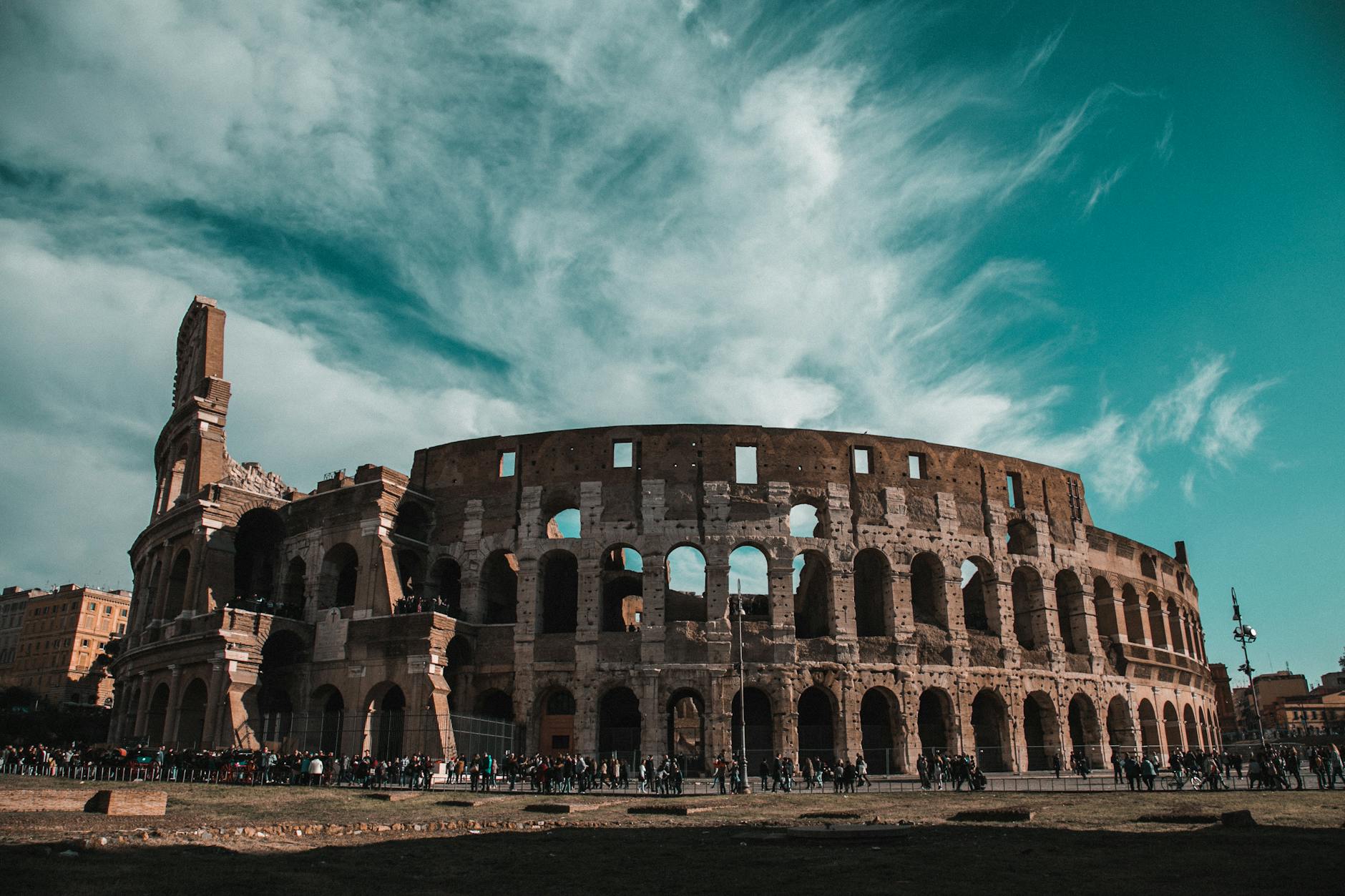
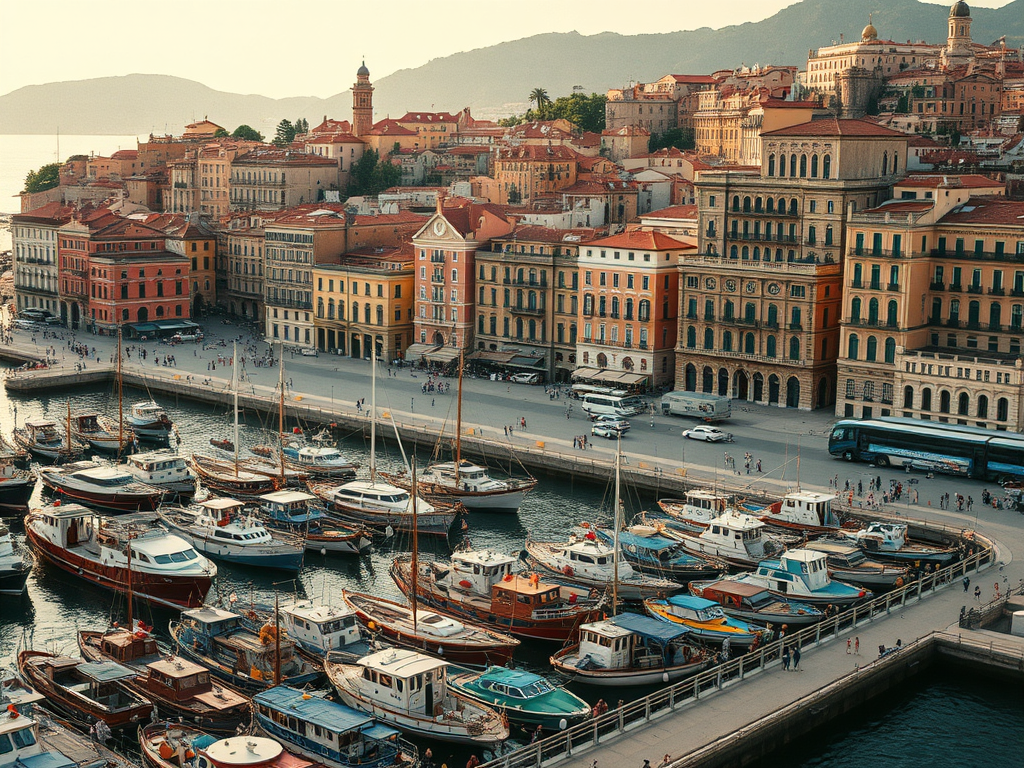
Rome, famously known as the “Eternal City,” is a timeless symbol of human achievement, resilience, and cultural significance. As the epicenter of ancient civilization and the birthplace of ideas that shaped Western culture, Rome’s history spans over 2,700 years. Photo by Natasa Dav on Pexels.com
The cultural achievements of the Roman Empire were equally impressive. Literature, art, and philosophy flourished, with figures like Virgil, Horace, and Seneca leaving an indelible mark on Western thought. Roman law, codified during the Empire, became the foundation of legal systems in many parts of the world. The Latin language, spread through Roman conquests, influenced the development of Romance languages and remains a cornerstone of Western culture.
However, the Roman Empire was not without challenges. The vastness of its territories made administration increasingly difficult, and internal power struggles often destabilized the leadership. The third century CE saw a period of crisis, marked by economic decline, invasions, and a succession of short-lived emperors. Despite efforts to restore stability, the Empire eventually split into Eastern and Western halves in 285 CE, under Emperor Diocletian.
The Western Roman Empire ultimately fell in 476 CE, marking the end of ancient Rome as a political entity. However, the Eastern Roman Empire, known as the Byzantine Empire, continued to preserve Roman traditions for another thousand years. The Roman Empire’s legacy is vast, shaping governance, architecture, language, and cultural ideals that continue to influence the modern world.
The Fall of the Western Roman Empire: Causes and Consequences
The fall of the Western Roman Empire in 476 CE marked a profound shift in European history. While the event is often symbolized by the deposition of the last Roman emperor, Romulus Augustulus, by the Germanic king Odoacer, the decline of the Empire was a long and complex process influenced by political, economic, social, and military factors.
One of the primary causes of the Empire’s fall was its vast size, which made effective governance increasingly difficult. By the third century CE, the Empire was struggling to maintain control over its territories, which stretched across Europe, North Africa, and parts of Asia. Internal divisions and weak leadership compounded the problem, with frequent power struggles among emperors, generals, and political factions.
Economic instability also played a significant role. The Empire faced declining agricultural productivity, heavy taxation, and reliance on slave labor, which hindered economic innovation. Trade disruptions, caused by invasions and internal strife, further weakened the economy. The devaluation of Roman currency and inflation eroded public confidence, exacerbating the financial crisis.
The military, once the backbone of Rome’s power, became increasingly strained. The reliance on mercenaries—foreign soldiers hired to supplement Roman forces—led to a decline in discipline and loyalty. These mercenaries, often from Germanic tribes, had little allegiance to the Roman state and sometimes turned against it. The Empire also faced constant external pressures from migrating and invading groups, such as the Visigoths, Vandals, and Huns. The sack of Rome by the Visigoths in 410 CE and the Vandals in 455 CE demonstrated the Empire’s vulnerability.
Social and cultural shifts further undermined the Empire. The division between the wealthy elite and the impoverished masses grew wider, eroding social cohesion. The rise of Christianity also transformed Roman society. While the religion provided spiritual unity and moral guidance, it shifted focus away from traditional Roman civic virtues and institutions, contributing to the decline of classical Roman culture.
The administrative division of the Empire into Eastern and Western halves in 285 CE by Emperor Diocletian aimed to improve governance but ultimately weakened the West. The Eastern Roman Empire, centered in Constantinople, was wealthier and better fortified, allowing it to survive for another thousand years as the Byzantine Empire. Meanwhile, the Western Roman Empire struggled with fewer resources and greater threats.
The deposition of Romulus Augustulus in 476 CE marked the end of the Western Roman Empire as a political entity. However, the idea of Rome persisted. The Eastern Roman Empire continued to identify as Roman, preserving and adapting its traditions. In the West, the fall of Rome paved the way for the emergence of medieval Europe. Germanic kingdoms rose to prominence, blending Roman and native traditions. The Roman Catholic Church also played a crucial role in preserving Roman heritage, becoming a unifying force in the fragmented post-Roman world.
The fall of the Western Roman Empire remains one of history’s most studied events, symbolizing the transition from antiquity to the Middle Ages. Its causes and consequences continue to offer lessons on the challenges of maintaining vast, complex systems of governance.
The Rise of Medieval Rome and the Papal States
After the fall of the Western Roman Empire, Rome entered a period of transition, marked by the rise of the Papacy and the establishment of the Papal States. During the early medieval period, the city’s political power declined, but its spiritual influence grew as it became the center of the Roman Catholic Church.
As Germanic tribes carved out kingdoms in former Roman territories, Rome found a new identity as a religious capital. The Pope, as the Bishop of Rome, gained increasing authority, not only in spiritual matters but also in political affairs. This transformation was particularly evident under Pope Gregory I (Gregory the Great) in the 6th century, who reformed Church administration and promoted missionary efforts that spread Christianity throughout Europe.
During the Middle Ages, the city saw the construction of numerous churches and religious institutions, many of which still stand today. While much of the ancient city fell into ruin, new centers of devotion arose, such as the Basilica of Santa Maria Maggiore and the Church of San Clemente, which reflected a blending of early Christian and Roman architectural styles.
The Papal States, established in the 8th century, were a unique theocratic territory governed by the Pope. They played a vital role in shaping Rome’s history, providing the city with a renewed sense of importance. Pilgrims flocked to Rome, seeking spiritual redemption and contributing to its cultural and economic revival.
Renaissance and Baroque Rome: The Rebirth of a City
The Renaissance was a golden age for Rome, transforming it into a center of art, architecture, and scholarship. Beginning in the 15th century, Popes such as Julius II and Leo X initiated ambitious projects to restore Rome’s former glory. They commissioned renowned artists like Michelangelo, Raphael, and Bernini to create masterpieces that continue to define the city’s identity.
The rebuilding of St. Peter’s Basilica and the creation of the Sistine Chapel were monumental undertakings that showcased the Church’s wealth and power. Michelangelo’s frescoes in the Sistine Chapel and his design for the Basilica’s dome remain iconic symbols of Renaissance artistry. Raphael’s works, including the frescoes in the Apostolic Palace, reflected the intellectual and cultural revival of the period.
The Baroque era further enhanced Rome’s grandeur with dramatic, ornate architectural projects. Gian Lorenzo Bernini’s contributions, such as the colonnade of St. Peter’s Square and the Fountain of the Four Rivers in Piazza Navona, epitomized the dynamism and theatricality of Baroque art. These projects transformed Rome into a city of fountains, piazzas, and monumental churches, drawing visitors from across Europe.
Iconic Places to Visit in Rome Today
Rome today is a living museum, offering visitors a journey through thousands of years of history. Here are the must-visit landmarks that reflect the city’s layered past:
The Colosseum and Roman Forum: The Colosseum, a symbol of ancient Rome, is a marvel of engineering and a testament to the city’s imperial grandeur. Nearby, the Roman Forum reveals the political and social heart of ancient Rome.
The Vatican City: Home to St. Peter’s Basilica, the Sistine Chapel, and the Vatican Museums, this independent city-state showcases Renaissance and Baroque treasures.
The Pantheon: An ancient Roman temple dedicated to all gods, the Pantheon is renowned for its perfect dome and continues to inspire architects worldwide.
Trevi Fountain: This Baroque masterpiece is not only a symbol of Rome’s artistic heritage but also a tradition for visitors wishing to return to the city.
Piazza Navona: Built on the site of an ancient stadium, this vibrant square features Bernini’s Fountain of the Four Rivers and is a hub of Roman culture.
The Spanish Steps: A popular gathering spot, the Spanish Steps offer a picturesque view of Rome and lead to the Trinità dei Monti Church.
The Catacombs and Basilica of San Clemente: These sites offer a glimpse into early Christian Rome, with underground burial chambers and layered archaeological treasures.
Whether exploring ancient ruins, Renaissance masterpieces, or vibrant piazzas, Rome offers a timeless experience for every traveler.
Conclusion
Rome is more than just a city; it is a timeless emblem of history, culture, and innovation. From its foundation in legend as the cradle of the Roman Empire to its role as the heart of the Christian world and its transformation into a modern global capital, Rome stands as a testament to human ingenuity and resilience. Each chapter of its history—ancient, medieval, Renaissance, and modern—has left an indelible mark on its streets, monuments, and culture.
Today, Rome is a mosaic of its past, seamlessly blending antiquity and modernity. Visitors can walk through the ruins of the Roman Forum, marvel at the grandeur of St. Peter’s Basilica, toss coins into the Trevi Fountain, or simply lose themselves in the city’s vibrant piazzas. Each experience reveals a piece of Rome’s layered identity, creating a living connection to its extraordinary history.
As you explore this Eternal City, it becomes clear why Rome continues to captivate the world. Its enduring beauty, cultural richness, and iconic landmarks not only honor its past but also inspire generations to come. Truly, all roads lead to Rome—a city that never ceases to amaze.
Berlin, the capital of Germany, has long been a symbol of resilience, cultural dynamism, and historical change. The history of Berlin started in the 13th century, and it evolved from a small trading post into one of Europe’s most vibrant and influential cities. As the capital of Prussia and later Germany, Berlin witnessed periods of remarkable growth and intense conflict, from the rise of the Nazi regime to the devastation of World War II and the ensuing Cold War. This article explores Berlin’s journey through these defining moments, shedding light on the events and transformations that have shaped the city’s unique identity and enduring spirit.
Founding and Early Development
Berlin’s origins date back to the 13th century, when two small settlements, Berlin and Cölln, were established along the River Spree. Located at the crossing of two major trade routes, the area quickly developed as a center for commerce and culture, attracting merchants, artisans, and traders from surrounding regions. By 1307, the two towns formed a union, marking the first step toward Berlin’s growth as a significant urban center.
Throughout the medieval period, Berlin grew in both size and prominence, benefiting from its favorable location for trade. In 1415, the region came under the control of Frederick I, who established the Margraviate of Brandenburg. This event marked the beginning of Berlin’s association with the Hohenzollern dynasty, which would later shape its political and cultural landscape. Under Hohenzollern rule, Berlin saw the construction of significant landmarks, including the Marienkirche and the Stadtschloss, or City Palace, which became symbols of the city’s growing stature.
The Protestant Reformation in the 16th century had a profound impact on Berlin, aligning it with the religious and political shifts that swept through Europe. The adoption of Protestantism under Elector Joachim II brought religious reform and increased autonomy from the Catholic Church, fostering a sense of independence that became a defining characteristic of the city. As Berlin continued to expand, it developed a unique identity as a place of innovation, trade, and governance.
By the 17th century, Berlin had solidified its role as the center of the Brandenburg-Prussian state, positioning itself for further growth in the coming eras. The city’s development was marked by cultural and economic prosperity, which laid the foundation for its transformation into a major European capital in the centuries that followed.
Berlin in the Prussian and Imperial German Eras
The 18th and 19th centuries marked a period of profound change for Berlin as it became the capital of the Kingdom of Prussia. Under the rule of Frederick the Great in the mid-18th century, Berlin flourished as a center of arts, education, and military power. Frederick’s vision transformed the city with architectural masterpieces, including the Berlin State Opera and the Brandenburg Gate, which remains an iconic symbol of the city today.
As Prussia expanded its influence in Europe, Berlin’s population and importance grew. The Industrial Revolution brought rapid urbanization, transforming Berlin into an economic powerhouse. Factories, railways, and modern infrastructure turned the city into one of Europe’s leading industrial centers, attracting workers from across Germany and beyond. This period of growth continued into the formation of the German Empire in 1871, when Berlin was declared the imperial capital of a newly unified Germany.
With its new status, Berlin underwent massive development, becoming a hub for politics, science, and the arts. The city’s universities, theaters, and scientific institutions attracted scholars and artists, establishing Berlin as a beacon of intellectual and cultural achievement. However, this era was also marked by social and political tensions, as industrialization brought about economic disparities and demands for political reform. Despite these challenges, Berlin’s status as the heart of the German Empire solidified its role as a major European capital.
By the early 20th century, Berlin was at the height of its power, a symbol of Germany’s unity and ambition. However, the political upheaval and eventual outbreak of World War I would soon bring about drastic changes, setting the stage for a turbulent new chapter in the city’s history.
Weimar Republic and the Rise of Nazi Berlin
After Germany’s defeat in World War I, Berlin became the capital of the Weimar Republic, a period marked by both cultural blossoming and political turmoil. The city emerged as a global hub for art, theater, and intellectual thought, symbolizing the avant-garde spirit of the 1920s. Known for its vibrant nightlife, Berlin attracted artists, writers, and performers who pushed the boundaries of creativity and self-expression, making it one of the most progressive cities in Europe.
However, the economic instability and political divisions that plagued the Weimar Republic also affected Berlin. Hyperinflation, unemployment, and street violence became common, as various political factions, including communists and right-wing extremists, vied for power. Amid this unrest, Adolf Hitler’s Nazi Party gained support by exploiting the city’s discontent, and in 1933, Hitler was appointed Chancellor of Germany, marking the end of the Weimar era.
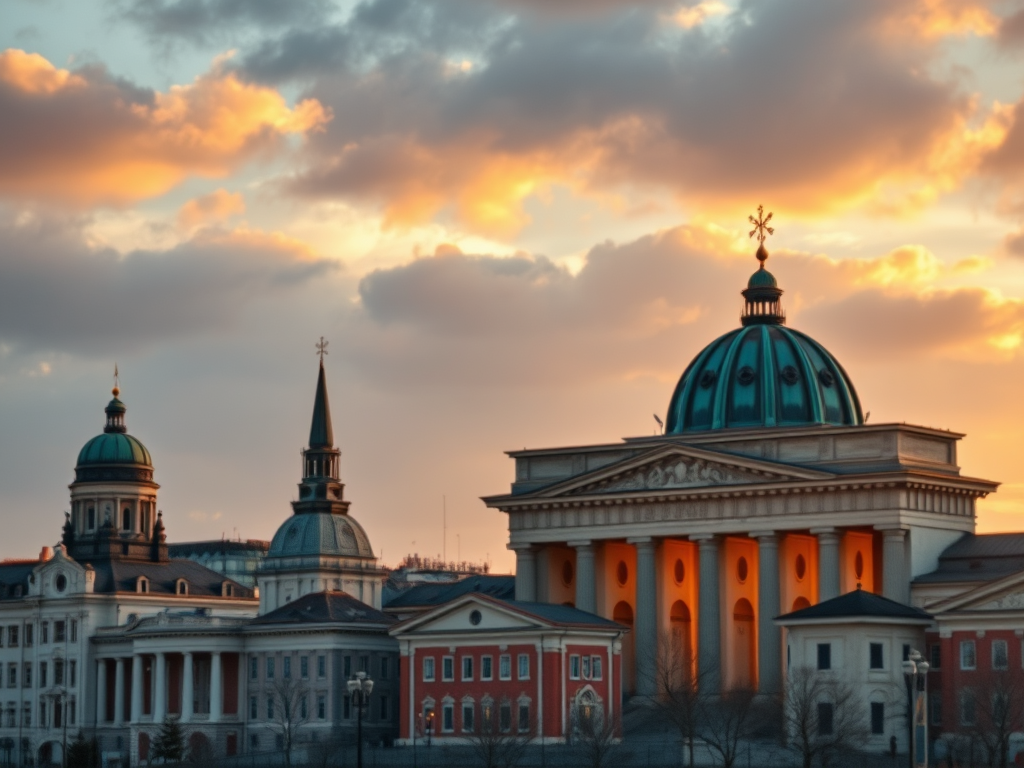
Berlin, the capital of Germany, has long been a symbol of resilience, cultural dynamism, and historical change. Founded in the 13th century, it evolved from a small trading post into one of Europe’s most vibrant and influential cities.
Under Nazi rule, Berlin transformed into the nerve center of the Third Reich. The city’s architectural landscape was reshaped to reflect Nazi ideology, with grandiose plans by architect Albert Speer to make Berlin the capital of a new world empire, Germania. During this period, Berlin also became a site of oppression, with systematic persecution of Jews, political dissidents, and other groups. The city’s Jewish population, once a vibrant part of its cultural fabric, faced brutal repression, leading to the tragic events of the Holocaust.
World War II brought devastating consequences for Berlin, as Allied bombings destroyed much of the city’s infrastructure. By 1945, Berlin was a city in ruins, marking the end of the Nazi regime and the beginning of a new, divided chapter in its history. The fall of Berlin in 1945 was symbolic of the larger collapse of Nazi Germany, leaving the city scarred but poised for reconstruction and change.
Division, the Berlin Wall, and the Cold War
After World War II, Berlin became the focal point of Cold War tensions between the Soviet Union and the Western Allies. Divided into four occupation zones controlled by the United States, the United Kingdom, France, and the Soviet Union, Berlin quickly became a microcosm of the ideological divide between East and West. In 1949, the establishment of the German Democratic Republic (East Germany) and the Federal Republic of Germany (West Germany) formalized this division, with East Berlin as the capital of East Germany and West Berlin remaining a democratic enclave within the communist state.
In 1961, the construction of the Berlin Wall physically divided the city, separating families, friends, and communities. The Wall became a powerful symbol of the Cold War, representing the stark division between communist and capitalist ideologies. For nearly three decades, the Berlin Wall dominated the city’s landscape, with escape attempts from East Berlin often ending in tragedy.
Life in Berlin was dramatically different on each side of the Wall. West Berlin thrived as a center of culture, innovation, and freedom, while East Berlin, under the control of the socialist government, struggled with economic hardships and restrictions on personal freedoms. The Berlin Wall became a focal point of international attention, with political leaders like U.S. President John F. Kennedy famously declaring “Ich bin ein Berliner†as a statement of solidarity with the people of Berlin.
The Cold War tensions began to thaw in the late 1980s, and on November 9, 1989, the Berlin Wall fell, marking a turning point in history. The reunification of Berlin and Germany soon followed, symbolizing the end of the Cold War and the beginning of a new era for the city.
Reunification and Modern Berlin
The fall of the Berlin Wall was a pivotal moment in Berlin’s history, leading to the reunification of Germany in 1990. Berlin was once again named the capital of Germany, and a massive reconstruction effort began to unify the city’s infrastructure, economy, and society. This period of transformation saw Berlin emerge as a vibrant, cosmopolitan metropolis, attracting people from all over the world.
In the years following reunification, Berlin embraced its multicultural identity, becoming a hub for art, music, and technology. Iconic landmarks like the Brandenburg Gate, once located in the shadow of the Wall, were restored as symbols of unity and freedom. The city also undertook significant economic development, with modern skyscrapers and business districts rising alongside historic buildings, creating a unique blend of old and new.
Berlin’s cultural scene flourished, with events like the Berlinale film festival, the Berlin Philharmonic, and its numerous museums and galleries attracting millions of visitors each year. The city also became a center for political and social movements, reflecting its role as a place of progressive thought and activism.
Today, Berlin stands as a testament to resilience and reinvention. It is a city that has confronted and overcome immense challenges, from war and division to economic hardship. The story of Berlin is one of transformation and hope, embodying the enduring spirit of a city that has always managed to rebuild, renew, and redefine itself.
Conclusion
Berlin’s history is a tapestry of triumphs, tragedies, and transformations. From its medieval roots to its role as the capital of a unified Germany, Berlin has been shaped by the forces of politics, war, culture, and resilience. Each era in the city’s history has left an indelible mark, creating a metropolis that reflects both the hardships and hopes of its people. Today, Berlin stands as a symbol of unity and progress, a city that embraces its past while looking toward the future. Its journey serves as a reminder of the resilience of human spirit and the power of a city to continuously reinvent itself.
Lisbon, the vibrant capital of Portugal, boasts a history as deep and fascinating as its picturesque landscapes. Perched along the Tagus River, it has witnessed the rise and fall of empires, weathered natural disasters, and experienced rebirths that shaped its unique character. From its origins in ancient times, through its golden age as a hub of maritime exploration, to the challenges and transformations of the modern era, Lisbon has consistently adapted, retaining its historical charm while embracing progress. This article delves into the defining history of Lisbon, exploring how each era has left an indelible mark on this captivating city.
Foundations of Lisbon: Ancient Origins and Early Civilizations
Lisbon’s ancient roots stretch back thousands of years, with evidence suggesting human settlement in the area as early as 1200 BCE. The region, nestled between the Atlantic Ocean and the Tagus River, was ideally suited for trade and exploration, which attracted a variety of ancient peoples. Among the earliest known settlers were the Phoenicians, seafaring traders from what is now Lebanon. They established a trading post here, calling it “Olissipo,†and laid the foundations for Lisbon’s future as a major port city. The strategic importance of Olissipo was twofold: it offered easy access to the Mediterranean and acted as a gateway to the Atlantic, crucial for both commerce and defense.
Following the Phoenicians, the Greeks and Carthaginians also sought influence over Lisbon. Each brought unique cultural contributions, blending with indigenous traditions to create a cosmopolitan atmosphere. By the time the Romans arrived in the 2nd century BCE, Olissipo was a thriving settlement with advanced infrastructure and connections across the ancient world. Under Roman rule, Lisbon, then part of the Roman province of Lusitania, flourished as a regional center. The Romans invested heavily in its development, constructing roads, public baths, temples, and an amphitheater, fragments of which can still be seen in Lisbon’s archaeological sites today. They also integrated the city into the vast Roman trade network, establishing routes that linked Lisbon to distant parts of the Empire.
With the decline of Roman authority in the 5th century CE, Lisbon faced waves of invasions from the Suebi, Visigoths, and later the Moors. The Visigoths took control of the city after the fall of Rome, marking a period of relative obscurity in its history. However, this period of instability was transformed in 711 CE, when the Moors, or Islamic Berber and Arab forces from North Africa, conquered the Iberian Peninsula. They introduced a period of cultural and technological advancement that would influence Lisbon for centuries. Under Moorish rule, Lisbon, renamed “Al-Ushbuna,†became a fortified and prosperous city. The Moors brought innovations in irrigation, architecture, and sciences, enhancing Lisbon’s infrastructure and laying the groundwork for its later prosperity.
This era continued until 1147, when the city was reclaimed by Christian forces led by Afonso I, the first King of Portugal. The Siege of Lisbon, one of the key battles of the Reconquista, restored the city to Christian control and marked a new chapter in Lisbon’s history. Under Portuguese rule, Lisbon’s development accelerated, and it gradually emerged as a significant port. The influence of previous civilizations, however, remained visible in the city’s architecture, culture, and even language, creating a unique tapestry that still characterizes Lisbon today.
Lisbon in the Age of Discovery: A Maritime Empire Emerges
Lisbon’s prominence soared during the Age of Discovery, a period that spanned the 15th and 16th centuries. Positioned strategically on the Atlantic coast, Lisbon became the launchpad for expeditions that reshaped the world. This era began with Prince Henry the Navigator, a visionary who spearheaded Portugal’s maritime endeavors. His investment in navigation, cartography, and shipbuilding set the stage for Lisbon’s transformation into a thriving hub of exploration. From Lisbon’s ports, explorers like Vasco da Gama set sail, discovering sea routes to Asia that would establish Portugal as a global trading power.
Lisbon’s influence extended beyond trade; it became a melting pot of cultures and ideas. Scholars, artists, and merchants from across Europe and beyond gathered in the city, fostering an intellectual climate that encouraged innovation. This vibrant exchange contributed to advancements in science, art, and literature, solidifying Lisbon’s reputation as a leading European capital.
However, Lisbon’s golden age was not without challenges. The wealth and success of Portugal’s maritime empire attracted envy and competition from other European powers. Conflicts with Spain, France, and England tested Lisbon’s resilience, ultimately leading to a decline in Portuguese dominance. Despite these challenges, the legacy of the Age of Discovery endures in Lisbon’s identity, with landmarks and cultural influences that reflect its extraordinary role in shaping the modern world.
The Devastating 1755 Earthquake and Lisbon’s Rebirth
On November 1, 1755, Lisbon experienced one of the most catastrophic earthquakes in European history. The quake, estimated at a magnitude of 8.5-9.0, struck in the early hours, catching the city unprepared. Buildings crumbled, fires broke out, and a massive tsunami followed, obliterating much of the city’s infrastructure and claiming tens of thousands of lives. The disaster devastated Lisbon’s economy and left an indelible mark on the Portuguese psyche.
In the aftermath, the Marquis of Pombal, Portugal’s Prime Minister, led an ambitious reconstruction effort. He implemented a series of radical reforms, introducing new building codes and an innovative grid layout for the city center, known as the Baixa Pombalina. The redesigned city incorporated earthquake-resistant features, a groundbreaking approach for the time. This effort not only restored Lisbon but also symbolized Portugal’s resilience.
The earthquake’s impact was profound, influencing Europe’s intellectual and philosophical landscape. Thinkers like Voltaire referenced the tragedy in their writings, using it as a catalyst to question prevailing beliefs about religion, science, and human suffering. Lisbon’s reconstruction ultimately marked a new era of modernization, setting a precedent for urban planning and disaster response.
Lisbon in Modernity: Industrialization, Revolution, and Transformation
In the 19th and early 20th centuries, Lisbon, like much of Europe, underwent profound transformations as industrialization took hold and political changes reshaped the city. During this period, Portugal faced economic difficulties and political instability, which left Lisbon as a focal point for both progress and discontent. Factories, railways, and new infrastructure began to modernize the city, yet the social divide between the working class and the elite widened, setting the stage for upheaval.
Industrialization brought both growth and challenges. Lisbon’s port was modernized, expanding trade routes and facilitating the transport of goods produced in and around the city. Factories emerged, attracting laborers from rural areas and leading to urban population growth. However, working conditions in these factories were often harsh, and as industrialized Lisbon expanded, so did the call for social reform. The city saw the rise of workers’ movements advocating for better conditions, wages, and rights.
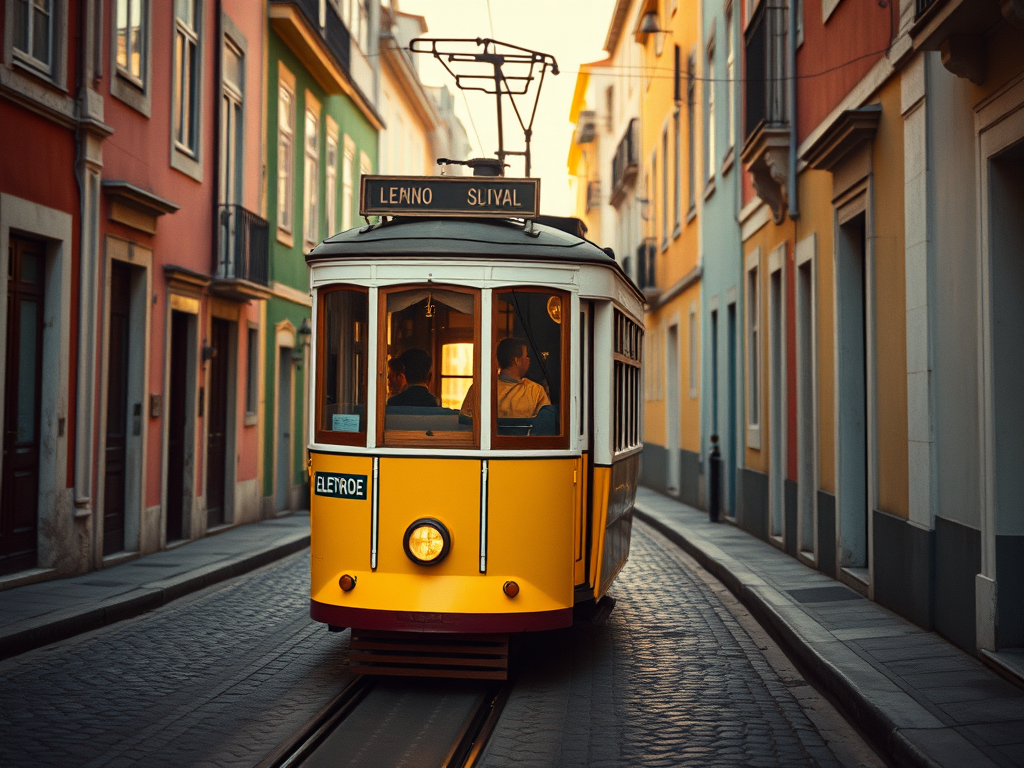
Lisbon, the vibrant capital of Portugal, boasts a history as deep and fascinating as its picturesque landscapes. In the image you can see a representation of one of its popular trams.
Politically, Lisbon was a hotbed of revolutionary thought. In 1910, the Portuguese monarchy was overthrown, and Lisbon witnessed the establishment of the Portuguese First Republic. The monarchy’s collapse marked a decisive break from centuries of royal rule, but the Republic struggled with internal conflicts, corruption, and economic challenges. In 1926, these challenges led to a military coup, and by 1933, António de Oliveira Salazar’s Estado Novo regime was established. Salazar’s authoritarian rule, which lasted for decades, imposed strict control over Lisbon’s cultural and political life, stifling dissent and limiting civil liberties.
While Lisbon remained constrained by the Estado Novo, modernity continued to reshape the city. Infrastructure development projects brought electricity, expanded public transportation, and improved the city’s overall connectivity. These advancements set the foundation for Lisbon’s later economic expansion. However, under Salazar, many artistic and intellectual pursuits were subject to censorship, creating an atmosphere of tension between the state and the people.
The tipping point came in 1974 with the Carnation Revolution, a bloodless coup that overthrew the Estado Novo and restored democracy to Portugal. Led by the Armed Forces Movement, a group of left-leaning military officers, the revolution was widely supported by the population and marked the end of Salazar’s dictatorship. Citizens took to the streets in Lisbon, waving red carnations as a symbol of peace and solidarity. The revolution led to the establishment of the Third Republic, bringing newfound freedom to Lisbon and marking a period of social reform and economic transformation.
With Portugal’s transition to democracy and its entry into the European Economic Community in 1986, Lisbon embraced modernization and integration with Europe. The city began a phase of rapid development, with investments in public services, infrastructure, and tourism. This era redefined Lisbon as a vibrant European capital, open to the world and eager to shed its authoritarian past.
Lisbon Today: Cultural Renaissance and Global Influence
In recent decades, Lisbon has enjoyed a cultural and economic renaissance, reasserting itself as one of Europe’s most dynamic capitals. The city has capitalized on its rich history, unique architecture, and vibrant cultural heritage to become a leading tourist destination, drawing millions of visitors from around the world each year. The rise of tourism has been instrumental in revitalizing the city’s economy, bringing newfound energy to its historic neighborhoods and cultural institutions.
Lisbon’s architecture remains one of its most distinct features, with neighborhoods like Alfama, Baixa, and Bairro Alto offering a mix of Moorish, medieval, and Pombaline styles. The blend of old and new architecture has inspired a thriving art and design scene, as creatives draw from Lisbon’s history and landscape to craft unique works. The city is now home to a growing number of art galleries, design studios, and cultural festivals, attracting artists and innovators from across Europe and beyond.
Additionally, Lisbon has invested heavily in modernization projects to enhance its global standing. The city hosted the World Expo in 1998, which spurred significant urban development along the eastern waterfront, leading to the creation of the Parque das Nações. This area, once an industrial zone, was transformed into a modern district with a large aquarium, museums, and event spaces. The success of this project demonstrated Lisbon’s capacity for transformation and signaled its commitment to a sustainable future.
Culinary culture has also seen a revival in Lisbon, with Portuguese cuisine gaining international recognition. A new wave of chefs and restaurateurs has redefined traditional dishes, blending local ingredients with global techniques. Restaurants, cafes, and food markets throughout the city celebrate Portugal’s rich gastronomic heritage, while innovative culinary experiences continue to attract food enthusiasts from around the world.
Today, Lisbon also stands as a hub for technology and innovation, becoming one of Europe’s emerging centers for startups and tech conferences. The annual Web Summit, one of the world’s largest technology conferences, relocated to Lisbon in 2016, drawing thousands of entrepreneurs, investors, and tech enthusiasts to the city each year. This event has helped position Lisbon as a key player in Europe’s digital economy, fostering a startup-friendly environment and attracting international investment.
Lisbon’s current role on the global stage is one of a city that embraces its heritage while continuously evolving. It exemplifies resilience and adaptability, retaining its unique charm and traditions as it advances into the 21st century. The city’s enduring appeal lies in its ability to celebrate both its historical legacy and its vibrant, modern identity, making Lisbon a fascinating destination and a dynamic place to live and work.
Conclusion
Lisbon’s history is a testament to resilience, adaptation, and cultural richness. From its ancient origins through the trials of the Age of Discovery, the devastation of the 1755 earthquake, and the revolutions that reshaped it, Lisbon has evolved into a city of both tradition and innovation. Today, Lisbon balances its storied past with a forward-looking approach, making it a hub of art, technology, and tourism. As it continues to grow on the global stage, Lisbon remains a city defined by its heritage, diversity, and enduring spirit, inviting the world to explore its past while shaping a vibrant future.
Istanbul, straddling Europe and Asia, stands among the world’s richest cities in terms of history and culture. Founded millennia ago, this iconic city played central roles in some of history’s greatest empires, including the Roman, Byzantine, and Ottoman empires. Known as Byzantium, then Constantinople, and finally Istanbul, it retains the imprint of each era and civilization it hosted. Every chapter in its history has added layers to its diversity, with mosques, churches, and palaces that rise as silent witnesses to its past. Today, Istanbul remains a vibrant crossroads of cultures and a constantly evolving metropolis.
Foundation and Early Inhabitants
Istanbul’s earliest history reaches back thousands of years, with archaeological findings suggesting that the area was first inhabited as early as 3000 BCE. Initially known as Byzantium, the settlement was established by Greek colonists from the city of Megara around the 7th century BCE. This ancient city found its place on the European side of the Bosporus, a strategic position that would come to define its future as a major urban center.
The Megarian colonists, led by a legendary figure named Byzas, are credited with the foundation of Byzantium. According to myth, Byzas consulted the oracle of Delphi before his journey, seeking guidance on where to establish his colony. The oracle advised him to settle opposite the “land of the blind.†Upon reaching the Bosporus, Byzas noted the thriving settlement of Chalcedon on the Asian shore and realized that those inhabitants, “blind†to the superior strategic position across the water, had missed a vital opportunity. Thus, he and his followers claimed the European side, where Byzantium would be protected by its advantageous geography and could benefit from the bustling trade that passed through the Bosporus.
The geography of Byzantium offered both natural defenses and economic opportunities. Surrounded by water on three sides, with access to both the Black Sea and the Mediterranean, the city had a natural advantage against invaders and an ideal position for controlling trade routes. This would later make Byzantium a valuable asset for any empire that sought dominance in the region. The city grew quickly, with its initial economy centered around fishing, trade, and the strategic tolls collected from ships that passed through the Bosporus.
In these early years, Byzantium developed a distinct cultural identity, blending Greek traditions with local customs. Its proximity to Anatolia also exposed the city to influences from eastern cultures, particularly from the Persians, who at various points controlled regions close to Byzantium. This mix of eastern and western influences created a cultural foundation that would endure through the city’s transformation into Constantinople and later Istanbul.
Byzantium remained an independent city-state for several centuries, although it periodically faced threats from neighboring powers. Its wealth and strategic location made it a target for various regional powers, but the city managed to retain a level of autonomy through diplomacy and its formidable defenses. It was not until the 4th century CE, when Roman Emperor Constantine the Great recognized the city’s potential, that Byzantium would undergo its first major transformation.
Roman Empire and the Foundation of Byzantium
The city of Byzantium, established by Greek settlers, soon caught the attention of the Roman Empire due to its strategic position on the Bosporus Strait. By the 2nd century BCE, the Romans had integrated most of the Greek territories into their rapidly expanding empire, and Byzantium became a part of this vast Roman network. Its significance grew not only because of its strategic position but also due to its potential as a defense hub, helping Rome to maintain control over its eastern frontiers.
In 196 CE, the Roman Emperor Septimius Severus waged a brutal campaign against Byzantium. At the time, the city had taken a rebellious stance during a civil war, supporting a rival of Severus in his bid for the throne. Following his victory, Severus’s retaliation was swift and severe. He besieged and captured Byzantium, dismantling its fortifications, and significantly reducing its population. This harsh treatment marked a brief period of decline for the city; however, Severus soon recognized its value and undertook substantial efforts to rebuild and restore Byzantium. Under his reign, the city saw the construction of new walls, theaters, and public buildings, reinstating it as an important Roman outpost.
Byzantium’s fortunes would take a historic turn when Emperor Constantine the Great came to power in the early 4th century. Seeking to stabilize his empire, Constantine turned his attention eastward, envisioning a new center for the Roman Empire that would be more secure and symbolically distanced from the volatile politics of Rome itself. Byzantium, with its commanding view over Europe and Asia, stood as the ideal location for this ambition. In 324 CE, after defeating his rival Emperor Licinius at the Battle of Chrysopolis, Constantine chose Byzantium as the foundation for his “New Rome.†This decision set in motion Byzantium’s transformation from a modest Greek colony into a grand imperial capital.
Constantine embarked on an ambitious construction campaign to remake Byzantium. He expanded the city’s boundaries, built elaborate fortifications, and commissioned monumental structures, including churches, palaces, and forums, designed to reflect the city’s new status. One of the most significant additions was the Forum of Constantine, a central public square adorned with statues, where a grand column bearing his likeness was erected. With the construction of the Hippodrome, a massive chariot racing arena that could host thousands of spectators, Constantine sought to rival the grandeur of the Circus Maximus in Rome. This expansion transformed the city both physically and culturally, as Constantine infused it with Roman art, architecture, and institutions while honoring its Greek heritage.
The renaming of Byzantium to Constantinople symbolized not only Constantine’s personal mark on the city but also the inception of a new Christian capital. Constantine was the first Roman emperor to convert to Christianity, and his vision for Constantinople included the construction of grand churches. Among these was the Church of the Holy Apostles, which would later serve as the resting place for Constantine himself and become a central Christian monument. As Constantine encouraged the spread of Christianity, Constantinople emerged as a center for the new faith, a status that would define its role in the centuries that followed.
Constantine’s decision to make Byzantium the capital of the Roman Empire had far-reaching consequences. By shifting the empire’s focus eastward, he set the stage for the eventual division of the Roman Empire into Eastern and Western halves. This division would become formalized after his death, and Constantinople would flourish as the capital of the Eastern Roman Empire, later known as the Byzantine Empire. Constantine’s transformation of Byzantium into a Roman imperial center marked the beginning of a new era in the city’s history, embedding it deeply into the political and religious fabric of the Mediterranean and setting it on a path to becoming one of the most influential cities in the world.
Incorporation into the Roman Empire
Byzantium’s integration into the Roman Empire marks a pivotal chapter in the city’s history, one that would significantly shape its future as a center of power. In the 2nd century BCE, Rome was extending its reach across the Mediterranean, driven by the ambitions of a republic on its way to becoming an empire. Byzantium’s position at the Bosporus Strait was valuable not only for controlling sea trade between Asia and Europe but also for military strategy, as it lay along Rome’s eastern frontier. This importance made the small but prosperous city of Byzantium a prime target.
The Roman Republic first brought Byzantium under its influence in 196 BCE, following a period of conflict during the Roman-Macedonian Wars. The city initially struggled to maintain autonomy but gradually came under direct Roman control. By the time of Emperor Septimius Severus in the early 3rd century CE, Byzantium was fully incorporated into the Roman Empire. Severus initially punished the city for siding with a rival faction during a Roman civil war, dismantling its walls and damaging much of its infrastructure. However, Severus later recognized Byzantium’s value and reversed his decision, rebuilding its walls and even introducing Roman architecture to further integrate it into the empire.
Byzantium under Roman rule benefited from the empire’s extensive infrastructure and administrative systems. Roman engineers introduced aqueducts, roads, and public buildings that enhanced the quality of life and facilitated economic growth. With its wealth in trade, Byzantium prospered and served as a vital link between the eastern and western regions of the empire. Roman culture also began to permeate the city, with Latin becoming prominent, even as Greek traditions and language remained influential.
In this period, Roman customs, governance, and military practices took root in Byzantium, forming a bridge between Roman and Greek cultures. This blend of influences was evident in the city’s daily life, from the marketplaces filled with goods from across the empire to the architecture that combined Hellenistic and Roman styles. The Roman amphitheaters, baths, and forums introduced in Byzantium offered a glimpse of the public life and entertainment common in Roman cities, adapting them to the Greek traditions that locals still embraced.
As the Roman Empire continued to grow, the strategic importance of Byzantium increased. Emperor Constantine the Great, recognizing the city’s centrality, would later make it the empire’s new capital, rebranding it as “Constantinople.†But even before this monumental decision, Byzantium played a crucial role in safeguarding Rome’s eastern border and enabling trade across the known world. Its economic growth and fusion of cultures during this period laid the groundwork for its transformation into one of the empire’s most celebrated cities.
This period of Romanization set the stage for Byzantium’s future as Constantinople, a city that would not only carry forward Rome’s legacy but also stand as a cultural crossroads for centuries to come. Byzantium’s incorporation into the Roman Empire was not just an expansion of Roman territory; it was a critical moment in its evolution from a regional city to an imperial center.
Constantine and the Rise of Constantinople
The transformation of Byzantium into Constantinople began under the rule of Emperor Constantine the Great, who sought a new eastern capital for the Roman Empire. In the early 4th century CE, Rome had become challenging to defend and govern due to its distance from the empire’s more vulnerable eastern regions. After securing his authority over the entire Roman Empire in 324 CE, Constantine turned his attention to establishing a strategic and fortified center in the East. He saw great potential in Byzantium due to its location at the Bosporus Strait, which connected the Aegean and Black Seas and acted as a bridge between Europe and Asia. The city’s strong natural defenses and access to trade routes made it the perfect choice.
In 330 CE, Constantine officially declared Byzantium the new capital of the Roman Empire, renaming it “Nova Roma,†or New Rome. However, the name Constantinople, meaning “City of Constantine,†quickly took hold, honoring the emperor’s ambition and vision. Constantine invested heavily in transforming the city, aiming to make it a true imperial capital that rivaled, if not surpassed, Rome in grandeur and significance. His plans included enlarging the city’s boundaries, fortifying its defenses, and introducing monuments that would establish Constantinople as a symbol of the empire’s continuity and power.
One of Constantine’s most ambitious projects was the construction of the Forum of Constantine, a large public square that served as the city’s center. Decorated with statues, the forum included a massive column topped with a statue of Constantine dressed as the god Apollo, reflecting the blend of imperial and divine imagery common in Roman culture. Constantine also initiated the building of Christian churches, most notably the Church of the Holy Apostles, which later became his burial place. This church symbolized Constantine’s role in promoting Christianity and established the city’s connection to the new faith, which was gaining prominence across the empire.
The city was fortified with new walls, expanding beyond Byzantium’s original borders. These defensive walls would be expanded further in later centuries to become the famous Theodosian Walls, which protected the city against numerous sieges. Constantine’s improvements made Constantinople a secure, well-protected city and highlighted its role as a political and military center.
Constantine’s decision to move the capital marked a shift in Roman identity, signaling the empire’s transformation from a dominantly western to a more eastern-focused power. Constantinople quickly became the administrative, cultural, and economic heart of the Roman world in the East. Its influence grew as scholars, artists, and merchants flocked to the city, attracted by its new status and opportunities. Over time, Constantinople would also become a center of Christian thought, giving it lasting religious significance.
Constantine’s decision not only gave the Roman Empire a renewed eastern capital but also set the stage for the city’s role in the Byzantine Empire, the Eastern Roman Empire that would endure for over a thousand years. His vision transformed a small Greek colony into a world-renowned metropolis and laid the foundation for one of the most influential cities in history.
Religious Influence and Growth of Christianity
Under Constantine’s rule, Constantinople emerged not only as a political capital but also as a central city for the spread of Christianity. Constantine himself converted to Christianity and issued the Edict of Milan in 313 CE, granting religious tolerance across the Roman Empire. This decision marked the beginning of Christianity’s rise from a persecuted faith to the empire’s dominant religion. In choosing Constantinople as his new capital, Constantine aimed to distance the city from the traditional polytheistic customs of Rome, providing a fresh beginning for a Christian-led empire.
Constantine’s influence on the growth of Christianity in Constantinople was profound. He invested in the construction of significant churches, like the Church of the Holy Apostles and an early version of Hagia Sophia, which was completed by his son, Constantius II. These monumental churches represented the growing importance of Christianity in the empire and helped establish Constantinople as a center of Christian worship, scholarship, and governance. Unlike the old Roman temples, which celebrated a pantheon of gods, these churches symbolized a monotheistic vision, marking a new era in the empire’s religious life.
Constantine also championed the organization of Christianity through the First Council of Nicaea in 325 CE, an ecumenical council that sought to address theological disputes, especially about the nature of Christ. The council produced the Nicene Creed, a statement of faith that remains central to Christian doctrine today. This council solidified Constantine’s role not just as a political ruler but as a patron of Christianity, ensuring that the religion’s unity and organization aligned with the empire’s stability.
The rise of Christianity within Constantinople had a lasting impact on both the city and the empire. Religious scholars, orators, and theologians began to see Constantinople as a place for intellectual and spiritual debate, attracting figures such as Gregory of Nazianzus and John Chrysostom, who would later become key Christian leaders. The city’s role in Christian theological development would deepen over the centuries, particularly as it became a focal point for early Christian councils that defined fundamental doctrines.
By the late 4th century, Emperor Theodosius I declared Christianity the official religion of the Roman Empire, further solidifying its place in Constantinople and the empire at large. Pagan temples were gradually closed, and Christian practices became part of daily life and law. This transformation gave the city an identity that set it apart from Rome, where traditional polytheistic beliefs were still observed. In Constantinople, Christianity was not just a belief system; it became part of the city’s foundation and governance, influencing the laws, culture, and values that defined the empire.
Constantinople’s development as a Christian center helped solidify its influence and reputation, particularly after the fall of the Western Roman Empire in the 5th century. As the capital of what would become the Byzantine Empire, Constantinople preserved Christian traditions and became a bastion for the faith during periods of political and religious turmoil. This legacy would continue for centuries, with Constantinople as a spiritual and cultural heart of Eastern Christianity, shaping the religious landscape of the empire and beyond.
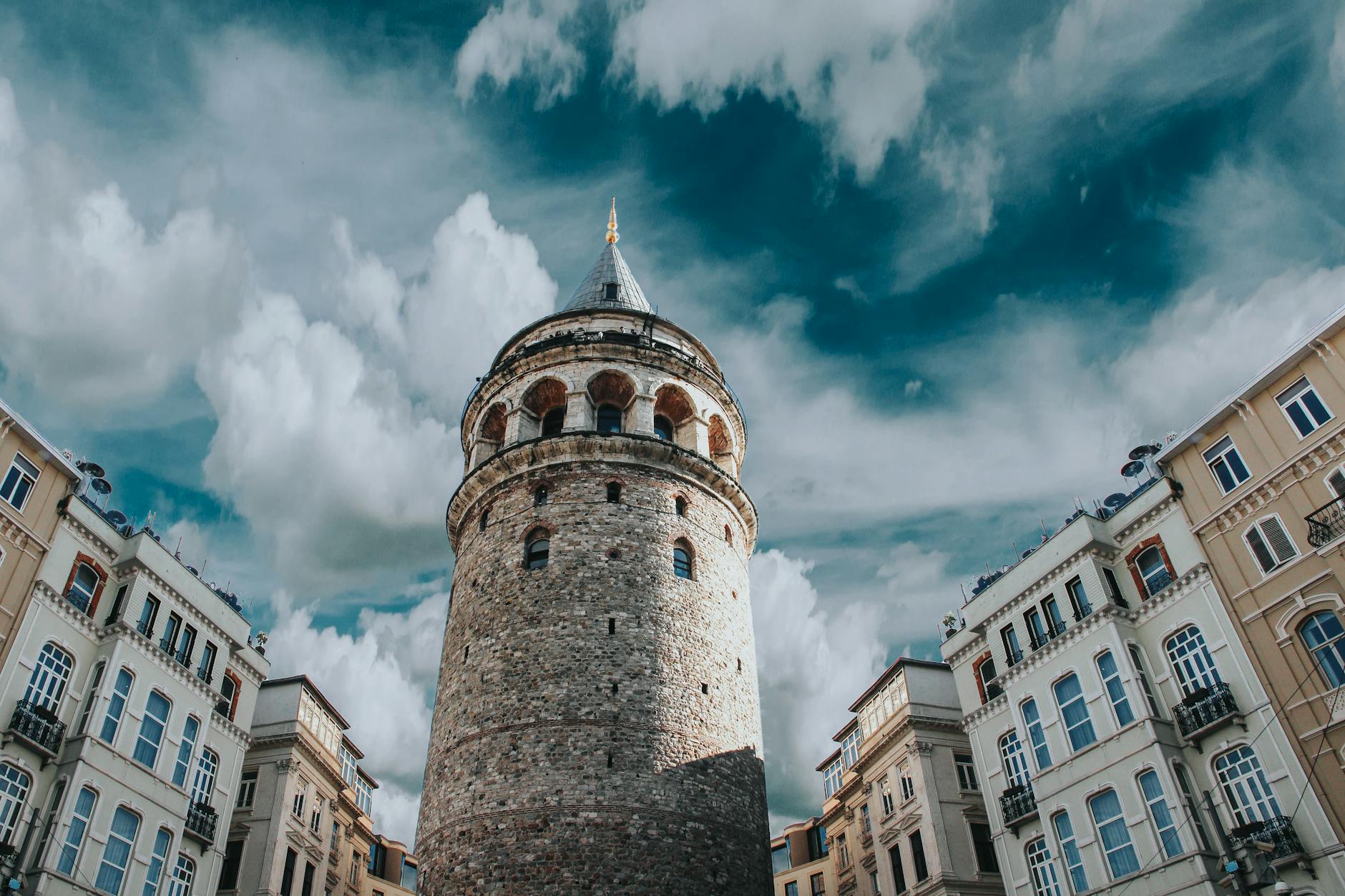
Istanbul, straddling Europe and Asia, stands among the world’s richest cities in terms of history and culture.
Conflicts, Invasions, and the Fourth Crusade
Throughout its history, Constantinople faced numerous invasions and conflicts that tested its strength and resilience. Due to its strategic location and immense wealth, the city was a constant target for foreign powers. From the 5th century onward, Constantinople withstood attacks by various groups, including the Visigoths, Persians, and later, Arab forces during the expansion of the Islamic caliphates. Despite these threats, the city’s formidable defenses, including the renowned Theodosian Walls, held strong, preserving Constantinople as a secure and prosperous center of the Byzantine Empire.
However, the most severe blow came not from external invaders but from within the Christian world during the Fourth Crusade in 1204. The crusaders, originally tasked with reclaiming Jerusalem, found themselves embroiled in political and financial entanglements that redirected their focus to Constantinople. The Byzantine Empire was weakened by internal divisions, and the crusaders, with encouragement from Venice, turned their attention to the Byzantine capital, lured by promises of wealth and strategic advantage.
The Fourth Crusade was a turning point for Constantinople. In April 1204, crusader forces breached the city’s defenses and sacked Constantinople, causing unprecedented destruction and plundering. Churches, libraries, and palaces were looted, and countless works of art, relics, and manuscripts were destroyed or stolen, with many treasures ending up in Western Europe. This sacking deeply scarred the city, marking one of the darkest chapters in its history. The destruction was not only a physical blow but also a psychological one, as Constantinople was violated by those who shared its Christian faith.
Following the sack, the crusaders established the Latin Empire in Constantinople, ruling over the city for 57 years until 1261. This period saw the decline of the city’s infrastructure, economy, and population. The Latin rulers lacked the resources and knowledge to maintain the city at the level of its Byzantine predecessors. Many Byzantine nobles and elites fled to nearby territories, establishing rival Byzantine successor states, most notably in Nicaea. These states aimed to reclaim Constantinople and restore the Byzantine Empire.
In 1261, Michael VIII Palaiologos, ruler of the Empire of Nicaea, successfully retook Constantinople and re-established the Byzantine Empire. However, the damage inflicted by the Fourth Crusade had lasting consequences. The city was a shadow of its former glory, with much of its wealth and cultural heritage lost. While the Byzantines worked to rebuild, Constantinople never fully recovered its previous strength and influence. The empire was weakened, its defenses depleted, and its economic base eroded. The sack of 1204 had irrevocably altered the course of the Byzantine Empire, contributing to its gradual decline in the centuries that followed.
The Fourth Crusade highlighted both the city’s vulnerability and its resilience. Despite being betrayed by its Christian allies, Constantinople survived and continued as the Byzantine capital for nearly two more centuries. The city’s recovery from the devastation demonstrated the resilience of its people, yet it also foreshadowed the challenges the Byzantines would face in defending their capital against future threats.
The Ottoman Conquest and Transformation into Istanbul
The fall of Constantinople in 1453 marked the end of the Byzantine Empire and the beginning of a new era under the Ottoman Empire. The siege, led by the young Sultan Mehmed II, was a turning point in world history, symbolizing the shift of power from the Byzantine Empire to the rising Ottoman Empire. Mehmed, determined to make Constantinople his capital, brought advanced military technology, including massive cannons capable of breaching the city’s formidable Theodosian Walls. After a two-month siege, the Ottomans finally entered the city on May 29, 1453, bringing an end to over a millennium of Byzantine rule.
Upon capturing the city, Mehmed II, later known as “Mehmed the Conqueror,†quickly set about transforming Constantinople into Istanbul, a new imperial capital for his expanding empire. Recognizing the city’s strategic and symbolic importance, Mehmed initiated significant changes to revive its economy, rebuild its infrastructure, and re-populate its dwindling population. Mehmed’s vision for Istanbul included blending the city’s Byzantine legacy with Islamic culture, creating a unique and diverse metropolis that served as the Ottoman Empire’s heart.
One of Mehmed’s first acts was converting the Hagia Sophia, Constantinople’s most iconic church, into a mosque. This transformation signified the city’s new identity as an Islamic center while preserving the grandeur of Byzantine architecture. Hagia Sophia became a symbol of Istanbul’s new status as an Islamic city, while many other Byzantine churches were repurposed for Islamic worship. Mehmed also ordered the construction of the Grand Bazaar, which would become one of the world’s oldest and largest covered markets, reflecting the city’s new role as a thriving center of trade.
Mehmed encouraged migration to Istanbul, inviting people of various backgrounds—Turks, Greeks, Armenians, Jews, and others—to settle in the city. His policies aimed to make Istanbul not only a political capital but also a cultural and economic hub, enriched by its diverse population. This openness to different ethnic and religious communities fostered an environment where Islamic, Christian, and Jewish traditions coexisted, giving the city a multicultural character that became one of its defining features.
Under Ottoman rule, Istanbul flourished. The Ottomans undertook extensive building projects, including mosques, palaces, and schools, to establish the city as a center of Islamic culture and learning. Sultan Mehmed’s successors, particularly Suleiman the Magnificent, expanded on his legacy, commissioning grand architectural projects that reshaped the city’s skyline. Architect Mimar Sinan, one of the greatest Ottoman architects, designed iconic buildings like the Suleymaniye Mosque, which became lasting symbols of Ottoman grandeur and Istanbul’s significance.
The Ottoman conquest and transformation of Constantinople into Istanbul turned the city into a powerful symbol of the Islamic world and a bridge between East and West. For centuries, Istanbul stood as the heart of the Ottoman Empire, a place where cultures converged, and a center of trade, religion, and art. Mehmed’s vision and the Ottomans’ architectural, cultural, and social investments made Istanbul a dynamic city that reflected both the legacy of the Byzantine past and the vibrant spirit of the Ottoman future.
Golden Age Under the Ottoman Empire
The Ottoman Empire’s Golden Age, spanning the 16th and early 17th centuries, transformed Istanbul into one of the world’s most magnificent cities. Under the rule of Sultan Suleiman the Magnificent, who reigned from 1520 to 1566, the city became a vibrant center of political, cultural, and economic life. Suleiman’s rule, known for its prosperity and stability, witnessed a flowering of arts, architecture, and literature, as well as military and administrative reforms that strengthened Istanbul’s position as the empire’s heart.
Suleiman’s court attracted artists, scholars, and architects, making Istanbul a focal point for innovation and cultural exchange. Architect Mimar Sinan, often regarded as the Ottoman Empire’s greatest architect, played a central role in reshaping Istanbul’s landscape. Commissioned by Suleiman, Sinan designed the Suleymaniye Mosque, a masterpiece of Ottoman architecture that reflects the grandeur of this period. Built atop Istanbul’s Third Hill, the Suleymaniye Mosque complex included not only a mosque but also schools, a hospital, a library, and baths, serving as a microcosm of Ottoman society. Sinan’s work symbolized the city’s architectural renaissance and laid the foundation for Istanbul’s skyline, which still bears his influence.
Istanbul’s artistic achievements were equally remarkable during this period. Ottoman miniaturists, calligraphers, and ceramic artists reached new heights, producing exquisite works that adorned imperial palaces and mosques. The Topkapi Palace, the Ottoman sultans’ primary residence, became the center of royal art production, housing workshops where artisans created finely crafted textiles, manuscripts, and tiles. The Imperial Harem, part of Topkapi, was a center of culture and education for the sultan’s family, where young women received training in music, literature, and etiquette, further enriching the cultural life of the empire.
The city’s role as a trade center expanded during this Golden Age. The Grand Bazaar, established under Mehmed II, flourished and grew, attracting merchants from across Europe, Asia, and the Middle East. Istanbul’s strategic location between East and West enabled it to become a hub for silk, spices, precious metals, and other valuable commodities. The influx of goods brought wealth to the city and fostered a cosmopolitan atmosphere as traders and diplomats from distant lands mingled in Istanbul’s bustling markets.
Religious life in Istanbul during the Ottoman Golden Age also evolved, with Islam becoming the city’s dominant faith while other religious communities, including Christians and Jews, continued to thrive under Ottoman protection. The millet system allowed religious minorities to govern themselves in many respects, maintaining their cultural traditions and religious practices. This policy of relative tolerance contributed to Istanbul’s diverse character and facilitated peaceful coexistence within the city’s complex social fabric.
The Golden Age left an indelible mark on Istanbul, solidifying its reputation as one of the most impressive cities of the medieval world. The Ottoman Empire’s investment in culture, architecture, and governance during this period not only enhanced Istanbul’s status but also created a lasting legacy. The city’s vibrant artistic and architectural achievements, coupled with its diverse society, made Istanbul a symbol of Ottoman greatness and a testament to the empire’s cultural and intellectual depth.
Decline of the Ottoman Empire and Challenges Faced by Istanbul
By the 18th and 19th centuries, the Ottoman Empire was grappling with significant internal and external challenges that would ultimately lead to its decline. As the empire’s influence waned, so too did Istanbul’s status, although it remained the symbolic heart of Ottoman power. The empire faced a series of military defeats, economic setbacks, and social upheavals that affected Istanbul’s prosperity, population, and infrastructure.
One of the factors contributing to the Ottoman decline was the rise of European powers and the empire’s growing inability to keep pace with Western advancements. Industrialization, military modernization, and territorial ambitions in Europe began to outstrip the capabilities of the Ottoman administration, which was slow to adopt similar reforms. Istanbul, once a thriving trade center, found itself bypassed as European trade routes increasingly favored sea passages, especially after the discovery of alternative routes to Asia.
Economic difficulties were compounded by political instability within the empire. Corruption and inefficiency in the Ottoman administration, as well as conflicts between regional leaders, further eroded the empire’s stability. Attempts at reform, including the Tanzimat reforms in the mid-19th century, aimed to modernize the Ottoman state and revitalize its institutions, economy, and military. These reforms introduced new laws, centralized the bureaucracy, and sought to integrate non-Muslim citizens into society more fully. While they brought some improvements to Istanbul, they ultimately fell short of reversing the empire’s decline.
Istanbul’s changing social fabric also posed challenges. As European influence grew, so did tensions between traditionalists and reformists within the city. European embassies, businesses, and cultural institutions became more prominent, particularly in the Galata and Pera districts, introducing Western customs, fashion, and ideas. This influx created a cosmopolitan environment, but it also led to cultural clashes and debates over identity. For many, the contrast between Istanbul’s Ottoman-Islamic heritage and the new European influences highlighted the city’s complex role in a rapidly modernizing world.
Military defeats and territorial losses further weakened the empire. By the late 19th century, the Ottomans lost significant territory in Europe, the Middle East, and North Africa. Each loss not only reduced the empire’s economic base but also impacted Istanbul, where refugees from former Ottoman territories arrived, straining the city’s resources. Istanbul’s infrastructure, already in need of modernization, struggled to support its expanding population, and poverty became more visible in parts of the city.
The final blow came during World War I, when the Ottomans sided with the Central Powers and faced defeat. Following the war, Istanbul was occupied by Allied forces, marking a low point in the city’s history. Ottoman sovereignty was severely compromised, and the once-great empire was in ruins. The occupation highlighted Istanbul’s vulnerability and marked the end of its era as the Ottoman capital.
In 1923, the Republic of Turkey was established under Mustafa Kemal Atatürk, and the capital was moved to Ankara, a shift that symbolized Turkey’s break from its Ottoman past. Though no longer the capital, Istanbul remained Turkey’s largest and most influential city, poised to undergo a new chapter of modernization and transformation in the 20th century.
Modernization of Istanbul in the 20th Century
The 20th century brought profound changes to Istanbul as it transformed from the former Ottoman capital into a modern metropolis within the Republic of Turkey. Although the new capital was established in Ankara in 1923, Istanbul retained its significance as Turkey’s cultural and economic center. Under Mustafa Kemal Atatürk’s leadership, Turkey embarked on an ambitious program of modernization, secularization, and Westernization, all of which significantly affected Istanbul’s identity and development.
One of the most visible changes was the city’s shift toward a more secular society. Atatürk’s government abolished the Ottoman Sultanate and Caliphate, stripping Istanbul of its centuries-old role as the center of Islamic authority. Religious institutions were brought under state control, and Islamic schools were replaced with secular educational institutions. The Hagia Sophia, which had served as a mosque since the Ottoman conquest, was converted into a museum in 1935, symbolizing the republic’s commitment to a secular national identity.
Urban planning and infrastructure development also reshaped Istanbul. The city expanded beyond its historic peninsula, with new districts, roads, and bridges designed to support a growing population. Key infrastructure projects, like the construction of the Bosphorus Bridge in 1973, connected the city’s European and Asian sides, facilitating transportation and commerce and positioning Istanbul as a bridge between continents. This growth spurred the development of modern neighborhoods, skyscrapers, and industrial areas, all of which altered Istanbul’s appearance and functionality as a modern city.
The mid-20th century brought a wave of migration to Istanbul as people from rural areas moved to the city in search of economic opportunities. This population boom led to the rapid expansion of informal settlements, known as “gecekondus,†around the city’s outskirts. Although these areas initially lacked infrastructure, they gradually became formalized, contributing to Istanbul’s growing diversity and complexity. This period saw the city’s population swell, leading to significant demographic and cultural changes as Istanbul evolved into a multicultural urban center.
Istanbul’s modernization efforts also sparked a revival in the arts, media, and academia. The city’s universities and cultural institutions became focal points for intellectual discourse, contributing to the emergence of a vibrant arts scene. Turkish cinema, music, and literature flourished in Istanbul, making the city a hub for cultural production and innovation. Traditional Turkish art forms blended with Western influences, resulting in a unique and dynamic cultural landscape that attracted artists, writers, and intellectuals from across Turkey and beyond.
Despite these advancements, Istanbul’s rapid growth also presented challenges. The city struggled with overcrowding, traffic congestion, and pollution, and urban planning efforts often lagged behind population growth. The pressure on infrastructure led to various problems, including strained public services and a housing shortage. Additionally, Istanbul faced the threat of earthquakes, with its location near the North Anatolian Fault posing a significant risk. The 1999 İzmit earthquake underscored the need for improved building regulations and disaster preparedness.
By the close of the 20th century, Istanbul had transformed into a modern, bustling metropolis that balanced its rich historical heritage with a progressive vision for the future. As Turkey’s cultural, economic, and artistic heart, Istanbul continued to attract people from all walks of life, embodying both the legacy of its Ottoman past and the spirit of Turkey’s modernization efforts.
Istanbul in the 21st Century: A Global City
In the 21st century, Istanbul has emerged as a dynamic global city, bridging continents, cultures, and histories. As Turkey’s largest city, Istanbul is a major financial, cultural, and tourism hub that attracts millions of visitors and residents from around the world. Known for its unique blend of old and new, Istanbul’s rich historical heritage exists alongside a modern skyline of skyscrapers, shopping centers, and tech-driven infrastructure, positioning it as a leading metropolis in the globalized world.
Istanbul’s economy has seen significant growth, fueled by both its strategic geographic position and Turkey’s broader economic ambitions. The city is home to numerous multinational corporations, financial institutions, and thriving industries, from textiles and manufacturing to technology and real estate. Its importance as a financial center was solidified with the establishment of the Istanbul Financial Center, a major project aimed at attracting international businesses and investors. This project seeks to position Istanbul as a major economic bridge between East and West, making it an appealing destination for investors across Europe, Asia, and the Middle East.
Infrastructure development has been key to Istanbul’s transformation. The completion of significant projects like the Marmaray Tunnel, which connects Istanbul’s European and Asian sides via an underwater rail line, exemplifies the city’s commitment to improving transportation and connectivity. The New Istanbul Airport, one of the largest in the world, has further established the city as a major travel hub. Istanbul’s three Bosphorus bridges, along with the Yavuz Sultan Selim Bridge and Eurasia Tunnel, also facilitate movement, easing the challenges of commuting across continents and reducing the city’s notorious traffic congestion.
While modernizing, Istanbul has retained and celebrated its historic sites. The Hagia Sophia, Topkapi Palace, Blue Mosque, and the Grand Bazaar continue to draw millions of tourists each year, allowing visitors to experience the city’s Byzantine, Ottoman, and Islamic heritage. In recent years, Istanbul’s government has invested in preserving these landmarks, as well as in reviving neighborhoods that showcase its multicultural legacy, such as Balat and Galata. This balance of heritage preservation and modernization has made Istanbul one of the world’s most attractive cities for travelers seeking a blend of history and contemporary culture.
However, Istanbul’s rapid growth also presents ongoing challenges. The city’s population, now over 15 million, has strained infrastructure, housing, and resources, particularly in suburban areas experiencing urban sprawl. Additionally, Istanbul faces environmental challenges, from pollution to earthquake risks due to its proximity to the North Anatolian Fault. The government has implemented urban resilience programs, introducing stricter building codes and promoting sustainable projects to address these issues.
Despite these challenges, Istanbul continues to thrive as a symbol of resilience and adaptability. The city’s vibrant arts scene, encompassing everything from classical Turkish music and traditional crafts to modern art galleries and international film festivals, reflects its role as a cultural melting pot. As Istanbul grows, it remains a testament to its historic role as a meeting point of cultures, embodying both Turkey’s rich past and its aspirations for the future. Istanbul today is not only Turkey’s pride but also a city with a global voice, where East meets West in a lively blend that continues to captivate and inspire the world.
Turin, the capital of the Piedmont region in northern Italy, is a city steeped in history, culture, and economic significance. Often overshadowed by Italy’s more famous tourist destinations such as Rome, Florence, and Venice, Turin offers its own unique charm with a blend of historical grandeur, industrial prowess, and cultural richness. The city has been at the forefront of Italy’s economic and political transformations, serving as a capital city during critical moments in the country’s unification and industrialization.
In this article, we will explore the history of Turin from its ancient origins to its present-day role as a vibrant cultural and economic hub. We will examine the city’s evolution, its contributions to Italy’s industrial growth, and its most important tourist attractions that make it a must-visit destination for travelers.
Foundation of Turin and Roman Era
Turin’s history dates back over 2,000 years to the time of the ancient Celts and Ligurians who first settled in the region. However, it was the Romans who established the city as we know it today. In 28 BC, the Romans founded Augusta Taurinorum on the site of present-day Turin. The city was strategically located at the confluence of the Po River and the Dora Riparia, making it an ideal military outpost for controlling the western Alpine passes and facilitating trade between Italy and the rest of Europe.
Turin’s Roman layout, with its rectangular grid of streets and fortified walls, remains visible to this day. Key Roman landmarks such as the Porta Palatina (a well-preserved Roman gate) still stand as a testament to the city’s ancient origins. The city quickly became a crucial part of the Roman Empire, serving both military and commercial purposes. During the Roman period, Turin was a modest yet important settlement with a forum, public baths, and a theater.
Middle Ages and Lombard Influence
Following the fall of the Roman Empire, Turin entered a period of instability, like much of Europe. In the 6th century, the city came under the control of the Lombards, a Germanic people who established the Kingdom of Lombardy in northern Italy. Turin became a duchy within this kingdom, and its strategic location once again made it a site of military and political significance.
During the Middle Ages, Turin was part of the Holy Roman Empire and was controlled by various noble families, including the Counts of Savoy. The House of Savoy would later play a critical role in shaping the city’s destiny. Turin during this period was a fortified town, known for its defensive walls, towers, and castles. Though smaller and less influential compared to other Italian cities like Venice or Florence, it maintained a steady economic base through agriculture, trade, and artisanal production.
Under the Savoy dynasty, Turin underwent significant urban and architectural transformations. The dukes of Savoy sought to make Turin a modern, fortified capital, commissioning grand palaces, churches, and defensive structures. Architects such as Guarino Guarini and Filippo Juvarra were employed to create Baroque masterpieces that still define Turin’s skyline today, including the Palazzo Reale (Royal Palace), Palazzo Madama, and the Superga Basilica.
In the 18th century, the House of Savoy expanded its territorial holdings and became rulers of the Kingdom of Sardinia, with Turin as the capital. This period marked a golden age for Turin, as the city flourished both economically and culturally. It became a hub for intellectuals, scientists, and architects, laying the groundwork for its later role in Italian unification.
The 18th and early 19th centuries also saw the rise of the first stirrings of Italian nationalism. Turin, as the capital of the Kingdom of Sardinia, became a focal point for the Risorgimento, the movement for Italian unification. King Victor Emmanuel II of Sardinia, along with his prime minister, Count Camillo Benso di Cavour, spearheaded the efforts to unite Italy under a single monarchy, with Turin playing a leading role in this political process.
Turin and Italian Unification
The culmination of the Risorgimento came in 1861 when the Kingdom of Italy was officially proclaimed, and Turin was chosen as the first capital of unified Italy. This was a momentous occasion for the city, which had been at the heart of the unification process. However, Turin’s status as capital was short-lived. In 1865, the capital was moved to Florence, and later to Rome in 1871, reflecting the centralization of power in the newly unified nation.
Despite losing its status as the capital, Turin remained an influential city, especially in terms of economic development. The late 19th century saw the city transform into one of Italy’s major industrial centers, laying the foundation for its role in the automotive industry and its association with Fiat.
Turin, the capital of the Piedmont region in northern Italy, is a city steeped in history, culture, and economic significance.
Turin and the Industrial Revolution
Turin was one of the first cities in Italy to embrace the Industrial Revolution. The late 19th century saw a rapid expansion of factories, particularly in textiles and mechanical engineering. The arrival of the railway in the mid-1800s helped connect Turin with other major Italian and European cities, boosting trade and transportation.
However, it was in the early 20th century that Turin truly earned its reputation as Italy’s industrial powerhouse, thanks in large part to the founding of Fiat (Fabbrica Italiana Automobili Torino) in 1899. Fiat’s emergence marked the beginning of Turin’s dominance in the automotive industry, and the company would go on to become a symbol of Italian industrial strength.
Under the leadership of Giovanni Agnelli, Fiat became Italy’s largest and most important automobile manufacturer. The company’s growth during the 20th century was extraordinary, with Turin emerging as a hub of automotive innovation and production. The Fiat Lingotto factory, completed in 1923, became a symbol of modern industrial architecture with its rooftop test track and innovative production techniques.
During the Fascist regime and World War II, Fiat’s production shifted toward military vehicles, contributing significantly to Italy’s war effort. However, this also made Turin a target for Allied bombing raids, which caused significant destruction to the city’s industrial infrastructure.
After the war, Turin and Fiat played a crucial role in Italy’s post-war economic recovery, known as the Italian economic miracle. The city attracted thousands of workers from southern Italy, leading to rapid urban expansion and social changes. By the 1960s, Fiat was producing millions of cars each year, and Turin had become synonymous with Italian automotive excellence.
Post-War Turin: Economic Transformation
The post-war period was a time of economic growth and transformation for Turin. The city benefited from Italy’s broader industrial boom, with Fiat leading the way as one of the country’s largest employers. Turin became a melting pot of cultures as thousands of migrants from southern Italy moved to the city in search of jobs, leading to a rapid increase in population.
The city’s industrial success was not without its challenges. Labor unrest and strikes were common, as workers demanded better wages and conditions. The social tensions of the 1960s and 70s, coupled with economic crises in the 1980s, led to a period of decline for Turin’s manufacturing sector. However, despite these challenges, Fiat remained a key player in the city’s economy.
By the late 20th century, Turin’s reliance on heavy industry began to wane, and the city embarked on a process of economic diversification. While the automotive sector remained important, Turin began to develop other industries, including aerospace, telecommunications, and information technology. The city is now home to leading companies such as Leonardo (aerospace and defense), Telecom Italia, and Lavazza (coffee production).
Turin also became a hub for research and innovation, with the Polytechnic University of Turin playing a leading role in developing cutting-edge technologies. The city’s shift from a purely industrial base to a more knowledge-based economy has helped it weather the challenges of deindustrialization.
Modern Turin: Culture, Tourism, and Economy
In recent decades, Turin has undergone a cultural renaissance, repositioning itself as a leading cultural and tourist destination. The city’s rich architectural heritage, with its Baroque palaces, churches, and grand piazzas, has been restored and preserved, attracting visitors from around the world. Major renovations of historic buildings such as the Palazzo Reale and Palazzo Madama have helped showcase Turin’s royal past.
The city is also home to a vibrant arts and cultural scene. The Museo Egizio (Egyptian Museum) is one of the most important collections of Egyptian artifacts outside of Cairo, while the Museo Nazionale del Cinema, housed in the iconic Mole Antonelliana, celebrates Italy’s rich cinematic history. Turin has also become a hub for contemporary art, with numerous galleries and cultural festivals held throughout the year.
Key Tourist Attractions
Turin offers a wide array of tourist attractions that reflect its rich history and cultural diversity. Some of the must-see sites include:
Mole Antonelliana: Turin’s most recognizable landmark, originally conceived as a synagogue and now home to the Museo Nazionale del Cinema.
Palazzo Reale: The former royal palace of the House of Savoy, a UNESCO World Heritage site.
Superga Basilica: A beautiful baroque church overlooking the city, also serving as the burial place of the Savoy family.
Museo Egizio: One of the world’s largest and most important collections of Egyptian antiquities.
Shroud of Turin: Held in the Cathedral of St. John the Baptist, the Shroud is one of the most revered Christian relics, though its authenticity is still debated.
Piazza Castello and Palazzo Madama: The heart of Turin, featuring impressive architecture and vibrant public spaces.
Turin’s Role in Modern Italy
Today, Turin remains an important economic and cultural hub within Italy. Although its industrial base has shifted, the city has managed to reinvent itself as a center for innovation, research, and culture. The automotive sector, led by Fiat Chrysler Automobiles (now part of Stellantis), remains central to the city’s economy, but new industries such as aerospace, robotics, and renewable energy are emerging as key drivers of growth.
Turin’s successful hosting of the 2006 Winter Olympics further boosted the city’s international profile, leading to extensive urban regeneration projects and increased tourism.
Conclusion
From its Roman origins to its pivotal role in Italian unification and industrialization, Turin has always been a city of great historical and economic importance. Today, it stands as a dynamic and multifaceted city, blending its rich cultural heritage with modern innovation and economic diversification. Its world-class museums, architectural wonders, and vibrant cultural scene make it a prime destination for travelers, while its role in Italy’s economy remains significant, particularly in the automotive and technological sectors.
As Turin continues to evolve, it retains its identity as a city that is both rooted in history and forward-looking, playing a vital role in shaping the future of Italy and Europe.
San Francisco is one of the most iconic cities in the United States, renowned for its diverse culture, progressive attitudes, technological innovations, and scenic beauty. Situated on a peninsula surrounded by the Pacific Ocean and San Francisco Bay, the city’s history is deeply intertwined with pivotal moments in American and global history. From its Indigenous roots to its development as a modern metropolis, San Francisco has always been at the center of transformation, growth, and innovation.
Indigenous Roots: The Ohlone People
Before European explorers arrived, the area now known as San Francisco was home to the Ohlone people, who lived in the Bay Area for thousands of years. The Ohlone were not a single tribe, but a collection of different groups who shared linguistic and cultural similarities. These Indigenous peoples lived in harmony with the natural environment, developing sustainable ways to live off the land, the bay, and the Pacific Ocean.
The Ohlone relied on hunting, fishing, and gathering, creating a rich diet based on the region’s abundant resources, including acorns, shellfish, and small game. Their societies were organized around small villages, and they practiced a deep spiritual connection to the land, water, and animals. This period of Ohlone presence is the longest and most stable chapter of the region’s history, and despite the significant disruptions that would come later, the Ohlone people maintain a cultural presence in the region to this day.
However, the arrival of Spanish explorers in the 18th century would irrevocably alter the lives of the Ohlone, as European colonialism brought disease, land dispossession, and cultural disruption.
The Arrival of the Spanish: Mission San Francisco de AsÃs
In 1769, the first Spanish expedition led by Gaspar de Portolá passed through the San Francisco Bay Area. This expedition, part of Spain’s broader efforts to colonize California, marked the beginning of a new era. Within a few years, Spanish missionaries, under the leadership of Father JunÃpero Serra, established a series of missions along the California coast, including Mission San Francisco de AsÃs, commonly known as Mission Dolores, in 1776.
The mission system was designed to convert Indigenous populations to Christianity and integrate them into the Spanish colonial economy. Indigenous people were brought into the mission system, where they were taught European agricultural techniques and religious practices. However, the missions also disrupted Indigenous life, leading to the loss of traditional customs, the spread of European diseases, and the forced labor of Indigenous populations.
During this period, the Presidio of San Francisco, a military outpost, was established to defend the Spanish settlements and missions from foreign powers and Indigenous uprisings. Despite these efforts, the settlement that would eventually become San Francisco remained small and relatively isolated from the major centers of power in Mexico and Spain.
Mexican Independence and the Rise of Yerba Buena
In 1821, Mexico gained independence from Spain, and California became a Mexican territory. The new Mexican government enacted a series of reforms that secularized the missions, redistributing much of their land to private individuals in the form of ranchos. This marked the end of the mission era and the beginning of a new phase in the region’s development.
One of the key developments during the Mexican period was the growth of a small trading village known as Yerba Buena, located on the shores of San Francisco Bay. The name “Yerba Buena” refers to a native herb that grew abundantly in the area, and the settlement served as a modest outpost for trade between Mexico and other Pacific nations.
Yerba Buena’s population was small, with only a few hundred residents by the mid-1840s. The settlement’s growth was slow, hindered by its geographic isolation and the lack of infrastructure. However, it was strategically positioned on one of the world’s greatest natural harbors, which would soon play a critical role in its transformation into a global city.
The U.S. Conquest and the Gold Rush: Rapid Transformation
In 1846, as part of the Mexican-American War, the United States claimed California. On July 9, 1846, the American flag was raised over Yerba Buena, marking the beginning of U.S. control over the region. Just a year later, in 1847, Yerba Buena was renamed San Francisco, reflecting its growing importance as a gateway to the Pacific.
The following year, in 1848, an event occurred that would change the course of San Francisco’s history forever: the discovery of gold at Sutter’s Mill. The California Gold Rush triggered one of the largest human migrations in history, drawing hundreds of thousands of people from around the world to California in search of fortune.
San Francisco, as the primary port city near the goldfields, exploded in population and importance. Within a matter of months, the small town of fewer than 1,000 residents became a bustling metropolis, with a population of over 25,000 by 1850. People from all over the United States, Europe, Latin America, and Asia converged on San Francisco, creating a melting pot of cultures and nationalities.
The Gold Rush brought extraordinary wealth to some, but for most, it was a grueling and often disappointing endeavor. Those who did not strike it rich in the goldfields often found work in the rapidly growing economy of San Francisco, which was becoming a hub of banking, shipping, and commerce. The rise of businesses like Levi Strauss & Co., which supplied miners with durable clothing, and Wells Fargo, which provided banking services, helped establish the city’s commercial foundation.
At the same time, San Francisco gained a reputation for lawlessness and vice, with gambling halls, saloons, and brothels becoming common fixtures in the city’s rapidly expanding neighborhoods. The city also became known for its corruption and crime, as the lack of formal governance in the chaotic Gold Rush environment allowed for the rise of vigilante justice and private security forces.
Despite these challenges, the Gold Rush laid the foundation for San Francisco’s future as a major urban center. The wealth generated by the gold economy spurred the construction of infrastructure, including roads, railways, and public buildings, while the city’s strategic location on the Pacific Ocean made it a key player in international trade.
San Francisco is one of the most iconic cities in the United States, renowned for its diverse culture, progressive attitudes, technological innovations, and scenic beauty.
San Francisco in the Late 19th Century: Growth and Innovation
In the decades following the Gold Rush, San Francisco continued to grow and evolve, solidifying its status as the leading city on the West Coast. The completion of the transcontinental railroad in 1869 connected San Francisco to the rest of the United States, allowing for the rapid movement of people and goods and further enhancing the city’s role as a commercial hub.
The late 19th century was also a time of innovation in San Francisco. One of the city’s most famous features, the cable car system, was introduced in the 1870s to help residents navigate the city’s notoriously steep hills. The cable cars not only provided practical transportation but also became an iconic symbol of San Francisco’s ingenuity and adaptability.
San Francisco’s cultural life also flourished during this period. The city became a center of art, literature, and performance, attracting writers, artists, and musicians from around the world. Golden Gate Park, one of the largest urban parks in the United States, was developed in the 1870s, providing a space for recreation and cultural activities.
At the same time, San Francisco was becoming increasingly diverse, with significant populations of Chinese, Italian, Irish, and German immigrants settling in the city. Chinatown, established during the Gold Rush, became the largest Chinese community outside of Asia and a vital part of the city’s economy and cultural identity. The Chinese Exclusion Act of 1882, which severely restricted Chinese immigration to the United States, was a response to growing anti-Chinese sentiment in San Francisco and other parts of the country, but despite this, the Chinese community remained resilient.
The city also played a role in shaping labor movements in the United States. San Francisco’s working-class population, many of whom were immigrants, were involved in labor strikes and political movements advocating for better working conditions and fair wages. The city’s maritime workers, in particular, were at the forefront of these struggles, laying the groundwork for labor activism that would continue into the 20th century.
The Earthquake and Fire of 1906: Catastrophe and Rebuilding
San Francisco’s rapid growth and prosperity were dramatically interrupted on April 18, 1906, when a powerful earthquake struck the city. The earthquake, estimated to be between 7.8 and 8.2 on the Richter scale, caused widespread devastation, collapsing buildings, destroying infrastructure, and igniting fires that raged for days. Over 3,000 people died in the disaster, and nearly 80% of the city was destroyed, making it one of the deadliest and most destructive natural disasters in American history.
The destruction of San Francisco in 1906 was a monumental challenge, but it also presented an opportunity for the city to rebuild and modernize. Within a few years, much of the city had been reconstructed, with new buildings, streets, and infrastructure. The rebuilding effort was driven by a combination of public and private investment, and it reshaped the city’s landscape in significant ways. Landmark structures such as City Hall and the Ferry Building were built during this period, and the city’s iconic street grid was redesigned to accommodate future growth.
The earthquake and fire also underscored the importance of disaster preparedness and urban planning. In the years following the disaster, San Francisco made significant investments in its infrastructure, including water supply systems and earthquake-resistant building designs, to mitigate the impact of future natural disasters.
The World Wars and Economic Growth in the 20th Century
The early 20th century was a period of growth and industrialization for San Francisco. The Panama-Pacific International Exposition, held in 1915, celebrated the city’s recovery from the earthquake and showcased its role as a gateway to the Pacific. The exposition also highlighted San Francisco’s burgeoning reputation as a center of innovation, with exhibits on emerging technologies and industries.
During World War I and World War II, San Francisco became a major hub for the U.S. military, particularly for operations in the Pacific Theater. The city’s shipyards produced a significant portion of the naval vessels used in both wars, and the port of San Francisco was a key point of departure for troops and supplies heading to the Pacific front.
The post-war era brought new challenges and opportunities for San Francisco. The city’s economy shifted from industrial production to services and finance, with a growing emphasis on banking, tourism, and technology. The construction of the Golden Gate Bridge in 1937 and the Bay Bridge in 1936 enhanced the city’s connectivity and solidified its role as a major transportation hub.
The mid-20th century also saw significant social and political movements take root in San Francisco. The city became a center of progressive politics and countercultural movements, including the Beat Generation in the 1950s, the civil rights movement, and the anti-Vietnam War protests of the 1960s. San Francisco’s Haight-Ashbury neighborhood became the epicenter of the hippie movement, and the city became synonymous with the ideals of peace, love, and social change.
The LGBTQ+ Rights Movement and the Rise of Silicon Valley
In the 1970s and 1980s, San Francisco emerged as a global leader in the fight for LGBTQ+ rights. The city’s Castro District became a symbol of gay liberation, and activists like Harvey Milk, the first openly gay elected official in California, played a crucial role in advancing LGBTQ+ rights in the United States. San Francisco’s Pride Parade, one of the largest in the world, continues to celebrate the city’s role as a champion of equality and diversity.
At the same time, San Francisco’s economy was being transformed by the rise of the technology industry. Silicon Valley, located just south of San Francisco, became the global epicenter of the tech revolution, and the city became home to a growing number of technology companies, entrepreneurs, and innovators. The dot-com boom of the 1990s and the rise of social media in the 2000s further cemented San Francisco’s status as a global technology hub.
Modern Challenges and the Future of San Francisco
As the 21st century progresses, San Francisco continues to face both opportunities and challenges. The city’s status as a global center of innovation and technology has brought wealth and prosperity, but it has also led to significant social and economic disparities. Rising housing costs, gentrification, and homelessness are among the most pressing issues facing the city today.
Despite these challenges, San Francisco remains a dynamic and resilient city, known for its progressive values, cultural diversity, and entrepreneurial spirit. Whether navigating the impacts of climate change, addressing social inequality, or continuing to lead in technological innovation, San Francisco’s future promises to be as transformative as its past.
Watch the short video below to know more about San Francisco!
Mumbai, often referred to as the financial capital of India, is a bustling metropolis with a rich and complex history. What was once a small group of seven islands has evolved into one of the most populous cities in the world, a global hub for finance, trade, and entertainment. This transformation over several centuries was driven by a confluence of geographical, political, and economic factors that shaped Mumbai into the city we know today. This article delves into the early history of Mumbai, the influence of colonial powers, and the city’s rise as a commercial powerhouse.
The Seven Islands: Mumbai’s Geographical Beginnings
Mumbai’s origins can be traced back to the seven islands that comprised the region: Bombay, Colaba, Old Woman’s Island, Mahim, Mazagaon, Parel, and Worli. These islands were originally inhabited by indigenous communities like the Kolis, who lived off fishing and farming. The earliest recorded history of the islands dates back to the 3rd century BCE, when the region was part of the Maurya Empire under Emperor Ashoka. During this time, the islands were known for their Buddhist presence, with several rock-cut caves like the ones in Kanheri and Elephanta serving as places of worship and meditation.
Mumbai’s geographical location, on the western coast of India facing the Arabian Sea, made it strategically significant for trade. Yet, in its early days, the islands were largely ignored by major powers due to their swampy, uninhabitable nature, and a lack of fresh water sources. However, this was soon to change as regional powers, and eventually European colonizers, realized the potential of these islands as a trading post.
Early Influence: Hindu and Muslim Dynasties
The seven islands came under various Indian dynasties during the first millennium CE. The Silhara dynasty, which ruled from the 9th to the 13th centuries, significantly shaped the early history of Mumbai. The Silharas built several temples, fortifications, and settlements across the islands, many of which still exist in ruins today. Their reign saw the islands being used as a stopover for sea trade, although the development of a significant port was still a long way off.
By the 14th century, the islands were under the control of the Gujarat Sultanate, a powerful Muslim dynasty that ruled over large parts of western India. The Sultanate saw the islands’ strategic value in controlling sea routes, and as a result, they fortified them. However, it was under the Sultanate that the islands’ isolation began to diminish, and the groundwork was laid for the transformation into a more interconnected region.
The Portuguese Era: Bombay Comes into Focus
In 1534, the islands came under Portuguese control following the defeat of the Gujarat Sultanate. The Portuguese referred to the islands as “Bombaim,” meaning “Good Bay” in Portuguese, highlighting the natural harbor’s significance. They established a foothold on the islands, building fortifications and introducing Catholicism through missionaries. The Portuguese built several churches, some of which, like St. Andrew’s Church in Bandra, still stand today as testaments to their rule.
During their time, the Portuguese leased the islands to various merchants and landlords, mainly Parsis, Jews, and other communities that migrated to the region for trade. The most significant contribution of the Portuguese, however, was their role in bringing Bombay to the attention of other European powers. The islands became a bone of contention between the Portuguese and other European nations, especially the British, who were rapidly expanding their empire in India.
Mumbai, often referred to as the financial capital of India, is a bustling metropolis with a rich and complex history.
The British Takeover: A Turning Point in Mumbai’s History
The turning point in Mumbai’s history came in 1661 when King Charles II of England married Catherine of Braganza, the daughter of the King of Portugal. As part of Catherine’s dowry, the Portuguese ceded the islands of Bombay to the British crown. Initially, the British did not recognize the potential of the islands and even attempted to lease them to the East India Company for a modest fee. However, in 1668, the East India Company took over control of Bombay, and this marked the beginning of a new era.
The British, unlike the Portuguese, had a grander vision for the islands. They saw Bombay’s potential as a major port, particularly as a counterbalance to the more established Portuguese port of Goa. The East India Company began constructing infrastructure, including fortifications and docks. They also encouraged migration to the islands by offering land grants and other incentives to traders, craftsmen, and laborers. As a result, Bombay began to grow rapidly, attracting a diverse population of Parsis, Gujaratis, Muslims, and Jews.
Reclamation and Urban Development: The Birth of Modern Mumbai
One of the most significant challenges faced by the British in Bombay was the islands’ geography. The seven islands were separated by creeks and marshlands, making it difficult to develop a cohesive city. To overcome this, the British embarked on an ambitious series of land reclamation projects. The most notable of these was the Hornby Vellard project, initiated in 1782 by William Hornby, then Governor of Bombay. The project involved the construction of embankments to prevent flooding and connect the islands.
Over the next century, several other reclamation projects were undertaken, transforming the once fragmented islands into a continuous landmass. By the mid-19th century, the British had succeeded in creating a unified city, which they began to develop as a major commercial hub. They built infrastructure such as roads, railways, and docks to support the growing trade, particularly in cotton and opium, which were the main exports from Bombay.
The arrival of the Great Indian Peninsula Railway in 1853, which connected Bombay to the hinterland, was another game-changer for the city’s development. It facilitated the movement of goods and people, further fueling the city’s growth.
The Cotton Boom and Bombay’s Rise as a Commercial Hub
Bombay’s real rise to prominence came during the American Civil War (1861-1865), when cotton supplies from the southern United States were cut off. This led to a massive surge in demand for Indian cotton, and Bombay, with its well-established port and rail connections, became the epicenter of the global cotton trade. The cotton boom brought immense wealth to the city, leading to the construction of grand public buildings, banks, and institutions, many of which still dominate Mumbai’s skyline today.
Prominent Indian merchants, especially from the Parsi community, such as Jamsetjee Jejeebhoy and David Sassoon, played a crucial role in Bombay’s rise as a commercial hub. They invested heavily in the city’s development, building schools, hospitals, and libraries. The wealth generated during this period laid the foundation for Bombay’s transformation into a modern city.
Political Movements and the Struggle for Independence
As Bombay grew in economic stature, it also became a center for political activity, particularly in the late 19th and early 20th centuries. The city played a key role in the Indian independence movement, with leaders like Bal Gangadhar Tilak using the city as a base for organizing protests and rallies against British rule. The Quit India Movement in 1942, which was launched by Mahatma Gandhi, saw massive participation from Bombay’s citizens.
Bombay’s cosmopolitan nature made it a melting pot of ideas, and it became home to both moderate and radical voices in the independence struggle. The city’s working-class neighborhoods, particularly the textile mill areas, became hotbeds of union activity and protests against colonial policies.
Post-Independence Mumbai: A Global City
With India’s independence in 1947, Bombay’s importance as a commercial and cultural hub only grew. The city became the capital of the state of Maharashtra and continued to attract migrants from all over India, contributing to its rapid urbanization. In 1995, the city’s name was officially changed from Bombay to Mumbai, reflecting its Marathi heritage and honoring the local deity Mumbadevi.
Today, Mumbai is one of the world’s largest and most dynamic cities, known for its stock exchange, Bollywood film industry, and thriving business community. It continues to be a symbol of India’s progress and resilience, a city that has embraced its past while constantly evolving.
Conclusion
The foundation of Mumbai is a story of transformation—of islands that once seemed insignificant becoming the heart of a global city. From its early days as a small fishing community to its role as a British trading post and eventual rise as an economic powerhouse, Mumbai’s history is a testament to its strategic importance and the resilience of its people. Today, it stands as a vibrant, diverse city, a microcosm of India itself, shaped by centuries of migration, commerce, and cultural exchange.
Genoa, a vibrant port city in the northwest of Italy, has a history as captivating and intricate as its labyrinthine streets. Known as “La Superba” (The Proud), Genoa has played a crucial role in the Mediterranean world for centuries. As the capital of the Liguria region, it boasts a legacy of exploration, trade, art, and political significance that rivals any other in European history. The history of Genoa is one of resilience and adaptation, as the city transitioned from a powerful maritime republic to a modern, bustling metropolis. This article delves into the rich and multifaceted history of Genoa, tracing its evolution from ancient times through the height of its naval and commercial power in the Middle Ages, to its role in Italian unification and beyond.
Ancient Origins and Roman Rule
Genoa’s origins stretch back to prehistoric times, with archaeological evidence suggesting that Ligurian tribes inhabited the region as early as the 5th millennium BCE. These tribes were known for their seafaring skills and their interactions with other Mediterranean civilizations, such as the Phoenicians and Greeks. The first recorded name of the settlement that would become Genoa was “Stalia,†and it was an important trading center due to its strategic location on the Ligurian Sea.
By the 3rd century BCE, the area came under Roman influence as part of the broader Roman conquest of the Italian peninsula. Genoa, then known as Genua, became a Roman municipium and thrived as a trading hub, connecting the Italian hinterlands to the Mediterranean. The city was important for supplying Rome with goods from Gaul and Spain, including metals, wine, and olive oil. During the Punic Wars, Genoa played a key role in supporting Rome against the Carthaginians. However, the city suffered significant damage when it was sacked by Carthaginian general Mago in 205 BCE. Despite this setback, the city was rebuilt and prospered under Roman rule.
After the collapse of the Western Roman Empire in the 5th century CE, Genoa, like much of Italy, was caught in a turbulent period of invasions by barbarian tribes. The Ostrogoths and later the Lombards controlled the region, which led to a decline in trade and urban life. However, Genoa’s natural harbor remained vital, and the city’s maritime tradition would prove essential in its future rise.
The Rise of the Genoese Republic
By the early Middle Ages, Genoa began to recover from the disruptions of the post-Roman period. Its strategic location allowed it to rebuild its economy based on maritime trade. However, it wasn’t until the 11th century that Genoa began to emerge as a powerful maritime republic, alongside other Italian city-states like Venice, Pisa, and Amalfi. Genoa’s rise was fueled by its ability to exploit its naval capabilities, engaging in trade and military ventures throughout the Mediterranean.
In 1096, Genoa played a significant role in the First Crusade by providing ships and military support to the crusaders. In return, the city gained important trading privileges in the Crusader states, which allowed it to expand its commercial empire in the Eastern Mediterranean. The Genoese established colonies and trading posts in key cities like Constantinople, Acre, and Antioch, as well as along the coasts of North Africa and the Black Sea. Genoa’s powerful navy enabled it to protect its interests and compete with rival maritime powers, especially Venice.
By the 12th century, Genoa had established itself as an independent republic with a complex system of governance. The city was ruled by a series of consuls, and later by a doge (duke), who was elected by the nobility. The Genoese aristocracy was divided into factions, with powerful families like the Doria, Grimaldi, Spinola, and Fieschi competing for influence. Despite internal conflicts, Genoa’s maritime prowess continued to grow, and by the 13th century, it had become one of the dominant trading powers in the Mediterranean.
One of Genoa’s greatest contributions to global exploration came in 1451 with the birth of Christopher Columbus, arguably the city’s most famous son. Though Columbus sailed under the Spanish flag, his Genoese origins are a point of great pride for the city, and his explorations would later have a profound impact on European history.
The Height of Genoese Power: Trade, Finance, and Conflict
Genoa reached the height of its power in the late Middle Ages, particularly during the 13th and 14th centuries. The city’s wealth was built on its maritime trade, which included everything from spices and silk to slaves and gold. The Genoese also became renowned for their shipbuilding industry, constructing large, fast ships that could carry goods and troops across vast distances.
One of the most significant aspects of Genoa’s economic power was its financial expertise. By the late 13th century, Genoese bankers had become the financiers of European monarchs, including the kings of France and Spain. The city’s financial institutions pioneered many of the practices that would later become standard in modern banking, such as the issuance of credit and the use of promissory notes. This financial acumen allowed Genoa to exert influence far beyond its borders, and the city became known as the “Bankers of Europe.â€
However, Genoa’s success was not without challenges. The city was engaged in a bitter rivalry with Venice, another powerful maritime republic. The two cities clashed in a series of conflicts known as the Genoese-Venetian Wars, which spanned several centuries. These wars were fought primarily over control of trade routes and colonies in the Eastern Mediterranean. The most famous of these conflicts was the War of Chioggia (1378-1381), in which Genoa initially gained the upper hand but ultimately failed to defeat Venice. Although Genoa survived the conflict, the war weakened its naval and financial power.
Another significant blow to Genoa’s prosperity came in the form of the Black Death, which swept through Europe in the mid-14th century. As a major port, Genoa was particularly vulnerable to the plague, which decimated the city’s population and disrupted trade for years. Despite these challenges, Genoa continued to be a major player in Mediterranean commerce and politics.
Genoa, a vibrant port city in the northwest of Italy, has a history as captivating and intricate as its labyrinthine streets.
The Decline and Spanish Influence
The 15th and 16th centuries saw a gradual decline in Genoa’s power as the global balance of trade shifted. The discovery of the Americas and new trade routes to Asia reduced the importance of Mediterranean commerce, and Genoa struggled to adapt to the changing economic landscape. Furthermore, internal strife between the city’s powerful families, as well as external pressures from foreign powers, weakened the republic.
In 1528, the city underwent significant political reform under the leadership of Andrea Doria, one of Genoa’s most influential figures. Doria, a naval commander and statesman, restructured the government and established a more stable oligarchic system. He also aligned Genoa with the Spanish Habsburgs, which brought the city into the Spanish sphere of influence. Under Spanish protection, Genoa regained some of its former prosperity, particularly through its financial dealings with the Spanish crown. Genoese bankers became instrumental in funding Spain’s imperial ambitions, particularly in the Americas.
However, Genoa’s dependence on Spain also made it vulnerable to the fortunes of the Spanish Empire. As Spain’s power waned in the 17th century, so too did Genoa’s influence. The city’s financial institutions began to decline, and its maritime power was eclipsed by rising European powers like France and the Netherlands.
The Napoleonic Era and the End of the Republic
The 18th century was a period of continued decline for Genoa, as the city struggled to maintain its independence in the face of rising European powers. By the late 18th century, the Genoese Republic was a shadow of its former self. In 1797, Napoleon Bonaparte’s forces invaded northern Italy, and Genoa was forced to abandon its republican government. Under French control, the old Genoese Republic was replaced by the Ligurian Republic, a satellite state of the French Empire.
Napoleon’s defeat in 1815 led to the Congress of Vienna, which redrew the map of Europe. As part of the settlement, Genoa was annexed to the Kingdom of Sardinia (later the Kingdom of Italy). This marked the end of Genoa’s centuries-old independence, and the city was absorbed into the new political order of Italy.
Genoa in Modern Italy: Industrialization and Unification
Despite the loss of its independence, Genoa continued to play a significant role in Italy’s political and economic development. In the 19th century, the city became an important center of the Italian unification movement, known as the Risorgimento. Genoese patriots like Giuseppe Mazzini were instrumental in the push for Italian unity, and the city was a hotbed of revolutionary activity.
In the decades following unification, Genoa underwent significant industrialization. Its port remained one of the most important in Italy, and the city became a center for shipbuilding, steel production, and manufacturing. The development of railroads further enhanced Genoa’s position as a key commercial hub, connecting northern Italy with the rest of Europe.
Genoa Today: A City of History and Innovation
Today, Genoa is a dynamic city that balances its rich historical legacy with modern industry and innovation. Its port remains one of the busiest in the Mediterranean, and the city has become a center for finance, technology, and education. Genoa’s historic center, with its narrow alleyways and medieval buildings, is a UNESCO World Heritage site, attracting tourists from around the world.
The city’s enduring legacy as a maritime power and financial innovator continues to shape its identity, making Genoa a living testament to its storied past.
BrasÃlia, the capital of Brazil, stands as a remarkable testament to mid-20th-century urban planning. Founded in 1960, it was envisioned to promote the country’s development and integrate the vast territories of Brazil. Designed by the innovative architect Oscar Niemeyer and urban planner Lúcio Costa, BrasÃlia’s layout resembles an airplane, signaling a break from traditional city planning. The city’s creation was not just an architectural endeavor; it represented a bold political decision aiming to shift the focus of Brazil from the coastal cities to the interior. As the city evolved, it became not only the seat of government but also a unique cultural and social melting pot, reflecting the complexities of Brazilian identity. This article delves into the multifaceted history of BrasÃlia, shedding light on its formation, growth, and the ongoing challenges it faces today.
The Birth of BrasÃlia: Planning and Design
The inception of BrasÃlia was primarily the brainchild of President Juscelino Kubitschek, who envisioned a bold plan to facilitate movement and encourage settlement in Brazil’s interior. Recognizing that Brazil’s development was lopsided, heavily concentrated along the Atlantic coast, Kubitschek sought to stimulate growth in the central region by establishing a new capital. The location chosen was strategic; it was relatively central, providing equal access to all regions of the country, thus symbolizing the heart of Brazil.
In 1956, the Brazilian government commissioned renowned architect Oscar Niemeyer and urban planner Lúcio Costa to bring this vision to life. Niemeyer’s design for the governmental buildings brought an artistic and modern flair that utilized concrete and glass to create flowing, organic forms. Lúcio Costa’s planning for the city showcased a bold and innovative layout: the city plan resembled an airplane in flight, with the central axis serving as the main thoroughfare and distinct sectors designated for various functions such as residential, commercial, and governmental purposes.
The design incorporated green spaces as a critical aspect of urban life, providing residents a visual respite and contributing to environmental sustainability. However, it faced criticism for being overly utopian and disconnected from the realities of daily life. Critics argued that the city’s design, while aesthetically impressive, was impractical for its users, raising concerns about the social interactions it fostered.
Despite these criticisms, the groundbreaking ceremony for BrasÃlia took place on April 21, 1957. This date was symbolic, coinciding with the anniversary of the city of Tiradentes, a national hero who symbolizes Brazilian independence. The aggressive timeline set by Kubitschek aimed to complete the city in just 41 months, a task that posed significant construction challenges yet fostered intense nationwide involvement in its development, drawing workers from across Brazil to partake in building the capital.
The city officially inaugurated on September 7, 1960, coincided with Brazil’s Independence Day. BrasÃlia’s architectural marvels quickly drew attention, with its National Cathedral and the Congress building becoming iconic representations of modern Brazilian architecture. The government made extensive efforts to promote the city, attracting not only government officials but also artists, intellectuals, and citizens seeking new opportunities.
Through careful planning and execution, BrasÃlia emerged as a symbol of national progress, innovation, and decisiveness. The combination of its unique architectural features and thoughtful urban planning transformed it into a magnet for new ideas and cultural movements, playing a crucial role in shaping Brazil’s identity and aspirations for modernity.
Construction Challenges and Milestones
The construction of BrasÃlia was a monumental task, fraught with challenges that tested the limits of engineering, logistics, and the will of the people involved. The swift timeline imposed by President Kubitschek required ingenuity and flexibility from construction teams, workers, and planners alike. Initially, the government faced difficulties in acquiring the necessary land in the central plateau, dealing with various landowners and negotiating as the project moved forward.
Once the land was secured, the construction teams encountered a myriad of practical challenges. The harsh climate of the BrasÃlia region, marked by dry seasons and heavy rains, meant that construction techniques had to be adapted continuously to prevent delays. The promise of decent wages attracted workers from across the nation, leading to a significant influx into the new capital’s construction sites. This labor, often unskilled, required extensive training and management to maintain efficiency and safety standards, as many were inexperienced in urban construction.
Technologically, the project was ambitious. BrasÃlia’s construction employed cutting-edge techniques for its time, including reinforced concrete and innovative prefabrication methods that allowed for rapid assembly of residential and commercial buildings. The construction of monumental buildings like the Palácio da Alvorada, the official residence of the President, and the National Congress of Brazil symbolized a new era in Brazilian architecture and public life.
Despite these advances, the project was not without its controversies. Many questioned the allocation of resources in building a capital poised to represent national unity, especially given Brazil’s ongoing social disparities. Critics pointed out that many citizens could have benefited from funds directed toward social programs rather than a new capital. These debates often became politically charged, with citizens voicing their opinions through demonstrations and writings that depicted BrasÃlia as a luxury reserved for the elite.
Furthermore, environmental concerns arose as construction disturbed local ecosystems. The rapid expansion into the surrounding landscape raised alarms among environmentalists and indigenous rights advocates. The government responded with promises of creating parks and incorporating green spaces, but the lasting ecological impact of such a large-scale construction project remained contentious.
Against all odds, the construction of BrasÃlia was officially completed in under four years, with significant milestones achieved along the way. The inauguration of the city showcased not only the architectural prowess of its buildings but also the collective determination and labor of everyone involved. It marked a turning point in Brazilian history, not only as a capital but as a living experiment in urban planning, modernization, and national identity.
Cultural Development and Identity
Following its establishment, BrasÃlia began to develop its unique cultural identity, which has been shaped by its diverse population and the influences brought by its residents from all over Brazil. The city attracted artists, intellectuals, and professionals who were drawn to its innovative spirit and opportunities for a fresh start. Over the years, BrasÃlia evolved into a vibrant cultural hub, hosting numerous events and institutions that contributed to its rich cultural landscape.
One of the fundamental aspects of BrasÃlia’s cultural identity is its architecture and urban design, which reflects the ideals of modernism. The sleek lines and bold structures of Niemeyer’s buildings not only function as government spaces but also as art forms that embody the creative aspirations of Brazil. Some notable cultural landmarks include the National Museum of the Brazilian Republic, which offers exhibitions that celebrate Brazilian art and history, and the Teatro Nacional, a concert hall that showcases local and international performances. These venues have fostered a love for the arts among residents and contribute significantly to the cultural vibrancy of the city.
In addition to arts and architecture, BrasÃlia has seen a blossoming of various cultural festivals that celebrate both its unique identity and the broader diversity of Brazilian culture. The city hosts events like the BrasÃlia Music Festival, which draws international musicians and showcases various genres, including classical, jazz, and popular Brazilian music. Local celebrations, such as the Festa Junina, integrate traditional Brazilian customs that resonate with residents who come from different regions, embodying a blend of cultural influences.
Moreover, BrasÃlia has increasingly become a platform for discussing social issues through urban art and street performances. The city is home to vibrant murals and graffiti that reflect the political and social concerns of its citizens, addressing themes such as inequality, identity, and the environment. This burgeoning street art scene reflects the conversations and conflicts present within BrasÃlia, fostering a sense of community and promoting dialogue among its residents.
The city’s educational institutions play a crucial role in shaping its cultural identity. The presence of universities and research centers has attracted a young and dynamic population, encouraging an environment of intellectual discourse and innovation. These institutions contribute to the city’s modernization narrative by engaging students in critical discussions about the future of BrasÃlia and Brazil as a whole.
However, the cultural development of BrasÃlia is not without its challenges. The city often faces criticism for its lack of social cohesion, with stark contrasts between affluent and marginalized communities. As urban migration continues, the risk of cultural homogenization rises, posing a threat to the unique identities brought by its diverse inhabitants. Addressing these disparities is vital for fostering a rich and inclusive cultural landscape that stays true to the ideals upon which BrasÃlia was built.
In conclusion, the cultural identity of BrasÃlia reflects its unique history, architectural grandeur, and the interactions of its diverse populace. As the city continues to grow and evolve, it remains a canvas for artistic expression and a dynamic participant in the broader cultural conversations shaping Brazil today.
Political Significance and Role
BrasÃlia’s establishment as the capital of Brazil was not merely a geographic relocation of power but a deliberate strategy to change the political landscape of the nation. The city’s formation symbolized a new era of governance, aimed at centralizing political activity and fostering a sense of national unity. From its inception, BrasÃlia has served as a stage for significant political developments, including hosting legislative battles, diplomatic negotiations, and social movements.
The very design of BrasÃlia reflected the aspirations of a modern and progressive nation. By relocating the capital from the coastal cities to the interior, the government aimed to integrate the vast and often neglected regions of Brazil, thus promoting decentralization of power. BrasÃlia emerged as a symbol of the Brazilian elite’s desire for a more forward-looking society, signifying the country’s commitment to development and modernization.
The city is home to key governmental institutions, including the Brazilian National Congress, the Presidential Palace, and the Supreme Federal Court, each remarkable not just for their architectural style but also their operational significance. The National Congress, with its iconic dome and bowl-shaped structures, symbolizes the power of legislative oversight. The Presidential Palace (Palácio da Alvorada) stands as a monument to executive power, while the Supreme Federal Court safeguards the rule of law, making BrasÃlia the epicenter of Brazilian politics.
As a political hub, BrasÃlia has witnessed some of Brazil’s most critical historical events and decisions. The city played a central role during the military dictatorship from 1964 to 1985, serving as a strategic base for the government. The concrete edifices of BrasÃlia became the backdrop for social upheavals, grassroots activism, and the fight for democracy, as citizens took to the streets to demand greater civil rights and social justice.
More recently, BrasÃlia has faced political challenges that reflect broader societal issues. The city has been the site of numerous protests, including those advocating for education, health care, and social justice. These movements have highlighted the gaps between government promises and the realities faced by ordinary citizens, revealing the inherent tensions within a rapidly modernizing society. The National Congress has become a focal point for debates on corruption, economic inequality, and governance, with citizens increasingly demanding accountability from their leaders.
Moreover, BrasÃlia has also emerged as a center for foreign diplomacy and international relations. Its geographic position makes it accessible for navigating discussions between countries, and the diplomatic corps is actively engaged in bilateral negotiations on issues ranging from trade agreements to environmental protections. The city houses several embassies and international organizations, making it a melting pot of cultures and ideologies.
As BrasÃlia continues to evolve, its political significance remains pivotal to the greater narrative of Brazil. The ongoing dialogues about governance, representation, and equity reflect the aspirations of a nation seeking to redefine itself in a globalized world. In navigating the complexities of modern politics, BrasÃlia stands at the forefront, embodying both the triumphs and challenges of Brazilian society.
Contemporary Challenges and Future Prospects
While BrasÃlia has fulfilled many of its founding aspirations, the city faces contemporary challenges that reflect the broader issues confronting Brazil as a whole. The rapid urbanization and population growth in BrasÃlia have strained infrastructure, exacerbated social inequalities, and tested the city’s governance models. These challenges necessitate innovative solutions to foster sustainable growth and ensure that BrasÃlia continues to fulfill its role as a national symbol of progress.
One of the most pressing issues is urban planning and infrastructure development. BrasÃlia was designed for a population of around 140,000, but as of recent estimates, the population has surpassed 3 million. This boom has led to increased traffic congestion, inadequate public transportation, and a shortage of affordable housing. Many residents are now forced to live in satellite cities, leading to a fragmented metropolitan area that blurs the lines of urban identity and makes it difficult to manage public services effectively.
The city’s urban sprawl has also raised environmental concerns, particularly regarding deforestation and habitat loss in surrounding areas. The delicate balance between development and conservation presents ongoing challenges for policymakers, who must weigh the thirst for expansion against the need to protect the natural environment. Sustainable urban planning practices, including increasing green spaces and promoting eco-friendly construction, have become integral to addressing these concerns.
Social inequality remains a critical issue in BrasÃlia, as marginalized communities struggle to access basic services such as education, healthcare, and employment opportunities. The stark disparities between affluent neighborhoods and impoverished areas underscore the urgent need for inclusive policies that promote social mobility and cohesive community building. Programs targeting education and employment initiatives can help bridge the gap, ensuring that all residents have an equal stake in the city’s growth.
Political instability continues to impact BrasÃlia, reflecting broader national concerns about governance and corruption. As citizens demand greater accountability from their leaders, the city has become a focal point for political movements advocating for transparency and active civic participation. Engaging citizens in the political process through dialogue and action is vital for rebuilding trust and fostering a more inclusive governance model.
Despite these challenges, BrasÃlia’s future holds significant potential. The city’s rich cultural landscape, bolstered by its unique architecture and diverse population, positions it as a vibrant center for innovation and creativity. As it navigates the complexities of urbanization and social equity, BrasÃlia can leverage its strengths by fostering collaboration among community leaders, government authorities, and civil society organizations.
Moreover, the global shift toward smart cities—utilizing technology to improve urban living—provides opportunities for BrasÃlia to modernize its infrastructure and public services. By investing in public transportation, energy efficiency, and digital connectivity, the city can enhance the quality of life for its residents while setting an example for sustainable urban development in Brazil and beyond.
In conclusion, while BrasÃlia grapples with the challenges of contemporary urban life, its resilience and capacity for innovation provide hope for a brighter future. By embracing its historical narrative and envisioning an inclusive and sustainable path forward, BrasÃlia can continue to thrive as a beacon of progress and modernity in Brazil.
Conclusion
The history of BrasÃlia is a remarkable narrative of ambition, innovation, and resilience. From its visionary planning and construction challenges to its evolving cultural identity and political significance, the city epitomizes Brazil’s aspirations for modernity and national unity. As BrasÃlia faces contemporary challenges such as urbanization, inequality, and political complexities, the city’s future lies in the hands of its residents and leaders who embrace the principles of inclusivity, sustainability, and active civic engagement. By recognizing its unique heritage and fostering a collaborative environment, BrasÃlia can continue to grow as a vibrant capital that embodies the hopes and dreams of Brazil’s diverse population. Ultimately, BrasÃlia not only reflects the historical journey of a nation but also serves as a canvas for its ongoing transformation, standing tall as a testament to the possibilities of human endeavor and creativity.
Sources
“BrasÃlia: A História da Capital do Brasil” – Historical analysis by local historians
“Oscar Niemeyer: The Man Who Built BrasÃlia” – Biographical book about the architect
“Urban Planning and the Politics of BrasÃlia” – Journal article on urban studies
“Cultural Life in BrasÃlia” – Reports on arts and cultural practices in the city
“Challenges in Urban Development: The Case of BrasÃlia” – Academic paper on modern city challenges
BrasÃlia Government official website for current policies and urban development updates