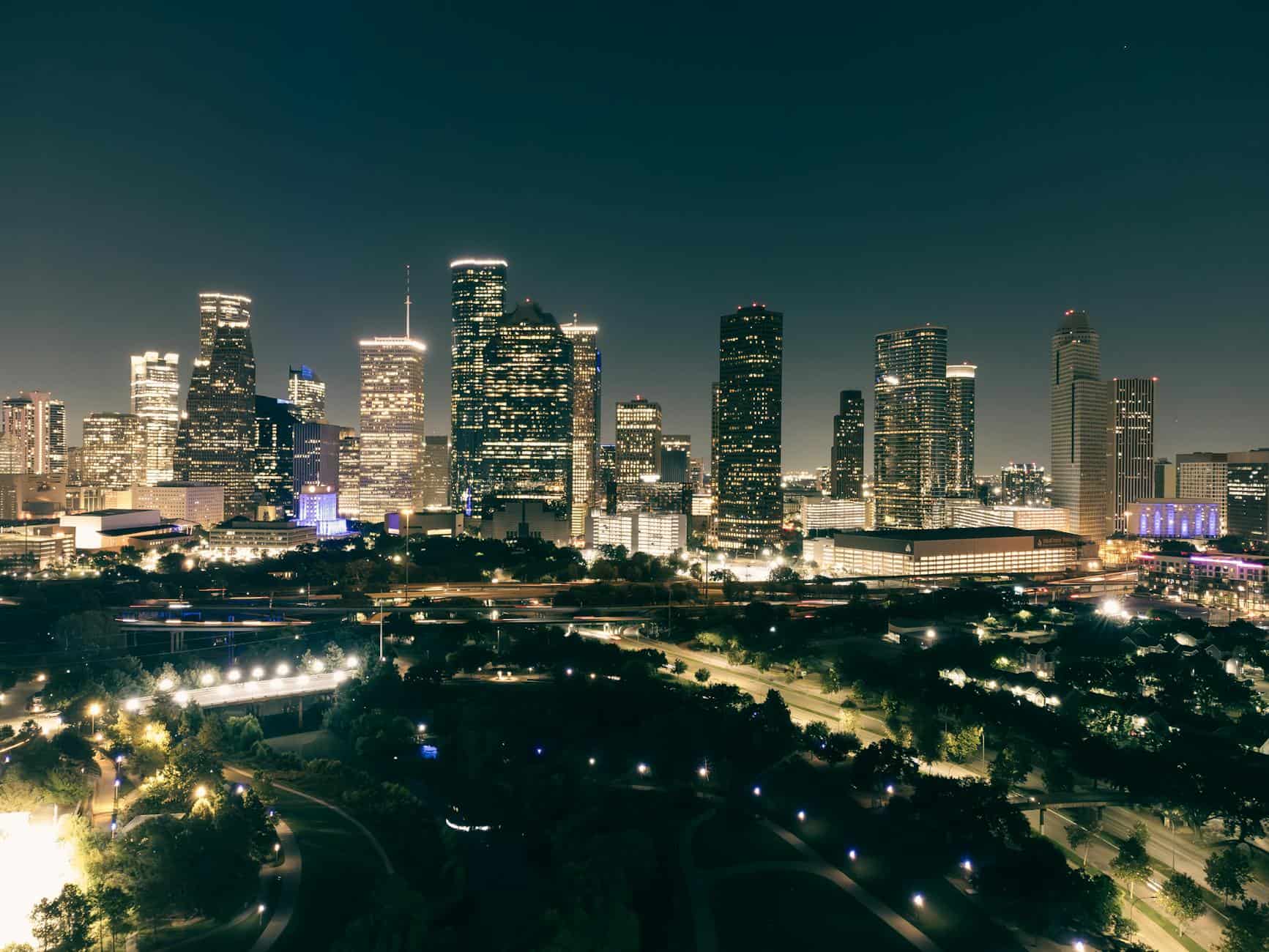
Houston, Texas, is a city rich in history, culture, and economic development. Founded in 1836 by brothers Augustus and John Kirby Allen, it has evolved from a fledgling settlement into the fourth-largest city in the United States. The city played a pivotal role not only in the Texas Revolution but also in shaping the broader narrative of American growth.
From its early days as a trading post to becoming a hub for the oil industry and, most recently, a center for space exploration, Houston’s history reflects the dynamic forces at play in American society. This article delves into the multifaceted history of Houston, examining its origins, its critical events, and its transformative growth, underscoring why it remains an important American city today.
The Founding of Houston: The Town and Its Origins
The founding of Houston, Texas, is directly tied to the vision of its founders, Augustus and John Kirby Allen, who saw potential in the area’s strategic location along Buffalo Bayou. Originally, the land was predominantly inhabited by indigenous peoples, and the Allen brothers were drawn to its natural resources and possibilities for commerce. In 1836, the Allens purchased 6,642 acres of land and laid out a plan for a town that would serve as the seat of government for the newly established Republic of Texas.
From its inception, Houston was designed to be a center for trade, closely linked to navigation. The founders anticipated a rapid influx of settlers and businesses, especially given its proximity to the Gulf of Mexico. Within months of its establishment, Houston became the temporary capital of the Republic of Texas, solidifying its significance in Texas history. This status provided the city with legitimacy and momentum, attracting politicians, soldiers, and speculators who contributed to its growth.
The early years of Houston were marked by a vibrant mix of cultures, as settlers from various backgrounds arrived in search of new opportunities. The town’s growth was further accelerated by the influx of immigrants and adventurers drawn by the prospect of land and economic prosperity. Despite facing numerous challenges—including a lack of infrastructure, economic uncertainties, and the looming threats of conflict—the community exhibited resilience and determination.
With the conclusion of the Texas Revolution in 1836, Houston began to define its identity. The selection of prominent leaders, such as Sam Houston—the city’s namesake and a central figure in Texas history—further cemented its political relevance. As the city began to thrive, it attracted businesses and entrepreneurs, turning it into a lively commercial hub. However, as the town continued to grow, social and economic issues started to emerge, including tensions over slavery, trade, and governance.
The original layout of Houston included a grid of streets named after prominent figures and geographical features, mirroring other burgeoning American towns of the era. The lack of formal city planning, coupled with the rapid influx of residents, contributed to a chaotic urban landscape that would evolve significantly over the years. Community leaders began to grapple with governance, establishing local institutions, and developing infrastructure.
By the late 1840s and early 1850s, Houston’s potential was becoming evident. It began to attract railway interests, which would further enhance its connectivity and open new avenues for trade. The arrivals of various railroad companies in the city in the late 19th century transformed Houston into a critical transport hub, linking it to the larger markets in Texas and beyond. This played a decisive role in shaping the economic landscape of Houston and set the stage for its future.
The founding of Houston is not just a tale of two ambitious brothers; it reflects the broader narrative of American westward expansion, the struggles for governance, and the amalgamation of various cultures. The early developments of Houston, characterized by tenacity, entrepreneurship, and communal spirit, laid the groundwork for its evolution into a major American city. As we delve deeper into the next agenda point, we will explore Houston’s role in the Texas Revolution, an event that would shape its destiny in profound ways.
The Role of Houston in the Texas Revolution
The Texas Revolution, which took place from 1835 to 1836, was a pivotal conflict that resulted in Texas gaining independence from Mexico and played a crucial role in shaping the future of Houston. As the backdrop for much of the revolutionary fervor, Houston emerged as a strategic location where critical events unfolded. The city became a haven for revolutionaries, and it was here that many significant decisions were made.
In the early stages of the Texian rebellion against Mexican rule, Houston was not yet established as a prominent player. The revolution had its roots in the discontent of American settlers in Texas, primarily concerning issues like taxation without representation and the prohibition of slavery. However, it soon became apparent that solidarity among the Texians was necessary to challenge Mexican authority effectively.
As tensions escalated, leaders, including Sam Houston, began mobilizing troops and assembling a plan of action. Houston’s growing community served as an essential gathering point for revolters, where resources and strategies were coordinated. The city’s location helped facilitate the movement of troops and provisions, making it integral to the revolutionary cause.
The pivotal moment of the Texas Revolution came with the Battle of San Jacinto on April 21, 1836. Under the command of General Sam Houston, Texan forces launched a surprise attack on the Mexican army led by General Santa Anna. The battle lasted only 18 minutes and resulted in a decisive victory for the Texians, leading to Santa Anna’s capture and the signing of the Treaties of Velasco, which granted Texas its independence.
Following this sugar-coated victory, Houston played a vital role in the establishment of the Republic of Texas. The city was designated as the temporary capital, and many government functions were carried out here. This central role solidified Houston’s reputation as a political hub and attracted further migration and investment, which contributed to its rapid growth and development as a city.
The legacy of the Texas Revolution is an essential aspect of Houston’s narrative. It established a spirit of resilience and independence that would stitch itself into the fabric of the Houston identity. The revolution’s ideals of freedom and self-governance paved the way for the establishment of local institutions and laid the groundwork for future governance in Houston. Moreover, the influx of soldiers, settlers, and businesses propelled Houston’s development into the late 19th century, earning it a place as a central figure in Texas history.
As we move forward, it is crucial to examine how Houston’s economy evolved in the 20th century, an era marked by industrialization and significant advancements that would shape the city’s trajectory for decades to come.

The Economic Development of Houston in the 20th Century
The turn of the 20th century marked a period of robust economic development for Houston, transforming it into a powerhouse that would significantly impact not just Texas but the entire United States. Driven by various industries, including shipping, rice farming, and, notably, the oil boom, Houston began to emerge as a critical economic engine.
In the early years of the century, Houston’s economy was primarily rooted in agriculture, with rice farming being one of its most prominent sectors. The discovery of irrigation techniques allowed for expanded agricultural prospects, which drew people from rural areas looking for new opportunities. The expansion of the Houston Ship Channel in the 1910s significantly enhanced the port’s capacity, further cementing Houston’s role as a vital maritime hub for trade and commerce.
The discovery of oil in Texas in the 1900s initiated a cascade of economic change that would reshape Houston’s identity. In particular, the Spindletop oil field discovery in 1901 revolutionized the industry and attracted entrepreneurs and talent to the region, eager to capitalize on the oil boom. This influx incentivized investments in infrastructure, providing a foundation for Houston’s industrial expansion.
As the oil industry flourished, it ushered in a wave of new residents seeking jobs and opportunities. By the 1920s, Houston had developed a diversified economy, with oil, manufacturing, and shipping becoming entrenched sectors. The establishment of numerous oil companies, including Humble Oil and Mobil Oil, laid the groundwork for Houston’s reputation as the center of the global energy industry—a title it still holds today.
This period also saw the establishment of educational institutions and healthcare facilities, which contributed to the city’s overall quality of life. The founding of the Texas Medical Center in the mid-20th century turned Houston into a hub for medical research and services, further strengthening the local economy and attracting talents from across the globe.
Despite facing economic challenges during the Great Depression, Houston demonstrated resilience and adaptability. The city continued to diversify its economy, even as oil prices fluctuated. Initiatives to expand manufacturing, aviation, and technology sectors helped cushion the impacts of economic downturns, positioning Houston as a vital player in the post-war economic landscape.
The conclusion of World War II heralded an era of rapid growth in Houston. The development of the aerospace industry, largely propelled by the federal government’s investment in defense and space exploration, marked another significant shift in Houston’s economic trajectory. Companies such as NASA established the Johnson Space Center in Houston, cementing the city’s status as a center for innovation and technology. This not only provided extensive job opportunities but also reshaped Houston’s identity, linking it to the pursuit of scientific advancement.
As we transition towards the fourth agenda point, it’s essential to recognize how the economic developments in Houston during the 20th century facilitated significant cultural and demographic changes that would continue to define the city moving forward.
The Cultural and Demographic Changes in Houston
Throughout the 20th century, Houston, Texas experienced significant cultural and demographic changes that largely shaped its modern identity. Continuous economic prosperity attracted a diverse population, and as more individuals settled in the city, various cultural influences began to blend, fostering a rich tapestry of multiculturalism.
The booming energy industry and job opportunities in sectors such as healthcare, education, and technology drew not just Americans but immigrants seeking a better quality of life. This inflow of different nationalities significantly impacted the cultural landscape of Houston. The establishment of neighborhoods reflecting various cultural heritages became prominent, providing residents with a sense of community and belonging. Areas like The Heights, East End, and H Street evolved into vibrant enclaves that celebrated their unique customs, cuisines, and traditions.
Houston’s multicultural essence became more evident through its various cultural festivals, arts, and culinary scenes. The annual Houston Livestock Show and Rodeo epitomizes the city’s Western heritage while simultaneously embracing its diversity, featuring showcases from different ethnic groups. Furthermore, the city’s burgeoning art scene flourished, with institutions like the Museum District attracting both local and international artists, enriching the cultural fabric of the city.
The demographic aspects of Houston also shifted considerably, particularly as the Hispanic population soared. The growth of this demographic significantly influenced various aspects of daily life in Houston, including business, politics, and education. Schools and community organizations began to address the needs of this growing population, pushing for bilingual education and representation in local government, which led to increased political activism and engagement among Hispanic communities.
African American communities, notably shaped by the Great Migration, also played a pivotal role in Houston’s cultural evolution. Figures like the legendary musician and civil rights activist Barbara Jordan emerged, shaping the political landscape and placing Houston on the national map. The city became a focal point for civil rights movements, with organizations advocating for social justice and legislative changes that would lead to greater equality.
The 1970s and 1980s saw further demographic changes due to the influx of refugees and immigrants from Southeast Asia, Iraq, and Central America. This diversification contributed to a vibrant mosaic of cultures, cuisines, and traditions. Houston began to embrace its identity as a global city, offering numerous ethnic dining options and celebrating various cultural practices.
As we delve into the fifth agenda point, we will explore Houston’s remarkable influence in space exploration and modern innovations. This transformative role not only highlights the city’s historical significance but also underscores its continued evolution as a leader in various fields.
Houston’s Influence in Space Exploration and Modern Innovations
Houston’s identity as the Space City emerged significantly during the mid-20th century, primarily due to the establishment of NASA’s Johnson Space Center in 1961. This monumental development catalyzed Houston’s transformation into a hub for space exploration, innovation, and technological advances. The center has played a key role in various landmark missions, engendering a sense of pride and ambition among the city’s residents.
The initial purpose of the Johnson Space Center revolved around the training of astronauts for the Mercury and Gemini programs. It quickly became the focal point for human spaceflight activities in the United States, reflecting the nation’s determination to explore space amid the ongoing Cold War. The Apollo program, which sought to land humans on the Moon, solidified Houston’s reputation on the global stage. The famous mission control that guided astronauts during their lunar expeditions became synonymous with the pioneering spirit of the city and its commitment to innovation.
In 1969, when Apollo 11 landed on the Moon, Houston stood at the forefront of technological advancement and exploration. The iconic phrase “Houston, we have a problem” during the Apollo 13 mission underscored the city’s role as a central player in real-time problem-solving, further embedding its name in the annals of space history.
The legacy of the space missions instilled a culture of STEM (Science, Technology, Engineering, and Mathematics) education in Houston’s schools and communities, sparking interest in technology and innovation among the younger generations. The collaboration between NASA and local educational institutions fostered partnerships that promoted research and development and provided students with hands-on experiences in scientific fields.
In addition to NASA’s endeavors, Houston experienced a broader technological revolution. A network of research centers, startups, and established businesses, such as the Texas Medical Center, began to thrive alongside the space initiatives. The city became a breeding ground for innovation, contributing significantly to advancements in biomedical research, energy solutions, and information technology. Houston’s investment in education and workforce development played a key role in sustaining this momentum, attracting talent across various industries.
The modern age sees Houston continuing its legacy of innovation. With ambitious projects like the global energy research center and the ongoing advancements in space exploration, Houston remains at the cutting edge of technology. The collaborative efforts among various sectors ensure that this vibrant city retains its title as a leader in modern innovation and space exploration—an identity deeply rooted in its history.
Conclusion
In conclusion, the rich history of Houston, Texas, is marked by a series of transformative events, economic developments, and cultural shifts that have collectively shaped its identity. From its humble beginnings as a founded town and its key role in the Texas Revolution to its status as a hub for innovation and space exploration, Houston exemplifies resilience and adaptability. The city’s ability to embrace diversity and foster community has led to a vibrant cultural tapestry, enriched by the contributions of its residents.
As we unravel the threads that connect Houston’s past to its present, we witness a narrative of progress and ambition. The founding of Houston provided the foundation for a city that continues to thrive and evolve, driven by a spirit of exploration and a determination to be at the forefront of innovation. As Houston forges ahead, it remains committed to nurturing its history while embracing new opportunities and challenges, solidifying its place as a major American city.
Sources Consulted
- The Houston Chronicle – https://www.houstonchronicle.com
- NASA Johnson Space Center – https://www.nasa.gov/centers/johnson/home/index.html
- Texas Historical Commission – https://www.thc.texas.gov
- Houston Public Library – https://www.houstonlibrary.org
- University of Houston Digital Library – https://digital.lib.uh.edu
Leave a Reply