Introduction
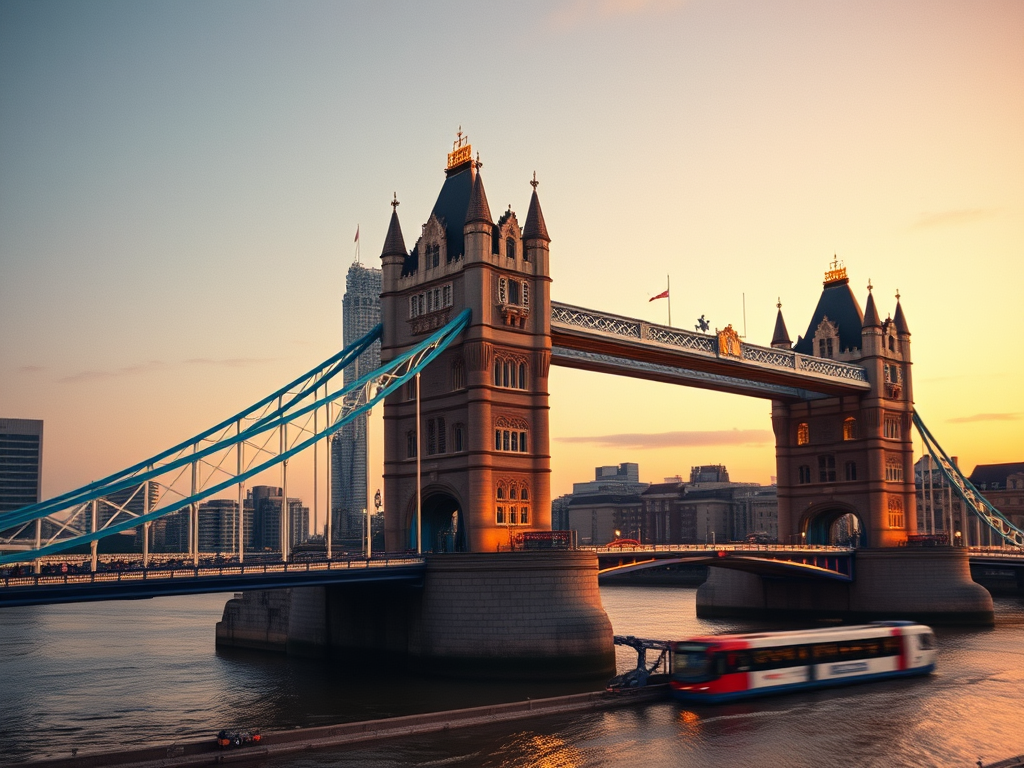
The Tower Bridge is one of the most iconic landmarks in London, instantly recognizable by its twin Gothic towers and bascules that open to allow ships to pass through. Since its completion in 1894, the bridge has stood as a symbol of British innovation, merging architectural beauty with cutting-edge engineering. Its unique combination of function and form has made it a global icon of London and a testament to Victorian ingenuity.
This article traces the fascinating history of Tower Bridge’s construction and architecture, from the initial need for a new crossing over the River Thames to the ambitious solutions that created a masterpiece of industrial design.
The Need for a New Crossing
In the mid-19th century, London was rapidly growing into a global metropolis due to the Industrial Revolution, leading to a significant increase in both population and commercial activity. The River Thames, which bisects the city, was already spanned by several bridges, but they were all located upstream of the Pool of London, a busy stretch of the river serving as the city’s port. East of London Bridge, however, the river remained unbridged, and with the growth of the East End, the need for a new crossing became increasingly urgent.
The problem was complex: any new bridge built in the east of London had to accommodate the demands of both land and river traffic. On the one hand, London’s growing population required a reliable bridge to cross the Thames, but on the other, the Pool of London was one of the busiest ports in the world, with tall-masted ships constantly sailing in and out. A fixed bridge would block access for large vessels, while a conventional drawbridge might disrupt traffic flow.
By the 1870s, public pressure had mounted, and a special committee was formed in 1876 to find a solution that would both facilitate road traffic and allow the passage of ships. This challenge would lead to one of the most remarkable engineering projects of the Victorian era.
A Bold Proposal: Horace Jones and John Wolfe Barry
In 1884, after several designs had been submitted and rejected, the responsibility of designing the bridge was given to Sir Horace Jones, the City of London’s official architect, and civil engineer Sir John Wolfe Barry. Together, they proposed a solution that combined the practicality of a bascule (drawbridge) system with the grandeur of twin towers in a Gothic style that echoed the nearby Tower of London.
Their design featured two massive towers built on piers in the middle of the Thames, connected by a central roadway that could be raised to allow ships to pass. The bascules, each weighing over 1,000 tons, would be powered by steam engines and operated hydraulically—a cutting-edge technology at the time. Above the road level, two high-level walkways would provide pedestrians with a way to cross the river even when the bascules were raised.
The Tower bridge’s design was a triumph of both engineering and aesthetics. Jones and Barry created a bridge that not only solved the practical problems posed by the site but also contributed to the city’s architectural legacy. The Gothic Revival style of the towers, with their crenellated turrets and pointed arches, was intended to harmonize with the medieval architecture of the Tower of London, linking the bridge visually and historically to the city’s past.
Construction Begins: Challenges and Triumphs
Construction of the Tower Bridge began in 1886 and took eight years to complete, involving the work of five major contractors and a workforce of over 400 men. The project faced several significant challenges, not least of which was the need to build massive piers in the middle of the Thames to support the towers. These piers had to be built deep into the riverbed to ensure stability and were constructed using enormous caissons—watertight chambers that were sunk into the river and then filled with concrete.
Once the piers were in place, the towers themselves began to rise. The towers are a combination of steel framework, which provides structural support, and Cornish granite and Portland stone, which were added to give the bridge its decorative appearance. The use of stone was not only an aesthetic choice but also a practical one, as it helped protect the steel structure from the corrosive effects of pollution.
The bascules, which form the central span of the bridge, were one of the most complex elements of the design. Each bascule is counterbalanced to reduce the amount of energy needed to raise it, and they could be lifted in just over a minute using the original hydraulic system. This system was powered by steam-driven pumps, which stored energy in hydraulic accumulators to be used when the bascules were raised. Although the original steam engines have since been replaced with modern electric motors, the basic principle of operation remains the same.
By 1894, the Tower Bridge was complete, and on June 30 of that year, it was officially opened by the Prince of Wales (later King Edward VII) and his wife, Princess Alexandra. The opening was a grand affair, marking the culmination of years of work and innovation.
Architectural Design: A Gothic Revival Masterpiece
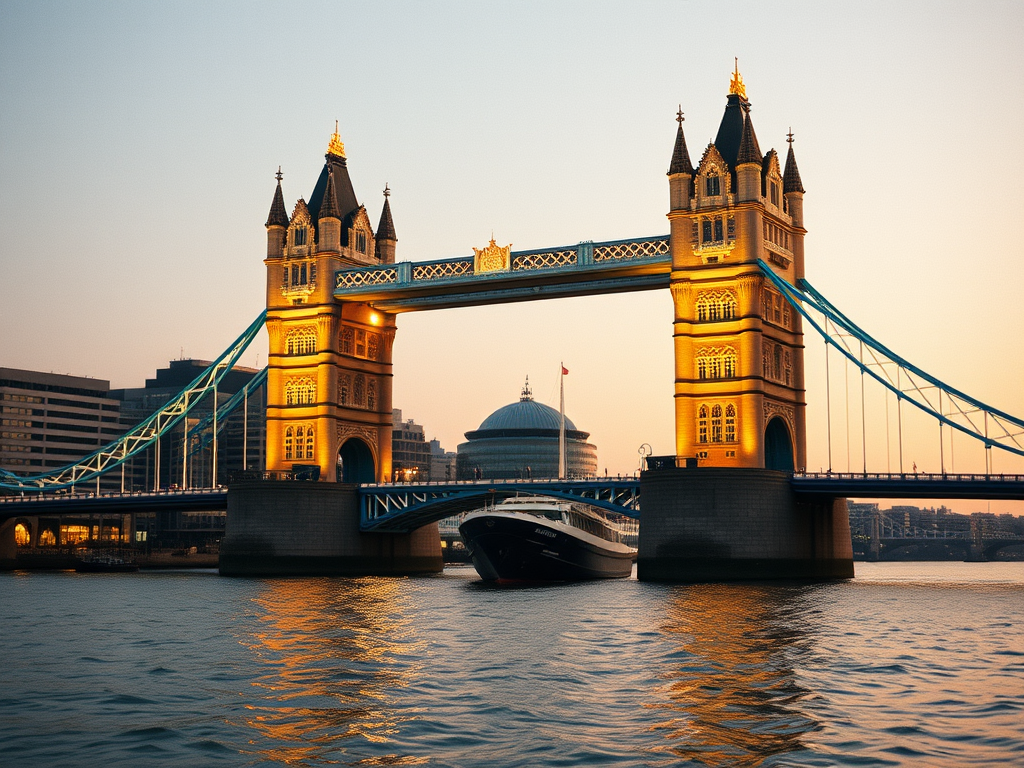
One of the defining features of Tower Bridge is its striking architectural design, which combines the functional needs of a bascule bridge with the ornate Gothic Revival style popular in the 19th century. This aesthetic choice was largely driven by Sir Horace Jones, who wanted the bridge to complement its surroundings, particularly the nearby Tower of London.
The towers of the bridge are built in a neo-Gothic style, with their pointed arches, decorative stonework, and crenellations giving them the appearance of medieval fortifications. This was a deliberate choice, designed to root the bridge in London’s historical landscape and provide a visual link to the Tower of London, which had been a symbol of royal power and authority for centuries.
The use of stone cladding also added to the bridge’s monumental appearance, giving it a sense of permanence and grandeur. The high-level walkways, which were originally open to pedestrians but later closed due to lack of use, further contribute to the bridge’s dramatic silhouette. Today, these walkways serve as part of the Tower Bridge Exhibition, offering visitors panoramic views of the city.
Engineering Feats: The Hydraulic System and Bascule Mechanism
While the architectural beauty of Tower Bridge is immediately apparent, its engineering achievements are equally impressive. The bridge’s most remarkable feature is its bascule mechanism, which allows the central roadway to be lifted to permit ships to pass. The bascules were originally operated by a hydraulic system powered by steam engines—a state-of-the-art technology in the 19th century.
The hydraulic system worked by pumping water into accumulators, where the pressure was stored and then used to drive engines that operated the bascules. This system was highly efficient and allowed the bridge to open quickly, minimizing disruption to road traffic. In fact, the bascules could be raised in just 60 seconds, a remarkable feat for the time.
The original steam engines remained in use until 1976, when they were replaced by an electro-hydraulic system. However, the old engines have been preserved as part of the Tower Bridge Exhibition, allowing visitors to see the original machinery that powered this engineering marvel.
Tower Bridge in the 20th and 21st Centuries
Over the course of the 20th century, Tower Bridge became one of London’s most recognizable landmarks, its distinctive silhouette featured in countless photographs, films, and works of art. Despite its Victorian origins, the bridge has continued to play a vital role in London’s transportation network, carrying thousands of vehicles across the Thames each day.
In the latter half of the 20th century, the bridge underwent several renovations to modernize its systems and ensure its continued functionality. In 1976, the original steam-powered hydraulic system was replaced with an electro-hydraulic system, making the bridge easier to operate. The high-level walkways, which had been closed to pedestrians in 1910, were reopened in the 1980s as part of a new exhibition that explores the history and engineering of the bridge.
In 2008, Tower Bridge underwent a major refurbishment, which included the cleaning and repainting of its stone and metalwork. The bridge’s blue and white color scheme, which has become synonymous with its appearance, was restored, ensuring that it remains one of the most visually striking structures in the city.
Conclusion: A Timeless Symbol of London
Tower Bridge is more than just a functional crossing over the River Thames; it is a symbol of London’s industrial heritage, architectural innovation, and engineering prowess. Its construction marked a pivotal moment in the city’s history, solving a critical transportation problem while creating a structure that would become an enduring part of the London skyline.
Today, Tower Bridge continues to serve both as a vital part of London’s infrastructure and as a global icon of British engineering and design. Its combination of aesthetic beauty and practical functionality has ensured that it remains one of the most beloved and photographed landmarks in the world, a testament to the vision and ingenuity of its creators.