The arrival of the Portuguese in China during the 16th century marked a significant chapter in the history of global exploration and trade. This event was not just a mere encounter between two cultures; it represented the beginning of an era characterized by economic exchanges, cultural interactions, and profound transformations in both societies. Motivated by the desire to find new trade routes and goods, Portuguese explorers set their sights on the East, navigating their way through treacherous waters and establishing connections that would forever alter the course of Sino-European relations.
In this article, we will delve into the historical context of Portuguese exploration, focusing on their entry into China, the subsequent trade relations, and the cultural exchanges that ensued. We will also examine the impact of Portuguese presence on Chinese society and politics and explore the lasting legacy of their influence. By analyzing these facets, we gain a deeper understanding of how the Portuguese arrival in China not only shaped bilateral relations but also contributed to the broader narrative of global trade and cultural exchange during the Age of Discovery.
Background of Portuguese Exploration
The Age of Discovery, spanning the 15th to the 17th centuries, was marked by an unprecedented wave of European exploration and maritime expansion. Portugal emerged as a pioneering force during this period, driven by a combination of technological advancements, economic motives, and the desire for territorial expansion. Key figures such as Prince Henry the Navigator played instrumental roles in promoting exploration, leading to significant developments in navigation and shipbuilding.
Prince Henry, often referred to as the “Navigator,” established a school for navigation in the early 15th century, attracting skilled sailors, cartographers, and astronomers. This initiative led to remarkable advancements in maritime technology, including the development of the caravel, a nimble and highly maneuverable ship. With these innovations, Portuguese navigators were able to venture further into uncharted waters, ultimately paving the way for exploration along the African coast and beyond.
In 1488, Bartolomeu Dias became the first European to round the Cape of Good Hope, opening a new maritime route to Asia. This achievement was followed by Vasco da Gama’s historic voyage to India in 1498, which established a direct sea route between Europe and Asia. These expeditions were motivated by the quest for spices, silks, and other valuable commodities that were in high demand in European markets. The allure of wealth and the desire to establish trade monopolies drove Portugal to pursue aggressive exploration strategies.
The Portuguese were not only interested in trade but also aimed to spread Christianity, seeking to counter the influence of Islam in the region. The combination of economic ambition and religious zeal fueled their desire to establish a presence in Asia. As Portuguese navigators ventured into the Indian Ocean, they encountered diverse cultures and societies, laying the groundwork for the interactions that would later unfold in China.
By the early 16th century, the Portuguese had begun to set their sights on China, recognizing it as a treasure trove of resources and a gateway to lucrative trade networks. Their exploration efforts intensified, leading to a series of expeditions aimed at establishing contact with the Chinese. This context of Portuguese exploration is essential for understanding the complexities and motivations behind their eventual arrival in China.
The Arrival in China: Key Events and Figures
The arrival of the Portuguese in China was a gradual process marked by several key events and influential figures that shaped Sino-Portuguese relations. The first recorded Portuguese arrival in Chinese waters occurred in 1513 when Jorge Ãlvares landed on the shores of Tamão, near present-day Guangdong. This initial encounter was met with suspicion from local authorities, who were wary of these foreign visitors and their intentions.
Following Ãlvares, the Portuguese made several attempts to establish trade relations with China. In 1517, another Portuguese expedition led by captain Rafael Perestrello reached Canton (Guangzhou), where they managed to negotiate limited trading rights. This visit was significant, as it laid the foundation for future commercial interactions. The Chinese were intrigued by the foreign goods brought by the Portuguese, leading to a burgeoning interest in trade.
A pivotal figure in the establishment of Portuguese influence in China was Jesuit missionary Matteo Ricci, who arrived in 1582. Ricci adopted a unique approach by immersing himself in Chinese culture and learning the language, which enabled him to build rapport with Chinese intellectuals and officials. His efforts to integrate Western scientific knowledge with Chinese traditions created a positive perception of Europeans in China, paving the way for further cultural exchanges.
By 1557, the Portuguese secured a lease from the Ming dynasty to establish a permanent settlement in Macau, which would become their primary base for trade and missionary activities in China. Macau thrived as a bustling trading hub, facilitating exchanges between East and West. The Portuguese presence in Macau allowed them to play a crucial role in the region’s commerce and establish lasting trade routes.
The arrival of the Portuguese in China was characterized by both challenges and opportunities. Initial skepticism from Chinese authorities gradually gave way to a more cooperative relationship as trade flourished. Key events, such as the landings of Ãlvares and Perestrello, alongside the influential presence of missionaries like Ricci, set the stage for a complex interplay of commerce, culture, and diplomacy that defined Sino-Portuguese relations.
The arrival of the Portuguese in China during the 16th century marked a significant chapter in the history of global exploration and trade.
Trade Relations and Cultural Exchange
The establishment of trade relations between the Portuguese and the Chinese marked a transformative era in both societies, characterized by significant economic exchanges and cultural interactions. As the Portuguese gained access to Chinese markets, they introduced a variety of goods while simultaneously acquiring valuable Chinese products that would have a lasting impact on trade dynamics.
Macau emerged as the epicenter of Portuguese trade in China, serving as a critical point of contact for both Chinese merchants and other foreign traders. The Portuguese facilitated the exchange of goods such as textiles, metals, and, notably, silver, which became an essential medium of trade. The influx of silver from the Americas into China transformed the Chinese economy, leading to increased demand for this precious metal and reshaping trade practices.
In return, the Portuguese sought to acquire coveted Chinese goods, particularly silk, porcelain, and tea. These commodities were highly sought after in Europe, where they sparked a consumer revolution. The demand for Chinese silk and porcelain, in particular, significantly influenced European fashion and taste, marking a profound shift in consumer habits and preferences.
Cultural exchanges also flourished during this period, as the Portuguese introduced Western ideas and technologies to China. Portuguese navigators and cartographers shared their knowledge of maritime navigation and shipbuilding, enhancing China’s maritime trade capabilities. Conversely, the Portuguese were exposed to Chinese culture, philosophy, and artistic traditions, leading to a mutual appreciation of each other’s heritage.
Religious exchange played a pivotal role in the interactions between the Portuguese and the Chinese. Jesuit missionaries, including Matteo Ricci, sought to spread Christianity in China while also respecting and understanding Chinese beliefs and practices. This approach facilitated dialogue and helped create a favorable impression of Europeans among Chinese intellectuals and officials. Ricci’s efforts to bridge cultural divides and his success in translating Western scientific texts into Chinese further enriched this exchange of knowledge.
However, the relationship was not without challenges. Trade regulations, cultural misunderstandings, and political tensions occasionally strained relations between the two parties. Nonetheless, the overall impact of Portuguese presence in China was characterized by a spirit of cooperation and exchange that enhanced both societies. The trade relations established during this period laid the groundwork for continued interactions between Europe and Asia, profoundly influencing the course of global history.
Impact on Chinese Society and Politics
The arrival of the Portuguese in China had far-reaching consequences for Chinese society and politics, influencing various aspects of life and governance during the late Ming and early Qing dynasties. While the Portuguese were initially met with skepticism, their presence gradually contributed to significant changes in trade practices, cultural exchanges, and political dynamics.
Economically, the Portuguese introduced new commodities and trade practices that reshaped the Chinese market. The influx of silver from the Americas, facilitated by Portuguese trade networks, contributed to a shift in the Chinese economy. This newfound wealth impacted social hierarchies, enabling merchants and traders to gain prominence and influence, thereby altering traditional power structures. The rise of a wealthy merchant class contributed to increased social mobility and changes in local governance as these new elites sought political influence.
Culturally, the presence of Portuguese traders and missionaries led to the introduction of Western ideas, art, and technology to China. Jesuit missionaries played a particularly pivotal role in this exchange, bringing not only religious beliefs but also knowledge in areas such as astronomy, mathematics, and cartography. Their efforts to translate Western scientific texts into Chinese contributed to a mutual exchange of knowledge, influencing Chinese intellectual circles and fostering a spirit of inquiry.
The introduction of Christianity presented both opportunities and challenges for traditional Chinese beliefs. Jesuits’ efforts to integrate Confucian values with Christian teachings garnered a degree of acceptance among Chinese scholars and officials. However, this also led to tensions between different religious factions, as the Catholic Church’s presence conflicted with established traditions and beliefs.
Politically, the Portuguese presence in China shifted the dynamics of foreign relations. The Ming dynasty, recognizing the economic benefits of trade, began to formalize its interactions with foreign powers, including the Portuguese. This marked a transition from a primarily isolationist policy to a more open approach towards trade and diplomacy. However, the influence of foreign powers also raised concerns among Chinese officials about sovereignty and control over trade practices, leading to debates about how to manage these interactions effectively.
Overall, the impact of Portuguese arrival in China extended beyond economic and cultural realms; it also shaped the political landscape and contributed to the evolution of Chinese society during a transformative period in history. The interplay between local traditions and foreign influences created a complex tapestry of interactions that would resonate throughout subsequent centuries.
Legacy of Portuguese Influence in China
The legacy of the Portuguese presence in China is multifaceted, reflecting a complex interplay of cultural, economic, and political influences that have shaped the trajectory of Sino-Portuguese relations. Although the Portuguese influence waned in subsequent centuries, the impact of their arrival continues to resonate in various aspects of Chinese society and culture.
One of the most enduring legacies is the establishment of Macau as a significant trading hub. The Portuguese governed Macau for over four centuries, during which it developed into a vibrant center of commerce and cultural exchange. Even after the handover of Macau to China in 1999, its unique blend of Portuguese and Chinese cultures remains evident in architecture, cuisine, and traditions. The fusion of influences is celebrated in the annual Macau International Fireworks Display Contest and the preservation of historic sites such as the Ruins of St. Paul’s, a UNESCO World Heritage site.
In terms of cultural exchange, the Portuguese contributed to the introduction of Western scientific knowledge and educational practices in China. The Jesuit missions not only aimed to spread Christianity but also emphasized the importance of education and scholarship. The translation of Western texts into Chinese facilitated a flow of knowledge that influenced Chinese intellectual thought and contributed to the development of modern scientific ideas in the late 19th and early 20th centuries.
Economically, the trade relations established by the Portuguese laid the groundwork for future interactions between China and Europe. The patterns of trade established during this period continued to evolve, influencing the development of global trade networks and the eventual rise of European powers in Asia. The Portuguese experience in China served as a model for later European colonial ventures, highlighting the complexities of cross-cultural interactions and economic exploitation.
The political dynamics introduced by the Portuguese arrival also set precedents for future foreign relations in China. The experience of negotiating trade agreements and managing foreign presence influenced how subsequent dynasties approached foreign powers. The interactions between the Portuguese and the Chinese established a framework for understanding how to balance domestic interests with the realities of globalization.
In conclusion, the Portuguese arrival in China was a significant historical event that reshaped the landscape of Sino-European relations. Their influence in trade, culture, and politics left an indelible mark on Chinese society, contributing to a legacy that continues to be felt today. Understanding this history provides valuable insights into the complexities of cross-cultural interactions and the enduring impact of exploration and trade on global relations.
Conclusion
The arrival of the Portuguese in China during the 16th century marked a pivotal moment in the history of both nations, characterized by exploration, trade, and cultural exchange. Motivated by the desire for new trade routes and economic opportunities, the Portuguese established a presence in China that fostered significant interactions between two vastly different cultures.
The exploration and subsequent establishment of trade relations not only reshaped the economic landscape of China but also influenced its society and politics. The exchange of goods, ideas, and cultural practices between the Portuguese and the Chinese laid the groundwork for continued interactions that would shape the course of history.
Despite the challenges and complexities that arose from this encounter, the legacy of Portuguese influence in China remains evident today. The fusion of cultures, the establishment of Macau as a trading hub, and the introduction of Western scientific knowledge all serve as enduring testaments to the impact of this historic arrival.
As we reflect on the Portuguese presence in China, we gain valuable insights into the broader narrative of globalization and the interconnectedness of cultures. The lessons learned from this chapter of history continue to resonate, reminding us of the importance of understanding and appreciating the rich tapestry of human interactions that have shaped our world.
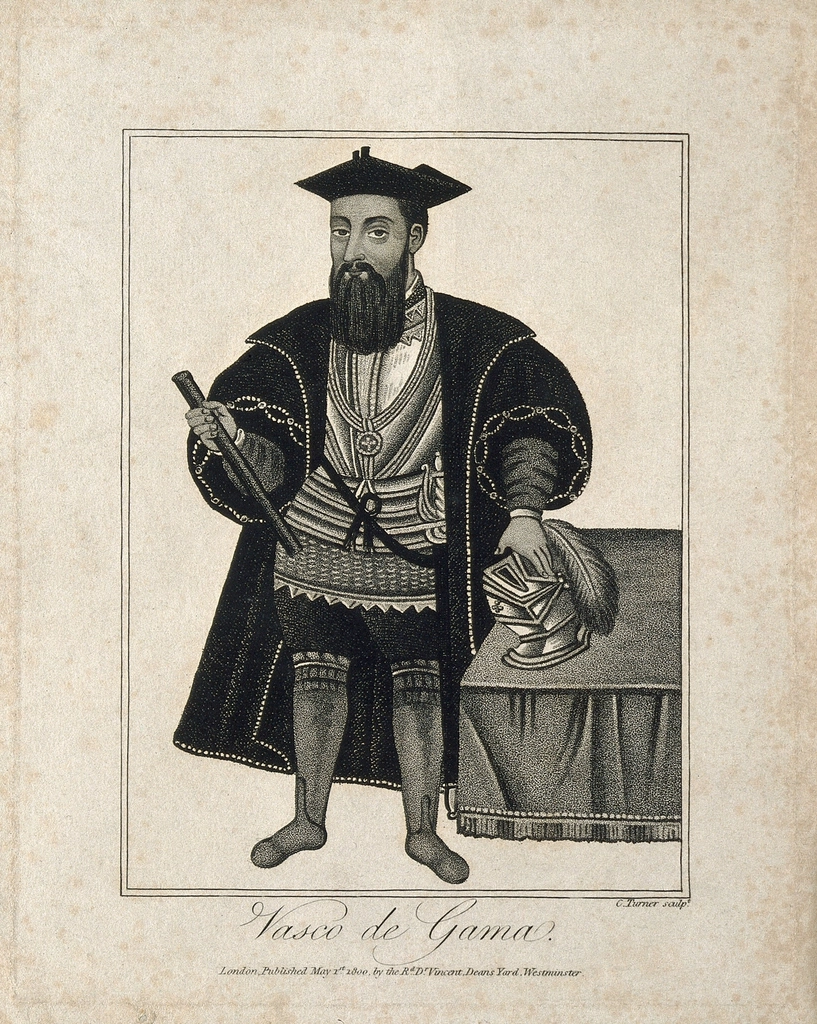
Vasco da Gama was a pivotal figure in the Age of Exploration, known primarily for his significant role in establishing sea routes between Europe and India during the late 15th century. Born in Sines, Portugal, in 1460, Da Gama came from a family with a rich maritime tradition. His expeditions were crucial in connecting Europe to the lucrative spice trade in Asia, fundamentally altering the course of world history. Through his journey, he not only opened new pathways for commerce but also laid the groundwork for future colonial enterprises. This article delves into the multifaceted life of Vasco da Gama, exploring his early life, landmark voyages, contributions to the Portuguese Empire, and lasting legacy in maritime navigation.
Early Life and Background of Vasco da Gama
Vasco da Gama was born into a family of noble lineage in Sines, Portugal. His father, Estêvão da Gama, was a knight of the Order of Santiago, which gave young Vasco early exposure to maritime culture. The importance of navigation and exploration was palpable during this period, as Portugal sought to expand its influence globally. As a young boy, Vasco was reportedly educated at the University of Lisbon, where he studied mathematics, navigation, and astronomy—fields essential for a career at sea.
By the late 15th century, Portugal emerged as a frontrunner in exploration, actively seeking new routes to India and Africa, specifically for spices and gold. The development of advanced navigational techniques and the construction of powerful ships, like the caravel, set the stage for ambitious expeditions. Vasco da Gama, recognizing the potential for riches and glory, became passionately interested in these undertakings.
His rise in the ranks began following several successful voyages along the African coast. In 1492, the Portuguese crown decided to send an expedition to India to establish trade routes. Da Gama was appointed as the fleet’s commander, a testament to his skills and the trust placed in him by King Manuel I. This mission was not only commercially driven but also aimed at spreading Christianity and countering the influence of other European powers in the region, particularly the Muslim empires.
The resources and preparation for this voyage were substantial. Da Gama’s fleet consisted of four ships: the flagship São Gabriel, the São Rafael, the caravel Berrio, and a supply ship. Each vessel was equipped for long-distance travel, marking a shift in maritime capabilities. On July 8, 1497, da Gama and his fleet set sail from Lisbon, embarking on a journey that would change the course of maritime history and open the way for centuries of European dominance in Asia.
Their first significant stop was the Canary Islands, where the fleet resupplied before continuing down the African coast. The ships navigated treacherous waters, overcoming challenges such as storms, rough seas, and navigational uncertainties. Da Gama’s strategic sense was evident as he relied on the knowledge gained from earlier explorers and integrated them into his methodology.
As da Gama continued along the African coastline, he made several critical decisions, like establishing alliances with local rulers and learning from their navigation techniques. Such interactions were crucial in understanding the local trade systems and securing safe passage for his ships. His ability to communicate and negotiate with foreign leaders marked a significant part of his leadership style.
Ultimately, Vasco da Gama’s early endeavors significantly shaped his character as an explorer. His commitment to navigating uncharted waters, his aptitude for leadership, and his strategic approach to establishing foreign relationships set the stage for the immense success of his historic voyage to India.
The Historic Voyage to India (1497-1499)
Vasco da Gama’s historic voyage to India is often described as one of the benchmark moments in the Age of Exploration. On July 8, 1497, he set sail from Lisbon with a mission to find a sea route to India. The fleet made pivotal stops along the African coast, where da Gama expertly navigated the tricky waters off the shores of Africa while gathering essential information that would facilitate his journey.
Reaching the Cape of Good Hope posed a significant challenge for da Gama, characterized by formidable weather and tumultuous seas. With determination and a competent crew, he succeeded in rounding the cape, thus signifying a monumental moment in Portuguese maritime history. After several months battling storms and navigating through uncharted territories, da Gama and his men arrived at the shores of Calicut (now Kozhikode) in May 1498.
Upon reaching India, the expectations were high. The Portuguese were eager to engage in trade with the local merchants, particularly for spices like pepper, cinnamon, and cardamom. However, da Gama encountered the local sultan, who was initially hesitant about engaging in commerce with foreign traders. Da Gama’s diplomatic skills came to the fore as he attempted to reassure the sultan of the benefits of engaging with the Portuguese. His mission combined commercial interests with a deeper religious and cultural agenda, as he sought to spread Christianity among the local populations.
The initial trade discussions proved challenging. Local traders were accustomed to dealing in their traditional methods, which included bartering and established networks. Da Gama sought to introduce the idea of direct trade with the Portuguese, hoping to bypass intermediaries and secure more favorable terms. The interactions were fraught with tension, as da Gama’s insistence on Christian superiority clashed with the established Muslim trading networks.
Despite the initial setbacks, da Gama managed to secure a trade agreement, allowing him to load his ships with valuable spices and goods. The success of this first leg of the expedition marked a significant triumph for Portugal, as it demonstrated the viability of sea routes to the East. The return journey saw the holdings of great wealth, signaling a new dawn for European trade with Asia.
The return to Portugal in September 1499 was celebrated as a monumental achievement. Vasco da Gama was hailed as a national hero, and the successful voyage established the groundwork for future expeditions. Subsequent voyages sent by the Portuguese crown capitalized on da Gama’s pioneering journey, leading to Spain’s and Italy’s increased involvement in Asian trade while cementing Portugal’s position as a dominant maritime power.
In retrospect, his voyage was not just about economic gains; it paved the way for a complex interplay between cultural exchanges, religious missions, and the often fraught relationships between European powers and Asian kingdoms. Da Gama’s historic milestone established the Portuguese Empire as a leader in global trade, influencing maritime navigation and patterns for centuries.
Subsequent Expeditions and Establishing Trade Routes
Following the success of his first voyage to India, Vasco da Gama embarked on subsequent expeditions, aimed at solidifying Portugal’s presence in the Indian Ocean and expanding its trade networks. Knowing that the spice trade was immensely lucrative, Gama was tasked with ensuring that Portugal held a monopoly over this vital resource.
In 1502, da Gama was commissioned for his second voyage, consisting of a much larger fleet, including 20 ships, to further secure and expand Portuguese trade in India. His objectives included establishing fortified trading posts, negotiating treaties, and maintaining military leverage over other European and local traders. His fleet departed Lisbon armed with cannons, a signal of the aggressive tactics that would dominate European colonialism during this era.
The journey to India was fraught with conflict. On reaching Calicut, Gama found the political landscape had changed, leading to tensions with local rulers who viewed the Portuguese as invaders. Da Gama’s approach was characterized by assertiveness, leading to confrontations with rival Indian kingdoms and even attacks on merchant ships of other nations. His reputation for aggressive diplomacy involved a blend of negotiations and military might—common in establishing European colonial rule during this period.
Lasting alliances and trade agreements were critical as Gama sought to lay the groundwork for a systematic approach to Portugal’s Asian territories. Establishing the first trading post in Cochin was a strategic move, creating a foothold from which Portuguese power could emanate. The construction of forts enabled Gama to assert Portuguese dominance, creating a protective buffer for future commercial ventures.
Gama returned to Portugal after two years, bringing back immense wealth and a newfound respect for his negotiating prowess. His expeditions fueled the ambition of the Portuguese crown to continue developing its maritime empire, leading to further exploration and conquest in the years to follow. The establishment of treaty systems with local rulers, such as those in Cochin, signaled the shifting dynamics of power in southern India, as Portugal began to emerge as a dominant player in Asian maritime trade.
In essence, the subsequent voyages led by Vasco da Gama were crucial for not only ensuring the flow of spices and wealth back to Portugal but also pioneering systems of colonial trade that would be replicated by other European powers in their explorations. The developments initiated during this period were invaluable in shaping patterns of trade and conflict that would define the colonial era for centuries.
Vasco da Gama was a pivotal figure in the Age of Exploration, known primarily for his significant role in establishing sea routes between Europe and India during the late 15th century.
Vasco da Gama’s Role in the Portuguese Empire
Vasco da Gama’s contributions went beyond his journeys; he became a cornerstone in the establishment of the Portuguese Empire. His experiences and successes in the East provided valuable insights into the methods and strategies necessary for sustaining a colonial endeavor. The Portuguese empire flourished under the foundation laid by da Gama, influencing the course of European maritime history.
His appointment as the first Count of Vidigueira after his exploration efforts illustrated the high regard in which he was held by the Portuguese monarchy. Not only did he achieve success on the field, but he also worked closely with the crown to develop strategic plans for future exploratory missions. As newfound wealth poured into Portugal from the spice trade, da Gama advocated for the establishment of a comprehensive naval infrastructure to protect these newfound territories.
The implementation of a strong naval presence in the Indian Ocean was a direct result of da Gama’s experiences. He recognized that the Portuguese Empire needed to defend its interests against established regional powers and rival European nations. To this end, the crown invested in the construction of well-armed ships designated for naval warfare, supporting the notion that control of the seas was vital for maintaining empire.
Gama’s influence extended to the cultivation of relationships with native rulers, vital for sustaining trade. His diplomatic engagements laid the groundwork for treaties designed to favor Portuguese interests, creating an environment in which trade flourished. Scholarships and yields from wealth garnered through his efforts supported enhanced military campaigns, enabling Portugal to strengthen its empires in Brazil and Africa.
However, Gama’s legacy also reveals the complexities of colonial rule; while he established fruitful connections for trade, he also fostered an environment of exploitation. The aggressive approach taken by Gama and his successors led to resistance from local populations and instigated conflicts that would span for generations. Da Gama’s tension-filled interactions with local traders emphasized the ethical dilemmas of colonial behavior, illustrating that while wealth flowed into Portugal, it often came at significant human cost.
Nonetheless, Gama’s vision was instrumental in solidifying Portugal’s status as a leading maritime power during the early 16th century. His unwavering commitment to creating a network of trade dominated by Portugal reshaped global perspectives on commerce, navigation, and colonial enterprise. The impact of Vasco da Gama’s expeditions ultimately resonated through generations, reshaping the geopolitical dynamics of trade, influence, and power on a global scale.
Legacy and Impact on Global Navigation and Trade
Vasco da Gama’s legacy extends beyond his voyages and immediate contributions to the Portuguese Empire, as his impact on global navigation and trade remains significant even today. His successful establishment of sea routes opened up new possibilities for European engagement with Asia, resulting in unprecedented exchanges of culture, goods, and ideas.
One of the most notable effects of Gama’s voyages was the profound transformation in European perceptions of trade routes. Prior to his expeditions, European powers were heavily reliant on land routes that were perilous and fraught with geopolitical tensions. Da Gama’s navigation around the Cape of Good Hope not only illustrated the potential of maritime trade but also mapped out the critical pathways that would define intercontinental commerce for centuries.
The thriving spice trade, which Gama helped to pioneer, prompted other nations to explore alternative routes for their own gain. His achievements served as both a model and a challenge for European rivals, including Spain, England, and the Netherlands, all of whom would engage in their own quests to establish trade networks and colonies across Asia. The thirst for spices, textiles, and other resources led to competitive expansionism, setting the stage for an age of colonial rivalry that shaped modern geopolitics.
Additionally, Gama’s contributions to navigation and geographic knowledge were remarkable. His documentation of routes, currents, and wind patterns provided navigators with vital information that improved maritime routes. The practices he instituted concerning cartography and sea travel were foundational, assisting subsequent generations of sailors as they ventured into uncharted waters. Essentially, the trade routes and methods he developed left a lasting legacy that heralded a new era of exploration and maritime innovation.
Yet, much of the narrative surrounding Gama is also critically intertwined with themes of colonization and exploitation. The aggressive pursuit of trade led to conflicts and the subjugation of indigenous populations across Asia and Africa. As European powers established dominance, the human cost of these expeditions cannot be overlooked. Gama’s interactions with local rulers often presented complex dynamics of negotiation, coercion, and ultimately, domination.
The legacy of Vasco da Gama is, therefore, a tapestry woven with triumphs and tragedies, where his vision brought forth an era of trade and exploration intertwined with the darker realities of colonization. The repercussions of his journeys continue to echo through history, shaping global trade dynamics, prompting cultural exchanges, and instituting legacies of colonialism that demand ongoing reflection. Da Gama’s role in these historical processes underpins the complexity of the Age of Exploration—one that was full of ambition, innovation, and profound consequences for multiple corners of the globe.
Conclusion
In conclusion, Vasco da Gama’s life and explorations mark a dramatic chapter in the narrative of the Age of Exploration. From his origins in Portugal to his historic voyage to India, Gama’s journey exemplifies the ambitions of an era that sought to connect disparate cultures through trade and navigation. His expeditions led to the establishment of sea routes that transformed global commerce, positioned Portugal as a leader in colonial endeavors, and provided frameworks that shaped subsequent transactions between Europe and Asia.
However, the legacy of Gama must be viewed through a multifaceted lens. While he undoubtedly contributed to the expansion of maritime knowledge and the economic prosperity of Portugal, his actions also precipitated the complex and often violent realities of colonization. The reverberations of his journeys continue to inform our understanding of international trade, maritime navigation, and the intricate web of cultural interactions that characterize our world today.
As we reflect on Vasco da Gama’s influence, it is essential to recognize both his accomplishments and the broader socio-political contexts in which he operated. His life embodies the complexities of exploration—marked by a spirit of inquiry and the unsettling consequences of the imperial pursuits that stemmed from it. Gama’s story serves as a reminder of the dual nature of exploration: one that seeks to discover and connect while simultaneously imposing power and dominance.
As the siege wore on, the Aztecs defended their city fiercely, utilizing their knowledge of the terrain to launch counterattacks. They employed guerrilla tactics, ambushing Spanish troops and using their superior knowledge of the city’s layout to their advantage. However, the prolonged siege began to take a toll on Tenochtitlan. The once-thriving metropolis faced food shortages and disease, exacerbated by the Spaniards’ control of the surrounding waters and routes. The combination of attrition from warfare and dwindling resources led to a desperate situation for the Aztecs.
The siege of Tenochtitlan was not just a military victory; it was a profound cultural and historical turning point. The destruction of the city led to the decimation of the Aztec civilization and paved the way for Spanish colonization of Mexico. The event exemplified the brutal realities of conquest, showcasing the lengths to which both sides would go in their struggle for dominance. For the Spanish, the victory at Tenochtitlan solidified their reputation as formidable conquerors and set the stage for further expeditions into the New World.
Simultaneously, the Spanish sought to integrate the local populations into their colonial framework. This was often achieved through the encomienda system, which granted Spanish settlers control over specific indigenous communities. In exchange for protection and the conversion to Christianity, the indigenous people were required to provide labor and tribute to their Spanish overlords. While this system was presented as a means of fostering cooperation, it often resulted in severe exploitation and a dramatic decline in the indigenous population due to harsh working conditions, disease, and the dismantling of traditional social structures.
Despite the initial victories, the establishment of Spanish rule was fraught with conflict. Indigenous resistance persisted, leading to numerous uprisings against Spanish authority. The traumatic experience of conquest, coupled with cultural disruption, created a volatile atmosphere as different groups grappled with their identities in the wake of colonial domination. The clash of cultures led to the emergence of a new society, marked by syncretism—a blending of indigenous and Spanish customs, beliefs, and practices.
As the Spanish established their colonial rule, they brought with them their language, religion, and customs. The imposition of Spanish as the dominant language transformed communication and administration, while the Catholic Church played a central role in the cultural reorientation of the indigenous populations. Missionaries arrived in large numbers, aiming to convert the native peoples to Christianity. They employed various methods, ranging from education to forced conversions, often using the existing indigenous religious frameworks as a foundation upon which to build new beliefs.
One of the most notable aspects of this cultural interaction was the process of religious syncretism. Indigenous peoples, confronted with the arrival of Christianity, did not simply abandon their traditional beliefs; instead, many incorporated elements of Catholicism into their existing spiritual practices. This resulted in a rich tapestry of religious expression that combined pre-Columbian deities, rituals, and symbols with Catholic saints and ceremonies. For instance, the Virgin of Guadalupe, one of Mexico’s most revered religious figures, emerged as a potent symbol of this syncretism. Her image is often associated with indigenous identity and resilience, reflecting the ways in which native peoples adapted to and resisted colonial impositions.
In addition to religion, the fusion of Spanish and indigenous cultures also manifested in art, music, and daily life. The introduction of European artistic styles and techniques blended with indigenous traditions to create unique forms of expression. This syncretism is evident in colonial architecture, where Spanish baroque styles were integrated with Mesoamerican elements. The results are seen in the construction of churches and public buildings that reflect both European aesthetics and indigenous motifs, symbolizing the coexistence of two cultures.
Music also served as a medium for cultural exchange. Indigenous instruments and musical forms were combined with European melodies and rhythms, giving rise to new genres that resonated with both Spanish settlers and indigenous communities. These musical traditions not only provided entertainment but also fostered a sense of community and cultural continuity in a rapidly changing environment.
The culinary landscape of colonial Mexico further illustrates this process of syncretism. Spanish colonizers introduced new ingredients, cooking techniques, and culinary practices, which were then blended with indigenous food traditions. Staples such as corn, beans, and squash remained central to the diet, while ingredients like wheat, rice, and various meats were integrated into local cuisine. This fusion created distinctive culinary traditions that would evolve into the rich tapestry of Mexican food culture known today.
While syncretism fostered cultural blending, it was not without its tensions. The process often involved negotiation, adaptation, and resistance. Indigenous peoples navigated the impositions of colonial rule, sometimes adopting elements of Spanish culture to gain favor or to survive, while simultaneously striving to maintain their cultural identity. This ongoing negotiation resulted in a dynamic interplay of power, identity, and resistance, shaping the identities of both the Spanish colonizers and the indigenous populations.
In conclusion, the cultural interactions that emerged from the conquest of the Aztec Empire created a unique and enduring legacy in colonial Mexico. The syncretism that characterized this period reflects a complex interplay of adaptation, resistance, and transformation. The blending of Spanish and indigenous cultures not only enriched the cultural landscape but also laid the groundwork for the development of a distinct Mexican identity, one that continues to evolve and thrive in contemporary society. Understanding these cultural interactions is essential to grasping the historical roots of modern Mexico and the ongoing influence of its diverse heritage.
Gold, one of the Earth’s most ancient treasures, has held an unparalleled place in human civilization for millennia. Across cultures and eras, gold has been coveted not just for its physical beauty but for the value and security it symbolizes. Its universal acceptance as a symbol of wealth and a medium of exchange has driven exploration, wars, and economic strategies, establishing it as one of the most reliable stores of value known to humankind. Despite modern financial systems built on fiat currency and digital assets, gold’s intrinsic value has withstood the test of time.
In this article, we will explore how gold was first discovered, the historical significance it has held, how it catalyzed international conflicts, and its continued role today as a store of value and indicator of wealth.
The Discovery of Gold: A Timeless Treasure
Gold’s allure began long before written history. Archaeological findings suggest that gold was first discovered as early as 4,000 BCE in ancient Mesopotamia and Egypt. Gold’s distinct appearance—its luster, color, and malleability—made it stand out in riverbeds and in the earth, attracting the attention of early humans. Unlike other metals that required smelting, gold could be found in its pure form, ready to be worked by hand.
The first civilizations to harness gold were not simply drawn to its beauty but recognized its utility. Gold was soft enough to be molded into jewelry, religious artifacts, and symbols of authority. In ancient Egypt, gold became synonymous with the divine; the Pharaohs adorned themselves with it and were often buried in gold-lined tombs to ensure their wealth in the afterlife. Egyptian hieroglyphs and historical accounts even describe gold as “the flesh of the gods.”
As trade routes expanded, gold spread to other parts of the world. By 1,500 BCE, Egypt had become the center of a massive gold-mining network, and their gold reserves were used as currency in trade with neighboring kingdoms. The metal’s unique properties—durability, divisibility, and scarcity—were starting to make it more than just a symbol of divinity. It was becoming a standard measure of value and wealth.
Gold and the Birth of Money
The role of gold expanded dramatically when it began to be used as a medium of exchange. Around 600 BCE, the Lydians, a people in what is now modern-day Turkey, are credited with minting the world’s first gold coins. These coins were stamped with official symbols, which guaranteed their weight and purity, and allowed for standardization in trade. The idea was revolutionary: gold could now be used as a universal currency, facilitating trade between different cultures and kingdoms.
This concept of gold-backed money spread rapidly throughout the ancient world. The Persians, Greeks, and Romans all adopted gold coinage in their economies. The Roman Empire, at its height, depended heavily on gold to maintain its vast network of roads, cities, and armies. Roman emperors often devalued their currency by reducing the gold content in their coins, leading to inflation—a problem that would become a recurring theme in the history of money.
Gold also played a key role in the medieval era, particularly during the reign of Charlemagne, who helped consolidate much of Western Europe under the use of a gold-backed monetary system. During the Islamic Golden Age (8th-13th centuries), the Islamic dinar, made of gold, became a preferred currency for trade across the vast Caliphate, from Spain to India. This period helped solidify gold’s role in global commerce, with gold coins circulating widely across continents.
Gold as a Catalyst for Conflict and Exploration
Gold’s desirability made it not only a tool for trade but also a cause for conflict. The desire to control gold reserves motivated empires to expand their territories and wage wars.
Similarly, Francisco Pizarro’s conquest of the Inca Empire in 1532 resulted in the capture of the Inca ruler, Atahualpa. Pizarro demanded a room filled with gold as ransom for the emperor’s release—a promise the Incas fulfilled, providing nearly 24 tons of gold and silver. Yet, despite their compliance, Pizarro ordered Atahualpa’s execution, solidifying Spain’s control over the region.
The influx of gold and silver from the Americas dramatically transformed Spain’s economy and the European balance of power. However, the sudden abundance of precious metals also led to significant inflation, devaluing gold and silver in Europe and contributing to long-term economic instability. This phenomenon, known as “the Price Revolution,” demonstrated both the power and the volatility of gold-based economies.
Beyond conquest, gold motivated countless exploratory missions. The famous Gold Rushes of the 19th century—first in California (1848-1855), then in Australia (1851), and later in South Africa (1886)—triggered mass migrations, the founding of cities, and the rapid expansion of industry. Gold fever gripped entire populations, as the promise of wealth led prospectors to remote regions in search of fortune. The California Gold Rush alone saw hundreds of thousands of people from around the world flock to the American West, transforming it from a sleepy frontier into an economic powerhouse almost overnight.
Gold, one of the Earth’s most ancient treasures, has held an unparalleled place in human civilization for millennia.
Gold as an Economic Indicator and Store of Value
Over time, the relationship between gold and global economics became more sophisticated. As national economies grew, many governments moved away from the direct use of gold coins in daily transactions. However, gold still played a central role in the development of modern monetary systems.
In 1821, the United Kingdom became the first country to adopt the gold standard, a system in which a country’s currency was directly linked to a specific quantity of gold. This allowed for the stabilization of exchange rates between nations and facilitated international trade. By the late 19th century, most of the world’s leading economies, including the United States and many European countries, had adopted the gold standard.
The gold standard proved relatively effective at maintaining stable economies until the outbreak of World War I in 1914, which saw many countries temporarily abandon the system to finance the war effort. After the war, attempts were made to restore the gold standard, but by the time of the Great Depression in the 1930s, most countries, including the United States, had abandoned it. The extreme economic pressures of the period, particularly the collapse of international trade and falling prices, made the rigidity of the gold standard untenable.
Despite the abandonment of the gold standard, gold has continued to be seen as a safe-haven asset and a reliable store of value. During times of economic uncertainty or political instability, investors often turn to gold as a means of protecting their wealth. This is because gold has a unique combination of attributes: it is scarce, durable, and universally recognized as valuable. Unlike fiat currencies, which can be subject to inflation or government manipulation, gold’s value has remained relatively stable over centuries.
In the 20th century, gold’s role as a financial asset was formalized with the creation of the Bretton Woods system in 1944. Under this system, the US dollar was linked to gold, and other currencies were pegged to the dollar, effectively making gold the ultimate reserve currency. However, as global trade expanded and the US struggled with trade deficits and inflation in the 1960s, the system became unsustainable. In 1971, President Richard Nixon famously “closed the gold window,” ending the convertibility of the US dollar into gold and effectively bringing the Bretton Woods system to an end.
Modern Gold: A Safe-Haven Asset and Investment
Even after the dissolution of the gold standard, gold remains a crucial part of modern financial systems. Central banks around the world continue to hold significant gold reserves, and gold remains a preferred investment asset, particularly during times of economic uncertainty.
The price of gold is often seen as a barometer for broader market confidence. During times of economic growth and stability, gold prices tend to remain relatively flat or even decrease as investors prefer higher-risk, higher-reward investments. However, during times of crisis—such as the 2008 financial collapse, the Eurozone debt crisis, or the COVID-19 pandemic—gold prices tend to surge as investors seek safer assets. This “flight to safety” reflects the enduring belief that gold holds its value even when other assets do not.
Moreover, gold has become increasingly accessible to average investors. While in the past, individuals might have needed to physically buy gold bars or coins, today’s investors can easily gain exposure to gold through exchange-traded funds (ETFs), futures contracts, or stocks in gold mining companies. This has contributed to gold’s liquidity and its continued appeal as part of a diversified investment portfolio.
The Cultural and Symbolic Significance of Gold
Beyond its economic role, gold continues to hold immense cultural significance. It remains the metal of choice for wedding rings, trophies, and other symbols of achievement and status. Gold jewelry remains highly sought after around the world, particularly in countries like India, where it plays a central role in festivals and wedding ceremonies.
Gold’s enduring appeal can also be seen in its use in technology. It is an excellent conductor of electricity and is resistant to corrosion, making it a valuable material for electronic components. While only a small fraction of the world’s annual gold production is used in electronics, it highlights gold’s unique combination of physical and economic properties.
Conclusion: Gold’s Role in the Future
Gold’s journey from ancient riverbeds to the heart of modern economies illustrates its unmatched ability to maintain value over time. Despite the evolution of financial systems and the rise of digital assets like cryptocurrencies, gold’s status as a store of value remains unchallenged. It continues to serve as a hedge against inflation, a safe-haven asset during times of uncertainty, and a symbol of wealth and success.
As the world faces new challenges—from geopolitical instability to economic volatility—gold’s role in the global economy seems unlikely to diminish. It may not be the primary form of currency anymore, but it will always represent stability, security, and enduring value. Gold, as it has for thousands of years, will continue to shine.
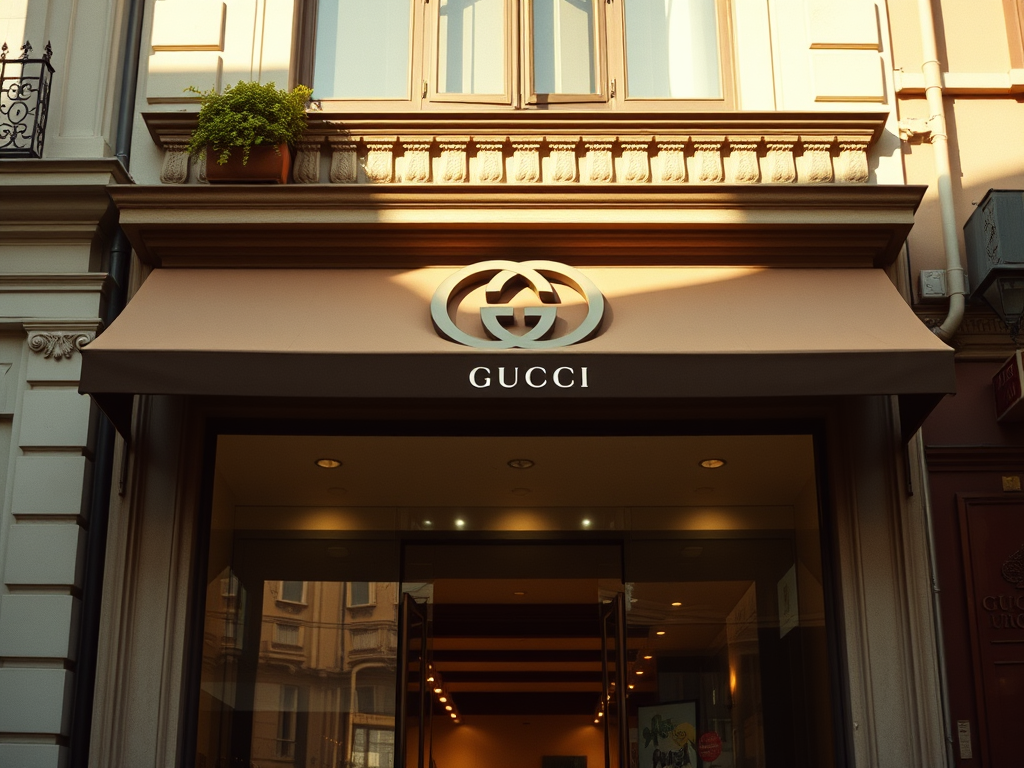
The Gucci history is full of details. Gucci’s one of the most prestigious and iconic fashion houses in the world, is synonymous with luxury, sophistication, and craftsmanship. The brand’s intertwined double-G logo has become a symbol of timeless style, embraced by celebrities, royalty, and fashion connoisseurs globally. However, the road to international recognition was not a straightforward one, as Gucci evolved from a small luggage company into a global fashion powerhouse.
This article delves into the fascinating history of Gucci, the growth of the company, its rise to prominence in the fashion world, and the enduring legacy of its founder, Guccio Gucci.
The Origins of Guccio Gucci: Inspiration from Abroad
The story of Gucci begins with its founder, Guccio Gucci, who was born on March 26, 1881, in Florence, Italy, into a modest family. His father, a leather goods maker, introduced young Guccio to the world of craftsmanship, but it was his travels abroad that would later inspire him to create his own luxury brand.
In his early twenties, Guccio left Italy and moved to London, where he worked as a dishwasher and a lift attendant at the prestigious Savoy Hotel. During his time at the Savoy, he was exposed to the lifestyles of the wealthy and the aristocratic, observing their opulent tastes in fashion, accessories, and travel goods. This exposure to luxury and the high standards of the upper class left a lasting impression on Guccio, particularly the fine luggage and travel accessories that were carried by the hotel’s elite clientele.
Inspired by the elegance of the English nobility and their desire for high-quality leather goods, Guccio returned to Florence in 1921 with a vision. He sought to combine the refined sophistication he had observed abroad with the traditional Italian craftsmanship he had grown up with. This marked the beginning of what would eventually become the world-renowned Gucci brand.
History of Gucci: A Modest Beginning
In 1921, Guccio Gucci founded his first store in Florence, Italy, which initially specialized in selling fine leather goods, particularly luggage and equestrian equipment. The shop catered to the needs of the affluent Florentine class, as well as European travelers passing through the city. At the time, travel was a luxury afforded only to the wealthy, and Guccio recognized an opportunity to create high-end products that would appeal to this elite clientele.
Guccio’s emphasis was on quality, craftsmanship, and attention to detail. His leather goods were handmade by skilled artisans, and the materials used were of the highest standard. This focus on excellence quickly gained Gucci a reputation for producing some of the finest luggage and accessories in the region.
Florence, with its rich heritage of artistry and craftsmanship, was the perfect location for Gucci’s fledgling business. The city was known for its tradition of leatherworking, and Guccio drew from this tradition while infusing it with the sophistication and luxury he had experienced during his time in London. This unique blend of Italian craftsmanship and English refinement became a defining characteristic of the Gucci brand.
As demand for his products grew, Guccio began to expand his offerings to include more than just luggage and travel accessories. He began producing handbags, gloves, shoes, and belts—all with the same attention to detail and commitment to quality that had made his luggage famous.
The 1930s: Growth and Expansion
The 1930s was a pivotal decade for Gucci, as the brand began to grow beyond its initial offerings and expand its presence both in Italy and internationally. The brand’s reputation for luxury, craftsmanship, and quality spread throughout Europe, and Gucci started to attract a global clientele.
One of the key developments during this time was Gucci’s entry into the world of equestrian-inspired products. Italy has a long history of equestrian culture, and Guccio Gucci recognized an opportunity to cater to this niche market. He introduced finely crafted saddles, riding boots, and other equestrian accessories, all of which were embraced by the European aristocracy. This equestrian influence would later become a key motif in Gucci’s designs, with elements such as the horsebit and the green-red-green stripe becoming iconic symbols of the brand.
The 1930s also saw Gucci’s first major expansion beyond Florence. In 1938, Guccio opened a second store in Rome, located on Via Condotti, one of the city’s most prestigious shopping streets. The Rome store attracted an even larger and more diverse clientele, including international travelers, diplomats, and celebrities. This marked the beginning of Gucci’s rise as an internationally recognized luxury brand.
Despite the global economic challenges of the 1930s, Gucci continued to thrive by focusing on its core values of quality and craftsmanship. Guccio’s sons, Aldo, Vasco, and Rodolfo Gucci, began to play larger roles in the company, helping to expand the brand’s reach and ensure its continued success.
The Impact of World War II: Creativity Amidst Scarcity
World War II presented significant challenges for many businesses, and Gucci was no exception. The war caused widespread material shortages, including the leather and other high-quality materials that were central to Gucci’s products. However, rather than allowing these constraints to hinder the business, Guccio and his team turned adversity into an opportunity for innovation.
During the war, Gucci began to experiment with alternative materials, such as canvas, hemp, and jute, to create their signature products. This was a necessity, given the scarcity of leather, but it also allowed the brand to explore new creative directions. One of the most famous innovations from this period was the development of the “Bamboo Bag” in 1947. Crafted from pigskin leather and bamboo, the bag became an instant classic and remains one of Gucci’s most iconic designs to this day. The use of bamboo, a durable and lightweight material, was both practical and aesthetically pleasing, and it showcased Gucci’s ability to adapt and innovate under difficult circumstances.
The Bamboo Bag symbolized the brand’s resilience during a time of great turmoil, and it helped solidify Gucci’s reputation as a forward-thinking luxury brand that could maintain its standards of quality and elegance even in the face of adversity.
The Post-War Boom: The Gucci Dynasty Begins
With the end of World War II, Gucci entered a period of rapid growth and international expansion. The post-war economic boom created new opportunities for luxury brands, as consumers in Europe and the United States sought to indulge in high-end goods after years of wartime austerity.
Guccio’s sons Aldo, Vasco, and Rodolfo became more involved in the day-to-day operations of the company, and together they embarked on an ambitious expansion plan that would transform Gucci into a global brand. In 1953, the company made its first foray into the American market, opening a store in New York City on 58th Street. This move was a significant milestone for the brand, as it marked Gucci’s arrival on the world stage. The New York store attracted a wealthy and fashionable clientele, including Hollywood stars, socialites, and international elites.
Tragically, just two weeks after the opening of the New York store, Guccio Gucci passed away at the age of 72. His death marked the end of an era, but his legacy would live on through his sons, who continued to grow the business in the years that followed. Aldo, in particular, took on a prominent leadership role, overseeing the expansion of Gucci’s retail presence around the world.
The 1950s and 1960s were a golden age for Gucci, as the brand became synonymous with Hollywood glamour and international jet-set style. Icons like Audrey Hepburn, Elizabeth Taylor, Grace Kelly, and Jacqueline Kennedy were frequently seen wearing Gucci products, from handbags to scarves to shoes. The famous Gucci loafer with the horsebit detail, introduced in 1953, became an instant hit and remains a classic to this day.
In 1961, the Gucci Jackie Bag was introduced, named after Jacqueline Kennedy Onassis, who was frequently photographed carrying the chic, crescent-shaped bag. The association with such a glamorous and influential figure helped cement Gucci’s status as a symbol of timeless luxury.
Gucci, one of the most prestigious and iconic fashion houses in the world, is synonymous with luxury, sophistication, and craftsmanship.
The 1960s and 1970s: International Expansion and the Birth of Icons
As Gucci’s global presence grew, so did its roster of iconic designs. The 1960s and 1970s were marked by a series of product innovations and design elements that would become forever associated with the brand.
In 1966, one of Gucci’s most enduring symbols, the “Flora” pattern, was introduced. The design was created at the request of Rodolfo Gucci, who wanted to present a unique scarf to Princess Grace of Monaco. The vibrant, nature-inspired pattern became an instant classic and has been reinterpreted many times over the decades. The Flora pattern reflects Gucci’s deep connection to the world of nature and its ability to translate beauty from the natural world into high fashion.
Another key moment in Gucci’s history came in 1971, when the brand introduced its famous GG logo, representing the initials of Guccio Gucci. The double-G logo quickly became a symbol of luxury and status, appearing on handbags, belts, scarves, and other accessories. The GG logo, along with the green-red-green web stripe that had been used since the 1950s, became two of the most recognizable and enduring symbols of the Gucci brand.
Throughout the 1970s, Gucci continued to expand its retail network, opening stores in key fashion capitals such as Paris, London, and Tokyo. The brand also began to diversify its product range, moving beyond leather goods and accessories into new categories like clothing, jewelry, and fragrances.
This period of expansion and creativity was not without its challenges, however. The Gucci family’s growing success led to internal conflicts, particularly among Guccio’s sons, who had differing visions for the future of the company. These family disputes would eventually lead to a series of power struggles that threatened to derail the brand in the decades that followed.
The 1980s: Family Feuds and Financial Troubles
The 1980s were a tumultuous time for Gucci, as internal family conflicts began to take their toll on the business. The power struggle between Aldo Gucci and his nephew Maurizio Gucci, Rodolfo’s son, dominated much of the decade and created significant tension within the company.
Aldo, who had played a key role in expanding Gucci into a global brand, was convicted of tax evasion in the United States in 1986 and served a year in prison. Meanwhile, Maurizio, who had inherited his father Rodolfo’s stake in the company, sought to modernize and reposition the brand, but his efforts were hampered by the ongoing family disputes.
The infighting and financial mismanagement led to a decline in the brand’s reputation, and Gucci found itself struggling to maintain its status as a leader in the luxury market. By the late 1980s, the company was on the brink of financial collapse, and it became clear that drastic changes were needed to save the brand.
The 1990s: A New Era Under Tom Ford
In the early 1990s, Gucci underwent a dramatic transformation that would not only save the brand but also catapult it back to the forefront of the fashion world. This revival was spearheaded by American designer Tom Ford, who was appointed creative director in 1994.
Ford’s vision for Gucci was bold, sexy, and modern, and he quickly set about reimagining the brand for a new generation. His provocative designs, characterized by sleek silhouettes, luxurious fabrics, and daring cuts, captured the attention of the fashion world and redefined the Gucci aesthetic.
One of Ford’s most iconic collections was his Fall/Winter 1995 collection, which featured minimalist black dresses, velvet suits, and high-gloss glamour. The collection was a critical and commercial success, and it marked the beginning of Gucci’s resurgence as a symbol of high fashion and cutting-edge design.
Under Ford’s leadership, Gucci became one of the most desirable brands of the 1990s, with its products worn by A-list celebrities and featured on the covers of top fashion magazines. The brand’s sales skyrocketed, and Gucci once again became a dominant force in the luxury market.
The Modern Gucci: Reinvention and Global Success
In the years since Tom Ford’s departure in 2004, Gucci has continued to evolve and adapt to the changing fashion landscape. The brand has embraced new technologies, sustainability initiatives, and a younger, more diverse audience, all while maintaining its commitment to quality and craftsmanship.
Alessandro Michele, who became creative director in 2015, has taken the brand in a bold new direction, infusing Gucci with a sense of eclecticism, individuality, and whimsy. Michele’s designs have been embraced by a new generation of fashion lovers, and Gucci’s influence in the worlds of fashion, art, and culture remains as strong as ever.
From its humble beginnings in a small shop in Florence to its status as a global fashion empire, Gucci’s journey is a testament to the power of innovation, craftsmanship, and enduring style. Today, nearly a century after its founding, Gucci continues to set the standard for luxury and remains one of the most iconic and influential brands in the world.
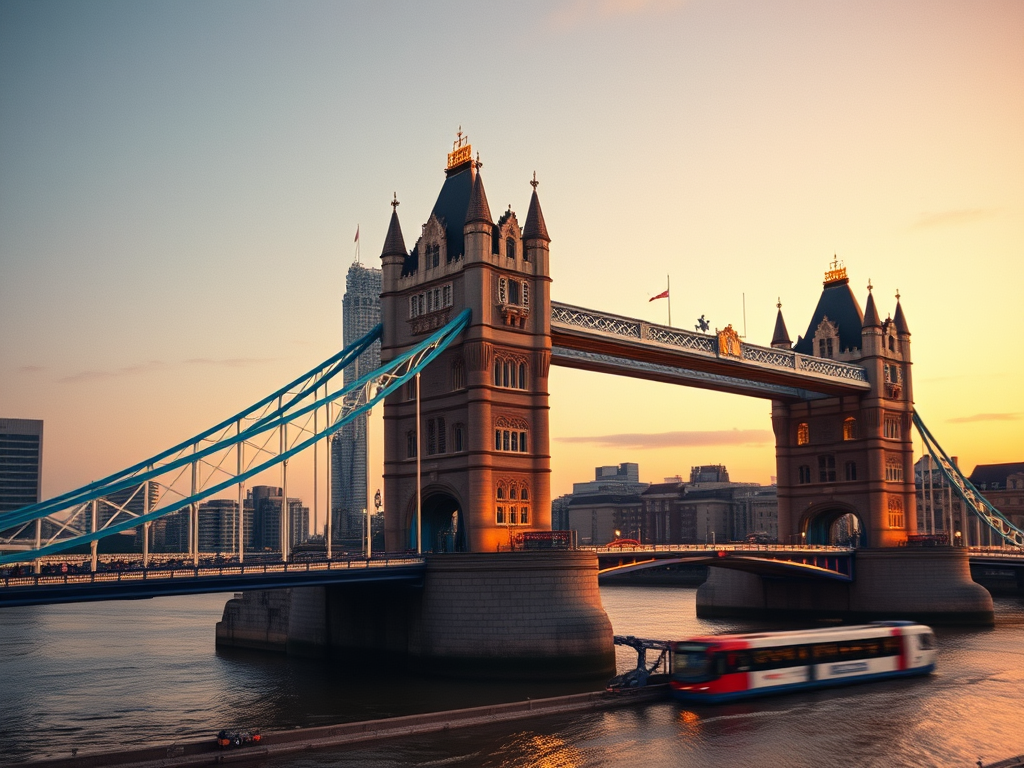
The Tower Bridge is one of the most iconic landmarks in London, instantly recognizable by its twin Gothic towers and bascules that open to allow ships to pass through. Since its completion in 1894, the bridge has stood as a symbol of British innovation, merging architectural beauty with cutting-edge engineering. Its unique combination of function and form has made it a global icon of London and a testament to Victorian ingenuity.
This article traces the fascinating history of Tower Bridge’s construction and architecture, from the initial need for a new crossing over the River Thames to the ambitious solutions that created a masterpiece of industrial design.
The Need for a New Crossing
In the mid-19th century, London was rapidly growing into a global metropolis due to the Industrial Revolution, leading to a significant increase in both population and commercial activity. The River Thames, which bisects the city, was already spanned by several bridges, but they were all located upstream of the Pool of London, a busy stretch of the river serving as the city’s port. East of London Bridge, however, the river remained unbridged, and with the growth of the East End, the need for a new crossing became increasingly urgent.
The problem was complex: any new bridge built in the east of London had to accommodate the demands of both land and river traffic. On the one hand, London’s growing population required a reliable bridge to cross the Thames, but on the other, the Pool of London was one of the busiest ports in the world, with tall-masted ships constantly sailing in and out. A fixed bridge would block access for large vessels, while a conventional drawbridge might disrupt traffic flow.
By the 1870s, public pressure had mounted, and a special committee was formed in 1876 to find a solution that would both facilitate road traffic and allow the passage of ships. This challenge would lead to one of the most remarkable engineering projects of the Victorian era.
A Bold Proposal: Horace Jones and John Wolfe Barry
In 1884, after several designs had been submitted and rejected, the responsibility of designing the bridge was given to Sir Horace Jones, the City of London’s official architect, and civil engineer Sir John Wolfe Barry. Together, they proposed a solution that combined the practicality of a bascule (drawbridge) system with the grandeur of twin towers in a Gothic style that echoed the nearby Tower of London.
Their design featured two massive towers built on piers in the middle of the Thames, connected by a central roadway that could be raised to allow ships to pass. The bascules, each weighing over 1,000 tons, would be powered by steam engines and operated hydraulically—a cutting-edge technology at the time. Above the road level, two high-level walkways would provide pedestrians with a way to cross the river even when the bascules were raised.
The Tower bridge’s design was a triumph of both engineering and aesthetics. Jones and Barry created a bridge that not only solved the practical problems posed by the site but also contributed to the city’s architectural legacy. The Gothic Revival style of the towers, with their crenellated turrets and pointed arches, was intended to harmonize with the medieval architecture of the Tower of London, linking the bridge visually and historically to the city’s past.
Construction Begins: Challenges and Triumphs
Construction of the Tower Bridge began in 1886 and took eight years to complete, involving the work of five major contractors and a workforce of over 400 men. The project faced several significant challenges, not least of which was the need to build massive piers in the middle of the Thames to support the towers. These piers had to be built deep into the riverbed to ensure stability and were constructed using enormous caissons—watertight chambers that were sunk into the river and then filled with concrete.
Once the piers were in place, the towers themselves began to rise. The towers are a combination of steel framework, which provides structural support, and Cornish granite and Portland stone, which were added to give the bridge its decorative appearance. The use of stone was not only an aesthetic choice but also a practical one, as it helped protect the steel structure from the corrosive effects of pollution.
The bascules, which form the central span of the bridge, were one of the most complex elements of the design. Each bascule is counterbalanced to reduce the amount of energy needed to raise it, and they could be lifted in just over a minute using the original hydraulic system. This system was powered by steam-driven pumps, which stored energy in hydraulic accumulators to be used when the bascules were raised. Although the original steam engines have since been replaced with modern electric motors, the basic principle of operation remains the same.
By 1894, the Tower Bridge was complete, and on June 30 of that year, it was officially opened by the Prince of Wales (later King Edward VII) and his wife, Princess Alexandra. The opening was a grand affair, marking the culmination of years of work and innovation.
The Tower Bridge is one of the most iconic landmarks in London, instantly recognizable by its twin Gothic towers and bascules that open to allow ships to pass through.
Architectural Design: A Gothic Revival Masterpiece
One of the defining features of Tower Bridge is its striking architectural design, which combines the functional needs of a bascule bridge with the ornate Gothic Revival style popular in the 19th century. This aesthetic choice was largely driven by Sir Horace Jones, who wanted the bridge to complement its surroundings, particularly the nearby Tower of London.
The towers of the bridge are built in a neo-Gothic style, with their pointed arches, decorative stonework, and crenellations giving them the appearance of medieval fortifications. This was a deliberate choice, designed to root the bridge in London’s historical landscape and provide a visual link to the Tower of London, which had been a symbol of royal power and authority for centuries.
The use of stone cladding also added to the bridge’s monumental appearance, giving it a sense of permanence and grandeur. The high-level walkways, which were originally open to pedestrians but later closed due to lack of use, further contribute to the bridge’s dramatic silhouette. Today, these walkways serve as part of the Tower Bridge Exhibition, offering visitors panoramic views of the city.
Engineering Feats: The Hydraulic System and Bascule Mechanism
While the architectural beauty of Tower Bridge is immediately apparent, its engineering achievements are equally impressive. The bridge’s most remarkable feature is its bascule mechanism, which allows the central roadway to be lifted to permit ships to pass. The bascules were originally operated by a hydraulic system powered by steam engines—a state-of-the-art technology in the 19th century.
The hydraulic system worked by pumping water into accumulators, where the pressure was stored and then used to drive engines that operated the bascules. This system was highly efficient and allowed the bridge to open quickly, minimizing disruption to road traffic. In fact, the bascules could be raised in just 60 seconds, a remarkable feat for the time.
The original steam engines remained in use until 1976, when they were replaced by an electro-hydraulic system. However, the old engines have been preserved as part of the Tower Bridge Exhibition, allowing visitors to see the original machinery that powered this engineering marvel.
Tower Bridge in the 20th and 21st Centuries
Over the course of the 20th century, Tower Bridge became one of London’s most recognizable landmarks, its distinctive silhouette featured in countless photographs, films, and works of art. Despite its Victorian origins, the bridge has continued to play a vital role in London’s transportation network, carrying thousands of vehicles across the Thames each day.
In the latter half of the 20th century, the bridge underwent several renovations to modernize its systems and ensure its continued functionality. In 1976, the original steam-powered hydraulic system was replaced with an electro-hydraulic system, making the bridge easier to operate. The high-level walkways, which had been closed to pedestrians in 1910, were reopened in the 1980s as part of a new exhibition that explores the history and engineering of the bridge.
In 2008, Tower Bridge underwent a major refurbishment, which included the cleaning and repainting of its stone and metalwork. The bridge’s blue and white color scheme, which has become synonymous with its appearance, was restored, ensuring that it remains one of the most visually striking structures in the city.
Conclusion: A Timeless Symbol of London
Tower Bridge is more than just a functional crossing over the River Thames; it is a symbol of London’s industrial heritage, architectural innovation, and engineering prowess. Its construction marked a pivotal moment in the city’s history, solving a critical transportation problem while creating a structure that would become an enduring part of the London skyline.
Today, Tower Bridge continues to serve both as a vital part of London’s infrastructure and as a global icon of British engineering and design. Its combination of aesthetic beauty and practical functionality has ensured that it remains one of the most beloved and photographed landmarks in the world, a testament to the vision and ingenuity of its creators.
The arrival of the Portuguese in India at the dawn of the 16th century was a transformative moment in global history. This event not only reshaped the political and economic landscape of the Indian subcontinent but also marked the beginning of an era of European maritime dominance in the Indian Ocean. Led by Vasco da Gama in 1498, the Portuguese were the first Europeans to successfully navigate the treacherous waters around the southern tip of Africa and establish a direct sea route to India. This monumental achievement set the stage for centuries of European involvement in Indian trade, politics, and culture.
While the presence of the Portuguese in India is often remembered for its role in establishing colonial rule and expanding European imperialism, it also had a profound and complex impact on the people and societies of India. From the introduction of new goods and technologies to the spread of Christianity and the emergence of new political alliances, the Portuguese encounter with India was a multifaceted phenomenon with far-reaching consequences. This article will explore the key dimensions of this encounter, focusing on the economic, political, social, and cultural impacts of the arrival of the Portuguese in India.
The Search for Spices: Portugal’s Quest for a Sea Route to India
By the late 15th century, Europe had developed a voracious appetite for luxury goods from the East, particularly spices such as pepper, cinnamon, and cloves. These goods were in high demand not only for their culinary uses but also for their medicinal and preservative properties. However, the overland routes that connected Europe to Asia, often referred to as the Silk Road, were controlled by Muslim powers, and the goods had to pass through several intermediaries before reaching European markets. This made Eastern spices extraordinarily expensive by the time they reached European consumers.
In this context, the Portuguese crown, under the leadership of King Manuel I, embarked on a mission to find a direct sea route to India. If successful, this would allow Portugal to bypass the Muslim and Venetian intermediaries who dominated the spice trade and establish a direct link with the spice-producing regions of Asia. After several exploratory voyages along the coast of West Africa, Portuguese navigators finally achieved this goal when Vasco da Gama reached the port of Calicut (modern-day Kozhikode) on the Malabar Coast of India in 1498.
Da Gama’s arrival in India was a watershed moment in global trade history. For the first time, European powers had access to the rich markets of the East by sea, laying the groundwork for what would become a vast and lucrative trading empire. However, the Portuguese were not content to merely participate in existing trade networks; they sought to dominate them through both diplomacy and military force.
Establishing a Portuguese Presence in India
Following Vasco da Gama’s successful voyage, the Portuguese wasted little time in consolidating their presence in India. In 1503, they established their first fort in Cochin, a key spice trading port on the Malabar Coast. This marked the beginning of Portuguese colonial activity in India, and over the next few decades, they built a network of forts and trading posts along the coast, from Goa in the west to Daman and Diu in the north.
One of the most significant moments in the establishment of Portuguese power in India came in 1510 when the Portuguese captured the city of Goa from the Bijapur Sultanate. Goa would go on to become the capital of Portuguese India and the center of their commercial, military, and religious activities in the region. The city remained under Portuguese control for over four centuries, making it one of the longest-lasting European colonies in Asia.
The Portuguese presence in India lasted more than 4 centuries
The Portuguese were not merely passive participants in the Indian Ocean trade. They used a combination of diplomacy, treaties, and outright military force to establish a monopoly over the lucrative spice trade. They introduced the cartaz system, a licensing arrangement that required all ships in the Indian Ocean to purchase a pass from the Portuguese in order to trade. This system allowed the Portuguese to control the flow of goods and extract revenue from traders, giving them a powerful position in the regional economy.
Economic Impact: Transforming the Indian Ocean Trade
The Portuguese arrival in India had a profound impact on the existing trade networks in the Indian Ocean. Prior to their arrival, the Indian Ocean was a highly interconnected and relatively peaceful trading zone, where merchants from across the Arabian Peninsula, Persia, East Africa, and Southeast Asia exchanged goods such as spices, textiles, precious stones, and metals. These trade networks had been in place for centuries, and while there was competition between different powers, they operated under a system of mutual cooperation and shared interests.
The Portuguese, however, introduced a new element of competition and coercion into the trade system. With their superior naval technology and heavily armed ships, the Portuguese were able to dominate the sea routes and impose their will on local traders. By monopolizing the spice trade, they disrupted the traditional flow of goods and shifted the balance of power in the region. Indian merchants, who had previously enjoyed considerable autonomy in their dealings, now found themselves subject to Portuguese control and taxation.
The economic impact of Portuguese dominance was not limited to the spice trade. They also played a key role in expanding the export of Indian textiles, which were highly prized in Europe and other parts of Asia. Portuguese traders facilitated the exchange of Indian cotton and silk fabrics for goods such as silver, gold, and horses. This led to the growth of new markets for Indian textiles and helped integrate India further into the global economy.
At the same time, however, Portuguese control over trade routes and their aggressive policies often led to conflict with local powers. The Sultanate of Gujarat, the Kingdom of Calicut, and other regional players resented Portuguese interference in their economic affairs and frequently engaged in military confrontations with the newcomers. These conflicts underscored the disruptive nature of Portuguese influence in the Indian Ocean and foreshadowed the broader struggles that would characterize European colonialism in the region.
Political Consequences: Shifting Alliances and Power Struggles
The Portuguese presence in India not only reshaped economic relationships but also had significant political consequences. In their quest to expand their influence, the Portuguese formed alliances with various local rulers, often playing them off against one another to secure their own position. For example, the Portuguese allied with the kingdom of Cochin, which sought protection against its more powerful neighbor, the Zamorin of Calicut. This alliance allowed the Portuguese to establish a foothold in the region and eventually capture Goa, one of the most strategic ports in India.
However, these alliances were often fraught with tension, as the Portuguese were seen as foreign interlopers by many Indian rulers. The introduction of European military technology, particularly firearms and cannons, further intensified regional power struggles. Some Indian rulers sought to acquire these new technologies to gain an advantage over their rivals, while others viewed the Portuguese as a destabilizing force that threatened the traditional balance of power.
One of the most significant political consequences of the Portuguese presence was the eventual decline of the Indian Ocean’s Muslim-dominated trade networks. The Portuguese, who were staunchly Catholic, often clashed with Muslim merchants and rulers, particularly the Ottoman Empire, which also sought to control key trade routes. The Portuguese-Ottoman rivalry played out in a series of naval battles and sieges, with both sides vying for dominance over the lucrative spice trade. Over time, the Portuguese were able to weaken the influence of Muslim traders in the Indian Ocean, though they never fully eliminated their presence.
Religious and Cultural Impact: The Spread of Christianity and Cultural Exchange
One of the key motivations for Portuguese expansion in Asia was the desire to spread Christianity. The Portuguese crown, in close collaboration with the Catholic Church, saw their overseas ventures as an opportunity to evangelize non-Christian peoples. In India, the Portuguese embarked on an ambitious program of Christian missionary activity, particularly in their colonial capital of Goa.
The most famous figure associated with the Portuguese missionary effort in India is Saint Francis Xavier, a Jesuit priest who arrived in Goa in 1542. Xavier traveled across India, converting thousands of locals to Christianity, particularly among the lower castes. The Catholic Church played a central role in Portuguese colonial society, and many churches and religious institutions were built during this period. Goa, in particular, became a center of Christian life in India, and its impressive churches, such as the Basilica of Bom Jesus, remain important cultural landmarks to this day.
The spread of Christianity, however, was not without controversy. Hindu and Muslim rulers often resisted Portuguese attempts to convert their subjects, and there were numerous instances of conflict between local religious communities and Portuguese missionaries. Moreover, the forced conversions and persecution of non-Christians by the Portuguese authorities created tensions that would persist long after the end of Portuguese rule.
Despite these conflicts, the Portuguese presence in India also facilitated significant cultural exchange. The Portuguese introduced new foods, such as chili peppers, tomatoes, and potatoes, which would go on to become staples of Indian cuisine. They also brought European artistic styles and architectural techniques, which influenced local traditions and led to the development of Indo-Portuguese art and architecture. The fusion of Indian and European cultures during this period created a unique cultural legacy that can still be seen in Goa and other former Portuguese territories.
Decline of Portuguese Power in India
While the Portuguese were initially successful in establishing a powerful presence in India, their dominance was not to last. By the mid-17th century, the Portuguese empire in Asia began to decline, due in part to competition from other European powers, particularly the Dutch and the British. The Dutch East India Company, founded in 1602, quickly established itself as a formidable rival to the Portuguese, capturing key trading posts and undermining Portuguese control of the spice trade.
In India, the rise of the Mughal Empire under emperors such as Akbar and Aurangzeb further diminished Portuguese influence. The Mughals, with their vast armies and sophisticated administration, were able to resist Portuguese encroachments and reassert control over important trade routes. By the late 17th century, the Portuguese presence in India had been reduced to a few isolated enclaves, most notably Goa, which remained under Portuguese control until it was annexed by India in 1961.
Conclusion: A Complex Legacy
The arrival of the Portuguese in India was a defining moment in the history of both Europe and Asia. For India, it marked the beginning of a new era of global trade, cultural exchange, and political conflict. The Portuguese introduced new technologies, foods, and religious ideas to India, while also playing a pivotal role in the emergence of European colonialism in the region. However, their legacy is also marked by violence, exploitation, and religious conflict, as they sought to impose their will on a complex and diverse society.
For the Portuguese, India represented both the height of their imperial ambitions and the limits of their power. While they were able to establish a profitable trading empire and spread Christianity to new regions, their dominance was ultimately short-lived, as other European powers and local rulers challenged their position.
In the end, the Portuguese presence in India left a lasting impact on the subcontinent, shaping its history in ways that are still felt today. The story of this encounter is a reminder of the complexities and contradictions of empire, where commerce, culture, and conflict are inextricably intertwined.
In the 16th century, Japan was introduced to the world beyond its shores, primarily due to the arrival of Portuguese explorers and traders. This initiative marked a significant turning point in Japanese history, as it opened a gateway for cultural exchange, trade, and the introduction of new technologies. The Portuguese not only brought goods such as textiles and spices but also firearms, which would forever change the landscape of Japanese warfare. Furthermore, they introduced Christianity, an ideology that would shape cultural dynamics in the region for years to come. The relationship between the Portuguese and the Japanese was rich and complex, leading to both collaboration and conflict. This article explores the multifaceted impact of Portuguese arrival in Japan and its enduring legacy on Japanese culture.
The historical context of the Portuguese arrival in Japan
The arrival of the Portuguese in Japan in the mid-16th century was a significant event driven by a combination of factors, including exploration, trade interests, and geopolitical dynamics. The Age of Discovery had set the stage for European powers to look beyond their shores, seeking new trade routes and opportunities for wealth. Portugal, one of the pioneering maritime nations, ventured into Asia, spurred by the desire to dominate spice trade and to access goods that were highly sought after in Europe.
In 1543, the Portuguese first set foot on Japanese soil when a shipwrecked crew landed on the island of Tanegashima. This fortuitous event marked the beginning of an era of interaction between two vastly different cultures. The motivations behind the Portuguese expeditions were rooted in the quest for trade and the spread of Christianity. They sought to establish a foothold in the lucrative Asian markets, and Japan represented an unexplored opportunity.
Initial interactions between Portuguese traders and Japanese were characterized by curiosity and exchange. While the Portuguese were eager to learn about Japanese customs, the Japanese were equally intrigued by the foreigners’ appearance, language, and technological advancements. Over time, this initial curiosity evolved into complex diplomatic relationships, as both sides negotiated terms of trade and cultural interaction.
The religious dimension of the Portuguese arrival should not be overlooked. Jesuit missionaries quickly followed the traders, aiming to spread Christianity throughout Japan. They found a receptive audience among certain Japanese warlords and peasants, leading to the establishment of numerous Christian communities. This religious influence would later spark significant reactions from traditionalist factions within Japan, leading to conflicts that would shape the future of foreign relations in the region.
Ultimately, understanding the context of Portuguese arrival is crucial to appreciating the impacts they had on Japanese society, trade, and warfare. This period of interaction would not only reshape Japan but also leave an indelible mark on its cultural identity.
Impact on Local Trade and Japanese Economy
The arrival of the Portuguese in Japan brought about a seismic shift in the local economy, marked by the introduction of new trade goods, the establishment of trade networks, and economic collaborations that had lasting implications. Before the Portuguese arrived, Japan was largely self-sufficient, relying on its domestic resources and achievements. However, the infusion of foreign goods and commodities transformed the fabric of Japanese commerce.
One of the most famous products introduced by the Portuguese was the matchlock gun, known as “tanegashima” in Japan. This firearm was a game-changer, not only representing a new means of warfare but also becoming a key trading item. Along with firearms, the Portuguese traded various goods, including textiles, glassware, and other luxury items that were previously unattainable for the Japanese aristocracy. This influx of new products altered consumption patterns and created demand for foreign goods among the samurai class and merchants.
As Portuguese ships began to arrive consistently, Nagasaki emerged as a pivotal trading hub. The city, chosen for its natural harbor and strategic location, became a focal point for commerce between Japan and Portuguese traders. The establishment of trade connections allowed for the exchange of information and culture, leading to improved navigation techniques and the advent of new agricultural practices. The Portuguese introduced new crops, including sweet potatoes and tobacco, which eventually became staples in Japanese agriculture.
Furthermore, the trade networks established by the Portuguese had wider implications beyond immediate economic benefits. They marked the beginning of globalization influences in Japan, as foreign trade connected the Japanese with markets and cultures beyond their own. This connection facilitated not only the exchange of goods but also ideas and technologies, which would continue to influence Japan’s cultural evolution for centuries.
The economic impacts of Portuguese trade reached far beyond the immediate benefits of imported goods. The backdrop of increasing demand for firearms stimulated domestic production, as Japanese artisans learned to manufacture their own matchlocks to meet the expanding needs of feudal lords during the ongoing conflicts of the Sengoku period. This provided an impetus for technological advancement in metallurgy and craftsmanship, transforming the local economy.
In conclusion, the introduction of Portuguese traders revolutionized Japanese trade and economic structures. Their presence cultivated a dynamic exchange of goods, information, and cultural influence that would shape the development of Japan in the centuries to follow.
Cultural Exchange: Art, Religion and Technology
The arrival of the Portuguese in Japan initiated a vibrant cultural exchange that introduced new artistic, religious, and technological influences into Japanese society. As the Portuguese established trade and diplomatic relationships, they inadvertently facilitated a significant blend of cultures that would leave an indelible mark on Japan.
One of the most visible aspects of this cultural exchange was the introduction of Western religious beliefs and practices. Jesuit missionaries, recognizing Japan’s openness to new ideas, began arriving shortly after the Portuguese traders. They found interest particularly among the samurai class, some of whom converted to Christianity. The missionaries sought to spread their faith while also documenting Japanese culture, language, and customs, leading to a wealth of knowledge about Japan being sent back to Europe.
As these missionaries built churches and established communities, they introduced not only religious teachings but also Western art forms. This fusion of styles resulted in new artistic expressions that combined European techniques with traditional Japanese aesthetics. The influence of Western painting manifested in various ways, such as the use of oil paints and perspective techniques that were previously unfamiliar to Japanese artists. This exchange of artistic styles significantly contributed to the evolution of Japanese visual culture.
Furthermore, the Portuguese played a pivotal role in the dissemination of new technologies in Japan. The introduction of firearms radically altered the landscape of warfare in the country. However, it wasn’t just firearms that made an impact; various mechanical technologies were introduced, including watches and timekeeping devices. These innovations were not merely practical; they also captured the fascination of Japanese artisans, encouraging them to explore and adapt these techniques.
In addition to artistic and technological influences, the Portuguese also introduced new culinary elements that blended with existing Japanese cuisine. The introduction of ingredients such as tomatoes, sugar, and various spices led to the development of new dishes and flavors. This culinary exchange created a unique fusion that has endured throughout Japanese cuisine, even to this day.
The Portuguese presence in Japan also fostered cross-cultural dialogues that allowed for philosophical exchange. As the Japanese engaged with European views on governance, ethics, and worldview, layers of thought previously unexamined began to emerge, challenging traditional Japanese perceptions and ideologies.
In conclusion, the cultural exchange catalyzed by the Portuguese arrival in Japan resulted in profound transformations that echoed through the realms of religion, art, technology, and cuisine. This interaction fostered a hybrid culture that enriched Japan, broadening its worldview and leaving a legacy that would shape its future encounters with the outside world.
Military Influence: The Introduction of Firearms in Japan
The military significance of the Portuguese arrival in Japan cannot be overstated. The introduction of firearms marked a turning point in Japanese warfare, forever altering how conflicts were approached and executed during a time characterized by internal strife and power struggles.
Before the arrival of the Portuguese, Japanese warfare primarily relied on traditional tactics that emphasized the use of swords, spears, and cavalry maneuvers. However, with the introduction of the matchlock gun, or tanegashima, warfare underwent a revolution. The tanegashima was relatively easy to use and became an effective weapon against the heavily armored samurai. Its introduction required a reevaluation of military tactics, leading to the integration of firearm units into samurai armies.
The initial response of Japanese warlords to firearms was a mix of skepticism and intrigue. While some feudal leaders saw the potential of incorporating gunpowder weaponry into their arsenals, others were hesitant, preferring traditional methods of combat. However, as battles raged on and defeats mounted, the effectiveness of firearms compelled even traditionalists to adapt. The Portuguese not only supplied matchlocks but also shared the necessary gunpowder and training methods, which facilitated the rapid dissemination and adoption of this technology across feudal Japan.
As firearms became more prevalent, the role of warfare in Japanese society shifted. Battles became bloodier, requiring innovative strategies and command structures. Warlords who effectively integrated firearms into their forces often gained significant advantages over their rivals. The Battles of Nagashino in 1575, where Tokugawa Ieyasu’s forces utilized modern firearm tactics, were crucial in demonstrating the effectiveness of firearms in achieving decisive victories.
Moreover, the introduction of firearms catalyzed a reevaluation of social hierarchies within the military. Samurai, who had prided themselves on their martial skills, found themselves compelled to adapt to this new form of warfare. As a consequence, the importance placed on individual skill diminished compared to the collective firepower of troops. This transition altered the social fabric of the samurai class, provoking debates about honor, loyalty, and the evolving nature of warfare.
The military influence of Portuguese firearms can be seen as a precursor to Japan’s eventual unification under the Tokugawa shogunate. During the Sengoku period, the widespread adoption of firearms contributed to the centralization of power by enabling warlords to consolidate their territories through decisive military engagements. The resulting stability allowed for the flourishing of trade and cultural exchange during the Edo period.
In conclusion, the introduction of firearms by the Portuguese had a profound military influence on Japan. It marked a revolutionary shift in warfare, prompting social changes and affecting the very structure of power dynamics within the feudal landscape of Japan. The transformation catalyzed by this military technology would resonate throughout Japanese history and contribute to the eventual unification of the nation.
Long-Term Consequences in Japan of Portuguese Influence
The long-term consequences of the arrival of the Portuguese in Japan are integral to understanding the trajectory of Japanese history and its interactions with the wider world. Although the initial relationship flourished during the 16th century, various factors led to a decline in Portuguese influence by the early 17th century, yet the effects of their presence shaped Japan’s development for generations to come.
As the Portuguese merchants and Jesuit missionaries established their foothold, they fundamentally changed Japan’s perception of the outer world. However, the rise of nationalist sentiment and the consolidation of power by the Tokugawa shogunate led to a period of isolation known as Sakoku. By the early 1630s, the shogunate’s policies aggressively sought to expel foreign influences and restrict trade to maintain internal stability. While these actions curtailed Portuguese presence, the ideas, technologies, and cultural exchanges initiated in the previous century left an indelible mark.
One significant long-term consequence was the impact of Portuguese trade on Japanese economic practices. The commercial networks established during their time laid the groundwork for future trade systems. Even after the Portuguese were largely expelled, Japan maintained a controlled trading relationship with the Dutch, among others, which kept the flows of goods and learning alive. Japanese merchants, inspired by their earlier interactions with the Portuguese, adapted trading methods that would benefit their economy during the Edo period.
The technological advances brought about by the Portuguese, particularly in shipbuilding and navigation, also had enduring implications. Although Japan entered a period of isolation, the initial contact with European techniques spurred further developments. It encouraged Japanese craftsmen to innovate, merging traditional methods with newly acquired knowledge, eventually leading to the creation of uniquely Japanese inventions.
Furthermore, the introduction of Christianity by the Portuguese initiated intricate dynamics within Japanese religious practice. Although Christianity experienced severe persecution following the shogunate’s isolationist policies, it laid the foundation for a dual yet profound dialogue between traditional Japanese beliefs and newfound faith. The influence of Western ideologies persisted quietly, eventually resurfacing with the opening of Japan in the mid-19th century.
Japan’s cultural landscape was also significantly affected. The art forms and styles introduced by the Portuguese began evolving within the context of Japanese culture. Traditional art forms incorporated Western techniques, leading to new schools of thought and aesthetic sensibilities in painting, sculpture, and theater reflecting this synthesis of influences.
In conclusion, while the immediate Portuguese presence in Japan waned, the long-term consequences of their arrival resonated across multiple dimensions of Japanese society. From economic practices to cultural transformations, the influences established during the 16th century permeated through periods of isolation and ultimately contributed to the Japan we recognize today. The legacy of this early cross-cultural engagement exemplifies the complex interplay between isolation and globalization, shaping Japan’s identity in the modern world.
Conclusion
In retrospect, the arrival of the Portuguese in Japan represented a watershed moment that initiated profound transformations across cultural, economic, and military sectors. The initial interactions paved the way for dynamic exchanges that introduced new technologies, artistic influences, and religious practices to Japan, culminating in a richer, more complex cultural identity. Despite the subsequent decline of Portuguese influence as Japan entered a more isolationist era, the impacts of that early engagement lingered, shaping Japan’s trajectory throughout its history.
The fusion of Japanese customs with Portuguese innovations illustrates a unique period of global interaction that defied the confines of distance and cultural differences. The consequences of this exchange are evident in contemporary Japanese society, which continues to reflect vestiges of that initial engagement. As the layers of history unfold, it becomes clear that the connections made during the Portuguese presence in Japan enriched not only Japanese culture but also contributed to a legacy of cultural exchange that resonates across the centuries.
“A History of Japan 1582-1941: External Pressure and Internal Crisis” by I. F. G. Quigley
“The Portuguese Colonial Empire 1415-1825” by Charles R. Boxer
“Japan and the Dutch 1600-1850” by Jan Eastgate
“Introduction to Modern Japan” by Jonah S. Sudborough
“The Jesuits: A History from Ignatius to the Present” by John W. O’Malley
Scholarly journals, articles, and primary sources from the web and libraries related to historical trade, cultural exchanges, and military techniques in Japan.
Henry VIII, one of the most infamous monarchs in British history, ruled England from 1509 until his death in 1547. His reign was marked by significant transformations in religion, politics, and culture. Best known for his six marriages and the dramatic break with the Catholic Church, Henry’s leadership forged a new political identity for England. The early years of his reign were characterized by a youthful vigor and a desire to prove himself as a capable king. However, as his rule progressed, personal desires clashed with national interests, leading to one of the most tumultuous periods in English history. This article delves into the intricate tapestry of Henry’s reign, examining key events, motivations, and legacies that shaped both his monarchy and the future of England.
The Early Years and Ascension to the Throne
Henry VIII was born on June 28, 1491, the second son of Henry VII and Elizabeth of York. His early life was overshadowed by the expectations of his elder brother, Arthur, who was destined to inherit the throne. However, the untimely death of Arthur in 1502 changed the trajectory of young Henry’s life. He was thrust into the spotlight as the new heir apparent, and at the age of 17, he ascended to the throne following his father’s death in 1509.
Henry’s early reign was characterized by a blend of youthful enthusiasm and earnest ambition. He was deeply influenced by the Renaissance ideas that were sweeping across Europe at the time. His education had been rigorous, excelling in subjects like music, literature, and theology, which equipped him with the intellectual tools to engage with the prominent thinkers and artists of his day. His marriage to Catherine of Aragon, the widow of his brother Arthur, was initially a strategic alliance aimed at solidifying his claim to the throne. This union, however, would become a source of personal and political upheaval.
In the initial years of his rule, Henry VIII sought to establish himself as a warrior-king, aiming to restore England’s prominence in European affairs. He launched military campaigns against France, showcasing his intent to gain glory and solidify his power. The Battle of the Spurs in 1513 was one such show of strength where English forces achieved a notable victory, enabling Henry to lay claim to the title of a military leader. Additionally, his robust financial policies and reforms helped stabilize the monarchy’s finances, allowing him to fund various initiatives.
However, the pressures of kingship began to mount as he faced the complexities of court politics and governance. As Henry VIII matured into his role, his desire for a male heir to secure the Tudor dynasty became paramount. The birth of Mary, Catherine’s only surviving child, did little to assuage his fears over succession, and the absence of a male heir loomed heavily over his decisions. This desire propelled him into the political and religious upheavals that would ultimately define his reign.
The early years of Henry VIII’s reign were thus marked not only by military endeavors but also by a deepening realization of the personal and political challenges that lay ahead. His charismatic personality, coupled with an ambitious agenda, laid the groundwork for a tumultuous yet transformative monarchy that would leave an indelible mark on English history.
The Marriages of Henry VIII: Political and Personal Motivations
Henry VIII’s quest for love and an heir was profoundly intertwined with the political landscape of his time. His first marriage to Catherine of Aragon was initially rooted in political strategy. As the daughter of Ferdinand and Isabella of Spain, marrying Catherine connected England to one of Europe’s most powerful dynasties. Despite their strong bond, the marriage’s inability to produce a male heir led to significant personal dissatisfaction and political dilemmas.
Catherine’s multiple pregnancies resulted in the births of only one surviving child, Mary, further intensifying Henry’s desperation. His subsequent infatuation with Anne Boleyn marked a pivotal shift in not only his personal life but also the religious fabric of England. Seeking an annulment from Catherine, Henry’s desire to marry Anne was met with resistance from the Pope, creating insurmountable tension. This led to Henry’s decisive break with the Catholic Church, a key event known as the English Reformation.
The marriages that followed reflected both Henry’s personal desires and broader political strategies. Each union was calculated, aimed at securing alliances that would bolster his claim to the throne and ensure the stability of the realm. Jane Seymour, his third wife, provided the long-desired heir, Edward VI, born in 1537. However, her untimely death further complicated Henry’s ambitions for legacy and succession.
His later marriages to Anne of Cleves and Catherine Howard reflected a mix of political maneuvering and romantic misadventure, showcasing his fluctuating fortunes in both love and diplomacy. Each marriage was emblematic of Henry’s broader struggle—his pursuit of a dynasty clashed with the realities of the Tudor lineage, leading to a series of heart-wrenching decisions that would alter the course of English history.
The political and personal motivations behind Henry VIII’s marriages illustrate the complexities of monarchy and succession. His relentless pursuit of an heir not only influenced his personal relationships but also reshaped the religious and political landscape of England, leaving a legacy that would echo through the centuries.
The English Reformation: Breaking from Rome
The English Reformation stands as one of the most significant events during Henry VIII’s reign, marked by a unprecedented shift in theological, political, and cultural landscapes. Triggered largely by Henry’s desire to annul his marriage to Catherine of Aragon, the Reformation was not merely a religious movement but a profound transformation of national identity and authority.
Initially, Henry sought the Pope’s approval for annulment on the grounds that his marriage was invalid due to Catherine being his brother’s widow. When Pope Clement VII, under political pressure from Catherine’s nephew Charles V, refused to grant the annulment, Henry VIII’s frustration grew. This impasse set the stage for a radical reevaluation of England’s relationship with the Catholic Church. Determined to solve his marital quandary, Henry began to distance himself from papal authority, viewing it as an obstacle to both his personal desires and national sovereignty.
In 1533, with the support of key advisors like Thomas Cranmer, Henry proceeded to marry Anne Boleyn in secret. The Archbishop of Canterbury, Cranmer, subsequently declared Henry’s marriage to Catherine annulled—a monumental decision that effectively laid the groundwork for England’s shift toward Protestantism. The Act of Supremacy in 1534 marked an essential turning point; it declared Henry as the Supreme Head of the Church of England, successfully severing ties with Rome and establishing a new ecclesiastical governance under his direct control.
This shift was not devoid of resistance. Many opposed Henry’s actions, viewing them as heretical. The dissolution of the monasteries followed shortly after, wherein Henry seized the property and wealth of religious institutions, redistributing them to loyal subjects. This not only reinforced his power but also garnered support from the rising gentry who benefited from acquiring these lands. The dissolution severely diminished the Catholic Church’s influence in England, reshaping the religious landscape into one centered around royal authority.
The English Reformation also provoked a wave of theological debates and the proliferation of Protestant ideas across England. The translation of the Bible into English allowed for wider access to scripture, fueling a desire for individual interpretation of faith. Reformist ideas spread, leading to the establishment of various Protestant sects, further complicating the religious dynamics within the kingdom.
As the Reformation unfolded, Henry’s personal motivations and political ambitions intertwined, culminating in a legacy that would define the trajectory of English history. By breaking from Rome, he not only redefined the monarchy’s role within religion but also initiated a cultural shift that would reverberate through generations, setting the stage for future religious conflicts and the eventual establishment of a distinctly English theological identity.
The Political Landscape: Wars and Alliances
Henry VIII’s reign was not only marked by significant religious changes but also by complex political maneuvering, warfare, and shifting alliances. His ambitions for glory and expansion led to active military engagements in Europe, shaping not only English national identity but also altering the balance of power on the continent.
Upon ascending the throne, Henry VIII sought to establish England as a formidable force in European politics. His early military campaigns, such as those in France, were driven by the desire to recapture lands lost during the Hundred Years’ War and to enhance his prestige as a war king. The victory at the Battle of the Spurs in 1513 exemplified his initial military success and elevated his stature among European monarchs.
However, his military ambitions brought about mixed results, leading to both victories and costly defeats. The French campaigns, although hailed initially, revealed the financial strains on England’s resources. As his reign progressed, Henry faced the reality of a kingdom that could not sustain continuous warfare without jeopardizing its economy and stability. Nevertheless, he remained committed to pursuing alliances that would bolster England’s influence.
Engaging with European powers, Henry sought alliances through diplomatic marriages and treaties. The Treaty of London in 1518, which established a non-aggression pact between England, France, and Spain, marked Henry’s attempt to navigate the complex web of European politics posturing for peace. Yet, the ambition to extend England’s influence often led back to military confrontations, as in the case of campaigns against Scotland, where the Battle of Flodden in 1513 resulted in a significant defeat for the Scots and the death of King James IV.
The fluctuating nature of alliances became increasingly apparent throughout Henry’s reign. The political landscape was volatile, with various factions vying for influence, including France, Spain, and the Holy Roman Empire. Political marriages played a crucial role, as Henry’s own matrimonial alliances aimed to cultivate relationships that could fortify his rule. These strategic moves, while occasionally successful, also brought about tensions, particularly as rivalries with France reignited and nations maneuvered for supremacy.
The later years of Henry’s reign were marked by shifting priorities as internal dissent mounted, driven in part by the impacts of the Reformation. Issues of succession and the stability of the Tudor dynasty became intertwined with England’s foreign relations. Henry’s efforts to secure alliances through his children’s marriages further exemplified the political complexity he faced; however, these plans were often thwarted by the unpredictable nature of court politics and external threats.
In summary, the political landscape of Henry VIII’s reign was a dynamic interplay of warfare, shifting alliances, and complex diplomacy. His ambition and fervor to position England as a dominant power often led to significant military endeavors, impacting both Europe and the Tudor dynasty. As Henry navigated these waters, the decisions he made reverberated far beyond his reign, shaping the future political landscape of England.
Legacy of Henry VIII: Cultural and Historical Impact
Henry VIII’s legacy is multifaceted, intertwining his personal life, religious reforms, and political maneuvers, each leaving an indelible mark on the cultural and historical fabric of England. Though his reign was characterized by tumult and transformation, its repercussions shaped future generations, influencing not only the monarchy but also societal structures, religious practices, and national identity.
One of the most significant aspects of Henry VIII’s legacy is the establishment of the Church of England. His break from Rome fundamentally altered the English religious landscape, leading to the empowerment of Protestantism and a decline in papal influence. This transformation laid the groundwork for centuries of religious conflict and reform, creating an environment where varying interpretations of Christianity flourished. The repercussions were felt profoundly during the reigns of his children, particularly under Edward VI, Mary I, and Elizabeth I, each navigating the complex legacy of their father in their respective ways.
Moreover, the dissolution of the monasteries and the redistribution of wealth transformed the socio-economic landscape of England. Monasteries had been centers of learning, charity, and community support; their dissolution led to significant social upheaval. Nonetheless, the consequent transfer of land and wealth to the gentry fostered a new class of landowners, contributing to the rise of a more self-sufficient and economically diversified England. This shift laid the foundations for the eventual development of capitalism in England and shaped the emerging social hierarchies of the period.
Culturally, Henry VIII’s reign heralded a vibrant renaissance in England. His patronage of the arts and his court attracted leading figures of the time, enhancing the cultural milieu with literature, music, and visual arts. The establishment of a more accessible English Bible encouraged literacy and fostered a culture of questioning and scholarship that became particularly prominent during the English Renaissance. The legacy of humanism and artistic expression continued to thrive long after his death, influencing English culture profoundly.
Henry VIII’s personal life, characterized by his many marriages, also had far-reaching implications. The narrative of his reign often overshadows the real human experiences involved; the women in his life, from Catherine of Aragon to Anne Boleyn and beyond, each played pivotal roles—not just as consorts but as catalysts for change. Their stories contribute significantly to the cultural memory of the Tudor period, highlighting themes of love, power, betrayal, and endurance. The monarchical changes thus reflect broader societal shifts towards gender roles and the influence of women in a patriarchal society.
Finally, Henry VIII’s reign set essential precedents regarding the relationship between the monarchy and the state, embedding the notion of royal supremacy within the English psyche. His assertion of governance over both the church and the state ushered in a model of governance that would resonate through the centuries, culminating in the understanding of modern constitutional monarchy.
In sum, Henry VIII’s legacy is complex and far-reaching. His reign was a confluence of religious, political, and cultural transformations, each interwoven with personal ambition and the evolving identity of England. The foundations laid during his tumultuous years would echo through history, shaping not only future monarchs but also the very fabric of English society and culture for generations to come.
Conclusion
The reign of Henry VIII, marked by significant upheaval and transformation, casts a long shadow over English history. His quest for personal fulfillment through marriage, his bold break from the Catholic Church, and his ambitious military campaigns collectively redefined the monarchy’s role and England’s place within Europe. Driven by a desire for an heir and power, Henry’s VIII decisions had ramifications that rippled through the political, social, and religious spheres, citing him as one of the most consequential figures of his time.
As England navigated the challenges posed by Henry VIII’s self-assertive rule, the nation underwent a profound transition that shaped its religious identity and created a more centralized state. The legacy of his reign encompasses not only the personal stories of his wives and children but also the broader impact on culture and governance that continues to be felt today.
In examining Henry VIII’s multifaceted legacy, it becomes clear that despite the controversies and conflicts of his reign, he left behind a transformed England, setting the stage for the evolution of both the monarchy and the nation itself. His story remains a vital chapter in understanding the complexities of power, devotion, and the human condition in the annals of history.
Sources
“The Life of Henry VIII” by Richard Rex
“Henry VIII and the English Reformation” by Arthur F. Marotti
“The Six Wives of Henry VIII” by Alison Weir
“History of the English Reformation” by John F. B. Finley
Journals and articles from the British Historical Society
Various primary and secondary sources on Tudor history and the English Reformation.