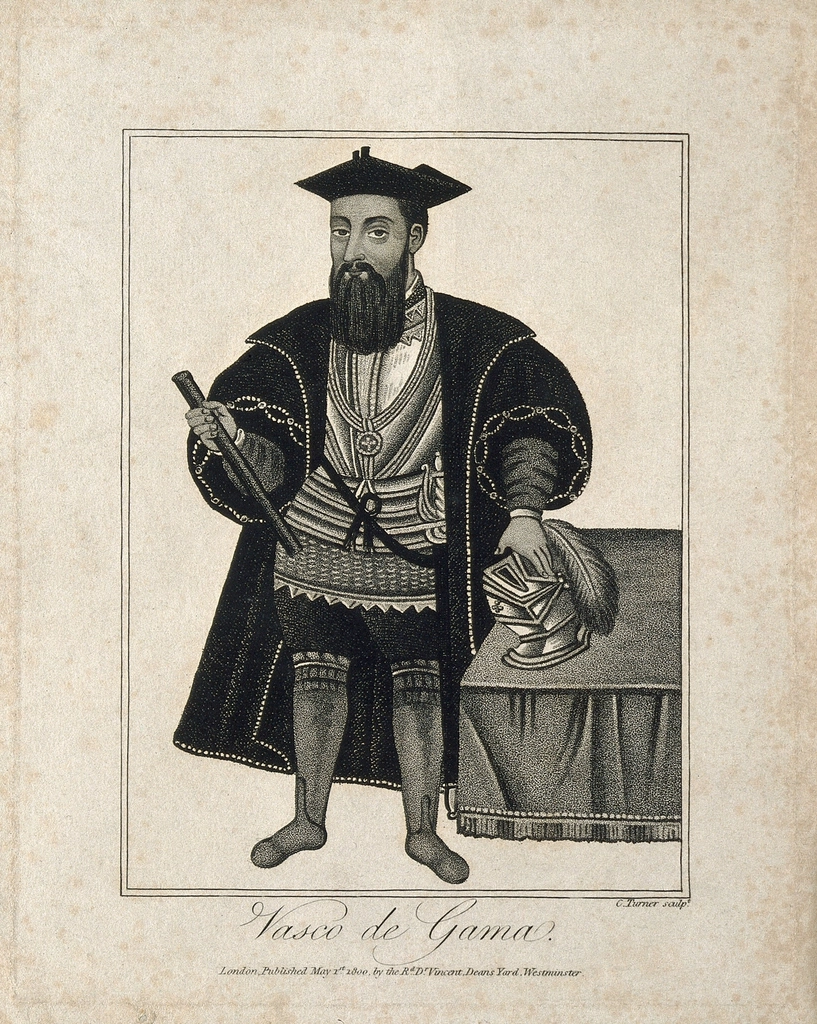
Introduction
Vasco da Gama was a pivotal figure in the Age of Exploration, known primarily for his significant role in establishing sea routes between Europe and India during the late 15th century. Born in Sines, Portugal, in 1460, Da Gama came from a family with a rich maritime tradition. His expeditions were crucial in connecting Europe to the lucrative spice trade in Asia, fundamentally altering the course of world history. Through his journey, he not only opened new pathways for commerce but also laid the groundwork for future colonial enterprises. This article delves into the multifaceted life of Vasco da Gama, exploring his early life, landmark voyages, contributions to the Portuguese Empire, and lasting legacy in maritime navigation.
Early Life and Background of Vasco da Gama
Vasco da Gama was born into a family of noble lineage in Sines, Portugal. His father, Estêvão da Gama, was a knight of the Order of Santiago, which gave young Vasco early exposure to maritime culture. The importance of navigation and exploration was palpable during this period, as Portugal sought to expand its influence globally. As a young boy, Vasco was reportedly educated at the University of Lisbon, where he studied mathematics, navigation, and astronomy—fields essential for a career at sea.
By the late 15th century, Portugal emerged as a frontrunner in exploration, actively seeking new routes to India and Africa, specifically for spices and gold. The development of advanced navigational techniques and the construction of powerful ships, like the caravel, set the stage for ambitious expeditions. Vasco da Gama, recognizing the potential for riches and glory, became passionately interested in these undertakings.
His rise in the ranks began following several successful voyages along the African coast. In 1492, the Portuguese crown decided to send an expedition to India to establish trade routes. Da Gama was appointed as the fleet’s commander, a testament to his skills and the trust placed in him by King Manuel I. This mission was not only commercially driven but also aimed at spreading Christianity and countering the influence of other European powers in the region, particularly the Muslim empires.
The resources and preparation for this voyage were substantial. Da Gama’s fleet consisted of four ships: the flagship São Gabriel, the São Rafael, the caravel Berrio, and a supply ship. Each vessel was equipped for long-distance travel, marking a shift in maritime capabilities. On July 8, 1497, da Gama and his fleet set sail from Lisbon, embarking on a journey that would change the course of maritime history and open the way for centuries of European dominance in Asia.
Their first significant stop was the Canary Islands, where the fleet resupplied before continuing down the African coast. The ships navigated treacherous waters, overcoming challenges such as storms, rough seas, and navigational uncertainties. Da Gama’s strategic sense was evident as he relied on the knowledge gained from earlier explorers and integrated them into his methodology.
As da Gama continued along the African coastline, he made several critical decisions, like establishing alliances with local rulers and learning from their navigation techniques. Such interactions were crucial in understanding the local trade systems and securing safe passage for his ships. His ability to communicate and negotiate with foreign leaders marked a significant part of his leadership style.
Ultimately, Vasco da Gama’s early endeavors significantly shaped his character as an explorer. His commitment to navigating uncharted waters, his aptitude for leadership, and his strategic approach to establishing foreign relationships set the stage for the immense success of his historic voyage to India.

The Historic Voyage to India (1497-1499)
Vasco da Gama’s historic voyage to India is often described as one of the benchmark moments in the Age of Exploration. On July 8, 1497, he set sail from Lisbon with a mission to find a sea route to India. The fleet made pivotal stops along the African coast, where da Gama expertly navigated the tricky waters off the shores of Africa while gathering essential information that would facilitate his journey.
Reaching the Cape of Good Hope posed a significant challenge for da Gama, characterized by formidable weather and tumultuous seas. With determination and a competent crew, he succeeded in rounding the cape, thus signifying a monumental moment in Portuguese maritime history. After several months battling storms and navigating through uncharted territories, da Gama and his men arrived at the shores of Calicut (now Kozhikode) in May 1498.
Upon reaching India, the expectations were high. The Portuguese were eager to engage in trade with the local merchants, particularly for spices like pepper, cinnamon, and cardamom. However, da Gama encountered the local sultan, who was initially hesitant about engaging in commerce with foreign traders. Da Gama’s diplomatic skills came to the fore as he attempted to reassure the sultan of the benefits of engaging with the Portuguese. His mission combined commercial interests with a deeper religious and cultural agenda, as he sought to spread Christianity among the local populations.
The initial trade discussions proved challenging. Local traders were accustomed to dealing in their traditional methods, which included bartering and established networks. Da Gama sought to introduce the idea of direct trade with the Portuguese, hoping to bypass intermediaries and secure more favorable terms. The interactions were fraught with tension, as da Gama’s insistence on Christian superiority clashed with the established Muslim trading networks.
Despite the initial setbacks, da Gama managed to secure a trade agreement, allowing him to load his ships with valuable spices and goods. The success of this first leg of the expedition marked a significant triumph for Portugal, as it demonstrated the viability of sea routes to the East. The return journey saw the holdings of great wealth, signaling a new dawn for European trade with Asia.
The return to Portugal in September 1499 was celebrated as a monumental achievement. Vasco da Gama was hailed as a national hero, and the successful voyage established the groundwork for future expeditions. Subsequent voyages sent by the Portuguese crown capitalized on da Gama’s pioneering journey, leading to Spain’s and Italy’s increased involvement in Asian trade while cementing Portugal’s position as a dominant maritime power.
In retrospect, his voyage was not just about economic gains; it paved the way for a complex interplay between cultural exchanges, religious missions, and the often fraught relationships between European powers and Asian kingdoms. Da Gama’s historic milestone established the Portuguese Empire as a leader in global trade, influencing maritime navigation and patterns for centuries.
Subsequent Expeditions and Establishing Trade Routes
Following the success of his first voyage to India, Vasco da Gama embarked on subsequent expeditions, aimed at solidifying Portugal’s presence in the Indian Ocean and expanding its trade networks. Knowing that the spice trade was immensely lucrative, Gama was tasked with ensuring that Portugal held a monopoly over this vital resource.
In 1502, da Gama was commissioned for his second voyage, consisting of a much larger fleet, including 20 ships, to further secure and expand Portuguese trade in India. His objectives included establishing fortified trading posts, negotiating treaties, and maintaining military leverage over other European and local traders. His fleet departed Lisbon armed with cannons, a signal of the aggressive tactics that would dominate European colonialism during this era.
The journey to India was fraught with conflict. On reaching Calicut, Gama found the political landscape had changed, leading to tensions with local rulers who viewed the Portuguese as invaders. Da Gama’s approach was characterized by assertiveness, leading to confrontations with rival Indian kingdoms and even attacks on merchant ships of other nations. His reputation for aggressive diplomacy involved a blend of negotiations and military might—common in establishing European colonial rule during this period.
Lasting alliances and trade agreements were critical as Gama sought to lay the groundwork for a systematic approach to Portugal’s Asian territories. Establishing the first trading post in Cochin was a strategic move, creating a foothold from which Portuguese power could emanate. The construction of forts enabled Gama to assert Portuguese dominance, creating a protective buffer for future commercial ventures.
Gama returned to Portugal after two years, bringing back immense wealth and a newfound respect for his negotiating prowess. His expeditions fueled the ambition of the Portuguese crown to continue developing its maritime empire, leading to further exploration and conquest in the years to follow. The establishment of treaty systems with local rulers, such as those in Cochin, signaled the shifting dynamics of power in southern India, as Portugal began to emerge as a dominant player in Asian maritime trade.
In essence, the subsequent voyages led by Vasco da Gama were crucial for not only ensuring the flow of spices and wealth back to Portugal but also pioneering systems of colonial trade that would be replicated by other European powers in their explorations. The developments initiated during this period were invaluable in shaping patterns of trade and conflict that would define the colonial era for centuries.

Vasco da Gama’s Role in the Portuguese Empire
Vasco da Gama’s contributions went beyond his journeys; he became a cornerstone in the establishment of the Portuguese Empire. His experiences and successes in the East provided valuable insights into the methods and strategies necessary for sustaining a colonial endeavor. The Portuguese empire flourished under the foundation laid by da Gama, influencing the course of European maritime history.
His appointment as the first Count of Vidigueira after his exploration efforts illustrated the high regard in which he was held by the Portuguese monarchy. Not only did he achieve success on the field, but he also worked closely with the crown to develop strategic plans for future exploratory missions. As newfound wealth poured into Portugal from the spice trade, da Gama advocated for the establishment of a comprehensive naval infrastructure to protect these newfound territories.
The implementation of a strong naval presence in the Indian Ocean was a direct result of da Gama’s experiences. He recognized that the Portuguese Empire needed to defend its interests against established regional powers and rival European nations. To this end, the crown invested in the construction of well-armed ships designated for naval warfare, supporting the notion that control of the seas was vital for maintaining empire.
Gama’s influence extended to the cultivation of relationships with native rulers, vital for sustaining trade. His diplomatic engagements laid the groundwork for treaties designed to favor Portuguese interests, creating an environment in which trade flourished. Scholarships and yields from wealth garnered through his efforts supported enhanced military campaigns, enabling Portugal to strengthen its empires in Brazil and Africa.
However, Gama’s legacy also reveals the complexities of colonial rule; while he established fruitful connections for trade, he also fostered an environment of exploitation. The aggressive approach taken by Gama and his successors led to resistance from local populations and instigated conflicts that would span for generations. Da Gama’s tension-filled interactions with local traders emphasized the ethical dilemmas of colonial behavior, illustrating that while wealth flowed into Portugal, it often came at significant human cost.
Nonetheless, Gama’s vision was instrumental in solidifying Portugal’s status as a leading maritime power during the early 16th century. His unwavering commitment to creating a network of trade dominated by Portugal reshaped global perspectives on commerce, navigation, and colonial enterprise. The impact of Vasco da Gama’s expeditions ultimately resonated through generations, reshaping the geopolitical dynamics of trade, influence, and power on a global scale.
Legacy and Impact on Global Navigation and Trade
Vasco da Gama’s legacy extends beyond his voyages and immediate contributions to the Portuguese Empire, as his impact on global navigation and trade remains significant even today. His successful establishment of sea routes opened up new possibilities for European engagement with Asia, resulting in unprecedented exchanges of culture, goods, and ideas.
One of the most notable effects of Gama’s voyages was the profound transformation in European perceptions of trade routes. Prior to his expeditions, European powers were heavily reliant on land routes that were perilous and fraught with geopolitical tensions. Da Gama’s navigation around the Cape of Good Hope not only illustrated the potential of maritime trade but also mapped out the critical pathways that would define intercontinental commerce for centuries.
The thriving spice trade, which Gama helped to pioneer, prompted other nations to explore alternative routes for their own gain. His achievements served as both a model and a challenge for European rivals, including Spain, England, and the Netherlands, all of whom would engage in their own quests to establish trade networks and colonies across Asia. The thirst for spices, textiles, and other resources led to competitive expansionism, setting the stage for an age of colonial rivalry that shaped modern geopolitics.
Additionally, Gama’s contributions to navigation and geographic knowledge were remarkable. His documentation of routes, currents, and wind patterns provided navigators with vital information that improved maritime routes. The practices he instituted concerning cartography and sea travel were foundational, assisting subsequent generations of sailors as they ventured into uncharted waters. Essentially, the trade routes and methods he developed left a lasting legacy that heralded a new era of exploration and maritime innovation.
Yet, much of the narrative surrounding Gama is also critically intertwined with themes of colonization and exploitation. The aggressive pursuit of trade led to conflicts and the subjugation of indigenous populations across Asia and Africa. As European powers established dominance, the human cost of these expeditions cannot be overlooked. Gama’s interactions with local rulers often presented complex dynamics of negotiation, coercion, and ultimately, domination.
The legacy of Vasco da Gama is, therefore, a tapestry woven with triumphs and tragedies, where his vision brought forth an era of trade and exploration intertwined with the darker realities of colonization. The repercussions of his journeys continue to echo through history, shaping global trade dynamics, prompting cultural exchanges, and instituting legacies of colonialism that demand ongoing reflection. Da Gama’s role in these historical processes underpins the complexity of the Age of Exploration—one that was full of ambition, innovation, and profound consequences for multiple corners of the globe.
Conclusion
In conclusion, Vasco da Gama’s life and explorations mark a dramatic chapter in the narrative of the Age of Exploration. From his origins in Portugal to his historic voyage to India, Gama’s journey exemplifies the ambitions of an era that sought to connect disparate cultures through trade and navigation. His expeditions led to the establishment of sea routes that transformed global commerce, positioned Portugal as a leader in colonial endeavors, and provided frameworks that shaped subsequent transactions between Europe and Asia.
However, the legacy of Gama must be viewed through a multifaceted lens. While he undoubtedly contributed to the expansion of maritime knowledge and the economic prosperity of Portugal, his actions also precipitated the complex and often violent realities of colonization. The reverberations of his journeys continue to inform our understanding of international trade, maritime navigation, and the intricate web of cultural interactions that characterize our world today.
As we reflect on Vasco da Gama’s influence, it is essential to recognize both his accomplishments and the broader socio-political contexts in which he operated. His life embodies the complexities of exploration—marked by a spirit of inquiry and the unsettling consequences of the imperial pursuits that stemmed from it. Gama’s story serves as a reminder of the dual nature of exploration: one that seeks to discover and connect while simultaneously imposing power and dominance.
Sources Consulted
- History.com: Vasco da Gama
- Britannica: Vasco da Gama
- National Geographic: The Age of Exploration
- The Mariners’ Museum: Vasco da Gama and the Sea Route to India
- BBC History: The Age of Discovery
Watch also

Leave a Reply