Introduction
The Fontana di Trevi, a crowning jewel of Roman artistry, stands as one of the most iconic fountains in the world. Nestled in the heart of Rome, this Baroque masterpiece is not only an architectural wonder but also a symbol of the city’s enduring history and cultural significance. With origins tracing back to ancient Roman engineering, the fountain has witnessed centuries of transformation, from Renaissance conceptualization to Baroque execution. The intricate sculptures and flowing waters narrate tales of mythology and human ingenuity. It has also carved a unique niche in popular culture, featuring prominently in films and attracting millions of visitors annually, who partake in the coin-tossing tradition for luck. This article delves into the fascinating journey of the Trevi Fountain—from its ancient aqueduct foundations to its modern-day prominence—exploring the artistry, challenges, and enduring allure of this Roman treasure.
The Origins of the Trevi Fountain: Ancient Roman Aqueducts
The story of the Fontana di Trevi begins long before the Baroque era, rooted in the engineering marvels of ancient Rome. The fountain’s history is tied to the Aqua Virgo, one of the eleven aqueducts that supplied water to the city during the reign of Augustus. Built in 19 BCE under the supervision of Marcus Agrippa, the Aqua Virgo was celebrated for its pure and abundant supply, essential to the burgeoning Roman population.
Legend has it that the aqueduct’s name derives from a young maiden, or virgo, who guided thirsty Roman soldiers to the spring that would become its source. This mythological narrative is intricately linked to the fountain’s later designs, as themes of water and purity echo throughout its sculptures. The Aqua Virgo stretched over 20 kilometers, using a combination of underground tunnels and elevated channels to deliver water to public baths, fountains, and other essential sites.
The end point of the Aqua Virgo marked the precursor to the Trevi Fountain. During ancient times, a simple basin or fountain stood at this terminal, providing a communal water source for the residents of Rome. This site, located at the junction of three roads—tre vie, from which the fountain derives its name—held strategic importance in the city’s layout. Over time, this modest fountain became a focal point for architectural and artistic innovation, reflecting the evolving priorities of Roman society.
The decline of the Roman Empire in the fifth century led to the deterioration of its aqueducts, including the Aqua Virgo. For centuries, the infrastructure remained neglected, and Rome suffered from insufficient water supply. However, the Renaissance revival of classical ideals, combined with the papacy’s vision of restoring Rome’s grandeur, prompted renewed interest in the ancient aqueducts. The revitalization of the Aqua Virgo set the stage for the creation of the iconic Fontana di Trevi.
The Renaissance Vision: Pope Nicholas V and Early Designs
The Trevi Fountain’s evolution from a simple Roman water terminal to a grand artistic monument began during the Renaissance, a period characterized by the rediscovery of classical antiquity and an emphasis on artistic and architectural innovation. In the mid-15th century, Pope Nicholas V played a pivotal role in reinvigorating Rome’s infrastructure, including the Aqua Virgo.
Recognizing the importance of clean water for the city’s residents and its symbolic connection to Rome’s heritage, Nicholas V commissioned the restoration of the ancient aqueduct. The restored Aqua Virgo, now referred to as Acqua Vergine, became a vital resource, and the pope envisioned a more ornate structure at its terminus to celebrate its significance. This vision aligned with the Renaissance ethos of blending functionality with aesthetic grandeur.
The early designs for the fountain were relatively modest compared to the later Baroque masterpiece. Architect Leon Battista Alberti, renowned for his classical approach, contributed to preliminary plans. These designs emphasized symmetry and harmony, drawing inspiration from ancient Roman triumphal arches. Although these concepts laid the groundwork for future developments, they remained unrealized due to limited resources and political instability.
Despite these challenges, Nicholas V’s initiatives marked a turning point in the fountain’s history. The Renaissance-era projects reaffirmed the fountain’s importance as a symbol of Rome’s enduring legacy. Subsequent popes and artists would build upon this foundation, culminating in the extraordinary Baroque creation that we admire today.
Nicola Salvi’s Grand Design: A Baroque Marvel
The Trevi Fountain as we know it owes its grandeur to the vision and creativity of Nicola Salvi, a Roman architect whose work transformed the modest Renaissance fountain into an emblem of Baroque magnificence. In 1730, Pope Clement XII announced a competition to redesign the fountain, aiming to assert the grandeur of papal Rome. This initiative was part of a broader trend during the Baroque period, where architecture and art were employed to symbolize the church’s authority and cultural dominance.
The competition attracted numerous proposals from prominent architects, but the winning design was submitted by Alessandro Galilei, a Florentine architect. However, Roman public opinion demanded a local artist, and the commission was instead awarded to Nicola Salvi. Salvi’s proposal combined dramatic theatricality with intricate allegorical elements, a hallmark of Baroque art.
Construction began in 1732 under Salvi’s direction. His design centered on the theme of taming water, symbolized by the god Neptune, who presides over the fountain’s central tableau. Flanked by allegorical figures representing abundance and health, Neptune commands a chariot drawn by two sea horses—one calm and the other restless—guided by Tritons. This dynamic composition represents the duality of water’s nature: both life-giving and untamable.
Salvi’s design also emphasized integration with its surroundings. The Palazzo Poli, behind the fountain, served as a dramatic backdrop, its façade seamlessly merging with the fountain’s cascading waters. The architect’s clever use of perspective and relief created a sense of movement, drawing viewers into the scene. Despite its grandeur, Salvi faced significant challenges, including limited funding and technical difficulties. He died in 1751, leaving the project incomplete, but his vision endured.
After Salvi’s death, the fountain’s construction continued under Giuseppe Pannini, who finalized the design in 1762. The completed fountain not only celebrated the vitality of water but also embodied the opulence and artistic innovation of Baroque Rome. Today, Salvi’s masterpiece stands as a testament to his ingenuity and the collaborative spirit of his era.
Symbolism in Sculpture: Neptune and Mythological Themes
The sculptures of the Trevi Fountain are more than ornamental; they are a narrative medium that conveys themes of mythology, human interaction with nature, and the transformative power of water. At the heart of the fountain is Neptune, the Roman god of the sea, commanding attention from his central perch atop a shell-shaped chariot. His calm yet authoritative demeanor symbolizes mankind’s ability to harness and coexist with the forces of nature.
Neptune’s chariot is drawn by two sea horses, each embodying a different aspect of water’s dual nature. The placid horse represents the benevolent, life-sustaining qualities of water, while the agitated one reflects its wild and destructive potential. Tritons, mythological sea deities, guide the horses, emphasizing the harmonious relationship between divine and natural forces.
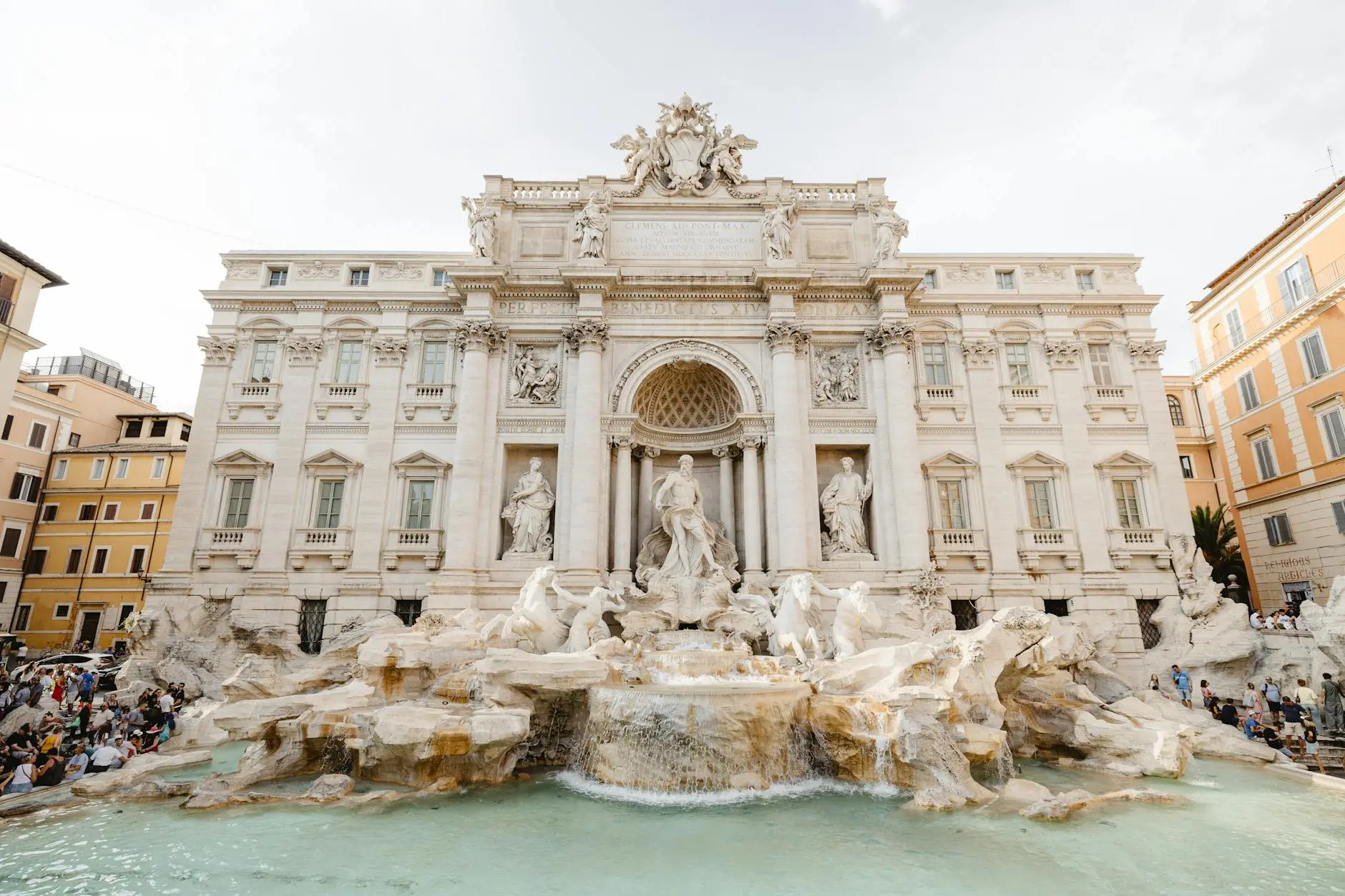
Flanking Neptune are two allegorical statues: one symbolizing abundance, holding a cornucopia overflowing with fruits, and the other representing health, pouring water from an urn. These figures underline the significance of water as essential to prosperity and well-being. The backdrop of the fountain features bas-reliefs depicting the legend of the Aqua Virgo’s discovery and its vital role in Roman life, further anchoring the fountain’s historical and cultural narrative.
Every element of the sculpture is intricately detailed, from the textures of Neptune’s robes to the flowing waves carved into the marble. The synergy between the sculptures and the cascading water creates a dynamic tableau, where art and nature merge. This interplay captures the essence of Baroque art: grandeur, motion, and emotional impact.
Construction Challenges and Completion
The construction of the Trevi Fountain was a monumental endeavor that spanned over three decades, marked by technical, financial, and political challenges. Nicola Salvi’s initial designs required extensive modifications to accommodate the site’s existing structures and logistical constraints. The fountain’s location, at the junction of three streets, posed significant difficulties in terms of scale and water flow.
One of the primary challenges was ensuring a reliable supply of water from the Acqua Vergine aqueduct. Engineers had to address centuries of neglect and restore the ancient infrastructure to deliver a consistent flow capable of supporting the fountain’s dramatic cascades. This involved meticulous excavation and repair, tasks that were both time-consuming and costly.
Funding was another persistent issue. Pope Clement XII financed the project through a lottery system, a common practice in the 18th century. While this provided some revenue, it often fell short of the immense costs required. Political instability and changes in papal leadership further disrupted the flow of resources and delayed progress.
Despite these obstacles, construction continued with the support of skilled artisans and engineers. Salvi himself dedicated much of his career to the project, overseeing every detail from the intricate carvings to the hydraulic systems. However, he did not live to see its completion. After his death, Giuseppe Pannini assumed responsibility, refining Salvi’s designs and bringing the fountain to fruition in 1762.
The completion of the Trevi Fountain marked the triumph of human ingenuity over adversity. Its successful construction showcased the collaborative spirit of artists, engineers, and patrons, solidifying its status as a cultural and architectural marvel.
Cultural and Cinematic Impact
The Fontana di Trevi is not only a symbol of Rome’s historical and artistic heritage but also a global cultural icon, celebrated for its role in literature, cinema, and traditions. Its majestic presence and romantic allure have made it a favorite setting for artistic expression and storytelling, reinforcing its universal appeal.
One of the most significant contributions to the fountain’s cultural fame is its role in the 1960 film La Dolce Vita by Federico Fellini. The iconic scene of actress Anita Ekberg wading through the fountain, calling to Marcello Mastroianni, immortalized the Trevi Fountain as a symbol of cinematic romance and decadence. This scene cemented the fountain’s place in the public imagination, drawing countless visitors inspired by the movie.
The Trevi Fountain has also appeared in numerous other films, including Roman Holiday (1953) and The Lizzie McGuire Movie (2003), showcasing its versatility as a backdrop for stories of adventure, romance, and personal transformation. These cinematic portrayals have helped the fountain transcend its historical roots, making it a timeless emblem of beauty and inspiration.
Beyond its cinematic presence, the Trevi Fountain is the subject of enduring traditions. The most famous of these is the coin-tossing ritual. Visitors toss coins over their left shoulders into the fountain, believing this will ensure their return to Rome. This tradition is thought to have originated from an ancient custom to secure safe travels and is now a source of substantial revenue, with the collected coins donated to charitable causes.
The fountain’s cultural impact extends to literature and music as well. Writers from Johann Wolfgang von Goethe to contemporary novelists have drawn inspiration from its enchanting beauty. It has also featured in songs and art installations, further affirming its role as a muse for creative endeavors.
The Trevi Fountain’s cinematic and cultural resonance underscores its dual identity as both a historical artifact and a living symbol of human creativity. Its ability to captivate audiences across generations ensures that it remains not just a Roman treasure but a global one.
Modern Restoration and Conservation Efforts
As one of Rome’s most visited landmarks, the Fontana di Trevi endures significant wear and tear, necessitating ongoing restoration and conservation efforts. These initiatives are vital to preserving the fountain’s architectural integrity and artistic details for future generations.
Modern conservation efforts began in earnest in the 20th century as the city grappled with the effects of pollution, vandalism, and weathering on its historic monuments. In the case of the Trevi Fountain, the continuous flow of water, combined with exposure to environmental elements, had caused erosion and discoloration of the travertine and marble.
One of the most comprehensive restoration projects occurred between 2014 and 2015, funded by the Italian fashion house Fendi. The €2.2 million initiative included cleaning the fountain’s surface, repairing cracks, and restoring the hydraulic system to ensure uninterrupted water flow. The project also implemented advanced techniques such as laser cleaning to remove grime while preserving the delicate carvings.
Public engagement played a key role during this restoration. Transparent scaffolding allowed visitors to witness the meticulous work up close, fostering appreciation for the expertise involved in conserving such a masterpiece. The project’s completion was celebrated with a grand reopening, reaffirming the fountain’s place at the heart of Roman culture.
Conservation efforts also extend to the surrounding area, ensuring the fountain remains integrated into the urban fabric of Rome. Measures to manage tourist crowds and prevent vandalism, such as protective barriers and surveillance systems, have been introduced to safeguard the site.
The ongoing dedication to the Trevi Fountain’s preservation reflects a broader commitment to cultural heritage. It ensures that this iconic landmark continues to enchant visitors while serving as a testament to the enduring legacy of Roman artistry and innovation.
Conclusion
The Fontana di Trevi stands as a timeless masterpiece, encapsulating the artistic, cultural, and historical essence of Rome. From its origins in ancient Roman engineering to its transformation into a Baroque marvel under Nicola Salvi, the fountain represents the ingenuity and vision of generations. Its intricate sculptures and dynamic waterworks narrate tales of mythology and human connection to nature, while its enduring traditions, such as the coin-tossing ritual, imbue it with a sense of magic and wonder.
Cultural and cinematic representations have elevated the fountain to global fame, ensuring its place not only as a historical monument but also as an emblem of creativity and romance. Through meticulous restoration efforts, the Trevi Fountain continues to thrive, enchanting millions of visitors each year. As both a relic of the past and a living symbol of beauty, the Fontana di Trevi remains an eternal treasure of the Eternal City, inspiring awe across generations.