Introduction
The Uffizi Galleries, located in Florence, are one of the world’s most renowned museums, housing an extensive collection of art from the Italian Renaissance and beyond. Originally conceived as administrative offices by Giorgio Vasari for Francesco I de’ Medici in the 16th century, the Uffizi evolved into a prominent public gallery showcasing the wealth and artistic legacy of the powerful Medici family. Over the centuries, it has become a symbol of Florence’s cultural heritage and a major destination for art lovers globally.
The gallery’s collection boasts masterpieces by iconic artists like Leonardo da Vinci, Botticelli, Raphael, and Michelangelo. However, the Uffizi’s story is not just about its exceptional art but also about the evolving role it played in shaping Italy’s artistic identity, the Medici’s political influence, and the way art was experienced by the public. This article delves into the history of the Uffizi, exploring its origins, transformations, and lasting impact on art history.
The Origins and Foundation of the Uffizi Galleries
The Uffizi Galleries, or Gallerie degli Uffizi, began as a project commissioned by Francesco I de’ Medici in the 1560s. Francesco, the Grand Duke of Tuscany, sought to create a centralized government office in Florence that would also serve as a space for collecting and displaying art. The project was designed by Giorgio Vasari, an architect, artist, and historian closely connected with the Medici family. The word uffizi translates to “offices” in Italian, reflecting the initial purpose of the building as a government administrative center.
Vasari’s design was innovative, featuring a long, corridor-like structure along the Arno River that connected several buildings, including the Palazzo Vecchio, the family’s official residence, with the Palazzo Pitti. The architectural layout was intended not only for government offices but also for the display of the Medici’s vast art collection, which was already growing in size and importance. This mix of civic and cultural function was symbolic of the Medici family’s approach to governance, using art to project their power and sophistication.
Although the Uffizi was originally designed to house administrative offices, it quickly began to take on a new role. The Medici family, known for their patronage of the arts, started to fill the galleries with works that showcased both their wealth and their artistic taste. Francesco I, who had a strong personal interest in art, was instrumental in the development of the collection. Under his guidance, the gallery expanded its holdings, and the Uffizi became a major site for the Medici’s artistic and cultural activities. The first works to be displayed included a variety of paintings, sculptures, and works of antiquity that were collected from across Italy and Europe.
By the late 16th century, the Uffizi began to take on a public role as well, though access to the galleries was initially restricted to the Medici court and select guests. The Medici’s art collection included works by some of the most renowned artists of the period, including Leonardo da Vinci, Sandro Botticelli, and Raphael. This collection would later become the foundation for the museum’s public collection when the Medici decided to open the galleries to the public in the 18th century.
The foundation of the Uffizi Galleries was not just about creating a space for art, but also about asserting the Medici family’s dominance in the cultural and political landscape of Florence. Through art, the Medici could communicate their wealth, education, and divine right to rule. The Uffizi played a crucial role in reinforcing the Medici’s identity as patrons of the arts and was part of a broader cultural strategy to ensure their legacy in Florentine society. As such, the Uffizi became a symbol not only of artistic achievement but also of the political ambitions and influence of the Medici dynasty.
The Role of Francesco I de’ Medici and Giorgio Vasari in Shaping the Uffizi’s Identity
Francesco I de’ Medici, the Grand Duke of Tuscany, and Giorgio Vasari, the renowned artist and architect, played pivotal roles in the creation and early development of the Uffizi Galleries. Their collaboration shaped the identity of the Uffizi as both a space for administration and a center for the Medici family’s art collection. Understanding their contributions is crucial to grasping how the Uffizi became one of the most important art museums in the world.
Francesco I, who ruled Tuscany from 1574 to 1587, was deeply interested in the arts, and his reign marked a period of significant cultural patronage. He was a collector of rare and valuable works, and his passion for art led him to commission the creation of the Uffizi. His vision was not just to house administrative offices but to create a space that would also display the family’s growing collection of art, sculpture, and antiquities. Francesco’s motivation was rooted in his desire to project the Medici family’s wealth, sophistication, and power through the visual arts. Under his leadership, the gallery began to house works by famous Renaissance artists, many of whom were patronized by the Medici family.
Giorgio Vasari, a close associate of the Medici, was entrusted with designing the Uffizi. Vasari, who was both an architect and a painter, was already famous for his previous work on the Palazzo Vecchio and the Vasari Corridor, another Medici commission. His architectural vision for the Uffizi was innovative, blending Renaissance principles with functional needs. The building’s long, linear layout, with a central hallway running along the Arno River, was intended to serve as both a practical space for government offices and a gallery to showcase art.
Vasari’s design emphasized the notion of continuity and unity, as the Uffizi would connect key sites in Florence, including the Palazzo Vecchio and the Palazzo Pitti. The grand corridor created by Vasari also allowed the Medici family to move privately between these buildings, enhancing the sense of control and power. The architectural layout of the Uffizi was carefully crafted to highlight the importance of the art it housed, with an emphasis on creating a harmonious environment for both administration and culture.
Francesco I’s deep interest in collecting art led to the expansion of the Uffizi’s holdings. He sought out works by the great masters of the Renaissance, and he began acquiring pieces from artists like Leonardo da Vinci, Raphael, Titian, and Michelangelo. The combination of Francesco’s patronage and Vasari’s architectural brilliance transformed the Uffizi into a monumental space for art collection and display. The gallery became a reflection of the Medici’s status, and its collections soon attracted visitors from across Europe.
Both Francesco I and Vasari understood the importance of art not only as a cultural endeavor but also as a tool for political and social control. The Uffizi, in their hands, was more than just a gallery—it was a mechanism for the Medici to assert their dominance in Florence, Italy, and beyond. As a public space for art, the Uffizi allowed the Medici to demonstrate their wealth, their influence in the world of art, and their commitment to fostering the Italian Renaissance.
The contributions of Francesco I and Vasari laid the foundation for the Uffizi’s enduring legacy as one of the most celebrated art collections in the world. Their shared vision created an institution that continues to be a powerful symbol of Florence’s cultural heritage and the Medici family’s enduring influence on the world of art.
The Transformation of the Uffizi into a Public Gallery
The transformation of the Uffizi Galleries from a private Medici collection to a public museum was a gradual process that unfolded over centuries. Originally, the Uffizi was designed as a space to house the Medici family’s art collection and administrative offices. However, the vision for the gallery evolved over time, especially as Florence underwent political and cultural changes that ultimately led to the Uffizi being opened to the public.
The early years of the Uffizi saw the gallery function primarily as a private treasure trove of art for the Medici family and their court. While the Medici dynasty was well known for its patronage of the arts, access to the collection was restricted to a small circle of nobility, foreign dignitaries, and invited guests. The family’s extensive art holdings were displayed not only as symbols of their power and taste but also as an assertion of their political control. The art in the Uffizi was part of a larger strategy to project the Medici’s influence across Europe, with the gallery serving as a manifestation of the family’s cultural supremacy.
The turning point for the Uffizi came in the 18th century. By the time of the 1737 accession of the House of Lorraine to the Grand Duchy of Tuscany, the political landscape of Florence had shifted dramatically. The Medici family, who had ruled Florence for over two centuries, was no longer in power, and the new rulers saw the potential of the Uffizi as a public institution that could showcase Florence’s artistic heritage to a broader audience. The House of Lorraine, under the leadership of Francesco Stefano of Lorraine and his successor, Maria Theresa of Austria, began to make significant efforts to open the gallery to the public. This was part of a broader Enlightenment movement in Europe that aimed to make art and culture accessible to the general populace, moving away from the idea of art as the private possession of the aristocracy.
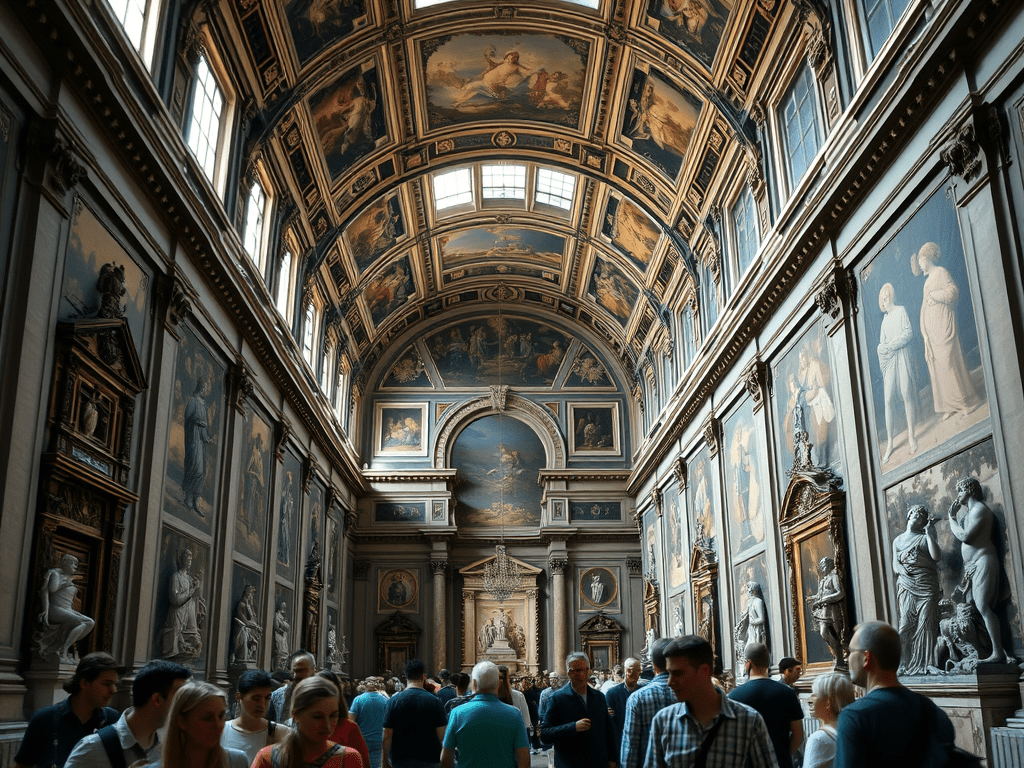
In 1765, under the patronage of Peter Leopold, the Uffizi Galleries officially opened their doors to the public. This decision marked a profound shift in the museum’s identity, transforming it from a royal collection into a civic institution meant to foster cultural education and appreciation. The Uffizi was no longer just a space for the Medici to showcase their wealth and power; it became a cultural space where the people of Florence, and eventually visitors from across Europe, could experience and learn from the great works of art housed within its walls.
The opening of the Uffizi to the public also had a significant impact on how art was perceived and appreciated. It reflected a changing attitude toward the role of art in society. Art was no longer confined to private spaces of the elite; it was to be seen and experienced by all, becoming a part of the public consciousness and the shared cultural fabric of the city. The Uffizi’s transformation into a public gallery was not just about the accessibility of its collection; it was also a reflection of the Enlightenment ideals of democracy, education, and public engagement with culture.
However, the opening of the Uffizi to the public was not without its challenges. The gallery had to adjust to the demands of public access, which required the installation of more visitor-friendly features, such as better lighting, signage, and security measures. The logistics of preserving and displaying the collection in a way that balanced public access with conservation concerns also presented new challenges. The Uffizi had to become more than just a repository of art; it had to adapt to the needs and expectations of a wider, more diverse audience.
The decision to open the Uffizi was not only transformative for the museum but also for Florence itself. The gallery became a major cultural landmark, attracting tourists, scholars, and art lovers from around the world. This shift in the gallery’s role helped establish Florence as a leading center of art and culture in Europe, continuing the legacy of the Medici family but in a new, more inclusive form.
By the late 19th and early 20th centuries, the Uffizi had become one of the most famous art museums in the world, with its public access now firmly established. The museum’s transformation into a public institution marked a key moment in the history of art museums globally, influencing the development of similar institutions in other parts of Europe and beyond. The opening of the Uffizi was part of a broader trend of museums becoming more democratized, a trend that continues to shape how art is experienced today.
In conclusion, the transformation of the Uffizi into a public gallery was a crucial step in its development, turning it from a private royal collection into an accessible cultural institution. This change reflected both political shifts in Florence and broader trends in European cultural thought, with the Uffizi serving as a key example of how art museums could evolve to serve the public good.
The Impact of the Uffizi on the Renaissance Art Scene
The Uffizi Galleries hold a central place in the history of Renaissance art, not only because of the masterpieces housed within its walls but also due to its role in shaping the way art was experienced and appreciated during the Renaissance period. The Medici family, who were the primary patrons of the Uffizi’s collection, played a significant role in fostering the Renaissance’s growth, and the Uffizi served as both a symbol of their wealth and a testament to the cultural flourishing of Florence.
During the Renaissance, Florence was the epicenter of artistic innovation, and the Medici were at the heart of this cultural rebirth. As patrons of artists like Botticelli, Leonardo da Vinci, Raphael, and Michelangelo, the Medici transformed the city into a living canvas, and the Uffizi became the focal point for their artistic collection. The Uffizi’s holdings reflect the wide range of artistic achievements of the period, from the delicate elegance of Botticelli’s The Birth of Venus to the groundbreaking technique of Leonardo da Vinci’s Annunciation.
The impact of the Uffizi on the Renaissance can also be seen in how the gallery helped to solidify Florence’s reputation as the cultural capital of Italy, and indeed Europe, during this period. The Medici used art to communicate their political and social aspirations, and the Uffizi was integral to this. By bringing together works from the finest artists of the period, the gallery embodied the intellectual and cultural ideals of the Renaissance, where art was not just a form of personal expression but a means of achieving a broader cultural and philosophical understanding of the world.
The Uffizi also played a key role in the development of the Renaissance style itself. Its collection included works that not only exemplified the classical ideals of beauty and proportion but also pushed the boundaries of these ideals, incorporating new techniques and perspectives. Artists like Raphael and Titian, whose works are central to the Uffizi, were at the forefront of developing the Renaissance style, and their work in the gallery helped set the standard for subsequent generations of artists.
The role of the Uffizi in shaping Renaissance art can be seen not only in the works it collected but in its status as a place of learning and inspiration for artists. As the gallery expanded its collection, it became an important resource for young artists in Florence and beyond. Many of the greatest painters of the Renaissance, including Michelangelo, visited the Uffizi to study the works of their predecessors and contemporaries, learning from the masterpieces housed there and incorporating those lessons into their own work.
Furthermore, the Uffizi’s emphasis on classical antiquity as part of its collection was crucial in fostering the Renaissance revival of Greco-Roman ideals. The museum’s sculptures, ancient Roman busts, and classical antiquities influenced the development of the Renaissance artistic style, which sought to blend classical forms with innovative new approaches to composition, light, and perspective.
In conclusion, the Uffizi Galleries had an undeniable impact on the Renaissance art scene, both as a repository for works by the period’s greatest masters and as a symbol of the intellectual and artistic ambitions of Florence and the Medici. Through its collection, the Uffizi helped to preserve and promote the Renaissance ideals of harmony, beauty, and humanism, making it one of the most important cultural institutions of the time.
Notable Works and Artists in the Uffizi Collection
The Uffizi Galleries are home to one of the most exceptional collections of Renaissance and Baroque art in the world. The museum’s holdings include works by the great masters of the Italian Renaissance, as well as notable pieces from other periods. Many of the works in the Uffizi’s collection are not only celebrated for their technical mastery but also for their historical and cultural significance. The Uffizi’s walls are adorned with masterpieces that have come to define the Western artistic canon.
Among the most famous works in the Uffizi is Sandro Botticelli’s The Birth of Venus, a painting that embodies the Renaissance’s ideals of beauty, harmony, and classical mythology. This iconic painting, with its graceful depiction of the goddess Venus emerging from the sea, has become one of the most recognizable works of art in the world. Botticelli’s other works in the Uffizi, such as Primavera, also showcase his mastery of mythological themes and his ability to create dynamic, elegant compositions that are still celebrated for their poetic qualities.
Another landmark work in the Uffizi is Leonardo da Vinci’s Annunciation. This early masterpiece demonstrates Leonardo’s keen observation of nature and his skill in creating a sense of depth and light through the use of perspective. The Annunciation is an exemplary piece that showcases Leonardo’s technical virtuosity, as well as his innovative approach to depicting human figures and emotions.
Raphael, one of the Renaissance’s most influential painters, is also well represented in the Uffizi, with works such as The Madonna of the Goldfinch. Raphael’s work, known for its grace, clarity, and divine beauty, had a profound influence on the development of Renaissance art. The Uffizi’s collection of his paintings is a testament to his extraordinary contribution to the period.
Another monumental figure in the Uffizi’s collection is Michelangelo, whose unfinished sculpture The Dawn is displayed in the gallery. This powerful piece reflects Michelangelo’s ability to convey intense human emotion through marble, capturing the moment of transition from sleep to awakening. The Uffizi also houses several of Michelangelo’s drawings, providing insight into his creative process and his visionary approach to art.
The Uffizi also contains significant works by artists such as Titian, Caravaggio, and Rembrandt, expanding its collection beyond the Renaissance into the Baroque period and beyond. Titian’s Venus of Urbino and Caravaggio’s The Supper at Emmaus are just two examples of the diverse range of masterpieces that can be found in the gallery.
The presence of such an impressive array of works by these masters elevates the Uffizi to one of the most important cultural institutions in the world. It is a repository of human creativity and artistic achievement, and it continues to attract visitors, scholars, and art lovers from around the globe. Each of these works offers a glimpse into the artistic innovations and historical context of their time, ensuring the Uffizi’s place as a premier destination for the appreciation of art.
Conclusion
The Uffizi Galleries stand as one of the most important cultural institutions in the world, both for its extraordinary collection of art and for its central role in the history of Florence and the Medici family. From its origins as a private collection of the Medici to its transformation into a public gallery, the Uffizi has played a key role in shaping the development of art, culture, and public engagement with the visual arts. Its collection, which includes masterpieces by Botticelli, Leonardo da Vinci, Raphael, and Michelangelo, offers a window into the cultural richness of the Italian Renaissance and beyond. The Uffizi not only preserves these masterpieces but also serves as a symbol of Florence’s historical and artistic legacy. Today, the gallery continues to inspire awe and admiration, standing as a testament to the power of art to transcend time and shape our understanding of history, beauty, and human expression.