Tag: XXI Century

  • How Apple Macintosh Redefined Personal Computing

    How Apple Macintosh Redefined Personal Computing

    Introduction

    The Apple Macintosh, or simply the Mac, revolutionized personal computing when it debuted in 1984. Designed to bring sophisticated technology to everyday users, the Mac represented Apple’s bold vision of intuitive and user-friendly computing. From its innovative graphical user interface (GUI) to its sleek hardware, the Macintosh challenged the dominance of text-based systems like MS-DOS and introduced the world to a new way of interacting with computers.

    Over the decades, the Apple Macintosh has undergone significant transformations, adapting to technological advancements and shifting consumer preferences. From surviving fierce competition in the 1990s to spearheading breakthroughs like Retina displays and Apple Silicon, the Macintosh has remained a symbol of innovation. Its legacy extends beyond hardware, influencing everything from graphic design to software development. This article explores the Mac’s history, examining its milestones, challenges, and enduring impact on technology and culture.

    The Genesis of Macintosh: Apple’s Vision for Personal Computing

    The Macintosh project was born from Apple’s ambitious vision to make personal computers accessible and intuitive for everyone. In the late 1970s, Apple had already made a name for itself with the Apple II, a highly successful product in the burgeoning personal computing market. However, co-founder Steve Jobs envisioned a computer that would transcend the limitations of text-based systems and offer a more engaging and user-friendly experience.

    The inspiration for the Macintosh came partially from the Xerox Alto, a pioneering computer developed by Xerox PARC in the early 1970s. The Alto introduced a graphical user interface (GUI) featuring windows, icons, and a mouse—concepts that were groundbreaking at the time. Jobs recognized the transformative potential of these ideas and sought to integrate them into Apple’s products. While Apple’s Lisa project was the first to incorporate a GUI, its high cost and limited success made it clear that a more affordable solution was needed.

    In 1979, Jef Raskin, an Apple employee and visionary thinker, proposed the idea of a low-cost, easy-to-use computer aimed at ordinary consumers. He named the project “Macintosh,” after his favorite variety of apple. Although Raskin laid the groundwork for the project, Steve Jobs quickly took over its development, infusing it with his relentless drive for perfection and his passion for design.

    The Macintosh team operated like a startup within Apple, working in a separate building and fostering a culture of innovation and experimentation. They were driven by a singular goal: to create a computer that was not only powerful but also delightful to use. This ethos was encapsulated in the team’s mantra, “The journey is the reward.”

    The development of the Macintosh faced numerous technical and financial challenges. Engineers had to devise ways to make the GUI and mouse affordable for mass production while ensuring the system was fast and responsive. The team also faced internal competition from the Lisa project, which complicated resource allocation and company priorities.

    Despite these obstacles, the Macintosh project gained momentum, fueled by breakthroughs in hardware and software. The Mac’s 9-inch monochrome display, 128 KB of RAM, and Motorola 68000 processor were cutting-edge for the time. The system also introduced innovations like the Finder, a file management tool that made navigating the computer intuitive, and MacPaint, which showcased the creative possibilities of a GUI.

    By the early 1980s, the Macintosh was ready to make its debut. It promised not just to be a computer but a revolution in how people interacted with technology. With Steve Jobs championing its development, the Macintosh would soon capture the imagination of the world.

    The Iconic Launch: Introducing the Macintosh in 1984

    The introduction of the Apple Macintosh on January 24, 1984, is often regarded as one of the most iconic moments in the history of personal computing. This was not just the launch of another computer—it was the unveiling of a product that would forever change the landscape of technology. The event was a culmination of years of intense development and innovation, backed by Steve Jobs’ visionary leadership.

    The Macintosh launch was memorable not only for its groundbreaking hardware but also for the way Apple presented the product to the world. Apple chose a unique approach for its unveiling, orchestrating a grand spectacle that would make a lasting impact on the public’s perception of the company. The centerpiece of the launch was a television commercial, directed by the legendary Ridley Scott. The ad, broadcast during the Super Bowl XVIII, was a cinematic masterpiece that drew clear inspiration from George Orwell’s novel 1984. It portrayed a dystopian future where a totalitarian regime controlled the masses through conformity and technology, only to be shattered by a lone woman (symbolizing the Macintosh) who throws a hammer at a screen, symbolizing Apple’s challenge to the status quo. The ad was provocative, audacious, and perfectly encapsulated Apple’s rebellious spirit.

    The commercial itself was a masterstroke in marketing, catching the attention of millions, and immediately placing the Macintosh at the center of public discourse. It set the tone for how Apple would position its products moving forward: not as mere computers, but as instruments of personal freedom and creativity.

    When the Macintosh finally debuted in stores, it represented a radical departure from the traditional personal computers of the era. While most computers of the early 1980s still used text-based interfaces and required complex command-line instructions, the Macintosh featured a graphical user interface (GUI) that allowed users to interact with icons and windows using a mouse—a concept that had been virtually unknown to the mass market.

    The hardware of the Mac was equally groundbreaking. The computer was compact, lightweight, and featured a sleek design that was visually distinct from other computers on the market. Its 9-inch black-and-white CRT display was sharp and clear, ideal for graphics and media—an area where the Mac would eventually thrive. The Motorola 68000 processor, paired with 128KB of RAM, was considered powerful for its time, delivering a level of performance that stood out in the early PC landscape. The Mac also came with a floppy disk drive for software distribution, a feature that would later be replaced with more advanced storage solutions.

    Despite its innovative features, the Macintosh faced immediate challenges. Its price—set at $2,495—was steep for the time, particularly when compared to the IBM PCs that were popular among businesses and professionals. Additionally, the software ecosystem for the Macintosh was still in its infancy, and many of the programs available were not yet as sophisticated or diverse as those available for IBM-compatible PCs.

    Despite these challenges, the Mac’s impact was undeniable. It was a product that demonstrated what personal computing could be: simple, intuitive, and capable of bringing out users’ creativity. While the Macintosh’s initial sales were below expectations, the launch of the product marked the beginning of a long journey of growth and innovation for Apple.

    Innovations and Milestones: Transforming User Interfaces

    The Macintosh’s introduction in 1984 represented a dramatic shift in how personal computers were designed and used. At the heart of this transformation was the graphical user interface (GUI)—a groundbreaking feature that set the Mac apart from its competitors. Prior to the Mac, most personal computers, including IBM PCs, used text-based interfaces that required users to input complex commands. The Macintosh, on the other hand, made it possible to interact with the computer using a mouse to click on icons and navigate through windows‘ a revolutionary concept that would influence not only the personal computer market but the entire tech industry.

    The Macintosh’s GUI was built on ideas that Steve Jobs and his team had taken from the Xerox Alto and Xerox Star systems, but they refined and simplified it to make it more accessible. Apple’s vision was to make personal computing an intuitive experience for the average person, not just for experts. The user-friendly interface featured desktop icons representing files, folders, and applications, with a menu bar at the top of the screen and drop-down menus that allowed for quick access to functions. This interface marked a radical departure from the command-line prompts that dominated the industry at the time.

    Another notable innovation was MacPaint, a graphics editing program that came bundled with the original Macintosh. This program showcased the capabilities of the Mac’s graphical display and demonstrated how easy it was to create and manipulate images with a mouse. MacPaint was one of the first applications that allowed users to interact with graphics in an intuitive way, and it became an instant hit among creative professionals.

    The Finder, another essential element of the Mac, made it easier for users to manage files and folders. Instead of memorizing directory paths or typing in commands, users could simply click and drag icons to copy, move, or delete files. This simplicity and ease of use was a game-changer in the industry, and it played a significant role in making the Macintosh more appealing to non-technical users.

    The Macintosh also introduced the idea of multitasking on a personal computer, allowing users to switch between different applications without having to close and reopen them. This was a huge step forward, as it enabled users to work more efficiently and accomplish more tasks in less time.

    Beyond the interface, the Macintosh set new standards for hardware design. The compact, all-in-one design of the original Mac, with its built-in monitor and disk drive, was unlike anything else on the market. It looked and felt like a device that could be easily used in the home or office, not just a tool for computing professionals.

    These innovations became milestones not just for Apple but for the entire industry. The Mac’s GUI would influence the development of future operating systems, including Microsoft’s Windows. Additionally, the Mac would continue to evolve over the years, introducing even more groundbreaking features, from color displays to retina screens, and eventually becoming synonymous with design and creativity in the tech world.

    Challenges and Competition: Surviving the PC Revolution

    The 1980s and 1990s presented significant challenges for the Apple Macintosh, as it faced intense competition from the IBM PC and the rapidly expanding Windows ecosystem. While the Macintosh had introduced a revolutionary user interface and sleek design, its high price point, limited software availability, and the rise of cheaper, more compatible PCs with MS-DOS and later Windows meant that Apple was constantly fighting for market share.

    In the early 1980s, IBM was the dominant force in the personal computing industry. Its PCs, running on Microsoft’s MS-DOS operating system, were perceived as more business-friendly due to their compatibility with a wide range of software applications. IBM’s open architecture also allowed third-party manufacturers to create accessories and add-ons, which further enhanced the appeal of IBM PCs. Meanwhile, Apple’s proprietary approach to hardware and software, coupled with the high cost of the Macintosh, made it less attractive to businesses looking for a cost-effective and flexible solution.

    Apple Macintosh computer
    The Apple Macintosh, introduced in 1984, revolutionized personal computing with its intuitive graphical user interface, challenging traditional text-based systems. Designed to be accessible and user-friendly, it underwent significant evolution amidst competition from IBM and Windows. Key innovations like MacPaint and the Finder transformed user interactions, while the Macintosh became synonymous with creativity, particularly in design industries.

    The Windows operating system, launched by Microsoft in 1985, began to pose a significant threat to the Macintosh. Windows was heavily based on the concepts introduced by the Macintosh’s graphical user interface, but it was available on a wide variety of PC hardware, often at a fraction of the price. This made it easier for consumers and businesses to adopt Windows-powered machines. By the late 1980s, Windows was gaining momentum, and many software developers began prioritizing Windows versions of their applications, further eroding the Mac’s market share.

    Apple’s challenges were compounded by its internal struggles. The company experienced leadership instability, particularly with the departure of Steve Jobs from the company in 1985. Jobs had been the driving force behind the Macintosh’s development, but after a power struggle with Apple’s board, he left the company and founded NeXT, a computer company focused on high-end workstations for educational and business markets. Without Jobs’ visionary leadership, Apple struggled to maintain its innovative edge, and its focus shifted away from the Macintosh in favor of other products.

    Despite these challenges, the Macintosh managed to carve out a niche in creative industries. Its graphic design capabilities, ease of use, and robust software like Adobe Photoshop and PageMaker made it the go-to platform for designers, artists, and publishers. The Macintosh became synonymous with creativity, and Apple cultivated this image through its advertising campaigns, which emphasized the Mac’s ability to unlock users’ artistic potential.

    By the early 1990s, however, the Macintosh had not gained the widespread adoption that Apple had hoped for. While the Mac enjoyed popularity in certain markets, particularly among graphic designers and educators, it was struggling to compete with the dominance of Windows-based PCs in the broader market. Apple’s market share had steadily declined, and the company faced significant financial troubles.

    The Return of Steve Jobs: Reshaping the Macintosh Lineup

    In 1997, after more than a decade of decline, Apple was on the brink of collapse. The company was struggling with poor sales, mounting financial losses, and a lack of clear direction. That was when Steve Jobs made his triumphant return to Apple, after purchasing NeXT and being brought back to the company he had co-founded. Jobs took the helm as Apple’s interim CEO and immediately set about reshaping the company’s direction and strategy.

    One of Jobs’ first moves was to simplify Apple’s product lineup, which had become cluttered with too many models and configurations. He focused on streamlining the Mac’s offerings, creating clear distinctions between consumer and professional models. Jobs also made a bold decision to adopt Mac OS X, a new operating system based on NeXTSTEP, the operating system Jobs had developed at NeXT. Mac OS X combined the stability of Unix with the ease of use of the Macintosh interface, giving Apple a modern and powerful OS that could compete with Windows.

    Jobs also brought a renewed emphasis on design to the Macintosh. In the late 1990s, Apple released the iMac G3, a bold, colorful all-in-one computer that became an instant hit. The iMac, designed by Jonathan Ive, was a departure from the traditional beige and grey boxes that dominated the PC market. It featured a translucent, bubble-shaped case in various colors and was marketed as a stylish, fun, and user-friendly computer. The iMac G3 was a massive success and helped to reestablish Apple as a company that was both innovative and aesthetically driven.

    The iMac also showcased the new vision for the Macintosh. It was an affordable, easy-to-use computer that catered to consumers, yet it retained the power and sophistication needed for professional users. Apple’s marketing efforts, emphasizing simplicity, creativity, and individuality, resonated with a new generation of consumers who were looking for something different from the utilitarian PCs that were flooding the market.

    Under Jobs’ leadership, the Macintosh began to regain market share and relevance. Apple’s focus on design and user experience continued to set the Mac apart from Windows-based PCs, and the introduction of Mac OS X laid the foundation for the future of Apple’s software ecosystem. The return of Steve Jobs was nothing short of transformative, not just for the Macintosh but for Apple as a whole.

    Modern Mac Innovations: From Intel to Apple Silicon

    In the 2000s and 2010s, the Macintosh continued to evolve with the advancement of technology, bringing groundbreaking innovations that helped Apple stay at the forefront of the personal computing world. One of the most significant changes in this period came with Apple’s decision to transition from PowerPC processors to Intel processors in 2006. This move was pivotal because it allowed the Macintosh to run not only Mac OS X but also Windows, thanks to Intel’s x86 architecture.

    The switch to Intel processors also improved performance, particularly in applications that demanded more processing power. It enabled the Mac to compete on a more equal footing with other PCs that were powered by Intel chips. The change was not without challenges, as Apple had to redesign its hardware and software to support Intel’s architecture, but the move proved to be a success. The Intel-based Macs, including the MacBook Pro and iMac, offered better performance, increased compatibility, and faster processing speeds than ever before.

    However, in 2020, Apple made another bold move by transitioning from Intel chips to its own Apple Silicon processors. The transition to Apple M1, followed by the M1 Pro, M1 Max, and later M2 chips, represented a dramatic shift in how Apple designed and built its computers. Apple Silicon chips are custom-designed ARM-based processors that are optimized for efficiency, power, and integration with macOS. The shift allowed Apple to deliver even better performance, particularly in terms of battery life and processing power, while maintaining a level of control over both hardware and software that had not been possible with Intel processors.

    The Apple Silicon transition marked a new era for the Macintosh, providing the platform with unprecedented speed, power efficiency, and seamless integration with Apple’s broader ecosystem. With the M1 and M2 chips, Apple redefined the limits of what personal computers could do, cementing the Macintosh’s place as a premium choice for users in the creative, professional, and tech sectors.

    The Legacy of Macintosh: Its Impact on Technology and Culture

    The Apple Macintosh has had a profound and lasting impact on both technology and culture. When it was introduced in 1984, the Macintosh was a revolutionary product that brought computing into the mainstream, making it more accessible, user-friendly, and creative. Its emphasis on design, innovation, and ease of use set a new standard for personal computers, influencing not just Apple’s products but the entire tech industry.

    The Macintosh’s most significant cultural impact came in the way it redefined the role of personal computers. Prior to the Mac, computers were primarily seen as tools for businesses and technical professionals. The Macintosh, with its intuitive interface and creative capabilities, made personal computers something that anyone could use and enjoy. It was marketed not just as a piece of technology but as a tool for self-expression. This vision laid the foundation for Apple’s success in the following decades, particularly with products like the iPod, iPhone, and iPad, which continued the tradition of user-centric design.

    In the world of creative professionals, the Macintosh became synonymous with graphic design, music production, video editing, and software development. Its reliability, ease of use, and powerful software suite made it the preferred platform for industries where creativity was paramount. Programs like Adobe Photoshop, Final Cut Pro, and Logic Pro became industry standards, reinforcing the Mac’s reputation as a creative powerhouse.

    Beyond the creative industry, the Mac also helped shape the future of computing with its emphasis on user experience. The Macintosh showed the world that technology didn’t have to be difficult to use or intimidating—it could be fun, intuitive, and approachable. This shift in mindset laid the groundwork for the smartphone revolution of the 2000s, where simplicity, elegance, and integration were key themes.

    The Macintosh also played a crucial role in pushing the boundaries of hardware design. Apple’s focus on sleek, minimalist design and premium materials influenced not just other computer manufacturers but also companies in other industries. The MacBook, with its thin profile and high-quality aluminum construction, set a new standard for laptop design. The Mac’s emphasis on retina displays, high-fidelity sound, and touch-based interfaces became a benchmark for how future consumer electronics would be built.

    Conclusion

    The Apple Macintosh has had a profound and lasting influence on personal computing, transforming not only how we interact with technology but also how technology is designed and perceived. From its early years as a revolutionary product in 1984 to its modern-day innovations with Apple Silicon, the Mac has continuously pushed the boundaries of what a personal computer can be. Its focus on simplicity, design, and usability has shaped the personal computing landscape, and its impact can be seen in every Apple product today, from the iPhone to the MacBook.

    The legacy of the Macintosh is not just in the devices themselves, but in the way they’ve influenced culture, creativity, and the very way we live our lives. Apple’s commitment to innovation and user experience has made the Mac a cornerstone of the tech industry and a symbol of the company’s enduring vision. The Macintosh’s journey, from its humble beginnings to its current status as a tech icon, remains one of the most significant stories in technology history.

  • The history of Blockchain Technology: From Bitcoin to Smart Contracts

    The history of Blockchain Technology: From Bitcoin to Smart Contracts

    Introduction

    Blockchain technology, the backbone of the cryptocurrency revolution, has redefined how we think about trust, data, and decentralization. Initially conceptualized as a mechanism to power Bitcoin, blockchain has evolved far beyond its original purpose, offering transformative potential across industries such as finance, supply chain, healthcare, and governance.

    At its core, blockchain is a distributed ledger technology (DLT) that records transactions in a secure, transparent, and tamper-proof manner. Its decentralized architecture eliminates the need for intermediaries, enabling peer-to-peer interactions with unparalleled trust and efficiency.

    Over the years, blockchain technology has sparked innovation, with platforms like Ethereum introducing smart contracts and enabling a wave of decentralized applications (dApps). However, its journey has not been without challenges, including scalability, environmental concerns, and regulatory scrutiny. This article delves into the history, evolution, and future of blockchain, exploring its impact and the exciting possibilities it holds for the digital age.

    The Origins of Blockchain: Conceptual Foundations

    The concept of blockchain predates the creation of Bitcoin and finds its roots in cryptography and distributed computing. Understanding its origins requires exploring key innovations that laid the groundwork for this revolutionary technology.

    Blockchain’s foundation is closely tied to the development of cryptographic hash functions and Merkle trees, two essential technologies that ensure data security and integrity. Cryptographic hash functions allow for the transformation of data into fixed-size outputs, making it possible to verify data integrity without revealing the actual content. Introduced in the late 1970s and refined over decades, these functions became critical for ensuring tamper-proof records.

    Merkle trees, invented by Ralph Merkle in 1979, provided a structure for organizing and verifying large datasets. By grouping transactions into a hierarchical structure, Merkle trees made it efficient to validate the inclusion of a specific transaction in a dataset without re-checking the entire database. This feature would later become central to blockchain’s ability to scale and maintain integrity.

    The notion of a decentralized ledger was further advanced in the 1990s by computer scientists like Stuart Haber and W. Scott Stornetta. In their 1991 research paper, they introduced a cryptographically secure chain of blocks to timestamp digital documents. This innovation aimed to prevent tampering by creating immutable records, a principle at the heart of modern blockchain technology.

    The early 2000s saw additional developments, particularly with systems like Hashcash, designed by Adam Back, and Bit Gold, proposed by Nick Szabo. Hashcash introduced a proof-of-work (PoW) system to deter spam emails, while Bit Gold envisioned a decentralized digital currency backed by computational work. These systems, though never fully realized as currencies, demonstrated the viability of decentralized, trustless mechanisms for securing and transferring value.

    These early advancements established the conceptual and technical framework for blockchain. By the time Satoshi Nakamoto introduced Bitcoin in 2008, the foundational elements of cryptography, decentralized systems, and immutable ledgers were well-established, setting the stage for the revolutionary impact of blockchain technology.

    The Birth of Blockchain: Bitcoin’s Invention and Early Days

    Blockchain technology made its public debut in 2008 with the publication of Satoshi Nakamoto’s white paper, “Bitcoin: A Peer-to-Peer Electronic Cash System.” The paper outlined a system where blockchain served as a distributed ledger to record Bitcoin transactions. Nakamoto’s innovation was in integrating existing technologies, such as cryptographic hashing, proof-of-work, and peer-to-peer networking, into a cohesive and functional system.

    Bitcoin’s blockchain introduced a unique feature: it solved the double-spending problem, which had plagued earlier attempts at creating digital currencies. By leveraging a decentralized network of nodes and a consensus mechanism, the Bitcoin blockchain ensured that once a transaction was recorded, it could not be duplicated or altered. This tamper-resistant quality gave Bitcoin its credibility as a digital currency.

    On January 3, 2009, Nakamoto launched the Bitcoin network by mining the Genesis Block, which contained a timestamp and a reference to the financial crisis: “The Times 03/Jan/2009 Chancellor on brink of second bailout for banks.” This message underscored the motivation behind Bitcoin: creating a system independent of traditional financial institutions.

    In its early days, Bitcoin attracted a niche community of developers, cryptography enthusiasts, and libertarians. The blockchain acted as a public ledger, recording every Bitcoin transaction in a transparent and decentralized manner. Mining rewards incentivized participants to validate transactions and secure the network, creating the first functioning example of blockchain in action.

    While Bitcoin’s price and adoption grew gradually, its blockchain technology captured the imagination of innovators. Beyond cryptocurrency, developers began to recognize blockchain’s potential as a system for recording and validating data across a range of applications.

    Nakamoto’s design, however, was not without limitations. The Bitcoin blockchain’s 10-minute block time and scalability constraints would later prompt the development of alternative blockchain systems. Nonetheless, Bitcoin’s blockchain proved the feasibility of a decentralized ledger and laid the foundation for the broader blockchain revolution.

    The Evolution of Blockchain Technology Beyond Bitcoin

    Bitcoin’s success inspired a wave of innovation that extended blockchain’s use cases far beyond cryptocurrency. Developers began exploring how blockchain could address challenges in data management, transparency, and trust across various industries.

    One of the first significant forks from Bitcoin was Litecoin, introduced in 2011. While Litecoin remained focused on digital payments, it demonstrated that blockchain could be adapted and optimized for different purposes. The real breakthrough came in 2015 with the launch of Ethereum, a blockchain designed not just for transactions but for executing programmable smart contracts.

    Ethereum, created by Vitalik Buterin and his team, introduced the concept of a Turing-complete blockchain, allowing developers to build decentralized applications (dApps). Its flexibility enabled use cases ranging from decentralized finance (DeFi) to non-fungible tokens (NFTs). The Ethereum Virtual Machine (EVM) became a standard for blockchain-based computation, marking a shift from Bitcoin’s simple transaction-focused model to a broader platform for innovation.

    Beyond cryptocurrencies, private and permissioned blockchains gained traction. Companies like IBM and Hyperledger began developing blockchain solutions tailored to enterprise needs, such as supply chain management and secure data sharing. Unlike public blockchains, these systems restricted participation to approved entities, addressing concerns about scalability and privacy.

    During this period, blockchain’s potential in areas like voting systems, identity management, and intellectual property rights came to the forefront. Pilot projects in countries like Estonia showcased blockchain’s ability to enhance government services by improving transparency and reducing bureaucracy.

    The evolution of blockchain technology beyond Bitcoin highlighted its versatility and transformative potential. While Bitcoin remained the flagship cryptocurrency, the broader blockchain ecosystem expanded to encompass a wide array of applications, signaling the start of a new era in decentralized technology.

    The Rise of Smart Contracts: Ethereum’s Role

    While Bitcoin revolutionized the concept of digital currency, Ethereum expanded blockchain’s capabilities with the introduction of smart contracts—self-executing agreements encoded on the blockchain. Proposed in 2013 by Vitalik Buterin and launched in 2015, Ethereum introduced a new paradigm for blockchain applications, making it a global platform for decentralized innovation.

    A smart contract is essentially a program that automatically enforces the terms of an agreement. Written in code and deployed on the blockchain, these contracts eliminate the need for intermediaries, reducing costs and increasing efficiency. For example, a smart contract for a rental agreement could release funds to the landlord only after confirming that the tenant has received the property keys.

    Ethereum’s Turing-complete programming language, Solidity, allows developers to create complex smart contracts that can handle various conditions and inputs. This flexibility led to an explosion of decentralized applications (dApps) across industries.

    The Ethereum platform also introduced the concept of Initial Coin Offerings (ICOs), which allowed startups to raise capital by issuing tokens on the Ethereum blockchain. While ICOs democratized fundraising, they also attracted regulatory scrutiny due to fraudulent schemes.

    Blockchain technology
    Blockchain technology, the backbone of the cryptocurrency revolution, has redefined how we think about trust, data, and decentralization. Initially conceptualized as a mechanism to power Bitcoin, blockchain has evolved far beyond its original purpose, offering transformative potential across industries such as finance, supply chain, healthcare, and governance.

    One of the most transformative impacts of Ethereum was its role in enabling Decentralized Finance (DeFi). DeFi platforms use smart contracts to replicate traditional financial services like lending, borrowing, and trading without intermediaries. Protocols like Uniswap and Aave have gained billions in total value locked (TVL), showcasing the demand for decentralized alternatives to conventional finance.

    Despite its success, Ethereum faced challenges, including high gas fees and scalability issues. These limitations spurred the development of Ethereum 2.0, a major upgrade that transitions the network from a proof-of-work to a proof-of-stake (PoS) consensus mechanism.

    Ethereum’s rise solidified blockchain as a versatile technology capable of transforming industries beyond cryptocurrency. Its emphasis on programmability and decentralization opened the door to innovations that continue to shape the digital landscape.

    Blockchain’s Applications Across Industries

    Blockchain’s potential extends far beyond cryptocurrencies, finding applications in industries as diverse as supply chain management, healthcare, and real estate. Its core attributes—transparency, immutability, and decentralization—make it an ideal solution for addressing long-standing inefficiencies and enhancing trust.

    Supply Chain Management: Blockchain technology provides end-to-end visibility in supply chains, enabling companies to track the movement of goods in real-time. For instance, Walmart uses blockchain to trace food products, ensuring safety and reducing waste by quickly identifying contamination sources. The immutable nature of blockchain records also helps combat counterfeiting in industries like luxury goods and pharmaceuticals.

    Healthcare: Blockchain technology is transforming healthcare by improving data security and interoperability. Patients can securely store and share medical records with authorized providers, reducing errors and enhancing care coordination. Startups like MediLedger use blockchain to track pharmaceutical supply chains, preventing the distribution of counterfeit drugs.

    Real Estate: Blockchain simplifies property transactions by digitizing contracts and recording ownership on decentralized ledgers. This reduces fraud and accelerates the process of buying and selling real estate. Tokenization, a process enabled by blockchain, allows fractional ownership of properties, democratizing access to real estate investment.

    Governance and Voting: Blockchain technology offers a secure and transparent platform for elections, minimizing fraud and increasing voter confidence. Estonia has implemented blockchain in its e-governance initiatives, providing citizens with access to secure digital services.

    Digital Identity: Blockchain-based identity solutions empower individuals to control their personal data. Projects like Microsoft’s ION aim to create decentralized identifiers that protect privacy while enabling seamless authentication.

    Energy and Sustainability: Blockchain technology facilitates peer-to-peer energy trading, allowing individuals to buy and sell excess renewable energy directly. It also supports carbon credit tracking and ensures transparency in sustainability initiatives.

    Blockchain’s versatility is evident in its ability to address challenges across sectors. While adoption varies by industry, the technology’s transformative potential continues to inspire new applications and innovations.

    Challenges and Criticisms of Blockchain Technology

    Despite its promise, blockchain technology faces significant challenges and criticisms that hinder widespread adoption. These issues range from technical limitations to environmental and regulatory concerns.

    Scalability: One of the most pressing challenges is scalability. Popular blockchains like Bitcoin and Ethereum can handle only a limited number of transactions per second (TPS). As usage increases, network congestion leads to slower transactions and higher fees, limiting their practicality for global adoption.

    Energy Consumption: The proof-of-work (PoW) consensus mechanism, used by Bitcoin and many early blockchains, requires substantial computational power. This has raised concerns about blockchain’s environmental impact. Bitcoin mining alone consumes more energy annually than some small countries, prompting calls for more sustainable alternatives.

    Regulatory Uncertainty: Blockchain operates in a legal gray area in many jurisdictions. Governments struggle to regulate decentralized systems, leading to fragmented policies. While some countries embrace blockchain innovation, others impose strict regulations or outright bans, creating uncertainty for businesses and investors.

    Security Risks: While blockchain technology is inherently secure, vulnerabilities exist in the applications built on top of it. Smart contracts, for example, can contain coding errors or exploits that hackers can manipulate. High-profile incidents, such as the DAO hack in 2016, highlight these risks.

    Lack of Interoperability: Most blockchains operate independently, making it challenging to transfer assets or data between networks. Efforts to address this, such as cross-chain bridges and interoperability protocols, are still in development.

    Adoption Barriers: Many potential users struggle to understand blockchain technology, limiting its adoption. Additionally, the absence of user-friendly interfaces and the complexity of managing private keys deter mainstream users.

    Despite these challenges, ongoing research and innovation aim to address these issues. For example, proof-of-stake (PoS) and layer-2 scaling solutions are reducing energy consumption and enhancing scalability. Addressing these criticisms will be critical for blockchain’s long-term success.

    The Future of Blockchain Technology: Trends and Potential

    The future of blockchain technology is both exciting and uncertain, with several trends shaping its evolution. As the technology matures, its applications are expected to expand, driven by innovations and increasing adoption.

    Decentralized Finance (DeFi): DeFi is likely to grow, with new financial instruments and platforms emerging. Enhanced security measures and regulatory clarity could make DeFi more accessible to mainstream users.

    Enterprise Adoption: Large organizations are exploring blockchain technology for supply chain management, data security, and cross-border payments. Initiatives like IBM’s Hyperledger and R3’s Corda highlight blockchain’s growing role in enterprise solutions.

    Sustainability: Efforts to address blockchain’s environmental impact are gaining traction. The transition to proof-of-stake and the use of renewable energy in mining are expected to reduce its carbon footprint.

    Interoperability: Projects like Polkadot and Cosmos are working to connect disparate blockchains, enabling seamless data and asset transfers. Interoperability will be essential for creating a cohesive blockchain ecosystem.

    Tokenization: The tokenization of assets, including real estate, art, and intellectual property, will democratize investment opportunities. This trend could reshape industries by providing liquidity and fractional ownership.

    Decentralized Identity: Blockchain-based identity systems will empower individuals to control their data, enhancing privacy and security in the digital age.

    Government Integration: Governments are likely to adopt blockchain technology for digital currencies, voting systems, and public record management. Central Bank Digital Currencies (CBDCs) could coexist with decentralized cryptocurrencies, bridging traditional and blockchain-based economies.

    As blockchain technology continues to evolve, its transformative potential remains vast. While challenges persist, its ability to drive innovation and reshape industries ensures a bright future.

    Conclusion

    Blockchain technology has come a long way since its inception, evolving from a niche innovation to a transformative force with applications across industries. Its journey, marked by breakthroughs and challenges, highlights the power of decentralization, transparency, and trust.

    Despite hurdles like scalability and regulatory uncertainty, blockchain’s adaptability and ongoing innovation position it as a cornerstone of the digital economy. As industries embrace blockchain solutions and technological advancements address its limitations, the technology is set to unlock new possibilities.

    The future of blockchain technology is not just about cryptocurrencies; it’s about creating a decentralized world where trust is inherent, and innovation knows no bounds. Blockchain’s story is far from over—it’s just beginning.

  • The history of Elon Musk: entrepreneur and innovator
    The history of Elon Musk: entrepreneur and innovator

    Introduction

    Elon Musk, a name synonymous with innovation and entrepreneurship, has significantly shaped multiple industries, from aerospace and automotive to energy and artificial intelligence. Born in South Africa in 1971, Musk’s journey from a curious child to one of the most influential figures of the 21st century is marked by remarkable achievements and groundbreaking ideas. He co-founded Zip2, an online business directory, and went on to revolutionize the electric vehicle market with Tesla Motors. As the founder of SpaceX, Musk has transformed the aerospace industry, making strides toward interplanetary travel. This article delves into Musk’s life, exploring his early influences, the formation of his landmark companies, and his vision for the future, ultimately tracing the evolution of a man whose audacity knows no bounds.

    Early Life and Education

    Elon Musk was born on June 28, 1971, in Pretoria, South Africa, to a Canadian mother, Maye Musk, and a South African father, Errol Musk. His upbringing was influenced by a mix of diverse cultures and a home environment that encouraged curiosity and creativity. Musk demonstrated an early interest in technology and entrepreneurship, often finding solace in books and computer programming. By the age of 12, he created and sold a video game called Blaster, marking the beginning of his entrepreneurial endeavors.

    Musk’s parents divorced when he was a child, and he subsequently lived with his father, who had a tumultuous nature. This experience was described by Musk as challenging, prompting him to distance himself from his father in later years. His mother played a critical role in his upbringing, instilling a strong work ethic and a belief in the importance of education.

    After completing high school, Musk moved to Canada to attend Queen’s University, which offered him a pathway to eventually relocate to the United States. He believed that the U.S. provided greater opportunities for entrepreneurs and innovators. Musk spent two years at Queen’s before transferring to the University of Pennsylvania, where he earned two bachelor’s degrees: one in physics and another in economics.

    At Penn, Musk emerged as an ambitious student with a penchant for bold ideas. He immersed himself in his studies while also exploring entrepreneurship, participating in various projects tied to technology and business. Notably, his time at Penn was marked by a strong desire to create impactful solutions for the world. This ambition was evident when he co-founded Zip2, his first major business venture.

    Musk’s academic journey was not without challenges. He faced moments of uncertainty and doubt, yet his resolve to succeed propelled him forward. In the early days, he often worked tirelessly, focusing on the intersection of technology and business. This dual interest laid the groundwork for his future successes, shaping the visionary leader he would become.

    Musk’s rich academic background infused him with the knowledge and skills necessary to delve into the emerging tech landscape. The combination of his education in physics and economics provided him with a unique perspective, enabling him to approach technological challenges with analytical precision and an understanding of market dynamics. Musk’s vision evolved during these formative years, culminating in his unwavering belief that technology could be harnessed to address some of humanity’s most pressing issues.

    SpaceX Demo-2 Preflight (NHQ202005270020)
    Elon Musk, a name synonymous with innovation and entrepreneurship, has significantly shaped multiple industries, from aerospace and automotive to energy and artificial intelligence.
    SpaceX Demo-2 Preflight (NHQ202005270020) by NASA HQ PHOTO is licensed under CC-BY-NC-ND 2.0

    The Birth of Zip2 and X.com

    In the mid-1990s, after dropping out of a Ph.D. program at Stanford just two days after enrolling, Musk saw the potential of the internet. He partnered with his brother, Kimbal Musk, to create Zip2, a company that provided business directories and maps for newspapers. The service quickly gained traction, demonstrating Musk’s ability to visualize and implement a solution that catered to the evolving digital landscape. Under his leadership, Zip2 grew rapidly, attracting attention from investors and media alike.

    Musk’s relentless work ethic and vision were instrumental in driving the company toward success. He often worked long hours, immersing himself in product development and growth strategies. By 1999, Compaq acquired Zip2 for approximately $307 million, and Musk had his first taste of significant success in the tech world. This initial victory laid the foundation for his future ventures and established him as a formidable entrepreneur.

    Following the sale of Zip2, Musk sought to revolutionize online banking. He co-founded X.com, an online payment platform, in 1999. Musk envisioned a seamless digital financial service, allowing users to transfer money via email—a novel concept at the time. The idea gained momentum, leading to the eventual merger with Confinity, which had developed a money-transfer service known as PayPal.

    Under Musk’s leadership, X.com evolved quickly, focusing on user experience and efficiency. The combined entity adopted the PayPal branding, and Musk played a pivotal role in promoting its growth, driving innovations that simplified online payments. The service gained immense popularity, offering consumers a convenient and secure way to conduct transactions on the web.

    Despite internal challenges, including disagreements among executives, Musk’s visionary approach had set the stage for PayPal’s ascent in the financial technology sector. In 2002, eBay acquired PayPal for $1.5 billion, further solidifying Musk’s status in the tech community. He earned a significant portion of this sum, which he used to fund his next ambitious projects.

    The journey of Zip2 and X.com showcased Musk’s relentless pursuit of innovation and his ability to adapt in the fast-evolving tech landscape. He recognized opportunities where others saw obstacles, and his foresight in the digital realm paved the way for future ventures that would challenge conventional industries.

    Musk’s experiences during the launch of Zip2 and X.com were transformative, shaping his entrepreneurial spirit and instilling a deep understanding of the intersection between technology and consumer needs. These early experiences not only provided him with capital but also equipped him with the knowledge and skills to take on more ambitious challenges in the years to come.

    The Formation of SpaceX and Its Impact on the Aerospace Industry

    After the sale of PayPal, Musk set his sights on more ambitious goals, determined to change the landscape of space travel. In 2002, he founded Space Exploration Technologies Corp, better known as SpaceX. Musk was driven by the desire to reduce space transportation costs and make interplanetary travel a reality.

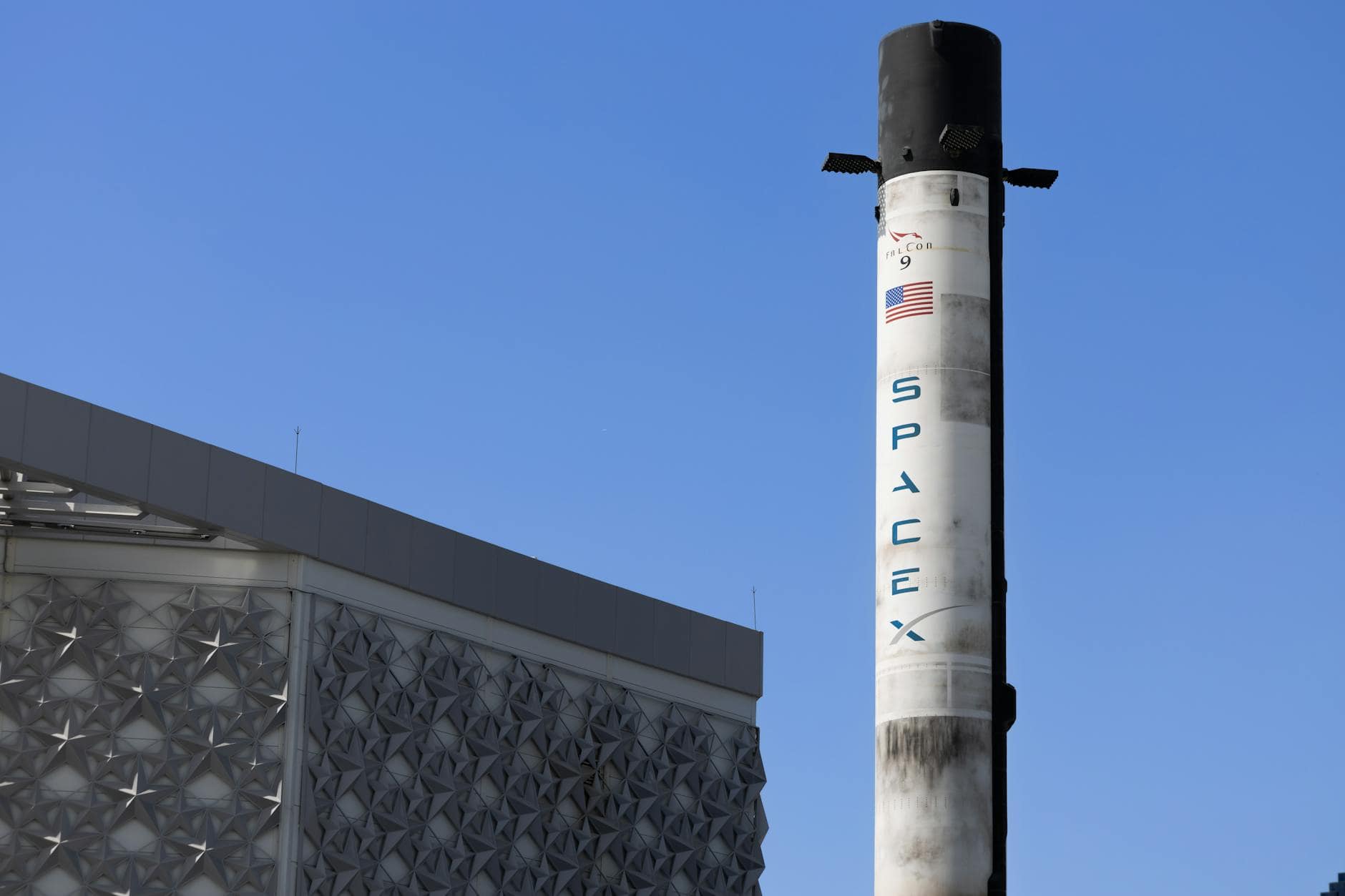
    From its inception, SpaceX faced significant challenges, including technological hurdles and funding issues. However, Musk’s determination to revolutionize aerospace technology fueled the company’s early developments. The first major accomplishment came in 2008 with the successful launch of the Falcon 1, marking it as the first privately developed liquid-fueled rocket to reach orbit. This achievement solidified SpaceX’s place in the aerospace industry and showcased Musk’s vision of the future.

    SpaceX quickly garnered attention for its innovative approach to rocket design and ambitious plans for space exploration. Musk introduced the Falcon 9 rocket, designed for reusability, which would later become a cornerstone of the company’s operations. By allowing the first stage of the rocket to be recovered and reused, SpaceX aimed to drastically reduce the costs associated with space travel. This concept of reusability was groundbreaking, challenging the traditional practices of the aerospace industry.

    Musk envisioned a future where humanity could colonize Mars, deeming it essential for the survival of the human race. The formation of SpaceX was not solely about launching satellites or delivering cargo; it was about securing the future of humanity. He proposed the development of the Starship, a fully reusable spacecraft designed to transport humans to Mars and other celestial bodies. This grand vision stirred excitement and interest in space exploration, attracting significant attention from both the public and the media.

    With contracts from NASA and commercial partners, SpaceX became a key player in the global space industry. The successful launch of the Crew Dragon in 2020 marked a historic milestone as it transported astronauts to the International Space Station, demonstrating Musk’s commitment to redefining space travel. SpaceX’s ability to deliver cargo and crew to the ISS not only showcased the company’s technological advancements but also emphasized Musk’s vision of a sustainable future in space exploration.

    Musk’s impact on the aerospace industry extends beyond technological advancements. He has inspired a new wave of entrepreneurs and innovators to explore opportunities in space and beyond. Through the lens of SpaceX, Musk has transformed public perception regarding space travel, reigniting interest in the cosmos and opening doors for future generations of explorers and engineers.

    In summary, the formation of SpaceX marked a pivotal moment in Musk’s career and the aerospace industry. By tackling significant challenges with groundbreaking solutions, Musk has shifted the narrative around space travel, emphasizing the importance of interplanetary exploration and the sustainability of human existence.

    Tesla Motors: Revolutionizing Electric Vehicles

    Elon Musk’s ambitions reached another level when he joined Tesla Motors, Inc. in 2004, shortly after its founding. Though he initially joined as an investor and chairman of the board, Musk quickly became the face of the company, steering it towards a future where electric vehicles (EVs) would dominate the automotive landscape. Tesla’s mission—to accelerate the world’s transition to sustainable energy—aligned perfectly with Musk’s vision for a cleaner environment and reduced reliance on fossil fuels.

    Tesla’s early challenges were daunting. The automotive industry was skeptical of electric vehicles, considering them impractical for mass production. However, Musk pushed forward, focusing on developing high-performance electric cars that could compete with traditional gasoline-powered vehicles. In 2008, the Tesla Roadster was launched, showcasing the possibilities of electric performance. The Roadster’s success was integral to proving that electric vehicles could be fast, luxurious, and viable for consumers.

    Tesla’s product line expanded with the introduction of the Model S, a luxury sedan that redefined consumer expectations for electric vehicles. The Model S was lauded for its impressive range, technology, and performance, receiving numerous accolades and reshaping the perception of EVs. Under Musk’s leadership, Tesla not only focused on vehicle production but also invested heavily in battery technology and energy solutions.

    One of Musk’s significant contributions to Tesla was the development of the Gigafactory, a massive facility designed to produce lithium-ion batteries at scale. This innovation aimed to reduce battery costs and enhance EV production capacity. The concept of producing batteries for a wide range of applications, including grid storage solutions, was groundbreaking and aligned with Musk’s broader vision of sustainable energy.

    In addition to electric vehicles, Tesla broadened its scope by venturing into solar energy and energy storage. With the acquisition of SolarCity in 2016, Tesla aimed to create an integrated sustainable energy company, merging solar power generation and battery storage solutions. Musk’s foresight in combining these technologies positioned Tesla as a leader in the renewable energy landscape.

    Musk’s approach to marketing and public relations also distinguished Tesla from traditional automakers. He leveraged social media and direct engagement with consumers, creating a loyal community of supporters to advocate for the brand. His willingness to share Tesla’s milestones and challenges fostered transparency and built trust with customers.

    As the global demand for electric vehicles surged, Tesla emerged as a symbol of innovation, reshaping the auto industry. It challenged established automakers to shift their focus toward electrification and sustainability, sparking a broader movement towards electric mobility across the globe.

    Musk’s relentless pursuit of excellence and innovation through Tesla has revolutionized the automotive industry, proving that electric vehicles are not merely alternatives but can lead the charge toward a sustainable future. The echoes of this transformation are felt worldwide, inspiring change and reshaping how society views transportation and energy consumption.

    NASA Administrator Visits SpaceX HQ (NHQ201910100025)
    As the founder of SpaceX, Musk has transformed the aerospace industry, making strides toward interplanetary travel.
    NASA Administrator Visits SpaceX HQ (NHQ201910100025) by NASA HQ PHOTO is licensed under CC-BY-NC-ND 2.0

    Recent Ventures and Philanthropic Efforts

    As Musk’s ventures continue to thrive, he has diversified his involvement in groundbreaking projects and initiatives. In 2020, he co-founded Neuralink, a neurotechnology company focused on developing brain-computer interface technology. Neuralink’s goal is to allow direct communication between the human brain and machines, opening new avenues for medical treatment and cognitive enhancement. Musk envisions a future where individuals can augment their cognitive abilities and address neurological disorders through interfacing with technology.

    Musk has simultaneously focused on the advancement of public transportation with The Boring Company. Established in 2016, this company aims to reduce traffic congestion through the construction of underground transportation tunnels. By utilizing tunneling technology, Musk proposes a system that allows vehicles to travel efficiently below crowded urban areas, changing the way we think about city transportation.

    Philanthropy has become another significant aspect of Musk’s life. In 2020, he announced the Musk Foundation’s commitment to funding renewable energy initiatives, educational programs, and efforts to combat climate change. His philanthropic approach emphasizes the importance of using resources for the greater good, aiming to inspire others to contribute to the welfare of society.

    Musk’s ability to pursue ambitious projects while maintaining a commitment to sustainability serves as a testament to his visions for the future. He believes that humanity must transition to sustainable practices across industries to secure a better planet for future generations. His ventures reflect this ethos, from renewable energy initiatives to efforts aimed at making life multi-planetary.

    In recent years, Musk’s influence has grown not only within the business realm but also in popular culture. He has become a polarizing figure, celebrated by some as a visionary and criticized by others for his unconventional leadership style. Nevertheless, his impact on technology, culture, and society is undeniable—a reflection of a man dedicated to pushing boundaries and exploring the unknown.

    Conclusion

    Elon Musk’s journey from a curious child to a multi-billionaire entrepreneur epitomizes relentless ambition and innovation. His ventures in technology, space, and automotive industries have reshaped our world, leaving lasting impacts that will resonate for generations. Through SpaceX, he has redefined space travel and inspired a renewed interest in exploration beyond Earth. With Tesla, he has played a pivotal role in ushering in an era of electric mobility, driving the automotive industry towards sustainability.

    Musk’s vision extends beyond technological advancements; it embodies a commitment to addressing global challenges, from climate change to the exploration of other planets. His recent ventures in neurotechnology and transportation further reflect his dedication to paving the way for a future where humanity can thrive in harmony with technology.

    While his unconventional approach and bold statements have sparked debates, there is no denying the profound influence Musk has had on various sectors. His journey serves as an inspiration to aspiring entrepreneurs and innovators, showcasing the potential of visionary thinking and resilience in overcoming obstacles. Ultimately, Elon Musk’s evolution as a leader is a testament to the power of imagination in shaping a better future for humankind.

    Sources Consulted

    Watch also