Madrid, the capital of Spain, presents a captivating blend of history, culture, and culinary delights. This article takes you on a comprehensive 3-day journey through the heart of the city, guiding you through regal palaces, charming neighborhoods, and tantalizing tapas bars. From the grandeur of the Royal Palace to the vibrant streets filled with artwork, Madrid is a city that never fails to amaze. Each day promises a mix of sightseeing, dining, and experiencing local traditions, ensuring that you immerse yourself fully in the Spanish way of life. Whether you are a history buff, a foodie, or an art lover, this guide will offer you an unforgettable adventure, revealing the essence of Madrid in just three days.
Exploring the Majesty of Royal Palaces
The Royal Palaces of Madrid stand as monumental symbols of Spain’s rich history and regal heritage. The first day of our journey begins with an exploration of the extravagant Royal Palace, located in the heart of the city. Built in the 18th century, it is the official residence of the Spanish royal family, although they primarily reside in the Palacio de la Zarzuela on the outskirts of Madrid. With over 3,000 rooms, the palace is the largest in Western Europe, showcasing stunning architecture influenced by various European styles.
Upon entering the palace, visitors are greeted with opulence. The Grand staircase, adorned with majestic chandeliers, leads to the main floor where numerous rooms tell stories of Spain’s royal past. The Throne Room, with its lavish decor and a pair of thrones representing the Spanish monarchy, is a must-see. It is here that state ceremonies take place, offering a glimpse into the regal lifestyle once lived by Spain’s kings and queens.
Pay close attention to the Royal Armory, which houses an impressive collection of armor and weapons dating back to the 15th century. This armory preserves the history of Spain’s military prowess. The attention to detail in the craftsmanship of each piece is astonishing and reflects the skill of craftsmen from centuries past. Adjacent to the armory is the royal pharmacy, which gives a fascinating insight into the medicinal practices of earlier times.
As you exit the palace grounds, the surrounding gardens—the Sabatini Gardens and the Campo del Moro—provide a serene escape from the busyness of the city. The carefully manicured hedges, fountains, and sculptures create a picturesque setting perfect for a leisurely stroll or a moment of reflection. These gardens not only enhance the royal vibe of the palace but also offer stunning views of the architectural wonder itself.
The combination of history and gastronomy on this first day lays a solid foundation for the rest of your journey. You’ll not only absorb the royal grandeur but also taste the essence of Spain, setting the stage for the vibrant days ahead.
Indulging in Authentic Spanish Cuisine
The second day of our journey is dedicated to Madrid’s culinary scene, an essential part of experiencing the local culture. Spanish cuisine is a tapestry of flavors and traditions, with an emphasis on freshness and quality. Madrid, being a melting pot of cultures, offers an array of dining experiences that range from traditional tapas to avant-garde cuisine.
Begin your day by visiting the bustling Mercado de San Miguel, a historic market that brings together some of the best food vendors in the city. The market is a feast for the senses, with colorful displays of fresh produce, seafood, and cured meats. The atmosphere is lively, as locals and tourists alike gather to sample a variety of dishes. Here, you can try an assortment of tapas, from olives and cheeses to exquisite seafood dishes like octopus and prawns. Don’t miss the chance to taste the local dish, callos a la madrileña, a hearty tripe stew that warms the soul.
As the day progresses, consider joining a food tour that not only shows you the culinary highlights but also shares the stories behind them. A knowledgeable guide can take you to hidden gems off the beaten path, where locals enjoy their meals. One must-try experience is participating in a traditional cooking class, where you can learn to prepare classic Spanish dishes such as paella or tortilla española. Engaging in this process not only enhances your culinary skills but also deepens your appreciation for the country’s gastronomy.
Lunchtime provides another opportunity to indulge in Madrid’s diverse culinary offerings. Venture into a local restaurant where you can savor a three-course meal, complete with a refreshing glass of sangria. The midday meal is a cherished tradition in Spain, often featuring regional specialties. A typical menu podrÃa include an appetizer of gazpacho, a main course of roasted lamb, followed by a delectable dessert of churros with chocolate, which is perfect for satisfying your sweet tooth.
In the evening, explore Madrid’s vibrant food scene further by visiting a rooftop bar or restaurant that offers stunning views of the city skyline. Dining al fresco while enjoying adorable sunset views adds an extra layer of joy to your culinary experience. Here, you can savor creative tapas that give a modern twist to traditional flavors, showcasing the innovative spirit of Madrid’s chefs.
The second day will leave you with a satisfied palate and a deeper understanding of Spain’s culinary traditions. As you enjoy the diverse flavors that Madrid has to offer, you will see the connection between food and culture, making your journey all the more enriching.
Discovering Madrid’s Rich Art Scene
Day three invites you to immerse yourself in Madrid’s vibrant art scene, a true testament to the city’s creative spirit. As one of Europe’s cultural hubs, Madrid is home to world-class museums and galleries that showcase both classical and contemporary art. Begin your exploration at the renowned Museo del Prado, one of the finest art museums in the world, offering an impressive collection of European art, including works by masters like Velázquez, Goya, and Bosch.
Upon entering the Prado, you are transported into a realm of artistic genius. The museum’s extensive collection features over 8,000 paintings and 700 sculptures, and it’s essential to have a plan to navigate through its many halls. Highlights include Velázquez’s iconic “Las Meninas”, a captivating portrayal of the Spanish court, and Goya’s haunting “The Third of May 1808”, which depicts the brutalities of war. Don’t forget to take a moment to appreciate the intricate details and rich histories behind these masterpieces.
After indulging in classical art at the Prado, make your way to the nearby Museo Thyssen-Bornemisza. This museum boasts an extensive collection ranging from medieval art to modern works, acting as a bridge between the classical and contemporary. The museum features pieces by renowned artists such as Caravaggio, Van Gogh, and Monet, allowing you to appreciate the evolution of art over centuries. The museum’s relaxed ambiance and well-curated exhibitions make it a delightful place to lose track of time.
An afternoon at the Reina SofÃa Museum completes your art exploration. This modern art museum houses an impressive collection of 20th-century artworks, with a focus on Spanish artists like Salvador Dalà and Joan Miró. The crown jewel, however, is Pablo Picasso’s monumental “Guernica”, a powerful anti-war piece that resonates with visitors. The painting’s size and emotional intensity leave a lasting impact, making it a highlight of any visit to the museum.
Beyond these major institutions, Madrid is also filled with smaller galleries and street art that reflect the city’s creative energy. Wander through the Hipster neighborhood of Malasaña, where you’ll discover vibrant murals and eclectic art spaces. Many local artists showcase their work in pop-up galleries, offering a glimpse into the contemporary art scene that thrives within the city.
Don’t forget to take a break at one of the many coffee shops or cafes that adorn the art districts. Enjoying a cup of local coffee while surrounded by inspiring artworks creates a perfect synergy of creativity and relaxation.
By the end of your exploration, you’ll not only gain a deeper appreciation for art but also witness how it intertwines with the life and culture of Madrid. This final day provides the opportunity to reflect on the beauty and creativity that permeate through the city, enriching your overall experience of Madrid.
Strolling Through Historical Districts
On your fourth day in Madrid, it’s time to immerse yourself in the charming atmospheres of the city’s historical districts. Madrid is comprised of various neighborhoods, each with its own unique character and rich history. Start your day in the picturesque streets of La Latina, known for its narrow alleyways, delightful plazas, and an abundance of tapas bars.
On Sundays, La Latina comes alive with the Rastro, Madrid’s largest open-air flea market, where you can find everything from antiques to handmade crafts. Explore the stalls, hunt for unique souvenirs, and enjoy the vibrant atmosphere filled with musicians and street performers. This market gives you a taste of the local culture, where both locals and tourists gather to socialize and shop.
After your shopping spree, meander through the heart of Madrid’s historic center, the area surrounding the stunning Plaza Mayor. This grand public square has been a focal point of the city since its construction in the early 17th century. Here, you can admire the impressive architecture, and perhaps stop at one of the many cafes that line the square for a coffee or a refreshing drink. Take a moment to soak in the ambiance, observing the elegant buildings and the lively interactions of passersby.
As you continue your exploration, head towards the literary quarter of Las Letras, named after famous writers like Cervantes and Lope de Vega. The neighborhood is rich with literary history, and you can find fun street signs honoring these great authors scattered around. A stroll through the cobbled streets will lead you to beautiful plazas, quaint bookshops, and inviting bars that pay homage to Spain’s literary heritage.
Make sure to visit the stunning Royal Botanical Garden, a hidden gem next to the Prado Museum. This tranquil oasis features an impressive collection of flora from around the world. Take your time to stroll through the manicured gardens, relax by the ponds, and enjoy the peacefulness that this green space offers within the bustling city.
Conclude your day by visiting the neighborhood of Chueca, the heart of Madrid’s LGBTQ+ community. This vibrant area is known for its lively nightlife, trendy bars, and welcoming atmosphere. Whether you choose to explore the chic boutiques or enjoy a dinner in one of the many innovative restaurants, Chueca encapsulates the modern spirit of Madrid.
Exploring these historical districts not only highlights Madrid’s past but also weaves a connection to the present, showcasing the city as a vibrant tapestry of culture and history. This day will surely deepen your appreciation for the sights, sounds, and stories that define this remarkable capital city.
Enjoying the City’s Vibrant Nightlife
Madrid’s nightlife is an exhilarating mix of energy, creativity, and culture. As the sun sets, the city comes alive with music, laughter, and the clinking of glasses, creating an irresistible atmosphere that beckons social interaction. On your fifth day, embrace Madrid’s vibrant nightlife and experience its various offerings, from traditional flamenco shows to trendy clubs.
The evening often begins with a leisurely meal at a local restaurant, where sharing tapas is the norm. The dining culture in Madrid is social and communal, setting the tone for a fantastic night ahead. After dinner, head towards the renowned flamenco district of La Latina. Witnessing a live flamenco performance is a must during your visit. The passionate dance, beautiful costumes, and soulful music embody the spirit of Spanish culture. While there are many flamenco venues throughout the city, establishments like Casa Patas or Corral de la MorerÃa are popular choices for an authentic experience.
As the night deepens, the energy will gradually shift towards the bustling neighborhoods of Malasaña and Chueca. These areas are known for their eclectic bars, stylish clubs, and vibrant LGBTQ+ scenes. Enjoy a pub crawl through Malasaña, where you can find everything from vintage cocktail bars to alternative music venues. This neighborhood fosters creativity, offering places where local artists and musicians gather, making for a lively backdrop to your night.
Chueca, famous for its welcoming energy, is another hotspot that promises a night of fun. From chic bars to lively clubs, the options are endless. Many venues have themed nights or live DJs, ensuring that there’s something for everyone. Dance the night away at a popular club such as Teatro Kapital, which boasts multiple floors of music and atmosphere, or enjoy a more intimate setting in one of the trendy bars lining the streets.
Naturally, no night out in Madrid would be complete without experiencing the local late-night food scene. As the club atmosphere begins to wane, head to a sidewalk eatery for a late-night snack. Here, you can enjoy street food staples like kebabs, hot dogs, or churros dipped in chocolate—perfectly indulgent treats to satisfy your cravings after a night of dancing and revelry.
Lastly, as the dawn approaches, don’t miss the opportunity to witness Madrid’s breathtaking sunrise from one of the city’s viewpoints. Places like the Templo de Debod offer a stunning backdrop as the sun rises over the landscape, providing a peaceful conclusion to a lively night.
Experience Madrid’s vibrant nightlife to the fullest as it represents the city’s heartbeat, brimming with creativity and spontaneity. From traditional flamenco performances to modern clubbing, the nightlife is a colorful reflection of Madrid’s diverse culture, leaving lasting memories of your journey.
Conclusion
As your 3-day journey through Madrid comes to an end, you leave with not only a sense of discovery but also a profound appreciation for the rich tapestry of experiences the city has to offer. From exploring royal palaces steeped in history to indulging in mouthwatering Spanish cuisine, each day offered new opportunities to connect with Madrid’s heart and soul.
Wandering through the charming streets of historical districts, you were transported back in time while still embracing the modernity and vibrancy of the city. The dynamic art scene provided a feast for the senses, showcasing the creative talents that continue to thrive in Madrid. And finally, the lively nightlife welcomed you into a world where the spirit of celebration and social connection reigns supreme.
Madrid is a city that captivates its visitors with every step, revealing layers of culture, history, and tradition. Whether you find solace in its art, joy in its flavors, or energy in its nightlife, Madrid promises to leave an indelible mark on your heart. With memories to cherish and stories to tell, your journey through Madrid has surely been an unforgettable adventure.
The Royal Palace of Madrid, one of Europe’s largest and most ornate royal residences, has been a symbol of Spain’s grandeur and resilience for centuries. Originally built upon the remnants of a Moorish fortress and later transformed from a medieval Alcázar, the palace has witnessed Spain’s political shifts and artistic achievements since its early days. Constructed in the mid-18th century following a devastating fire, this architectural marvel combines classical grandeur with Spanish elegance. Today, the Royal Palace stands as both a historical monument and a cultural symbol, preserving Spain’s royal heritage while opening its doors to visitors from around the world.
Founding and Initial Constructions: The Alcázar of Madrid
The origins of the Royal Palace of Madrid trace back to the early medieval period, when Madrid was under Moorish control. A fortress, or “Alcázar,” was constructed on the hill where the palace now stands, providing a strategic vantage point over the Manzanares River. This initial structure, built in the 9th century during the Emirate of Córdoba, served as a defensive stronghold. Madrid’s Alcázar symbolized the region’s contested history, changing hands multiple times during the Reconquista—the centuries-long struggle between Muslim and Christian forces in Spain.
During the reign of King Philip II in the late 16th century, Madrid was declared the capital of Spain, significantly increasing the prominence of the Alcázar. Philip II expanded the palace to accommodate the royal court and displayed Spain’s wealth and power by filling it with an impressive array of art and treasures, including works by Titian and other European masters. The Alcázar became both a royal residence and a representation of Spain’s imperial ambitions, hosting important state functions, diplomatic receptions, and ceremonies that underscored Spain’s position as a dominant world power.
Throughout the 17th century, the Alcázar continued to serve as the primary residence for the Spanish monarchs, although its aging structure required frequent renovations and improvements. Its sprawling corridors and rooms were witness to numerous historical events, from royal weddings to the signing of important treaties. However, by the early 18th century, the palace had begun to show signs of structural decline, making it increasingly unfit for the grandeur expected of Spain’s ruling family. Yet, it was the catastrophic fire of 1734 that would ultimately seal the Alcázar’s fate, marking the end of an era and setting the stage for a new chapter in Madrid’s architectural history.
The Great Fire of 1734 and Plans for a New Palace
On the night of December 24, 1734, tragedy struck the Alcázar of Madrid. A devastating fire broke out in the royal chapel and quickly spread throughout the aging wooden structure, fueled by strong winds. Despite the best efforts of the palace guards and townspeople, the blaze raged for four days, reducing the ancient palace and many of its treasures to ashes. This fire not only obliterated the primary residence of the Spanish monarchy but also destroyed countless works of art, including paintings by Titian, Velázquez, and other masterpieces collected over generations.
The fire’s impact on Spain’s royal legacy was profound. King Philip V, the first Bourbon king of Spain, was deeply affected by the loss of the Alcázar, viewing it as a significant blow to Spain’s cultural and historical heritage. However, Philip V saw an opportunity to replace the outdated fortress-palace with a grand structure that would reflect both the ambitions of the Bourbon dynasty and the aesthetic values of the Enlightenment. Thus, the decision was made to build a new royal palace on the site of the Alcázar, one that would stand as a testament to Spain’s resilience and artistic vision.
To oversee this ambitious project, Philip V enlisted Italian architect Filippo Juvarra, renowned for his expertise in the Baroque style. Although Juvarra’s initial plans were never fully realized due to his untimely death, his vision of an opulent, palace that embraced classical symmetry and grandeur set the tone for what would become the Royal Palace of Madrid. The project was later entrusted to Juvarra’s disciple, Giovanni Battista Sacchetti, who adapted his mentor’s designs to suit the Spanish context, emphasizing both monumentality and elegance.
The construction of the new palace began in 1738, and it took nearly three decades to complete. While the devastation of the fire marked the end of the historic Alcázar, it also paved the way for an architectural masterpiece that would become an enduring symbol of Spain’s royal legacy. Built from granite and limestone, the new palace was designed to withstand the test of time, with spacious halls and ornate chambers befitting the majesty of the Spanish crown. The decision to build such an imposing structure reflected the Bourbons’ desire to convey stability and power during a period of significant political change in Europe.
Architectural Vision: Building the New Royal Palace
The architectural style of the Royal Palace of Madrid reflects a blend of Italian Baroque and French classicism, designed to communicate both grandeur and harmony. The palace, a collaboration between architects and artists from various European backgrounds, showcases the influence of the Bourbon dynasty, with its focus on elegance and opulence in royal residences. Architect Giovanni Battista Sacchetti’s design prioritized a sense of balance, creating a symmetrical, U-shaped structure with courtyards, grand staircases, and spacious salons.
One of the architectural highlights is the palace’s grand entrance, framed by imposing columns and statues that celebrate Spain’s imperial heritage. Sacchetti’s successor, Francesco Sabatini, contributed significantly to the palace’s interiors, designing elaborate rooms with intricate stucco work, frescoes, and gold leaf accents that reflect the Rococo style favored by the Bourbons. The Throne Room, with its red velvet walls, gilded mirrors, and chandeliers, epitomizes the palace’s luxurious design, showcasing the skill of Spanish artisans and the influence of European decorative trends.
The Royal Palace of Madrid, one of Europe’s largest and most ornate royal residences, has been a symbol of Spain’s grandeur and resilience for centuries.
The Royal Chapel, another masterpiece within the palace, features marble altars and religious paintings that emphasize the spiritual authority of the monarchy. This emphasis on religious art and architecture illustrates the Bourbon dynasty’s commitment to reinforcing its legitimacy through displays of piety and devotion. Furthermore, the palace grounds were designed to include expansive gardens inspired by French landscaping, further adding to its sense of royal grandeur and providing a serene space for the royal family and their guests.
One of the most ambitious aspects of the Royal Palace was its scale. Intended to house not only the royal family but also numerous courtiers, officials, and servants, the palace boasted over 3,000 rooms. Its size and layout were designed to accommodate the elaborate rituals of court life, from banquets and diplomatic receptions to state ceremonies and private gatherings. The palace’s architectural details, from its grand marble staircase to its gilded halls, reflected the Bourbon monarchy’s desire to assert its position as one of Europe’s leading powers.
The Royal Palace’s architectural design served not only to impress but also to symbolize a new era for Spain under Bourbon rule. The construction of the palace demonstrated the monarchy’s commitment to modernization and cultural refinement, establishing the palace as a physical representation of the dynasty’s aspirations and achievements. Today, the Royal Palace stands as a testament to the artistic and architectural achievements of the 18th century, a historic treasure that continues to captivate visitors with its beauty and grandeur.
Historical Moments: From Royal Residences to National Heritage
The Royal Palace of Madrid has been both a silent witness and a central player in the significant historical events that shaped Spain over the centuries. For nearly two centuries, it functioned as the primary residence of the Spanish monarchy and a key venue for royal and state events. The palace has seen royal weddings, coronations, banquets, and diplomatic receptions, each adding layers of political and cultural significance to its walls. The palace grounds served as a nexus of power, where alliances were formed, treaties were signed, and celebrations showcased Spain’s royal heritage.
The 19th century was a particularly transformative period for the Royal Palace, mirroring Spain’s own political upheavals. The era was marked by a series of monarchic transitions, as the country oscillated between absolutist monarchy, constitutional monarchy, and brief attempts at republican governance. These shifts in power directly impacted the royal palace and its symbolic role. During the turbulent years of the Napoleonic Wars, for example, the palace witnessed the brief occupation of Madrid by French forces and the subsequent abdication of the Spanish king, Charles IV. These events plunged Spain into turmoil, with the palace standing as a reminder of the monarchy’s past stability amid growing national instability.
In 1868, the “Glorious Revolution” forced Queen Isabella II into exile, sparking a period of political experimentation that further distanced the palace from its original function. Although the monarchy was restored in 1874, the symbolic nature of the palace had begun to evolve, becoming not just a royal residence but also a symbol of Spain’s historical continuity. The palace’s role continued to shift throughout the 20th century as Spain grappled with modernization, social changes, and political divisions. By the time Alfonso XIII ascended the throne in the early 1900s, the palace had transitioned into a place of tradition amidst rising political unrest and the challenges of industrialization.
The outbreak of the Spanish Civil War in 1936 marked another dramatic shift for the palace, with the monarchy abolished in 1931 and replaced by the Second Spanish Republic. During Franco’s dictatorship, the palace no longer served as a royal residence, becoming instead a symbol of the nation’s heritage. Franco opened the palace to the public as a museum, intending to cultivate a sense of Spanish pride by showcasing the palace’s art and treasures. This shift represented the palace’s transformation from a symbol of royal power to a historical site accessible to the general public.
With the restoration of the monarchy in 1975 under King Juan Carlos I, the palace regained some of its royal functions. However, it was decided that the royal family would reside in the more modest Zarzuela Palace, with the Royal Palace of Madrid designated as a ceremonial space and a heritage site. Today, the palace is used for state receptions, diplomatic ceremonies, and other official events, while also operating as one of Spain’s most visited museums. This historical journey has cemented the Royal Palace as both a monument to Spain’s royal past and a national treasure celebrating its cultural legacy.
The Modern Role of the Royal Palace and Its Cultural Legacy
Today, the Royal Palace of Madrid stands as one of Spain’s premier cultural landmarks, offering visitors a glimpse into the opulence of Spain’s past while serving a variety of contemporary purposes. Although it remains the official residence of the Spanish monarchy, the palace is used exclusively for state ceremonies and receptions, such as hosting foreign dignitaries, national celebrations, and royal weddings. The decision for the royal family to reside elsewhere reflects modern preferences for a less opulent lifestyle, but it also aligns with the palace’s evolving identity as a cultural site.
The palace’s modern role as a museum attracts millions of visitors each year, who come to admire its vast collection of art, tapestries, and historical artifacts. The Royal Palace of Madrid houses one of the most comprehensive collections of decorative arts in Europe, including antique clocks, furniture, ceramics, and armor. These artifacts provide insight into the lifestyles, tastes, and values of Spain’s historical monarchs, making the palace not only an architectural marvel but also a cultural repository. One of the highlights of the palace’s collection is the Royal Armory, which contains a vast array of armor and weapons dating back to the 13th century, representing Spain’s military history and craftsmanship.
The palace’s interiors, with their richly decorated rooms and elaborate frescoes, serve as a testament to the artistic achievements of various periods in Spanish history. For instance, the Throne Room, adorned with crimson velvet, chandeliers, and gold accents, showcases the grandeur that characterizes Spain’s regal aesthetic. The Hall of Mirrors and the Royal Chapel similarly reflect the influence of European artistic movements, blending Baroque, Rococo, and Neoclassical elements. The Royal Pharmacy and the Royal Library add another dimension to the palace, revealing the intellectual pursuits and scientific interests that were encouraged within the Spanish court.
The palace grounds and its adjacent Sabatini Gardens also play a significant role in the site’s cultural appeal. Designed in the early 20th century, the gardens provide a tranquil green space that contrasts with the palace’s grandeur, allowing visitors to enjoy a peaceful retreat while taking in views of the imposing structure. Public events such as military parades and national celebrations often take place on the palace grounds, integrating the palace into Madrid’s cultural and civic life.
In addition to its function as a museum and ceremonial space, the Royal Palace is a source of national pride, attracting both Spanish citizens and international visitors. Its historical significance, coupled with its artistic and architectural splendor, makes it a symbol of Spain’s royal heritage. The palace’s role as a cultural institution has preserved it as a living piece of history, bridging the past and the present by making the splendor of Spain’s monarchy accessible to all. Through its preservation and continued use, the Royal Palace of Madrid remains a testament to the endurance and cultural richness of Spanish history.
Conclusion
The Royal Palace of Madrid encapsulates the grandeur and history of the Spanish monarchy, standing as a remarkable tribute to Spain’s past while serving as a national symbol in the present. Originally born from the ashes of the Alcázar and transformed by centuries of monarchic ambition, the palace is an emblem of resilience, artistry, and historical continuity. It now functions not only as a ceremonial space for Spain’s monarchy but also as a cultural landmark that celebrates and preserves Spain’s royal heritage. This dual role enriches Spain’s identity and makes the palace a cherished icon, inviting visitors to experience the legacy and pride of a nation’s remarkable history.
The Museo del Prado in Madrid is one of the world’s most prestigious art museums, housing a vast collection of European art, particularly Spanish masterpieces. Founded in 1819 by King Ferdinand VII, the Prado was initially designed to showcase the Spanish royal collections and has since grown into a cultural beacon, offering an unparalleled glimpse into the history of Western art. With works by masters such as Velázquez, Goya, El Greco, and Titian, the museum’s collection spans centuries of artistic evolution, making it an essential destination for art enthusiasts and scholars alike. The Prado’s role in preserving and interpreting Spain’s rich cultural heritage is matched by its influence on the global art community. This article explores the museum’s origins, its extraordinary collection, architectural significance, and its contributions to art education and cultural engagement, providing a comprehensive guide to one of Madrid’s most iconic landmarks.
The History and Origins of the Prado Museum
The Museo del Prado’s history dates back to the early 19th century when Spain’s royal collections were first consolidated under King Ferdinand VII. Prior to the establishment of the museum, many of the nation’s finest artworks were housed in the Royal Alcázar of Madrid, the royal palace, and various other locations. However, with the increased political and social upheaval of the time, including the Napoleonic invasion of Spain (1808–1814), King Ferdinand saw the importance of establishing a dedicated institution to preserve Spain’s art and heritage.
The idea of creating a national art museum was initiated by Ferdinand’s advisors, who were inspired by similar projects in France and other European nations. The initial collections consisted mainly of works commissioned by the Spanish monarchy, particularly from the Renaissance and Baroque periods. These collections were enriched by the contributions of the Habsburg dynasty, with paintings by Titian, Rubens, and other European masters. Notably, during the reign of Charles III, Spain acquired several works that would later form the core of the Prado’s holdings.
The museum’s official opening in 1819, however, was not without controversy. The public reception was mixed, as the Spanish art world was initially skeptical about the idea of creating a museum that could rival the Louvre in Paris. But under the leadership of artists and curators, the Prado gradually established itself as a symbol of Spain’s cultural and artistic prominence.
In its early years, the Prado’s collection grew quickly, largely through acquisitions of art from Spanish royal collections and through the legacy of the Spanish Golden Age. King Charles IV and his family played a pivotal role in expanding the museum’s holdings, acquiring works from leading artists of the period. For instance, the museum’s collection of paintings by Francisco de Goya, including his iconic The Third of May 1808, solidified the Prado’s reputation as an institution dedicated to preserving Spain’s artistic heritage.
As the 19th century progressed, the Prado’s holdings expanded to include significant works from other European artists, such as the Dutch painters Rembrandt and Vermeer, as well as Italian Renaissance artists like Raphael and Caravaggio. Despite political challenges, including the loss of Spain’s colonies and financial crises, the museum continued to grow and evolve. The Prado soon became not only a repository of Spain’s past but also a symbol of cultural pride for the Spanish people.
In the 20th century, the museum’s influence spread globally, attracting art lovers and scholars from around the world. With its continued expansion and renovation, including the creation of new wings to house modern art and temporary exhibitions, the Prado Museum remains a living institution, deeply connected to Spain’s national identity and its broader place in world history.
Masterpieces of the Prado: Key Works in the Collection
The Museo del Prado is renowned for its unparalleled collection of European art, with some of the most iconic works of Western art history displayed within its walls. Among the many treasures housed at the Prado, a few masterpieces stand out as central to its identity and reputation.
One of the most celebrated works in the collection is Las Meninas (1656) by Diego Velázquez, which is often regarded as one of the most important paintings in the Western canon. This complex and enigmatic portrait of the Spanish royal family, featuring the young Infanta Margaret Theresa and her entourage, is notable for its sophisticated play with perspective, light, and the relationship between the viewer and the subjects within the painting. Velázquez’s use of reflection and the inclusion of himself in the composition as a painter working in the royal studio has made Las Meninas a subject of endless scholarly debate.
Another remarkable piece is The Third of May 1808 (1814) by Francisco de Goya. This haunting painting depicts the execution of Spanish rebels by French soldiers during the Peninsular War and is a powerful commentary on the horrors of war. Goya’s stark, dramatic use of light and shadow, combined with his emotionally charged portrayal of the victims, has made this work an enduring symbol of the human cost of conflict.
El Greco’s The Holy Trinity (1577) is another cornerstone of the Prado’s collection. Known for his dramatic use of color and elongated figures, El Greco was ahead of his time in blending Byzantine traditions with the emerging styles of the Renaissance. The Holy Trinity, with its complex iconography and ethereal quality, represents El Greco’s deeply spiritual approach to art and his mastery of the religious portrait.
In addition to these iconic Spanish masters, the Prado also boasts a significant collection of works by other European painters. Titian’s Venus of Urbino (1538) is a stunning example of Venetian Renaissance portraiture and sensuality. This work, which portrays a reclining nude woman in an intimate setting, is widely considered one of the greatest depictions of the female form in art history. Similarly, the Prado’s holdings by Peter Paul Rubens, such as The Adoration of the Magi (1609), highlight his mastery of color and movement, showcasing his ability to bring biblical scenes to life with exuberant energy.
Together, these works not only represent the high points of Spanish and European art but also serve as a testament to the Prado’s role in preserving these masterpieces for future generations. Whether through Velázquez’s psychological depth, Goya’s emotional intensity, or Titian’s sensuous beauty, the Prado Museum offers an immersive experience into the artistic achievements that have shaped Western civilization.
The Museum’s Architecture: A Blend of Classicism and Modernity
The architecture of the Museo del Prado is as much a work of art as the masterpieces displayed inside its galleries. The museum’s design reflects a unique blend of classicism and modernity, capturing both Spain’s rich artistic heritage and its engagement with contemporary trends in architecture.
The original building, designed by the architect Juan de Villanueva in 1786, was commissioned by King Charles III as part of his vision to modernize Madrid. The project was initially intended to be a natural history museum, but with the establishment of the Prado as an art museum in 1819, the building’s design was adapted to suit its new purpose. Villanueva’s neoclassical structure, characterized by its restrained and elegant proportions, was conceived as a symbol of the Enlightenment ideals of reason, order, and clarity. The building’s facade is marked by its use of classical columns, which evoke the grandeur of ancient Greece and Rome, providing an air of dignity to the institution.
The Prado’s grand entrance, with its imposing columns and decorative pediment, leads visitors into a series of beautifully proportioned galleries that were originally designed to display the royal collection. The museum’s classical elements, including the use of symmetry, harmonious lines, and restrained ornamentation, reflect the influence of neoclassical architecture that was gaining prominence in Europe at the time.
In the late 19th century, as the Prado’s collection expanded, the museum’s original structure was no longer sufficient to house the growing number of works. The solution came in the form of several extensions and renovations, most notably the addition of the modern annex designed by architect Rafael Moneo in the late 20th century. Moneo’s design, completed in 2007, sought to create a dialogue between the Prado’s historic architecture and contemporary trends. His addition complements Villanueva’s neoclassical building while introducing modern elements, such as sleek glass facades and open spaces, allowing for a seamless integration of old and new.
The new extension also provides much-needed exhibition space, with several floors dedicated to displaying modern and temporary exhibitions. This expansion ensured that the museum could continue to showcase its growing collection while maintaining the architectural integrity of its historic building. The use of natural light in Moneo’s design is one of its most striking features, as it illuminates the interior spaces, highlighting the art on display and providing a dynamic viewing experience.
Overall, the Prado’s architecture tells a story of evolution, reflecting both Spain’s historical cultural heritage and the modern demands of a world-class art institution. The contrast between the neoclassical elements of Juan de Villanueva’s original design and Rafael Moneo’s contemporary additions is symbolic of the museum’s ongoing engagement with both tradition and innovation. This architectural evolution mirrors the museum’s own journey from a royal collection to a global cultural landmark.
The Prado’s architecture also prioritizes the visitor experience. The museum is designed to guide visitors through its galleries in a way that maximizes the impact of its collection. The layout of the galleries encourages both a chronological exploration of art history and an immersive journey through various artistic movements. The space is not only functional but also deeply connected to the museum’s role as a repository of cultural and historical memory. The classical design elements evoke a sense of reverence, while the modern additions offer flexibility and accessibility for contemporary exhibitions, ensuring that the Prado remains relevant to today’s audiences.
In many ways, the Prado Museum’s architecture can be seen as a reflection of Spain itself — rich in history, proud of its past, yet open to the future. The blending of classicism with modernity is not just an aesthetic choice but an embodiment of the museum’s mission: to preserve the artistic legacy of the past while embracing the dynamic and evolving nature of art in the present and future.
The Prado’s Role in the Spanish and Global Art Scene
The Museo del Prado occupies a central role not only in Spain’s national cultural identity but also within the broader global art scene. As one of the most significant art museums in the world, its influence extends beyond its walls, shaping the ways in which art is understood, studied, and appreciated globally. Over the years, the Prado has helped to define Spain’s relationship with art history and its place in the broader narrative of European culture.
At the national level, the Prado Museum is a symbol of Spain’s rich cultural heritage. As a custodian of Spanish artistic achievements, the museum has a unique responsibility to preserve and showcase the works of artists who shaped the country’s cultural identity, such as Diego Velázquez, Francisco de Goya, and El Greco. Through its extensive collection of Spanish art, the Prado offers a lens through which Spanish history can be understood, from the Golden Age of the 16th and 17th centuries to the dramatic shifts in the 19th and 20th centuries. Works like Velázquez’s Las Meninas and Goya’s The Third of May 1808 are not only masterpieces of art but also crucial historical documents, reflecting the political, social, and cultural contexts of their time.
In addition to its role as a national institution, the Prado has long been a beacon for scholars and art lovers from around the world. Its global significance lies in its role as a center for research, scholarship, and artistic exchange. The museum attracts millions of visitors each year, including art historians, curators, students, and tourists, all of whom come to experience its extraordinary collection of masterpieces. The Prado’s exhibitions, publications, and collaborations with other museums and institutions contribute to the global dialogue about art and its history.
One of the Prado’s most notable contributions to the global art scene has been its leadership in the preservation and conservation of art. The museum has long been at the forefront of developing and employing cutting-edge conservation techniques to preserve its vast collection. In recent years, the Prado has spearheaded several restoration projects, including the meticulous restoration of works by Goya and Velázquez, which has enhanced our understanding of these artists’ techniques and intentions. The museum also plays a vital role in sharing this expertise with other institutions around the world, ensuring the preservation of cultural heritage on a global scale.
The Prado’s educational outreach is another aspect of its impact on the international art world. Through its exhibitions, educational programs, and scholarly publications, the museum fosters a deeper understanding of art history, making its collection accessible to a diverse and global audience. The Prado also supports research and scholarship in various fields related to art, history, and culture, offering fellowships and collaborating with academic institutions worldwide. These efforts ensure that the museum continues to be a vital center for learning and innovation in the arts.
In recent years, the Prado has increasingly embraced the digital realm, expanding its global reach through online resources, virtual tours, and digital collections. This shift has made its collections more accessible than ever, allowing people from around the world to explore its treasures without leaving their homes. The Prado’s digital presence has significantly broadened its impact, ensuring that its artistic legacy is not confined to the physical space of Madrid but is available to a global audience 24/7.
Ultimately, the Prado’s influence on both Spanish and global art cannot be overstated. It is a living institution, constantly evolving to meet the needs of a changing world while remaining true to its mission of preserving and interpreting the masterpieces that define human history. Its contributions to the cultural dialogue, both in Spain and worldwide, ensure that the Prado Museum will continue to be a key player in the global art scene for generations to come.
The Prado’s Expansions and Renovations Over Time
Over the years, the Museo del Prado has undergone several important expansions and renovations to accommodate its growing collection and to meet the demands of modern museum practices. As the museum’s collections expanded in the 19th and 20th centuries, the need for additional exhibition spaces became increasingly urgent. The Prado’s ability to adapt and modernize while preserving the historical integrity of its original architecture is a testament to its commitment to both the past and the future.
The museum’s first significant expansion occurred in the 19th century, shortly after its founding in 1819. The original design by Juan de Villanueva was intended to house the royal collections, but as the museum acquired more works over time, additional space was required. The first major extension was carried out under the direction of architect Francisco Jareño in the mid-19th century. Jareño’s work involved adding new galleries and refining the museum’s interior, making it more suitable for the growing number of works on display. These early renovations laid the groundwork for future expansions and set the tone for the museum’s continued evolution.
In the 20th century, the Prado’s collection continued to grow, and by the 1960s, the museum’s facilities were again stretched to their limits. To address this, a major renovation and expansion project was launched. In 1992, the museum commissioned the Spanish architect Rafael Moneo to design a new wing that would complement the original neoclassical structure while offering the space and flexibility required for modern exhibitions. Moneo’s design was innovative in that it sought to create a harmonious relationship between the historical building and the new spaces, emphasizing the museum’s role as both a cultural institution and a public space.
The new extension, which opened in 2007, added an additional 20,000 square meters to the museum, providing much-needed room for the growing collection and improving visitor access. The modern design incorporated contemporary elements, such as glass facades and open spaces, which contrasted with the classical architecture of the original building. The result was a striking synthesis of old and new, where the grandeur of the historical structure was maintained while creating a more functional and welcoming space for contemporary visitors.
In addition to the physical expansion, the Prado has also undertaken numerous conservation and restoration projects to ensure that its collections remain in optimal condition. These projects have included the restoration of famous paintings like Las Meninas and The Third of May 1808, as well as improvements to the museum’s environmental systems to protect its artworks from the effects of light, temperature, and humidity. The museum’s commitment to the conservation of its collection is one of the reasons why it is regarded as one of the leading institutions in the world in terms of art preservation.
The museum has also embraced new technologies to enhance its accessibility. The installation of digital displays, interactive installations, and virtual tours allows visitors to engage with the collection in innovative ways. These efforts ensure that the Prado remains relevant to a global audience, embracing both traditional and cutting-edge approaches to art presentation.
Ultimately, the Prado Museum’s expansions and renovations reflect its ongoing mission to preserve its world-class collection, enhance the visitor experience, and ensure its place as a leading institution in the global art world. By balancing respect for tradition with a forward-thinking approach to design and technology, the Prado continues to thrive as a cultural institution that speaks to both the past and the future.
Conclusion
The Museo del Prado stands as one of the world’s most revered art institutions, offering a profound insight into the evolution of European art. From its historical roots in Spain’s royal collections to its present-day status as a global cultural powerhouse, the Prado’s journey is one of continuous growth, adaptation, and celebration of artistic achievement. Its collection of masterpieces by iconic artists such as Velázquez, Goya, and Titian serves as a testament to Spain’s cultural legacy and its important place in the broader narrative of Western art. Through careful expansions, innovative renovations, and a commitment to art conservation, the Prado has maintained its relevance while respecting its rich history. With a growing digital presence and a forward-looking approach to education and outreach, the Prado continues to inspire visitors from around the world. It remains an essential institution for understanding not only Spain’s past but also the universal language of art.
The Puerta del Sol is one of Madrid’s most iconic landmarks and a focal point of Spanish culture and history. Nestled in the heart of the capital, this vibrant square has evolved over centuries from a gateway in the city’s medieval walls to a bustling hub of activity. It serves as Spain’s Kilómetro Cero, the symbolic starting point of the country’s road network, and is steeped in historical significance as a witness to revolutions, political movements, and joyous celebrations.
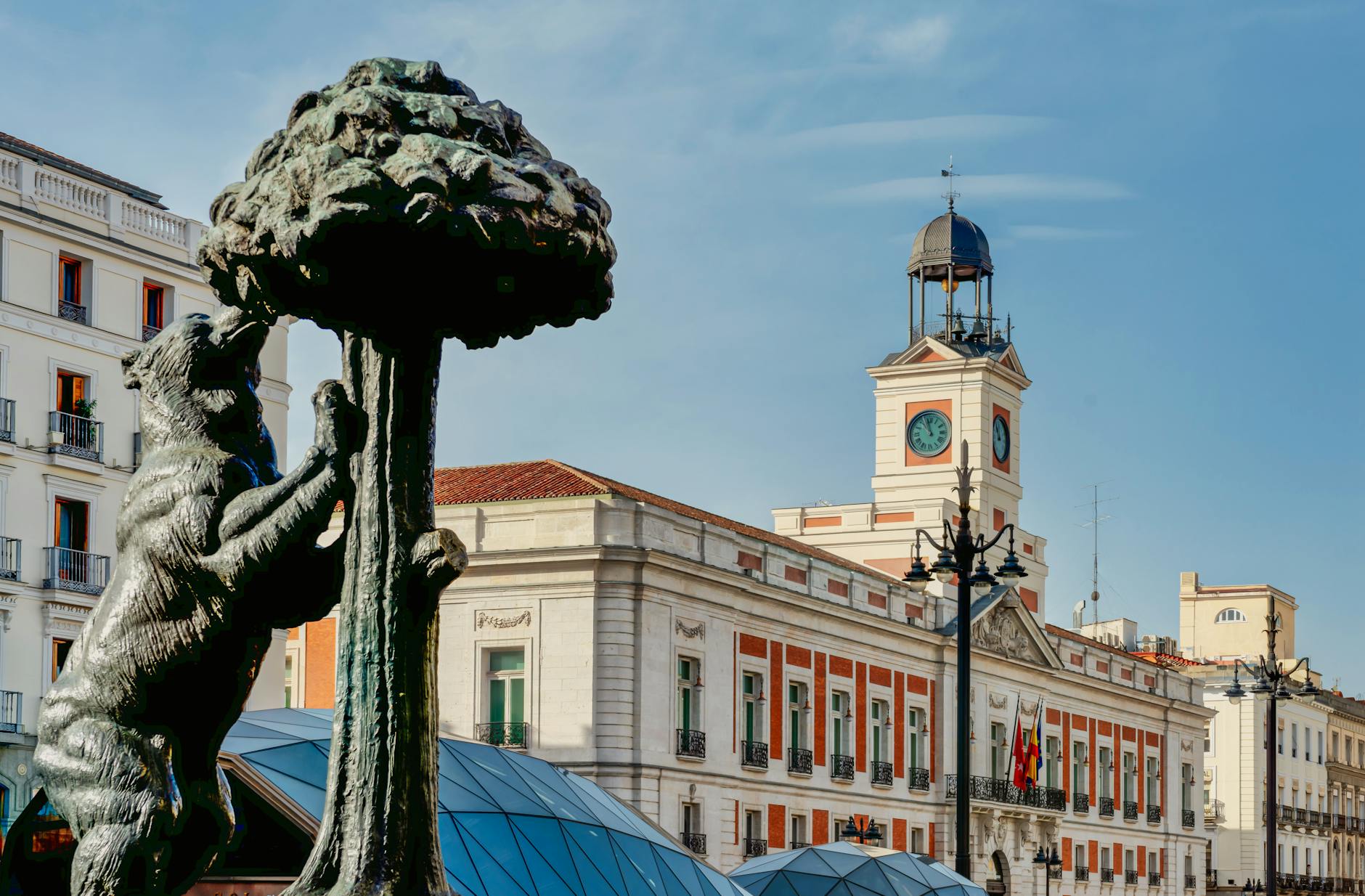
Beyond its historical importance, Puerta del Sol is renowned for its architectural landmarks, such as the Casa de Correos and the Bear and Strawberry Tree statue, and for hosting beloved traditions like the New Year’s Eve grape-eating ritual. It is a place where past and present collide, making it an essential part of Madrid’s identity. This article delves into its rich history, cultural resonance, and ongoing transformation.
Origins of the Puerta del Sol: From Gateway to Icon
The Puerta del Sol, now one of Madrid’s busiest and most emblematic squares, has a rich history that dates back to the Middle Ages. Its transformation from a modest gateway in the city’s walls to the symbolic and geographical heart of Spain reflects the evolution of Madrid itself.
Medieval Beginnings
In the 15th century, the Puerta del Sol was a literal gate in Madrid’s eastern wall, named after the sun that adorned its façade. This gate faced east, where the sun rises, symbolizing a connection between the city and the new day. The wall itself served to protect the city, which was then a modest settlement compared to the bustling metropolis it would later become. As the population grew, the area around the gate began to develop into a small marketplace, attracting merchants and travelers entering Madrid.
The square’s location on the main road to Alcalá de Henares, an important cultural and religious center at the time, further enhanced its significance. It became a key entry point for goods and people, laying the groundwork for its future role as a hub of activity.
Growth During the Habsburg Period
By the 16th and 17th centuries, under the Habsburg dynasty, Madrid had become the capital of Spain. The Puerta del Sol’s importance grew as the city expanded. The medieval walls were eventually dismantled, transforming the area into an open plaza. This change allowed for increased trade and commerce, solidifying the square’s role as a meeting point for citizens and visitors alike.
During this period, the square began to take on a more formal appearance. Buildings were constructed around its perimeter, including inns, taverns, and small shops catering to the influx of people. It was no longer just a gateway but a lively center of urban life.
Enlightenment and Urban Development
The 18th century brought significant changes to Madrid, influenced by the Enlightenment ideals of modernization and urban planning. The Puerta del Sol underwent substantial renovations during this era, shaping its modern identity. The most notable addition was the Casa de Correos (House of the Post Office), built in 1768 under the reign of Charles III. Designed by architect Jaime Marquet, this neoclassical building became a landmark of the square and would later play a central role in Spanish history.
The square also began to serve as a stage for civic life, hosting public announcements, celebrations, and even protests. Its strategic location at the intersection of major roads made it a natural gathering point for Madrileños.
A Gateway to Modern Madrid
As Madrid transitioned into the 19th and 20th centuries, the Puerta del Sol evolved alongside it. By this time, it was no longer just a functional space but a symbol of the city’s vibrant character. With the advent of modern transportation, including the construction of a metro station in 1919, the square became even more accessible and bustling with activity.
The origins of the Puerta del Sol tell the story of Madrid’s transformation from a walled medieval town to a thriving European capital. Its journey from a simple gateway to a beloved landmark reflects the city’s growth, resilience, and adaptability. Today, it stands not only as a historical site but as a testament to the dynamic spirit of Madrid.
Puerta del Sol as the Center of Spain: Kilómetro Cero and Beyond
One of the most significant features of the Puerta del Sol is its role as the symbolic center of Spain. This central location, marked by the famous Kilómetro Cero plaque, is the starting point for all of Spain’s radial roads and holds immense cultural, political, and practical significance. As the heart of the city and the country, Puerta del Sol serves as a benchmark for distances across Spain and remains a central meeting point for Madrileños and visitors alike.
Kilómetro Cero: The Geographical and Symbolic Center
Kilómetro Cero, located at the very center of the Puerta del Sol, marks the origin of Spain’s national road system. The plaque, set into the cobblestones, is an iconic symbol of Madrid’s central position within the country. From this point, all distances in Spain are measured, which gives the square a unique significance in the nation’s geography.
The plaque was first placed in 1950, although the location had served as the unofficial starting point for centuries. It is a beloved symbol of the city and a popular spot for tourists and locals alike, who often take photos with the marker. Kilómetro Cero has become much more than a practical tool; it is a national landmark and a powerful symbol of Madrid’s status as the heart of Spain.
This central location also influences the architecture and layout of the surrounding area. The Puerta del Sol is the focal point of Madrid’s urban design, with important roads radiating outward from this square, including Calle de Alcalá, Gran VÃa, and Calle Mayor. This positioning emphasizes the square’s importance as a central junction for the entire city and, by extension, the country.
Political Significance: A Hub of Power
Over the years, Puerta del Sol has become the epicenter of Madrid’s political life. The square has hosted significant political events, protests, and demonstrations throughout Spain’s history, and it continues to serve as a gathering point for citizens voicing their political concerns. From the aftermath of the Spanish Civil War to the movements for democracy in the late 20th century, the Puerta del Sol has been at the heart of political change in Spain.
The proximity of government institutions such as the Palacio de Cibeles (the City Hall) and the Casa de Correos has solidified Puerta del Sol’s role as a space for political expression. The Puerta del Sol is where political leaders and citizens often come together, especially during important national moments. For example, the annual Spanish New Year’s Eve celebration, where the clock tower chimes in the new year, is not only a family tradition but a communal and national event that is broadcasted across the country.
Cultural and Social Significance
Beyond its practical and political importance, Puerta del Sol also plays a vital role in the cultural fabric of Madrid. As a social gathering place, the square hosts a variety of events ranging from concerts and public celebrations to protests and memorials. The central location makes it a prime venue for cultural and social movements, allowing people from all walks of life to converge and share their voices.
The square also serves as a starting point for many cultural tours of Madrid, as it connects to some of the city’s most famous landmarks. Streets leading off from the square, such as Gran VÃa and Calle Mayor, are lined with theaters, restaurants, and shops, making Puerta del Sol a natural hub for visitors exploring the city’s vibrant life.
Over the years, the square’s importance as a meeting place has evolved with modern technologies. Today, many people use their phones to coordinate meetups at the Kilómetro Cero plaque, reinforcing its status as a focal point of the city. The square continues to be an anchor for Madrid’s social and cultural life, offering a sense of place and connection in a rapidly changing world.
Beyond Madrid: Symbol of Spanish Identity
Puerta del Sol’s role as the center of Spain also extends beyond Madrid’s borders. It is a symbol of Spanish identity and unity, representing the country’s historical continuity and geographical coherence. The square embodies the spirit of Spain: its history, its traditions, and its ability to adapt to the modern world while maintaining deep ties to its past.
From the Kilómetro Cero plaque to the constant flow of activity in and around the square, Puerta del Sol remains a central part of the lives of those who live in Madrid, and a must-see for anyone visiting the Spanish capital. Its significance goes far beyond its physical location, standing as a symbol of the heart of the country.
Historic Events: A Witness to Revolutions and Celebrations
Throughout its long history, the Puerta del Sol has been the site of many defining moments in Spanish history. From revolutions and uprisings to festive celebrations and key political events, this vibrant square has witnessed the pulse of Madrid and Spain as a whole. As a central gathering point, it has hosted some of the most significant events that have shaped the country’s modern history.
The Spanish War of Independence (1808-1814)
One of the most crucial chapters in the Puerta del Sol’s history occurred during the Spanish War of Independence. On May 2, 1808, the French occupation of Spain led to violent uprisings in Madrid, including a major confrontation in the Puerta del Sol. This day, known as the Dos de Mayo, saw fierce fighting between Spanish citizens and French troops. The French response was brutal, leading to a series of reprisals and executions that ignited the wider conflict known as the Peninsular War.
The Puerta del Sol was at the heart of these events, serving as a backdrop to the city’s resistance and its fight for independence. It was here that many of the citizens who rose up against the French were either executed or forced into the streets during the occupation. The uprising is still remembered as a significant moment in Spanish history, and the events of that day are immortalized in art, including the famous painting The Second of May 1808 by Francisco de Goya, which depicts the atrocities committed by the French troops in Madrid.
The Spanish Civil War (1936-1939)
During the Spanish Civil War, the Puerta del Sol remained a focal point for political and social unrest. Madrid, a key Republican stronghold, was besieged by the Nationalist forces led by Francisco Franco. The Puerta del Sol became a symbol of the resistance against fascism and an important rallying point for anti-fascist forces. Though much of Madrid was bombed and destroyed during the conflict, the Puerta del Sol remained an important center for Republican propaganda and mobilization.
In the early days of the war, the Puerta del Sol was also the site of heated demonstrations and political gatherings. It was a place where Madrid’s citizens, still under the threat of fascist forces, could voice their resistance and express solidarity with the Republican cause. The street battles around the square were fierce, as the center of Madrid became a key battleground in the war for the future of Spain.
After the war, the square symbolized the victory of Franco’s Nationalist forces, and for decades it remained an emblem of the regime. The legacy of the Spanish Civil War still reverberates in Spain today, with Puerta del Sol frequently appearing in discussions about the country’s political and social divisions.
The Spanish Transition to Democracy (1975-1982)
Perhaps one of the most significant political events in the Puerta del Sol’s recent history was its role during the Spanish transition to democracy after the death of dictator Francisco Franco in 1975. The transition, a period of profound change for Spain, was marked by political reform, the drafting of a new constitution, and the establishment of a constitutional monarchy under King Juan Carlos I.
On February 23, 1981, Puerta del Sol witnessed a dramatic event known as the 23-F coup attempt. A group of military officers, led by Colonel Antonio Tejero, stormed the Spanish parliament, the Cortes Generales, with the intent of overthrowing the newly established democratic government. As the coup unfolded, television broadcasts captured the tense moments as Tejero and his men barricaded themselves inside the parliament building.
During the coup, Puerta del Sol was one of the locations where Madrid’s citizens gathered to express their opposition to the coup plotters. It became a center for resistance, with protests and demonstrations growing throughout the city. Ultimately, the coup was thwarted, and Spain’s commitment to democracy remained intact, with Puerta del Sol standing as a symbol of the nation’s resolve to uphold its new democratic values.
New Year’s Eve: A National Celebration
Beyond its association with political events, Puerta del Sol is also the site of one of Spain’s most beloved traditions—celebrating the arrival of the New Year. Every December 31st, thousands of people gather in the square to witness the iconic campanadas (chimes) from the clock tower of the Casa de Correos. At midnight, the clock strikes twelve, and it is customary for people to eat twelve grapes, one for each stroke of the clock.
This tradition, known as Las Doce Uvas de la Suerte (The Twelve Grapes of Luck), is believed to bring good fortune for the coming year. It is a joyful and festive occasion, with the square filled with revelers celebrating the start of the new year. The event is broadcast live across Spain, making Puerta del Sol an important focal point for national unity and celebration.
Protests and Political Movements
Puerta del Sol continues to play a vital role in Spain’s social and political movements. In recent years, the square has been the site of various protests, most notably during the Indignados movement of 2011. The movement, which was born out of frustration with Spain’s economic crisis, led to mass demonstrations in Puerta del Sol. Thousands of people occupied the square to protest austerity measures, high unemployment, and political corruption.
The Occupy style protests marked a new era of political activism in Spain, and Puerta del Sol once again became a symbol of Madrid’s role as the center of national political discourse. The square’s role as a space for protest and political expression continues to this day, highlighting its lasting importance in the political landscape of Spain.
A Place of Celebration
Puerta del Sol has also served as a location for countless celebrations throughout Madrid’s history. Whether it’s a victory parade for a national football team, the inauguration of a new king, or the coronation of a cultural event, Puerta del Sol remains the city’s ceremonial center. Its role in these joyous occasions underscores its status not just as a political site, but also as a symbol of national pride and unity.
Architectural Evolution and Key Landmarks of Puerta del Sol
The architectural evolution of Puerta del Sol has mirrored the development of Madrid itself. Over centuries, the square has transformed from a medieval gate to a bustling urban plaza, with significant landmarks and buildings that not only define the space but also serve as vital components of Madrid’s architectural heritage. The square’s evolution reflects changes in both the city’s physical landscape and the broader cultural shifts that have shaped Spain.
Medieval Origins and Early Architecture
Initially, Puerta del Sol was part of the city’s defensive walls, built during the medieval period. The Puerta del Sol (Gate of the Sun) itself was an entry point into Madrid, named for the sun that adorned its façade. The medieval city walls were largely destroyed in the 16th century as Madrid expanded, but the location of the square remained a key point in the city’s growth. As a result, the square began to develop into a focal point for commerce and public gatherings.
In the early years, much of the architecture surrounding the square was composed of small, functional buildings that served the needs of merchants and travelers. The area was defined by narrow alleys, simple structures, and a mixture of residential and commercial properties. However, as Madrid became Spain’s capital and underwent greater urban development during the Habsburg dynasty, the square began to take on a more organized and formal character.
The 18th Century: Neoclassical Influence
The 18th century marked a significant period of architectural development in Madrid, especially during the reign of King Charles III, who commissioned a major reorganization of the city. The Puerta del Sol, which had previously been somewhat disorganized, was reconfigured to better suit the needs of the city.
One of the most important additions during this time was the Casa de Correos (House of the Post Office), built in 1768. Designed by architect Jaime Marquet, this neoclassical building became the defining landmark of the square. Its elegant façade, adorned with statues and a clock tower, was a symbol of the growing importance of Madrid. The Casa de Correos would go on to play a central role in Spain’s history, from serving as a government headquarters to becoming a national symbol of resilience and continuity. The clock tower at the top of the building, which strikes at midnight on New Year’s Eve, remains one of the most iconic features of the Puerta del Sol.
The 18th century also saw the introduction of other neoclassical elements around the square, including new residential buildings and arcades. These changes gave Puerta del Sol a more cohesive and polished appearance, transforming it into a true urban center. The neoclassical style of the time emphasized symmetry, grandeur, and the importance of civic buildings, all of which became key elements in the square’s evolving architecture.
The 19th Century: Expansion and Modernization
As Madrid expanded during the 19th century, Puerta del Sol underwent further changes. The arrival of the Industrial Revolution and the modernization of the Spanish economy led to a wave of new construction in the city. In this period, the square’s role as a transportation hub became more pronounced, with major roads converging at the Puerta del Sol. This led to the development of additional buildings, such as hotels and stores, to cater to the increasing number of people passing through the square.
One of the key developments during this time was the construction of the Edificio Sol in 1854, an example of early 19th-century commercial architecture that further emphasized the square’s role as a center for business and commerce. The building’s design, which included a large ground-floor arcade, reflected the growing importance of retail spaces in the area. The 19th century also saw the introduction of public transportation, with the completion of Madrid’s first metro line in 1919, which included a station at Puerta del Sol. The integration of the metro system further transformed the square into a major urban hub.
The 20th Century: Urbanization and the Growth of Modern Architecture
The 20th century brought rapid urbanization and modernization to Madrid, and Puerta del Sol played a key role in this transformation. As the city continued to grow, the square became a key point in the development of Madrid’s infrastructure. The introduction of the metro system, as well as the expansion of roadways and public spaces, helped integrate Puerta del Sol into the broader urban fabric of Madrid.
The Puerta del Sol is one of Madrid’s most iconic landmarks and a focal point of Spanish culture and history. Nestled in the heart of the capital, this vibrant square has evolved over centuries from a gateway in the city’s medieval walls to a bustling hub of activity. Photo by Jose Francisco Fernandez Saura on Pexels.com
During the early 20th century, the square was surrounded by a mix of traditional and modern buildings, reflecting the contrasts between Madrid’s historical past and its growing presence as a cosmopolitan capital. The architecture around the square underwent a mix of renovations and new construction projects, including the creation of office buildings and commercial spaces. During this time, the famous Bear and Strawberry Tree statue was placed in the square, adding a playful and symbolic element to the area. The statue, which depicts a bear reaching for a strawberry tree, is one of Madrid’s most recognized symbols and a favorite photo spot for tourists.
Contemporary Architecture and the Square’s Ongoing Evolution
In recent decades, Puerta del Sol has undergone significant urban renovation and development to accommodate the demands of modern life while preserving its historic character. The most notable changes include the construction of new commercial centers and the pedestrianization of the area to allow for more foot traffic. These changes have helped to maintain the square’s relevance in the 21st century, ensuring that it remains a central location for both locals and visitors.
The square’s architecture today is a blend of historic buildings and modern additions, creating a dynamic and ever-evolving urban space. The preservation of historical landmarks like the Casa de Correos and the Bear and Strawberry Tree statue, alongside newer commercial developments, demonstrates the balance between preserving Madrid’s heritage and embracing its future.
Puerta del Sol remains a key part of Madrid’s architectural identity, where history, culture, and modernity intersect. Its buildings, landmarks, and the square itself stand as a testament to the city’s adaptability and resilience over centuries. The square will undoubtedly continue to evolve as Madrid grows, but its role as the center of the city and its cultural significance will always remain intact.
Puerta del Sol as a Cultural Symbol: Identity, Iconography, and Traditions
Puerta del Sol is not only a geographical and historical landmark but also a powerful cultural symbol that represents Madrid’s identity. From its iconic clock tower to the famous Bear and Strawberry Tree statue, the square is deeply ingrained in the collective memory of both locals and visitors. Over the centuries, Puerta del Sol has become more than just a public space; it has evolved into a symbol of Madrid, Spain, and even broader aspects of Spanish culture.
The Bear and Strawberry Tree: A Symbol of Madrid
Perhaps the most recognizable symbol associated with Puerta del Sol is the Bear and Strawberry Tree statue (El Oso y El Madroño). This statue, located near the entrance to the square, depicts a bear reaching for the fruit of a strawberry tree, a reference to the city’s coat of arms. The bear is a common symbol in Madrid’s iconography, representing strength and resilience, while the strawberry tree is a nod to the natural environment surrounding the city in earlier times.
The Bear and Strawberry Tree has become an emblem of Madrid, frequently used on postcards, souvenirs, and even in political discourse. It stands as a reminder of Madrid’s deep connection to its land and its people, symbolizing the city’s historical roots and its ability to adapt to modernity. The statue’s location at Puerta del Sol, one of the city’s busiest squares, ensures that it is seen by thousands of people every day, reinforcing its status as an iconic cultural symbol.
For many, the Bear and Strawberry Tree also represents the unity of Madrid’s people. It embodies the city’s open spirit and willingness to embrace new ideas while staying grounded in tradition. As a cultural symbol, it plays an important role in fostering local pride and is often featured in Madrid’s tourism campaigns, further cementing its significance.
New Year’s Eve: A Cultural Tradition
Puerta del Sol is perhaps best known to Spaniards for its role in the New Year’s Eve celebration. Each year, the square hosts one of the most well-known and widely celebrated traditions in Spain: the eating of the Doce Uvas de la Suerte (Twelve Grapes of Luck). At midnight, when the clock tower chimes twelve times, people in the square and across the country eat one grape for each chime, making a wish for each one. This tradition, which is believed to bring good luck for the year ahead, is a central part of the New Year’s Eve celebrations in Madrid and in many other regions of Spain.
The campanadas (the ringing of the bells) from the clock tower of the Casa de Correos have become a hallmark of the event, and Puerta del Sol itself has become synonymous with this cultural moment. It is a time of immense celebration, with people gathering in the square, sharing in the excitement of the New Year. The celebrations are broadcast live across the country, allowing those who cannot attend in person to participate in the tradition from home.
For many Spaniards, the Doce Uvas tradition is not just a fun event; it is deeply embedded in the cultural fabric of the country. The celebration marks the passage of time, the end of one year and the beginning of another, and offers a moment of unity as the nation collectively looks forward to the future. The tradition has been celebrated for over a century, and today, the celebration in Puerta del Sol is one of the largest and most iconic New Year’s Eve events in Europe.
The Square as a Space for Protest and Expression
Another significant cultural role that Puerta del Sol has played is as a space for political expression and social activism. Throughout modern history, the square has been the site of various protests, demonstrations, and rallies, reflecting Spain’s evolving political and social landscape. One of the most notable recent movements to take place at the square was the Indignados movement in 2011, which saw thousands of people occupy the square to protest austerity measures and political corruption.
The Indignados movement symbolized a shift in political activism in Spain, and Puerta del Sol became a focal point for citizens voicing their concerns about Spain’s economic challenges. This protest movement was part of a larger European wave of dissatisfaction with government policies, and it had a lasting impact on Spain’s political discourse. The presence of the protesters in Puerta del Sol gave the square a new identity as a site for grassroots activism and political change.
Puerta del Sol has also hosted various other cultural and political demonstrations throughout the years, from labor strikes to calls for social justice. These protests highlight the square’s role as not just a space for celebration but also as a platform for societal engagement. Puerta del Sol, through its history, has become a symbol of free expression and a place where the people of Madrid—and of Spain—can make their voices heard.
The Puerta del Sol as a Meeting Point: Madrid’s Heart
Puerta del Sol’s role as a meeting point for the people of Madrid is central to its cultural significance. Locals and tourists alike use the square as a point of reference, often saying “Let’s meet at Sol†when arranging a place to gather. The square’s central location, surrounded by key streets and metro lines, makes it an easily accessible and highly recognizable space.
Beyond its practical function as a transportation hub, Puerta del Sol represents the concept of a shared urban space, where people of all walks of life can come together. Whether it’s to catch up with friends, admire the street performers, or simply take in the atmosphere, the square fosters a sense of community. Over time, the square has become a place for socialization and cultural exchange, symbolizing Madrid’s inclusive and welcoming spirit.
Tourism and Cultural Exchange
For international visitors, Puerta del Sol is often the first stop on their exploration of Madrid. As a key tourist destination, the square serves as a gateway to Madrid’s rich cultural history and vibrant city life. The square’s proximity to other major landmarks, such as the Royal Palace, Plaza Mayor, and the Gran VÃa, makes it an ideal starting point for sightseeing.
Tourists flock to Puerta del Sol to admire its historical architecture, photograph the Bear and Strawberry Tree, and experience the lively atmosphere. The square’s role in welcoming visitors from around the world enhances its cultural importance as a place where diverse cultures converge, share, and celebrate Madrid’s heritage. The square, in many ways, embodies the cosmopolitan spirit of the city, where people from all corners of the globe come to experience Spanish culture firsthand.
Puerta del Sol and its Role in Madrid’s Social and Economic Life
Puerta del Sol is not only an architectural and cultural icon of Madrid, but it also plays a significant role in the city’s social and economic life. As one of the most important public spaces in the capital, the square functions as both a marketplace and a central hub for business, commerce, and social interaction. Over the centuries, Puerta del Sol has been at the heart of the city’s social and economic development, evolving into a symbol of Madrid’s bustling urban life.
A Commercial and Economic Hub
Historically, Puerta del Sol has been a key site for commerce. In the 18th and 19th centuries, the area around the square was known for its market stalls, shops, and merchants who would gather there to sell goods. Madrid’s economic growth during these periods saw the square become a center for both local and international trade. The presence of the Casa de Correos (the Post Office building), with its important role in communication and logistics, was also vital for connecting the city with other parts of Spain and Europe.
In the 20th and 21st centuries, Puerta del Sol’s commercial landscape shifted in response to the growth of global business and the development of Madrid as a modern metropolis. The square became a prime location for major retail businesses, with luxury stores, international brands, and cafes lining the surrounding streets. The commercial focus of the area made it an attractive location for business investments and helped establish the square as a symbol of Madrid’s status as a global city.
The proximity of Puerta del Sol to key transportation hubs, including the city’s metro system, makes it an ideal location for business and commerce. The square’s accessibility contributes to the constant flow of people through the area, ensuring that shops, restaurants, and service-oriented businesses continue to thrive. Today, Puerta del Sol remains a commercial center, where the economic pulse of Madrid can be felt, and is a popular destination for both locals and tourists seeking a vibrant shopping experience.
Social Interaction and Community Life
In addition to its role in the economy, Puerta del Sol serves as an essential space for social interaction. Madrid, a city known for its active street life, relies heavily on public spaces for communal activities, and Puerta del Sol is a focal point for these interactions. The square acts as a meeting point for friends and families, as well as a space for spontaneous social gatherings. On any given day, one can witness people gathered around street performers, enjoying the sunshine, or simply passing through on their way to other parts of the city.
Puerta del Sol also hosts a range of social and cultural events throughout the year, from concerts and art exhibitions to festivals and public celebrations. These events foster a sense of community among Madrid’s residents and create a space for cultural exchange. Whether it’s a large-scale event such as the annual New Year’s Eve celebration or smaller local happenings, the square is a gathering place for people from all walks of life. It’s a dynamic space where individuals from diverse social backgrounds converge, contributing to the vibrancy and social fabric of the city.
Symbol of Modernity and Economic Growth
As Madrid has transformed into a global economic hub, Puerta del Sol has come to symbolize not only the city’s past but also its future. The square reflects Spain’s economic transition, from a traditional agrarian economy to a modern, service-oriented society. Over the years, Puerta del Sol has seen the rise of modern architecture and the expansion of retail spaces, which are indicative of the broader economic changes taking place in Madrid.
During Spain’s transition to democracy in the late 20th century, the square also played a key role in reflecting the country’s modernized image. The square became a central space for people to celebrate political milestones, economic growth, and social achievements. In particular, the Puerta del Sol represented Madrid’s role as the heart of Spain’s economic resurgence. Its commercial developments, from high-end shopping districts to emerging startup cultures, mirrored the prosperity that was beginning to be felt across the country.
Puerta del Sol’s evolution into a symbol of modernity is also connected to the rapid growth of the global tourism industry. As Spain’s capital, Madrid has become a popular destination for international visitors, and Puerta del Sol serves as an entry point to the city. The rise of the tourism sector has further fueled the economic importance of the square, making it an essential location for businesses catering to both the local population and tourists alike.
A Hub for Public Services
Puerta del Sol’s significance goes beyond commerce and social interaction; it also serves as an important center for public services. The Casa de Correos (Post Office building), originally built to house postal services, now serves as the regional headquarters for the Madrid Community. It is a key administrative building in the city, and its central location in Puerta del Sol ensures that government services are easily accessible to the public.
Additionally, the square’s proximity to the Gobierno Civil (Civil Government) building and other governmental offices highlights its importance as an administrative center. Puerta del Sol’s central location and its function as a meeting point for locals and visitors make it an ideal place for the exchange of information and the delivery of public services. Its role as a political and governmental space adds another layer of importance to its social and economic functions.
Tourism and Economic Impact
Tourism is one of the largest drivers of Madrid’s economy, and Puerta del Sol plays a critical role in attracting millions of visitors each year. The square serves as a starting point for many tourists, who visit to experience its historical landmarks, cultural symbols, and dynamic atmosphere. The tourism industry surrounding Puerta del Sol has brought economic benefits to the city, with restaurants, hotels, and retail outlets flourishing around the square.
Puerta del Sol’s economic impact extends beyond tourism, as it also serves as a vital point for business networking and exchange. The square has become a meeting place for professionals and entrepreneurs, where deals can be made, and ideas exchanged. The commercialization of the area has turned it into a business hub, drawing companies and multinational brands to establish a presence in the heart of Madrid.
While tourism is a major economic factor, the presence of businesses and professional services in the area has contributed to the broader economic development of Madrid. Puerta del Sol’s combination of commerce, culture, and public services creates a unique synergy that drives the city’s economy forward.
The Future of Puerta del Sol: Modernization and Preservation
As one of Madrid’s most iconic landmarks, Puerta del Sol is not just a relic of the past, but a living, evolving space that continues to shape the city’s urban landscape. With the demands of modernization, urban development, and tourism growth, the future of Puerta del Sol is both an exciting and challenging prospect. Balancing the preservation of its historical significance with the need for contemporary infrastructure and amenities will be key in maintaining its cultural importance while adapting to the needs of modern society.
Urban Development and Modernization
The pressures of modern urban life often necessitate significant changes to historical spaces like Puerta del Sol. Over the years, the square has undergone several transformations to meet the growing demands of the city’s infrastructure. In the early 2000s, a major renovation project sought to pedestrianize the area, removing traffic and creating a more accessible, walkable environment. The goal was to enhance the square’s role as a public space, ensuring that it remained a welcoming place for both locals and tourists, while improving safety and overall functionality.
As Madrid continues to grow, further modernization efforts will be necessary to keep Puerta del Sol relevant in the city’s dynamic urban environment. New technologies, such as smart city initiatives, could be integrated into the square to improve energy efficiency, mobility, and public services. These innovations would not only help the square adapt to the future but also contribute to Madrid’s broader goals of sustainability and urban innovation. However, it is crucial that any modernization efforts respect the square’s historical value and the unique architectural heritage that defines it.
The Balance Between Preservation and Progress
One of the most important challenges facing the future of Puerta del Sol is finding the balance between preservation and progress. As a historical site, the square is protected by various laws and regulations aimed at maintaining its cultural and architectural integrity. These include the preservation of key buildings, such as the Casa de Correos, and the maintenance of historical monuments, like the Bear and Strawberry Tree statue. Any future changes to the square must be carefully planned to avoid compromising its aesthetic value or its status as a national heritage site.
While modernization can help improve the square’s functionality, it must be done in a way that respects the spirit of the space. This includes ensuring that new constructions or renovations do not overshadow the historical landmarks or alter the square’s traditional appearance. The presence of the historic clock tower and the Bear and Strawberry Tree statue, for example, should always be preserved as central elements of the square’s identity.
Efforts to preserve the square’s history are not just a matter of maintaining old buildings; they also involve protecting the intangible cultural heritage of Puerta del Sol. The square has served as a space for social gatherings, political protests, and cultural celebrations for centuries. These activities contribute to the living history of the square and must be acknowledged as part of its ongoing legacy. Ensuring that Puerta del Sol remains a vibrant space for public expression and cultural exchange is just as important as preserving its physical form.
Sustainability and Environmental Considerations
As part of Madrid’s broader efforts to become a more sustainable and environmentally friendly city, the future of Puerta del Sol will likely involve a focus on green initiatives. Sustainability has become a central issue in urban planning worldwide, and Madrid is no exception. Future plans for Puerta del Sol could include the introduction of green spaces, the incorporation of sustainable building materials, and efforts to reduce the square’s environmental footprint.
One of the key areas where sustainability can be integrated into the future of Puerta del Sol is in transportation. With the growing demand for electric vehicles and the increased emphasis on public transport, future plans may involve enhancing the square’s accessibility by reducing the reliance on cars and promoting alternative modes of transport, such as cycling and electric scooters. Additionally, the implementation of energy-efficient lighting and waste reduction programs could help make the square more eco-friendly.
Incorporating green spaces into Puerta del Sol could also play a role in enhancing the square’s aesthetic appeal while contributing to the overall environmental health of the area. Urban greenery has been shown to improve air quality, reduce heat islands, and promote biodiversity. A well-balanced mix of historic preservation and modern environmental considerations could ensure that Puerta del Sol continues to thrive as both a cultural and ecological landmark.
The Role of Technology in Shaping the Future
Another crucial factor in the future of Puerta del Sol is the role that technology will play in the square’s development. As a hub of social, economic, and cultural activity, Puerta del Sol stands at the crossroads of the physical and digital worlds. Future improvements could include the installation of digital signage, interactive displays, and virtual guides that provide visitors with information about the history and significance of the square in real-time. Smart city technologies, such as sensors for monitoring air quality and crowd movement, could also be integrated to improve safety and enhance the visitor experience.
Moreover, the rise of augmented reality (AR) and virtual reality (VR) technologies could offer new ways to experience the history of Puerta del Sol. For example, visitors could use their smartphones or AR glasses to see historical events unfold before their eyes, bringing the past to life in an immersive and interactive way. These technologies would not only appeal to tourists but also enhance the educational value of the square, helping people of all ages connect with the history and culture of Madrid in a modern context.
However, as with any technological advancements, it is important that these innovations are introduced in a way that complements the historical significance of Puerta del Sol. The challenge will be to incorporate these modern elements without overwhelming the square’s traditional atmosphere. The integration of technology should be seamless and unobtrusive, enhancing the square’s role as a cultural and public space while preserving its historical essence.
Puerta del Sol as a Symbol for the Future
Ultimately, the future of Puerta del Sol lies in its ability to adapt to the needs of a rapidly changing world while staying true to its heritage. It will continue to be a focal point for Madrid, reflecting the city’s dynamic character as it evolves in response to new challenges and opportunities. The square will remain a place of cultural exchange, public celebration, and political expression, while also serving as a model for the integration of modernity, sustainability, and preservation.
As Madrid continues to grow, Puerta del Sol will remain a central point of reference, a place where the past and the future meet. With careful planning and a commitment to maintaining its historical significance, the square will continue to serve as a vibrant and vital part of the city for generations to come.