Tag: Europe

  • History of Venice: Economic and Cultural Impact
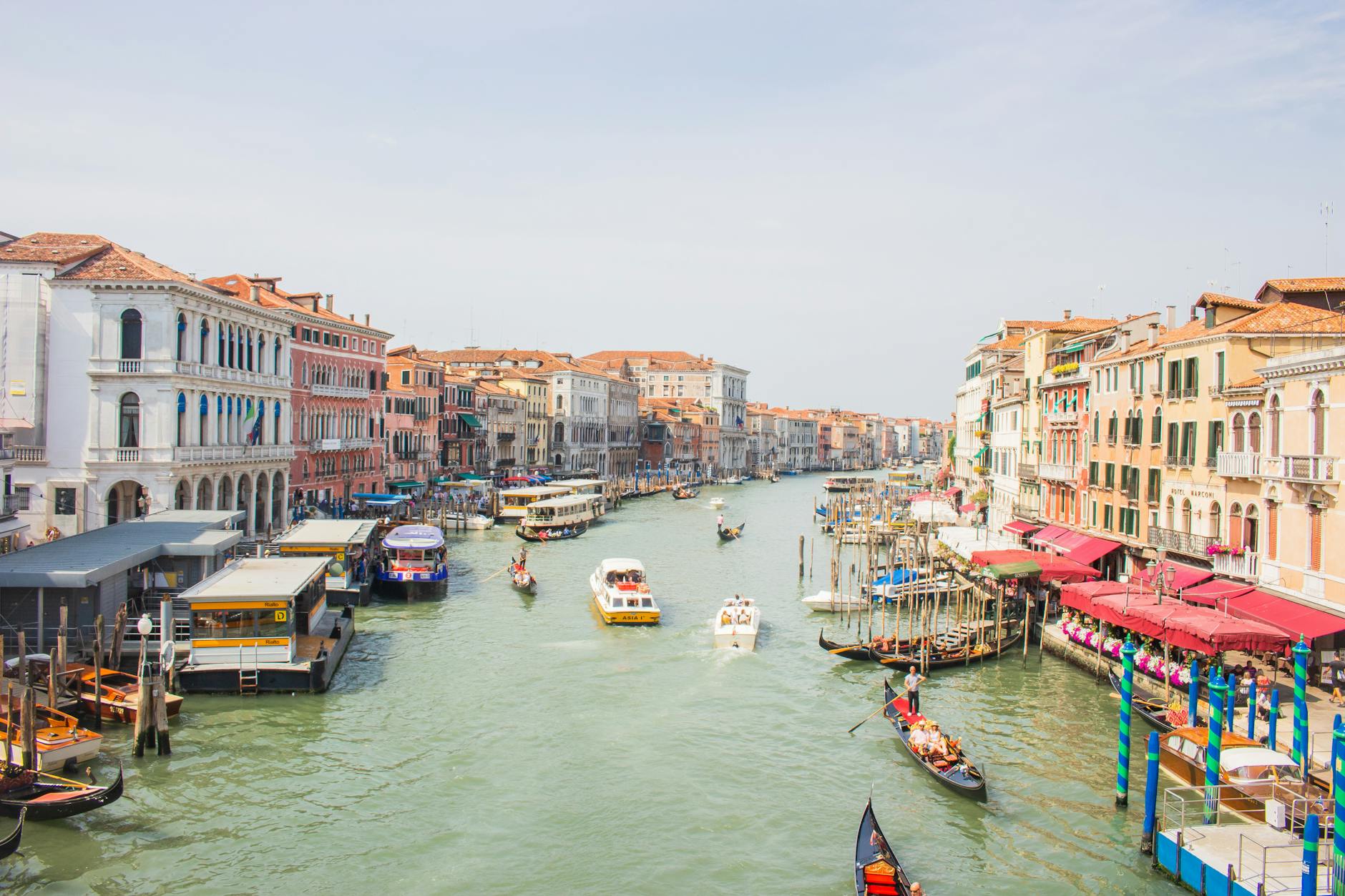
    History of Venice: Economic and Cultural Impact

    Introduction

    Venice, renowned for its enchanting canals and unique architecture, boasts a multifaceted history that intricately intertwines economic vigor with cultural development. Founded in the 5th century, this city-state transformed from a refuge for those fleeing barbarian invasions into a formidable maritime power known as the Venetian Republic. With strategic trade routes and a thriving economy, Venice became a nexus of commerce that facilitated cultural exchanges between Europe and the East. As the historical significance of Venice continues to echo through its artistic legacy, this article will explore the rich tapestry of the history of Venice, examining its economic foundations, cultural achievements, the factors behind its decline, and the ensuing challenges it faces in the modern era.

    The Origins of Venice: From Marshland to Maritime Power

    The origins of Venice can be traced back to the 5th century when displaced populations sought refuge from invading Germanic tribes. As they fled the mainland, they settled on various islands within the Northern Adriatic lagoon, leading to the formation of a unique community that evolved into the city of Venice. The marshy environment presented both challenges and advantages; while agriculture was limited due to the poor soil, the lagoon provided natural defenses against invasions, allowing these settlers to develop their maritime skills.

    By the 6th century, these early Venetians established a rudimentary economy primarily based on fishing and salt extraction. Salt was especially vital, serving as both a preservative and a valuable trade commodity. In the meantime, as the population grew, the construction of wooden structures began to evolve, eventually leading to the development of canals that facilitated trade and transport. The establishment of the Venetian Doges, the elected leaders of the community, marked the city’s transition from a collection of villages into a coherent political entity.

    In the following centuries, Venice capitalized on its geographical position, developing extensive trade networks that connected Europe with the East. By the 9th century, the city had forged strong ties with the Byzantine Empire, largely due to its strategic alliances and trading privileges. The establishment of the Maritime Code of 1242 further regulated economic activities and enhanced its trading prowess. The growing importance of trade prompted the development of a banking system, with Venetian banks pioneering new methods for financing commerce.

    This commercial expansion coincided with innovations in shipbuilding and navigation, further solidifying Venice’s role as a maritime power. The adoption of the galeas, a new type of ship, allowed Venetians to transport goods over long distances efficiently. As trade flourished, the city became home to diverse communities, enriching its cultural fabric. The melding of various cultures influenced Venetian society, resulting in a unique blend of traditions that would define the city for centuries to come.

    The Economic Ascent of the Venetian Republic

    By the late Middle Ages, the Venetian Republic was recognized as one of the leading economic powers in Europe. The strategic advantage of its location, supported by sophisticated maritime commerce, brought immense wealth to the city. The infamous Camino Real, the main trade route to the East, enabled Venetian merchants to exchange spices, silk, and precious metals with regions as diverse as Asia, Africa, and the Americas.

    During this period, Venice introduced groundbreaking concepts in commerce and banking that would alter the course of financial operations across Europe. The advent of double-entry bookkeeping allowed merchants to maintain accurate financial records, a practice that would later be adopted throughout Europe. Venetian merchants often established trading posts and colonies in regions such as Crete, Cyprus, and parts of the Levant, thus extending their economic reach across the Mediterranean.

    The wealth derived from these trading activities fostered the rise of a powerful merchant class, which played a significant role in the governance of the Republic. The Great Council, composed of noble families and wealthy merchants, ruled Venice in a manner that blended oligarchy with democratic elements. This political structure ensured economic interests were protected, fostering an environment conducive to trade and enterprise.

    The Venetian economy thrived on the precursor of modern capitalism; merchants acted as producers, financiers, and traders simultaneously. The Exchange of St. Mark became a central trading hub, drawing traders from all over Europe. Through maritime insurance and credit systems, Venice’s banking sector became a model for future financial institutions, greatly influencing Europe’s economic structures.

    Insurance and credit provided by Venetian banks allowed for greater risk management in trade, promoting an environment of confidence that facilitated large-scale operations. The reputation of Venetian merchants for reliability and integrity made them sought-after partners in trade. As a result, Venice became known not just for its riches but also for its sophisticated commercial networks and financial innovations.

    Cultural Flourishing: Art and Architecture in Venetian History

    The economic prosperity of Venice during its height corresponded with an unparalleled flourishing of culture, particularly in the arts. The influx of wealth led to an investment in artistic endeavors, which transformed the city into a cultural showcase of Renaissance art and architecture. As patronage from the ruling elite and the Church grew, so too did the city’s reputation as a center of artistic innovation.

    Venetian painters such as Titian, Tintoretto, and Veronese gained prominence during this period, producing iconic works that would define the Venetian school of painting. Utilizing vibrant colors and dramatic compositions, these artists captured the essence of Venetian life and spirituality, creating masterpieces that remain revered to this day. Their work often depicted both religious themes and scenes of daily life, bridging the sacred and the secular within a uniquely Venetian context.

    Architecture during this time also experienced a remarkable transformation. The combination of Byzantine, Gothic, and Renaissance influences led to the construction of stunning landmarks that characterized the city. St. Mark’s Basilica, with its opulent mosaics and domes, became a symbol of Venetian religious life and devotion. Furthermore, the Doge’s Palace exemplified Venetian political power and opulence, embodying the Republic’s rich history and democratic ideals.

    The emergence of operatic traditions in Venice also played a significant part in the cultural landscape. The popularity of opera grew throughout the 17th century, with composers such as Monteverdi leading innovative developments in this form of artistic expression. The establishment of the Teatro di San Cassiano, the first public opera house, made opera accessible to broader audiences, further solidifying Venice as the epicenter of cultural life in Europe.

    Moreover, the cultural exchanges facilitated by Venice’s extensive trade networks allowed for diverse artistic influences to permeate the city. The arrival of exotic materials and ideas from the East contributed to the city’s unique aesthetic, with Venetian artists often experimenting with new techniques and forms. This artistic syncretism established Venice as a melting pot of cultural expression that resonated throughout Europe.

    The Decline of Venice: Economic and Political Challenges

    Despite its illustrious past, the decline of Venice began in the late 17th century, influenced by a combination of economic and political challenges. The discovery of new trade routes by leading European powers, particularly the rise of Atlantic trade, diminished Venice’s position as a leading Mediterranean hub. As European nations ventured into the New World and opened up favorable trade routes to Asia, the Venetian economy faced a significant downturn.

    Additionally, a series of military conflicts further compounded Venice’s vulnerabilities. The War of the League of Cambrai (1508-1516) marked a significant turning point, as Venice lost substantial territories and influence in the region. Despite a temporary recovery, the weakening of its naval power and the inability to compete with larger fleets from emerging states such as France and England gradually eroded its former dominance.

    Internally, political stagnation and corruption plagued the governing structures of the Republic. The Great Council, once a symbol of Venetian democracy, transformed into a stagnant oligarchy resistant to reform. This resistance to change alienated segments of the populace, leading to social unrest and further weakening the fabric of Venetian political life.

    Furthermore, economic mismanagement and a reliance on outdated practices led to a decline in trade efficiency and competitiveness. The once-thriving ports became susceptible to blockades and piracy, while the loss of significant trade partners weakened the city’s economic foundations. The gradual loss of its maritime empire left Venice’s economy fragile, struggling to adapt in a rapidly changing world.

    The ultimate blow came in the late 18th century as Napoleonic forces invaded Venice in 1797. Following the Treaty of Campo Formio, Venice was ceded to Austria, marking the end of over a thousand years of independence. The fall of the Venetian Republic symbolized not only a political transition but also a cultural shift, as the city grappled to maintain its identity amidst foreign rule.

    Venice Today: Tourism, Preservation, and Cultural Identity

    Today, Venice stands as a UNESCO World Heritage site celebrated for its stunning architecture, rich cultural heritage, and historical significance. However, the city is facing a myriad of contemporary challenges, largely stemming from overtourism and the impacts of climate change. While tourism brings economic benefits, it poses threats to the preservation of its delicate structures and local culture.

    The influx of millions of tourists each year has led to serious environmental concerns, including the erosion of the city’s foundations and pollution in the canals. Heavy foot traffic through historic districts has raised alarm among conservationists and locals alike, who argue that the city’s authenticity is being compromised in favor of tourist appeal. Consequently, the Venetian government has implemented various measures to manage visitor access and protect its heritage.

    Additionally, the rising sea levels due to climate change threaten the integrity of Venetian infrastructure. The phenomenon of acqua alta (high water) is becoming more frequent, resulting in flooding that damages buildings, disrupts local life, and raises concerns over public safety. Initiatives such as the MOSE Project have been developed to mitigate these impacts, although these plans have garnered mixed reactions regarding their effectiveness and environmental consequences.

    Preserving cultural identity in the face of commercialization is another pressing issue. Many Venetians are being displaced by rising property prices driven by a booming tourism market that prioritizes accommodations for visitors over local needs. As more businesses cater exclusively to tourists, the risk of losing traditional crafts and industries that embody Venetian heritage increases.

    In response, local groups and activists are advocating for measures to reinvigorate the community spirit and promote sustainable tourism practices. Initiatives that encourage authentic experiences within Venice—such as supporting local artisans and promoting cultural events—aim to reinstate a sense of community while fostering economic viability.

    Ultimately, Venice remains a city of resilience, navigating the complexities of modernity while striving to balance cultural preservation with economic sustainability. The lessons learned from the past echo through its present endeavors, shaping the future of this irreplaceable city that continues to captivate hearts around the globe.

    Conclusion

    The history of Venice is a profound narrative of economic vigor intertwined with cultural richness. From its enigmatic origins as a refuge to its establishment as a powerful maritime republic, Venice has made significant contributions to trade, culture, and art that resonate globally. Despite facing profound challenges today, the city remains steadfast, determined to preserve its unique heritage while adapting to the demands of the modern world. As Venice navigates through the complexities of tourism and environmental sustainability, it is poised to continue its legacy as a remarkable intersection of history, culture, and resilience, inspiring generations to come.

    Sources Consulted

  • The history of Berlin: A great journey of transformation
    The history of Berlin: A great journey of transformation

    Introduction

    Berlin, the capital of Germany, has long been a symbol of resilience, cultural dynamism, and historical change. The history of Berlin started in the 13th century, and it evolved from a small trading post into one of Europe’s most vibrant and influential cities. As the capital of Prussia and later Germany, Berlin witnessed periods of remarkable growth and intense conflict, from the rise of the Nazi regime to the devastation of World War II and the ensuing Cold War. This article explores Berlin’s journey through these defining moments, shedding light on the events and transformations that have shaped the city’s unique identity and enduring spirit.

    Founding and Early Development

    Berlin’s origins date back to the 13th century, when two small settlements, Berlin and Cölln, were established along the River Spree. Located at the crossing of two major trade routes, the area quickly developed as a center for commerce and culture, attracting merchants, artisans, and traders from surrounding regions. By 1307, the two towns formed a union, marking the first step toward Berlin’s growth as a significant urban center.

    Throughout the medieval period, Berlin grew in both size and prominence, benefiting from its favorable location for trade. In 1415, the region came under the control of Frederick I, who established the Margraviate of Brandenburg. This event marked the beginning of Berlin’s association with the Hohenzollern dynasty, which would later shape its political and cultural landscape. Under Hohenzollern rule, Berlin saw the construction of significant landmarks, including the Marienkirche and the Stadtschloss, or City Palace, which became symbols of the city’s growing stature.

    The Protestant Reformation in the 16th century had a profound impact on Berlin, aligning it with the religious and political shifts that swept through Europe. The adoption of Protestantism under Elector Joachim II brought religious reform and increased autonomy from the Catholic Church, fostering a sense of independence that became a defining characteristic of the city. As Berlin continued to expand, it developed a unique identity as a place of innovation, trade, and governance.

    By the 17th century, Berlin had solidified its role as the center of the Brandenburg-Prussian state, positioning itself for further growth in the coming eras. The city’s development was marked by cultural and economic prosperity, which laid the foundation for its transformation into a major European capital in the centuries that followed.

    Berlin in the Prussian and Imperial German Eras

    The 18th and 19th centuries marked a period of profound change for Berlin as it became the capital of the Kingdom of Prussia. Under the rule of Frederick the Great in the mid-18th century, Berlin flourished as a center of arts, education, and military power. Frederick’s vision transformed the city with architectural masterpieces, including the Berlin State Opera and the Brandenburg Gate, which remains an iconic symbol of the city today.

    As Prussia expanded its influence in Europe, Berlin’s population and importance grew. The Industrial Revolution brought rapid urbanization, transforming Berlin into an economic powerhouse. Factories, railways, and modern infrastructure turned the city into one of Europe’s leading industrial centers, attracting workers from across Germany and beyond. This period of growth continued into the formation of the German Empire in 1871, when Berlin was declared the imperial capital of a newly unified Germany.

    With its new status, Berlin underwent massive development, becoming a hub for politics, science, and the arts. The city’s universities, theaters, and scientific institutions attracted scholars and artists, establishing Berlin as a beacon of intellectual and cultural achievement. However, this era was also marked by social and political tensions, as industrialization brought about economic disparities and demands for political reform. Despite these challenges, Berlin’s status as the heart of the German Empire solidified its role as a major European capital.

    By the early 20th century, Berlin was at the height of its power, a symbol of Germany’s unity and ambition. However, the political upheaval and eventual outbreak of World War I would soon bring about drastic changes, setting the stage for a turbulent new chapter in the city’s history.

    Weimar Republic and the Rise of Nazi Berlin

    After Germany’s defeat in World War I, Berlin became the capital of the Weimar Republic, a period marked by both cultural blossoming and political turmoil. The city emerged as a global hub for art, theater, and intellectual thought, symbolizing the avant-garde spirit of the 1920s. Known for its vibrant nightlife, Berlin attracted artists, writers, and performers who pushed the boundaries of creativity and self-expression, making it one of the most progressive cities in Europe.

    However, the economic instability and political divisions that plagued the Weimar Republic also affected Berlin. Hyperinflation, unemployment, and street violence became common, as various political factions, including communists and right-wing extremists, vied for power. Amid this unrest, Adolf Hitler’s Nazi Party gained support by exploiting the city’s discontent, and in 1933, Hitler was appointed Chancellor of Germany, marking the end of the Weimar era.

    Berlin, the capital of Germany
    Berlin, the capital of Germany, has long been a symbol of resilience, cultural dynamism, and historical change. Founded in the 13th century, it evolved from a small trading post into one of Europe’s most vibrant and influential cities.

    Under Nazi rule, Berlin transformed into the nerve center of the Third Reich. The city’s architectural landscape was reshaped to reflect Nazi ideology, with grandiose plans by architect Albert Speer to make Berlin the capital of a new world empire, Germania. During this period, Berlin also became a site of oppression, with systematic persecution of Jews, political dissidents, and other groups. The city’s Jewish population, once a vibrant part of its cultural fabric, faced brutal repression, leading to the tragic events of the Holocaust.

    World War II brought devastating consequences for Berlin, as Allied bombings destroyed much of the city’s infrastructure. By 1945, Berlin was a city in ruins, marking the end of the Nazi regime and the beginning of a new, divided chapter in its history. The fall of Berlin in 1945 was symbolic of the larger collapse of Nazi Germany, leaving the city scarred but poised for reconstruction and change.

    Division, the Berlin Wall, and the Cold War

    After World War II, Berlin became the focal point of Cold War tensions between the Soviet Union and the Western Allies. Divided into four occupation zones controlled by the United States, the United Kingdom, France, and the Soviet Union, Berlin quickly became a microcosm of the ideological divide between East and West. In 1949, the establishment of the German Democratic Republic (East Germany) and the Federal Republic of Germany (West Germany) formalized this division, with East Berlin as the capital of East Germany and West Berlin remaining a democratic enclave within the communist state.

    In 1961, the construction of the Berlin Wall physically divided the city, separating families, friends, and communities. The Wall became a powerful symbol of the Cold War, representing the stark division between communist and capitalist ideologies. For nearly three decades, the Berlin Wall dominated the city’s landscape, with escape attempts from East Berlin often ending in tragedy.

    Life in Berlin was dramatically different on each side of the Wall. West Berlin thrived as a center of culture, innovation, and freedom, while East Berlin, under the control of the socialist government, struggled with economic hardships and restrictions on personal freedoms. The Berlin Wall became a focal point of international attention, with political leaders like U.S. President John F. Kennedy famously declaring “Ich bin ein Berliner” as a statement of solidarity with the people of Berlin.

    The Cold War tensions began to thaw in the late 1980s, and on November 9, 1989, the Berlin Wall fell, marking a turning point in history. The reunification of Berlin and Germany soon followed, symbolizing the end of the Cold War and the beginning of a new era for the city.

    Reunification and Modern Berlin

    The fall of the Berlin Wall was a pivotal moment in Berlin’s history, leading to the reunification of Germany in 1990. Berlin was once again named the capital of Germany, and a massive reconstruction effort began to unify the city’s infrastructure, economy, and society. This period of transformation saw Berlin emerge as a vibrant, cosmopolitan metropolis, attracting people from all over the world.

    In the years following reunification, Berlin embraced its multicultural identity, becoming a hub for art, music, and technology. Iconic landmarks like the Brandenburg Gate, once located in the shadow of the Wall, were restored as symbols of unity and freedom. The city also undertook significant economic development, with modern skyscrapers and business districts rising alongside historic buildings, creating a unique blend of old and new.

    Berlin’s cultural scene flourished, with events like the Berlinale film festival, the Berlin Philharmonic, and its numerous museums and galleries attracting millions of visitors each year. The city also became a center for political and social movements, reflecting its role as a place of progressive thought and activism.

    Today, Berlin stands as a testament to resilience and reinvention. It is a city that has confronted and overcome immense challenges, from war and division to economic hardship. The story of Berlin is one of transformation and hope, embodying the enduring spirit of a city that has always managed to rebuild, renew, and redefine itself.

    Conclusion

    Berlin’s history is a tapestry of triumphs, tragedies, and transformations. From its medieval roots to its role as the capital of a unified Germany, Berlin has been shaped by the forces of politics, war, culture, and resilience. Each era in the city’s history has left an indelible mark, creating a metropolis that reflects both the hardships and hopes of its people. Today, Berlin stands as a symbol of unity and progress, a city that embraces its past while looking toward the future. Its journey serves as a reminder of the resilience of human spirit and the power of a city to continuously reinvent itself.