Category: Buildings & Architecture

  • Notre Dame Cathedral: History, Fire, and Restoration

    Notre Dame Cathedral: History, Fire, and Restoration

    Introduction

    The Notre Dame Cathedral in Paris stands as a timeless symbol of faith, artistry, and resilience. Constructed over the course of nearly 200 years, this architectural masterpiece has witnessed centuries of historical change, serving as a spiritual, cultural, and political cornerstone of French heritage. From its inception in the 12th century to its devastation in the tragic fire of April 2019, Notre Dame has captured the imagination of millions and inspired movements for preservation and renewal.

    Throughout its history, the cathedral has been a silent witness to revolutions, wars, and the ebb and flow of Parisian life. Its iconic Gothic architecture, breathtaking rose windows, and spiritual significance have cemented its place in global history. The ongoing reconstruction efforts following the fire are not merely an act of repair but a profound commitment to ensuring that Notre Dame remains a symbol of resilience and inspiration for generations to come.

    The Origins of Notre Dame: Architectural Beginnings (12th–14th Century)

    Notre Dame de Paris, or “Our Lady of Paris,” was conceived during an era of monumental change in medieval Europe. Its construction began in 1163, under the reign of King Louis VII and the supervision of Bishop Maurice de Sully, who envisioned a grand cathedral that would symbolize the power of the Catholic Church and the growing prominence of Paris as a cultural and political hub.

    The cathedral was designed in the Gothic architectural style, which had emerged in the mid-12th century and revolutionized medieval construction. This style was characterized by innovations such as pointed arches, ribbed vaults, and flying buttresses, allowing for taller, more luminous buildings with expansive stained-glass windows. The foundation stone of Notre Dame was laid in the presence of Pope Alexander III, marking the beginning of a project that would span nearly two centuries.

    Early Construction and Architectural Marvels

    The first phase of construction focused on the choir and apse, completed around 1182. The cathedral’s nave, its long central hall, was finished by the early 13th century. The two massive towers on the western façade were completed by 1250, while the final touches, including additional sculptural decorations, continued into the early 14th century.

    The iconic flying buttresses of Notre Dame were one of its most groundbreaking features. Introduced in the 13th century, these external supports allowed the cathedral walls to be thinner and higher, accommodating the large stained-glass windows that bathed the interior in vibrant light. The rose windows, particularly the North and South Roses, are masterpieces of medieval craftsmanship, showcasing intricate designs and vivid colors that tell biblical stories.

    Symbolism and Religious Significance

    From its earliest days, Notre Dame was more than just a building; it was a spiritual beacon. Dedicated to the Virgin Mary, it became a central place of worship for Parisians and a pilgrimage site for the devout. The cathedral hosted significant religious ceremonies, including the coronation of Henry VI of England in 1431 during the Hundred Years’ War.

    Notre Dame’s design also reflected medieval theological principles. Its soaring spires and intricate carvings were intended to lift the eyes—and the soul—toward heaven. The façade was adorned with hundreds of sculptures, including gargoyles and chimeras, which served both functional and symbolic purposes. While some acted as rain spouts, others represented the spiritual battle between good and evil, reinforcing the cathedral’s role as a sacred space.

    Cultural and Civic Importance

    In addition to its religious significance, Notre Dame quickly became a centerpiece of Parisian life. Situated on the ÃŽle de la Cité, it stood at the heart of medieval Paris, serving as a gathering place for public events and a marker of the city’s identity. The cathedral’s construction coincided with the consolidation of Paris as the political and intellectual capital of France, further cementing its status as a symbol of national pride.

    By the time construction was completed in the early 14th century, Notre Dame had already established itself as one of the most magnificent architectural achievements of its time—a testament to human ingenuity and devotion.

    Notre Dame in the Middle Ages: Spiritual and Cultural Center

    During the Middle Ages, Notre Dame de Paris was not only a sacred space but also a cultural, social, and intellectual hub for the city of Paris. As the cathedral’s grandeur grew, it became deeply intertwined with the life of medieval Parisians and held a central role in both religious and civic affairs.

    A Beacon of Faith

    From its consecration, Notre Dame served as the spiritual heart of Paris. Daily Masses, solemn processions, and elaborate religious ceremonies were integral to life within its walls. The cathedral was a centerpiece for Christian observances, such as Easter, Christmas, and the Feast of the Assumption, drawing thousands of worshippers. It also played a role in significant state events, including royal marriages and coronations, cementing the alliance between the French monarchy and the Catholic Church.

    Notre Dame housed several important religious relics, including the Crown of Thorns, believed to have been worn by Jesus Christ during his crucifixion. King Louis IX, who acquired the relic in 1239, ensured its placement within the cathedral. Such treasures elevated Notre Dame’s significance, transforming it into a site of pilgrimage for believers across Europe.

    The cathedral also became a center for Marian devotion, emphasizing its dedication to the Virgin Mary. Artistic depictions of Mary adorned its architecture, including the stunning sculptures on the western façade and the luminous rose windows, which symbolized her purity and grace.

    A Hub of Knowledge and Art

    During the High Middle Ages, Paris emerged as a leading center of education and intellectual life, particularly through the establishment of the University of Paris. Located nearby, the university contributed to Notre Dame’s significance by hosting theological debates, academic ceremonies, and religious lectures. Scholars from the university often collaborated with cathedral clergy, enhancing Notre Dame’s role as a seat of learning.

    The Gothic art and architecture of Notre Dame also influenced generations of artisans, architects, and stonemasons. Its elaborate carvings, such as the Gallery of Kings—depicting biblical monarchs—served as both decoration and visual storytelling. These elements educated an illiterate population through vivid depictions of biblical narratives and saints’ lives.

    Notre Dame’s choral music further enriched its cultural legacy. The cathedral became known for fostering the development of polyphony, an early form of multi-voiced music. Composers from the Notre Dame School of Polyphony, such as Léonin and Pérotin, revolutionized medieval music by introducing intricate harmonies and rhythmic structures. Their contributions spread across Europe, solidifying Notre Dame’s influence in the evolution of Western music.

    A Center for Civic Life

    In medieval Paris, Notre Dame functioned as more than a place of worship—it was a civic landmark. The parvis, or plaza, in front of the cathedral served as a gathering place for public meetings, markets, and even judicial proceedings. As the cathedral stood on the Île de la Cité, the political and geographical heart of Paris, it became a natural venue for addressing the public.

    In times of war and hardship, Notre Dame symbolized hope and unity. It stood as a physical and spiritual anchor for the city, offering solace to Parisians during the uncertainties of the Middle Ages. The cathedral’s bells, particularly the iconic Emmanuel bell, rang out to mark important events, summon the faithful, and warn of danger, weaving it further into the fabric of daily life.

    Legacy of the Medieval Era

    By the end of the Middle Ages, Notre Dame had firmly established itself as a cornerstone of Parisian identity. It was not merely a structure of stone and glass but a living testament to the city’s faith, creativity, and resilience. The cathedral’s role during this period laid the foundation for its enduring cultural and spiritual significance, which would resonate far beyond the medieval era.

    The French Revolution and Notre Dame: Decline and Transformation

    The French Revolution (1789–1799) marked a tumultuous period for Notre Dame Cathedral, as the political and social upheavals that swept France brought about profound changes to the church’s role and physical state. Once a symbol of religious and royal authority, the cathedral became a target for revolutionary fervor, leading to its decline and transformation during this era.

    Notre Dame’s Fall from Grace

    As the revolutionaries sought to dismantle the old order, institutions associated with the monarchy and the Catholic Church were stripped of their influence. Notre Dame, a towering emblem of both, found itself at the center of this ideological conflict. In 1793, the cathedral was officially secularized and rededicated as the Temple of Reason, reflecting the revolutionary shift towards Enlightenment ideals and the rejection of traditional religious practices.

    Religious artifacts and symbols within Notre Dame were systematically destroyed or removed. Statues of biblical kings on the western façade, mistakenly identified as French monarchs, were decapitated by revolutionaries. The interior was desecrated, with altars, statues, and relics either vandalized or removed. The iconic Crown of Thorns, one of Christianity’s most revered relics, was seized and transferred to the national library for safekeeping. Even the bells of Notre Dame, except for the great Emmanuel bell, were melted down and repurposed to produce cannons for the revolutionary army.

    Transformation and Rededication

    During the height of the revolution, Notre Dame became a stage for political propaganda. In November 1793, the cathedral hosted the Festival of Reason, an event intended to promote secular values. A statue symbolizing Liberty replaced the Virgin Mary on the altar, and revolutionary leaders used the space to convey their vision of a rational, secular republic. While these ceremonies were short-lived, they left an indelible mark on Notre Dame’s history.

    By 1794, the revolutionary government adopted a more moderate stance, and some religious practices were reinstated. However, the damage inflicted upon Notre Dame during this period was immense, leaving the cathedral in a state of disrepair. Its symbolic status as a house of worship and as a civic landmark had been deeply shaken, reflecting the broader societal shifts of the revolution.

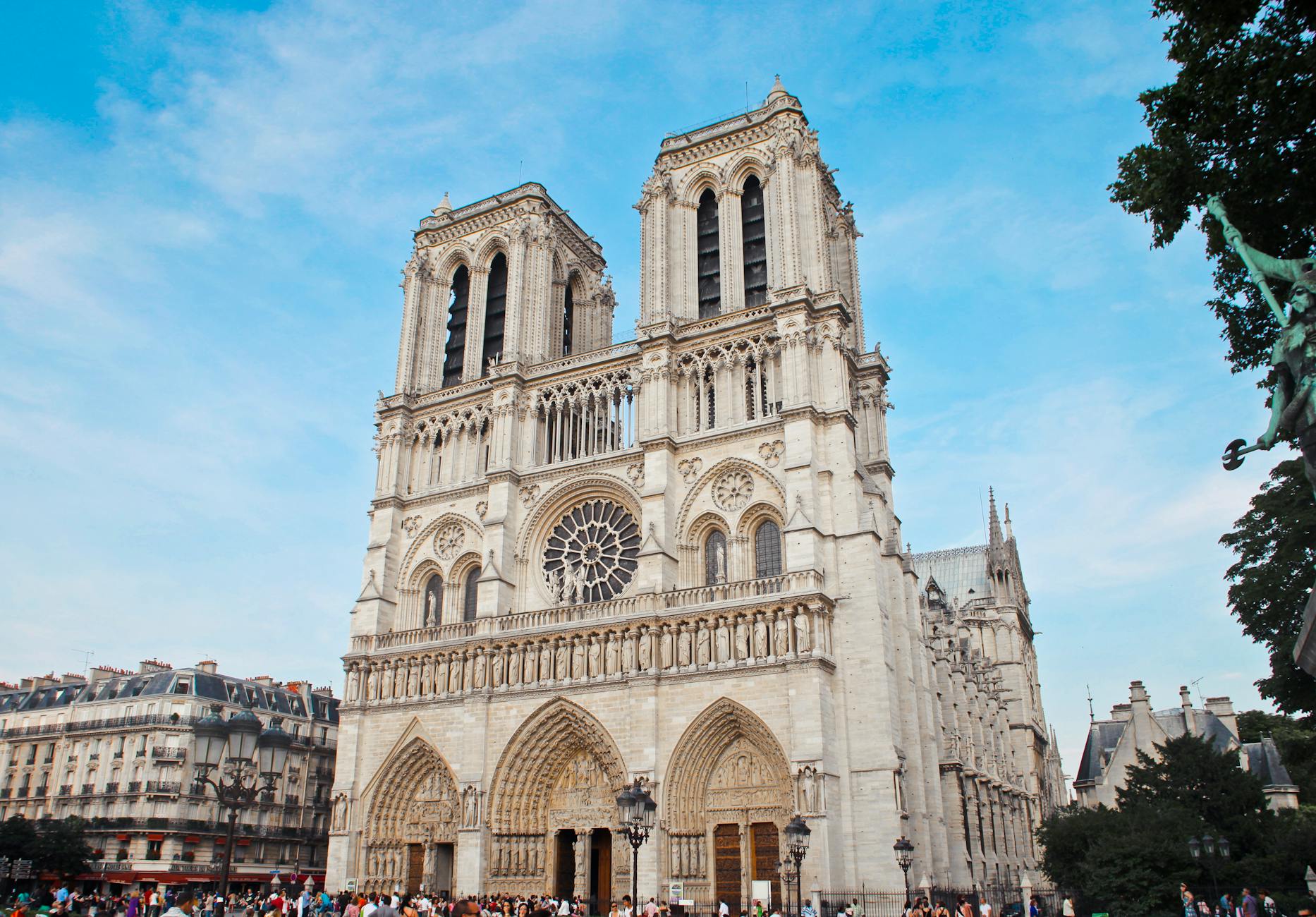
    Notre Dame Cathedral, Paris, France
    The Notre Dame Cathedral in Paris stands as a timeless symbol of faith, artistry, and resilience. Constructed over the course of nearly 200 years, this architectural masterpiece has witnessed centuries of historical change, serving as a spiritual, cultural, and political cornerstone of French heritage. Photo by Paul Deetman on Pexels.com

    The Cathedral’s Near-Demise

    After the revolution, Notre Dame faced an uncertain future. The dechristianization movement had left the building neglected, and it narrowly avoided being dismantled entirely. Napoleon Bonaparte’s rise to power in 1799 brought some relief, as he sought to reconcile with the Catholic Church to stabilize France. In 1801, the Concordat of 1801 between Napoleon and the Pope restored Notre Dame to the Church, reopening it for religious services. Napoleon himself contributed to its legacy by holding his coronation as Emperor of the French in Notre Dame in 1804, an event immortalized by Jacques-Louis David’s famous painting.

    Legacy of Revolutionary Turmoil

    The French Revolution fundamentally altered Notre Dame’s identity. Once a beacon of religious and royal power, it emerged from the revolutionary period scarred but resilient. Its survival through such upheaval stands as a testament to its enduring significance, not only as a physical structure but as a symbol of France’s complex history. The damage inflicted during this era would later spur efforts to restore the cathedral, leading to one of the most famous revival projects of the 19th century.

    The 19th-Century Restoration by Viollet-le-Duc

    The 19th century marked a turning point in the history of Notre Dame Cathedral, as the scars left by the French Revolution led to widespread calls for its restoration. Spearheaded by the French architect Eugène Viollet-le-Duc, the ambitious restoration project not only repaired the physical damage but also reimagined the cathedral as a symbol of Gothic revival and national pride.

    A Call for Preservation

    By the early 19th century, Notre Dame had fallen into a state of neglect and disrepair. Decades of vandalism, secularization, and lack of maintenance had left the cathedral’s structure weakened, with many of its iconic features damaged or missing. Public sentiment toward the cathedral began to shift following the publication of Victor Hugo’s novel Notre-Dame de Paris in 1831, which brought attention to the cathedral’s plight. The novel, a passionate ode to Gothic architecture, sparked widespread admiration for Notre Dame and underscored the need to preserve France’s architectural heritage.

    In 1844, King Louis-Philippe declared Notre Dame’s restoration a priority. The French government commissioned Eugène Viollet-le-Duc and Jean-Baptiste Lassus, two leading proponents of the Gothic revival movement, to undertake the monumental task of restoring the cathedral to its former glory.

    The Restoration Project

    Viollet-le-Duc and Lassus approached the restoration with a mix of historical fidelity and creative reinterpretation. Their goal was not simply to repair the cathedral but to enhance its Gothic character, adhering to the principles of the Gothic revival movement.

    One of the most iconic additions during this restoration was the reconstruction of Notre Dame’s central spire, which had been removed in the 18th century due to structural concerns. Viollet-le-Duc designed a new spire that blended seamlessly with the existing Gothic architecture, adorned with intricate sculptures, including the famous statues of the twelve apostles. Notably, one of the statues—a representation of Saint Thomas—bears the face of Viollet-le-Duc himself, a subtle nod to the architect’s dedication to the project.

    The restoration also involved repairing the cathedral’s western façade, which had been severely damaged during the French Revolution. Viollet-le-Duc and his team meticulously recreated missing statues and sculptures, drawing inspiration from surviving medieval designs. The Gallery of Kings, a row of statues depicting biblical monarchs, was painstakingly reconstructed to restore the grandeur of the façade.

    Stained Glass and Gargoyles

    The restoration extended to Notre Dame’s stunning stained glass windows, including the three iconic rose windows. While much of the original glass had been destroyed or removed, Viollet-le-Duc’s team recreated the windows using 19th-century techniques, maintaining the vibrant colors and intricate designs that defined the originals.

    Another significant aspect of the restoration was the addition of the cathedral’s famous gargoyles and chimeras. Though not part of the original medieval design, these grotesque sculptures became one of Notre Dame’s defining features. Viollet-le-Duc envisioned them as both decorative and functional elements, channeling rainwater away from the building while adding a sense of mystery and drama to the cathedral’s exterior.

    Controversy and Legacy

    While the restoration was widely celebrated, it was not without controversy. Critics argued that Viollet-le-Duc’s creative liberties, such as the addition of the spire and gargoyles, strayed from the historical authenticity of the original structure. However, supporters praised his vision, emphasizing the importance of reviving Notre Dame as a symbol of France’s cultural and architectural heritage.

    Viollet-le-Duc’s restoration, completed in 1864, was a triumph of the Gothic revival movement. It not only saved Notre Dame from ruin but also cemented its status as one of the most iconic landmarks in Paris. The restoration transformed the cathedral into a cultural and historical treasure, ensuring its place at the heart of French identity for generations to come.

    Notre Dame in the 20th Century: A Beacon of Resilience

    The 20th century was a period of profound change and challenges for Notre Dame Cathedral. From surviving two world wars to hosting momentous events that defined French and global history, Notre Dame emerged as a symbol of resilience and continuity. However, it also faced the pressures of modernization and conservation, which would set the stage for the challenges of the 21st century.

    World War I: A Symbol of Hope

    During World War I (1914–1918), Notre Dame stood as a steadfast symbol of hope amidst the chaos and destruction engulfing Europe. Although Paris faced bombardment and air raids, the cathedral itself escaped significant damage. Its bells rang out on November 11, 1918, to celebrate the signing of the Armistice, marking the end of the war. This moment underscored Notre Dame’s enduring presence as a beacon of spiritual and national unity during times of crisis.

    World War II: Survival and Liberation

    Notre Dame’s resilience was again tested during World War II (1939–1945). Paris fell under Nazi occupation in 1940, and while the city’s historic landmarks, including Notre Dame, were spared the widespread destruction that befell other European cities, the cathedral became a silent witness to the oppression and turmoil of the occupation. Its bells remained silent for much of the war, a poignant reminder of the loss of freedom.

    As the war drew to a close, Notre Dame played a significant role in the celebrations of liberation. On August 26, 1944, just days after the liberation of Paris, a Te Deum—a traditional hymn of thanksgiving—was sung in the cathedral to honor the city’s freedom. The ceremony, attended by General Charles de Gaulle, symbolized the triumph of resilience and hope over tyranny. The sight of de Gaulle walking down the nave of Notre Dame amidst a jubilant yet chaotic crowd remains an enduring image of France’s liberation.

    Notre Dame as a Cultural and National Icon

    Throughout the 20th century, Notre Dame continued to serve as a stage for significant cultural and national events. It hosted numerous state funerals, including those of President Charles de Gaulle in 1970 and President François Mitterrand in 1996. These ceremonies highlighted the cathedral’s role as a unifying space where French history and identity could be honored and remembered.

    In addition to its religious and national significance, Notre Dame became an increasingly popular tourist destination during the 20th century. Millions of visitors from around the world came to admire its architectural beauty and spiritual atmosphere. This surge in popularity brought both opportunities and challenges, as the cathedral faced growing concerns over the preservation of its aging structure.

    Conservation Efforts

    The latter half of the 20th century saw increased efforts to address Notre Dame’s structural issues. The effects of pollution, weathering, and time took a toll on the cathedral’s stonework, prompting numerous restoration campaigns. In the 1960s, cleaning efforts were launched to remove centuries of grime from the façade, revealing its original brightness and detail.

    The need for ongoing maintenance and restoration underscored Notre Dame’s delicate balance between preserving its historical integrity and adapting to the demands of the modern era. These efforts were critical in ensuring that the cathedral could withstand the test of time, setting the stage for its enduring role in the 21st century.

    A Witness to Change

    By the end of the 20th century, Notre Dame had firmly established itself as more than just a place of worship. It stood as a symbol of resilience, unity, and cultural heritage, having weathered the storms of war, political change, and environmental challenges. Its ability to adapt and endure through the trials of the 20th century solidified its place as one of the most treasured landmarks in human history.

    The Tragic Fire of 2019: A Global Wake-Up Call

    On the evening of April 15, 2019, the world watched in horror as a devastating fire engulfed Notre Dame Cathedral, threatening one of humanity’s most cherished architectural and cultural treasures. The fire, which started in the attic, caused catastrophic damage to the roof and central spire, collapsing these iconic features and jeopardizing the stability of the entire structure. This tragic event marked a pivotal moment in Notre Dame’s history, rallying global support for its preservation and highlighting the vulnerabilities of historic monuments.

    The Fire and Its Immediate Impact

    The fire broke out around 6:30 PM local time and quickly spread through the cathedral’s ancient wooden framework, known as the “forest” due to its dense interwoven beams. Constructed in the 13th century, the framework was highly flammable, and despite the rapid response of more than 400 firefighters, the fire proved difficult to contain. As flames consumed the roof, the iconic central spire, a masterpiece added by Viollet-le-Duc during the 19th-century restoration, collapsed dramatically, sending shockwaves across the globe.

    Inside the cathedral, the damage was extensive but uneven. The stone vaults of the ceiling largely contained the fire, preventing it from reaching the lower levels where invaluable artifacts, artworks, and relics were stored. However, significant portions of the roof and upper structures were destroyed, leaving the interior exposed to the elements.

    Miraculously, many of Notre Dame’s most treasured items were saved. Firefighters and cathedral staff worked tirelessly to rescue the Crown of Thorns, believed to have been worn by Christ, and other relics, as well as irreplaceable artworks and furnishings. The famous rose windows, though at risk from heat and debris, also survived with minimal damage, preserving their place as symbols of Notre Dame’s enduring beauty.

    A Global Outpouring of Grief and Solidarity

    As images of the fire spread across news and social media, the world reacted with profound sorrow and solidarity. Notre Dame was not just a French icon but a global cultural and spiritual landmark, representing centuries of history, art, and human achievement. Leaders from around the world, including Pope Francis and then-President Donald Trump, expressed their condolences and offered support. In Paris, thousands gathered along the Seine River to sing hymns and pray as they watched the fire consume the cathedral.

    French President Emmanuel Macron addressed the nation that same evening, vowing to rebuild Notre Dame and preserve it for future generations. “We will rebuild this cathedral together,” he declared, “because that is what the French people expect, and because it is our history.”

    The Challenges of Reconstruction

    In the aftermath of the fire, efforts to assess the damage and stabilize the structure began immediately. Engineers and preservationists faced enormous challenges, from removing the charred debris to reinforcing weakened walls and buttresses. The collapse of the spire and roof had also exposed the cathedral to potential water damage, necessitating swift action to protect the interior from rain.

    Financial support poured in from across the globe. Within days, more than €1 billion was pledged by individuals, corporations, and governments, including significant contributions from French billionaires such as François-Henri Pinault and Bernard Arnault. However, questions arose about how these funds would be managed and whether the reconstruction should faithfully replicate the original design or incorporate modern elements.

    Symbolism and Reflection

    The 2019 fire was more than a physical disaster; it was a profound reminder of the fragility of cultural heritage. Notre Dame, a survivor of wars, revolutions, and centuries of wear, had been vulnerable to a single accidental fire caused by renovation work. The tragedy highlighted the importance of investing in the maintenance and preservation of historic monuments worldwide.

    The fire also underscored Notre Dame’s role as a unifying force. In an era marked by political and social divisions, the global response to the fire demonstrated the shared human connection to art, history, and faith. For France, it became a rallying point for national identity and pride, symbolizing resilience in the face of adversity.

    A New Chapter

    The fire of 2019 marked a turning point in Notre Dame’s story, ushering in a new era of restoration and renewal. While the physical scars were immense, the event galvanized a worldwide commitment to ensuring the cathedral’s survival for generations to come. It was a tragic yet transformative moment, reaffirming Notre Dame’s place at the heart of global cultural and spiritual life.

    The Ongoing Restoration: Reviving a Global Icon

    The fire of 2019 left Notre Dame Cathedral in a perilous state, but it also set in motion one of the most ambitious restoration projects in history. Under the leadership of French President Emmanuel Macron, the commitment to rebuild Notre Dame became a national and global priority. With a deadline set for 2024, coinciding with the Paris Olympics, the project has combined cutting-edge technology, traditional craftsmanship, and international expertise to restore the cathedral to its former glory.

    Assessing the Damage and Securing the Structure

    The first step in the restoration process was to assess the extent of the damage and stabilize the remaining structure. The fire had destroyed the roof, the central spire, and much of the timber framework, while the stone vaulting had suffered significant cracks due to the intense heat and falling debris. Engineers worked meticulously to remove tons of debris, including melted lead from the roof, while ensuring that the remaining walls, buttresses, and towers were structurally sound.

    A critical milestone was the installation of a temporary wooden “umbrella” over the cathedral to protect the interior from further weather damage. This structure allowed conservators to work on preserving the cathedral’s priceless artifacts and artworks, many of which had been moved offsite during the fire.

    Recreating the Spire and Roof

    One of the most iconic features lost in the fire was the central spire, designed by 19th-century architect Eugène Viollet-le-Duc. After much debate, it was decided that the spire would be rebuilt exactly as it had been before the fire, honoring Viollet-le-Duc’s vision and maintaining the cathedral’s historic integrity. The reconstruction process required sourcing oak trees for the framework, many of which were carefully selected from French forests to match the original materials.

    Craftsmen from across Europe have contributed to the project, using traditional techniques to replicate the original design. The roof reconstruction has also involved the use of lead sheeting, despite concerns over its environmental impact, to maintain the authenticity of Notre Dame’s silhouette.

    Innovations in Restoration

    While the restoration has adhered closely to historical accuracy, modern technology has played a crucial role in speeding up and enhancing the process. 3D laser scanning and digital modeling, conducted before and after the fire, have provided invaluable data for recreating intricate details. These tools have ensured precision in replicating the cathedral’s Gothic features, from the carved gargoyles to the ornate tracery of the windows.

    The project has also incorporated sustainability practices, with efforts to minimize waste and energy consumption. For example, scaffolding used in the restoration has been designed for reuse in future projects, reflecting a broader commitment to environmental responsibility.

    The Workforce Behind the Revival

    The restoration of Notre Dame has brought together an extraordinary team of skilled artisans, architects, engineers, and historians. From stone masons and carpenters to stained-glass restorers, these professionals have demonstrated unparalleled dedication and expertise. Their work not only honors the craftsmanship of the past but also ensures that future generations can appreciate the cathedral’s magnificence.

    A Symbol of Renewal

    As the 2024 deadline approaches, the restoration of Notre Dame has become a symbol of resilience and unity. The project has captured the world’s imagination, inspiring hope and reminding us of the enduring power of cultural heritage. It is a testament to humanity’s ability to come together in the face of adversity, blending tradition and innovation to preserve a shared legacy.

    While challenges remain, the progress made so far has been remarkable. The reopening of Notre Dame will mark not just the restoration of a historic monument but also the revival of a spiritual and cultural icon that continues to inspire millions around the globe.

    Conclusion: Notre Dame, A Testament to Human Spirit and Heritage

    The history of Notre Dame Cathedral reflects the enduring legacy of human creativity, devotion, and resilience. From its construction in the 12th century to the devastation of the 2019 fire, the cathedral has stood as a symbol of faith, culture, and architectural brilliance. Each chapter in its story, from medieval innovations to 19th-century restorations and the ongoing reconstruction, underscores its importance as a global treasure.

    The 2019 fire, while a moment of profound loss, also united the world in a shared determination to restore Notre Dame to its former glory. The ambitious restoration project blends traditional craftsmanship with modern technology, ensuring the cathedral remains a beacon of inspiration for future generations.

    As Notre Dame rises again, it embodies humanity’s ability to overcome adversity and preserve our shared cultural heritage. It is not merely a building but a living testament to the enduring power of faith, art, and human ingenuity.

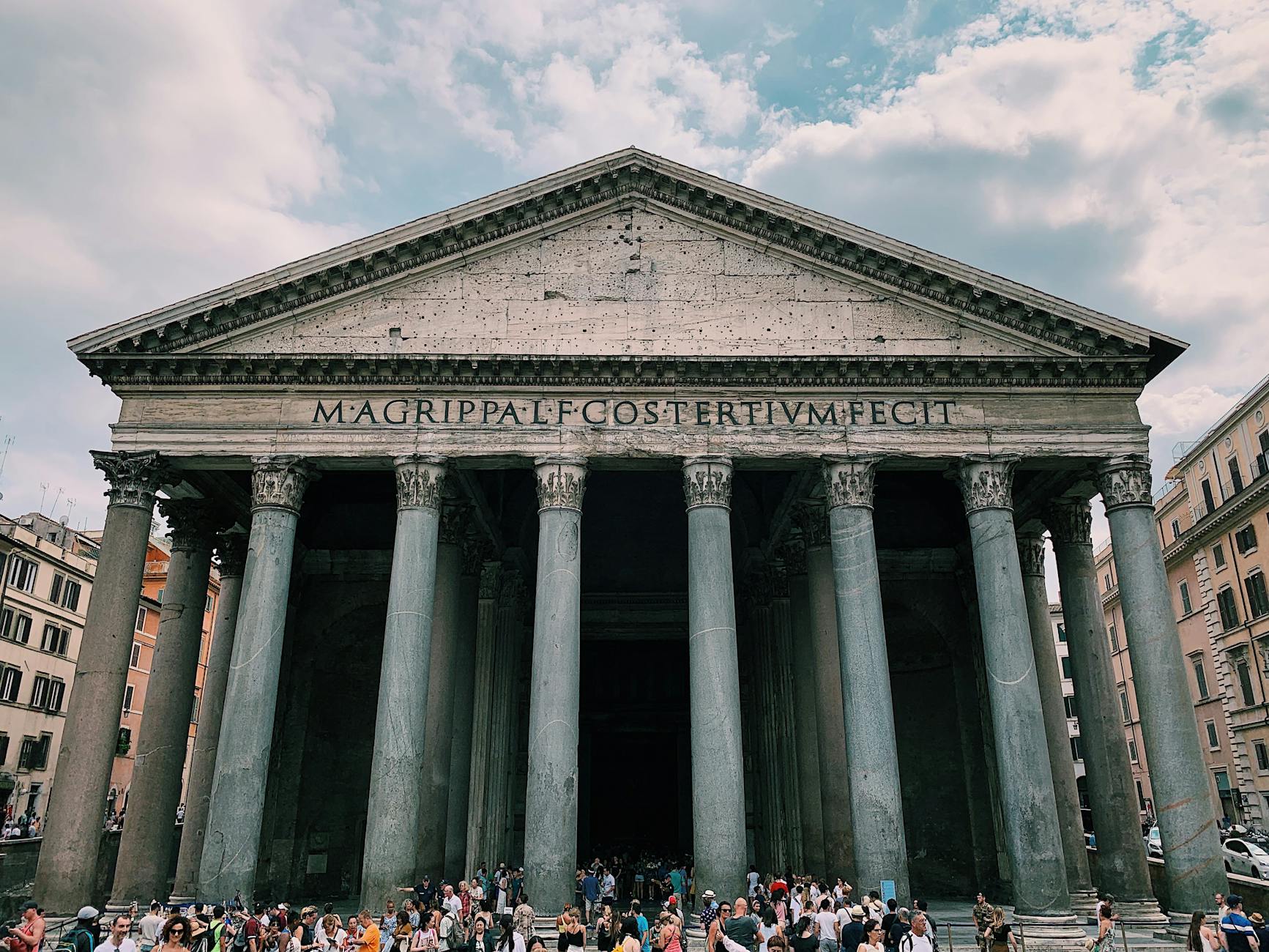
  • Discover the history of the amazing Pantheon of Rome

    Discover the history of the amazing Pantheon of Rome

    Introduction

    The Pantheon of Rome stands as one of the most extraordinary testaments to ancient engineering and architectural brilliance. Constructed during the reign of Emperor Hadrian in the early 2nd century CE, the Pantheon was originally conceived as a temple dedicated to all Roman gods. Its imposing structure, marked by a massive dome and harmonious proportions, continues to inspire awe in architects, historians, and visitors alike. Beyond its architectural marvels, the Pantheon is a living narrative of Rome’s evolving identity—from its origins as a pagan temple to its consecration as a Christian church in the 7th century. Surviving centuries of transformation and weathering the passage of time, it represents not only the ingenuity of Roman engineering but also the enduring cultural and religious significance of Rome. This article delves into the history, design, influence, and preservation of the Pantheon, unraveling the layers of its captivating story.

    The Origins: Commissioning and Purpose in Ancient Rome

    The story of the Pantheon begins in the heart of Rome during the early days of the Roman Empire. The first Pantheon was commissioned in 27 BCE by Marcus Agrippa, the trusted lieutenant of Emperor Augustus. Agrippa’s vision was to create a temple honoring the Roman pantheon of gods, a symbolic gesture of Rome’s devotion to divine protection and unity. The structure’s original purpose was deeply rooted in the religiosity and civic pride that characterized the early Roman Empire.

    Agrippa’s Pantheon was destroyed in a fire in 80 CE, but its foundational significance laid the groundwork for the magnificent structure that would follow. The current Pantheon was reconstructed under Emperor Hadrian around 118–125 CE, although he modestly retained the inscription honoring Agrippa. Hadrian envisioned the temple as not only a religious sanctuary but also as an architectural statement of Rome’s supremacy.

    The design of the Pantheon reflected a shift in Roman religious architecture. Unlike traditional rectangular temples with porticoes, the Pantheon’s circular design symbolized the cosmos, with its central oculus connecting the heavens and the earth. This innovative approach emphasized the universality and inclusivity of Roman religious practices, inviting all gods to reside within its walls.

    Hadrian’s involvement in the Pantheon’s reconstruction also highlighted his personal interest in architecture and his dedication to immortalizing Roman achievements. Unlike his predecessors, Hadrian often engaged directly with architectural projects, earning a reputation as a “philosopher-king.”

    The Pantheon’s enduring legacy as a temple to “all gods” encapsulates its initial purpose. However, its historical significance extends beyond its religious function. The Pantheon represented the Roman Empire’s ambition, ingenuity, and capacity to transcend traditional boundaries—qualities that would define the structure’s lasting influence on architecture and culture.

    Architectural Innovations: The Dome and Its Ingenious Design

    The Pantheon’s dome is an architectural triumph, showcasing the peak of Roman engineering ingenuity. At its completion, the dome was the largest in the world, a record it held for over a millennium. Its sheer scale and harmonious proportions were unprecedented, solidifying the Pantheon’s status as a masterpiece of architectural design.

    At the heart of the dome’s innovation lies the oculus—a circular opening at its apex. Measuring 8.2 meters (27 feet) in diameter, the oculus serves both practical and symbolic purposes. Architecturally, it reduces the weight at the dome’s apex, ensuring structural stability. Symbolically, the oculus acts as a celestial window, allowing sunlight to illuminate the interior dynamically throughout the day, creating a spiritual connection between the heavens and the space below.

    The dome’s construction utilized a groundbreaking technique involving Roman concrete, or opus caementicium. Layers of concrete with varying densities were used, with heavier materials like basalt at the base and lighter ones like pumice towards the top. This gradient reduced stress on the structure and allowed for its remarkable height of 43.3 meters (142 feet).

    The geometry of the dome is also significant. Its hemispherical shape creates a perfect sphere when imagined with its reflection below, symbolizing completeness and the universe. This geometric perfection was a testament to the Romans’ advanced understanding of mathematics and engineering.

    In addition to its construction, the Pantheon’s dome influenced countless architectural works, from the Florence Cathedral to St. Peter’s Basilica and modern structures like the U.S. Capitol. Its revolutionary design remains a benchmark in architectural history, a reminder of the innovation that defined Roman ingenuity.

    The Materials and Techniques: Mastery of Roman Concrete

    Roman concrete, or opus caementicium, was the key to the Pantheon’s enduring strength and iconic design. Unlike modern concrete, which often weathers and cracks over centuries, Roman concrete has survived nearly two millennia, thanks to its unique composition and application.

    The Pantheon’s construction employed a mix of lime, volcanic ash, and aggregates, a formula that produced a durable and adaptable material. Volcanic ash, specifically pozzolana, played a crucial role in the mixture. When combined with water, pozzolana created a chemical reaction that prevented cracks from spreading, ensuring the long-term stability of the structure.

    The walls of the Pantheon, which are up to 6 meters (20 feet) thick at the base, were built using a combination of concrete and brick-faced masonry. This robust foundation supported the immense weight of the dome above. Additionally, the Romans incorporated relieving arches into the walls, distributing the weight evenly and preventing structural failure.

    One of the most innovative aspects of Roman concrete was its use in the dome. By carefully layering materials, with heavier aggregates like travertine at the base and lighter ones like pumice towards the top, the Romans reduced the overall weight without compromising strength. The coffered design of the dome’s interior further reduced its mass while adding an aesthetic rhythm to the space.

    The mastery of Roman concrete not only enabled the Pantheon’s construction but also ensured its resilience against natural disasters, including earthquakes. Modern engineers continue to study this ancient material, seeking to replicate its durability and adaptability. The Pantheon thus stands not only as a testament to Roman architectural skill but also as an enduring symbol of innovation.

    Transformations Across Time: From Pagan Temple to Christian Church

    The Pantheon’s history is a fascinating narrative of transformation, reflecting Rome’s evolving religious and cultural landscape. Initially built as a temple to honor the Roman gods, the Pantheon’s original function was tied closely to the polytheistic practices of ancient Rome. This purpose was integral to its design, with its circular layout and oculus symbolizing the heavens and the divine.

    However, as the Roman Empire transitioned from paganism to Christianity, the Pantheon’s role in Roman society shifted dramatically. By the 4th century CE, Christianity had become the dominant religion, and the traditional worship of Roman gods began to wane. During this period, many pagan temples were abandoned, repurposed, or destroyed.

    The Pantheon’s survival during this transitional era was largely due to its conversion into a Christian church in 609 CE. Pope Boniface IV consecrated the structure as the “Church of St. Mary and the Martyrs,” or Santa Maria ad Martyres. This act of consecration not only preserved the building but also redefined its purpose. By dedicating the space to Christian worship, the church symbolized the triumph of Christianity over Rome’s pagan past.

    Pantheon of Rome, Italy
    The Pantheon of Rome stands as one of the most extraordinary testaments to ancient engineering and architectural brilliance. Constructed during the reign of Emperor Hadrian in the early 2nd century CE, the Pantheon was originally conceived as a temple dedicated to all Roman gods. Photo by Chait Goli on Pexels.com

    Despite this change in function, the Pantheon retained many of its original architectural elements, including its vast dome and iconic oculus. However, Christian additions, such as altars, religious imagery, and inscriptions, were incorporated into the space, blending ancient Roman engineering with Christian iconography. This hybrid identity made the Pantheon unique among Rome’s historic structures.

    The Christianization of the Pantheon also marked the beginning of its continuous use as a religious site, ensuring its maintenance and protection through centuries of political and social upheaval. Unlike many ancient Roman buildings, which fell into ruin during the medieval period, the Pantheon’s status as a church safeguarded it from neglect and destruction.

    The building’s adaptive reuse also speaks to its enduring appeal and versatility. As a Christian church, it became a symbol of continuity, bridging Rome’s ancient and medieval eras. Its preservation through this transformation highlights the ingenuity of Rome’s leaders, who recognized the Pantheon’s historical and architectural significance and ensured its legacy for future generations.

    The Influence of the Pantheon on Western Architecture

    The Pantheon’s architectural design has had a profound influence on Western architecture, inspiring countless structures over the centuries. Its combination of innovative engineering, harmonious proportions, and symbolic elements set a precedent for monumental architecture, particularly in the realms of religious and civic buildings.

    One of the Pantheon’s most significant contributions to architectural history is its dome, which became a model for subsequent domed structures worldwide. During the Renaissance, architects like Filippo Brunelleschi and Michelangelo studied the Pantheon extensively. Brunelleschi’s design for the dome of the Florence Cathedral (Santa Maria del Fiore) drew heavily on the Pantheon’s engineering principles, adapting its techniques for a new cultural and technological context.

    Similarly, Michelangelo’s work on the dome of St. Peter’s Basilica in Vatican City was deeply influenced by the Pantheon. He famously described the Pantheon as “angelic, not human,” acknowledging its unparalleled mastery. The Pantheon’s geometric perfection and coffered ceiling became hallmarks of Renaissance architecture, symbolizing the revival of classical ideals.

    In later centuries, the Pantheon’s influence extended to the Baroque, Neoclassical, and modern architectural movements. The U.S. Capitol Building in Washington, D.C., and the Panthéon in Paris are prominent examples of Neoclassical structures that drew inspiration from the Pantheon’s design. Both buildings emulate its portico, massive dome, and emphasis on symmetry, adapting these elements to convey grandeur and authority.

    The Pantheon’s adaptability also underscores its universal appeal. Its ability to inspire diverse architectural traditions—ranging from Gothic to contemporary styles—reflects its timelessness. Architects across eras have reinterpreted its principles, incorporating its emphasis on light, space, and proportion into their own works.

    Moreover, the Pantheon’s symbolic significance as a structure that unites spiritual and civic ideals has made it a model for spaces that transcend religious boundaries. Whether serving as a church, a government building, or a commemorative site, the Pantheon’s architectural language continues to resonate with designers and audiences alike.

    The Pantheon as a Symbol of Roman Resilience and Power

    The Pantheon’s enduring presence is a powerful symbol of Roman resilience and imperial might. Constructed during a time when the Roman Empire was at its zenith, the Pantheon embodied the technological prowess, cultural ambition, and political stability that defined Rome’s Golden Age.

    The decision to rebuild the Pantheon under Emperor Hadrian was not merely an architectural endeavor but also a statement of continuity and renewal. Hadrian’s reign was marked by efforts to preserve and celebrate Rome’s heritage while showcasing its capacity for innovation. By reconstructing the Pantheon on a grander scale, Hadrian reaffirmed Rome’s dominance and its commitment to enduring greatness.

    The structure’s resilience through centuries of change and adversity also highlights its symbolic power. Surviving fires, invasions, and societal shifts, the Pantheon became a testament to the durability of Roman engineering. Its survival is particularly remarkable given the fate of many other ancient Roman buildings, which succumbed to neglect or were dismantled for materials.

    As a public space, the Pantheon also symbolized Rome’s inclusivity and unity. Its dedication to “all gods” reflected the empire’s vast and diverse population, promoting the idea of a universal Roman identity. This inclusivity was later mirrored in its Christian transformation, as the church preserved the Pantheon’s role as a unifying space.

    The Pantheon’s continued use and preservation further emphasize its role as a symbol of power. Its architecture and history have made it a focal point for tourists, historians, and scholars, solidifying its place as a cultural and historical landmark. Today, it stands not only as a monument to Rome’s past but also as a reminder of the enduring influence of its ideals and achievements.

    Modern Preservation and Legacy of the Pantheon

    Modern efforts to preserve the Pantheon reflect its status as a global heritage site and an enduring symbol of Rome’s architectural brilliance. Recognized as one of the best-preserved ancient Roman structures, the Pantheon is protected under Italian heritage laws and receives significant attention from conservationists and historians.

    Preservation efforts have focused on maintaining the structural integrity of the building, particularly its dome, which remains a marvel of engineering. Regular inspections and restorations are carried out to address issues such as weathering, pollution, and the impact of millions of annual visitors. These efforts include cleaning the façade, reinforcing the foundation, and preserving the original materials, such as Roman concrete and marble.

    The Pantheon’s cultural legacy is also preserved through its role as a functioning church and a historical site. Its dual identity as a religious space and a tourist attraction ensures that it remains relevant to contemporary audiences while honoring its ancient origins. Special events, including religious ceremonies and cultural exhibitions, celebrate its historical significance and keep its story alive.

    In addition to its preservation, the Pantheon’s legacy is perpetuated through its influence on education and architecture. Universities and architectural schools around the world study the Pantheon as a case study in engineering, design, and cultural heritage. Its design principles continue to inspire architects seeking to blend functionality with aesthetic beauty.

    The Pantheon’s enduring appeal lies in its ability to connect past and present, serving as a bridge between ancient Rome and modern society. Its preservation efforts ensure that future generations will continue to experience the awe and wonder it inspires, safeguarding its legacy as one of the greatest achievements in architectural history.

    Conclusion

    The Pantheon of Rome is a timeless masterpiece that embodies the ingenuity, resilience, and cultural richness of ancient Rome. From its origins as a temple dedicated to the Roman gods to its transformation into a Christian church, the Pantheon’s history is a microcosm of Rome’s evolution. Its architectural innovations, particularly its awe-inspiring dome, have influenced countless structures worldwide, cementing its place as a cornerstone of architectural heritage.

    The Pantheon’s ability to endure the ravages of time and adapt to changing cultural and religious contexts underscores its universal appeal. Modern preservation efforts ensure that this iconic structure remains a living monument, connecting the past with the present. As a symbol of Rome’s enduring legacy, the Pantheon continues to inspire admiration and reverence, reminding the world of the boundless potential of human creativity and ambition.

  • The History and Art of the marvelous Fontana di Trevi of Rome

    The History and Art of the marvelous Fontana di Trevi of Rome

    Introduction

    The Fontana di Trevi, a crowning jewel of Roman artistry, stands as one of the most iconic fountains in the world. Nestled in the heart of Rome, this Baroque masterpiece is not only an architectural wonder but also a symbol of the city’s enduring history and cultural significance. With origins tracing back to ancient Roman engineering, the fountain has witnessed centuries of transformation, from Renaissance conceptualization to Baroque execution. The intricate sculptures and flowing waters narrate tales of mythology and human ingenuity. It has also carved a unique niche in popular culture, featuring prominently in films and attracting millions of visitors annually, who partake in the coin-tossing tradition for luck. This article delves into the fascinating journey of the Trevi Fountain—from its ancient aqueduct foundations to its modern-day prominence—exploring the artistry, challenges, and enduring allure of this Roman treasure.

    The Origins of the Trevi Fountain: Ancient Roman Aqueducts

    The story of the Fontana di Trevi begins long before the Baroque era, rooted in the engineering marvels of ancient Rome. The fountain’s history is tied to the Aqua Virgo, one of the eleven aqueducts that supplied water to the city during the reign of Augustus. Built in 19 BCE under the supervision of Marcus Agrippa, the Aqua Virgo was celebrated for its pure and abundant supply, essential to the burgeoning Roman population.

    Legend has it that the aqueduct’s name derives from a young maiden, or virgo, who guided thirsty Roman soldiers to the spring that would become its source. This mythological narrative is intricately linked to the fountain’s later designs, as themes of water and purity echo throughout its sculptures. The Aqua Virgo stretched over 20 kilometers, using a combination of underground tunnels and elevated channels to deliver water to public baths, fountains, and other essential sites.

    The end point of the Aqua Virgo marked the precursor to the Trevi Fountain. During ancient times, a simple basin or fountain stood at this terminal, providing a communal water source for the residents of Rome. This site, located at the junction of three roads—tre vie, from which the fountain derives its name—held strategic importance in the city’s layout. Over time, this modest fountain became a focal point for architectural and artistic innovation, reflecting the evolving priorities of Roman society.

    The decline of the Roman Empire in the fifth century led to the deterioration of its aqueducts, including the Aqua Virgo. For centuries, the infrastructure remained neglected, and Rome suffered from insufficient water supply. However, the Renaissance revival of classical ideals, combined with the papacy’s vision of restoring Rome’s grandeur, prompted renewed interest in the ancient aqueducts. The revitalization of the Aqua Virgo set the stage for the creation of the iconic Fontana di Trevi.

    The Renaissance Vision: Pope Nicholas V and Early Designs

    The Trevi Fountain’s evolution from a simple Roman water terminal to a grand artistic monument began during the Renaissance, a period characterized by the rediscovery of classical antiquity and an emphasis on artistic and architectural innovation. In the mid-15th century, Pope Nicholas V played a pivotal role in reinvigorating Rome’s infrastructure, including the Aqua Virgo.

    Recognizing the importance of clean water for the city’s residents and its symbolic connection to Rome’s heritage, Nicholas V commissioned the restoration of the ancient aqueduct. The restored Aqua Virgo, now referred to as Acqua Vergine, became a vital resource, and the pope envisioned a more ornate structure at its terminus to celebrate its significance. This vision aligned with the Renaissance ethos of blending functionality with aesthetic grandeur.

    The early designs for the fountain were relatively modest compared to the later Baroque masterpiece. Architect Leon Battista Alberti, renowned for his classical approach, contributed to preliminary plans. These designs emphasized symmetry and harmony, drawing inspiration from ancient Roman triumphal arches. Although these concepts laid the groundwork for future developments, they remained unrealized due to limited resources and political instability.

    Despite these challenges, Nicholas V’s initiatives marked a turning point in the fountain’s history. The Renaissance-era projects reaffirmed the fountain’s importance as a symbol of Rome’s enduring legacy. Subsequent popes and artists would build upon this foundation, culminating in the extraordinary Baroque creation that we admire today.

    Nicola Salvi’s Grand Design: A Baroque Marvel

    The Trevi Fountain as we know it owes its grandeur to the vision and creativity of Nicola Salvi, a Roman architect whose work transformed the modest Renaissance fountain into an emblem of Baroque magnificence. In 1730, Pope Clement XII announced a competition to redesign the fountain, aiming to assert the grandeur of papal Rome. This initiative was part of a broader trend during the Baroque period, where architecture and art were employed to symbolize the church’s authority and cultural dominance.

    The competition attracted numerous proposals from prominent architects, but the winning design was submitted by Alessandro Galilei, a Florentine architect. However, Roman public opinion demanded a local artist, and the commission was instead awarded to Nicola Salvi. Salvi’s proposal combined dramatic theatricality with intricate allegorical elements, a hallmark of Baroque art.

    Construction began in 1732 under Salvi’s direction. His design centered on the theme of taming water, symbolized by the god Neptune, who presides over the fountain’s central tableau. Flanked by allegorical figures representing abundance and health, Neptune commands a chariot drawn by two sea horses—one calm and the other restless—guided by Tritons. This dynamic composition represents the duality of water’s nature: both life-giving and untamable.

    Salvi’s design also emphasized integration with its surroundings. The Palazzo Poli, behind the fountain, served as a dramatic backdrop, its façade seamlessly merging with the fountain’s cascading waters. The architect’s clever use of perspective and relief created a sense of movement, drawing viewers into the scene. Despite its grandeur, Salvi faced significant challenges, including limited funding and technical difficulties. He died in 1751, leaving the project incomplete, but his vision endured.

    After Salvi’s death, the fountain’s construction continued under Giuseppe Pannini, who finalized the design in 1762. The completed fountain not only celebrated the vitality of water but also embodied the opulence and artistic innovation of Baroque Rome. Today, Salvi’s masterpiece stands as a testament to his ingenuity and the collaborative spirit of his era.

    Symbolism in Sculpture: Neptune and Mythological Themes

    The sculptures of the Trevi Fountain are more than ornamental; they are a narrative medium that conveys themes of mythology, human interaction with nature, and the transformative power of water. At the heart of the fountain is Neptune, the Roman god of the sea, commanding attention from his central perch atop a shell-shaped chariot. His calm yet authoritative demeanor symbolizes mankind’s ability to harness and coexist with the forces of nature.

    Neptune’s chariot is drawn by two sea horses, each embodying a different aspect of water’s dual nature. The placid horse represents the benevolent, life-sustaining qualities of water, while the agitated one reflects its wild and destructive potential. Tritons, mythological sea deities, guide the horses, emphasizing the harmonious relationship between divine and natural forces.

    Fontana di Trevi, Rome, Italy
    The Fontana di Trevi, a crowning jewel of Roman artistry, stands as one of the most iconic fountains in the world. Nestled in the heart of Rome, this Baroque masterpiece is not only an architectural wonder but also a symbol of the city’s enduring history and cultural significance. Photo by Sebastian Luna on Pexels.com

    Flanking Neptune are two allegorical statues: one symbolizing abundance, holding a cornucopia overflowing with fruits, and the other representing health, pouring water from an urn. These figures underline the significance of water as essential to prosperity and well-being. The backdrop of the fountain features bas-reliefs depicting the legend of the Aqua Virgo’s discovery and its vital role in Roman life, further anchoring the fountain’s historical and cultural narrative.

    Every element of the sculpture is intricately detailed, from the textures of Neptune’s robes to the flowing waves carved into the marble. The synergy between the sculptures and the cascading water creates a dynamic tableau, where art and nature merge. This interplay captures the essence of Baroque art: grandeur, motion, and emotional impact.

    Construction Challenges and Completion

    The construction of the Trevi Fountain was a monumental endeavor that spanned over three decades, marked by technical, financial, and political challenges. Nicola Salvi’s initial designs required extensive modifications to accommodate the site’s existing structures and logistical constraints. The fountain’s location, at the junction of three streets, posed significant difficulties in terms of scale and water flow.

    One of the primary challenges was ensuring a reliable supply of water from the Acqua Vergine aqueduct. Engineers had to address centuries of neglect and restore the ancient infrastructure to deliver a consistent flow capable of supporting the fountain’s dramatic cascades. This involved meticulous excavation and repair, tasks that were both time-consuming and costly.

    Funding was another persistent issue. Pope Clement XII financed the project through a lottery system, a common practice in the 18th century. While this provided some revenue, it often fell short of the immense costs required. Political instability and changes in papal leadership further disrupted the flow of resources and delayed progress.

    Despite these obstacles, construction continued with the support of skilled artisans and engineers. Salvi himself dedicated much of his career to the project, overseeing every detail from the intricate carvings to the hydraulic systems. However, he did not live to see its completion. After his death, Giuseppe Pannini assumed responsibility, refining Salvi’s designs and bringing the fountain to fruition in 1762.

    The completion of the Trevi Fountain marked the triumph of human ingenuity over adversity. Its successful construction showcased the collaborative spirit of artists, engineers, and patrons, solidifying its status as a cultural and architectural marvel.

    Cultural and Cinematic Impact

    The Fontana di Trevi is not only a symbol of Rome’s historical and artistic heritage but also a global cultural icon, celebrated for its role in literature, cinema, and traditions. Its majestic presence and romantic allure have made it a favorite setting for artistic expression and storytelling, reinforcing its universal appeal.

    One of the most significant contributions to the fountain’s cultural fame is its role in the 1960 film La Dolce Vita by Federico Fellini. The iconic scene of actress Anita Ekberg wading through the fountain, calling to Marcello Mastroianni, immortalized the Trevi Fountain as a symbol of cinematic romance and decadence. This scene cemented the fountain’s place in the public imagination, drawing countless visitors inspired by the movie.

    The Trevi Fountain has also appeared in numerous other films, including Roman Holiday (1953) and The Lizzie McGuire Movie (2003), showcasing its versatility as a backdrop for stories of adventure, romance, and personal transformation. These cinematic portrayals have helped the fountain transcend its historical roots, making it a timeless emblem of beauty and inspiration.

    Beyond its cinematic presence, the Trevi Fountain is the subject of enduring traditions. The most famous of these is the coin-tossing ritual. Visitors toss coins over their left shoulders into the fountain, believing this will ensure their return to Rome. This tradition is thought to have originated from an ancient custom to secure safe travels and is now a source of substantial revenue, with the collected coins donated to charitable causes.

    The fountain’s cultural impact extends to literature and music as well. Writers from Johann Wolfgang von Goethe to contemporary novelists have drawn inspiration from its enchanting beauty. It has also featured in songs and art installations, further affirming its role as a muse for creative endeavors.

    The Trevi Fountain’s cinematic and cultural resonance underscores its dual identity as both a historical artifact and a living symbol of human creativity. Its ability to captivate audiences across generations ensures that it remains not just a Roman treasure but a global one.

    Modern Restoration and Conservation Efforts

    As one of Rome’s most visited landmarks, the Fontana di Trevi endures significant wear and tear, necessitating ongoing restoration and conservation efforts. These initiatives are vital to preserving the fountain’s architectural integrity and artistic details for future generations.

    Modern conservation efforts began in earnest in the 20th century as the city grappled with the effects of pollution, vandalism, and weathering on its historic monuments. In the case of the Trevi Fountain, the continuous flow of water, combined with exposure to environmental elements, had caused erosion and discoloration of the travertine and marble.

    One of the most comprehensive restoration projects occurred between 2014 and 2015, funded by the Italian fashion house Fendi. The €2.2 million initiative included cleaning the fountain’s surface, repairing cracks, and restoring the hydraulic system to ensure uninterrupted water flow. The project also implemented advanced techniques such as laser cleaning to remove grime while preserving the delicate carvings.

    Public engagement played a key role during this restoration. Transparent scaffolding allowed visitors to witness the meticulous work up close, fostering appreciation for the expertise involved in conserving such a masterpiece. The project’s completion was celebrated with a grand reopening, reaffirming the fountain’s place at the heart of Roman culture.

    Conservation efforts also extend to the surrounding area, ensuring the fountain remains integrated into the urban fabric of Rome. Measures to manage tourist crowds and prevent vandalism, such as protective barriers and surveillance systems, have been introduced to safeguard the site.

    The ongoing dedication to the Trevi Fountain’s preservation reflects a broader commitment to cultural heritage. It ensures that this iconic landmark continues to enchant visitors while serving as a testament to the enduring legacy of Roman artistry and innovation.

    Conclusion

    The Fontana di Trevi stands as a timeless masterpiece, encapsulating the artistic, cultural, and historical essence of Rome. From its origins in ancient Roman engineering to its transformation into a Baroque marvel under Nicola Salvi, the fountain represents the ingenuity and vision of generations. Its intricate sculptures and dynamic waterworks narrate tales of mythology and human connection to nature, while its enduring traditions, such as the coin-tossing ritual, imbue it with a sense of magic and wonder.

    Cultural and cinematic representations have elevated the fountain to global fame, ensuring its place not only as a historical monument but also as an emblem of creativity and romance. Through meticulous restoration efforts, the Trevi Fountain continues to thrive, enchanting millions of visitors each year. As both a relic of the past and a living symbol of beauty, the Fontana di Trevi remains an eternal treasure of the Eternal City, inspiring awe across generations.

  • Exploring the amazing Cathedral of Seville: History & Art

    Exploring the amazing Cathedral of Seville: History & Art

    Introduction

    The Cathedral of Seville, officially known as the Cathedral of Saint Mary of the See, stands as one of the greatest monuments of Gothic and Renaissance architecture in the world. Located in the heart of Seville, Spain, it reflects the city’s vibrant history, blending Islamic, Christian, and secular influences. Originally constructed on the site of a former mosque, this UNESCO World Heritage Site has evolved over centuries, symbolizing both faith and artistic grandeur. Its towering Giralda, once a minaret, epitomizes the melding of cultures. As the largest Gothic cathedral in the world and one of the largest Christian churches, its grandeur is unmatched. From the treasures housed within to its historical significance and preservation challenges, the Cathedral of Seville continues to captivate millions of visitors annually. This article explores its history, architecture, cultural impact, and enduring legacy.

    The Foundations of Faith: Origins of the Cathedral of Seville

    The origins of the Cathedral of Seville are deeply intertwined with the city’s rich and complex history, reflecting a confluence of cultures and religions. Before it became a Christian place of worship, the site was home to a grand Almohad mosque, constructed during the Islamic rule of Andalusia. This mosque, completed in 1198, featured remarkable architectural elements, including the Giralda minaret, which remains a defining feature of the cathedral today.

    In 1248, Seville was reconquered by Ferdinand III of Castile during the Reconquista, marking a turning point for the city. The mosque was consecrated as a Christian church, reflecting the shift in religious and cultural dominance. While the initial transformation involved only minor modifications to accommodate Christian worship, the growing influence of the Catholic Church and Seville’s economic prosperity in the 14th century fueled ambitions for a grander structure.

    In 1401, the decision to construct a new cathedral was made, reportedly with the ambitious declaration to build something “so grand that those who see it will think we were mad.” This decision reflected the city’s desire to assert its power and faith, as well as to commemorate its pivotal role in the Reconquista. The demolition of the old mosque began, but key elements, like the Giralda and the Patio de los Naranjos (Courtyard of the Orange Trees), were preserved, creating a unique blend of Islamic and Christian heritage.

    The foundation of the new cathedral symbolized not just religious devotion but also Seville’s status as a burgeoning hub of trade and culture. Its construction was part of a broader wave of monumental Gothic architecture in Europe, designed to awe and inspire. As the first stones were laid, the Cathedral of Seville embarked on a journey that would span over a century, involving the efforts of countless artisans, architects, and laborers.

    This phase of its history highlights the dynamic interplay of cultural transformation, ambition, and faith that defined medieval Spain. The site’s evolution from a mosque to a cathedral encapsulates the spirit of a city at the crossroads of civilizations, setting the stage for the architectural and artistic marvels to come.

    Architectural Vision: Design and Construction of the Cathedral

    The architectural design and construction of the Cathedral of Seville represent a remarkable achievement in Gothic and Renaissance artistry, blending traditional elements with innovative techniques. Officially commencing in 1401, the project was ambitious in scale and vision, intending to surpass all other cathedrals of its time. Its construction would span over a century, involving several generations of architects and craftsmen who contributed their unique styles and expertise.

    The initial design adhered to the Gothic architectural style, characterized by soaring ceilings, pointed arches, and intricate stonework. The decision to build on the site of the former mosque presented both challenges and opportunities. While much of the mosque was demolished, its foundational elements provided a robust base for the cathedral. The incorporation of the Giralda and the Patio de los Naranjos as integral features ensured a continuity of historical identity.

    The cathedral’s floor plan was designed in the shape of a Latin cross, with five expansive naves and a central nave that rises to an impressive height of 42 meters (138 feet). The choir and high altar occupy the central axis, emphasizing the verticality and grandeur typical of Gothic cathedrals. The inclusion of 80 chapels, each lavishly adorned with religious art, reflects the wealth and piety of Seville’s elite patrons.

    Construction required an extraordinary logistical effort, including the transportation of limestone from nearby quarries and the importation of materials like Flemish stained glass and Italian marble. Master builders such as Alonso Martínez, who served as the initial architect, and later Diego de Riaño and Martín de Gainza, brought their expertise to the evolving design, incorporating Renaissance elements as architectural styles shifted in the 16th century.

    One of the cathedral’s most striking features is its vast interior space, measuring 135 meters (443 feet) in length and 100 meters (328 feet) in width. This makes it the largest Gothic cathedral in the world and one of the largest churches overall, surpassing even St. Peter’s Basilica in interior volume. The intricate ribbed vaulting and richly decorated ceilings demonstrate the remarkable craftsmanship of the period.

    The construction process faced numerous challenges, including the devastating Lisbon earthquake of 1755, which caused significant damage to parts of the cathedral. Subsequent restoration efforts preserved its grandeur, ensuring its survival through the centuries. The Cathedral of Seville stands today as a testament to the vision, skill, and determination of its creators, embodying both the spiritual aspirations and artistic achievements of its time.

    The Giralda: A Tower of Transformation

    The Giralda, the iconic bell tower of the Cathedral of Seville, stands as a striking symbol of cultural fusion and architectural ingenuity. Originally constructed as a minaret during the Almohad period, the tower was completed in 1198 under the direction of the architect Ahmad ibn Baso. At the time, it served as a call to prayer for the grand mosque of Seville. Its design drew inspiration from the Koutoubia Mosque in Marrakech, with its ornate brickwork and geometric patterns showcasing the sophistication of Islamic architecture.

    When Seville was reconquered in 1248, the Giralda underwent a remarkable transformation. Rather than demolishing the tower, which was already a significant landmark, the Christian authorities chose to preserve and repurpose it. This decision highlights the pragmatic approach of the era, as well as a recognition of the tower’s architectural beauty and symbolic importance. Over time, the Giralda was adapted to serve as a bell tower, with additional modifications reflecting Christian liturgical needs.

    The most significant alteration occurred in the 16th century when the Renaissance architect Hernán Ruiz II added the upper sections of the tower, including the belfry and the “El Giraldillo,” a bronze weathervane in the shape of a female figure symbolizing faith. This addition harmonized with the existing structure while imbuing it with a distinctly Christian character. The Giralda’s height was also extended, reaching 104 meters (341 feet), making it one of the tallest structures of its time.

    The tower’s blend of Islamic and Christian elements reflects the broader history of Seville as a city at the crossroads of civilizations. Its base retains the original Almohad design, with intricate brick patterns and horseshoe arches, while the upper sections embody Renaissance elegance and Christian iconography. This synthesis creates a visual narrative of the city’s cultural evolution, from Islamic rule to the Reconquista and beyond.

    Today, the Giralda remains a central feature of Seville’s skyline and an enduring symbol of the city. Visitors can ascend the tower via a series of ramps, originally designed to accommodate riders on horseback. From the top, panoramic views of Seville reveal the sprawling urban landscape and the cathedral complex below. The Giralda’s status as a UNESCO World Heritage Site underscores its significance as both a historical artifact and a masterpiece of architecture.

    The Giralda encapsulates the story of Seville’s transformation, serving as a tangible link between the city’s Islamic past and its Christian present. Its enduring presence is a testament to the power of architecture to transcend cultural boundaries and to tell the story of a city through its stones and spires.

    Treasures Within: The Artistic Masterpieces of the Cathedral

    The Cathedral of Seville is not only an architectural marvel but also a treasure trove of artistic and cultural heritage. Within its vast interior, visitors encounter a dazzling array of sculptures, paintings, and decorative works that reflect centuries of devotion and artistic achievement. These masterpieces are a testament to the wealth, influence, and spiritual aspirations of Seville during its golden age.

    One of the most striking features is the High Altar, or Retablo Mayor, considered the largest altarpiece in the world. This monumental work of Gothic art, carved by Flemish and Spanish artisans over several decades, is adorned with intricate gold leaf and depicts scenes from the life of Christ and the Virgin Mary. Its sheer scale and craftsmanship inspire awe, symbolizing the grandeur of the Catholic faith during the late Middle Ages.

    Equally impressive is the tomb of Christopher Columbus, a sculptural masterpiece housed within the cathedral. Designed by Arturo Mélida in the 19th century, the tomb features four allegorical figures representing the kingdoms of Castile, León, Aragón, and Navarre, which carry the casket of the famed explorer. The presence of Columbus’s remains underscores the cathedral’s role as a center of imperial power and a monument to Spain’s Age of Exploration.

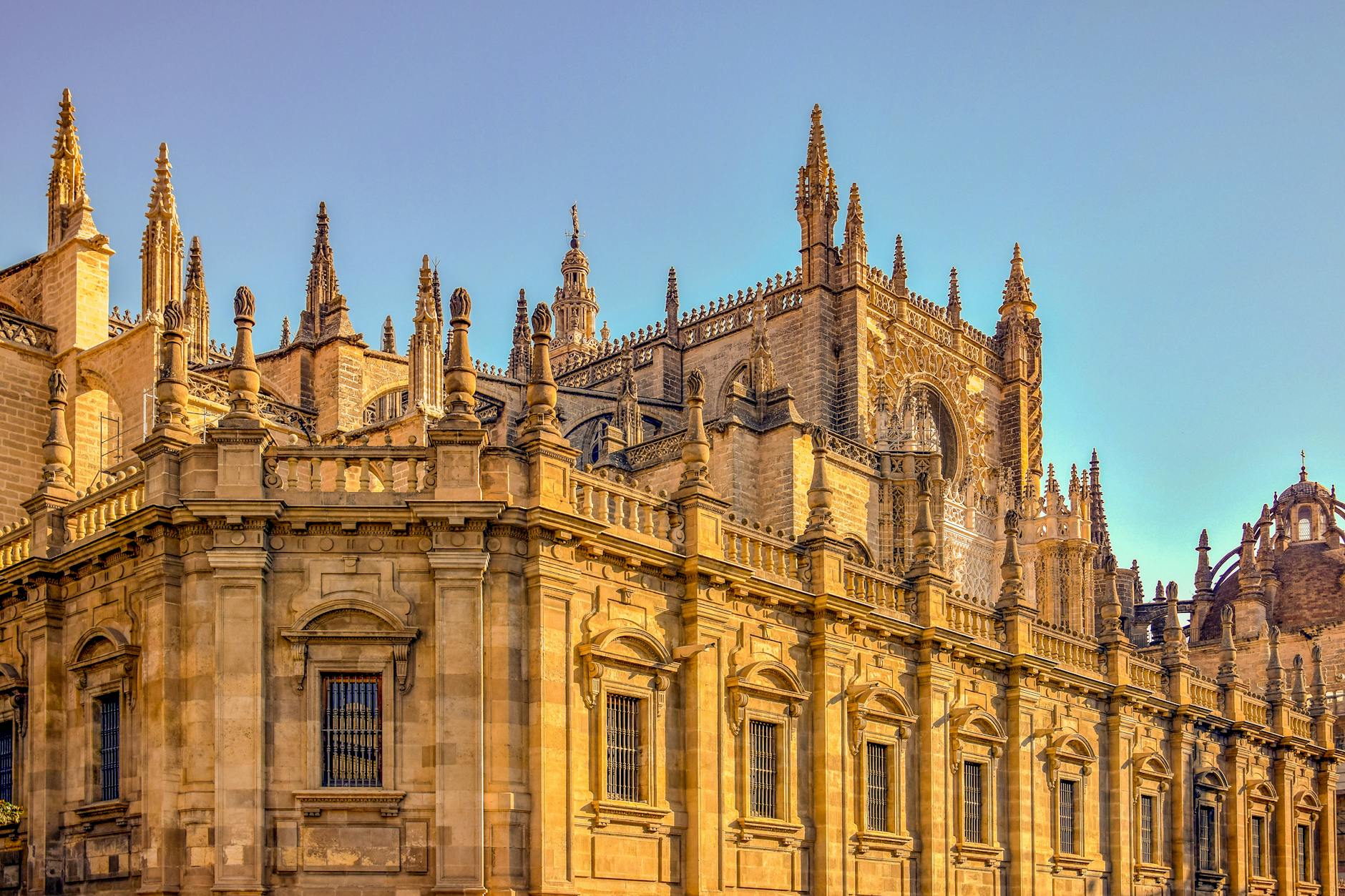
    Cathedral of Seville and the Giralda
    The Cathedral of Seville, officially known as the Cathedral of Saint Mary of the See, stands as one of the greatest monuments of Gothic and Renaissance architecture in the world. Located in the heart of Seville, Spain, it reflects the city’s vibrant history, blending Islamic, Christian, and secular influences.
    Photo by Josu00e9 Maldonado Du00edaz on Pexels.com

    The cathedral’s chapels house an extensive collection of religious art, including works by renowned painters such as Bartolomé Esteban Murillo, Francisco de Zurbarán, and Juan de Valdés Leal. These paintings, many of which depict biblical scenes or saints, are celebrated for their emotional depth and technical mastery. The Sacristía Mayor and the Chapter House also showcase exquisite examples of Renaissance and Baroque design, with elaborate ceilings, sculptures, and furnishings.

    Another highlight is the treasury, which contains priceless artifacts such as the Custodia de Juan de Arfe, a silver monstrance crafted in the 16th century, and various liturgical items made from gold, ivory, and precious stones. These objects not only hold religious significance but also reflect the global reach of Seville’s trade networks during its period as a major port of the Spanish Empire.

    The cathedral’s organ, an extraordinary instrument with over 7,000 pipes, adds to the sensory experience of the space. Its powerful sound has accompanied countless religious ceremonies, enhancing the spiritual atmosphere of this sacred site.

    Overall, the artistic treasures of the Cathedral of Seville transform it into a living museum of faith and culture. Each piece tells a story of devotion, creativity, and the interconnected history of Spain and the wider world. Exploring these masterpieces offers a glimpse into the spiritual and artistic heights achieved by the city throughout its storied past.

    Historical Role: The Cathedral’s Impact on Seville and Beyond

    The Cathedral of Seville has played a pivotal role in the historical, cultural, and spiritual life of the city and its broader region. Beyond its function as a place of worship, the cathedral has stood as a symbol of Seville’s power, wealth, and global connections throughout the centuries.

    During the late Middle Ages and the Renaissance, Seville emerged as a vital hub of trade and exploration. Its position on the Guadalquivir River made it the principal port for goods arriving from and departing to the Americas during the Spanish Empire’s expansion. The cathedral, as the spiritual heart of the city, reflected this prosperity and ambition. It became a center for religious ceremonies that marked significant events in the city’s history, such as royal visits, the commissioning of voyages, and celebrations of Spain’s conquests abroad.

    The cathedral also played a crucial role in shaping the cultural identity of Seville. Its grandeur inspired the construction of other significant landmarks in the city, such as the Alcázar and the Archivo de Indias. Together, these sites cemented Seville’s reputation as a city of exceptional architectural and artistic heritage. Moreover, the cathedral fostered a vibrant religious culture, with the clergy and laity alike contributing to the development of music, art, and scholarship.

    The impact of the cathedral extended beyond the city’s borders, serving as a model for other ecclesiastical projects in Spain and its colonies. Its blend of Gothic, Renaissance, and Mudéjar elements influenced the design of churches and cathedrals in the Americas, exemplifying the exchange of ideas across the Atlantic. This architectural legacy underscores Seville’s role as a bridge between Europe and the New World.

    The cathedral also served as a repository of religious and cultural treasures, many of which were brought from abroad or commissioned to celebrate the city’s maritime achievements. These artifacts, combined with the cathedral’s immense scale and opulent design, reinforced Seville’s status as a leading center of Catholicism and Spanish imperial power.

    In times of crisis, the cathedral acted as a unifying force for the people of Seville. During outbreaks of plague, natural disasters, and periods of political turmoil, the cathedral became a place of refuge and prayer. Its resilience in the face of challenges, such as the Lisbon earthquake of 1755, which damaged parts of the structure, symbolizes the endurance of the city itself.

    Today, the historical significance of the Cathedral of Seville continues to resonate. As a UNESCO World Heritage Site, it draws millions of visitors annually, contributing to Seville’s status as a major cultural and tourist destination. Its role in shaping the city’s identity and its legacy as a center of faith and art make it a cornerstone of Spanish history and a monument of global importance.

    Challenges and Preservation: Protecting a World Heritage Site

    The Cathedral of Seville’s long history and immense size have made its preservation a monumental task, requiring constant care and adaptation to address both natural and human-made challenges. The effort to maintain this historic structure reflects the importance of safeguarding cultural heritage for future generations.

    One of the earliest and most significant challenges to the cathedral was the Lisbon earthquake of 1755. The tremor caused extensive damage to the building, including the partial collapse of the dome. Reconstruction efforts in the subsequent years not only repaired the damage but also reinforced the structure to withstand future seismic events. This marked one of the earliest examples of large-scale preservation work on the cathedral.

    In the modern era, environmental factors have posed ongoing threats to the cathedral’s integrity. Air pollution, caused by industrial activities and urbanization, has led to the erosion of the stonework and the discoloration of its facades. Acid rain, in particular, has been a major concern, as it accelerates the deterioration of limestone and sandstone. Conservationists have employed advanced techniques such as laser cleaning and chemical treatments to restore the cathedral’s surfaces while preserving their historical authenticity.

    Another significant challenge is managing the impact of tourism. With millions of visitors each year, the cathedral faces wear and tear from foot traffic, as well as the logistical difficulties of accommodating large crowds. To address this, the cathedral administration has implemented measures such as timed entry tickets, restricted access to sensitive areas, and increased funding for maintenance projects.

    Climate change has also emerged as a growing concern. Rising temperatures and changing weather patterns threaten the structural stability of the building, as well as the preservation of its priceless artworks and artifacts. Conservationists have begun to explore innovative solutions, including the use of climate-controlled display cases for vulnerable items and improved ventilation systems to protect the interior from humidity fluctuations.

    Preservation efforts have also extended to the cathedral’s surrounding environment. The Patio de los Naranjos, for instance, requires careful maintenance to ensure the health of its historic orange trees, which are an integral part of the site’s cultural and aesthetic heritage. Similarly, the Giralda tower has undergone regular inspections and restorations to address issues such as cracking and water infiltration.

    Despite these challenges, the Cathedral of Seville remains a model of successful preservation. Its designation as a UNESCO World Heritage Site in 1987 has brought international attention and resources to its conservation, enabling ongoing projects to safeguard its architectural and artistic treasures. The collaboration between local authorities, conservation experts, and international organizations ensures that this iconic monument continues to inspire and educate future generations.

    The Cathedral in the Modern Era: Faith, Tourism, and Cultural Significance

    In the modern era, the Cathedral of Seville has evolved into a multifaceted institution that balances its roles as a place of worship, a cultural landmark, and a major tourist attraction. This dual identity reflects the dynamic interplay between tradition and contemporary relevance.

    As a religious site, the cathedral continues to serve as the seat of the Archdiocese of Seville and hosts numerous liturgical ceremonies, including daily Masses, weddings, and baptisms. Major religious festivals, such as Holy Week (Semana Santa), see the cathedral become the focal point of elaborate processions and ceremonies that draw both local participants and international visitors. These events underscore the cathedral’s enduring role as a spiritual center for the community.

    Tourism has become a significant aspect of the cathedral’s modern identity. Each year, millions of visitors are drawn to its stunning architecture, artistic treasures, and historical significance. Guided tours, multimedia exhibits, and educational programs have been developed to enhance the visitor experience, ensuring that the cathedral’s story is accessible to a global audience. Revenues from tourism also provide vital funding for conservation and maintenance efforts.

    Cultural initiatives have further solidified the cathedral’s place in contemporary life. Concerts, art exhibitions, and academic conferences held within its walls highlight its versatility as a venue for both religious and secular events. These activities not only celebrate the cathedral’s artistic heritage but also contribute to its integration into the cultural fabric of modern Seville.

    Efforts to engage with the local community have been a priority for the cathedral administration. Outreach programs, such as educational workshops and charity initiatives, emphasize the cathedral’s role as a living institution that serves the city’s residents. These efforts help to foster a sense of shared ownership and pride among Sevillians, ensuring that the cathedral remains a vital part of the city’s identity.

    In an era of globalization, the Cathedral of Seville stands as a symbol of Spain’s rich cultural heritage and its interconnected history with the wider world. Its enduring appeal lies in its ability to bridge the past and present, offering a space where faith, art, and history converge.

    Conclusion

    The Cathedral of Seville is far more than a building; it is a living testament to the city’s complex history, artistic achievements, and spiritual devotion. From its origins as an Almohad mosque to its transformation into a Christian cathedral, it reflects the confluence of cultures that have shaped Seville over the centuries. Its architectural grandeur, artistic treasures, and historical significance make it a symbol of the city’s identity and a beacon of its enduring legacy.

    As one of the largest and most magnificent cathedrals in the world, it continues to inspire awe among visitors and worshippers alike. The challenges of preserving such a monumental structure in the face of environmental and societal changes underscore the importance of collaborative efforts to protect our shared cultural heritage.

    Today, the Cathedral of Seville remains a source of pride for the city and a focal point for global admiration. Its story is a reminder of the enduring power of faith, art, and human ingenuity, ensuring that it will continue to captivate and inspire for generations to come.

  • Puerta del Sol: The Amazing Heart of Madrid (2025 update)

    Puerta del Sol: The Amazing Heart of Madrid (2025 update)

    Introduction

    The Puerta del Sol is one of Madrid’s most iconic landmarks and a focal point of Spanish culture and history. Nestled in the heart of the capital, this vibrant square has evolved over centuries from a gateway in the city’s medieval walls to a bustling hub of activity. It serves as Spain’s Kilómetro Cero, the symbolic starting point of the country’s road network, and is steeped in historical significance as a witness to revolutions, political movements, and joyous celebrations.

    Beyond its historical importance, Puerta del Sol is renowned for its architectural landmarks, such as the Casa de Correos and the Bear and Strawberry Tree statue, and for hosting beloved traditions like the New Year’s Eve grape-eating ritual. It is a place where past and present collide, making it an essential part of Madrid’s identity. This article delves into its rich history, cultural resonance, and ongoing transformation.

    Origins of the Puerta del Sol: From Gateway to Icon

    The Puerta del Sol, now one of Madrid’s busiest and most emblematic squares, has a rich history that dates back to the Middle Ages. Its transformation from a modest gateway in the city’s walls to the symbolic and geographical heart of Spain reflects the evolution of Madrid itself.

    Medieval Beginnings

    In the 15th century, the Puerta del Sol was a literal gate in Madrid’s eastern wall, named after the sun that adorned its façade. This gate faced east, where the sun rises, symbolizing a connection between the city and the new day. The wall itself served to protect the city, which was then a modest settlement compared to the bustling metropolis it would later become. As the population grew, the area around the gate began to develop into a small marketplace, attracting merchants and travelers entering Madrid.

    The square’s location on the main road to Alcalá de Henares, an important cultural and religious center at the time, further enhanced its significance. It became a key entry point for goods and people, laying the groundwork for its future role as a hub of activity.

    Growth During the Habsburg Period

    By the 16th and 17th centuries, under the Habsburg dynasty, Madrid had become the capital of Spain. The Puerta del Sol’s importance grew as the city expanded. The medieval walls were eventually dismantled, transforming the area into an open plaza. This change allowed for increased trade and commerce, solidifying the square’s role as a meeting point for citizens and visitors alike.

    During this period, the square began to take on a more formal appearance. Buildings were constructed around its perimeter, including inns, taverns, and small shops catering to the influx of people. It was no longer just a gateway but a lively center of urban life.

    Enlightenment and Urban Development

    The 18th century brought significant changes to Madrid, influenced by the Enlightenment ideals of modernization and urban planning. The Puerta del Sol underwent substantial renovations during this era, shaping its modern identity. The most notable addition was the Casa de Correos (House of the Post Office), built in 1768 under the reign of Charles III. Designed by architect Jaime Marquet, this neoclassical building became a landmark of the square and would later play a central role in Spanish history.

    The square also began to serve as a stage for civic life, hosting public announcements, celebrations, and even protests. Its strategic location at the intersection of major roads made it a natural gathering point for Madrileños.

    A Gateway to Modern Madrid

    As Madrid transitioned into the 19th and 20th centuries, the Puerta del Sol evolved alongside it. By this time, it was no longer just a functional space but a symbol of the city’s vibrant character. With the advent of modern transportation, including the construction of a metro station in 1919, the square became even more accessible and bustling with activity.

    The origins of the Puerta del Sol tell the story of Madrid’s transformation from a walled medieval town to a thriving European capital. Its journey from a simple gateway to a beloved landmark reflects the city’s growth, resilience, and adaptability. Today, it stands not only as a historical site but as a testament to the dynamic spirit of Madrid.

    Puerta del Sol as the Center of Spain: Kilómetro Cero and Beyond

    One of the most significant features of the Puerta del Sol is its role as the symbolic center of Spain. This central location, marked by the famous Kilómetro Cero plaque, is the starting point for all of Spain’s radial roads and holds immense cultural, political, and practical significance. As the heart of the city and the country, Puerta del Sol serves as a benchmark for distances across Spain and remains a central meeting point for Madrileños and visitors alike.

    Kilómetro Cero: The Geographical and Symbolic Center

    Kilómetro Cero, located at the very center of the Puerta del Sol, marks the origin of Spain’s national road system. The plaque, set into the cobblestones, is an iconic symbol of Madrid’s central position within the country. From this point, all distances in Spain are measured, which gives the square a unique significance in the nation’s geography.

    The plaque was first placed in 1950, although the location had served as the unofficial starting point for centuries. It is a beloved symbol of the city and a popular spot for tourists and locals alike, who often take photos with the marker. Kilómetro Cero has become much more than a practical tool; it is a national landmark and a powerful symbol of Madrid’s status as the heart of Spain.

    This central location also influences the architecture and layout of the surrounding area. The Puerta del Sol is the focal point of Madrid’s urban design, with important roads radiating outward from this square, including Calle de Alcalá, Gran Vía, and Calle Mayor. This positioning emphasizes the square’s importance as a central junction for the entire city and, by extension, the country.

    Political Significance: A Hub of Power

    Over the years, Puerta del Sol has become the epicenter of Madrid’s political life. The square has hosted significant political events, protests, and demonstrations throughout Spain’s history, and it continues to serve as a gathering point for citizens voicing their political concerns. From the aftermath of the Spanish Civil War to the movements for democracy in the late 20th century, the Puerta del Sol has been at the heart of political change in Spain.

    The proximity of government institutions such as the Palacio de Cibeles (the City Hall) and the Casa de Correos has solidified Puerta del Sol’s role as a space for political expression. The Puerta del Sol is where political leaders and citizens often come together, especially during important national moments. For example, the annual Spanish New Year’s Eve celebration, where the clock tower chimes in the new year, is not only a family tradition but a communal and national event that is broadcasted across the country.

    Cultural and Social Significance

    Beyond its practical and political importance, Puerta del Sol also plays a vital role in the cultural fabric of Madrid. As a social gathering place, the square hosts a variety of events ranging from concerts and public celebrations to protests and memorials. The central location makes it a prime venue for cultural and social movements, allowing people from all walks of life to converge and share their voices.

    The square also serves as a starting point for many cultural tours of Madrid, as it connects to some of the city’s most famous landmarks. Streets leading off from the square, such as Gran Vía and Calle Mayor, are lined with theaters, restaurants, and shops, making Puerta del Sol a natural hub for visitors exploring the city’s vibrant life.

    A Meeting Point for Locals and Tourists

    For both locals and tourists, Puerta del Sol is a common meeting point. Its easy accessibility, central location, and rich history make it an ideal place to begin or end a day in Madrid. The square’s numerous cafés and stores are popular for people-watching or grabbing a quick bite, and the proximity to key landmarks like Plaza Mayor, the Royal Palace, and Retiro Park further enhances its role as a crossroads in the city.

    Over the years, the square’s importance as a meeting place has evolved with modern technologies. Today, many people use their phones to coordinate meetups at the Kilómetro Cero plaque, reinforcing its status as a focal point of the city. The square continues to be an anchor for Madrid’s social and cultural life, offering a sense of place and connection in a rapidly changing world.

    Beyond Madrid: Symbol of Spanish Identity

    Puerta del Sol’s role as the center of Spain also extends beyond Madrid’s borders. It is a symbol of Spanish identity and unity, representing the country’s historical continuity and geographical coherence. The square embodies the spirit of Spain: its history, its traditions, and its ability to adapt to the modern world while maintaining deep ties to its past.

    From the Kilómetro Cero plaque to the constant flow of activity in and around the square, Puerta del Sol remains a central part of the lives of those who live in Madrid, and a must-see for anyone visiting the Spanish capital. Its significance goes far beyond its physical location, standing as a symbol of the heart of the country.

    Historic Events: A Witness to Revolutions and Celebrations

    Throughout its long history, the Puerta del Sol has been the site of many defining moments in Spanish history. From revolutions and uprisings to festive celebrations and key political events, this vibrant square has witnessed the pulse of Madrid and Spain as a whole. As a central gathering point, it has hosted some of the most significant events that have shaped the country’s modern history.

    The Spanish War of Independence (1808-1814)

    One of the most crucial chapters in the Puerta del Sol’s history occurred during the Spanish War of Independence. On May 2, 1808, the French occupation of Spain led to violent uprisings in Madrid, including a major confrontation in the Puerta del Sol. This day, known as the Dos de Mayo, saw fierce fighting between Spanish citizens and French troops. The French response was brutal, leading to a series of reprisals and executions that ignited the wider conflict known as the Peninsular War.

    The Puerta del Sol was at the heart of these events, serving as a backdrop to the city’s resistance and its fight for independence. It was here that many of the citizens who rose up against the French were either executed or forced into the streets during the occupation. The uprising is still remembered as a significant moment in Spanish history, and the events of that day are immortalized in art, including the famous painting The Second of May 1808 by Francisco de Goya, which depicts the atrocities committed by the French troops in Madrid.

    The Spanish Civil War (1936-1939)

    During the Spanish Civil War, the Puerta del Sol remained a focal point for political and social unrest. Madrid, a key Republican stronghold, was besieged by the Nationalist forces led by Francisco Franco. The Puerta del Sol became a symbol of the resistance against fascism and an important rallying point for anti-fascist forces. Though much of Madrid was bombed and destroyed during the conflict, the Puerta del Sol remained an important center for Republican propaganda and mobilization.

    In the early days of the war, the Puerta del Sol was also the site of heated demonstrations and political gatherings. It was a place where Madrid’s citizens, still under the threat of fascist forces, could voice their resistance and express solidarity with the Republican cause. The street battles around the square were fierce, as the center of Madrid became a key battleground in the war for the future of Spain.

    After the war, the square symbolized the victory of Franco’s Nationalist forces, and for decades it remained an emblem of the regime. The legacy of the Spanish Civil War still reverberates in Spain today, with Puerta del Sol frequently appearing in discussions about the country’s political and social divisions.

    The Spanish Transition to Democracy (1975-1982)

    Perhaps one of the most significant political events in the Puerta del Sol’s recent history was its role during the Spanish transition to democracy after the death of dictator Francisco Franco in 1975. The transition, a period of profound change for Spain, was marked by political reform, the drafting of a new constitution, and the establishment of a constitutional monarchy under King Juan Carlos I.

    On February 23, 1981, Puerta del Sol witnessed a dramatic event known as the 23-F coup attempt. A group of military officers, led by Colonel Antonio Tejero, stormed the Spanish parliament, the Cortes Generales, with the intent of overthrowing the newly established democratic government. As the coup unfolded, television broadcasts captured the tense moments as Tejero and his men barricaded themselves inside the parliament building.

    During the coup, Puerta del Sol was one of the locations where Madrid’s citizens gathered to express their opposition to the coup plotters. It became a center for resistance, with protests and demonstrations growing throughout the city. Ultimately, the coup was thwarted, and Spain’s commitment to democracy remained intact, with Puerta del Sol standing as a symbol of the nation’s resolve to uphold its new democratic values.

    New Year’s Eve: A National Celebration

    Beyond its association with political events, Puerta del Sol is also the site of one of Spain’s most beloved traditions—celebrating the arrival of the New Year. Every December 31st, thousands of people gather in the square to witness the iconic campanadas (chimes) from the clock tower of the Casa de Correos. At midnight, the clock strikes twelve, and it is customary for people to eat twelve grapes, one for each stroke of the clock.

    This tradition, known as Las Doce Uvas de la Suerte (The Twelve Grapes of Luck), is believed to bring good fortune for the coming year. It is a joyful and festive occasion, with the square filled with revelers celebrating the start of the new year. The event is broadcast live across Spain, making Puerta del Sol an important focal point for national unity and celebration.

    Protests and Political Movements

    Puerta del Sol continues to play a vital role in Spain’s social and political movements. In recent years, the square has been the site of various protests, most notably during the Indignados movement of 2011. The movement, which was born out of frustration with Spain’s economic crisis, led to mass demonstrations in Puerta del Sol. Thousands of people occupied the square to protest austerity measures, high unemployment, and political corruption.

    The Occupy style protests marked a new era of political activism in Spain, and Puerta del Sol once again became a symbol of Madrid’s role as the center of national political discourse. The square’s role as a space for protest and political expression continues to this day, highlighting its lasting importance in the political landscape of Spain.

    A Place of Celebration

    Puerta del Sol has also served as a location for countless celebrations throughout Madrid’s history. Whether it’s a victory parade for a national football team, the inauguration of a new king, or the coronation of a cultural event, Puerta del Sol remains the city’s ceremonial center. Its role in these joyous occasions underscores its status not just as a political site, but also as a symbol of national pride and unity.

    Architectural Evolution and Key Landmarks of Puerta del Sol

    The architectural evolution of Puerta del Sol has mirrored the development of Madrid itself. Over centuries, the square has transformed from a medieval gate to a bustling urban plaza, with significant landmarks and buildings that not only define the space but also serve as vital components of Madrid’s architectural heritage. The square’s evolution reflects changes in both the city’s physical landscape and the broader cultural shifts that have shaped Spain.

    Medieval Origins and Early Architecture

    Initially, Puerta del Sol was part of the city’s defensive walls, built during the medieval period. The Puerta del Sol (Gate of the Sun) itself was an entry point into Madrid, named for the sun that adorned its façade. The medieval city walls were largely destroyed in the 16th century as Madrid expanded, but the location of the square remained a key point in the city’s growth. As a result, the square began to develop into a focal point for commerce and public gatherings.

    In the early years, much of the architecture surrounding the square was composed of small, functional buildings that served the needs of merchants and travelers. The area was defined by narrow alleys, simple structures, and a mixture of residential and commercial properties. However, as Madrid became Spain’s capital and underwent greater urban development during the Habsburg dynasty, the square began to take on a more organized and formal character.

    The 18th Century: Neoclassical Influence

    The 18th century marked a significant period of architectural development in Madrid, especially during the reign of King Charles III, who commissioned a major reorganization of the city. The Puerta del Sol, which had previously been somewhat disorganized, was reconfigured to better suit the needs of the city.

    One of the most important additions during this time was the Casa de Correos (House of the Post Office), built in 1768. Designed by architect Jaime Marquet, this neoclassical building became the defining landmark of the square. Its elegant façade, adorned with statues and a clock tower, was a symbol of the growing importance of Madrid. The Casa de Correos would go on to play a central role in Spain’s history, from serving as a government headquarters to becoming a national symbol of resilience and continuity. The clock tower at the top of the building, which strikes at midnight on New Year’s Eve, remains one of the most iconic features of the Puerta del Sol.

    The 18th century also saw the introduction of other neoclassical elements around the square, including new residential buildings and arcades. These changes gave Puerta del Sol a more cohesive and polished appearance, transforming it into a true urban center. The neoclassical style of the time emphasized symmetry, grandeur, and the importance of civic buildings, all of which became key elements in the square’s evolving architecture.

    The 19th Century: Expansion and Modernization

    As Madrid expanded during the 19th century, Puerta del Sol underwent further changes. The arrival of the Industrial Revolution and the modernization of the Spanish economy led to a wave of new construction in the city. In this period, the square’s role as a transportation hub became more pronounced, with major roads converging at the Puerta del Sol. This led to the development of additional buildings, such as hotels and stores, to cater to the increasing number of people passing through the square.

    One of the key developments during this time was the construction of the Edificio Sol in 1854, an example of early 19th-century commercial architecture that further emphasized the square’s role as a center for business and commerce. The building’s design, which included a large ground-floor arcade, reflected the growing importance of retail spaces in the area. The 19th century also saw the introduction of public transportation, with the completion of Madrid’s first metro line in 1919, which included a station at Puerta del Sol. The integration of the metro system further transformed the square into a major urban hub.

    The 20th Century: Urbanization and the Growth of Modern Architecture

    The 20th century brought rapid urbanization and modernization to Madrid, and Puerta del Sol played a key role in this transformation. As the city continued to grow, the square became a key point in the development of Madrid’s infrastructure. The introduction of the metro system, as well as the expansion of roadways and public spaces, helped integrate Puerta del Sol into the broader urban fabric of Madrid.

    Puerta del Sol Madrid
    The Puerta del Sol is one of Madrid’s most iconic landmarks and a focal point of Spanish culture and history. Nestled in the heart of the capital, this vibrant square has evolved over centuries from a gateway in the city’s medieval walls to a bustling hub of activity. Photo by Jose Francisco Fernandez Saura on Pexels.com

    During the early 20th century, the square was surrounded by a mix of traditional and modern buildings, reflecting the contrasts between Madrid’s historical past and its growing presence as a cosmopolitan capital. The architecture around the square underwent a mix of renovations and new construction projects, including the creation of office buildings and commercial spaces. During this time, the famous Bear and Strawberry Tree statue was placed in the square, adding a playful and symbolic element to the area. The statue, which depicts a bear reaching for a strawberry tree, is one of Madrid’s most recognized symbols and a favorite photo spot for tourists.

    Contemporary Architecture and the Square’s Ongoing Evolution

    In recent decades, Puerta del Sol has undergone significant urban renovation and development to accommodate the demands of modern life while preserving its historic character. The most notable changes include the construction of new commercial centers and the pedestrianization of the area to allow for more foot traffic. These changes have helped to maintain the square’s relevance in the 21st century, ensuring that it remains a central location for both locals and visitors.

    The square’s architecture today is a blend of historic buildings and modern additions, creating a dynamic and ever-evolving urban space. The preservation of historical landmarks like the Casa de Correos and the Bear and Strawberry Tree statue, alongside newer commercial developments, demonstrates the balance between preserving Madrid’s heritage and embracing its future.

    Puerta del Sol remains a key part of Madrid’s architectural identity, where history, culture, and modernity intersect. Its buildings, landmarks, and the square itself stand as a testament to the city’s adaptability and resilience over centuries. The square will undoubtedly continue to evolve as Madrid grows, but its role as the center of the city and its cultural significance will always remain intact.

    Puerta del Sol as a Cultural Symbol: Identity, Iconography, and Traditions

    Puerta del Sol is not only a geographical and historical landmark but also a powerful cultural symbol that represents Madrid’s identity. From its iconic clock tower to the famous Bear and Strawberry Tree statue, the square is deeply ingrained in the collective memory of both locals and visitors. Over the centuries, Puerta del Sol has become more than just a public space; it has evolved into a symbol of Madrid, Spain, and even broader aspects of Spanish culture.

    The Bear and Strawberry Tree: A Symbol of Madrid

    Perhaps the most recognizable symbol associated with Puerta del Sol is the Bear and Strawberry Tree statue (El Oso y El Madroño). This statue, located near the entrance to the square, depicts a bear reaching for the fruit of a strawberry tree, a reference to the city’s coat of arms. The bear is a common symbol in Madrid’s iconography, representing strength and resilience, while the strawberry tree is a nod to the natural environment surrounding the city in earlier times.

    The Bear and Strawberry Tree has become an emblem of Madrid, frequently used on postcards, souvenirs, and even in political discourse. It stands as a reminder of Madrid’s deep connection to its land and its people, symbolizing the city’s historical roots and its ability to adapt to modernity. The statue’s location at Puerta del Sol, one of the city’s busiest squares, ensures that it is seen by thousands of people every day, reinforcing its status as an iconic cultural symbol.

    For many, the Bear and Strawberry Tree also represents the unity of Madrid’s people. It embodies the city’s open spirit and willingness to embrace new ideas while staying grounded in tradition. As a cultural symbol, it plays an important role in fostering local pride and is often featured in Madrid’s tourism campaigns, further cementing its significance.

    New Year’s Eve: A Cultural Tradition

    Puerta del Sol is perhaps best known to Spaniards for its role in the New Year’s Eve celebration. Each year, the square hosts one of the most well-known and widely celebrated traditions in Spain: the eating of the Doce Uvas de la Suerte (Twelve Grapes of Luck). At midnight, when the clock tower chimes twelve times, people in the square and across the country eat one grape for each chime, making a wish for each one. This tradition, which is believed to bring good luck for the year ahead, is a central part of the New Year’s Eve celebrations in Madrid and in many other regions of Spain.

    The campanadas (the ringing of the bells) from the clock tower of the Casa de Correos have become a hallmark of the event, and Puerta del Sol itself has become synonymous with this cultural moment. It is a time of immense celebration, with people gathering in the square, sharing in the excitement of the New Year. The celebrations are broadcast live across the country, allowing those who cannot attend in person to participate in the tradition from home.

    For many Spaniards, the Doce Uvas tradition is not just a fun event; it is deeply embedded in the cultural fabric of the country. The celebration marks the passage of time, the end of one year and the beginning of another, and offers a moment of unity as the nation collectively looks forward to the future. The tradition has been celebrated for over a century, and today, the celebration in Puerta del Sol is one of the largest and most iconic New Year’s Eve events in Europe.

    The Square as a Space for Protest and Expression

    Another significant cultural role that Puerta del Sol has played is as a space for political expression and social activism. Throughout modern history, the square has been the site of various protests, demonstrations, and rallies, reflecting Spain’s evolving political and social landscape. One of the most notable recent movements to take place at the square was the Indignados movement in 2011, which saw thousands of people occupy the square to protest austerity measures and political corruption.

    The Indignados movement symbolized a shift in political activism in Spain, and Puerta del Sol became a focal point for citizens voicing their concerns about Spain’s economic challenges. This protest movement was part of a larger European wave of dissatisfaction with government policies, and it had a lasting impact on Spain’s political discourse. The presence of the protesters in Puerta del Sol gave the square a new identity as a site for grassroots activism and political change.

    Puerta del Sol has also hosted various other cultural and political demonstrations throughout the years, from labor strikes to calls for social justice. These protests highlight the square’s role as not just a space for celebration but also as a platform for societal engagement. Puerta del Sol, through its history, has become a symbol of free expression and a place where the people of Madrid—and of Spain—can make their voices heard.

    The Puerta del Sol as a Meeting Point: Madrid’s Heart

    Puerta del Sol’s role as a meeting point for the people of Madrid is central to its cultural significance. Locals and tourists alike use the square as a point of reference, often saying “Let’s meet at Sol” when arranging a place to gather. The square’s central location, surrounded by key streets and metro lines, makes it an easily accessible and highly recognizable space.

    Beyond its practical function as a transportation hub, Puerta del Sol represents the concept of a shared urban space, where people of all walks of life can come together. Whether it’s to catch up with friends, admire the street performers, or simply take in the atmosphere, the square fosters a sense of community. Over time, the square has become a place for socialization and cultural exchange, symbolizing Madrid’s inclusive and welcoming spirit.

    Tourism and Cultural Exchange

    For international visitors, Puerta del Sol is often the first stop on their exploration of Madrid. As a key tourist destination, the square serves as a gateway to Madrid’s rich cultural history and vibrant city life. The square’s proximity to other major landmarks, such as the Royal Palace, Plaza Mayor, and the Gran Vía, makes it an ideal starting point for sightseeing.

    Tourists flock to Puerta del Sol to admire its historical architecture, photograph the Bear and Strawberry Tree, and experience the lively atmosphere. The square’s role in welcoming visitors from around the world enhances its cultural importance as a place where diverse cultures converge, share, and celebrate Madrid’s heritage. The square, in many ways, embodies the cosmopolitan spirit of the city, where people from all corners of the globe come to experience Spanish culture firsthand.

    Puerta del Sol and its Role in Madrid’s Social and Economic Life

    Puerta del Sol is not only an architectural and cultural icon of Madrid, but it also plays a significant role in the city’s social and economic life. As one of the most important public spaces in the capital, the square functions as both a marketplace and a central hub for business, commerce, and social interaction. Over the centuries, Puerta del Sol has been at the heart of the city’s social and economic development, evolving into a symbol of Madrid’s bustling urban life.

    A Commercial and Economic Hub

    Historically, Puerta del Sol has been a key site for commerce. In the 18th and 19th centuries, the area around the square was known for its market stalls, shops, and merchants who would gather there to sell goods. Madrid’s economic growth during these periods saw the square become a center for both local and international trade. The presence of the Casa de Correos (the Post Office building), with its important role in communication and logistics, was also vital for connecting the city with other parts of Spain and Europe.

    In the 20th and 21st centuries, Puerta del Sol’s commercial landscape shifted in response to the growth of global business and the development of Madrid as a modern metropolis. The square became a prime location for major retail businesses, with luxury stores, international brands, and cafes lining the surrounding streets. The commercial focus of the area made it an attractive location for business investments and helped establish the square as a symbol of Madrid’s status as a global city.

    The proximity of Puerta del Sol to key transportation hubs, including the city’s metro system, makes it an ideal location for business and commerce. The square’s accessibility contributes to the constant flow of people through the area, ensuring that shops, restaurants, and service-oriented businesses continue to thrive. Today, Puerta del Sol remains a commercial center, where the economic pulse of Madrid can be felt, and is a popular destination for both locals and tourists seeking a vibrant shopping experience.

    Social Interaction and Community Life

    In addition to its role in the economy, Puerta del Sol serves as an essential space for social interaction. Madrid, a city known for its active street life, relies heavily on public spaces for communal activities, and Puerta del Sol is a focal point for these interactions. The square acts as a meeting point for friends and families, as well as a space for spontaneous social gatherings. On any given day, one can witness people gathered around street performers, enjoying the sunshine, or simply passing through on their way to other parts of the city.

    Puerta del Sol also hosts a range of social and cultural events throughout the year, from concerts and art exhibitions to festivals and public celebrations. These events foster a sense of community among Madrid’s residents and create a space for cultural exchange. Whether it’s a large-scale event such as the annual New Year’s Eve celebration or smaller local happenings, the square is a gathering place for people from all walks of life. It’s a dynamic space where individuals from diverse social backgrounds converge, contributing to the vibrancy and social fabric of the city.

    Symbol of Modernity and Economic Growth

    As Madrid has transformed into a global economic hub, Puerta del Sol has come to symbolize not only the city’s past but also its future. The square reflects Spain’s economic transition, from a traditional agrarian economy to a modern, service-oriented society. Over the years, Puerta del Sol has seen the rise of modern architecture and the expansion of retail spaces, which are indicative of the broader economic changes taking place in Madrid.

    During Spain’s transition to democracy in the late 20th century, the square also played a key role in reflecting the country’s modernized image. The square became a central space for people to celebrate political milestones, economic growth, and social achievements. In particular, the Puerta del Sol represented Madrid’s role as the heart of Spain’s economic resurgence. Its commercial developments, from high-end shopping districts to emerging startup cultures, mirrored the prosperity that was beginning to be felt across the country.

    Puerta del Sol’s evolution into a symbol of modernity is also connected to the rapid growth of the global tourism industry. As Spain’s capital, Madrid has become a popular destination for international visitors, and Puerta del Sol serves as an entry point to the city. The rise of the tourism sector has further fueled the economic importance of the square, making it an essential location for businesses catering to both the local population and tourists alike.

    A Hub for Public Services

    Puerta del Sol’s significance goes beyond commerce and social interaction; it also serves as an important center for public services. The Casa de Correos (Post Office building), originally built to house postal services, now serves as the regional headquarters for the Madrid Community. It is a key administrative building in the city, and its central location in Puerta del Sol ensures that government services are easily accessible to the public.

    Additionally, the square’s proximity to the Gobierno Civil (Civil Government) building and other governmental offices highlights its importance as an administrative center. Puerta del Sol’s central location and its function as a meeting point for locals and visitors make it an ideal place for the exchange of information and the delivery of public services. Its role as a political and governmental space adds another layer of importance to its social and economic functions.

    Tourism and Economic Impact

    Tourism is one of the largest drivers of Madrid’s economy, and Puerta del Sol plays a critical role in attracting millions of visitors each year. The square serves as a starting point for many tourists, who visit to experience its historical landmarks, cultural symbols, and dynamic atmosphere. The tourism industry surrounding Puerta del Sol has brought economic benefits to the city, with restaurants, hotels, and retail outlets flourishing around the square.

    Puerta del Sol’s economic impact extends beyond tourism, as it also serves as a vital point for business networking and exchange. The square has become a meeting place for professionals and entrepreneurs, where deals can be made, and ideas exchanged. The commercialization of the area has turned it into a business hub, drawing companies and multinational brands to establish a presence in the heart of Madrid.

    While tourism is a major economic factor, the presence of businesses and professional services in the area has contributed to the broader economic development of Madrid. Puerta del Sol’s combination of commerce, culture, and public services creates a unique synergy that drives the city’s economy forward.

    The Future of Puerta del Sol: Modernization and Preservation

    As one of Madrid’s most iconic landmarks, Puerta del Sol is not just a relic of the past, but a living, evolving space that continues to shape the city’s urban landscape. With the demands of modernization, urban development, and tourism growth, the future of Puerta del Sol is both an exciting and challenging prospect. Balancing the preservation of its historical significance with the need for contemporary infrastructure and amenities will be key in maintaining its cultural importance while adapting to the needs of modern society.

    Urban Development and Modernization

    The pressures of modern urban life often necessitate significant changes to historical spaces like Puerta del Sol. Over the years, the square has undergone several transformations to meet the growing demands of the city’s infrastructure. In the early 2000s, a major renovation project sought to pedestrianize the area, removing traffic and creating a more accessible, walkable environment. The goal was to enhance the square’s role as a public space, ensuring that it remained a welcoming place for both locals and tourists, while improving safety and overall functionality.

    As Madrid continues to grow, further modernization efforts will be necessary to keep Puerta del Sol relevant in the city’s dynamic urban environment. New technologies, such as smart city initiatives, could be integrated into the square to improve energy efficiency, mobility, and public services. These innovations would not only help the square adapt to the future but also contribute to Madrid’s broader goals of sustainability and urban innovation. However, it is crucial that any modernization efforts respect the square’s historical value and the unique architectural heritage that defines it.

    The Balance Between Preservation and Progress

    One of the most important challenges facing the future of Puerta del Sol is finding the balance between preservation and progress. As a historical site, the square is protected by various laws and regulations aimed at maintaining its cultural and architectural integrity. These include the preservation of key buildings, such as the Casa de Correos, and the maintenance of historical monuments, like the Bear and Strawberry Tree statue. Any future changes to the square must be carefully planned to avoid compromising its aesthetic value or its status as a national heritage site.

    While modernization can help improve the square’s functionality, it must be done in a way that respects the spirit of the space. This includes ensuring that new constructions or renovations do not overshadow the historical landmarks or alter the square’s traditional appearance. The presence of the historic clock tower and the Bear and Strawberry Tree statue, for example, should always be preserved as central elements of the square’s identity.

    Efforts to preserve the square’s history are not just a matter of maintaining old buildings; they also involve protecting the intangible cultural heritage of Puerta del Sol. The square has served as a space for social gatherings, political protests, and cultural celebrations for centuries. These activities contribute to the living history of the square and must be acknowledged as part of its ongoing legacy. Ensuring that Puerta del Sol remains a vibrant space for public expression and cultural exchange is just as important as preserving its physical form.

    Sustainability and Environmental Considerations

    As part of Madrid’s broader efforts to become a more sustainable and environmentally friendly city, the future of Puerta del Sol will likely involve a focus on green initiatives. Sustainability has become a central issue in urban planning worldwide, and Madrid is no exception. Future plans for Puerta del Sol could include the introduction of green spaces, the incorporation of sustainable building materials, and efforts to reduce the square’s environmental footprint.

    One of the key areas where sustainability can be integrated into the future of Puerta del Sol is in transportation. With the growing demand for electric vehicles and the increased emphasis on public transport, future plans may involve enhancing the square’s accessibility by reducing the reliance on cars and promoting alternative modes of transport, such as cycling and electric scooters. Additionally, the implementation of energy-efficient lighting and waste reduction programs could help make the square more eco-friendly.

    Incorporating green spaces into Puerta del Sol could also play a role in enhancing the square’s aesthetic appeal while contributing to the overall environmental health of the area. Urban greenery has been shown to improve air quality, reduce heat islands, and promote biodiversity. A well-balanced mix of historic preservation and modern environmental considerations could ensure that Puerta del Sol continues to thrive as both a cultural and ecological landmark.

    The Role of Technology in Shaping the Future

    Another crucial factor in the future of Puerta del Sol is the role that technology will play in the square’s development. As a hub of social, economic, and cultural activity, Puerta del Sol stands at the crossroads of the physical and digital worlds. Future improvements could include the installation of digital signage, interactive displays, and virtual guides that provide visitors with information about the history and significance of the square in real-time. Smart city technologies, such as sensors for monitoring air quality and crowd movement, could also be integrated to improve safety and enhance the visitor experience.

    Moreover, the rise of augmented reality (AR) and virtual reality (VR) technologies could offer new ways to experience the history of Puerta del Sol. For example, visitors could use their smartphones or AR glasses to see historical events unfold before their eyes, bringing the past to life in an immersive and interactive way. These technologies would not only appeal to tourists but also enhance the educational value of the square, helping people of all ages connect with the history and culture of Madrid in a modern context.

    However, as with any technological advancements, it is important that these innovations are introduced in a way that complements the historical significance of Puerta del Sol. The challenge will be to incorporate these modern elements without overwhelming the square’s traditional atmosphere. The integration of technology should be seamless and unobtrusive, enhancing the square’s role as a cultural and public space while preserving its historical essence.

    Puerta del Sol as a Symbol for the Future

    Ultimately, the future of Puerta del Sol lies in its ability to adapt to the needs of a rapidly changing world while staying true to its heritage. It will continue to be a focal point for Madrid, reflecting the city’s dynamic character as it evolves in response to new challenges and opportunities. The square will remain a place of cultural exchange, public celebration, and political expression, while also serving as a model for the integration of modernity, sustainability, and preservation.

    As Madrid continues to grow, Puerta del Sol will remain a central point of reference, a place where the past and the future meet. With careful planning and a commitment to maintaining its historical significance, the square will continue to serve as a vibrant and vital part of the city for generations to come.

  • Exploring the Sagrada Familia: Gaudí’s Architectural Marvel

    Exploring the Sagrada Familia: Gaudí’s Architectural Marvel

    Introduction

    The Basilica of the Sagrada Familia in Barcelona, Spain, stands as an extraordinary testament to human creativity and devotion. Conceived by visionary architect Antoni Gaudí, this iconic structure marries intricate architectural ingenuity with profound spiritual symbolism. Since its foundation in 1882, the basilica has fascinated millions with its unique blend of Gothic and Art Nouveau styles. Despite being under construction for over 140 years, it is celebrated as one of the most remarkable architectural projects in history. From its detailed façades to its awe-inspiring interior, every element of the Sagrada Familia is infused with meaning, reflecting Gaudí’s deep faith and innovative spirit. This article delves into the genius of Gaudí­, the basilica’s architectural marvels, the symbolism within its design, and its enduring legacy, while exploring how this unfinished masterpiece continues to shape Barcelona’s cultural and spiritual landscape.

    The Vision of Antoni Gaudí­: The Genius Behind the Design

    Antoni Gaudí, the legendary Catalan architect, redefined architectural boundaries with his visionary approach. Born in 1852 in Reus, Gaudí exhibited a profound connection to nature, geometry, and religion from an early age. His appointment as the lead architect of the Sagrada Familia in 1883 marked the beginning of his most ambitious project—a structure meant to be a “Bible in stone” and a beacon of spirituality for future generations.

    Gaudí’s vision for the basilica was rooted in his devout Catholic faith and his deep appreciation for natural forms. He sought to create a building that would glorify God through its beauty, complexity, and symbolism. Drawing inspiration from Gothic cathedrals and organic forms, Gaudí imagined a basilica that would stand apart from traditional ecclesiastical architecture. His innovative techniques, such as the use of hyperbolic paraboloids and catenary arches, were groundbreaking and contributed to the basilica’s distinctive appearance.

    Throughout his career, Gaudí was intensely involved in every aspect of the project, from the grand structural design to the smallest decorative details. He developed intricate models to visualize his concepts, using them to refine the basilica’s ambitious design. The Nativity Façade, completed during his lifetime, exemplifies his philosophy of merging artistry with nature, as its intricate carvings depict biblical scenes alongside flora and fauna.

    Gaudí’s commitment to the Sagrada Familia grew so intense that he dedicated the last 15 years of his life exclusively to its construction. Tragically, his sudden death in 1926, following a streetcar accident, left his magnum opus incomplete. However, his detailed plans and models have allowed successive generations of architects to continue his work, ensuring that Gaudí’s original vision remains intact. Today, Gaudí’s genius is immortalized not only in the Sagrada Familia but also in his contributions to modernist architecture, which have earned him a place among the greatest architectural minds in history.

    The Architectural Innovations and Unique Style of the Basilica

    The Basilica of the Sagrada Familia is an unparalleled fusion of Gothic and Art Nouveau architectural elements, reflecting Gaudí’s ability to transcend conventional styles. The structure’s complexity and originality set it apart as a landmark in architectural history. Every aspect of the basilica’s design was meticulously crafted, demonstrating Gaudí’s mastery of form, function, and symbolism.

    One of the most distinctive features of the basilica is its towering spires. Rising to a planned height of 172.5 meters, these spires symbolize the apostles, evangelists, the Virgin Mary, and Jesus Christ. Gaudí deliberately ensured that the central spire, representing Christ, would be slightly shorter than Montjuïc hill, emphasizing his belief that man’s work should not surpass God’s creation.

    The basilica’s interior is equally innovative. Gaudí designed it to resemble a forest, with towering columns branching out like trees to support the weight of the structure. This organic approach not only enhances the visual impact but also serves a functional purpose, distributing weight evenly throughout the basilica. The play of natural light filtering through the stained-glass windows adds to the ethereal ambiance, creating a space that feels both earthly and divine.

    Gaudí’s use of mathematical precision is evident in every detail. He relied on advanced geometric shapes, including hyperboloids, helicoids, and catenary curves, to achieve structural stability while maintaining aesthetic beauty. These shapes, inspired by nature, give the basilica its signature fluidity and harmony.

    Incorporating innovative construction techniques, Gaudí employed reinforced concrete and prefabrication—ahead of his time in terms of engineering. The combination of traditional craftsmanship and modern technology has allowed the basilica to evolve without losing its essence, making it a living monument that bridges the past and the future.

    The Construction Timeline: Challenges and Milestones

    The construction of the Basilica of the Sagrada Familia is one of the longest architectural endeavors in history, spanning more than 140 years. This monumental undertaking has faced numerous challenges, yet each phase marks a significant milestone in the journey of completing Antoni Gaudí’s vision.

    The project began in 1882 under architect Francisco de Paula del Villar, who initially designed a more conventional neo-Gothic structure. However, disagreements with the promoters led to his resignation. In 1883, a young Antoni Gaudí­ was appointed as the chief architect. Gaudí­ radically transformed the design, envisioning a far more ambitious and symbolic basilica. By 1892, construction of the Nativity Façade had commenced, showcasing Gaudí’s distinctive style and attention to detail.

    Gaudí’s death in 1926 posed a significant challenge, as only a fraction of the basilica had been completed. His intricate models and drawings became the primary guide for subsequent architects. Unfortunately, many of these documents were destroyed during the Spanish Civil War (1936–1939), further complicating the project. Despite this setback, efforts to reconstruct Gaudí’s plans began, ensuring his vision could be realized.

    The construction process has also been shaped by advancements in technology. Early work relied on manual labor and traditional methods, but modern techniques such as computer-aided design (CAD) and 3D printing have accelerated progress in recent decades. These innovations have allowed for greater precision, particularly in recreating Gaudí’s complex geometrical designs.

    Funding has been another challenge. The Sagrada Familia is unique in that it has been entirely financed by private donations and ticket sales. While this model reflects the basilica’s spiritual ethos, it has also contributed to delays, especially during periods of economic difficulty.

    Milestones include the completion of the Passion Façade in 1976, characterized by its stark and dramatic depiction of Christ’s crucifixion, and the interior’s consecration in 2010 by Pope Benedict XVI, which marked its recognition as a functioning place of worship.

    Despite an initial goal to complete the basilica by 2026, coinciding with the centenary of Gaudí’s death, delays caused by the COVID-19 pandemic have pushed the timeline further. Nevertheless, each stage of construction represents a testament to human perseverance, creativity, and faith. The ongoing work is not merely a continuation of Gaudí’s vision but a collaborative effort spanning generations, making the Sagrada Familia a living, evolving masterpiece.

    Symbolism and Spiritual Significance in the Design

    The Basilica of the Sagrada Familia is more than a masterpiece of architecture; it is a profound expression of faith. Every element of its design carries deep symbolic meaning, making it a “Bible in stone” that communicates the principles of Christianity through art and structure. Antoni Gaudí, deeply influenced by his Catholic devotion, imbued the basilica with themes of nature, spirituality, and salvation.

    The Three Façades: A Narrative of Christ’s Life

    The basilica’s three façades—Nativity, Passion, and Glory—represent key moments in the life of Jesus Christ. The Nativity Façade, completed during Gaudí’s lifetime, celebrates the birth of Christ. It is adorned with intricate carvings of animals, plants, and biblical scenes, emphasizing the joy and vitality of creation. In stark contrast, the Passion Façade depicts the suffering and crucifixion of Christ. Its austere, angular sculptures evoke a sense of pain and sacrifice, offering a visual meditation on redemption. The Glory Façade, still under construction, symbolizes the path to salvation and eternal life, portraying themes of judgment and resurrection.

    The Towers: A Heavenly Ascent

    The basilica’s spires are another key symbol, each dedicated to a figure in Christian theology. The tallest spire, representing Jesus Christ, will rise to 172.5 meters, making it the highest structure in Barcelona. Surrounding spires honor the Virgin Mary, the Four Evangelists, and the Twelve Apostles. The varying heights of these spires create a harmonious skyline that mirrors the celestial hierarchy, with Christ at its pinnacle. Gaudí­ intended the basilica to reach toward the heavens, connecting humanity with the divine.

    The Interior: A Forest of Worship

    Stepping inside the Sagrada Familia is like entering a sacred forest. Gaudí­ designed the basilica’s columns to resemble trees, with branches that spread out to support the ceiling. This naturalistic design symbolizes the harmony between creation and Creator, drawing worshippers into a space that feels alive and transcendent. The play of light through the vibrant stained-glass windows enhances this effect, filling the interior with a kaleidoscope of colors that shift throughout the day, symbolizing the passage of time and God’s omnipresence.

    sagrada familia barcelona
    The Basilica of the Sagrada Familia in Barcelona, Spain, stands as an extraordinary testament to human creativity and devotion. Conceived by visionary architect Antoni Gaudí, this iconic structure marries intricate architectural ingenuity with profound spiritual symbolism. Despite being under construction for over 140 years, it is celebrated as one of the most remarkable architectural projects in history. (Photo by Aleksandar Pasaric on Pexels.com)

    Mathematical Precision and Divine Order

    GaudÃí believed that mathematics and geometry were reflections of divine order. This belief is evident in the basilica’s use of complex geometric shapes, such as hyperboloids, helicoids, and catenary arches. These forms not only ensure structural stability but also evoke a sense of perfection and eternity, reinforcing the spiritual themes of the basilica.

    Biblical Inscriptions and Symbols

    Throughout the basilica, inscriptions and carvings reference biblical verses and Christian doctrines. For example, the Nativity Façade features the phrase “Gloria in Excelsis Deo” (Glory to God in the highest), while the Passion Façade includes inscriptions from the Gospels. These elements invite visitors to reflect on their faith and deepen their understanding of Christian teachings.

    The Basilica of the Sagrada Familia is a place where art, architecture, and spirituality converge. Through its intricate design and rich symbolism, it seeks to inspire awe, contemplation, and a connection to the divine, making it a unique monument of faith and creativity.

    The Sagrada Familia’s Impact on Barcelona’s Identity and Tourism

    The Basilica of the Sagrada Familia is not just an architectural marvel; it is a defining symbol of Barcelona. Its towering spires dominate the city’s skyline, serving as a beacon of cultural pride and spiritual devotion. Over the decades, this unfinished masterpiece has become a magnet for millions of visitors annually, significantly influencing the city’s identity and economy.

    A Global Icon of Barcelona

    Few landmarks are as synonymous with their cities as the Sagrada Familia is with Barcelona. Its unique design and monumental scale capture the imagination of locals and visitors alike. For the people of Barcelona, the basilica represents their rich artistic heritage and resilience. Antoni Gaudí’s vision has transcended generations, becoming a source of collective pride for Catalonia.

    The basilica’s international fame has also elevated Barcelona’s status as a global cultural destination. Tourists from around the world flock to the city, often with the Sagrada Familia at the top of their itinerary. Its presence in guidebooks, postcards, and social media reinforces its iconic image, making it a centerpiece of Barcelona’s identity.

    Economic Impact Through Tourism

    The Sagrada Familia is one of the most visited monuments in Spain, drawing over 4.5 million visitors annually. Ticket sales alone generate substantial revenue, which is reinvested into the basilica’s construction and preservation. In addition to direct revenue, the influx of tourists benefits the broader economy, supporting local businesses such as hotels, restaurants, and souvenir shops.

    The basilica’s economic impact extends beyond its immediate vicinity. It contributes to Barcelona’s branding as a city of culture, art, and innovation, attracting additional investment and international events. This reputation enhances the city’s competitiveness in the global tourism market, making it a preferred destination for millions each year.

    Cultural Significance and Community Engagement

    While the Sagrada Familia draws global attention, it remains deeply rooted in local culture. For many residents of Barcelona, the basilica is more than a tourist attraction; it is a sacred space and a symbol of their identity. Religious events, such as Christmas Mass and Easter celebrations, bring the community together within its awe-inspiring interior.

    The ongoing construction of the basilica also provides opportunities for community involvement. Locals and international supporters contribute through donations, volunteering, and participating in events that celebrate Gaudí’s legacy. This engagement fosters a sense of ownership and connection to the basilica, ensuring that it remains a cherished part of Barcelona’s cultural fabric.

    Challenges of Tourism Management

    The popularity of the Sagrada Familia is not without challenges. The sheer volume of visitors can strain the surrounding neighborhood, leading to issues such as overcrowding, traffic congestion, and rising living costs. Efforts to manage tourism sustainably are crucial to preserving the balance between the basilica’s role as a spiritual site and its status as a global attraction.

    To address these challenges, measures such as timed entry tickets, enhanced public transportation, and community-focused initiatives have been implemented. These strategies aim to minimize the impact on residents while ensuring a positive experience for visitors.

    The Sagrada Familia’s influence on Barcelona is profound and multifaceted. It is a source of inspiration, a driver of economic growth, and a cornerstone of the city’s identity. As construction nears completion, its legacy will only grow, continuing to shape Barcelona for generations to come.

    UNESCO World Heritage and International Recognition

    The Basilica of the Sagrada Familia is not only a marvel of architectural innovation but also a symbol of global cultural heritage. Recognized as a UNESCO World Heritage Site in 2005, this designation highlights the basilica’s significance as an artistic and spiritual landmark. The recognition has bolstered its status as a treasure of humanity, celebrated for its uniqueness and universal appeal.

    UNESCO World Heritage Designation

    UNESCO’s recognition of the Sagrada Familia is specifically tied to Antoni Gaudí’s contribution to the structure. In fact, the basilica forms part of a collective designation titled “Works of Antoni Gaudí,” which includes other masterpieces such as Park Güell, Casa Batlló, and Casa Milà. This distinction emphasizes Gaudí’s role in shaping modernist architecture and his unparalleled vision that seamlessly blends art, nature, and spirituality.

    The designation focuses on the Nativity Façade and the crypt, which were completed during Gaudí’s lifetime. These elements exemplify the architect’s ability to innovate within the Gothic tradition while introducing revolutionary design principles. UNESCO highlighted Gaudí’s unique architectural language and his profound influence on subsequent generations of architects.

    A Global Symbol of Creativity and Faith

    As a UNESCO World Heritage Site, the Sagrada Familia transcends its origins as a local church to become a universal symbol of human creativity and faith. Millions of people from diverse cultural and religious backgrounds visit the basilica each year, drawn by its architectural brilliance and spiritual depth. The basilica’s ability to resonate with audiences worldwide underscores its universal appeal, bridging cultural divides through the language of art.

    Gaudí’s integration of natural forms and religious symbolism has inspired architects, artists, and scholars globally. His innovative use of geometry, light, and organic structures continues to be studied in architectural schools, ensuring that the lessons of the Sagrada Familia are passed on to future generations.

    Challenges of World Heritage Status

    While UNESCO recognition has elevated the Sagrada Familia’s profile, it also brings responsibilities and challenges. The designation comes with an obligation to preserve the integrity and authenticity of the site. For a project that is still under construction, maintaining this balance is particularly complex.

    Controversies have arisen over the use of modern construction techniques and materials, which some critics argue deviate from Gaudí’s original vision. However, proponents highlight that technological advancements are necessary to complete the basilica efficiently while staying true to Gaudí’s intent. The ongoing dialogue around these issues reflects the broader challenge of preserving heritage in a contemporary context.

    International Recognition and Awards

    Beyond UNESCO, the Sagrada Familia has received numerous accolades, cementing its status as one of the world’s greatest architectural achievements. It has been featured in countless documentaries, academic studies, and art exhibitions, further solidifying its legacy.

    In 2010, Pope Benedict XVI consecrated the basilica, elevating it to the status of a minor basilica. This religious recognition underscores its importance not only as a cultural monument but also as a place of worship. The event was a moment of pride for Barcelona and a reminder of the basilica’s dual identity as a spiritual and artistic landmark.

    The Sagrada Familia’s designation as a UNESCO World Heritage Site and its global recognition underscore its extraordinary value to humanity. It stands as a testament to the power of creativity, perseverance, and faith, inspiring countless individuals and communities around the world.

    Future Plans and the Path to Completion

    The Basilica of the Sagrada Familia is often referred to as the “unfinished masterpiece,” with its completion being one of the most anticipated milestones in architectural history. As construction progresses, the basilica continues to balance the challenge of honoring Antoni Gaudí’s vision with the realities of modern building practices. The path to its eventual completion is both a technical endeavor and a testament to perseverance.

    Projected Timeline for Completion

    Initially, the basilica was expected to be completed in 2026, coinciding with the centenary of Gaudí’s death. However, delays caused by the COVID-19 pandemic, which disrupted funding and construction schedules, have pushed the timeline further. While a new completion date has not been definitively set, work remains focused on finishing the remaining spires and other key architectural elements.

    The completion of the central spire dedicated to Jesus Christ, projected to stand 172.5 meters tall, is a particularly significant milestone. Once finished, it will make the Sagrada Familia the tallest religious building in Europe. Alongside this, the spire of the Virgin Mary, completed in 2021, serves as a beacon of hope and progress, lit nightly to symbolize the basilica’s enduring spirit.

    Technological Advancements in Construction

    Modern technology has played a critical role in advancing the construction of the Sagrada Familia. Tools such as computer-aided design (CAD), 3D printing, and advanced modeling software have enabled architects and engineers to interpret and implement Gaudí’s intricate designs with unprecedented precision. These innovations have also expedited the production of complex elements, such as the detailed sculptures and geometric shapes that define the basilica’s aesthetic.

    Prefabrication techniques are another significant development, allowing components to be constructed off-site and assembled on location. This method not only increases efficiency but also reduces disruption to the surrounding neighborhood, ensuring that the basilica’s progress aligns with contemporary urban needs.

    Challenges and Debates

    Despite technological advancements, completing the Sagrada Familia is not without challenges. Critics argue that modern additions may diverge from Gaudí’s original intent, raising questions about authenticity. Architects and historians involved in the project emphasize their commitment to staying faithful to Gaudí’s vision, relying on surviving models, sketches, and notes to guide their work.

    Additionally, the integration of new construction with existing elements poses technical difficulties. The seamless blending of materials, structural components, and artistic details requires meticulous planning and execution. Funding remains another consideration, as the basilica continues to rely on private donations and revenue from visitors to finance its construction.

    The Vision for the Completed Basilica

    Once finished, the Sagrada Familia will feature a total of 18 spires, each symbolizing a different figure in Christian theology, along with three grand façades depicting the Nativity, Passion, and Glory of Christ. The completed structure will also include additional chapels, galleries, and a grand central nave, all designed to accommodate both worshippers and visitors.

    Gaudí­ envisioned the Sagrada Familia as a place where architecture, nature, and spirituality converge, offering a space for reflection and inspiration. The final design will fulfill this vision, creating a sanctuary that not only honors God but also celebrates the ingenuity of human creativity.

    A Legacy for Future Generations

    As the basilica moves closer to completion, its significance extends beyond its architectural and spiritual dimensions. The Sagrada Familia stands as a symbol of resilience, reflecting over a century of dedication by countless individuals who have contributed to its creation. For future generations, it will serve as both a historical monument and a living testament to the enduring power of faith, art, and collaboration.

    The journey to completing the Sagrada Familia is a story of determination and vision. When the final stone is set, it will not only mark the end of a monumental project but also the continuation of its legacy as one of the greatest architectural achievements in human history.

    Conclusion

    The Basilica of the Sagrada Familia is a monument that transcends time, culture, and religion. From its inception under Antoni Gaudí’s visionary leadership to its status as a global icon, the basilica represents the intersection of creativity, spirituality, and perseverance. Each element of its design tells a story, from the intricate symbolism embedded in its façades to the towering spires that reach toward the heavens.

    Over the course of more than 140 years, the Sagrada Familia has become a cornerstone of Barcelona’s identity, drawing millions of visitors annually and contributing significantly to the city’s cultural and economic landscape. Its recognition as a UNESCO World Heritage Site underscores its universal value, while ongoing construction reflects a commitment to preserving Gaudís legacy.

    As the basilica nears completion, it remains a powerful symbol of human ambition and faith. It is not just a place of worship but a masterpiece that invites awe, contemplation, and connection. The Sagrada Familia stands as a reminder that some of the most remarkable achievements in history are those built on patience, collaboration, and a shared vision for the future.

    When its final stone is placed, the Sagrada Familia will not only fulfill Gaudí’s dream but also continue to inspire generations as an enduring testament to the boundless possibilities of human creativity and devotion.

  • Santa Maria del Fiore: A Renaissance Masterpiece in Florence (2025 update)

    Santa Maria del Fiore: A Renaissance Masterpiece in Florence (2025 update)

    Introduction

    The Cathedral of Santa Maria del Fiore, or Florence Cathedral, is a magnificent symbol of Renaissance art and architecture that dominates the skyline of Florence, Italy. With its stunning dome engineered by Filippo Brunelleschi, this cathedral has not only been a center of religious activity but also a testament to the city’s cultural and historical significance. The construction of the cathedral began in 1296, and it was consecrated in 1436. The intricate artwork, innovative architectural techniques, and rich history of the Cathedral of Santa Maria del Fiore make it a must-visit landmark for millions of tourists and pilgrims each year.

    Historical Background and Construction Timeline

    The Cathedral of Santa Maria del Fiore’s history begins in the late 13th century when Florence was burgeoning as a powerful city-state. As the population grew, it became clear that the existing church, Santa Reparata, was insufficient to serve the needs of the community. In 1296, the Florentine government commissioned the construction of a grand new cathedral, with Arnolfo di Cambio appointed as the architect. His vision was to create a structure that would not only serve as a place of worship but also symbolize the city’s prosperity and civic pride.

    Construction commenced in 1296, but progress was slow due to various challenges, including political upheaval and financial difficulties. The nave was completed by 1310, but the ambitious design of the dome remained unfulfilled for decades after di Cambio’s death. This dome became a focal point of the cathedral’s design, representing both a technical challenge and an artistic opportunity.

    In the 1420s, Brunelleschi was selected to design the dome. His innovative approach addressed the challenge of constructing a dome that would be both visually stunning and structurally sound. His solution involved a double dome—an inner and outer shell—along with a herringbone brick pattern to provide strength without excessive weight. This design was groundbreaking and set a precedent for future domes across Europe.

    The dome was finally completed in 1436, and the cathedral was consecrated by Pope Eugene IV. The façade, which underwent several modifications, was completed in the 19th century, giving the cathedral its final appearance. The entire construction process spanned more than 140 years, showcasing the dedication and ingenuity of the Florentine people. The Cathedral of Santa Maria del Fiore emerged not just as a religious edifice but as a monument to the Renaissance spirit of innovation and artistry.

    Architectural Design and Innovations

    The architectural design of the Cathedral of Santa Maria del Fiore is a striking representation of the transition from Gothic to Renaissance styles. The basilica layout, characterized by a Latin cross plan, incorporates Gothic elements, such as pointed arches and ribbed vaults, while also embracing the harmony and proportion of Renaissance architecture.

    One of the most notable aspects of the cathedral is its dome, which was the largest in the world at the time of its completion and remains an architectural marvel today. Brunelleschi’s design incorporated a revolutionary technique: the use of a double shell. This method allowed for a lighter structure that maintained the necessary strength and stability. The inner dome, visible from inside the cathedral, is decorated with beautiful frescoes, while the outer dome, viewed from the outside, is topped with a lantern and a cross, creating a striking silhouette against the Florentine sky.

    The façade of the cathedral is another masterpiece, adorned with intricate marble inlay and decorative sculptures. The combination of white, green, and red marble from the surrounding region creates a visually stunning effect that reflects the artistry of the time. The façade’s design includes numerous statues and reliefs, showcasing biblical figures and scenes that enhance the overall aesthetic and spiritual significance of the building.

    Inside the cathedral, the vast nave is characterized by soaring ceilings and expansive spaces, designed to inspire awe and reverence. The interior is richly decorated with mosaics, frescoes, and altarpieces, each contributing to the overall experience of visiting this sacred space. The intricate craftsmanship and attention to detail are evident in every element, reflecting the collaborative efforts of many artists and architects throughout the cathedral’s history.

    Brunelleschi’s innovative engineering and the cathedral’s unique design have made it a benchmark for future architects and builders. The Cathedral of Santa Maria del Fiore not only represents a pinnacle of architectural achievement but also embodies the spirit of the Renaissance, where art and science converged to create something truly extraordinary.

    The Cathedral of Santa Maria del Fiore, or Florence Cathedral, is a magnificent symbol of Renaissance art and architecture that dominates the skyline of Florence, Italy. With its stunning dome engineered by Filippo Brunelleschi, this cathedral has not only been a center of religious activity but also a testament to the city’s cultural and historical significance.

    Artistic Contributions and Masterpieces

    The Cathedral of Santa Maria del Fiore is renowned for its artistic contributions, which showcase the talents of some of the most celebrated artists of the Renaissance. The cathedral has served as a canvas for various forms of art, from frescoes and mosaics to sculptures and altarpieces, making it a vital part of Florence’s cultural heritage.

    One of the most remarkable artistic features of the cathedral is the intricate mosaics that adorn the apse, particularly the magnificent mosaic of the Last Judgment created by Giorgio Vasari and Federico Zuccari in the 16th century. This expansive artwork vividly portrays the themes of salvation and damnation, inviting contemplation on life after death. The dynamic composition and vibrant colors exemplify the high bar set by Renaissance artists, engaging viewers with its dramatic imagery.

    In addition to the mosaics, the cathedral is home to numerous chapels featuring exquisite altarpieces and paintings. The Chapel of the Cardinal of Portugal, for instance, contains an altarpiece by Paolo Uccello, depicting the Virgin Mary and the Child. Uccello’s use of perspective and light is indicative of the advancements in artistic technique during the Renaissance, enhancing the spiritual atmosphere of the chapel.

    The adjacent Baptistery of San Giovanni is equally significant, renowned for its bronze doors designed by Lorenzo Ghiberti, famously known as the “Gates of Paradise.” These doors, completed in 1452, feature intricate reliefs depicting scenes from the Old Testament. Ghiberti’s masterful craftsmanship and ability to convey emotion through his figures have made these doors an iconic representation of Renaissance art.

    The artistic legacy of the Cathedral of Santa Maria del Fiore extends beyond individual pieces; it reflects the collaborative spirit of the Renaissance, where artists worked together to elevate the cultural landscape of Florence. The cathedral itself has inspired countless artists and architects, becoming a source of admiration and study for generations.

    Cultural and Religious Significance

    The Cathedral of Santa Maria del Fiore holds profound cultural and religious significance for the city of Florence and the Catholic Church. As the principal church of Florence, it is dedicated to the Virgin Mary and serves as a central place of worship for the community. Its grandeur and beauty inspire reverence among locals and visitors alike, solidifying its role as a spiritual sanctuary.

    Throughout its history, the cathedral has been the site of numerous significant religious events, including papal visits, canonizations, and major liturgical celebrations. These events not only highlight the cathedral’s role in the religious life of Florence but also reflect the city’s importance as a center of Christianity during the Renaissance. The cathedral’s ability to bring people together for worship and celebration underscores its significance in fostering a sense of community and shared faith.

    Culturally, the cathedral is intertwined with the identity of Florence. It has become an emblem of the city’s rich artistic and architectural heritage, representing the aspirations and achievements of its citizens. The cathedral’s striking presence in the cityscape has inspired countless artists, poets, and thinkers, reinforcing its status as a symbol of Florence’s cultural legacy.

    Moreover, the Cathedral of Santa Maria del Fiore has played a crucial role in the development of Florence’s civic pride. The construction of such a monumental structure reflected the ambitions of the city’s leaders and its citizens, demonstrating their commitment to art, architecture, and the expression of faith. The cathedral’s enduring significance in the cultural consciousness of Florence makes it a vital landmark that continues to inspire and attract visitors from around the world.

    Today, the Cathedral of Santa Maria del Fiore remains a living monument, hosting regular religious services, special ceremonies, and cultural events. Its continued relevance in contemporary society speaks to the enduring power of faith and art in shaping community identity and cultural heritage.

    Preservation and Restoration Efforts

    The preservation of the Cathedral of Santa Maria del Fiore is vital to maintaining its structural integrity and artistic legacy. As a UNESCO World Heritage Site, the cathedral faces numerous challenges, including environmental factors, pollution, and the natural wear and tear of materials over centuries. Ongoing restoration efforts are crucial to ensure that this architectural masterpiece remains accessible and intact for future generations.

    Restoration work on the cathedral has focused on preserving both its physical structure and its artistic elements. One significant area of attention has been the preservation of the mosaics and frescoes, which require careful cleaning and restoration to maintain their vibrancy and detail. Advanced techniques, including laser cleaning and conservation methods, are employed to carefully remove dirt and grime without damaging the underlying artwork.

    The cathedral’s façade, which underwent a major restoration in the 19th century, is also the subject of ongoing efforts. As environmental pollutants and weathering can deteriorate the marble façade, preservation teams work diligently to clean and protect these intricate designs while addressing any structural concerns. This attention to detail is essential in maintaining the aesthetic beauty that has captivated visitors for centuries.

    In addition to physical restoration, there is a strong emphasis on educating the public about the cathedral’s significance and the importance of preservation. Guided tours, workshops, and exhibitions engage both locals and tourists, fostering a sense of stewardship for this historic site. Collaborative efforts among historians, architects, and conservationists ensure that the cathedral remains a living monument that continues to inspire future generations.

    The preservation and restoration efforts reflect a commitment to honoring the past while ensuring that the Cathedral of Santa Maria del Fiore remains an integral part of Florence’s cultural and religious life. By safeguarding this architectural treasure, we not only protect its history but also celebrate the enduring legacy of human creativity and faith.

    Conclusion

    The Cathedral of Santa Maria del Fiore is more than just a stunning architectural feat; it is a symbol of Florence’s rich history and cultural heritage. From its ambitious construction in the 13th century to its status as a masterpiece of Renaissance art and architecture, the cathedral embodies the spirit of innovation and creativity that defines Florence. The ongoing preservation efforts ensure that this iconic landmark will continue to inspire and awe future generations, allowing visitors to connect with the profound artistic and spiritual legacy it represents. As a center of worship and a cultural icon, the Cathedral of Santa Maria del Fiore remains a vital part of Florence’s identity and a testament to the enduring power of faith and art.

  • The great history of the Colosseum: Architecture, Construction and its impact in Rome

    The great history of the Colosseum: Architecture, Construction and its impact in Rome

    Introduction

    In this article, we will delve into the history of the Colosseum, the circumstances surrounding its creation, and explore the intricacies of its construction and architectural design. From its inception under Emperor Vespasian to its completion under Titus, we will look at the role the Colosseum played in Roman society and the technological marvels that made such an ambitious project possible. The Colosseum, also known as the Flavian Amphitheatre, is one of the most iconic landmarks of ancient Rome and a testament to the engineering prowess and architectural ingenuity of the Roman Empire. Situated in the heart of Rome, the Colosseum has stood the test of time, surviving earthquakes, fires, and even the ravages of human intervention over the centuries. It has been a symbol of Roman grandeur and an enduring legacy of the empire’s power, culture, and entertainment.

    The Roman Empire and Public Spectacles

    In the first century AD, the Roman Empire was at the height of its power, and public spectacles were an integral part of Roman culture. These events were a tool for emperors to showcase their power and provide entertainment for the masses. Gladiatorial contests, animal hunts, and mock naval battles were some of the most popular forms of entertainment, attracting citizens from all walks of life.

    Before the construction of the Colosseum, such events were typically held in temporary wooden structures or other arenas scattered throughout the city. The Emperor Nero, infamous for his extravagant and controversial rule, had built a large private palace known as the Domus Aurea (“Golden House”) in the center of Rome following the Great Fire of 64 AD, which had devastated large parts of the city. This had not endeared him to the Roman populace, as many believed Nero had taken advantage of the fire to build his luxurious palace on public land.

    The Flavian Dynasty

    After Nero’s death in 68 AD, Rome was plunged into a period of instability known as the Year of the Four Emperors, where multiple claimants to the throne vied for power. It was not until 69 AD, when Vespasian, a general from the eastern provinces, emerged victorious and founded the Flavian dynasty, that stability was restored. Vespasian sought to distance himself from Nero’s excesses and reestablish trust with the Roman people. One of his most significant acts in this regard was the decision to build the Colosseum on the site of Nero’s artificial lake, symbolically returning the space to the people.

    Planning and Design of the Colosseum

    The construction of the Colosseum began under Emperor Vespasian around 70-72 AD. Vespasian’s vision was clear: the Colosseum was to be a grand amphitheater, surpassing anything that had come before it in terms of size and grandeur. The Flavian Amphitheatre was designed to hold a capacity of over 50,000 spectators, making it the largest amphitheater in the Roman world.

    The Colosseum was part of a broader plan to revitalize the city and build public works that would benefit the citizens of Rome. By constructing a monumental space for public games and events, Vespasian aimed to gain favor with the people and solidify his rule.

    Labor Force and Materials

    A massive labor force was required for the construction of the Colosseum, which included not only skilled Roman architects and engineers but also thousands of slaves and prisoners of war from the Jewish Revolt. Many of these laborers worked under harsh conditions to bring Vespasian’s vision to life.

    The primary materials used in the construction were travertine limestone for the outer walls, tuff (a type of volcanic rock) for the core structures, and brick-faced concrete for the foundations and arches. The travertine was quarried from the nearby Tivoli region and transported to the construction site. Lead clamps were used to bind the massive stone blocks together, and marble was used for the seating areas and decorative elements.

    Engineering and Architectural Innovations

    The Romans were master engineers, and the construction of the Colosseum exemplifies their advanced understanding of building techniques and materials. The structure is a marvel of both design and functionality, combining aesthetic beauty with practical purpose.

    One of the key features of the Colosseum is its elliptical shape, which measures 189 meters in length and 156 meters in width, with a height of 48 meters. The elliptical design ensured that spectators had excellent sightlines from every seat in the arena. The arena itself measured approximately 87 meters by 55 meters and was surrounded by a high wall to protect the spectators from wild animals and gladiators.

    The Colosseum’s design was also influenced by earlier Greek theaters, but Roman amphitheaters were larger, fully enclosed, and free-standing structures, unlike the semicircular theaters built into hillsides in Greece. The Colosseum was one of the first buildings to combine arches and vaults systematically, using them to create strong, stable structures. The building was divided into four main levels, each with its own distinct architectural features.

    the history of the colosseum
    The Colosseum, also known as the Flavian Amphitheatre, is one of the most iconic landmarks of ancient Rome and a testament to the engineering prowess and architectural ingenuity of the Roman Empire.

    Architectural Details

    The Colosseum’s outer facade is perhaps its most recognizable feature. It consists of three tiers of arches topped by a solid attic level. Each of the lower three levels is made up of 80 arches supported by semi-columns. These arches are a hallmark of Roman architecture, providing both structural strength and aesthetic harmony.

    The semi-columns that flank the arches are decorated in the three classical orders of architecture:

    • Doric on the ground floor, known for its simplicity and strength;
    • Ionic on the second level, more decorative and graceful;
    • Corinthian on the third level, the most ornate and elaborate of the three.

    The attic level, which does not feature arches, is adorned with Corinthian pilasters and originally had large statues placed between each pilaster. The combination of different architectural orders on the facade was not just a matter of aesthetics but also symbolized the hierarchy and diversity within Roman society.

    The Seating Arrangements

    The seating arrangement inside the Colosseum reflected the rigid social stratification of Roman society. The arena was surrounded by a podium, where the most privileged individuals sat. The emperor and other high-ranking officials had special boxes with the best views of the arena.

    The first tier of seating, known as the maenianum primum, was reserved for senators and other members of the elite class. The second tier, the maenianum secundum, was divided into two sections: the lower section for the non-elite wealthy citizens and the upper section for the lower classes. The third tier, known as the maenianum summum, was for the general populace, including women and slaves. The highest level, the maenianum summum in ligneis, was a wooden platform that provided standing room for the poorest citizens.

    The Hypogeum

    One of the most remarkable engineering features of the Colosseum is the hypogeum, a vast underground complex beneath the arena floor. The hypogeum consisted of a series of tunnels and chambers used to house gladiators, animals, and stage sets. It was also equipped with elaborate machinery, such as elevators and trapdoors, which allowed for dramatic entrances and exits during the games.

    The hypogeum was essential for the organization and execution of the spectacles, as it allowed for the swift and seamless movement of participants and animals without the spectators being aware of the logistical complexity behind the scenes. This underground network also enabled the Colosseum to stage a wide variety of events, from gladiatorial contests to animal hunts and even mock naval battles, which required the arena to be flooded with water.

    The Role of the Colosseum in Roman Society

    The Colosseum was primarily used for gladiatorial games, which were a central form of entertainment in Roman society. These games, often violent and bloody, involved armed combatants known as gladiators who fought to the death for the amusement of the spectators. While some gladiators were slaves or prisoners of war, others were free men who chose to fight for fame and fortune.

    The games were not limited to gladiatorial combat. Animal hunts, known as venationes, were also a major feature of the Colosseum’s events. Exotic animals from across the Roman Empire, including lions, elephants, and bears, were brought to Rome to fight against each other or be hunted by gladiators. These events were intended to demonstrate the emperor’s ability to control the natural world and the vast resources of the empire.

    The Colosseum was not just a place for entertainment; it was also a tool of political propaganda. By hosting grand spectacles, emperors could demonstrate their wealth, power, and generosity to the people. The games were often funded by the state or wealthy individuals as a way of gaining favor with the public.

    The Colosseum also served as a venue for celebrating military victories and other important events. For example, after the conquest of Jerusalem in 70 AD, thousands of Jewish prisoners were paraded in the arena during a grand triumphal procession. The Colosseum thus became a symbol of Roman dominance and imperial power.

    The spectacles held at the Colosseum had a profound impact on Roman culture and social life. For the citizens of Rome, attending the games was not only a form of entertainment but also a way to participate in the collective identity of the empire. The Colosseum was a space where social hierarchies were visible, with the seating arrangements reflecting the strict divisions between different classes.

    However, the games were not without controversy. Some Romans, particularly philosophers and early Christians, criticized the violence and brutality of the spectacles. The Christian martyrs who were killed in the Colosseum during the persecutions under emperors like Nero and Domitian became symbols of resistance, and over time, the Colosseum would come to be associated with the Christian faith.

    Decline and Legacy of the Colosseum

    As the Roman Empire began to decline in the 3rd and 4th centuries AD, so too did the grandeur of the Colosseum. The last recorded gladiatorial games were held in 404 AD, after which the rise of Christianity and changing social attitudes led to the decline of such violent spectacles. However, animal hunts continued for several more centuries before being completely banned.

    The Colosseum also suffered from natural disasters, including earthquakes in the 5th century that caused significant damage to the structure. The outer facade was partially destroyed, and much of the building was reduced to ruins.

    During the medieval period, the Colosseum was repurposed for various uses. Parts of it were converted into a fortress by noble families, and its stones were quarried for other building projects. In the Renaissance, the Colosseum was seen as a valuable source of marble and stone for the construction of churches and other buildings in Rome.

    Despite the degradation of the Colosseum over the centuries, it remained a symbol of the city’s ancient glory. In the 18th century, Pope Benedict XIV declared the Colosseum a sacred site in honor of the Christian martyrs who had died there, which helped to preserve the remaining structure.

    Conclusion

    The Colosseum is more than just a relic of the past; it is a symbol of the enduring legacy of Roman engineering, culture, and history. Its construction was a monumental achievement, showcasing the ingenuity of Roman architects and engineers. The Colosseum’s architectural design, with its complex system of arches, vaults, and seating arrangements, reflected the grandeur and social hierarchy of Roman society.

    As a center for public spectacles, the Colosseum played a crucial role in Roman political and social life, providing a space for the emperor to demonstrate his power and for citizens to engage in the shared identity of the empire. Though the Colosseum has suffered from the ravages of time, it remains one of the most iconic and well-preserved monuments of ancient Rome, attracting millions of visitors each year.

    Today, the Colosseum stands as a reminder of the might of the Roman Empire and the complex legacy of its cultural and political institutions.

    Also read our article about Unforgettable 5 Days in Rome: A Guide to Art, Food, and History.

  • Discovering the amazing Potala Palace: A UNESCO Heritage Site (2025 update)

    Discovering the amazing Potala Palace: A UNESCO Heritage Site (2025 update)

    Introduction

    Perched atop the Marpo Ri hill at an altitude of 3,700 meters (12,100 feet) above sea level, the Potala Palace is one of the most iconic symbols of Tibet and Tibetan Buddhism. This ancient structure, dominating the skyline of Lhasa, has served not only as the residence of the Dalai Lamas but also as a sacred site of immense religious and political significance. Its unique blend of spiritual, political, and architectural marvels has made the Potala Palace a UNESCO World Heritage Site and one of the most revered landmarks in Asia.

    The palace, a monumental structure built with stunning Tibetan engineering and design, reflects centuries of cultural evolution. In this article, we will delve into the rich history of the Potala Palace, exploring the details of its construction, its architectural features, and the deep symbolism that defines its place within Tibetan and global history.

    Early Beginnings: Foundations in Tibetan History

    The history of the Potala Palace begins in the 7th century during the reign of King Songtsen Gampo, one of Tibet’s most influential and revered monarchs. Songtsen Gampo is credited with uniting the Tibetan plateau under a centralized government, establishing Buddhism as the state religion, and introducing a written script to the Tibetan people. His rule marked the beginning of what is considered the Tibetan Empire’s golden age.

    Legend has it that after Songtsen Gampo’s marriage to Princess Wencheng of China and Princess Bhrikuti of Nepal, he decided to build a fortress on the Red Hill (Marpo Ri) in Lhasa, where the Potala Palace stands today. The choice of location was strategic and symbolic: the Red Hill was not only defensible but also held spiritual significance, with many Tibetan myths and legends associating it with divine power. The site was believed to be blessed by Avalokiteshvara, the Bodhisattva of Compassion, whose earthly embodiment is believed to be the Dalai Lama.

    This early construction, however, bore little resemblance to the grandiose structure we know today. Songtsen Gampo’s palace, though impressive for its time, was much smaller in scale and served primarily as a fortress and royal residence. Over the centuries, it fell into disrepair and was largely abandoned as the Tibetan capital shifted to other regions.

    The Vision of the Fifth Dalai Lama

    The modern incarnation of the Potala Palace owes its existence to the Fifth Dalai Lama, Ngawang Lobsang Gyatso, who rose to power in the mid-17th century. Known as the “Great Fifth,” he was a leader of immense political and spiritual influence, consolidating the fragmented Tibetan states and firmly establishing the Gelug school of Tibetan Buddhism as the dominant religious and political authority in Tibet.

    In 1645, the Fifth Dalai Lama initiated the construction of the Potala Palace on the ruins of Songtsen Gampo’s fortress. His vision was grander than that of any previous ruler: he sought to create a spiritual and political center that would symbolize the unity of Tibet under the rule of the Dalai Lama. The Potala Palace was to be the home of the Dalai Lama, the seat of the Tibetan government, and a major pilgrimage site for Buddhists from across the region.

    Construction of the Potala Palace: A Monumental Undertaking

    The construction of the Potala Palace on the steep and rocky slopes of Red Hill posed immense challenges. At an altitude of 3,700 meters, the thin air and harsh climate made the task difficult for the thousands of workers and artisans involved. The steep terrain required careful planning to ensure the stability of the structure, and materials had to be sourced from far and wide. Stone, wood, and earth were used as the primary building materials, with most of the labor done by hand.

    Despite these challenges, the construction of the White Palace (Potrang Karpo), the first phase of the project, was completed relatively quickly by 1648. This section of the palace served as the administrative center and the living quarters of the Dalai Lama. However, the construction of the more elaborate Red Palace (Potrang Marpo), dedicated to religious functions, continued long after the Fifth Dalai Lama’s death in 1682. His death was kept a secret for several years to ensure the completion of the palace, a testament to the importance placed on finishing this monumental project.

    Traditional Tibetan Building Techniques

    The construction of the Potala Palace employed traditional Tibetan building techniques that had been refined over centuries. Stone masonry was used to create thick, sturdy walls, with layers of earth packed between stones to provide insulation and stability. The palace’s walls, some of which are over 5 meters (16 feet) thick at the base, were designed to withstand earthquakes, a common occurrence in the region.

    Wood was another crucial material, used for beams, floors, and roofs. Tibetan builders were experts in carpentry, and they used intricate wooden frameworks to support the palace’s multi-story structure. The palace’s roofs are flat and covered with gilded tiles, a common feature in Tibetan architecture, designed to reflect the intense sunlight and protect the interior from the elements.

    The labor force that worked on the Potala Palace consisted of thousands of workers, many of whom were monks and laypeople who saw their work as a form of spiritual service. The construction process itself was infused with religious significance, with rituals and ceremonies performed at key stages to ensure the palace’s divine protection.


    The Potala Palace is one of the most iconic symbols of Tibet and Tibetan Buddhism, perched atop the Marpo Ri hill at an altitude of 3,700 meters (12,100 feet) above sea level.

    The White Palace and the Red Palace: A Duality of Function and Symbolism

    The Potala Palace is divided into two main sections: the White Palace (Potrang Karpo) and the Red Palace (Potrang Marpo). Each section serves a distinct purpose and reflects different aspects of Tibetan religious and political life.

    The White Palace, the older of the two sections, served as the residence of the Dalai Lama and the administrative center of the Tibetan government. It is characterized by its whitewashed walls, which symbolize purity and peace in Tibetan culture. The simplicity of the White Palace’s exterior belies the complexity of its interior, which houses the Dalai Lama’s private living quarters, offices, and meeting rooms.

    One of the most significant rooms in the White Palace is the East Hall, where the Dalai Lama would conduct important meetings with Tibetan officials and foreign dignitaries. The hall is richly decorated with murals depicting scenes from Tibetan history and Buddhist cosmology. These murals are not only works of art but also serve as visual records of Tibetan religious and political life.

    The White Palace also contains several chapels and shrines where the Dalai Lama and his attendants would perform daily prayers and rituals. These sacred spaces are adorned with thangkas (Buddhist scroll paintings), statues of deities, and other religious artifacts, creating an atmosphere of reverence and devotion.

    The Red Palace: A Sacred Space for Spirituality

    The Red Palace, built after the completion of the White Palace, is the spiritual heart of the Potala complex. Its deep red walls are symbolic of power and protection, and they house the most sacred spaces within the palace. The Red Palace is dedicated to religious functions and contains numerous chapels, shrines, and tombs of the Dalai Lamas.

    One of the most important features of the Red Palace is the Hall of Stupas, which contains the tombs of several Dalai Lamas, including the Fifth Dalai Lama. These stupas, which are large, elaborately decorated structures, are covered in gold and encrusted with jewels. The stupa of the Fifth Dalai Lama, in particular, is a masterpiece of Tibetan art, standing over 12 meters tall and adorned with nearly 4,000 kilograms of gold.

    The Red Palace also contains numerous meditation rooms, where monks and visitors come to pray and meditate. The Great West Hall, the largest room in the Red Palace, is adorned with beautiful murals depicting the life of the Fifth Dalai Lama and other important events in Tibetan history. These murals are a testament to the artistic skill of Tibetan painters and the spiritual significance of the events they depict.

    The Potala Palace as a Symbol of Tibetan Buddhism

    The Potala Palace is not just an architectural wonder; it is also a powerful symbol of Tibetan Buddhism and the spiritual authority of the Dalai Lama. Every aspect of the palace’s design is imbued with religious symbolism, from the layout of the building to the colors of its walls.

    The elevation of the palace, towering over Lhasa, reflects the spiritual elevation of the Dalai Lama, who is regarded as the earthly embodiment of Avalokiteshvara. The palace’s location on Red Hill symbolizes the Dalai Lama’s role as a protector of the Tibetan people and their spiritual leader. The White Palace and Red Palace represent the balance between the temporal and spiritual realms, with the White Palace serving as the seat of government and the Red Palace as the center of religious activity.

    The Potala Palace is also closely associated with the concept of the “Pure Land,” a Buddhist idea of a spiritual realm where beings can attain enlightenment. The palace is considered a physical representation of Avalokiteshvara’s Pure Land, and it is believed that those who visit the palace with pure intentions can receive spiritual blessings and progress on their path to enlightenment.

    Historical Significance and the Role of the Dalai Lamas

    The Potala Palace has played a central role in Tibetan religious and political life for centuries. As the residence of the Dalai Lama, it was the seat of Tibetan government from the 17th century until 1959, when the 14th Dalai Lama fled to India following the Chinese invasion of Tibet.

    Throughout this period, the Potala Palace was not only a religious center but also a political hub, where important decisions regarding the governance of Tibet were made. The Dalai Lama, as both a spiritual and temporal leader, presided over meetings with Tibetan officials, foreign dignitaries, and representatives of Buddhist sects. The palace also served as a repository of Tibetan cultural and religious knowledge, with its vast library of sacred texts, scriptures, and historical documents.

    In addition to its political and religious functions, the Potala Palace was also a destination for pilgrims from all over Tibet and beyond. Pilgrims would travel great distances to visit the palace, which they considered a holy site. The pilgrimage to the Potala Palace was seen as a way to accumulate merit and seek spiritual guidance from the Dalai Lama.

    The Potala Palace in Modern Times

    The 20th century brought significant challenges to the Potala Palace, particularly in the wake of the Chinese occupation of Tibet in 1950 and the subsequent Tibetan uprising in 1959. The departure of the 14th Dalai Lama to India marked the end of the Potala Palace’s role as the political center of Tibet. However, despite these challenges, the palace has remained a symbol of Tibetan identity and spiritual resilience.

    In the years following the Chinese occupation, the Potala Palace, like many other religious sites in Tibet, faced the threat of destruction during the Cultural Revolution. Many monasteries, temples, and religious artifacts across Tibet were destroyed by the Red Guards, but the Potala Palace was spared, reportedly due to the personal intervention of Premier Zhou Enlai.

    Recognizing the cultural and historical importance of the Potala Palace, the Chinese government has undertaken efforts to preserve and restore the structure. In 1989, a major restoration project was launched, and in 1994, the palace was inscribed as a UNESCO World Heritage Site. The palace is now protected as part of China’s national heritage, and further restoration efforts have been carried out to ensure its preservation for future generations.

    Despite these efforts, there remain concerns about the long-term preservation of the Potala Palace, particularly due to the increasing number of tourists and the effects of climate change. The high altitude and harsh weather conditions, combined with the pressures of modern infrastructure, pose significant challenges to the palace’s preservation.

    Conclusion: The Enduring Legacy of the Potala Palace

    The Potala Palace stands as a remarkable testament to Tibetan spirituality, architectural innovation, and cultural endurance. Its history, steeped in religious significance and political power, continues to captivate visitors and scholars alike. The palace’s unique design, blending traditional Tibetan architecture with religious symbolism, has made it one of the most iconic structures in the world.

    Though the political landscape of Tibet has changed dramatically over the centuries, the Potala Palace remains a symbol of Tibetan identity and resilience. Its towering presence over Lhasa serves as a reminder of the rich cultural and spiritual heritage of Tibet, and its preservation ensures that future generations can continue to draw inspiration from its profound history.

  • The Tower Bridge: A Marvel of Victorian Engineering and Architecture (2025 update)

    The Tower Bridge: A Marvel of Victorian Engineering and Architecture (2025 update)

    Introduction

    The Tower Bridge is one of the most iconic landmarks in London, instantly recognizable by its twin Gothic towers and bascules that open to allow ships to pass through. Since its completion in 1894, the bridge has stood as a symbol of British innovation, merging architectural beauty with cutting-edge engineering. Its unique combination of function and form has made it a global icon of London and a testament to Victorian ingenuity.

    This article traces the fascinating history of Tower Bridge’s construction and architecture, from the initial need for a new crossing over the River Thames to the ambitious solutions that created a masterpiece of industrial design.

    The Need for a New Crossing

    In the mid-19th century, London was rapidly growing into a global metropolis due to the Industrial Revolution, leading to a significant increase in both population and commercial activity. The River Thames, which bisects the city, was already spanned by several bridges, but they were all located upstream of the Pool of London, a busy stretch of the river serving as the city’s port. East of London Bridge, however, the river remained unbridged, and with the growth of the East End, the need for a new crossing became increasingly urgent.

    The problem was complex: any new bridge built in the east of London had to accommodate the demands of both land and river traffic. On the one hand, London’s growing population required a reliable bridge to cross the Thames, but on the other, the Pool of London was one of the busiest ports in the world, with tall-masted ships constantly sailing in and out. A fixed bridge would block access for large vessels, while a conventional drawbridge might disrupt traffic flow.

    By the 1870s, public pressure had mounted, and a special committee was formed in 1876 to find a solution that would both facilitate road traffic and allow the passage of ships. This challenge would lead to one of the most remarkable engineering projects of the Victorian era.

    A Bold Proposal: Horace Jones and John Wolfe Barry

    In 1884, after several designs had been submitted and rejected, the responsibility of designing the bridge was given to Sir Horace Jones, the City of London’s official architect, and civil engineer Sir John Wolfe Barry. Together, they proposed a solution that combined the practicality of a bascule (drawbridge) system with the grandeur of twin towers in a Gothic style that echoed the nearby Tower of London.

    Their design featured two massive towers built on piers in the middle of the Thames, connected by a central roadway that could be raised to allow ships to pass. The bascules, each weighing over 1,000 tons, would be powered by steam engines and operated hydraulically—a cutting-edge technology at the time. Above the road level, two high-level walkways would provide pedestrians with a way to cross the river even when the bascules were raised.

    The Tower bridge’s design was a triumph of both engineering and aesthetics. Jones and Barry created a bridge that not only solved the practical problems posed by the site but also contributed to the city’s architectural legacy. The Gothic Revival style of the towers, with their crenellated turrets and pointed arches, was intended to harmonize with the medieval architecture of the Tower of London, linking the bridge visually and historically to the city’s past.

    Construction Begins: Challenges and Triumphs

    Construction of the Tower Bridge began in 1886 and took eight years to complete, involving the work of five major contractors and a workforce of over 400 men. The project faced several significant challenges, not least of which was the need to build massive piers in the middle of the Thames to support the towers. These piers had to be built deep into the riverbed to ensure stability and were constructed using enormous caissons—watertight chambers that were sunk into the river and then filled with concrete.

    Once the piers were in place, the towers themselves began to rise. The towers are a combination of steel framework, which provides structural support, and Cornish granite and Portland stone, which were added to give the bridge its decorative appearance. The use of stone was not only an aesthetic choice but also a practical one, as it helped protect the steel structure from the corrosive effects of pollution.

    The bascules, which form the central span of the bridge, were one of the most complex elements of the design. Each bascule is counterbalanced to reduce the amount of energy needed to raise it, and they could be lifted in just over a minute using the original hydraulic system. This system was powered by steam-driven pumps, which stored energy in hydraulic accumulators to be used when the bascules were raised. Although the original steam engines have since been replaced with modern electric motors, the basic principle of operation remains the same.

    By 1894, the Tower Bridge was complete, and on June 30 of that year, it was officially opened by the Prince of Wales (later King Edward VII) and his wife, Princess Alexandra. The opening was a grand affair, marking the culmination of years of work and innovation.

    The Tower Bridge is one of the most iconic landmarks in London, instantly recognizable by its twin Gothic towers and bascules that open to allow ships to pass through.

    Architectural Design: A Gothic Revival Masterpiece

    One of the defining features of Tower Bridge is its striking architectural design, which combines the functional needs of a bascule bridge with the ornate Gothic Revival style popular in the 19th century. This aesthetic choice was largely driven by Sir Horace Jones, who wanted the bridge to complement its surroundings, particularly the nearby Tower of London.

    The towers of the bridge are built in a neo-Gothic style, with their pointed arches, decorative stonework, and crenellations giving them the appearance of medieval fortifications. This was a deliberate choice, designed to root the bridge in London’s historical landscape and provide a visual link to the Tower of London, which had been a symbol of royal power and authority for centuries.

    The use of stone cladding also added to the bridge’s monumental appearance, giving it a sense of permanence and grandeur. The high-level walkways, which were originally open to pedestrians but later closed due to lack of use, further contribute to the bridge’s dramatic silhouette. Today, these walkways serve as part of the Tower Bridge Exhibition, offering visitors panoramic views of the city.

    Engineering Feats: The Hydraulic System and Bascule Mechanism

    While the architectural beauty of Tower Bridge is immediately apparent, its engineering achievements are equally impressive. The bridge’s most remarkable feature is its bascule mechanism, which allows the central roadway to be lifted to permit ships to pass. The bascules were originally operated by a hydraulic system powered by steam engines—a state-of-the-art technology in the 19th century.

    The hydraulic system worked by pumping water into accumulators, where the pressure was stored and then used to drive engines that operated the bascules. This system was highly efficient and allowed the bridge to open quickly, minimizing disruption to road traffic. In fact, the bascules could be raised in just 60 seconds, a remarkable feat for the time.

    The original steam engines remained in use until 1976, when they were replaced by an electro-hydraulic system. However, the old engines have been preserved as part of the Tower Bridge Exhibition, allowing visitors to see the original machinery that powered this engineering marvel.

    Tower Bridge in the 20th and 21st Centuries

    Over the course of the 20th century, Tower Bridge became one of London’s most recognizable landmarks, its distinctive silhouette featured in countless photographs, films, and works of art. Despite its Victorian origins, the bridge has continued to play a vital role in London’s transportation network, carrying thousands of vehicles across the Thames each day.

    In the latter half of the 20th century, the bridge underwent several renovations to modernize its systems and ensure its continued functionality. In 1976, the original steam-powered hydraulic system was replaced with an electro-hydraulic system, making the bridge easier to operate. The high-level walkways, which had been closed to pedestrians in 1910, were reopened in the 1980s as part of a new exhibition that explores the history and engineering of the bridge.

    In 2008, Tower Bridge underwent a major refurbishment, which included the cleaning and repainting of its stone and metalwork. The bridge’s blue and white color scheme, which has become synonymous with its appearance, was restored, ensuring that it remains one of the most visually striking structures in the city.

    Conclusion: A Timeless Symbol of London

    Tower Bridge is more than just a functional crossing over the River Thames; it is a symbol of London’s industrial heritage, architectural innovation, and engineering prowess. Its construction marked a pivotal moment in the city’s history, solving a critical transportation problem while creating a structure that would become an enduring part of the London skyline.

    Today, Tower Bridge continues to serve both as a vital part of London’s infrastructure and as a global icon of British engineering and design. Its combination of aesthetic beauty and practical functionality has ensured that it remains one of the most beloved and photographed landmarks in the world, a testament to the vision and ingenuity of its creators.