Introduction
Nestled in the hills of Granada, Spain, the Alhambra is a historic palatial fortress that showcases the architectural brilliance of the Moorish civilization. This UNESCO World Heritage site is not only a symbol of the rich cultural heritage of Spain but also a remnants of the nation’s intertwined Islamic and Christian histories. Built initially as a modest fortress during the mid-13th century, the Alhambra underwent significant transformations to become the opulent palatial complex we admire today. With its stunning gardens, intricate tilework, and breathtaking views, the Alhambra draws millions of visitors each year, eager to explore its historical significance and artistic wonders. This article will delve into the Alhambra history, its transformation during the Reconquista, its architectural marvels, its cultural importance, and its role in contemporary tourism. Join us as we discover the stories embedded in the walls of this Moorish masterpiece.
The Origins of Alhambra and Early Islamic Architecture in Spain
The Alhambra’s roots can be traced back to the mid-13th century, during the Nasrid dynasty, when the Islamic kingdom of Granada emerged on the Iberian Peninsula. Established by King Muhammad I, the initial construction of Alhambra began as a modest fortress to safeguard the newly formed kingdom along with its strategic position overlooking the city of Granada. The name “Alhambra,” derived from the Arabic term “qa’lat al-hamra,” meaning “the red fortress,” reflects the reddish hue of its walls, which are made from the local clay-based material known as “tapial.”
In the 13th century, as Almohad architecture fell out of favor, the Nasrid dynasty embraced a style characterized by striking ornamental elements and spatial organization that prioritized access to light and water. The design principles of early Islamic architecture deeply influenced the construction of Alhambra, exemplified in the forms, motifs, and materials used in its buildings. Islamic architecture often emphasized symmetry and intricate decorations, a testament to the builders’ desire to create spaces that were not merely functional, but also places of spiritual and aesthetic reflection.
Alhambra’s structure represents a culmination of various architectural styles that depict a seamless blend of Roman, Islamic, and even Gothic influences, which came about as the site evolved over the centuries. The incorporation of elements such as horseshoe-shaped arches, ornate stuccos, and intricate latticed ceilings reflect the skilled craftsmanship prevalent in the Islamic architectural traditions of North Africa and the Middle East. These techniques not only showcased the Nasrids’ advanced engineering capabilities but also aligned with the Islamic cultural values that sought to create paradisiacal environments.
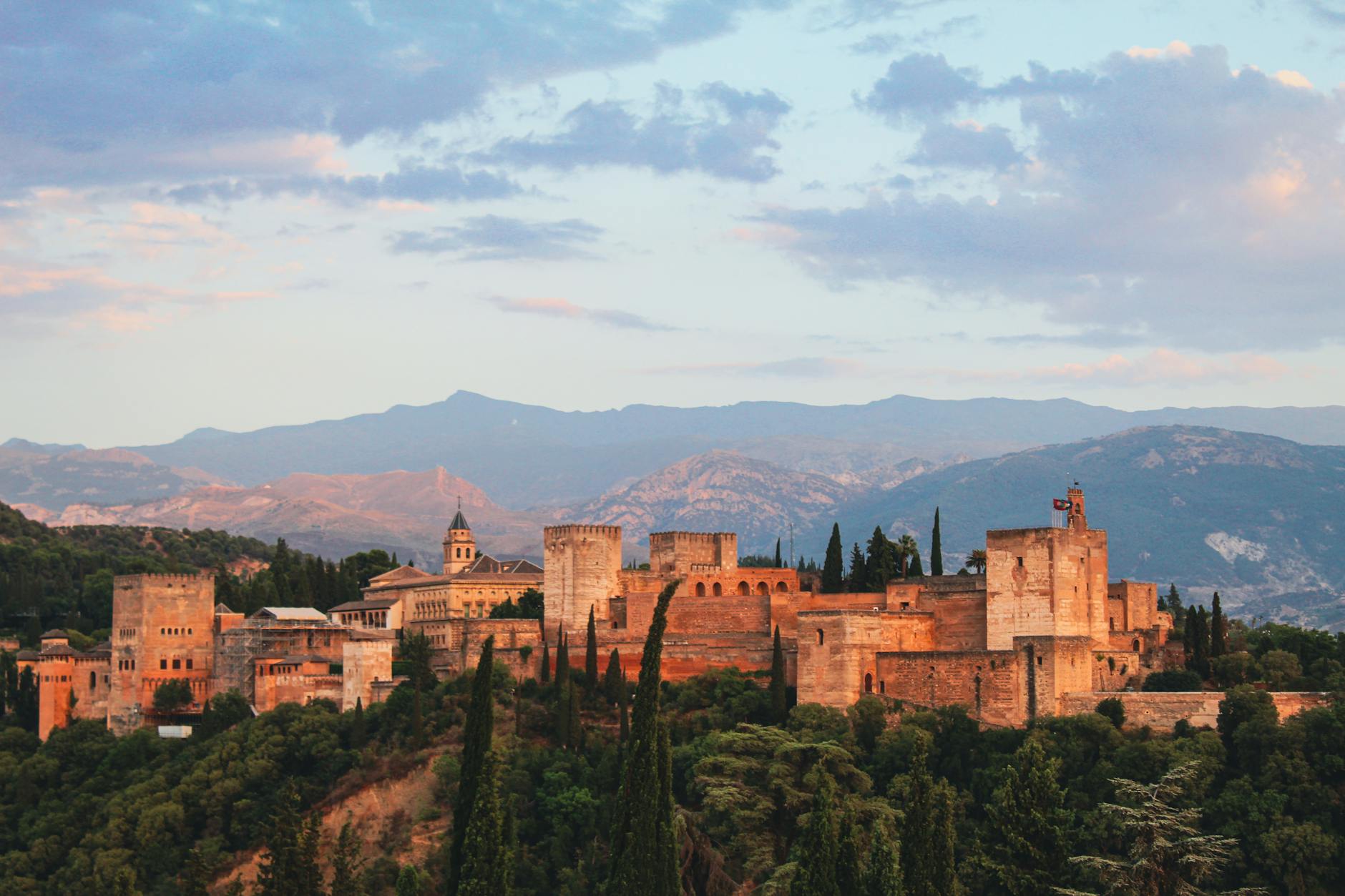
As Alhambra grew from a fortress to a sprawling palace complex, the site began to include multiple courts, gardens, and residential quarters, showcasing the dynastic aspirations of its rulers. The most renowned section of Alhambra is the Nasrid Palaces, which consist of a series of interconnected rooms and courtyards meticulously designed to exemplify resilience and beauty. The Court of the Lions, for example, stands as a quintessential representation of Islamic garden design, symbolizing paradise on earth, featuring sculpted fountains, delicate arches, and ornamental reliefs.
Additionally, early Islamic architecture in Spain incorporated various decorative elements that offered layers of meaning and cultural significance. Calligraphy—often inscribed on the walls—provided religious affirmations, while elaborate tilework showcased geometric patterns that reflected the spiritual aspects of Islamic art. The art of azulejos (glazed tiles) became a signature aesthetic of Alhambra, enabling the creation of colorful facades that contributed to the splendor of the overall complex.
As the Nasrid dynasty navigated political challenges and territorial ambitions, the Alhambra grew to embody not only a royal retreat but also a symbol of unity among Muslims in a predominantly Christian Spain. It became a focal point of artistic and architectural achievement, embedding the legacy of Islamic culture into the landscape of European history.
To this day, Alhambra serves as a reminder of the rich cultural tapestry that defines Spain. Visitors from around the globe come to witness firsthand the ingenious architectural innovations, artistry, and historical significance of this Moorish jewel. The Alhambra’s origins are more than just a tale of bricks and mortar; they encapsulate a vital chapter in the narrative of cultural exchange that characterized medieval Spain. The Nasrid kingdom’s artistic and architectural legacy left an indelible mark on the cultural identity of Granada, shaping the artistic inclinations of future generations, whether in thriving or tumultuous historical contexts.
The Reconquista: The Transformation of Alhambra
The completion of the Reconquista in 1492 marked a watershed moment in Spanish history, transforming the Alhambra from a symbol of Islamic strength to a rich emblem of Catholic conquest and cultural transformation. The Reconquista was a series of military campaigns by Christian states to recapture territory from Muslim rule that began in the early 8th century. By the end of the 15th century, the kingdoms of Castile and Aragon successfully united under the Catholic Monarchs, Ferdinand and Isabella, solidifying the Christian authority in the Iberian Peninsula.
Upon the capture of Granada, the last holdout of Muslim rule in Spain, the Catholic Monarchs viewed the Alhambra not just as a conquest but as a political statement. The integration of Islamic architecture into the nascent Christian cultural framework began—a multifaceted transformation that involved the repurposing of existing structures, the introduction of new elements, and the reaffirmation of the triumphant Christian narrative over the Islamic past.
In the wake of the conquest, significant modifications began at the Alhambra. The Catholic Monarchs celebrated their victory by establishing their own royal presence in the palace complex. One of the initial actions taken was the construction of the Royal Chapel of Granada, where Ferdinand and Isabella were later buried. The chapel houses ornate altarpieces that depict Christian iconography, symbolizing a pivot away from the Islamic artistic themes that predominantly characterized the Alhambra up until that point.
The most notable addition to the Alhambra during this period was the influence of the Renaissance, which began to permeate the Islamic architectural foundations. As Spain became increasingly influenced by the Renaissance ideals from Italy, the Alhambra witnessed the introduction of classicist elements alongside its Moorish roots. This stylistic synthesis is epitomized in the iconic “Palacio de Carlos V,†constructed under Charles V, grandson of Ferdinand and Isabella. This circular structure, which features an imposing façade adorned with pillars and a grand stairway, stands in stark contrast to the surrounding Islamic motifs, illustrating the cultural tensions and amalgamation during this transformative phase.
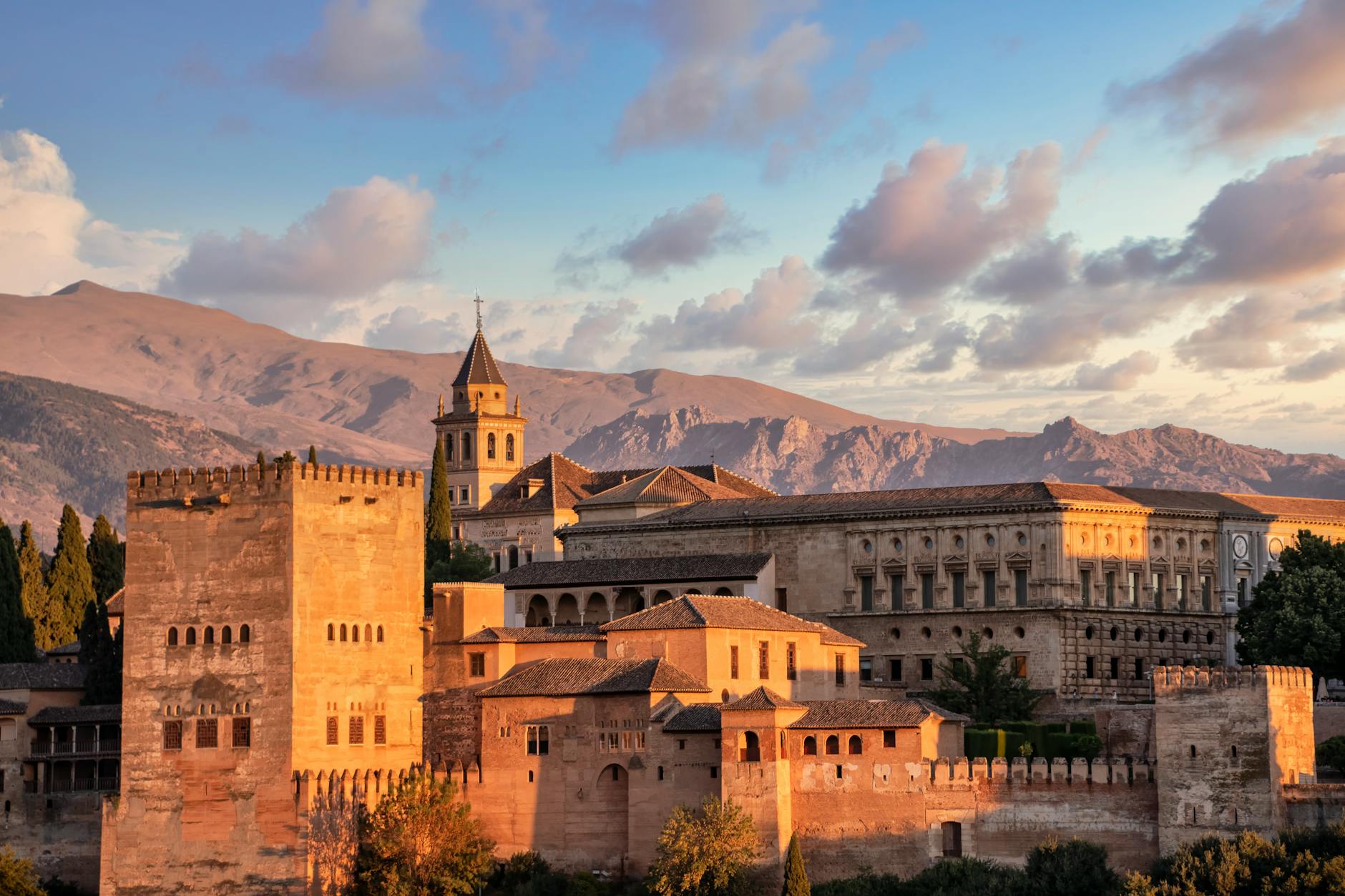
Alongside architectural modifications, alterations were also apparent in religious practices and cultural expression within the Alhambra. The former Islamic spaces were recontextualized to serve Christian worship, leading to the gradual erosion of Islamic traditions and practices. The imposition of Christian doctrines and the inquisition significantly stifled the existing cultural vitality that characterized Granada, leading to the assimilation or marginalization of the region’s Muslim population, who faced pressures to convert to Christianity.
However, despite these challenges, elements of Islamic culture and architectural ingenuity continued to flourish within the complex. The gardens and fountains that exemplified Islamic aesthetics persisted in their designs, denominations reflecting the deep-rooted influence of earlier Islamic principles. The integration of Christian and Islamic elements in visual arts and architecture led to a unique coexistence of cultures that highlighted the multifaceted narrative that the Alhambra represented.
In the subsequent centuries, the shifting political landscapes influenced the fate of the Alhambra. It became a subject of romanticized interpretations, capturing the imaginations of artists and writers who began to express longing for its storied past. The Alhambra’s portrayal in literature encapsulated notions of nostalgia, as figures like Washington Irving, whose 1832 work “Tales of the Alhambra†depicted the exotic beauty of the site, contributed to the Western notions of ‘Moorish’ aesthetics and cultural heritage.
Thus, the transformation of Alhambra post-Reconquista delineates a vibrant chapter in Spanish history—one marked by cultural exchange, adaptation, and the continuous evolution of artistry that transcended religious boundaries. It became a crucible of memory and identity, positioning itself as a canvas where multiple stories coalesced over time.
Architectural Features: A Blend of Art and Nature
The architectural features of the Alhambra exemplify a seamless merging of artistic expression and natural beauty, reflecting a sophisticated understanding of form, function, and landscape that has captivated visitors for centuries. Every corner of this palatial complex is adorned with unique elements that showcase the ingenuity and creativity of its builders, culminating in structures that resonate with historical significance and aesthetic beauty.
At the core of Alhambra’s architectural brilliance is its distinctive interplay of light and shadow, achieved through the strategic design of arches, courtyards, and latticework. One prominent architectural element is its horseshoe arch, a defining feature of Islamic architecture, which adds a sense of grandeur and elegance to the spaces it inhabits. These arches create a rhythmic visual harmony, drastically influencing the overall ambiance and spatial organization within the complex.
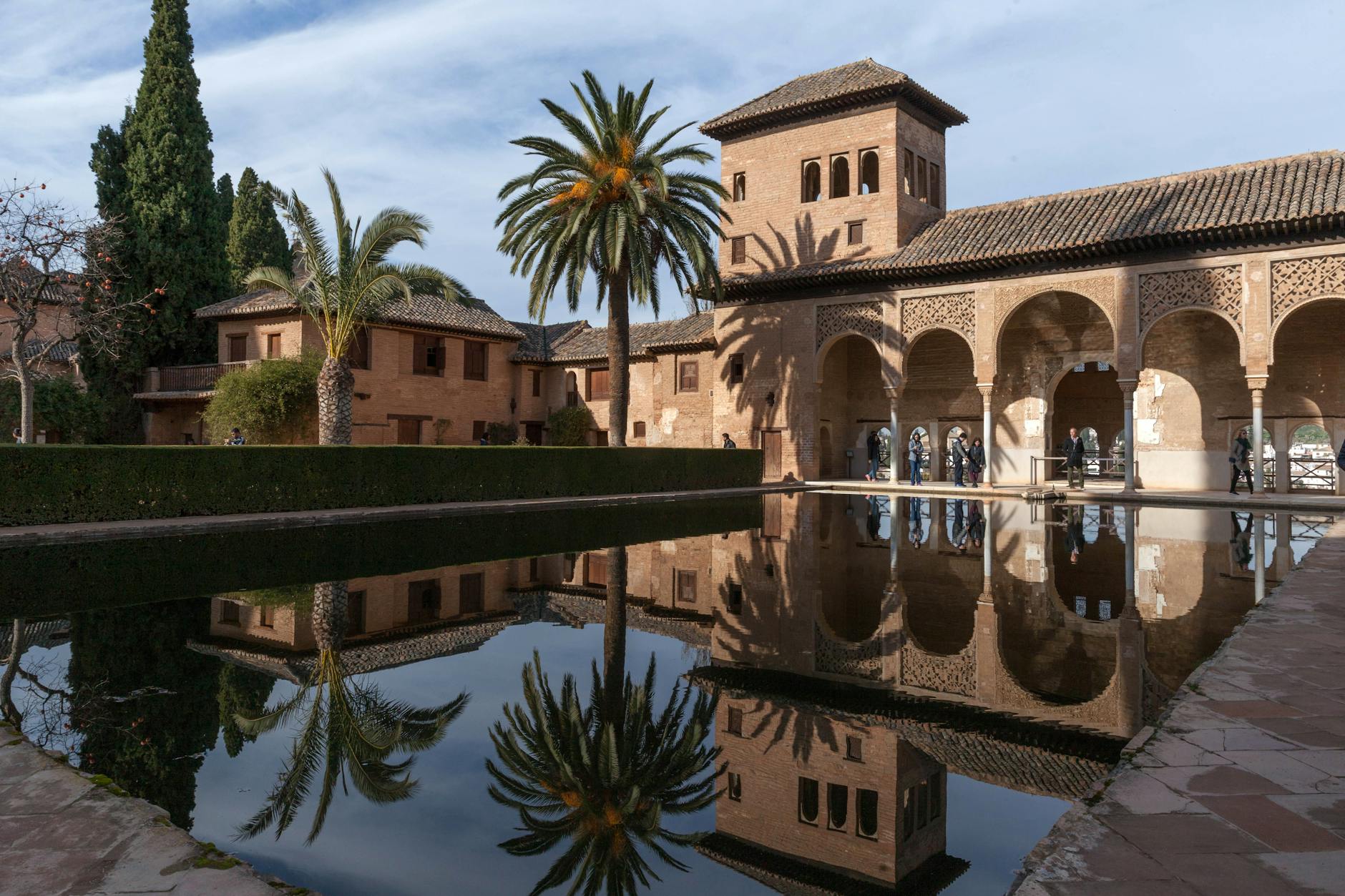
One of the most celebrated spaces within Alhambra is the Patio de los Leones (Court of the Lions), a quintessential representation of Moorish architecture. This courtyard is marked by an intricate fountain supported by twelve beautifully sculpted lions. The courtyard is surrounded by a series of halls and galleries skillfully designed to enhance the movement of air and light. The symmetry in the layout, pitching fountains against lush greenery and reflective marble, embodies the Islamic philosophy that sees gardens as a representation of paradise. The gentle trickle of water and the fragrant blooms create a serene atmosphere, providing respite from the harsh sun and embodying the balance of nature and architecture.
Another significant structure is the Alcazaba, the oldest part of the Alhambra, initially constructed as a military fortress. The imposing walls and watchtowers exemplify the defensive architecture typical of the Nasrid era while revealing insights into the socio-political context of its time. Despite its military purpose, the Alcazaba harmoniously integrates with its surrounding landscape, leveraging the natural topography for defensive and aesthetic purposes. The strategic positioning of fortifications allowed for panoramic views of the Sierra Nevada mountains as well as the urban expanse of Granada—a testament to the foresight of its creators.
The interplay of materials in the Alhambra’s construction further enriches its architectural narrative. The use of stucco and ceramic tiles not only enhances visual appeal through intricate patterns and decorative motifs but also serves functional purposes by insulating the interior spaces from the harsh weather. The artistry of tilework manifests in its intricate designs, often incorporating geometric patterns and calligraphic inscriptions that reflect Islamic heritage and craftsmanship. These ornamental elements are carefully integrated into walls, ceilings, and facades, creating an enchanting atmosphere that captivates all who enter.

Additionally, the Alhambra’s gardens—the general Generalife, especially—exemplify the profound connection architects sought to create between the built environment and nature. The gardens are characterized by terraced landscapes, meticulously arranged flower beds, and the presence of water elements, contributing to a meditative and refreshing space for the royal family. The landscape architects drew from principles of Islamic garden design, symbolizing an earthly reflection of paradise, replete with flowing water, fragrant flora, and striking views.
The architectural significance of Alhambra extends beyond its ornamental features to encompass innovative engineering solutions. The use of water engineering, characterized by intricate canal systems and flowing fountains, allowed for the sustainable management of water resources within the arid climate of Granada. Water was not merely functional but served as a fundamental aspect of the artistic experience, enhancing the overall sensory dimension of the Alhambra’s spaces.
As a result, the architectural features of the Alhambra create a multisensory environment that captures the imagination and beckons exploration. Visitors feel enveloped by its beauty, with each step revealing a new facet of art, nature, and history. The blend of materials, design, and natural elements creates a profound experience that reflects the aspirations, beliefs, and cultural dynamics of its creators.
The enduring allure of the Alhambra lies in its ability to convey stories through its architecture, offering glimpses into a world where aesthetic sensibilities, spirituality, and innovation converge. This remarkable palatial fortress invites continual exploration and admiration, as it stands as a testament to the genius of Islamic architecture and the undying human desire to create harmony between art and nature.
Cultural Significance and Influence of Alhambra
The cultural significance of the Alhambra transcends its architectural marvels; it stands as a potent symbol of the rich historical interactions between Islamic and Christian civilizations in Spain. As a landmark of extraordinary artistry and significance, the Alhambra encapsulates the complexities of cultural exchange, reflecting the coexistence, reminders, and eventual turbulence that unfolded over centuries within the context of Iberian history.
To adequately understand the cultural context of the Alhambra, one must recognize its role within the broader narratives of religious and cultural pluralism in medieval Spain. The period leading up to the Reconquista was characterized by a flourishing of knowledge, science, and the arts, where Muslim, Christian, and Jewish intellectual traditions converged. Scholars and artisans traveled across cultural boundaries, sharing ideas and techniques. Alhambra became a focal point where these various currents of thought and innovation coalesced, influencing the fields of philosophy, art, and architecture.
The literary influences on the Alhambra’s identity are particularly noteworthy. During the 19th century, the palace complex attracted the attention of European writers and artists, many of whom became enamored with its exotic beauty. Washington Irving’s “Tales of the Alhambra†played an instrumental role in shaping public perceptions of the site. His romanticized portrayals of the palace ignited a fascination with the Moorish past, leading to a broader revival of interest in the Islamic heritage of Spain and its influence on the European cultural landscape.
This renaissance of interest was not merely superficial; it laid the groundwork for the Alhambra’s interpretation within contemporary discussions surrounding cultural identity. The complex functioning as a symbol of loss, nostalgia, and cultural amalgamation became pivotal in the dialogues surrounding heritage conservation and national identity in modern Spain. Preservation efforts are not solely motivated by aesthetics; they also stem from a commitment to honor the diverse histories and experiences that shaped the Alhambra.
Moreover, the Alhambra’s unique ethnicity transcends artistic boundaries, influencing a myriad of art forms including painting, literature, music, and even performance. The intricate patterns and motifs found within the Alhambra have informed the works of many contemporary artists, weaving themes of cultural reconciliation and historical reflection into modern expressions.
In the realm of gastronomy, the Alhambra serves as an emblematic reminder of the fusion of culinary traditions that have emerged from the diverse interactions that characterize Spanish cuisine. The exchange of spices and techniques between different cultures has left an indelible mark on the culinary landscape, with dishes such as tagine highlighting the Moorish influence on Spanish cooking.
The cultural significance of Alhambra extends into the realm of education, inspiring scholars and students alike. Its historical weight offers a rich source for research, inviting inquiry into themes such as cultural tolerance, the exchange of ideas, and the intersection of identity in art and architecture. Universities and institutions continue to engage with Alhambra, delving into historical context and interpretations that enrich our understanding of this complex monument.
The Alhambra’s influence is not confined to a historical relic; it is an ongoing entity that captures ongoing dialogues about cultural identity, diversity, and the importance of preserving vestiges of the past. Initiatives promoting intercultural dialogue and understanding draw upon the legacies embedded within Alhambra to foster connections among diverse communities.
As visitors walk through its courtyards and halls, they engage with a legacy that converses across time and space. The Alhambra obliges us to reflect on our collective histories, urging us to contemplate the intricate tapestry of influences that unite us rather than divide us. Its cultural significance flourishes not only in its architectural grandeur but also in the rich stories and identities that resonate within its walls, inviting generations to connect with its history and cultural foundations.
Alhambra Today: Preservation and Tourism
The Alhambra remains not only a jewel of historical significance but also a beacon of tourism and cultural heritage in contemporary Spain. Its status as a UNESCO World Heritage site underscores the importance of preserving this exceptional landmark, as well as the corresponding challenges faced in balancing conservation with the needs of millions of visitors eager to experience its splendor.
Today, the Alhambra is one of Spain’s most visited monuments, attracting over two million tourists each year. This overwhelming influx of visitors underscores the significance of the Alhambra as a cultural and historical treasure. However, in light of this popularity, the site faces considerable challenges in terms of preservation and sustainability. The impact of large-scale tourism has prompted authorities to implement measures aimed at safeguarding both the integrity of the site and the quality of the visitor experience.
One significant initiative has been the implementation of timed entry tickets, which serves to manage the flow of visitors and minimize potential damage to the delicate structures and gardens of the Alhambra. By regulating access, authorities can ensure that visitors have a meaningful experience without overwhelming the site. This responsible tourism approach aims to foster a sense of respect for the site’s historical and cultural significance while enabling future generations to appreciate its beauty.
Concurrently, maintenance efforts are crucial for the Alhambra’s preservation. The use of traditional restoration techniques ensures that any repairs or conservation work is executed with respect for the original design and materials. The ongoing study of the Alhambra’s architectural features has provided insights into effective conservation strategies, although it requires ongoing financial support and public interest in maintaining the site’s legacy.
Moreover, the introduction of educational programs aimed at raising awareness about the Alhambra’s history, architecture, and cultural significance has become integral to the site’s tourism strategy. Guided tours, workshops, and exhibitions offer visitors the opportunity to delve deeper into the complexities of the Alhambra and its narratives, enriching their understanding of its heritage.

The Alhambra’s appeal extends beyond its architectural magnificence. Events, concerts, and cultural festivals held within its walls celebrate the diverse artistic traditions that have been inspired by its beauty over the centuries. These cultural events foster engagement with the arts, encouraging a vibrant connection between the Alhambra and contemporary creative expressions.
Furthermore, the Alhambra’s role in promoting cultural dialogue is particularly essential in today’s context of globalization. As a symbol of historical coexistence, it embodies the complexities of cultural interactions and revelations surrounding identity. Initiatives aimed at fostering intercultural understanding invite educational exchanges that seek to challenge simplistic narratives and highlight the idea of interconnectedness among civilizations.
Ultimately, the Alhambra stands as an emblematic narrative of resilience and adaptation—a convergence of history, culture, and art. Its enduring appeal lies not only in its architectural sophistication but also in the stories woven into its fabric. The Alhambra lighthouse serves as a source of inspiration for generations of creators and thinkers, reminding us of the rich legacies that shape our shared histories.
Balancing preservation with tourism requires a collective commitment to understanding and appreciating the cultural significance of the Alhambra. By honoring its legacy, we acknowledge the artistry, ingenuity, and complexities of the human experience encapsulated within its walls, ensuring that future generations continue to engage with this Moorish masterpiece.
Conclusion
The Alhambra stands as one of the most striking testaments to the artistry, innovation, and cultural fusion that defined Moorish Spain. Rising above Granada, its intricate palaces, serene courtyards, and fortified walls embody centuries of craftsmanship and vision, blending Islamic aesthetics with practical fortification. Beyond its architectural magnificence, the Alhambra tells a story of power, faith, and cultural exchange. It reflects not only the grandeur of the Nasrid dynasty but also the shifting tides of Spanish history, from Muslim rule to Christian reconquest, and its eventual preservation as a world treasure.
Today, the Alhambra continues to inspire millions of visitors who walk through its ornate halls, marvel at its delicate arabesques, and feel the echoes of history within its walls. As both a cultural landmark and a symbol of resilience, it reminds us of the importance of safeguarding humanity’s shared heritage. The Alhambra is more than a masterpiece of Granada—it is a timeless bridge between past and present, ensuring that the spirit of its creators endures for generations to come.