Introduction
The Arc de Triomphe, one of Paris’s most iconic monuments, stands tall at the western end of the Champs-Élysées. Commissioned by Napoleon Bonaparte in 1806 to honor the French army, this grand structure not only serves as a tribute to military victories but also embodies the spirit of French nationalism. Over the years, it has become a symbol of unity, hope, and remembrance for both the French people and visitors from around the globe. The monument’s architectural grandeur, adorned with intricate sculptures and carvings, tells stories of bravery and sacrifice. As we delve into the Arc de Triomphe history, we will explore its origins, architectural features, historical events, preservation efforts, and cultural significance, revealing how this magnificent arch has transcended time to remain a vital part of Parisian identity.
The Origins and Construction of the Arc de Triomphe
The Arc de Triomphe’s conception dates back to the early 19th century, a period marked by turmoil and transformation in France. After the French Revolution, a sense of national pride surged throughout the country, fueled by a desire to commemorate the sacrifices made during the Revolution and the Napoleonic Wars. In 1806, after his decisive victory at Austerlitz, Emperor Napoleon Bonaparte envisioned a monumental arch that would celebrate not only his military achievements but also the valiant efforts of the French troops.
The design of the Arc de Triomphe was commissioned to Jean Chalgrin, who crafted a neoclassical structure inspired by the ancient Roman arches, intended to encapsulate the grandeur of the Roman Empire while also reflecting France’s contemporary strength. The construction commenced in 1806, with a blend of skilled artisans and laborers contributing to the project. However, the building faced numerous delays due to political upheavals, economic challenges, and the shifting tides of war.
Initially, Napoleon aimed for the arch to be completed within a short timeframe, but as circumstances transformed, the project saw a series of revisions. After the fall of Napoleon and the restoration of the monarchy, construction was abruptly halted. It wasn’t until 1810 that the work resumed under the rule of King Louis XVIII, demonstrating the arch’s significance as a national emblem that transcended the reigns of individual leaders.
The arch was built from a local limestone known for its durability, which was crucial given Paris’s unpredictable climate. Over the years, the architects revised its design, ensuring that it not only reflected Napoleonic ideals of glory but also considered the city’s landscape and harmony with surrounding architecture. The strikingly large arch stands 50 meters tall, 45 meters wide, and 22 meters deep, making it an impressive sight that commands attention from every angle.
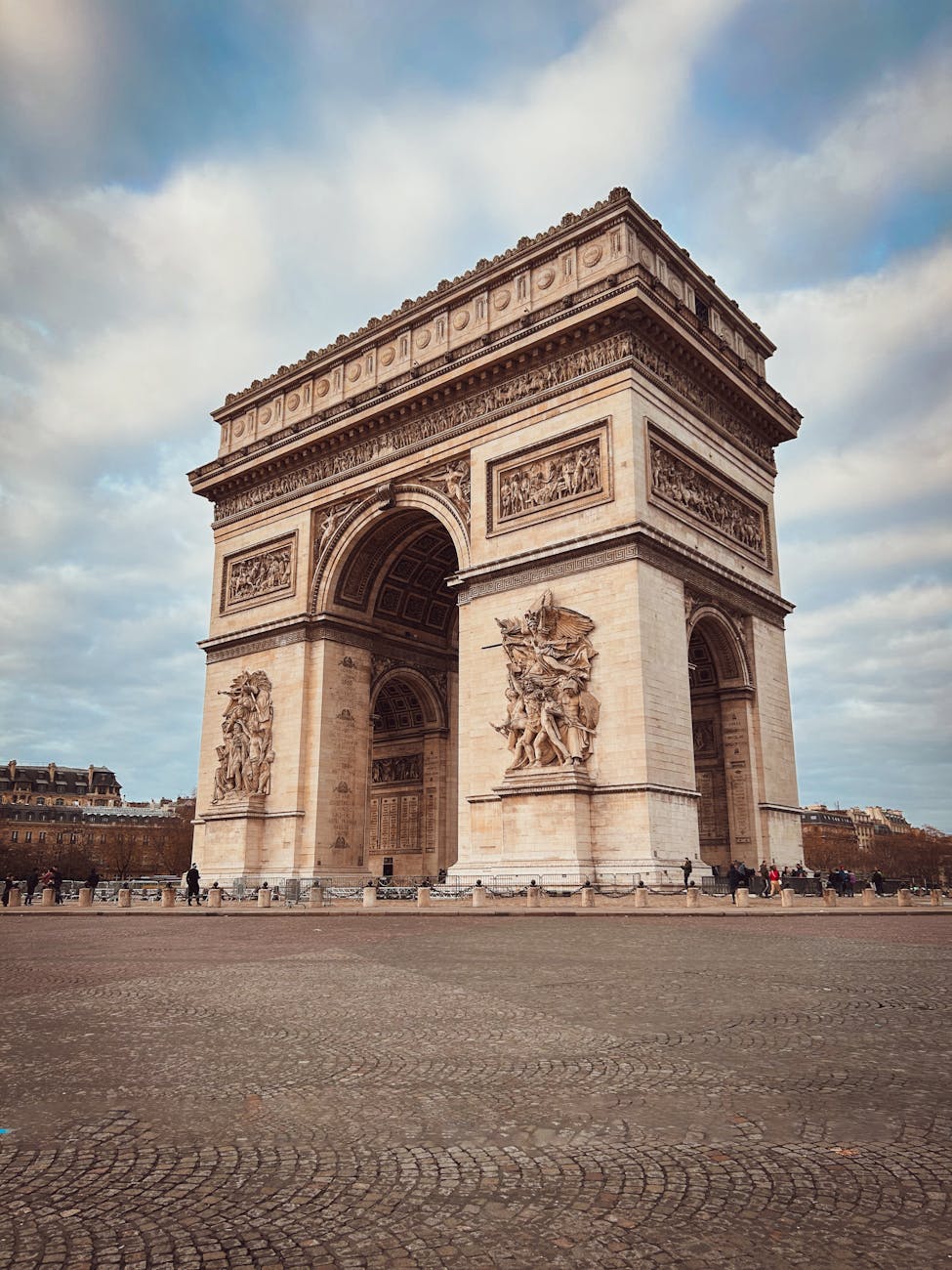
In 1836, after three decades of labor, the Arc de Triomphe was finally completed. Its inauguration coincided with the restoration of the monarchy, thus representing a new chapter for France—one that honored the memories of those who served while also allowing room for renewed national pride. During the inauguration, a grand procession featuring military troops marched beneath the arch, signifying the reconsolidation of power and unity among the French people.
The arch is adorned with intricate reliefs and sculptures, each depicting significant military events and historical figures. Notable among them are the names of 660 generals inscribed on its facades, including the famous victories at Valmy, Austerlitz, and Jena. These engravings serve as reminders of France’s remarkable military achievements and the sacrifices made in pursuit of glory and freedom.
Additionally, the arch houses the Tomb of the Unknown Soldier, which was added in 1921. The eternal flame that burns at the tomb has become a symbol of remembrance for all soldiers who died for France. Each evening, a ceremony takes place where the flame is rekindled, reinforcing the arch’s role as a site for remembrance and reflection. The Arc de Triomphe not only represents victory but also honors the memories of those who gave their lives.
In conclusion, the origins and construction of the Arc de Triomphe are deeply intertwined with the national identity of France, embodying the complexities of its history—from the heights of military triumph to the somber reflections of sacrifice. This monument stands as a testament to the evolving narrative of a nation, a constant reminder of its storied past, and a beacon of hope for its future.
Architectural Features and Design Elements
The Arc de Triomphe’s architectural design exemplifies the neoclassical style that was predominant in the early 19th century, influenced by the grandeur of ancient Rome. Its massive scale and intricate detailing make it a masterpiece that not only draws tourists’ attention but also invites admiration from architects and historians alike.
The structure is characterized by its bold, monumental proportions, which are intended to convey strength and resilience. The arch stands at 50 meters (164 feet) in height, 45 meters (148 feet) wide, and 22 meters (72 feet) deep, creating a visually stunning focal point in the Parisian landscape. It’s strategically positioned at the center of Place Charles de Gaulle, where twelve major avenues converge, emphasizing its role as a central symbol of the city.
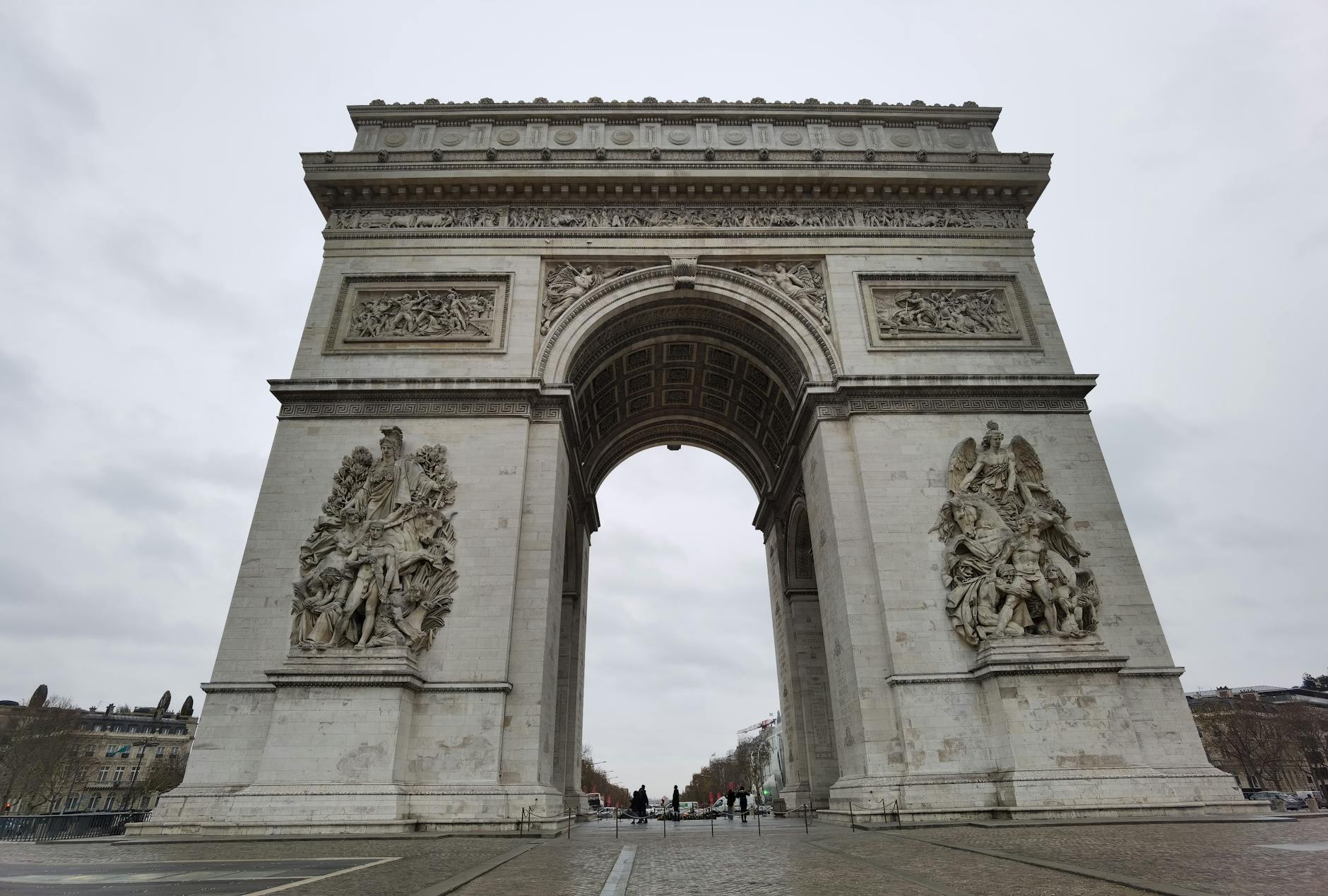
At the base of the arch, four massive columns rise majestically, adorned with reliefs that pay tribute to military victories and pivotal moments in French history. These reliefs are not only decorative but also narrate the story of the nation’s martial glory. For example, the sculptural panels depict scenes from the Revolutions of 1789 and 1830, showcasing the evolution of French democracy and the sacrifices made by its citizens.
A distinctive feature of the Arc de Triomphe is its elyptical arch, which is further embellished with intricate carvings and sculptural reliefs. These carvings represent allegorical figures personifying concepts such as Peace, Freedom, and the triumphs of various military units. The choice of these themes underscores the monument’s duality: it celebrates victories while also reflecting on the importance of peace and unity in the aftermath of wartime struggles.
The arch’s façade is richly decorated with military motifs, including laurel wreaths, cannons, and shields, emphasizing its purpose as a military memorial. The sculptures are the work of many prominent artists of the time, including Antoine Étex and Jean-Pierre Cortot, who meticulously crafted the ornamentation that adorns the arch. Such attention to detail exemplifies the craftsmanship of the era and enhances the monument’s historical and cultural significance.
Additionally, the arch is designed to provide an unobstructed view of the impressive skyline of Paris, blending both functionality and aesthetic beauty. The top of the arch features a viewing platform that offers panoramic views of the city, allowing visitors to appreciate the grand urban landscape and its historical landmarks, including the Eiffel Tower and the Louvre.
Further enhancing the design, the surrounding area features beautiful gardens and open spaces that create a serene atmosphere in contrast to the bustling city life. The placement of trees and seating areas invites contemplation and provides a moment of respite for visitors. The juxtaposition of nature with the grandness of the arch encourages appreciation for both the monument and the surrounding landscape.
Lighting plays a crucial role in accentuating the architectural features of the Arc de Triomphe, especially at night when the monument is illuminated by strategically positioned lights that highlight its grandeur against the evening sky. The soft glow creates a mesmerizing effect that transforms the arch into a beacon of history and pride, drawing crowds who gather to witness its beauty.
Over the years, the Arc de Triomphe has undergone various restoration efforts to preserve its structural integrity and enhance its visual appeal. Efforts include cleaning the stone facades, repairing weather-related damage, and restoring the intricate carvings to their original splendor. These preservation initiatives are vital not only for maintaining the physical structure but also for ensuring that the monument continues to serve as a testament to France’s rich history for generations to come.
In conclusion, the architectural features and design elements of the Arc de Triomphe are a testament to the vision and artistry of its creators. From its monumental scale to the intricate reliefs that tell the story of France, this iconic monument stands as a symbol of both military honor and national unity. Its enduring presence continues to inspire awe and admiration, inviting visitors to reflect on the sacrifices made for freedom and the enduring spirit of the French nation.
Historical Significance and Events Surrounding the Arc
The Arc de Triomphe is not merely an architectural marvel; it is a monument steeped in history and laden with significance stemming from the tumultuous events that shaped France. Its unveiling in 1836 marked a pivotal moment in the country’s narrative, connecting the past with the present while commemorating the valor of soldiers and the overarching themes of victory and remembrance.
Constructed during a time of political upheaval, the Arc de Triomphe emerged as a beacon of national pride—reflecting the wounds and triumphs of the Revolution and the Napoleonic era. Each relief adorning its façade recounts historical moments, from the fall of the Bastille to the various military campaigns led by Napoleon. By immortalizing these events, the arch serves as a reminder of the sacrifices made by countless individuals in the pursuit of peace and national identity.
One of the arc’s most significant historical moments is its connection to the Tomb of the Unknown Soldier. Established in 1921 and placed beneath the arch, this solemn site honors the memory of soldiers who perished without recognition during World War I. The eternal flame that burns at the tomb, rekindled each evening with a ceremony, represents a powerful tribute to the fallen. This act of remembrance has become a national ritual, allowing citizens and visitors alike to pay homage to those whose lives were given in the name of freedom.
Throughout the 19th and 20th centuries, the Arc de Triomphe has also been the stage for numerous important events. During World War I, Paris witnessed celebrations of the armistice on November 11, 1918, with thousands of citizens gathering around the arch to commemorate the end of the conflict. In this sense, the monument has become synonymous with resilience and hope, symbolizing a new dawn of peace for the nation.
Moreover, the Arc de Triomphe has witnessed numerous parades and ceremonies, becoming an emblematic backdrop for military displays, national holidays, and patriotic gatherings. Notably, it played a central role during France’s liberation from Nazi occupation in 1944, when Allied forces celebrated the city’s freedom by marching through under the arch. This moment not only reinforced the monument’s significance as a symbol of military honor but also demonstrated its place in the collective memory of the French people.

In recent years, the Arc de Triomphe has also been the site of various public demonstrations and protests, highlighting its dual role as both a monument of memory and a space for civic expression. Movements advocating for social justice, environmental concerns, and political changes have leveraged the monument’s prominence to draw attention to their causes. This ongoing relationship between the arc and contemporary events emphasizes its enduring relevance in French society.
The historical significance of the Arc de Triomphe is further enriched by its connection to various cultural influences across Europe. During the Napoleonic Wars, the arch served as a testament to the expansion of French ideals—and later, as a symbol of French resistance during times of adversity. It embodies the evolution of France’s national identity and values, mirroring the country’s pursuit of liberty, equality, and fraternity.
Ultimately, the Arc de Triomphe represents not only a tribute to military victories but also a reminder of the complexities of history. It stands as a living testament to the events that shaped France, encouraging reflection on the collective sacrifices made by the nation. As a central symbol of Paris, the arch continues to inspire reverence and respect while inviting visitors to delve into the narrative of a country—one that intertwines valor, hope, and memory.
Preservation and Restoration Efforts
The Arc de Triomphe has faced the daunting challenges of preserving its grandeur and structural integrity over nearly two centuries. As one of France’s most beloved landmarks, continuous preservation and restoration efforts have been crucial to maintaining its historical significance and aesthetic appeal. These initiatives not only ensure the monument’s survival but also contribute to the collective memory of a nation that holds the arc dearly in its heart.
From the beginning, the materials used in the construction of the arch were selected for their durability. The limestone sourced from the Paris basin provided the necessary resilience to endure the city’s unpredictable weather patterns, pollution, and the passage of time. However, the effects of air pollution, acid rain, and natural erosion have taken their toll on the structure, prompting restoration efforts to counteract the damage.
One of the most significant restoration projects occurred in the late 20th century when the arch underwent a thorough cleaning and refurbishment from 1984 to 1988. This comprehensive effort aimed to remove decades of grime and soot, revealing the original beauty of the limestone facades. High-pressure cleaning methods were employed with sensitivity to protect the intricate carvings, ensuring the preservation of the arch’s historical details.
In addition to cleaning, cracks and other structural issues were addressed during this restoration period. Engineers and artisans collaborated to reinforce certain sections of the monument that had weakened over time, ensuring its long-term stability without compromising its historical integrity. This careful balance of modern techniques alongside traditional craftsmanship reflects the duality of preserving history while embracing contemporary technology.
More recent restoration efforts have heavily emphasized preventative measures, aiming to mitigate further deterioration. The arch’s protective measures include a specialized coating designed to shield the stone from environmental impacts and biological growth. This proactive approach has been instrumental in prolonging the life of the monument and minimizing the necessity for extensive repairs in the future.
Monitoring systems have also been implemented as part of the preservation strategy. These systems continuously assess the arch’s condition, documenting changes in the structural integrity as well as environmental factors that may affect the monument. Such advancements ensure that preservation efforts remain informed, timely, and effective in addressing any arising concerns.
Community involvement has played an essential role in supporting preservation initiatives. Numerous organizations, including the Association of Friends of the Arc de Triomphe, actively engage in public awareness campaigns, fundraising, and educational programs aimed at fostering appreciation for the monument’s historical significance. Their efforts are vital in rallying support for ongoing maintenance and restoration projects, allowing the public to actively participate in the safeguarding of a national treasure.

Moreover, the Arc de Triomphe serves as a platform for contemporary artists and cultural collaboration. Temporary installations and art projects have enhanced the arch’s presence in the modern cultural landscape, drawing attention to its history while challenging perspectives through engagement. Such initiatives blend tradition and innovation, reinforcing the arch’s relevance in today’s society and promoting a sense of shared ownership among citizens and visitors alike.
Ultimately, the preservation and restoration efforts surrounding the Arc de Triomphe reflect a deep commitment to safeguarding the historical and cultural legacy of France. By addressing the challenges posed by time and the environment, these initiatives ensure that the arch continues to stand as a symbol of national pride and remembrance for generations to come. The ongoing dedication to preserving the monument underscores the importance of commemorating the past while nurturing a vibrant future, allowing the arc to flourish as a testament to the resilience of the French spirit.
Cultural Impact and Modern Interpretations
The Arc de Triomphe has transcended its original purpose as a military monument to become a profound symbol of French culture and identity. Throughout its history, the arch has inspired countless artists, writers, and filmmakers, enriching its cultural narrative and ensuring its place in the hearts of the public. Its impact can be observed in various forms, from literature and art to popular media, where it serves as a canvas for modern interpretations and expressions.
Artistic representations of the Arc de Triomphe have flourished, reflecting diverse perspectives and interpretations of its significance. Iconic painters, such as Claude Monet, have captured the structure within the broader context of Parisian life, showcasing its monumental stature against the dynamic skies of the city. These paintings not only portray the arc itself but also reveal the atmospheric elements—light, color, and movement—infusing contemporary narratives into the timeless structure.
Moreover, the arch has become a popular point of reference in photography, serving as a backdrop for countless wedding portraits, tourist snapshots, and social media posts. This visual representation plays a crucial role in linking the monument to personal stories and shared experiences, allowing people from all walks of life to forge connections with the symbol of national pride.
In literature, the Arc de Triomphe has been featured prominently in the works of authors who sought to explore the essence of French culture and history. Notably, Victor Hugo’s “Les Misérables” illustrates the impact of the Revolution and its aftermath, with the arch serving as a meaningful backdrop to the struggles of the characters. This literary association emphasizes the monument’s role as a witness to the human condition, resonating deeply with readers and fostering connections to the nation’s turbulent past.
Modern interpretations of the Arc de Triomphe extend beyond traditional art forms, permeating contemporary culture in striking ways. For instance, the arch has inspired social movements and demonstrations, emphasizing its role as a focal point for civic engagement. Recent protests, particularly during the Yellow Vest movement, have utilized the monument as a symbol of the people’s voice and a stage for political discourse, reinforcing the connection between the arch and the ongoing narrative of social justice.
The arch’s cultural impact was further amplified during the Paris 2024 Olympics, as it served as a new stage for significant events. The Games showcased the monument’s continued relevance, transforming it into a symbol of unity, diversity, and celebration that resonates with audiences worldwide. Through this association, the Arc de Triomphe solidified its position as a contemporary icon, capable of evolving alongside the changing landscape of society.
Furthermore, events showcasing French artisanship and craftsmanship throughout Paris often incorporate the Arc de Triomphe as a central theme, emphasizing its enduring representation of resilience, style, and innovation. Initiatives highlighting local artists, musicians, and designers connect modern creative expressions to the arch’s rich cultural history, allowing new generations to draw inspiration from its legacy.
In relation to globalization, the Arc de Triomphe’s cultural significance expands into an international dimension as tourists from various backgrounds flock to witness its grandeur. This fusion of perspectives creates a shared moment—where individuals from diverse cultures encounter a common symbol of victory and remembrance. The arch fosters dialogue and understanding, allowing visitors to collectively engage with history while reflecting on their own narratives.
The cultural impact of the Arc de Triomphe is evident in the myriad of interpretations and representations that resonate through artistic, literary, and social expressions. As a continuously evolving symbol, it bridges the past and the present while preserving the spirit of France’s journey. The arch remains a powerful reminder of national pride, unity, and remembrance, celebrating the richness of a shared human experience that extends well beyond its stones.
Conclucion
In reflecting on the storied history of the Arc de Triomphe, we uncover a monument that is not only an architectural marvel but also a profound symbol of French identity and resilience. From its origins, envisioned by Napoleon as a testament to military victory, to its place as a contemporary anchor in the heart of Paris, the arch has withstood the tests of time, war, and societal change. Its intricate design, steeped in historical narrative, invites exploration and reflection on the rich tapestry of French culture and values.
The grand structure serves as a site of remembrance, honoring those who sacrificed their lives for freedom and peace. The Tomb of the Unknown Soldier encapsulates the eternal flame of memory that burns in the hearts of citizens and visitors alike, reinforcing the arch’s role as a living memorial. Every year, millions of visitors gather to witness its majesty, participate in ceremonies, and absorb its historic atmosphere.
Ultimately, the Arc de Triomphe is far more than stone and sculpture—it is a narrative in itself, carrying stories of glory, loss, resilience, and unity. As Paris continues to evolve, the arch remains an enduring beacon of national pride, ensuring that the lessons of history and the sacrifices of the past are never forgotten.