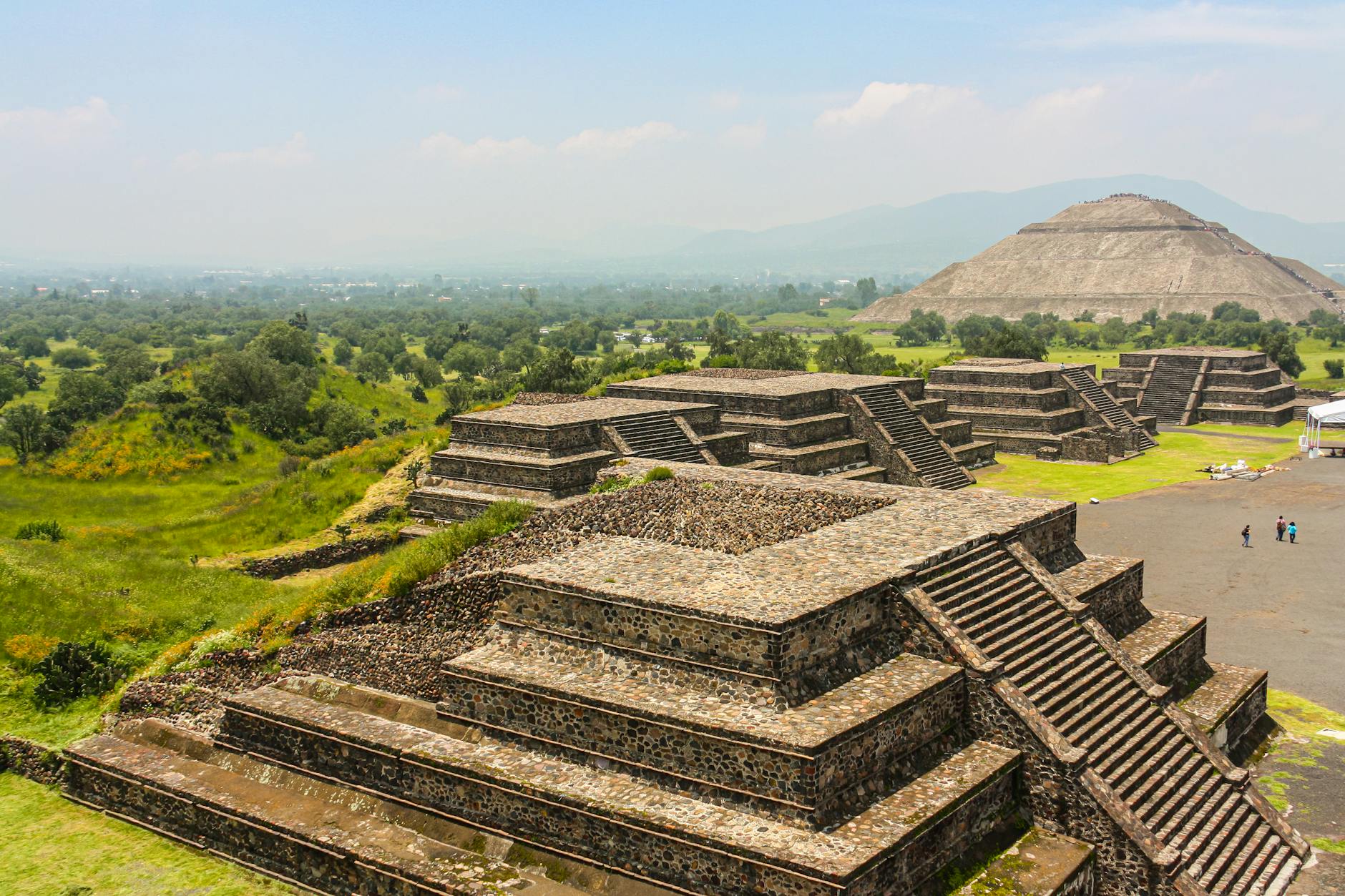
Introduction
Teotihuacan, an ancient Mesoamerican city, stands as one of the most significant archaeological sites in the world, offering crucial insights into the rich tapestry of pre-Columbian history. Located approximately 30 miles northeast of Mexico City, this sprawling metropolis flourished from around 100 BCE to 650 CE, becoming a cultural and political hub during its peak. What remains today are impressive architectural ruins, notably the majestic Pyramid of the Sun and the Pyramid of the Moon, which encapsulate the city’s grandeur and complexity. As researchers continue to unearth its mysteries, Teotihuacan reveals a sophisticated society complete with advanced urban planning, diverse cultural practices, and intricate trade networks. This article endeavors to explore the multifaceted Teotihuacan history , delving into its origins, architectural achievements, cultural practices, eventual decline, and enduring legacy that continues to influence modern Mesoamerica.
The Origins of Teotihuacan: Unraveling Its Formation
Teotihuacan’s origins are shrouded in mystery, although archaeological and historical research offers compelling insights into the city’s establishment and early development. The site, which predates its peak cultural phase, began its journey around the first few centuries BCE. Various hypotheses exist regarding who inhabited Teotihuacan during its formative years. The most prevailing theory indicates that it was initially settled by a group of migrants from diverse regions of Mesoamerica who brought with them agricultural techniques, cultural practices, and knowledge that laid the foundation for this flourishing city.
Archaeological evidence suggests that the early settlers of Teotihuacan practiced a form of agriculture that revolved around the cultivation of crops such as maize, beans, and squash. These agricultural practices allowed the population to grow significantly, creating a demand for more structured living arrangements and community organization. As the agricultural output improved, a social hierarchy began to form, leading to the development of distinct roles within the community, which included laborers, artisans, and traders.
By the first century CE, the city began to expand rapidly. The layout of Teotihuacan was meticulously planned, evidencing advanced urban design strategies. Streets were lined with residential compounds, temples, and impressive ceremonial spaces, reflecting a sophisticated understanding of urban planning. Central to this development was the Avenue of the Dead—a central thoroughfare adorned with impressive architecture and monumental structures—hinting at the organization and design prowess of the Teotihuacanos.
Social stratification is evident through the various housing styles found in Teotihuacan. Archaeologists have uncovered complexes that range from simple dwellings, hinting at common laborers, to elaborate compounds with murals and decorative elements, suggesting the presence of the elite class. The diversity in housing reflects the intricate social dynamics that characterized Teotihuacan society as it grew increasingly complex.
One of the defining features of Teotihuacan’s origin story is its connection to religious practices. The early Teotihuacanos engaged in various rituals that centered around celestial events and agricultural cycles, which played a pivotal role in their identity. The chance discovery of ritualistic offerings, including pottery and ceremonial tools, suggests that these early residents held spiritual beliefs that revolved around the sun and other natural phenomena. These beliefs would later culminate in the grandeur of the city’s religious architecture.
As Teotihuacan established itself, its influence began to spread across Mesoamerica, driven by an expanding trade network that included goods such as obsidian, ceramics, and textiles. This network not only facilitated economic prosperity but also encouraged cultural exchanges that would shape the evolving identity of the region. Merchants and traders brought in new ideas and technologies, further enriching the cultural tapestry of Teotihuacan.

The city’s growth was sustained by its strategic geographical location, which offered access to vital resources, including water sources and fertile land. This access allowed for a stable environment that attracted further migration and supported a growing urban population. The city’s population is estimated to have reached upwards of 100,000 at its peak, making Teotihuacan one of the largest cities in the ancient world.
As the first century CE progressed, Teotihuacan emerged as a dynamic and cosmopolitan center, where diverse groups converged to create a shared identity. Its unique urban layout, robust economy, and rich cultural practices solidified its position as a dominant force in the region. The origins of Teotihuacan are thus characterized by a confluence of agricultural innovation, urban planning, communal cooperation, and spiritual belief systems that set the groundwork for its future development and prominence in Mesoamerica.
Architectural Wonders: The Pyramids and Their Significance
Teotihuacan is renowned for its monumental architecture, showcasing some of the most impressive engineering feats of the ancient world. Among its greatest achievements are the Pyramids of the Sun and the Moon, which have become iconic symbols of Mesoamerican history and culture. These structures not only reflect the city’s architectural prowess but also play a crucial role in understanding the cultural and religious beliefs of the Teotihuacan society.
The Pyramid of the Sun, the largest structure in Teotihuacan, stands at approximately 216 feet tall and covers an area of more than 40 acres. Built in several stages, its construction likely began around 100 CE, and it was completed by around 200 CE. The pyramid is oriented to match the surrounding landscape and celestial events, reflecting the Teotihuacanos’ deep connection with the cosmos. Astronomical alignments, especially with regard to the sun’s position during solstices and equinoxes, indicate that this structure had significant astrological importance.
Equally impressive is the Pyramid of the Moon, situated at the northern end of the Avenue of the Dead. It is slightly smaller than its counterpart, but it holds great significance in the religious landscape of Teotihuacan. The pyramid serves as a focal point for various ritual activities, with evidence suggesting that it was the site of ceremonial sacrifices, which held profound meaning for the inhabitants. Excavations have revealed offerings, including human remains and various artifacts that indicate its role in spiritually significant events.
The architecture of Teotihuacan showcases a unique style characterized by the use of talud-tablero construction, which consists of a sloped base (talud) topped by a vertical panel (tablero). This innovative building technique is distinct to Mesoamerican architecture and illustrates the advanced knowledge the Teotihuacanos possessed regarding materials and construction. The city’s layout also reflects a cosmopolitan influence with structures that incorporate styles and designs from various regions, hinting at the rich cultural exchanges within and outside Teotihuacan.
Walls adorned with vibrant murals further enhance the significance of Teotihuacan’s architecture. These murals depict various scenes, including gods, animals, and ceremonial activities, providing a glimpse into the societal values and beliefs that permeated life in the city. The themes portrayed in these artworks not only represent religious iconography but also serve as historical documentation that allows contemporary researchers to interpret the cultural milieu of the time.

Moreover, the presence of numerous temples indicates that religious practices were deeply woven into the fabric of daily life in Teotihuacan. Structures such as the Temple of the Feathered Serpent (also known as the Temple of Quetzalcoatl) reveal a convergence of architectural brilliance and religious devotion. This temple features elaborate carvings and sculptures that pay homage to important deities and highlight the spiritual and political power wielded by the ruling elites.
In addition to their religious significance, the pyramids and temples served as community gathering spaces, facilitating social cohesion and cultural transmission among the city’s diverse inhabitants. Rituals, ceremonies, and festivals held at these architectural landmarks fostered a communal identity and reinforced the collective beliefs and practices shared by the people of Teotihuacan.
As archaeologists continue to study the architectural wonders of Teotihuacan, new discoveries are still being made that shed light on their historical context and significance. The impressive scale and intricate designs of these structures reveal a civilization that prioritized not only functionality and aesthetics but also spirituality and community connection. The pyramids and temples of Teotihuacan stand not just as remnants of an ancient city but as enduring symbols of the ingenuity and cultural richness that characterized this remarkable civilization.
The Cultural and Religious Practices of Teotihuacan Society
Teotihuacan was not only an architectural marvel but also a thriving cultural hub that showcased a complex society rich in religious beliefs and practices. These elements were intricately intertwined, influencing every aspect of daily life and shaping the community’s identity. Understanding the cultural and religious practices of the Teotihuacanos provides critical insights into the motivation behind their monumental constructions, community organization, and social dynamics.
At the heart of Teotihuacan culture was a belief system that revolved around polytheism, marked by a pantheon of deities that represented natural forces, celestial bodies, and agricultural fertility. The importance of the cosmological framework is evident in the architectural layout of the city, particularly its pyramids, which aligned with astronomical events. The worship of the sun, in particular, played a central role in the spiritual life of the people. Temples dedicated to solar deities hosted rituals designed to ensure the sun’s continued journey across the sky, which Teotihuacanos believed was crucial for sustaining life and agricultural productivity.
Ritual practices were a vital component of Teotihuacan’s religious life. Evidence of sacrificial offerings, including animal remains and, on occasion, human sacrifices, has been unearthed at various archaeological sites. These offerings were believed to appease the gods and ensure the community’s prosperity and fertility. The Temple of the Feathered Serpent serves as a striking example of this practice. The elaborate carvings and sculptures on its façade depict various deities and mythological creatures, illustrating the deep spiritual significance bestowed upon these rituals.
Moreover, festivals played an essential role in reinforcing social bonds and collective identity among the city’s diverse inhabitants. These events often featured elaborate processions, communal feasts, and reenactments of mythological stories, allowing the community to participate actively in their spirituality. Such celebrations not only nurtured cultural unity but also provided opportunities for trade and interaction with people from other regions, thus enriching the social fabric of Teotihuacan.
Artisan practices within Teotihuacan’s society were also reflective of their cultural values. Skilled craftsmen produced intricate pottery, textiles, and obsidian tools that highlighted not just functionality but also aesthetic beauty. Artisans often used symbols and motifs that held cultural significance, echoing the religious beliefs and societal norms evident in other realms of life. The production of goods for both trade and ritual demonstrates a society that understood the importance of craftsmanship in elevating communal status and spiritual identity.
In daily life, rituals associated with agriculture were paramount. The Teotihuacanos relied heavily on maize cultivation, which formed the cornerstore of their diet and economy. To ensure successful harvests, they held ceremonies at the onset of planting and supported them with offerings to agricultural deities. These rituals reflected a deep respect for nature and an understanding of its cyclical patterns, showcasing the interdependence between spirituality and sustenance.
The social strata of Teotihuacan also influenced cultural practices. As the society evolved, various roles, ranging from rulers and priests to artisans and laborers, emerged. This stratification often dictated the complexity and scale of rituals and artistic endeavors. Rulers likely had more elaborate burial practices, evidenced by the grand tombs and accompanying offerings discovered by archaeologists, in stark contrast to the simpler practices observed among lower classes.

Within the religious sphere, the role of priests and religious leaders was paramount. These figures acted as intermediaries between the deities and the populace, often playing crucial roles in societal governance and decision-making. Their influence extended beyond religious rites to regulatory aspects of life, suggesting a theocratic underpinning to the governance of Teotihuacan.
In conclusion, the cultural and religious practices of Teotihuacan society were complex and multidimensional, reflecting a civilization that prioritized spirituality, community, and the interrelationships between people and their environment. The rituals, festivals, craftsmanship, and social structures collectively played a vital role in shaping Teotihuacan’s identity and legacy—one that continues to resonate through centuries, influencing the cultural heritage of Mesoamerica.
The Decline and Abandonment of Teotihuacan
The decline and eventual abandonment of Teotihuacan remains one of the most intriguing aspects of its history. Once a thriving metropolis that epitomized sophistication and cultural richness, the city’s downfall offers critical insights into the challenges faced by complex societies. Understanding the factors that contributed to its decline helps shed light on the intricate dynamics within Teotihuacan and its surrounding regions.
By the late 6th century CE, Teotihuacan began to undergo noticeable transformations signaling declining prosperity. The population, previously estimated to be over 100,000, started to dwindle, with archaeological evidence suggesting a significant drop in habitation levels. One of the leading theories regarding this decline revolves around environmental factors, particularly drought and climate change. Climate scientists have pointed to evidence of prolonged droughts in Central Mexico during this period, which would have dramatically impacted agricultural yields. As maize and other essential crops failed, food scarcity would have led to social strife, unrest, and eventually emigration.
The economic framework of Teotihuacan was deeply intertwined with its agricultural output. As stress on resources increased, the trade networks that once flourished began to fracture. Archaeologists have discovered a decline in the quality and quantity of artifacts such as pottery and luxury items, indicating that the once-vibrant trade systems began to collapse. This decline in economic stability would have undermined the social structures dependent on trade and luxury goods, further contributing to societal tensions.
Moreover, internal conflict may have exacerbated the situation within Teotihuacan. Evidence of burning in several residential complexes suggests possible violent confrontations. Social hierarchies, strained by dwindling resources, may have ignited power struggles among different factions within the community. Increased competition for resources might lead to civil discord, fostering division rather than unity.
Political instability, therefore, became a factor in Teotihuacan’s decline. As control over resources diminished, the ruling elite likely faced challenges to their authority. A loss of centralized power would have resulted in fragmented governance, making it difficult to address the pressing issues facing the population. This breakdown of governance may have led to a further erosion of trust in leadership, prompting citizens to abandon the city in search of better prospects elsewhere.
Archaeological evidence indicates that many buildings and temples were ritually destroyed during this period. The deliberate destruction of these structures may symbolize a spiritual crisis within the community, as residents sought to sever ties with a past that had failed them. Such destruction indicates a profound shift in the values and beliefs that once defined Teotihuacan society, leading to uncertainty and confusion among its inhabitants.
The series of concurrent factors—environmental challenges, economic strains, internal conflicts, and political fragmentation—created a perfect storm that ultimately led to the abandonment of Teotihuacan. By around 700 CE, the city, once a bustling hub of activity and culture, was largely deserted. What remained were the monumental structures and artifacts that tell the story of a society that reached great heights only to succumb to the complexities of its environment and social dynamics.
Despite its decline, Teotihuacan’s legacy persisted and left an indelible mark on subsequent Mesoamerican cultures, including the Aztecs, who regarded the site with a sense of awe and reverence. The city’s monumental architecture, artistic achievements, and urban planning would influence later civilizations, reminding us that the echoes of history continue to shape cultural narratives and identities long after the fall of great societies.
While the precise reasons behind teotihuacan’s decline may continue to spark debate among scholars, the exploration of these factors illuminates the fragility of complex societies when faced with multifaceted challenges. The rise and fall of Teotihuacan stand as a testament to human resilience and the enduring quest for sustainability in the face of environmental and social uncertainties.
Teotihuacan’s Legacy: Influence on Future Mesoamerican Civilizations
The influence of Teotihuacan extends far beyond its decline, shaping the cultural and spiritual landscapes of subsequent Mesoamerican civilizations. As one of the most significant urban centers of the ancient world, Teotihuacan’s achievements in architecture, art, trade, and governance left an abiding legacy that would resonate throughout Mesoamerica for centuries.
One of the most apparent aspects of Teotihuacan’s legacy lies in its architectural innovations. The grandeur of its monumental pyramids and temples set a precedent that would be emulated by later civilizations, including the Toltecs and Aztecs. The design principles and urban planning strategies showcased in Teotihuacan, such as the use of talud-tablero construction and highly organized city layouts, became foundational elements in the architecture of subsequent societies. The construction of temples and pyramids for religious purposes continued to be a hallmark of many Mesoamerican cultures, highlighting the enduring importance of spirituality in societal development.
The rich artistic tradition of Teotihuacan also left a profound impact on the region. Its distinctive pottery styles, mural paintings, and sculptures not only served ceremonial and decorative purposes but also conveyed cultural narratives and religious beliefs. The themes depicted in Teotihuacan’s art, such as the representations of deities and mythological events, continued to influence the iconography of later civilizations. For instance, the Aztecs, who would rise to power centuries after Teotihuacan’s decline, incorporated many elements from Teotihuacan’s artistic repertoire into their own cultural expressions, echoing the past while forging their own identities.
Trade networks established by Teotihuacan also laid the foundation for economic relationships between various city-states in Mesoamerica. The city was strategically situated, allowing for the exchange of goods such as obsidian, textiles, and ceramics, which created ties between distant regions. As these trade routes continued to function after Teotihuacan’s abandonment, they facilitated the flow of ideas and cultural practices. The subsequent civilizations inherited and adapted these trade relationships, contributing to a regional economy that thrived on interconnectedness.
Teotihuacan’s spiritual and religious practices likewise exerted a lasting influence on later cultures. The reverence for nature and celestial phenomena, as seen in the worship of the sun and the practice of ritual offerings, would resonate through the religious practices of the Aztecs and other successors. These practices reflected a continuity of belief in the interplay between the earthly and divine realms, embedding a sense of spiritual heritage that persisted long after Teotihuacan ceased to be an urban center.
The city’s decline did not erase its historical significance; instead, it transformed into a site of pilgrimage and reverence. The Aztecs, for example, viewed Teotihuacan as a sacred location—often believed to be the birthplace of the gods. This respect for Teotihuacan underscores its status as a cultural symbol and its role as a waypoint in the narrative of Mesoamerican history.
Moreover, Teotihuacan’s influence extended beyond immediate successors to impact contemporary understandings of civilization in Mesoamerica. Modern archaeological investigations have venerated Teotihuacan as a source of knowledge about social organization, urban planning, and cultural resilience. The ongoing research and discoveries continue to unveil the intricacies of life within Teotihuacan, helping to inform contemporary perspectives on social complexity and adaptability in the face of historical challenges.
Conclusion
Teotihuacan stands as one of the most fascinating and mysterious cities of the ancient world. Its grand pyramids, vast avenues, and intricate murals reveal a society that valued architecture, cosmology, and community on a scale that continues to impress scholars and travelers alike. Known as the “City of the Gods,†Teotihuacan was a center of religion, trade, and culture, influencing neighboring civilizations such as the Maya and later the Aztecs, who regarded it with reverence long after its decline.
The unanswered questions surrounding its sudden collapse only add to its allure, sparking continuous research and debate. Was it political unrest, environmental change, or social upheaval that led to the city’s abandonment? While the answers remain uncertain, the legacy of Teotihuacan is undeniable. Today, it is not just a UNESCO World Heritage Site but also a living reminder of humanity’s capacity for innovation and resilience. By preserving and studying Teotihuacan, we honor the enduring story of a civilization that shaped the cultural heart of Mesoamerica and continues to inspire awe across generations.
INEXPLICABLE Ruins of Teotihuacán Explored Video

Leave a Reply