Introduction
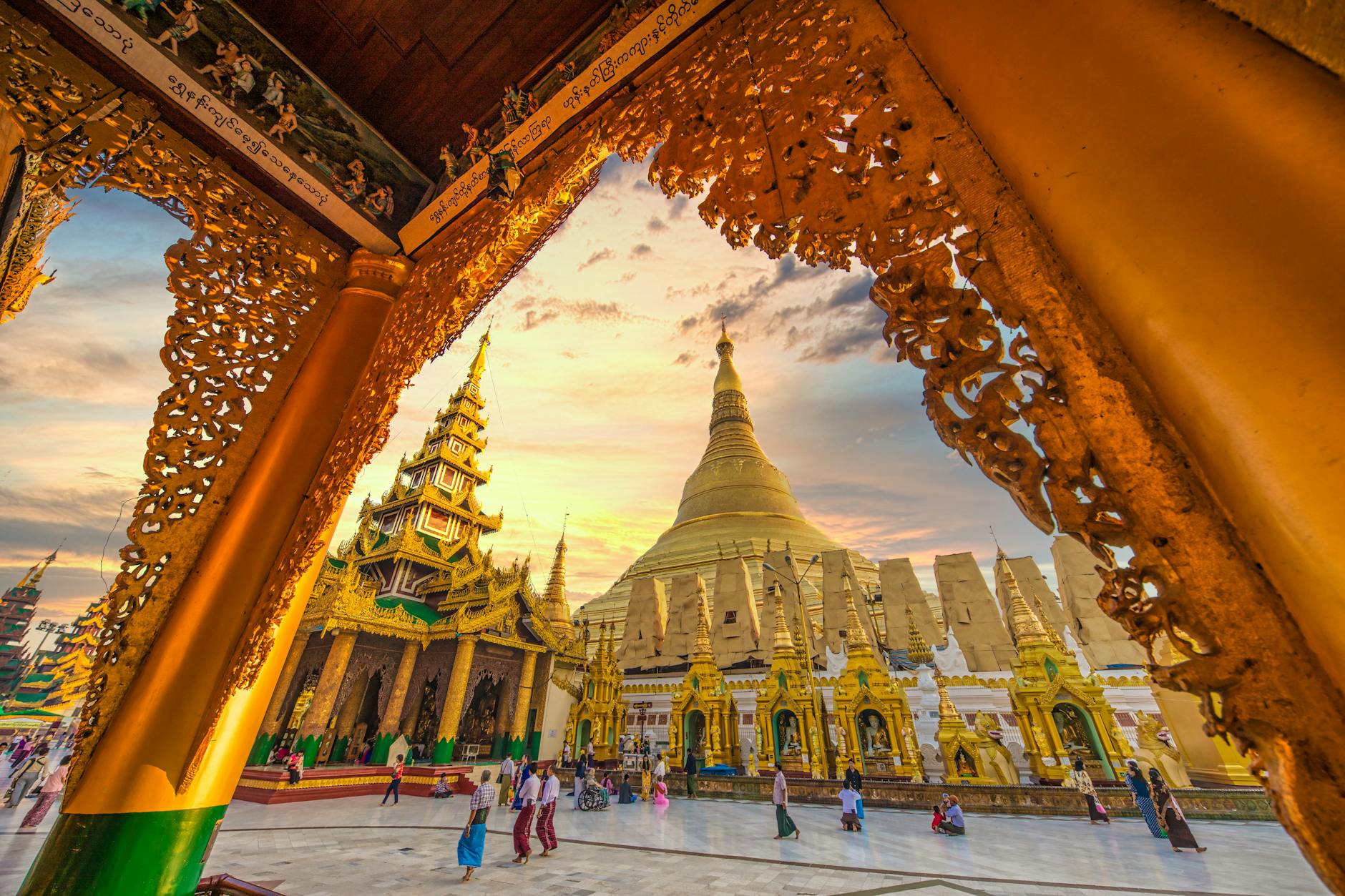
The Shwedagon Pagoda, located in the heart of Yangon, Myanmar, is one of the most revered religious structures in the world and a quintessential symbol of the nation’s cultural heritage. With a history spanning over 2,500 years, Shwedagon Pagoda history is not just a magnificent architectural wonder but also a site steeped in legends, faith, and communal identity. Believed to house relics of the Buddha himself, this golden stupa has attracted millions of pilgrims and visitors alike, drawn to its spiritual significance and stunning beauty. In this article, we will explore the legends that give life to the pagoda, the historical events that have shaped its existence, the architectural marvels it boasts, its deep cultural and religious implications in Myanmar, and the contemporary challenges it faces in terms of preservation and tourism. Through this exploration, we gain an understanding of how the Shwedagon Pagoda remains a testament to the enduring faith of the Burmese people.
The Legend of the Shwedagon Pagoda
The story of Shwedagon Pagoda history is rich with legends that have emerged over centuries, intertwining the spiritual and the historical in fascinating ways. According to popular belief, the origins of the Shwedagon Pagoda can be traced back to a time when Gautama Buddha, the founder of Buddhism, was still alive. The most widely recounted legend tells of two merchant brothers named Tapussa and Bhallika who traveled to meet the Buddha shortly after his enlightenment.
During their encounter, they were so profoundly moved by his teachings that they requested a relic from him to take back to their homeland. Buddha bestowed upon them a strand of his hair, which the brothers carried back to Burma. Upon their return, they shared this sacred relic with the local king, who recognized its significance and sought to build a monument worthy of housing it. This story marks the beginning of the Shwedagon Pagoda, establishing it as an essential pilgrimage site for Buddhists.
As the centuries passed, the pagoda underwent various renovations and expansions, becoming a focal point for devotion and collective identity. The legends of the pagoda evolved, with different cultures contributing their narratives, creating a rich tapestry of stories that reflect the spiritual beliefs of the people. Many legends feature celestial beings and spirits, suggesting that the pagoda is a sacred space where heaven and earth converge.
Perhaps one of the most important legends concerns the prophecy that a great golden stupa would arise in the land of the Burmese. It is said that a mysterious being named “Maung” prophesied the construction of a grand pagoda that would rise above all others. This assertion only adds to the allure and reverence surrounding the Shwedagon. Pilgrims and visitors often describe encountering a palpable sense of peace and spirituality while at the pagoda, where the ambiance encourages deep reflection.
The legends also encompass the idea of merit and karma. It is said that making a pilgrimage to the Shwedagon Pagoda and participating in rituals can lead to significant spiritual rewards, not just in this life but in future reincarnations as well. This belief fuels the devotion and dedication exhibited by those who visit, as they aspire to accumulate merit to better their spiritual journey.
Overall, the multifaceted legends of the Shwedagon Pagoda instill it with an aura of mystique and sanctity. These stories, passed down through generations, encapsulate the essence of Buddhism, teaching values of devotion, compassion, and community. Each legend enhances the spiritual experience for visitors, making their journey to this magnificent site not just a physical pilgrimage but a deeply personal exploration of faith.
The Historical Significance of Shwedagon Pagoda
The significance of Shwedagon Pagoda history extends beyond its origins and legends. It is a site that has witnessed the evolution of political, cultural, and religious landscapes in Myanmar over centuries. Believed to have been built around the 6th century BCE, the pagoda has served as a lifeline for the Buddhist faith, particularly during pivotal moments in the country’s history.
Throughout its existence, the Shwedagon Pagoda has endured various trials, including invasions, colonial rule, and internal strife. During the wars and conflicts that recurred in the region, many sought refuge within its walls. For the people of Myanmar, the pagoda became a symbol of hope, resilience, and unity—a physical manifestation of their aspirations for peace and freedom. It played a dynamic role not only in personal spiritual journeys but also as a center of collective identity.
In modern times, Shwedagon Pagoda history reveals its role as a bastion for political expression during critical movements for independence and social justice. It was used as a rallying point during the British colonial era when many nationalists sought to consolidate their efforts in carving out a free Myanmar. Throughout the 20th century, the pagoda transformed into an emblem of resistance against oppressive regimes, where protesters gathered to voice their demands and aspirations for change.
The period of military rule in Myanmar further complicated the relationship between politics and spirituality within the confines of the Shwedagon Pagoda. Protesters against the regime often sought refuge in the sacred space, hoping the symbolism of the pagoda would lend them protection during their demonstrations. Events such as the Saffron Revolution in 2007 showcased the role of monks and clergy in activism, with the Shwedagon serving as a focal point for these movements.
The pagoda also functioned as a venue for royal patronage, where rulers and leaders contributed to its splendor over the centuries. Kings of successive dynasties sponsored renovations, additions, and durability practices, thereby progressively enhancing the pagoda’s architectural elegance. This continuous investment in the structure has made it an enduring symbol of the nation’s identity, linking the Myanmar people to their historical past.
Scholars and historians also recognize the Shwedagon Pagoda as a repository of cultural heritage, showcasing the development of religious art in Myanmar. The structures, sculptures, and narratives that adorn the site capture the extraordinary craftsmanship that dates back centuries. These historical aspects highlight the significance of the pagoda not merely as a monument but as an integral part of the nation’s historical narrative.
As a result, the historical significance of the Shwedagon Pagoda is multi-layered, weaving together strands of spirituality, nationalism, and social activism. It represents the evolution of the Burmese identity, encapsulating the challenges and triumphs faced by its people throughout history. Today, the pagoda continues to inspire generations, acting as a touchstone for both past struggles and future aspirations for peace and stability in Myanmar.
Architectural Features of Shwedagon Pagoda
The Shwedagon Pagoda is an architectural marvel, emblematic of Myanmar’s rich cultural heritage and the artistry of its builders throughout history. Towering at over 100 meters, the pagoda’s iconic golden stupa is a predominant feature of Yangon’s skyline, serving as a spiritual and visual anchor that draws both local devotees and international tourists.
At the core of its architecture is the stupa itself, a bell-shaped structure that symbolizes the path to enlightenment in Buddhism. The stupa is coated in layers of gold leaf, which shimmer brilliantly as it catches the light, creating a breathtaking spectacle that reflects the sun throughout the day. The golden umbrella, known as the “hti,” crowns the stupa, gilded with a multitude of precious gems, including diamonds, further enhancing its opulence. The design is paramount for conveying Buddhist cosmology and the pursuit of Nirvana.
The base of the stupa is octagonal, embodying a sense of stability and balance. As visitors circumnavigate the pagoda, they encounter various smaller stupas, shrines, and meditation areas that are scattered across the grounds. These supplementary structures not only provide space for worship but also feature exquisite carvings and intricate tile work that depict narratives from Buddhist traditions. Artists utilized a harmonious blend of local artistic techniques and influences from neighboring cultures to create a distinctive architectural language that characterizes the pagoda complex.

An essential aspect of the Shwedagon Pagoda’s architecture is the incorporation of symbolism in its design. Many elements are imbued with spiritual significance. For instance, the four cardinal points of the pagoda represent the transition from ignorance to enlightenment. The gargoyle-like lions on guard are believed to protect the pagoda and its sacred relics, while the presence of nagas (mythical serpentine beings) signifies the connection between the earthly and heavenly realms.
The extensive network of terraces surrounding the pagoda further adds to its grandeur. Each level offers stunning views of the main stupa, allowing for reflection and contemplation as one ascends the steps. Footpaths are lined with numerous statues and sculptures depicting key figures in Buddhism, inviting visitors to connect with the narratives that resonate deeply within the spiritual fabric of Myanmar.
The architectural significance of the Shwedagon Pagoda extends to its harmonious alignment with natural elements, particularly the sun. The golden hue of the stupa is designed to catch the first rays of sunlight at dawn while appearing to radiate warmth and light throughout the day. This connection with nature reinforces the spiritual significance of the site, paving a path for contemplative experiences.
Over the years, renovations and restorations have been carefully executed to preserve the authenticity and grandeur of the pagoda. The craftsmanship reflects traditional construction methods, showcasing the skills of local artisans while respecting the sacredness of the site. These restoration efforts serve not only to safeguard the physical structure but also to uphold the cultural and historical narratives entwined with the pagoda.
In modern times, the architectural features of the Shwedagon Pagoda inspire awe and admiration. Visitors frequently gather to witness the evening lighting ceremonies, where the stupa is illuminated, casting ethereal reflections that captivate the heart and soul. This captivating blend of spirituality, artistry, and reverence allows visitors to connect deeply with the rich history of the pagoda, making it an indelible landmark in the landscapes of faith and culture.
In essence, the architectural features of the Shwedagon Pagoda represent a confluence of spiritual significance and artistic achievement. As a dynamic element of Myanmar’s cultural narrative, the pagoda stands tall as a testament to the enduring legacy of faith and the artistic craftsmanship that has flourished across generations. Visitors leave with a profound appreciation for the rich architectural tapestry woven into the very fabric of this sacred space.
Cultural and Religious Importance in Myanmar
The Shwedagon Pagoda holds immense cultural and religious significance in Myanmar, serving as a cornerstone of spiritual life and national identity. For millions of Burmese Buddhists, the pagoda is much more than a physical structure; it represents a sacred space where faith, community, and identity converge.
From its inception, the pagoda has functioned as a vital center for Buddhist worship and community gatherings. The daily rituals and activities conducted within its grounds create a vibrant atmosphere filled with devotion, as worshippers engage in meditation, prayer, and offerings. The pagoda hosts numerous ceremonies throughout the year, including notable festivals like the Thingyan Water Festival and the Full Moon celebrations. Such occasions draw thousands of pilgrims who come to seek blessings, reaffirm their spiritual commitment, and celebrate their connection to the divine.
The Shwedagon Pagoda also has a profound role in shaping the collective memory of the Burmese people. It stands as a symbol of resilience through periods of difficulty, including colonialism and conflict. In moments of political strife, the pagoda has served as a gathering place for peaceful protests and acts of social justice. Protesters often find solace and inspiration within its walls, reinforcing the relationship between spirituality, nationalism, and civic engagement.
A critical aspect of the cultural importance of the Shwedagon Pagoda is its role as a space for communal identity and dialogue. The pagoda transcends ethnic boundaries, uniting people from diverse backgrounds who share a common faith. This sense of unity contributes to social cohesion, fostering an inclusive environment where differences are celebrated. For many locals, participating in rituals at the pagoda reinforces their sense of belonging to a larger spiritual family, allowing them to connect with their heritage.
In addition to its role in worship, the Shwedagon Pagoda is also a source of artistic inspiration. The intricate craftsmanship, murals, and sculptures within the pagoda reflect the artistic traditions of Myanmar. Local artisans draw from the pagoda’s teachings to create works of art that pay homage to its significance. This artistic representation not only preserves the cultural narrative but also allows contemporary artists to connect with their roots.
Furthermore, the Shwedagon Pagoda serves as an educational platform, where teachings of Buddhism are imparted to new generations. Monks and spiritual leaders engage the community in discussions about values, ethics, and mindfulness, instilling a sense of moral responsibility and spiritual awareness. Such teachings promote values of compassion, kindness, and respect—qualities that resonate throughout Burmese culture.
The Shwedagon Pagoda also embodies the idea of merit-making, which is central to Buddhist practice. Devotees believe that participating in rituals and contributing to the upkeep of the pagoda accrues merit that has positive implications in this life and future lives. This belief strengthens communal bonds as individuals contribute to the maintenance and preservation of their spiritual heritage.
The cultural and religious importance of the Shwedagon Pagoda is deeply ingrained in the life of Myanmar’s people. As a center of spirituality, community engagement, and cultural expression, it resonates with both sacred and worldly meanings. The pagoda stands not only as a reminder of the nation’s rich heritage but also as a beacon of hope and unity for those who seek solace and inspiration.
Preservation and Tourism: Future Challenges
As a remarkable symbol of Myanmar’s cultural heritage, the Shwedagon Pagoda faces a unique set of challenges in terms of preservation amid increasing tourism and urbanization. With its growing popularity among both local and international visitors, the need to ensure the site’s integrity while accommodating the growing number of pilgrims and tourists is of utmost importance.
One of the key challenges is managing the physical wear and tear that comes with high foot traffic. The constant flow of visitors can lead to the erosion of the surrounding grounds and the intricate craftsmanship integrated into the pagoda’s structures. Steps must be taken to implement sustainable practices that limit damage while ensuring that visitors can fully experience the sacredness of the site.
Furthermore, the commercialization of tourism poses a risk of overshadowing the spiritual significance of the Shwedagon Pagoda. While tourism can provide much-needed economic support to local communities, it can also lead to the commodification of rituals and practices. The presence of market stalls and vendors can detract from the ambiance of devotion that the pagoda aims to portray. Striking a balance between promoting local businesses and protecting the sanctity of the spiritual environment is essential.
Efforts to preserve the cultural and historical integrity of the Shwedagon Pagoda involve collaborating with experts in cultural heritage conservation. Regular monitoring and assessment of the structural integrity of the pagoda are vital in preventing potential degradation due to environmental factors such as pollution and climate change. Engaging skilled artisans and craftspeople in restoration efforts ensures that traditional methods and materials are utilized, preserving the authenticity of the site.
Moreover, educational programs that promote awareness of the importance of the Shwedagon as a spiritual and cultural symbol can empower both locals and visitors. Initiatives that educate the public about respectful behavior and the significance of the rituals observed at the pagoda can cultivate a sense of shared responsibility for its preservation.
Local communities play a crucial role in safeguarding the Shwedagon Pagoda. Involving residents in decisions about tourism management and preservation efforts fosters a collective sense of ownership and pride in their heritage. These community-based approaches can strengthen the bond between locals and visitors, creating a more harmonious interaction at the site.
As Myanmar continues to navigate socio-political complexities, the Shwedagon Pagoda also faces challenges related to national identity and cultural preservation in the face of modernization. Balancing the push for economic development and the need to maintain cultural heritage has become increasingly important. The pagoda stands as a poignant symbol of national identity, and its preservation is vital to fostering a sense of community and continuity for the people.
The Shwedagon Pagoda faces various challenges in the realms of preservation and tourism as it maintains its status as a deeply revered cultural landmark. By employing sustainable practices, engaging local communities, and educating visitors about the significance of the pagoda, we can work toward safeguarding it for future generations. The continued reverence for and investment in the Shwedagon Pagoda ensures that it remains not only an architectural wonder but a thriving spiritual center that resonates with the pulse of Myanmar’s cultural heritage.
Сonclusion
The Shwedagon Pagoda stands as a monumental testament to the rich Shwedagon Pagoda history, spirituality, and cultural identity of Myanmar. Through its legends, historical significance, architectural features, and contemporary challenges, the pagoda perpetuates the essence of faith and community in the lives of countless people. As custodians of this sacred space, it is our shared responsibility to honor and preserve the Shwedagon Pagoda, allowing it to continue inspiring future generations and serving as a sanctuary for reflection, devotion, and unity. This iconic monument not only connects the past with the present but also symbolizes resilience amid change. By supporting preservation efforts and fostering awareness of its cultural importance, we ensure that the Shwedagon Pagoda remains a vibrant center of worship and heritage. In doing so, we celebrate the enduring spirit of Myanmar and the universal human quest for meaning and transcendence.
Shwedagon Pagoda: 2,500 Years of Myanmar’s Buddhist Legacy |Documentary Video

Leave a Reply