
Introduction
Berlin, the capital of Germany, is a city rich in history and cultural significance. From its humble medieval beginnings as a trading settlement to its rise as the capital of Prussia, Berlin has been at the center of many pivotal moments in European history. The city’s 20th-century narrative is particularly dramatic, encompassing two world wars, the rise and fall of the Berlin Wall, and its eventual reunification. Today, Berlin stands as a vibrant metropolis known for its cultural diversity, innovative spirit, and historical landmarks. This article explores the fascinating history of Berlin through five key chapters, tracing its evolution from its origins to its status as a modern global city.
Early Beginnings: Medieval Foundations of Berlin
Berlin’s history begins in the 12th century with the establishment of two small settlements, Berlin and Cölln, located on opposite banks of the Spree River. These settlements were first mentioned in historical records in 1237, a date often regarded as Berlin’s founding year. Situated at the crossroads of important trade routes, the area quickly developed into a significant center for commerce and craftsmanship.
In the 13th and 14th centuries, Berlin and Cölln grew in prominence as members of the Hanseatic League, a powerful economic alliance of trading cities in Northern Europe. The league facilitated economic growth and cultural exchange, helping Berlin establish its reputation as a bustling trading hub. The settlements merged in the early 15th century, forming a single municipality that laid the groundwork for the Berlin we know today.
The rise of the Margraviate of Brandenburg in the 15th century further elevated Berlin’s status. The city became the residence of the Hohenzollern family, who would later play a crucial role in shaping German and European history. During this period, Berlin began to expand its infrastructure, including the construction of defensive walls and public buildings, signaling its emergence as a regional power.
Berlin’s medieval period was also marked by the growth of its cultural and religious institutions. The establishment of churches, guilds, and markets fostered a sense of community among its residents. By the late Middle Ages, Berlin had become an essential regional hub, attracting merchants and artisans from across Europe. The influence of trade routes connected the city to the Baltic Sea, further enhancing its economic and political significance.
Additionally, the city witnessed early forms of self-governance as town councils were established to manage affairs. These councils laid the foundation for a tradition of civic involvement that would persist through Berlin’s history. The medieval era was also a time of challenges, including plagues and conflicts, which tested the resilience of Berliners and shaped the city’s character.
The Rise of Prussian Power and Berlin’s Role
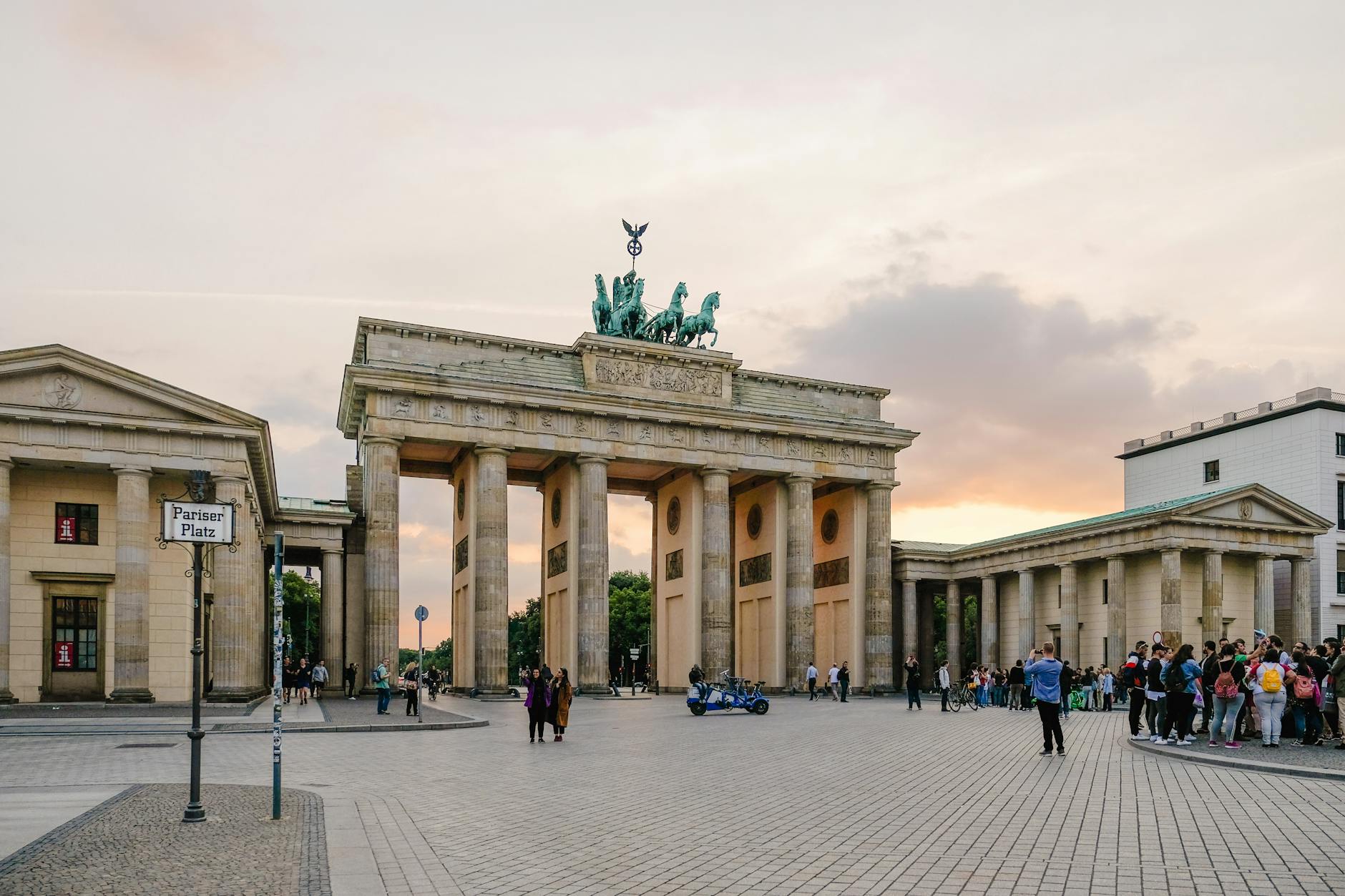
The 17th and 18th centuries marked a transformative era for Berlin as it became the capital of the Kingdom of Prussia. Under the rule of the Hohenzollern monarchs, particularly Frederick the Great, Berlin evolved into a cultural, intellectual, and political epicenter. This period saw the construction of iconic landmarks such as the Brandenburg Gate and the Charlottenburg Palace, which symbolized the city’s growing prominence.
Frederick the Great’s vision for Berlin as a cultural capital led to significant investments in the arts and sciences. The city became a hub for the Enlightenment, attracting leading thinkers, artists, and scientists. Figures such as philosopher Immanuel Kant and composer Carl Philipp Emanuel Bach contributed to Berlin’s cultural renaissance. The founding of institutions like the Berlin Academy of Sciences and the expansion of the University of Berlin highlighted the city’s commitment to education and innovation.
Prussia’s military and economic strength during this time positioned Berlin as a key player on the European stage. Industrial advancements began to take root, with the introduction of textile manufacturing and early mechanical innovations. These developments were complemented by urban planning efforts that expanded Berlin’s infrastructure. The creation of parks, avenues, and public spaces reflected the growing importance of civic pride and functionality in urban design.
Berlin’s industrialization in the 19th century further cemented its status as a metropolis. The development of railways, factories, and urban infrastructure transformed the city into an economic powerhouse. Berlin’s population grew rapidly, and it became a melting pot of cultures and ideas. The city’s architectural landscape also evolved, with the construction of grand boulevards, theaters, and museums reflecting its newfound prosperity. Innovations in public transport, such as horse-drawn trams, made the city more accessible and interconnected.
As the capital of a unified Germany in 1871, Berlin entered a new chapter of growth and influence. It became a center for political power, hosting the German Reichstag and numerous diplomatic missions. The city’s dynamic environment attracted intellectuals and innovators, solidifying its reputation as a leading European capital. The cultural institutions established during this time, including opera houses and art galleries, reinforced Berlin’s status as a hub of creativity and intellectual activity.
Berlin in the 20th Century: Two World Wars and Division
The 20th century brought profound challenges and upheavals to Berlin. During World War I, the city faced economic hardship and social unrest, which culminated in the abdication of Kaiser Wilhelm II and the establishment of the Weimar Republic in 1919. Despite political instability, Berlin in the 1920s became a cultural hotspot known for its vibrant arts scene, nightlife, and progressive attitudes. The era, often called the “Golden Twenties,†saw the flourishing of cabaret, cinema, and avant-garde art movements that defined Berlin’s unique character.
The rise of the Nazi Party in 1933 marked a dark chapter in Berlin’s history. As the capital of Nazi Germany, the city became the epicenter of Adolf Hitler’s regime. Propaganda was heavily centralized in Berlin, with institutions such as the Reich Ministry of Public Enlightenment and Propaganda shaping public opinion. World War II brought widespread destruction to Berlin, with Allied bombings reducing much of the city to rubble. The war ended in 1945 with Berlin occupied by Allied forces and subsequently divided into four sectors controlled by the United States, the United Kingdom, the Soviet Union, and France.
The Cold War era saw the division of Berlin into East and West, culminating in the construction of the Berlin Wall in 1961. The wall became a symbol of the ideological divide between the communist Eastern Bloc and the democratic West. Life in East Berlin was marked by strict government control and limited freedoms, while West Berlin flourished as a beacon of democracy and culture. The wall not only divided families and friends but also became a focal point of international tension. Despite the challenges, Berliners on both sides of the wall demonstrated resilience and a longing for unity.
Cultural life in West Berlin thrived, with the city hosting international film festivals and becoming a haven for artists and intellectuals. Meanwhile, in East Berlin, the Stasi secret police maintained tight control over daily life. Efforts to escape to the West, often at great personal risk, underscored the deep desire for freedom and reunification. By the late 1980s, political changes in the Soviet Union and growing protests in East Germany set the stage for the wall’s fall.

The Fall of the Wall and Reunification
The fall of the Berlin Wall on November 9, 1989, was a watershed moment in modern history. It signaled the end of the Cold War and the beginning of Germany’s reunification. The reunified Berlin became the capital of Germany once again in 1991, symbolizing a new era of unity and progress.
The years following reunification were marked by extensive efforts to rebuild and reintegrate the city. Landmark projects included the reconstruction of historical sites such as the Reichstag, now home to the German Bundestag, and the development of modern infrastructure. Berlin’s transformation into a global city was further accelerated by its cultural revival and the influx of creative talent from around the world.
Berlin’s reintegration into the global community was exemplified by its hosting of international events and summits. The city embraced its role as a bridge between Eastern and Western Europe, fostering dialogue and collaboration. The blending of old and new became a hallmark of Berlin’s identity, as historic landmarks stood alongside cutting-edge architecture and vibrant urban spaces. Efforts to heal the scars of division included initiatives to memorialize the history of the Berlin Wall, such as the Berlin Wall Memorial and the East Side Gallery.
Reunification also brought challenges, including economic disparities between the former East and West. The process of integrating two distinct systems required significant investments in infrastructure, education, and social programs. Over time, Berlin emerged as a model of resilience, demonstrating how a divided city could overcome its past and forge a shared future.
Modern Berlin: A Cultural and Political Hub
Today, Berlin is a city that celebrates its history while embracing innovation and modernity. Its cultural landscape is unparalleled, boasting over 170 museums, including the renowned Museum Island, a UNESCO World Heritage Site. The Pergamon Museum, with its collection of ancient artifacts, and the Neues Museum, home to the iconic bust of Nefertiti, are just two examples of the city’s rich cultural offerings.
Berlin’s arts scene is also vibrant, with countless galleries, theaters, and music venues. The Berlinale, or Berlin International Film Festival, is one of the most prestigious film events in the world, attracting filmmakers and audiences from across the globe. Street art thrives in areas like Kreuzberg and Friedrichshain, where graffiti-covered buildings and murals tell the story of Berlin’s countercultural movements.
The city’s political significance is reflected in landmarks like the Reichstag building, where the German parliament convenes. Its glass dome, designed by architect Norman Foster, symbolizes transparency and democracy. Berlin also hosts embassies, international organizations, and think tanks, solidifying its role as a global diplomatic hub.
Berlin’s economic renaissance is fueled by its reputation as a center for startups and technology. The city is often referred to as the “Silicon Allee,” attracting entrepreneurs, investors, and innovators from around the world. Co-working spaces, accelerators, and tech conferences like Tech Open Air make Berlin a magnet for creative talent and cutting-edge ideas.
Education and research are also pillars of modern Berlin. Institutions like Humboldt University and the Technical University of Berlin are leaders in academics and innovation. The city’s emphasis on sustainability is evident in its green initiatives, from extensive cycling paths to urban gardening projects.
Berlin’s multicultural character is one of its most defining features. With residents from over 190 countries, the city embraces diversity through festivals, cuisine, and cultural events. Areas like Neukölln and Wedding showcase a fusion of traditions, where Turkish kebab shops exist alongside Vietnamese eateries and Ethiopian coffee houses.
Despite its modern successes, Berlin remains deeply connected to its history. Memorials such as the Holocaust Memorial, the Topography of Terror, and the Stolpersteine (stumbling stones) scattered across the city ensure that the past is not forgotten. These sites serve as powerful reminders of the city’s commitment to remembering its complex history while striving for a future defined by unity and progress.
Conclusion
Berlin’s story is one of resilience, transformation, and innovation. From its medieval roots to its rise as the capital of Prussia, from the devastation of two world wars to the division and reunification of the 20th century, the city has consistently reinvented itself. Today, Berlin stands as a global symbol of creativity, cultural diversity, and political significance.
The city’s ability to embrace change while preserving its history makes it a unique and inspiring destination. Visitors are drawn to its iconic landmarks, thriving arts scene, and dynamic neighborhoods, while residents continue to shape its future through innovation and inclusion. Berlin is more than just a city; it is a testament to the enduring spirit of its people and a beacon of hope for what can be achieved through resilience and unity.
Whether walking along the remnants of the Berlin Wall, exploring the vibrant streets of Kreuzberg, or standing beneath the Brandenburg Gate, one can feel the echoes of history intertwined with the pulse of modern life. Berlin’s journey is far from over, and its legacy continues to inspire the world.





[…] story of Shwedagon Pagoda history is rich with legends that have emerged over centuries, intertwining the spiritual and the historical […]
[…] Tennis Star Navigates Court Challenges in Berlin […]
[…] Brandenburg Gate, an iconic symbol of Berlin, boasts a rich and multifaceted history that reflects the city’s tumultuous past and its […]