
Introduction
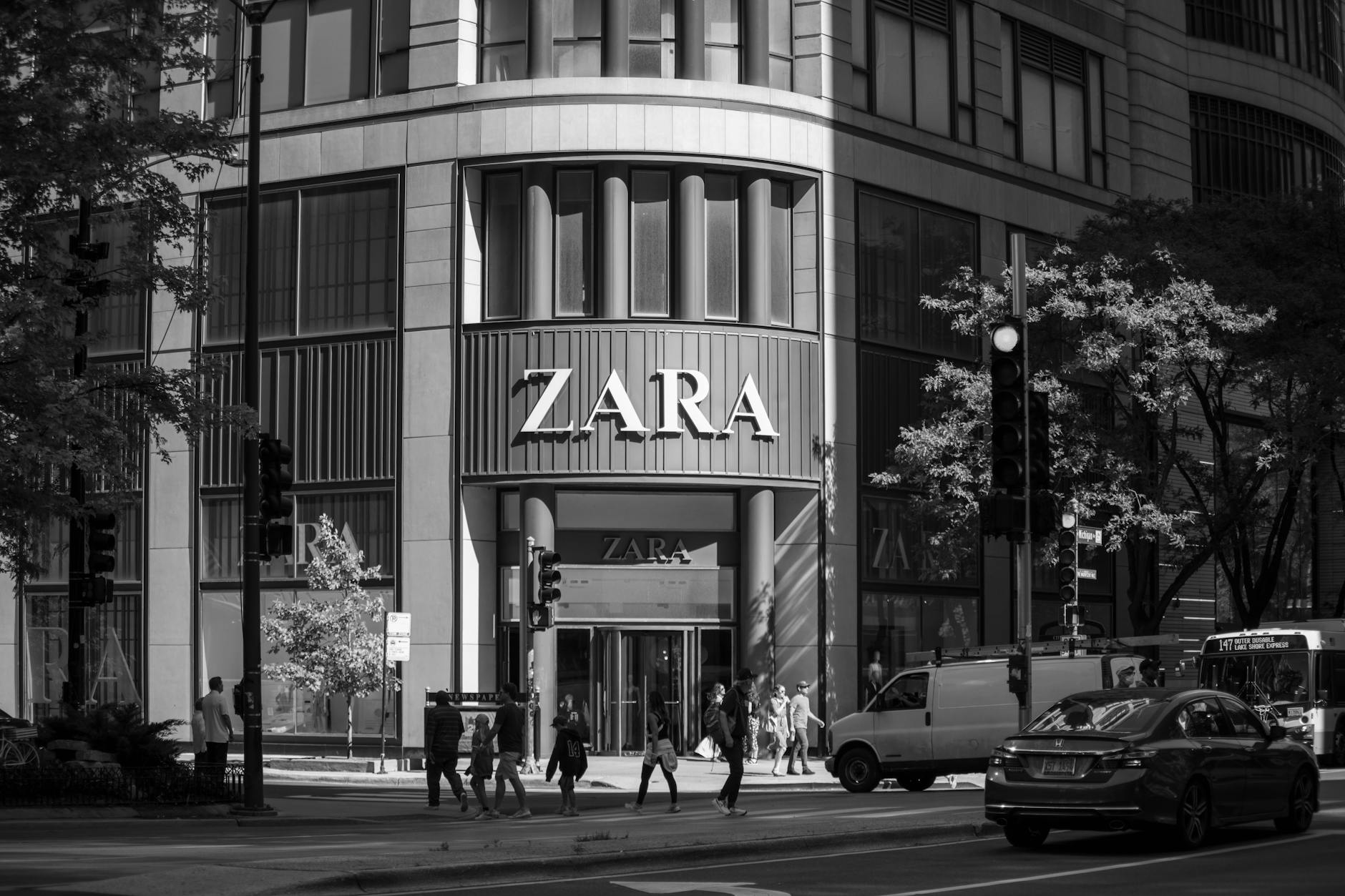
Zara, a global fashion giant, has revolutionized the retail industry with its fast fashion model and efficient supply chain. The history of Zara started in 1975 in Spain by Amancio Ortega and RosalÃa Mera, and the company began as a modest store in the city of A Coruña, offering affordable and stylish clothing. Over the years, Zara transformed into one of the world’s leading fashion retailers, with thousands of stores across the globe. Its success is largely attributed to its ability to quickly respond to market trends, providing consumers with the latest styles at competitive prices. Zara’s innovative approach to supply chain management, coupled with a keen understanding of consumer preferences, has allowed it to stay ahead of its competitors in an ever-changing fashion landscape. Today, Zara is not only a symbol of the fast fashion industry but also a major player in shaping the future of global retail.
The origin of Zara’s story
The story of Zara begins in the mid-1970s in the Spanish city of A Coruña, where Amancio Ortega, a skilled garment worker, and his then-wife RosalÃa Mera opened the first Zara store in 1975. Initially, the store sold inexpensive, ready-to-wear clothing and home goods. Ortega had no formal education in business or fashion but had learned the ins and outs of the garment industry working for a textile company. His goal was to create stylish yet affordable clothing for the Spanish market. Zara’s first store was relatively small and focused on offering a range of products from nightwear to casual wear. However, Ortega quickly realized the potential for growth by focusing exclusively on the fashion industry.
One of the early breakthroughs for Zara was the realization that fashion could be profitable if the company could react to trends faster than its competitors. Unlike traditional fashion brands, which followed a seasonal schedule for designing and manufacturing collections, Zara implemented a strategy that focused on speed and flexibility. This approach allowed the brand to produce clothing in weeks rather than months, responding almost immediately to the latest fashion trends.
The success of the first Zara store in A Coruña allowed Ortega and Mera to expand quickly throughout Spain. By 1980, the company had already opened stores in major cities like Madrid and Barcelona. A key aspect of Zara’s early expansion was Ortega’s decision to avoid traditional advertising campaigns. Instead, the company focused on word-of-mouth marketing, strategic store placements, and the in-store experience. This approach helped Zara to save on advertising costs while still attracting a loyal customer base.
During the early years, Ortega took a highly hands-on approach to every aspect of the business. From overseeing store layouts to selecting fabric, he ensured that Zara’s offerings were consistently of high quality, which set the brand apart from its competitors. Zara’s initial strategy was to design, manufacture, and distribute new collections to stores twice a week, a frequency that was unparalleled in the industry at the time. This model created a sense of urgency for customers, as new items were constantly introduced and sold out quickly.
Zara’s ability to control its supply chain played a crucial role in its rapid success. Unlike many traditional fashion brands that outsourced production to countries with lower labor costs, Zara kept a significant portion of its manufacturing in Spain and nearby countries, enabling the company to have much greater control over production times and quality. This approach also allowed Zara to quickly respond to shifts in demand, ensuring that its stores always had fresh, in-demand items on display.
By the late 1980s, Zara had established itself as a leader in affordable fashion in Spain. However, it was only the beginning of the brand’s trajectory. Ortega’s innovative business model, which emphasized quick turnaround times and a deep understanding of consumer preferences, would lay the foundation for Zara’s future success on a global scale. The brand’s unique approach to fashion where speed, affordability, and quality were paramount’s would soon help it grow beyond Spain and revolutionize the entire fashion retail industry.
Zara Expansion into World Market
As Zara’s success grew in Spain, Amancio Ortega realized that the potential for expansion was vast. In the early 1990s, the company set its sights on international markets, with the goal of establishing Zara as a global fashion brand. The first step in Zara’s international expansion took place in 1988, when the company opened its first store outside of Spain, in Oporto, Portugal. This initial expansion into Portugal proved successful, providing Zara with a solid base from which to venture further into other European markets.
In 1990, Zara opened its flagship store in New York, marking its first foray into the American market. The decision to open in New York was a bold one, as the U.S. fashion scene was already home to established brands. However, Zara’s ability to offer the latest fashion at affordable prices, along with its reputation for quick turnover in styles, quickly resonated with American consumers. The New York store helped establish Zara’s presence in the global fashion world, and its success encouraged the company to expand even further into the United States.
Throughout the 1990s and early 2000s, Zara continued to expand its footprint worldwide. By the end of the 1990s, the brand had stores in cities across Europe, the Americas, and Asia. Zara’s strategy for international expansion was to target major metropolitan areas and open stores in prime locations. The company’s focus on high-traffic urban centers ensured that Zara’s stores would attract large numbers of potential customers, further establishing the brand’s reputation as a leader in global fashion.
The key to Zara’s successful international expansion was its ability to adapt to local markets while maintaining a consistent brand identity. Zara was able to introduce new collections in each country by sourcing local trends and incorporating them into its offerings. The company also took care to tailor store designs to local preferences while maintaining its core principles of affordability and style. This flexibility allowed Zara to resonate with diverse cultures and expand rapidly across different continents.
By the early 2000s, Zara had grown to become one of the largest fashion retailers in the world, with a presence in over 30 countries. The company continued to open new stores across Europe, Asia, and the Americas. Zara’s retail success was driven by its ability to respond quickly to changing fashion trends, while also maintaining its commitment to quality and affordability. As Zara continued to grow, it expanded its product offerings beyond women’s clothing to include men’s and children’s apparel, further solidifying its position in the global fashion market.
One of the driving forces behind Zara’s expansion was its integrated supply chain, which enabled the company to quickly manufacture and distribute new collections to stores worldwide. The ability to monitor sales in real-time and quickly adjust production based on demand allowed Zara to maintain a competitive edge in international markets. Unlike many other fashion brands, which relied on long lead times for manufacturing and delivery, Zara’s short production cycles ensured that its stores were always stocked with the latest trends, making it a preferred shopping destination for fashion-conscious consumers.
As Zara continued to expand internationally, the brand’s commitment to innovation and speed allowed it to stay ahead of competitors in the fast fashion industry. Zara’s rapid growth during the 1990s and 2000s established it as a global retail powerhouse and set the stage for its ongoing success in the years to come.
How Zara created innovation in Fashion Retail and changed fast fashion business model
Zara’s success is largely attributed to its innovative approach to fashion retail, which has been a driving force behind its rise as a global brand. The company’s ability to transform the traditional fashion model by implementing a fast fashion strategy has set it apart from competitors and revolutionized the entire retail industry. The fast fashion model, which focuses on producing and distributing new styles at an accelerated pace, allows Zara to capture the latest trends and respond to consumer demands almost in real-time.
One of the key elements of Zara’s fast fashion model is its efficient supply chain. Unlike many traditional fashion brands, which operate on a seasonal model and place large orders months in advance, Zara designs, manufactures, and distributes new collections within weeks. This quick turnaround time is made possible by Zara’s highly integrated supply chain, which allows the company to move from concept to product in record time. While competitors often rely on outsourcing production to overseas factories, Zara maintains a significant portion of its manufacturing in Spain and nearby countries. This geographic proximity allows Zara to quickly produce clothing based on current fashion trends, ensuring that new products are always available in stores.
Another key component of Zara’s fast fashion success is its ability to gather and process consumer data. The company tracks sales patterns, customer preferences, and feedback from its stores on a daily basis. This data is then used to adjust inventory levels, make design adjustments, and create new collections. Zara is known for its “test and repeat†method, which involves introducing small quantities of new styles and monitoring how they perform in stores. If a particular item proves popular, Zara quickly produces more of it and ships it to its stores. This ability to react quickly to consumer demand ensures that Zara’s products remain fresh and desirable, while minimizing the risk of excess inventory.
Zara’s commitment to speed and responsiveness has allowed the brand to stay ahead of trends and maintain its reputation as a fashion leader. The company is known for its ability to bring runway-inspired designs to the masses in a matter of weeks, making high fashion accessible to a wider audience. Zara’s “just in time’s production system allows the company to minimize the risk of overproduction and reduce waste, a problem that has plagued many other fast fashion brands. This ability to produce limited quantities of each style also creates a sense of urgency among consumers, encouraging them to purchase items before they sell out.
In addition to its efficient supply chain, Zara’s in-store experience is also designed to support its fast fashion model. The brand’s stores are known for their sleek, minimalist design, with new merchandise arriving regularly. Store layouts are strategically planned to highlight new collections, and merchandise is often displayed in a way that encourages customers to explore and discover the latest trends. Zara’s frequent store updates and product rotations create a sense of excitement and anticipation, keeping customers coming back for more.
Zara’s fast fashion model has allowed the company to stay at the forefront of the retail industry, with a competitive advantage that is difficult for other brands to replicate. By constantly innovating its supply chain, product offerings, and store experience, Zara has become the quintessential fast fashion retailer and set the standard for others to follow.

Zara’s sustainability initiatives and future
As one of the largest fast fashion brands in the world, Zara has faced growing pressure in recent years to address the environmental and social impacts of its business model. The fashion industry is widely recognized as one of the most polluting industries, and Zara, as a major player in the fast fashion sector, has been at the center of the sustainability conversation. In response to increasing concerns about environmental degradation, waste, and labor conditions, Zara has implemented a range of sustainability initiatives aimed at reducing its ecological footprint and improving its practices.
One of the key steps in Zara’s sustainability journey has been its commitment to using more sustainable materials in its collections. The company has pledged to make its entire clothing range from sustainable fabrics by 2025. Zara has already begun incorporating organic cotton, recycled polyester, and other eco-friendly materials into its garments, with the goal of reducing the environmental impact of its production processes. Additionally, the company has committed to eliminating hazardous chemicals from its supply chain and increasing the use of sustainable packaging.
Zara has also taken steps to improve its manufacturing processes. The company has invested in energy-efficient technologies and aims to reduce its carbon emissions. Its headquarters in Arteijo, Spain, has been designed to minimize energy consumption, and Zara has taken measures to ensure that its stores are more energy-efficient as well. The company has also pledged to reduce water usage in its manufacturing processes, a significant concern in the textile industry, which is notorious for its heavy water consumption.
Another aspect of Zara’s sustainability efforts has been its commitment to circular fashion. The company has launched initiatives aimed at promoting recycling and reusing garments. Zara has introduced in-store collection points for used clothing, where customers can drop off their old garments to be recycled or reused. This initiative is part of a broader effort to create a more sustainable fashion system that minimizes waste and encourages customers to think about the lifecycle of their clothing.
Despite these efforts, Zara faces significant challenges when it comes to achieving true sustainability. The fast fashion model, which prioritizes speed and volume over longevity, remains inherently at odds with the principles of sustainability. Zara’s business model relies on producing large quantities of clothing at low prices, and the constant turnover of styles can contribute to overconsumption and waste. Critics argue that while Zara’s sustainability initiatives are a step in the right direction, the company’s overall impact on the environment may still be significant, given the nature of its business model.
Zara’s challenge lies in balancing its commitment to sustainability with its need to maintain profitability and competitive advantage. While the company has made progress in incorporating sustainable practices into its operations, it must continue to innovate and find new ways to reduce its environmental impact without compromising on the speed and affordability that has made it successful.
Zara’s position in the global fashion industry
Today, Zara remains one of the most influential and successful brands in the global fashion industry. As part of the Inditex group, one of the world’s largest fashion retailers, Zara has become synonymous with fast fashion and continues to dominate the retail sector with its rapid response to market trends, efficient supply chain, and commitment to affordability. The company operates in over 90 countries, with more than 2,000 stores worldwide, making it one of the most recognized fashion brands across the globe.
Despite the challenges posed by the ongoing evolution of the retail industry, including the rise of e-commerce and shifting consumer behavior, Zara has remained adaptable. The company has successfully integrated online and offline shopping experiences, allowing customers to browse collections, purchase items, and have them delivered to their doorstep. Zara’s strong online presence has helped it maintain its relevance in an increasingly digital world, particularly during the COVID-19 pandemic, which saw a surge in online shopping.
Zara’s success in maintaining its position as a global fashion leader can also be attributed to its ability to innovate continuously. The company’s commitment to efficient supply chain management and quick turnarounds has given it a competitive advantage in the fast fashion industry. By leveraging data and technology, Zara is able to produce collections that reflect the latest trends, ensuring that it remains a go-to brand for fashion-forward consumers.
However, Zara faces increasing competition in the fast fashion sector, as brands like H&M, Uniqlo, and newer players like Shein have gained significant market share. These competitors have adopted similar business models, offering affordable and trendy clothing, often with a stronger focus on sustainability and online shopping. Zara’s ability to retain its market position will depend on its continued ability to innovate and adapt to the changing retail landscape.
Furthermore, the rise of sustainability as a key concern among consumers presents both a challenge and an opportunity for Zara. While the company has made significant strides in improving its sustainability practices, it must continue to invest in eco-friendly initiatives and communicate its efforts effectively to consumers who are increasingly seeking more responsible fashion options.
Despite these challenges, Zara remains a major force in the fashion industry, and its future success will likely depend on its ability to balance profitability with sustainability and continue to innovate in an ever-changing retail environment.
Conclusion
Zara’s journey from a small Spanish store to a global fashion powerhouse is a testament to the brand’s ability to adapt, innovate, and stay ahead of market trends. Through its fast fashion model, efficient supply chain, and focus on affordability, Zara has successfully revolutionized the fashion retail industry and captured the attention of consumers worldwide. The company’s continued global expansion and commitment to sustainability demonstrate its adaptability in a rapidly changing retail landscape. However, as the industry becomes more competitive and sustainability concerns intensify, Zara faces ongoing challenges in balancing its business model with the growing demand for eco-friendly practices. Nevertheless, Zara’s legacy as a pioneer in fast fashion is secure, and its ability to innovate will likely ensure its place as a leader in the global fashion industry for years to come.
Check also our article about Zara’s founder How Amancio Ortega Revolutionized Fast Fashion with Zara.








[…] Ortega, the founder of Zara and the driving force behind Inditex, has become one of the most influential figures in global […]
[…] The Fast Fashion Evolution: How Zara Changed Retail […]