Category: History
Delve into the past with captivating articles on historical events, figures, and movements that shaped the world. Our in-depth content brings history to life, offering fresh perspectives and insights into key moments in time. Explore the stories that define our present and future, and gain a deeper understanding of our shared heritage.
-
The History and Evolution of Social Security Systems: A Detailed Exploration

The history of social security systems illustrates society’s evolving approach to welfare and economic security, originating in the late 19th century in response to industrialization. Early frameworks began with programs such as Bismarck’s in Germany and the U.S. Social Security Act of 1935. Various global models emerged, from Scandinavian universal welfare to the fragmented U.S. system, reflecting diverse socio-economic contexts. Contemporary challenges include demographic shifts, economic inequality, and the gig economy. To ensure sustainability and inclusivity, adaptive reforms are essential, fostering collaboration among stakeholders. Understanding this evolution is crucial for shaping effective social security policies in the future.
-
The Portuguese Arrival in China: A Historical Overview

The arrival of Portuguese explorers in China during the 16th century initiated a transformative era of trade and cultural exchange. Motivated by the pursuit of new routes and commodities, key figures like Jorge Ãlvares and Jesuit missionary Matteo Ricci established significant connections. The Portuguese introduced valuable goods and silver, reshaping China’s economy, while also incorporating Western scientific knowledge into Chinese culture. Despite initial skepticism, interactions evolved into cooperation, fostering both economic and religious exchanges. The legacy of Portuguese influence persists, notably through Macau as a cultural and trade hub. This period profoundly reshaped Sino-European relations and global trade dynamics.
-
The History of the Latin American Debt Crisis

The Latin American debt crisis of the 1980s significantly impacted the region’s economic landscape, marked by soaring debts and defaults. Causes included political instability, economic mismanagement, and a shift in U.S. monetary policy leading to increased interest rates, which exacerbated repayment issues. Key events began with Mexico’s 1982 default, triggering widespread defaults and negotiations with international institutions like the IMF and World Bank. Economic consequences included severe recessions, increased poverty, and political turmoil. However, the crisis prompted essential reforms in economic policies, emphasizing sustainable development and fiscal responsibility. Lessons learned highlight the need for balanced financial practices and greater social…
-
Friedrich Hayek: A Pioneer of Free Market Economics

Friedrich Hayek was a prominent Austrian-British economist and philosopher whose work significantly impacted 20th-century economic thought and political theory. Born in 1899, he challenged the concepts of government intervention in his famous work, The Road to Serfdom, arguing that economic control leads to the erosion of personal freedoms. Hayek’s theories on business cycles were rooted in the relationship between monetary policy and economic fluctuations, emphasizing decentralized knowledge. He introduced the notion of spontaneous order, illustrating how social and economic structures can evolve without central planning. His legacy continues to shape contemporary dialogues on individual liberty, economics, and governance.
-
The history of Japan’s Economic Crisis: Key Lessons

Japan’s economic crisis, known as the “Lost Decade,” began in the early 1990s after the collapse of a significant asset price bubble fueled by rapid growth and speculative investments. This led to prolonged stagnation, deflation, rising unemployment, and a crisis in the banking sector, which struggled with non-performing loans. Government responses included fiscal stimulus and innovative monetary policies like quantitative easing, yet effectiveness was limited. Lessons from this era emphasize sustainable growth, effective communication, and addressing demographic challenges. As Japan evolved post-crisis, it focused on resilience, innovation, and adapting policies to navigate an increasingly complex global economy.
-
The 1970s Oil Crisis: causes and consequences of the oil shocks

The oil crisis of the 1970s was a pivotal moment that transformed global energy policies due to geopolitical tensions, particularly in the Middle East, and the rise of OPEC. Triggered by the 1973 oil embargo, it led to skyrocketing oil prices, economic recession, and heightened inflation, significantly impacting oil-dependent nations like the U.S. This crisis prompted governments to diversify energy sources and invest in alternative energies, enhancing fuel efficiency and technological innovation. It underscored the importance of energy independence and cooperation among nations. The lessons learned continue to shape current energy policies and discussions around sustainability and resilience in energy…
-
Joseph Schumpeter: Contributions to Economic Theory

Joseph Schumpeter, a pivotal 20th-century economist, is renowned for his theories on innovation and entrepreneurship. Born in 1883, his hallmark concept of “creative destruction” illustrates how innovation disrupts established industries while fostering economic growth through entrepreneurial activities. Schumpeter viewed entrepreneurs as transformative agents who challenge the status quo, thereby enhancing societal welfare. His business cycle theories explain economic fluctuations as driven by innovation phases: expansion, diffusion, and saturation. Schumpeter’s legacy remains significant today, emphasizing the importance of fostering entrepreneurial ecosystems to navigate challenges like technological disruption and economic resilience, ultimately guiding societies towards sustainable progress.
-
Inside the Mind of Warren Buffett: Key Investment Strategies

Warren Buffett, known as a legendary investor, has built his success on a foundation of value investing principles that emphasize long-term growth, thorough research, and ethical practices. Influenced by a finance-oriented upbringing and mentorship from Benjamin Graham, Buffett adopted a strategy focused on intrinsic value, quality businesses, and patience. His significant investments, including Coca-Cola and Berkshire Hathaway, reflect his disciplined approach. Despite facing setbacks, like those in the tech sector and airline industry, Buffett learned valuable lessons that reinforced his adaptable, ethical investing philosophy. His legacy continues to shape investment culture, inspiring future generations to prioritize sound principles and community…
-
Exploring John Maynard Keynes: His Life and Economic Legacy

John Maynard Keynes was a transformative British economist whose ideas reshaped 20th-century economic theory and policy. His early life in a prominent Cambridge family fueled his intellectual curiosity, and his education at King’s College solidified his critical thinking skills. Keynes emerged as a key figure during the Great Depression, advocating for government intervention to stimulate demand and combat unemployment. His seminal work, “The General Theory of Employment, Interest, and Money,” challenged classical economic theories and laid the foundation for Keynesian economics. His principles influenced economic policies globally, leading to significant government actions during crises, with a lasting impact evident in…
-
The Independence of Pakistan: A New Nation’s Birth Amidst Division and Struggle

The creation of Pakistan in 1947 was a momentous event in world history, marking the end of British colonial rule in India and the emergence of a new, independent nation. Pakistan’s independence was born out of decades of political struggle, religious tensions, and the demands of the Muslim minority in India for a separate homeland. This article explores the historical context leading to the formation of Pakistan, the key players involved, the process of partition, and the immediate challenges faced by the fledgling state.
-
History of the Stock Market: key facts explained

The stock market has a complex history that reflects economic, political, and technological changes over time. Originating in the 17th century, with the Amsterdam Stock Exchange as a key milestone, it allowed companies to raise capital through public share sales. The 1929 Wall Street Crash marked a critical turning point, leading to significant regulatory reforms aimed at stabilizing the market. Post-World War II growth, accompanied by globalization and the rise of institutional investors, transformed stock trading dynamics. The digital revolution, highlighted by electronic trading and algorithmic strategies, reshaped market operations, enhancing accessibility and efficiency while presenting new challenges.
-
The Meiji Period: a complete guide to understanding the Era that transformed Japan into a modern power

The Meiji Period (1868-1912) was a pivotal era in Japanese history, marking the transition from a feudal society to a modern industrialized nation. The 1868 Meiji Restoration ended Tokugawa Shogunate rule and reinstated imperial power, prompting extensive political, economic, and social reforms. Centralized government and modern bureaucratic institutions emerged, fostering industrial growth with investments in infrastructure and key industries. Educational reforms established a nationwide system, promoting an educated populace. Military modernization included conscription and Western techniques, enabling Japan to assert itself internationally. Overall, the Meiji era laid the foundations for Japan’s future as a significant global power, influencing contemporary society.
-
Yves Saint Laurent: Revolutionizing Fashion History

Yves Saint Laurent is a monumental figure in the fashion industry, known for his profound influence and innovative designs that redefined style and gender norms. Born in Algeria, he gained early recognition under Christian Dior, eventually becoming head designer at 21. In 1961, he founded his eponymous brand, celebrated for iconic pieces like the Mondrian dress and Le Smoking tuxedo, which liberated women’s fashion. A pioneer of ready-to-wear fashion, his work embraced cultural diversity and inclusivity, inspiring countless designers to challenge societal norms. Saint Laurent’s legacy persists, shaping modern fashion’s approach to art, identity, and individual expression.
-
The History of Vasco da Gama: Portugal’s greatest Navigator
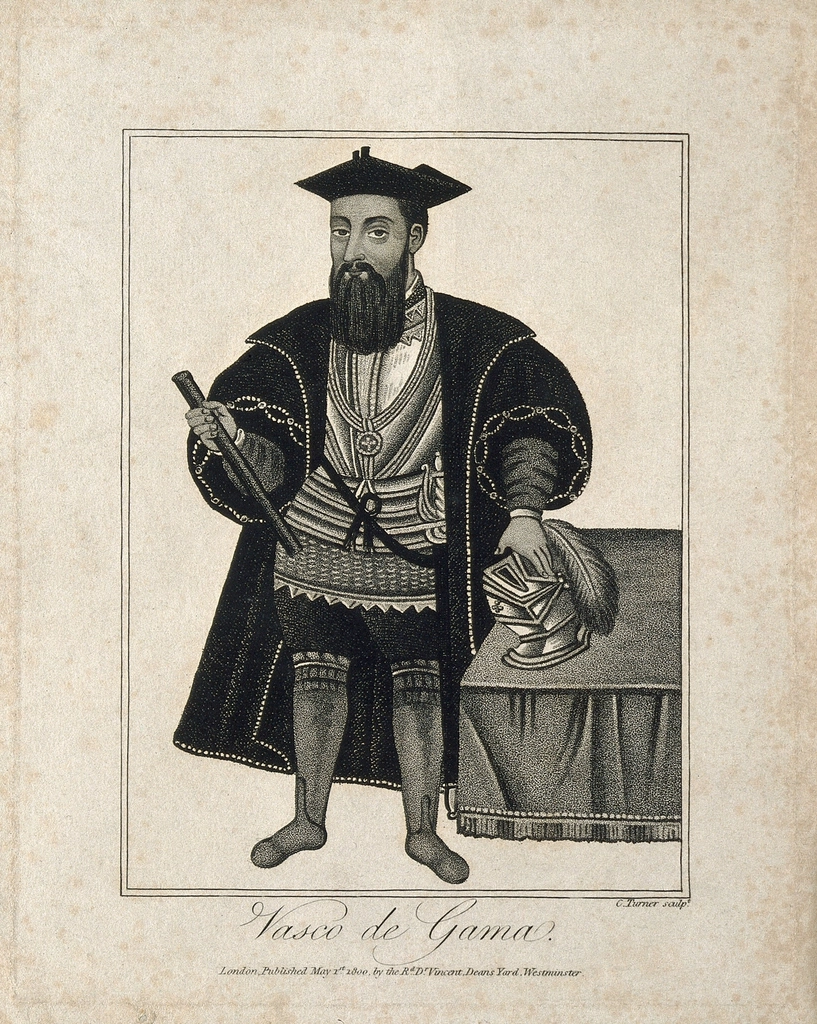
Vasco da Gama, born in Sines, Portugal, in 1460, is celebrated as one of history’s most accomplished explorers. He was the first to chart a direct sea route from Europe to India, fulfilling a vital goal for the Portuguese crown and setting the stage for an era of global trade and European colonialism. His voyages not only unlocked the riches of the East for Europe but also established Portugal as a dominant force in global maritime trade. This article traces Vasco da Gama’s life, his groundbreaking achievements, and his enduring legacy in world history.
-
The history of Elon Musk: entrepreneur and innovator

Elon Musk stands as one of the most polarizing and groundbreaking figures of our era. Known for his ambitious visions that often seem to leap straight out of science fiction, Musk’s achievements span a wide range of industries, from electric vehicles and space exploration to artificial intelligence and infrastructure. Born in Pretoria, South Africa, in 1971, Musk displayed a keen interest in technology from a young age, immersing himself in computer programming and later moving to North America to pursue his education and career goals. His journey is marked by bold choices, immense risks, and a relentless drive to shape…
-
Amartya Sen: Main Contributions to Economics, Welfare and Development

Amartya Sen, a renowned economist and philosopher, has profoundly influenced global development and welfare economics through his groundbreaking “Capability Approach,” which emphasizes individual freedoms over traditional economic metrics. His extensive academic career includes pivotal work at institutions such as Harvard and the Delhi School of Economics, where he redefined poverty and development. Sen’s influential publications, including “Development as Freedom” and “Poverty and Famines,” challenged conventional beliefs and led to the creation of the Human Development Index (HDI). Awarded the Nobel Prize in Economics in 1998, Sen’s interdisciplinary approach reshapes contemporary economics and policy-making, prioritizing human well-being and social justice.
-
The great Voyage of the Mayflower (1620): The Pilgrims and the Colonization of America

In 1620, a small, overcrowded vessel named the Mayflower carried 102 passengers across the Atlantic on a perilous journey to the New World. The passengers, primarily English Separatists later known as “Pilgrims,” sought a land where they could freely practice their religious beliefs and build a community founded on faith and ideals. This journey and subsequent settlement became a seminal chapter in the story of America. The Mayflower voyage was a mixture of courage, hardship, and hope, marking the beginning of a complex relationship with the indigenous peoples of America and laying the foundations of what would eventually become the…
-
Charles Darwin’s amazing Journey on the HMS Beagle (1831-1836) and the Theory of Evolution

Charles Darwin’s voyage on the HMS Beagle (1831-1836) was pivotal in shaping his theory of evolution by natural selection. During this expedition, he studied diverse ecosystems and collected specimens, challenging the notion that species were immutable. Key observations in South America and the Galápagos Islands, particularly regarding species’ adaptations to their environments, inspired his ideas on natural selection. Upon returning to England, Darwin meticulously analyzed his findings and developed his theory, culminating in the publication of “On the Origin of Species” in 1859. This work revolutionized biology and transformed societal views on life’s origins, leaving a profound legacy in science…
-
Milton Friedman: biography and the legacy of Free-Market Economics

Milton Friedman (1912–2006) was a transformative economist renowned for his advocacy of monetarism and free-market principles. His work severely challenged Keynesian economics, promoting the idea that controlling the money supply is crucial for economic stability. Friedman argued against extensive government intervention, contending it often leads to inefficiencies. He introduced concepts like the Permanent Income Hypothesis and the natural rate of unemployment, reshaping economic thought. His influence extended globally, impacting policies during the Reagan and Thatcher eras, and his ideas remain relevant in ongoing economic debates. Despite criticisms, Friedman’s legacy continues to inspire advocates for individual and economic freedom.
-
The great Voyage of Ferdinand Magellan (1519-1522): The First Circumnavigation of the Globe

Ferdinand Magellan’s expedition (1519-1522) marked the first circumnavigation of the globe, a monumental achievement in exploration that altered European perspectives and established new trade routes and cultural exchanges. Despite facing harsh conditions and internal conflicts, Magellan secured Spanish support to find a westward passage to the Spice Islands. His journey encountered extreme hardships, including a treacherous Pacific crossing and his eventual death in the Philippines during a local conflict. The surviving crew, under new leadership, completed the journey, returning to Spain with valuable spices. This expedition greatly influenced global trade, navigation, and geography, solidifying Magellan’s legacy as a pioneering explorer.