Category: General History
Explore the grand narrative of human civilization through world-changing events, ancient cultures, geopolitical conflicts, and influential historical figures. This overarching hub brings together deep analytical insights into maritime exploration, scientific revolutions, and strategic diplomacy across different eras. Discover how past civilizations, technological breakthroughs, and military struggles shaped the social, cultural, and political foundations of our modern world.
-
The Fall of the Maya Civilization: A Journey Through Decline and Collapse

The Maya civilization, one of the most advanced pre-Columbian cultures in Mesoamerica, flourished for over 2,000 years before its sudden decline. From their intricate understanding of astronomy and mathematics to their monumental cities and impressive political structures, the Maya left an enduring legacy that still fascinates historians and archaeologists today. However, despite their achievements, the Maya experienced a dramatic collapse, one that left their grand cities abandoned and their society fractured. The reasons for this decline are still debated, with theories ranging from environmental factors and warfare to political instability and overpopulation. This article explores the fall of the Maya…
-
History of Nikola Tesla: The Fascinating Life and complete biography

Nikola Tesla, born on July 10, 1856, in Croatia, was a groundbreaking innovator in electricity who transformed the scientific landscape with his work on alternating current (AC) technology. Despite early promise and significant inventions like the AC induction motor and the Tesla coil, Tesla faced intense rivalry with Thomas Edison during the “War of Currents”, which overshadowed his contributions. Financial struggles plagued his later years, leading to isolation and obscurity until public recognition grew posthumously. Today, Tesla is celebrated as a cultural icon, with his ideas influencing modern electrical systems, wireless communication, and sustainable technology, solidifying his enduring legacy and…
-
Henry Ford: The Man Who Revolutionized the Automobile Industry (2025 update)

Henry Ford, a name synonymous with innovation and industrial transformation, was a pioneer whose vision and ingenuity shaped not only the automobile industry but also modern manufacturing practices. Born on July 30, 1863, on a farm in Dearborn, Michigan, Ford would rise to become one of the most influential figures of the 20th century. He is best known as the founder of the Ford Motor Company and for revolutionizing mass production through the introduction of the moving assembly line, which made cars affordable for the average American. His legacy extends far beyond the realm of automobiles, as his work in…
-
The Arrival of the Portuguese in India: A New Era of Commerce, Conflict, and Cultural Exchange (2025 update)

The arrival of the Portuguese in India at the dawn of the 16th century was a transformative moment in global history. This event not only reshaped the political and economic landscape of the Indian subcontinent but also marked the beginning of an era of European maritime dominance in the Indian Ocean. Led by Vasco da Gama in 1498, the Portuguese were the first Europeans to successfully navigate the treacherous waters around the southern tip of Africa and establish a direct sea route to India. This monumental achievement set the stage for centuries of European involvement in Indian trade, politics, and…
-
The Life of Adam Smith and Wealth of Nations

Few individuals have had as profound an impact on the way we understand the world as Adam Smith, the Scottish philosopher and economist whose ideas laid the foundation for modern economic thought. Often referred to as the “Father of Economics,” Smith is best known for his seminal work, The Wealth of Nations (1776), a book that changed the course of economic history and continues to influence policymakers, scholars, and business leaders more than two centuries later. His ideas about free markets, self-interest, and the invisible hand have become central to how we think about economic activity, capitalism, and the role…
-
The Meiji Restoration: history and facts of a great transformational Era in Japan

The Meiji Restoration, beginning in 1868, was a transformative period in Japan’s history, shifting it from a feudal society to a modern industrial power. It ended the Tokugawa shogunate and restored imperial rule, prompting significant political, economic, and social reforms. Japan embraced modernization, adopting Western technologies and institutions, leading to industrial growth, military reforms, and widespread education. This era resulted in Japan emerging as an imperial power, with notable victories in the Sino-Japanese and Russo-Japanese wars. While spurring economic advancements and social mobility, the changes also brought challenges and tensions, shaping Japan’s complex legacy in the 20th century and beyond.
-
Tulip Mania: Lessons from a 17th Century Economic Bubble

In the early 17th century, Tulip Mania in the Dutch Republic epitomized an economic bubble marked by excessive speculation and greed, leading to tulip bulbs becoming more valuable than houses. Initially introduced to Europe in the mid-1500s, tulips quickly gained popularity among the wealthy. The speculative frenzy escalated by the early 1630s, with bulb prices soaring before collapsing in 1637, leaving many investors financially devastated. Historians debate the actual economic impact, suggesting effects were localized. Despite its exaggerated narratives, Tulip Mania remains relevant, exemplifying human behavioral patterns in finance and cautioning against irrational exuberance in modern markets.
-
Baruch Spinoza: The Life and the great Ideas that Changed Philosophy (2025 update)

Baruch Spinoza, born in 1632 in Amsterdam to a Portuguese-Jewish family, emerged as a radical philosopher during a transformative intellectual period in Europe. His revolutionary ideas on God, ethics, and human freedom led to his excommunication from the Jewish community at age 23. In his seminal work, “Ethics,” he equated God with nature, promoting pantheism and determinism, asserting that true freedom comes from understanding natural laws. Spinoza’s political writings advocated for democracy, religious tolerance, and freedom of speech. Although initially unrecognized, his influence surged in the Enlightenment, shaping modern philosophy, science, and democratic principles, underscoring the significance of truth-seeking.
-
The History of the Nuclear Bomb: how Manhattan Project changed the world

The invention of the nuclear bomb marked a transformative moment in history, reshaping World War II and global geopolitics. Its development stemmed from early nuclear physics discoveries, culminating in the Manhattan Project during World War II, which aimed to prevent Nazi Germany from building a bomb. The successful Trinity Test in 1945 demonstrated its destructive power, leading to the bombings of Hiroshima and Nagasaki, resulting in immense loss of life. This ushered in the Cold War and a nuclear arms race. The legacy of the nuclear bomb represents both scientific achievement and ethical dilemmas, highlighting the dual nature of human…
-
George Washington’s big impact on American History: a complete guide

Few figures loom as large in American history as George Washington, a man whose legacy transcends the roles he played in shaping the United States. He was not just the first president, but also the military leader who led a ragtag army to victory against the British Empire, and the statesman who helped guide the fledgling nation through its earliest and most turbulent years. Washington’s life story is one of perseverance, sacrifice, and profound influence—a tale of how one man’s vision and sense of duty helped birth a nation.
-
The Reign of Henry VIII (1509-1547): A Detailed Exploration
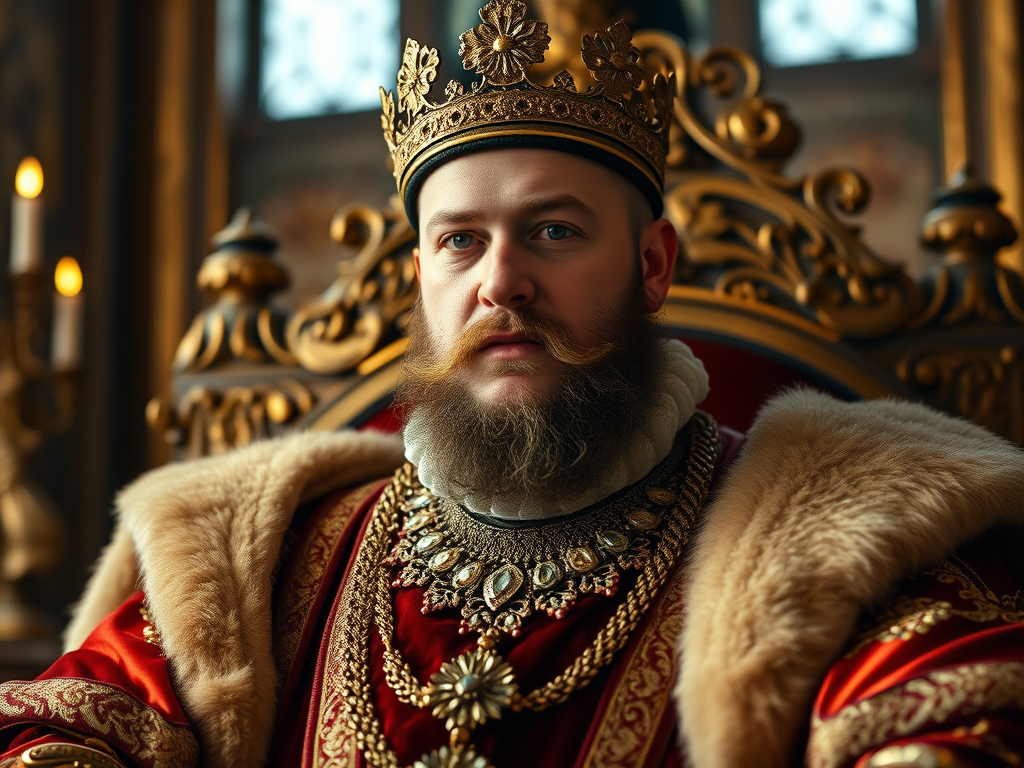
Henry VIII ruled England from 1509 to 1547, a period marked by significant changes in religion, politics, and culture. Notable for his six marriages, his quest for a male heir led to his break from the Catholic Church, igniting the English Reformation. His early reign showcased military ambitions and efforts to restore England’s prominence, while his political maneuvers reflected a blend of personal desires and national interests. Henry’s decisions shaped English identity, fostered Protestantism, and altered socio-economic structures through the dissolution of monasteries. His legacy is complex, influencing future monarchs and the relationship between the monarchy and the state.
-
Vasco da Gama’s First Voyage to India: An amazing Journey that Changed the World

Vasco da Gama’s first voyage to India (1497-1499) was a landmark in global exploration, commissioned by King Manuel I of Portugal to establish a direct sea route to India, bypassing traditional overland trade routes. Setting sail with four ships, Gama faced numerous challenges, including unpredictable weather and political complexities, before successfully reaching Calicut in May 1498. This journey opened new trading opportunities for Portugal, leading to its dominance in the spice trade and a significant cultural exchange between Europe and India. While Gama’s expedition enriched Portugal, it also initiated conflicts and imperialistic endeavors that would alter local societies forever.