Introduction
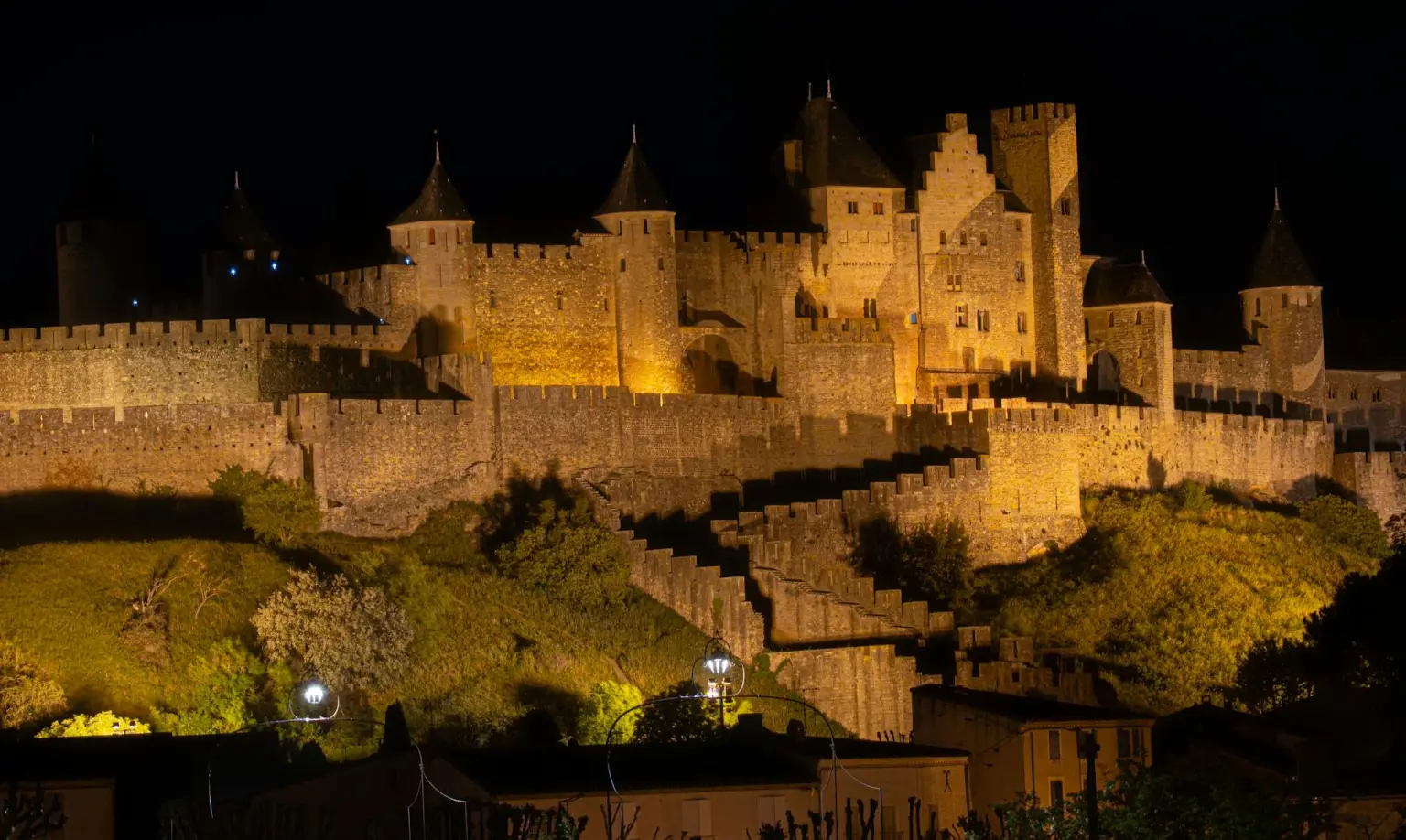
Carcassonne, a captivating medieval fortress located in the Aude department of Southern France, is a UNESCO World Heritage site that embodies the grandeur of medieval architecture and rich history. With its dual-layered defensive walls, towering turrets, and cobblestone streets, Carcassonne is not only a significant historical landmark but also a symbol of France’s turbulent past. The fortress dates back to the Gallo-Roman period, showcasing a unique blend of influences from various cultures, including the Romans and Visigoths. Today, it attracts visitors from around the globe, eager to explore its well-preserved structures and immerse themselves in stories of knights and sieges. Carcassonne serves as a remarkable testament to medieval engineering and a beacon of the region\’s historical narrative, ensuring that the spirit of its past continues to resonate in the present.
Historical Significance of Carcassonne
Carcassonne’s historical significance is deeply rooted in its strategic location, which has made it an essential military stronghold throughout centuries. Nestled on a hill overlooking the Aude River, it controlled vital trade routes and served as a defensive fort against invading forces. The earliest traces of settlement in Carcassonne date back to the Gallo-Roman era when a fortified town was established around the 1st century BC, known as “Carcaso.” This early settlement laid the foundation for the grandeur that would follow.
As history progressed, Carcassonne became a significant player in the power struggles of the region, particularly during the era of the Visigoths in the 5th century, who expanded the defenses and made it a crucial administrative center. However, the most notable chapter in its history unfolded during the Albigensian Crusade in the early 13th century, aimed at eliminating the Cathar heresy from the region. The fortress was besieged by Simon de Montfort in 1209, marking a pivotal moment that led to the eventual decline of Catharism in Southern France.
From the 13th to the 17th centuries, Carcassonne thrived as a significant urban center, exemplifying the unique blend of cultures prevalent in the region. Its strategic military importance was underscored by the construction of a double ring of fortifications, which included 53 towers designed to protect against external threats. The layout we admire today was primarily established in the 1200s, reinforcing Carcassonne’s role as one of the finest examples of medieval fortifications in Europe.
During the 19th century, local interest in the site surged, leading to extensive restoration efforts initiated by architect Eugène Viollet-le-Duc. This period marked a renaissance for Carcassonne, as it was transformed into a symbol of French nationalism and medieval heritage. The impetus behind these restorations was not only to preserve the site but also to showcase the romanticism associated with the medieval period.
Additionally, Carcassonne’s historical significance is amplified by its inclusion in various literary and artistic works throughout history. The fortress serves as an iconic representation of the Middle Ages in France, inspiring countless artists and writers who sought to capture its enigmatic beauty and storied past. Today, visitors are not merely observers of ancient walls but participants in a living timeline that unfolds through guided tours, reenactments, and cultural festivals celebrating the rich tapestry of Carcassonne\’s history.
Architectural Features of the Fortress
The architectural features of the Carcassonne fortress embody a striking synthesis of different styles and techniques that have evolved over centuries. This impressive structure is renowned for its double fortifications, consisting of an inner and outer wall with numerous towers serving both defensive and aesthetic purposes. The fortress spans approximately 3.6 kilometers in circumscribed length, showcasing the remarkable engineering skills of the medieval builders.
The outer walls, which were built in the 17th century, provide a robust first line of defense, while the inner walls date back to the 13th century, showcasing early Gothic architecture. These walls were strategically designed to allow defenders to rain down projectiles upon any advancing enemies while providing essential visibility of the surrounding landscape. The myriad of towers, each varying in height and design, add an enchanting silhouette to the skyline of Carcassonne. Notably, the imposing Château Comtal, situated at the heart of the fortress, exemplifies the fortifications\’ sophisticated design. This keep or castle served as the residence of the lords and housed essential military facilities, reinforcing the fortress’s military significance.
The interior of Carcassonne offers a delightful experience, as visitors stroll through its narrow cobblestone streets, flanked by quaint medieval buildings, shops, and eateries. The architecture of these structures often reflects the various cultural influences present in the region over time, from Roman to Gothic styles. The distinctive use of local materials, such as limestone, enhances the fortress\’s character, providing a harmonious blend with the surrounding landscape.
One of the most captivating aspects of Carcassonne’s architecture is its meticulously designed gatehouses. The main entrance to the fortress, known as the Porte Narbonnaise, features a series of massive wooden doors and a drawbridge, meticulously designed to thwart invaders. The intricate stone carvings and sculptures serve as testaments to the artisans who brought this fortified city to life.

The roofs of Carcassonne are another noteworthy feature, with their characteristic slate tiles embellishing the visual appeal of the fortress. The towers’ conical tops add to their majesty, marking a clear distinction between the functional aspects of the design and the artistic elements.
As one explores the fortress, it becomes evident that the thoughtful arrangement of spaces and structures within Carcassonne speaks volumes about its purpose. From living quarters for the garrison to workshops and storerooms, each area is designed strategically to meet the needs of its inhabitants while maintaining a sense of grandeur befitting a fortress of its caliber.
Overall, the architectural features of Carcassonne not only demonstrate the ingenuity of medieval engineering but also reflect the socio-political dynamics of the various epochs it has witnessed. As visitors meander through its winding paths and gaze upon its formidable walls, they are transported back in time, experiencing the essence of a fortress that has withstood the test of time.
Cultural Influences and Heritage
Carcassonne stands as an emblem of the confluence of diverse cultural influences that have shaped its rich heritage over the centuries. Nestled between the Mediterranean and the Pyrenees, the fortress has been a crossroads of civilizations, attracting Romans, Visigoths, Moors, and Franks alike. This geographical significance facilitated an exchange of ideas, art, and traditions, all of which contributed to Carcassonne’s unique cultural tapestry.
The Roman legacy in Carcassonne is evident in its foundational structures and urban layout. Initial construction undertaken by the Romans laid the groundwork for the fortress, with an emphasis on functional design that emphasized military efficiency. The use of Roman architectural elements, such as arches and aqueducts, can still be seen in some remnants today, highlighting the engineering prowess of the era. As the Roman Empire fell into decline, the cultural vacuum was gradually filled by the emergence of the Visigoths, who further fortified the town and infused it with their architectural style, incorporating local materials and techniques.
The medieval period heralded a significant transformation in Carcassonne as it evolved into a stronghold of Catharism, a religious sect that sought to challenge the prevalent orthodoxy of the Catholic Church. The cultural ramifications of this movement are palpable in the history of the fortress, as it became a focal point for the Albigensian Crusade. The clashes between the Cathars and the Crusaders not only impacted the religious landscape of the region but also influenced the social and cultural dynamics. The suppression of the Cathar movement led to a substantial Catholic reconstruction of Carcassonne, aligning its identity closer to the dominant Catholic Church.
Throughout the Middle Ages, the fortress thrived as a hub for trade and commerce, resulting in a blend of culinary, artisanal, and linguistic influences. The exchanges between traders, soldiers, and craftspeople brought myriad customs and traditions, which have persisted in local festivals and cuisine. The legacy of these cultural fusions is evident today in the traditional dishes of Carcassonne, which include rich stews and regional wine offerings, deeply rooted in the history of the area.

Moreover, the influence of the Moors, who invaded the region in the 8th century, cannot be underestimated. Their incursion introduced advanced agricultural practices and irrigation techniques that transformed the landscape, facilitating more prosperous agricultural endeavors. This fusion of cultures made Carcassonne a melting pot of ideas and values.
The Renaissance era marked a revival of artistic expression, with Carcassonne experiencing an influx of artists and scholars. This era brought about a renewed appreciation for its medieval heritage, as well as a flourishing of arts, literature, and crafts that left an indelible mark on the region’s cultural landscape.
In the contemporary context, the cultural heritage of Carcassonne is celebrated through various events and initiatives aimed at preserving the fortress’s history. Annual festivals and reenactments attract visitors and serve to educate future generations about the significance of their heritage. These efforts not only celebrate the rich tapestry of influences that have shaped Carcassonne over the centuries but also underscore the city\’s role as a living testament to the resilience of cultural heritage in the face of historical challenges.
The Restoration of Carcassonne
The restoration of Carcassonne represents a captivating chapter in its ongoing saga, bringing to life an historical treasure that had been long overlooked. In the mid-19th century, the fortress faced the threat of decay and neglect due to the industrialization sweeping through France. Many of its exquisite architectural features were at risk of being lost forever. However, the revitalization of Carcassonne began primarily thanks to the tireless advocacy of architect Eugène Viollet-le-Duc, who played a crucial role in its preservation.
Viollet-le-Duc embraced the ideals of the Gothic Revival movement and envisioned a grand restoration that would immortalize the site’s medieval glory. His extensive efforts between 1853 and 1911 aimed to restore the fortress to its former magnificence, incorporating elements that were sometimes controversial and not necessarily historically accurate. Among his notable interventions was the reconstruction of the donjon, the fortress’s keep, which was redesigned to reflect what he believed a medieval stronghold should resemble.
Critics of Viollet-le-Duc\’s approach were concerned that his creative interpretations blurred the lines between authentic history and artistic embellishment. Yet, many of his restorations undeniably contributed to preserving the essence of Carcassonne and brought to light its architectural significance. His work resulted in the reconstruction of the double walls—both the inner and outer fortifications—along with the restoration of numerous towers and the reimagining of the fortress\’s entrance, the Porte Narbonnaise. The entirety of this revival catalyzed a surge of admiration for medieval architecture throughout France and beyond, with Carcassonne becoming a celebrated symbol of national pride and architectural excellence.
Viollet-le-Duc\’s restoration efforts aligned with a broader movement in France that sought to revive an appreciation for medieval history and art during a time when much of it had been neglected. The project gained traction, attracting both political and public support, culminating in Carcassonne’s designation as a historical monument in 1840.
Following Viollet-le-Duc’s death in 1879, the restoration continued with ongoing maintenance efforts to ensure the fortress\’s structural stability and prevent further deterioration. In 1986, Carcassonne was listed as a UNESCO World Heritage site, validating its significance on a global scale and further emphasizing the need for ongoing preservation efforts. This international recognition brought heightened attention and funding, ensuring that Carcassonne remained a focal point for tourism and education.

Today, the restoration of Carcassonne is heralded as a success, as the fortress attracts millions of visitors each year, eager to experience its rich history and stunning architecture. The careful balance between preservation and modernization allows guests to explore the fortress while respecting its integrity and authenticity. Moreover, the meticulous maintenance performed by specialized teams ensures that its towers and walls remain resilient against the test of time.
As stewards of this remarkable cultural heritage, local authorities and organizations remain dedicated to ensuring that Carcassonne’s historical significance endures for future generations. Various educational programs and guided tours have been developed to engage visitors in the fortress\’s remarkable story, bringing alive the tales of knights, battles, and the evolution of architectural innovation.
Ultimately, the success of the restoration of Carcassonne not only revitalized the fortress but also sparked a renewed interest in the appreciation of medieval history throughout France. The collaboration between architects, historians, and craftsmen has rendered Carcassonne a lasting testament to the importance of safeguarding our architectural heritage, ensuring that the echoes of its storied past continue to resonate and inspire.
Carcassonne Today: Tourism and Preservation Efforts
In the modern age, Carcassonne thrives as a major tourist destination, admired not only for its architectural beauty but also for the immersive experiences it offers to visitors seeking a journey through time. The fortress boasts an astonishing average of 4 million visitors annually, drawn by its captivating history and picturesque scenery amidst the rolling vineyards of the Aude region. As one of France\’s most visited historical sites, Carcassonne has successfully married tourism with preservation efforts to ensure the fortress\’s integrity while welcoming an ever-growing number of guests.
The historical significance and aesthetic allure of Carcassonne have led to the development of various tourism-related initiatives designed to enhance visitor experience without compromising its cultural heritage. For example, guided tours provide an educational lens through which guests can appreciate the rich array of stories, architectural nuances, and historical context surrounding the fortress. Expert guides share in-depth insights about medieval life, the architectural features of the fortress, and the ongoing preservation efforts that have allowed this ancient citadel to flourish.
Events and festivals form an essential part of tourism in Carcassonne. The \”Festival de Carcassonne,\” held annually, is a vibrant celebration of music, performing arts, and cultural diversity, drawing artists from across the globe to perform in the stunning backdrop of the fortress. These festivities serve not only to entertain the public but also to educate them on the significance of Carcassonne’s cultural heritage, breathing new life into its history.
Local authorities are acutely aware of the impact of mass tourism on the preservation of Carcassonne. Therefore, they have implemented various sustainable tourism measures aimed at striking a balance between welcoming visitors and maintaining the integrity of the fortress. These measures include limiting access to certain areas during peak periods, implementing strict conservation guidelines, and promoting responsible tourism practices.
Moreover, investments in infrastructure and amenities have been prioritized to enhance the visitor experience while maintaining the historic character of Carcassonne. The establishment of visitor centers equipped with information about local customs, history, and preservation projects allows tourists to engage with the site\’s storied past on a deeper level. The integration of modern facilities ensures that tourists have access to necessary amenities without detracting from the fortress\’s authenticity.
Education plays a vital role in preserving the cultural and historical significance of Carcassonne. Local schools and organizations have devised programs that encourage community involvement in heritage preservation efforts, fostering a sense of stewardship among residents. Workshops and programs for children and adults alike cultivate an appreciation for their local history, ensuring that the stories of Carcassonne are passed down through generations.
In conclusion, Carcassonne stands as a remarkable synthesis of history, culture, and architectural brilliance, enchanting visitors and safeguarding its legacy for the future. The ongoing dedication of local governance, preservation societies, and passionate individuals underscores the importance of maintaining its authenticity, serving as a beacon of inspiration for both tourists and future generations alike.
Conclusion
In exploring Carcassonne, one embarks on a journey that transcends the physical boundaries of the fortress itself. Its meticulously preserved architecture, rich history, and cultural significance bear witness to the ebb and flow of civilizations that have shaped it over centuries. From its origins as a Gallo-Roman settlement to its role as a strategic medieval stronghold, Carcassonne encapsulates the essence of historical resilience in the face of change.
Today, the balance between tourism and preservation efforts reflects a collective commitment among locals, historians, and preservationists to cherish the fortress as a vital component of regional identity and an invaluable cultural asset. As visitors walk through the cobblestone streets, they are invited to step into a living history that continues to inspire awe and wonder.
The vibrant festivals, educational initiatives, and sustainable tourism practices employed at Carcassonne ensure that its legacy remains vivid and meaningful. By engaging with its past, the present generation plays a crucial role in safeguarding the fortress for the future, cultivating an enduring connection to the stories of knights, battles, and cultural exchanges that define this extraordinary landmark.
As Carcassonne shines as a testament to the power of restoration and preservation, it invites the world to marvel at its beauty, understand its history, and celebrate the rich heritage it represents. In doing so, we honor the past while paving the way for continued cultural exploration and appreciation in the years to come.