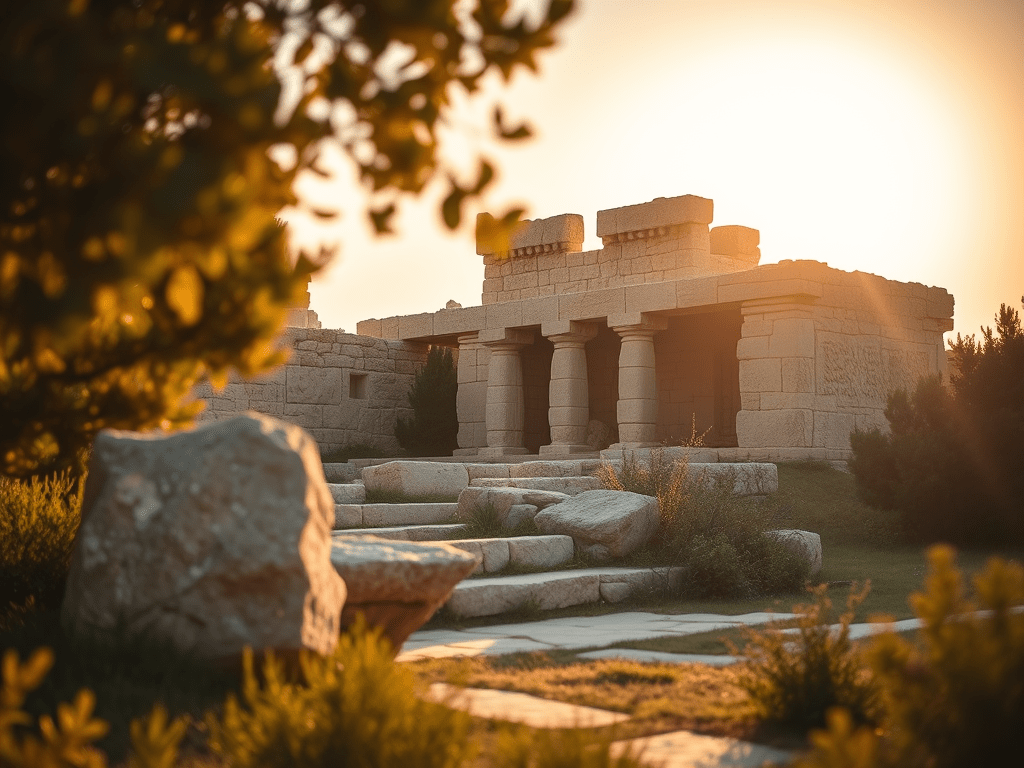
Introduction
Malta, a small archipelago in the heart of the Mediterranean, holds a rich tapestry of history that dates back several millennia. Renowned for its stunning landscapes and vibrant culture, the island is also home to some of the oldest free-standing structures in the world: the Megalithic Temples. Among these, the Hal Saflieni Hypogeum and Mnajdra Temples stand out for their remarkable architectural ingenuity and significance. Dating back to prehistoric times, these sacred sites offer invaluable insights into the lives, beliefs, and practices of the ancient Maltese inhabitants. This article will explore the history of Malta Island and architectural features of the Hal Saflieni Hypogeum and Mnajdra Temples, shedding light on the cultural heritage of Malta and the importance of preserving these unique monuments for future generations.
Introduction to Malta\’s Ancient Heritage
Malta’s ancient heritage is one of the island’s richest treasures, showcasing the ingenuity and creativity of its early inhabitants. The island’s strategic location in the Mediterranean made it a crossroads for various cultures and civilizations, allowing for the exchange of ideas, art, and technology. Archaeological evidence suggests that Malta was inhabited as far back as 5200 BC, with a thriving community leaving behind monumental structures that have fascinated historians and archaeologists alike.
The Megalithic Temples of Malta represent some of the earliest forms of urban settlement and religious architecture in human history. These temples were constructed by a prehistoric people known as the Temple Builders, who left a profound legacy that highlights their sophisticated understanding of construction, art, and spirituality.
The Hal Saflieni Hypogeum, discovered accidentally in 1902 during some work for construction, is considered one of Malta\’s most spectacular archaeological sites. It is an underground burial complex that showcases a unique architectural style incorporating large stone blocks and intricate carvings. The Hypogeum consists of three levels, with several chambers used for worship and burial. The engineering prowess required to create such a structure, carved directly into the limestone bedrock, is a testament to the advanced skill of its builders.
On the other hand, the Mnajdra Temples, located on the southern coast of Malta, are celebrated for their architectural complexity and their alignment with astronomical phenomena. Built around 3600 – 2500 BC, these temples are characterized by their large stone slabs, clover-shaped design, and intricate carvings that reflect the spiritual beliefs of their creators. The site, comprised of three distinct temples, displays a remarkable harmony between human habitation and the natural landscape, aligning perfectly with the sun during important seasonal events.
Both Hal Saflieni and Mnajdra are not only significant due to their architectural grandeur but also for what they reveal about the social and spiritual lives of those who built them. These sites were focal points for community gatherings, rituals, and possibly even trade, highlighting the sophisticated societal structure of ancient Malta.
As we delve deeper into the exploration of these sites, we come to understand not just their historical context but also their broader implications for heritage, identity, and cultural preservation in Malta today.
The Discovery and Significance of Hal Saflieni Hypogeum
The Hal Saflieni Hypogeum is a hauntingly beautiful example of Malta\’s prehistoric architecture and a crucial site for understanding the Neolithic period of the Maltese Islands. Its discovery in 1902 was serendipitous; workers excavating for an apartment complex stumbled upon the entrance of this subterranean wonder. Initially, it was confused with a simple catacomb until further investigation revealed its complexity and significance.
Upon its excavation, archaeologists uncovered a harmonious blend of chambers connected by narrow passageways, all meticulously carved from limestone. The Hypogeum is divided into three levels, much of which remains intact, despite being heavily influenced by centuries of exposure and human activity. Evidence suggests that the structure served primarily as a necropolis, housing the remains of thousands of individuals, along with pottery, tools, and other artifacts.
Notably, the calming ambience of the Hypogeum, enhanced by its acoustic properties, suggests it may have been used for spiritual or ceremonial purposes. As scientists studied the sound frequency within the chambers, they found that certain frequencies create eerie echoes, leading to theories of potential religious rituals conducted within its walls, engaging the spirits of the dead.
The significance of the Hal Saflieni Hypogeum extends beyond its physical structure; it holds profound implications for our understanding of the belief systems and social hierarchies of Maltese society during the Neolithic. The burial practices themselves, including the careful treatment of remains and varied grave goods, reveal a culture deeply connected to its ancestors and spiritual realm. The ability of the Temple Builders to create such a complex and enduring monument speaks volumes about their societal structures, social stratification, and technological capabilities.
Dating back to around 4000 BC to 2500 BC, the Hypogeum showcases one of the earliest forms of architectural planning while also highlighting the crafting skills of the Temple Builders. The walls feature subtle decorations, including spiral motifs and animal imagery, which imply a strong symbolic and cultural value behind their artistry.
Furthermore, the excavation of pottery and tools within the Hypogeum uncovers the daily life and traditions of the people during the Neolithic era. Artifacts include decorated ceramics and stone tools intricately designed, representing not only functional aesthetics but also the social contexts of the time.
The Hal Saflieni Hypogeum was inscribed as a UNESCO World Heritage site in 1980, underscoring its importance not only to Maltese heritage but also to global archaeological understanding. Today, preservation efforts are crucial to protect this irreplaceable monument from the threats posed by tourism, environmental factors, and urban development. The ongoing research and archaeological studies conducted on the Hypogeum continually contribute to our knowledge of Malta\’s history.
In conclusion, the Hal Saflieni Hypogeum is an integral piece of Malta\’s heritage puzzle. It is a symbol of human history, cultural continuity, and the exquisite artistry of one of the earliest civilizations in Europe. As we move forward in exploring Malta\’s ancient temples, the significance of Hal Saflieni remains a profound reminder of our shared human story.
Mnajdra Temples: Architectural Marvels of the Neolithic Era
The Mnajdra Temples stand as one of the most significant archaeological discoveries in Malta, representing a pinnacle of Neolithic architectural achievement. Located on the southern coast, these temples were constructed between 3600 BC and 2500 BC and are notably one of the oldest freestanding structures known to humanity. Their design and construction reveal intricate planning and communal effort, which speaks to the sophisticated society that forged these monumental stones.
Structured across three temples—Mnajdra East, Mnajdra South, and Mnajdra North—this site showcases an architectural genius that intertwines beauty with functionality. Each temple is uniquely built with a strong emphasis on astronomical alignment, particularly with the sun. During the summer and winter solstices, sunlight beams through specific apertures, illuminating the inner sanctum and underscoring the spiritual significance of light in ancient belief systems. This connection to the natural world suggests that the builders of Mnajdra were not only skilled artisans but also keen astronomers who understood the patterns of celestial bodies and their influence on agricultural cycles and religious practices.
The temples are constructed from massive limestone blocks, each piece weighing several tons. The precision with which these stones were cut and fitted together is a testament to the craftsmanship of the ancient builders. The structures’ exterior features shelves for offerings, decorative engravings that bear symbolic meanings, and huge stone doorways that hint at ritualistic ceremonies. One of the more notable features of the East Temple is the \”apse,\” a semi-circular structure that provides a focal point for observance rituals.
In addition to their architectural brilliance, the Mnajdra Temples are adorned with a range of symbolic carvings and motifs, including spirals, dots, and animal forms. These intricate designs are believed to represent fertility and life, reflecting the deep spiritual beliefs held by the Temple Builders regarding nature and existence. Excavations at the site have unearthed objects such as pottery, jewelry, and figurines, providing invaluable insight into the material culture and daily life of the people who worshipped here.
The social implications of the Mnajdra Temples are profound. The construction and maintenance of such a site would have required coordinated efforts among the community, indicating a complex social structure with shared beliefs and a sense of collective identity. Rituals performed in these temples likely played a vital role in reinforcing social cohesion and cultural identity, allowing the ancient Maltese society to define its values and beliefs.
In terms of preservation, Mnajdra has faced challenges from natural erosion and human activity. To combat these threats, various strategies have been implemented, including restricted access to sensitive areas and ongoing research aimed at understanding the site\’s degradation patterns. Efforts are being made to promote sustainable tourism that respects the cultural and historical significance of the temples while ensuring their longevity for future generations.
Unearthed from the depths of time, the Mnajdra Temples symbolize the ingenuity and complexity of early human civilization. They stand as a testament to the rich cultural heritage of Malta, merging spirituality, art, and architecture into a singular experience that continues to captivate and inspire. As we further explore the implications of the Mnajdra Temples, we gain insights not only into Malta\’s past but also into the enduring human quest for meaning, connection, and understanding of the world around us.
Cultural and Religious Practices at the Temples
Cultural and religious practices at the Megalithic Temples of Malta—especially at the Hal Saflieni Hypogeum and the Mnajdra Temples—reveal significant insights into the belief systems and social structures of the prehistoric people who inhabited the island. These sites were not mere architectural wonders; they were centers for worship and social congregation, reflecting the values and ideologies of their creators.
In the Neolithic era, spirituality was deeply interwoven with the natural world. The Temple Builders honored deities associated with fertility, life, and the earth. The significance of agriculture and the cycles of nature likely played a major role in their religious practices, highlighting the importance of plants and animals in sustaining their communities. Archaeological findings, including figurines and artifacts associated with fertility, support the idea that female fertility was especially revered, with the earth goddess often symbolizing both the source of life and the continuity of the community.
Ritual practices likely included offerings and sacrifices, with items such as pottery, food, and other valuable goods placed in burial chambers or within temple confines as tributes to the gods. At the Hal Saflieni Hypogeum, excavations have uncovered a multitude of human remains buried alongside artifacts that implied ritualistic significance. This suggests that the act of burial was not solely a practical necessity but a ceremonial event, imbued with spiritual meaning.
The acoustic properties of the Hal Saflieni Hypogeum also indicate that sound played a significant role in their rituals. Researchers have noted how the chamber\’s unique design amplifies certain frequencies, leading to theories suggesting that chanting or sound-making could have been integral to spiritual practices and rituals performed within the subterranean site. The echoes and resonances, when combined with dim lighting and the proximity to burial sites, would create an otherworldly atmosphere, allowing participants to feel a closer connection to their ancestors and the divine.
In addition to the Hypogeum, the Mnajdra Temples offer rich insight into religious observance. The alignment of the temple structures with the sun during solstice events highlights the temples’ celestial significance. The moment when sunlight bathes the inner sanctum could represent enlightenment, the arrival of a divine presence, or an invitation for agricultural renewal—a vital concern for societies dependent on the land.
Ceremonies performed at the Mnajdra Temples likely included community gatherings, celebrations of seasonal transitions, and rituals aimed at seeking blessings for fertility and bountiful harvests. Marks on the temple walls suggest the existence of altars or spaces designated for rituals, where priests or spiritual leaders might have conducted ceremonies designed to invoke divine favor or commemorate important events.
Beyond the spiritual functions, the temples likely served as communal centers where social cohesion was fostered through shared practices and collective identities. They facilitated the establishment of hierarchical structures, where priestly classes or elders could emerge, playing key roles in the dissemination of cultural knowledge and traditions. This suggests the temples were not only religious spaces but also conduits for cultural exchange and community solidarity, shaping the very fabric of ancient Maltese society.
In recent years, ongoing research and archaeological work have deepened our understanding of the religious and cultural significance of these temples. By preserving and interpreting the artifacts and architectural remains, scholars continue to piece together the complex tapestry of Malta\’s ancient history.
In summary, the cultural and religious practices at the Hal Saflieni Hypogeum and the Mnajdra Temples reveal a rich and intricate belief system deeply connected to nature, community, and spirituality. These sites were central to the lives of the ancient Maltese people, embodying their aspirations, fears, and profound connections to the world around them. Today, as we engage with these sites, we not only honor their legacy but also seek to understand the universal human desire to connect with the divine and the mysteries of existence.
Preservation Efforts and Contemporary Importance
The preservation of the Megalithic Temples, namely the Hal Saflieni Hypogeum and the Mnajdra Temples, is of paramount importance for both cultural heritage and educational purposes. As some of the oldest and most significant archaeological sites in Europe, their sustainability has garnered the attention of local and international communities, each advocating to protect and preserve these invaluable resources for future generations.
The challenges associated with preserving such ancient structures are multi-faceted. Natural erosion, climate change, and human intervention pose ongoing threats to the integrity of the temples. Specifically, the Hypogeum has faced deterioration due to its underground structure, where humidity levels fluctuate and can affect artifacts and the overall environment. Furthermore, increased tourist traffic leads to concerns about the structural stability of the sites and the potential for damage to the delicate interiors.
To combat these challenges, innovative conservation strategies are being implemented. These efforts involve a combination of scientific studies and public awareness campaigns aimed at highlighting the importance of heritage preservation. Experts in archaeology, architecture, and environmental sciences collaborate to develop solutions that address deterioration while maintaining the sites\’ historical integrity.
Advanced technologies, such as 3D modeling and photogrammetry, have been employed to create detailed digital representations of the structures. These models not only assist in monitoring changes over time but also serve as valuable tools for restoration efforts. By understanding how materials degrade and how weather impacts the structures, conservationists can establish more effective methods for preserving the temples.
Additionally, visitor management strategies have been developed to balance tourism with conservation. Limiting the number of visitors allowed in certain areas, implementing guided tours that emphasize responsible engagement, and promoting off-peak visiting times are just a few ways to mitigate the impact of tourism on these sacred sites. Educational programs aimed at locals and tourists alike foster a sense of stewardship, emphasizing that the preservation of cultural heritage is a shared responsibility.
The contemporary importance of the Hal Saflieni Hypogeum and Mnajdra Temples extends beyond their historical value; they serve as critical touchpoints for Maltese identity and community pride. As expressions of prehistory, they connect present-day Maltese society with their ancestors, fostering a deep sense of cultural heritage amongst the population. These sites not only tell the story of a bygone era but also remind the present generation of their responsibilities in safeguarding their heritage and ensuring that their culture continues to thrive.
Furthermore, the temples attract researchers, historians, and tourists from around the globe, contributing to the local economy and fostering global recognition of Malta\’s unique heritage. Events such as archaeological exhibitions, academic conferences, and cultural festivals provide platforms for dialogue and exchange, emphasizing the role of the temples in fostering connections among diverse communities interested in Malta’s history.
In conclusion, the preservation efforts for the Hal Saflieni Hypogeum and the Mnajdra Temples highlight the importance of respecting and maintaining cultural heritage. These sites are not just relics of the past; they are vibrant representations of human creativity and resilience. As Malta navigates the path forward, the value of these ancient temples will only increase, underscoring their role as enduring links to the past, cherished symbols of cultural heritage, and vital resources for understanding humanity\’s shared history.
Conclusion
The exploration of Malta\’s ancient heritage through the Megalithic Temples of Hal Saflieni and Mnajdra offers invaluable insight into the lives, beliefs, and societal structures of the island\’s prehistoric inhabitants. These exceptional sites reflect not only architectural brilliance but also profound cultural and spiritual significance, representing a world view deeply connected to nature and the cosmos.
The Hal Saflieni Hypogeum, with its intricate underground chambers and rigorous acoustics, provides a fascinating glimpse into the ritual practices and funerary customs of ancient societies. Similarly, the Mnajdra Temples, with their alignment to celestial events and detailed carvings, showcase the knowledge and artistry of the Temple Builders in harmonizing architecture with their environment.
As we reflect on the cultural and religious practices associated with these sites, it becomes clear that the temples served as crucial centers for community identity and social cohesion in Neolithic Malta. They offer a tangible link to the past, encouraging a deeper appreciation for the cultural narratives that shape our understanding of human history.
Ongoing preservation efforts underscore the contemporary importance of these archaeological wonders. They challenge us to consider our role in protecting cultural heritage, ensuring that future generations may continue to learn from and be inspired by the triumphs and struggles of those who came before.
In celebrating the significance of the Hal Saflieni Hypogeum and Mnajdra Temples, we honor Malta\’s rich heritage and recognize the universal values that transcend time and geography. By cherishing and safeguarding these remarkable monuments, we uphold a shared human legacy, connecting the threads of history to our present and future.