Introduction
The Monastery of St. Catherine, nestled at the foot of Mount Sinai in Egypt, stands not only as a radiant beacon of faith but also as a testament to centuries of history. Founded in the 6th century, this ancient site is recognized as the world’s oldest active Christian monastery, offering a unique glimpse into the early Christian experience and the development of monastic life. Housing an extensive collection of manuscripts, artifacts, and artworks, the monastery has long been a pilgrimage destination for believers and historians alike. Throughout its history, it has faced numerous challenges, from natural disasters to political upheaval, yet it remains a thriving center for monastic life, preserving its spiritual legacy and cultural heritage. This article will explore the intricate layers of history, art, religious practices, and the ongoing preservation efforts that define the Monastery of St. Catherine.
Historical Significance of the Monastery
The historical significance of the Monastery of St. Catherine extends far beyond its ancient walls and sacred grounds. Founded by Emperor Justinian I in the 6th century, the monastery was built to protect the site where, according to Christian tradition, Moses encountered the burning bush. This connection to biblical history imbues the monastery with a rich spiritual narrative that attracts pilgrims across the globe, turning it into a sacred sanctuary for reflection and worship.
The early days of the monastery were marked by its role as a center of Christian scholarship. With the rise of monasticism, figures like St. Anthony and St. Benedict inspired a way of life dedicated to prayer, study, and community. The Monastery of St. Catherine embraced these ideals, offering a haven for monks who sought solitude in a harsh desert environment. This commitment to divine reflection played a pivotal role in shaping early Christian thought, with the monks here contributing significantly to theological discourse and the preservation of classical texts.
Through the centuries, the monastery has survived numerous challenges, including invasions and conflicts that threatened its very existence. During the Islamic conquests of the 7th century, the monastery stood firm, negotiating its rights and privileges under Muslim rule, a rare example of coexistence in a time of upheaval. The monastery\’s enduring presence amidst these turbulent changes speaks volumes about its historical resilience. Significant figures, including famous scholars and pilgrims such as John of Damascus and Helena, have fortified its historical narrative, contributing to its longstanding significance in the Christian world.
In addition to its spiritual importance, the monastery has served as a critical point of cultural exchange. The vast collection of manuscripts housed within its library—one of the oldest in the world—illustrates the transmission of knowledge throughout centuries. These texts included works not only of Christian doctrine but also of philosophy, science, and literature from the classical world. The monastery thus played an integral role in the preservation of ancient knowledge through the Dark Ages, acting as a crucial bridge between ancient and modern civilizations.
Throughout its illustrious history, the Monastery of St. Catherine has been a focal point for scholarly studies, religious practice, and cultural dialogue. Its strategic location in one of the oldest trade routes further facilitated the interaction between diverse cultures, making it a melting pot of ideas and beliefs. Consequently, the monastery has become a symbol of continuity and faith, harmonizing its rich historical foundation with the spiritual needs of its visitors. Today, the ongoing dedication of the monks, alongside global interest, continues to keep its vibrant history alive, making it a vital part of our cultural and religious heritage.
Architectural Features and Artworks
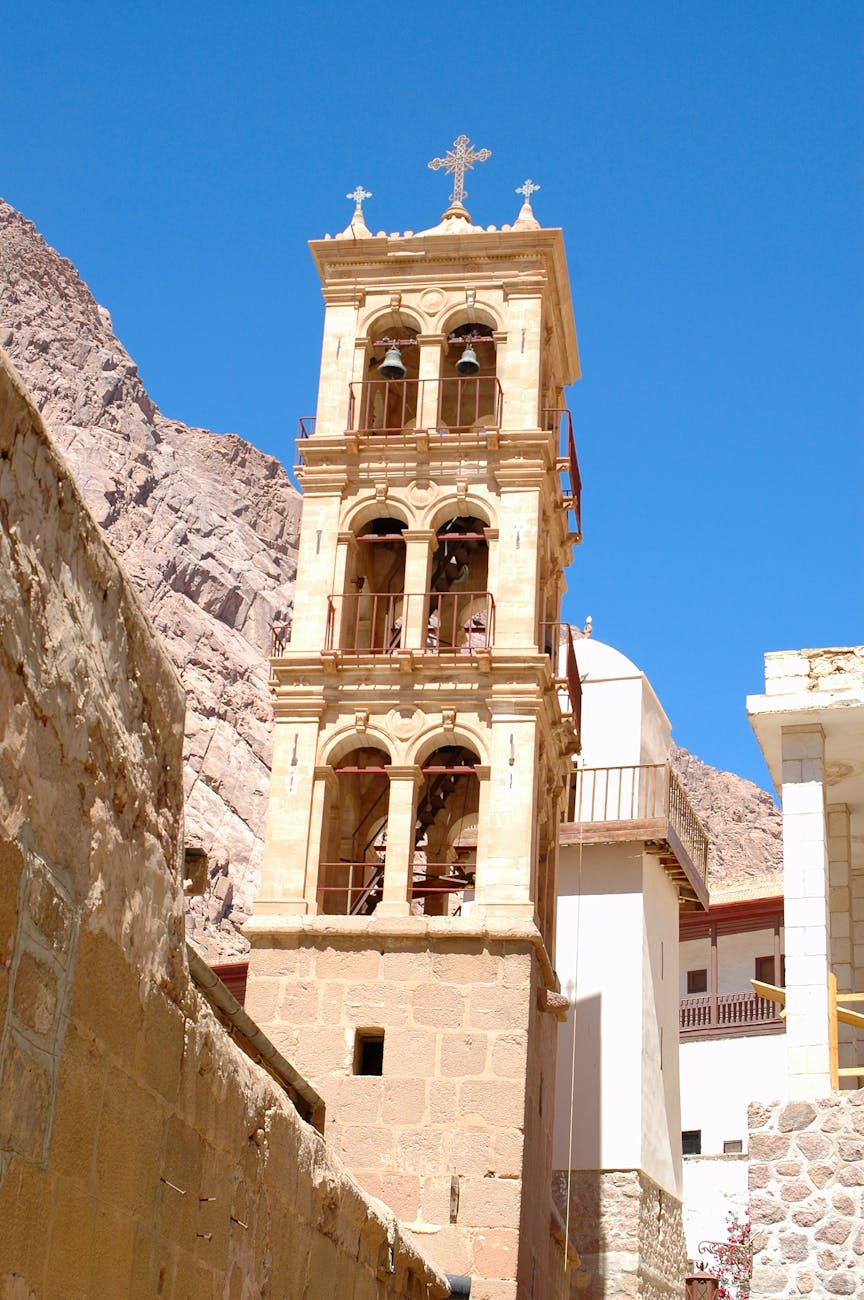
The architectural features of the Monastery of St. Catherine undeniably reflect its historical depth and spiritual intention. Constructed over a period of time that began in the 6th century, the monastery showcases a blend of Byzantine architecture infused with local influences. The complex design includes fortified walls, austere yet beautiful cloisters, and inviting chapels that encapsulate the serenity of the surrounding landscape.
One of the defining elements of the monastery is its impressive fortification. Built primarily for protection against raiders and camel drivers, the high stone walls encase a sprawling complex that includes living quarters for monks, a church, and various communal spaces. The strategic placement at the foot of Mount Sinai not only enhances its spiritual ambiance but also offers a natural fortress, lending historical significance to its architectural choices.
Within the monastery, the Church of the Transfiguration stands out as the crowning jewel of Byzantine architecture. With its breathtaking mosaics and intricate frescoes depicting biblical scenes and figures, the interior invites visitors to explore the spiritual and artistic grandeur of the site. Dating back to the 6th century, the church demonstrates early Christian artistry with its detailed craftsmanship and vibrant colors that have relatively withstood the ravages of time.
The monastery also hosts a remarkable collection of icons, many of which date back to the early centuries of Christianity. These religious artworks serve not only as objects of veneration but also as historical artifacts that provide insight into the evolution of iconography and artistic expression within the Christian tradition. Icon paintings, characterized by their vivid colors and devotional themes, present scenes from the life of Christ, the Virgin Mary, and various saints, serving as a crucial means of connecting the faithful with the divine.
In addition to religious artworks, the monastery holds an invaluable library containing over 3,000 manuscripts, among the oldest and most important in the world. These manuscripts range from biblical texts to works on philosophy, medicine, and science, highlighting the intellectual pursuits of the monastic community. Many of these texts are written in Greek, Arabic, and other languages, which underscores the monastery\’s role as a vital center for scholarship and its interaction with diverse cultures throughout history.
The blend of architectural beauty and artistic richness found within the Monastery of St. Catherine exemplifies the intersection of faith, culture, and history. As both a spiritual refuge and a testament to human creativity, the monastery stands as an enduring symbol of devotion, community, and heritage, inviting individuals to contemplate its beauty and significance while seeking solace and inspiration within its sacred walls.
Religious Practices and Community Life
Religious practices and community life at the Monastery of St. Catherine are deeply rooted in centuries-old traditions that reflect the essence of monastic existence. Guided by the Rule of St. Basil, the monks dedicate their lives to prayer, communal worship, and service, embodying the ideals of humility, faith, and fellowship.
Daily routines within the monastery revolve around the liturgical calendar, with structured prayer times marking the rhythm of monastic life. Beginning before dawn, the community gathers for the first prayer, known as the Midnight Office. This early morning service sets the tone for the day, inviting the monks to lift their spirits in devotion and prepare their hearts for the coming hours. As daylight breaks, the monks continue with the Divine Office, a series of prayers, hymns, and chants that punctuate the day, allowing them to remain continually engaged in spiritual communion.
The centerpiece of religious life at the monastery is the celebration of the Eucharist. The Divine Liturgy, a magnificent expression of worship, draws both monks and visitors to partake in the holy sacrament. The church’s ambiance, enriched with the fragrant incense and soft lighting, enhances the spiritual experience and fosters a sense of unity. During these services, the community is reminded of the importance of spiritual nourishment and the deep-rooted connections forged through shared faith and tradition.
Additionally, the monks engage in daily lectures and teachings, reflecting on theological texts and the lives of the saints. This pursuit of knowledge is not purely academic; it deepens their understanding of faith and encourages personal growth. Through discussions, they explore the meaning of scripture and how it applies to their lives, reinforcing the notion that religious practice is not an isolated activity but rather a lifelong journey toward spiritual maturity and enlightenment.
Community life is further enriched by the practice of hospitality. The Monastery of St. Catherine welcomes pilgrims and travelers from across the globe, creating a warm and inviting atmosphere. The monks provide accommodations, meals, and guidance, fostering a sense of belonging among visitors. This openness demonstrates the monastery\’s commitment to sharing its spiritual heritage and providing a sanctuary for those seeking solace and reflection.
Furthermore, the monks participate in various forms of labor as a way of embodying the monastic ideal of \”ora et labora,\” which means \”pray and work.\” By engaging in activities such as agriculture, manuscript preservation, and crafts, the community sustains itself while also contributing to the broader needs of the historical and geographical context. This labor not only supports their monastic existence but also allows them to maintain a harmonious relationship with the surrounding environment.
In summary, the religious practices and community life at the Monastery of St. Catherine represent a rich tapestry of devotion, shared experiences, and meaningful interaction with both the divine and the world. The harmonious balance between prayer, study, and service shapes the lives of the monks and all who visit, ensuring that the spiritual legacy of this ancient sanctuary endures for generations to come.
Preservation Efforts and Challenges
The preservation of the Monastery of St. Catherine encompasses a wide range of efforts aimed at safeguarding its historical, cultural, and spiritual heritage. Given its status as one of the oldest active Christian monasteries in the world, this sanctuary faces unique challenges in maintaining its physical structure and the invaluable artifacts housed within.
One of the primary challenges is the harsh desert environment surrounding the monastery. With extreme temperatures, sandstorms, and potential seismic activity, the monastery’s ancient walls endure constant wear. To combat these natural elements, restoration efforts have been implemented over the years. Experts closely monitor the structural integrity of the buildings, using advanced techniques to reinforce and restore deteriorated areas while preserving their historical authenticity.
Additionally, the monastery\’s rich collection of manuscripts and artworks requires meticulous care. The library, containing unique manuscripts that date back to the early Christian era, has engaged specialists in conservation to ensure optimal preservation methods. Digital archiving projects have been initiated to create electronic versions of these documents, allowing for broader access while simultaneously reducing physical handling. Through collaboration with international institutions, the monastery has been able to secure funding, knowledge, and resources necessary for effective conservation.
Another layer of preservation is the commitment to maintaining the spiritual practices that have defined the monastery for centuries. The monastic community remains dedicated to fostering an environment that nurtures religious observance and communal life. By upholding the traditions and disciplines of monasticism, the monks safeguard not just the physical space but also the spirit of the monastery, ensuring that it continues to function as a living testament to Christian faith.
While these efforts demonstrate a strong commitment to preservation, the monastery faces ongoing challenges stemming from geopolitical tensions in the region. Political instability and changes in travel patterns have created fluctuations in visitor numbers, impacting the financial resources available for maintenance. To counteract this, the monastery has worked diligently to expand its outreach and secure partnerships with various organizations. Initiatives such as educational programs, ecotourism, and cultural exchanges not only draw visitors but also foster an appreciation for the site\’s historical value.
Furthermore, engaging local communities and fostering relationships with neighboring villages has proven essential. The monastery actively participates in initiatives that benefit both its residents and surrounding populations, establishing a sense of shared responsibility for the preservation of cultural heritage. By intertwining their efforts with those of local communities, the monastery strengthens its ties to the broader context, ensuring that the preservation of its heritage remains a collective goal.
To summarize, the preservation efforts of the Monastery of St. Catherine are multifaceted and ongoing, addressing both physical and intangible aspects of its heritage. While challenges persist, the commitment of the monastic community, collaborations with experts, and outreach programs reflect a resolve to ensure that this ancient sanctuary remains a testament to faith, history, and human creativity.
The Monastery\’s Role in Modern Times
In modern times, the Monastery of St. Catherine continues to play a multifaceted role as a spiritual haven, a cultural landmark, and a center for dialogue. With its rich historical legacy and ongoing traditions, the monastery stands as a bridge between the past and the present, sustaining its relevance in an ever-evolving world.
As a spiritual haven, the monastery remains a vital destination for pilgrims and visitors seeking a profound encounter with faith. Individuals from various backgrounds and denominations travel to the monastery to experience its serene environment and participate in liturgical services. The opportunity to commune with the divine in such an ancient space fosters a deep sense of connection, allowing individuals to engage in reflection, prayer, and spiritual rejuvenation. The monks maintain their welcoming spirit, providing hospitality while guiding visitors through the monastery’s sacred spaces, enriching their understanding of Christian faith and monastic traditions.
Culturally, the monastery serves as a repository of heritage and knowledge. The extensive manuscript collection housed within its library represents a treasure trove for scholars and researchers. As interest in historical texts continues to grow, the monastery collaborates with academic institutions to digitize and share its manuscripts, thus broadening access to its rich intellectual legacy. This collaboration not only preserves the texts but also encourages deeper engagement with the histories and philosophies contained within them, fostering a renaissance of curiosity about early Christian thought.
Moreover, in an increasingly interconnected world, the Monastery of St. Catherine has embraced its potential to be a catalyst for cross-cultural dialogue. The site has hosted conferences and workshops that promote discussions on faith, heritage, and the shared values among different religious traditions. By fostering interfaith dialogue, the monastery exemplifies the power of collaboration and understanding, helping to bridge divides and encourage respect in a world often overshadowed by differences.
Additionally, the monastery remains committed to environmental stewardship, participating in sustainable practices that respect its surrounding desert ecosystem. Initiatives aimed at conservation and responsible tourism reflect a holistic approach to the preservation of both the monastery’s heritage and the natural environment. By educating visitors about the importance of sustainability and the delicate balance of life in the desert, the monastery reinforces its role as a responsible entity in modern society.
Further, the challenges of geopolitical tensions remind us of the enduring need for places of peace and sanctuary. In a rapidly changing world fraught with conflict and uncertainty, the monastery stands as a testament to the possibility of coexistence and cultural exchange. Its enduring legacy serves as a reminder of the importance of spiritual connection and communal harmony, encouraging individuals to reflect on their shared humanity.
In conclusion, the Monastery of St. Catherine retains its significance in modern times by providing a sanctuary for spiritual exploration, acting as a repository of cultural knowledge, fostering cross-cultural dialogue, and promoting environmental sustainability. As it embraces the complexities of contemporary life, the monastery continues to inspire generations, inviting all to explore the richness of its history and the depth of its faith.
Conclusion
The Monastery of St. Catherine, as the world\’s oldest active Christian monastery, encapsulates a remarkable journey through time, rich with history, faith, and culture. Its historical significance, architectural splendor, vibrant religious practices, efforts for preservation, and adaptability in modern times work in harmony to create an enduring legacy. The resilience of the monastic community stands as a testament to the strength of faith, while the monastery itself serves as a refuge for those seeking spiritual nourishment and connection.
Through centuries of trials and tribulations, the monastery has maintained its role as a sanctuary, drawing visitors from all over the globe. The profound sense of peace and reverence nurtured within its walls resonates with pilgrims, scholars, and adventurers alike. As individuals engage with the living history of St. Catherine, they partake in a rich tapestry of devotion that transcends time and unites people from diverse backgrounds.
Moving forward, the ongoing challenges of preservation, cultural exchange, and environmental stewardship underscore the importance of safeguarding this vital heritage. The Monastery of St. Catherine remains a beacon of hope, illustrating the power of faith and community to endure amidst the complexities of the modern world. As individuals continue to seek solace and inspiration within its ancient walls, the monastery\’s enduring legacy will undoubtedly thrive, inspiring future generations to explore the depths of their own spirituality and the rich heritage of humanity.