
Introduction
Borobudur Temple, located in Central Java, Indonesia, is a monumental testament to the rich history and cultural heritage of Buddhism. Constructed in the 9th century during the reign of the Syailendra Dynasty, this magnificent structure has captivated the hearts and minds of scholars, pilgrims, and tourists alike. As the largest Buddhist monument in the world, Borobudur not only serves as a place of worship but also embodies the artistic and architectural ingenuity of its time. The temple\’s intricate carvings and colossal stupas tell stories of the Buddha\’s teachings and life, making it a significant spiritual site. Despite facing periods of neglect and natural disasters, Borobudur has undergone extensive restoration efforts, allowing it to regain its former glory. This article delves into the Borobudur Temple history, exploring its architectural marvels, cultural importance, and the ongoing efforts to preserve this world heritage site for future generations.
The Historical Background of Borobudur Temple
The story of Borobudur Temple begins in the 8th and 9th centuries during a period of significant growth for Buddhism in Indonesia. The temple was built under the patronage of the Syailendra Dynasty, a ruling family that played a crucial role in the development of Mahayana Buddhism throughout the region. The influences of Indian architecture and culture are evident in the construction of Borobudur, indicating that trade routes and cultural exchanges were vibrant during this era.
Borobudur was not an isolated effort; it represented a broader trend of temple construction in that period. The region experienced the influx of Buddhist monks and artisans who brought with them not only religious practices but also artistic and architectural knowledge. This led to the construction of several other Buddhist sites in Indonesia, but none rivaled the scale and beauty of Borobudur.
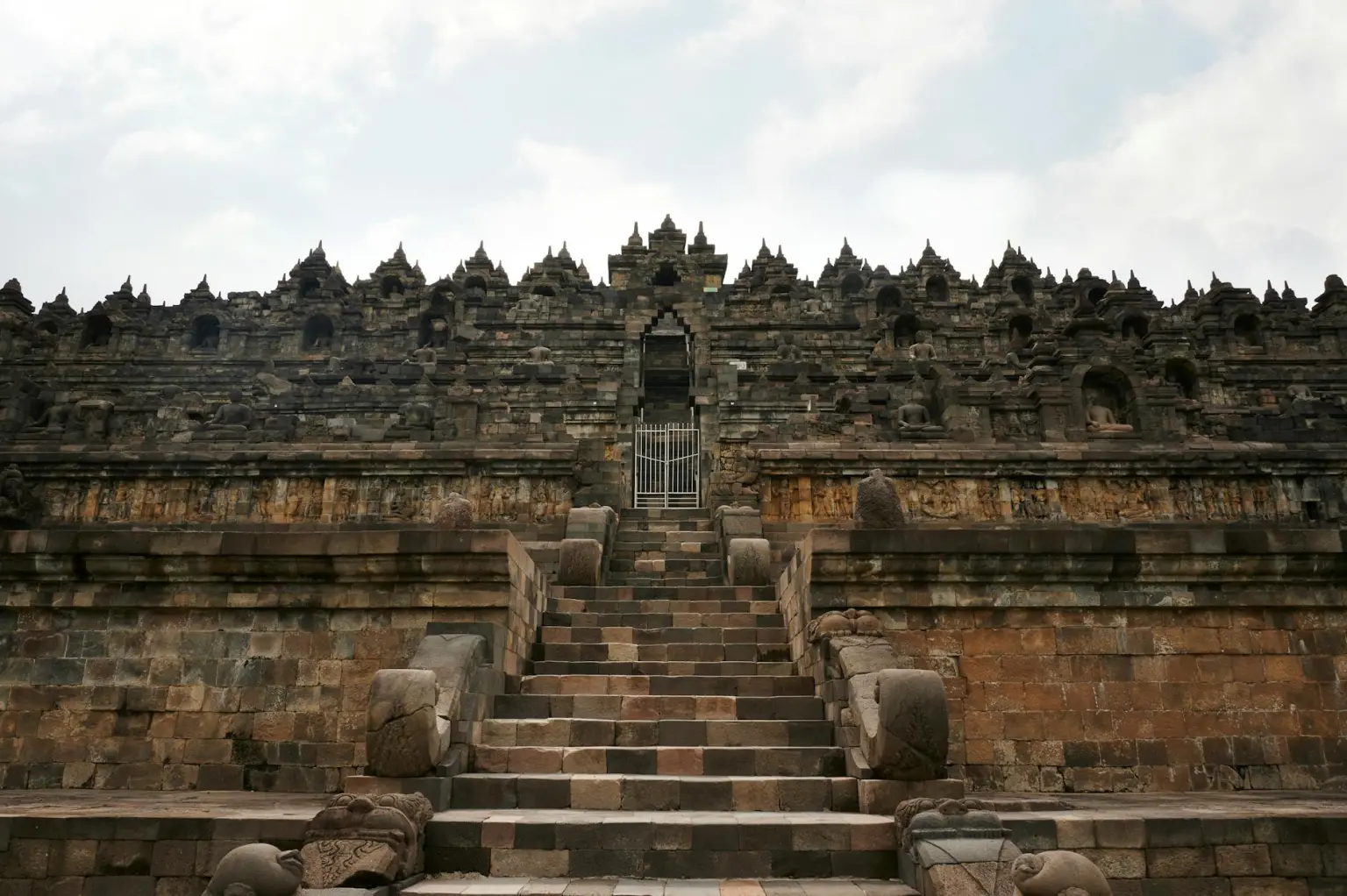
The design of the temple is thought to have been influenced by the doctrine of the Buddhist mandala, which symbolizes the universe in its entirety. The architecture consists of a series of terraces, each representing different stages of enlightenment, leading up to the main stupa at the top. This journey mirrors the path to spiritual awakening, allowing pilgrims to engage in a meditative ascent as they navigate the temple\’s structures.
For centuries, Borobudur served as a significant pilgrimage site, attracting monks and worshippers from across Asia. However, by the end of the 14th century, with the decline of Buddhism in the region and the rise of Islam, Borobudur fell into disuse and was eventually abandoned. It became engulfed by volcanic ash and thick forest, effectively hidden from the world for hundreds of years.
Rediscovery of Borobudur occurred in the 19th century when British governor Thomas Stamford Raffles stumbled upon the ruins while on a surveying expedition in Java. His subsequent efforts led to the first extensive restoration of the temple, drawing international attention to its existence and importance. Raffles’ work laid the foundation for ongoing restoration efforts that would continue into the next century.

Throughout the 20th century, Borobudur underwent several major restoration projects, especially after being threatened by natural disasters like earthquakes. These restoration efforts have not only involved structural repairs but also extensive research into its historical and cultural significance, contributing to our understanding of the temple’s origins and purpose.
Today, Borobudur stands not just as a historical site but also as a symbol of Indonesia\’s diverse cultural heritage, inviting visitors from around the world to explore its rich past. Its recognition as a UNESCO World Heritage site in 1991 further cemented its status as an important landmark in both religious and historical contexts. The temple continues to be a focal point for scholars and spiritual seekers, representing a bridge between the past and the present.
Architectural Design and Features
The architectural excellence of Borobudur is a significant aspect that sets it apart as the largest Buddhist monument globally. Covering an area of approximately 2,500 square meters, the temple boasts 504 Buddha statues and an intricate network of sculpted reliefs that narrate the teachings of the Buddha and depict scenes from Buddhist cosmology. The design embodies the principles of balance, harmony, and proportion, reflecting the spiritual significance of the space.
At the temple\’s base, there are four square platforms that are aligned with the cardinal directions. This square layout symbolizes the earthly realm. Rising above these are three circular platforms, which represent the spiritual realm and the ultimate enlightenment. The main stupa at the top represents the pinnacle of the spiritual journey, encapsulating the essence of Buddhist philosophy.
One of the remarkable features of Borobudur is its intricate carvings, which total over 2,600 relief panels. These carvings depict various stories, including the life of the Buddha, moral lessons, and scenes from Javanese history. The quality of the carvings demonstrates the skill of ancient artisans and provides insight into the societal values and religious beliefs of the era.
Additionally, the temple\’s stupas are designed in a bell shape, indicating the Buddhist concept of dharma. Each stupa contains a statue of Buddha, and when viewed from above, the design resembles a flower, symbolizing the blossoming of enlightenment. This harmonious relationship between the circular and square forms reinforces the temple\’s representation of the cosmos and the path to nirvana.
Borobudur\’s construction utilizes volcanic stone, specifically andesite, which was quarried from nearby mountains. The stones were expertly cut and fit together without the use of mortar, showcasing remarkable craftsmanship and engineering skills. The temple\’s layout promotes water drainage, which has contributed to its longevity, despite the region\’s heavy rainfall.

The temple was also designed with alignment to celestial phenomena, showcasing the advanced understanding of astronomy among the builders. During the Buddhist festivals, architectural features within Borobudur align with the sun, reinforcing its significance as a spiritual site.
The engineering behind Borobudur continues to intrigue architects and historians today. Its ability to withstand natural calamities and the impact of time is a testament to its original builders\’ ingenuity and foresight in design. The temple\’s preservation efforts have focused on maintaining these architectural features, ensuring that future generations can appreciate its historical significance.
In summary, Borobudur Temple stands as an architectural marvel that encapsulates not only the aesthetic values of its time but also the spiritual depth of Buddhism. Its design intricately weaves together the physical, spiritual, and celestial realms, providing meaningful experiences for those who visit.
Cultural Significance and Symbolism
The cultural significance of Borobudur Temple transcends its physical structure; it represents the essence of Buddhism and the rich interplay of history, art, and spirituality. As the largest Buddhist monument in the world, it serves as a vital center for Buddhist practices and cultural exchange, establishing itself as a pilgrimage destination for Buddhists and tourists alike.
Borobudur\’s intricate design is steeped in symbolism, encapsulating core Buddhist teachings. The layout of the temple as a mandala reflects the universe\’s structure and serves as a metaphor for the journey toward enlightenment. As pilgrims ascend through the temple, they navigate 10 levels, each symbolizing different phases of enlightenment – from the worldly to the ultimate spiritual realization. The journey through the temple is not just physical; it is a meditation on the struggles and aspirations inherent in the pursuit of spirituality.
Each relief panel features stories from the life of the Buddha and Jataka tales, which recount the previous lives of the Buddha in his quest for enlightenment. These carvings serve not only as artistic expressions but also as moral and spiritual lessons for followers. The temple\’s iconography emphasizes compassion, mindfulness, and the importance of ethical behavior in achieving spiritual growth.
Borobudur is also representative of the cultural syncretism that characterized ancient Java. The influences of local beliefs and practices are evident in the integration of indigenous symbols into the Buddhist narratives. This blending of traditions resulted in a unique artistic style that reflects the community\’s identity and spiritual landscape.
The significance of Borobudur extends beyond its historical and spiritual dimensions; it also plays a crucial role in contemporary Indonesian culture. The temple is a key national symbol, representing the diversity and unity of Indonesia\’s various ethnic and religious groups. It is celebrated in cultural festivals and events, serving as a backdrop for performances, ceremonies, and gatherings that highlight the nation’s rich heritage.
The temple\’s role as a center for dialogue and educational initiatives further enhances its cultural importance. Borobudur provides a platform for interfaith dialogue, drawing people from various religious backgrounds to learn about Buddhism and understand its teachings. The ongoing cultural programs aim to increase awareness and appreciation of the temple’s historical narrative and its role in promoting peace and tolerance.

In addition, Borobudur has been a focal point for international tourism, attracting millions of visitors each year. This influx of tourists not only contributes to the local economy but also fosters a greater understanding of Buddhist culture among global audiences. However, the challenges of mass tourism also prompt discussions about sustainable practices and heritage conservation, prompting stakeholders to find a balance between accessibility and preservation.
In conclusion, Borobudur Temple embodies a rich tapestry of cultural, spiritual, and historical narratives. Its relevance and significance continue to evolve, making it an enduring symbol of the intersections of faith, culture, and humanity. The temple stands as a testament to the universal pursuit of knowledge, compassion, and enlightenment, inviting all who visit to partake in its sacred journey.
Preservation Efforts and Restoration Projects
The preservation and restoration of Borobudur Temple have been critical to maintaining its structural integrity and cultural significance. As an important UNESCO World Heritage site, Borobudur attracts attention from around the globe, but this comes with the challenge of ensuring its sustainability amid natural disasters, environmental changes, and tourism pressures.
The first major restoration of Borobudur began in the 1900s, when the temple was rediscovered by the British governor Thomas Stamford Raffles. His efforts to clear the site set a precedent for future preservation initiatives. The early 20th-century restoration was focused primarily on structural stabilization, using primary techniques such as reinforcing weakened stones and clearing vegetation that had overtaken the structure.
By the 1970s, with increasing awareness of the temple\’s cultural importance, a comprehensive restoration program was initiated by the Indonesian government and supported by UNESCO. This ambitious project aimed to safeguard Borobudur from potential damages caused by environmental factors, particularly the threat posed by volcanic eruptions from the nearby Merapi volcano, as well as heavy monsoon rains.
The restoration process involved detailed research, documentation, and a combination of traditional and modern techniques. Experts meticulously cataloged the stones, sculptures, and relief panels, analyzing their conditions to decide upon the appropriate restoration methods. This phase emphasized the importance of preserving the original materials while ensuring the structural durability of the temple.
One of the most significant challenges during restoration efforts has been addressing the effects of erosion and moisture. Engineers and archaeologists collaborated to develop effective drainage systems to redirect rainwater and prevent erosion from damaging the intricate carvings and architectural features. This proactive approach has been vital in protecting Borobudur’s stonework from weathering.
In 1991, Borobudur was officially designated a UNESCO World Heritage site, further highlighting its global significance. This recognition has facilitated international partnerships and support for ongoing preservation efforts. As a UNESCO site, Borobudur became subject to rigorous monitoring, ensuring that any threats to its integrity are promptly addressed.
Modern restoration projects have also embraced community engagement and education. Local communities have been encouraged to participate in preservation initiatives, fostering a sense of ownership and responsibility towards the temple. Educational workshops and programs have been established, training local artisans in traditional crafts and restoration techniques, ensuring the knowledge is passed down through generations.
Moreover, there is an increasing focus on sustainable tourism practices that aim to mitigate the impacts of mass tourism. Strategies have been implemented to limit visitor numbers and promote responsible tourism, encouraging visitors to appreciate the temple while also respecting its cultural significance. This integrated approach prioritizes both visitor experience and heritage preservation, creating a balanced relationship between site conservation and tourism.
Borobudur\’s preservation efforts serve as a model for heritage management, demonstrating the importance of collaboration between governments, local communities, and international stakeholders. The ongoing commitment to protect and restore Borobudur ensures that this remarkable cultural landmark continues to stand as a testament to the artistic and spiritual achievements of the past while remaining relevant to future generations.
Borobudur in Contemporary Society
In contemporary society, Borobudur Temple continues to hold a place of profound importance, transcending both regional and international boundaries. As a symbol of Indonesia\’s cultural heritage, it attracts a diverse array of visitors, from devout Buddhists to curious tourists. The temple serves as a focal point for cultural exchange, spirituality, and tourism, making it an essential part of Indonesia\’s national identity.
The impact of Borobudur on modern society is evident in its role as a pilgrimage site for Buddhists from around the world. Annually, thousands of pilgrims visit Borobudur, particularly during Vesak, a significant Buddhist festival that commemorates the birth, enlightenment, and death of the Buddha. During this time, the temple transforms into a lively hub of religious activities, where participants engage in meditation, chanting, and ceremonial rituals that pay homage to their faith.
Engagement with the temple extends beyond religious practices; it encompasses educational initiatives as well. Borobudur serves as a venue for workshops, lectures, and discussions on Buddhism, art, and history. The temple\’s management collaborates with various educational institutions and organizations to promote a deeper understanding of its cultural significance, not only among local communities but also to the international audience.
Moreover, Borobudur has become a significant case study in the fields of conservation and sustainable tourism. The challenges posed by an increasing number of visitors have prompted a dialogue about the balance needed between accessibility and preservation. Studies and initiatives focusing on sustainable practices within the context of tourism are ongoing, with the aim of protecting the temple\’s integrity while still allowing people to experience its splendor.
The tactile experience offered by Borobudur does not only entice visitors from a visual standpoint; it also encourages visitors to reflect on themes of spirituality, history, and cultural identity. The temple\’s intricate carvings and solemn ambiance create an inspiring atmosphere that invites introspection, touching on universal themes that resonate with people from all walks of life.
In addition to its religious and cultural significance, Borobudur plays an essential role in Indonesia\’s economy. As a primary tourist attraction, it stimulates local businesses, including hospitality, crafts, and food services. The temple’s importance is recognized at the national level, with the Indonesian government initiatives promoting Borobudur as part of a broader strategy to enhance cultural tourism across the country, diversifying the economic opportunities available to local communities.
In recent years, digital innovations have also contributed to Borobudur’s accessibility and global reach. Online platforms allow for virtual experiences of the temple, expanding its reach beyond geographic boundaries. This digital engagement facilitates interest and appreciation for Borobudur, as well as an understanding of its rich history, among people who may never have the opportunity to visit in person.
Ultimately, Borobudur Temple stands not just as an ancient relic of the past but as a dynamic site that continues to influence society today. Its rich narrative weaves through the tapestry of history, culture, and belief, continuing to inspire generations with its enduring message of mindfulness, wisdom, and the pursuit of enlightenment.
Conclusion
In conclusion, Borobudur Temple is a monumental symbol of Indonesia\’s cultural and spiritual heritage. Its rich history, architectural grandeur, and intricate storytelling through sculpture and reliefs create a compelling narrative that resonates with visitors worldwide. From its origins in the 9th century as a center of Buddhist worship to its significance today as a UNESCO World Heritage site, Borobudur serves as a bridge connecting the past with the present.
The efforts made to preserve and restore this remarkable temple reflect a commitment to safeguarding cultural legacies for future generations. By fostering a deeper understanding of Borobudur’s historical context, architectural features, and cultural significance, we not only celebrate its past but also enhance its relevance in contemporary society.
As Borobudur continues to evolve, it remains a site of pilgrimage, reflection, and cultural exchange, inviting people of all backgrounds to explore its spiritual depths and historical richness. Ultimately, Borobudur is more than just a temple; it is a testament to the enduring human pursuit of enlightenment, a journey that transcends time and geography, inspiring visitors and scholars alike to further appreciate the complexities of our shared spiritual heritage.








[…] the site continues to inspire curiosity and scholarship. Today, Cahokia Mounds is not only a UNESCO World Heritage Site but also a place of education and reflection, reminding us of the deep human history embedded in […]
[…] a UNESCO World Heritage Site, is one of the most beautiful ancient cities in Myanmar, known for its remarkable skyline filled […]
[…] later a source of inspiration for art and architecture in Sri Lanka. Today, Sigiriya stands as a UNESCO World Heritage Site, attracting thousands of tourists and historians eager to explore its secrets. This article delves […]