Introduction
Griffith Observatory, perched high in the Hollywood Hills, stands as a beloved icon of Los Angeles, bridging the celestial wonders of the universe with the urban landscape of one of the world’s most famous cities. Opened in 1935, the observatory was the vision of industrialist and philanthropist Griffith J. Griffith, who envisioned a public space dedicated to astronomy and education. Over the decades, this celestial gateway has not only become a pioneer in astronomical research but also an important cultural hub, inspiring generations of dreamers, scientists, and artists alike. With its stunning architecture and panoramic views of the stars and the City of Angels, Griffith Observatory has served as a unique intersection of science, culture, and history. This article delves into the Griffith Observatory history, exploring its origins, architectural significance, contributions to public understanding of astronomy, and its lasting influence on film and media.
The Origins of Griffith Observatory
The story of Griffith Observatory begins in the early 20th century, during a time of rapid growth and opportunity in Los Angeles. Established through the initiative of Griffith J. Griffith, a Welsh-born businessman who made his fortune in real estate and other ventures, the observatory is a testament to his foresight and dedication to public service. In 1896, Griffith made a significant donation of land on Mount Hollywood to the City of Los Angeles, with the intention that it be used to build a public observatory. This gesture was part of his larger dream of making astronomy accessible to the general public.
Griffith’s philanthropic aim was to provide an educational facility that would foster a love for science and inspire future generations to explore the wonders of the universe. His vision was articulated clearly in his will, where he bequeathed funds for the observatory’s construction alongside a strong belief in the importance of making complex scientific knowledge accessible to everyone, regardless of their background. He understood the potentially transformative power of educational institutions, especially in a growing metropolis like Los Angeles.
Construction of Griffith Observatory began in 1933, marked by a design competition won by the architect Roger Thomas, who envisioned an Art Deco structure that would blend seamlessly with its natural surroundings. The observatory was built amidst the backdrop of the Great Depression, a time when public works projects were a beacon of hope and economic relief. The opening of Griffith Observatory on May 14, 1935, was a significant cultural event, drawing massive crowds eager to witness the unveiling of a facility that would become a symbol of Los Angeles’ commitment to science and public engagement.
Upon its opening, Griffith Observatory was equipped with a variety of telescopes, including the iconic Samuel Oschin Telescope, which was designed to give the public a firsthand view of celestial bodies and to spark curiosity about the universe. The observatory quickly became a popular destination for both local residents and tourists, offering free public programs and exhibits that made astronomy accessible to everyone.
In the years that followed, Griffith Observatory solidified its place in American culture not just as a scientific facility, but as a community space where individuals from all walks of life could gather to contemplate the mysteries of the universe. The robust public programming, educational initiatives, and outreach efforts contributed to a growing interest in astronomy, science, and related fields, inspiring many to pursue careers in STEM disciplines.
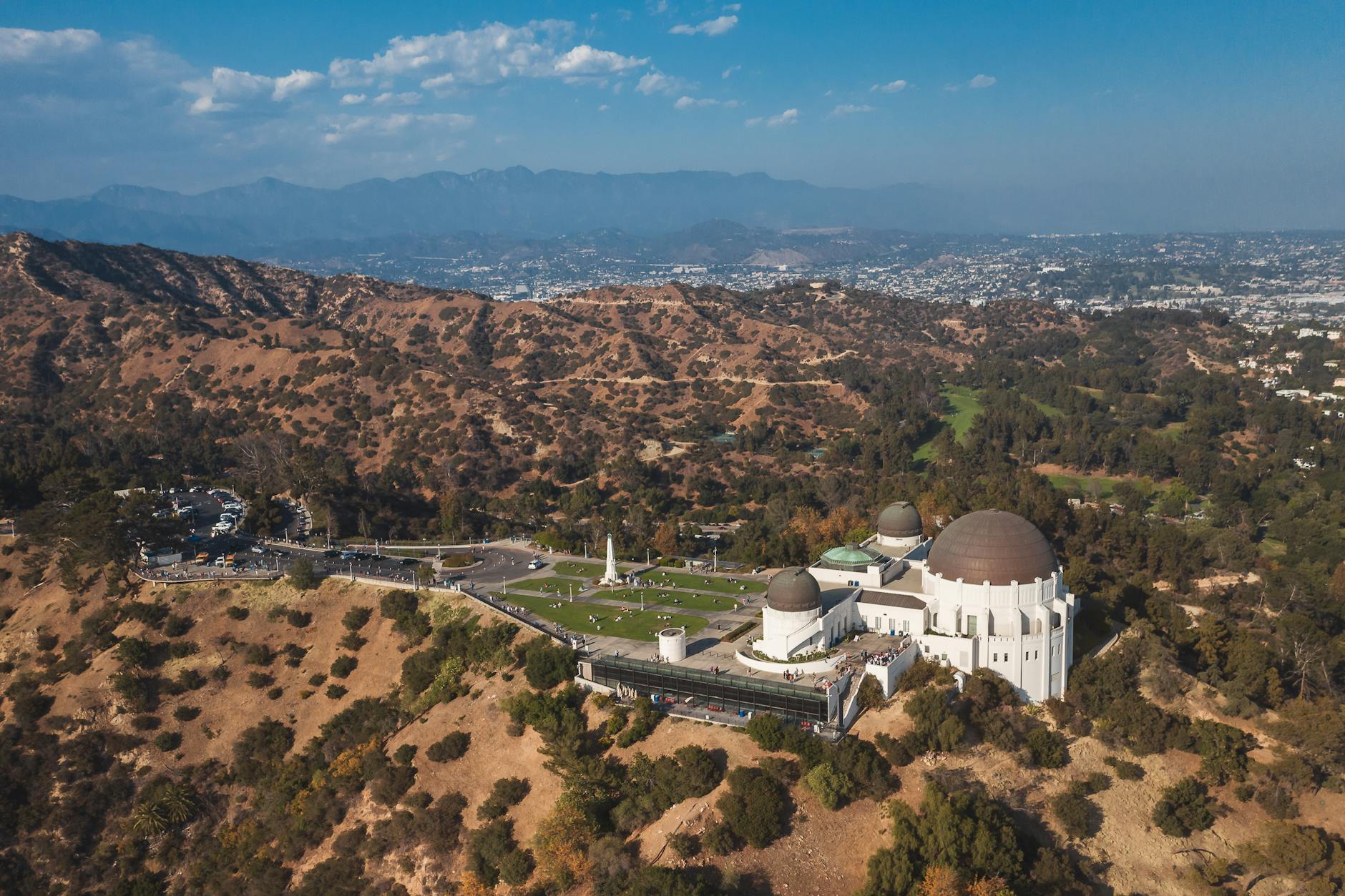
The observatory’s impact was significant—it provided opportunities for hands-on learning and fostered a sense of community among those who frequented its grounds. It attracted educators, families, students, and curious visitors eager to learn about the night sky and the cosmos beyond our planet. Griffith J. Griffith’s dream of democratizing knowledge and making it accessible to all was realized, allowing people to look up and see not just stars, but also the endless possibilities that lay ahead.
Over the decades, Griffith Observatory has adapted to technological advancements and changing educational standards, evolving its programs to meet modern needs while maintaining its foundational mission. From public telescopes to planetarium shows and interactive exhibits, the observatory remains dedicated to engaging the public in meaningful ways, ensuring that Griffith’s legacy lives on through ongoing exploration and education in astronomy.
Architectural Significance and Design
Griffith Observatory is renowned not only for its contributions to science and education but also for its stunning architectural design. The observatory represents a fusion of function and aesthetics, deeply rooted in the Art Deco style that characterized much of early 20th-century American architecture. This section will explore the architectural significance of Griffith Observatory, examining its design elements, materials, and overall impact on the surrounding landscape.
The observatory’s striking facade, adorned with intricate detailing and elegant lines, was deliberately crafted to inspire awe and evoke a sense of wonder about the universe. The structure features a symmetrical design with prominent domes and arched windows, which showcase the beauty of both form and function. This architectural style was particularly popular in the 1920s and 1930s, reflecting a broader aesthetic movement that celebrated modernity and progress.
Key to the observatory’s design is its prominent central dome, which houses the Zeiss refracting telescope. The dome serves as both a functional element, protecting the telescope from the elements, and a symbolic representation of humanity’s quest for knowledge about the stars. The telescope itself was one of the largest of its kind at the time of construction and continues to be a focal point for visitors seeking to observe celestial phenomena.
The observatory’s exterior is made from a combination of locally sourced materials, including concrete and aluminum, that not only enhance its durability but also create a harmonious integration with the surrounding landscape. The use of white concrete gives the structure a luminous quality that reflects sunlight during the day and adds to the dramatic appearance when viewed against the backdrop of the night sky. The observatory’s design also includes beautifully crafted bas-reliefs and murals that depict various astronomical themes, enriching the visitor experience and enhancing the visual narrative of the structure.
Beyond its aesthetic appeal, the observatory was designed with careful consideration of its environmental context. Positioned on the southern slope of Mount Hollywood, Griffith Observatory takes advantage of its elevation, offering breathtaking panoramic views of the Los Angeles skyline and beyond. This strategic placement not only serves to enhance the visitor experience but also reinforces the observatory’s role as a gateway to the stars, inviting discovery and exploration.
An important component of the design process was the collaboration between Griffith and Roger Thomas, who incorporated innovative engineering techniques to ensure the observatory was not only beautiful but also functional. The observatory’s layout was designed to maximize the flow of visitors while providing ample space for exhibits, educational programs, and public outreach initiatives. This thoughtful design approach reflects Griffith’s vision for an inclusive and accessible educational space, where the public could engage with the wonders of astronomy.

In addition to its physical design, Griffith Observatory’s standing as an architectural icon is underscored by its impact on subsequent generations of civic projects in Los Angeles and beyond. It serves as a model for the integration of science, education, and public art, influencing the development of other similar institutions across the country.
The architectural significance of Griffith Observatory is further amplified by its designation as a Los Angeles Historic-Cultural Monument in 1976, acknowledging its importance to the cultural identity and historical narrative of the city. Over time, the observatory has undergone various renovations and restorations to preserve its historical integrity while incorporating modern technologies and amenities for public use.
As a result, Griffith Observatory stands as both a monument to Griffith J. Griffith’s legacy and a testament to the enduring power of architectural design in creating spaces that inspire curiosity and learning. The observatory’s captivating architecture continues to attract millions of visitors each year, inviting them not only to explore the cosmos but also to appreciate the artistry and innovation that went into its creation.
The Role of Griffith Observatory in Astronomy
Griffith Observatory has played a pivotal role in the field of astronomy since its inception, serving as a center for research, education, and public engagement with the cosmos. Central to its mission is the commitment to demystifying the complexities of astronomy, making it accessible to everyone, and cultivating a sense of wonder about the universe. This section explores the various ways Griffith Observatory has contributed to the advancement of astronomy and the public’s understanding of the subject.
One of the primary functions of Griffith Observatory has always been to provide access to telescopes and observational equipment for both amateur astronomers and the general public. The observatory houses several telescopes, including the iconic 12-inch Zeiss refractor, which was the largest of its kind when the observatory opened. This telescope allows visitors to observe celestial objects, such as planets, stars, and the moon, through organized public viewing sessions. These opportunities introduce participants to the beauty and intricacies of the night sky, sparking interest and curiosity in astronomy.
Additionally, the observatory is home to a range of exhibits and displays that educate the public about key astronomical concepts and phenomena. The interactive nature of these exhibits encourages visitors to engage actively with the content and deepens their understanding of space, science, and the universe. The exhibits cover various topics, including the solar system, stars, galaxies, black holes, and the history of space exploration, providing a comprehensive overview of modern astronomy.
Griffith Observatory also plays a significant role in astronomical research, collaborating with local universities and research institutions to contribute to scientific advancements. Astronomers and scientists utilize the observatory’s resources to conduct research, collect data, and carry out observations, furthering our understanding of celestial bodies. This collaborative approach fosters an environment of inquiry and innovation while allowing the observatory to remain at the forefront of astronomical exploration.
Education is a cornerstone of Griffith Observatory’s mission. The facility offers a plethora of educational programs targeting various age groups and skill levels, from school programs to public lectures and workshops. These programs aim not only to disseminate knowledge but also to inspire future generations of scientists, astronomers, and space enthusiasts. The observatory’s educators and volunteers are dedicated to creating engaging learning experiences that highlight the importance of scientific inquiry and exploration.
One of the standout features of Griffith Observatory is its planetarium, which presents captivating shows that transport audiences into the depths of the universe. The Samuel Oschin Planetarium utilizes cutting-edge technology to create stunning visual experiences, allowing attendees to journey through the stars and understand complex astronomical concepts in an immersive and entertaining way. These planetarium shows serve as both educational tools and remarkable artistic experiences, further enriching the visitor experience at the observatory.

Griffith Observatory also hosts events and workshops focused on specific astronomical phenomena, such as meteor showers, eclipses, or planetary alignments. These events often draw large crowds, fostering a sense of community among astronomy enthusiasts and curious onlookers. By encouraging public participation in these events, the observatory nurtures a love for science and promotes a culture of inquiry beyond the walls of the institution.
To further extend the reach of its educational initiatives, Griffith Observatory actively engages with online platforms and social media. By offering digital resources, including virtual tours, live streams of celestial events, and educational videos, the observatory has broadened its accessibility to a global audience, catering to individuals who may not have the opportunity to visit in person.
Overall, Griffith Observatory has significantly impacted the field of astronomy and public education. Its commitment to making astronomy accessible, engaging, and relevant has inspired countless individuals to explore the universe and pursue careers in science, technology, engineering, and mathematics (STEM). With a steadfast dedication to exploration and education, Griffith Observatory continues to serve as a beacon of knowledge, guiding future generations in their quest to understand the cosmos.
Public Outreach and Education Programs
Griffith Observatory’s commitment to public outreach and education is a cornerstone of its mission that reflects Griffith J. Griffith’s vision of making astronomy accessible to all. Through a robust array of programs and initiatives, the observatory engages the community and inspires a love for science and exploration. This section delves into the various public outreach and education programs that have positioned Griffith Observatory as a leader in promoting public understanding of astronomy.
At the heart of the observatory’s educational efforts are its public programs, which are designed to cater to a diverse audience ranging from school groups to families and casual visitors. These programs offer a variety of interactive learning experiences, encouraging participants to explore astronomical concepts hands-on. For instance, the observatory hosts guided tours that introduce visitors to the history, architecture, and scientific significance of the facility. Participants gain insight into Griffith Observatory’s role in fostering curiosity about the universe while enjoying the beautiful views and learning about the equipment used for observations.
Workshops and presentations conducted by trained educators and astronomers serve as another vital component of the observatory’s outreach efforts. These sessions cover a wide range of topics, including the solar system, stars, galaxies, and the science behind telescopes. Engaging presentations utilize visual aids and demonstrations to enhance understanding and captivate the audience’s imagination. Such efforts empower attendees to discover the interconnections between different scientific disciplines and appreciate the importance of astronomy in comprehending the broader questions of existence.
Griffith Observatory places particular emphasis on youth education. The observatory collaborates with local schools and educational initiatives to provide students with hands-on learning experiences that align with science curriculum standards. Field trips to the observatory offer students a chance to explore the cosmos in a tangible way, promoting a deeper understanding of scientific concepts and inspiring future generations of scientists. Additionally, the observatory often participates in outreach events at local schools and community centers, bringing educational resources and programming directly into underserved communities.
One of the standout programs at Griffith Observatory is the “Night Sky Program,†which allows participants to experience telescopic viewing of celestial bodies under the guidance of knowledgeable staff. During these sessions, attendees can observe planets, star clusters, and more, bringing the mysteries of the night sky closer to home. This program is particularly impactful as it fosters a sense of wonder and curiosity about the universe, encouraging participants to ask questions and explore further.
Griffith Observatory’s educational endeavors are further strengthened by its state-of-the-art planetarium, which offers immersive shows that transport attendees through the cosmos. The planetarium hosts frequent multimedia presentations that showcase astronomical phenomena, often highlighting significant scientific advancements or historical events in astronautics. These shows are meticulously designed to educate while providing an enjoyable experience that captivates audiences of all ages.
The observatory also actively engages with the public through innovative outreach initiatives, including live streaming events and interactive social media content. By leveraging technology, Griffith Observatory is able to reach a global audience, sharing scientific discoveries and exciting astronomical events with individuals who may not have the opportunity to visit in person. This commitment to accessibility reflects the observatory’s dedication to inspiring curiosity and promoting lifelong learning.

Throughout its history, Griffith Observatory has recognized the importance of collaboration in expanding the impact of its outreach efforts. Partnerships with local universities, research institutions, and community organizations have allowed the observatory to enhance its educational programming and research initiatives. These collaborations foster an environment of curiosity and engagement, ensuring that visitors receive accurate and up-to-date information based on the latest scientific discoveries.
Another increasingly important aspect of Griffith Observatory’s educational mission is its commitment to diversity and inclusivity. The observatory actively works to create a welcoming and inclusive environment for all visitors, ensuring that its programming reflects diverse perspectives and cultural backgrounds. This dedication to inclusivity is not only beneficial in fostering a sense of belonging but also enriches the learning experience for everyone, promoting a broader understanding of the universe.
In summary, public outreach and education programs are central to the mission of Griffith Observatory. By prioritizing accessibility and engaging the community, the observatory has succeeded in inspiring countless individuals to explore the wonders of the cosmos. Through hands-on programming, collaboration with educational institutions, and innovative use of technology, Griffith Observatory continues to play a vital role in promoting scientific literacy and a passion for discovery.
Griffith Observatory’s Cultural Impact in Film and Media
Griffith Observatory’s significance transcends its scientific contributions, as it has played a prominent role in shaping culture and media, especially in film and television. Its striking architecture and breathtaking views of the surrounding city have made it a sought-after location for filmmakers, resulting in a lasting legacy that intertwines the observatory with the Hollywood narrative. This section explores the profound cultural impact of Griffith Observatory in film and media, examining its representation in popular culture and its broader implications.
The observatory first captured the cinematic spotlight in the classic 1956 film “Rebel Without a Cause,†where it served as a pivotal backdrop for the film’s exploration of teenage rebellion and existential angst. In one of the film’s most iconic scenes, James Dean’s character, Jim Stark, grapples with his identity in the context of the vastness of the universe. The observatory’s presence in the film not only highlights its architectural grandeur but also elevates its symbolic role as a place of contemplation and self-discovery. This portrayal has cemented Griffith Observatory’s reputation as a cultural landmark intertwined with themes of youth, longing, and the search for meaning.
Since then, numerous films and television shows have showcased Griffith Observatory, further solidifying its status as a cultural icon. In the movie “La La Land,†for example, the observatory serves as a romantic setting where characters Mia and Sebastian share a pivotal moment, intertwining themes of dreams, aspirations, and the allure of the stars. Such depictions have contributed to the observatory’s resonance within popular culture, drawing audiences who yearn for a connection to both cinema and the cosmos.
Beyond fiction, Griffith Observatory has also served as a prominent location for documentaries and educational programming, positioning it as a vital resource for informing the public about science and astronomy. Documentaries such as “The Universe†have featured the observatory in segments that explore cosmic phenomena, offering an authoritative perspective on the scientific advancements being made. This representation underscores the observatory’s dual role as both a cultural icon and a center for science education, highlighting its significance in multiple contexts.
In addition to film and documentaries, Griffith Observatory has influenced a diverse range of media, including music and literature. Artists and musicians often reference the observatory in their work, drawing on its rich connotations of exploration, wonder, and inquiry. For example, the observatory has been mentioned in songs that encapsulate themes of love and contemplation, reinforcing its position as an inspiration for creative expression across various forms of media.
Furthermore, the observatory’s cultural impact extends to its presence in virtual spaces, where it serves as a frequently visited location in video games and other digital platforms. As players immerse themselves in virtual reality experiences, Griffith Observatory stands as a reminder of the relationship between humanity and the universe, with its architecture continuing to inspire awe and encourage a sense of adventure.
The cultural significance of Griffith Observatory is also reflected in its outreach efforts, as the observatory actively engages with the arts community through collaborative events and initiatives. Art shows, performances, and community gatherings that take place at the observatory draw connections between the arts and sciences, fostering interdisciplinary dialogue and encouraging creativity in the pursuit of knowledge.
As Griffith Observatory continues to inspire and shape cultural narratives, its legacy remains firmly rooted in the themes of exploration, inquiry, and the human experience amidst the vast cosmos. The observatory’s representation in film and media serves as a testament to its enduring appeal, attracting not only those interested in astronomy but also those captivated by the intersection of art, culture, and science.
In conclusion, Griffith Observatory stands as a significant cultural landmark that extends beyond its scientific role. Its incorporation into popular culture, through film, literature, and the arts, exemplifies its enduring impact on society and its power to inspire curiosity and creativity. As both a gateway to the cosmos and a symbol of Los Angeles, Griffith Observatory continues to resonate with generations, inviting them to explore the mysteries of the universe and our place within it.
Conclusion
Griffith Observatory stands as more than just a building overlooking Los Angeles—it is a symbol of curiosity, imagination, and the pursuit of knowledge. Since its opening in 1935, the observatory has bridged the gap between science and the public, offering generations of visitors the opportunity to explore the mysteries of the universe without barriers. Its founder, Griffith J. Griffith, envisioned a place where astronomy could be accessible to everyone, and his vision has become a living legacy that continues to inspire millions.
From its distinctive Art Deco architecture to its role in popular culture and cinema, Griffith Observatory has become both a scientific landmark and a cultural icon. The breathtaking views of the city below and the stars above serve as reminders of humanity’s place between earth and cosmos. Today, as new discoveries reshape our understanding of space, the observatory remains a gateway to wonder—a timeless beacon encouraging us to keep looking upward and dreaming beyond the horizon.