

Introduction
The story of Apple Inc. is a remarkable narrative of innovation, resilience, and transformation. Founded in 1976 by Steve Jobs, Steve Wozniak, and Ronald Wayne in a garage in Cupertino, California, Apple has evolved from a struggling startup into one of the most valuable companies in the world. Over the decades, it has reshaped entire industries through pioneering products like the Macintosh, iPod, iPhone, and iPad. This article will delve into the rich history of Apple Inc., examining its rising and falling tides, influential figures, and groundbreaking innovations that have defined the technological landscape. By understanding Apple’s past, we can gain insights into its current trends and future directions in the tech industry.
The Founding Years of Apple Inc. (1976-1980)
In the mid-1970s, the world was beginning to experience the personal computer revolution. Among the key players in this emerging landscape were Steve Jobs and Steve Wozniak, whose visionary ideas would soon lead to the birth of Apple Inc.
The company officially came into existence on April 1, 1976, but its roots trace back a little earlier. Wozniak, an electronics whiz, had designed a personal computer called the Apple I, which was essentially a motherboard with basic features but no casing, keyboard, or monitor. Jobs recognized the commercial potential of Wozniak’s invention and persuaded him to sell the computer.
With only $1,300 in funding, they began manufacturing the Apple I in Jobs’ parents’ garage. The Apple I was first sold to a local computer store, “The Byte Shop,” where it garnered attention for its innovative design and ease of use. This early success sparked the idea for a more sophisticated model, leading to the introduction of the Apple II in 1977. The Apple II was a game-changer; it featured color graphics, an open architecture for expandability, and a keyboard with basic input capabilities. This product not only set Apple apart from its competitors but also established the company as a significant player in the burgeoning PC market.
In the early years, Apple faced significant challenges, including stiff competition and financial instability. The company operated on tight margins and was struggling to keep up with the growing demand for its products. Despite this, Apple’s innovative spirit led to the establishment of a strong brand identity, thanks to effective marketing strategies that emphasized its uniqueness.
By 1980, Apple’s initial public offering raised $110 million, which was a record at the time for a technology company. This monumental event marked Apple’s transition from a fledgling startup to a major industry player, allowing it to invest heavily in research and development. The subsequent years would see further innovation and expansion, setting the stage for what would soon become a technological titan in the global market.
The Rise of Apple Inc. to Prominence (1981-1990)
As Apple moved beyond its fledgling years, it became increasingly evident that the company was more than just a one-hit wonder in the personal computer space. The 1980s were defined by pivotal developments that solidified Apple’s position in the technology sector, thanks to innovative products and situations that shaped the industry landscape.
One of the most significant milestones was the launch of the Macintosh in 1984. The Mac was the first successful personal computer to employ a graphical user interface (GUI), making it user-friendly and appealing to a broader audience. Apple revolutionized the way users interacted with computers, moving away from the text-based commands prevalent at the time. The iconic “1984” Super Bowl commercial directed by Ridley Scott effectively captured this innovation and introduced the Macintosh as a tool for championing individualism against conformity.
As the Macintosh gained traction, Apple faced increasing competition, notably from IBM and Microsoft. The latter’s introduction of the MS-DOS operating system and subsequent launch of Windows posed a significant threat. However, Apple maintained a loyal customer base due to its emphasis on design and user experience. In 1985, internal conflicts and power struggles led to Steve Jobs resigning from the company he co-founded. This leadership shift resulted in a more traditional corporate structure, which, while stabilizing the company, lacked the visionary drive of its earlier years.
Innovation did not cease, however, as Apple continued to expand its product line. The late 1980s saw the introduction of various peripheral devices and software applications that complemented the Macintosh ecosystem. The company also ventured into education markets, gaining substantial traction in schools due to the Mac’s user-friendly approach.
While the latter part of the decade was marked by innovative products, Apple struggled with financial instability and market share challenges. The company’s reliance on the Macintosh created an overly narrow focus, neglecting emerging technologies and diversified market segments. Competitive pressures increased, leading to declining profits and growing unease within the organization.
This tumultuous period set the stage for both the challenges and opportunities that lay ahead, as Apple entered the 1990s searching for a renewed sense of direction amid mounting adversity.
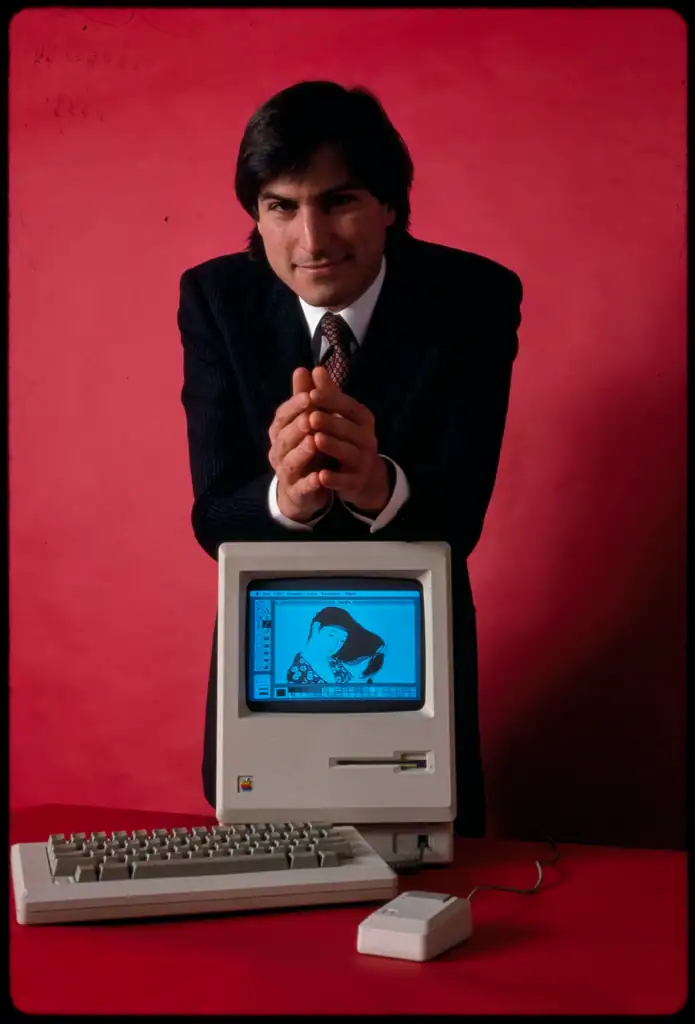
Struggles and Comeback of Steve Jobs at Apple Inc. (1991-1997)
As Apple entered the 1990s, the company faced significant hurdles, with mounting competition from both personal computer manufacturers and software developers contributing to its challenges. The once-thriving Apple struggled to maintain market relevance against the rapidly advancing capabilities of competitors like IBM and Microsoft.
The new decade began with the introduction of the PowerBook line in 1991. While it was well-received, capturing the attention of business users and nomads alike, Apple continued to wrestle with internal strife and external competition. The Macintosh in various forms and iterations failed to resonate strongly in the face of cheaper Windows-based PCs. This led to declining market shares and revenues.
In 1993, Apple launched the Newton, its first foray into the personal digital assistant (PDA) market. Despite innovative features like handwriting recognition, the product was criticized for being under-developed and poorly executed, resulting in a considerable financial loss. The Newton’s struggles further compounded Apple’s woes, leading to further public skepticism about the company’s future.
By the mid-’90s, sales continued to dwindle, and in 1996, Apple found itself in a precarious position with executive shakeups and unsuccessful product lines. The company was losing ground in the personal computer market, and discussions about potential acquisition surfaced. In a desperate bid to innovate, Apple acquired NeXT, a company founded by Steve Jobs after his initial departure. This acquisition would mark a turning point for Apple.
With Jobs re-entering Apple in 1997 as an advisor, a sense of rekindled creativity began to permeate the company. He streamlined the product line and refocused Apple’s efforts on innovation rather than competing solely on price. Jobs’ vision would lead to pivotal changes that would set the foundation for the company’s resurgence.
Jobs introduced “Think Different,” a marketing campaign embracing creativity and individuality. This change in direction allowed Apple to re-establish its brand identity as an innovator, focusing on design, quality, and user experience rather than just functionality.
As the company transitioned towards a more robust and innovative era, Apple began developing products with the potential to capture the modern consumer’s imagination, setting in motion the resurgence that would define the next chapter of the company’s history.

The Steve Jobs Era (1998-2011)
The return of Steve Jobs marked the beginning of a transformative period for Apple Inc. Following his re-emergence in 1997, the company faced a pivotal crossroad, balancing between declining relevance and the potential for market domination. Jobs instilled a renewed spirit of innovation, creativity, and focus that would redefine the company and the technology landscape.
In 1998, Apple launched the iMac, a groundbreaking all-in-one computer that combined aesthetics and functionality. With its distinctive design and vibrant colors, it appealed to a broad audience and revived interest in the Apple brand. The iMac also marked the adoption of USB technology, positioning Apple as a leader in embracing technological advancements. This iconic product restored Apple’s profitability and laid the groundwork for a series of subsequent innovations.
The subsequent years saw the introduction of products that would become staples in modern technology. The iPod, launched in 2001, revolutionized how people listened to music. With its sleek design and user-friendly interface, the iPod became a cultural phenomenon and a symbol of the digital music revolution. The introduction of the iTunes Store in 2003 complemented the iPod’s success by providing a legal and convenient platform for digital music distribution, further cementing Apple’s dominance in the music industry.
As Apple’s reputation grew, so did its ambitions. In 2007, the introduction of the iPhone changed the smartphone landscape forever. The iPhone’s combination of an intuitive touch interface, robust app ecosystem, and sleek design made it revolutionary. As sales skyrocketed, the iPhone established Apple as a powerhouse in the mobile technology space, eclipsing competitors and reshaping consumer habits worldwide.
Following the iPhone’s immense success, the introduction of the iPad in 2010 expanded Apple’s footprint in the market once again, creating an entirely new product category: tablets. The iPad was embraced by consumers and professionals alike, further showcasing Apple’s commitment to innovation and user experience.
The consistent launch of groundbreaking products under Jobs’ leadership positioned Apple as a dominant force in technology. However, this era was not without challenges. Jobs faced ongoing health issues, leading to periods of absenteeism and considerable concern about Apple’s future directions without his visionary guidance. Nonetheless, his relentless drive for perfection, attention to detail, and focus on creating great user experiences would leave a lasting legacy upon his death in 2011.
The Steve Jobs era redefined Apple, transforming it from a struggling technology company into the most valuable corporation in the world. His vision not only influenced the direction of the company but also left an indelible mark on the broader tech industry landscape.
Current Trends and Future Directions of Apple Inc.
After Steve Jobs’ passing in 2011, Apple Inc. entered a new chapter, led by Tim Cook, a seasoned executive who had been with the company for over a decade. Under Cook’s leadership, Apple continued to build on its legacy while navigating the ever-evolving tech landscape.
One of the key developments in recent years is Apple’s commitment to sustainability and ethical practices. In 2013, the company launched the “Environmental Responsibility” initiative, aiming to reduce its carbon footprint and promote renewable energy sources. Apple has made strides in creating a circular economy, ensuring that products are made from renewable materials and are recyclable. This commitment has solidified Apple’s reputation as a socially responsible organization, appealing to environmentally conscious consumers.
Apple also focused on expanding its services segment, which includes Apple Music, iCloud, and the App Store. This diversification marked a shift from relying predominantly on hardware sales to generating revenue through services. In 2020, Apple launched the Apple One subscription service, bundling various services at a competitive price, thus capitalizing on the booming digital services market and enhancing customer loyalty.
Innovation in hardware continued, with the introduction of new iPhone models, such as the iPhone 12 with 5G technology, and various iterations of the Apple Watch, focusing on health monitoring and fitness tracking. The Apple Watch has become a key player in the wearables market, combining technology and health in an accessible way. The company’s foray into augmented reality (AR) holds promise as Apple develops AR glasses and related applications, potentially ushering in a new era of user experiences.
Moreover, Apple has made strides in privacy and security, differentiating itself from competitors. The company actively promotes its commitment to user privacy, offering features such as App Tracking Transparency, which gives users control over how their data is collected and used. This focus on privacy has resonated with users increasingly concerned about data security in today’s digital age.
Looking to the future, Apple’s commitment to innovation and premium customer experiences remains unwavering. The company’s ongoing investment in research and development ensures that it continues to stay at the forefront of technological advancement. As Apple navigates challenges such as regulatory scrutiny and supply chain disruptions, its ability to adapt and evolve will be crucial in sustaining its position as a leader in the tech industry.
Apple Innovations and Market Position in 2025
As we step into 2025, Apple Inc. continues to solidify its stature as a leader in technological innovation and market influence. Building on a robust legacy characterized by groundbreaking products and exceptional user experience, Apple has adapted to evolving consumer demands and market conditions with remarkable agility. This chapter explores Apple’s key innovations and market position, demonstrating how the company has maintained its competitive edge in an increasingly crowded tech landscape.
One of the most notable innovations has been Apple’s commitment to developing cutting-edge augmented reality (AR) technologies. By 2025, Apple has successfully launched its long-anticipated AR glasses, now known as Apple Vision. These glasses have revolutionized the way users interact with multimedia content, seamlessly blending the digital and physical worlds. By utilizing advanced spatial computing and artificial intelligence, Apple Vision allows users to engage with immersive experiences, enhancing everything from gaming to education and beyond. This product positions Apple at the forefront of the AR market, while also appealing to a demographic increasingly interested in new, interactive forms of media.
In addition, Apple has continued to innovate within its hardware offerings. The latest iterations of the iPhone and MacBook series have incorporated state-of-the-art M-series chips, yielding unprecedented performance and efficiency. These advancements reflect Apple’s ongoing investment in custom silicon, enabling devices to run complex applications smoothly while maximizing battery life. The iPhone 15, launched in late 2024, introduced a foldable display, a feature that has garnered immense consumer interest. This leap in design and functionality has not only attracted existing customers but has also lured new users seeking the latest in tech trends.
As a response to the growing global emphasis on sustainability, Apple has further enhanced its Environmental Responsibility initiative. By 2025, the company’s commitment to a carbon-neutral supply chain and product lifecycle has been fully realized. Every newly launched device is now crafted from 100% recycled materials, ensuring minimal environmental impact. This strategic pivot towards eco-friendly practices has not only improved Apple’s brand loyalty among environmentally conscious consumers but has also established the company as a best practice model in the tech industry, influencing competitors to follow suit.
Apple’s services segment has flourished in 2025, providing a significant revenue stream that rivals traditional hardware sales. The Apple One subscription package, which bundles various services including Apple Music, iCloud, and Apple TV+, has garnered millions of subscribers, demonstrating the growing reliance on digital ecosystems. With the successful launch of new original content on Apple TV+ and expanded features within Apple Music, the service has become a significant competitor to established platforms like Spotify and Netflix, further solidifying Apple’s market position.
In terms of market share, Apple has managed to retain its dominance, with a firm hold on both the smartphone and tablet markets. The introduction of innovative features in the iPhone and iPad lines, such as advanced health monitoring capabilities and enhanced connectivity options, places Apple at the forefront of consumer technology. In 2025, the company boasts more than 1.5 billion active devices worldwide, reflecting its broad and loyal customer base.
As we analyze Apple’s innovations and market position in 2025, it becomes clear that the company’s continued success is rooted in its ability to foresee industry trends and adapt swiftly to them. By fostering a culture of innovation and emphasizing sustainability, Apple not only retains its competitive edge but also strengthens its legacy as a transformative force in the technology sector. Moving forward, Apple’s focus on advancing user experience, creating cutting-edge products, and maintaining ethical practices will undoubtedly ensure its status as an industry leader for years to come.
Conclusion
The history of Apple Inc. is a testament to its resilience, innovation, and ability to adapt. From its humble beginnings in a garage to becoming a tech powerhouse, Apple has continually pushed the boundaries of what is possible. Each chapter in its history reflects a unique blend of creativity, strategy, and vision that has shaped not only the company itself but the entire technology landscape.
As we look ahead, Apple stands at the precipice of new opportunities and challenges. The legacy of Steve Jobs and the vision of Tim Cook have laid a strong foundation for the company to continue making its mark on the world. With a commitment to sustainability, a focus on user privacy, and the pursuit of groundbreaking technology, Apple Inc. is poised to continue its journey of innovation and excellence in the years to come.
Sources
- “Apple Inc. History.” Apple.com
- “The Story of Apple.” Wikipedia.com
- “Apple: A History.” Forbes.com
- “The iPhone Timeline.” Theverge.com
- “Apple and Sustainability.” Apple’s Environmental Responsibility








[…] founding of Apple Inc. marked a turning point in the world of technology and computing. In 1976, Steve Jobs teamed up with […]
[…] Subcommittee launched an investigation into Amazon, alongside other tech giants like Google, Apple, and Facebook, to explore antitrust violations and review the implications of monopolistic behavior […]