
Introduction
SpaceX, founded in 2002 by Elon Musk, has revolutionized the aerospace industry with its ambitious goal of reducing space transportation costs and enabling the colonization of Mars. The company’s engineering marvels, including the Falcon 1, Falcon 9, and the Dragon spacecraft, have transformed the way people perceive space exploration. This article delves into the rich history of SpaceX, detailing its inception, significant milestones, and the technological advancements that have positioned the company at the forefront of the space race. With a focus on the innovative spirit and relentless pursuit of excellence, we explore how SpaceX has not only achieved remarkable feats but also inspired a new generation of dreamers aiming for the stars.
The Founding of SpaceX: Vision and Mission
SpaceX, or Space Exploration Technologies Corp., was founded by Elon Musk with a bold vision—to make space travel cheaper and sustainable. Recognizing the need for a new approach to space exploration, Musk sought to develop technologies that would reduce the cost of space missions, thereby making them more accessible. The inception of SpaceX was not just about creating rockets; it was rooted in an overarching mission to colonize Mars, a dream that has been a significant driver for the company since its early days.
Elon Musk’s journey into space entrepreneurship began after his philanthropic efforts in the field of sustainable energy. He became increasingly aware of the challenges facing humanity, particularly the threat of catastrophic events, which further fueled his desire to explore new frontiers beyond Earth. Utilizing his wealth from the sale of PayPal, Musk initially attempted to purchase rockets from Russia. However, when he found that the cost was prohibitively high, he decided to embark on building his own rockets.
In March 2002, he founded SpaceX in El Segundo, California. Armed with a small team of engineers and a clear vision, Musk aimed to design and manufacture fully reusable rockets. The company faced numerous challenges, including skepticism from seasoned aerospace engineers and significant technical hurdles. Many doubted Musk’s ambitious claims, with traditional aerospace players dismissing his efforts as unrealistic.
However, Musk’s determination led to the development of the Falcon 1, the first privately developed liquid-fueled rocket to reach orbit. The path to the successful launch of Falcon 1 in 2008 was fraught with failures; four consecutive failed launches tested the company’s resilience and Musk’s commitment. Despite the setbacks, Musk’s unwavering belief in his mission, paired with his willingness to invest personal funds, kept the dream alive.
The success of Falcon 1 marked a critical turning point, demonstrating that private companies could indeed achieve spaceflight milestones. Following this success, SpaceX did not rest on its laurels but continued to innovate, focusing on the development of the Falcon 9 and Dragon spacecraft. Musk’s vision expanded to include reducing the cost of launch services, eventually leading to partnerships with NASA.
In the early years, the company’s mission was not just to launch satellites but to prove that space access could be significantly affordable and reliable—a concept that had the potential to democratize space exploration. This vision laid the groundwork for SpaceX’s later achievements, including resupply missions to the International Space Station (ISS) and pioneering the commercial crew program.
Critically, Musk instilled a culture of innovation and rapid iteration at SpaceX. Each setback was viewed as an opportunity to learn and improve, leading to groundbreaking technologies such as the reusable rocket system. The initial vision and unwavering commitment to that mission propelled SpaceX from a fledgling startup to a major player in the space industry, igniting interest, investment, and public support for commercial space exploration.
Key Milestones and Achievements in SpaceX’s Early Years
Elon Musk‘s creation of SpaceX was just the beginning of a long journey filled with both triumphs and challenges. One of the cornerstone achievements was the successful launch of the Falcon 1 rocket on March 24, 2006. Although this first attempt ended in failure, it set the stage for relentless innovation and subsequent successes. The critical milestone came on July 4, 2009, when Falcon 1 became the first privately developed liquid-fueled rocket to reach orbit, marking a historical moment in space exploration.
Pushing the boundaries of technology further, SpaceX developed the Falcon 9 rocket, designed for larger payloads and higher frequency launches. The maiden flight took place in June 2010, and the rocket’s advanced design featured a strong emphasis on safety, reliability, and cost-effectiveness. The Falcon 9 quickly gained traction in the commercial satellite launch market, capturing numerous contracts, including those from NASA.
In December 2010, SpaceX achieved another landmark when it successfully launched its Dragon spacecraft, which later became the first commercial spacecraft to reach the ISS in October 2012. This monumental achievement transformed SpaceX’s reputation and demonstrated the viability of commercial partnerships in space exploration. The contract NASA awarded to SpaceX for cargo resupply missions to the ISS through its Commercial Resupply Services program showcased the government’s confidence in the company’s capabilities.
Early into its operations, SpaceX became a pioneer for the new era of commercial space flight. The company’s commitment to reusability was not the only innovative aspect but also its ability to adapt to challenges and its willingness to learn from failures. The aggressive timeline and Musk’s ambitious goals motivated the entire team to push boundaries, moving from concept to successful launch within shorter timeframes than traditional aerospace companies.
SpaceX’s early years set the foundation for a legacy of success, where perseverance in the face of adversity defined the company’s trajectory. The fundamental goal to reduce space transportation costs illuminated the pathway for future advancements, laying the groundwork for even more ambitious projects, including Mars colonization and interplanetary exploration.
The Falcon Rockets: Innovations and Developments
Having established a solid foundation with its initial achievements, SpaceX focused heavily on the development of its flagship rockets: the Falcon 9 and Falcon Heavy. Central to the company’s success was the commitment to innovation, specifically the pursuit of reusable rocket technology, which would drastically reduce the cost per launch—a revolutionary concept in the aerospace industry.
The Falcon 9 was a game-changer, boasting a two-stage rocket design that integrated advanced technologies such as a computer-controlled guidance system and the ability to return to Earth for reusability. The engineering team employed a modular design approach that allowed for various configurations, accommodating a range of payload types. This flexibility made the Falcon 9 an attractive option for diverse customers, from satellite operators to government entities.
In December 2015, SpaceX made history by successfully landing the first stage of the Falcon 9 on solid ground following a launch, which marked a significant leap toward achieving reusability. This accomplishment not only reduced the cost of future launches but also instilled confidence in potential customers about the reliability of the Falcon 9. The success of landing the rocket made it evident that SpaceX was poised to revolutionize the aerospace landscape.
Following this milestone, SpaceX continued to build on its success with systematic advancements. The company introduced the Falcon Heavy in February 2018, a super heavy-lift launch vehicle capable of carrying a payload of over 64 metric tons to low Earth orbit. This rocket was built using three Falcon 9 first stage cores, making it the most powerful operational rocket in the world at the time. The Falcon Heavy’s maiden flight showcased the rocket’s extraordinary capabilities and solidified SpaceX’s position as a leader in heavy payload launches.
The reusability aspect proved to not only be a financial game changer but also environmentally conscious, aligning with Musk’s vision for sustainable space exploration. Each successful recovery and reuse of rocket components provided invaluable data, further refining SpaceX’s technology, and enhancing overall mission reliability. The iterative process allowed engineers to understand the stresses rockets experienced during launch and recovery, leading to substantial improvements in design and performance.
Widespread media attention followed each successful launch, cementing SpaceX’s reputation in the public eye while simultaneously inspiring a new generation of engineers and scientists. Children across the globe began to dream of a future where space travel was commonplace, directly influenced by the achievements showcased by SpaceX.
Critically, the advancements made through the Falcon rocket lineage not only aimed at economic success but also laid the groundwork for interplanetary missions, advanced human spaceflight, and the vision of the Mars colonization project. SpaceX’s innovations set a benchmark for other aerospace companies whilst changing humanity’s approach to space exploration, proving that with the right vision and dedication, the stars are within reach.

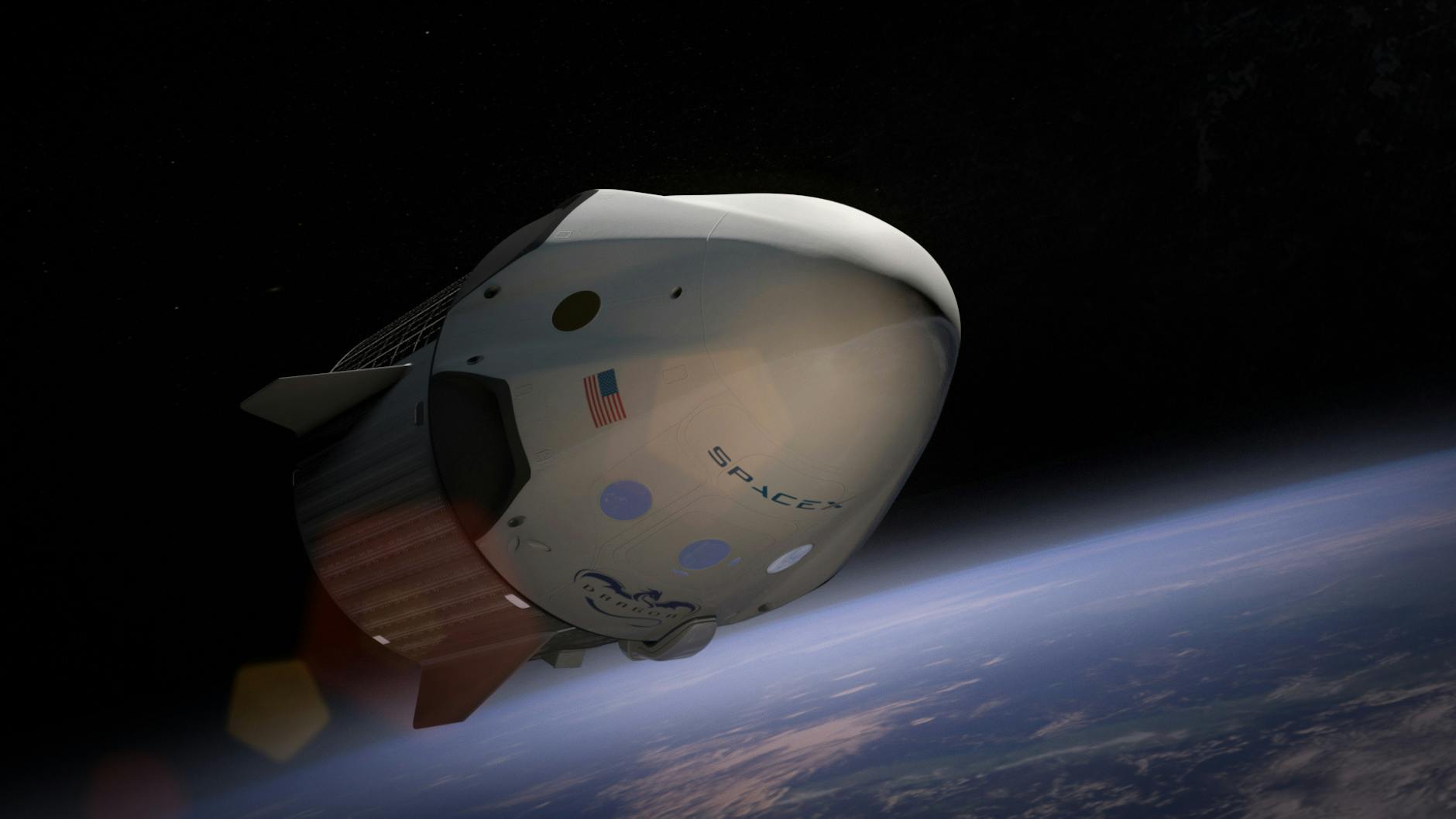
Photo by SpaceX on Pexels.com
Crewed Missions: Advancements and Successes
As SpaceX’s operations evolved, the company expanded its ambitions beyond cargo resupply missions to the ISS, heralding a new chapter in its history: human spaceflight. In partnership with NASA’s Commercial Crew Program, SpaceX aimed to develop the Crew Dragon spacecraft, designed specifically to carry astronauts to and from the ISS—a critical undertaking in the realm of space exploration.
The Crew Dragon was built on the foundation of the uncrewed Dragon spacecraft, incorporating enhancements to meet strict safety and reliability standards required for human spaceflight. The spacecraft was equipped with advanced autonomously controlled systems, ensuring a high degree of safety for crew members during flight. This commitment to crew safety and operational efficiency was paramount, especially as SpaceX prepared for its first crewed launch.
On May 30, 2020, SpaceX achieved a monumental milestone with the launch of the Demo-2 mission. This marked the first crewed flight of a commercially developed spacecraft, transporting NASA astronauts Robert Behnken and Douglas Hurley to the ISS. The journey was witnessed by millions across the globe, reviving public interest in spaceflight and reinforcing the capabilities of private space enterprise. The successful docking of Crew Dragon with the ISS demonstrated that commercial partners could effectively contribute to the ongoing operations of the orbiting laboratory.
Following the success of Demo-2, SpaceX continued to strengthen its crewed missions by implementing regular operational flights. The company has since completed multiple Crew Dragon missions under NASA’s Commercial Crew Program, successfully transporting astronauts to the ISS while simultaneously enhancing its technology and operational paradigms.
The Crew Dragon spacecraft featured a revolutionary launching format using the Falcon 9 rocket, where the streamlined design of the launch system reduced overall flight time while maximizing payload capacity. Crew Dragon’s capacity to carry up to seven astronauts demonstrated the potential for significant crew rotation and long-term missions, heightening the possibilities for extended research aboard the ISS.
Moreover, each crewed mission offered valuable experiences that contributed to the continuous improvement of space travel technologies. Feedback from the astronaut crews pertaining to the spacecraft’s design, operations, and user experience guided subsequent enhancements, ultimately leading to a more refined system that prioritized astronaut safety and operational efficiency.
SpaceX’s success in the realm of crewed missions set a new standard in the industry, showcasing the potential for commercial space travel while rekindling widespread public enthusiasm about human exploration beyond Earth. The achievements of Crew Dragon paved the way for future ventures, providing essential insights needed to embark on larger-scale missions, including those targeting lunar and Martian exploration.
Future Aspirations: Mars and Beyond
Elon Musk’s iconic ambition for SpaceX has always been to make humanity a multi-planetary species. The ultimate vision is to establish a self-sustaining city on Mars, requiring an unprecedented amount of planning and innovation in space travel and logistics. The roadmap to achieving this lofty goal includes the development of the Starship system, an advanced spacecraft designed to transport crew and cargo across vast interplanetary distances.
Starship is envisioned as a fully reusable spacecraft capable of carrying up to 100 metric tons of payload, functioning as both a launch vehicle for deep space missions and a planetary lander. The design highlights the shift toward an integrated transportation system, with the spacecraft intended to undergo rapid reusability, drastically reducing the cost of access to space.
SpaceX has conducted numerous flight tests of Starship prototypes, showcasing innovations in materials, propulsion systems, and landing capabilities. Each test flight, whether successful or not, has provided valuable data contributing to the ongoing improvements and design refinements of the spacecraft. The iterative testing process has become a hallmark of SpaceX’s approach, where lessons learned from each attempt rapidly influence future designs.
Mars colonization raises profound challenges, such as life support systems, sustainable habitats, and the logistics of transporting diverse cargo and human crews over significant distances. SpaceX’s initiative recognizes that colonizing Mars requires not only technology but also a carefully orchestrated infrastructure capable of sustaining long-term human life.
Furthermore, beyond Mars, Musk envisions SpaceX facilitating missions to other celestial bodies, including the Moon. The company has engaged with NASA’s Artemis program, working to develop and integrate Starship as a lunar lander for upcoming crewed missions to the Moon. This collaboration underscores SpaceX’s role as a catalyst for advancing humanity’s exploration beyond low Earth orbit.
The aspirations of Mars and beyond represent the convergence of technological innovation, bravery, and human curiosity. SpaceX has redefined what is possible within the aerospace industry, igniting a spark of hope and wonder among people worldwide. The initiative to explore new worlds feeds into humanity’s collective imagination and scatter dreams of exploration across generations.
As SpaceX continues to push the boundaries of technology and inspire the imagination, the possibility of a new frontier awaits—not just in reaching Mars but extending the horizons of human exploration through interplanetary travel.
Conclusion
The evolution of SpaceX from its humble beginnings to a cornerstone of modern aerospace innovation exemplifies the transformative power of vision and determination. With its bold ambition to make space travel affordable and promote human colonization beyond Earth, SpaceX has changed the landscape of space exploration. Each achievement—from the successful launches of Falcon 1 and Falcon 9 to the revolutionary Crew Dragon missions—has laid the groundwork for future endeavors.
With aspirations set on Mars and beyond, SpaceX continues to inspire individuals worldwide, instilling hope in the idea of a multi-planetary future. The continuous advancements in rocket technology, the dedication to safety in crewed missions, and the relentless pursuit of a sustainable interplanetary presence illustrate how innovation can redefine humanity’s relationship with the cosmos. As SpaceX prepares for the next chapter in its journey, its vision of space exploration remains a beacon of possibility, urging society to reach for the stars.
Sources
- SpaceX Official Website
- NASA Commercial Crew Program Resources
- News Articles from Space.com and The Verge
- “Elon Musk: Tesla, SpaceX, and the Quest for a Fantastic Future” by Ashlee Vance
- Various online academic publications on aerospace engineering and space policy







[…] companies that have established themselves at the forefront of the space tourism industry. Notably, SpaceX, founded by Elon Musk, has achieved numerous milestones, such as launching astronauts to the […]