
Introduction
The Louvre, one of the world’s most renowned museums, stands as a testament to centuries of art, culture, and history. Its iconic glass pyramid entrance contrasts sharply with the ancient stone fortress that once guarded the city of Paris. This transformation from a medieval stronghold into a cultural beacon is a history woven with the threads of political power, artistic patronage, and changing societal values. Originally constructed in the late 12th century as a fortress under King Philip II, the Louvre has undergone numerous renovations and expansions throughout its existence. Each phase has left an indelible mark on its architecture and collection, leading to its current status as a hub for artistic and historical treasures. This article delves into the noteworthy phases of the Louvre’s evolution, revealing how it became a masterpiece museum that continues to inspire millions of visitors each year.
The Origins of the Louvre
The Louvre’s story begins in the late 12th century during the reign of King Philip II, who ordered the construction of a fortified castle to protect Paris from potential threats, especially from the English during the Hundred Years’ War. This structure, known as the “Louvre Fortress,” was strategically located along the Seine River, allowing for efficient surveillance and defense. As Paris expanded, the fortress’s purpose evolved, transitioning from a military stronghold to a royal residence.
By the 14th century, the fortress was no longer deemed necessary for defense, and Charles V transformed it into a royal palace. Under Charles, the Louvre was refurbished, boasting lavish interiors and rich art collections. This early accumulation of artworks set the stage for the museum’s future. The transition from a fortress to a royal residence also marked a significant shift in perception of the Louvre, shaping its future as a center for culture and art.
The Renaissance era brought further transformation with the accession of Francis I in 1515. The king was a passionate patron of the arts who sought to elevate France’s cultural status. Francis I initiated the renovation and extension of the Louvre, enlisting notable artists and architects of the time, including Leonardo da Vinci. The influence of Italian Renaissance art is palpable in the Louvre’s architecture, including the introduction of classical elements such as columns and vaulted ceilings.
The decision to amass an art collection culminated in the acquisition of numerous artworks, including masterful pieces from Italy. The Louvre began to house not only royal treasures but also collections that included paintings, sculptures, and antiquities from different cultures and periods. This period laid the foundation for the museum’s diverse and expansive collection.
As time progressed, the Louvre continued to evolve, reflecting the monarchy’s changing needs and the fluctuating political landscape. Louis XIV, after relocating the court to Versailles, overlooked the Louvre for a time, leading to periods of neglect but also allowing its collection to grow without interruption. These early years were crucial in solidifying the Louvre’s place in history as not merely an architectural feat but as a growing repository of France’s artistic heritage.
With the advent of the French Revolution in 1789, the Louvre’s destiny shifted drastically. The revolutionary leaders sought to democratize access to art by transitioning the royal collections into public galleries. In 1793, the Louvre was officially opened as a public museum, showcasing approximately 537 paintings, many of which were confiscated from the nobility. This pivotal moment established the Louvre as a place where art could be appreciated by all, a significant departure from its previous existence as a private royal collection.
From its inception as a medieval fortress to its evolution into a royal palace and ultimately to a public museum, the Louvre’s origins reflect the broader historical and cultural transformations within France. The early adaptations of the Louvre not only highlight the importance of security and power dynamics but also underscore the growing appreciation for art as a defining aspect of national identity. This legacy set the stage for the museum’s rich history, leading to upgrades, expansions, and a continuous adaptation of its mission to connect people with art.
The Renaissance Transformation
The Renaissance period marked a dramatic turning point in the Louvre’s history, transforming it from a medieval royal fortress to a symbol of artistic ambition and cultural renaissance. The architectural changes under King Francis I were groundbreaking, as they incorporated elements of Italian Renaissance styles, including symmetry, proportion, and use of columns. This transformation represented not only a shift in architectural trends but also a cultural awakening in France, as the king sought to align his kingdom with the illustrious cultural ideals of Renaissance Italy.
Francis I’s passion for art was not merely for personal pleasure; it was deeply political. He envisioned a France that rivaled Italy in cultural and artistic prestige. His acquisition of artworks, particularly through relationships with artists like Leonardo da Vinci, catalyzed the development of a rich artistic dialogue in France. The Louvre began to host works from the likes of Michelangelo and Raphael, heralding its transformation into a center for artistic expression.
Furthermore, this shift aligned with a broader societal yearning for knowledge and beauty. The Renaissance was not only a celebration of art but also a reawakening in philosophy, science, and literature. Within the walls of the Louvre, these themes coalesced, fostering an environment where ideas could flourish. This rich tapestry of Renaissance thought began to attract scholars, artists, and thinkers to Paris, making the Louvre a hub of intellectual activity.
Louis XIV further expanded the Louvre’s significance. Though he primarily resided in Versailles, he recognized the importance of the Louvre as a cultural center. His Baroque artistic taste influenced the Louvre’s interiors, with grand halls being remodeled to reflect opulence and artistic grandeur. Under Louis XIV, the Royal Collections significantly increased as he amassed numerous artworks, reinforcing the Louvre’s status as a leading center for the arts in Europe.
The architectural evolution continued with the addition of the Cour Carrée and the construction of the famous Colonnade, designed by architect Claude Perrault. These enhancements not only amplified the Louvre’s grandeur but provided a stage for the artistic treasures it housed. The aesthetic appeal of the Louvre during this period transcended architecture; it was a merging of art, nature, and human creativity.
As the Louvre amassed artworks and evolved into an architectural masterpiece, it started to represent the power and aspirations of the French monarchy. It became synonymous with France’s identity as a cultured nation, capable of competing with its European neighbors. The Renaissance Renaissance transformation of the Louvre was not merely an architectural endeavor; it embodied a larger cultural narrative of renewal and aspiration, paving the way for the establishment and conception of the Louvre as a public museum in the years to come.
The Revolution and the Birth of a Museum
The political upheaval during the French Revolution brought a seismic shift, radically altering the Louvre’s purpose and function. With the fall of the monarchy in 1789, revolutionary forces aimed to democratize French society, which included redefining access to culture and the arts. The Louvre became one of the first institutions designed to serve the public, bridging the gap between the elite and the masses.
The transformation started with the confiscation of royal collections, which had previously been the privilege of the aristocracy. These artworks, once hoarded within private galleries, were repurposed as a collective national heritage designated for public enjoyment. The Louvre officially opened its doors as a museum in 1793, showcasing a collection of approximately 537 artworks. This radical shift laid the foundation for a new vision: art was no longer the sole domain of the privileged; it became an essential element of national identity accessible to all citizens.
The museum’s inaugural exhibition embraced revolutionary ideals by presenting artworks that epitomized the values of liberty, equality, and fraternity. The Louvre became a stage where the cultural aspirations of the new republic could be realized. Notably, artworks from the nobility were complemented by pieces reflecting everyday life and revolutionary themes, allowing for a diverse representation of society. With this reimagining of art collections, the Louvre did not just exhibit paintings and sculptures but presented a narrative deeply intertwined with the revolutionary spirit of the era.
In the following years, the museum expanded steadily as more art was seized from aristocrats and religious institutions. This accumulation enriched the museum’s offerings, allowing it to present works from various regions and styles—from classical antiquities to modern European masters. This eclectic mix symbolized the blending of new republican ideals with the remnants of ancient customs, showcasing not just art but a narrative of historical continuity.
The transformation of the Louvre into a public museum also highlighted emerging debates about art’s purpose in society. Art was no longer only viewed as a reflection of power but became a vital instrument for cultural and social engagement. Access to the arts was now recognized as a public right, and the Louvre’s role shifted beyond mere exhibition to become an educational platform, fostering a sense of community and national pride among citizens.
As the revolution progressed, the Louvre continued to evolve, mirroring the political climate of the time. The museum became a site of complex interactions between governance, culture, and society. It attracted artists, intellectuals, and revolutionaries, making it a mosaic of the nation’s evolving identity. The ideas explored within the museum walls resonated throughout society, influencing art and cultural production while simultaneously providing a forum for new ideas to emerge.
Eventually, after the tumult of revolutionary fervor, the Louvre emerged not just as a symbol of French cultural identity but as a representation of modern museum concepts. The revolutionary transformation marked a pivotal moment in art history, setting the stage for the Louvre’s present-day legendary status. It transitioned from a royal convening point to a place that embodies public dialogue surrounding art, culture, and societal values.
Modern Expansions and Renovations
The 19th and 20th centuries heralded substantial changes for the Louvre, as modern expansions and renovations reshaped its physical and aesthetic landscape. As the population of Paris swelled and the city’s role on the global stage intensified, the Louvre faced the challenge of accommodating burgeoning crowds of visitors and an expanding collection.
In the mid-19th century, during the reign of Emperor Napoleon III, significant renovations were initiated to expand the museum and enhance its architectural grandeur. The Louvre underwent an ambitious transformation under the direction of architect Hector Lefuel, who added the impressive Richelieu Wing to the museum. This expansion not only increased the gallery space but also celebrated the rich artistic legacy of the museum with additional exhibition rooms.
One of the most notable elements of these renovations was the integration of modern lighting and layout strategies that accommodated a growing number of visitors. The 19th century saw a surge in public interest in museums and galleries; the Louvre’s curators recognized the need to optimize the exhibition of its myriad treasures. A reorganization of the collections led to the creation of themed galleries, allowing visitors to experience art in a more coherent manner.
The efforts to modernize the Louvre extended beyond architecture. In 1863, the Salon des Refusés was established within the museum, a reception that showcased works deemed “unworthy” to be exhibited in the official salon. This event highlighted the Louvre’s role as a crucible for artistic experimentation and advocacy for new movements. It was a critical acknowledgment of burgeoning modern artistic expressions that stood against conventional norms.
As the 20th century unfolded, the Louvre continued to adapt to the changing landscape of art and culture. The devastating impact of World War II led to adaptations not only in the museum’s operations but in its mission. Measures were taken to safeguard its collections, including the transport of artworks to various locations across France, demonstrating the museum’s commitment to art preservation, even amid turmoil.
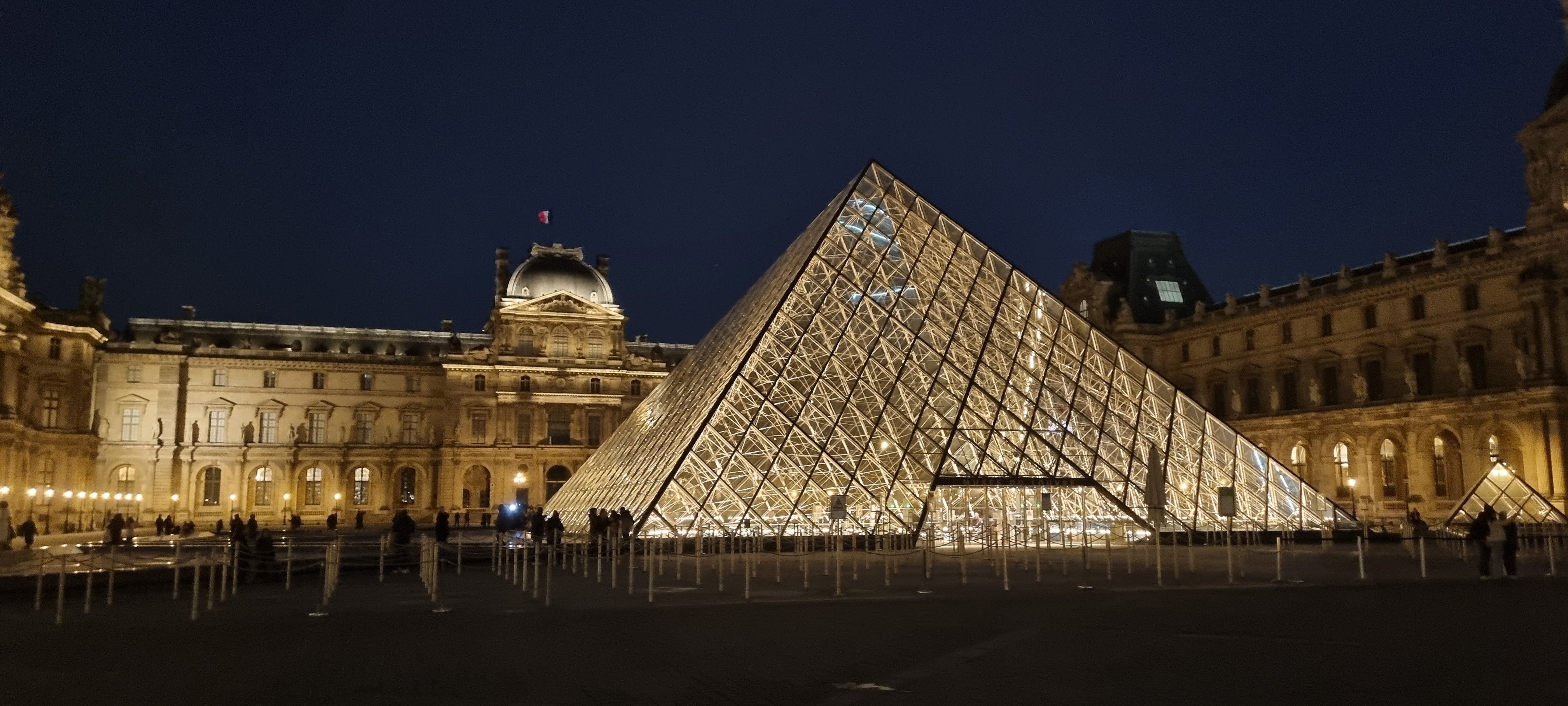
After the war, the Louvre faced new challenges, including the need to modernize its infrastructure while respecting its historical significance. In the 1980s, the museum embarked on an ambitious renovation project under the leadership of President François Mitterrand. This initiative aimed to revitalize the museum and included the groundbreaking design of the glass pyramid by architect I. M. Pei, which came to symbolize the fusion of modernity and tradition.
The glass pyramid, inaugurated in 1989 as the museum’s main entrance, transformed the visitor experience. It effectively connected the historical palace with contemporary architectural aesthetics, creating a dialogue between the past and the present. The pyramid allowed natural light to flood the underground reception hall while still honoring the grandiosity of the Louvre itself.
Furthermore, the renovations improved accessibility for a global audience, providing clear pathways and services for visitors. Enhanced multimedia guides, educational programs, and exhibitions became integral components of the Louvre’s mission, catering to the diverse audience that flocked to the museum.
As the museum approached the 21st century, its expansion continued, with ongoing initiatives to better serve its visitors and protect its collections. Modernization efforts focused on the integration of technology in exhibitions, allowing for dynamic engagement with art and history. Through responsive design and a commitment to accessibility, the Louvre has become a beacon of artistic and educational engagement.
The modern expansions and renovations have transcended mere architectural alterations. They have enabled the Louvre to navigate the evolving landscape of culture and society while preserving its historical narrative. The sustained dedication to modernization maintains the Louvre’s status as a pioneering cultural institution and a venerated museum recognized across the globe.
The Louvre Today: A Cultural Icon
Today, the Louvre stands as a global symbol of culture, art, and history, embodying centuries of transformation and growth. From its origins as a medieval fortress to its current status as one of the world’s most visited museums, the Louvre encompasses a rich tapestry of artistic achievement and cultural dialogue.
With over 38,000 artworks spanning from antiquity to the 21st century, the Louvre offers a comprehensive snapshot of human creativity. Iconic pieces such as the “Mona Lisa,” the “Venus de Milo,” and the “Winged Victory of Samothrace” draw millions of visitors every year, establishing the museum as a pilgrimage site for art enthusiasts. Its incredible collection reflects not just European masterpieces but also significant artifacts and artworks from cultures around the globe, encompassing a mosaic of traditions and narratives.
The Louvre’s commitment to accessibility has expanded its reach beyond the confines of the museum’s walls. Educational programs for schools, online exhibitions, and partnerships with global institutions have fostered cultural engagement. The museum has embraced digital technologies, facilitating virtual tours and interactive experiences that allow audiences around the world to connect with its treasures. This emphasis on outreach reflects a commitment to sharing art and culture in an increasingly digital age while ensuring that art is not just preserved, but interpreted and appreciated by new generations.
In recent years, the Louvre has also taken steps to address contemporary themes in its exhibitions, exploring issues of race, colonialism, and the role of art in society. These dialogues provide contextual layers to the artworks on display, inviting visitors to reflect on the broader implications of art within historical and social frameworks. This evolution mirrors society’s growing recognition of the nuances of cultural representation and the importance of inclusivity in artistic narratives.
Furthermore, the Louvre has faced challenges, particularly amid the global pandemic, which necessitated the closure of museums worldwide. It demonstrated resilience by adapting to these circumstances, implementing health and safety measures to protect visitors while navigating unprecedented operational difficulties. The responses to these challenges showcased the Louvre’s commitment to maintaining its relevance and ensuring the continuity of its mission.
As a cultural icon, the Louvre’s landscape will continue to evolve, navigating the intersection of tradition and innovation. Its role as a custodian of artistic heritage remains pivotal in an ever-changing world, ensuring that art continues to inspire, educate, and ignite dialogue. The journey from a medieval fortress to a revered masterpiece museum is not merely a tale of bricks and mortar but a narrative of humanity’s collective aspirations and creative achievements.
Conclusion
The history of the Louvre is a compelling narrative of transformation, resilience, and cultural significance. Its evolution from a medieval fortress to a masterpiece museum encapsulates the rich complexities of art and history, serving as a reflection of changing societal values and political landscapes. Each phase of its development is marked by key moments that have defined its mission, shaping its role in the preservation and celebration of human creativity.
The Louvre today stands as a testament to the enduring power of art and its ability to connect people across time and space. Through ongoing renovations, modern expansions, and a commitment to accessibility, the museum continues to adapt to the needs and aspirations of global audiences. The diverse collection it houses serves not only as a repository of significant cultural artifacts but as a platform for dialogue, education, and inspiration.
Ultimately, the Louvre is more than just a museum; it is a vibrant cultural institution that embodies the richness of human expression while inviting reflection on our shared heritage. As it navigates the challenges and opportunities of the future, the Louvre’s legacy will undoubtedly persist as a beacon of art and culture, continuing to illuminate the minds and hearts of generations to come.







[…] story of the Palace of Versailles begins with King Louis XIII, who first recognized the potential of the serene forests of Versailles […]
[…] The Louvre Museum, located in the heart of Paris, is the epitome of cultural richness. Originally a royal palace, the Louvre opened its doors as a public museum in 1793 during the height of the French Revolution. Today, it is the world’s largest art museum and a historic monument, attracting millions of visitors every year. Walking through its grand halls is akin to stepping back in time, with each piece of art telling a story of humanity’s journey. […]
[…] The Louvre Museum is one of the most famous and visited museums in the world, housing an unparalleled collection of art and historical artifacts. Originally a medieval fortress, it was transformed into a royal palace before becoming a public museum in 1793 during the French Revolution. Today, it stands as a testament to artistic and historical grandeur, drawing millions of visitors annually. […]