

Introduction
Paris, often referred to as the “City of Light,” is one of the most iconic and visited cities in the world. Renowned for its rich history, breathtaking architecture, and vibrant culture, Paris is home to some of the most famous landmarks on the planet. From towering monuments to historic cathedrals, each site tells a unique story of the city’s past and present. Whether you are an art lover, history buff, or simply an admirer of beautiful places, Paris offers something for everyone. This article takes you on a journey through five of the city’s most celebrated Paris landmarks: the Eiffel Tower, the Louvre Museum, Notre-Dame Cathedral, the Champs-Élysées with the Arc de Triomphe, and Montmartre with the Sacré-CÅ“ur Basilica. Each of these locations embodies the essence of Paris, providing an unforgettable experience for visitors from all over the world.
The Eiffel Tower: The Symbol of Paris
The Eiffel Tower stands as the most recognizable symbol of Paris and perhaps even France itself. Designed by Gustave Eiffel and completed in 1889 as part of the Exposition Universelle, this iron lattice tower was initially met with criticism from artists and intellectuals. However, over time, it has become an enduring emblem of architectural innovation and cultural significance. Standing at 330 meters tall, the tower offers breathtaking panoramic views of the city from its observation decks.
Visiting the Eiffel Tower is an unforgettable experience. Tourists can ascend to the top via elevators or, for those seeking adventure, climb the stairs to the second level. Each level presents a different perspective of Paris, from the winding Seine River to the grand boulevards below. The tower is especially magical at night when it twinkles with thousands of sparkling lights, creating a mesmerizing spectacle.
Beyond its aesthetic appeal, the Eiffel Tower has played an essential role in history, serving as a military radio transmission tower during World War I and continuing to be a vital telecommunications hub. Today, it remains one of the most visited monuments in the world, welcoming millions of tourists annually.
The Louvre Museum: Home to Timeless Masterpieces
The Louvre Museum is one of the most famous and visited museums in the world, housing an unparalleled collection of art and historical artifacts. Originally a medieval fortress, it was transformed into a royal palace before becoming a public museum in 1793 during the French Revolution. Today, it stands as a testament to artistic and historical grandeur, drawing millions of visitors annually.
One of the museum’s most celebrated works is Leonardo da Vinci’s Mona Lisa, a painting renowned for its enigmatic smile and masterful technique. Alongside it, masterpieces such as The Winged Victory of Samothrace and Venus de Milo showcase the artistic brilliance of ancient civilizations. The museum’s vast collection spans centuries and cultures, including works from the Renaissance, Egyptian antiquities, Islamic art, and more.
The Louvre itself is an architectural marvel, featuring the iconic glass pyramid entrance designed by I. M. Pei, which has become a symbol of modernity blending with history. Visitors can spend hours—or even days—exploring its galleries, each revealing a different chapter of human creativity and history.
Notre-Dame Cathedral: A Gothic Marvel
Notre-Dame Cathedral is one of the most famous Gothic cathedrals in the world, standing proudly on Île de la Cité in the heart of Paris. Construction began in 1163 and continued for nearly two centuries, resulting in an architectural masterpiece that has witnessed centuries of French history. With its towering spires, intricate sculptures, and stunning rose windows, Notre-Dame remains an awe-inspiring site.
The cathedral is well-known for its role in literature, particularly in Victor Hugo’s The Hunchback of Notre-Dame, which brought renewed appreciation for the structure in the 19th century. Visitors are often drawn to its detailed façade, which includes statues of saints, gargoyles, and biblical scenes that tell stories of faith and devotion.
Inside, the cathedral’s vast interior, with its soaring vaulted ceilings and magnificent stained-glass windows, creates a breathtakingly spiritual atmosphere. Though it suffered a devastating fire in 2019, restoration efforts continue to bring Notre-Dame back to its former glory, ensuring that future generations can appreciate its historical and artistic significance.
The Champs-Élysées and Arc de Triomphe: The Heart of Parisian Grandeur
The Champs-Élysées is one of the most famous avenues in the world, stretching from Place de la Concorde to the Arc de Triomphe. Lined with luxury boutiques, historic cafés, and theaters, it is a vibrant center of Parisian life and culture. Known as “the most beautiful avenue in the world,” it is a must-visit destination for tourists and locals alike.
At the western end of the avenue stands the Arc de Triomphe, a monumental structure commissioned by Napoleon in 1806 to honor the French army. Inspired by ancient Roman architecture, it features detailed sculptures and inscriptions commemorating military victories. Visitors can climb to the top for a breathtaking view of Paris, including a perfect alignment with the Eiffel Tower.
The Champs-Élysées is also a venue for major celebrations, including Bastille Day parades and the final stage of the Tour de France, solidifying its place in French history and culture.
Montmartre and the Sacré-Cœur Basilica: The Bohemian Spirit of Paris
Montmartre, a historic district in northern Paris, has long been associated with artists, writers, and free-spirited creatives. Its narrow, winding streets lead to the Sacré-Cœur Basilica, a stunning white-domed church that sits atop the highest point in the city. Built in the late 19th and early 20th centuries, the basilica stands as a place of peace and reflection, offering a panoramic view of Paris.
The area was once home to legendary artists such as Picasso, Van Gogh, and Toulouse-Lautrec, making it a hub of artistic innovation. Visitors can still feel this creative energy in Place du Tertre, where street artists and performers showcase their talents.
Montmartre is also known for the famous Moulin Rouge, the birthplace of the modern can-can dance. Whether exploring its artistic roots, admiring its historic charm, or simply enjoying the breathtaking views, Montmartre remains a must-see for anyone visiting Paris.
Conclusion
Paris is a city that never ceases to inspire and captivate visitors. Its landmarks, each rich in history and significance, offer a glimpse into the past while standing as vibrant parts of the present. From the awe-inspiring heights of the Eiffel Tower to the artistic treasures of the Louvre, from the Gothic grandeur of Notre-Dame to the lively atmosphere of Montmartre, Paris is a mosaic of culture and beauty. Walking its streets, one can feel the essence of centuries past blending seamlessly with the modern charm of today. Whether you visit for a short stay or a long exploration, these iconic landmarks will leave an indelible mark on your memory. Paris is not just a city—it is an experience, an emotion, and a story waiting to be discovered.

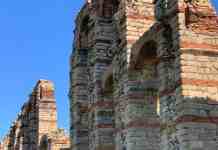






[…] Architecture of Paris has evolved tremendously over the centuries, with each period leaving an indelible mark on the […]
[…] during the reign of King Philip II, who ordered the construction of a fortified castle to protect Paris from potential threats, especially from the English during the Hundred Years’ War. This […]