Introduction
The Moon race was not just a pursuit for scientific knowledge but also a pivotal moment in history, deeply intertwined with the geopolitical tensions of the Cold War. As the United States and the Soviet Union vied for supremacy, the desire to land a human on the Moon became a symbol of national pride and technological prowess. As we delve into the era of the Moon race, we uncover the narratives that shaped this remarkable journey, underscoring the significance of technological advancements and the fierce competition between two world superpowers. Spanning several decades, this race not only captivated the imagination of millions but also laid the foundation for future explorations beyond our planet. In this article, we will meticulously examine the origins, technological breakthroughs, key players, significant milestones, and the enduring legacy of the Moon race.
Origins of the Moon Race: The Cold War Context
The Moon race emerged in the late 1950s amid escalating tensions between the United States and the Soviet Union, two superpowers engaged in a fierce Cold War. The launch of Sputnik 1 by the USSR on October 4, 1957, marked the onset of the space age and caught the United States by surprise. This achievement was not merely about sending a satellite into orbit; it was a demonstration of technological and military capability. For the United States, the Sputnik crisis catalyzed a national response that would lead to a vigorous pursuit of space exploration.
In reaction to Sputnik, the U.S. government increased funding for scientific education and advanced research. The National Aeronautics and Space Administration (NASA) was established in July 1958, embodying America’s commitment to regaining its stature in space exploration. The Sputnik launch heightened fears of Soviet dominance in technology, prompting the U.S. to prioritize its own space program.
The geopolitical landscape during this period was defined by propaganda and a quest for supremacy. Both superpowers believed that achieving significant milestones in space exploration would solidify their status on the world stage. The Moon, as the most visible celestial body, became the ultimate prize in this rivalry, serving as a powerful symbol of triumph and superiority.
As the 1960s approached, events intensified the urgency of the race. The U.S. government responded decisively to the Soviet achievements, outlining ambitious goals for its space program. President John F. Kennedy famously addressed a joint session of Congress on May 25, 1961, declaring the ambitious goal of landing a man on the Moon before the decade’s end. This declaration galvanized a nation and galvanized immense resources and talent towards the space program.
In this charged atmosphere, the Cold War objectives played a significant role in shaping the approaches of both NASA and the Soviet space program. While the U.S. aimed to demonstrate democracy’s capabilities and the importance of individual effort, the Soviet Union emphasized collective achievement and state support. The contrasts in ideologies influenced everything from research priorities to mission execution.
Additionally, the cultural climate surrounding the Moon race was characterized by fascination with science fiction and the possibilities of space travel. Films, literature, and media fueled a public yearning for knowledge and adventure beyond Earth, inspiring a new generation of scientists and engineers. The idea of exploring the cosmos began to resonate not just with scientists but with the general populace as well.
The Moon race’s origins are thus rooted in a complex interplay of political rivalry, technological innovation, and cultural fascination. As both nations embarked on this journey, they would confront not only the immense challenges of space travel but also the ideological battleground that surrounded them. Thus, analyzing the origins of the Moon race offers crucial insights into how human ambition and competing ideologies can drive extraordinary achievements.
The Role of Technology and Innovation in Space Exploration
The Moon race was fundamentally propelled by a series of groundbreaking technological advancements that transformed the capabilities of space travel. A myriad of innovations in rocketry, telemetry, navigation, and materials science played pivotal roles in enabling both the United States and the Soviet Union to achieve their lunar ambitions. These developments were not spontaneous; rather, they were the culmination of years of research, experimentation, and, in many cases, trial and error.
Rocket technology stood at the forefront of the Moon race. The USSR had initially set the tone with the R-7 Semyorka, the world’s first intercontinental ballistic missile (ICBM). This technology became the basis for the Soviet space program, including the launch of the Vostok spacecraft that carried the first human into space, Yuri Gagarin. The ability to deliver payloads into orbit was essential for both nations, and the advancements in propulsion that were derived from military rocket technology helped establish a foundation for future missions to the Moon.
In the U.S., NASA leveraged the expertise of various aerospace engineers and scientists, many of whom were brought in from the German rocket program after World War II. The Saturn V rocket, developed under the Apollo program, showcased technical prowess with its multi-stage design and unprecedented thrust. It became the primary launch vehicle for Apollo missions, including the historic Apollo 11 mission that successfully landed the first humans on the lunar surface. The development of Saturn V integrated both existing knowledge and innovative methodologies, epitomizing the spirit of collaboration that defined the American approach.
Telemetry and communication technology also underwent rapid evolution during this period. Missions to the Moon required precise tracking and data transmission capabilities, and systematic advancements in radio technology were essential. Both the U.S. and USSR invested heavily in developing ground control networks capable of managing the complex, high-stakes maneuvers required throughout each mission.
Navigation technology witnessed unprecedented advancements as well. Early space missions relied on celestial navigation techniques or pre-computed trajectories. However, as missions grew in complexity, innovative systems including inertial navigation were developed. These systems used gyroscopes and accelerometers to deliver real-time positioning and orientation data, crucial for the precise maneuvers needed during lunar orbit and landing.
Materials science played a significant role in the Moon race as well. The challenges posed by the harsh environment of outer space necessitated the development of lightweight, durable materials capable of withstanding extreme temperatures and radiation. Innovations in alloys, composites, and insulating materials allowed spacecraft to be designed more efficiently, contributing not only to mission success but also to the safety of astronauts.
Finally, the technological advancements during this period ignited a broader interest in STEM fields. The competition fostered a culture of innovation and feasibility within both nations’ educational systems. Scientists and engineers inspired by the excitement of space exploration propelled forward advances that would reverberate across various industries.
In conclusion, the Moon race was a monumental endeavor underpinned by technological evolution driven by a sense of urgency and ambitious goals. The race catalyzed developments that shaped not just the missions to the Moon but laid the groundwork for future space exploration and scientific discovery in our pursuit of the cosmos.
Key Players: NASA vs. USSR
The Moon race was characterized by the intense rivalry between NASA, representing the United States, and the Soviet space program. Each organization aimed to showcase their technological prowess and natural superiority, leading to impressive achievements in the field of space exploration. As each country developed its strategies and capabilities, individual contributions and organizational prowess dramatically impacted the course of the Moon race.
NASA was established as a response to the Soviet Union’s early space accomplishments, and as its success in the space race became evident, the agency sought to achieve monumental goals. President John F. Kennedy’s 1961 announcement propelled NASA forward. Under the guidance of visionary administrators and engineers like Wernher von Braun, the space agency set its sights firmly on the Moon. The Apollo program became NASA’s flagship mission architecture, encompassing deep investments in research and technology, training of astronauts, and the coordination of various operations necessary to achieve the goal of a lunar landing.
The Soviet space program, officially known as the Soviet Space Program, was rigorous, well-resourced, and led by prominent figures such as Sergei Korolev, the chief designer and mastermind behind a range of successful missions. The Soviets were the first to achieve significant milestones, including launching the Sputnik satellite, sending the first human into space, and achieving the first spacewalk. Their early successes established a formidable reputation in the realm of space exploration. However, despite their rich history of milestones, they faced challenges in developing the technology necessary for a crewed lunar landing.
An essential aspect of this competition was the focus on astronauts and cosmonauts. NASA implemented a rigorous selection and training program for its astronauts, creating a cadre of highly skilled individuals who would undertake the daunting task of traveling to the Moon. The Mercury and Gemini programs included preparations for long-duration space missions and skill development in weightlessness and reentry. The Apollo Astronaut Corps eventually emerged, leading to a spirit of cooperation among the astronauts, cementing a shared sense of purpose as they readied for lunar missions.
In contrast, the Soviet program maintained a higher degree of secrecy, and the cosmonauts operated under the guidance of state directives and limited public interaction. Their training emphasized collaboration and as a result, the Soviet cosmonauts received accolades and support as national heroes. The generalized secrecy often surrounded the realities of progress within the Soviet space program, particularly during the race to the Moon.
While both NASA and the Soviet program made strides to maintain their respective advantages, criticisms and internal challenges emerged within each organization. NASA’s Apollo program faced budgetary constraints, political scrutiny, and immense pressure to meet the ambitious timeline set by the president. Similarly, the Soviet program faced issues like internal rivalry, which often hindered its ability to transition smoothly from human-centered missions to those targeting lunar landings.
Ultimately, the competition between NASA and the Soviet space program highlighted the cultural, political, and technological contrasts in their approaches. The race fostered innovation while instilling a sense of urgency, leading to momentous achievements that defined an era of human exploration.
Major Milestones: Events That Shaped the Moon Race
The Moon race was marked by a series of monumental milestones that defined its trajectory and ultimately culminated in humanity’s first steps on the lunar surface. These milestones reflect the intense competition, the rapid development of technology, and the expansion of knowledge about space beyond Earth’s atmosphere. Each event stands as a testament to human ingenuity and perseverance in the pursuit of astronomical exploration.
The space race began on October 4, 1957, with the launch of Sputnik 1, the first artificial satellite, by the Soviet Union. This momentous occasion marked not only the start of the space age but also ignited a sense of urgency in the United States to compete in what was perceived as a new frontier for national prestige. The U.S. response included substantial increases in funding for science and technology education, leading to the establishment of NASA in July 1958, which would play a pivotal role in the Moon race.
The next major milestone came in 1961 when Yuri Gagarin became the first human to journey into space aboard Vostok 1. This achievement was met with worldwide attention and admiration, but it also heightened concerns in the U.S. about falling behind in the space race. In response, President Kennedy famously declared the goal of landing a man on the Moon by the end of the 1960s, setting into motion NASA’s Apollo program and framing the Moon as the next great challenge of human exploration.
The early Apollo missions laid the groundwork for future lunar exploration. Apollo 1 tragically ended in disaster with the loss of three astronauts during a test, underscoring the risks of manned spaceflight. However, subsequent missions, such as Apollo 8, which orbited the Moon in December 1968, provided crucial insights and set the stage for the upcoming landing attempts. Apollo 8’s broadcast revealed Earthrise from lunar orbit, an iconic image that symbolized the fragility of our planet and invoked a sense of global unity.
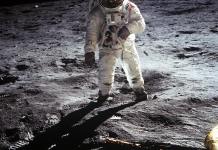
On July 20, 1969, Apollo 11 achieved the historic lunar landing, becoming the first mission to successfully deposit humans on the Moon. Neil Armstrong and Buzz Aldrin stepped onto the lunar surface, making an indelible mark on history while Michael Collins remained in lunar orbit. The world watched in awe as Armstrong famously declared, “That’s one small step for man, one giant leap for mankind.” This milestone epitomized not only technological triumph but also the spirit of exploration that has underscored human history.
The subsequent Apollo missions further solidified the legacy of lunar exploration. Apollo 12, 14, 15, 16, and 17 took place between 1969 and 1972, each contributing valuable scientific knowledge and samples from the lunar surface. These missions advanced our understanding of lunar geology, and provided insights about the origins of the Moon and its relationship with Earth. The scientific findings from these missions continue to shape our understanding of planetary science.
The culmination of the Moon race can be seen in its aftermath. The technological advancements birthed from this era laid the groundwork for future space exploration efforts including the Space Shuttle program and the International Space Station. The race’s underpinnings resulted in a global focus on the broader implications of space travel, propelling both collaborative and competitive efforts among nations.
Today, the milestones achieved in the Moon race are not only historical events; they serve as inspiration for future generations of space explorers, scientists, and dreamers. The concerted efforts that culminated in the Moon landings remind us of the potential of human imagination and determination as we look toward the stars.
The Legacy of the Moon Race and Its Impact on Future Space Exploration
The conclusion of the Moon race by the early 1970s marked not the end of space exploration, but a transformative legacy that would influence the direction of human endeavors in space for decades to come. The achievements of the Apollo program not only exemplified the capabilities of technology but also ignited public interest and excitement around space exploration. The cultural, educational, political, and scientific ramifications of this period remain relevant to contemporary society and will continue to inspire future generations of space enthusiasts.
One of the most significant legacies of the Moon race is its enduring impact on global cooperation in space exploration. As nations began breaking barriers to reach beyond Earth, the successful missions of the Apollo program served as a powerful symbol of what humanity could achieve through collaboration. This spirit of partnership has extended into international efforts such as the International Space Station, which represents a coalition of spacefaring nations working together towards common goals in scientific research and exploration.
In scientific terms, the Moon race radically transformed our understanding of both the lunar environment and planetary science. The samples gathered during the Apollo missions yielded invaluable data on geology, lunar history, and the solar system’s origins. Researchers utilized these findings to develop new theories regarding the formation of celestial bodies and the dynamics of planetary systems. Even today, ongoing analysis of lunar samples continues to offer insights into geological processes and evolution across the solar system.
The technological advancements made during the Moon race catalyzed innovation that extended well beyond space exploration. Pioneering developments in materials science, rocketry, telecommunications, and engineering resulted in breakthroughs that permeated numerous commercial and military sectors. Many technologies originally developed for space missions have found applications in fields such as medical imaging, environmental monitoring, and telecommunications. The era also sparked interest in STEM education, inspiring generations of scientists and engineers, and promoting a culture of scientific inquiry.
The legacy of the Moon race is also entwined with public perception and inspiration. The iconic imagery and narratives surrounding the achievements of human spaceflight captured the imagination of people around the globe. This excitement continues to resonate today, as evident in the resurgence of interest in space exploration, including missions to Mars and atmospheric explorations of diverse celestial bodies. The successful landings on the Moon galvanized popular support for continued investment in space, with both private and public sectors embracing the quest for knowledge beyond our home planet.
Political ramifications of the Moon race are equally significant. The intense competition between the U.S. and the USSR during this period shaped foreign policy discussions and decisions related to science and national security. The pursuit of lunar exploration illustrated the significance of maintaining technological superiority, leading to ongoing investments in research and innovation. While geopolitical tensions remain, the historical context of the Moon race serves as a reminder of the power of exploration to unite rather than divide.
Furthermore, the Moon race’s legacy extends into the future with renewed ambitions for lunar exploration and eventual colonization. Recent missions from various nations and entities emphasize the importance of returning to the Moon to establish a sustainable presence, facilitate scientific research, and lay the groundwork for deeper space missions to Mars and beyond. Plans for lunar bases, the Artemis program, and ambitious goals regarding human endurance in space continue to echo the pioneering spirit initiated during the original Moon race.
In conclusion, the legacy of the Moon race is one of triumph rooted in exploration, innovation, and a perpetual drive to expand the horizons of human knowledge. As we continue to look for new frontiers in space, the remarkable achievements and stories from this era will serve as guiding lights, inspiring future generations to reach for the stars and pursue their aspirations with determination.
Conclusion
The history of the Moon race serves as a profound reminder of human ambition and creativity, encapsulating a defining moment in the annals of exploration. From the Cold War’s geopolitical complexities to the technological advancements that arose, the journey to the Moon was forged through passion, competition, and collaboration. The milestones achieved during this time not only illuminated the paths taken by NASA and the Soviet space program but also set the foundation for international cooperation and scientific advancement.
The legacy of the Moon race continues to propel humanity forward as we seek to explore beyond our planet and unlock the mysteries of the universe. The accomplishments of the Apollo program resonate today, inspiring new generations to undertake their explorations and pursue ambitious visions for future ventures into space. It is our responsibility to carry forward the torch of exploration, cherishing the achievements of the past while facing the possibilities of the future. Together, as we navigate the stars, we honor the spirit of those who first ventured beyond Earth, reminding us of the infinite potential that lies in the pursuit of knowledge and the quest to explore the unknown.
Sources Consulted
- NASA. “Apollo 11 Mission Overview.” nasa.gov
- Smithsonian National Air and Space Museum. “The Space Race.” si.edu
- Smithsonian Magazine. “The Moon Landing: A 50-Year Legacy.” smithsonianmag.com
- European Space Agency. “The Role of the Moon in Space Exploration.” esa.int
- History.com. “Space Race.” history.com