Introduction
The Sulawesi cave art, discovered in Indonesia, has emerged as a groundbreaking revelation in the study of prehistoric human expression. These ancient artworks, dating back over 40,000 years, provide invaluable insights into the cognitive and cultural development of early humans. They depict not only animals and human figures but also abstract symbols that challenge our understanding of the creative capabilities of our ancestors. The significance of these findings extends beyond the confines of the caves, influencing our comprehension of art, cultural narratives, and the evolution of human thought. This article delves into the Sulawesi cave art history, exploring the archaeological discoveries, the contextual background of these artistic expressions, and the implications they have on our understanding of humanity\’s past.
Overview of Sulawesi Cave Art Discoveries
The cave art of Sulawesi, Indonesia, has astonished researchers and historians alike with its age and complexity. Discovered in the limestone caves across the region, these artworks are among the oldest known examples of human artistic expression. The Sulawesi cave sites, including Leang Timpuseng, Leang Oha, and Leang Buratan, have yielded remarkable paintings that have redefined our understanding of prehistoric art.
Initial discoveries began in the late 20th century, but it wasn\’t until recent years that advanced dating techniques revealed the true antiquity of these artworks. Radiocarbon dating of charcoal from the cave paints suggests that these artworks date back to at least 40,000 years ago, making them contemporaneous with the caveman art found in Europe, such as the famous Lascaux cave paintings in France. The significance of the dating process cannot be understated; it highlights not only the early emergence of artistic expression but also the complex social structures that likely accompanied it.
The images in the caves feature a range of subjects. Among the most significant are the depictions of wild animals, including the anoa (a type of buffalo), and human figures that appear to engage in various activities. Some of these figures have been interpreted as shamanistic or ritualistic in nature, suggesting a deep connection between art, spirituality, and social organization in early human communities.
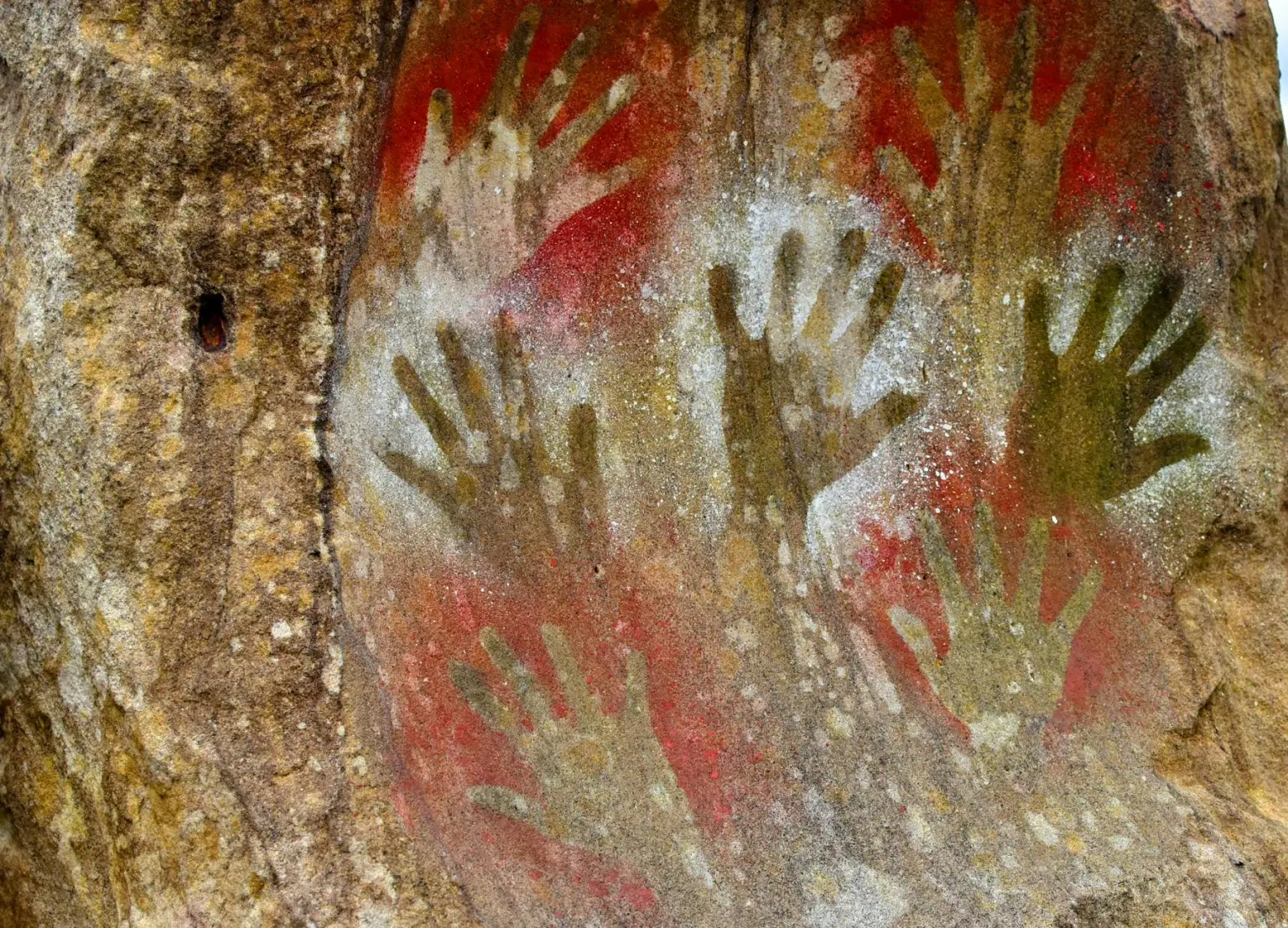
Moreover, the presence of hand stencils—where individuals blew pigment onto their hands to create outlines—serves as a poignant reminder of the personal involvement of the artists. These stencils offer a glimpse into the identity and social connections of the individuals who created them. This aspect adds a layer of intimacy to the art, as it represents not only a creative endeavor but also a way for these individuals to assert their existence and place within the world.
Despite the age of the Sulawesi cave art, it raises numerous questions about the cognitive and cultural capabilities of early human populations. The production of such detailed and symbolic art indicates that these societies likely possessed complex languages, shared beliefs, and rich narratives—a stark contrast to previous views that depicted early humans as mostly simplistic in their expressions and lifestyle.
Ongoing research into these cave sites continues to unveil more about the motivations and lives of the artists. Investigations are being conducted on the pigments used in the cave art, revealing the natural resources available to these early humans for creating vivid colors that have withstood the test of time. Further studies have also focused on the spatial arrangement of the artworks within the caves, examining how the layout may evoke different meanings and interpretations.
In conclusion, the discoveries of cave art in Sulawesi are incredibly significant as they not only enrich our knowledge of prehistoric human expression but also challenge and expand the narrative of human cognitive evolution. As excavations and studies progress, they will invariably shed light on further nuances of early human culture, offering a more comprehensive understanding of how our ancestors perceived the world around them.
Historical Context of Early Human Expression
The discovery of Sulawesi cave art invites a deeper exploration into the historical context of early human expression, serving as a critical bridge between primitive existence and the complex civilizations that followed. To comprehend the origins of these artistic endeavors, it is essential to consider the evolutionary and societal developments leading to the creation of such artwork.
Humans, evolving from a common ancestor with primates, developed language, social structures, and increased cognitive abilities that set them apart. The capacity for abstract thought is a defining characteristic of our species, paving the way for creativity, including art. This ability likely emerged out of necessity—humans needed to navigate their environments, communicate ideas, and create social bonds. As such, the origins of cave art can be traced back to the fundamental drives for survival, social interaction, and cultural expression.
The period during which Sulawesi cave art was created coincides with the Upper Paleolithic era, a time marked by significant advancements among human populations. During this era, known for its hunter-gatherer societies, early humans exhibited an increasing understanding of their surroundings, and their ability to manipulate materials became more sophisticated. The cave artists of Sulawesi were not only focusing on survival but were likely also engaged in rituals and storytelling, as evidenced by the diverse iconography presented in their paintings.
To contextualize these artworks within the broader spectrum of early human expression, it is vital to examine notable findings in contemporary regions. For instance, the cave art in Europe, particularly in sites such as Chauvet and Lascaux, demonstrates similar themes but showcases differing styles and focuses. While European cave art often emphasizes large game animals, Sulawesi\’s imagery includes both fauna and human figures, suggesting cultural variances in symbolic representation and social significance.
The cave art in Sulawesi also reflects the interactions between early humans with their environment. Animals depicted in the artwork may represent important resources for hunting or serve as vessels for ritual significance. The rich biodiversity of Sulawesi, with its unique fauna such as the babirusa and the aforementioned anoa, is mirrored in the art, providing clues to the everyday lives and interactions of its creators.
As anthropologists and archaeologists study this art, they recognize it as a vehicle for understanding early human spirituality. The depiction of figures involved in activities is thought to signify ritualistic practices, which might illustrate the beginnings of shamanistic or animistic beliefs. The act of representing these figures indicates a desire to convey stories, a crucial element in the evolution of cultural identity and shared experiences among groups.
Moreover, the social dynamics of the time heavily influenced the production of art. As small groups banded together for mutual aid and protection, the need to communicate effectively became paramount. Cave art possibly served not only as a form of expression but also as a means of storytelling and shared memory among group members. This shared experience fostered unity and identity within early human societies, contributing to the establishment of kinship networks.
In the contemporary world, the exploration of cave art continues to yield insights into the foundations of human creativity and social organization. The historical context surrounding Sulawesi cave art showcases a compelling intersection of biological, social, and environmental factors that played a role in shaping human expression. This foundation serves as a lens through which we can appreciate the evolution of artistic endeavors and the significance of art within human history.
Techniques and Materials Used in Cave Art
The techniques and materials employed in the creation of Sulawesi cave art reveal the ingenuity and resourcefulness of the early artists, unlocking further appreciation for their artistic endeavors. The methods used in these ancient paintings not only reflect the skill level of the artists but also their understanding of the environment and available resources.
One of the most notable techniques discovered in the Sulawesi caves is the use of natural pigments. The caves exhibit a range of colors including red, yellow, and black, which were derived from basic minerals and organic materials. The reds and ochres were likely made from iron oxide, while black pigments could be obtained from charcoal or manganese dioxide. These pigments provided a vibrant yet stable coloring agent for paintings, demonstrating a sophisticated knowledge of material properties by the artists.
The application of these pigments appeared to follow various methodologies. For some artworks, observers can see evidence of brush-like techniques where early humans may have created textured surfaces from animal hair or plant fibers. Other instances point towards the use of finger painting, wherein the artists used their hands to smudge and create intricate designs, evident in some of the hand stencils found in the caves. The hand stencils are particularly fascinating as they present a direct connection between the artist\’s presence and the artwork, reinforcing the idea of the artist as an individual who leaves behind a tangible mark of existence.
In addition to traditional painting, some studies suggest that the artists may have employed an airbrush technique, where they likely used primitive blowpipes to spray pigment over their hands or stencils. This method can create outlines that are remarkably precise, revealing advanced techniques that challenge the notion of early humans as simplistic artists. This type of application translates into a more intricate representation of both the human form and the spatial aspect of the art, indicating a thoughtful approach to composition and perspective.
Materials were not only across the pigment spectrum; tools used were rudimentary yet functional. The artists utilized natural items such as animal bones, sticks, and even carefully selected stones to help fashion tools suitable for painting. These materials were integrated into the creative process, showing their adaptability in utilizing available resources for artistic expression.
The significance of these techniques lies not only in their complexity but also in their communication of cultural values and practices. The choices made in color, style, and application methods reflect the social and spiritual beliefs of the time. For example, the use of ochre—often associated with ritualistic practices—may represent a deeper symbolic connection to earth, life, and the cosmos. This intertwining of material culture and artistic expression suggests that these artists were not merely creating decorative pieces; they were engaged in a dialogue with their environment and their own place within it.
As archaeologists continue to explore the Sulawesi cave art, the understanding of these techniques deepens. Analyses of the pigment compositions and residues on the cave walls can reveal more about the artists’ practices, as well as their interactions with the world around them. The exploration of cave art techniques enables researchers to reconstruct the processes behind these ancient artworks while shedding light on the cognitive development of those early communities.
Thus, the techniques and materials used to create the Sulawesi cave art serve not only as a testament to early human creativity but are also markers of the evolving complexity of social lives. As we continue to study this prehistoric art form, each discovery offers us an opportunity to reframe our understanding of the cognitive and cultural dynamics that shaped our ancestors.
Significance of Sulawesi Cave Art in Global Art History
The Sulawesi cave art stands as a pivotal cornerstone in understanding the development of art globally, reshaping art history through its implications on early human cognition and culture. The significance of these ancient artworks transcends geographical boundaries and connects with wider narratives about humanity\’s artistic evolution.
Art is often perceived as a reflection of a society\’s complexity, and the intricate designs painted onto cave walls in Sulawesi offer compelling evidence of the nuanced lives led by early humans. This art is not merely decorative; it serves as a profound indicator of the cognitive capacities of its creators. Unlike the simpler expressions of some of their predecessors, the creators of Sulawesi cave art exhibit an early understanding of representation, narrative, and symbolism.
When compared to contemporaneous art forms found in Europe, the significance of Sulawesi cave art becomes even more evident. Historical studies show that art has emerged in various forms across different cultures, often aligning with the development of language and complex social structures. The cave paintings found in Sulawesi are contemporaneous with similar artworks from Europe yet showcase distinct thematic choices and styles. This divergence invites a re-examination of the notion that art developed in a linear trajectory, as Sulawesi\’s cave paintings reveal alternative paths of representation and meaning.
The global significance of Sulawesi cave art also lies in its contributions to our understanding of the spread of modern humans. As genetic and archaeological evidence suggests, the migration patterns of early humans led them to various regions, creating a tapestry of experiences and artistic expressions. Sulawesi cave art showcases not only the creative output of local populations but also the shared human experience of storytelling and communal identity that artists across the globe resonate with.
Sulawesi cave art\’s implications extend to the exploration of spirituality and existential thought among early humans. The depiction of human figures, especially in apparent activities that may be ritualistic in nature, reflects a deeper engagement with the human experience. The art appears to not only document an observable reality but also delve into the metaphysical, representing an emerging consciousness about life, death, and the unknown—a theme that is often echoed in larger narratives of art and identity globally.
Furthermore, the research surrounding Sulawesi cave art places it at the forefront of discussions regarding the origins of artistic tradition. As researchers enhance their understanding of the tools, techniques, and cultural contexts surrounding the creation of this art, they challenge assumptions about the evolution of creativity. The presence of cave art in Sulawesi alongside contemporary developments in Africa, Europe, and beyond encapsulates the idea that art as a form of communication and representation is an inherent aspect of being human.
In this vein, it is crucial to recognize the role of Sulawesi cave art in shaping contemporary appreciation for indigenous and ancient art forms worldwide. While different cultures possess unique artistic expressions, the shared experience of creating art reveals a commonality that transcends cultural divides. Understanding Sulawesi cave art within the context of global art history encourages a more integrative approach, appreciating the narratives of diverse cultures and fostering dialogues about heritage and identity.
In conclusion, Sulawesi cave art holds tremendous significance not only as one of the oldest forms of artistic expression but also as a vital piece of the broader puzzle of human history and culture. By illuminating the richly woven tapestry of artistic traditions, this art broadens our understanding of human evolution, creativity, and the inherent desire to express and connect across time and space.
Ongoing Research and Future Discoveries
Ongoing research into Sulawesi cave art continues to inspire excitement and inquiry among archaeologists, anthropologists, and art historians alike. Each new discovery presents an opportunity to deepen our understanding of the past, illustrating not only the lives of early humans but also the very nature of artistic expression itself. As methodologies advance and new technologies are applied, the potential for uncovering further insights into these ancient artworks remains high.
First and foremost, advancements in dating techniques have significantly enhanced our understanding of the timeline associated with Sulawesi\’s cave art. The use of precise radiocarbon dating on organic material found alongside or within the art has allowed researchers to establish clearer chronological relationships between different artworks. By refining the timelines, researchers are better equipped to place the cave art in the context of human migration and cognitive development, thus weaving a more vibrant narrative of early human existence.
In addition to dating, scientific analyses of the pigments used in the cave paintings have been paramount in ongoing research. The examination of chemical compositions can shed light on the sources of the materials the artists utilized, revealing intricate details about their interactions with the local environment. For instance, studies of the mineral compositions may uncover specific local geology that early humans exploited for their artistry. By understanding the origins of these materials, we can gain insights into social networks, trade routes, and the environmental knowledge of ancient peoples.
The study of the spatial arrangement of the artworks within the cave context is another avenue of exploration. Scholars are employing spatial analysis techniques to understand how artworks relate to one another and the environment surrounding them. Such investigations may demonstrate how the placement of specific art pieces contributes to greater narratives or rituals, reflecting communal beliefs or practices. This exploration of spatiality highlights a level of intentionality about how these artworks were displayed, possibly indicating that they served not only as aesthetic expressions but also as focal points in social and spiritual gatherings.
Moreover, interdisciplinary approaches involving the sciences and humanities are increasingly prevalent in the study of Sulawesi cave art. By collaborating with experts in geology, biology, and even psychology, researchers are developing a holistic understanding of both the physical aspects of the art and its psychological impacts on the community of creators. This intersection of disciplines fosters innovative methodologies for understanding complex patterns in art-making practices and human behavior.
As new techniques and collaborations flourish, there is immense anticipation for future discoveries yet to emerge from Sulawesi\’s caves. Exploratory excavations in previously unexamined areas within these caves may yield additional artworks, potentially pushing back timelines or introducing new forms of expression. The application of non-invasive imaging techniques could further uncover layers of paintings previously obscured by time or geological changes, promising an exciting frontier in understanding prehistoric creativity.
The significance of ongoing research extends beyond the academic realm, inviting conversations about the preservation and appreciation of cultural heritage. As new findings emerge from Sulawesi cave art, it underscores the necessity of safeguarding such sites for future generations. These artistic treasures provide invaluable insights into humanity\’s shared past and its capacity for creativity.
In conclusion, the ongoing research and future discoveries related to Sulawesi cave art offer a window into the lives of early humans, illuminating not only their creative capabilities but also the complex social dynamics that shaped their societies. As scholars continue to scrutinize these ancient artworks, their findings will enrich our understanding of art history and the evolution of human expression, reminding us of the remarkable journey of our species.
Conclusion
The exploration of Sulawesi cave art unveils profound narratives about early human creativity and social evolution. From its groundbreaking discoveries that redefine our understanding of artistic expression to the intricate examination of techniques and materials used, this ancient art forms a critical part of global art history. Each aspect analyzed—from its historical context to its global significance—highlights the complexity of human life, thought, and culture during prehistoric times.
The implications of Sulawesi cave art reach far beyond the individual artworks; they provide a crucial lens through which we can appreciate the cognitive developments that enabled early humans to express themselves artistically. Every painting, hand stencil, and pigment applied to the cave walls speaks to a shared human experience, one that shapes contemporary understandings of identity, creativity, and community.
As ongoing research continues to uncover new findings, it reaffirms the importance of these ancient creations in documenting the evolution of artistic traditions. The understanding of this art not only enriches our knowledge of the past but also emphasizes the need for preservation and protection of cultural heritage sites.
Ultimately, Sulawesi cave art serves as a testament to humanity\’s enduring quest to express, connect, and find meaning in the world around us. In celebrating these ancient expressions, we honor the legacy of our ancestors and acknowledge the timeless power of art to transcend time and space, weaving a shared tapestry of human experience.