

Introduction
The Statue of Liberty stands tall as a beacon of hope and freedom, welcoming millions of immigrants and visitors alike to the shores of America. This colossal symbol, gifted by France in 1886, was designed to celebrate the enduring values of liberty and democracy. With her torch held high, Lady Liberty embodies the aspirations of those who sought refuge and opportunity in a new land. The story of the Statue of Liberty is not just about its physical construction; it delves into the ideals of freedom, the history of Franco-American relations, and the challenges of preserving such an iconic monument. As we explore the origins of the statue, its construction journey, the profound symbolism behind it, its historical significance, and efforts to maintain its presence, we uncover the layers of meaning that have made the Statue of Liberty an enduring emblem of hope for generations.
The Origins of the Statue of Liberty: A Gift from France
The Statue of Liberty was conceived by French sculptor Frédéric Auguste Bartholdi and was presented as a gift to the United States from the people of France. This gesture was rooted in the shared ideals of liberty and democracy that both nations held dear. The origins of the statue trace back to the political climate in France during the 1860s and 1870s, a time when the country grappled with issues of governance, national identity, and the aftermath of war. The idea of creating a monument symbolizing liberty was a way to galvanize French support for these democratic ideals.
Bartholdi, inspired by his travels in the United States, began to conceptualize the statue as a representation of freedom’s the very notion that had drawn immigrants to American shores. He envisioned a colossal figure standing proud at the entrance of New York Harbor, serving as a welcoming sight for newcomers. The initial proposal was presented to prominent figures in both France and America, including Édouard René de Laboulaye, a political thinker who believed that freedom should be commemorated through a monumental work of art.
The collaboration between France and the United States was marked by fundraising efforts to finance the statue’s construction. In France, various events and initiatives were organized to gather the necessary funds, while American supporters sought to raise money for the pedestal on which the statue would stand. This collaborative effort underscored the strong friendship between the two nations and their commitment to the principles of liberty.
Bartholdi’s design drew from various influences, including the ancient Roman goddess Libertas, a symbol of freedom, who personified the ideals of emancipation and enlightenment. The planned figure would hold a torch, symbolizing enlightenment, and bear a tablet inscribed with the date of the American Declaration of Independence, July 4, 1776. The statue’s crown, with seven rays, represents the seven continents, signifying liberty’s universal reach.

Through innovative engineering, including the use of a revolutionary iron framework by Gustave Eiffel, the statue was constructed in France and then disassembled for transport to the United States. The monumental endeavor was a significant feat of collaboration, capturing the imagination of both nations and foreshadowing the statue’s enduring importance as a symbol of freedom.
As the statue was prepared for its journey across the Atlantic, anticipation grew throughout the United States. The arrival of the Statue of Liberty was marked by celebrations, parades, and speeches symbolizing hope and opportunity. The dedication ceremony on October 28, 1886, drew thousands of spectators and marked the statue’s official unveiling. As President Grover Cleveland proclaimed the statue as a gift from the people of France, the reverberations of hope echoed across the nation.
The origins of the Statue of Liberty highlight the powerful intersection of art, politics, and ideals. It emerged not merely as a gift, but as a testament to the unbreakable bond between two nations committed to the values of freedom and democracy. As we reflect on the inception of this iconic monument, we appreciate how its legacy transcends borders and continues to inspire hope in the hearts of those who seek liberty.
The Construction Journey of the Statue of Liberty: From Concept to Completion
The construction journey of the Statue of Liberty is a testament to the determination, creativity, and technical innovation of the era. Following Frédéric Auguste Bartholdi’s initial design, the project came to life through collaboration between artists, engineers, and craftsmen, each contributing their expertise to transform a visionary concept into a monumental reality.
The first steps in the construction process involved the meticulous planning and design of the statue itself. Bartholdi faced significant challenges in realizing his grand vision, particularly concerning the statue’s scale and stability. The artist sought the assistance of skilled engineers, and it was during this time that Gustave Eiffel, famous for the Eiffel Tower, became involved. Eiffel’s innovative iron framework was crucial for ensuring the statue’s integrity, allowing it to withstand harsh weather conditions and the test of time.
Once the plans were established, the actual construction began in France in 1881. The statue was constructed in segments, utilizing copper sheets that were hammered into the desired shapes. The intricate detailing required not only skillful craftsmanship but also the involvement of artisans who specialized in metalwork. As the statue took shape, each section was designed to be lightweight yet sturdy enough to support the massive structure. This innovative approach to construction became a hallmark of Bartholdi’s design.
As the pieces of the statue were completed, they were carefully transported to the United States for assembly. The monumental task of shipping the statue posed numerous logistical challenges. The decision to disassemble the statue into 350 individual pieces facilitated transport across the Atlantic Ocean. The pieces were packed into 214 crates and loaded onto the French steamer “Isère†for its journey to America. The ship’s arrival in New York Harbor in June 1885 was met with excitement and curiosity, with many New Yorkers eager to witness this grand gift from France.
Upon arrival, the pieces of the statue were temporarily stored on Bedloe’s Island (now Liberty Island), where they awaited assembly. To ensure the solidity of the statue, workers conducted meticulous preparations for installation, including the construction of the pedestal, which was designed by American architect Richard Morris Hunt. This pedestal, standing 154 feet tall, was constructed with granite and brick and was funded by American contributions. The pedestal was more than a foundation; it symbolized the partnership between the two nations and served as a fitting base for the statue above.
The assembly process involved skilled craftsmen and laborers, who worked tirelessly to reassemble the statue piece by piece. This task was not without difficulty; experts carefully aligned the segments and ensured that the structure was sound. The assembly was completed in time for the dedication ceremony, and on October 28, 1886, President Grover Cleveland officially unveiled the Statue of Liberty to the world.
The completion of the statue marked a significant moment in history, symbolizing not only the friendship between France and the United States but also the shared commitment to freedom and democracy. As the statue illuminated the New York skyline, it became an iconic representation of hope, welcoming immigrants as they approached America.
The construction journey of the Statue of Liberty is a remarkable story of collaboration, creativity, and dedication. It exemplifies the power of artistic vision coupled with engineering innovation. The statue stands as a testament to human ingenuity, embodying the spirit of two nations united in the pursuit of liberty.
The Symbolism of the Statue of Liberty: What It Represents
The Statue of Liberty embodies a rich tapestry of symbolism, representing ideals that resonate deeply with American history and values. At its core, the statue serves as a powerful emblem of liberty, democracy, and the pursuit of happiness. Each aspect of the statue, from its design to its physical attributes, conveys profound messages that have inspired countless individuals over the years.
One of the most striking symbols of the statue is the torch held high by Lady Liberty. The torch represents enlightenment and knowledge, illuminating the path to freedom. This illuminating power serves as a guiding light for those seeking refuge and a new life in the United States. The flame atop the torch signifies the enduring spirit of liberty and the ongoing quest for freedom that transcends generations. It invites immigrants to embrace the opportunities that await them and to aspire toward a brighter future.
Another significant symbol is the tablet that Lady Liberty holds in her left hand. The tablet is inscribed with the date of the American Declaration of Independence: July 4, 1776. This date is pivotal in American history, representing the birth of a nation founded on the principles of individual rights and democratic governance. The inscription emphasizes the foundational ideals upon which the United States was built and reaffirms the idea that liberty is a birthright for all people.
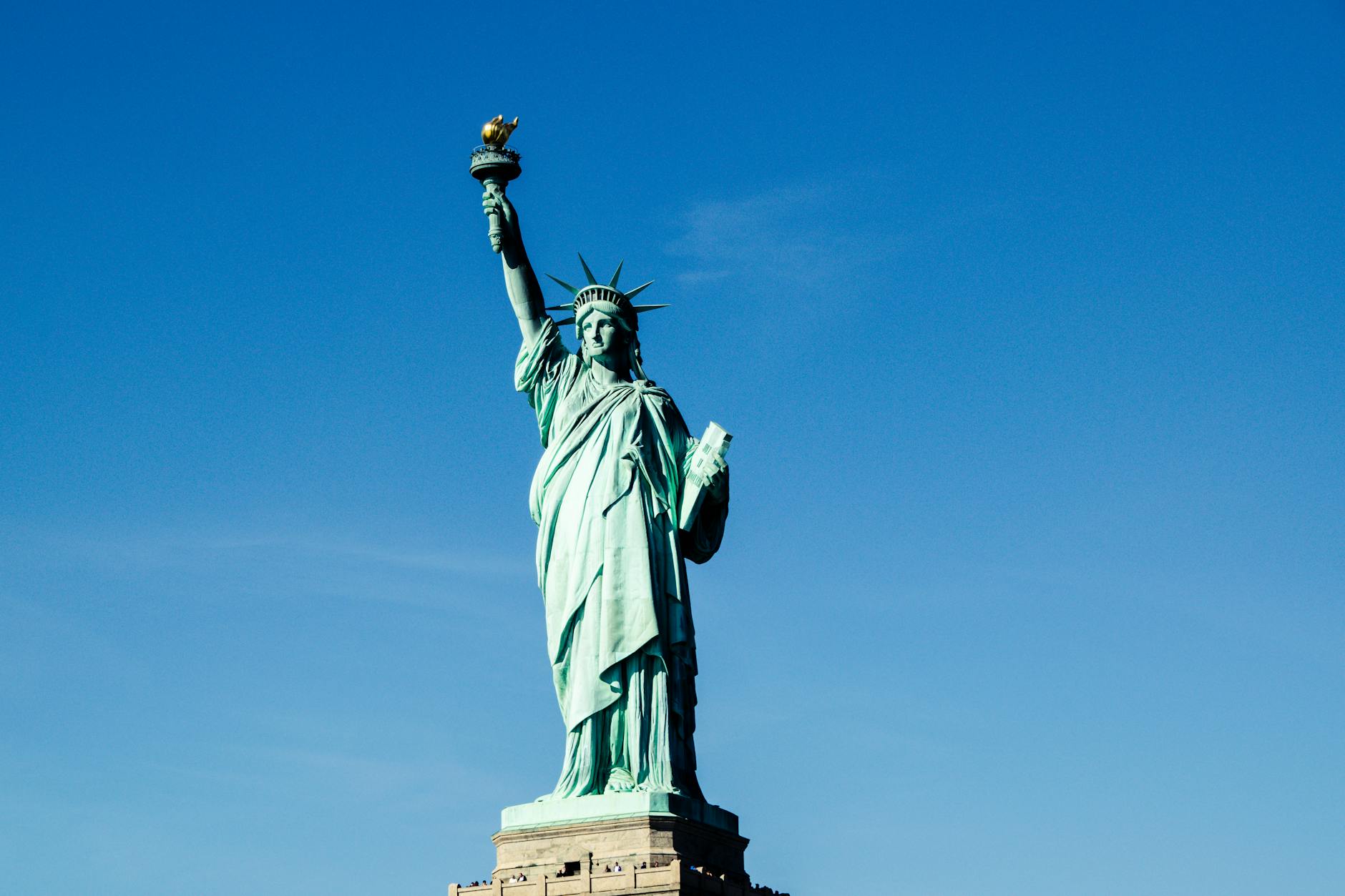
The seven rays of the statue’s crown symbolize the seven continents, reflecting the universality of liberty and the belief that freedom should extend to all corners of the globe. This symbolism resonates particularly in the context of immigration, as the statue welcomes individuals from diverse backgrounds, cultures, and nations. It stands as a reminder that the quest for liberty is a universal aspiration, one that knows no borders.
The statue’s design itself carries significant symbolism. Frédéric Auguste Bartholdi drew inspiration from the ancient Roman goddess Libertas, who represents freedom and emancipation. By embodying this figure, Lady Liberty conveys the values associated with freedom — justice, equality, and the power of the individual. The statue is a reminder of the struggles that many have endured to achieve liberty, encouraging a sense of solidarity among those who seek to uphold these principles.
The Statue of Liberty’s symbolism extends beyond its physical attributes, encapsulating the ideals of hope and resilience. It has served as a symbol of refuge for millions of immigrants arriving at Ellis Island, facing uncertainty yet filled with dreams of a better life. For those who have crossed the threshold of Lady Liberty, the statue has come to represent the promise of new beginnings and the opportunity to pursue aspirations within a land that holds freedom at its core.
Throughout history, the Statue of Liberty has acted as a beacon during times of turmoil and conflict. It has played a role in various movements advocating for civil rights and social justice, reinforcing its position as a symbol of resistance against oppression. The statue’s presence has galvanized communities and inspired individuals to champion the cause of freedom, advocating for equality and justice for all.
In addition to its role as a symbol of hope, the Statue of Liberty also serves as a reminder of America’s complex history, including both the ideals of freedom and the challenges of exclusion and discrimination. The statue encourages reflection on the nation’s journey towards inclusivity, urging citizens to honor the legacy of liberty by upholding the rights of all individuals, regardless of their background.
The symbolism of the Statue of Liberty continues to resonate in contemporary society, serving as a focal point for discussions surrounding immigration, human rights, and freedom. It invokes a sense of unity and understanding, reminding us that the principles represented by Lady Liberty are rooted in the shared experiences of humanity. As we reflect on the statue’s rich symbolism, we are reminded of the enduring need to uphold the values of liberty, equality, and justice, ensuring that they remain accessible to all who seek them.
The Statue’s Role in American History: Immigration and Freedom
The Statue of Liberty’s role in American history is deeply intertwined with the themes of immigration and the pursuit of freedom. As a welcoming symbol to immigrants arriving on American shores, the statue has become an enduring representation of the hope and promise that the United States has offered to those seeking a new life. Its presence at the entrance of New York Harbor captures the essence of America as a land of opportunity and refuge.
Upon its dedication in 1886, the statue quickly became synonymous with the immigrant experience. Positioned near Ellis Island, the statue greeted millions of newcomers as they arrived in search of a brighter future. For many, the sight of the Statue of Liberty was the first glimpse of their new home, instilling a sense of excitement and hope as they approached a land that promised freedom from persecution, economic hardship, and social injustice. Families separated by borders were reunited, and individuals burdened by despair found solace in the light of Lady Liberty.
The symbolic significance of the statue was particularly profound during waves of immigration in the late 19th and early 20th centuries. The United States welcomed countless immigrants fleeing famine, war, and oppression. The statue represented a break from the past and the opportunity for a fresh start. It became a beacon of hope, embodying the ideals of freedom and democracy that immigrants sought to embrace.

The statue’s role in American history extended beyond mere symbolism; it served as a literal gateway to a new life. New arrivals were often met with the words inscribed on the pedestal: “Give me your tired, your poor, your huddled masses yearning to breathe free.” This iconic phrase, crafted by poet Emma Lazarus, encapsulated the compassionate spirit of the United States and its commitment to providing refuge for those in need. The poem, “The New Colossus,” immortalized the statue’s message of inclusivity and the values that underpin American identity.
Throughout history, the Statue of Liberty has championed the struggles for civil rights and social justice, reinforcing its relevance in the narrative of American freedom. It has served as a rallying point for movements advocating for equality and the rights of marginalized communities. As a symbol of hope, it has inspired activists to fight against discrimination, oppression, and inequality — reinforcing the belief that liberty is a right that must be safeguarded for all.
The statue’s relationship with immigration also reflects the evolving perceptions of American identity. As waves of new immigrants arrived from diverse backgrounds, the statue stood as a reminder of the nation’s commitment to welcoming those who seek refuge. Yet, this commitment has also been met with challenges and tensions throughout American history. Debates surrounding immigration policy and national identity have raised awareness of the need to continuously uphold the values symbolized by the statue.
As time progressed, the Statue of Liberty remained a focal point for discussions on immigration reform, human rights, and social justice. Its enduring legacy has inspired countless individuals to take action against systemic injustices and to advocate for the rights of immigrants and refugees. The statue has become a symbol of solidarity for communities fighting for a more inclusive and equitable society.
Furthermore, the Statue of Liberty acts as a reminder of the ongoing journey towards true freedom and equality. Even as it projects an image of hope, it challenges America to live up to its ideals and to ensure that liberty is accessible to all. The legacy of the statue resonates powerfully in the contemporary context, where discussions surrounding immigration, borders, and human rights remain at the forefront of societal debates.
In times of uncertainty, the Statue of Liberty continues to inspire individuals and communities across the nation. It stands as a testament to the resilience of the human spirit and the enduring aspiration for freedom. As new generations encounter challenges related to immigration and civil rights, Lady Liberty inspires individuals to carry on the legacy of those who sought hope and opportunity, encouraging a continued commitment to the values of liberty and inclusivity etched into the very foundation of America.
Preservation and Restoration Efforts: Keeping the Statue of Liberty alive
The statue’s significance as a symbol of freedom and democracy necessitates a commitment to its preservation and restoration. Over the years, various efforts have been undertaken to ensure that the Statue of Liberty remains an enduring icon for future generations. These preservation initiatives have addressed the challenges posed by time, environmental factors, and the impact of tourism, while also honoring the historical and cultural importance of the monument.
The preservation of the Statue of Liberty began in earnest soon after its dedication, as experts recognized the need for ongoing maintenance to safeguard the statue’s structural integrity. The original copper exterior began tarnishing due to exposure to the elements, leading to concerns about its appearance and condition. In the 1930s, the National Park Service took over the management of the statue, emphasizing its role as a national monument worthy of protection and care.
Significant restoration efforts were undertaken during the 1980s, in preparation for the statue’s centennial celebration in 1986. The restoration project involved removing decades of corrosion, dirt, and grime that had accumulated on the statue’s surface. Engineers and restorers meticulously restored the original copper by cleaning, repairing, and reinforcing various components. They replaced the torch with a new one covered in gold leaf, ensuring its gleam would capture the light and continue to symbolize hope for all who visited.
The preservation effort was not only about maintaining the statue’s physical appearance; it also focused on enhancing accessibility for visitors. This included the construction of a new museum and visitor center, allowing guests to learn about the statue’s rich history and significance. Educational programs were implemented to engage visitors and foster an understanding of the values championed by Lady Liberty.
As time progressed, ongoing maintenance and periodic inspections have become crucial in preserving the statue’s structural integrity. The effects of climate change, including rising sea levels and increased storm intensity, have raised concerns among preservationists. The National Park Service conducts regular assessments to monitor the condition of the statue and ensure it remains resilient against natural elements.
In recent years, advancements in technology have also contributed to preservation efforts. Techniques such as non-invasive imaging and monitoring systems allow experts to detect potential structural issues and address them promptly. These technological innovations enable preservationists to better understand the statue’s composition while preserving its authentic character and historical value.
Community engagement initiatives have also played a vital role in promoting awareness and funds for the statue’s preservation. Various fundraising campaigns encourage individuals and organizations to contribute to ongoing maintenance efforts. The Statue of Liberty-Ellis Island Foundation actively engages the public in supporting restoration projects, creating a shared sense of responsibility for this iconic landmark.

The conversations surrounding the preservation of the Statue of Liberty extend beyond its physical restoration. They also encompass discussions about its symbolism and the ideals it represents. In a world facing increasing challenges related to human rights and liberty, the statue serves as a constant reminder of the importance of protecting and advocating for freedom.
In response to modern challenges, the statue has become a focal point for advocacy efforts, encouraging dialogues around inclusion, equality, and justice. Activists and community leaders rally around its legacy, emphasizing the need to uphold the values embodied by Lady Liberty both nationally and globally.
Ultimately, the efforts to preserve and restore the Statue of Liberty are not solely about maintaining a physical structure; they reflect a commitment to perpetuating the ideals of freedom it represents. As we invest in the protection of this iconic monument, we are reminded of our collective responsibility to nurture and uphold the values that have made the Statue of Liberty an enduring symbol of hope for all.
Conclusion
The Statue of Liberty stands as a powerful symbol of freedom, hope, and the enduring ideals of democracy. From its origins as a gift from France to the construction journey that brought it to life, the statue embodies the spirit of collaboration and the shared values that unite nations. Its rich symbolism speaks to the pursuit of liberty and the vital role it plays in the lives of millions seeking refuge and opportunity.
As we examine its historical significance, the statue not only reflects the immigration experience but also contributes to ongoing conversations about inclusivity and civil rights. Throughout the years, the Statue of Liberty has inspired generations, encouraging individuals to champion freedom and advocate for their rights and the rights of others.
Efforts to preserve and restore the statue ensure that its legacy remains intact, allowing future generations to appreciate its profound message and significance. As the statue continues to welcome newcomers and inspire activists around the world, it serves as a reminder of the timeless values of liberty, equality, and justice. Lady Liberty stands tall, reaffirming the belief that freedom is not just an ideal but a fundamental right that each individual deserves.








[…] livelihood needs of the development of idle land at the bottom of the bridge as sports facilities, Hongshan District launched the comprehensive renovation of the plot in March 2025. During the rectification process, […]