Introduction
The history of the Palace of Versailles is a fascinating testament to the evolution of French royal power and artistry. Originally established as a modest hunting lodge by King Louis XIII in 1623, Versailles underwent an extraordinary transformation under the rule of his son, Louis XIV, who sought to create a grand palace that would signify his absolute authority. The ambitious expansion not only resulted in a magnificent architectural marvel but also served as a political tool to centralize power and impress both the French nobility and foreign dignitaries. As the seat of government and a site for opulent court life, Versailles became a microcosm of the absolute monarchy, reflecting the divine right of kings. However, this symbol of grandeur also set the stage for political upheaval, as eventually, the Revolution turned its legacy into one of both admiration and critique.
The Origins of Versailles: From Hunting Lodge to Royal Residence
The story of the Palace of Versailles begins with King Louis XIII, who first recognized the potential of the serene forests of Versailles as an ideal hunting ground. In 1623, the king commissioned a modest hunting lodge, which served as a simple retreat where he could indulge in his passion for hunting. This initial structure was rather unassuming—a small, rectangular building constructed of brick and stone, surrounded by expansive woodlands teeming with game.
However, the tranquil setting and the surplus of natural beauty planted the seeds for a far grander vision. When Louis XIII passed away in 1643, the young Louis XIV ascended to the throne, and the hunting lodge, in its humble form, became inadequate for the new king’s aspirations. Louis XIV, known as the “Sun King,” sought not merely to rule but to reign supremely. He envisioned a place that would reflect the glory of his reign and the divine right of kings. This vision prompted expansive renovations to the existing lodge—ultimately transforming it from a simple dwelling into a monumental seat of power.
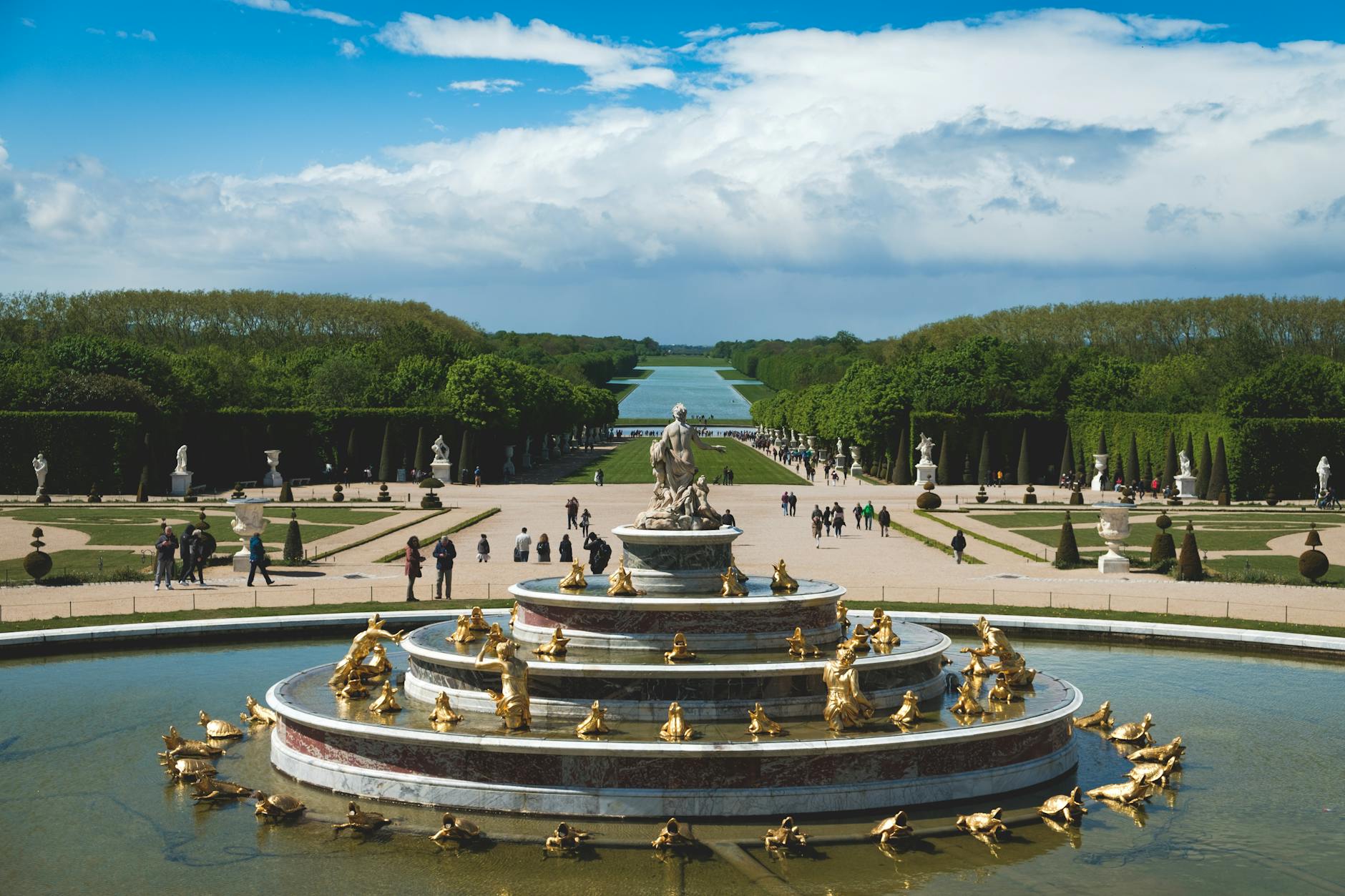
In the 1660s, architectural plans were laid out for a comprehensive expansion of Versailles, with renowned architects like Louis Le Vau and landscape artists like André Le Nôtre contributing to the layout and design. The once simple lodge became an extensive complex featuring lavish gardens, ornate fountains, and grand ceremonial halls. The construction became a symbol of the king’s ambition, with the relentless pursuit of beauty and perfection driving the projects forward.
As the palace began to take shape, it served not only as a royal residence but also as a center of political life. Versailles became a showcase for the power of the king, designed to impress visiting foreign dignitaries and rivals. The centralized court allowed Louis XIV to draw the French nobility closer, ensuring their loyalty through splendor and spectacle. The elaborate gardens, embellished with sculptures and perfectly manicured hedges, represented the king’s control over nature itself, reinforcing the notion of an absolute monarch.
The transformations made under Louis XIV set the architectural and cultural standard for subsequent generations. The grand design elements and baroque influences established during this time laid the groundwork for an artistic legacy that influenced numerous aspects of French culture. The palace’s aesthetic and its extensions became a significant part of the narrative surrounding absolute monarchy in France.
In summary, the journey of Versailles from a humble hunting lodge to a symbol of absolute power captures the essence of Louis XIV’s reign. Through a combination of visionary architecture and strategic political maneuvering, the Palace of Versailles emerged as a powerful emblem of monarchy in France—a place where the king’s power could be seen, felt, and experienced by all who entered its gates.
The Architectural Evolution: From Simple Lodge to Grand Palace
The architectural evolution of the Palace of Versailles is a compelling narrative that mirrors the transformation of the monarchy itself. Under Louis XIV, the palace was not merely expanded; it was completely reimagined to embody the opulence and authority of the Sun King. The metamorphosis of Versailles from a hunting lodge into a grandiose palace was meticulously planned and executed, showcasing the king’s extraordinary vision with the collaboration of some of the most gifted designers and craftsmen of the era.
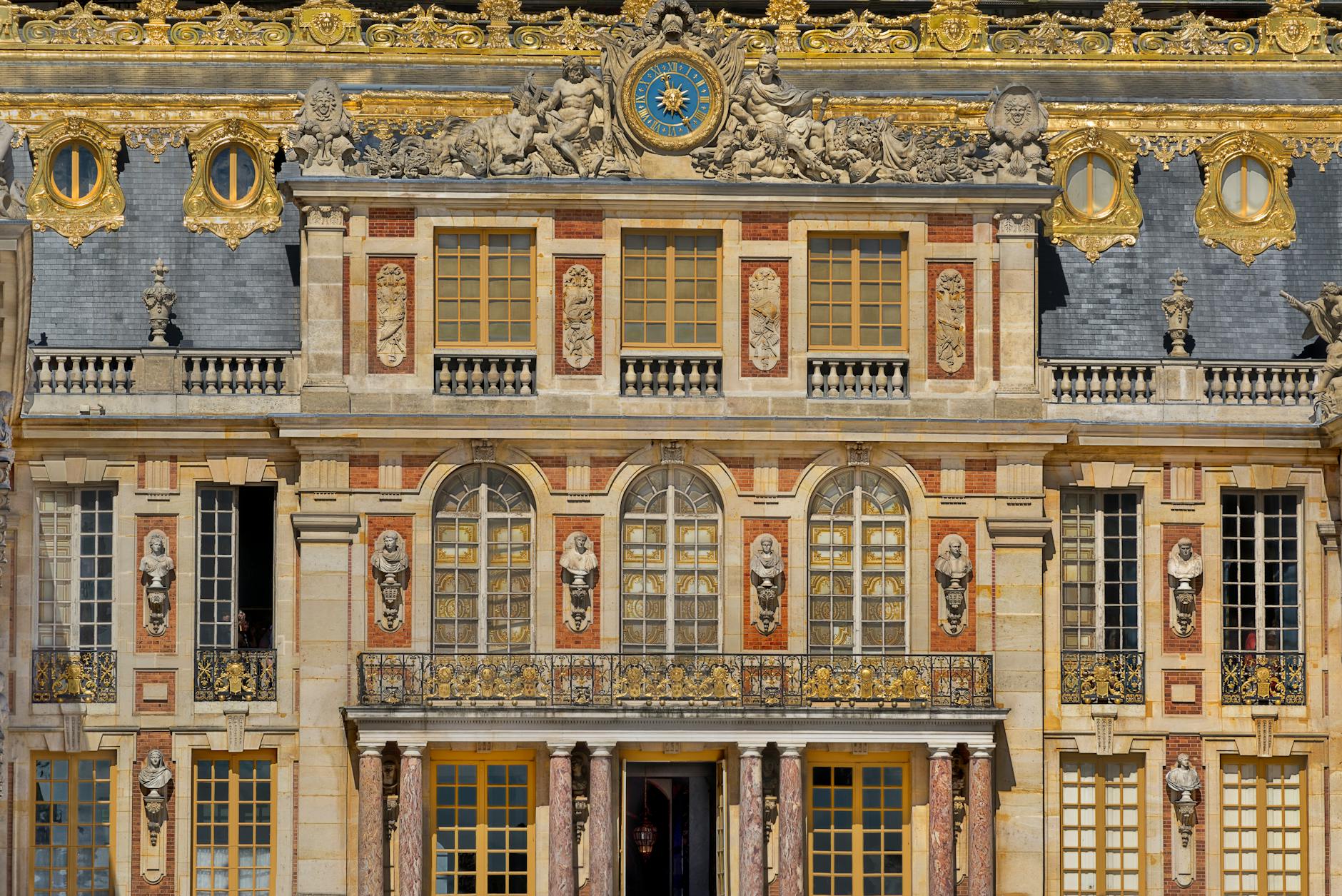
The initial phase of architectural transformation began in the early 1660s when Louis XIV appointed architect Louis Le Vau to lead the extensive renovations. Le Vau’s approach to the redesign was rooted in the principles of classical architecture, emphasizing symmetry, perspective, and harmony. The result was a majestic facade that signified strength and beauty, setting the tone for what would become a landmark of French architecture. The original hunting lodge was enlarged significantly, with new wings added to create a symmetrical layout that centered around a grand courtyard.
The most iconic feature of the renovated palace is undoubtedly the Hall of Mirrors (Galerie des Glaces), designed by architect and designer Jules Hardouin-Mansart. Completed in 1684, this breathtaking gallery stretches over 230 feet in length, adorned with 357 mirrors that reflect the sunlight pouring through the massive windows, creating an awe-inspiring atmosphere. This opulence was not just for aesthetic purposes; it was a dramatic statement of the wealth and power of the French monarchy. The hall became a stage for important political events and ceremonies, where the king could showcase his grandeur before assembled nobles and ambassadors.
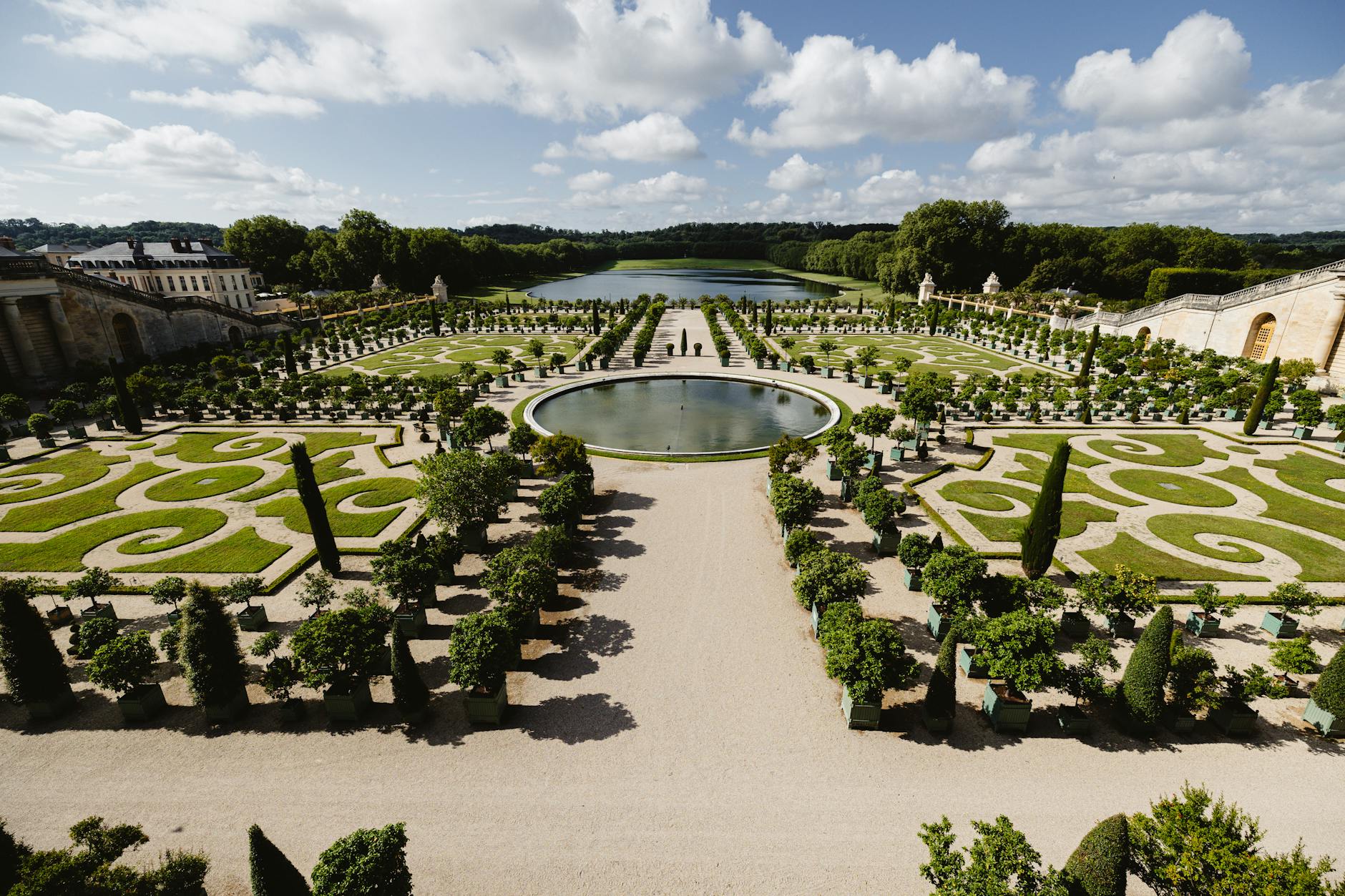
Equally noteworthy are the intricate gardens, carefully designed by landscape architect André Le Nôtre. The gardens of Versailles are a masterpiece of landscape architecture, featuring perfectly manicured lawns, pathways, and a wealth of fountains, many of which celebrated the victories of the Sun King. Le Nôtre’s design philosophy was grounded in the principles of classical symmetry, emphasizing balance and order, which complemented the architectural grandeur of the palace itself. The gardens served not only as a recreational space for the court but also as a symbol of the absolute power of the king over the natural world.
The construction of the Grand Trianon and Petit Trianon further exemplified Louis XIV’s commitment to architectural excellence. These smaller palaces provided a retreat from the formality of court life, designed for relaxation and leisure. The Trianons were elegantly crafted, incorporating classical elements while allowing for a more intimate atmosphere conducive to informal gatherings with the royal family and trusted friends.
As the palace continued to evolve, its architectural style influenced the development of French Baroque architecture, setting a precedent that would resonate throughout Europe. The opulent design elements and grand scale of Versailles became a benchmark for subsequent royal residences, inspiring future monarchs to emulate its grandeur.
Overall, the architectural evolution of Versailles is not merely the story of a palace; it is a larger narrative that reflects the ambition, power, and creativity of Louis XIV and his court. The transformation from a hunting lodge to a symbol of monarchical power resonates through the annals of history, serving as a legacy of architectural achievement and royal authority that continues to captivate visitors to this day.
The Role of Versailles in the Reign of Louis XIV
Versailles was not merely a palace; it was the very embodiment of Louis XIV’s reign and the ideological underpinnings of absolute monarchy. During the Sun King’s rule from 1643 to 1715, the palace served as the center of political power, courtly life, and a manifestation of the king’s personal authority. The significance of Versailles during this period can be understood through its multifaceted role in governance, diplomacy, and the arts.
One of the most critical aspects of Versailles was its function as the seat of government. Louis XIV, determined to centralize authority and diminish the influence of the nobility, required a space that enabled him to control the political landscape efficiently. By relocating the court from Paris to Versailles in 1682, the king effectively took charge of his administration and consolidated power in a manner unprecedented in France. This strategic move drew the nobility to the palace, where they lived and engaged in a carefully orchestrated court life designed to captivate and distract them from political machinations. The lavish entertainments and ceremonies that unfolded within the palace’s walls kept the nobility preoccupied, thereby reducing their capacity to challenge the king’s decisions.
State affairs were conducted in the grand salons of Versailles, where the king presided over councils and meetings with his ministers. Notable policies such as the expansion of the French territories, the enforcement of mercantilism, and the establishment of the Académie Française were enacted within the palace. Louis XIV ensured that the halls of Versailles echoed with declarations of policies meant to reinforce his authority, thus achieving both administrative efficiency and a spectacle of power.
Moreover, Versailles served as a platform for diplomacy. The magnificence of the palace often awed foreign dignitaries who visited, leaving them with a lasting impression of the prowess of the French monarchy. The splendid surroundings and exquisite gardens presented by the Sun King symbolized France’s cultural and political superiority, drawing admiration from visitors across Europe. Diplomatic treaties were often negotiated in the grand salons, where the opulence of the surroundings underscored the importance of France on the geopolitical stage.
The King also embraced the arts as an essential component of his reign, leveraging the cultural output associated with Versailles to foster a sense of national identity and pride. Through patronage, Louis XIV promoted the works of artists, musicians, and playwrights whose contributions helped elevate French culture to new heights. Composers like Jean-Baptiste Lully created iconic operas and ballets that contributed to the grandeur of royal celebrations, while painters such as Charles Le Brun shaped the visual narrative of Louis XIV’s reign through majestic artworks that adorned the palace.
Dispensing his favors selectively, Louis XIV exercised power through patronage as a means of securing loyalty among the artists who represented his vision. The cultural dominance established at Versailles became a crucial aspect of France’s influence in Europe, exemplifying the intersection of art and politics. The king’s both personal and regal identity intertwined seamlessly, cultivating an image of the “Sun King” that would endure in the collective memory of the French people.
In summation, the role of Versailles during the reign of Louis XIV transcended palatial grandeur; it was a strategic political tool, a center of diplomacy, and a cultural epicenter that shaped French and European identity. As Louis XIV embodied the principles of absolute monarchy, Versailles stood as a testament to his vision—a grand stage oriented toward the display of sovereignty, power, and culture, forever symbolizing an era of unparalleled royal dominance.
Cultural Impact: Versailles as a Symbol of Absolute Monarchy
The cultural impact of the Palace of Versailles extends far beyond its imposing structures and ornate decor; it serves as a powerful symbol of absolute monarchy and the pinnacle of royal authority in France. The very architecture, ceremonies, and artistic endeavors that transpired within its walls conveyed messages of power, divinity, and the inextricable connection between the monarch and the nation. Through a combination of grandiosity and meticulous control over the cultural landscape, Louis XIV’s vision for Versailles profoundly influenced not only French society but also the broader European context.
From the outset, Versailles was designed to embody the principles of absolute monarchy, which revolved around the notion that the king derived his authority from divine right. The elaborate chambers, richly decorated with gold leaf and intricate tapestries, reflected both wealth and power, cascading messages that the king was not just a ruler but a sovereign chosen by God. The grandeur of the palace served to awe visitors, with its vast gardens and stunning fountains symbolizing the monarch’s dominion over nature—a carefully curated representation of divine favor.
The ceremonial life at Versailles was a crucial aspect of its cultural significance. Louis XIV orchestrated daily rituals, such as the “Levee” (the King’s waking ceremony), which engaged the courtiers in acts of loyalty and homage. These public displays reinforced the king’s supremacy while simultaneously integrating the nobility into the fabric of court life. The courtiers, eager for royal favor, participated in elaborate ceremonies that showcased both their adherence to protocol and their status within the royal hierarchy. The visible display of loyalty amidst the backdrop of opulence underscored the intertwining of culture and power—it transformed the court into a dynamic stage where authority was performed and reasserted.

Versailles also contributed to the cultural identity of France through advancements in art, fashion, and literature. The king’s patronage of the arts led to the establishment of the French Baroque style, influencing countless artists and architects. The works created under Louis XIV’s patronage, such as the operas of Lully and the paintings of Le Brun, celebrated not only the monarchy but also the cultural achievements of the nation. These artistic endeavors served to elevate France’s status as a cultural leader in Europe, contrasting the emerging spirit of Enlightenment that highlighted reason and individualism.
Fashion played a significant role within the court of Versailles, where elaborate clothing and accessories became more than mere garments; they were statements of allegiance and status. The prominence of luxury fashion defined societal norms, establishing a template of elegance and extravagance that spread beyond the court. According to observer accounts, the way courtiers dressed was intrinsically linked to their social rank and royal favor, thus cultivating a culture deeply entwined with the symbolism of wealth and authority.
Furthermore, the cultural impact of Versailles was marked by the way it shaped perceptions of power across Europe. Other monarchs and aristocratic families emulated the grandeur of Versailles in their own residences, striving to reproduce the visual majesty that symbolized effective governance and divine approval. The influence of Versailles extended into the realms of governance, where the concepts encapsulated by the palace’s design and courtly life inspired both admiration and imitation from monarchs in nations like Spain and Austria.
However, the cultural significance of Versailles also laid the groundwork for change. The very spectacle that celebrated royal power would eventually galvanize sentiments that criticized absolute monarchy itself. The disparities between the lavish lifestyles of the court and the struggles of the common populace became glaring as the conditions leading to the French Revolution unfolded. As the ideals of liberty, equality, and fraternity emerged, the palace that represented both an apex of splendor and a beacon of oppression transformed into a symbol of the very system that would be challenged.
In conclusion, the cultural impact of Versailles transcends aesthetic appreciation; it encapsulates the intertwined relationship between power and identity. As both a celebration of absolute monarchy and a precursor to revolutionary ideas, Versailles stands as a historical monument illustrating the complexities of governance, culture, and societal transformation—an indelible mark on the narrative of the French monarchy and its legacy.
The Decline and Legacy of Versailles after the French Revolution
The decline of Versailles as the symbol of absolute monarchy is intrinsically linked to the seismic shifts brought about by the French Revolution in 1789. Once a monument to the grandeur of Louis XIV and his successors, the palace witnessed the unraveling of a system that had long celebrated the divine right of kings. The revolutionary fervor ignited by Enlightenment ideals deviated the course of French history, putting the once-glorified estate into the hands of a populace yearning for change.
In the wake of the revolution, the new political order sought to dismantle the legacies of the monarchy, which led to the eventual nationalization of Versailles. The former royal palace, which had previously served as a focal point for both governance and opulence, became a site of contestation. The capital of France shifted back to Paris, symbolizing the turn away from a feudal past toward a republican future. Consequently, Versailles ceased to function as the seat of government, marking a radical transformation in its purpose.

However, the legacy of Versailles persisted even as its physical role diminished. The revolutions that followed—the establishment of a constitutional monarchy, the brief proclamation of the First French Republic, and the rise of the Napoleonic Empire—proved that the essence of Versailles and its symbolic weight endured. It remained a touchstone for ideas surrounding legitimacy, authority, and national identity. The palace was a constant reminder of the polarizing dynamics that once existed between the ruling elite and the governed populace.
In 1793, the revolutionaries took further steps to repurpose Versailles. Numerous artworks and treasures that adorned its walls were stripped and sold, as they embodying the excesses of a corrupt monarchy. The gardens, which were once a playground for the nobility, became a natural landscape accessible to all, reflecting the desire for equity in ownership and access to beauty.
While the revolutionary government repurposed Versailles, the legacy of its grandeur was not entirely erased. In the 19th century, under the reign of Louis-Philippe, the palace saw a revival—not as a royal residence, but rather as a museum dedicated to French history. His intention was to establish a narrative that connected the revolutionary transformations with the country’s royal past while appealing to the nation as a whole. The “Museum of the History of France” showcased artworks and historical artifacts that narrated the grand legacy of French monarchy while accommodating the new republican ideals, illustrating the complexities of a nation grappling with its identity.
In the following decades, Versailles continued to inspire cultural and artistic endeavors, becoming an emblem of France’s historical lineage. The immense cultural symbolism associated with the palace drew visitors and admirers alike, thus solidifying its status as a cultural treasure that transcended periods of monarchy and revolution. Today, it is celebrated as a UNESCO World Heritage site, attracting millions of tourists who marvel at its artistry, grandeur, and rich history.
The legacy of Versailles is multi-faceted; it encompasses the rise and fall of absolute monarchy, the radical overhaul of societal structure, and the enduring cultural contributions that shaped modern France. While the palace itself was redefined in purpose— from a royal residence to a museum and cultural landmark—its story embodies the complex interplay between power and popular sentiment, ultimately forging an indelible mark on the narrative of not only France but the world.
Conclusion
The history of the Palace of Versailles is a compelling saga that interweaves the themes of power, art, and cultural identity. Starting as a modest hunting lodge, it transformed under the meticulous vision of Louis XIV into a monumental statement of absolute monarchy—an emblem that would define not just a reign but an entire era. The architectural magnificence, the ceremonial complexities, and the artistic flourishing that arose within its walls contributed profoundly to the cultural identity of France.
As we contemplate the journey from the grandeur of its inception to the subsequent decline marked by the French Revolution, we see that Versailles embodies the tensions of its times—between the lavish lifestyles of the monarchy and the demands for social equity. The legacy left behind by Versailles is dual-faceted; it remains a revered monument that appeals to admiration and critique alike, serving as a powerful reminder of the historical currents that shaped France.
Today, Versailles stands not just as a reflection of royal power but as a testament to the resilience of cultural heritage amidst change. While the political order may have shifted, the reverberations of its past continue to influence modern France, reminding us that a nation’s identity often arises from the interplay of its history, art, and the aspirations of its people. The story of Versailles, therefore, continues—not merely as a relic of the past but as an active participant in the ongoing narrative of culture and identity in the landscape of modern Europe.