Introduction
Oxford University, the oldest university in the English-speaking world, has a rich and storied history that dates back to 1096. Over the centuries, it has evolved into a beacon of academic excellence and a hub of intellectual thought. Nestled in the charming city of Oxford, UK, the university is renowned for its iconic Gothic architecture, expansive libraries, and a vibrant cultural scene that attracts students from around the globe. From its humble beginnings as a place of learning, Oxford has risen to become one of the most prestigious institutions of higher education, fostering generations of leaders, thinkers, and innovators. This article delves into the legendary history of Oxford University—exploring its origins, architectural beauty, notable colleges, academic achievements, and its continuing legacy in contemporary society.
The Origins of Oxford University: A Journey Through Time
The foundation of Oxford University can be traced back to a tumultuous period in English history, around the late 11th century. Though exact records are scarce, available accounts suggest that a peculiar confluence of events led to the establishment of this illustrious institution. Initially, it is believed that teaching existed in the area as early as 1096, when scholars began to assemble for learning in response to growing demand for education due to social and economic changes of the time.
The university’s origins are often linked with the influx of scholars from Europe, particularly after the establishment of academic institutions such as the University of Paris. In search of a less turbulent environment, many sought refuge in Oxford, contributing to an early scholarly community focused on theology, philosophy, and the liberal arts. This marked the beginning of a significant intellectual tradition that would shape the future of education.
As the university began to formalize its structure, the first colleges emerged in the 13th century. These were initially informal associations of teachers and students, but they soon developed into more organized institutions. One of the most notable early colleges is University College, founded in around 1249. This foundational period was characterized by a commitment to academic rigor and a gradual move towards a curriculum that emphasized both the sciences and the humanities.
With the advent of the medieval period, Oxford flourished academically. The university gained recognition as a center for scholarly inquiry, hosting numerous medieval debates. The establishment of the first faculties, particularly in arts and theology, laid the groundwork for diverse scholarly pursuits. This interdisciplinary focus attracted numerous scholars, prompting further development of college structures that housed students and academics alike.
The tension with the crown during this time also significantly influenced Oxford’s history. The university’s autonomy often clashed with the monarchy’s aspirations, resulting in skirmishes and, at times, interventions by the royal authorities. Notably, the rivalry with Cambridge, which would later emerge as another prestigious institution, further fueled competition and innovation among scholars.
By the late 15th and early 16th centuries, Oxford underwent a transformation marked by increased academic freedom and growing patronage from influential figures, including monarchs. The educational reforms and the introduction of the printing press catalyzed the dissemination of knowledge and learning, firmly securing Oxford’s place in the annals of educational history.
As the centuries passed, Oxford adapted to the changing tides of political and social movements. From the Renaissance to the Reformation, the university served as a crucible for new ideas that would profoundly impact England and beyond. It became a place where luminaries like Thomas More, John Locke, and other influential thinkers contemplated ideas that would shape modern philosophy and governance.
The establishment of the Oxford University Press in 1586 marked another turning point, promoting the university’s influence in publishing and education. It solidified Oxford’s reputation not only as a place of learning but as a center of intellectual discourse that would echo through the ages.
Today, Oxford University stands as a testament to a legacy that began over nine centuries ago. The strands connecting its early history to the present are woven through a narrative of resilience, innovation, and scholarly achievement. This illustrious journey from a modest gathering of scholars to a prominent academic institution highlights the enduring significance of education and its role in shaping society.
Architectural Marvels: Exploring the Gothic Style
The architecture of Oxford University is one of its most awe-inspiring features, characterized by a remarkable blend of Gothic, Baroque, and modern styles. The university contains over 38 colleges and halls, each with its own distinctive architecture, yet all contributing to the overall magnificence of the Oxford skyline. The Gothic style, in particular, plays a significant role in the visual identity of the university, reflecting both its historical roots and architectural mastery.
At the heart of this architectural narrative is the influence of the Gothic movement, which began in the 12th century and flourished until the 16th century. As a style that emphasizes verticality and light, Gothic architecture is manifest in pointed arches, ribbed vaults, and intricate stone carvings. This distinctive approach to building allowed architects of the time to create structures that not only supported immense weights but also filled interior spaces with natural light, creating an atmosphere conducive to learning and contemplation.
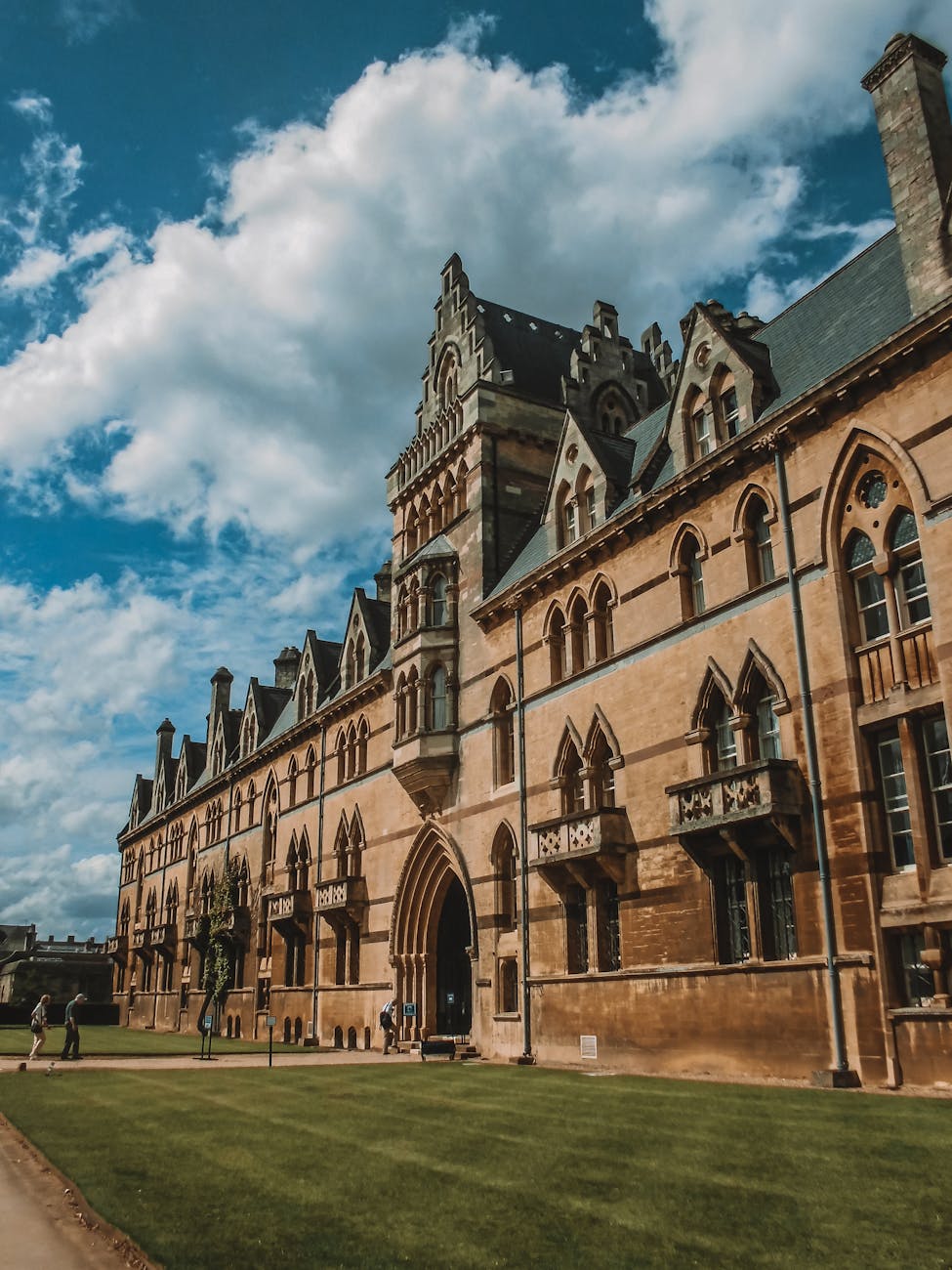
One of the quintessential examples of Gothic architecture in Oxford is the iconic Christ Church College, founded in 1546. Its towering spires and intricate stonework exemplify the height of Gothic design. The college’s chapels and dining halls are adorned with stained glass windows that depict biblical scenes and figures from history, merging spirituality with educational pursuits. Christ Church’s Great Hall, which famously inspired the Hogwarts dining hall in the Harry Potter films, serves as a testament to the college’s grandeur and historical significance.
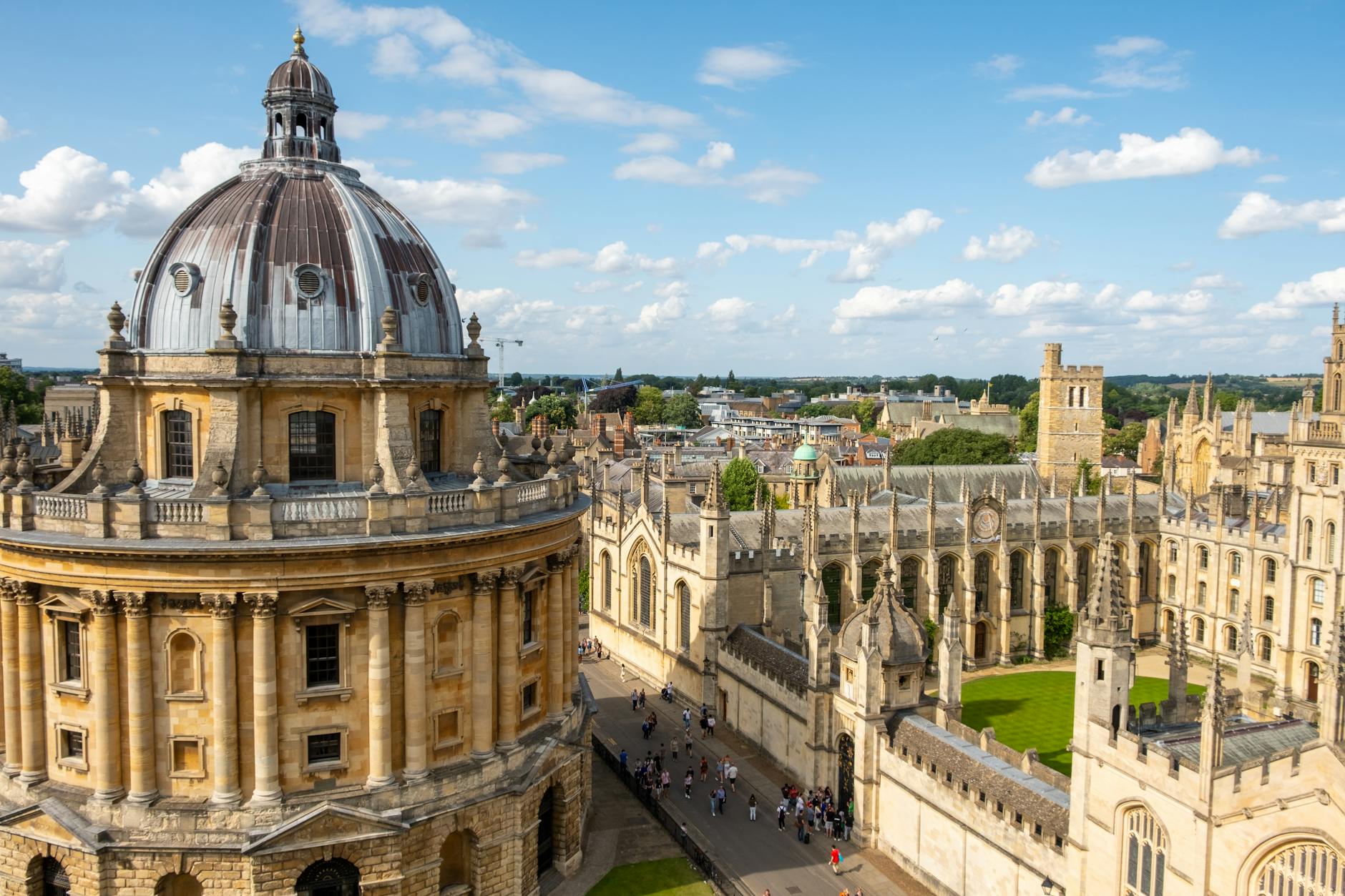
Equally noteworthy is the Radcliffe Camera, designed by James Gibbs in the 18th century. Though built later than the Gothic heyday, the Radcliffe Camera incorporates elements reminiscent of Gothic architecture, with its grand dome and arched windows. As a reading room for the Bodleian Library, it symbolizes the university’s commitment to knowledge and scholarship, further enhancing its architectural diversity.
The collegiate system in Oxford encourages unique architectural expressions, with each college adapting its designs to specific needs and contexts while adhering to the overarching Gothic traditions. For instance, Magdalen College, founded in 1458, showcases an impressive tower and beautiful gardens, reflecting the natural beauty that accompanies these historical structures. The integration of exterior landscapes, cloisters, and quadrangles creates an enchanting ambiance for students and visitors alike.
Moreover, the university’s architecture has not only historical significance but also a practical impact on academic life. The layout of colleges fosters a sense of community and collegiality, as students often live, study, and socialize within close proximity. This physical arrangement has cultivated a culture of collaboration, dialogue, and shared experiences, pivotal for personal and academic growth.
As the university evolved, so too did its architecture, incorporating modern designs that harmonize with historic elements. New constructions, such as the Stephen A. Schwarzman Centre for the Humanities, embrace contemporary designs while respecting the historical lineage that defines Oxford’s character. This blend of old and new illustrates the university’s ability to adapt to changing educational needs without losing sight of its roots.
Oxford University’s architectural marvels, particularly the Gothic style, serve as powerful symbols of its rich heritage and continued relevance. Each college’s unique design reflects not only the history of education in England but also the aspirations of generations of scholars who have walked its halls. The blend of history, culture, and architecture creates an environment that inspires learning and growth, making the university a truly remarkable place.
Renowned Colleges: A Closer Look at Christ Church and All Souls
Among the numerous colleges of Oxford University, Christ Church and All Souls occupy prominent places in both history and academia. Each college provides a unique perspective on the university’s legacy and its role in higher education, showcasing different facets of intellectual pursuit, community, and architectural splendor.
Christ Church College, founded by Henry VIII in 1546, is not only one of the largest but also one of the most prestigious colleges at Oxford. Known for its architectural grandeur, Christ Church combines a rich academic tradition with a vibrant student life. The college is home to an outstanding library and important art collections, which highlight its commitment to scholarship and creativity.
One of the defining features of Christ Church is its impressive layout, characterized by the grand Tom Tower and the iconic Cathedral. Tom Tower, completed in 1682, reminds one of the impressive balance between height and architectural beauty. Visitors are often taken aback when they step into the college, greeted by the vast Christ Church Meadow, which offers breathtaking views of the surrounding landscape as well as quiet areas for study and reflection.
The college’s academic programs are equally impressive, known for maintaining high standards across a range of disciplines, especially in the humanities and social sciences. Its notable alumni include several British Prime Ministers, writers, and scholars, underscoring Christ Church’s historical importance as a breeding ground for influential thinkers.
In contrast, All Souls College, founded in 1438, is renowned for its unique academic structure and high-caliber scholarship. Unlike other colleges, All Souls does not have undergraduate students and operates primarily as a graduate institution dedicated to research and intellectual excellence. Candidates for its Fellowships must excel in their fields, bringing with them diverse, interdisciplinary approaches to research.

The architecture of All Souls is striking, with its imposing façade defined by spires and intricate stonework, showcasing the blend of Gothic and Renaissance styles. Its examination hall, adorned with rich wood paneling and atmospheric lighting, acts as a symbol of the high academic standards upheld by the college. This space, rich in tradition, is where all Souls scholars participate in one of the most prestigious examinations in the world, underscoring the importance placed on rigorous intellectual engagement.
The influence of All Souls extends well beyond academia, as its alumni include distinguished statesmen, economists, and writers, contributing significantly to societal discourse and innovation. This esteemed college has earned a reputation for fostering critical thinking, encouraging reflective scholarship, and shaping the future leaders of society.
Despite their differences, both Christ Church and All Souls share a common commitment to academic rigor, scholarship, and the nurturing of talent. The contrasting structures of undergraduate and graduate education highlight the diversity of intellectual engagement that Oxford offers, enriching the university as a whole.
These colleges exemplify the multifaceted nature of academic pursuit at Oxford University, representing historical legacies and contemporary aspirations while continuing to inspire students and scholars worldwide. They serve as reminders of the importance of community, scholarly engagement, and the role of education in shaping individuals and societies.
Academic Excellence: The Contributions of Alumni and Faculty
Oxford University is synonymous with academic excellence, boasting a rich history shaped by its distinguished alumni and devoted faculty. Over the centuries, the institution has nurtured countless luminaries across various fields who have significantly contributed to knowledge, influencing generations well beyond the corridors of academia.
The legacy of Oxford alumni encompasses a diverse array of disciplines, from politics and science to literature and philosophy. Notable figures such as Stephen Hawking, Tony Blair, and J.R.R. Tolkien have left indelible marks on their respective fields, showcasing the quality of education provided by the university. Their achievements have not only elevated the reputation of Oxford but also underscored its role as a crucible of critical thought and innovation.
Stephen Hawking, for instance, was a world-renowned theoretical physicist whose groundbreaking work in cosmology revolutionized our understanding of black holes and the universe. His time at Oxford, where he studied physics, honed his analytical skills and instilled a sense of wonder about the cosmos. Hawking’s journey from an Oxford student to a global scientific icon epitomizes the transformative power of education, illustrating how the university has continually produced thinkers who push the boundaries of human understanding.
Similarly, Tony Blair, as former Prime Minister of the United Kingdom, exemplifies the political influence that stems from Oxford’s academic rigor. Blair’s time at Oxford equipped him with the intellectual tools necessary for navigating the complexities of governance. His engagement with political theory and philosophy shaped his approach to leadership, emphasizing the university’s role in cultivating future policymakers.
Additionally, the power of Oxford’s literary influence is evident through authors such as J.R.R. Tolkien and C.S. Lewis. Both writers, known for their impact on fantasy literature, drew inspiration from their experiences at Oxford. Their unique perspectives resonate with the university’s rich literary tradition and the imaginative possibilities nurtured within its walls.
The contributions of Oxford’s faculty cannot be understated either. Academic staff, many of whom are leaders in their fields, embody the spirit of scholarship that the university strives to uphold. These educators not only engage students through innovative teaching methods but also actively participate in research and intellectual discourse that drives the university’s standing in the global arena.
Renowned scholars, such as Richard Dawkins in evolutionary biology and Malala Yousafzai in women’s rights, illustrate the profound impact faculty have on shaping global conversations and advancing societal progress. Dawkins’s work on natural selection and science communication has opened pathways for wider public engagement with complex scientific concepts, fostering a culture of inquiry and critical thinking.
Moreover, the university maintains a commitment to diversity and inclusiveness, drawing from various backgrounds and perspectives. This diversity enriches the academic experience, promoting a stimulating environment where ideas are freely exchanged. With a dynamic approach to both teaching and research, Oxford fosters collaboration among students and faculty alike, resulting in impactful scholarship that transcends disciplinary boundaries.
Additionally, the legacy of academic excellence can be measured not only by the achievements of past alumni but also by the university’s future aspirations. Programs aimed at fostering entrepreneurship, interdisciplinary research, and community engagement propel Oxford into the 21st century as it seeks to address pressing global issues. The institution’s proactive approach emphasizes the cultivation of a new generation of thinkers, leaders, and changemakers.
The academic excellence attributed to Oxford University lies in the contributions of its alumni and faculty, both of whom have played profound roles in shaping knowledge and addressing global challenges. The university’s enduring legacy is a reflection of its commitment to fostering high standards of scholarship and its dedication to inspiring generations of students who will continue to impact the world positively.
Oxford Today: The University’s Role in Modern Society
Oxford University stands at the crossroads of tradition and modernity, continuously adapting to the ever-changing landscape of higher education and the needs of society. Today, its role extends far beyond simply providing an academic sanctuary; it serves as a beacon of knowledge and innovation, addressing contemporary challenges while fostering a vibrant community of scholars.
One of the defining features of Oxford in the modern era is its commitment to research that tackles pressing global issues. The university is home to dozens of research institutes and centers that focus on a wide range of topics, from climate change and public health to technology and social justice. This diverse research ecosystem is crucial in shaping policies and practices that have a tangible impact on local and international communities.
For instance, the Oxford University Global Cyber Security Capacity Centre seeks to understand and combat the challenges posed by the digital realm. The university has leveraged its expertise in technology and cyber psychology towards contributing to safer digital environments, emphasizing the intersecting roles of academia, ethics, and security in today’s society.
Furthermore, Oxford maintains strong ties with industry leaders and government bodies, ensuring that its research aligns with real-world applications. Initiatives such as the Oxford Foundry, which supports entrepreneurship and innovation, exemplify the university’s dedication to bridging the gap between academia and practical implementation. This initiative fosters a culture of entrepreneurship by nurturing startups and providing mentorship to aspiring entrepreneurs, reflecting a dedication to creating economic opportunities.
In addition to its research contributions, Oxford’s role in education continues to evolve in response to societal demands. The university has embraced new teaching methods, such as online courses and distance learning programs, that extend its reach beyond traditional students. This commitment has enabled learners worldwide to access Oxford’s wealth of knowledge, democratizing education and allowing the university to fulfill its mission of promoting critical thinking and informed decision-making.
Inclusivity and diversity have also become focal points of Oxford’s educational ethos. The university has recognized the importance of fostering an inclusive environment that welcomes students from all backgrounds. Programs aimed at supporting underprivileged students and promoting greater representation have become essential components of its ongoing commitment to social equity. By approaching education with a more holistic understanding of diversity, Oxford aims to create a more equitable and just academic landscape for all.
Moreover, the university plays a crucial role in shaping the global discourse on higher education. It serves as a model for best practices in teaching, research, and community engagement, inspiring other institutions to adopt similar ideals. Global partnerships and collaborative research initiatives have established Oxford as a leader in shaping educational policies and advancing scholarship across borders, promoting increased cooperation in addressing common challenges.
Finally, Oxford University’s historical significance resonates deeply within the local community. The university remains an integral part of the city of Oxford, contributing not only to the local economy but also to its cultural and social fabric. Public lectures, art exhibitions, and outreach programs connect the university with local residents, enriching community ties and promoting lifelong learning.
Oxford University continues to evolve as a dynamic institution that embraces its historical legacy while addressing the pressing challenges of modern society. Its commitment to research, education, inclusivity, and community engagement underscores its role as a leading force in shaping the future, ensuring that it remains relevant in an ever-changing world. As Oxford moves forward, its legacy of excellence in education and scholarship will undoubtedly continue to inspire generations to come.
Conclusion
The legendary history of Oxford University, from its humble beginnings in 1096 to its contemporary standing as a global academic powerhouse, is a testament to the enduring power of education and intellectual inquiry. Through its rich tapestry of colleges, architectural splendor, and a legacy of academic excellence, Oxford has shaped not just individuals, but also societies, cultures, and the world at large.
From the remarkable origins rooted in early scholarly endeavors to the grandeur of Gothic architecture that shelters generations of learners, Oxford has remained a beacon of knowledge. The tales of Christ Church and All Souls reflect the diversity of academic pursuits while emphasizing the collaborative spirit that defines the university. Furthermore, the contributions of alumni and faculty have established Oxford as a center for groundbreaking research and thought leadership across a variety of disciplines.
As Oxford University moves into the future, it continues to adapt to modern challenges while maintaining its commitment to the principles of scholarship, inclusivity, and innovation. Its engagement with contemporary issues and dedication to fostering a diverse and dynamic academic community underscore the importance of education in shaping the future.
In essence, Oxford University’s legendary narrative is not merely a reflection of its past but also an embodiment of its timeless values and aspirations. As an institution that bridges tradition and modernity, it stands poised to inspire generations of scholars and leaders, perpetuating a legacy of excellence and intellectual curiosity that will endure for centuries to come.