

Introduction
St. Petersburg, Russia’s magnificent former capital, is a city where the past meets the present, particularly evident in its stunning architecture. Established by Peter the Great in 1703, this “Venice of the North” was designed with grandeur and sophistication in mind, reflecting the ambitions of its founder. The city is renowned for its harmonious blend of various architectural styles, predominantly Classicism and Baroque. These styles not only shaped the city’s skyline but also signified the cultural aspirations of Russia during the imperial era. Baroque architecture with its dramatic expression and intricate designs coexists with the balanced proportions and rationality of Classicism, creating a rich tapestry that tells the story of St. Petersburg’s evolution. This article will delve into the architectural elegance of St. Petersburg, exploring its historical context, key characteristics, influential architects, and the lasting impact these styles have on the city’s identity today.
Historical Context of St. Petersburg’s Foundation and Architectural Vision
The establishment of St. Petersburg marked a significant turning point in Russian history, correlating with Peter the Great’s vision for a modernized Russia that aligned more closely with European cultural and artistic movements. This ambition birthed the city as a gateway to the West, both geographically and ideologically. As Russia sought to position itself as a formidable European power, the architectural landscape of St. Petersburg was meticulously crafted to reflect these aspirations.
Peter’s vision was not merely to create a city but to establish a cultural capital that rivaled the great cities of Europe. The location of St. Petersburg, strategically settled on the Neva River and encompassing numerous islands, was chosen for its accessibility to sea trade and military navigation, which were pivotal for the country’s economic and political ambitions. This decision, however, came with its challenges. The area’s marshy terrain necessitated innovative urban planning and construction techniques, setting the stage for the unique architectural styles that would flourish in the city.
The architectural philosophy during the early years of the city’s development borrowed heavily from the Baroque style, characterized by its grandeur, dramatic use of light and shadow, and elaborate decorations. Architects like Bartolomeo Rastrelli embraced the Baroque style to design opulent palaces and cathedrals that embodied the power and wealth of the Russian empire. Notable examples of Baroque architecture include the Winter Palace, which became a symbol of imperial authority and artistic achievement.
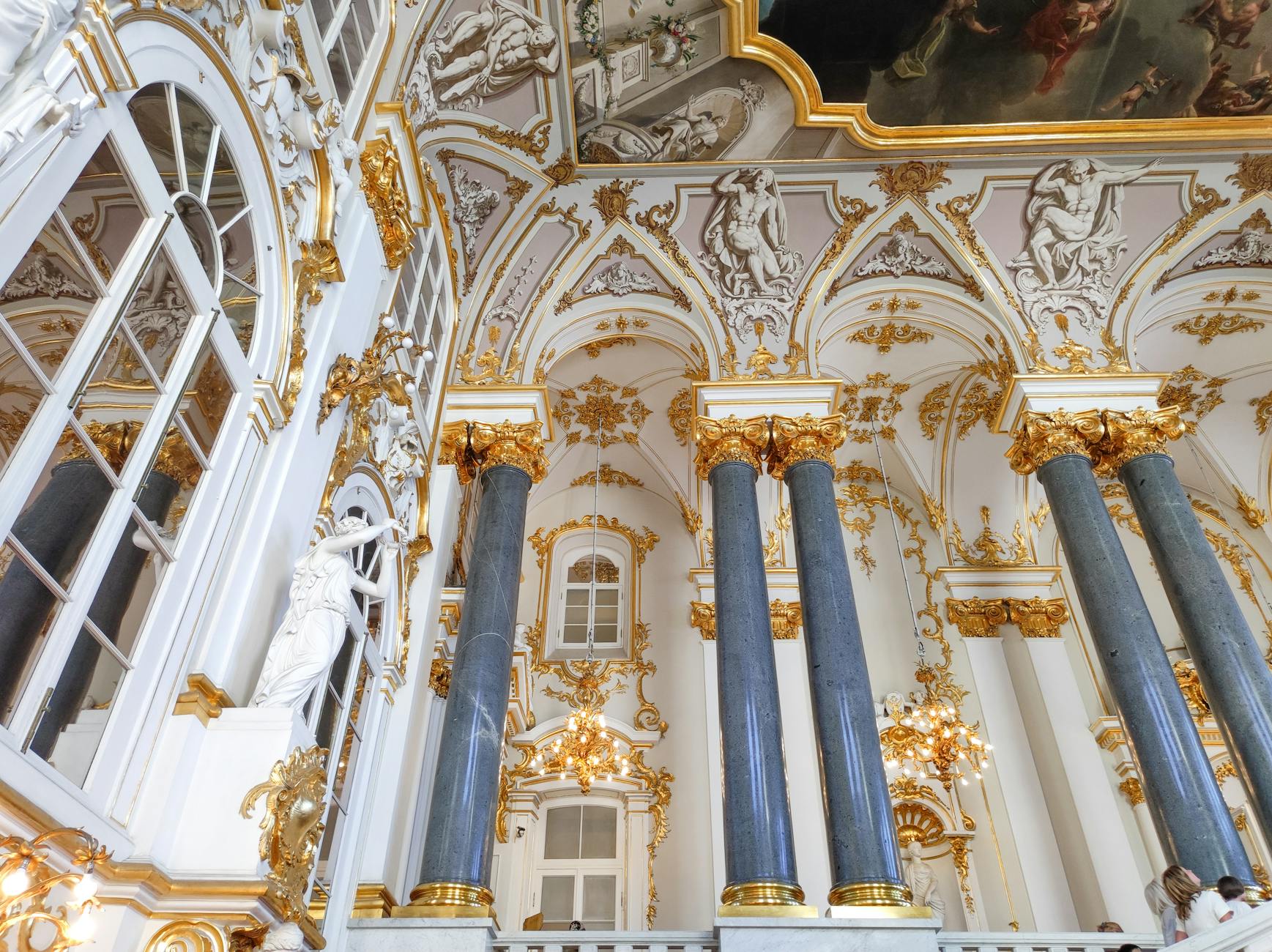
As St. Petersburg evolved, so too did its architectural language. The introduction of Classicism, predominantly in the late 18th and early 19th centuries, represented a shift towards clarity, simplicity, and harmonious proportions. This movement sought to emulate the ancient Greek and Roman structures, aligning with Enlightenment ideals that valued reason and rationality. Classicism found its most notable expression in the designs of architects such as Carlo Rossi and Vasily Stasov, whose works include the iconic Kazan Cathedral and the General Staff Building.
The transition from Baroque excess to Classical dignity reflected broader cultural and social changes within Russia. The policies of Catherine the Great and subsequent rulers promoted education, art, and architecture that mirrored the ideals of the Enlightenment. This period saw an emphasis on civic and institutional buildings that represented the state’s unity and aspirations. The architectural evolution of St. Petersburg became a visual narrative of the city’s growth, showcasing the interplay of political influence, artistic trends, and societal aspirations.
In conclusion, the historical context of St. Petersburg’s foundation is fundamental to understanding its architectural identity. The unique convergence of Baroque and Classical styles illustrates a city in transformation, where architectural ambitions mirrored the broader narrative of Russian modernization and cultural evolution. This rich historical backdrop sets the stage for a deeper exploration into the specific characteristics of Baroque and Classicism that define St. Petersburg’s aesthetic landscape.
Characteristics of Baroque Architecture in St. Petersburg
Baroque architecture in St. Petersburg is distinguished by its extravagant artistry and emotional depth. This style, which flourished in the 17th and 18th centuries, is known for its grandeur and dramatic use of space, often drawing inspiration from the broader European Baroque movement while incorporating uniquely Russian elements. Key characteristics that define Baroque architecture in St. Petersburg include intricate facades, dynamic forms, and elaborate ornamental details that serve to evoke awe and elevate the spiritual and cultural narratives of the buildings.
The prolific use of curves and an interplay of light and shadow define the Baroque style. This can be seen vividly in St. Petersburg’s prominent structures such as the Smolny Cathedral, designed by Bartolomeo Rastrelli. Its flowing lines, dome shapes, and elaborate spires create a visual rhythm that captivates viewers. The external façade of the cathedral features delicate ornaments and moldings, embodying the Baroque tendency to embellish surfaces with ornamental details that often told stories of power, divinity, or cultural achievement.
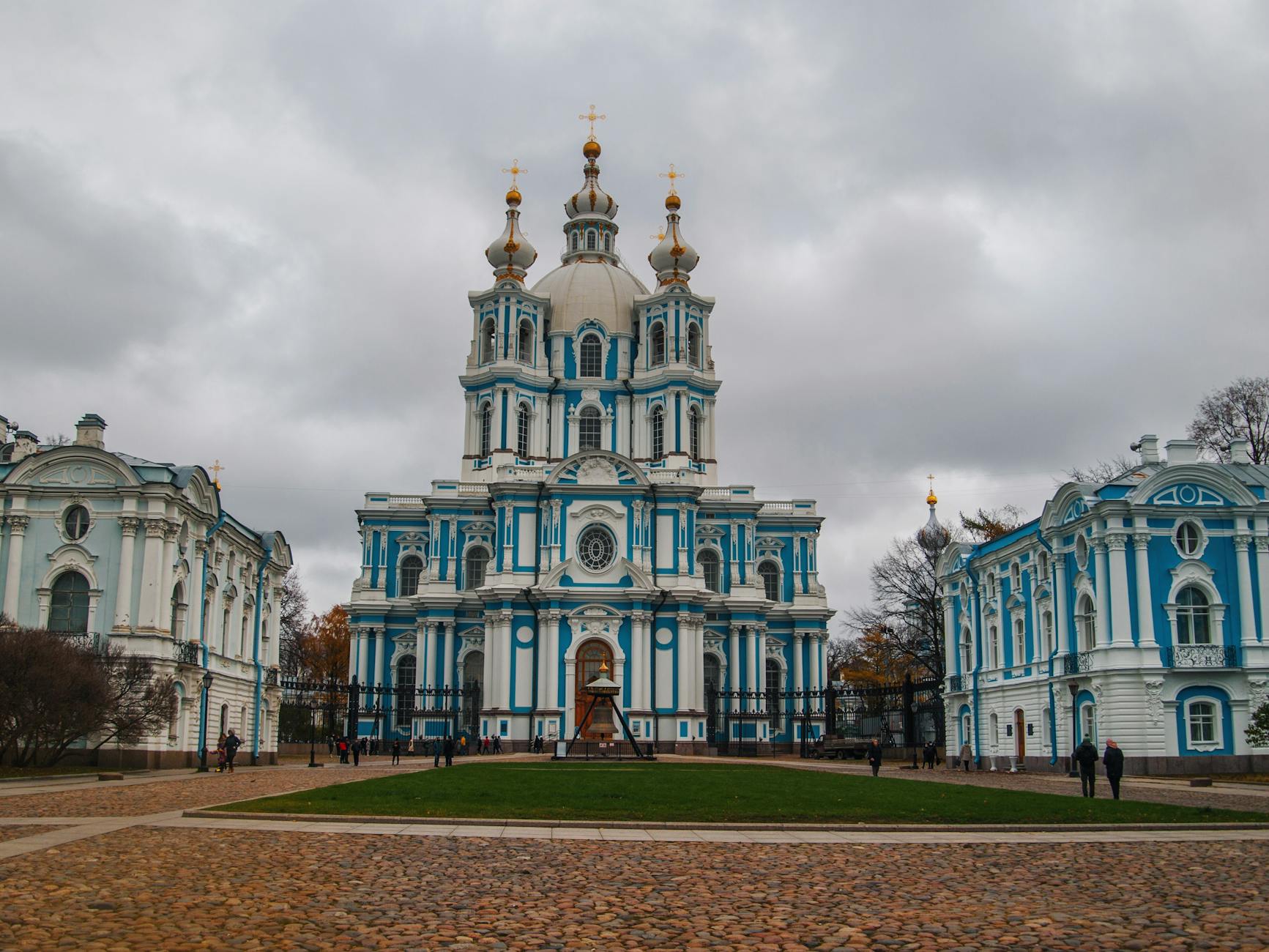
Another hallmark of St. Petersburg’s Baroque architecture is its large, multi-storied buildings that often include expansive staircases and grand entries, symbolizing the importance of hierarchy in social and political life. The Winter Palace is a prime example, with its lavish exterior and vast interior spaces designed for imperial ceremonies and gatherings. The advantages of light and spatial interplay are harnessed through strategically placed windows and grand halls adorned with elaborate frescoes and sculptures – features that directly reflect the grandeur of the Russian court.
Interior design within Baroque architecture was equally ostentatious. Palaces like Peterhof featured extensive gilding, expansive mirrors, and elaborate ceiling frescoes that created an environment of luxury and sophistication. The use of contrasting colors and materials, particularly gold and white, added to the ethereal beauty and richness, often drawing comparisons to palatial experiences found in the courts of France and Italy.
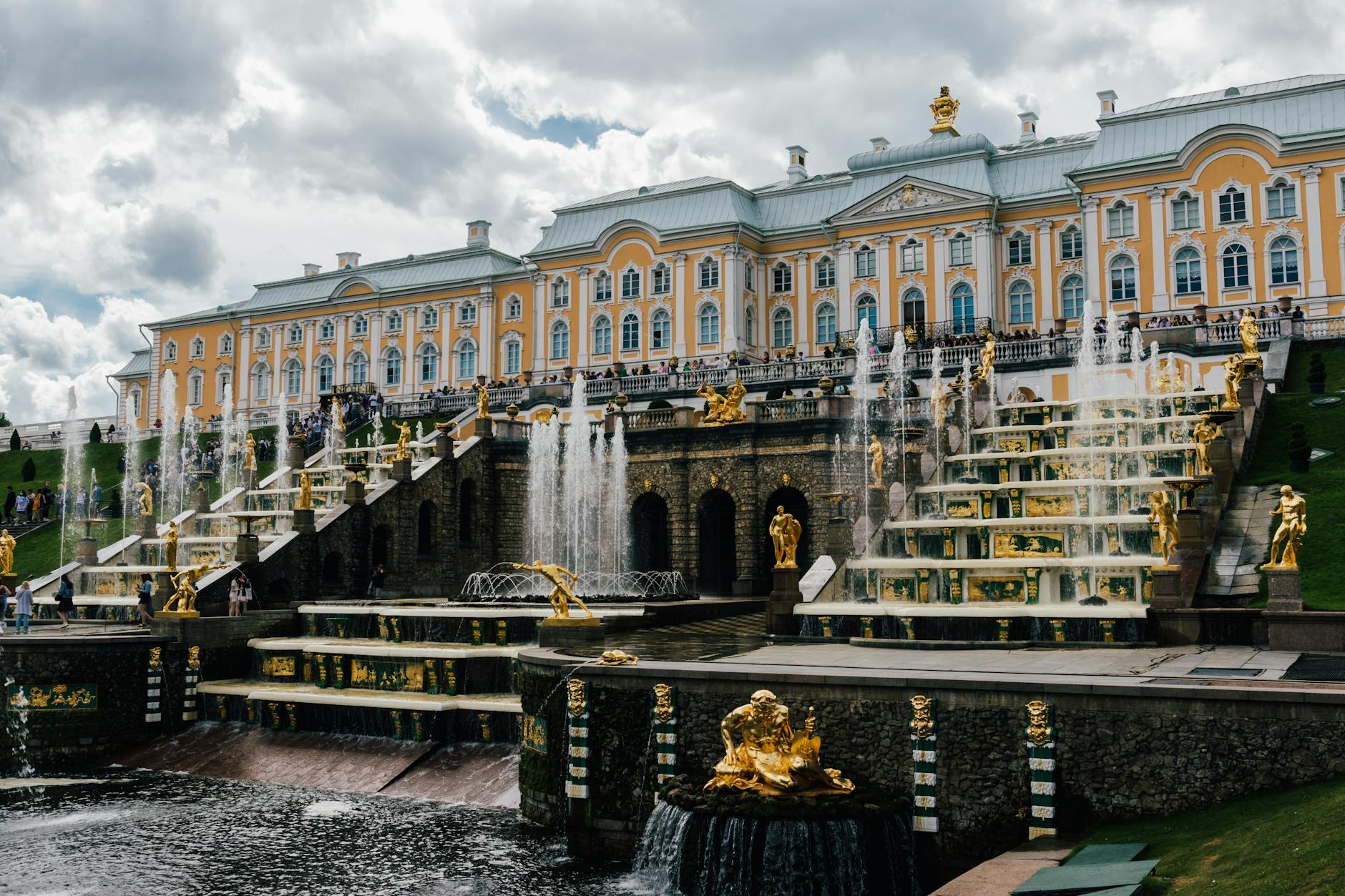
Baroque architecture also revealed itself in the urban planning of St. Petersburg, where public spaces were designed to evoke a sense of community and civic pride. The layout of the city blended architecture with natural landscapes, as seen in the palatial parks and gardens that were integral to the Baroque ethos. The Peter and Paul Fortress, another landmark in St. Petersburg, exemplifies how Baroque principles were applied to fortification, combining aesthetic appeal with strategic military function.
One significant aspect of the Baroque style is its ability to invoke emotional responses through architecture. The dramatic nature of Baroque construction seeks to elevate the viewer’s spirit, turning buildings into vessels of inspiration. The dynamic forms and ornate detailing of St. Petersburg architecture serve not just to dazzle but to communicate the power and divinity associated with the Russian state.
In summary, Baroque architecture in St. Petersburg is a testament to the artistic ambition and rich cultural narratives of the era. Its key characteristics—opulent details, expressive forms, and grandiose spatial arrangements—mirror the aspirations of a burgeoning empire striving for recognition and excellence on the European stage. As we explore further into the architectural fabric of St. Petersburg, the influence of Classicism will emerge, serving as both a complement and contrast to the theatrical prowess of the Baroque.
Influence of Classicism on St. Petersburg’s Urban Landscape
Classicism emerged in St. Petersburg as a formal and rational architectural style that signified a departure from the dramatic expressiveness of Baroque. Influenced by the principles of Ancient Greece and Rome, Classicism in St. Petersburg marked an endeavor to embody ideals of harmony, proportion, and simplicity, reflecting the cultural and intellectual currents of the Enlightenment. This architectural style solidified itself within the urban framework of the city, creating a distinct narrative that continues to resonate in the architectural landscape today.
The shift towards Classicism during the late 18th and early 19th centuries was influenced by the changing political atmosphere and a growing emphasis on democratic ideals and rational thought. Architects such as Carlo Rossi, Andrei Voronikhin, and Vasily Stasov embraced these principles, crafting monumental structures that not only enhanced the city’s aesthetic appeal but also conveyed the emerging identity of St. Petersburg as a cultural capital.
A quintessential example of Classical architecture is the Kazan Cathedral, designed by Andrei Voronikhin. Completed in the early 19th century, the cathedral showcases Classical elements such as a colonnade, portico, and a grand dome that reflects the influence of St. Peter’s Basilica in Rome. The use of strict geometrical forms and symmetrical designs in the structure underscores the Classicism emphasis on order and proportion.

Public squares and monumental buildings became defining features of St. Petersburg as the city embraced classical principles. The Palace Square, flanked by the Winter Palace and the General Staff Building, features a harmonious arrangement that highlights the axial perspective so critical in Classical urban design. These structures, characterized by their clean lines and restrained ornamentation, serve as a backdrop for civic life, embodying the ideals of governance, democracy, and the rule of law.
The influence of Classicism extended beyond individual buildings to the layout of public spaces. The Neva River and its embankments were designed with symmetry and elegance in mind, allowing for a cohesive architectural experience that integrated nature with man-made structures. Such design choices fostered public engagement, with grand open spaces inviting gatherings and fostering community interaction.
In addition to the prominent structures, Classicism also permeated smaller buildings and monuments across the city, establishing a cohesive architectural vocabulary. The numerous monuments and memorials throughout St. Petersburg are often characterized by their strictly classical forms and motifs, further solidifying the city’s identity as a bastion of Enlightenment ideals. The Monument to Nicholas I, situated in the heart of Senate Square, is a striking example of a neoclassical monument that serves not only as a tribute but as a symbol of national pride.
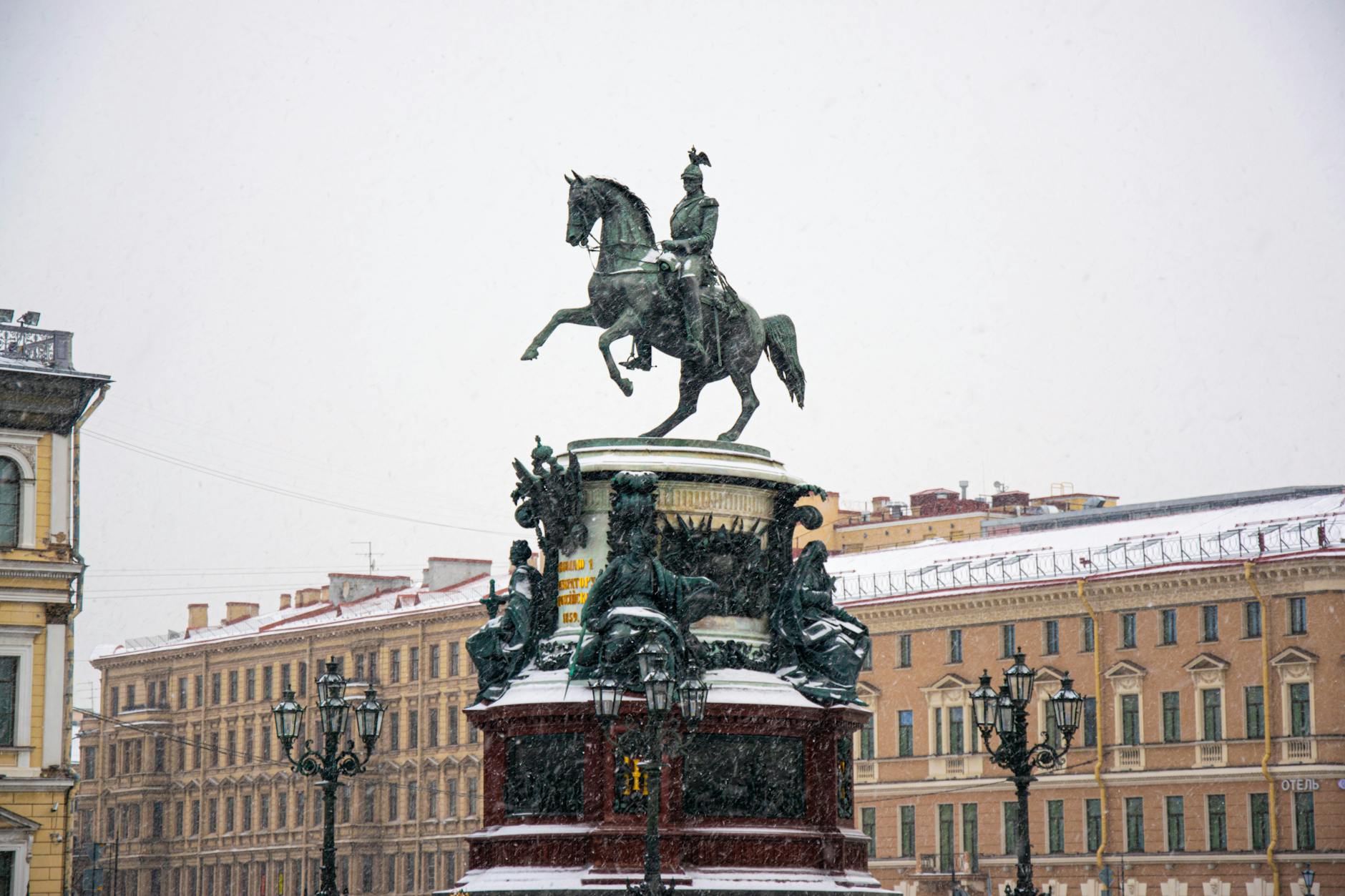
The legacy of Classicism in St. Petersburg is significant, as it represents an architectural standard that balances aesthetics with functionality and civic purpose. While Baroque architecture expresses emotion and drama, Classicism conveys stability and reason. This embrace of rationality within the urban landscape showcases the maturation of St. Petersburg from an imperial stronghold to a refined cultural hub that valued thought, art, and philosophy.
In conclusion, the influence of Classicism fundamentally reshaped the urban landscape of St. Petersburg, establishing a framework that valued harmony, dignity, and the ideals of the Enlightenment. Through the integration of Classical design principles into civic architecture, public spaces, and monuments, Classicism significantly contributed to the identity and cultural fabric of the city, bridging the historical and aesthetic narratives that define St. Petersburg’s rich architectural heritage.
Prominent Architects and Their Contributions
St. Petersburg’s architectural heritage is richly adorned with the works of prominent architects whose innovative designs defined the city’s skyline and cultural identity. The contributions of these figures not only transformed the architectural landscape but also embodied the evolving ideals of Russian society during their respective eras. Their works encapsulate a dynamic interplay between Baroque and Classicist styles, showcasing the architects’ adaptability and vision.
Bartolomeo Rastrelli, perhaps the most renowned architect of the Baroque period in St. Petersburg, played a vital role in shaping the city’s imperial aesthetic. His masterpieces, including the Winter Palace and Smolny Cathedral, exemplify his signature style, marked by grandiose scale and intricate details. Rastrelli’s ability to create structures that captured the essence of power and opulence reflects the ambitions of Peter the Great and his successors. The Winter Palace, with its majestic façade and lavish interiors, served as the official residence of the Russian tsars and a symbol of imperial authority.
Rastrelli’s influence extended beyond individual buildings, as he was instrumental in orchestrating the urban planning of St. Petersburg. His designs often included expansive gardens and parks, meticulously crafted to enhance the overall experience of the palatial estates. The harmonious relationship between architecture and nature is evident in Rastrelli’s works and contributes to the enchanting atmosphere of the city, integrating outdoor spaces with regal structures.
As the 18th century transitioned into the 19th, architects such as Carlo Rossi emerged, representing a shift towards Classicism that aligned with the prevailing intellectual and cultural currents of the Enlightenment. Rossi’s designs, particularly the General Staff Building and the Mikhailovsky Castle, reflect his mastery of classical proportions and symmetry. His work not only enhanced the aesthetic appeal of the city but also underscored the importance of civic architecture in representing the state’s authority and ideals.
The General Staff Building, completed in the 1810s, epitomizes Classical architecture with its monumental columns and grand arches. Rossi’s innovative use of space and light within the structure allows for a seamless transition between public and private areas, fostering an environment conducive to both government functions and public engagement. Such architectural choices highlight Rossi’s understanding of the role of architecture in shaping civic life and culture.
In addition to Rastrelli and Rossi, Andrei Voronikhin made significant contributions to the architectural fabric of St. Petersburg. His design of the Kazan Cathedral exemplifies the neoclassical style’s emphasis on grandeur and simplicity. The cathedral’s commanding presence in the cityscape, with its sweeping colonnade and central dome, serves as a focal point and a spiritual hub within the urban context. Voronikhin’s works symbolize both religious devotion and civic pride, encapsulating the essence of Classicism.
The evolution of architecture in St. Petersburg also included the influence of Vasily Stasov, who was responsible for the design and construction of several prominent structures, including the Bolshoi Theatre and the interior of the Kazan Cathedral. Stasov’s works often showcased a blend of classical motifs and contemporary needs, balancing artistic expression with functional requirements.
The contributions of these architects go beyond mere buildings; they encapsulate the cultural aspirations and historical narratives of their time. Their ability to adapt and innovate in response to changing societal values illustrates the importance of architecture as a reflection of human thought and civilization. The legacies of Rastrelli, Rossi, Voronikhin, and Stasov continue to influence architects today, serving as a testament to their enduring impact on the architectural landscape of St. Petersburg.
In summary, the prominent architects of St. Petersburg played a pivotal role in shaping the city’s architectural identity. Through their innovative designs and contributions to both Baroque and Classicist styles, they established a legacy that continues to inspire admiration and reverence. Their architectural masterpieces not only define the city’s skyline but also embody the cultural and historical narratives that make St. Petersburg a unique architectural treasure.
The Legacy of St. Petersburg’s Architectural Styles Today
The architectural styles of St. Petersburg—rooted in Baroque and Classicism—continue to play a pivotal role in the city’s identity and cultural legacy. As dynamic forces that have shaped the city since its inception, these styles have established a lasting imprint on the urban landscape, influencing contemporary architecture and reinforcing St. Petersburg’s status as a cultural and artistic capital in Russia.
Today, the legacy of Baroque architecture in St. Petersburg is celebrated not only for its historical significance but also for its aesthetic allure. Landmark structures such as the Winter Palace and Smolny Cathedral remain key attractions for visitors and locals alike, drawing admiration for their grandeur and intricate designs. The palace, now housing the State Hermitage Museum, serves as a bastion of Russian art and culture, illustrating the lasting importance of Baroque ideals in the cultural narrative of the city.
Additionally, the principles of Baroque architecture—particularly in terms of decorative details and dynamic forms—continue to inspire modern architects. The use of dramatic curves and opulent ornamentation can be observed in contemporary designs that seek to evoke similar emotional responses. However, architects adapt these techniques to reflect modern sensibilities, resulting in a fusion of traditional and innovative design that honors the past while envisioning the future.
The spirit of Classicism remains ever-relevant in St. Petersburg, particularly in government buildings, museums, and cultural institutions that embody the ideals of reason, democracy, and civic pride. The neoclassical buildings serve as reminders of the Enlightenment’s impact on Russian society and culture, inviting reflection on the aspirations and values of the time. Modern architects often reference classical proportions and symmetry in new constructions, contributing to a sense of continuity in architectural discourse.
Public squares and urban spaces that feature classical elements enhance the social fabric of the city, providing venues for public gatherings, performances, and celebrations. The design of these spaces reflects the desire for accessibility and community interaction, fostering a sense of belonging among residents and visitors. This dynamic interplay between classical architecture and public life highlights the ongoing relevance of architectural forms in shaping urban experiences and sustaining civic engagement.
In recent years, there has been a growing awareness of the significance of preserving St. Petersburg’s architectural heritage. Initiatives aimed at conservation and restoration of historical sites underscore the collective commitment to maintaining the city’s identity amidst rapid modernization and development. These efforts reflect an understanding that the architectural legacy holds not only aesthetic value but also serves as a repository of cultural memory, contributing to the city’s unique character and charm.
Moreover, St. Petersburg continues to attract architects and designers who seek inspiration from its rich cultural tapestry. The dialogue between history and modernity fuels innovative architectural projects that celebrate the city’s heritage while pushing creative boundaries. As new structures emerge, they are often designed to harmonize with the existing architectural landscape, fostering a cohesive urban environment that respects the past.
In conclusion, the legacy of St. Petersburg’s architectural styles transcends time, remaining a vital aspect of the city’s identity and cultural heritage. The grandeur of Baroque and the elegance of Classicism continue to influence modern architecture while enriching the urban landscape. As St. Petersburg evolves, the interplay of these styles will persist, ensuring that the city remains a vibrant center of art, culture, and architectural innovation well into the future.
Conclusion
St. Petersburg stands as a remarkable testament to the interplay of artistic ambition and architectural innovation, particularly evident through its Baroque and Classical styles. The city’s architectural journey, from its grand Baroque beginnings to the refined elegance of Classicism, reflects the socio-political aspirations of Russia across centuries. Each architectural style embodies not only visual beauty but also profound cultural narratives, demonstrating how architecture shapes our understanding of history and society.
The contributions of celebrated architects like Bartolomeo Rastrelli, Carlo Rossi, and Andrei Voronikhin have left an indelible mark on the architectural landscape, creating structures that continue to inspire and captivate. These buildings serve as cultural landmarks and symbols of collective memory, reminding us of St. Petersburg’s imperial legacy and its evolution towards modernity.
As St. Petersburg faces contemporary challenges, the importance of preserving its architectural heritage becomes increasingly crucial. Engaging with and honoring the legacies of Baroque and Classical architecture enrich the identity of the city while fostering a sense of community and belonging among its residents and visitors.
Reflecting on the architectural elegance of St. Petersburg reveals not only the city’s rich historical context but also its enduring impact on global architectural discourse. The combination of Baroque exuberance and Classical harmony invites admiration and reflection, ensuring that St. Petersburg will continue to be recognized as a beacon of artistic and architectural excellence for generations to come.








[…] Hermitage Museum, located in St. Petersburg, Russia, stands as a monumental testament to the rich tapestry of Russian culture and history. […]