Introduction
Lisbon, the capital of Portugal, is a vibrant city characterized by its rich history and diverse cultural heritage. This cosmopolitan metropolis, perched on the banks of the Tagus River, has witnessed numerous civilizations that have shaped its identity over millennia. From the early Phoenician settlements to the strategic importance it held during the Age of Discovery, Lisbon’s narrative is both intricate and captivating. The city has evolved through challenges, including natural disasters and political upheaval, yet it remains a testament to resilience and innovation. This article aims to delve deep into the various epochs of Lisbon’s history, exploring its transformation from a humble trading post to a significant player on the global stage, and elucidating the elements that contribute to its unique charm today.
The Foundations of Lisbon: Early Settlements and Influences
Lisbon’s history can be traced back to ancient times, significantly marked by its geographical location along crucial maritime routes. The earliest known inhabitants of the region were the Phoenicians, who established a trading settlement around 1200 BC. This settlement, known as Alis Ubbo, was ideally positioned for trade with various Mediterranean cultures, serving as a gateway for goods such as metals, textiles, and spices.
Following the Phoenicians, the city saw the arrival of the Romans around 200 BC. Under Roman rule, Lisbon, then called Olissippo, flourished as a significant administrative and economic center. The city’s layout was transformed with the introduction of Roman architecture, including temples, amphitheaters, and aqueducts. The Romans skillfully adapted the natural landscape, constructing roads that enhanced connectivity with other regions of the Iberian Peninsula. The Roman influence is still evident today in Lisbon, particularly in its archaeological sites that showcase this rich heritage.
Interestingly, Lisbon’s history during the Roman period is also marked by the syncretism of cultures. The city became a melting pot of various traditions, as it was a hub for trade and cultural exchange. The arrival of the Visigoths in the early 5th century heralded a new chapter, leading to the decline of Roman influence. The city faced various challenges, including invasions and internal strife, resulting in a gradual transformation of its social and political structures.
In the 8th century, the Umayyad conquest brought the Moors to Lisbon, significantly impacting its culture and architectural landscape. The city’s Islamic period was characterized by the cultivation of knowledge, art, and scientific progress. The foundations laid during these early settlements paved the way for Lisbon’s future prominence as a cultural and economic center.
The early history of Lisbon is thus foundational in understanding its evolution. The blend of Phoenician, Roman, and later Islamic influences set the stage for the vibrant tapestry of cultures that would define the city. These early interactions not only shaped the physical infrastructure but also contributed to the societal dynamics that would characterize Lisbon for centuries to come.
Lisbon under Roman Rule: The Transformation of a City
Under Roman rule, particularly during the first four centuries of the Common Era, Lisbon underwent a remarkable transformation that elevated it from a local settlement to a significant urban center. The Romans recognized the strategic importance of Lisbon’s location along the Tagus River, which provided an accessible route to the Atlantic Ocean, thus enhancing its status as a commercial hub.
Roman administration introduced various developments in urban planning in Lisbon, most notably in the construction of roads, public buildings, and civil infrastructure. Olissippo was laid out in a grid pattern, a hallmark of Roman city planning, with a forum at its center. This forum served as the political, social, and economic heartbeat of the city, where citizens could gather to engage in commerce and public discourse. Surrounding the forum were essential structures such as temples dedicated to Roman deities, baths for public hygiene, and amphitheaters for entertainment, showcasing the Romans’ commitment to public life.
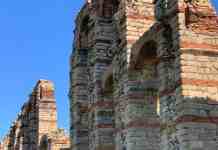
The Roman influence also extended to the city’s architecture, evident in the remnants of buildings like the Temple of Diana. This temple, although primarily a ruin now, reflects the grandeur of Roman religious architecture. The extensive aqueduct system constructed during this period significantly improved water supply and sanitation, demonstrating advanced engineering that would not be equaled in Europe until many centuries later.
Culturally, the Roman presence injected a new dynamic into Lisbon. The Romanization process led to the introduction of the Latin language, which gradually replaced the local dialects. Over time, this shift contributed to the evolution of the Portuguese language, with Latin roots forming the basis of many contemporary terms used today.
Though Roman rule faced challenges, including revolts and invasions by various tribes, the legacy of the Roman Empire in Lisbon endured. The city remained a vital outpost even after the fall of the Western Roman Empire in the 5th century, with its infrastructure and cultural foundations continuing to influence subsequent generations.
The legacy of Roman Lisbon highlights the city’s adaptability and resilience. This era played a crucial role in shaping the identity of Lisbon, blending indigenous customs with Roman innovations. As we explore the subsequent historical developments, the impacts of this early era remain palpable, underscoring the importance of these foundations in the city’s enduring appeal and significance.
The Moorish Era: Cultural Flourishing and Architectural Marvels
With the arrival of the Moors in the 8th century, Lisbon entered a new era characterized by cultural flourishing and architectural innovation. The conquest of the city in 711 AD marked a significant transformation, as the Moors established themselves in the Iberian Peninsula, bringing with them advancements in various spheres, particularly in science, art, and architecture.
Under Moorish rule, which lasted until the mid-12th century, Lisbon became known as Al-Ushbuna, a thriving center of trade and culture. This period saw the introduction of new agricultural techniques and crops, including citrus fruits, rice, and various spices that are now integral to Portuguese cuisine. The Moorish influence on agriculture was profound, resulting in a more diverse and productive landscape, which enhanced the city’s economy.
Architecturally, the Moors left an indelible mark on Lisbon’s skyline. The famous Castelo de São Jorge, originally a Moorish castle, served both as a military stronghold and a royal residence. Its strategic position on a hill provided a defensive advantage and allowed for stunning panoramic views of the city. The castellan fortifications were an embodiment of Islamic architectural principles, incorporating intricate designs and elements reminiscent of the grandeur of the Moorish Empire.
Further exemplifying the architectural brilliance of this era is the Alfama district, one of the oldest neighborhoods in Lisbon. Characterized by narrow winding streets, traditional houses, and vibrant tile work, Alfama retains much of its Moorish heritage. The use of azulejos—decorative ceramic tiles—can be traced back to this period, as these colorful tiles adorned buildings, telling stories of the city’s diverse cultural tapestry.
Culturally, the Moorish period catalyzed significant intellectual and artistic achievements. Scholars and thinkers from various regions converged in Lisbon, exchanging ideas and knowledge. This environment of learning fostered advancements in mathematics, astronomy, and philosophy, profoundly influencing Portuguese thought. The legacy of this intellectual pursuit is still apparent in contemporary Portuguese cultural expressions, evident in literature, art, and music.
The end of the Moorish rule in Lisbon came in 1147 when Afonso I of Portugal captured the city during the Reconquista. Despite being displaced, the Moors’ contributions to the city remained visible, influencing its culture and architecture well into the future. The intermingling of Christian and Islamic traditions created a unique cultural synthesis that would shape Lisbon’s identity for centuries to come.
The Moorish era is thus a defining chapter in Lisbon’s history. The period not only enabled the city to prosper economically and culturally but also laid the groundwork for the rich architectural heritage that continues to attract visitors today. As Lisbon evolved, the influences from this era would permeate its fabric, contributing to the city’s resilience and enduring appeal.
The Age of Discovery: Lisbon as a Global Maritime Power
The Age of Discovery, spanning the 15th to the 17th centuries, marked a transformative period for Lisbon, establishing it as a pivotal maritime power. This era was characterized by the exploration of new trade routes, the establishment of overseas colonies, and an unprecedented expansion of global commerce. Lisbon emerged as the epicenter of this expansion, facilitating the exchange of goods, cultures, and ideas between Europe, Africa, Asia, and the Americas.
Portugal, driven by ambitious explorers such as Vasco da Gama and Henry the Navigator, sought to discover new lands and trade routes. Lisbon became the launchpad for numerous expeditions as navigators departed from its shores in search of spices, gold, and other valuable commodities. The establishment of a trading empire expanded Portugal’s influence significantly, turning Lisbon into a bustling hub for merchants and traders from around the world. The city’s strategic location along the Atlantic coast enhanced its importance as a transit point for goods heading to and from Europe.
The wealth generated during this period led to immense growth in Lisbon’s economy, which transformed the city’s social and cultural landscape. With an influx of riches from the colonies, the city became a melting pot of diverse cultures and traditions. The appearance of new goods and luxuries from distant lands enriched everyday life for many Lisbon inhabitants, leading to a vibrant atmosphere of prosperity and creativity.
This economic boom spurred architectural advancements, as the city sought to showcase its newfound wealth through grand buildings and monuments. The Jerónimos Monastery and the Tower of Belém, both constructed during this period, exemplify the Manueline architectural style—a fusion of Gothic and Renaissance elements enriched by influences from Portugal’s overseas discoveries. These structures not only celebrate the wealth of the nation but also serve as a testament to the city’s maritime prowess.
Simultaneously, the Age of Discovery fostered a climate of intellectual curiosity and innovation. Lisbon became a center for cartography and navigation, with scholars and mapmakers collaborating to chart new territories. The Portuguese were pioneers in maritime technology, developing navigational instruments that would later be adopted by other seafaring nations. This period of exploration not only expanded geographical knowledge but also facilitated cultural exchanges that had lasting impacts on the world.
However, the prosperity of the Age of Discovery was not without its darker side. The quest for resources often led to the exploitation and colonization of indigenous populations, raising ethical questions about the consequences of such expansionist policies. This complex legacy remains integral to the understanding of Lisbon’s history and its role in global trade.
The Age of Discovery solidified Lisbon’s position as a critical player in world history. The wealth, cultural exchange, and architectural advancements that characterized this period laid the foundation for Lisbon’s modern identity. As we continue to explore the city’s story, the indelible marks left by the Age of Discovery continue to resonate within its streets and communities.
Modern Lisbon: Rebuilding, Revolution, and Resilience
The 20th century ushered in a series of transformative events for Lisbon, characterized by reconstruction, political upheaval, and resilience. The devastating earthquake of 1755 marked a turning point, leading to significant changes in urban planning and architectural styles. The earthquake, which resulted in widespread destruction, prompted a reimagining of the city. Under the guidance of figures such as the Marquês de Pombal, Lisbon was rebuilt with a focus on modernity and improved infrastructure. The Pombaline architecture that emerged during this period combined functionality with neoclassical elements, reflecting the city’s determination to recover from catastrophe.
As the century progressed, Lisbon played a crucial role in the political landscape of Portugal. The Republican Revolution of 1910 transformed the monarchy into a republic, altering the fabric of the nation. Lisbon served as a backdrop for political movements and civil unrest as citizens sought to shape their governance and sociopolitical identity. The Salazar dictatorship, which lasted from the 1930s to the 1970s, brought about significant changes in daily life and suppressed dissidence. During this period, Lisbon witnessed a mix of oppression and cultural expression, as artists and intellectuals navigated a regime marked by censorship.
The Carnation Revolution of 1974 marked another pivotal moment in Lisbon’s history, symbolizing a peaceful transition to democracy. Citizens took to the streets, advocating for freedom and an end to authoritarian rule. The revolution was marked by the iconic imagery of red carnations, symbolizing hope and change. The subsequent democratization fostered an environment of cultural revival, embracing diverse identities and perspectives.
As Lisbon entered the 21st century, it continued to navigate the challenges and opportunities posed by globalization. The city underwent significant urban renewal, leading to revitalization of neighborhoods and adaptation to modern needs. Lisbon’s economic resilience was tested during the European debt crisis, yet the city emerged stronger, fostering a spirit of innovation and entrepreneurship. Today, Lisbon is celebrated for its vibrant tech scene, artistic endeavors, and commitment to sustainability.
The modern narrative of Lisbon is one of resilience, creativity, and evolution. While challenges remained—such as housing crises and preservation of cultural heritage—the city has embraced its identity as a dynamic and inclusive metropolis. The blending of historical legacies with contemporary influences exemplifies Lisbon’s capacity for adaptation, making it a unique place of convergence for diverse cultures and ideas.
Lisbon’s journey through the ages is a testament to its enduring spirit. The city has navigated through natural disasters, political upheaval, and economic challenges, each shaping its character. As we reflect on Lisbon’s modern era, we see a city that honors its past while embracing a vibrant future.
Conclusion
Lisbon’s history is a rich tapestry woven from diverse cultural influences, transformative events, and indomitable resilience. From its early settlements and Roman foundations to the flourishing of the Moorish era, the city’s evolution has been marked by significant epochs that have contributed to its unique character. The Age of Discovery established Lisbon as a vital maritime power, propelling the city into a prominent role on the global stage. In modern times, Lisbon has demonstrated remarkable adaptability, navigating challenges while celebrating its heritage.
Today, Lisbon stands as a vibrant city, with a proud cultural and historical legacy that continues to inspire both residents and visitors alike. The interplay of past and present creates a harmonious blend that defines the city’s charm and allure. As Lisbon continues to evolve, its history serves as a foundation for innovation and creativity, inviting all who wander through its streets to become part of its ongoing story.
Sources
- “Lisbon: A Cultural History” by Mark D. McGarvie
- “The History of Portugal” by David Birmingham
- “Lisbon: City of the Sea” by Sarah McCoy
- “A History of Modern Portugal” by James F. Brown
- “The Age of Discoveries: Navigating the World” by Richard S. Dunn