

Introduction
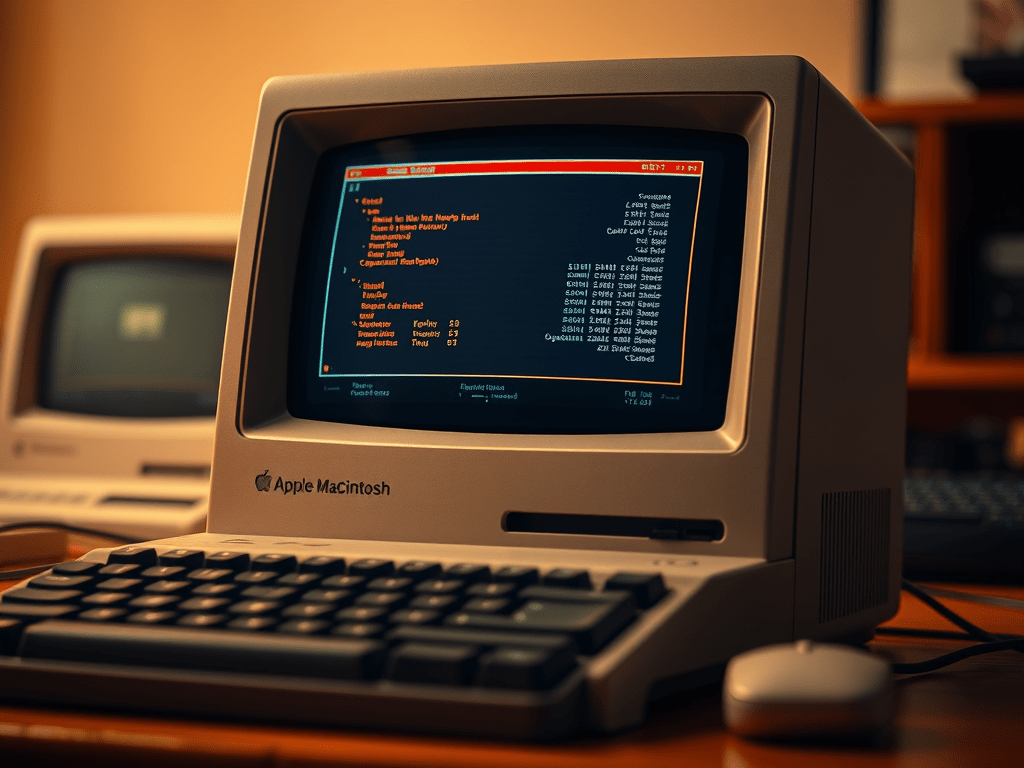
The Apple Macintosh, or simply the Mac, revolutionized personal computing when it debuted in 1984. Designed to bring sophisticated technology to everyday users, the Mac represented Apple’s bold vision of intuitive and user-friendly computing. From its innovative graphical user interface (GUI) to its sleek hardware, the Macintosh challenged the dominance of text-based systems like MS-DOS and introduced the world to a new way of interacting with computers.
Over the decades, the Apple Macintosh has undergone significant transformations, adapting to technological advancements and shifting consumer preferences. From surviving fierce competition in the 1990s to spearheading breakthroughs like Retina displays and Apple Silicon, the Macintosh has remained a symbol of innovation. Its legacy extends beyond hardware, influencing everything from graphic design to software development. This article explores the Mac’s history, examining its milestones, challenges, and enduring impact on technology and culture.
The Genesis of Macintosh: Apple’s Vision for Personal Computing
The Macintosh project was born from Apple’s ambitious vision to make personal computers accessible and intuitive for everyone. In the late 1970s, Apple had already made a name for itself with the Apple II, a highly successful product in the burgeoning personal computing market. However, co-founder Steve Jobs envisioned a computer that would transcend the limitations of text-based systems and offer a more engaging and user-friendly experience.
The inspiration for the Macintosh came partially from the Xerox Alto, a pioneering computer developed by Xerox PARC in the early 1970s. The Alto introduced a graphical user interface (GUI) featuring windows, icons, and a mouse—concepts that were groundbreaking at the time. Jobs recognized the transformative potential of these ideas and sought to integrate them into Apple’s products. While Apple’s Lisa project was the first to incorporate a GUI, its high cost and limited success made it clear that a more affordable solution was needed.
In 1979, Jef Raskin, an Apple employee and visionary thinker, proposed the idea of a low-cost, easy-to-use computer aimed at ordinary consumers. He named the project “Macintosh,†after his favorite variety of apple. Although Raskin laid the groundwork for the project, Steve Jobs quickly took over its development, infusing it with his relentless drive for perfection and his passion for design.
The Macintosh team operated like a startup within Apple, working in a separate building and fostering a culture of innovation and experimentation. They were driven by a singular goal: to create a computer that was not only powerful but also delightful to use. This ethos was encapsulated in the team’s mantra, “The journey is the reward.â€
The development of the Macintosh faced numerous technical and financial challenges. Engineers had to devise ways to make the GUI and mouse affordable for mass production while ensuring the system was fast and responsive. The team also faced internal competition from the Lisa project, which complicated resource allocation and company priorities.
Despite these obstacles, the Macintosh project gained momentum, fueled by breakthroughs in hardware and software. The Mac’s 9-inch monochrome display, 128 KB of RAM, and Motorola 68000 processor were cutting-edge for the time. The system also introduced innovations like the Finder, a file management tool that made navigating the computer intuitive, and MacPaint, which showcased the creative possibilities of a GUI.
By the early 1980s, the Macintosh was ready to make its debut. It promised not just to be a computer but a revolution in how people interacted with technology. With Steve Jobs championing its development, the Macintosh would soon capture the imagination of the world.
The Iconic Launch: Introducing the Macintosh in 1984
The introduction of the Apple Macintosh on January 24, 1984, is often regarded as one of the most iconic moments in the history of personal computing. This was not just the launch of another computer—it was the unveiling of a product that would forever change the landscape of technology. The event was a culmination of years of intense development and innovation, backed by Steve Jobs’ visionary leadership.
The Macintosh launch was memorable not only for its groundbreaking hardware but also for the way Apple presented the product to the world. Apple chose a unique approach for its unveiling, orchestrating a grand spectacle that would make a lasting impact on the public’s perception of the company. The centerpiece of the launch was a television commercial, directed by the legendary Ridley Scott. The ad, broadcast during the Super Bowl XVIII, was a cinematic masterpiece that drew clear inspiration from George Orwell’s novel 1984. It portrayed a dystopian future where a totalitarian regime controlled the masses through conformity and technology, only to be shattered by a lone woman (symbolizing the Macintosh) who throws a hammer at a screen, symbolizing Apple’s challenge to the status quo. The ad was provocative, audacious, and perfectly encapsulated Apple’s rebellious spirit.
The commercial itself was a masterstroke in marketing, catching the attention of millions, and immediately placing the Macintosh at the center of public discourse. It set the tone for how Apple would position its products moving forward: not as mere computers, but as instruments of personal freedom and creativity.
When the Macintosh finally debuted in stores, it represented a radical departure from the traditional personal computers of the era. While most computers of the early 1980s still used text-based interfaces and required complex command-line instructions, the Macintosh featured a graphical user interface (GUI) that allowed users to interact with icons and windows using a mouse—a concept that had been virtually unknown to the mass market.
The hardware of the Mac was equally groundbreaking. The computer was compact, lightweight, and featured a sleek design that was visually distinct from other computers on the market. Its 9-inch black-and-white CRT display was sharp and clear, ideal for graphics and media—an area where the Mac would eventually thrive. The Motorola 68000 processor, paired with 128KB of RAM, was considered powerful for its time, delivering a level of performance that stood out in the early PC landscape. The Mac also came with a floppy disk drive for software distribution, a feature that would later be replaced with more advanced storage solutions.
Despite its innovative features, the Macintosh faced immediate challenges. Its price—set at $2,495—was steep for the time, particularly when compared to the IBM PCs that were popular among businesses and professionals. Additionally, the software ecosystem for the Macintosh was still in its infancy, and many of the programs available were not yet as sophisticated or diverse as those available for IBM-compatible PCs.
Despite these challenges, the Mac’s impact was undeniable. It was a product that demonstrated what personal computing could be: simple, intuitive, and capable of bringing out users’ creativity. While the Macintosh’s initial sales were below expectations, the launch of the product marked the beginning of a long journey of growth and innovation for Apple.
Innovations and Milestones: Transforming User Interfaces
The Macintosh’s introduction in 1984 represented a dramatic shift in how personal computers were designed and used. At the heart of this transformation was the graphical user interface (GUI)—a groundbreaking feature that set the Mac apart from its competitors. Prior to the Mac, most personal computers, including IBM PCs, used text-based interfaces that required users to input complex commands. The Macintosh, on the other hand, made it possible to interact with the computer using a mouse to click on icons and navigate through windows‘ a revolutionary concept that would influence not only the personal computer market but the entire tech industry.
The Macintosh’s GUI was built on ideas that Steve Jobs and his team had taken from the Xerox Alto and Xerox Star systems, but they refined and simplified it to make it more accessible. Apple’s vision was to make personal computing an intuitive experience for the average person, not just for experts. The user-friendly interface featured desktop icons representing files, folders, and applications, with a menu bar at the top of the screen and drop-down menus that allowed for quick access to functions. This interface marked a radical departure from the command-line prompts that dominated the industry at the time.
Another notable innovation was MacPaint, a graphics editing program that came bundled with the original Macintosh. This program showcased the capabilities of the Mac’s graphical display and demonstrated how easy it was to create and manipulate images with a mouse. MacPaint was one of the first applications that allowed users to interact with graphics in an intuitive way, and it became an instant hit among creative professionals.
The Finder, another essential element of the Mac, made it easier for users to manage files and folders. Instead of memorizing directory paths or typing in commands, users could simply click and drag icons to copy, move, or delete files. This simplicity and ease of use was a game-changer in the industry, and it played a significant role in making the Macintosh more appealing to non-technical users.
The Macintosh also introduced the idea of multitasking on a personal computer, allowing users to switch between different applications without having to close and reopen them. This was a huge step forward, as it enabled users to work more efficiently and accomplish more tasks in less time.
Beyond the interface, the Macintosh set new standards for hardware design. The compact, all-in-one design of the original Mac, with its built-in monitor and disk drive, was unlike anything else on the market. It looked and felt like a device that could be easily used in the home or office, not just a tool for computing professionals.
These innovations became milestones not just for Apple but for the entire industry. The Mac’s GUI would influence the development of future operating systems, including Microsoft’s Windows. Additionally, the Mac would continue to evolve over the years, introducing even more groundbreaking features, from color displays to retina screens, and eventually becoming synonymous with design and creativity in the tech world.
Challenges and Competition: Surviving the PC Revolution
The 1980s and 1990s presented significant challenges for the Apple Macintosh, as it faced intense competition from the IBM PC and the rapidly expanding Windows ecosystem. While the Macintosh had introduced a revolutionary user interface and sleek design, its high price point, limited software availability, and the rise of cheaper, more compatible PCs with MS-DOS and later Windows meant that Apple was constantly fighting for market share.
In the early 1980s, IBM was the dominant force in the personal computing industry. Its PCs, running on Microsoft’s MS-DOS operating system, were perceived as more business-friendly due to their compatibility with a wide range of software applications. IBM’s open architecture also allowed third-party manufacturers to create accessories and add-ons, which further enhanced the appeal of IBM PCs. Meanwhile, Apple’s proprietary approach to hardware and software, coupled with the high cost of the Macintosh, made it less attractive to businesses looking for a cost-effective and flexible solution.
The Windows operating system, launched by Microsoft in 1985, began to pose a significant threat to the Macintosh. Windows was heavily based on the concepts introduced by the Macintosh’s graphical user interface, but it was available on a wide variety of PC hardware, often at a fraction of the price. This made it easier for consumers and businesses to adopt Windows-powered machines. By the late 1980s, Windows was gaining momentum, and many software developers began prioritizing Windows versions of their applications, further eroding the Mac’s market share.
Apple’s challenges were compounded by its internal struggles. The company experienced leadership instability, particularly with the departure of Steve Jobs from the company in 1985. Jobs had been the driving force behind the Macintosh’s development, but after a power struggle with Apple’s board, he left the company and founded NeXT, a computer company focused on high-end workstations for educational and business markets. Without Jobs’ visionary leadership, Apple struggled to maintain its innovative edge, and its focus shifted away from the Macintosh in favor of other products.
Despite these challenges, the Macintosh managed to carve out a niche in creative industries. Its graphic design capabilities, ease of use, and robust software like Adobe Photoshop and PageMaker made it the go-to platform for designers, artists, and publishers. The Macintosh became synonymous with creativity, and Apple cultivated this image through its advertising campaigns, which emphasized the Mac’s ability to unlock users’ artistic potential.
By the early 1990s, however, the Macintosh had not gained the widespread adoption that Apple had hoped for. While the Mac enjoyed popularity in certain markets, particularly among graphic designers and educators, it was struggling to compete with the dominance of Windows-based PCs in the broader market. Apple’s market share had steadily declined, and the company faced significant financial troubles.
The Return of Steve Jobs: Reshaping the Macintosh Lineup
In 1997, after more than a decade of decline, Apple was on the brink of collapse. The company was struggling with poor sales, mounting financial losses, and a lack of clear direction. That was when Steve Jobs made his triumphant return to Apple, after purchasing NeXT and being brought back to the company he had co-founded. Jobs took the helm as Apple’s interim CEO and immediately set about reshaping the company’s direction and strategy.
One of Jobs’ first moves was to simplify Apple’s product lineup, which had become cluttered with too many models and configurations. He focused on streamlining the Mac’s offerings, creating clear distinctions between consumer and professional models. Jobs also made a bold decision to adopt Mac OS X, a new operating system based on NeXTSTEP, the operating system Jobs had developed at NeXT. Mac OS X combined the stability of Unix with the ease of use of the Macintosh interface, giving Apple a modern and powerful OS that could compete with Windows.
Jobs also brought a renewed emphasis on design to the Macintosh. In the late 1990s, Apple released the iMac G3, a bold, colorful all-in-one computer that became an instant hit. The iMac, designed by Jonathan Ive, was a departure from the traditional beige and grey boxes that dominated the PC market. It featured a translucent, bubble-shaped case in various colors and was marketed as a stylish, fun, and user-friendly computer. The iMac G3 was a massive success and helped to reestablish Apple as a company that was both innovative and aesthetically driven.
The iMac also showcased the new vision for the Macintosh. It was an affordable, easy-to-use computer that catered to consumers, yet it retained the power and sophistication needed for professional users. Apple’s marketing efforts, emphasizing simplicity, creativity, and individuality, resonated with a new generation of consumers who were looking for something different from the utilitarian PCs that were flooding the market.
Under Jobs’ leadership, the Macintosh began to regain market share and relevance. Apple’s focus on design and user experience continued to set the Mac apart from Windows-based PCs, and the introduction of Mac OS X laid the foundation for the future of Apple’s software ecosystem. The return of Steve Jobs was nothing short of transformative, not just for the Macintosh but for Apple as a whole.
Modern Mac Innovations: From Intel to Apple Silicon
In the 2000s and 2010s, the Macintosh continued to evolve with the advancement of technology, bringing groundbreaking innovations that helped Apple stay at the forefront of the personal computing world. One of the most significant changes in this period came with Apple’s decision to transition from PowerPC processors to Intel processors in 2006. This move was pivotal because it allowed the Macintosh to run not only Mac OS X but also Windows, thanks to Intel’s x86 architecture.
The switch to Intel processors also improved performance, particularly in applications that demanded more processing power. It enabled the Mac to compete on a more equal footing with other PCs that were powered by Intel chips. The change was not without challenges, as Apple had to redesign its hardware and software to support Intel’s architecture, but the move proved to be a success. The Intel-based Macs, including the MacBook Pro and iMac, offered better performance, increased compatibility, and faster processing speeds than ever before.
However, in 2020, Apple made another bold move by transitioning from Intel chips to its own Apple Silicon processors. The transition to Apple M1, followed by the M1 Pro, M1 Max, and later M2 chips, represented a dramatic shift in how Apple designed and built its computers. Apple Silicon chips are custom-designed ARM-based processors that are optimized for efficiency, power, and integration with macOS. The shift allowed Apple to deliver even better performance, particularly in terms of battery life and processing power, while maintaining a level of control over both hardware and software that had not been possible with Intel processors.
The Apple Silicon transition marked a new era for the Macintosh, providing the platform with unprecedented speed, power efficiency, and seamless integration with Apple’s broader ecosystem. With the M1 and M2 chips, Apple redefined the limits of what personal computers could do, cementing the Macintosh’s place as a premium choice for users in the creative, professional, and tech sectors.
The Legacy of Macintosh: Its Impact on Technology and Culture
The Apple Macintosh has had a profound and lasting impact on both technology and culture. When it was introduced in 1984, the Macintosh was a revolutionary product that brought computing into the mainstream, making it more accessible, user-friendly, and creative. Its emphasis on design, innovation, and ease of use set a new standard for personal computers, influencing not just Apple’s products but the entire tech industry.
The Macintosh’s most significant cultural impact came in the way it redefined the role of personal computers. Prior to the Mac, computers were primarily seen as tools for businesses and technical professionals. The Macintosh, with its intuitive interface and creative capabilities, made personal computers something that anyone could use and enjoy. It was marketed not just as a piece of technology but as a tool for self-expression. This vision laid the foundation for Apple’s success in the following decades, particularly with products like the iPod, iPhone, and iPad, which continued the tradition of user-centric design.
In the world of creative professionals, the Macintosh became synonymous with graphic design, music production, video editing, and software development. Its reliability, ease of use, and powerful software suite made it the preferred platform for industries where creativity was paramount. Programs like Adobe Photoshop, Final Cut Pro, and Logic Pro became industry standards, reinforcing the Mac’s reputation as a creative powerhouse.
Beyond the creative industry, the Mac also helped shape the future of computing with its emphasis on user experience. The Macintosh showed the world that technology didn’t have to be difficult to use or intimidating—it could be fun, intuitive, and approachable. This shift in mindset laid the groundwork for the smartphone revolution of the 2000s, where simplicity, elegance, and integration were key themes.
The Macintosh also played a crucial role in pushing the boundaries of hardware design. Apple’s focus on sleek, minimalist design and premium materials influenced not just other computer manufacturers but also companies in other industries. The MacBook, with its thin profile and high-quality aluminum construction, set a new standard for laptop design. The Mac’s emphasis on retina displays, high-fidelity sound, and touch-based interfaces became a benchmark for how future consumer electronics would be built.
Conclusion
The Apple Macintosh has had a profound and lasting influence on personal computing, transforming not only how we interact with technology but also how technology is designed and perceived. From its early years as a revolutionary product in 1984 to its modern-day innovations with Apple Silicon, the Mac has continuously pushed the boundaries of what a personal computer can be. Its focus on simplicity, design, and usability has shaped the personal computing landscape, and its impact can be seen in every Apple product today, from the iPhone to the MacBook.
The legacy of the Macintosh is not just in the devices themselves, but in the way they’ve influenced culture, creativity, and the very way we live our lives. Apple’s commitment to innovation and user experience has made the Mac a cornerstone of the tech industry and a symbol of the company’s enduring vision. The Macintosh’s journey, from its humble beginnings to its current status as a tech icon, remains one of the most significant stories in technology history.







[…] history of iPhone started in 2007, when was introduced by Apple, a device that would redefine the concept of a smartphone and revolutionize the tech industry. […]
[…] the mid-1990s, Microsoft was facing increasing competition from companies like Apple, which had its own graphical user interface with Mac OS, and Novell, which offered network […]
[…] in sectors such as information technology and telecommunications. Companies like Microsoft, Apple, […]
[…] the world. Over the decades, it has reshaped entire industries through pioneering products like the Macintosh, iPod, iPhone, and iPad. This article will delve into the rich history of Apple Inc., examining its […]