Introduction
Montblanc, renowned for its luxury writing instruments, has become an enduring symbol of elegance, craftsmanship, and innovation. The history of Montblanc started in Germany in the early 20th century, where the company began as a small business dedicated to creating quality pens, but soon evolved into an international icon with its Meisterstück collection, which redefined the standards of writing excellence. Throughout its history, Montblanc has consistently integrated innovation with tradition, expanding into watches, leather goods, and accessories, while maintaining its commitment to quality and sustainability. This article explores Montblanc’s journey, from its origins to its pioneering role in luxury, revealing the brand’s dedication to artistry and timeless sophistication.
Founding and Early Years: The Beginnings of Montblanc
The story of Montblanc began in 1906, when three visionary entrepreneurs in Hamburg, Germany—Alfred Nehemias, Claus-Johannes Voss, and August Eberstein—founded the Simplo Filler Pen Company. Driven by a passion for high-quality craftsmanship and inspired by the precision engineering of Swiss watchmaking, they set out to create superior fountain pens that would stand out in both function and design. These early years were characterized by a dedication to innovation and an ambition to revolutionize the writing experience.
In an era when writing instruments were primarily utilitarian, Montblanc sought to elevate the art of writing with meticulously crafted pens that not only performed reliably but also embodied elegance and sophistication. In 1909, the company introduced its first pen collection, which featured a simple yet refined design. This collection, named “Rouge et Noir,†represented a pivotal moment for Montblanc, showcasing a unique mechanism that prevented ink spills—a major advancement at the time. The Rouge et Noir series was met with enthusiasm, helping the company establish a reputation for quality and innovation.
In 1910, the founders decided to rename the brand Montblanc, inspired by the highest peak in the Alps, Mont Blanc. This name was chosen to symbolize the brand’s aspiration to achieve the pinnacle of quality and craftsmanship. The Montblanc logo, featuring a white star representing the snow-capped peak of Mont Blanc, was introduced shortly after and became an instantly recognizable symbol of luxury and precision. This emblem underscored Montblanc’s commitment to producing the finest writing instruments, positioning it as a leader in the industry.
Throughout the 1910s and 1920s, Montblanc expanded its product line and refined its manufacturing processes. The brand became known for its attention to detail, quality materials, and rigorous quality control. As the company gained popularity in Europe, it also began to develop its signature style, focusing on sleek designs and innovative features that set its products apart from competitors. The growth of Montblanc during this period can be attributed to its relentless pursuit of excellence, which would become a cornerstone of its brand identity.
The 1930s saw Montblanc introduce its iconic Meisterstück (German for “Masterpieceâ€) collection, which would later become synonymous with luxury writing instruments. By this time, Montblanc had firmly established itself as a leader in the market, known for its reliability, design elegance, and high standards. The Meisterstück line quickly gained popularity among writers, professionals, and collectors, becoming a cultural symbol of success and refinement.
Montblanc’s early years laid a solid foundation for what would become a legacy of excellence. The founders’ vision and dedication to quality positioned Montblanc as a premier name in writing instruments. Over the decades, Montblanc’s commitment to craftsmanship and innovation has remained unwavering, making it a brand that not only celebrates tradition but also continually pushes the boundaries of luxury and performance.
Montblanc’s Iconic Meisterstück Collection: Redefining Luxury Writing
The introduction of the Meisterstück collection in 1924 marked a defining moment for Montblanc and set a new standard for luxury writing instruments. Translating to “Masterpiece†in German, the Meisterstück was designed to embody the pinnacle of elegance, quality, and functionality. The collection’s sleek design, combined with Montblanc’s commitment to using the finest materials and craftsmanship, established the Meisterstück as a cultural icon and a symbol of success.
The Meisterstück’s design was minimalistic yet refined, characterized by its signature black resin barrel, gold-plated accents, and the distinctive Montblanc emblem on the cap. This emblem, representing the snow-covered peak of Mont Blanc, became synonymous with quality and prestige. The pen’s design was both timeless and modern, appealing to a sophisticated clientele who valued quality and understated elegance.
Beyond aesthetics, the Meisterstück offered a superior writing experience, which contributed significantly to its success. Montblanc introduced advanced nib technology that provided smooth, precise writing with every stroke. The Meisterstück nib was hand-crafted from solid gold and required skilled artisans to shape, polish, and test each nib individually. This meticulous process ensured that every pen met Montblanc’s high standards of quality and performance. The use of precious metals and high-grade resin not only enhanced the pen’s durability but also contributed to its luxurious feel, distinguishing it from ordinary writing instruments.
The Meisterstück quickly gained popularity among professionals, writers, and intellectuals, establishing itself as a status symbol. Over the years, it became more than just a writing instrument; it was a symbol of accomplishment, creativity, and aspiration. Prominent figures, including politicians, authors, and business leaders, favored the Meisterstück, and its reputation grew beyond Europe to reach a global audience. The pen’s enduring appeal lies in its ability to transcend trends, offering a design that remains relevant and stylish regardless of changing fashion.
Montblanc has continuously innovated within the Meisterstück line, introducing limited editions and collaborations that pay homage to cultural icons, literary figures, and historical events. These limited editions often feature intricate engravings, unique materials, and design elements that make each piece a work of art. Collectors eagerly seek these editions, viewing them as investments and expressions of individual taste and sophistication.
The Meisterstück’s enduring legacy is a testament to Montblanc’s dedication to quality, innovation, and design excellence. Nearly a century after its introduction, the Meisterstück remains one of the most coveted writing instruments in the world, celebrated for its craftsmanship and the unparalleled writing experience it offers. As Montblanc expands into new markets and adapts to modern tastes, the Meisterstück stands as a timeless symbol of the brand’s heritage and its commitment to excellence.
Technological Advancements and Innovation in Writing Instruments
Throughout its history, Montblanc has embraced technological advancements, continuously improving the functionality and durability of its writing instruments. As early as the 1900s, Montblanc introduced innovations that addressed common issues with traditional fountain pens, such as ink spillage and inconsistent ink flow. These early breakthroughs established Montblanc as an innovator, dedicated to refining the writing experience.
In the mid-20th century, Montblanc revolutionized the industry with the introduction of a piston-filling mechanism that allowed for easier and more efficient ink refilling. This design replaced traditional ink cartridges, reducing waste and providing a more seamless writing experience. The piston-filling system became a signature feature of Montblanc pens, offering users a convenient and reliable way to fill their pens with ink. This innovation not only improved functionality but also reflected Montblanc’s commitment to craftsmanship, as each pen required precise engineering and skilled assembly.
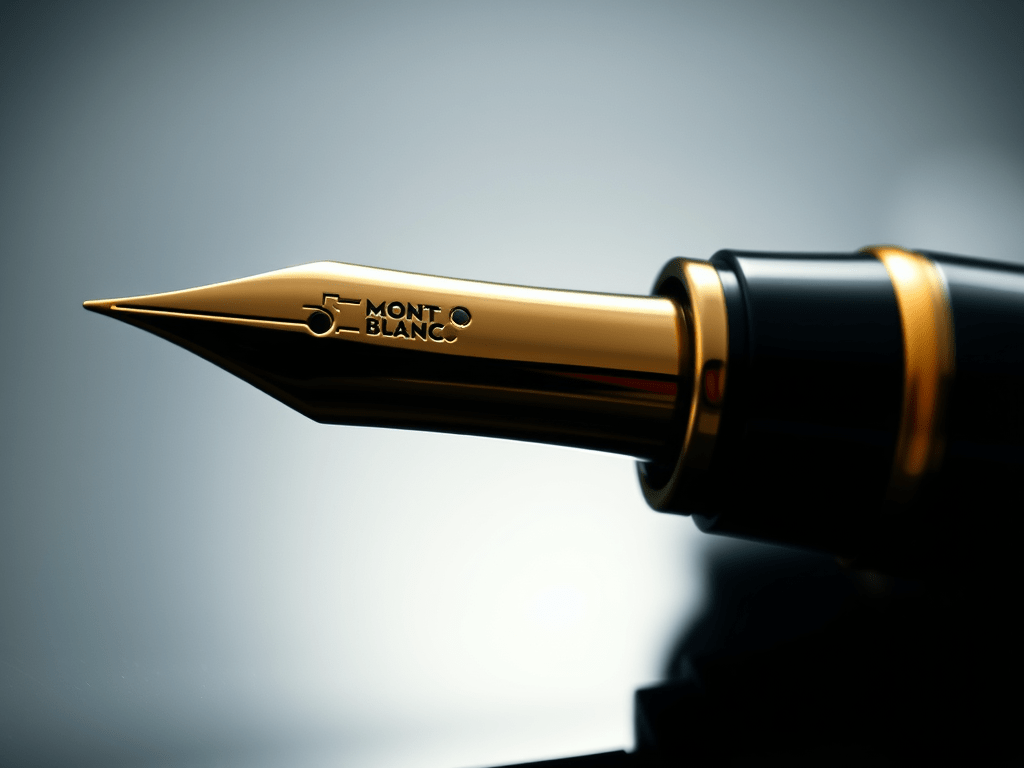
Montblanc’s research and development teams have continued to push the boundaries of writing technology, incorporating new materials and manufacturing techniques. For instance, the brand has explored the use of high-tech resins and metal alloys to create pens that are both lightweight and durable. These materials provide a comfortable grip, reduce hand fatigue, and enhance the pen’s overall performance. Montblanc’s engineers work closely with artisans to ensure that each pen not only meets technical standards but also aligns with the brand’s aesthetic values.
In recent years, Montblanc has also embraced digital technology, creating products that blend traditional craftsmanship with modern functionality. The Montblanc Augmented Paper, introduced in 2016, is an example of this innovation. This device allows users to write with a Montblanc pen on specially designed paper, and the content is automatically digitized and stored on a mobile app. This combination of analog and digital technologies provides a seamless transition from handwritten notes to digital records, appealing to professionals who value the tactile experience of writing but also require digital convenience.
Montblanc’s commitment to innovation extends to sustainability. The brand has implemented eco-friendly practices, such as using recycled materials in packaging and developing environmentally friendly inks. Montblanc is also exploring ways to reduce its carbon footprint and minimize waste in its production processes. This dedication to sustainable innovation aligns with Montblanc’s mission to create products that are not only beautiful and functional but also responsible.
As Montblanc looks to the future, it continues to explore new technologies that enhance the writing experience while respecting the brand’s heritage. The balance between tradition and innovation is at the core of Montblanc’s philosophy, enabling the brand to remain relevant in an ever-evolving market. Montblanc’s technological advancements have not only improved the quality of its products but have also reinforced its reputation as a leader in luxury and innovation.
Expansion Beyond Writing: Montblanc’s Foray into Luxury Goods
In the late 20th century, Montblanc began expanding its portfolio beyond writing instruments, venturing into the world of luxury goods to reach a broader audience. Recognizing its potential to become a lifestyle brand, Montblanc launched collections of high-quality leather goods, watches, jewelry, and fragrances, each crafted with the same dedication to precision and quality that defined its pens. This diversification allowed Montblanc to evolve from a writing instrument specialist into a full-fledged luxury brand.
Montblanc’s entry into the watch industry, in particular, marked a significant expansion. In 1997, the brand launched its first timepieces, introducing the Montblanc Meisterstück Watch Collection. Drawing inspiration from the precision engineering that had defined Montblanc’s pens, the watches were crafted in the Swiss tradition, with intricate mechanics and a commitment to excellence. Montblanc acquired the Minerva watchmaking company, a prestigious Swiss manufacturer with a history dating back to 1858. With this acquisition, Montblanc gained access to Minerva’s expertise in high-precision chronographs, allowing the brand to produce watches that rival the craftsmanship of established Swiss watchmakers.
Montblanc’s leather goods collection also exemplified the brand’s expansion. The leather products, including wallets, briefcases, and bags, are crafted in Montblanc’s Pelleteria in Florence, Italy, using high-quality materials and artisanal techniques. Like Montblanc’s writing instruments, these leather goods are designed to last, with each piece meticulously crafted to ensure durability and elegance. Montblanc’s leather products appeal to those who appreciate understated luxury and functional design, offering timeless pieces that complement the brand’s aesthetic.
Jewelry was another area where Montblanc ventured, developing collections that emphasized simplicity and sophistication. Montblanc jewelry features clean lines and elegant designs, often incorporating materials like sterling silver, onyx, and diamonds. These pieces are crafted to be both stylish and versatile, suitable for daily wear or special occasions. Montblanc’s jewelry collections have appealed to a diverse clientele, offering pieces that range from classic to contemporary, all bearing the brand’s commitment to quality.
With fragrances, Montblanc sought to create scents that captured the essence of its brand identity—elegant, sophisticated, and timeless. The fragrances, both for men and women, have become popular additions to Montblanc’s product range, adding another dimension to the brand’s lifestyle appeal. Scents like Montblanc Legend and Montblanc Explorer have garnered acclaim for their refined, lasting compositions that reflect Montblanc’s standards of luxury.
Montblanc’s strategic diversification allowed it to cultivate a global lifestyle brand that extends well beyond writing instruments. Each new product line embodies the qualities that define Montblanc—craftsmanship, timeless design, and a dedication to quality. The expansion into luxury goods has not only strengthened Montblanc’s brand presence but also allowed it to create a cohesive luxury experience for its customers. Today, Montblanc’s diverse offerings serve as symbols of refinement and accomplishment, making the brand a staple in the world of luxury.
Montblanc Today: Sustainability and Commitment to Craftsmanship
In recent years, Montblanc has emphasized sustainability, reflecting a growing awareness of environmental and social responsibility within the luxury industry. The brand recognizes that quality craftsmanship goes hand-in-hand with a commitment to sustainable practices, ensuring that Montblanc’s legacy is not only defined by excellence but also by ethical responsibility. This commitment has led Montblanc to adopt environmentally conscious policies in both its manufacturing processes and product materials.
One area of focus for Montblanc’s sustainability efforts is the reduction of its carbon footprint. Montblanc’s production facilities are designed to minimize waste and energy consumption, incorporating eco-friendly practices wherever possible. The brand has implemented recycling programs and energy-efficient systems to reduce its environmental impact. For example, Montblanc has invested in renewable energy sources and technologies that lower greenhouse gas emissions in its production processes, aligning with the global push for carbon neutrality.
Montblanc is also committed to using sustainably sourced materials in its products. In its leather goods collection, Montblanc ensures that the leather is sourced from suppliers who adhere to ethical and environmental standards. The brand has also introduced eco-friendly packaging solutions, reducing the use of plastic and adopting recyclable materials. This initiative aligns with Montblanc’s broader goal of minimizing its environmental footprint while still delivering high-quality luxury products to its customers.
The brand’s commitment to craftsmanship remains central to its philosophy, and Montblanc takes pride in preserving traditional artisanal techniques in its production. Each Montblanc pen, watch, or leather accessory undergoes a meticulous crafting process that involves skilled artisans and state-of-the-art technology. Montblanc’s artisans undergo rigorous training to master the techniques required for creating its products, ensuring that every item bearing the Montblanc emblem meets the brand’s high standards. This dedication to craftsmanship not only upholds Montblanc’s reputation for quality but also supports the preservation of traditional skills in a rapidly evolving industry.
In addition to environmental sustainability, Montblanc is dedicated to social responsibility. The brand actively supports charitable initiatives, particularly those focused on education and literacy, which align with its identity as a purveyor of writing instruments. The Montblanc Cultural Foundation, established in 1992, promotes arts and culture, supporting initiatives that encourage creativity and literacy around the world. Through partnerships and sponsorships, Montblanc funds programs that provide educational resources and cultural opportunities to underserved communities, reinforcing the brand’s belief in the transformative power of writing and the arts.
Today, Montblanc stands as a luxury brand that prioritizes both excellence and sustainability. By embracing eco-friendly practices and fostering social responsibility, Montblanc ensures that its legacy of quality is sustainable in every sense of the word. This commitment to a holistic approach to luxury sets Montblanc apart, appealing to a modern clientele who value not only elegance and craftsmanship but also ethical and environmental integrity. Montblanc’s focus on sustainability is a testament to its dedication to building a future that respects both people and the planet, ensuring that the brand’s values endure for generations to come.
Conclusion
Montblanc’s journey from a Hamburg-based pen manufacturer to an international luxury brand is a story of innovation, quality, and resilience. With each new product line and technological advancement, Montblanc has upheld its commitment to excellence, continually redefining the standards of luxury. Today, Montblanc is more than a brand; it represents a legacy of craftsmanship and a dedication to sustainable practices that resonate with modern values. As Montblanc moves forward, it remains rooted in tradition while embracing the future, ensuring that its products will continue to inspire and symbolize achievement for generations to come.