Introduction
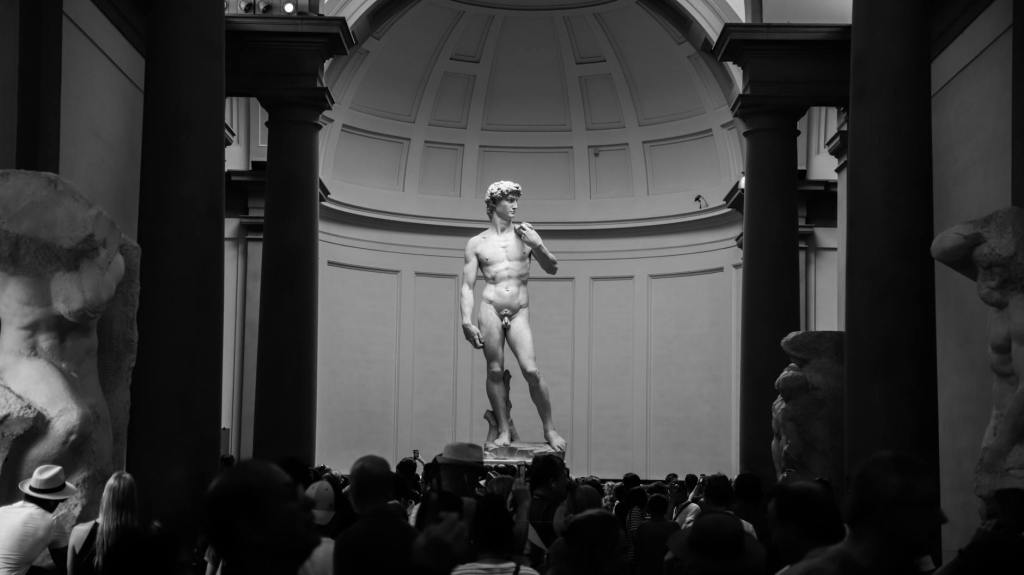
The Michelangelo’s David Statue is not merely a statue; it is a universal symbol of strength, beauty, and the triumph of the human spirit. Created between 1501 and 1504, this masterpiece of Renaissance sculpture has captivated millions worldwide. Set against the backdrop of Florence, a city steeped in artistic vitality during the Renaissance, the creation of David marked a significant moment in art history. This article explores the historical context, Michelangelo’s life, the commissioning of the statue, the artistic process behind its creation, and its lasting impact on culture. Through this exploration, we will unravel the intricacies of Michelangelo’s genius and the enduring legacy of David.
Historical Context: Italy during the Renaissance
The Renaissance was a profound cultural movement that began in Italy in the 14th century and lasted into the 17th century. It marked a revival of interest in the classical art and philosophy of ancient Greece and Rome. Artists, thinkers, and scientists sought to better understand the world through a humanistic perspective, emphasizing the importance of the individual and the beauty of the natural world.
Florence, often considered the cradle of the Renaissance, was characterized by a wealth of artistic experimentation and innovation. The city was home to some of the most influential figures of the period, including artists like Leonardo da Vinci, Botticelli, and, of course, Michelangelo. The political landscape during this time was tumultuous, marked by the power struggle between the Medici family and various republican factions. This atmosphere fostered a competitive spirit among artists, pushing them to strive for excellence.
As Michelangelo began to develop his style, he was profoundly influenced by the work of his contemporaries and the classical forms of ancient art. Statues and frescoes began to reflect more realistic human emotions, anatomy, and dynamism. This cultural renaissance laid the groundwork for Michelangelo’s ambitious projects, including the David statue.
In the context of political turmoil, the statue of David emerged as a symbol of Florence’s strength and independence. The city sought to express its resilience against external threats through artistic expression. Commissioned as a representation of the biblical hero David, the statue symbolized the triumph of virtue over tyranny. As the work progressed, it became clear that the David was more than just a religious icon; it was a political statement and a testament to Florence’s identity.
Michelangelo’s decision to depict David before the battle with Goliath was significant. The statue conveyed not only physical strength but also emotional intensity, capturing the tension and determination of the hero. It was a radical departure from the typical representations of David, which often showcased him in a more relaxed pose after his victory. Michelangelo’s portrayal emphasized the importance of internal struggle and the complexities of human emotion.
Michelangelo’s Early Life and Artistic Development
Michelangelo di Lodovico Buonarroti Simoni was born on March 6, 1475, in Caprese, Italy. Raised in Florence, he showed artistic talent from a young age. His early exposure to art came through his apprenticeship under the painter Domenico Ghirlandaio, where he learned the fundamentals of painting and the importance of anatomy in art. However, Michelangelo’s true passion lay in sculpture, and he soon sought guidance from the influential sculptor Bertoldo di Giovanni in the Medici garden.
His formative years were marked by the patronage of the Medici family, which provided him access to a wealth of resources and artistic inspiration. The Medici, known for their support of the arts, recognized Michelangelo’s potential and encouraged his development. It was during this period that Michelangelo honed his skills, learning to carve marble and understanding the subtleties of human form.
Michelangelo’s travels to Rome also played a transformational role in his artistic journey. The exposure to the grandeur of Roman architecture and sculpture deepened his appreciation for classical aesthetics. It inspired him to blend classical techniques with his unique style, characterized by dynamic forms and emotional expressiveness.
By the time he was commissioned to create David, Michelangelo had already established himself as a preeminent artist in Florence. His works, including the Pietá and the unfinished sculptures known as the ‘Prisoners,’ demonstrated his mastery over marble and his deep understanding of human anatomy. These creations foreshadowed the genius that would soon manifest in the David statue.
Michelangelo’s innovative approach to sculpture involved not only technical skill but also a profound exploration of human emotion and the complexity of the human experience. This artistic philosophy would come to define Michelangelo’s legacy and profoundly influence the subsequent generations of artists.
The Commissioning of the David Statue to Michelangelo
As the city of Florence emerged from a period of political strife, the need for a unifying symbol became increasingly important. The statue of David was commissioned in 1501 by the Operai del Duomo, the governing body responsible for the Florence Cathedral. Originally intended for the cathedral’s façade, the statue’s location would quickly change due to its monumental stature and symbolic significance.
The original block of marble, known as the ‘Giant,’ had been quarried from Carrara and was previously abandoned by other sculptors who deemed it unsuitable for work. However, Michelangelo saw potential in the flawed stone. His determination and vision allowed him to transform the imperfect block into a masterpiece, showcasing his exceptional ability to see beyond the surface.
Throughout the commissioning process, the Operai del Duomo had specific expectations, wanting a statue that embodied the spirit of Florence. They sought a representation of David that was not only physically imposing but also conveyed a sense of moral superiority, reflecting the city’s ideals. Michelangelo eagerly took on the challenge, feeling that he could create a figure that would embody the nobility of the Florentine community.
The commission process was marked by a sense of urgency and high expectations. As Michelangelo began working on the statue, he immersed himself in the project, dedicating nearly three years to its development. His passion and obsession for perfection drove him to often work late into the night, perfecting every detail of the sculpture.
Tension arose from the Operai del Duomo’s expectations, as Michelangelo faced pressure from the public and art community to deliver a statue that conveyed both physical power and deep emotional resonance. The statue’s unveiling became an event anticipated by the city, and Michelangelo understood the weight of the moment.
The result, finished in 1504, exceeded the expectations of those around him and solidified Michelangelo’s status as a master sculptor. The statue was installed outside the Palazzo della Signoria, the major governmental building of Florence, where it became an enduring symbol of the city’s civic pride and artistic achievement.
The Artistic Process: From Quarry to Michelangelo’s Masterpiece
The artistic process behind the making of Michelangelo’s David is a story of technical mastery and profound dedication to the craft of sculpture. When Michelangelo was presented with the large block of marble, he faced various challenges due to the block’s imperfections. Previous sculptors had discarded it, believing it to be unsuitable. However, Michelangelo saw beyond potential flaws and visualized the masterpiece that lay waiting within.
Michelangelo began by studying the proportions and anatomy required to create a lifelike figure. He relied heavily on his extensive knowledge of anatomy, gained through his studies of the human body and dissections. This understanding allowed him to intricately carve the details of David’s muscles and facial expressions, ensuring that each part of the statue would convey emotion and vitality.
One of the innovative aspects of Michelangelo’s approach involved his use of the ‘contrapposto’ stance, a technique where the weight of the body is distributed unevenly, creating a naturalistic pose. By positioning David in a way that suggested movement and tension, Michelangelo breathed life into the marble, making the statue appear dynamic while frozen in time.
The tools Michelangelo employed were simple yet effective, primarily focusing on chisels, hammers, and other carving instruments. He possessed an exceptional ability to visualize the final outcome while also working intuitively and spontaneously, adapting as he went along. This dynamic process often involved Michelangelo stepping back to view the statue from different angles, allowing him to assess the figure in its three-dimensional form.
The work on David involved numerous stages, from rough shaping the block to refining the details of the facial features, hands, and posture. This meticulous attention was crucial in creating the masterpiece fluidity between the structure and the delicate features of the sculpture. Michelangelo poured his emotions into the work, infusing David with a sense of determination and strength that resonated deeply with the viewers.
Throughout the journey of carving David, Michelangelo faced doubts and challenges. The scale of the statue was monumental, and the pressure to deliver a work that reflected both his artistic vision and the expectations of the patrons loomed heavily. Yet, through sheer perseverance, he managed to transform his vision into reality.
As the chisel struck the marble, it became evident that each precise cut revealed the beauty within. The moment of completion marked a pivotal achievement for Michelangelo, establishing a benchmark for Renaissance art and confirming his legacy as one of the greatest artists of all time.
Cultural Impact and Legacy of David through time
Michelangelo’s David became a cultural icon almost immediately upon its completion in 1504. Positioned in the heart of Florence, the statue was perceived not only as an artistic achievement but also as a powerful political symbol. In a time of fluctuating power dynamics, this representation of David, poised in anticipation of battle, resonated with the citizens of Florence who sought inspiration in their valor and resilience.
The cultural impact of David extended far beyond Florence. As the Renaissance spread throughout Europe, Michelangelo’s work became a beacon of artistic excellence and a model for aspiring artists. David’s form and expression set a new standard for representing the human body in a way that communicated strength and emotion, influencing generations of artists across various mediums.
During the 19th century, the statue became particularly emblematic of the Italian unification movement, known as the Risorgimento. As artists and nationalists sought symbols to represent Italy’s struggle for independence, Michelangelo’s David emerged as a visual embodiment of courage and determination. The statue’s popularity surged, and reproductions of David proliferated in various forms, solidifying its status as a national symbol.
In the realm of art education, David became a cornerstone of study for aspiring artists worldwide. Michelangelo’s techniques and innovations in handling marble and mastering human anatomy were examined and emulated by countless students, reinforcing his influence over the artistic community. The statue’s aesthetic and technical elements were analyzed for centuries, helping to shape art theory and practice.
In contemporary society, David continues to captivate audiences and inspire new generations. It has been reproduced in various forms, from small sculptures to modern interpretations and adaptations in popular culture. This enduring legacy speaks to the universal themes of strength, beauty, and the human experience that Michelangelo captured so profoundly.
Moreover, Michelangelo’s David is celebrated not only as a work of art but also as a symbol of the potential for beauty to transcend time and place. The figure continues to be a source of intrigue, a reminder of the artist’s ability to encapsulate the human spirit in marble. Its preservation and ongoing admiration reflect the timeless nature of artistic expression and its power to unite people across cultures and generations.
Conclusion
Michelangelo’s David stands as one of the greatest masterpieces in art history, embodying the spirit of the Renaissance and the culmination of artistic genius. From its historical context in Florence to the meticulous artistic process that brought it to life, David represents the triumph of the human spirit and the enduring quest for beauty and meaning in art. The legacy of this statue is woven into the cultural fabric of not only Florence but the world at large, shaping countless artists and inspiring ongoing discussions about the role of art in society. As we continue to engage with the beauty of David, we are reminded of Michelangelo’s prodigious talent and the impact of artistic expression on the human experience.
References
- G. Vasari, “Lives of the Most Excellent Painters, Sculptors, and Architects”
- M. Bizer, “Michelangelo: A Life in Six Captivating Stories”
- R. R. Tuck, “The Complete Works of Michelangelo”
- C. T. Wood, “The Anatomy of Michelangelo’s David”
- E. H. Gombrich, “The Story of Art”
Watch also