Introduction
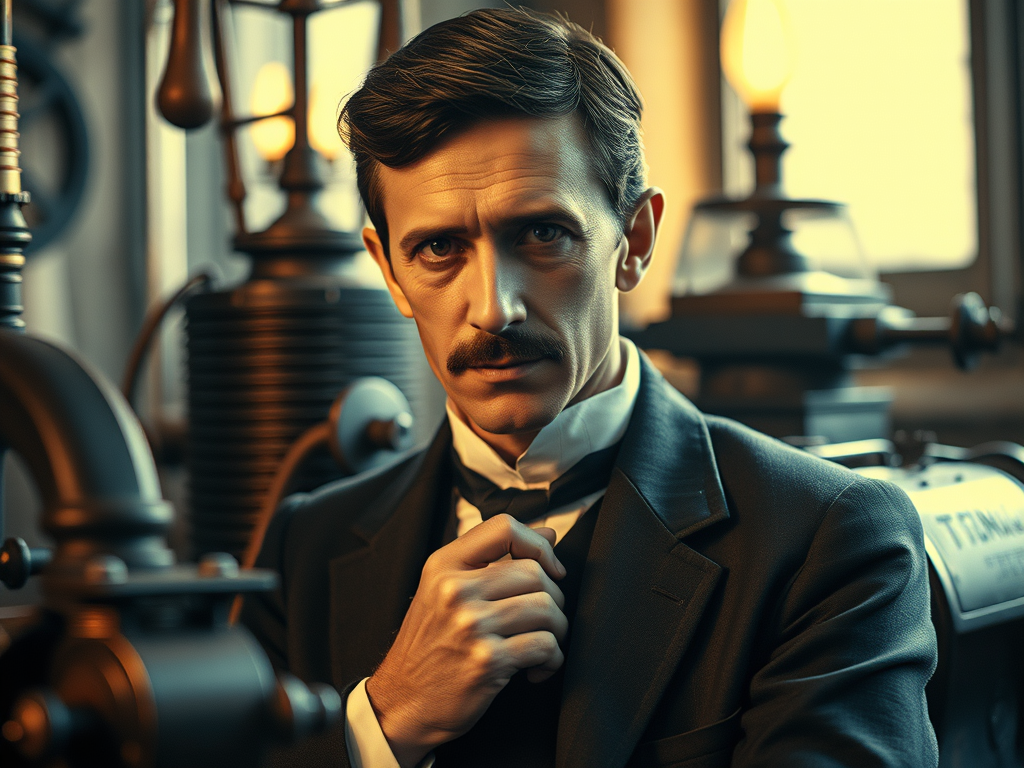
Nikola Tesla, a name that resonates deeply in the realms of electricity and innovation, was a visionary whose groundbreaking ideas changed the course of science and technology. Born on July 10, 1856, in Smiljan, Croatia, Tesla showcased extraordinary intellectual abilities from a young age, eventually leading him to study engineering and physics in Europe. Driven by an insatiable curiosity, he emigrated to the United States in 1884, where he initially worked with Thomas Edison before embarking on his own path of invention. With a focus on alternating current (AC) technology, Tesla’s contributions laid the foundation for modern electrical systems. However, his life was also marked by intense rivalries, financial struggles, and a gradual decline into obscurity. This article delves into the intricate tapestry of Nikola Tesla’s life, exploring his experiences, inventions, challenges, and the impact he had on the world.
Early Life and Education: Formative Experiences and Influences
Nikola Tesla was born to Serbian parents, Milutin and Georgina Tesla, in a region that was then part of the Austrian Empire. His father, a priest of the Serbian Orthodox Church, had a profound influence on Tesla’s intellectual development, instilling in him a love for literature and a passion for storytelling. Despite his father’s wishes for him to follow a literary path, young Nikola was captivated by the natural sciences and pursued an education in engineering and physics at the Technical University of Graz and later in Prague.
During his formative years, Nikola Tesla exhibited exceptional abilities in mathematics and physics, yet he faced challenges that would shape his character. One such difficulty was his struggle with health and self-doubt, which stemmed from the high expectations set by his father. He also experienced a traumatic event when his brother, Dane, died in an accident, which had a lasting impact on Tesla’s psyche and deepened his resolve to succeed.
Tesla’s academic journey was marked by a blend of brilliance and frustration. He delved into the study of electromagnetism and became particularly fascinated with the potential of alternating currents. His theoretical work was often ahead of its time, leading to disputes with his professors who favored direct current (DC), the prevailing technology at the time. This conflict underscored Nikola Tesla’s independent thinking and foreshadowed his later challenges in the field.
After leaving the university, Tesla worked in various jobs, honing his skills while developing his theories on electricity. A significant turning point occurred when he met his mentor, Charles Batchelor, who recognized Tesla’s genius and assisted him in securing a position at the Edison Machine Works in New York City. This pivotal step opened the doors to the burgeoning field of electrical engineering and laid the groundwork for his groundbreaking innovations.
In summary, Nikola Tesla’s early life was characterized by a unique blend of personal tragedy, academic brilliance, and intellectual rigor. These early experiences shaped the man who would eventually transform the world with remarkable inventions and ideas, ushering in a new era of electrical technology.
Inventions and Discoveries: Pioneering Alternating Current (AC) and Beyond
Nikola Tesla’s early ingenuity led him to envision a revolutionary electrical system based on alternating current (AC), which would ultimately become the industry standard for power transmission. After gaining experience at Edison Machine Works, Tesla’s understanding of electricity and magnetism culminated in his desire to create a system that was safer and more efficient than the direct current (DC) system championed by Thomas Edison.
In the late 1880s, Nikola Tesla developed the AC induction motor, a groundbreaking invention that utilized alternating current to produce mechanical energy. This innovation not only enhanced the efficiency of electric motors but also allowed for long-distance power transmission, which was a significant challenge in the era of electricity. To demonstrate the superiority of his AC system, Tesla collaborated with industrialist George Westinghouse, who recognized the potential of Tesla’s inventions.
One of the defining moments in Tesla’s career was the “War of Currents,” where he faced fierce competition from Edison, who was heavily invested in the DC system. Edison launched a campaign to discredit AC, even going as far as to demonstrate the dangers of the current by publicly electrocuting animals. However, Tesla and Westinghouse persisted, showcasing their AC system’s effectiveness at the 1893 World’s Columbian Exposition in Chicago. Here, Tesla’s invention powered the fair, dazzling visitors with electric light and demonstrating the potential of AC power on a grand scale.
In addition to the AC motor, Nikola Tesla invented the Tesla coil, an induction coil that produces high-voltage, low-current electricity. This invention played a significant role in early radio technology and wireless transmission. Nikola Tesla’s experiments laid the groundwork for modern wireless communication, though at the time, he struggled for recognition as others capitalized on his theories.
Throughout his career, Nikola Tesla filed numerous patents for his inventions, ranging from transformers to wireless transmission devices. His visionary concepts extended to wireless lighting and energy transmission, aiming to create a world powered by limitless energy. Unfortunately, many of these ideas were deemed impractical by his contemporaries, leading to frustration and isolation as he often felt overshadowed by other inventors.
In conclusion, Tesla’s relentless pursuit of innovation and unwavering belief in the potential of alternating current revolutionized the electrical industry. His inventions and discoveries not only transformed the landscape of electricity but also paved the way for future technological advancements that would shape the modern world.
Struggles and Rivalries: Tesla vs. Edison and the War of Currents
Nikola Tesla’s career was dramatically shaped by his rivalry with Thomas Edison, a battle that reverberated throughout the history of electrical engineering. After gaining initial success at Edison Machine Works, where Tesla worked briefly, tensions arose due to differing philosophies on electricity. Edison championed direct current (DC), emphasizing short-distance transmission over AC’s long-distance efficiency, which adopted a fundamentally different approach.
The friction between the two inventors intensified as Nikola Tesla sought to promote his AC system while Edison staunchly defended his DC-based technology. Edison, who was well-known and commercially successful, utilized every avenue to disparage AC, including orchestrating public demonstrations to illustrate the dangers of AC electricity. Despite this hostile environment, Tesla remained steadfast, demonstrating the advantages of AC, notably its efficiency and ability to transmit power over long distances.
The culmination of this rivalry came during the “War of Currents,” a series of public debates and commercial struggles that ultimately determined the direction of the electrical industry. Westinghouse, a key ally of Nikola Tesla, invested heavily in promoting AC technology. Their partnership culminated in a significant milestone: the construction of the first large-scale hydroelectric power plant at Niagara Falls in 1895. The success of the plant dramatically underscored the utility of AC and paved the way for its adoption as the dominant electric power system in North America.
Despite the successful partnerships and advances Tesla achieved, he also faced numerous setbacks. Financial struggles, legal battles over patents, and Edison’s extensive influence in media and industry hampered his ability to gain full recognition and success for many of his pioneering inventions. The culmination of Edison’s campaigns against AC included the promotion of the electric chair, an attempt to associate AC with danger and death in the eyes of the public.
Despite these challenges, Tesla held his ground and continued to develop new technologies and innovations. As the 20th century began, the AC system was ultimately recognized as the superior technology, and Tesla’s contributions became foundational to modern electrical engineering. Yet, Tesla’s battles took a toll on his reputation and financial stability, often resulting in feelings of isolation as he became a somewhat reclusive figure.
In hindsight, Tesla’s rivalry with Edison was not just about the technology itself, but also about branding, business strategies, and public perception. The War of Currents showcased the clash between innovation and corporate interests, where Tesla’s idealistic vision conflicted with Edison’s commercial pursuits. Ultimately, Tesla’s resilience in the face of adversity solidified his place in history as a remarkable inventor whose vision and determination paved the way for future advancements in electrical technology.
Later Years and Decline: The Fall from Prominence and Financial Hardship
After the success of the AC system, Nikola Tesla enjoyed a period of recognition, but it was short-lived. The tumultuous nature of his later years was marked by isolation, financial difficulties, and a struggle for acknowledgment in a world that often overlooked his contributions. Despite the profound impact Tesla had on electrical engineering, he faced significant challenges that led to considerable decline in his circumstances.
During the early 1900s, Nikola Tesla’s focus shifted toward ambitious projects such as wireless transmission of electricity. He developed the Wardenclyffe Tower in Shoreham, New York, which was intended to demonstrate his vision of global wireless energy distribution. However, financial backing dwindled, largely due to a lack of investor confidence in the feasibility of such grand projects. After repeated financial disappointments, Tesla was unable to complete the tower, leading to immense frustration as his groundbreaking ideas remained unrealized.
At the same time, Nikola Tesla’s innovative spirit was overshadowed by the rise of more commercially-oriented inventors. His once-prominent position in the industry began to wane, and many of his concepts were usurped by others who capitalized on his ideas without recognizing his pioneering efforts. The public’s focus shifted to more practical applications of electricity, leaving Tesla’s more grandiose visions in the shadows.
Despite struggling to secure financial stability, Tesla continued to work on various projects throughout the 1920s and 1930s. However, his health began to decline, and he became increasingly isolated, living alone in New York City. Many of his later inventions did not gain the commercial success he had envisioned, further deepening his hardships.
As years passed, Tesla found solace in nature, often engaging in long walks and spending time with pigeons, which he cared for deeply. His mental health began to deteriorate amidst the challenges he faced, and he remained a largely overlooked figure, particularly as younger inventors began to dominate the narrative surrounding electrical innovation.
Despite these struggles, Tesla’s contributions remained embedded within the framework of modern technology. As the 1940s approached, Tesla’s innovations began to regain recognition, ultimately leading to a posthumous celebration of his contributions. However, for Tesla, who had grown accustomed to battles for acknowledgment throughout his life, the late recognition felt bittersweet as he had faced financial and personal losses that deeply affected him.
In conclusion, Tesla’s later years were marked by conflict between his visionary aspirations and the harsh realities of financial hardship and obscurity. While he remained committed to his ideas, a lack of financial support and industry relevance placed him in a position of decline. It was a poignant reminder of how even the greatest minds can face struggles in their pursuit of innovation and recognition.
Posthumous Recognition and Impact: The Enduring Legacy of Tesla’s Innovations
The legacy of Nikola Tesla flourished in the decades following his death in 1943, as the world began to appreciate the monumental impact he had on science and technology. Initially, his life was marred by struggles and a lack of commercial success; however, as the 20th century progressed, a renewed focus on his work revealed the profound influence his inventions had on modern electrical systems and communication technologies.
Tesla’s pioneering role in the development of alternating current electrical systems became widely recognized as the foundation upon which the modern electric grid was built. With increasing globalization and urbanization, the demand for reliable electricity surged. As power companies expanded, Tesla’s vision of long-distance energy transmission became a vital component of the electrical landscape, ensuring that his innovations would benefit generations to come.
Additionally, Tesla’s contributions to the field of wireless communication began to gain recognition as the invention of radio became the focus of burgeoning technology. The BBC and other organizations honored Tesla’s role in laying the groundwork for transmitting signals wirelessly, despite historical injustices that often credited others, such as Guglielmo Marconi, with the invention. As the truth emerged, Tesla’s reputation as a visionary inventor grew, and public fascination with his life and theories surged.
Tesla’s legacy transcended technical achievements; he became a cultural icon symbolizing creativity, innovation, and the struggles of genius. His life story inspired countless books, documentaries, and films. The Tesla coil, an invention synonymous with his name, remains a fixture in educational demonstrations and pop culture references, imbuing fascination for future generations.
Moreover, as the environmental movement gained momentum, Tesla’s ideas on wireless energy transmission and renewable energy sources gained newfound relevance. His vision for a sustainable future echoed the growing need to explore alternatives to conventional energy generation methods as society increasingly recognizes the urgency of mitigating climate change.
By the time of the centenary of the AC induction motor’s patent in 1988, Nikola Tesla had been posthumously awarded various honors, including the establishment of Tesla Day and a growing number of honors by scientific institutions. In recent decades, the automobile manufacturer Tesla, Inc., named after him, epitomizes the modern embrace of sustainable technologies, bringing Tesla’s vision for clean energy into the 21st century with electric vehicles and renewable energy solutions.
In conclusion, Nikola Tesla’s posthumous recognition represents a transformative appreciation for his contributions to science and technology. The trajectory of his life—from obscurity to revered status—highlights the enduring power of innovation and the importance of acknowledging visionary thinkers whose work shapes our world. As technological advancements continue to unfold, Tesla’s legacy will remind us of the potential unlocked through imagination and perseverance.
Sources
- “Tesla: Man Out of Time” by Margaret Cheney
- “The Inventions, Researches, and Writings of Nikola Tesla” by Thomas Commerford Martin
- “Nikola Tesla: A Sparking Life” by Irena S. Dap
- Various journal articles from IEEE and historical accounts of the War of Currents
- Biographies and documentaries on Nikola Tesla available through educational platforms.