Introduction
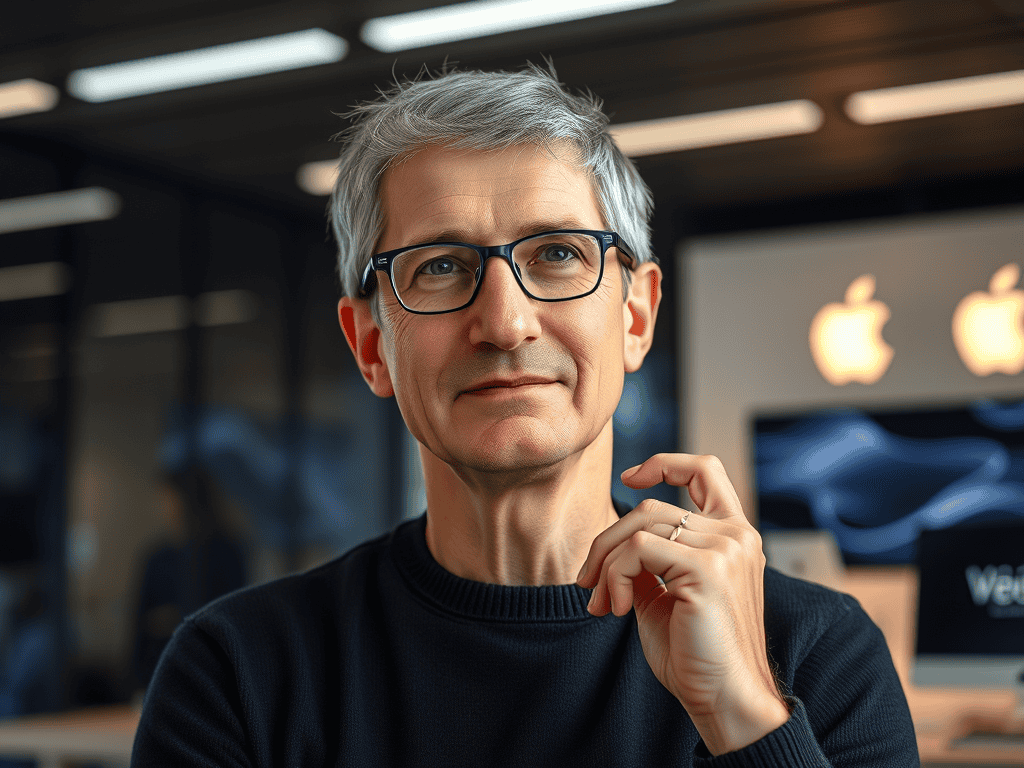
Tim Cook stands as one of the most significant figures in contemporary technology, serving as the CEO of Apple Inc. since 2011. With a background rooted in operational excellence and a unique leadership style, Cook has overseen Apple’s remarkable transformation into one of the highest-valued companies in the world. Born in Alabama and equipped with an MBA from Duke University, Cook began his career at IBM before moving through various tech companies, eventually catching the attention of Steve Jobs. His tenure has been marked by innovation, a commitment to sustainability, and a focus on user privacy. This article will explore Tim Cook’s life and history, detailing his early years, career developments, innovative contributions, and the leadership philosophy that guides him as he shapes Apple’s future.
Early Life and Education of Tim Cook
Tim Cook was born on November 1, 1960, in Mobile, Alabama, into a modest, working-class family. His father, Donald, worked in a shipyard, while his mother, Geraldine, was a homemaker. Growing up in a traditional Southern household, Cook learned the values of hard work and perseverance early on. Attending Robertsdale High School in Robertsdale, Alabama, he developed a keen interest in technology and computers, often spending his free time working on technical projects and tinkering with electronics.
Cook’s passion for learning led him to Auburn University, where he pursued a Bachelor of Science degree in Industrial Engineering. Here, he gained insights into supply chain management and operations, foundational elements that would shape his later career. During his time at Auburn, he participated in leadership programs and student organizations, recognizing the importance of collaboration and teamwork in achieving goals.
After graduating in 1982, Cook continued his education by enrolling in Duke University’s Fuqua School of Business. He earned his Master of Business Administration (MBA) in 1988, where he was noted for his emphasis on ethical leadership and a commitment to corporate responsibility. Duke’s rigorous academic environment further enhanced his analytical skills and understanding of business operations, setting the stage for his future endeavors in the tech industry.
Tim Cook’s formative years instilled a strong work ethic and a belief in the power of knowledge—traits that have defined his approach as a leader. His combination of technical expertise and business acumen has enabled him to navigate Apple’s complex landscape successfully. As he laid the groundwork for his future career, these early experiences would prove invaluable in shaping the visionary leader he would become.
Professional Journey Before Apple
Before arriving at Apple, Tim Cook’s career path includes significant experience at various tech companies. His professional journey began with IBM, where he worked in the Personal Computer division as a buyer. This role provided him with a foundation in operations and supply chain management, enabling him to understand the intricacies of the tech industry. Cook’s time at IBM taught him the importance of efficiency and organization within a growing business, lessons he would later apply at Apple.
After several years at IBM, Cook transitioned to Intelligent Electronics, where he served as the Director of Fulfillment. There, he expanded his knowledge of the tech supply chain and explored innovative methods to improve distribution processes. His next stop was Compaq, where he worked as Vice President of Corporate Materials. At Compaq, Cook’s responsibility was to optimize the company’s global operations and enhance product distribution. Throughout his tenure in these positions, Cook honed his skills in managing operations and built a reputation for his ability to streamline processes and reduce costs.
Cook’s strong track record drew the attention of Steve Jobs, who was searching for someone to help revitalize Apple during its difficult transition period in the late 1990s. In 1998, after an impressive professional journey, Cook joined Apple as Senior Vice President for Worldwide Operations. His immediate impact at Apple was profound; he implemented efficient inventory management strategies that significantly improved the company’s profitability and operational efficiency. This experience solidified his capabilities and positioned him for greater responsibilities within the company as he moved up the ranks to Chief Operating Officer.
Ascension to CEO: The Transition Post-Steve Jobs
Tim Cook became the CEO of Apple Inc. on August 24, 2011, following the passing of the company’s legendary co-founder Steve Jobs. This transition marked a pivotal moment for Apple as it shifted from its visionary founder’s leadership to a new era under Cook’s guidance. The responsibility of leading Apple—especially considering the immense legacy Jobs left behind—was not without its challenges, but Cook was well-prepared, having worked closely alongside Jobs as COO for years.
As CEO, Cook faced the immediate challenge of maintaining Apple’s innovative edge while ensuring the company’s culture was preserved. Under Jobs, Apple was revered for its transformative products, and the world was watching to see if Cook could sustain this momentum. He adopted a leadership style that placed greater emphasis on collaboration, inclusiveness, and a commitment to ethical practices. While Jobs was known for his intense focus on product perfection, Cook took a more community-oriented approach, valuing team input and feedback.
In the years following Cook’s ascension to CEO, Apple achieved numerous significant milestones, including the launch of several groundbreaking products, such as the Apple Watch and AirPods. Additionally, Cook successfully expanded Apple’s services sector, positioning the company in new markets through offerings like Apple Music, Apple TV+, and Apple Services. Pursuing diversification not only strengthened Apple’s revenue model but also mitigated risks associated with the rapidly changing tech landscape.
Despite initial skepticism about whether he could fill Jobs’ shoes, Cook proved his leadership abilities by maintaining Apple’s status as a leading innovator. His calm demeanor, strategic foresight, and operational expertise allowed Apple to thrive under his stewardship.
Tim Cook’s major Innovations and Contributions at Apple
Since becoming CEO, Tim Cook has overseen a continuous flow of innovation at Apple, fundamentally shaping the company’s trajectory. Innovations under Cook’s leadership have redefined technology and consumer electronics, showcasing Apple’s commitment to quality and user experience.
One of the most significant contributions during Cook’s tenure has been the introduction of the Apple Watch in 2015. This marked Apple’s entry into wearables, creating an entirely new product category that emphasized health and fitness. The Apple Watch not only enhanced user interaction with technology but also spotlighted Apple’s commitment to health initiatives. Tim Cook has expressed that one’s health and wellbeing are of paramount importance, which resonates strongly with the Apple Watch’s functionalities.
Cook also spearheaded the expansion of Apple’s software services. The grueling competition in the streaming market led to the development of Apple Music in 2015 and Apple TV+ in 2019. Under Cook’s guidance, Apple services have grown to become a vital and lucrative segment of Apple’s revenue stream, reflecting a strategic understanding of market trends and consumer behavior.
Furthermore, Cook’s leadership has extended into areas of social impact and responsibility. He has significantly advanced Apple’s environmental initiatives, working diligently towards making the company carbon neutral by 2030. This commitment to sustainability resonates with consumers, aligning with the rising demand for environmentally friendly technologies. Tim Cook’s vision for a greener future is not only admirable but has positioned Apple as a leader in corporate sustainability.
These innovations and initiatives exemplify Tim Cook’s forward-thinking approach. By focusing on user experience, diversification, and social responsibility, Cook has ensured that Apple remains at the forefront of technological advancements while addressing emerging societal challenges.
Tim Cook’s Leadership Philosophy and Future Vision
Tim Cook’s leadership philosophy is underpinned by a strong commitment to collaboration, transparency, and ethical decision-making. Unlike his predecessor, he emphasizes open communication and encourages a culture of inclusiveness within Apple, believing that diverse perspectives foster creativity and innovation. Cook’s management style is characterized by empowering teams and recognizing individual contributions, creating a positive work environment where employees feel valued and motivated.
In addition to promoting workplace inclusivity, Cook is also an advocate for social justice, privacy, and sustainability. His leadership approach has seen Apple take firm stances on several social issues, positioning the company as a socially responsible entity that prioritizes the well-being of its customers and the community. Cook has explicitly stated his commitment to privacy, outlining that Apple products must respect the user’s personal data, setting a standard for data protection in the tech industry.
Looking forward, Tim Cook envisions a future where technology enhances human connection and addresses pressing global challenges. Under his direction, Apple aims to continue leading in product innovation while embracing artificial intelligence and machine learning to create more personalized user experiences. Additionally, Cook is dedicated to addressing climate change, elevating sustainability efforts, and influencing the broader tech landscape to follow suit.
In essence, Cook’s leadership philosophy and strategic vision for Apple centers around the core idea that technology should serve humanity. As he continues to guide Apple into the future, Cook’s unwavering commitment to ethical leadership and social responsibility will likely define the company’s path for years ahead.
Conclusion
Tim Cook’s journey from a small-town boy in Alabama to the CEO of one of the most powerful companies in the world is a remarkable story of determination, innovation, and compassionate leadership. His ascent to leadership has been characterized by a dedication to ethical practices, an emphasis on collaboration, and a deep commitment to social responsibility. Under Cook’s guidance, Apple has navigated through challenges and capitalized on opportunities to remain at the forefront of technology, introducing groundbreaking products and services while enhancing its corporate responsibility.
As we look to the future, Tim Cook’s leadership not only has implications for Apple but also sets a precedent for the industry as a whole. His vision for a tech landscape that values privacy, sustainability, and inclusiveness is essential in today’s fast-evolving world. Through innovation, ethical governance, and a focus on the greater good, Cook has established himself as a formidable leader, ensuring that Apple not only meets the challenges of tomorrow but thrives within them.
Sources Consulted
- Apple Inc. (2023). “Leadership.” Apple Leadership
- Isaacson, Walter. Steve Jobs. Simon & Schuster, 2011.
- Lohr, Steve. “Tim Cook’s Journey from Alabama to Apple’s Top Spot.” The New York Times, December 1, 2022. NY Times Article
- Cook, Tim. “Apple’s Commitment to Privacy.” Apple News Room, January 2023. Apple Newsroom
- “Tim Cook’s Vision for Business: A Look at the CEO’s Management Strategy.” Harvard Business Review, June 2023. HBR Article
Watch also