Introduction
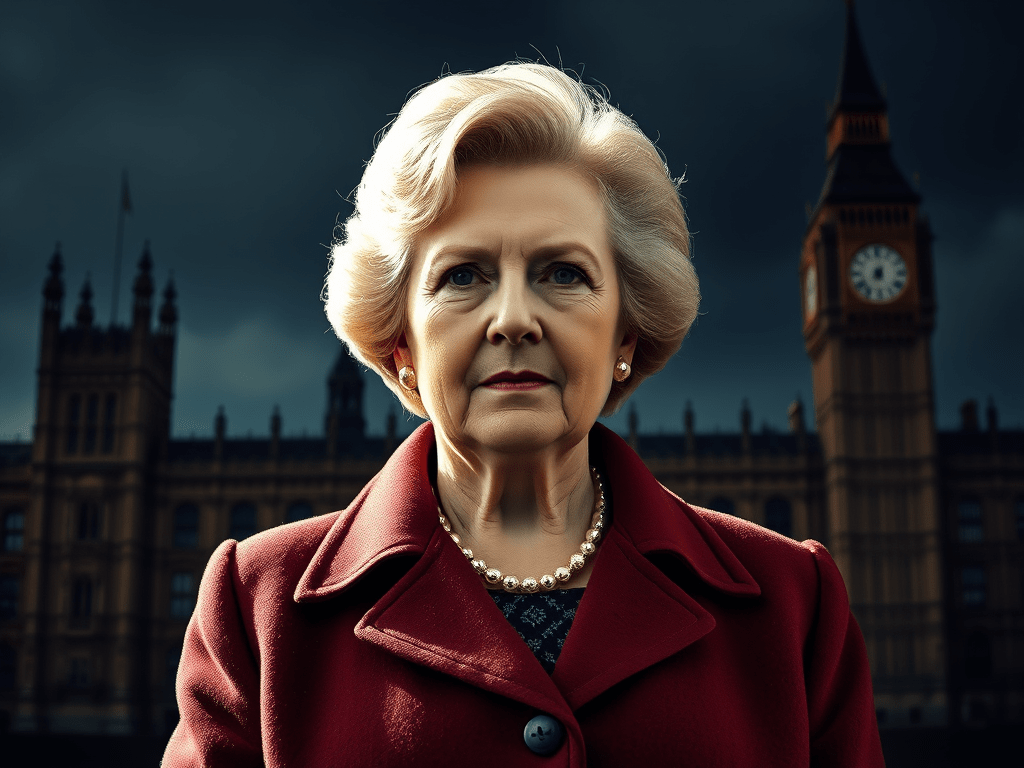
Margaret Thatcher, the first female Prime Minister of the United Kingdom, served from 1979 to 1990, a period that witnessed significant political, economic, and social changes. Her leadership style, often described as uncompromising and assertive, earned her the nickname \”The Iron Lady.\” This article explores the historical context of her rise to power, her pivotal policies that reshaped the British economy, her foreign relations strategies, the social changes that occurred during her administration, and her enduring legacy. Understanding Thatcher\’s government is crucial to comprehend the transformation of modern Britain and the ideological shifts that continue to influence political discourse today.
Early Political Landscape in Britain Before Thatcher
In the years leading up to Margaret Thatcher\’s rise to power in 1979, the United Kingdom was grappling with a host of economic and social challenges. The country was marked by a post-war consensus that had dominated British politics since the end of World War II, characterized by a belief in mixed economies and welfare state principles. The political environment was primarily shaped by the Labour and Conservative parties, both of which adhered to the welfare state ideology to varying degrees.
By the late 1970s, however, the economic situation had deteriorated significantly. Britain faced rampant inflation, high unemployment rates, and a series of strikes that crippled industry and public services. The so-called \”Winter of Discontent\” in 1978-79 epitomized this turmoil, with widespread labor unrest leading to public dissatisfaction with the Labour government\’s ability to address these issues. The economy was frequently described as \”the sick man of Europe,\” with the country lagging behind its continental neighbors in growth and productivity.
Amidst this backdrop, Thatcher, who had served as Secretary of State for Education and Science in Edward Heath\’s government during the early 1970s, emerged as a formidable leader for the Conservative party. Her ascent began when she became the party leader in 1975, challenging the party\’s previous moderate stance. With her emphasis on free market principles, individual responsibility, and reduced governmental intervention, Thatcher\’s ideology was positioned as a radical departure from the existing political consensus.
Thatcher\’s leadership style was characterized by a decisive and confrontational approach. She often framed her policies as necessary responses to the failures of preceding governments. Her rhetoric resonated with a public increasingly frustrated by economic stagnation and perceived governmental inefficiency. In the run-up to the 1979 general election, Thatcher capitalized on this sentiment, advocating for a return to free-market principles, privatization of state-owned industries, and a reduction of the welfare state.
The election of 1979 resulted in a significant Conservative victory, marking the beginning of a new era in British politics. Thatcher\’s government would embark on a radical program of economic reform, which would have lasting implications for the UK. These early years set the foundation for her legacy as a transformative, yet polarizing, figure in modern British history.
Thatcher\’s Economic Policies and Their Impact
The economic policies implemented during Margaret Thatcher\’s tenure were among the most defining aspects of her government. Upon taking office, she faced a deeply troubled economy characterized by high inflation, stagnant growth, and soaring unemployment. Her approach was grounded in monetarist principles, which prioritized controlling inflation over other economic indicators. Thatcher\’s government aimed to reshape the British economy through a series of aggressive reforms that would promote free-market capitalism.
One of the first steps in her economic strategy was the control of inflation through tight monetary policy. The government raised interest rates to unprecedented levels, which was intended to curb inflation but also contributed to a recession in the early 1980s. This moment marked a critical juncture, as unemployment soared to over 3 million, leading to widespread public discontent. Critics labeled her government as socially insensitive, but Thatcher maintained that her policies were necessary for long-term economic health.
Thatcher\’s administration also focused on privatization, introducing a series of measures to transfer state-owned industries to the private sector. This included the sale of British telecom, British Gas, and several others, reflecting her belief that privatization would increase competition, enhance efficiency, and drive down prices for consumers. The \”Right to Buy\” policy also allowed tenants in public housing to purchase their homes, transforming millions into homeowners and fostering a sense of individual ownership and responsibility.
In addition to privatization, taxation reforms played a crucial role in Thatcher\’s economic framework. Her government reduced the top rate of income tax and corporate taxes, aiming to stimulate investment and economic growth. The reduction in regulations, including the deregulation of various industries, was portrayed as a way to encourage entrepreneurship and innovation.
Critics argue that these economic policies led to significant social disparities and a growing divide between the wealthy and the poor. The rise in unemployment and closure of traditional industries devastated many communities, particularly in the North of England, which faced deindustrialization. However, supporters of Thatcher argue that her policies ultimately revitalized the UK economy, leading to significant growth and innovation in the following decades.
The impact of Thatcher\’s economic policies remains a topic of intense debate. While some celebrate the creation of a more dynamic and competitive economy, others lament the social costs associated with her reforms. The legacy of her economic strategy continues to shape discussions about capitalism and social equity in Britain today.
Foreign Policy Initiatives Under Thatcher
Margaret Thatcher\’s foreign policy was marked by a strong alignment with the United States and a staunch opposition to communism, reflecting her belief in the necessity of a robust national defense. Her tenure coincided with significant global events, most notably the Cold War\’s later stages, which shaped her international strategies and decisions.
One of the critical moments reflecting Thatcher\’s foreign policy was the Falklands War in 1982. When Argentine forces invaded the Falkland Islands, a British territory, Thatcher\’s immediate reaction was to dispatch a naval task force to reclaim the islands. The successful military operation not only restored British sovereignty over the Falklands but also solidified Thatcher\’s image as a strong leader at home and abroad. The conflict allowed her to rally nationalistic sentiment and reinforced her government\’s support.
Thatcher\’s relationship with U.S. President Ronald Reagan was another cornerstone of her foreign policy. The two leaders shared a common ideological framework prioritizing free-market capitalism and a tough stance against the Soviet Union. Their collaboration was instrumental in shaping Western response strategies during the Cold War, including military build-ups and diplomatic initiatives aimed at countering communist expansion.
Thatcher\’s government also pursued closer ties with other Western allies, participating in the NATO alliance and emphasizing the importance of collective defense against potential aggression. Throughout her tenure, she was an outspoken advocate for increasing defense spending, believing that a strong military was essential for national security and for maintaining stability in Europe during a period of heightened tensions with the Soviet bloc.
Another key aspect of her foreign policy was her approach to Eastern Europe and negotiations with Soviet leaders, particularly Mikhail Gorbachev. Thatcher was one of the first Western leaders to recognize the changes occurring in the Soviet Union and sought to engage in dialogue, famously stating that she could \”do business\” with Gorbachev. Her willingness to communicate with the Soviet leader was instrumental in paving the way for later negotiations that would ultimately contribute to the end of the Cold War.
Thatcher\’s foreign policy was informed by her belief that the UK should remain a significant global actor. Her tenure demonstrated that strong leadership and resolute values could shape international relations, leaving a lasting impression on Britain’s role in world affairs. The successes and challenges of her foreign policies have continued to influence British foreign relations and diplomatic strategies in the subsequent decades.
Social Reforms and Controversies During Her Rule
Margaret Thatcher\’s government introduced a range of social reforms that sparked controversy and debate across the United Kingdom. While her economic policies are often the focus of discussion, the social implications of her leadership also significantly impacted British society and culture.
One of Thatcher’s most notable social policies was the reform of education, which included the introduction of market principles into schools. Her administration advocated for greater parental choice and competition among schools, a move that aimed to raise educational standards. This included initiatives such as Grant Maintained Schools, which operated independently of local authority control. However, these efforts faced criticism for exacerbating inequalities, as wealthier families were better positioned to take advantage of these reforms.
Her government\’s approach to housing also ignited debates. The \”Right to Buy\” initiative, which allowed tenants to purchase their council homes at discounted rates, is seen by supporters as a way to promote home ownership, economic independence, and personal responsibility. Detractors, however, argue that this policy depleted the stock of affordable social housing and contributed to a housing crisis in subsequent years, as many local councils were unable to replace the sold properties.
Thatcher\’s tenure was marked by a series of controversial decisions related to welfare and public services. Her administration aimed to reduce public spending and welfare dependency, promoting the idea that individuals should take responsibility for their own well-being. This approach often led to cuts in social services, which many criticized as detrimental to vulnerable populations. The heightened rhetoric around personal responsibility sometimes obscured the complexities of poverty and socioeconomic challenges faced by many.
Thatcher\’s policies also intensified debates around gender and race relations in Britain. As a female leader, she broke barriers; however, her unique position did not translate into broader societal changes for women\’s rights. Critics pointed out that her administration often sidelined issues of gender equality and women\’s rights, reflecting a lack of comprehensive feminist policies during her reign.
The introduction of Section 28 in 1988, which prohibited the \”promotion of homosexuality\” by local authorities, also sparked significant backlash and protests from LGBTQ+ activists and allies. This legislation was seen as a reflection of conservative social attitudes and led to a significant mobilization within the LGBTQ+ community and beyond.
Amidst the controversies, Thatcher\’s policies fostered a sense of loyalty among her supporters, who viewed her as a champion against the perceived decline of British society. Her commitment to conservative values, though polarizing, made her a figure of considerable influence, solidifying her position as an iconic and contentious leader in British history.
The Lasting Influence and Legacy of Margaret Thatcher
Margaret Thatcher\’s legacy is characterized by a profound influence on both the Conservative party and broader political landscapes in the United Kingdom and beyond. Her tenure marked a decisive shift toward neoliberal economic policies that emphasized deregulation, privatization, and an individualistic approach to society.
Thatcher\’s impact on the Conservative party is perhaps the most immediate consequence of her leadership. She transformed the party\’s ideological foundation, steering it away from its traditional consensus-oriented roots toward a more rigorous conservative model. This shift influenced subsequent leaders, as the party embraced Thatcherism\’s core principles, affecting its policies and electoral strategies well into the 21st century.
Internationally, Thatcher\’s approach to capitalism became a model for many countries looking to reform their economies in the late 20th century. Her policies inspired similar movements worldwide, leading to shifts in governance in regions grappling with economic challenges. The promotion of free markets and limited government intervention became dominant narratives among policymakers, reflecting Thatcher\’s principles on a global scale.
However, the nostalgia for Thatcher\’s policies is not universal. Many criticize her economic approach for its social costs, claiming that it exacerbated inequality and dismantled public services. This critique has fostered ongoing debates about the role of government and the nature of capitalism in contemporary society. Issues surrounding wealth distribution and social justice continue to resonate in British politics, echoing Thatcher\’s contentious legacy.
Thatcher\’s leadership style also set a precedent for political figures, emphasizing the importance of strong rhetoric and decisive action. Her willingness to confront opposition and her unyielding conviction in her beliefs have informed leadership approaches in various political contexts. Leaders from different ideological backgrounds have drawn lessons from her strategy, demonstrating the enduring relevance of her methods.
Public perception of Thatcher varies widely, often influenced by personal experiences and political affiliations. While some revere her as a pioneering leader who revitalized Britain, others view her as a figure responsible for profound societal divisions. Documentaries, biographies, and cultural references continue to delve into her life and governance, reflecting society\’s ongoing fascination with her complex legacy.
In conclusion, Margaret Thatcher\’s time in office reshaped the political and economic landscape of Britain, creating a legacy that has been both celebrated and contested. Her impact is felt in modern discourse, influencing ideology, practices, and policies that define contemporary British society. The conversations surrounding her legacy are likely to continue as new generations grapple with the implications of her transformative era.
Sources
- \”Margaret Thatcher: The Authorized Biography\” – Charles Moore
- \”Margaret Thatcher: A Biography\” – David Cannon
- \”The Iron Lady\” – BBC Documentary
- Thatcher and the Economy – The Historical Perspectives
- The Legacy of Margaret Thatcher – Institute of Economic Affairs (IEA) [https://iea.org.uk/legacy-of-margaret-thatcher]
- Thatcher’s Foreign Policy and the Cold War – National Archives [https://nationalarchives.gov.uk/education/resources/thatcher-foreign-policy]